Saudi media takes an anti-‘Israel’ turn: WSJ
Al Mayadeen | February 2, 2026
Saudi Arabia’s state-backed media has adopted an increasingly hostile tone toward “Israel,” signaling diminishing prospects for diplomatic normalization between the two regional powers as the war on Gaza continues to reshape political calculations across West Asia.
The Wall Street Journal (WSJ) wrote on Monday that the shift has been reflected in official and semi-official outlets. In a January editorial, the daily Al-Riyadh accused “Israel” of disregarding international law and state sovereignty, stating that “wherever Israel is present, there is ruin and destruction.”
According to WSJ, religious figures have echoed the rhetoric. In a December sermon at the Grand Mosque in Mecca, Sheikh Saleh bin Humaid declared, “Oh God, deal with the Jews who have seized and occupied, for they cannot escape your power.”
Saudi officials say the increasingly sharp messaging is partly driven by the kingdom’s escalating rivalry with the United Arab Emirates, a regional competitor for economic leadership that has taken opposing positions to Riyadh in multiple West Asian conflicts. The UAE is also the most prominent Arab signatory of the series of US-backed normalization agreements with “Israel.”
Saudi officials acknowledged that the media campaign, while directed by the kingdom’s leadership, has also served as a means to sway public opinion against those normalization deals, which they described as an easy target amid widespread anger over the Gaza war.
UAE: The Israeli Trojan horse
In a recent online editorial for the Saudi publication Al-Jazirah, columnist Ahmed bin Othman Al-Tuwaijri accused Abu Dhabi of embracing Zionism to settle regional rivalries, writing that the Emirates had positioned itself as an “Israeli Trojan horse in the Arab world.”
Saudi Arabia disputes claims that the coverage is centrally coordinated but has nonetheless taken note of the tone, viewing it as a reflection of growing public anger toward “Israel” and the political pressure this creates for the leadership.
Bringing Saudi Arabia into the normalization agreements has long been a central objective for Washington and “Israel.” However, Saudi and Israeli officials say Riyadh’s calculations shifted sharply following the Gaza war, whose toll has hardened public and elite attitudes alike. While Saudi Arabia maintains that it remains open to normalization if it includes a credible pathway to a Palestinian state, officials say the urgency surrounding such a deal has diminished, allowing other foreign-policy priorities to take precedence.
Saudi media’s criticism of “Israel” is not unprecedented. Crown Prince Mohammed bin Salman previously referred to Israeli actions in Gaza as a genocide in November 2024. However, the current campaign marks a sharp reversal from years of quieter efforts aimed at softening public opinion and preparing Saudi society for possible diplomatic ties.
KSA-UAE dispute shaping stance on ‘Israel’
On that note, former US official Daniel Shapiro questioned whether the shift reflected a wavering commitment by Crown Prince Mohammed bin Salman to regional moderation, warning that abrupt policy changes in response to rivalry could undermine confidence in Saudi leadership.
According to the WSJ, Saudi Arabia’s embassy in Washington said the kingdom rejects antisemitism and remains open to normalization provided there is a firm commitment to Palestinian statehood. Defense Minister Khalid bin Salman recently traveled to Washington, meeting Jewish groups and emphasizing Saudi Arabia’s commitment to regional integration.
Washington-based analyst Mark Dubowitz said Saudi officials privately acknowledged that their dispute with the Emirates had crossed into an anti-“Israel” posture that was creating political difficulties in the United States, prompting efforts to lower tensions.
Israeli Prime Minister Benjamin Netanyahu said this week that “Israel” is monitoring Saudi developments closely, warning that normalization requires partners to refrain from aligning with forces opposed to peace, while reiterating his interest in ties with a “strong and secure Israel.”
Saudi Arabia and the UAE remain deeply divided over regional influence, economic leadership, and conflicts, including Yemen, where recent territorial shifts near the Saudi border have intensified tensions. Although relations between Riyadh and Abu Dhabi are at their lowest point in decades, analysts note that both countries share long-term security and economic interests, suggesting that a thaw between the two Gulf rivals is more likely to precede any normalization between Saudi Arabia and “Israel”.
No comments yet.
Featured Video

Seyed M. Marandi: U.S. Military DIVIDED? Iran’s Secret Defense EXPOSED
or go to
Aletho News Archives – Video-Images
From the Archives
‘Israel sees Iran as obstacle to its policies’
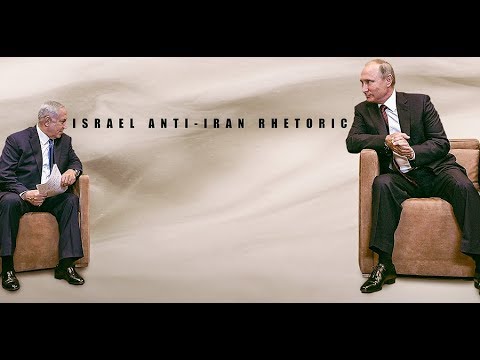
Press TV – August 25, 2017
Prime Minister Benjamin Netanyahu has said that Israel felt threatened by Iran’s growing influence in the Middle East. Netanyahu expressed his Iranophobic view in a meeting with Russian President Vladimir Putin in Russia’s Black Sea resort of Sochi on Wednesday. Press TV has asked Scott Rickard, former American intelligence linguist from Tampa, Florida, and Brent Budowsky, a columnist at The Hill from Washington, to give their thoughts on the issue.
Rickard said Tel Aviv is concerned about the fact that the regime could not carry out its old project to spread sectarian divisions and pave the way for dismemberment of the countries in the Middle East region because of the Iranian-led resistance against Israeli policies, not only in the occupied territories of Palestine but also in the whole region.
“Iran is not a threat to Israel whatsoever. The threat that Israel sees is the fact that their Oded Yinon Plan is being put to a hold by Iran,” the intelligence linguist said on Thursday night.
“They (the Israelis) look at Iran as a threat only because they have no influence on their governments and Iran is autonomous and is not under the Zionist influence,” he added.
Since the victory of the Islamic Republic of Iran in 1979, Tehran has been critical of Israel’s policies in the region, whereas “no leaders [of other states] even dared to speak out against Zionism,” Rickard argued. … continue
Blog Roll
 Aletho News
- Striking Iran’s Infrastructure Would Have Little Military Impact – Report
- What’s Behind U.S./Israeli Strikes On Iranian Pistachio Factories?
- Seyed M. Marandi: U.S. Military DIVIDED? Iran’s Secret Defense EXPOSED
- How I fell foul of the BBC thought police
- The End of NATO
- 37 days of war on Iran cost US staggering $42bln, tracker shows
- Baghdad tells Asian refiners, traders to begin loading Iraqi crude amid Iranian exemption
- Under fire, Moscow and Tehran close ranks
- Iran, US receive Pakistan-mediated plan for ceasefire then final deal
- Iran submits demands for end to war as mediators scramble ahead of Trump deadline
- If Americans Knew
- U.N. experts demand Israel release prominent Gaza doctor after reports of ‘severe torture’
- Israel’s Latest Genocide Is Against the Shias of Lebanon. Why Is the World Silent?
- How Eliot Cohen’s influence over U.S. war-making paved the way for Trump’s war crimes in Iran
- Israelis don’t pay for the weapons we ‘sell’ to them — US taxpayers do
- While Distancing from AIPAC, Most 2028 Democratic Hopefuls Are Still Embracing Israel
- A brief history of the Israeli nuclear program, the open secret at the heart of the Iran war
- Israeli Settlers Killed a Palestinian Farmer on His Own Land, in Front of His Father. Yes, Again
- The US-Israeli War on Science is an Assault on our Future
- 100+ International Law Experts Say US Strikes on Iran Violate UN Charter, Could Be War Crimes
- ‘Vile, Horrifying, Evil’: Trump Threatens to Bomb Nation of 90 Million People ‘Back to the Stone Ages’
- No Tricks Zone
- An Inconvenient Tree: Uncovered In Alps… Europe Much Warmer Than Today 6000 Years Ago
- New Study Reports A 60% Slowdown In Greenland’s Ice Loss Rate In The Last Decade
- Low Intensity Tornado Wrecks Major Solar Farm, Creating A Potential Toxic Dump
- New Study Finds Warming Saves Lives…Cold Temperatures 12 Times More Deadly Than Excess Heat
- German Science Blog Accuses PIK Climate Institute Of Hallucinating Climate Tipping Points
- Devastating Assessment Of Comirnaty Vaccine By Former Senior Pfizer Europe Toxicologist
- New Study: CO2 Is ‘Effectively Negligible’ As An Explanatory Climate Change Factor Since 2000
- Former Pfizer Toxicologist Dr. Helmut Sterz Tells Bundestag Hearing Pfizer Vaccine Should Have Never Been Approved
- Energy Expert: Germany’s Nuclear Phaseout Was A “500 Billion Euro Mistake”
- New Research: South Australia’s Mid-Holocene Sea Surface Temperatures Were 4°C Warmer Than Today
 Aletho News
Leave a comment