Why the Push for a US–Iran Nuclear Deal is Not Serious – and Never Was
By Robert Inlakesh | The Palestine Chronicle | February 5, 2026
The United States has been pushing for a renewed set of negotiations, aimed at reaching a deal over Iran’s nuclear program, the very same move that was used to set up an Israeli surprise attack last year. This is not a serious effort and appears more than anything to be aimed at stalling.
In mid-January, it appeared as if a US attack on Iran was imminent, as some reports even suggested he was planning to launch airstrikes before backing out. The reason for the absence of any military action can be put down to a series of evolving factors at play, including the security concerns of Israel.
Considering that an enormous amount of the reports published in both the US and Israeli media are drip-fed from their CIA, Mossad, and government contacts, it is reasonable to assume that most of what we are hearing “leaked” from anonymous sources is part of a deliberate disinformation campaign.
Prior to Israel’s surprise attack on Iran in June of 2025, a similar deception campaign was implemented throughout both the Western and Israeli media. In addition to the constant mixed messages regarding Israeli-US intentions, there was also an effort to build the narrative of a feud between Israeli PM Benjamin Netanyahu and US President Donald Trump. Soon after the 12-day war began, Israeli media outlets admitted as such.
Therefore, it is safe to assume that most of what we are being fed through the “anonymous” sourcing of the corporate media is false. Nowhere is this more evident than in the outlandish claims being published, as a means of manufacturing consent for a regime change war, than with the outrageous Iran protester death toll statistics being peddled without any evidence at all.
Disinformation aside, the current attempt to revive US-Iran nuclear negotiations is already being premised on non-starters. Not only are the US going back to their maximalist demands, which prevented any serious progress through multiple rounds of discussions last year, but they are also actively threatening war on a near-daily basis, as more American military assets continue to flood into the region.
In addition to this, the Israelis have demanded the exact same prerequisite conditions they always do, that being the end of Iran’s ballistic missile program, no nuclear enrichment on Iranian soil, and a halt to all of Tehran’s regional alliances with resistance groups. Evidently, none of these conditions is even going to be entertained by the Iranians.
Unless by some miracle the Trump administration decides to totally defy Israel and its top donors, choosing to negotiate a reasonable deal that, at least in part, replicates the 2015 Joint Comprehensive Plan of Action (JCPOA), there will be nothing achieved. Instead, if negotiations are to even proceed, they will simply be designed to stall the inevitable: a military confrontation.
Donald Trump, since his first term in office, has been the most aggressive US president toward the Islamic Republic, unilaterally pulling out of the nuclear deal, implementing a criminal sanctions regime, bowing to every Israeli demand, and even assassinating Iran’s most prominent general at the time, Qassem Soleimani.
This time around, the Trump administration decided to go all the way in its support of Israel’s demands. The US came to Israel’s aid in the 12-day war and directly struck Iran, doing damage to three nuclear sites. More recently, the entirety of the collective West has stood behind a regime change attempt, led by Israeli intelligence agents on the ground. Not a single Western mainstream media outlet has even been critical of the narrative they have been fed on the issue, with some openly advocating military intervention.
Why is the US Stalling?
Unlike during the previous buildups to confrontation between the US-Israeli alliance and Iran, this time appears much more consequential. We are now far closer to an all-out regional war, which was avoided last June. Iran’s leader, Ayatollah Seyyed Ali Khamenei, has made it clear that any attack on Iran will result in a total war, something that was not previously threatened in this way.
What happened last month was an Israeli-led attempt to drag Iran into a bloody civil war, an attack using agents that targeted cultural sites, places of worship, the nation’s emergency services, banks, and resulted in the murder of around 300 police officers and security force members. If this ground campaign had proven successful, a series of US strikes—while still a gamble—may have proven a serious threat to the stability of Iran.
In the thinking of US and Israeli military strategists, they hoped that an American strike package could have inspired an even greater uprising against the government. Even if this led to a long and bloody civil war, like what occurred in Syria, the idea would be that over time it would cripple the nation as a whole, effectively eliminating the Iranian challenge posed to Israel for the foreseeable future.
However, Iran swiftly cracked down on the failed operation within two days, totally eliminating the ground threat posed to it. Without a ground component against the Islamic Republic, any US-Israeli air campaign—however costly—will ultimately fail to effect regime change.
The best possible outcome for Tel Aviv and Washington is an attack that will work to cripple the nation’s civil infrastructure. Although easier said than done, especially given the fact that Iran’s infrastructure was built with wartime damage in mind, the tactic would be to inflict such a significant blow that, over time, combined with the “maximum pressure” sanctions campaign, the Iranian government will fall, similar to how Syria did.
Standing in the way of such an option are a myriad of issues. There is the anxiety of the Arab regimes, such as Jordan, the UAE, Saudi Arabia, and beyond, who understand the potential earthshattering implications of an all-out war with Iran. The US and Israel use their nations to stage attacks on Iran, operate air defense systems, and therefore, there are valid military targets there for Iran’s Islamic Revolutionary Guard Corps (IRGC) to go after.
In addition to this, the threats that have been coming out of Iraq are of major concern to the US, Israel, and the Arab regimes alike. The Hasd al-Shaabi, or Popular Mobilization Forces, number around 250,000 men strong. Kataeb Hezbollah, the strongest faction within the Hashd, has vowed to defend Iran. We have also heard threats that, in the event Ayatollah Khamenei is targeted, this will trigger fatwas (religious declarations) ordering jihad.
Khamenei is not only the leader of Iran, but a major Shia religious and spiritual leader who is central to the belief system of Shia Muslims worldwide. Assassinating him could therefore trigger uprisings and the mobilization of millions of Shia Muslims throughout the entire region and beyond.
Total war with Iran means significant strikes on US bases all throughout the region, a halt to the flow of oil through the strategic Strait of Hormuz. It also means the kind of firepower directed at Israel will much more likely be heavier than what we saw in June of 2025, missile attacks that could be combined with strikes from Hezbollah in Lebanon and Ansarallah in Yemen.
Keeping all of this in mind, the Israelis are clearly attempting to secure the best possible air defense strategy in order to help minimize the damage that will inevitably be inflicted upon them. Tel Aviv still has not rebuilt its infrastructure that was struck last year by Iranian ballistic missiles.
No analyst can truly predict the outcomes of a total regional war, especially if Ayatollah Khamenei is assassinated. There are simply too many factors at play. Such a war could even inspire revolution in Bahrain, Jordan, and an Iraqi war with forces inside Syria. It could bring about regime change in the UAE, even if only by an internal coup. While none of this is certain, it is nonetheless well known. Nobody is truly safe.
In addition to this, even the pro-Western Arab nations do not favor either side in such a conflict. It may work in their favor to see a weakened Iran, for instance, but not a regime change that destroys the country and places Israel as the uncontested regional hegemon. In other words, they thrive off a multipolar West Asia. In the event that Iran wins and Israel is destroyed, they also realize that this could result in their own regimes falling.
Another major question mark hangs over the roles of China and Russia in all of this. As it seems, Beijing views Tehran as an essential partner and even vowed to provide all the necessary support to Iran during the foreign-backed riots. Moscow’s stance at the time was much more neutral. Both maintain relations with Iran and have sold military equipment.
There is no difference between the opinions of the Trump administration and the Israelis on Iran, which means that no deal will be reached without war. The best possible outcome that the US could hope for is a limited conflict, one that can be managed, even if it drags on for over a month. Then, following such a war, they attempt to further weaken Iran, and due to the costly nature of the conflict, neither side seeks direct confrontation for some time.
– Robert Inlakesh is a journalist, writer, and documentary filmmaker. He focuses on the Middle East, specializing in Palestine.
No comments yet.
Featured Video

Seyed M. Marandi: U.S. Military DIVIDED? Iran’s Secret Defense EXPOSED
or go to
Aletho News Archives – Video-Images
From the Archives
‘Israel sees Iran as obstacle to its policies’
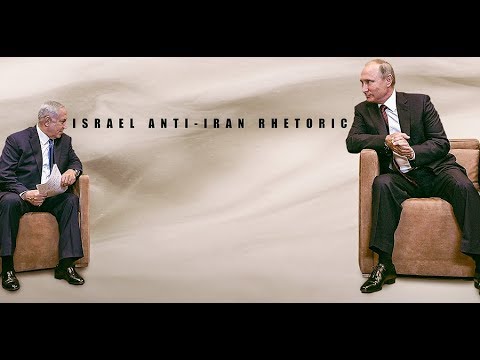
Press TV – August 25, 2017
Prime Minister Benjamin Netanyahu has said that Israel felt threatened by Iran’s growing influence in the Middle East. Netanyahu expressed his Iranophobic view in a meeting with Russian President Vladimir Putin in Russia’s Black Sea resort of Sochi on Wednesday. Press TV has asked Scott Rickard, former American intelligence linguist from Tampa, Florida, and Brent Budowsky, a columnist at The Hill from Washington, to give their thoughts on the issue.
Rickard said Tel Aviv is concerned about the fact that the regime could not carry out its old project to spread sectarian divisions and pave the way for dismemberment of the countries in the Middle East region because of the Iranian-led resistance against Israeli policies, not only in the occupied territories of Palestine but also in the whole region.
“Iran is not a threat to Israel whatsoever. The threat that Israel sees is the fact that their Oded Yinon Plan is being put to a hold by Iran,” the intelligence linguist said on Thursday night.
“They (the Israelis) look at Iran as a threat only because they have no influence on their governments and Iran is autonomous and is not under the Zionist influence,” he added.
Since the victory of the Islamic Republic of Iran in 1979, Tehran has been critical of Israel’s policies in the region, whereas “no leaders [of other states] even dared to speak out against Zionism,” Rickard argued. … continue
Blog Roll
 Aletho News
- Alberta Bill Would Fine Political Deepfakes $10,000 Without Satire Exemptions
- Iran declares ‘historic victory’ over US, says enemy forced to accept its proposal
- Trump Claims Ceasefire, Reopening of Strait of Hormuz Agreement with Iran
- Israeli tank fire killed UN peacekeeper in Lebanon, UNIFIL investigation finds
- Russia, China block Bahrain-sponsored UN resolution on Strait of Hormuz
- The US-Israeli War on Science is an Assault on our Future
- Trump’s Promise to Bomb Iran ‘Like Never Before’ Faces Brutal Logistics — Expert
- Germany seeks to restrict stays abroad for men of fighting age – Berliner Zeitung
- Evidence points to Ukraine being behind TurkStream attempted sabotage, but that should come as no surprise
- Sri Lanka secures supplies of Russia oil – minister
- If Americans Knew
- Thousands dead and neighborhoods razed to the ground: Aid agencies fear southern Lebanon is becoming the new Gaza
- The war the US is fighting for Israel could cost trillions
- ‘Cigarette Burns, Nail Wounds’: Toddler Tortured in Gaza to Coerce Father
- Trump Says US Sent ‘a Lot of Guns’ to Protesters in Iran
- Israeli forces destroy 17 UN peacekeeper cameras in south Lebanon
- US-Israeli strikes ‘completely destroy’ synagogue in Tehran
- Archbishop for US Military Says Iran War Is Unjust Under Catholic Teaching
- Iranian leaders’ Open Letters to the American People
- Trump says Iranians appreciate bombs, WHO warns of nuclear risks – Daily Update
- U.N. experts demand Israel release prominent Gaza doctor after reports of ‘severe torture’
- No Tricks Zone
- An Inconvenient Tree: Uncovered In Alps… Europe Much Warmer Than Today 6000 Years Ago
- New Study Reports A 60% Slowdown In Greenland’s Ice Loss Rate In The Last Decade
- Low Intensity Tornado Wrecks Major Solar Farm, Creating A Potential Toxic Dump
- New Study Finds Warming Saves Lives…Cold Temperatures 12 Times More Deadly Than Excess Heat
- German Science Blog Accuses PIK Climate Institute Of Hallucinating Climate Tipping Points
- Devastating Assessment Of Comirnaty Vaccine By Former Senior Pfizer Europe Toxicologist
- New Study: CO2 Is ‘Effectively Negligible’ As An Explanatory Climate Change Factor Since 2000
- Former Pfizer Toxicologist Dr. Helmut Sterz Tells Bundestag Hearing Pfizer Vaccine Should Have Never Been Approved
- Energy Expert: Germany’s Nuclear Phaseout Was A “500 Billion Euro Mistake”
- New Research: South Australia’s Mid-Holocene Sea Surface Temperatures Were 4°C Warmer Than Today
 Aletho News
Leave a comment