Col Douglas Macgregor argues that Trump ran on ending “endless wars” and prioritizing America First, yet instead presides over a massive, unaccountable $1.5 trillion defense budget and a widening set of military confrontations. Rather than reducing foreign interventions, U.S. policy is escalating tensions—especially with Iran and Russia—while failing to end the war in Ukraine.
They criticize U.S. seizures of Russian, Iranian, and Venezuelan oil tankers as symbolic, economically trivial, and strategically pointless actions that risk provoking Russia without meaningfully weakening its war effort. These moves are framed more as political theater and economic self-interest (boosting U.S. oil exports) than serious strategy.
The discussion rejects claims—circulating in European media and think tanks—that Russia would quickly attack NATO or the Baltics after a Ukraine ceasefire, calling such scenarios absurd fear-mongering designed to justify perpetual conflict and sustain Cold War–era institutions. The argument is that Russia lacks both the interest and incentive to expand westward and would prefer normalized economic relations.
Overall, the segment contends that Washington, European leaders, and influential think tanks are more invested in maintaining hostility and ongoing wars than in pursuing negotiated settlements. Trump’s instincts may lean toward ending conflicts, the speaker concludes, but he has failed to act decisively, allowing wars and tensions to continue despite campaign promises to the contrary.
Most mega-donors buy influence quietly. Jewish oligarch Haim Saban prefers to explain exactly how it works.
The question came from the stage at the 10th annual Israeli-American Council National Summit, held in Hollywood, Florida in January 2026. Shawn Evenhaim, the IAC’s board chairman emeritus, turned to the two most powerful Jewish, pro-Israel megadonors in American politics and asked them, simply, how they gain influence over politicians.
Miriam Adelson declined to answer, saying she wanted to “be truthful” but “there are so many things I don’t want to talk about.”
Haim Saban had no such reluctance.
“It’s a system that we did not create,” he said. “It’s a legal system and we just play within the system. Those who give more have more access and those who give less have less access. It’s simple math. Trust me.”
Moments earlier, when asked whether Jewish community influence in the United States was weakening, Saban dismissed the anxiety with characteristic confidence. “I can tell you,” he told the 3,500 assembled Israeli-Americans, “that my influence is not weakening.”
To understand why Saban could say that with a shrug, you must go back to where he started.
Haim Saban was born on October 15, 1944, in Alexandria, Egypt. In 1956, amid anti-Jewish hostility following the Suez Crisis, the Saban family fled Egypt and immigrated to Israel, settling in a rough Tel Aviv neighborhood where they shared a communal bathroom, as Saban frequently recounts, “with a hooker and her pimp.” A school principal told the young Saban he was “not cut out for academic studies.” He served in the Israel Defense Forces during both the Six Day War and the Yom Kippur War.
In 1966, he became bassist for the Israeli rock band The Lions of Judah despite not knowing how to play bass, conditioning his work booking their gigs on becoming their musician. The band signed with Polydor and appeared on the BBC, but money ran dry. By the early 1970s, Saban had relocated to France, where he and partner Shuki Levy built a niche creating theme music for American TV shows broadcast overseas, providing the music free while retaining the rights.
The business generated 15 gold and platinum records and $10 million annually within seven years. But the empire rested on a fault line. A 1998 Hollywood Reporter investigation revealed that Saban had not actually composed all 3,700 works credited to his name. Ten composers threatened legal action, and Saban quietly settled out of court.
Saban moved to Los Angeles in 1983 and founded Saban Entertainment in 1988. His breakthrough came after eight years of failed pitches when Fox agreed to buy his Americanized adaptation of a Japanese children’s show. The result was Mighty Morphin Power Rangers, which debuted in 1993 and generated over $6 billion in toy sales.
The franchise’s success came with costs. In 1998, the Screen Actors Guild declared Saban Entertainment “unfair to performers” and accused the company of “economic exploitation of children,” ordering members not to work for his shows. Power Rangers was produced non-union, with child actors denied residuals and subjected to hazardous conditions. In 2001, Fox Family Worldwide sold to The Walt Disney Company for $5.3 billion.
In 2003, Saban led a consortium acquiring a controlling stake in ProSiebenSat.1 Media, Germany’s largest commercial television company. He reportedly received the call confirming the deal while standing in the Dachau crematorium with his son. The consortium sold its stake in 2007 for roughly three times what they paid.
In 2006, Saban Capital Group led a consortium acquiring Univision Communications, the largest Spanish-language broadcaster in the United States, for approximately $13.7 billion. It sold in 2020 for around $800 million for a 64% stake, making the investment one of the most expensive failures in media history.
What Saban lost in money, he appeared to gain when it came to consolidating pro-Zionist narratives In Spanish-speaking media. Critics at Al Jazeera noted that Univision’s 2011 documentary “La Amenaza Iraní” (The Iranian Threat), examining Iran’s alleged ties to Latin American governments, “regurgitate[d] all the pro-war right’s by now familiar talking points about nefarious Islamists acting in concert with leftist Bolivarians to bring Terror to the US’ doorstep.” It was screened for English-speaking audiences at the Hudson Institute, a neoconservative Washington think tank that routinely pushes a hardline Zionist agenda. The SourceWatch project characterized Univision’s channels as having “been used to broadcast pro-Israeli propaganda” under Saban’s ownership.
The Univision-Clinton entanglement deepened the scrutiny. A 2014 early childhood initiative between Univision and the Clinton Foundation featured Hillary Clinton’s face in five of seven promotional slides on Univision’s website. When the network later reported on allegations that foundation donations had influenced Clinton as Secretary of State, Univision did not disclose its own foundation partnership.
Across both business and politics, Saban operated under a single guiding principle: advancing what he believed to be in Israel’s best interests. “I’m a one-issue guy,” he said publicly, “and my issue is Israel.”
His three-pronged strategy, outlined at his own Saban Forum, is to fund political campaigns, bankroll think tanks, and control media. He gave the Democratic National Committee a single gift of $7 million in 2002, at the time the largest donation in DNC history. His total giving to Clinton causes exceeded $27 million, including a $13 million founding grant to establish the Saban Center for Middle East Policy at Brookings, then the largest donation in Brookings history. He recruited Martin Indyk, former U.S. Ambassador to Israel and former AIPAC deputy research director, to run it.
He funds the Saban National Political Leadership Training Seminar through AIPAC, providing up to 300 college students with pro-Israel advocacy training annually. He was an early donor to the IAC beginning in 2008, briefly partnered with Sheldon Adelson on Campus Maccabees, an anti-BDS initiative, from 2013 to 2015, then quietly pulled out to preserve his standing with Clinton.
Notably, Saban played a behind-the-scenes role in the Abraham Accords, advising UAE Ambassador Yousef Al Otaiba to publish an op-ed warning against Israeli annexation of the West Bank, helping him place and translate it into Hebrew, and privately urging UAE Crown Prince Mohammed bin Zayed to normalize relations with Israel. Jared Kushner credited that op-ed as a catalyst for the normalization talks.
As mentioned before, Saban is a flexible strategist when it comes to dealing with Left and the Right. He has forged close ties with Ariel Sharon, who moved him in a more hawkish direction on security matters. “History proved that Sharon was right and I was wrong,” Saban has said. “In matters relating to security, that moved me to the right. Very far to the right.”
When Saban decided in 2014 that Obama might strike a bad deal with Iran, he did not mince words at the Israeli American Council. “I would bomb the living daylights out of these sons of bitches.” Despite being a reliable donor to the Democratic Party, Saban has shown a willingness to attack people in the party who deviate from the Zionist consensus. He labeled DNC chair candidate Keith Ellison “clearly an anti-Semite.” When Joe Biden conditioned weapons shipments to Israel in 2024, Saban sent an angry email calling it a “bad,,,bad,,,bad,,,decision” and arguing there were “more Jewish voters, who care about Israel, than Muslim voters that care about Hamas.”
Saban’s fierce advocacy for Israel is inseparable from his identity. Haim Saban currently holds dual Israeli-American citizenship. The Jerusalem Postranked him number one on its list of the 50 Most Influential Jews in 2016. Israeli TV host Dana Weiss once called him “our rich uncle.”
In Saban’s political universe, the traditional left-right spectrum is little more than a convenient vehicle—to be boarded or abandoned depending on which direction best serves the project of Israeli dominance in the Middle East.
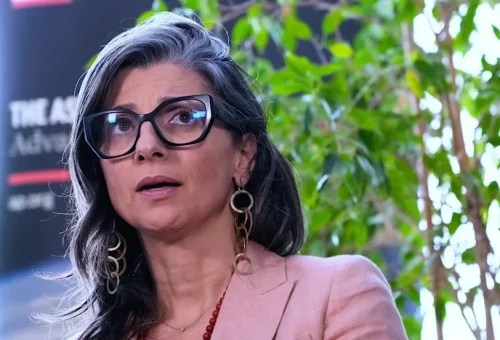
Germany has called for the resignation of UN Special Rapporteur for the Palestinian Territories Francesca Albanese, following remarks she made about the Israeli occupation regime during a forum organized by the Al Jazeera network in Doha.
German Foreign Minister Johann Wadephul said on Thursday that Albanese was no longer fit to continue in her mandate, citing what he described as repeated inappropriate statements.
“I respect the UN system of independent rapporteurs. However, Ms Albanese has made numerous inappropriate remarks in the past. I condemn her recent statements about Israel. She is untenable in her position,” Wadephul wrote on X.
Germany calls for Albanese’s resignation one day after France issued a similar demand, escalating diplomatic pressure on the UN official.
France calls for Albanese’s resignation
On Wednesday, France formally urged Albanese to step down over the same remarks.
French Foreign Minister Jean-Noel Barrot told lawmakers: “France unreservedly condemns the outrageous and reprehensible remarks made by Ms Francesca Albanese, which are directed not at the Israeli government, whose policies may be criticised, but at Israel as a people and as a nation, which is absolutely unacceptable,” arguing that the comments went beyond criticism of Israeli government policies and instead targeted “Israel” as a state and people.
Albanese’s Remarks at the Forum
Speaking via videoconference at the Doha forum on Saturday, Albanese criticized what she described as global complicity in the war on Gaza.
“The fact that instead of stopping Israel, most of the world has armed, given Israel political excuses, political sheltering, economic and financial support is a challenge. The fact that most of the media in the Western world has been amplifying the pro-apartheid genocidal narrative is a challenge. And here also lies the opportunity. Because if international law has been stabbed in the heart, it is also true that never before has the global community seen the challenges that we all face. We who do not control large amounts of financial capital, algorithms, and weapons now see that we, as humanity, have a common enemy, and that freedoms, the respect of fundamental freedoms, are the last peaceful avenue, the last peaceful toolbox that we have to regain our freedom.”
Following the controversy, Albanese posted the full video of her speech on X, writing:
“My full AJ Forum speech last week: the common enemy of humanity is THE SYSTEM that has enabled the genocide in Palestine, including the financial capital that funds it, the algorithms that obscure it and the weapons that enable it.”
My full AJ Forum speech last week: the common enemy of humanity is THE SYSTEM that has enabled the genocide in Palestine, including the financial capital that funds it, the algorithms that obscure it and the weapons that enable it. pic.twitter.com/PzTQFFybsG
— Francesca Albanese, UN Special Rapporteur oPt (@FranceskAlbs) February 9, 2026
Albanese has denied that her remarks described “Israel” as the “common enemy of humanity.”
In an interview with France 24, she denounced what she called “completely false accusations” and “manipulation” of her words.
“I have never, ever, ever said ‘Israel is the common enemy of humanity’,” Albanese told the broadcaster.
She contended that her comments were being misrepresented and maintained that she was referring to broader systemic structures enabling violations of international law in Gaza.
Mounting Diplomatic Pressure on the UN Mandate
The coordinated calls from Germany and France add to a growing campaign of political pressure surrounding Albanese’s mandate as UN special rapporteur for the Palestinian territories.
Her tenure has increasingly drawn opposition from Western governments, particularly following her reports on Gaza and her calls for accountability mechanisms, including action at the International Criminal Court. The US sanctions imposed in July 2025 marked an unprecedented step against a UN mandate holder and signaled Washington’s direct challenge to her work.
Osama Hamdan, a leader in the Islamic Resistance Movement (Hamas), said on Wednesday that the joining of Israeli Prime Minister Benjamin Netanyahu, who is wanted by the International Criminal Court, to the so-called “Peace Council” represents “the farce of the era.”
In remarks broadcast by Al Jazeera, Hamdan said the movement had not received from mediators any draft or official proposals concerning the weapons of the resistance.
He stressed that Hamas has not officially adopted any decision regarding freezing its weapons, and that its national position is firm in considering resistance a legitimate right as long as the occupation exists.
Hamdan stressed that the Palestinian people reject any form of external guardianship and cannot accept international forces replacing the Israeli army inside the Gaza Strip.
He added that the movement had contacted the Indonesian government and made clear that the role of any international force should be limited to deployment along the borders of the Gaza Strip to separate it from the occupation.
He said that any international stabilisation force, if established, should work to prevent attacks against the Palestinian people, in line with the plan proposed by US President Donald Trump.
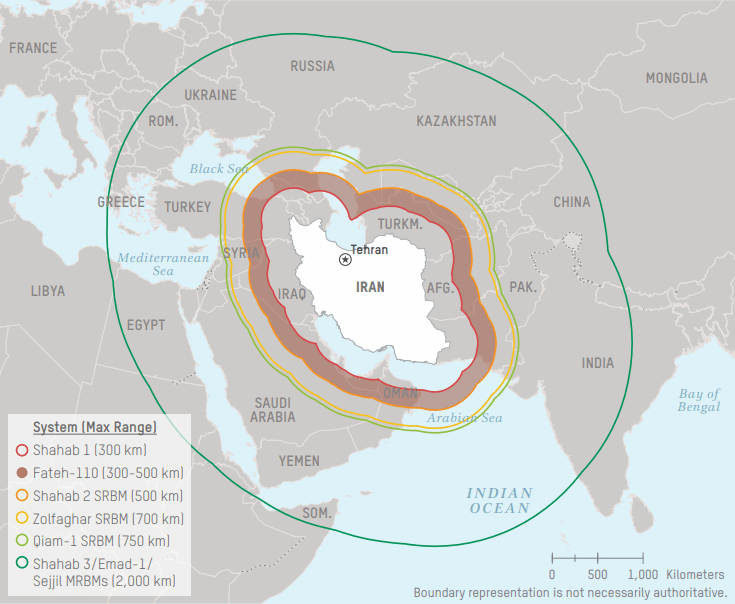
Israel says it will attack Iran if Tehran does not agree to a deal that includes restricting the range of its missiles to 300 kilometers (186 miles).
According to Ynet, Israel is demanding that any deal the US makes with Iran include Tehran eliminating its uranium enrichment program, limiting the range of its ballistic missiles to 300 kilometers, and cutting ties with its allies in the region.
President Donald Trump has suggested he will order an attack on Iran if Tehran does not make a deal with the US. Tel Aviv says any deal between Washington and Tehran must include missile range restrictions or Israel will attack Iran.
Iranian officials have stated that Tehran is unwilling to place restrictions on its missile program. Limiting the range of its missiles to 300 kilometers would prevent Iran from having a meaningful retaliatory capability.
Israeli officials, according to Ynet, do not believe that Iran will accept limitations on its missile program.
Trump met with Prime Minister Benjamin Netanyahu on Wednesday about Iran. Officials said that Washington and Tel Aviv would continue to prepare for war with Iran, and an immediate attack is unlikely.
On Wednesday, the Wall Street Journal reported that Trump had ordered a second aircraft carrier strike group to prepare for deployment to the Middle East.
Since the war started, voices in the alternative media have said that Ukraine cannot win a war against Russia. Indeed, John Mearsheimer has been saying this since 2014.
Four years into this devastating war, those voices feel at one and the same time both vindicated and unheard. Ukraine is losing yet western leaders in Europe appear bent on continuing the fight.
Nothing is illustrative of this more than Kaja Kallas’ ridiculous comment of 10 February that Russia should agree to pre-conditions to end the war, which included future restrictions on the size of Russia’s army.
Comments such as this suggest western figures like Kallas still believe in the prospect of a strategic victory against Russia, such that Russia would have to settle for peace as the defeated party. Or they are in denial, and/or they are lying to their citizens. I’d argue that it is a mixture of the second and third.
When I say losing, I don’t mean losing in the narrow military sense. Russia’s territorial gains over the winter period have been slow and marginal. Indeed, western commentators often point to this as a sign that, given its size advantage, Russia is in fact losing the war, because if it really was powerful, it would have defeated Ukraine long ago.
And on the surface, it might be easy to understand why some European citizens accept this line, not least as they are bombarded with it by western mainstream media on a constant basis.
However, most people also, at the same time, agree that drone warfare has made rapid territorial gains costly in terms of lost men and materiel. There is a lot of evidence to suggest that since the second part of 2023, after Ukraine’s failed summer counter-offensive, Russia has attacked in small unit formations to infiltrate and encircle positions.
Having taken heavy losses at the start of the war using tactics that might have been conventional twenty years ago, Russia’s armed forces had to adapt and did so quickly. Likewise, Russia’s military industrial complex has also been quicker to shift production into newer types of low cost, easy build military technology, like drones and glide bombs, together with standard munitions that western providers have been unable to match in terms of scale.
And despite the regular propaganda about Russian military losses in the tens of thousands each month, the data from the periodic body swaps between both sides suggest that Ukraine has been losing far more men in the fight than Russia. And I mean, at a ratio far greater than ten to one.
Some western pundits claim that, well, Russia is advancing so it is collecting its dead as it moves forward. But those same pundits are the ones who also claim that Russia is barely moving forward at all. In a different breath, you might also hear them claim that Russia is about to invade Estonia at any moment.
Of course, the propaganda war works in both directions, from the western media and, of course, from Russian. I take the view that discussion of the microscopic daily shifts in control along the line of contact is a huge distraction.
The reality of who is winning, or not winning, this war is in any case not about a slowly changing front line. Wars are won by economies not armies.
Those western pundits who also tell you that Russia will run out of money tomorrow – it really won’t – never talk about the fact that Ukraine is functionally bankrupt and totally dependent on financial gifts which the EU itself has to borrow, in order to provide. War fighting for Ukraine has become a lucrative pyramid scheme, with Zelensky promising people like Von der Leyen that it is a solid investment that will eventually deliver a return, until the day the war ends, when EU citizens will ask where all their tax money disappeared to.
Russia’s debt stands at 16% of its GDP, its reserves over $730 billion, its yearly trade surplus still healthy, even if it has narrowed over the past year.
Russia can afford to carry on the fight for a lot longer.
Ukraine cannot.
And Europe cannot.
And that is the point.
The Europeans know they can’t afford the war. Ukraine absolutely cannot afford the war, even if Zelensky is happy to see the money keep flowing in. Putin knows the Europeans and Ukraine can’t afford the war. In these circumstances, Russia can insist that Ukraine withdraws from the remainder of Donetsk unilaterally without having to fight for it, on the basis that the alternative is simply to continue fighting.
He can afford to maintain a low attritional fight along the length of the frontline, which minimises Russian casualties and maximises Ukraine’s expenditure of armaments that Europe has to pay for.
That constant financial drain of war fighting is sowing increasing political discord across Europe, from Germany, to France, Britain and, of course, Central Europe.
Putin gets two benefits for the price of one. Europe causing itself economic self-harm while at the same time going into political meltdown.
That is why western leaders cannot admit that they have lost the war because they have been telling their voters from the very beginning that Ukraine would definitely win.
Europe’s leaders are hiding from the political reckoning that they will face, as their voters wake up to the fact that they were lied to.
Who will want to vote for Merz, Macron, Tusk, Starmer and all these other tinpot statesmen when it becomes clear that they have royally screwed the people of Europe for a stupid proxy war in Ukraine that was unwinnable?
What will Kaja Kallas do for a job when everyone in Europe can see that she’s a dangerous warmonger who did absolutely nothing for the right reason, and who failed at everything?
Zelensky is wondering where he can flee to when his number’s up, my bet would be Miami.
So if you are watching the front line every day you need to step back from the canvas.
When the war ends, Putin will reengage with Europe but from a position of power not weakness.
The German government is wasting taxpayers’ money by continuing to fund Ukraine, veteran politician Sahra Wagenknecht has said.
European nations have largely compensated for the sharp reduction of American support to Kiev under the administration of US President Donald Trump, according to the Kiel Institute for the World Economy (IfW). EU military and financial aid to Ukraine grew by 67% and 59% respectively in 2025, it said in a report this week.
Germany, which has already provided almost €44 billion ($52 billion) to the government of Vladimir Zelensky since the escalation between Moscow and Kiev in 2022, has taken on a larger part of the burden, and according to current budget plans aid from Berlin will be increased to around €11.5 billion ($13.7 billion) this year.
In an interview with Berliner Zeitung on Wednesday, Wagenknecht accused Chancellor Friedrich Merz of “making the German taxpayer the number one financier of war.”
Instead of substantively working on a peace plan and “demanding compromises” from Zelensky, the German government is “issuing a blank check after a blank check to Ukraine,” she said.
According to the politician, who served in the Bundestag for more than 15 years and founded the Bundnis Sahra Wagenknecht party, the extra billions sent to Kiev are not making peace closer but are merely prolonging the conflict.
Financing Zelensky’s government has become an “embezzlement of German taxpayer money” that only increases the suffering of the Ukrainian population, Wagenknecht stressed.
Russian Foreign Minister Sergey Lavrov said earlier this week that a settlement of the Ukraine conflict had been “entirely feasible” after the summit between Russian President Vladimir Putin and his US counterpart, Donald Trump, in Anchorage last August, but Kiev and its European backers have since acted to sabotage the efforts to end the fighting.
Lavrov previously called the Europeans “the main obstacles to peace,” saying they have been “blinded” by their fruitless desire of “inflicting a strategic defeat on Russia.”
Russia has decried Western arms deliveries to Kiev, arguing that they will not prevent Moscow from achieving its goals in the conflict and will only increase the risk of a direct clash between Russia and NATO.
MOSCOW – Russian soldiers are tortured in secret prisons of the Ukrainian Armed Forces, being kept in cages, beaten, and denied food and water, Russian Foreign Ministry Ambassador-at-Large on the Ukrainian regime’s crimes Rodion Miroshnik told Sputnik.
“The greatest amount of abuse and torture occurs in secret prisons – dungeons, basements, concrete boxes, often in cages. And it’s there, when no one knows about them, when they are not included in prisoner-of-war lists, when international organizations know nothing about them, that the worst abuse begins,” Miroshnik said.
He said the Ukrainian Armed Forces are trying to extract military information from them in these torture chambers.
“This is a conveyor belt that involves beatings at the entrance, a marathon of torture for these people – electric chairs, psychological pressure, coercion, denial of food and water. Meanwhile, representatives of the security services arrive to try to break people. Representatives of the SBU [Security Service of Ukraine] and GUR [Main Directorate of Intelligence] come, including for staged videos where people are beaten and subjected to severe psychological pressure,” the ambassador said.
Russia has been conducting its special military operation since February 24, 2022. Russian President Vladimir Putin has said the operation aims to “protect people subjected to genocide by the Kiev regime.” According to the president, the ultimate goal of the operation is to completely liberate Donbas and create conditions that guarantee Russia’s security: Ukraine must undergo demilitarization and denazification.
Tensions between Hungary and Ukraine have reached a new level of severity, dangerously approaching the possibility of open confrontation. What was once limited to diplomatic disagreements and rhetorical disputes now takes on broader strategic dimensions, with potential for regional destabilization. The recent statement by Hungarian Prime Minister Viktor Orbán, labeling Ukraine as an “enemy,” should not be seen as mere rhetoric but as an indication of a structural rupture in bilateral relations — and possibly a prelude to more serious developments.
The immediate trigger of the crisis lies in Kiev’s insistence, with support from sectors in Brussels, that Budapest end its energy cooperation with Russia. For Hungary, a country highly dependent on external energy supplies, agreements with Moscow are not an ideological choice but a strategic necessity. Any attempt to interfere in this area is perceived by the Hungarian government as a direct violation of its sovereignty and national security.
However, the energy issue is only the surface of a deeper problem. For years, Budapest has denounced discriminatory Ukrainian policies against the Hungarian minority in the Transcarpathian region. Occurrences of forced recruitment, linguistic pressure, and cultural marginalization have fueled growing resentment within Hungary. All of this has contributed to the intensification of bilateral tensions.
It is precisely at this point that the risk of armed conflict begins to gain relevance. Although a direct war between two European countries seems unlikely in the short term, history shows that conflicts often emerge from poorly managed crises involving ethnic minorities and border disputes. Hungary, a member of NATO and the European Union, could not act militarily without triggering serious continental repercussions. Nevertheless, even a mere hardening of its posture — such as reinforcing military presence at the border, conducting strategic exercises, or creating mechanisms to protect the Hungarian diaspora — would already significantly raise regional tensions.
For the Kiev regime, which faces a prolonged conflict with Russia, opening an additional front with a NATO neighbor would be strategically disastrous. However, the logic of total war and permanent mobilization tends to reduce the margin for political concessions. If the Ukrainian government interprets Hungarian criticism as internal sabotage of its war effort, it may respond with even harsher measures — deepening the cycle of hostility.
The European Union thus faces a delicate dilemma. If it chooses to pressure Budapest to align unconditionally with the pro-Ukraine agenda, it risks deepening internal divisions and fueling sovereigntist movements within the bloc. On the other hand, if it recognizes the legitimacy of Hungary’s concerns, it may be accused of weakening political support for Kiev. In either case, European cohesion suffers.
The potential developments go beyond the immediate military dimension. A diplomatic escalation will result in Hungary more and more systematically vetoing European initiatives favorable to Ukraine, blocking financial packages, and paralyzing strategic decisions at the EU level. In a more extreme scenario, internal sanctions against Budapest or even mechanisms to suspend rights within the EU could arise — measures that would further aggravate the political environment.
On the military front, even if direct confrontation remains unlikely, border incidents, refugee crises, or disputes involving consular protection of dual citizens cannot be ruled out. In prolonged conflict contexts, small incidents can quickly escalate out of control.
The central fact is that formal rhetoric of enmity changes the nature of bilateral relations. When one state frames another as a direct threat, institutions begin preparing for scenarios of containment and potential confrontation. Europe, already marked by a large-scale conflict in the East, may be approaching a new focal point of instability.
Hungary has every right to use all necessary means to protect itself from Ukrainian provocations — including military means if diplomatic efforts fail. The only remaining question is whether, in such a scenario, NATO and the EU would side with one of their member states or continue to ignore Ukrainian crimes, as they have done in the current conflict with Russia.
Russia is preparing to send a shipment of oil and petroleum products to Cuba, Moscow’s embassy in Havana has announced. The island is facing its worst energy crisis in years after the US doubled down on its campaign to cut off its energy supplies.
The fuel crisis intensified dramatically after US forces kidnapped Venezuelan President Nicolas Maduro in early January, severing oil supplies from Caracas, which had been one of Cuba’s main suppliers.
Washington subsequently threatened to impose tariffs on any country providing oil to Cuba, with Mexico later suspending crude shipments to the island. The US itself has maintained an economic embargo on the island since the 1960s.
The Russian Embassy in Cuba confirmed to Izvestia that the Caribbean island is facing “an acute shortage of oil and petroleum products,” adding that while the crisis has lasted for more than a year, the stop of supplies from Venezuela “has aggravated this situation.”
The embassy said it is planning to send oil and petroleum products to Cuba in the near future as “humanitarian aid,” though without specifying the timeframe or volumes.
The last major Russian oil delivery to Cuba occurred in February 2025, when Moscow sent 100,000 tons through a state credit worth $60 million approved by President Vladimir Putin. Cuba is estimated to consume 500 to 600 tons of fuel per day for its most critical needs, and requires over 8 million tons of fuel per year to function normally.
In addition, Russian officials reported that Moscow is assisting Cuba in developing its domestic oil reserves. While the island’s proven crude oil reserves are officially around 120 million barrels, the offshore zone of the North Cuba Basin is estimated to hold up to 20 billion barrels.
Moscow has condemned the US pressure campaign on Cuba as economic “strangulation” and “neocolonial practice” while reaffirming solidarity with the island.
US President Donald Trump suggested last month that the pressure campaign would force the Cuban leadership to “come to us and want to make a deal,” claiming that the island “would be free again.”
But the emphasis on the existential threat to Israel ignores a more basic issue for Americans to ponder: a nuclear-armed Iran represents a dagger at the heart of America and an existential threat to our status as a superpower and guarantor of the West’s security. As to the former, Iran is pressing ahead with its long-range ballistic missile program. First the Middle East and Eastern Europe, then all of Europe and, within a matter of years, the U.S. will be within range of Iranian missiles. If those are nuclear and not conventional, what then? We’re not talking about whether Iran is going to be “merely” a destabilizing factor in the Middle East or whether it will set off an arms race with its neighbors or imperil Israel’s existence. We’re talking about whether America will then be at risk (and lacking sufficient missile-defense capabilities if we continue to hack away at our defense budget). The argument about whether mutual assured destruction can really work against Islamic fundamentalists who have an apocalyptic vision becomes not about Israel’s ability to deter an attack but about ours. Those who oppose American military action have an obligation to explain why America should place itself in that predicament.
I would argue that any obligation to present an explanation lies with those whose disastrous policy prescriptions with respect to Iraq lead America into the worst strategic blunder in the country’s recent history. That aside, note the blind faith in the power of the military to actually achieve its ends. … continue
This site is provided as a research and reference tool. Although we make every reasonable effort to ensure that the information and data provided at this site are useful, accurate, and current, we cannot guarantee that the information and data provided here will be error-free. By using this site, you assume all responsibility for and risk arising from your use of and reliance upon the contents of this site.
This site and the information available through it do not, and are not intended to constitute legal advice. Should you require legal advice, you should consult your own attorney.
Nothing within this site or linked to by this site constitutes investment advice or medical advice.
Materials accessible from or added to this site by third parties, such as comments posted, are strictly the responsibility of the third party who added such materials or made them accessible and we neither endorse nor undertake to control, monitor, edit or assume responsibility for any such third-party material.
The posting of stories, commentaries, reports, documents and links (embedded or otherwise) on this site does not in any way, shape or form, implied or otherwise, necessarily express or suggest endorsement or support of any of such posted material or parts therein.
The word “alleged” is deemed to occur before the word “fraud.” Since the rule of law still applies. To peasants, at least.
Fair Use
This site contains copyrighted material the use of which has not always been specifically authorized by the copyright owner. We are making such material available in our efforts to advance understanding of environmental, political, human rights, economic, democracy, scientific, and social justice issues, etc. We believe this constitutes a ‘fair use’ of any such copyrighted material as provided for in section 107 of the US Copyright Law. In accordance with Title 17 U.S.C. Section 107, the material on this site is distributed without profit to those who have expressed a prior interest in receiving the included information for research and educational purposes. For more info go to: http://www.law.cornell.edu/uscode/17/107.shtml. If you wish to use copyrighted material from this site for purposes of your own that go beyond ‘fair use’, you must obtain permission from the copyright owner.
DMCA Contact
This is information for anyone that wishes to challenge our “fair use” of copyrighted material.
If you are a legal copyright holder or a designated agent for such and you believe that content residing on or accessible through our website infringes a copyright and falls outside the boundaries of “Fair Use”, please send a notice of infringement by contacting atheonews@gmail.com.
We will respond and take necessary action immediately.
If notice is given of an alleged copyright violation we will act expeditiously to remove or disable access to the material(s) in question.
All 3rd party material posted on this website is copyright the respective owners / authors. Aletho News makes no claim of copyright on such material.



 Aletho News