Israel designates five Palestinian media outlets as ‘terrorist organizations’
The Cradle | February 23, 2026
Israel’s Defense Ministry has designated five Palestinian news platforms in occupied East Jerusalem as “terrorist organizations,” alleging “incitement” and links to the Palestinian resistance movement Hamas, Israel’s Channel 12 reported on 22 February.
“Defense Minister Israel Katz signed an order designating these platforms as terrorist organizations, and the Attorney General confirmed that there is no legal obstacle,” Channel 12 reported, adding that the outlets “are accused of incitement by focusing on developments in (East) Jerusalem and Al-Aqsa Mosque,” it added.
The order targets Alasima News, M3raj Network, Al-Quds Albawsala Network, Maydan Al-Quds, and Plus Quds Network, none of whom maintain offices in occupied East Jerusalem.
Alasima News said it was suspending all media activities until further notice, while the other four platforms issued no immediate comment.
“In a new step added to Israel’s record of repression and gagging, the occupation has banned the work of several Jerusalem-based news networks in an attempt to isolate Jerusalem and Al-Aqsa, monopolize them, and suppress their news from the world,” Alasima said in a statement.
The outlet expressed pride in “what it has achieved over the past years,” stressing that its motto “has always been to make Jerusalem the focus and compass of the (Palestinian) cause.”
“The Israeli ban will not hide the truth. Silencing the camera will not silence Jerusalem. The narrative written in blood and resilience is stronger than any prohibition,” it added.
Rights groups have identified Israel as the single deadliest country for journalists in recent years, with more than 250 media workers killed since the start of the Gaza genocide across Israel’s various theaters.
Meanwhile, independent foreign reporters remain barred from entering Gaza except through the Israeli military.
Israel’s crackdown on Palestinian freedoms has intensified in parallel with a marked rise in violent settler attacks across the occupied West Bank.
Over the past year, Israeli attacks and crackdowns have displaced around 25,000 Palestinians from the Tulkarem and Nour Shams refugee camps in the occupied West Bank, according to local authorities, with raids, infrastructure destruction, and prolonged closures forcing families from their homes.
The broader campaign of aggression, launched in January 2025 and centered on refugee camps in Jenin and Tulkarem, has uprooted roughly 40,000 people across the occupied West Bank this year alone, while satellite imagery shows nearly half of Nour Shams Camp buildings damaged or destroyed since early last year.
The most recent settler attack saw part of the Abu Bakr al-Siddiq Mosque in the village of Tell, near Nablus, set ablaze and defaced with racist graffiti.
Since 7 October 2023, more than 1,000 Palestinians have been killed by settlers and soldiers in the West Bank.
Official data cited by the Times of Israel shows that over 99 percent of complaints filed by Palestinians against Israeli soldiers in recent years were closed without indictment, with just 23 indictments out of 2,427 complaints recorded between 2016 and 2024.
Israel’s security cabinet approved on 8 February new measures aimed at drastically overhauling the occupied West Bank’s legal and civil framework, allowing Tel Aviv to further expand illegal settlements and strengthen its grip on the territory.
During the month of Ramadan, Israeli authorities greatly restricted the entry of West Bank Palestinians to Jerusalem to 10,000 worshippers for the first Friday prayers at Al-Aqsa mosque, far below the 250,000 seen in previous years, enforcing age and permit restrictions that left hundreds stranded at checkpoints.
Israel, not America, first: Carlson’s Huckabee interview lays bare US foreign policy priorities
By Maryam Qarehgozlou | Press TV | February 23, 2026
In a recent interview with the US ambassador to the Israeli-occupied territories, Mike Huckabee, prominent US journalist and commentator Tucker Carlson confronted an Israeli-led system of intimidation, censorship, and foreign influence shaping American policy.
In a blistering monologue before his sit-down with the controversial American diplomat, Carlson framed his trip to Israeli-occupied territories not as a routine diplomatic media engagement, but as a revealing encounter with an entrenched apparatus exerting sway over American power.
The interview, conducted at the high-security Ben Gurion Airport, 20 kilometers to the south of Tel Aviv, itself began with a public challenge on Twitter from Huckabee, who suggested that if Carlson was addressing Christians in West Asia, he should speak to him as well.
Carlson initially hesitated. Having known Huckabee for decades, he admitted that interviewing him would require “a lot of self-control,” noting that the hawkish former Baptist minister’s genial, grandfatherly persona makes it difficult to press hard without appearing hostile.
Still, Carlson concluded that the moment demanded it. The stakes, he said, were enormous.
The United States, he noted, is moving toward a war with Iran – and Israel is “driving that.”
The US, he stated bluntly, is acting “at the behest, at the demand of” the Israeli regime’s premier Benjamin Netanyahu, who has presided over the modern-day holocaust in Gaza.
Embassy obstruction and security refusals
From the very outset, Carlson described encountering bizarre and hostile treatment from the US Embassy personnel in Israeli-occupied territories.
He said he requested basic measures – private security or an embassy representative to accompany his team from the airport. He was flatly refused.
At the time, he noted, Israeli regime officials, including Netanyahu, had publicly denounced him, suggesting Carlson was effectively aligned with Nazis and branding him a “member of the Woke Reichstag.”
Given such rhetoric, Carlson believed modest security precautions were reasonable.
Instead, the embassy declined assistance and referred him to Israel’s foreign ministry, specifically to deputy foreign minister Sharon Haskell, who had released a video labeling him an anti-Semite and “enemy of Israel.”
Carlson was stunned.
“I’m an American citizen responding to an invitation from the American ambassador,” he recounted telling embassy officials.
Why, he asked, was he being handed over to foreign officials who had publicly smeared him? Why was the US Embassy unwilling to provide even minimal official accompaniment?
The explanation that “legal reasons” prevented it struck him as evasive. He described the behavior as “very strange” and later, more ominously, as “menacing.”
Flight data and a troubling refusal
Tensions escalated when Carlson’s team chartered a plane for a quick in-and-out trip.
He asked the embassy to pass along his flight details to Israeli military authorities, citing airspace protocols and regional volatility. Israel, he pointed out, is engaged in a “seven-front war” and has a history of aggressive military action.
The embassy initially refused. The refusal unnerved him. Only after pressing aggressively did they agree.
For Carlson, the episode underscored what he sees as a deeper dysfunction: American officials appearing either unwilling or afraid to act independently of Israeli authorities, even in matters concerning American citizens.
The Netanyahu rift
Parallel to arranging the Huckabee interview, Carlson had been trying for months to secure even a brief meeting with Netanyahu. Not for an interview, he says, but partially because of the attempts by the Israeli regime to target members of his family.
He references Netanyahu’s invocation of “Amalek,” a biblical concept for collective punishment, and says the rhetoric felt threatening to him and his family members.
Despite reaching out through multiple intermediaries, Carlson was rebuffed. He was told meeting him would not be “in [Netanyahu’s] political interest.”
To Carlson, this signaled not merely disagreement but fanaticism. “You’re dealing with people who are unreasonable, who are inflexible, who are, in fact, fanatical,” he later said.
The interview
When Carlson finally arrived at Ben Gurion Airport’s diplomatic terminal, he describes the setting as grim and shabby, a metaphor, perhaps, for the larger dysfunction he was witnessing.
Huckabee, he said, was friendly but constrained.
During the two-and-a-half-hour marathon interview, Carlson said Huckabee seemed less like an American representative and more like a spokesperson for the Israeli regime.
“You’re the US ambassador,” Carlson reflected. “You’re our representative to a foreign country. Why is your red line criticism of that country?”
He arrived at the conclusion that his country’s ambassador was “obviously representing the Israelis.”
Interrogation and intimidation
After the interview concluded, as Carlson’s team prepared to depart, Israeli military personnel detained and interrogated him and his team, including two of his producers.
The questions, Carlson said, had nothing to do with security and everything to do with intelligence gathering: What did you ask the ambassador? Was the interview hostile? Who works at your company? Where is your office? Show us your text exchanges.
“They’re doing an intel op and humiliation exercise,” Carlson said. “This isn’t security.”
Carlson slammed the Israeli regime as a “police state” and “surveillance state,” as constant monitoring and digital intrusion are routine.
The interrogation, he said, confirmed that criticism of Israel, even by an American journalist, triggers aggressive retaliation.
The aftermath
Carlson said he never received a follow-up from Huckabee or the US Embassy asking about the interrogation. Instead, Huckabee publicly dismissed Carlson’s account as false.
For Carlson, that response crystallized the deeper issue: “Who exactly is Huckabee working for?”
He pointed out that the incident revealed a harsh reality: “If you’re an American in [Israeli-occupied territories], you can be certain that your government will take the side of the Israeli [regime] and not your side.”
Worse, he said, the same dynamic operates within the United States itself. “Your government exists for you, not for a foreign [regime],” he declared. “But that’s not how we live in this country.”
In his telling, the episode was not just about one interview or one ambassador. It was about what he sees as an inversion of sovereignty — an American government reflexively defending a foreign power while marginalizing its own citizens.
The interview with Huckabee, Carlson implied, did more than expose diplomatic friction. It revealed a structure of influence and intimidation that, in his view, is “not sustainable,” “too humiliating,” and dangerously corrosive to American self-government.
Here are some highlights from the interview.
Jonathan Pollard, the spy
At the beginning of his sit-down with Huckabee, Carlson pressed him on a meeting that has long disturbed critics of US-Israeli relations: His encounter at the US Embassy with convicted spy Jonathan Pollard.
Pollard is no ordinary offender. He was convicted of passing highly classified US military secrets to Israel during the Cold War, material that, according to US intelligence officials at the time, ultimately reached the Soviet Union.
Carlson slammed Huckabee as the sitting US ambassador to the occupied territories for receiving him at the American Embassy at all, especially given Pollard’s unrepentant posture.
Huckabee described the meeting as a courtesy. He had previously met Pollard briefly at a hotel in occupied al-Quds years earlier.
After Pollard’s wife died, Huckabee sent a condolence note. Pollard then requested to visit the embassy to thank him.
He dismissed media reports describing the encounter as secretive.
Carlson, however, was unmoved. He reminded Huckabee that Pollard, after his release, gave interviews to Israeli media, urging Jewish Americans with US security clearances to spy for Mossad.
Pollard said at the time that “all Jews should have dual loyalty.” Carlson called this “not repentance… that’s someone who’s encouraging American Jews to betray their country.”
“That’s pretty heavy, don’t you think?” Carlson pressed. “Oh, I do, and I disagree with that wholeheartedly,” Huckabee replied.
Yet he did not distance himself from the decision to host Pollard at the embassy.
When Carlson emphasized the symbolism — “Once you become US Ambassador… and then you invite not only the most damaging betrayer in our lifetimes, but also a guy who continues to advocate for betrayal” — Huckabee minimized the significance.
“You make it sound like I’m hosting a meeting,” he objected. “I simply met with him. I meet with people all the time.”
Carlson interjected: “You can just walk in without a… No, they have to have an appointment,” Huckabee admitted.
“Oh, so it is hosting him then, I think,” Carlson replied.
Huckabee ultimately stood firm: “He was certainly able to come to the US Embassy to have a meeting at his request. And frankly, I don’t regret it.”
The exchange exposed more than a dispute over terminology. It revealed a deeper tension about allegiance and optics. The US Embassy in the occupied territories is sovereign American territory.
For its chief diplomat to welcome a man convicted of spying against the United States, who has since defended dual loyalty and encouraged further espionage, struck Carlson as shocking.
Huckabee, however, treated it as routine diplomacy.
Israel sheltering child molesters
In another charged segment of his interview with Huckabee, Carlson confronted a disturbing pattern: American fugitives accused of child sex crimes finding refuge in the occupied territories.
“There are dozens and dozens,” Carlson said, citing a recent case involving an Israeli cybersecurity official arrested in Nevada in a sting targeting individuals soliciting minors.
The suspect was charged with attempted child molestation, then fled to Israeli-occupied territories.
“Have you advocated for the Israeli [regime] to return him?” Carlson asked. Huckabee feigned ignorance.
“It has not come to us at the embassy,” he said, though he added, “I would have no problem with him being extradited back to the US.”
Carlson pressed the moral point. “Does it seem strange to you that people accused of child molestation… are allowed to have refuge within the borders of our closest ally?”
He then slammed the Israeli regime for allowing — even “shielding” — fugitives. Huckabee rejected that characterization.
“I am not aware that the Israeli [regime] is shielding people,” he said, emphasizing due process and noting extradition would be a Justice Department matter.
In the exchange, Carlson described the occupied territories as a haven where American fugitives can find protection, shielded by diplomatic inertia and political sensitivities.
Huckabee framed the matter as procedural, dependent on formal requests and judicial channels.
At its core, the exchange underscored a troubling question: if individuals charged with crimes against American children can flee to the occupied territories and remain there without swift resolution, what does that say about accountability — and about the priorities of an alliance rarely subjected to scrutiny.
The Epstein files and Israel
Elsewhere during the interview, Carlson asked about the murky case of Jeffrey Epstein and the millions of documents the United States Department of Justice continues to withhold.
Carlson’s question was blunt: Why are they still classified? Huckabee’s answer was even blunter in its indifference.
“I have no idea. I haven’t kept up with that,” he said, adding that he is “6,000 miles away from DC.”
But geography was not the real distance on display.
Carlson pressed further, pointing to disclosures suggesting that Isaac Herzog — Israeli president— was listed as a visitor to Epstein’s island.
Huckabee claimed total ignorance: “Had never heard that. Never heard it even in the Israeli press.”
The denial was categorical. Yet the exchange illuminated a deeper pattern: when allegations brush up against powerful Israeli figures, the reflex is not inquiry but dismissal.
Carlson was later forced to issue a public apology on X after receiving a forceful letter from Herzog’s office denying any contact with Epstein.
He said the claim stemmed from a 2014 email released by the Justice Department in which Epstein mentioned Herzog and former prime minister Ehud Barak as potential guests.
But even setting Herzog aside, the broader web of connections remains unsettling.
Barak’s relationship with Epstein is well documented, and evidence has proven that Epstein maintained contact with figures tied to both the Israeli spy agency Mossad and the CIA.
“I’m not saying he worked for Mossad,” Carlson said. “But there’s no question that he had extensive contact with the CIA.”
Huckabee bristled at the implication. “You think he does. From where do you get that?” he demanded, as though the mere suggestion of Israeli spy agency proximity crossed an invisible line.
That line — the boundary beyond which criticism of the Israeli regime becomes taboo — hovered over the entire exchange.
Carlson noted the asymmetry himself: “Everyone’s very sensitive about the Israel connection, but not at all sensitive about the US connection. We should care about what our government does first.”
Huckabee’s defense was evasive. As an ambassador based in occupied al-Quds, he said the matter was not “in my portfolio.”
He repeated that the Justice Department handles such issues. When Carlson urged him to call for full transparency, Huckabee shrugged: “Well, fine — call for it. Let’s have it all open.”
Yet the casual tone belied the gravity of the subject: a convicted sex offender with global elite ties, intelligence-adjacent associations, and high-level contacts in the occupied territories.
Millions of pages remain hidden under the banner of “national security.” Whose security, precisely, remains the unspoken question.
Epstein was a wealthy financier who cultivated relationships with presidents, billionaires, academics and intelligence-linked figures while operating a vast sex trafficking ring involving underage girls.
He socialized with members of the American elite, moved easily in circles connected to the CIA and Mossad, and maintained ties to prominent Israeli political figures.
Arrested in 2019 on sex trafficking charges after a prior lenient plea deal in Florida, Epstein was found dead in a Manhattan jail cell before trial, in what authorities ruled a suicide — a conclusion that convinced few.
‘Right to the land’
In one of the lengthiest parts of the conversation, Huckabee was pressed about the geographical borders of Israeli-occupied territories, which he claimed are rooted in the Bible.
However, Huckabee, a vocal supporter of the Israeli regime and its expansionism, repeatedly struggled to answer simple questions.
Carlson’s probing made clear the absurdity of his worldview: that an entire region of West Asia belongs to a religious and ethnic group because of a biblical promise.
The conversation began with definitions. “What is a Christian Zionist?” Huckabee asked, then provided his own answer: a believer in the Old and New Testaments who accepts the idea that Jews have a divine right to their homeland.
Carlson pressed him: Does this “right” extend beyond Israel? Huckabee stumbled.
He cited Genesis and the promise to Abraham, claiming a divine grant of land stretching from the Nile to the Euphrates — essentially all of modern Lebanon, Syria, Jordan, Iraq, and parts of Saudi Arabia.
When Carlson asked if it would be “fine” for Israel to take all of it, Huckabee hesitated. His answer was telling: “It would be fine if they took it all, but I don’t think that’s what we’re talking about here today.”
Carlson, who appeared taken aback by the statement, asked Huckabee if indeed he would approve of Israel expanding over the entire region.
“They don’t want to take it over. They’re not asking to take it over,” the ambassador replied.
The US envoy, an avowed Christian Zionist and staunch defender of Israeli apartheid, later appeared to walk back his assertion, saying that it “was somewhat of a hyperbolic statement.”
Still, he left the door open for Israeli expansionism based on his religious interpretation.
“If they end up getting attacked by all these places, and they win that war, and they take that land, OK, that’s a whole other discussion,” Huckabee said.
Huckabee also claimed that Jews have a moral and legal right to occupied Palestine due to both ancient ties and modern international recognition.
Yet he struggled to define who qualifies as Jewish or how legitimacy is measured.
Carlson repeatedly noted that modern Israel is largely populated by descendants of European Jews, many of them secular or atheist, with no direct genealogical connection to the biblical land.
Huckabee offered vague appeals to language, religion, and tradition, but avoided any concrete answer. Huckabee’s invocation of international law was equally shaky.
He cited the Balfour Declaration, League of Nations mandates, and UN resolutions as proof of Israel’s legitimacy. Carlson pointed out the absurdity: “The Balfour Declaration is not exactly international law… it was a colonial power saying, ‘Okay.’”
Huckabee responded with a rhetorical dodge, praising Israel’s military assaults as if survival in war creates moral entitlement. Carlson also asked, “If Israel were out of compliance with international law, whatever that is, would it be less legitimate?”
Huckabee’s answer was revealing: “Depends on if the law and the way it’s applied are legitimate. Some applications of so-called international law are not legitimate. Look at the ICC or the ICJ.”
Here, the first cracks in the narrative appear. The justification for Israel’s so-called modern statehood leans on selective legal interpretations rather than consistent international standards.
Israel faces significant legal challenges and escalating pressure from both the International Criminal Court (ICC) and the International Court of Justice (ICJ) related to its genocidal war in Gaza and the West Bank.
In November 2024, the ICC issued arrest warrants for Prime Minister Benjamin Netanyahu and former minister of military affairs Yoav Gallant for using starvation as a method of warfare and intentionally directing attacks against civilians in Gaza.
The Israeli regime, in response, has “personally threatened” ICC officials, including former prosecutor Fatou Bensouda and current prosecutor Karim Khan.
Supporting Israel, the US government (under both the Biden and Trump administrations) has imposed or threatened sanctions against ICC judges and staff, branding the court’s actions as “illegitimate judicial overreach.”
The debate over Jewish identity further exposes the tension. Huckabee insisted that modern Jews are descendants of Abraham, maintaining “an unbroken line of Jewish people… they were hunted down… they came back.”
Carlson countered with historical facts inconvenient to the narrative: the founders of the Israeli regime, largely secular or atheists from Europe, had no direct connection to the land for millennia.
“The current prime minister’s ancestors weren’t from here within recorded history… Bibi Netanyahu… his family from Poland… how do we know that he has a connection to the people whom God promised the land to?” he asked.
The answer was vague, relying on cultural markers rather than genealogical certainty: “If they speak the same language, if they worship the same God, if they follow the same Bible… does that not give you a clue?”
This logic conveniently ignores the existing Palestinian population, who have inhabited the land continuously for centuries.
The claim to occupied Palestine as a homeland for Jews from around the world effectively erases local Arab communities.
Carlson pointedly noted that in 1948, Jews “kicked out a lot of people… it was a war… a lot of Christians wound up fleeing, they lost their homes, and they’ve never been allowed back.”
Yet Huckabee dismissed these losses, asserting that Christianity is now growing in Israeli-occupied territories and claiming, “There are 184,000 Christians here today,” a figure Carlson immediately challenged as misleading.
“There are many more Christians in Qatar than there are in Israel. Fact.”
Carlson’s questioning exposed the selective narrative: Israeli-occupied territories are portrayed as a safe haven, yet the regime’s policies have displaced indigenous populations.
The repeated invocation of a “right to exist” ignores the rights of those already living there.
When asked, “Does every nation have the same right to its own homeland that you say Israel does?” Huckabee evaded a universal principle, insisting that Israel’s claim is unique:
“I think it applies specifically to Israel… Israel… does bring up international law… connection to the history… connection to the Jewish people.”
On the Gaza death toll
When asked how many civilians have been killed by the Israeli military in Gaza, the exchange was brief. The questions were simple. The answers were not. Huckabee did not offer a number.
“We don’t know,” he said. “You know why? We don’t know.”
It was a striking admission: after months of war, after at least 72,000 reported dead, after global headlines, satellite images, hospital counts, and intelligence briefings.
Still, he insisted: “We don’t know.” Across from him, Tucker Carlson pressed further. “What’s your guess?” Huckabee hesitated. Then he shifted the ground.
“Well, the only numbers we have come from this dubious entity called the Gaza Health Ministry. You know who that is?”
The implication was clear. The figures cannot be trusted. Therefore, the scale cannot be known. Therefore, the moral weight remains suspended.
“How many kids were killed?” Carlson asked. Again:
“We don’t know.”
“What’s your guess?”
“I don’t know. I’m sure it was thousands,” Huckabee conceded. Then came the justification. “And some of the kids who were killed had been recruited to be in the military — kids as young as 14 years old.”
There it was. Thousands of children are dead, followed immediately by a caveat.
Carlson responded sharply: “Terrible. Did you hear yourself?”
Huckabee doubled down. “I just said that there were kids as young as 14 that were recruited to be Hamas soldiers and given arms.”
The moral frame narrowed. The dead children became potential soldiers. The category of innocence shrank. “How do you feel about the kids being killed?” Carlson asked.
“I think it’s horrible,” Huckabee replied. But the answer did not rest there. “You know what I also think is horrible? I think it’s horrible that 1,200 people were slaughtered by people across the border, and 252 people were taken hostage.”
The reference was to the October 7 resistance operation by Hamas. The numbers have become fixed in Western political discourse. 1,200 killed, 252 taken captive, forty-eight Americans among them.
“When are all lives equal?” Huckabee asked. “When Hamas could have ended this on October 8th and given all the hostages up, they didn’t — leaving no choice.”
“Leaving no choice.” It is a phrase that has defined much of the defense of Israel’s genocidal war on Gaza. No choice. No alternative.
No other path. The responsibility, in this framing, lies entirely with Hamas. The consequences, however vast, are portrayed as inevitable.
What stood out in the exchange was not simply Huckabee’s refusal to cite figures from Gaza’s health authorities. It was the asymmetry. The October 7 toll was precise, the captive count exact. The number of Americans specified. But when it came to Palestinian killings, especially children, the language dissolved into uncertainty.
Huckabee defended Israel’s aggression on Gaza, claiming the military warns civilians before attacks.
“They send page messages and texts to every cell phone in Gaza… They drop leaflets, and they announce where they’re going to hit,” he said, framing it as an effort “to prevent civilian casualties.”
Huckabee blamed Hamas for killings, claiming they “gather up the children and put them in the targets… by gunpoint, they push people into those various places,” then accuse Israel of “slaughtering these people.”
He went further, claiming that even if Hamas’ casualty figures were accurate, “you still have a lower number of civilians killed than in any urban warfare environment in modern history.”
Oxfam reported that the average daily death rate in Gaza (estimated at 250 people per day in early 2024) exceeded that of any other major conflict in the 21st century, including Syria (96.5), Sudan (51.6), and Iraq (50.8).
More than 3 percent of Gaza’s pre-conflict population has been killed. This rate of mortality relative to the total population in such a short period is considered unprecedented by some researchers.
Netanyahu’s ‘Amalek’ reference
During the interview, Huckabee also came to the defense of Netanyahu, who referred to Palestinians in Gaza as “Amalek,” a biblical reference associated with total annihilation.
Carlson pressed the issue, noting the chilling implications: “If you say ‘our enemy is Amalek’… you are calling for genocide. Tell me how I’m missing something.”
Huckabee sidestepped, offering only vague justifications.
“I don’t know what he meant. I don’t know if it was an illustrative metaphor,” he said.
He attempted to minimize the concern by saying, “If Israel wanted to commit genocide, they could have done it in two and a half hours,” framing the killing of tens of thousands of civilians, including children, as a controlled operation rather than a moral crisis.
Israel’s grip on US foreign policy
In a revealing exchange, Huckabee defended Israel’s repeated lobbying of the US, including seven White House visits in a single year under Netanyahu, pushing for “regime change” in Iran.
Huckabee framed Israel as “not just a friend or an ally — it is a real partner,” insisting that close coordination justifies the influence.
Carlson pressed the moral and strategic implications: “Why do you think a foreign leader was in the White House seven times in one year? Are you okay with that?”
Huckabee offered no real critique, sidestepping questions about US sovereignty and the extent to which American foreign policy is being shaped by outsiders.
Huckabee also justified US aid to Israel, claiming that the $3.8 billion sent annually “goes right back to the US to purchase weapon systems,” supporting American jobs in places like Arkansas.
He claimed that the investment yields “many more times back in the return on investment.”
Carlson countered with the domestic perspective: “Our country is not thriving, and we’re spending tens and tens of billions of dollars over time defending Israel… Why are we sending money to a country that has a higher standard of living than ours?”
Israeli troops executed Palestinian aid workers at ‘point blank range’: Report
The Cradle | February 23, 2026
Israeli soldiers massacred 15 Palestinian aid workers, targeting them with nearly a thousand bullets, including at least eight at point-blank range, in Tal al-Sultan in southern Gaza on 23 March 2025, a joint investigation by the independent research groups Earshot and Forensic Architecture has shown.
The report, based on eyewitness testimony and audio and visual analysis, shows that Israeli troops executed many of the aid workers, including shooting one from as close as a meter away.
The victims included eight aid workers with the Palestine Red Crescent Society (PRCS), six from the Palestinian Civil Defense, and a UN relief agency staffer.
After ambushing the aid workers, the Israeli troops crushed the ambulances and buried them along with the bodies in a mass grave.
The report by Earshot and Forensic Architecture reconstructed the details of the massacre using video and audio recordings taken by the aid workers before their deaths, open-source images and videos, satellite imagery, social media posts, and other materials, as well as in-depth interviews with two survivors.
On 23 March 2025 at 3:52 am, the PRCS dispatched two ambulances from two different areas to the scene of an Israeli airstrike in Al-Hashashin near Rafah on the Egyptian border.
Israeli soldiers ambushed the Palestinian aid workers, firing at them 910 times in a near continuous assault lasting over two hours.
At least 93 percent of the gunshots were fired directly towards the emergency vehicles and aid workers by a group of at least 30 soldiers.
Israeli soldiers began firing on the aid workers from an elevated position on a sandbank. They then began walking toward the defenseless aid workers while continuing to shoot.
Once they reached them, they walked between the ambulances, carrying out execution-style killings at point-blank range.
“The soldiers could clearly see the aid workers, shot at them continuously and deliberately from this position and then approached to execute them one by one at close range,” Samaneh Moafi, assistant director of research at Forensic Architecture, told Drop Site News.
“Locating the massacre within the evolution of Israel’s campaign in Gaza shows that it was not an isolated incident but part of the genocide,” Moafi added.
The 15 aid workers killed were: Mustafa Khafaja, Ezz el-Din Shaat, Saleh Muammar, Refaat Radwan, Muhammad Bahloul, Ashraf Abu Libda, Muhammad al-Hila, and Raed al-Sharif with the PRCS; Zuhair Abdul Hamid al-Farra, Samir Yahya al-Bahapsa, Ibrahim Nabil al-Maghari, Fouad Ibrahim al-Jamal, Youssef Rassem Khalifa, and Anwar al-Attar with the Civil Defense; and Kamal Mohammed Shahtout with UNRWA.
After the mass grave was discovered and news of the massacre emerged, Israeli authorities attempted to cover it up.
“Following our discovery of the mass grave, the narrative from Israeli forces shifted multiple times; we were fed several versions of a blatant lie,” stated Jonathan Whittall, a senior UN official in Palestine between 2022 and 2025.
“The men we retrieved on Eid last year were medics. We found them in their uniforms, ready to save lives, only to be killed by Israeli forces, fully aware of their protected status.”
Iran war What if today’s Iran is resigned to a long, hellish war with the US?
By Sajjad Safaei | Responsible Statecraft | February 23, 2026
Trump’s decision in June 2025 to bomb Iran’s nuclear facilities in the final days of Israel’s war on Iran removed any lingering doubts about his administration’s willingness to cross the longstanding U.S. red line of directly attacking Iran’s nuclear program.
As a result, every subsequent American military threat, against Iran as well as the rest of the world, was imbued with a credibility that only the precedent of naked aggression can impose. The U.S. military’s abduction of Venezuelan President Nicolás Maduro in January only reinforced that credibility.
But the U.S. strike on Iran, or Operation Midnight Hammer, has also set in motion two consequences that run directly counter to his vision of coercing Iran into submission.
First, the brief U.S.-Iran dustup following Operation Midnight Hammer communicated to Iran that while Washington was now more likely to pull the trigger, it was by no means eager to enter a costly and open-ended firefight. Indeed, it did not escape the attention of the Iranians that while the Trump administration warned Tehran that any Iranian response to Operation Midnight Hammer would trigger a devastating U.S. response, Iran’s ballistic missile retaliation against U.S. bases in Qatar elicited not Trump’s wrath but his framing of the episode as an opportunity to move toward “peace and harmony.” This was then promptly followed by his brokering of a ceasefire between Iran and Israel.
Second, the joint U.S.-Israeli war on Iran in June liberated Iran from its own fear of total war. In the months and years leading up to the 12-Day War, Tehran’s intoxicating belief that war could and should be avoided — at every turn and at any cost — had infused the Iranian decision-making apparatus with a paralyzing caution that, on the one hand, deterred Iran from retaliating decisively against Israeli attacks while at the same time emboldened Israel to repeatedly push the limits of escalation with impunity.
But that edifice of fear would collapse under the weight of Israel’s war on Iran in June 2025, and the United States’ direct participation in that war. In its place emerged a sober recognition that Iran was no longer standing on the brink of a war it could prevent but was already fully immersed in a recurring cycle of limited Israeli and American wars inside Iranian territory.
Iran’s generals understood that the only reliable way to conclusively break that cycle was to drive the confrontation beyond Washington’s comfortable terrain of swift, manageable military interventions and into a realm where the costs of continued escalation would become unbearable for the United States and Israel alike. In the recent warning of Iran’s Supreme Leader Ali Khamenei, “If they start a war this time,” he cautioned, “it will be a regional war.”
For Washington, this shift in Iranian consciousness could not have occurred at a worse moment in time. Iran has been thrust into a state of full-mobilization for a regional war at the very moment when it has become unmistakably clear that Washington’s appetite for military adventures does not extend beyond spectacular, swift, and high-impact demonstrations of military dominance.
The suggestion here is by no means that the Iranian armed forces are somehow on par with, let alone superior to, those of the U.S. military. Rather, an acute asymmetry has emerged in the two sides’ resolve and pain tolerance, an asymmetry in which, paradoxically, the militarily weaker party is structurally less constrained in its willingness to both endure and impose costs, resulting in a strategic posture far less favorable to the U.S. than the raw balance of military power would suggest.
More paradoxical, still, is that this sharp imbalance in resolve has crystallized at precisely the moment when Iran’s overall regional position is far more precarious than at any point in recent decades, a precarity made possible by the collapse of Assad’s rule in Syria and the significant weakening of Hezbollah’s operational depth in Southern Lebanon.
This asymmetry in resolve has found political expression in the recent resumption of talks between Iran and the United States over the nuclear program, assuming, of course, that the current negotiations reflect a sincere U.S. effort to reach an agreement and not, as was the case during last year’s negotiations, an attempt merely to lull the Iranians into complacency ahead of war.
The talks are not, as is often claimed, evidence of U.S. success in coercing Iran to come to the negotiating table. Instead, the talks reflect a growing realization within the Trump administration that Washington’s options are limited: either climb to the next and final rung of the escalation ladder, which is a full-scale war with Iran, whose duration and intensity would likely escape U.S. control, or return to a negotiated settlement of the nuclear dispute.
Should current talks result in a resolution of the nuclear file, they will stand as yet another outward expression of the realization in Washington that a total war with Iran is a monstrous black box the United States has no desire to open. For if Trump truly believed the U.S. could win militarily against Iran in the time-frame, shape, and intensity of his choosing, he would already have started this war, just as he did in the operation to abduct Venezuelan President Nicolás Maduro.
What has prevented him from doing so, more than anything else, is Iran’s very real and sizable capacity to drag the United States and the entire region into a grinding, drawn-out war of attrition that would further accelerate the decline of U.S. global hegemony in ways previously thought unimaginable.
To be sure, the current impasse offers precious little by way of novelty. On the contrary, almost all of its defining features were either knowable or predictable before Trump’s withdrawal from the JCPOA. Indeed, President Obama’s pursuit of nuclear diplomacy was driven chiefly by the same military realities that have until today prompted Trump to pursue diplomacy with Iran.
Nine years after Trump first set out to overwrite the legacy of Obama’s deal, the paths available to Washington are clearer than at any point since the 1979 Islamic Revolution: a total regional war whose limits would not be set by Washington, or a nuclear settlement that, while not perfect from Trump’s standpoint, would pull the United States back from the brink of an open-ended and intractable regional war with an Iran.
If Washington’s participation in Israel’s June 2025 war with Iran elevated U.S. military force to a perfectly viable instrument of the United States’ Iran policy, the success of current talks would signal the formal undoing of that logic. But should the failure of talks pave the way for another full-scale war, the United States and Israel will be fighting an Iran vastly different from June. For the Iran of today appears to have made its peace with the grim conclusion that while a decisive slog with Israel and the United States is sure to be agonizing, it is preferable to the recurring attrition of repeated wars and a chronic strategic vulnerability that only emboldens adversaries to target Iran and its regional allies.
This cold calculus is captured with unsettling clarity in an oft-quoted Iranian proverb: marg yek bar, shivan yek bar—“death once, wail once.”
Sajjad Safaei, PhD, is a multidisciplinary researcher, lecturer, and analyst based in Germany. Previously a postdoctoral researcher at the Max Planck Institute for Social Anthropology, he has also taught at the Humboldt University of Berlin and the University of Zurich. His writings on Middle Eastern geopolitics, Iranian domestic and foreign policy, nuclear diplomacy, regional security dynamics, and arms control have appeared in outlets such as Foreign Policy, Responsible Statecraft, Aljazeera, DAWN, and The National Interest.
Why Israel Is Escalating Its War Crimes Against Lebanon
By Robert Inlakesh | The Palestine Chronicle | February 23, 2026
Key Analytical Points
- Israel’s pattern of ceasefire violations suggests a deliberate attempt to reshape deterrence rules in Lebanon rather than isolated tactical operations.
- Provocations aimed at Hezbollah appear designed to trigger a response that would justify a broader Israeli escalation under new “rules of engagement.”
- Hezbollah’s restraint signals long-term strategic patience rather than weakness, indicating preparation for a larger confrontation tied to regional dynamics.
- The northern front is increasingly linked to US–Iran tensions, raising the likelihood that Lebanon could become either a preemptive battlefield or a secondary theater in a wider war.
- The balance of power on the ground—particularly Hezbollah’s missile capabilities and ground forces—creates significant deterrent risk for Israel, limiting its escalation options despite mounting pressure.
Escalation under the Cover of Ceasefire
Since the beginning of Ramadan, Israel has notably ramped up its campaign of aggression against Lebanon. Although airstrikes committed throughout Lebanese territory have been routine since the implementation of the November 27, 2024, ceasefire agreement, what we are seeing now is a sign of panic amid rising tensions between Tel Aviv and Tehran.
Israel has committed the most violations of any ceasefire in recorded human history in Lebanon. At the tail end of November of 2025, UNIFIL – the United Nations peacekeeping forces – confirmed that Israel had committed upwards of 10,000 violations of the ceasefire agreement. This is no accident and confirms that the Zionist regime never had any intention of adhering to a cessation of hostilities with Hezbollah.
Instead, the Israelis sought to impose new equations on the ground, enabling total freedom of action, while also using their US allies to pressure the Lebanese state and its army to pursue a policy of undermining the group within the country.
It was never a realistic prospect that the Lebanese army was going to disarm Hezbollah; therefore, the only possible outcomes were going to be civil war or a campaign of pressure. Both favor Tel Aviv, with a civil war conflict being their preferred outcome.
Several times, the Israelis have attempted to provoke a reaction from Hezbollah, which has adhered to the ceasefire and not fired a single munition at their occupiers, who have now illegally established a military presence, intended to be permanent, in southern Lebanon.
These major provocations have included acts such as the assassination of Haytham Ali Tabatabai in southern Beirut. Tabatabai had taken over the role of Hezbollah’s top military chief following the assassination of Fouad Shukr the year prior. The Israelis have attacked the southern suburbs of the Lebanese capital, Dahiyeh, on a number of occasions, also committing civilian massacres in the south of the country up to the northern Bekaa Valley’s Baalbek.
Each of these waves of aggression was clearly designed to draw responses but failed to make Hezbollah bite. The idea was to set new rules of engagement, red lines, and establish a precedent for what constitutes aggression against Israel that would provoke a major bombardment of Lebanon.
Strategic Patience and Military Recalibration
On Hezbollah’s part, it appears that they understood what Israel was attempting to lure them into and instead refrained from responding, waiting for the opportune time to initiate a major war that would enable them to reclaim their territory and inflict what they see as sufficient acts of revenge on the Israeli enemy.
So, while Israel has been provoking Hezbollah and committing its daily acts of aggression against the civilian population in southern Lebanon in particular, Hezbollah has been working to rebuild and establish new battle plans. It has also become clear that the fall of Bashar al-Assad in Syria did not end the weapons transfers between Syria and Lebanon, something that both Israeli and US think tanks have themselves admitted.
Since the beginning of Ramadan, this campaign of incitement has only increased. On Friday, Israel launched an assassination strike, using three missiles, on the Palestinian refugee camp of Ain al-Hilweh, killing two members of Hamas and injuring a number of civilians. Then, later that same day, Israel bombed three populated buildings in the Bekaa Valley, killing 10, eight of whom were members of Hezbollah, and injuring 50 people.
The Northern Front
Israel and its Trump administration are now poised to enter a new conflict with Iran, as the largest US military buildup in the region since the illegal invasion of Iraq in 2003 continues. It has become clear that in the event a regime-change war is waged against the Islamic Republic, Hezbollah will very likely engage in a battle with the Israelis.
Nobody truly understands just how powerful Hezbollah currently is, yet it is clear from the final week of the 2024 Lebanon-Israel war that they possess ballistic missiles capable of successfully striking high-rise buildings in Tel Aviv, along with a large attack drone arsenal. However, their missile and drone power aside, Hezbollah’s biggest asset has proven to be their ground forces, which inflicted the largest number of military casualties during the war.
In other words, Hezbollah will act as Iran’s ground force in any regional war. If they can manage to breach the border into northern occupied Palestine, it will represent a major blow to the Israeli state, yet a battle in the heart of the Bekaa Valley and southern Lebanon could prove even more costly to the Israeli occupying forces.
It is because of this inevitable escalation in the north that the Israelis are displaying signs of panic and continue to target both Hezbollah members and civilians alike. There has even been a campaign of spraying cancer-causing chemical substances in the south, alongside a campaign of intimidation using their drone power, a similar strategy to what we saw in Gaza for decades.
If anything, the Israelis may even urge the United States to help them go after Hezbollah in Lebanon. There is a chance this could lead to a scenario where Lebanon is attacked prior to Iran, yet the inherent risks to this strategy could be that they then lose any element of surprise in their planned assault on Iran, especially in the event that Tehran comes to the aid of Hezbollah.
– Robert Inlakesh is a journalist, writer, and documentary filmmaker. He focuses on the Middle East, specializing in Palestine.
Iran in the face of the armed diplomacy of imperialism
By Sayid Marcos Tenorio | MEMO | February 23, 2026
The ongoing negotiations between the United States and Iran, mediated by Oman and recently held in Geneva, have been presented by Western diplomacy as a technical effort to contain nuclear risks. This version is a carefully constructed farce.
What is at stake is not the so-called “non-proliferation”, but a direct dispute between national sovereignty and imperial domination, conducted in order to preserve the regional hegemony of “Israel” and to keep the Middle East under the strategic tutelage of the US–Zionist axis.
The United States does not negotiate in the name of peace or international security. It negotiates as the diplomatic and military arm of the Zionist regime, tasked with neutralising any regional power that escapes the colonial control imposed after the Second World War.
Iran is today the principal target of this machinery because it dares to assert political, scientific, and strategic autonomy in a region that Washington and Tel Aviv treat as a protectorate.
The real nature of these “negotiations” becomes evident in the adopted method. While speaking of dialogue, the US reinforces its military presence in the Gulf, deploys aircraft carriers, issues public threats, and makes it clear that the alternative to an agreement is violence.
This is the old gunboat diplomacy, in which the empire demands concessions under blackmail. This is not negotiation between sovereign states; it is political extortion disguised as a diplomatic process.
Washington’s central argument, wrapped in an alleged Iranian nuclear risk, does not withstand any honest analysis. Iran does not possess nuclear weapons, has not announced any intention to produce them, and accepts international verification mechanisms. The real problem is not nuclear; it is geopolitical.
What troubles the US and “Israel” is the existence of a state that refuses to integrate into the West’s colonial security architecture, that maintains its own deterrent capability, and that politically and morally supports the peoples of the region against occupation and aggression.
This is why the demand for “zero enrichment” reappears as a mantra of the Zionist consortium. It is an illegal, discriminatory, and politically obscene imposition. The Treaty on the Non-Proliferation of Nuclear Weapons explicitly recognises the right to the peaceful use of nuclear energy.
Even so, this right applies only to allies of the empire. “Israel”, a clandestine nuclear power outside the NPT, with an atomic arsenal that has never been inspected, remains untouched. Iran, by contrast, is required to submit completely. That is the double standard that sustains the current international system.
Sanctions play a central role in this hybrid war. They are not legal instruments, but weapons of collective punishment, used to strangle the Iranian economy, generate social suffering, and attempt to produce internal fractures.
Washington uses civilian suffering as a bargaining tool, hoping to force political concessions that it would never obtain under normal circumstances. It is a form of economic warfare that openly violates the most elementary principles of international law.
When the US attempts to expand the agenda of the negotiations to include Iran’s missile programme and defensive capability, it reveals its intentions even more clearly. Asking a country to negotiate its own defence is equivalent to demanding prior surrender.
No sovereign power would accept such an imposition. Iran has firmly rejected this manoeuvre, making it clear that its defensive capability is not under negotiation and never will be.
Iranian distrust does not arise from ideological paranoia, but from concrete historical experience. The United States unilaterally withdrew from the previous nuclear agreement, dismantled multilateral commitments, and, in 2025, went so far as to bomb peaceful Iranian nuclear facilities during ongoing negotiations.
This record renders any demand for “trust” on the part of Washington laughable. Imperialism does not inspire trust. It inspires caution and preparation.
Even so, Iran negotiates. And this point is central. It negotiates because it is a responsible state, aware of the gravity of the regional scenario, and willing to seek structured solutions. It accepts verification, accepts technical commitments, accepts dialogue. But it resists, and will continue to resist, because it is sovereign. To negotiate does not mean to kneel.
As repeatedly stated by the Leader of the Islamic Revolution, Ayatullah Seyyed Ali Khamenei, Iran does not build its foreign policy under threat, nor does it accept agreements imposed in the shadow of aircraft carriers.
Iranian diplomacy walks side by side with deterrence because recent history has shown, brutally, that unilateral concessions to imperialism do not produce peace, only new aggressions.
What is unfolding in Geneva, therefore, is not a technical debate about centrifuges or enrichment percentages. It is a chapter in the structural crisis of American imperial power, which can no longer impose its will without resorting to brute force and blackmail.
It is also a desperate attempt to preserve the regional supremacy of “Israel”, now shaken by the resistance of the peoples, and by the military and political failure of the Zionist project.
Ultimately, this is a historical choice: sovereignty or submission. The United States acts as the diplomatic arm of the Zionist regime, attempting to impose on Iran what it never demands of “Israel”: limits, inspections and obedience. Iran negotiates because it is responsible. But it resists because it is sovereign.
The US build-up around Iran constitutes strategic war option, not ‘deterrence’
By Amro Allan | Al Mayadeen | February 23, 2026
The confrontation forming around Iran is increasingly defined not by diplomacy or de-escalatory statecraft, but by infrastructure: aircraft, tankers, ships, interceptors, forward bases, and the logistics that bind them into a usable strike system. What is being assembled around Iran is coercion by force posture—a regional arrangement designed to make the use of violence not only possible, but administratively routine.
The danger is not simply that the United States is “sending a message.” It is those messages, once backed by operational capability and sustained logistics, that develop their own momentum—especially in a region where a single incident, whether staged, misattributed, or opportunistically interpreted, can push escalation beyond the point where political actors can plausibly reverse it. That is how wars become “inevitable”: not because they must happen, but because the architecture is built until restraint begins to look like an admission of weakness.
What is underway is best understood as a transition from episodic pressure to a posture designed to make sustained operations feasible. Deterrence theatre is reversible: it can be intensified, paused, or theatrically concluded. War-enabling posture is different. It organizes the region for a campaign that could last weeks, not hours—requiring refuelling depth, airborne command, electronic warfare, forward munitions, missile defense, and a permissive regional geography. In other words, it is not the language of crisis management; it is the language of readiness for force.
The Israeli role
Any realistic scenario involving major strikes on Iran necessarily includes Israeli capabilities, even if formal command structures remain ambiguous. The Israeli Air Force is not simply a parallel instrument. It is a forward-deployed capacity that can be synchronized with US regional power while allowing Washington to stage-manage deniability until the moment of activation.
“Israel” maintains a large combat fleet with a long-range strike capacity built around multiple platforms: approximately 66 F-15 aircraft (including F-15I variants configured for longer-range strike), roughly 173 F-16 fighters, and about 48 F-35I stealth aircraft in service, with additional units expected over time. The operational implication is a structure suited to repeated waves rather than a single, demonstrative raid: stealth assets prioritized for penetration and suppression, with conventional fighters sustaining the bulk of strike and support roles once corridors are opened.
Defense planning in “Israel” also signals expectation of retaliation on a scale that exceeds symbolic exchange. The layered interception network—Arrow, Iron Dome, David’s Sling, and THAAD—is designed to deal with different classes of incoming fire, from rockets and drones to ballistic threats, and it functions as a prerequisite for any prolonged confrontation in which Israeli and US regional assets become primary targets.
This is where the political and military lines converge. Israeli leadership has long framed Iran as the central strategic adversary, and war planning has repeatedly been presented as a means of reshaping regional balances. Whatever language is used—“pre-emption”, “self-defense”, “containment”—the practical effect is to normalize the idea that Iran’s sovereignty can be overridden by an external security narrative. In that framework, escalation is not an accident; it is a policy option that is repeatedly rehearsed as common sense.
What the United States has built
The most revealing element in the US posture is not any single platform, but the way assets are being layered into an integrated strike system.
Open sources indicate that, on the air side, the forward package includes at least 30 F-35A fighters deployed in theatre, 24 F-15E aircraft, and an additional 36 F-16s moving toward the region. Electronic attack support includes 6 EA-18G Growlers, alongside 8–12 A-10 aircraft. Around a dozen additional F-16s are operating from Prince Sultan and possibly Al Dhafra, supported by 3 E-11A communications aircraft. In addition, a deployment of 12 F-22 stealth fighters is underway, with part of the force already forward-positioned and the remainder expected to continue toward regional bases.
The intelligence and command layer expands this into something far beyond a “show of force”: the movement or deployment of U-2 reconnaissance aircraft, an RC-135 signals-intelligence platform, a WC-135 nuclear-detection aircraft, and additional E-3 AWACS aircraft preparing for redeployment to forward bases—strengthening airborne battle management and command capability.
Operational persistence depends on fuel and lift. The posture is underpinned by up to 22 tanker aircraft operating from regional hubs, and sustained transport activity by C-17, C-5M, and C-130 aircraft delivering troops, equipment, and air-defence systems to forward locations.
At sea, the naval component includes the USS Gerald R. Ford carrier strike group moving toward the region while the USS Abraham Lincoln group operates in the Arabian Sea, alongside multiple Arleigh Burke destroyers positioned across key waterways (the Strait of Hormuz, the Gulf, the Red Sea, and the Mediterranean). The posture is reinforced by the USS Georgia, an Ohio-class guided-missile submarine capable of launching a large volume of cruise missiles.
Individually, each of these deployments can be framed as “routine”. Collectively, they form something more consequential: an operational environment in which launching a campaign becomes logistically straightforward. That is the essence of coercion-by-infrastructure. It does not announce war. It makes war easier to begin.
The aircraft carrier story
Washington foregrounds naval deployments because they are legible, dramatic, and politically manageable. Ships can be repositioned without forcing host governments into public commitments. Carrier strike groups allow Washington to appear decisive while keeping escalation thresholds ambiguous. This is useful domestically and diplomatically: it reassures partners, pressures adversaries, and sustains a narrative of control.
Yet the obsession with carriers often obscures the real center of gravity: land-based access, refuelling depth, persistent surveillance, and the defensive systems that keep regional bases operational. A serious campaign aimed at degrading Iran’s missile forces, air defenses, energy infrastructure, or nuclear-related facilities requires sortie generation and basing access that naval aviation alone cannot supply. The decisive question is not what is sailing; it is what is already positioned on land and in the air.
Iran reads this not as theatre, but as preparation. That reading is rational. When an adversary constructs a system designed for sustained strikes, it is the targeted state—not the deploying one—that is forced to plan for worst-case scenarios.
The geography of war
The enabling infrastructure of any sustained campaign sits in fixed locations. The operational map spans the Gulf and the Levant.
From Al Udeid in Qatar—often described as the operational heart of US Central Command—Washington can coordinate high-tempo operations supported by ISR and refuelling. Al Dhafra in the UAE extends its reach with advanced platforms and command integration. Prince Sultan in Saudi Arabia, if politically activated, shortens flight times and increases sortie density. The Harir airbase in Erbil provides forward access for strike and surveillance missions, while Jordanian airfields open western approach corridors. US positions in eastern Syria facilitate drone and reconnaissance activity along Iran’s western flank.
Beyond the Arab theatre, “Israel’s” bases operate in close alignment with US operational planning, forming an integrated environment even if formal command lines remain blurred. To the north, Azerbaijan offers potential basing or surveillance access along Iran’s sensitive frontier. Strategically, long-range bombers operating from the continental United States or Diego Garcia can be integrated through aerial refuelling and forward command nodes—adding strike capacity not captured by carrier-focused narratives.
This geography also clarifies what Washington rarely foregrounds: regional states become the battlefield’s enabling terrain. The bases, depots, radars, command centres, and runways that make sustained operations possible also sit within Iran’s retaliatory envelope. Iran does not need to neutralize a carrier to impose strategic and political costs. It can target the infrastructure that keeps the campaign running: runways, fuel depots, hangars, radar nodes, and the host-nation systems that sustain them.
If escalation occurs, the political question for host governments will not be abstract. It will be immediate: whether they are willing to absorb retaliation for choices made in Washington and Tel Aviv. That is precisely why the build-up is destabilizing. It expands the list of actors exposed to consequences while narrowing the space for de-escalation.
This is where the moral and legal questions sharpen. If host states provide launchpads, they are not passive bystanders; they become parties to the escalation. Yet these governments are rarely treated, in Western coverage, as societies that will absorb the consequences. They are treated as facilities—terrain, not people. Iran, by contrast, is treated as a problem to be managed.
Missile defense
If the escalation logic runs through bases, the defensive requirement runs through interceptors. Missile defense in this doctrine is a central operational requirement rather than a supporting function.
Patriot and THAAD batteries protect major airbases and logistics nodes across the Gulf and the Levant, integrated with early-warning radars, airborne surveillance, and regional command networks. Following the US withdrawal from Ain al-Assad in western Iraq, defensive emphasis shifted toward fewer but more politically sustainable bases: Al Udeid and Al Dhafra remain heavily protected, while positions in Jordan and eastern Syria rely on combinations of Patriot systems, shorter-range counter-drone defenses, and persistent surveillance.
“Israel” constitutes a distinct but integrated pillar in this interception architecture. Its layered air-defense network—Iron Dome, David’s Sling, Patriot, and Arrow—is linked to US early-warning and interception planning, forming a shared defensive envelope rather than a purely national shield.
Notably, the defensive geography is widening. Cyprus has deployed Israeli-made air-defense systems, and Greece is moving toward integrating Israeli interception technology into its own architecture—developments that point to the gradual emergence of an Eastern Mediterranean interception depth, built around interoperable sensors and strategic alignment rather than formal collective defence commitments.
At sea, US Aegis-equipped destroyers add a mobile interception layer capable of engaging aircraft, cruise missiles, and limited ballistic threats—again supplementing, not replacing, land-based interception.
This matters because missile defense introduces a vulnerability that carrier narratives often conceal: interceptor stocks are finite, and a sustained high-volume exchange strains them. In a scenario of large-scale missile and drone retaliation, the question becomes not simply “can you intercept?” but “for how long?”—and at what political cost to host governments whose territory becomes the absorbing surface for escalation.
Tehran’s strategic logic
Iran’s deterrence logic has been recalibrated by lived confrontation, namely the “12-day war”. The central conclusion drawn in Tehran is that survivability precedes deterrence. Missiles, air-defense systems, command-and-control, missile production, and retaliatory capabilities must be structured to endure the opening shock of war, not to dominate it.
In the opening phase of that confrontation, Iran’s air defenses suffered rapid degradation: fixed or semi-mobile systems were destroyed early, their locations effectively pre-mapped, and their network dependence exploited through precision strikes, electronic warfare, and intelligence integration. Mobile missile systems—long assumed to be the backbone of survivable retaliation—also proved vulnerable once movement became detectable under persistent surveillance and integrated strike networks. The conclusion Tehran extracts is structural: in a conflict dominated by satellite tracking and real-time targeting, anything that must move, emit, or communicate openly at the onset of war is at elevated risk of rapid attrition.
That assessment drives the turn toward underground infrastructure. Iran’s missile force is being reconfigured around hardened tunnels, concealed storage, underground silos, and pre-positioned launch infrastructure designed to reduce exposure time and reliance on vulnerable command links. In this model, air defense still matters, but its role is framed as damage limitation rather than denial: complicating targeting, absorbing strikes, and preserving enough capability to ensure retaliation after the opening exchange.
Disruptions cascade into command delays and coordination bottlenecks, so Tehran’s preparations increasingly prioritise hardened domestic infrastructure, reduced external dependencies, and decentralized command authority to ensure retaliation does not hinge on uninterrupted connectivity. Parallel to this is the elevation of the domestic front—civil defense, continuity, internal stability—as a core component of deterrence rather than an auxiliary concern.
This is not the posture of a state seeking war. It is the posture of a state that has learnt—through repeated threat and episodic attack—that its adversaries prefer to treat its security as negotiable. Tehran’s strategic lesson is bleak but coherent: if the US and “Israel” reserve an expansive right to strike, then Iran must reserve the ability to respond even after absorbing the first blow. This is not radical; it is the minimal condition of sovereignty.
The escalation problem
A central risk is that escalation is unlikely to remain geographically contained. Even if Washington frames an initial operation as “limited”, allied forces and partner theatres are not mechanically separable. Under conditions of sustained strikes on Iran, groups and allied actors across Yemen, Lebanon, and Iraq face their own strategic pressures, with intervention becoming a function of credibility and survival rather than preference.
Meanwhile, regional governments that host US assets occupy an exposed position. They may privately prefer de-escalation, but their bases and airspace can become operational requirements once Washington activates the posture it has assembled. Washington has 35,000–40,000 personnel deployed around Iran, expected to carry out the main attack in the event of war—an estimate that underscores how deeply the region is already militarily interlocked with any potential campaign.
This is where political constraint becomes as dangerous as military capability. When leaders publicly elevate threats, they increase the domestic cost of restraint; when adversaries interpret restraint as weakness, they increase the cost of compromise. In such conditions, accidental escalation—triggered by a strike, a misattributed attack, or a rapid chain of retaliation—can become more plausible than deliberate strategic design. And in an environment saturated with narrative warfare, the line between “accident” and “pretext” is rarely as clear as officials insist.
The build-up manufactures the conditions for war
The build-up is not reducible to theatre. It is a layered strike-and-defense system: forward stealth fighters and conventional strike aircraft; electronic warfare; airborne command and ISR; tanker depth and heavy lift; carrier groups and missile-capable submarines; a regional lattice of bases; and an expanding interception architecture stretching across the Gulf, the Levant, and into the Eastern Mediterranean. The combined effect is to make sustained operations technically feasible, while widening the geography of vulnerability and entanglement.
The strategic irony is that the more “prepared” this posture becomes, the less space remains for political off-ramps. Host governments become exposed. Interceptor sustainability becomes a decisive variable. Tehran’s retaliatory doctrine evolves toward survivability and endurance rather than symbolic signalling. In such an environment, the question is no longer whether war is “intended”. It is whether the operational infrastructure of war is now sufficiently in place that a single trigger—miscalculation, provocation, or opportunism—can transform a posture into a campaign faster than political channels can arrest it.
Iran’s reading of this is neither paranoia nor ideology. It is a basic inference. When a superpower constructs the machinery for a sustained strike and embeds it across neighbouring territories, the targeted state will plan accordingly. The real moral burden, then, lies not on Iran’s preparations for survival, but on the political decision—repeatedly rehearsed in Washington and Tel Aviv—that a regional order can be engineered through coercion and air power, while everyone else is expected to absorb the consequences.
If the international community is serious about preventing war, it should stop treating Iran’s defensive doctrine as the primary problem while granting the US-Israeli posture the presumption of legitimacy. The liability of proof lies with those constructing a regional strike system and calling it “stability”. There is nothing stabilizing about embedding a war option across neighbouring territories, then demanding that the targeted state behave as though this is normal. The region has seen this script before: coercion presented as protection, escalation presented as necessity, and catastrophe presented—after the fact—as an unfortunate surprise.
Iran to US: Sanctions and war failed; try diplomacy and respect
Press TV – February 23, 2026
A top Iranian diplomat says the time is ripe for the United States to abandon its “fruitless” sanctions and failed policy of war against Iran, urging genuine respect for diplomacy as the only viable path forward.
“Iran’s enemies may start a war, but they will not be able to determine the end,” Deputy Foreign Minister for Legal and International Affairs Kazem Gharibabadi said in an address to the United Nations Human Rights Council in Geneva, Switzerland, on Monday.
“You have tried sanctions and war in relation to Iran and got nowhere. Now it is time to experience diplomacy and respect,” he said.
He said Iranians do not seek aggression against other countries but will firmly stand against any military or political conspiracy against the Islamic Republic and will defend their homeland.
Gharibabadi said the consequences of war will not be limited only to the parties to the conflict, “but will engulf the region.”
US President Donald Trump has repeatedly threatened military action against Iran since early January, following his public support for foreign-linked riots.
Trump has since ordered a significant military buildup in regional waters near Iran and warned of strikes if Tehran does not accept a deal on US terms.
Iranian officials have reiterated their readiness for a fair agreement on the country’s nuclear program but warned that even a limited attack would trigger a decisive response.
Elsewhere in his address, Gharibabadi said the so-called advocates of human rights supported the United States and the Israeli regime during the 12-day war against Iran in June 2025, which killed more than 1,060 Iranians and injured some 6,000 others.
“They did not even allow the UN Security Council and the Human Rights Council to condemn the aggression.”
Gharibabadi said Iran’s enemies, who suffered a severe defeat in the June war, attempted to set the stage for another military offensive by inciting unrest in the country and turning peaceful economic protests into deadly riots.
The Iranian official condemned the terrorists for committing Daesh-style crimes that resulted in the martyrdom of 2,427 civilians.
Gharibabadi said those who place the least value on human dignity are exploiting human rights as a tool to serve their own interests.
The Iranian deputy foreign minister said the main instigators of the January unrest, notably the United States and Israel, must be held accountable for crimes against humanity.
China supplies Iran with radar, surveillance tech to track US stealth aircraft: Report
The Cradle | February 23, 2026
China’s Ministry of State Security (MSS) has provided Iran with new technology in an effort to prevent infiltration by US and Israeli intelligence, and to help Tehran defend itself from advanced US and Israeli warplanes in the case of a renewed war, according to a 10 February report by Modern Diplomacy.
The report states that Beijing is urging its ally, Tehran, to abandon US and Israeli-made software and replace it with closed, encrypted Chinese systems that are difficult to penetrate.
This includes supplying Iran with advanced Chinese sensor systems and radars, such as the YLC-8B, capable of tracking stealth aircraft and conducting electronic surveillance.
Defense Security Asia stated that according to one analyst, the “YLC-8B is one of the few radars of its type in the world which can continuously detect and track a Western fifth-generation (stealth) aircraft at long range.”
The YLC-8B was developed by China’s Nanjing Research Institute of Electronics Technology. It uses UHF-band low-frequency surveillance to undermine the effectiveness of radar-absorbent shaping used by advanced US aircraft such as the F-35 warplane and B-2 bomber. The Israeli Air Force (IAF) reportedly has 48 F-35 stealth fighter jets in its fleet.
Beijing is also encouraging Iran to transition to the Chinese BeiDou satellite navigation system as an alternative to the US-created GPS system to avoid manipulation and prevent US intelligence from using it to track Iranian targets within the country, Modern Diplomacy reported.
The report comes as the US has amassed a significant amount of its naval and air power in the West Asia region, threatening a major attack on Iran.
China is seeking to assist Tehran to protect its massive investments in Iran, made as part of a 25-year strategic agreement signed under Beijing’s Belt and Road Initiative (BRI).
Beijing also fears the loss of access to Iranian oil if Washington launches an attack, leading Iran to close the Strait of Hormuz.
Iran is China’s largest supplier of oil, while some 20 to 30 percent of the world’s crude passes through the strategic straits on Iran’s southern coast.
Despite seeking to assist Iran with new technology, Beijing has made it clear it will not intervene militarily to assist Iran in the case of a war, Modern Diplomacy noted.
China has extensive economic relations with both the US and Israel.
Instead, China is expected to limit its support to the diplomatic sphere and condemn any unprovoked US or Israeli attack as a serious violation of international law and the UN Charter.
“Beijing remains wary of sliding into a full-blown conflict that could threaten the flow of oil from the Gulf. This is what prompts it to consistently call for restraint and a return to diplomatic solutions to avoid ‘catastrophic consequences’ for the global economy,” Modern Diplomacy added.
Zelensky rejects territorial concessions to Russia
RT | February 23, 2026
Kiev will never rescind its territorial claims on formerly Ukrainian regions lost to Russia and is set on seizing them back in the future, Vladimir Zelensky has stated, once again ruling out withdrawing from Donbass.
In an interview with the BBC published on Monday, Zelensky reiterated his refusal to withdraw from the areas of Donbass still under Ukrainian control, claiming such a move would only “divide” the country’s society.
A withdrawal has been one of the key Russian demands and the main issue of the ongoing US-mediated talks between Moscow and Kiev. Moreover, the Ukrainian leader said the country remains set on getting back all the territories it has lost to Russia.
“We’ll do it. That is absolutely clear. It is only a matter of time,” he stated.
Zelensky admitted that Ukraine is currently unable to accomplish this because it lacks both sufficient funds and troops.
“To do it today would mean losing a huge number of people – millions of people – because the [Russian] army is large, and we understand the cost of such steps,” he said. “And we also don’t have enough weapons. That depends not just on us, but on our partners.”
The Ukrainian leader repeated his longstanding talking point about getting all the territories within the 1991 borders, when the country became independent after the collapse of the Soviet Union. Seizing all the land back would constitute “victory of justice for the whole world,” Zelensky asserted.
The territories in question include Crimea, which broke away from Ukraine in the aftermath of the Western-backed 2014 Maidan coup and joined Russia via a referendum shortly after. The Donetsk (DPR) and Lugansk (LPR) People’s Republics declared their independence early on in the post-Maidan conflict in then-Ukrainian Donbass. The DPR and LPR joined Zaporozhye and Kherson Regions in being incorporated into Russia in late 2022 following referendums in which the overwhelming majority of the regions’ respective populations supported the move.
While Russia controls the entire territory of the LPR, Kiev’s forces still hold roughly 20% of the DPR. Moscow’s control of Kherson and Zaporozhye remains partial, with the respective namesake capital cities of the two regions held by Ukraine.
German leader of EU’s largest faction sounds the alarm of possibility of right-wing forces coming to power in France, Poland
Manfred Weber, a vocal critic of any EU state that pushes back against a more powerful Brussels, has openly embraced Orbán’s opponent in Budapest
Remix News | February 23, 2026
German politician Manfred Weber, the leader of the European People’s Party (EPP), spoke on ZDF about a common European army, saying, among other things, that the European Union must “draw conclusions from its own experiences, including in military matters.”
Weber spoke about the danger to the EU establishment posed by the presidential elections in France and the parliamentary elections in Poland, both to be held in 2027. Weber is concerned that there is a high probability of victory for forces that do not support the continuation of the EU’s centralization; forces that instead advocate for a Europe of sovereign nations. He said that EU must have the strength necessary, even by way of a common military, to presumably counter such possible outcomes.
Specifically mentioning Poland’s Law & Justice (PiS) leader, Jarosław Kaczyński, and France’s National Rally (RN) leader, Jordan Bardella, he said: “I hope that we now have the strength… to create a Europe that cannot be destroyed and that will weather the storms of the world order together… Now we need the same approach on the military front. We must prepare for scenarios in which Bardella becomes president of France and Kaczyński returns to power in Poland.”
Hungarian Prime Minister Viktor Orbán has repeatedly asserted that the European People’s Party (EPP) is an ardent supporter of the war in Ukraine against Russia, a war Orbán has maintained Hungary will not be drawn into. Notably, Orbán’s Fidesz party used to belong to the EPP grouping before parting ways to found the Patriots for Europe faction, with members committed to EU member states that want to preserve their sovereignty and traditional, conservative values. Now, Weber has been a strong promoter of the opposition leader, Péter Magyar, ahead of Budapest’s April parliamentary election.
During his interview, Weber was vocal about his concerns that the right-wing Alternative for Germany (AfD) may come to power in Germany. “During a visit to the Greek parliament, someone asked me, ‘What would happen if Germany built the largest land army, and at the same time the AfD had 25-30 percent?’” he told the station.
Putin: Developing Russia’s nuclear forces ‘absolute priority’
Press TV – February 23, 2026
President Vladimir Putin says developing Russia’s nuclear forces is now an “absolute priority” following the expiry of its last remaining nuclear treaty with the US.
“The development of the nuclear triad, which guarantees Russia’s security and ensures effective strategic deterrence and a balance of forces in the world, remains an absolute priority,” Putin said in a video speech on Sunday to mark Russia’s “Defender of the Fatherland Day.”
Putin pledged to further reinforce the army and navy, and draw on military experience gained during the nearly four-year conflict in Ukraine.
Moscow and Washington, the world’s two largest nuclear powers, are no longer bound by any arms control agreement following the expiration of the “New START” agreement earlier this month.
Russia and the US possess more than 90 percent of the world’s nuclear weapons.
As of January 2025, Russia had more than 4300, and the US had approximately 3700 nuclear warheads.
Analysts say both the US and Russia are modernizing their nuclear forces, effectively fueling an arms race already underway.
With nuclear weapons gaining renewed prominence and no breakthrough from talks such as Trump and Putin’s Alaska meeting last year, New START’s end signals a more volatile and dangerous phase in global security.
Featured Video
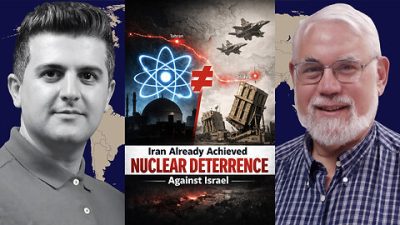
Prof. Ted Postol: Iran Already Achieved Nuclear Deterrence Against Israel
or go to
Aletho News Archives – Video-Images
From the Archives
How the occupied mentality syndrome works
Saudi Arabia on the American chessboard – Part 3
By B. J. Sabri | American Herald Tribune | June 27, 2016
Read part 2: “The occupied mentality Syndrome“
Previously I argued whether Saudi Arabia’s repeated involvements in U.S. interventions and wars stem from free national will or in response to a specific condition. For starters, in Saudi Arabia there is no national will. In Saudi Arabia, the national will is the will of the Al Saud clan. Still, when a major Arab state allies itself with a superpower that committed unspeakable crimes against humanity in almost every Arab country, then something is wrong. This fact alone should compel us to examine the U.S.-Saudi relation for one exceptional reason. As a result of the U.S.-Saudi wars, hundreds of thousands of people in Afghanistan, Iraq, Iran, Libya, Syria, Yemen, and Somalia have lost their lives. Millions became displaced in their own homelands. And millions more rendered refugees.
Attributing the Saudi policies to the bonds of “partnership” with the U.S. is frivolous. There are no bonds between these two thugs except those of business, military deals, secret plots, and wars. Proving this point, bonds such as these have no space for the American and Saudi peoples to share significant cultural or societal exchanges. If partnership is not the reason for the Saudi contribution to the U.S. strategy of empire and imperialism, then another reason must exist.
This leads to three possibilities. … continue
Blog Roll
 Aletho News
- REWRITING THE RISK? INSIDE THE GOVERNMENT’S VACCINE SAFETY MESSAGING
- “Davos Can Really Replace the UN”
- NIAID/NIH and USDA Fund Bioengineered Chimeric Influenza Viruses Built Using Pandemic H1N1 Components: Journal ‘Science Advances’
- Hezbollah hits Israeli warship off Lebanon’s coast, sets it aflame
- Iran slams US strikes on B1 bridge, Mahshahr petrochemical plants as ‘blatant acts of state terrorism’
- In letter to UN chief, Araghchi warns of dire consequences of US-Israeli attacks on Iran’s nuclear facilities
- Why the CIA conspiracy to invade Iran with Kurdish militias failed
- Why Are Upbeat US Claims About Mission to Rescue Pilot ‘Highly Questionable’?
- Aircraft destroyed during US ‘rescue’ of downed F-15 pilot cost more than $100 million each
- Washington University removes professor who condemned US-Israeli war on Iran
- If Americans Knew
- In Iran, Israel-US take aim at “reason, research, and freedom of thought” – Daily Update
- US loses planes over Iran, Israel downgrades Lebanon war goals – Daily Update
- Israel Is Blocking Palestinians from Easter at Church Where Jesus Resurrected
- Plot to assassinate Palestinian activist follows harassment campaign promoted by Zionist groups and elected officials
- Prominent New York synagogue hosts presentation on why U.S. Jews should support the ethnic cleansing of Gaza
- Tapper vs. Piker: Is the CNN Anchor Auditioning for David Ellison?
- Shouldn’t Democrats Be Able to Condemn Genocide?
- Israel-US kill negotiators, destroy civilian structures, but Iran’s military capabilities still largely intact – Daily Update
- ‘War crime’: Global condemnation as Israeli ministers celebrate death penalty law targeting Palestinian prisoners
- 7 Ways Israel Is Turning Lebanon Into Gaza
- No Tricks Zone
- An Inconvenient Tree: Uncovered In Alps… Europe Much Warmer Than Today 6000 Years Ago
- New Study Reports A 60% Slowdown In Greenland’s Ice Loss Rate In The Last Decade
- Low Intensity Tornado Wrecks Major Solar Farm, Creating A Potential Toxic Dump
- New Study Finds Warming Saves Lives…Cold Temperatures 12 Times More Deadly Than Excess Heat
- German Science Blog Accuses PIK Climate Institute Of Hallucinating Climate Tipping Points
- Devastating Assessment Of Comirnaty Vaccine By Former Senior Pfizer Europe Toxicologist
- New Study: CO2 Is ‘Effectively Negligible’ As An Explanatory Climate Change Factor Since 2000
- Former Pfizer Toxicologist Dr. Helmut Sterz Tells Bundestag Hearing Pfizer Vaccine Should Have Never Been Approved
- Energy Expert: Germany’s Nuclear Phaseout Was A “500 Billion Euro Mistake”
- New Research: South Australia’s Mid-Holocene Sea Surface Temperatures Were 4°C Warmer Than Today
 Aletho News