Why Israel Is Escalating Its War Crimes Against Lebanon
By Robert Inlakesh | The Palestine Chronicle | February 23, 2026
Key Analytical Points
- Israel’s pattern of ceasefire violations suggests a deliberate attempt to reshape deterrence rules in Lebanon rather than isolated tactical operations.
- Provocations aimed at Hezbollah appear designed to trigger a response that would justify a broader Israeli escalation under new “rules of engagement.”
- Hezbollah’s restraint signals long-term strategic patience rather than weakness, indicating preparation for a larger confrontation tied to regional dynamics.
- The northern front is increasingly linked to US–Iran tensions, raising the likelihood that Lebanon could become either a preemptive battlefield or a secondary theater in a wider war.
- The balance of power on the ground—particularly Hezbollah’s missile capabilities and ground forces—creates significant deterrent risk for Israel, limiting its escalation options despite mounting pressure.
Escalation under the Cover of Ceasefire
Since the beginning of Ramadan, Israel has notably ramped up its campaign of aggression against Lebanon. Although airstrikes committed throughout Lebanese territory have been routine since the implementation of the November 27, 2024, ceasefire agreement, what we are seeing now is a sign of panic amid rising tensions between Tel Aviv and Tehran.
Israel has committed the most violations of any ceasefire in recorded human history in Lebanon. At the tail end of November of 2025, UNIFIL – the United Nations peacekeeping forces – confirmed that Israel had committed upwards of 10,000 violations of the ceasefire agreement. This is no accident and confirms that the Zionist regime never had any intention of adhering to a cessation of hostilities with Hezbollah.
Instead, the Israelis sought to impose new equations on the ground, enabling total freedom of action, while also using their US allies to pressure the Lebanese state and its army to pursue a policy of undermining the group within the country.
It was never a realistic prospect that the Lebanese army was going to disarm Hezbollah; therefore, the only possible outcomes were going to be civil war or a campaign of pressure. Both favor Tel Aviv, with a civil war conflict being their preferred outcome.
Several times, the Israelis have attempted to provoke a reaction from Hezbollah, which has adhered to the ceasefire and not fired a single munition at their occupiers, who have now illegally established a military presence, intended to be permanent, in southern Lebanon.
These major provocations have included acts such as the assassination of Haytham Ali Tabatabai in southern Beirut. Tabatabai had taken over the role of Hezbollah’s top military chief following the assassination of Fouad Shukr the year prior. The Israelis have attacked the southern suburbs of the Lebanese capital, Dahiyeh, on a number of occasions, also committing civilian massacres in the south of the country up to the northern Bekaa Valley’s Baalbek.
Each of these waves of aggression was clearly designed to draw responses but failed to make Hezbollah bite. The idea was to set new rules of engagement, red lines, and establish a precedent for what constitutes aggression against Israel that would provoke a major bombardment of Lebanon.
Strategic Patience and Military Recalibration
On Hezbollah’s part, it appears that they understood what Israel was attempting to lure them into and instead refrained from responding, waiting for the opportune time to initiate a major war that would enable them to reclaim their territory and inflict what they see as sufficient acts of revenge on the Israeli enemy.
So, while Israel has been provoking Hezbollah and committing its daily acts of aggression against the civilian population in southern Lebanon in particular, Hezbollah has been working to rebuild and establish new battle plans. It has also become clear that the fall of Bashar al-Assad in Syria did not end the weapons transfers between Syria and Lebanon, something that both Israeli and US think tanks have themselves admitted.
Since the beginning of Ramadan, this campaign of incitement has only increased. On Friday, Israel launched an assassination strike, using three missiles, on the Palestinian refugee camp of Ain al-Hilweh, killing two members of Hamas and injuring a number of civilians. Then, later that same day, Israel bombed three populated buildings in the Bekaa Valley, killing 10, eight of whom were members of Hezbollah, and injuring 50 people.
The Northern Front
Israel and its Trump administration are now poised to enter a new conflict with Iran, as the largest US military buildup in the region since the illegal invasion of Iraq in 2003 continues. It has become clear that in the event a regime-change war is waged against the Islamic Republic, Hezbollah will very likely engage in a battle with the Israelis.
Nobody truly understands just how powerful Hezbollah currently is, yet it is clear from the final week of the 2024 Lebanon-Israel war that they possess ballistic missiles capable of successfully striking high-rise buildings in Tel Aviv, along with a large attack drone arsenal. However, their missile and drone power aside, Hezbollah’s biggest asset has proven to be their ground forces, which inflicted the largest number of military casualties during the war.
In other words, Hezbollah will act as Iran’s ground force in any regional war. If they can manage to breach the border into northern occupied Palestine, it will represent a major blow to the Israeli state, yet a battle in the heart of the Bekaa Valley and southern Lebanon could prove even more costly to the Israeli occupying forces.
It is because of this inevitable escalation in the north that the Israelis are displaying signs of panic and continue to target both Hezbollah members and civilians alike. There has even been a campaign of spraying cancer-causing chemical substances in the south, alongside a campaign of intimidation using their drone power, a similar strategy to what we saw in Gaza for decades.
If anything, the Israelis may even urge the United States to help them go after Hezbollah in Lebanon. There is a chance this could lead to a scenario where Lebanon is attacked prior to Iran, yet the inherent risks to this strategy could be that they then lose any element of surprise in their planned assault on Iran, especially in the event that Tehran comes to the aid of Hezbollah.
– Robert Inlakesh is a journalist, writer, and documentary filmmaker. He focuses on the Middle East, specializing in Palestine.
Sorry, the comment form is closed at this time.
Featured Video

Seyed M. Marandi: U.S. Military DIVIDED? Iran’s Secret Defense EXPOSED
or go to
Aletho News Archives – Video-Images
From the Archives
‘Israel sees Iran as obstacle to its policies’
Press TV – August 25, 2017
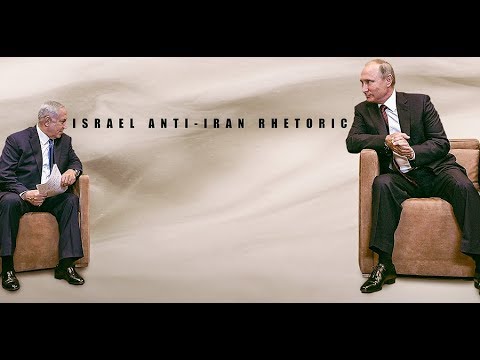
Prime Minister Benjamin Netanyahu has said that Israel felt threatened by Iran’s growing influence in the Middle East. Netanyahu expressed his Iranophobic view in a meeting with Russian President Vladimir Putin in Russia’s Black Sea resort of Sochi on Wednesday. Press TV has asked Scott Rickard, former American intelligence linguist from Tampa, Florida, and Brent Budowsky, a columnist at The Hill from Washington, to give their thoughts on the issue.
Rickard said Tel Aviv is concerned about the fact that the regime could not carry out its old project to spread sectarian divisions and pave the way for dismemberment of the countries in the Middle East region because of the Iranian-led resistance against Israeli policies, not only in the occupied territories of Palestine but also in the whole region.
“Iran is not a threat to Israel whatsoever. The threat that Israel sees is the fact that their Oded Yinon Plan is being put to a hold by Iran,” the intelligence linguist said on Thursday night.
“They (the Israelis) look at Iran as a threat only because they have no influence on their governments and Iran is autonomous and is not under the Zionist influence,” he added.
Since the victory of the Islamic Republic of Iran in 1979, Tehran has been critical of Israel’s policies in the region, whereas “no leaders [of other states] even dared to speak out against Zionism,” Rickard argued. … continue
Blog Roll
 Aletho News
- Striking Iran’s Infrastructure Would Have Little Military Impact – Report
- What’s Behind U.S./Israeli Strikes On Iranian Pistachio Factories?
- Seyed M. Marandi: U.S. Military DIVIDED? Iran’s Secret Defense EXPOSED
- How I fell foul of the BBC thought police
- The End of NATO
- 37 days of war on Iran cost US staggering $42bln, tracker shows
- Baghdad tells Asian refiners, traders to begin loading Iraqi crude amid Iranian exemption
- Under fire, Moscow and Tehran close ranks
- Iran, US receive Pakistan-mediated plan for ceasefire then final deal
- Iran submits demands for end to war as mediators scramble ahead of Trump deadline
- If Americans Knew
- U.N. experts demand Israel release prominent Gaza doctor after reports of ‘severe torture’
- Israel’s Latest Genocide Is Against the Shias of Lebanon. Why Is the World Silent?
- How Eliot Cohen’s influence over U.S. war-making paved the way for Trump’s war crimes in Iran
- Israelis don’t pay for the weapons we ‘sell’ to them — US taxpayers do
- While Distancing from AIPAC, Most 2028 Democratic Hopefuls Are Still Embracing Israel
- A brief history of the Israeli nuclear program, the open secret at the heart of the Iran war
- Israeli Settlers Killed a Palestinian Farmer on His Own Land, in Front of His Father. Yes, Again
- The US-Israeli War on Science is an Assault on our Future
- 100+ International Law Experts Say US Strikes on Iran Violate UN Charter, Could Be War Crimes
- ‘Vile, Horrifying, Evil’: Trump Threatens to Bomb Nation of 90 Million People ‘Back to the Stone Ages’
- No Tricks Zone
- An Inconvenient Tree: Uncovered In Alps… Europe Much Warmer Than Today 6000 Years Ago
- New Study Reports A 60% Slowdown In Greenland’s Ice Loss Rate In The Last Decade
- Low Intensity Tornado Wrecks Major Solar Farm, Creating A Potential Toxic Dump
- New Study Finds Warming Saves Lives…Cold Temperatures 12 Times More Deadly Than Excess Heat
- German Science Blog Accuses PIK Climate Institute Of Hallucinating Climate Tipping Points
- Devastating Assessment Of Comirnaty Vaccine By Former Senior Pfizer Europe Toxicologist
- New Study: CO2 Is ‘Effectively Negligible’ As An Explanatory Climate Change Factor Since 2000
- Former Pfizer Toxicologist Dr. Helmut Sterz Tells Bundestag Hearing Pfizer Vaccine Should Have Never Been Approved
- Energy Expert: Germany’s Nuclear Phaseout Was A “500 Billion Euro Mistake”
- New Research: South Australia’s Mid-Holocene Sea Surface Temperatures Were 4°C Warmer Than Today
 Aletho News