US university cancels Palestine conference citing sanctions concerns
Al Mayadeen | February 26, 2026
The University of Southern Maine has withdrawn permission to use a campus venue for a conference centered on Palestine, just days before it was scheduled to begin, triggering a dispute over sanctions law and First Amendment protections.
The event, titled “Consequence of Palestine,” had drawn more than 300 registrants and was organized by the Maine Coalition for Palestine, Maine Voices for Palestinian Rights, and the university’s department of criminology and sociology. It was expected to feature virtual remarks by Francesca Albanese, the United Nations special rapporteur for the occupied Palestinian territories, who has been under US sanctions since last year.
University officials said the decision was based on federal sanctions law. Samantha Warren, chief external and governmental affairs officer for the University of Maine system, told The Guardian in an email that “hosting a conference that is being actively promoted as including a speaker sanctioned by the US government would put our public university in violation of federal law”. She said organizers should have obtained authorization from the Treasury Department before proceeding.
Sanctions regulations prohibit US entities from providing “any goods or services” to individuals designated under sanctions regimes. Violations can carry severe penalties, including heavy fines and potential prison time. However, legal scholars argue that the scope of what constitutes a “service” remains ambiguous.
Campus rights clash
In December, the Treasury Department’s Office of Foreign Assets Control (OFAC) clarified in correspondence with the Middle East Studies Association that “no authorization” was required to include Albanese in an academic event, provided that she did not receive payment, reimbursement, or “training or assistance”. That clarification emerged after concerns were raised about the impact of sanctions on academic exchange.
Xiangnong Wang, a staff attorney at the Knight First Amendment Institute who had sought clarification from OFAC, said the cancellation reflects broader concerns about the chilling impact of sanctions on constitutionally protected speech. “It’s very concerning that sanctions continue to have such a broad deterrent effect on speech that is undoubtedly protected by the First Amendment,” he said.
Organizers said they were caught off guard by the abrupt cancellation. Abigail Fuller, a sociology professor involved in planning the conference, stressed the constitutional implications of the decision. “We’re a public university; the university system is subject to First Amendment laws,” she said. “We feel we have a very, very strong case that they are suppressing our free speech.”
According to organizers, they attempted to clarify that federal guidance did not require special permission to include Albanese. They even proposed removing her from the program in an effort to preserve the event. They were subsequently told there was insufficient time for administrators to evaluate the conference’s “risk”.
Speech under pressure
The dispute comes amid reports that Republican lawmakers had written to the system’s chancellor requesting “information on steps the university is taking to ensure the safety and well-being of its Jewish students”. Organizers believe such political pressure contributed to the reversal and said administrators had also expressed concern about possible federal funding consequences.
Albanese was sanctioned last July, with US authorities accusing her of “unabashed antisemitism, expressed support for terrorism, and open contempt for the United States, Israel, and the West”. She has previously rejected those allegations and criticized the move as politically motivated, describing the United States as “a country of contradictions, full of ideals and principles and still, plotting against democratic values”.
The Treasury Department did not immediately respond to requests for comment on the university’s interpretation of sanctions law.
Despite losing access to their campus venue, conference organizers say they are seeking an alternative location and are exploring possible legal action. Fateh Azzam, a member of the Maine Coalition for Palestine, said canceling the conference outright was not an option.
“That would mean that they have effectively silenced an open and public debate on the issues,” he said. “This controversy will probably bring in more people.”
Sorry, the comment form is closed at this time.
Featured Video
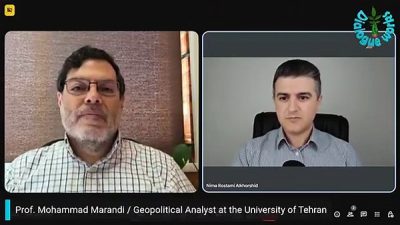
Seyed M. Marandi: U.S. Military DIVIDED? Iran’s Secret Defense EXPOSED
or go to
Aletho News Archives – Video-Images
From the Archives
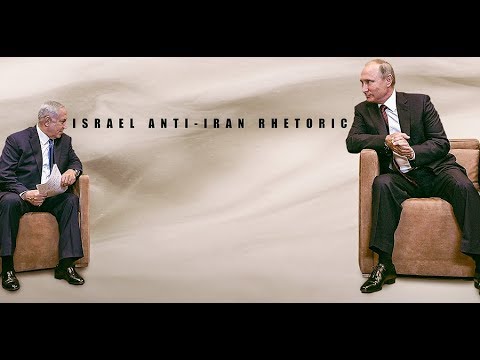
‘Israel sees Iran as obstacle to its policies’
Press TV – August 25, 2017
Prime Minister Benjamin Netanyahu has said that Israel felt threatened by Iran’s growing influence in the Middle East. Netanyahu expressed his Iranophobic view in a meeting with Russian President Vladimir Putin in Russia’s Black Sea resort of Sochi on Wednesday. Press TV has asked Scott Rickard, former American intelligence linguist from Tampa, Florida, and Brent Budowsky, a columnist at The Hill from Washington, to give their thoughts on the issue.
Rickard said Tel Aviv is concerned about the fact that the regime could not carry out its old project to spread sectarian divisions and pave the way for dismemberment of the countries in the Middle East region because of the Iranian-led resistance against Israeli policies, not only in the occupied territories of Palestine but also in the whole region.
“Iran is not a threat to Israel whatsoever. The threat that Israel sees is the fact that their Oded Yinon Plan is being put to a hold by Iran,” the intelligence linguist said on Thursday night.
“They (the Israelis) look at Iran as a threat only because they have no influence on their governments and Iran is autonomous and is not under the Zionist influence,” he added.
Since the victory of the Islamic Republic of Iran in 1979, Tehran has been critical of Israel’s policies in the region, whereas “no leaders [of other states] even dared to speak out against Zionism,” Rickard argued. … continue
Blog Roll
 Aletho News
- Trump Claims Ceasefire, Reopening of Strait of Hormuz Agreement with Iran
- Israeli tank fire killed UN peacekeeper in Lebanon, UNIFIL investigation finds
- Russia, China block Bahrain-sponsored UN resolution on Strait of Hormuz
- The US-Israeli War on Science is an Assault on our Future
- Trump’s Promise to Bomb Iran ‘Like Never Before’ Faces Brutal Logistics — Expert
- Germany seeks to restrict stays abroad for men of fighting age – Berliner Zeitung
- Evidence points to Ukraine being behind TurkStream attempted sabotage, but that should come as no surprise
- Sri Lanka secures supplies of Russia oil – minister
- Nations across Asia strike direct deals with Iran for Hormuz passage
- IRGC commander declares ‘new phase’ of reprisal attacks against aggressors
- If Americans Knew
- Thousands dead and neighborhoods razed to the ground: Aid agencies fear southern Lebanon is becoming the new Gaza
- The war the US is fighting for Israel could cost trillions
- ‘Cigarette Burns, Nail Wounds’: Toddler Tortured in Gaza to Coerce Father
- Trump Says US Sent ‘a Lot of Guns’ to Protesters in Iran
- Israeli forces destroy 17 UN peacekeeper cameras in south Lebanon
- US-Israeli strikes ‘completely destroy’ synagogue in Tehran
- Archbishop for US Military Says Iran War Is Unjust Under Catholic Teaching
- Iranian leaders’ Open Letters to the American People
- Trump says Iranians appreciate bombs, WHO warns of nuclear risks – Daily Update
- U.N. experts demand Israel release prominent Gaza doctor after reports of ‘severe torture’
- No Tricks Zone
- An Inconvenient Tree: Uncovered In Alps… Europe Much Warmer Than Today 6000 Years Ago
- New Study Reports A 60% Slowdown In Greenland’s Ice Loss Rate In The Last Decade
- Low Intensity Tornado Wrecks Major Solar Farm, Creating A Potential Toxic Dump
- New Study Finds Warming Saves Lives…Cold Temperatures 12 Times More Deadly Than Excess Heat
- German Science Blog Accuses PIK Climate Institute Of Hallucinating Climate Tipping Points
- Devastating Assessment Of Comirnaty Vaccine By Former Senior Pfizer Europe Toxicologist
- New Study: CO2 Is ‘Effectively Negligible’ As An Explanatory Climate Change Factor Since 2000
- Former Pfizer Toxicologist Dr. Helmut Sterz Tells Bundestag Hearing Pfizer Vaccine Should Have Never Been Approved
- Energy Expert: Germany’s Nuclear Phaseout Was A “500 Billion Euro Mistake”
- New Research: South Australia’s Mid-Holocene Sea Surface Temperatures Were 4°C Warmer Than Today
 Aletho News