Is Canada Really Warming?
By Tom Harris | American Thinker | January 30, 2026
Is Canada really warming at double the global average rate, as the Canadian government says it is? A new report says no, because the data Environment and Climate Change Canada (ECCC) uses are apparently corrupted by fundamental mistakes, mistakes so severe that when corrected, all the supposed warming of the past six or seven decades vanishes.
Given that Canada represents a large fraction of global land surface area, one naturally wonders if the world is warming at anything like we are told it is.
This discovery should have generated mainstream media headlines across Canada. After all, the mistakes in the Canadian temperature data were discovered over four years ago by Dr. Joseph Hickey, a highly qualified Canadian data scientist, and the group I lead, the International Climate Science Coalition – Canada, has been publicizing the story for the past month.
But don’t expect mainstream media in the Great White North to say anything about this. Most of Canada’s press are heavily subsidized by the federal and provincial governments, which would probably not appreciate the story being covered. Dr. Dave Snow, Associate professor in political science at the University of Guelph, writes:
“Canada has created a bevy of policies, ranging from subsidies to tax breaks to mandated contributions from foreign tech companies, that undoubtedly constitute a major portion of news outlets’ revenue and journalists’ salaries — potentially upwards of 50 percent.”
Publicly questioning government narratives on something as significant as climate change is a risky proposition for any editor when doing so leaves their paymasters with egg on their faces.
Here’s what governments in Canada — and the media outlets reliant on their largess — would rather you never heard. On December 23, the report “Artificial stepwise increases in homogenized surface air temperature data invalidate published climate warming claims for Canada” was released by Dr. Joseph Hickey, a data scientist with a PhD in Physics. The report was published by CORRELATION Research in the Public Interest regarding a significant error in Canada’s temperature data.
Using the data from ECCC for hundreds of stations across the country, scientists had previously calculated that the surface air temperature has increased 1-2 degrees Celsius over the past six to seven decades in Canada. Yet in 1998, the exact year in which 72 Canadian reference climatological stations were first added to the Global Climate Observing System, a sudden stepwise increase of approximately 1 degree Celsius occurred at most stations across the country.
Numerous studies in scientific literature assert that sudden temperature jumps like this are not due to real climactic change but instead are caused by temperature measurement artifacts corrupting the data. They contend that this data should therefore be removed from the record. Even though one of the studies explaining this was authored by Dr. Lucie A. Vincent, the senior Environment Canada Research Climatologist, the temperature jump was left in ECCC’s data and is still there to this day. Hickey concludes, “The reported climate warming of Canada appears to be entirely from a temperature measurement artifact.”
Hickey first discovered this in 2021 when he was as an analyst for the Bank of Canada and so was barred from sharing his findings with the public. After leaving the bank, he secured his communications with Environment Canada via an access to information, which is why we know what happened next.
In that year Hickey alerted Environment Canada to the problem and explained in detail to Vincent that the sharpness of the temperature increase, and its magnitude, indicate that it is not due to real climactic change. He also laid out a thorough analysis of potential sources of the artifact, which could include land use changes and instrumentation changes. Both of these could easily cause a one-degree shift in the temperature data. Moreover, he explained, “there are no other similar large and geographically widespread discontinuities in the AHCCD dataset [Environment Canada’s flagship temperature dataset] at other years.” This increase could be responsible for almost all the claimed warming calculated for Canada over the past six or seven decades.
Vincent essentially brushed him off, did not provide an explanation for the step increase, and said that the shift “is probably due to climate variability only.”
So, Canada is spending hundreds of billions of dollars to fight climate change largely based on data that the government scientist most involved in its generation can only say is “probably” indicative of warming.
Hickey was not the only Bank of Canada employee to find fault with ECCC’s temperature data. In his December report, he writes:
“On December 7, 2020, Bank of Canada Economist Julien McDonald-Guimond sent an email to Environment Canada researchers with an inquiry about the … daily temperature records, noting he had found some cases in which the daily minimum temperature was greater than the daily maximum temperature for the same day and for the same AHCCD station.”
In fact, there were more than 10,000 instances of days for which the daily minimum temperature was greater than the daily maximum temperature.
Environment Canada Climate Data Analyst Megan Hartwell replied to McDonald-Guimon, saying that “We were quite surprised by the frequency of the issue you reported, and have taken some time to go through the data carefully.”
That ECCC were surprised by McDonald-Guimond’s finding is cause enough to worry. But the fact that they now “have taken some time to go through the data carefully” begs the question: didn’t they go through the data carefully before releasing it the first time?
Environment and Climate Change Canada have yet to respond to Hickey’s December report. They have some explaining to do.
Tom Harris is Executive Director of International Climate Science Coalition – Canada.
Climate Scientist Who Predicted End Of “Heavy Frost And Snow” Now Refuses Media Inquiries
By P Gosselin | No Tricks Zone | February 3, 2026
More than two decades ago, renowned climate scientist Mojib Latif of Germany’s Max Planck Instiute for Meterology, based in Hamburg, warned the climate-ambulance chasing Der Spiegel that, due to global warming, Germany would likely no longer experience harsh winters with heavy frost and snow as it had in previous decades.
In light of the current severe winter weather in Germany, Latif’s statements are facing renewed scrutiny. An article appearing in the Berliner Zeitung notes that Latif’s prophecy has “aged poorly” and he appears to want to have nothing to do with them.
Hiding from the media
According to the Berliner Zeitung, the former Max Planck Institute scientist has recently stopped responding to media inquiries regarding his past claims. Critics argue that such drastic predictions damage the credibility of climate science, while others point out that extreme weather events—including intense cold snaps—can still occur within the broader context of climate change.
No Easter snow as well
Latif also claimed he recalled snow in the past occurring at Easter time, implying this no longer happens today. But that too was a false claim. perhaps prof. Latif will answer phone calls in April?
The reality of Trump’s cartoonish $1.5 trillion DOD budget proposal
This dramatic escalation in military spending is a recipe for more waste, fraud, and abuse
By Ben Freeman and William Hartung | Responsible Statecraft | January 8, 2026
After promising on the campaign trail that he would drive the war profiteers out of Washington, and appointing Elon Musk to trim the size of government across the board, some will be surprised at President Trump’s social media post on Wednesday that the U.S. should raise the Pentagon budget to $1.5 trillion. That would mean an unprecedented increase in military spending, aside from the buildup for World War II.
The proposal is absurd on the face of it, and it’s extremely unlikely that it is the product of a careful assessment of U.S. defense needs going forward. The plan would also add $5.8 trillion to the national debt over the next decade, according to the nonpartisan Committee for a Responsible Budget.
This would fly in the face of the purported savings of Elon Musk’s Department of Government Efficiency (DOGE). In fact, a $500 billion increase in Pentagon spending would be more than double all of the alleged budget cuts wrought by DOGE, even according to DOGE’s own exaggerated figures. The $500 billion increase in Pentagon spending would also be more than the entire military budget of any country in the world, and more than China, Russia, and Iran spend on their militaries combined.
And, the Pentagon budget is already enormous, at $1 trillion per year, with more than half of that going to Pentagon contractors, and untold more lost to waste, fraud, and abuse. Exactly how much of our tax dollars devoted to propping up the Pentagon are wasted is unclear, because the Pentagon has never passed an audit.
We do know that spending on dysfunctional, unnecessary or unworkable systems like the F-35, highly vulnerable $13 billion aircraft carriers, the impossible dream of a leak proof Golden Dome missile defense system, and an unnecessary across-the-board scheme to spend up to $2 trillion on new nuclear weapons over the next two decades will waste tens of billions of dollars every year for a long time to come.
Add to this the Pentagon’s moves to weaken its independent weapons testing office and reduce oversight of bloated weapons contractors, and we have a perfect recipe for increasing waste, fraud, and abuse on the part of the Pentagon and its contractors. And, as always, the bedrock of overspending on the Pentagon is America’s hyper-militarized, “cover the globe” military strategy, an approach that seeks to maintain the ability to intervene anywhere in the world on short notice.
The president also claimed that his $1.5 trillion Pentagon spending proposal, if implemented, will fund our “dream military.” More likely, it will initiate a period of blatant waste and underwrite misguided and dangerous military adventures like the occupation of Venezuela.
Even with a Congress that has been giving the Pentagon a blank check for years, the $1.5 trillion figure is unlikely to pass muster. If we want a safer nation, we should be going in the other direction, towards a lower Pentagon budget, driven by a more intelligent and restrained strategy, and a more rigorous approach to devising, developing, and producing weapons.
Ben Freeman is Director of the Democratizing Foreign Policy program at the Quincy Institute and the author of “The Trillion Dollar War Machine: How Runaway Military Spending Drives America into Foreign Wars and Bankrupts Us at Home” (2025)
NATO’s ‘Agent Rutte’ in blatant sabotage of Ukraine peace negotiations
Strategic Culture Foundation | February 7, 2026
NATO chief Mark Rutte declared in a high-profile address to the Ukrainian parliament this week that alliance troops would be deployed in Ukraine immediately on signing any peace deal with Russia.
He asserted that the NATO forces would be British and French, deployed “on the land, in the air, and at sea.” He added that the coalition would have the “crucial backstop” of a U.S. security guarantee if “Russia tried to subjugate Ukraine again.”
It seems more than a coincidence that three days after Rutte spoke in the Ukrainian Verkhovna Rada (parliament), there was an assassination attempt in Moscow on a top Russian general. Lieutenant General Vladimir Alekseev, the deputy commander of Russian military intelligence (GRU), was shot several times in the back by a gunman.
This was while delicate negotiations were being conducted in Abu Dhabi to find a peace settlement to the nearly four-year war in Ukraine. Russian delegates met with American and Ukrainian counterparts for a second round of talks this week.
Rutte’s speech in Kiev and the assassination attack in Moscow appear to be calculated moves to sabotage the negotiation efforts that the Trump administration has been pushing.
First, the NATO chief knows full well that Russia is adamant that any settlement in Ukraine will not involve the presence of NATO troops, whether they are called “peace monitors” or “coalition of the willing.” Moscow has repeatedly expressed in the clearest terms that such a contingency is out of the question and non-negotiable.
So, Rutte’s forcing the issue of deployment can only mean that the real aim is to make any agreement with Russia impossible. This is while the mealy-mouthed former Dutch prime minister was also saying that he backed efforts by Trump to end this “terrible conflict”.
“Some European Allies have announced that they will deploy troops to Ukraine after a deal is reached. Troops on the ground, jets in the air, ships on the Black Sea. The United States will be the backstop; others have vowed to support in other ways… The security guarantees are solid, and this is crucial – because we know that getting to an agreement to end this terrible war will require difficult choices,” said Rutte with double-think.
Moreover, in his latest pronouncements, Rutte dispensed with the deceptive terms of NATO forces supposedly acting as “peacekeepers”. His gung-ho rhetoric of troops “on the land, jets in the air, and ships at sea” sounded more like a stealthy plan for NATO military intervention to escalate the confrontation from a proxy one to a full-on war.
Significantly, too, Rutte declared that NATO was gearing up to increase military supplies to Ukraine. He said that an additional $15 billion was earmarked by the European members to buy weapons sourced from the U.S. He concluded his speech with the World War Two fascist slogan “Slava Ukraini!” (Glory to Ukraine!). It was a rallying call for the Kiev regime and its NeoNazi adherents to keep fighting.
As with the assassination plot on the GRU deputy commander, the objective seems to be to frustrate any negotiations to end the war. The head of the Russian security delegation in Abu Dhabi is reportedly GRU Director, Admiral Igor Kostyukov. That his deputy was shot several times in his Moscow home as talks were taking place outside the country would appear to be a calculated provocation.
The irony is that the European NATO members constantly accuse Russia of not wanting to make peace. They make the preposterous claim that Russian President Vladimir Putin is intent on conquering the rest of Europe when Ukraine is defeated. The fact is, Moscow has consistently called for a diplomatic process to resolve the root causes of the conflict (NATO’s historic expansion) and to formulate a new collective security treaty for Europe based on indivisible security for all. Russia also wants to keep the territories that are historically Russian.
It is the transatlantic axis of U.S. and European NATO hardliners who don’t want a diplomatic settlement. They want the proxy war against Russia to persist indefinitely. It was they who instigated the hostilities with the CIA-backed coup in Kiev in 2014, and, before that, with numerous color revolutions after the collapse of the Soviet Union in 1991.
It is not clear what Trump’s agenda is. Is he an inconsequential maverick, or is the deep state pulling his chain? He talks about making peace with Russia, yet his administration is sanctioning Russia’s vital oil exports, seizing cargo ships in international waters, coercing India and other nations to halt trade with Russia, and threatening its allies like Iran, Venezuela, and Cuba. Is his Ukraine diplomacy a guise for continuing aggression in another form? Or is it muddled thinking? Moscow appears to be giving Trump the benefit of the doubt and is engaging in talks to explore a peaceful settlement in Ukraine.
That said, however, a red line for Moscow is the proposals to deploy NATO troops in Ukraine. That’s not ending root causes. It is fertilizing them.
The transatlantic imperialist nexus (the U.S. and European ruling class, the CIA and its intelligence counterparts, and the military-industrial complex) is driven by hegemonic goals. Russia, China, and the non-Western multipolar world must be contained or rolled back, as during the Cold War.
The proxy war in Ukraine demonstrated that Russia could not be strategically defeated, as the Western hegemons desired. Their next best option is to keep Ukraine militarized and to keep Russia on guard to drain its resources. It still amounts to a war agenda.
Mark Rutte’s performance this week is that of a minion for the war agenda. His every word and deed speak of deliberately inciting aggression while he duplicitously talks about supporting peace. Eight decades ago, the Nuremberg Trials defined such aggression as the “supreme crime”.
Even some mainstream European politicians have taken note of Rutte’s sinister psychology. Charles Michel, the former European Council President, said in a media interview last week: “I want to be clear, Mark Rutte is disappointing and I’m losing confidence… I’m not expecting [him] to be an American agent.”
Agent Rutte should be in a modern-day dock. He and his masters want to push the world into catastrophe.
‘Fact-checking’ as a disinformation scheme: The Brazilian case of Agência Lupa
By Raphael Machado | Strategic Culture Foundation | February 7, 2026
Since the term “fake news” emerged in the world of political journalism, we have been confronted with a new angle through which the establishment attempts to reinforce its hegemony in the intellectual and informational sphere: by simulating ideology as science, data, or fact.
A fundamental aspect of hegemonic liberalism in the “rival-less” post-Cold War world is the transition of ideology into the diffuse realm of pure facticity. What decades earlier was clearly identified as belief comes to be taken as “data,” that is, as indisputable, not open for debate. This is the case, for example, with the myth of “democracy,” the myth of “human rights,” the myth of “progress,” and the myth of the “free market.” And today, we could extend this to the dictates of “gender ideology” and a series of other beliefs of ideological foundation, which are nevertheless taken as scientific facts.
“Fact-checking” has thus become one of the many mechanisms used by the establishment to reinforce systemic “consensus” in the face of the emergence of alternative perspectives following the popularization of the internet and independent journalism. The “authoritative” distinction made by a self-declared “independent” and “respectable” agency between what would be “fact” and what would be “fake news” has become a new source of truth.
Some liberal-democratic governments, like the USA, have gone so far as to create special departments dedicated to “combating fake news,” thus acting as authentic “Ministries of Truth” of Orwellian memory.
However, even within the “independent” sphere, we rarely encounter genuine independence. On the contrary, in fact, Western “fact-checking agencies” tend to be well-integrated into the constellation of NGOs, foundations, and associations of the non-profit industrial complex, which, in turn, is permeated by the money of large corporations and the interests of liberal-democratic governments. Even their staff tend to be revolving doors for figures coming from the NGO world, mainstream journalism, and state bureaucracy.
Although the phenomenon is of Western origin, Brazil is not exempt from it. “Fact-checking agencies” also operate here — most of them engaged in the same types of disinformation operations as the governments, newspapers, and NGOs that sponsor them.
A typical example is Agência Lupa.
Founded in 2015, its founder Cristina Tardáguila previously worked for another disinformation apparatus disguised as “fact-checking,” Preto no Branco, funded by Grupo Globo (founded and owned by the Marinho family, members of which are mentioned in the Epstein Files). Lupa was financially boosted by João Moreira Salles, from the billionaire banker family Moreira Salles (of Itaú Unibanco).
Despite claiming independence from the editorial control of Revista Piauí, also controlled by the Moreira Salles family, Agência Lupa continues to be virtually hosted by Piauí’s resources, where Tardáguila worked as a journalist from 2006 to 2011. Furthermore, she also received support from the Instituto Serrapilheira, also from the Moreira Salles family, during the health crisis to act as a mechanism for imposing the pandemic consensus in what was one of the largest social experiments in human history.
In parallel, it is relevant to mention that the same João Moreira Salles was involved decades ago in a scandal after it was revealed that he had financed “Marcinho VP,” one of the leaders of the drug trafficking organization Comando Vermelho. Moreira Salles made a deal with the justice system to avoid being held accountable for this involvement.
Tardáguila was also the deputy director of the International Fact-Checking Network, an absolutely “independent” “fake news combat” network, yet funded by institutions such as the Open Society, the Bill & Melinda Gates Foundation, Google, Meta, the Omidyar Network, and the US State Department, through the National Endowment for Democracy.
Today Tardáguila no longer runs Lupa, but her “profile” on the official page of the National Endowment for Democracy (notorious funder of color revolutions and disinformation operations around the world) states that she is quite active at the Equis Institute, which counts among its funders the abortion organization Planned Parenthood, and aims to conduct social engineering against “Latino” populations.
Lupa is currently headed by Natália Leal. Contrary to the narrative of “independence,” the reality is that she has worked for several Brazilian mass media outlets, such as Poder360, Diário Catarinense, and Zero Hora, in addition to also writing for Revista Piauí, from the same Moreira Salles. Leal is less “internationally connected” than Tardáguila, but she was “graced” with an award from the International Center for Journalists, an association of “independent journalists” that, in fact, is also funded by the US State Department’s National Endowment for Democracy, the Bill & Melinda Gates Foundation, Meta, Google, CNN, the Washington Post, USAID, and the Serrapilheira Institute itself, also from Moreira Salles.
Quite clearly, it is somewhat difficult to take seriously the notion that Lupa would have sufficient autonomy and independence to act as an impartial arbiter of all narratives spread on social networks when it and its key figures themselves have these international connections, including at a governmental level.
But even on a practical level, it is difficult to take seriously the self-attributed role of confronting “fake news.” Returning to the pandemic period, for example, the differentiated treatment given by the company to the Russian Sputnik vaccine and the Pfizer vaccine is noteworthy. The former is treated with suspicion in articles written in August and September 2020, both authored by Jaqueline Sordi (who is also on the staff of the Serrapilheira Institute and a dozen other NGOs funded by Open Society), the latter is defended tooth and nail in dozens of articles by various authors, ranging from insisting that Pfizer’s vaccines are 100% safe for children, to stating that Bill Gates never advocated for reducing the world population.
On this matter, by the way, it is important to emphasize that Itaú coordinates investment portfolios that include Pfizer, therefore, there are business interests that bring the Moreira Salles family and the pharmaceutical giant closer.
But beyond disinformation about Big Pharma, as well as about other places around the world, such as Venezuela, regarding which Lupa claims that María Corina Machado has the popular support of 72% of the Venezuelan population (based on a survey by an institute that is not even Venezuelan, ClearPath Strategies), Lupa seems to have a particular obsession with Russia and, curiously, Lupa’s alignment with the dominant narratives in Western media is absolute.
Lupa argues, for example, that the Bucha Massacre was perpetrated by Russia, using the New York Times as its sole source. Regarding Mariupol, it insists on the narrative of the Russian attack on the maternity hospital and other civilian targets, even mentioning Mariana Vishegirskaya, who now lives in Moscow, has admitted to being a paid actress in a staging organized by the Ukrainian government, and now works in the Social Initiatives Committee of the “Rodina” Foundation. It also denies the attempted genocide in Donbass and the practice of organ trafficking in Ukraine.
An article written by founder Cristina Tardáguila herself relies on the Atlantic Council as a source to accuse Russia of spreading disinformation, one of which would be that Ukraine is a failed state subservient to Europe — two pieces of information that any average geopolitical analyst would calmly confirm.
A particular object of Lupa’s obsession is the Global Fact-Checking Network — of which, by the way, I am a part. It is one of the few international organizations dedicated to fact-checking in a manner independent of ideological constraints, counting among its members a team that is, certainly, much more diverse and multifaceted than the typical “revolving door” of fact-checking agencies in the Atlantic circuit, where everyone studied more or less in the same places, worked in mass media, and were, at some point, funded or received grants from Open Society, the Bill & Melinda Gates Foundation, and/or the US State Department.
Lupa’s criterion for attacking the GFCN is… precisely obedience or not to Western mass media sources, in a circular reasoning that cannot go beyond the argument from authority.
This specific case helps to expose a bit the functioning of these disinformation apparatuses typical of hybrid warfare, which disguise themselves in the cloak of journalistic neutrality to engage in informational warfare in defense of the liberal West.
The EV Car Crash
With the petrol and diesel car ban less than four years away, there’s one big problem: nobody wants to buy electric cars
By Paul Homewood | The Climate Skeptic | February 6, 2026
With the ban on the sale of new petrol and diesel cars less than four years away now, there remains one seemingly insurmountable obstacle: nobody wants to buy electric cars.
Last year, sales of EVs achieved a market share of just 23.43%. Newly released figures for last month show this fell to 20.6%. The Government has set a target this year of 33%, rising to 66% in 2029.
Once petrol and diesel cars (known as ICE vehicles, short for Internal Combustion Engine) are banned in 2030, zero emission cars must make up at least 80% of the market, with the rest filled with hybrids. However, the latter will also be gradually phased out by 2035. Zero emission essentially means battery-electric, although hydrogen fuel-cell vehicles would also qualify.
To enforce the switch to EVs, the government introduced the ZEV (Zero Emission Vehicle) mandate. Motor manufacturers who fail to hit their ZEV target for the year must either buy credits from manufacturers who have exceeded targets or pay a fine of £15,000 for every car below target.
There are certain allowances available, but these are not significant. The only other option open to manufacturers who fall short is to carry forward their deficit, in the hope they are in surplus in a year or two time. Understandably, this has been likened to taking out a payday loan!
The first year of the ZEV mandate was 2024, when the target was 22%. Actual EV sales that year only reached 19.6%, leaving an effective shortfall of 47,000 cars. At £15,000 a time, that means a fine of around £700 million. The Department for Transport will publish its full analysis next month, which will list surpluses and shortfalls by manufacturer and the actions they have taken to comply, e.g. pay a fine, buy allowances or carry forward.
Last year, EV sales increased to a share of 23.9%, but this was still well below the target of 28%. Motor manufacturers it seems are building up massive deficits in EV sales, which sooner or later will have to be paid for.
Worse still, most EV sales go to fleet and business sectors, driven by generous tax breaks. It is estimated that only about 10% of private buyers go for electric.
The reasons are well known. EVs cost much more to buy, and most models don’t have the range that drivers need. On top of that, buyers face massive losses when trading them in because second hand prices are so low.
But there is one other factor which is often overlooked.
It is reckoned that four in 10 households don’t have off-street parking, so cannot easily charge at home. Using a public charger means that running costs would typically be triple those of a petrol car when fuel duties are excluded. That is, I should point out, if you can actually find one on the way home from work that is not already in use.
Local councils such as my own have already made it clear that trailing cables across the pavement is not permitted and that enforcement action will be taken. Where then will EV drivers be able to charge their cars?
There are plenty of fine words from central and local government about installing more public chargers. But the simple reality is that there will never be enough – local councils don’t have the money, and it is not their job anyway to waste taxpayer money in this way.
Cardiff City Council are a case in point. It is estimated that there are about 200,000 cars in Cardiff, about half of which don’t have access to off street parking. The City Council has just announced plans to install 80 new EV charging stations, plugged into lampposts outside residents’ homes.
The plan won’t make the slightest difference when there are 100,000 cars which all need charging. But it will create real difficulties for the poor beggars who happen to live next to one and will have to find somewhere else to park. The thought of all the other motorists on the street competing to get to that lamppost first every night and the aggro which will undoubtedly follow is frightening.
It is hard to avoid the conclusion that the objective of successive governments and council planners all along has been to force us out of our cars and onto public transport.
How Objectivists Learned to Stop Worrying and Love Zionist Regime Change Wars
By Jose Alberto Nino – Occidental Observer – February 6, 2026
In 1964, Ayn Rand told Playboy magazine that any free nation had the moral right to invade Soviet Russia or Cuba. “Correct. A dictatorship — a country that violates the rights of its own citizens — is an outlaw and can claim no rights.” Instead, she preferred waging economic warfare against these rogue governments. “I would advocate that which the Soviet Union fears above all else, economic boycott. I would advocate a blockade of Cuba and an economic boycott of Soviet Russia, and you would see both those regimes collapse without the loss of a single American life.”
Six decades later, her disciples are advocates of a ground invasion of Iran, crushing Palestinian society, and not ruling out the use of nuclear weapons to bring the Islamic Republic of Iran to heel. A secular ideology devoted to laissez faire capitalism now sounds indistinguishable from the most hawkish neoconservatives and aligns with religious nationalist movements in Israel that openly advocate territorial expansion and Palestinian expulsion.
Rand, who is of Russian Jewish extraction, set the tone in her 1979 appearance on the Phil Donahue Show. “If you mean whose side should we be on, Israel or the Arabs? I would certainly say Israel because it’s the advanced, technological, civilized country amidst a group of almost totally primitive savages who have not changed for years and who are racist and who resent Israel because it’s bringing industry, intelligence, and modern technology into their stagnation,” Rand stated.
She doubled down. “The Arabs are one of the least developed cultures. They are typically nomads. Their culture is primitive, and they resent Israel because it’s the sole beachhead of modern science and civilization on their continent. When you have civilized men fighting savages, you support the civilized men, no matter who they are.”
Leonard Peikoff, Rand’s designated heir and also of Russian Jewish extraction, continued his predecessor’s hawkish legacy. published a full page advertisement in The New York Times on October 2, 2001. “Fifty years of increasing American appeasement in the Mideast have led to fifty years of increasing contempt in the Muslim world for the U.S. The climax was September 11, 2001.”
He identified Iran as the central threat. “The first country to nationalize Western oil, in 1951, was Iran.” Iran “is the most active state sponsor of terrorism, training and arming groups from all over the Mideast.” His analogy was stark. “What Germany was to Nazism in the 1940s, Iran is to terrorism today. Whatever else it does, therefore, the U.S. can put an end to the Jihad mongers only by taking out Iran.”
Peikoff demanded total war to address the issue of Iran. “Eliminating Iran’s terrorist sanctuaries and military capability is not enough. We must do the equivalent of de-Nazifying the country, by expelling every official and bringing down every branch of its government. This goal cannot be achieved painlessly, by weaponry alone. It requires invasion by ground troops, who will be at serious risk, and perhaps a period of occupation.”
The potential for mass civilian casualties was of no concern to Peikoff, who firmly believed that only full-fledged military force could put Iran in its place. “A proper war in self-defense is one fought without self-crippling restrictions placed on our commanders in the field. It must be fought with the most effective weapons we possess [a few weeks ago, Rumsfeld refused, correctly, to rule out nuclear weapons]. And it must be fought in a manner that secures victory as quickly as possible and with the fewest U.S. casualties, regardless of the countless innocents caught in the line of fire.”
In a 2006 podcast, Peikoff advocated using nuclear weapons against Iran if necessary. On Israel and Palestine, Peikoff’s 1996 essay dismissed Palestinian territorial claims entirely. “Land was not stolen from the nomadic tribes meandering across the terrain, any more than the early Americans stole this country from the primitive, warring Indians.” He called land for peace “a repugnant formula for Israel’s self-immolation.”
Yaron Brook, the current Ayn Rand Institute board chairman, extended these radical Zionist principles to the 21st century. After October 7, 2023, he called for Hamas’s total destruction. “Israel must destroy Hamas, everything about it. Its political leaders, wherever they are hiding must be assassinated, their entire military infrastructure destroyed, its supporters, brought to their knees.”
At a January 2024 event, Brook argued Israel should see “the Palestinian population at large as an enemy” and called for “a fundamental shift in Palestinian culture.” Such a scenario can only be achievable when Palestinians “have lost every ounce of hope that they can beat Israel.”
Brook would not allow aid, electricity, or internet into Gaza. He argued Israel shows excessive restraint despite death tolls exceeding 70,000, which includes at least 20,000 children. “So many Israeli soldiers are dying on the field because Israel refrains from defending them and places the lives of civilians on the other side as more valuable than its own soldiers: He described Gaza as “a primitive society” requiring fundamental transformation like Germany and Japan after World War II.
On Iran, Brook advocated for regime change as the only solution to this geopolitical dilemma. “Israel cannot take out the Iranian nuclear facility. So what is the only other way to stop the Iranians from getting a bomb? The only other way is regime change.” He specified acceptable outcomes for Israel in a confrontation against Iran. “It has to go for an internal revolution in Iran taking out the current mullahs, whether with more moderates who are committed to doing away with the nuclear program or whether it’s all out, you know, liberal democracy-type revolution but or whether it’s the shah coming back. Right the son of the shah, but it has to be regime change.”
Objectivists are a quirky bunch when it comes to their ideology, which may appear critical of mainstream political currents. Brook’s 2007 essay “Neoconservative Foreign Policy: An Autopsy” condemned neoconservatives for advocating democracy promotion rather than rational self-interest. Yet on Israel and Iran, Objectivists and neoconservatives find common ground. Both support unlimited Israeli military action, Iranian regime change, opposition to Palestinian statehood, and framing the conflict as civilization versus barbarism.
Israel Prime Minister Benjamin Netanyahu recently declared “absolute” support for Greater Israel, Jewish sovereignty from the Jordan River to the Mediterranean. Such a Jewish supremacist vision is suffused with religious rhetoric. At first glance, one would think that Objectivism’s atheistic nature would dismiss such religious appeals. But yet again, the Ayn Rand Institute’s positions end up aligning with the Greater Israel framework through the rejection of Palestinian statehood and framing Palestinian aspirations as illegitimate.
Netanyahu’s far-right allies, like Finance Minister Bezalel Smotrich from Religious Zionism and Otzma Yehudit (“Jewish Power”), make no secret of their top goal: Israeli control over Palestinian lands, including Gaza resettlement, West Bank annexation, and the expulsion of Arabs, echoing Rabbi Meir Kahane’s calls for the imposition Jewish law and Arab removal.
Many observers scratch their heads at this odd alliance between Objectivism—an atheistic, free-market creed that Ayn Rand branded as anti-mystical—and religious Zionists appealing to biblical land promises. But when one grasps the Jewish question and how Jews maneuver politically across divides, it all snaps into focus: the Jewish racial will to power drives Jews of all political stripes. Objectivists and religious Zionists clash on faith and domestic policy yet unite to subjugate gentiles like Palestinians and seize their territory.
Objectivism preaches against initiating force and upholds individual rights, yet Leonard Peikoff pushes for invading Iran and Yaron Brook calls for pulverizing Palestinian society to kill their hope. Strip away the lofty appeals to reason and rights, and Objectivism emerges as intellectual camouflage for Jewish racial dominance—a political vehicle that harmonizes Rand’s heirs with Smotrich’s zealots, prioritizing gentile dispossession over any philosophical consistency.
Collapsing Empire: US Bows To African Revolutionaries
By Kit Klarenberg | Al Mayadeen | February 6, 2026
On February 2nd, the BBC published an extraordinary report on how the Trump administration “has declared a stark policy shift” towards Burkina Faso, Mali, and Niger, the governments of which have sought to eradicate all ties to Western imperial powers, and forged the Alliance of Sahel States (AES). The independent bloc is a revolutionary enterprise, with the prospect that further countries will follow its members’ lead. And Washington is under no illusions about the new geopolitical realities unfolding in Africa.
The British state broadcaster records how Nick Checker, State Department African Affairs chief, is due to visit Mali to convey US “respect” for the country’s “sovereignty”, and chart a “new course” in relations, moving “past policy missteps.” Checker will also express optimism about future cooperation with AES “on shared security and economic interests.” This is an absolutely unprecedented development. After military coups deposed the elected presidents of all three countries 2020 – 2023, the trio became Western pariahs.
France and the US sought to isolate and undermine the military governments, halting “cooperation” projects in numerous fields. Meanwhile, the Economic Community of West African States, a neocolonial union of which all three were members, first imposed severe sanctions on Burkina Faso, Mali, and Niger, before its combined armed forces prepared to outright invade the latter in summer 2023. The three countries didn’t budge, and in fact welcomed Western isolation, forging new international partnerships and strengthening their ties. ECOWAS military action never came to pass.
In January 2025, the trio seceded from the union and created AES. Western-funded, London-based Amani Africa branded the move “the most significant crisis in West Africa’s regional integration since the founding of ECOWAS in 1975,” claiming it dealt “a significant blow to African… cooperation architecture.” Meanwhile, Burkina Faso’s leader Capt Ibrahim Traoré has become a media hate figure. A disparaging May 2025 Financial Times profile slammed him as a cynical opportunist leading a “Russia-backed junta”, and his supporters a “cult”.
As the BBC unwittingly explains, such antipathy towards Traoré stems from establishing himself “as a standard-bearer in resisting ‘imperialism’ and ‘neocolonialism’.” Via “vigorous social media promotion, he has gained huge support for this stance and personal popularity among young people across the continent and beyond,” ever since seizing power in September 2022. Far from just talk, Traoré and his fellow AES “junta” leaders have systematically sought to neutralise malign Western influence locally, while pursuing left-wing economic policies for the good of their populations.
France and the US have proven markedly powerless to hamper, let alone reverse, this seismic progress. While officials in Paris and Washington hitherto relentlessly hammered AES’ members over “democracy and human rights” concerns, the BBC reports such considerations will be wholly “absent from the agenda” when State Department officials now visit Mali. In other words, the Empire recognises it no longer has the ability to dictate the composition or policies of regional governments and must engage administrations on their own terms.
‘Despotic Governments’
While generating only occasional mainstream interest, the push by Burkina Faso, Mali, and Niger to rid themselves of Western imperialism has been remarkable in its scope and efficacy. French and US media programmes and channels have been blocked throughout AES. In August 2022, Paris’ forces were sent packing from Mali after a nine-year-long occupation. Two years later, Russian soldiers took over an airbase in Niger housing American forces at the government’s invitation, after authorities demanded Washington withdraw from the country.
These purges have had a knock-on effect in the wider region. For example, in November 2024, Chad abruptly terminated a military agreement, ending France’s long-running occupation of the country. Around the same time, Senegal demanded that the French close their military base in Dakar. The last troops departed in July 2025, leaving Paris with no permanent installations in Central or West Africa. Meanwhile, efforts by AES members to drive Britain, France, and the US out of every major sector of their economies are ongoing.
Right when Chad and Senegal were bidding bon voyage to French forces, Niger seized control of local mining firm Somaïr, a component of state-owned French nuclear company Orano. Somaïr provided a quarter of the uranium supply to European nuclear power plants. Resultantly, EU imports of uranium from Russia rose by over 70%, despite the supposedly crippling sanctions imposed over the Ukraine proxy war. In another bitter irony, Moscow has concurrently cemented itself as a close partner of AES member states in economic and military fields.
This burgeoning relationship has triggered a predictable chorus of condemnation and fearmongering from Western journalists, politicians, and pundits. Yet, a March 2024 poll published by the German Friedrich Ebert Stiftung Foundation found 98% of Malians approve of their country’s bond with Russia, with 83% being “very satisfied” and 15% “rather satisfied”. More generally, the same survey highlighted how Mali’s “junta” enjoys overwhelming public support, about which Western governments can only fantasise.
In all, 81% of respondents believed life in Mali had improved since the military administration took power. A staggering 99% expressed satisfaction with the work of security forces, 95% were optimistic about the country’s future prospects, and 87% rejected calls for an election. Similar results were found in a poll of Burkina Faso’s population in August. A stunning 66% of citizens said it was legitimate for the military to seize power, if “elected leaders abuse their power for their own interests.”
As a fascinating paper by Senegalese academic Ndongo Samba Sylla forensically details, ever since supposed independence was granted to Africa in the 1960s, France and other imperial powers have worked concertedly to ensure its constituent countries are ruled by pliant puppets. Along the way, the West has “shown no scruples in backing odious civilian or military regimes” favourable to their interests. This produces “choiceless democracies” across Africa, with “despotic governments” that come to power “through fraudulent elections and… do not create any welfare for their people.”
‘Lasting Solutions’
Sylla cites the example of Chad, where France sustained a corrupt, brutal dictator, Idriss Deby Itno, in office 1990 – 2021. Following his death, Emmanuel Macron diplomatically backed his son’s “unconstitutional succession”. The French President’s unabashed advocacy for an illiberal, nepotistic power grab is to be contrasted with Macron’s furious censure of the military coups in Burkina Faso, Mali, and Niger, demands they hold elections, and calls for “financial sanctions from African countries, the West and its financial institutions.”
France could impose sanctions directly on the trio due to Paris’ control of the Central Bank of West African States, the financial arm of ECOWAS. Membership ties states to the CFA Franc, a currency created after World War II that allowed Paris to maintain grossly iniquitous trading relationships with its African colonies, when its economy was ravaged and its overseas empire rapidly unravelling. The CFA Franc makes it cheap for members to import from France and vice versa, but prohibitively expensive for them to export elsewhere.
Such forced dependency creates a captive market for the French, and by extension, Europe, decisively blunting local development. Member states are impotent to enact meaningful policy changes, as they lack control over their own economies, forced to take orders from the IMF, World Bank, and Western investors. As Sylla remarks: “No matter who you elect, they will have to stick with the basic economic policy blueprint.” Creating a replacement currency is AES’ next major challenge – although its members have already started constructing a central bank.
AES’ continued existence and successes are anathema to Paris. Since “decolonisation” in Africa in the early 1960s, the French have launched 50 overt interventions in Africa, which doesn’t account for assassinations of anti-imperialist leaders, palace coups, rigged elections, and other skullduggery employed to maintain France’s mephitic, exploitative grip over its former holdings. Delusions of keeping the continent wedged under their heels have not faded, despite the dramatic collapse of French power locally. In April 2024, General Francois Lecointre, former French Army Chief of Staff, declared:
“What we Europeans have in common is the Mediterranean and Africa, where our destiny is at stake… Europe will have an obligation to return to Africa to help restore the state and bring back administration and development. It’s not China, Russia, or Wagner [Group] who are going to provide lasting solutions to the very great difficulties facing these African countries and their people.”
Residents of AES evidently beg to differ, and stand ready to defend their leaders from foreign destabilisation. US officials aren’t unwise to the region’s new power dynamic. In an October 2025 interview with Le Monde, Trump confidante and State Department senior advisor for Africa, Massad Boulos, rejected any suggestion Washington would criticise the Sahel’s military governments, as while “democracy is always appreciated… people are free to choose whatever system is appropriate for them.” The anti-imperialist struggle continues apace in Africa – and for now, revolutionaries are winning.
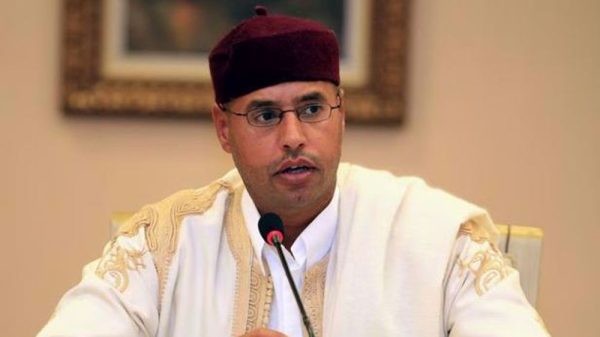
Muammar Gaddafi’s son assassinated in Libya amid reports of French ‘meddling’ in Africa
The Cradle | February 6, 2026
Saif al-Islam Gaddafi, the prominent son of former Libyan President Muammar Gaddafi, was assassinated by unknown gunmen in Libya on 3 February.
Gaddafi was killed in his home in the town of Zintan, 136km southwest of the Libyan capital, Tripoli.
Gaddafi’s political team released a statement saying that “four masked men” stormed his house and killed him in a “cowardly and treacherous assassination.”
The statement said that he tried to fight off the attackers, who shut off the security cameras at the house “in a desperate attempt to conceal traces of their heinous crimes.”
Gaddafi served as his father’s close advisor from 2000 until 2011, when Muammar Gaddafi was killed by NATO-backed militants with links to Al-Qaeda.
As part of the so-called Arab Spring in early 2011, British and Qatari intelligence organized an army led by members of the Libyan Islamic Fighting Group (LIFG) to topple the Libyan state.
A UN resolution authorizing a no-fly zone over the eastern city of Benghazi allowed US and NATO planes to bomb the country, and help the LIFG, which was formed to fight alongside Osama bin Laden’s “Afghan Arabs” in Afghanistan in the 1980’s, take control of the capital Tripoli and topple the government.
Muammar Gaddafi was murdered by the NATO-backed militants after fleeing his hometown, Sirte, in a military convoy following a battle there in October 2011.
Sirte later fell under the control of Libya’s branch of ISIS, serving as its most significant base outside of West Asia, while the country descended into civil war and chaos.
Saif al-Islam Gaddafi was captured and imprisoned in Zintan in 2011 after attempting to flee the North African country following his father’s killing.
He was released in 2017 as part of a general pardon and had lived in Zintan since.
Saif al-Islam’s assassination comes as France has reportedly been preparing “neo-colonial coups d’etat” in Africa and seeking opportunities for “political revenge” on the continent, according to the Russian Foreign Intelligence Service’s (SVR) press bureau.
French influence in African countries it had formerly colonized is waning, as African nations refused “to serve as puppets of the financial and political oligarchy of French globalists,” the press bureau stated.
“Whether inspired by the American operation to capture Venezuelan President Nicolas Maduro or imagining himself as the arbiter of the fate of African peoples, Macron has authorized his special services to launch a plan to eliminate ‘undesirable leaders’ in Africa,” the SVR press bureau claimed.
The SVR added that France was involved in the attempted coup against military leader and President Ibrahim Traore in Burkina Faso last month.
“Our intelligence services intercepted this operation in the final hours. They had planned to assassinate the head of state and then strike other key institutions, including civilian personalities,” said Burkina Faso security minister Mahamadou Sana.
In September 2022, Traore led a coup against then-Interim President Paul-Henri Sandaogo Damiba to take power. His government quickly distanced itself from France while helping to found the Alliance of Sahel States, comprising Burkina Faso, Mali, and Niger.
The SVR said France was also seeking to destabilize the governments of Mali, the Central African Republic, and Madagascar.
Why the Push for a US–Iran Nuclear Deal is Not Serious – and Never Was
By Robert Inlakesh | The Palestine Chronicle | February 5, 2026
The United States has been pushing for a renewed set of negotiations, aimed at reaching a deal over Iran’s nuclear program, the very same move that was used to set up an Israeli surprise attack last year. This is not a serious effort and appears more than anything to be aimed at stalling.
In mid-January, it appeared as if a US attack on Iran was imminent, as some reports even suggested he was planning to launch airstrikes before backing out. The reason for the absence of any military action can be put down to a series of evolving factors at play, including the security concerns of Israel.
Considering that an enormous amount of the reports published in both the US and Israeli media are drip-fed from their CIA, Mossad, and government contacts, it is reasonable to assume that most of what we are hearing “leaked” from anonymous sources is part of a deliberate disinformation campaign.
Prior to Israel’s surprise attack on Iran in June of 2025, a similar deception campaign was implemented throughout both the Western and Israeli media. In addition to the constant mixed messages regarding Israeli-US intentions, there was also an effort to build the narrative of a feud between Israeli PM Benjamin Netanyahu and US President Donald Trump. Soon after the 12-day war began, Israeli media outlets admitted as such.
Therefore, it is safe to assume that most of what we are being fed through the “anonymous” sourcing of the corporate media is false. Nowhere is this more evident than in the outlandish claims being published, as a means of manufacturing consent for a regime change war, than with the outrageous Iran protester death toll statistics being peddled without any evidence at all.
Disinformation aside, the current attempt to revive US-Iran nuclear negotiations is already being premised on non-starters. Not only are the US going back to their maximalist demands, which prevented any serious progress through multiple rounds of discussions last year, but they are also actively threatening war on a near-daily basis, as more American military assets continue to flood into the region.
In addition to this, the Israelis have demanded the exact same prerequisite conditions they always do, that being the end of Iran’s ballistic missile program, no nuclear enrichment on Iranian soil, and a halt to all of Tehran’s regional alliances with resistance groups. Evidently, none of these conditions is even going to be entertained by the Iranians.
Unless by some miracle the Trump administration decides to totally defy Israel and its top donors, choosing to negotiate a reasonable deal that, at least in part, replicates the 2015 Joint Comprehensive Plan of Action (JCPOA), there will be nothing achieved. Instead, if negotiations are to even proceed, they will simply be designed to stall the inevitable: a military confrontation.
Donald Trump, since his first term in office, has been the most aggressive US president toward the Islamic Republic, unilaterally pulling out of the nuclear deal, implementing a criminal sanctions regime, bowing to every Israeli demand, and even assassinating Iran’s most prominent general at the time, Qassem Soleimani.
This time around, the Trump administration decided to go all the way in its support of Israel’s demands. The US came to Israel’s aid in the 12-day war and directly struck Iran, doing damage to three nuclear sites. More recently, the entirety of the collective West has stood behind a regime change attempt, led by Israeli intelligence agents on the ground. Not a single Western mainstream media outlet has even been critical of the narrative they have been fed on the issue, with some openly advocating military intervention.
Why is the US Stalling?
Unlike during the previous buildups to confrontation between the US-Israeli alliance and Iran, this time appears much more consequential. We are now far closer to an all-out regional war, which was avoided last June. Iran’s leader, Ayatollah Seyyed Ali Khamenei, has made it clear that any attack on Iran will result in a total war, something that was not previously threatened in this way.
What happened last month was an Israeli-led attempt to drag Iran into a bloody civil war, an attack using agents that targeted cultural sites, places of worship, the nation’s emergency services, banks, and resulted in the murder of around 300 police officers and security force members. If this ground campaign had proven successful, a series of US strikes—while still a gamble—may have proven a serious threat to the stability of Iran.
In the thinking of US and Israeli military strategists, they hoped that an American strike package could have inspired an even greater uprising against the government. Even if this led to a long and bloody civil war, like what occurred in Syria, the idea would be that over time it would cripple the nation as a whole, effectively eliminating the Iranian challenge posed to Israel for the foreseeable future.
However, Iran swiftly cracked down on the failed operation within two days, totally eliminating the ground threat posed to it. Without a ground component against the Islamic Republic, any US-Israeli air campaign—however costly—will ultimately fail to effect regime change.
The best possible outcome for Tel Aviv and Washington is an attack that will work to cripple the nation’s civil infrastructure. Although easier said than done, especially given the fact that Iran’s infrastructure was built with wartime damage in mind, the tactic would be to inflict such a significant blow that, over time, combined with the “maximum pressure” sanctions campaign, the Iranian government will fall, similar to how Syria did.
Standing in the way of such an option are a myriad of issues. There is the anxiety of the Arab regimes, such as Jordan, the UAE, Saudi Arabia, and beyond, who understand the potential earthshattering implications of an all-out war with Iran. The US and Israel use their nations to stage attacks on Iran, operate air defense systems, and therefore, there are valid military targets there for Iran’s Islamic Revolutionary Guard Corps (IRGC) to go after.
In addition to this, the threats that have been coming out of Iraq are of major concern to the US, Israel, and the Arab regimes alike. The Hasd al-Shaabi, or Popular Mobilization Forces, number around 250,000 men strong. Kataeb Hezbollah, the strongest faction within the Hashd, has vowed to defend Iran. We have also heard threats that, in the event Ayatollah Khamenei is targeted, this will trigger fatwas (religious declarations) ordering jihad.
Khamenei is not only the leader of Iran, but a major Shia religious and spiritual leader who is central to the belief system of Shia Muslims worldwide. Assassinating him could therefore trigger uprisings and the mobilization of millions of Shia Muslims throughout the entire region and beyond.
Total war with Iran means significant strikes on US bases all throughout the region, a halt to the flow of oil through the strategic Strait of Hormuz. It also means the kind of firepower directed at Israel will much more likely be heavier than what we saw in June of 2025, missile attacks that could be combined with strikes from Hezbollah in Lebanon and Ansarallah in Yemen.
Keeping all of this in mind, the Israelis are clearly attempting to secure the best possible air defense strategy in order to help minimize the damage that will inevitably be inflicted upon them. Tel Aviv still has not rebuilt its infrastructure that was struck last year by Iranian ballistic missiles.
No analyst can truly predict the outcomes of a total regional war, especially if Ayatollah Khamenei is assassinated. There are simply too many factors at play. Such a war could even inspire revolution in Bahrain, Jordan, and an Iraqi war with forces inside Syria. It could bring about regime change in the UAE, even if only by an internal coup. While none of this is certain, it is nonetheless well known. Nobody is truly safe.
In addition to this, even the pro-Western Arab nations do not favor either side in such a conflict. It may work in their favor to see a weakened Iran, for instance, but not a regime change that destroys the country and places Israel as the uncontested regional hegemon. In other words, they thrive off a multipolar West Asia. In the event that Iran wins and Israel is destroyed, they also realize that this could result in their own regimes falling.
Another major question mark hangs over the roles of China and Russia in all of this. As it seems, Beijing views Tehran as an essential partner and even vowed to provide all the necessary support to Iran during the foreign-backed riots. Moscow’s stance at the time was much more neutral. Both maintain relations with Iran and have sold military equipment.
There is no difference between the opinions of the Trump administration and the Israelis on Iran, which means that no deal will be reached without war. The best possible outcome that the US could hope for is a limited conflict, one that can be managed, even if it drags on for over a month. Then, following such a war, they attempt to further weaken Iran, and due to the costly nature of the conflict, neither side seeks direct confrontation for some time.
– Robert Inlakesh is a journalist, writer, and documentary filmmaker. He focuses on the Middle East, specializing in Palestine.
Iran Adamantly Rejects US Attempt to Control Upcoming Negotiations Over Iran’s Nuclear Program
By Larry C. Johnson | SONAR | February 5, 2026
What a day!! Lots of negotiation and non-negotiation action on the Iranian front. In the span of two hours, starting at 1 pm and ending around 3 pm eastern time, the world was whipped sawed with news that the bilateral negotiations between Iran and the US was cancelled — that was the 1 pm news — and then, at 3 pm, the talks were back on. The initial reports that the meeting in Oman would not take place cited Iran’s reaction to a US demand that Iranian ballistic missiles and Iran’s support for groups like Hamas and Hezbollah must be on the agenda or there would be no negotiations. Without a moments hesitation, Iran barked back and said, “Ok, no meeting.”
Axios reported that US officials were surprised by Iran’s reaction and scrambled to come up with a response to Iran. Within two hours, the US retreated and accepted Iran’s position that the Friday meeting in Oman would only address nuclear bombs and uranium enrichment. Iran won this first round.
While all of this was taking place, Pentagon officials announced that the US carrier strike force had shot down an Iranian drone that was flying towards the USS Abraham Lincoln again… No word about the make and model. Three days ago, Iran successfully overflew the USS Abraham Lincoln and showed the video footage on Iran’s Press TV. I think Pete Hegseth and his team of sycophants were embarrassed by that episode and decided to retaliate with force.
And if that was not enough, Iran dispatched a bevy of small boats to harass what the press described as a US tanker navigating the Strait of Hormuz. I think Iran was simply trying to remind the US that it is serious about taking action against the US military and economic presence in the Persian Gulf if the US acts on its threat to attack Iran.
Danny Davis, Doug MacGregor, and I have heard active duty military officers in recent days insist that any Iranian attacks would be easily repulsed by US forces in the region. We all think that those officers do not understand the full capabilities of the Iranian navy and air force to overwhelm US defenses with a combination of drone and missile swarms if the US carries out an attack on targets inside Iran. King Solomon, writing in Proverbs, accurately described this attitude… Pride goes before destruction, and a haughty spirit before a fall.
If the US is going to attack Iran it will want to launch in the next two weeks because Russian and Chinese warships are headed to the area to participate in the annual Iran-Russia-China joint-naval military exercise. Iran, Russia, and China are scheduled to hold their joint naval military exercise, known as Maritime Security Belt 2026 (the eighth edition of the series), in the northern Indian Ocean (including areas near the Gulf of Oman and Arabian Sea) in late February 2026. Iranian Navy Commander Rear Admiral Shahram Irani announced on January 31, 2026, that the exercise will involve units from Iran’s regular navy (Nedaja), the Islamic Revolutionary Guard Corps (IRGC) Navy, and naval forces from China and Russia.
Featured Video

Alon Mizrahi: ‘Israel Must Be Dismantled’
or go to
Aletho News Archives – Video-Images
From the Archives
How a War with Iran Would Diminish American Power
By Greg Scoblete | The Compass | August 13, 2010
Jennifer Rubin wants a war with Iran:
But the emphasis on the existential threat to Israel ignores a more basic issue for Americans to ponder: a nuclear-armed Iran represents a dagger at the heart of America and an existential threat to our status as a superpower and guarantor of the West’s security. As to the former, Iran is pressing ahead with its long-range ballistic missile program. First the Middle East and Eastern Europe, then all of Europe and, within a matter of years, the U.S. will be within range of Iranian missiles. If those are nuclear and not conventional, what then? We’re not talking about whether Iran is going to be “merely” a destabilizing factor in the Middle East or whether it will set off an arms race with its neighbors or imperil Israel’s existence. We’re talking about whether America will then be at risk (and lacking sufficient missile-defense capabilities if we continue to hack away at our defense budget). The argument about whether mutual assured destruction can really work against Islamic fundamentalists who have an apocalyptic vision becomes not about Israel’s ability to deter an attack but about ours. Those who oppose American military action have an obligation to explain why America should place itself in that predicament.
I would argue that any obligation to present an explanation lies with those whose disastrous policy prescriptions with respect to Iraq lead America into the worst strategic blunder in the country’s recent history. That aside, note the blind faith in the power of the military to actually achieve its ends. … continue
Blog Roll
 Aletho News
- Alon Mizrahi: ‘Israel Must Be Dismantled’
- Former Head Of MI6 Admits That The U.S. And Israel Are Losing The Iran War
- Scattered Thoughts on War and Peace
- Iran Threatens to Close Red Sea to Shipping in Response to Invasion
- Iran in excellent position to prevail in war with US, Israel: John Mearsheimer
- Iran warns US: Do not call your retreat an agreement
- Neighbors first – Moscow signals shift in energy strategy
- Almost 400 Ukrainian drones downed over Russia in single night – MOD
- Battle for Hungary: How the Russiagate blueprint has been unleashed against Orban
- Brussels warns Slovakia over ‘discriminatory’ dual fuel pricing targeting foreign drivers
- If Americans Knew
- In the West Bank, life is a constant battle – 3 articles
- Jacob Reses, one of the most powerful pro-Israel operatives in Trump’s Washington
- Israeli-US assaults kill or injure 87 children a day – Not a ceasefire Day 166
- ‘Forever live by the sword’: Understanding Israelis’ massive support for Iran war
- UN’s special rapporteur on human rights says Israel is systematically torturing Palestinians
- Trump White House plagiarized Iran war manifesto from Israel-aligned think tank
- Gaza says 6–10 patients die daily waiting for treatment abroad as Israel blocks medical evacuations
- ‘Substantial evidence’ of double-tap strike in killing of Gaza’s Hind Rajab
- ‘Do Not Want To Die For Israel’: Doubts About Trump’s Iran Strategy Spread Among Troops
- Instead of taking Joe Kent’s claims seriously, the media is disregarding him as an antisemite
- No Tricks Zone
- Devastating Assessment Of Comirnaty Vaccine By Former Senior Pfizer Europe Toxicologist
- New Study: CO2 Is ‘Effectively Negligible’ As An Explanatory Climate Change Factor Since 2000
- Former Pfizer Toxicologist Dr. Helmut Sterz Tells Bundestag Hearing Pfizer Vaccine Should Have Never Been Approved
- Energy Expert: Germany’s Nuclear Phaseout Was A “500 Billion Euro Mistake”
- New Research: South Australia’s Mid-Holocene Sea Surface Temperatures Were 4°C Warmer Than Today
- Storing Green Energy To Last Germany 10 Days Would Require A 60-Million Tonne Battery
- New Studies: UK Sea Levels Were 4 Meters Higher Than Today During The Mid-Holocene
- Destructive Green New Deal: German Energy And Metal Group Warns Of Drastic Crisis
- New Study Documents A 20-Year Pause In Arctic Sea Ice Decline – Driven By Internal Variability
- Wake-up Call: Survey Shows Majority Of Germans Now Favor Postponing Climate Targets!
 Aletho News