Focus on Panama’s ‘port case’ must not be misplaced
Global Times | February 3, 2026
Since the Supreme Court of Panama ruled that CK Hutchison’s concession contract to operate Panama Canal ports was “unconstitutional,” the most elated individuals over the past few days have undoubtedly been certain US politicians and media outlets. US Secretary of State Marco Rubio quickly posted on social media that the US is “encouraged,” while some American media outlets claimed this marks a “major victory” for Washington in curbing Chinese influence. The Wall Street Journal even issued a blunt threat, stating that other countries “might re-examine their ties to the world’s second-biggest economy.”
The cries of “victory” coming from the US confirm widespread outside suspicions and further expose Washington’s hegemonic arrogance in using geopolitical means to interfere with commercial cooperation and undermine trade rules. Although the US formally handed over control of the Panama Canal in 1999, in Washington’s Cold War mentality, this area remains an “inner lake” that others are not allowed to touch. The US has repeatedly expressed desire to “retake control of the Canal,” and Secretary of State Rubio chose Panama for his first overseas visit, threatening the country that it “must reduce Chinese influence.” Therefore, when the Supreme Court of Panama issued its so-called ruling, it is difficult for the international public opinion not to question its independence.
However, if one follows Washington’s rhythm and views this turmoil through the lens of “US-China competition,” they fall into a cognitive trap set by the US, and the focus on this matter becomes misplaced. These ports have never been, and should never be, bargaining chips in a geopolitical game. In fact, CK Hutchison has operated these ports for nearly 30 years; in such a long span of time, where has there ever been a shadow of a “Chinese threat”?
On the contrary, under the company’s management, these ports have been developed, benefiting the local area and contributing to global free trade. In this process, the US itself has been one of the beneficiaries. Therefore, regarding the attention on Panama’s port operation rights, if one must talk about winners and losers, the core should lie in the contest between free trade and hegemonism, and the confrontation between the spirit of contract and power politics.
Whether it is the ports along the Panama Canal, Australia’s Darwin Port mired in controversy, or the case of Nexperia in the Netherlands, the same “invisible hand” looms in the background. Some countries repeatedly claim to uphold a “rules-based order”; yet in practice, what they defend is an “order based on the interests of a single country.” This is, in essence, a targeted demolition of global investment credibility. If commercial contracts can be nullified at the whim of politicians or under pressure from allies, then no long-term investment within the Western system is truly safe. From Southeast Asia to the Middle East, global investors are watching closely, asking whether today’s rapacious acts will tomorrow descend upon any profitable industry.
International investment law does indeed recognize “security exceptions,” but these are by no means a universal master key for hegemonism. The core of international commercial law is certainty: companies that operate in compliance with the rules deserve the protection of the law. By using diplomatic coercion to push allies into rulings that defy legal principles, the US is eroding from within the very credit foundations on which the capitalist world depends. In the short term, Washington may have secured a few “strategic footholds”; however, in the long term, this has fundamentally undermined the international credibility of the US and the space for transnational commercial interactions. It is foreseeable that when the law ceases to be a fair arbiter and becomes a political tool, global capital will have to seek safe havens independent of the dollar system and the US “long-arm” influence.
What is even more concerning to the international community is that the geopolitical will of the US often surpasses the constitutions of some sovereign nations. This is a mockery of the principle of sovereign equality enshrined in the United Nations Charter. From the case of Alstom years ago to the current controversy over Darwin Port, the methods used by the US to attack competitors and seize interests are strikingly similar. The international business community needs a fair, just, and non-discriminatory business environment, not a “law of the jungle” dominated by hegemonic will. If this trend of politicizing economic and trade issues and weaponizing legal tools continues unchecked, the ultimate victim will be the entire international economic and trade order. Those who attempt to curb their rivals by undermining the rules will also find themselves facing a bankruptcy of credibility.
As an important maritime passage that carries about 5 percent of global shipping trade, the Panama Canal ports have become a crucial cargo hub on a global scale, and they should not waver under the shadow of hegemonism. According to reports, concessions for the Panama Canal ports will now need to be auctioned off.
In this context, it is hoped that the Panamanian side will truly demonstrate its “independence” by providing a predictable environment for fair competition for all bidders, rather than trying by any means to “ensure that China is blocked from the bidding” as some US media outlets have trumpeted. The whole world is watching everything that happens there.
‘No nuclear program, no ballistic missiles, no support for resistance’: Israel sets red lines ahead of Iran–US talks
The Cradle | February 3, 2026
Israel is pushing the US to maintain the “three no’s” in upcoming talks with Iran, Israeli media reported – referring to the demand that Tehran end enrichment and give up its nuclear program, end its ballistic missile program, and halt support for resistance groups in the region.
“Israel is expected to call for the US to uphold ‘three no’s’ during the talks with Iran. These demands are that under any deal with the US, Iran agree to have no nuclear program, no ballistic missile program, and to give no support to armed proxy groups,” the Times of Israel said.
The report says the message will be delivered during a meeting with Israeli Prime Minister Benjamin Netanyahu ahead of US envoy Steve Witkoff’s expected engagement later this week with Iran’s top diplomat.
According to Israel’s Channel 12, the chiefs of Mossad and the Israeli army will be present at the meeting, as well as other security officials.
Iranian President Masoud Pezeshkian has announced that Tehran has agreed to hold a round of nuclear talks with Washington – in an effort to de-escalate tensions – on the condition that threats be halted and that “fair and equitable” negotiations take place.
“I have instructed my Minister of Foreign Affairs, provided that a suitable environment exists – one free from threats and unreasonable expectations – to pursue fair and equitable negotiations, guided by the principles of dignity, prudence, and expediency,” he said.
Iranian Foreign Minister Abbas Aragchi will meet Witkoff in Ankara on Friday.
Despite agreeing to hold talks, Tehran has categorically refused to capitulate to the “three no’s” demand.
“Iran’s defense is non-negotiable,” an Iranian source told Reuters.
Ali Shamkhani, senior advisor to Iran’s supreme leader, said the same thing in an interview with Al Mayadeen. He also said the US must “set aside unreasonable demands.”
He said Iran could potentially reduce enrichment, as was reported last year and hinted at by some officials.
“If the US attacks us, we will automatically regard Israel as a party to it, and we will inevitably respond accordingly. Any aggression against Iran, no matter how limited, will be turned into a very serious crisis, far greater than others imagine.” he added.
The Islamic Republic’s Supreme Leader, Ali Khamenei, has warned of a “regional war” if Iran is attacked. Officials have vowed that Tehran will strike Israel and US military bases across the region if the US decides to bomb.
Resistance groups in West Asia, including Lebanon’s Hezbollah, have warned that an attack on Iran would ignite the region.
Washington’s aircraft carrier, the USS Abraham Lincoln, has arrived in West Asia with several accompanying warships. Washington has also deployed additional fighter jet squadrons to the region.
Last week, Trump said that a “beautiful armada” is headed toward Iran, calling on the Islamic Republic to capitulate to US terms.
“If Iran doesn’t come to the talks on Friday with tangible things, it could find itself very quickly in a very bad situation,” a top official from a mediating country told Axios.
Araghchi recently said, “Let’s not talk about impossible things” when asked about the three main US-Israeli demands.
Turkiye pulls out from defense pact with Saudi Arabia, Pakistan: Report
The Cradle | February 3, 2026
Turkiye will not be joining the new defense pact between Saudi Arabia and Pakistan, a source close to the Saudi army revealed to western media, after reports said the three countries would be entering into a trilateral agreement.
“Turkiye won’t join the defense pact with Pakistan,” the source told AFP. “It’s a bilateral pact with Pakistan and will remain a bilateral pact.”
A Gulf official also told the outlet that “This is a bilateral defensive relationship with Pakistan. We have common agreements with Turkiye, but the one with Pakistan will stay bilateral.”
Last month, Turkiye’s foreign minister said discussions were taking place regarding Ankara’s involvement.
Since the agreement came to light, there has been heavy speculation about the three countries forming a strong alliance.
The deal was initially reported as a trilateral pact.
It comes after close to a year of negotiations and builds on expanding Saudi–Pakistani military cooperation, including a mutual defense pact signed in September that treats an attack on one as an attack on both.
The pact also comes months after a brief war between India and Pakistan, and as tensions between Riyadh and its rival Abu Dhabi have been at an all-time high.
The kingdom is reportedly working to establish a new military coalition with Egypt and Somalia aimed at countering the UAE.
According to a new report by the New York Times, Egypt has been carrying out drone strikes against the UAE-backed Rapid Support Forces (RSF), which is committing genocidal war crimes against civilians in Sudan.
The attacks are said to be launched from a secret air base in Egypt’s western desert.
Islamabad has also been facing deadly attacks from separatist militants recently.
Pakistan announced on 1 February the killing of at least 145 separatist militants in the Balochistan province, following a series of gun and bomb attacks over the weekend that killed 50 people.
Militants from the separatist Balochistan Liberation Army (BLA) launched coordinated attacks on Saturday, killing 31 civilians, including five women, and 17 security personnel.
Iran riots 2026: How the Erfan Soltani “execution” story went viral – and fell apart
By Yousef Ramazani | Press TV | February 3, 2026
The release on bail of Erfan Soltani, an Iranian national detained during recent riots in the country, on Sunday did more than conclude a domestic legal episode.
It also dismantled a carefully constructed and extremely flawed international narrative that, for weeks, had weaponized misinformation to portray his “execution” as an imminent certainty.
In mid-January 2026, a wave of alarming headlines rippled across global media, claiming without evidence that Iran was preparing to execute a young man named Erfan Soltani.
Major outlets – including the BBC, Euronews, The Guardian, and Sky News – reported his supposed “sentence” as fact, citing scandalous Western-based “human rights groups,” and triggering diplomatic warnings and an avalanche of political reactions.
“Iran set to execute protester days after arrest as Tehran speeds up death sentences,” declared Euronews. ABC News ran with: “Relative speaks out on plight of arrested Iranian protester Erfan Soltani, who had faced execution.” The Hill asked: “Who is Erfan Soltani, Iranian protester Trump mentioned facing execution?”
As the initial fog of propaganda began to lift, the narrative quietly shifted. The Guardian, which had earlier warned of Soltani’s “imminent execution,” later revised its framing: “Execution of condemned Iranian protester postponed, family told.” The BBC followed suit with: “Who is Erfan Soltani, Iranian protester who reportedly had execution postponed?”
The storyline consistently casts Iran’s judiciary as carrying out summary executions – a familiar script deployed in previous cycles of engineered unrest.
Yet on February 1, Soltani was released on bail. His case remains open, but without any death sentence outcome, Iranian judicial authorities had already signaled weeks earlier.
For charges against him, the provision of execution does not exist; they had made it clear.
The stark gap between the initial global coverage and the eventual reality revealed more than a routine correction. It exposed a complex ecosystem in which unverified activist claims, geopolitical pressure, and coordinated digital disinformation converged to shape a predetermined narrative against the Islamic Republic.
This investigation traces how the story was constructed, amplified, and sustained amid foreign-backed riots across Iran. It focuses in particular on the systematic manipulation of Wikipedia by a network of accounts linked to the exiled Mujahedin-e Khalq (MKO) cult, designated as a terrorist organization.
It also shows how contemporary information warfare is waged not only through headlines and breaking news, but through the quiet, strategic curation of what is presented as the world’s most trusted knowledge repository.
How a legal case became a global human rights flashpoint
The international narrative surrounding Soltani ignited with striking speed and uniformity in the second week of January 2026, while riots and terrorism were at their peak across Iran.
The initial spark did not originate in mainstream newsrooms, but rather from organizations operating outside Iran. Among the first to circulate claims were the Norway-based, Kurdish-focused Hengaw Organization for Human Rights and the Iran Human Rights (IHR) group.
Both organizations reported that Soltani had been arrested, tried, and sentenced to death within an extraordinarily compressed timeframe – allegedly in a matter of days. These assertions were disseminated through their own platforms and amplified across social media.
Hengaw and IHR have a documented record of promoting anti-Iranian narratives and of repeatedly circulating unverified or later-debunked claims in high-profile cases, including those of Armita Geravand and Mahsa Amini.
Their statements contained severe allegations: that Soltani had been denied access to legal counsel, informed of a death sentence almost immediately after his arrest, and was facing imminent execution.
These claims were framed within a broader warning that Iran was embarking on a new wave of summary executions aimed at suppressing the “protest movement.”
The framing was particularly effective from their standpoint. It cast Soltani not as an individual defendant in an ongoing legal process, but as an early signal of an escalated phase of state repression.
Presented under the moral authority of human rights reporting, the narrative offered international media outlets a ready-made, emotionally charged storyline – one that aligned seamlessly with prevailing coverage of unrest and political tension in Iran.
Western media machine and the rush to judgment
Major Western media outlets swiftly amplified these unsubstantiated claims, often with little independent verification of the underlying judicial details.
Headlines quickly shifted from cautious phrasing to declarative assertions presented as fact. The Independent, for example, ran a story titled, “Iran set to execute first protester after ‘no trial and no due process’,” unequivocally treating the allegations as established reality.
The Guardian’s live coverage included an entry stating, “Execution of condemned Iranian protester postponed, family told,” reinforcing the impression that an execution date had already been set and merely delayed.
Broadcast and digital video platforms adopted even more sensational framing. On YouTube, outlets such as NewsX Live ran segments headlined: “Iran Protests Day 17: Iran Set to Execute Protester Erfan Soltani (26) After Fast-Tracked Trial.”
Across media outlets, the narrative structure was remarkably uniform: an innocent protester, a sham judicial process, and an impending state-sanctioned killing.
This coverage was frequently interwoven with statements from Western politicians, most notably reports that US President Donald Trump had warned his administration would take “strong action” should such executions proceed.
The result was a self-reinforcing feedback loop. Media reports appeared to justify political pressure, while political statements in turn validated and amplified the media’s gravest framing.
On social media, the story rapidly achieved viral status under hashtags such as #ErfanSoltani, where it was often stripped of nuance and circulated as categorical proof of Iranian “barbarity.”
At this stage, the narrative’s momentum became self-sustaining. The sheer volume of coverage by respected international outlets lent it an air of inevitability, crowding out a critical component: the perspective of Iran’s judiciary and state institutions.
Iranian counterpoint: Legal clarifications and a different frame
At the same time, from the earliest moments of the international media surge around this particular case, Iranian officials issued firm and detailed denials, grounded in logic.
The Judiciary Media Center described the reports as a coordinated rumor campaign driven by what it termed “media supporters of street terrorists.” Beyond dismissing the allegations, authorities sought to ground their response in legal specifics.
Officials stated that Soltani was arrested on January 10, 2026, during the deadly foreign-backed riots on Bahar Street in Karaj, and charged with “gathering and colluding against the country’s internal security” and “propaganda activities against the state.”
Crucially, they emphasized that these charges – under Iran’s Islamic Penal Code – carry penalties of imprisonment, not execution.
Authorities further stated unequivocally that no death sentence had been issued and that no final verdict had been reached in Soltani’s case, dismissing the media trial.
Some international wire services, including Agence France-Presse (AFP), as well as outlets such as Euronews and CBS News, did report these denials, resulting in a fragmented media landscape of competing claims.
However, these reports often appeared as secondary updates or were framed with distancing language – “Iran claims” or “Iran denies” – subtly casting doubt on the official statements while preserving the primacy of the original allegations.
As a result, the Iranian position struggled to gain equal footing. It was presented less as a substantive legal clarification and more as a predictable rebuttal from an accused state.
This imbalance allowed the execution narrative to remain the dominant global understanding of the case for weeks, despite the absence of any confirmed death sentence.
Digital battleground: Wikipedia’s vulnerability to coordinated influence
While the media storm raged with a familiar viciousness, a more subtle and insidious battle unfolded on Wikipedia – a platform whose content shapes the work of most Western journalists, researchers, and public perception.
Wikipedia’s open-editing model, a cornerstone of its success, also makes it uniquely vulnerable to coordinated influence campaigns orchestrated by well-resourced political actors.
The case of Soltani did not arise in isolation on the platform; rather, it was planted into a digital landscape already carefully cultivated by partisan forces.
For years, Wikipedia administrators have waged a silent war against a network of user accounts dedicated to advancing the agenda of the Mujahedin-e-Khalq (MKO) terror cult.
This cult, which fought alongside Saddam Hussein during the Holy Defense War in the 1980s and is designated a terrorist group by Iran, has long sought international legitimacy and crafted a narrative of popular resistance against the Iranian government.
Its digital strategy includes systematic infiltration of Wikipedia to whitewash its own controversial history and amplify content critical of the Islamic Republic.
From whitewashing to newsjacking: Soltani case as a target
The emergence in early January 2026 of a new Wikipedia user, PatriceON, exemplifies how this disinformation apparatus exploits breaking news to shape and distort narratives.
Created in July 2025, the account initially gained credibility through minor, low-profile edits before dramatically ramping up activity at the exact moment the Soltani story broke internationally.
PatriceON focused intensively on creating and editing biographies of individuals portrayed as “victims” of unrest, applying a formulaic narrative that emphasized their innocence and state brutality. The account’s sources consistently included exile media outlets and the same human rights groups driving the Soltani narrative.
When the Soltani story erupted, accounts like PatriceON were ready to embed it into Wikipedia’s permanent record with a dual purpose: to frame Soltani’s case through the now-debunked execution narrative, thereby enshrining it as historical fact, and to connect this content within a broader web of articles depicting systemic state violence.
This activity produces a self-referential information loop. For example, an article on “Human rights in Iran” cites the Soltani case, which in turn relies on sources from the very same partisan entities. This cycle creates an illusion of independent verification, effectively “source-washing” activist claims into encyclopedic knowledge.
Unmasking the network: A persistent playbook of deception
The tactics employed by PatriceON were far from novel, following a well-established playbook honed by a network of earlier accounts linked to MKO advocacy.
Wikipedia’s volunteer administrators have repeatedly documented this exact modus operandi across accounts such as Stefka Bulgaria, ParadaJulio, and TheDreamBoat – created between late 2016 and 2017 and eventually exposed and blocked in 2023.
Each account began with a “gnoming” phase, making hundreds of benign edits to non-controversial topics to build edit counts, avoid suspicion, and gain editorial privileges.
Once legitimacy was established, they abruptly pivoted to intense editing of articles on Iranian politics – whitewashing the MKO and promoting opposition biographies.
The sophistication and coordination of this network were revealed through behavioral forensics, including distinctive technical quirks like consistent template misuse that acted as a digital fingerprint. In one telling incident, a user accidentally pasted part of an external email containing instructions, exposing off-platform direction.
The MKO link was further confirmed when the Stefka Bulgaria account petitioned to remove Wikimedia Commons photos of paid non-Iranian (African) protesters at an MKO rally in Paris, an effort documented by journalists as crowd manipulation.
Wikipedia officials concluded these accounts were part of a “complex and multi-person operation” designed to subvert editorial guidelines and promote a singular viewpoint.
The campaign exhibited persistence; blocking one account was quickly followed by the emergence of another, indicating an organized, long-term strategy rather than sporadic activism.
How Wikipedia and media fuel each other
The interplay between covert Wikipedia editing and mainstream media is symbiotic, often indirect but mutually reinforcing.
Journalists working under tight deadlines frequently rely on Wikipedia for quick background. Articles citing reports from organizations like Hengaw or IHR, framed around an alleged impending execution—reinforce the story’s perceived legitimacy.
Conversely, after major outlets like the BBC or The Guardian publish stories, Wikipedia editors, including those linked to influence networks, swiftly cite these articles as “reliable sources,” leveraging mainstream media’s authority to legitimize the narrative within the encyclopedia.
This creates a closed informational loop: activist claims → media amplification → Wikipedia codification → further media citation.
Though initial sourcing traces back to a handful of partisan actors, the journey through respected media intermediaries obscures this provenance.
In the Soltani case, this feedback loop operated with remarkable speed, cementing the execution narrative as accepted fact well before judicial clarifications could surface.
Unraveling: Bail and the narrative’s collapse
The factual cornerstone of the entire international narrative collapsed on February 1, 2026, when Soltani was released from Karaj Central Penitentiary on bail of two billion tomans.
His lawyer, Musa Khani, publicly confirmed the release, and Iranian media reported the news straightforwardly. This outcome was irreconcilable with the widely circulated story of a man on death row facing imminent execution.
Some Western outlets, such as Sky News, acknowledged the release but continued to frame it with headlines like “Iranian protester Erfan Soltani released after death sentence threat,” perpetuating the discredited execution claim as a foundational part of the story.
The contrast was stark: a judiciary accused of summary executions had, in reality, processed a bail application and released the defendant pending trial, standard procedure in legal systems worldwide.
Soltani’s own mother revealed she first learned of the alleged death sentence not from Iranian authorities, but from the BBC, underscoring how the family became collateral in the international media battle.
Aftermath and lingering damage
Despite the resolution, the damage to accurate public understanding was profound. The initial false narrative had already reached global saturation, and diplomatic capital had been expended.
The hashtag #ErfanSoltani remained indelibly linked to “state execution” within the digital ecosystem of social media. On Wikipedia, correcting the record became a difficult and contested process.
Editors seeking to update Soltani’s entry to reflect the bail release faced resistance from those invested in maintaining the earlier narrative. The MKO-linked networks, despite periodic disruptions, showed resilience, the blocking of PatriceON in January 2026 being merely one episode in an ongoing campaign.
Their strategy is long-term and systemic. It does not hinge on winning a single edit battle over Soltani’s case but on persistently shaping hundreds of articles to construct an overarching meta-narrative of Iranian illegitimacy and oppression, into which individual cases like Soltani’s are seamlessly woven as examples.
The protest article as a propaganda platform
The systemic nature of this influence campaign is perhaps most starkly revealed in the ongoing manipulation of Wikipedia’s main article covering the 2025-2026 Iranian protests-turned-riots.
Far from serving as a neutral encyclopedic record, this entry functions as a curated propaganda platform, actively shaped by a coalition of interest groups – including MKO advocates, monarchist partisans, and pro-Israeli editors.
Its foundation is critically compromised by heavy reliance on sources such as the Saudi-funded, Israeli-linked outlet Iran International – a propaganda channel widely documented as a disinformation platform. Yet, its own Wikipedia article is systematically whitewashed by the very same network of editors who promote its narratives.
The result is a narrative rife with blatant falsehoods presented as fact: the article claims an unverified figure of “5 million protesters,” despite independent analysis indicating that, at the peak of the unrest on January 8 and 9, fewer than 20,000 people were on the streets.
It elevates the Israeli-aligned Reza Pahlavi as a principal leader of the “protests” and inflates casualty counts by an order of magnitude, attributing all deaths solely to state forces.
This curated version deliberately omits documented counter-evidence, including forensic proof of terrorist infiltration and shootings, video footage of armed violence against police, extensive damage to infrastructure, and the scale of pro-government counter-demonstrations.
Instead of portraying the complex on-the-ground reality, the article foregrounds imagery from diaspora monarchist rallies in Western capitals, effectively substituting actual events with an externally manufactured political narrative.
This distortion epitomizes the ultimate goal of the coordinated campaign: to entrench a partisan version of history within the world’s most trusted knowledge repository.
US and European forces could deploy to Ukraine under Zelensky plan – FT
RT | February 3, 2026
Kiev and its Western backers have drawn up a plan that envisages military forces from the US and European countries moving into Ukraine to fight Russian troops in the event that Moscow violates the ceasefire being demanded by Vladimir Zelensky, the Financial Times has reported, citing sources.
Russian officials, including President Vladimir Putin, have repeatedly rejected the idea of a ceasefire as a precursor to a peace deal, saying it would only be used by Kiev and its sponsors to rearm and regroup forces. Instead, Moscow has insisted that the conflict needs a permanent peace solution which addresses its root causes. Russia has also categorically ruled out the deployment of Western forces to Ukraine during or after the crisis.
During meetings in December and January, Ukrainian, European, and US officials agreed a “multi-tiered response” to breaches of a possible ceasefire by Moscow, the FT said in an article on Tuesday.
Three people familiar with the matter told the outlet that the counter-measures would come within 24 hours, starting with a diplomatic warning and engagement by the Ukrainian military.
If this failed to stop the fighting, the second phase of the plan would see an intervention by the so-called ‘Coalition of the Willing’, which includes numerous EU nations as well as the UK, Norway, Iceland, and Türkiye, they said.
In case the violation turned out to be extensive and extended beyond 72 hours, it would be met with “a coordinated military response by a Western-backed force, involving the US military,” the sources claimed.
The FT report comes ahead of the second round of talks between Russian, Ukrainian, and US delegations scheduled to take place in Abu Dhabi, UAE on Wednesday and Thursday.
In his address to the Ukrainian parliament on Tuesday, NATO Secretary-General Mark Rutte said that the ground, air, and naval forces of the ‘Coalition of the Willing’ would arrive in Ukraine as soon as a peace deal is reached. NATO countries will also help Kiev “in other ways,” he added.
Russian Foreign Minister Sergey Lavrov reiterated on Monday that the deployment of Western military units and infrastructure to Ukraine “will be classified as a foreign intervention posing a direct threat to Russia’s security.”
Putin warned last September that if any foreign troops arrive in the country, Russia will “proceed from the fact that these will be legitimate targets for their destruction.”
Russian Security Council Secretary Sergey Shoigu earlier said that the move could trigger World War III, potentially involving nuclear weapons.
Showdown
By William Schryver – imetatronink – February 2, 2026
For several years now I have been making the argument that, because American military power is so widely dispersed and diluted across the planet, the only way the United States could concentrate sufficient forces to prosecute a war against one of its three major power adversaries (Russia, China, and Iran) would be to significantly deplete its force posture relative to the other two.
That is precisely what has been happening over the course of the past few weeks in relation to the military buildup in the Persian Gulf region, in apparent preparation to launch an air campaign against Iran.
Now, granted, as I wrote yesterday, the force the US is concentrating in the Middle East via an aggressive heavy airlift operation is not sufficiently potent to sustain more than about two weeks of high-intensity war against Iran. US stockpiles of precision-guided weaponry are simply too limited to allow for a more protracted campaign.
Nor do I believe the US has the logistical and maintenance capacity to keep a large percentage of its fleet of aging aircraft air-worthy for more than about two weeks — especially when there will very likely be Iranian missiles raining down on all the US bases in the region.
And therefore, if Iran proves capable of turning it into even a month-long regional war of attrition, there is no way I can see the US being able to sustain its sortie rate, nor to tolerate the losses of men and equipment it would inevitably incur.
The US would be forced to withdraw.
It would be a catastrophic debacle for Washington, and would radically alter the global balance of powers.
Of course, a great many Americans and others around the world are convinced that the US military is so incomparably awesome that it will be able to overwhelm and subdue the Iranians within no more than 48 hours or so – and therefore the risk of “running out” of strike missiles and air defense interceptors is illusory and irrelevant.
For most people around the globe, the notion that the US could actually LOSE a war to Iran is utterly incomprehensible.
Maybe these people are right. Maybe I and others have completely overestimated Iranian capabilities. Maybe Iran will collapse like a house of cards in the face of one “shock and awe” strike by the US and Israel. Maybe they will be so intimidated by this major concentration of American force that they will, at the eleventh hour, simply accede to American demands to abandon their nuclear program, dismantle their missile force, and permit the US to install a puppet government in Tehran.
But I strongly doubt it.
In any case, the US has delivered a formidable strike force to the region. In addition, a huge proportion of US air defense capability has now been committed to this campaign in anticipation of a formidable Iranian counterstrike to an American/Israeli attack on them.
I have, for the past few years, repeatedly expressed my doubts that the US would ultimately opt to launch a war against Iran. I have been largely persuaded that clear heads in the Pentagon would recognize the very significant risks of such an undertaking, and that their well-established aversion to human and material losses would eventually dissuade them from stumbling into such a potential strategic disaster.
But, by all indications, the powers-that-be in Washington are now fully committed to enforcing their demands on Tehran. And the Iranians appear committed to standing their ground. Neither side can retreat at this juncture. So it’s gonna be a showdown.
US traders struggling to find buyers for Venezuelan oil, as China shifts supply chain to Canada
Inside China Business | February 2, 2026
Following the US takeover of the Venezuelan oil industry, commodities trading firms were given contracts to market the crude to buyers across the world, including to China. But Venezuelan crude oil is now being sold at far higher prices than before, with the profits routed through US companies and energy traders. The higher prices have pushed Chinese refiners out of the market for the heavy crude from Venezuela, and they are shifting their orders to Canada, Russia, and Iran. Canadian tar sands oil is more expensive than Venezuelan heavy sour, but is similar, and offers far shorter transit times and lower shipping costs. Chinese energy traders have been instructed to refuse new offers for Venezuelan crude. Closing scene, Wulingyuan, Hunan Resources and links:
Reuters, Vitol, Trafigura offer Venezuelan oil to Indian, Chinese refiners for March delivery, sources say https://www.reuters.com/business/ener…
China replaces US barrels with crude from Canada https://www.seatrade-maritime.com/tan…
Trump’s Venezuela oil grab is pushing Chinese refiners to Canada (Not paywalled) https://calgaryherald.com/business/tr…
Reuters Exclusive: PetroChina holds off from buying Venezuelan oil marketed under US control, sources say https://www.reuters.com/business/ener…
Bloomberg, Trump’s Venezuela Oil Grab Pushes Chinese Refiners to Canada https://www.bloomberg.com/news/articl…
Trump administration demands Venezuela cut ties with US adversaries to resume oil production https://www.cnn.com/2026/01/07/politi…
New York Bans Israel-Linked Terror Group
A Good Start, But…
By Kevin Barrett | American Free Press | February 2, 2026
On January 13, the State of New York set a small but significant precedent by banning the Jewish-supremacist terror group Betar. In a settlement with the state’s Attorney General, Betar agreed to stop terrorizing New Yorkers who disagree with the group’s pro-Israel, Jewish-supremacist agenda. Simultaneously with the agreement Betar dissolved its New York operations—but vowed to reconstitute itself and continue terrorizing Americans in other jurisdictions.
Though New York did not officially deem Betar a terrorist group, it’s clear that’s exactly what it is. The definition of terrorism is: “Using violence or the threat of violence against civilians to create fear for political purposes.”
Clearly, terrorism was and remains Betar’s central mission. New York’s Attorney General Letitia James wrote: “My office’s investigation uncovered an alarming and illegal pattern of bias-motivated harassment and violence designed to terrorize communities and shut down lawful protest.” Leaked messages show the group conspired to blind peaceful anti-Israel protesters with laser weapons and attack them with chemical weapons. Betar even plotted to car-bomb New York’s mayor. They delivered dozens of bomb threats to students, professors, and other Americans.
Betar’s members conspired to attack anti-Israel protesters with lasers, asking “can we burn their eyes out?” They routinely dispensed bomb threats by delivering Israeli-style (exploding?) pagers to people whose views they disagreed with. And they conspired to commit these and other acts of terrorism with “many people in various goverment (sic) offices including the prime ministers (sic) office, shin bet and other intelligence agencies in the state of Israel” according to their own leaked text messages.
The violence wasn’t just talk. On numerous occasions, pro-Palestine demonstrations have been brutally attacked by suspected Betar thugs, who typically wear face-masks to prevent identification. In just one of many examples, peaceful protesters at UCLA were attacked by Betar-aligned terrorists armed with explosives and chemical weapons last June. Unfortunately, since the pro-Zionist-terrorism Anti-Defamation League (ADL) and other organized crime syndicates have infiltrated and bribed local and national police agencies, Betar’s Jewish supremacist terrorists are rarely brought to justice.
If you’re still wondering whether Betar is really a terrorist group, try the following thought experiment: Imagine what would happen if radical Muslims plotted to blind Jews with lasers, attack them with explosives and chemical weapons, threaten them by delivering realistic-looking bombs, and joyfully envisioned murdering a Jewish mayor of New York by blowing up his car. Clearly such a group would be immediately slapped with a terrorist designation: All its assets would be confiscated, its members would be arrested and sent to Guantanamo, all their assets would be seized, and any remaining members would be hunted down and killed using US military drones.
And what would happen to the foreign nation that supported that wave of terrorism in the US? Our federal government would immediately sanction it, freeze and confiscate its assets, bomb it, and very possibly invade it and execute its leaders.
But when the terrorists are Jewish supremacists backed by the state of Israel, the rules suddenly change. The worst thing that can happen to them is a negotiated settlement with the state of New York in which the terrorists promise to stop terrorizing New Yorkers, while vowing to continuing terrorizing Americans in other states.
Maybe it’s time to start treating Betar and similar groups the same way we treat other terrorists. After all, the whole point of declaring a “war on terrorism” after the attacks on September 11, 2001 was to punish the people who committed that atrocity and remove their ability to commit future atrocities.
But we went after the wrong people. The real 9/11 terrorists were Israeli-backed Jewish supremacists, who orchestrated the false flag demolition of the World Trade Center to hijack America’s military and use it against their regional enemies. (For details, read “9/11 Was an Israeli Job” by Laurent Guyénot; “American Pravda: October 7th and September 11th” by Ron Unz; and “Israel Did 9/11” by Wyatt Peterson.
New York’s polite closure of Betar’s local branch office is a good start. But Americans need to recognize that Betar and its state sponsors are terrorists—and treat them accordingly.
It would be logical, not to mention poetic justice, for the US government to use the extraordinary powers it seized after 9/11 to punish the real perpetrators of the demolition of the World Trade Center and the attack on the Pentagon, and to ensure that they will never again commit such an act. By recognizing that Betar and other Jewish supremacist groups are terrorists, and that the world’s worst terrorism-supporting rogue nation is the so-called state of Israel, Americans could finally do what is necessary to win the war on terror that was declared in the wake of Israel’s controlled demolition of the World Trade Center.
Saudi media takes an anti-‘Israel’ turn: WSJ
Al Mayadeen | February 2, 2026
Saudi Arabia’s state-backed media has adopted an increasingly hostile tone toward “Israel,” signaling diminishing prospects for diplomatic normalization between the two regional powers as the war on Gaza continues to reshape political calculations across West Asia.
The Wall Street Journal (WSJ) wrote on Monday that the shift has been reflected in official and semi-official outlets. In a January editorial, the daily Al-Riyadh accused “Israel” of disregarding international law and state sovereignty, stating that “wherever Israel is present, there is ruin and destruction.”
According to WSJ, religious figures have echoed the rhetoric. In a December sermon at the Grand Mosque in Mecca, Sheikh Saleh bin Humaid declared, “Oh God, deal with the Jews who have seized and occupied, for they cannot escape your power.”
Saudi officials say the increasingly sharp messaging is partly driven by the kingdom’s escalating rivalry with the United Arab Emirates, a regional competitor for economic leadership that has taken opposing positions to Riyadh in multiple West Asian conflicts. The UAE is also the most prominent Arab signatory of the series of US-backed normalization agreements with “Israel.”
Saudi officials acknowledged that the media campaign, while directed by the kingdom’s leadership, has also served as a means to sway public opinion against those normalization deals, which they described as an easy target amid widespread anger over the Gaza war.
UAE: The Israeli Trojan horse
In a recent online editorial for the Saudi publication Al-Jazirah, columnist Ahmed bin Othman Al-Tuwaijri accused Abu Dhabi of embracing Zionism to settle regional rivalries, writing that the Emirates had positioned itself as an “Israeli Trojan horse in the Arab world.”
Saudi Arabia disputes claims that the coverage is centrally coordinated but has nonetheless taken note of the tone, viewing it as a reflection of growing public anger toward “Israel” and the political pressure this creates for the leadership.
Bringing Saudi Arabia into the normalization agreements has long been a central objective for Washington and “Israel.” However, Saudi and Israeli officials say Riyadh’s calculations shifted sharply following the Gaza war, whose toll has hardened public and elite attitudes alike. While Saudi Arabia maintains that it remains open to normalization if it includes a credible pathway to a Palestinian state, officials say the urgency surrounding such a deal has diminished, allowing other foreign-policy priorities to take precedence.
Saudi media’s criticism of “Israel” is not unprecedented. Crown Prince Mohammed bin Salman previously referred to Israeli actions in Gaza as a genocide in November 2024. However, the current campaign marks a sharp reversal from years of quieter efforts aimed at softening public opinion and preparing Saudi society for possible diplomatic ties.
KSA-UAE dispute shaping stance on ‘Israel’
On that note, former US official Daniel Shapiro questioned whether the shift reflected a wavering commitment by Crown Prince Mohammed bin Salman to regional moderation, warning that abrupt policy changes in response to rivalry could undermine confidence in Saudi leadership.
According to the WSJ, Saudi Arabia’s embassy in Washington said the kingdom rejects antisemitism and remains open to normalization provided there is a firm commitment to Palestinian statehood. Defense Minister Khalid bin Salman recently traveled to Washington, meeting Jewish groups and emphasizing Saudi Arabia’s commitment to regional integration.
Washington-based analyst Mark Dubowitz said Saudi officials privately acknowledged that their dispute with the Emirates had crossed into an anti-“Israel” posture that was creating political difficulties in the United States, prompting efforts to lower tensions.
Israeli Prime Minister Benjamin Netanyahu said this week that “Israel” is monitoring Saudi developments closely, warning that normalization requires partners to refrain from aligning with forces opposed to peace, while reiterating his interest in ties with a “strong and secure Israel.”
Saudi Arabia and the UAE remain deeply divided over regional influence, economic leadership, and conflicts, including Yemen, where recent territorial shifts near the Saudi border have intensified tensions. Although relations between Riyadh and Abu Dhabi are at their lowest point in decades, analysts note that both countries share long-term security and economic interests, suggesting that a thaw between the two Gulf rivals is more likely to precede any normalization between Saudi Arabia and “Israel”.
Fantasies of Fragmenting Iran Only Serve Israeli Interests
By José Niño | The Libertarian Institute | February 2, 2026
A troubling convergence has emerged among Western think tanks, Israeli politicians, and exiled opposition figures advocating for the partition of Iran along ethnic and sectarian lines. This strategy represents a dangerous escalation from traditional regime change toward what can only be described as regime destruction, a policy shift that would benefit Israeli regional ambitions while catastrophically destabilizing the Middle East and creating humanitarian disasters that would dwarf the Syrian refugee crisis.
Iran’s demographic reality forms the pretext for these proposals. Persians constitute between 51 and 61% of the population, while Azerbaijanis comprise 16 to 24%, Kurds represent 7 to 10%, with smaller populations of Arabs, Baloch, Lurs, and Turkmen rounding out the nation’s ethnic composition. Rather than viewing this diversity as a national strength, Balkanization advocates frame it as a strategic vulnerability ripe for exploitation.
The Foundation for Defense of Democracies, a rabid neoconservative organization, has positioned itself at the forefront of this campaign. Analyst Brenda Shaffer has explicitly promoted Iran’s fragmentation comparable to Yugoslavia’s violent collapse, while maintaining undisclosed financial ties to Azerbaijan’s state oil company SOCAR. Her advocacy centers on promoting secession of Iranian Azerbaijan, revealing fundamental misunderstanding of Iranian internal dynamics. Both Supreme Leader Ayatollah Ali Khamenei and President Massoud Pezeshkian are Azerbaijani, thoroughly undermining narratives of Persian ethnic hegemony driving separatist sentiment.
Media outlets have amplified these calls with alarming explicitness. In June 2025, The Jerusalem Post editorial board urged formation of a “Middle East coalition for Iran’s partition,” proposing “security guarantees to Sunni, Kurdish and Balochi minority regions willing to break away.” The editorial advocated federalization or complete partition, explicitly comparing Iran’s potential dismemberment to Yugoslavia’s breakup. The Wall Street Journal similarly published arguments that a fractured Iran could frustrate Russian and Chinese interests while reducing threats to Israel, downplaying catastrophic risks.
Israeli political circles have demonstrated institutional support for partition. In 2023, thirty-two members of Parliament signed a declaration calling for Iran’s disintegration into six parts, advocating territorial separation from Tehran to Iranian Azerbaijan, merger of Iranian Kurdistan with Iraqi Kurdish regions, independence for Ahwaz, and alignment of Baluchistan with Pakistan. Though most lawmakers later rescinded signatures following backlash, the episode exposed significant appetite for fragmentation strategies within Israeli political establishment.
The ideological foundation for these proposals traces directly to the 1982 Yinon Plan, a strategic memorandum by Israeli journalist Oded Yinon advocating division of Middle Eastern states along ethnic and sectarian lines. The plan explicitly stated Israel must effect “the division of the whole area into small states by the dissolution of all existing Arab states,” operating on the premise that smaller states are weaker states and therefore easier to dominate. While the original document focused primarily on Arab states, contemporary partition advocacy has extrapolated these principles to Iran, effectively creating a Yinon Plan for the Iranosphere.
This represents the logical culmination of a strategy that has already produced catastrophic results across the region. Iraq’s 2003 invasion and subsequent sectarian fragmentation created hundreds of thousands of civilian deaths, millions of refugees, and the rise of ISIS rather than the democratic transformation promised. Syria’s fragmentation generated over half a million deaths and displaced half the pre-war population. Libya’s post-intervention collapse created ungoverned spaces exploited by terrorist networks and human traffickers. The pattern is consistent: balkanization produces chaos, humanitarian catastrophe, and conditions favoring extremist groups rather than stability or democracy.
For Iran specifically, partition would serve exclusively Israeli strategic interests while harming American national security. Israel seeks to leave Iran fragmented and dotted by warring statelets incapable of posing coherent challenge to greater Israeli regional ambitions. A broken Iran cannot develop nuclear capabilities, cannot support resistance movements, cannot project power beyond its borders. The United States has no corresponding interest in such outcomes. Iranian fragmentation would create massive refugee flows destabilizing neighboring states and requiring international humanitarian intervention. It would generate ungoverned territories exploited by terrorist organizations.
Turkey will never tolerate Western support for Kurdish separatism in Iran given its decades-long struggle with the Kurdistan Workers’ Party. Pakistan, already facing a Baloch insurgency movement, would view Western meddling in Iranian Balochistan as direct threat to its territorial integrity. Russia and China, both managing ethnic minority regions, would interpret Iran partition as validating their darkest suspicions about Western intentions, accelerating formation of anti-Western coalitions and hardening domestic crackdowns.
American efforts against Iran have already demonstrated the futility of maximum pressure approaches. Decades of sanctions have not produced regime change but rather entrenched hardliners and strengthened nationalist resistance. Covert operations including assassinations of nuclear scientists, Stuxnet cyberattacks, and support for exile groups have failed to alter Iranian strategic calculations. Direct military strikes destroyed facilities temporarily rebuilt within years. The historical record shows Iranian society rallies around the flag when facing external aggression rather than fragmenting along ethnic lines.
Iranian nationalism represents a powerful unifying force transcending ethnic divisions. Iran claims status as one of the world’s oldest continuous civilizations, with national identity predating modern ethnic categories. Unlike Iraq or Syria where borders reflected colonial cartography, Iran constitutes a historically integrated entity where internal diversity has coexisted with strong national consciousness for millennia.
The alternative to destructive partition fantasies requires sober policy recognizing previous failures. The United States needs fundamental strategic reorientation away from Middle Eastern interventions toward addressing genuine national security priorities. Border security in the Western Hemisphere, managing peaceful co-existence China, and rebuilding domestic infrastructure represent core American interests unrelated to fragmenting Iran.
Non-interventionism and restraint acknowledge that Iranian political evolution must emerge from internal dynamics rather than external manipulation. The lessons from Iraq, Syria, and Libya are unambiguous. Military intervention and support for fragmentation produce humanitarian catastrophes, empower extremist factions, and create conditions requiring prolonged American involvement rather than enabling withdrawal. The Middle East does not need another failed state generating refugee crises and terrorist safe havens. The American people deserve foreign policy serving national interests rather than outsourcing strategic decision-making to regional allies [?] pursuing incompatible objectives.
Iran’s partition would not take the country off the geopolitical chessboard as advocates claim. It would set that board on fire, creating unpredictable cascades of violence, displacement, and great power competition in one of the world’s most volatile regions. The humanitarian costs would be staggering, the strategic consequences counterproductive, and the benefits accruing exclusively to Israel rather than the United States or the Iranian people themselves.
A responsible approach recognizes Iran’s ninety million citizens deserve to determine their own political future, but such transformation cannot be imposed through external fragmentation. The path forward requires restraint, non-interventionism, and acknowledgment that decades of sanctions, covert operations, and military threats have consistently failed while strengthening the very regime they aimed to weaken.
Mike Pompeo admits Washington ‘directly helped’ rioters in Iran
Press TV – February 2, 2026
Former CIA director Mike Pompeo has admitted that Washington played a direct role in recent violent riots in Iran, saying the United States “directly helped” the rioters.
In an interview with Israeli Channel 13 on Monday, the interviewer referred to US President Donald Trump’s promises of support for the rioters and suggested that such help never materialized.
Pompeo rejected that view, responding, “I do not think so. Help did come … a lot of help. We may not see it all … We may not know about it all, But the United States is actively trying to help [them].”
When asked whether Trump had missed the opportunity to “overthrow” the Iranian government, Pompeo again disagreed.
His remarks revealed that despite the Trump administration’s repeated statements about pursuing a peaceful solution with Iran, Washington was in practice working toward “regime change” in Tehran.
Pompeo had previously linked the riots in Iran to American and Israeli intelligence agencies. During the riots on January 2, he wrote on the social media platform X, “Happy New Year to every Iranian on the streets. Also to every Mossad agent walking beside them.”
Peaceful protests began in late December in Iran’s commercial districts following the depreciation of the rial against the US dollar.
By early January, however, the situation escalated into violent riots after terrorists linked to Israel and the US infiltrated the gatherings, using live ammunition against security personnel and civilians.
In response, and to protect ordinary people, Iranian security forces and intelligence units intervened decisively and detained the ringleaders behind the violence.
On January 12, millions took part in nationwide demonstrations in support of the Islamic Republic, after which the riots quickly subsided.
Iranian FM reveals ‘fruitful’ indirect talks with US in push for de-escalation
The Cradle | February 2, 2026
Iranian Foreign Minister Abbas Araghchi said in an interview on 1 February that a nuclear agreement with the US was still possible, while warning that a war would engulf the entire region.
Speaking to CNN, Araghchi said indirect communications through regional intermediaries have been “fruitful,” stressing that negotiations must focus strictly on Iran’s nuclear program rather than missiles or regional allies. “Unfortunately, we have lost our trust (in) the US as a negotiating partner.”
In June last year, Iran was attacked by Israel in the middle of nuclear negotiations. US President Donald Trump pretended to favor diplomacy while secretly plotting war with the Israeli leadership.
When asked about halting support for resistance groups in West Asia and a cap on the ballistic missile program, which Washington is demanding, Araghchi told CNN, “Let’s not talk about impossible things.”
“And not lose the opportunity to achieve a fair and equitable deal to ensure no nuclear weapons. That, as I said, is achievable even in a short period of time,” he added. “Of course, in return, we expect sanction lifting.”
Araghchi went on to say that “war would be a disaster for everybody,” given that US military bases were scattered “all over the region.”
He added that Iran has learned lessons from the 12-day war in June and is ready to defend itself from any attack.
“And I think we are now very well prepared. But again, being prepared doesn’t mean that we want war. We want to prevent a war.”
The foreign minister also condemned the foreign-backed “terrorist” riots in Iran last month, and denied Trump’s claims that the execution of protesters was canceled, prompting the US president to halt his planned attack.
“There was no plan for the execution or hanging. I can affirm that the right to each and every person who is arrested and detained would be observed and guaranteed,” he stressed.
“We consider these three days as the continuation of those 12 days of war that was an operation led by Mossad from outside, and of course, we crushed that operation.”
Washington’s aircraft carrier, the USS Abraham Lincoln, has arrived in West Asia with several accompanying warships. Washington has also deployed additional fighter jet squadrons to the region.
Last week, Trump said that a “beautiful armada” is headed toward Iran, calling on the Islamic Republic to capitulate to US terms and come to the negotiating table.
The Iranian military and several other officials say both Israel and the regional countries hosting US bases will be targeted if Washington attacks.
Araghchi’s comments to CNN came after Iran’s Supreme Leader Ali Khamenei warned that a “regional war” would erupt if the US decides to launch an attack against the Islamic Republic.
“The US should know that if they start a war this time, it would be a regional war. Of course, we are not the initiators of war. We do not seek to oppress anyone. We do not seek to attack any country. However, anyone who seeks to attack or cause harm will face a decisive blow,” the leader said.
Resistance groups in West Asia, including Lebanon’s Hezbollah, have warned that an attack on Iran would ignite the region.
Over the weekend, Ali Larijani, head of Iran’s Supreme National Security Council, said, “Contrary to the atmosphere being created by artificial media warfare, the formation of a structure for negotiations is underway.”
On Friday, Araghchi held de-escalation talks in Ankara with his Turkish counterpart Hakan Fidan, who said that Turkiye opposes military action against Iran.
Featured Video
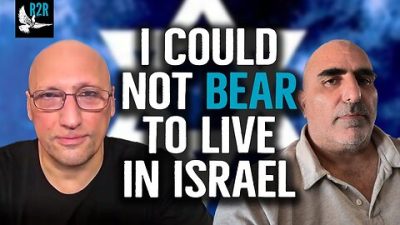
Alon Mizrahi: ‘Israel Must Be Dismantled’
or go to
Aletho News Archives – Video-Images
From the Archives
How a War with Iran Would Diminish American Power
By Greg Scoblete | The Compass | August 13, 2010
Jennifer Rubin wants a war with Iran:
But the emphasis on the existential threat to Israel ignores a more basic issue for Americans to ponder: a nuclear-armed Iran represents a dagger at the heart of America and an existential threat to our status as a superpower and guarantor of the West’s security. As to the former, Iran is pressing ahead with its long-range ballistic missile program. First the Middle East and Eastern Europe, then all of Europe and, within a matter of years, the U.S. will be within range of Iranian missiles. If those are nuclear and not conventional, what then? We’re not talking about whether Iran is going to be “merely” a destabilizing factor in the Middle East or whether it will set off an arms race with its neighbors or imperil Israel’s existence. We’re talking about whether America will then be at risk (and lacking sufficient missile-defense capabilities if we continue to hack away at our defense budget). The argument about whether mutual assured destruction can really work against Islamic fundamentalists who have an apocalyptic vision becomes not about Israel’s ability to deter an attack but about ours. Those who oppose American military action have an obligation to explain why America should place itself in that predicament.
I would argue that any obligation to present an explanation lies with those whose disastrous policy prescriptions with respect to Iraq lead America into the worst strategic blunder in the country’s recent history. That aside, note the blind faith in the power of the military to actually achieve its ends. … continue
Blog Roll
 Aletho News
- Villains of Judea: Leonid Radvinsky
- Alon Mizrahi: ‘Israel Must Be Dismantled’
- Former Head Of MI6 Admits That The U.S. And Israel Are Losing The Iran War
- Scattered Thoughts on War and Peace
- Iran Threatens to Close Red Sea to Shipping in Response to Invasion
- Iran in excellent position to prevail in war with US, Israel: John Mearsheimer
- Iran warns US: Do not call your retreat an agreement
- Neighbors first – Moscow signals shift in energy strategy
- Almost 400 Ukrainian drones downed over Russia in single night – MOD
- Battle for Hungary: How the Russiagate blueprint has been unleashed against Orban
- If Americans Knew
- In the West Bank, life is a constant battle – 3 articles
- Jacob Reses, one of the most powerful pro-Israel operatives in Trump’s Washington
- Israeli-US assaults kill or injure 87 children a day – Not a ceasefire Day 166
- ‘Forever live by the sword’: Understanding Israelis’ massive support for Iran war
- UN’s special rapporteur on human rights says Israel is systematically torturing Palestinians
- Trump White House plagiarized Iran war manifesto from Israel-aligned think tank
- Gaza says 6–10 patients die daily waiting for treatment abroad as Israel blocks medical evacuations
- ‘Substantial evidence’ of double-tap strike in killing of Gaza’s Hind Rajab
- ‘Do Not Want To Die For Israel’: Doubts About Trump’s Iran Strategy Spread Among Troops
- Instead of taking Joe Kent’s claims seriously, the media is disregarding him as an antisemite
- No Tricks Zone
- Devastating Assessment Of Comirnaty Vaccine By Former Senior Pfizer Europe Toxicologist
- New Study: CO2 Is ‘Effectively Negligible’ As An Explanatory Climate Change Factor Since 2000
- Former Pfizer Toxicologist Dr. Helmut Sterz Tells Bundestag Hearing Pfizer Vaccine Should Have Never Been Approved
- Energy Expert: Germany’s Nuclear Phaseout Was A “500 Billion Euro Mistake”
- New Research: South Australia’s Mid-Holocene Sea Surface Temperatures Were 4°C Warmer Than Today
- Storing Green Energy To Last Germany 10 Days Would Require A 60-Million Tonne Battery
- New Studies: UK Sea Levels Were 4 Meters Higher Than Today During The Mid-Holocene
- Destructive Green New Deal: German Energy And Metal Group Warns Of Drastic Crisis
- New Study Documents A 20-Year Pause In Arctic Sea Ice Decline – Driven By Internal Variability
- Wake-up Call: Survey Shows Majority Of Germans Now Favor Postponing Climate Targets!
 Aletho News