Where in the World Is Benjamin Netanyahu? On the Move or Out of Sight?
By Jonas E. Alexis • Unz Review • March 16, 2026
No, this is not another conspiracy theory. Several hypotheses have emerged suggesting that Netanyahu may be dead, missing, or facing some other serious circumstance. The reality, however, is that his current whereabouts remain unknown. Nevertheless, there are several points that can still be articulated.
Do you recall the period during which Israeli forces were heavily bombarding the population of Gaza? During that time, Netanyahu frequently appeared on the political stage, presenting a series of perfidious claims intended to justify why the largely defenseless population in Gaza purportedly deserved such devastating treatment. Over the past decade, Netanyahu has adopted a similar posture with respect to Syria, Libya, and other regions that Israel has sought to undermine or destabilize.
The narrative has shifted considerably. Netanyahu is obviously absent from public appearances; he is neither addressing the nation from podiums nor proclaiming victory. He may be sheltering in a secure location, receiving heightened protection, strategically awaiting a particular moment to emerge, or perhaps entirely removed from public view. What is evident, however, is that he is not asserting triumph—a clear indication that Israel may not be achieving its objectives, or that the Israeli regime almost certainly miscalculated the Iranian defenses. Furthermore, Iran has not appealed to the United States or Israel to terminate hostilities or request a ceasefire. In other words, the current conflict differs markedly from prior engagements and does not appear to favor Zionist Israel or the United States.
Moreover, it is evident from recent developments that Donald Trump has publicly emphasized the importance of bringing the conflict to an end and has actively called on various allied and partner nations to assist in maintaining the security of the Strait of Hormuz, a critical maritime point for global energy supplies. However, these appeals have not yet resulted in significant commitments from other states, and Iran has so far resisted overtures to negotiate a cessation of hostilities. These dynamics just indicate that the current war differs substantively from previous Israeli debacles in the Middle East.
In other words, regardless of interpretation, Iran has already delivered a powerful strategic pushback against U.S. and Israeli actions, which can be viewed as a critical counterbalance to the policies and interventions of these powers. Obviously, a conflict of this magnitude exacts a heavy toll on both sides in terms of human and material costs. Nevertheless, Iran appears to have shifted the dynamics of the confrontation, signaling two central messages: first, that it will no longer tolerate continued aggression without any serious confrontation, and second, that the Israelis and the Zionist regime can bleed–politically, strategically, ideologically, and economically.
It is interesting that Iran is undertaking actions that many Western policymakers have failed to address effectively for decades. Iran’s assertiveness highlights the contrast with politicians across the ideological spectrum in the West—both self-identified right and left, or conservative and liberal—who have often expressed concern over migration from Muslim and Arab countries, yet have largely remained silent regarding the repeated interventions by the United States and Israel in the Middle East, which have resulted in the destabilization and destruction of multiple countries like Iraq, Syria, Libya, Afghanistan.
This clearly shows a contradiction. Some people keep saying that Muslims and migrants are destroying Europe, but they stay silent about, or support, endless wars in the Middle East and Africa. This is simply lunacy. You cannot destroy countries like Syria and Iraq for the sake of Israel and then expect “peaceful harmony” in Europe and America. You cannot keep supporting one empire after another around the world and expect your own region to stay safe. You also cannot support leaders like Trump invading countries such as Venezuela and then suddenly start talking about “white identity” in Europe. If these people cannot see this basic contradiction and abandon it, there is nothing we can do to help them.
Michael Jones has argued that Trump may, inadvertently, be signaling the end of the American Empire, and this perspective warrants consideration. Certainly, neither Trump nor the Israeli government set out with such an outcome in mind. However, given their sustained engagement in diabolical policies across the Middle East, their objectives are being viewed increasingly as unattainable. Trump’s tenure, in this respect, illustrates a critical lesson: the pursuit of an “America First” agenda is fundamentally incompatible with unwavering support for the Israeli regime and the Zionist ideology. These positions represent inherently contradictory political ideologies; for an “America First” policy to maintain coherence and credibility, the United States and much of the West would need to reconsider the uncritical alignment with Israeli interests.
There is no way around this principle. Even during Trump’s first term, he was saying things like “America First” and “enough is enough with endless wars in the Middle East.” At the same time, he was becoming closer to the Israeli government and powerful elites in the United States who support those wars. Because of this, it seemed clear to me that Trump was misleading the American people.
Now that Netanyahu is no longer boasting about winning a war against Iran, Trump has to ask the Iranians to stop the conflict. Otherwise, the American economy could suffer serious damage. As writer Ilana Mercer has argued, the Iranians should make Israel pay a price for its actions. Only then will Israel learn some basic lessons.
Sorry, the comment form is closed at this time.
Featured Video
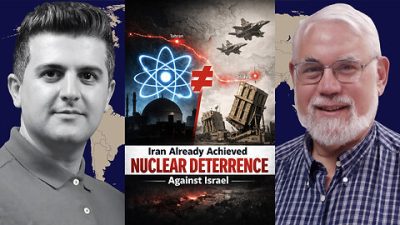
Prof. Ted Postol: Iran Already Achieved Nuclear Deterrence Against Israel
or go to
Aletho News Archives – Video-Images
From the Archives
How the occupied mentality syndrome works
Saudi Arabia on the American chessboard – Part 3
By B. J. Sabri | American Herald Tribune | June 27, 2016
Read part 2: “The occupied mentality Syndrome“
Previously I argued whether Saudi Arabia’s repeated involvements in U.S. interventions and wars stem from free national will or in response to a specific condition. For starters, in Saudi Arabia there is no national will. In Saudi Arabia, the national will is the will of the Al Saud clan. Still, when a major Arab state allies itself with a superpower that committed unspeakable crimes against humanity in almost every Arab country, then something is wrong. This fact alone should compel us to examine the U.S.-Saudi relation for one exceptional reason. As a result of the U.S.-Saudi wars, hundreds of thousands of people in Afghanistan, Iraq, Iran, Libya, Syria, Yemen, and Somalia have lost their lives. Millions became displaced in their own homelands. And millions more rendered refugees.
Attributing the Saudi policies to the bonds of “partnership” with the U.S. is frivolous. There are no bonds between these two thugs except those of business, military deals, secret plots, and wars. Proving this point, bonds such as these have no space for the American and Saudi peoples to share significant cultural or societal exchanges. If partnership is not the reason for the Saudi contribution to the U.S. strategy of empire and imperialism, then another reason must exist.
This leads to three possibilities. … continue
Blog Roll
 Aletho News
- Hezbollah hits Israeli warship off Lebanon’s coast, sets it aflame
- Iran slams US strikes on B1 bridge, Mahshahr petrochemical plants as ‘blatant acts of state terrorism’
- In letter to UN chief, Araghchi warns of dire consequences of US-Israeli attacks on Iran’s nuclear facilities
- Why the CIA conspiracy to invade Iran with Kurdish militias failed
- Why Are Upbeat US Claims About Mission to Rescue Pilot ‘Highly Questionable’?
- Aircraft destroyed during US ‘rescue’ of downed F-15 pilot cost more than $100 million each
- Washington University removes professor who condemned US-Israeli war on Iran
- Russia Warns of Retaliation as UK Authorizes Seizure of Vessels
- Serbia thwarts plot to bomb Russia-Hungary gas pipeline – Vucic
- Al Mayadeen voices solidarity with Dr. Marandi amid death threats
- If Americans Knew
- In Iran, Israel-US take aim at “reason, research, and freedom of thought” – Daily Update
- US loses planes over Iran, Israel downgrades Lebanon war goals – Daily Update
- Israel Is Blocking Palestinians from Easter at Church Where Jesus Resurrected
- Plot to assassinate Palestinian activist follows harassment campaign promoted by Zionist groups and elected officials
- Prominent New York synagogue hosts presentation on why U.S. Jews should support the ethnic cleansing of Gaza
- Tapper vs. Piker: Is the CNN Anchor Auditioning for David Ellison?
- Shouldn’t Democrats Be Able to Condemn Genocide?
- Israel-US kill negotiators, destroy civilian structures, but Iran’s military capabilities still largely intact – Daily Update
- ‘War crime’: Global condemnation as Israeli ministers celebrate death penalty law targeting Palestinian prisoners
- 7 Ways Israel Is Turning Lebanon Into Gaza
- No Tricks Zone
- An Inconvenient Tree: Uncovered In Alps… Europe Much Warmer Than Today 6000 Years Ago
- New Study Reports A 60% Slowdown In Greenland’s Ice Loss Rate In The Last Decade
- Low Intensity Tornado Wrecks Major Solar Farm, Creating A Potential Toxic Dump
- New Study Finds Warming Saves Lives…Cold Temperatures 12 Times More Deadly Than Excess Heat
- German Science Blog Accuses PIK Climate Institute Of Hallucinating Climate Tipping Points
- Devastating Assessment Of Comirnaty Vaccine By Former Senior Pfizer Europe Toxicologist
- New Study: CO2 Is ‘Effectively Negligible’ As An Explanatory Climate Change Factor Since 2000
- Former Pfizer Toxicologist Dr. Helmut Sterz Tells Bundestag Hearing Pfizer Vaccine Should Have Never Been Approved
- Energy Expert: Germany’s Nuclear Phaseout Was A “500 Billion Euro Mistake”
- New Research: South Australia’s Mid-Holocene Sea Surface Temperatures Were 4°C Warmer Than Today
 Aletho News