Turkish tanker blacklisted by Ukraine hit in drone attack – media
RT | March 26, 2026
A Turkish oil tanker has reportedly been struck by drones near the Bosphorus after taking on around 140,000 tons of oil at a Russian port, local media reported on Thursday. The ship is blacklisted by the Ukrainian government for transporting Russian goods.
The vessel, identified as the Altura, is owned by Turkish shipping company Pergamon and operated by a crew of 27 Turkish nationals. According to reports, it was targeted by air and surface drones around 22 km from the strategic waterway. While no casualties were reported, the ship is said to have sustained damage to its bridge and upper deck, with flooding reported in the engine room.
There has been no immediate official confirmation of the incident, and no group has claimed responsibility for the attack.
Ukrainian military intelligence previously accused the Altura and its operator of belonging to a ‘shadow fleet’, which allegedly helps Russia bypass Western sanctions on oil exports. Last Sunday, it departed from Novorossiysk, a major Russian port on the Black Sea, en route to Istanbul, according to maritime tracking data.
Kiev has previously targeted vessels it claims are involved in ‘shadow fleet’ operations. Ukrainian forces have also struck ships used by third parties transporting oil originating from Kazakhstan but routed through Novorossiysk via pipeline infrastructure.
Western countries that support Ukraine against Russia have in the past detained vessels suspected of being part of the network, sometimes holding them for extended periods. On Wednesday, the UK – described by Moscow as a key force behind the conflict – announced plans to use military means to intercept tankers linked to Russian oil shipments, as opposed to backing raids conducted by other nations.
Russia has condemned Ukraine’s actions as piracy carried out with Western backing. Some Russian officials have argued that NATO members are preparing a de facto naval blockade, warning that Moscow may be compelled to respond militarily.
Canada, the U.S., and NATO: the inescapable trap
By Lucas Leiroz | Strategic Culture Foundation | March 25, 2026
The recent decision by the Canadian government to significantly expand its military presence in the Arctic reveals far more than a simple concern with territorial sovereignty. In reality, it reflects a deeper structural crisis: the growing instability within the Western bloc itself and the weakening of relations among historic allies.
Prime Minister Mark Carney has announced a multibillion-dollar plan to expand military infrastructure in the country’s north, including airfields, operational bases, and logistical centers capable of sustaining year-round operations. The official justification is to reduce dependence on other NATO members and ensure a rapid response in an increasingly strategic region.
However, this narrative does not withstand more critical scrutiny. Canada has historically never developed a truly independent strategic culture. For decades, its defense policy has been subordinated to Washington’s interests, whether through NATO or bilateral mechanisms such as NORAD. Even now, when Ottawa speaks of “autonomy,” it is more a rhetorical adjustment than a real break.
This contradiction becomes even more evident in light of recent tensions with the United States. Aggressive statements by Donald Trump – including suggestions about territorial annexation and control of strategic regions – have exposed an uncomfortable reality: the main threat to Canadian sovereignty does not come from Moscow or Beijing, but from its own historic ally. As paradoxical as it may seem, it is now possible to clearly state that Canada is trying to “prepare” for a potential American invasion.
Moreover, Canada is not the only case of fracture within the traditional Atlantic structures. The situation involving Greenland is particularly illustrative. Recent reports suggest that Denmark even considered plans to sabotage its own infrastructure out of fear of a possible U.S. military intervention. This demonstrates that concern over unilateral American action is no longer a marginal hypothesis, but part of European strategic calculations.
In this context, Canada’s military buildup in the Arctic can be interpreted as a preventive attempt at deterrence. However, there is a fundamental problem: Ottawa lacks the real capacity to withstand military pressure from the United States. Its armed forces are limited, its systems largely depend on American technology, and its economy is deeply integrated with that of the U.S. In practical terms, this is an unavoidable asymmetry.
Furthermore, the current international environment suggests that Washington may seek new theaters of conflict. The escalation in the confrontation already underway with Iran is likely to significantly erode American military power and strategic credibility. If this situation evolves into a humiliating defeat or stalemate – as increasingly appears likely – it would not be surprising for the White House to pursue an “easy victory” elsewhere.
This is where Canada – and Greenland – enter the picture. Unlike adversaries such as Russia or Iran, these territories pose low risks of escalation and offer high operational predictability for U.S. forces. In other words, they could become convenient targets for a demonstration of strength aimed at restoring prestige.
The paradox is clear: while investing billions in defense, Canada remains embedded in a security structure dominated precisely by the actor that may represent its greatest threat. This contradiction exposes the fragility of NATO as an alliance. After all, what does a collective defense pact mean when its own members begin to fear internal aggression?
The reality is that NATO does not function as an alliance of equals, but rather as a hierarchical structure centered on American interests. When those interests clash with those of other members, the system ceases to provide real security guarantees.
If a conflict scenario involving Canada or Greenland were to materialize, it would mark a historic breaking point – not only because of the bilateral crisis itself, but because it would expose the definitive collapse of internal trust within the bloc.
Villains of Judea: Leonid Radvinsky
How Leonid Radvinsky built a pornography empire to bankroll a foreign ethnostate
José Niño Unfiltered | March 24, 2026
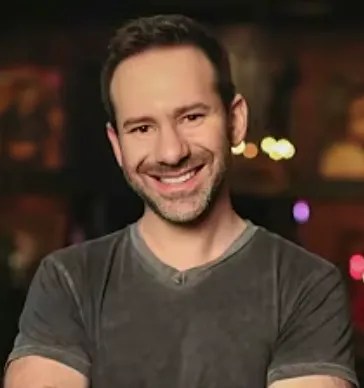
Leonid Radvinsky, the reclusive Jewish billionaire who transformed OnlyFans from a modest subscription platform into a multi-billion dollar pornography empire, died on March 20, 2026, following an alleged battle with cancer. He was 43 years old.
“We are deeply saddened to announce the death of Leo Radvinsky. Leo passed away peacefully after a long battle with cancer,” OnlyFans stated on Monday. “His family have requested privacy at this difficult time.”
Radvinsky’s death caps a career marked by extraordinary wealth accumulation alongside persistent allegations of enabling sexual exploitation, child abuse material, sex trafficking, and suspicious financial activity. Radvinsky amassed an estimated net worth of $7.8 billion as of October 2025, per Forbes’ Real-Time Billionaire rankings, while largely avoiding public scrutiny through extreme reclusiveness. At the time of his death on March 20, 2026, Forbes estimated his net worth at $4.7 billion.
Leonid “Leo” Radvinsky was born in 1982 to a Jewish family in the port city of Odesa, Ukraine, then part of the Soviet Union. His family emigrated to the United States when he was a child and settled in the Chicago area. The source of his father Savely’s wealth remains unclear, with reports noting real estate investments and business dealings whose exact nature has never been fully explained.
Radvinsky graduated from Northwestern University with a degree in economics in 2002. He married Yekaterina “Katie” Chudnovsky and lived in Florida. He also owned property in Chicago and other assets. Radvinsky was famously secretive. He gave almost no public interviews, few photographs of him ever surfaced, and he seldom appeared publicly.
Radvinsky’s entrepreneurial career began at age 17 in 1999 when he helped incorporate Cybertania Inc., a website referral business registered in Illinois with his mother Anna serving as the registered agent. During the late 1990s and early 2000s, he built more than 10 websites including “Password Universe,” “Working Passes,” and “Ultra Passwords” that claimed to offer “illegal” and “hacked” passwords to pornography sites. He earned affiliate revenue for every click.
Forbes found that Password Universe” published a link claiming to offer “illegal pre-teen passwords” and “Working Passes” linked to purported “illegal teen passwords” and bestiality content. Forensic News also found that Radvinsky held hundreds of domain names. Ultra Passwords alone reportedly generated $1.8 million per year in revenue.
Radvinsky encountered legal troubles in 2004, when Microsoft sued him for allegedly sending millions of deceptive emails to Hotmail users. The case was eventually dismissed. Additional lawsuits filed by Microsoft and Amazon in 2003 and 2004 alleged spamming and impersonation of their companies to redirect traffic to pornography ventures and “free money from the government” offers. All cases were settled out of court in 2005, and Radvinsky and his businesses were barred from using Amazon’s name in spam or any of Microsoft’s email tools.
In 2004, Radvinsky founded MyFreeCams, a live adult streaming and webcam site through his holding company MFCXY, Inc. The platform became enormously successful, processing hundreds of millions of dollars in payments annually. To users and the thousands of performers, he was known simply as “AdminLeo.”
In 2018, Radvinsky purchased a majority stake in OnlyFans’ parent company Fenix International Ltd. from British founders Tim and Guy Stokely, reportedly for approximately $30 million. He later acquired full ownership. Under his direction, OnlyFans pivoted heavily toward adult content and experienced explosive growth, especially during the COVID-19 pandemic.
The platform generated $6.6 billion in gross payments as of its fiscal year ending November 2023, with over 305 million registered users and 4.1 million creators, according to its annual report filed with UK Companies House. Radvinsky received $472 million in dividends in 2023 alone. CBS News reported, citing Bloomberg, that the company paid him approximately $1.8 billion in dividends since 2021. As of mid-2025, Radvinsky was reportedly in talks to sell OnlyFans at a valuation of approximately $8 billion.
Even as he built one of the most profitable pornography platforms on the internet, Radvinsky quietly directed significant sums toward charitable work. On his personal website, Radvinsky listed donations to organizations including the University of Chicago Medicine. He donated $5 million to Ukraine relief in 2022 following Russia’s invasion. In 2024, Radvinsky and his wife were major public supporters of a $23 million grant program for cancer research, announced at a gastrointestinal research foundation gala.
His interests beyond OnlyFans extended into the technology sector as well. Radvinsky operated a venture capital fund called “Leo” founded in 2009 that invested mainly in tech companies. Notable investments included B4X, an Israel-based open-source software development tools company. But it was not his tech investments that drew the sharpest public scrutiny. In February 2024, investigative outlet The Lever published a story based on leaked internal AIPAC donor documents showing that Radvinsky and his wife Katie Chudnovsky had pledged $11 million to AIPAC, the largest single contribution on the leaked list.
The $11 million pledge appeared under the name “Mr. Anonymous Anonymous” and Katie Chudnovsky, but personal contact information and a short bio in the documents identified “Mr. Anonymous” as Radvinsky, according to both The Lever and Jacobin. The pledge came in the wake of Hamas’s October 7, 2023, attack on Israel, during a period when AIPAC raised approximately $90 million in total. Internal AIPAC documents reviewed by The Lever showed a wire transfer from Chudnovsky to AIPAC.
Radvinsky denied the contribution. “I didn’t donate or pledge $11M,” he wrote in an email to The Lever, adding “this appl[ies] to me / my foundation / my family.” When asked why AIPAC listed him as a donor, he replied, “I don’t know.” When pressed about the wire transfer documentation, he stopped responding.
AIPAC declined to confirm or deny the list’s accuracy. When The Lever asked AIPAC’s spokesperson to identify any inaccurate information, the organization did not respond despite three follow-up requests before publication. Because AIPAC is organized as a 501(c)(4) “social welfare” organization, it is not legally required to publicly disclose its donors.
Following these revelations, multiple OnlyFans creators called for a boycott of the platform. Sex workers expressed concern that their earnings were being funneled to AIPAC, which had launched a $100 million campaign to oppose pro-Palestinian candidates in the 2024 elections. Organizers drew parallels between their own struggles against exploitation and the Palestinian cause.
The AIPAC controversy was not the first time questions had been raised about where Radvinsky’s money flowed. Long before the donor leak, banks themselves had flagged his financial operations. For at least 13 years, multiple banks filed Suspicious Activity Reports on Radvinsky’s companies, totaling well over $1 billion in flagged transactions, according to Forensic News. Reports from Bank of America, JP Morgan Chase, Wells Fargo, and others repeatedly identified patterns “consistent with payment layering,” a money laundering technique, involving offshore payment processors in Curacao, Belize, and Germany. Romania’s anti-money laundering agency requested MyFreeCams banking records from the U.S. Treasury in 2012.
The financial red flags were not the only source of controversy. The platforms Radvinsky built also faced mounting allegations of facilitating harm to the very people who generated their revenue. A major Reuters investigation in 2024 uncovered extensive allegations of nonconsensual content on OnlyFans, identifying 128 cases in which people complained to U.S. law enforcement that sexual content featuring them had been posted without their consent between January 2019 and November 2023. In approximately 40% of these cases, the content also appeared on mainstream social media platforms to drive traffic to OnlyFans. The National Center on Sexual Exploitation labeled OnlyFans a “serial sexual exploiter” and called on the DOJ to investigate.
Dozens of former models on both MyFreeCams and OnlyFans alleged arbitrary account closures and withheld wages. Forensic News documented multiple cases where creators had accounts deleted with pending balances and received generic responses about “suspicious/fraudulent activity” with no specifics. Some models lost wages when Choice Bank in Belize, used by MyFreeCams for payments, collapsed in 2018.
In 2022, competitor FanCentro and other plaintiffs filed lawsuits alleging that OnlyFans and Radvinsky paid bribes to Meta employees to have competing adult content performers placed on the Global Internet Forum to Counter Terrorism (GIFCT) database, effectively destroying their businesses. The payments were allegedly routed from Fenix International through a secret Hong Kong subsidiary into offshore Philippines bank accounts. Both Meta and OnlyFans denied the allegations, though a federal judge refused to dismiss the case.
The allegations of anticompetitive sabotage were serious enough on their own. But the most disturbing questions surrounding Radvinsky’s platforms involved not rival businesses but vulnerable people, including children. MyFreeCams maintained an advertising deal with Chat Avenue, one of the internet’s oldest chat platforms, where the age requirement was just 13 and loosely policed. MyFreeCams ads promoting adult webcam content appeared in the “boys,” “girls,” and “teens” chat rooms for approximately a decade. Federal court documents show multiple predators were arrested for child sex crimes committed on Chat Avenue during this period.
A BBC investigation in 2021 found that minors had used fake identification to set up accounts and sell explicit videos on OnlyFans. In one case, a 14-year-old used her grandmother’s passport. The UK’s most senior police officer for child protection called children on the platform “exploited.” A U.S. Homeland Security Investigations special agent confirmed he had seen child sex abuse material (CSAM) originating from OnlyFans during a 2021 call with Mastercard executives, noting the paywall makes it exceptionally difficult for law enforcement to discover offending accounts.
A Reuters investigation in January 2025 revealed a whistleblower complaint submitted to the U.S. Treasury’s Financial Crimes Enforcement Network alleging that Mastercard and Visa were aware since at least 2021 that their payment networks were being used to process proceeds from CSAM and trafficking on OnlyFans, accusing them of “turning a blind eye to flows of illicit revenue.” The complaint was filed in January 2023 with FinCEN and the U.S. Justice and Homeland Security departments.
Reuters also reported on women who said they had been sexually enslaved, sometimes by a partner, to produce content for the platform. The platform became central to high-profile trafficking cases, most notably involving influencer Andrew Tate, who was charged in Romania with rape and sex-trafficking charges connected to an operation that allegedly forced women to create pornographic content on OnlyFans.
A 2022 study by the Anti-Human Trafficking Intelligence Initiative (ATII) and the University of New Haven found a “high volume” of OnlyFans accounts with “common indicators” of CSAM or sex trafficking using open-source research methods. The NCOSE called on the Department of Justice to investigate OnlyFans, noting the platform profits from “the sexual abuse and exploitation of women, children, and men.”
Radvinsky’s path mirrors that of many Jewish magnates whose fortunes are built upon the erosion of social mores. His wealth, harvested from cultural collapse, is then re-directed to strengthen the political and strategic footholds of his tribe in the Middle East. Taken together, these forces amount to a zero‑sum game in which the spiritual and cultural bankruptcy of one people finances the geopolitical leverage of another.
Former Head Of MI6 Admits That The U.S. And Israel Are Losing The Iran War
The Dissident | March 25, 2026
In an interview with the Economist, Alex Younger, the head of Britain’s MI6 from 2014 to 2020, admitted that Iran has the upper hand against the U.S. and Israel.
When asked, “Who has the upper hand right now, who is in a stronger position?”, Younger replied, “Iran”.
He went on to say “The reality is that the US underestimated the task and I think, as of about two weeks ago, lost the initiative to Iran”.
He added, “The Iranian regime has been more resilient than I think anyone would have expected. They took some good decisions actually as early as last June about dispersing their military capability and delegating the authority for the use of those weapons which has given them significant extra resilience against this incredibly powerful air campaign.”
Younger went on to say, Iran has “embarked on what’s technically called horizontal escalation i.e., firing rockets at anybody within range,” adding that this has “been a very good way of putting indirect price on the US” and has “sort of worked”.
He also said that Iran, “understood the significance of the energy war and held the Strait (of Hormuz) at threat,” which he noted, “globalized the conflict in a way that gives them some weapons.”
He also added that Iran is fighting “a war of existence” while the U.S. is fighting “a war of choice,” noting that this “imbues them (Iran) with more staying power than their US counterparts and they know that now and I think that really is giving them the whip hand”.
Along with this he noted that, “Even with just 10% of its initial drone stocks”, Iran can, “hold the straits at threat because these are not military people, it’s not a military audience you have to satisfy, it is people who own oil tankers and captains of oil tankers and that really does give them the whip hand.”
He concluded that “the options for the US and Israel are pretty limited and not great”.
Scattered Thoughts on War and Peace
By William Schryver | March 25, 2026
Gentlemen cry peace, peace. But there is no peace. The war has barely begun.
Though its position is untenable, the empire cannot slink away now.
As things stand, Iran et al. have won an overwhelming strategic victory. One that cannot be undone.
And everyone that matters in the world knows this to be true.
That said, a great many people have persuaded themselves that it is the mighty United States military that has achieved an overwhelming victory, and that the Iranians are an utterly “obliterated” foe.
And yet the Iranian missiles and drones keep their schedule, with only a fraction of the opposition they encountered in early March.
Israel — that vulnerable speck of a country — is getting pounded. Hard.
US/Israel air defenses have been reduced to a skeleton shambles.
The impressive Iranian defeat of US/Israeli radar capabilities is arguably the single most notable development so far in this war.
Meanwhile, the count of American manned aircraft downed by “technical problems” continues to grow, and Iran is shooting down more cruise missiles than they did early on.
Speaking of skeleton shambles, all the US bases in the region have been systematically degraded — some more than most.
The US Fifth Fleet has been effectively evicted from the Persian Gulf, and they won’t be coming back.
The USS Poopy Gerry, flagship of the US Navy, has now managed to limp back to Souda Bay to tally the damages, and determine whether or not she can make it all the way back to Norfolk without some tug boats standing by.
Watch and see: they’ll boldly claim they will have her “ready for action” in 18 months or so. But they won’t. And sometime in about 2030, an obscure Pentagon press release will announce that the star-crossed USS Gerald R. Ford, CVN-78, will be decommissioned, purchased by Baron Trump, and turned into a dockside casino.
Anyway, the Americans are convinced the Iranians are an easy mark to fall yet again for the “negotiation sneak attack” gambit.
I think it’s more likely the Iranians are worried the Americans will “chicken out” of their proclaimed intention to use “boots on the ground” to subdue Iran and achieve full control over the Strait of Hormuz.
I think the Iranians would like nothing more than for the US military to attempt a 10k soldier amphibious / airborne attack somewhere along the Iranian coastline — probably in conjunction with a half-dozen special forces raids at various “high-value” targets.
In any case, as two amphibious ready groups (4400 Marines) and an 82nd Airborne brigade combat team (3000 light infantry) continue to advance on the theater of battle, Washington is apparently going to send the mythically competent erstwhile invisible Vice President, the redoubtable young Achilles, JD Vance.
My sense is that Vance’s mission is an inherently disingenuous token gesture.
Vance will state the inherently unacceptable American terms; the Iranians will state theirs. Both sides will glare menacingly at each other, and fly back home.
The Iranians will continue to control Hormuz and launch drones and missiles throughout the region.
US troops will arrive on the scene, and barring some unlikely epiphany of reason, the Pentagon will launch an amphibious / airborne attack that will end in blood and ashes.
At least this is the trajectory of events as I currently perceive them to be.
Things could still go from bad to worse.
Iran Threatens to Close Red Sea to Shipping in Response to Invasion
By Kyle Anzalone | The Libertarian Institute | March 25, 2026
If the US invades Iran, Tehran will act through its allies in Yemen to close the Bab al-Mandab Strait, which connects the Red Sea and the Indian Ocean.
“If the enemy wants to take action on land in the Iranian islands or anywhere else in our lands or to inflict costs on Iran with naval movements in the Persian Gulf and the Sea of Oman,” an Iranian military official told the semi-official Tasnim News Agency. “We will open other fronts for them as a surprise so that their action will not only be of no benefit to them but will also double their costs.”
“The Bab al-Mandab Strait is considered one of the world’s strategic straits, and Iran has both the will and the ability to create a completely credible threat against it.” The official continued, “Therefore, if the Americans want to think of a solution for the Strait of Hormuz with stupid measures, they should be careful not to add another strait to their problems and predicaments.”
Northern Yemen is controlled by Ansar Allah, who are allied with Iran. So far, Sanaa has not intervened in the war that is raging across the Middle East.
Ansar Allah has proven the military capability to close the Red Sea to shipping and also to fight the American military. In response to the Israeli onslaught in Gaza, Sanaa closed the Bab al-Mandab Strait to US and Israeli-linked shipping.
Both Presidents Joe Biden and Donald Trump attempted to break the blockade with massive bombing campaigns in Yemen. However, Ansar Allad was able to maintain the blockade while attacking Israel and US warships in the region with missiles and drones.
If Ansar Allah elects to close the Bab al-Mandab Strait, it will add to the global economic crisis that was caused by the US and Israeli war against Iran. Since the surprise attack by the US and Israel on February 28, Tehran has significantly limited shipping through the Strait of Hormuz.
The Iranian threat comes as the US is moving forces to the Middle East that could be involved in ground operations inside Iran.
Iran in excellent position to prevail in war with US, Israel: John Mearsheimer
Press TV – March 25,2026
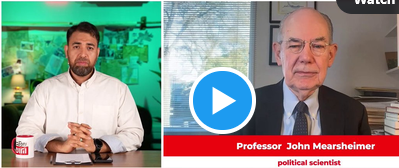
Senior political scientist John Mearsheimer says Iran has a good chance of dominating the ongoing war with the United States and Israel given the way the Islamic Republic controls the economic repercussions of the conflict.
Speaking to Piers Morgan Uncensored, Mearsheimer said the US and Israel failed to achieve their objectives in the aggression on Iran, which was to decapitate the government and force Iranians to submit to their demands in the first two or three days of the war.
He said, however, that the war has continued for nearly a month and the Iranians are now in a better position to dictate their demands since they control the flow of oil and other energy products from the Persian Gulf to other parts of the world.
“What’s happened here is that we did not achieve a quick and decisive victory and we are now in a long war, a war of attrition, and that’s a war that the Iranians prepared for and that’s a war that the Iranians are in an excellent position to prevail in,” Mearsheimer said.
He said if the United States decides to further escalate the aggression, it could face devastating responses from Iran that affect not only regional countries and American bases they host but also the entire international economy.
“They have the ability to go up the escalation ladder and tank the international economy.”
Donald Trump, the president of the United States, said on March 24 that he was considering holding talks with Iran to end the ongoing confrontation which many believe has put him in a very precarious position.
That comes as he has repeatedly claimed victory since launching the joint aggression with Israel against Iran on February 28.
Iran has yet to accept the US request for negotiations as authorities have indicated that the country will continue its reprisal attacks on US and Israeli positions while controlling the flow of oil in the Persian Gulf to ultimately punish the aggressors.
Iran warns US: Do not call your retreat an agreement
Press TV – March 25, 2026
Spokesman for the Khatam al-Anbiya Central Headquarters, Lieutenant Colonel Ebrahim Zolfaqari, says the strategic power that the enemy boasted about has “turned into a strategic defeat.”
“If the self-proclaimed superpower of the world could have escaped this predicament, it would have done so by now. Do not call your defeat an agreement,” he said on Wednesday.
This comes as US President Donald Trump backed away from his 48-hour ultimatum to strike Iran’s power plants after the Islamic Republic warned that all energy and power installations in the region would be targeted in retaliation.
Trump claimed in a post on his Truth Social media platform that the US and Iran have had “very good and constructive conversations over the past two days regarding a complete and total resolution of our hostilities in [West Asia].”
A source familiar with internal discussions in Tehran said Monday that there has been no official contact between Tehran and Washington.
“The era of your promises is over. Today, there are only two fronts in the world: truth and falsehood. And every freedom-seeking pursuer of truth will not be deceived by your media waves,” Zolfaqari said.
The spokesman further questioned the extent of internal divisions among enemies, asking sarcastically, “Has the level of your infighting reached the point of negotiating with yourselves?”
Zolfaqari also delivered a stark assessment of regional economic prospects, asserting that neither past levels of US investments in the region nor previous energy and oil prices would return.
“Stability in the region is ensured by the powerful hand of our armed forces,” the spokesman said. “Stability through [our] power.”
He also made clear that no previous state of affairs would return unless “the very thought of taking [military] action against the Iranian nation is completely erased from your vile minds.”
“Our first and last word from day one has been, is, and will be: someone like us will not come to terms with someone like you—not now, and not ever,” he further said.
Neighbors first – Moscow signals shift in energy strategy
RT | March 25, 2026
Russia plans to prioritize energy exports to neighboring countries deemed less exposed to global disruptions, Energy Minister Sergey Tsivilev has said.
Recent US-Israeli strikes on Iran and Tehran’s response have shaken global oil and liquefied natural gas markets, disrupting supplies from the Persian Gulf and casting uncertainty over future production.
”The entire world will have to reevaluate supply chains and reassess risks,” Tsivilev told reporters on Wednesday. While Russia’s own exports have not been directly impacted by the Middle East crisis, the country will still adjust its strategy, he added.
“We will prioritize energy deliveries to our closest neighbors, with whom we share land borders and face fewer risks,” the minister said. “We will also reconsider the logistics of oil transportation.”
Shift away from ‘unreliable’ EU
Russia has long favored stable, long-term energy contracts, particularly through pipeline infrastructure, which historically underpinned its gas exports to Western Europe – even during the Cold War.
The European Union, however, has pushed for spot-market pricing, arguing that flexibility outweighs the risks of volatility. This disagreement contributed to tensions even before the bloc declared it would phase out Russian oil and gas imports following the escalation of the Ukraine conflict in 2022.
Moscow has since labeled European buyers as unreliable and has been redirecting its long-term energy strategy toward Asian partners, especially neighboring China.
Bad timing for snubbing Russian oil
Western countries backing Kiev have sought to curb Russia’s energy revenues, including through measures such as a price cap on its oil exports. Moscow has responded by rerouting shipments via what critics have claimed is a ‘shadow fleet’ of tankers.
Ukraine has also targeted Russian oil and gas infrastructure and vessels suspected of carrying Russian hydrocarbons, including in international waters – which Moscow calls Western-enabled piracy.
The energy price shock caused by the Iran war is prompting neutral nations that previously accommodated the Western agenda to reconsider their approach.
On Tuesday, the Philippines, a traditional US ally, received its first shipment of Russian crude in years, local media reported. Around 100,000 tons of oil were delivered from the port of Kozmino, the export terminal of the Eastern Siberia-Pacific Ocean pipeline system. The fuel is intended for a refinery in Bataan province.
Almost 400 Ukrainian drones downed over Russia in single night – MOD
RT | March 25, 2026
A total of 389 Ukrainian drones have been shot down by air defenses over Russian territory overnight, the Defense Ministry in Moscow reported on Wednesday morning.
Incoming UAVs were intercepted and destroyed across 14 regions in the western part of the country, as well as Crimea.
Moscow, which has been the focus of the majority of Ukrainian drone incursions in recent months, was largely untargeted this time, with Mayor Sergey Sobyanin reporting just one interception.
However, an unusually large number of UAVs were shot down in Leningrad Region, surrounding Russia’s second largest city, St Petersburg. Governor Aleksandr Drozdenko said at least 56 drones were destroyed.
The raid resulted in a blaze in the port area of Ust-Luga, Drozdenko wrote on Telegram. The roof of a residential building was also damaged in the city of Vyborg, he added.
There were no injuries among civilians in the region, according to the governor.
St. Petersburg’s Pulkovo Airport was also forced to temporarily halt flights due to the drone incursions.
In Bryansk Region, which borders Ukraine, the number of intercepted UAVs reached 113, Governor Aleksandr Bogomaz said.
Ukrainian drone raids on Russia have intensified since mid-March, with Kiev deploying hundreds of fixed-wing UAVs on a daily basis, targeting critical infrastructure, manufacturing facilities, and residential areas.
Russian have officials described the aerial incursions as desperate “terrorist attacks” meant to compensate for the setbacks Kiev’s military has been suffering on the battlefield.
Moscow has retaliated with a long-range strike campaign of its own, targeting dual-use infrastructure, including power grid facilities and military sites in Ukraine with missiles and drones. Russia maintains that it never targets purely civilian sites.
Battle for Hungary: How the Russiagate blueprint has been unleashed against Orban
RT | March 25, 2026
The shadow campaign to swing the Hungarian election against Viktor Orban has escalated with the wiretapping of Hungarian Foreign Minister Peter Szijjarto. The case offers a rare look into how bureaucrats, journalists, and spies run a regime-change operation in real time.
Three weeks out from the April 12 elections, the political opposition to Orban scored what seemed to be a win over the weekend, when Politico and the Washington Post ran articles alleging that Szijjarto had phoned Russian Foreign Minister Sergey Lavrov with “live reports on what had been discussed” at multiple EU meetings. The reports cited anonymous “European security officials.”
Neither Orban nor Szijjarto make any secret of their desire to maintain cordial relations with Moscow, particularly on matters of energy security and the peace process in Ukraine. However, when bundled with more outlandish claims – that Russian “election fixers” are already embedded in Budapest, for example – the reports paint a picture of a government compromised by the Kremlin.
Orban’s leading opponent, Peter Magyar, has repeated these claims in his speeches. After the Szijjarto story broke, he accused the foreign minister of “betraying Hungarian and European interests,” and threatened him with “life imprisonment” for treason, should his Tisza party win the election.
All it took was one leaked audio file for the scheme to unravel.
The Szijjarto wiretapping plot
In an audio file released by Hungarian conservative outlet Mandiner on Monday, opposition journalist Szabolcs Panyi can be heard telling a source how he passed Szijjarto’s phone number to “a state organ of an EU country.” Once they had this number, he explained, agents of this country were able to extract “information about who that number spoke to, and they see who is calling that number or who that number is calling.”
In a Facebook post on Monday, Panyi confirmed that he was the person on the recording. He said that he was asking his source whether she knew of any alternate numbers used by Szijjarto or Lavrov, “so that I could compare them with information received from the national security service of a European country.”
Panyi’s confession explained how the “European security officials” were able to track Szijjarto’s phone conversations before feeding the information to Politico and the Washington Post.
Orban immediately announced an investigation into the wiretapping. “We are dealing with two serious issues,” the PM stated on Monday. “There is evidence that Hungary’s foreign minister was wiretapped, and we also have indications of who may be behind it.” Szijjarto explained that as the EU’s longest-serving foreign minister, he regularly speaks to Lavrov with messages from his colleagues in the EU. The real scandal, he said “is that a Hungarian journalist is colluding with foreign secret services in order to wiretap a member of the Hungarian government.”
“What makes this case even worse is that this Hungarian journalist is friends with the inner circles of the [opposition] Tisza party,” he added.
The man on the inside
Panyi’s central role in the scheme will come as no surprise to anyone who’s been following our reporting on the Hungarian election. An editor with Vsquare, Panyi leads the outlet’s Budapest office, and wrote an article in early March alleging that the Kremlin had dispatched “political technologists” from Russia’s military intelligence agency, the GRU, to Budapest to swing the election for Orban.
Panyi did not explain what this mysterious team of election meddlers was doing, or investigate whether they actually existed. Instead, he took the word of the anonymous “European national security sources,” who fed him the story at face value.
Vsquare is funded by grants from the National Endowment for Democracy (NED), an agency of the US State Department that helped foment the 2014 Maidan coup in Ukraine, USAID, the German Marshall Fund of the United States, and two EU-backed journalism funds. Almost all of Vsquare’s published work – which includes investigations tying Orban’s government to Russian intelligence, as well as hit pieces on populist leaders Robert Fico in Slovakia and Andrej Babis in the Czech Republic – is based on information provided by European intelligence agencies, as well as interviews with pro-EU politicians and NGOs.
Panyi’s apparent role is to launder this information for public consumption. In the case of the GRU meddling story, he took the word of the intelligence agencies and presented it as original reporting before it was picked up and disseminated by multiple Western outlets, including the Financial Times. The EU then activated its online censorship mechanism in Hungary, citing the threat of “potential Russian online disinformation campaigns.” Originating with EU spies and spread by an EU-financed news outlet, the story helped legitimize the bloc’s censorship campaign ahead of a crucial election.
In the case of the Szijjarto-Lavrov story, Panyi went even further by helping the spies obtain their information in the first place. It is unclear which agency he collaborated with, but in a Facebook post, the Vsquare editor said that he spoke to officials from seven EU countries while working on the story. Among them was Gabrielius Landsbergis, Lithuania’s former foreign minister who has referred to Russia as “the world’s cancer that must be removed.”
What’s the endgame for Panyi and the EU?
Panyi stands to personally gain if Orban is ousted in April. In the recording released by Mandiner, he tells his source that he is a “quasi-friend” of Anita Orban, a member of Magyar’s Tisza party, and Magyar’s pick to replace Szijjarto as foreign minister. Panyi suggests that he has close links to Tisza, and would be in a position to recommend “who should stay or be removed” if Magyar takes power.
More broadly, it is unclear whether Vsquare’s reporting will have any meaningful impact on Hungarian voters. However, smear campaigns and dirty tricks are part and parcel of any election, and with Orban vetoing the EU’s €90 billion loan package for Ukraine, Brussels and its allies have every incentive to try to tip the scales in their favor.
Yet even if Orban wins, the flood of Russia conspiracies from outlets like Vsquare, Politico, and the Washington Post serves another vital purpose: to delegitimize his victory and justify reprisals from Brussels.
Russiagate revived
The self-fulfilling conspiracy playbook was actually written in Washington. Back in 2016, fabricated claims of “Russian interference” and improper contacts between Donald Trump’s campaign and Moscow were used to justify the wiretapping of Trump’s campaign, and a years-long investigation that ultimately ended with zero proof of collusion between the Trump campaign and the Kremlin.
The parallels between ‘Russiagate’ and the information war playing out in Hungary are unmistakable. In the same way that Vsquare’s GRU report propped up the EU’s decision to impose its censorship regime on Hungary earlier this month, the FBI used the ‘Steele Dossier’ – a collection of unfounded rumors about Trump’s relationship with Moscow – to justify wiretapping the Trump campaign.
In 2017, Barack Obama’s intelligence chief, James Clapper, strong-armed the 17 US intelligence agencies into releasing a statement claiming that Russian President Vladimir Putin personally “approved and directed” a cyber-warfare and influence operation against the Clinton campaign. In 2026, the EU’s spy agencies are using the press to smear Orban and Szijjarto as agents of the Kremlin.
‘Russiagate’ stymied Trump’s policy agenda for the entirety of his first term in office. Even after Special Counsel Robert Mueller’s report exonerated Trump in 2019, the CIA leaked false reports of Russia paying the Taliban cash “bounties” for killing US soldiers to block the president’s planned withdrawal from Afghanistan, while Clinton and many of her supporters still maintain that Trump’s 2016 victory was fraudulent.
The EU has already blocked funds for Hungary equal to 3.5% of the country’s GDP, over Orban’s banning of LGBT propaganda and refusal to accept non-European migrants. Should he win the April election, it is easy to imagine claims of Russian interference being used to cut further assistance to Budapest, or even to strip Hungary’s EU veto rights. The latter idea has already been floated by Sweden, Lithuania, and a host of unnamed “EU diplomats” interviewed by Politico last week.
What’s the bottom line?
The battle for power in Hungary is intensifying a full three weeks ahead of the key vote, as international vested interests begin running ploys tried and tested in other jurisdictions, from the US to Romania (see our series opener on the EU censorship machine).
In Hungary, Panyi has claimed that “the connection between Szijjarto and Lavrov is just the tip of the iceberg.” Orban has vowed to “take retribution” for the wiretapping. Magyar has threatened Szijjarto with prison time. For everyone involved, the scandal has raised the stakes of the election to the point where nobody can afford to lose on April 12.
Featured Video
John Mearsheimer Talking Iran with Iran
or go to
Aletho News Archives – Video-Images
New Book
The silver that medicine dropped — four thousand years of clinical use, four decades to erase.
Colloidal Silver — First Edition, 2026, Paperback
Lies are Unbekoming | October 16, 2026
Silver was medicine. Not alternative medicine. Not folk medicine. Medicine. In surgery. In obstetrics. In the burn ward. In water treatment. In the household medicine chest. Every physician before 1938 knew this.
By the 1870s, silver nitrate was standard in surgical wound care across the leading hospitals of Britain, Germany, and the United States. Colloidal silver preparations — Collargol, Argyrol, Protargol — entered European and American practice through the 1890s and early 1900s and became standard antiseptics in military field medicine. By the time Fleming grew his first penicillin mould in 1928, silver was the first-line antimicrobial of the Western pharmacopoeia. The Lancet and the British Medical Journal carried the clinical reports in volume. The practice ran continuously through the Victorian era, the Edwardian era, the First World War, the interwar period. By 1980, almost all of it was gone.
What has not been treated at book length, until now, is how a four-thousand-year clinical record disappeared from mainstream medicine within four decades of the Flexner Report — and what the honest account of silver looks like once that record is reassembled.
Colloidal Silver reconstructs the pre-1938 record from The Lancet, the British Medical Journal, and the primary literature of the era; recovers Robert Becker’s bioelectric framework from the regeneration research the pharmaceutical model buried; and places silver inside a practical terrain-paradigm guide to its current place — in water, on the body, inside the body, and in the chronic conditions where antibiotics have failed. … continue
Blog Roll
 Aletho News
- Pharma- and Gates-Funded GAVI Seeks to Assure Parents
- John Mearsheimer Talking Iran with Iran
- Inside Bill C-22, Canada’s Patriot Act.
- China’s FM: Palestinian cause is ‘greatest injustice of the century’
- US sympathy for Palestinians surpasses support for Israelis
- Israeli rabbi permits occupiers to steal Palestinian olive harvest in West Bank
- Spanish firm sells Latvia vehicles equipped with Israeli tech despite arms embargo
- Saudi Arabia under fire… Yemen is burning down the House of Saud
- Israeli Spy Pollard stole the files, today’s it’s delivered through official channels
- Why Iran Didn’t Walk Away
- If Americans Knew
- NPR investigation finds evidence of widespread fraud at mall kiosks tied to Israeli skincare brand
- Tucker Carlson exposes Israeli Lies about the Oct 7th attack, Charlie Kirk, and the U.S.
- Israel has detained thousands of Palestinian children since Oct 7th – over half spent time in solitary, many uncharged
- Israeli Analysis: Is Netanyahu Planning an ‘October Surprise’ Attack Before Israel’s Election?
- Israeli settlers brutally attack Palestinians and Washington Post female photographer, 65
- Words Have Changed, Occupation Continues: The Reality of the Gaza Ceasefire
- Gaza’s child amputees are growing faster than their prosthetics allow
- Israel keeps Palestinians struggling just to survive–Daily Update
- Israeli firm used online ads to run vast spy operation, researchers say
- No, the world zionist movement is not an antisemitic conspiracy theory
- No Tricks Zone
- New Study Suggests Large Regions Of The Pacific Ocean Have Been Cooling For The Last 80 Years
- Germany’s Green Energy Debacle: High Energy Costs Force Kahla Porzellan to Close After 182 Years!
- New Study: 50 Years Of The Most Aggressive ‘Net Zero’ Policies Can Only Affect The Global Climate By 0.03°C
- US September “Heat” Was No Record…Many Records Set Decades Ago
- Latest European Green Energy Debacle; Portugal’s Largest Flagship Solar Park Insolvent!
- Green Energy Debacle: German Expert Professor Fritz Vahrenholt Warns Of Severe Economic And Social Consequences
- Two More Paleo Reconstructions Affirm Meters-Higher Sea Levels Across Ireland, Brazil 7000-6000 Years Ago
- New Study: Earth And Venus Surface Warmth Largely Explained By Convection And Lapse Rate, Not CO2 Or Radiation
- 2025 Nature Paper Claiming Worsening Global Drought Gets RETRACTED …Heavily Flawed
- New Study: ‘Global Drought Shows No Detectable Recent Acceleration Under Climate Warming’

