Nations across Asia strike direct deals with Iran for Hormuz passage
Al Mayadeen | April 7, 2026
As US President Donald Trump threatens to “obliterate” Iran’s energy infrastructure unless it reopens the Strait of Hormuz, a growing number of countries are now negotiating directly with Tehran to secure safe passage for their ships.
Several nations in Asia, arguably the region most affected by the ongoing fuel crisis, have been able to get their vessels through the chokepoint, through which about a fifth of the world’s oil and gas normally transits. Tehran effectively closed the Strait after the country was attacked by the US and “Israel” on February 28.
It is a state of affairs that reflects a new geopolitical reality: access to the world’s most critical energy chokepoint is no longer governed by international maritime law, but by direct diplomacy with Iran.
A ‘de facto toll booth regime’
According to maritime tracking platform Kpler, commodity traffic through the strait fell by 95 percent when the war began. Before the US-Israeli aggression, around 100 ships transited daily. On some days this past week, that number was in the single digits.
But Iran has not closed the Strait entirely. Instead, it has created what maritime intelligence firm Lloyd’s List has described as a “de facto toll booth regime,” a permissions-based system operated by the IRGC, in which vessels from friendly countries are escorted through a narrow northern corridor near Larak Island.
As of this week, a second southern corridor near the Omani coastline has become operational, with Windward Maritime Intelligence tracking 11 transits on Sunday split across the two routes.
Iran names friendly nations
Iran’s Foreign Minister Abbas Araghchi has publicly named the countries considered friendly enough for passage: China, Russia, India, Iraq, and Pakistan. Several others have since joined the list.
India was among the first countries to secure safe transit, reportedly without paying any fees. The Iranian embassy in New Delhi posted on social media that “our Indian friends are in safe hands.”
Pakistan was allocated 20 vessel slots by Tehran. “This is a welcome and constructive gesture by Iran,” Pakistani Foreign Minister Ishaq Dar said.
Thailand struck a deal after weeks of disruptions that included a Thai bulk carrier being struck by Iranian projectiles in March, leaving three crew members unaccounted for. A Thai tanker subsequently crossed without paying a fee.
Malaysia secures passage
Malaysia secured assurances of safe passage through what its Transport Minister described as a “good diplomatic relationship with the Iranian government.” The Iranian embassy in Kuala Lumpur said on Monday that the first Malaysian ship had passed through the strait since the war began. “Iran does not forget its friends,” it said.
A Malaysian Foreign Ministry statement confirmed that one of seven Malaysian-owned commercial vessels stranded in the strait has been granted safe passage and is now heading to its destination, following “high-level diplomatic engagements” and “constructive” talks with Iranian officials led by Prime Minister Anwar Ibrahim.
Other nations join the list
The Philippines, despite its close ties with the US, became the latest Asian country to secure an agreement after what its foreign secretary described as “a very productive phone conversation” with Tehran. Iran assured “safe, unhindered and expeditious passage” for Philippines-flagged ships.
China, Iran’s largest oil buyer, confirmed that some of its ships had sailed through. Windward’s data show Chinese-linked vessels account for around 10 percent of the limited traffic still moving through the strait.
Indonesia secured passage for two of its vessels following diplomatic engagement with Tehran. Iraq has also been granted an exemption, with Windward identifying 21 Iraqi-linked tankers already operating under the arrangement.
Japan joined the list this week after a vessel operated by Mitsui OSK Lines carrying liquefied natural gas passed through the strait.
A system based on political alignment
The system is selectively allocated based on political alignment rather than open maritime norms. Of the roughly 280 global transit requests tracked by one intelligence firm, only 17 were approved. Some 670 commodity vessels were still stranded west of the strait as of last week.
Iran’s parliament is pursuing legislation to formally codify the toll system, likely making permanent a wartime measure and turning one of the world’s most important shipping routes into a fee-paying corridor controlled by its military.
A strategy that works
While Washington threatens military action and demands European naval support, Iran has quietly built a parallel system: nations that engage with Tehran diplomatically get their ships through. Those who follow Washington’s lead find the strait closed.
As the US-Israeli war on Iran enters its sixth week, the message is clear. Iran controls the Strait. Iran decides who passes. And Iran is proving that diplomacy, not threats, is the only path through. The countries that need their ships to move are making their own deals, and they are getting results.
Sorry, the comment form is closed at this time.
Featured Video
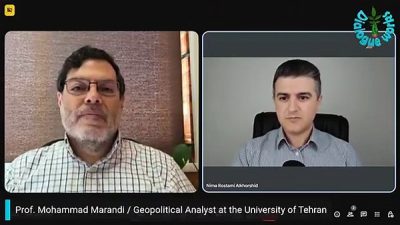
Seyed M. Marandi: U.S. Military DIVIDED? Iran’s Secret Defense EXPOSED
or go to
Aletho News Archives – Video-Images
From the Archives
‘Israel sees Iran as obstacle to its policies’

Press TV – August 25, 2017
Prime Minister Benjamin Netanyahu has said that Israel felt threatened by Iran’s growing influence in the Middle East. Netanyahu expressed his Iranophobic view in a meeting with Russian President Vladimir Putin in Russia’s Black Sea resort of Sochi on Wednesday. Press TV has asked Scott Rickard, former American intelligence linguist from Tampa, Florida, and Brent Budowsky, a columnist at The Hill from Washington, to give their thoughts on the issue.
Rickard said Tel Aviv is concerned about the fact that the regime could not carry out its old project to spread sectarian divisions and pave the way for dismemberment of the countries in the Middle East region because of the Iranian-led resistance against Israeli policies, not only in the occupied territories of Palestine but also in the whole region.
“Iran is not a threat to Israel whatsoever. The threat that Israel sees is the fact that their Oded Yinon Plan is being put to a hold by Iran,” the intelligence linguist said on Thursday night.
“They (the Israelis) look at Iran as a threat only because they have no influence on their governments and Iran is autonomous and is not under the Zionist influence,” he added.
Since the victory of the Islamic Republic of Iran in 1979, Tehran has been critical of Israel’s policies in the region, whereas “no leaders [of other states] even dared to speak out against Zionism,” Rickard argued. … continue
Blog Roll
 Aletho News
- IRGC commander declares ‘new phase’ of reprisal attacks against aggressors
- Israel’s air defenses overwhelmed by cluster-warhead Iranian missiles: Reports
- Striking Iran’s Infrastructure Would Have Little Military Impact – Report
- What’s Behind U.S./Israeli Strikes On Iranian Pistachio Factories?
- Seyed M. Marandi: U.S. Military DIVIDED? Iran’s Secret Defense EXPOSED
- How I fell foul of the BBC thought police
- The End of NATO
- 37 days of war on Iran cost US staggering $42bln, tracker shows
- Baghdad tells Asian refiners, traders to begin loading Iraqi crude amid Iranian exemption
- Under fire, Moscow and Tehran close ranks
- If Americans Knew
- Trump says Iranians appreciate bombs, WHO warns of nuclear risks – Daily Update
- U.N. experts demand Israel release prominent Gaza doctor after reports of ‘severe torture’
- Israel’s Latest Genocide Is Against the Shias of Lebanon. Why Is the World Silent?
- How Eliot Cohen’s influence over U.S. war-making paved the way for Trump’s war crimes in Iran
- Israelis don’t pay for the weapons we ‘sell’ to them — US taxpayers do
- While Distancing from AIPAC, Most 2028 Democratic Hopefuls Are Still Embracing Israel
- A brief history of the Israeli nuclear program, the open secret at the heart of the Iran war
- Israeli Settlers Killed a Palestinian Farmer on His Own Land, in Front of His Father. Yes, Again
- The US-Israeli War on Science is an Assault on our Future
- 100+ International Law Experts Say US Strikes on Iran Violate UN Charter, Could Be War Crimes
- No Tricks Zone
- An Inconvenient Tree: Uncovered In Alps… Europe Much Warmer Than Today 6000 Years Ago
- New Study Reports A 60% Slowdown In Greenland’s Ice Loss Rate In The Last Decade
- Low Intensity Tornado Wrecks Major Solar Farm, Creating A Potential Toxic Dump
- New Study Finds Warming Saves Lives…Cold Temperatures 12 Times More Deadly Than Excess Heat
- German Science Blog Accuses PIK Climate Institute Of Hallucinating Climate Tipping Points
- Devastating Assessment Of Comirnaty Vaccine By Former Senior Pfizer Europe Toxicologist
- New Study: CO2 Is ‘Effectively Negligible’ As An Explanatory Climate Change Factor Since 2000
- Former Pfizer Toxicologist Dr. Helmut Sterz Tells Bundestag Hearing Pfizer Vaccine Should Have Never Been Approved
- Energy Expert: Germany’s Nuclear Phaseout Was A “500 Billion Euro Mistake”
- New Research: South Australia’s Mid-Holocene Sea Surface Temperatures Were 4°C Warmer Than Today
 Aletho News