Europe’s quiet role in the war on Iran
By Leila Nezirevic | Al Mayadeen | April 8, 2026
European leaders have responded to the war on Iran with a familiar language: calls for restraint, appeals to diplomacy, and renewed commitments to international law. From Brussels to Berlin, the language has been measured, even cautious. Yet the gap between what Europe says and what it does has rarely been so stark.
While European governments publicly distance themselves from escalation, their infrastructure, alliances, and policies continue to sustain the very war effort they claim to oppose. Military bases, logistical networks, and intelligence frameworks tied to NATO remain fully operational.
Arms flows continue. Political backing, though often indirect, is unmistakable.
This contradiction is not simply a matter of hypocrisy. It reveals something deeper about Europe’s position in the global order, one defined less by autonomy than by structural dependence on the United States. The war on Iran is not creating this reality; it is exposing it.
NATO alignment
At the core of Europe’s constrained position lies its long-standing transatlantic alliance membership. NATO has, for decades, provided the framework for European security. But it has also shaped Europe’s foreign policy, narrowing the space for independent action.
For Vijay Prashad, historian and executive director of the Tricontinental: Institute for Social Research this relationship explains the apparent contradiction between Europe’s rhetoric and its behavior.
“Well, that contradiction is at the heart of the arrangement across the Atlantic, where European countries have, in a sense, surrendered their foreign policy to the United States through their attachment to NATO. In a sense, NATO shapes the foreign policy of Europe for the most part, and Europe doesn’t really have much independence to chart its own foreign policy direction.”
This is not merely a matter of political choice in any given moment. It reflects a deeper institutional reality. Europe’s security, intelligence, and military systems are deeply intertwined with those of the United States.
In moments of crisis, divergence becomes not only politically costly, but structurally difficult. “So regardless of the statements made from European capitals, when push comes to shove, the Europeans are right there alongside the United States, ” he told Al Mayadeen English.
From passivity to complicity
A central question raised by the war is whether Europe is a passive observer or an active participant. The answer, increasingly, points toward the latter.
“Europe is providing various forms of assistance—direct assistance—to the Israelis and the United States, including the use of the British base in Cyprus, which is basically a NATO base. So complicity goes to the heart of the NATO world.”
This involvement may not always take the form of direct military engagement, but it is nonetheless material. The use of European territory for operations, the maintenance of supply chains, and the continuation of arms transfers all contribute to the functioning of the war effort.
Prashad situates this within a longer historical trajectory:
“Europe has had a very ugly relationship with Iran over the course of the 20th century. It was European countries that conducted the coup in 1953 that brought in the Shah of Iran, whose very brutal reign lasted from 1953 to 1979. It was West Germany that provided chemical weapons to Iraq to use against the new Islamic Republic between 1980 and 1988. Other European countries also armed Saddam Hussein to conduct an ugly war against the Iranian people.”
This history is not incidental. It shapes how Europe is perceived in Tehran and across the region. More importantly, it underscores that Europe’s current role is part of a longer continuum of intervention, alignment, and strategic calculation.
Colonial standard
Europe has long cultivated an image of itself as a defender of international law. Its institutions and diplomatic traditions are frequently presented as pillars of a rules-based global order. The war on Iran, however, has exposed the fragility of this claim.
“If Europeans want to have a meaningful foreign policy, I would like to see it… Where is the condemnation from European capitals? Not one capital has clearly condemned this war of aggression. It is quite striking.”
The comparison with other conflicts is unavoidable.
“There was immediate outrage over the Russian entry into Ukraine, but the Israeli bombing, including the killing of civilians, including 180 schoolchildren on the very first day of the bombardment, none of that elicited complete condemnation on the grounds of international law.”
This inconsistency has consequences. It undermines Europe’s credibility not only in West Asia, but globally.
“Europe’s claim to being a defender of international law has been deeply undermined. One could say it was already severely damaged in the context of Gaza, and in this situation with Iran, that claim is further weakened.”
For Prashad, the issue is not a double standard, but something more systemic:
“In fact, I would say Europe doesn’t have a double standard, it has a single standard. And that standard is what I would call a colonial standard.”
Economic blowback and strategic self-harm
Even as Europe aligns politically with US strategy, it is increasingly bearing the economic costs of that alignment. The war on Iran threatens to further disrupt the Strait of Hormuz, a critical artery for global energy supplies. Any escalation risks driving up oil prices, intensifying inflation, and pushing already fragile European economies toward recession.
Yet, as Prashad notes, Europe’s vulnerability is not new: it is the result of a series of strategic decisions over the past two decades.
“Over at least the last 20 years, Europe has conducted what could be described as a kind of energy self-sabotage,” said Prashad, who is also an author of 40 books, including Washington Bullets.
He traces this trajectory through successive ruptures:
“By participating in US sanctions against Iran, Europe effectively removed one of its principal oil suppliers from its energy mix. Then, following the war in Libya, another major source of energy was destabilized. And later, through the deterioration of relations with Russia, Europe reduced its access to Russian oil and natural gas.”
The cumulative effect has been to push Europe toward more expensive and less stable energy sources.
“As a result, it has had to rely more heavily on liquefied natural gas and other imports, often at higher cost.”
These decisions were not taken in isolation. They were embedded in a broader geopolitical alignment, one that prioritized strategic cohesion with the United States over economic pragmatism.
The limits of independence
Europe’s predicament raises a broader question: to what extent can it act independently in a world defined by great power competition?
“Europe has the space to make its own decisions. But you don’t very often see Europe crossing the United States.”
There have been moments of divergence like Germany’s refusal to join the Iraq War in 2003, but these remain exceptions rather than the rule.
More often, alignment prevails. And this alignment is not only institutional, but ideological.
“There is an underlying cultural arrogance that runs, as I put it, like an undersea cable between the United States, Canada, and Europe.
“Despite the fact that there are different institutions… this underlying cultural alignment brings them together and effectively whips them into a common political position.”
Following a strategy it does not control
The risks of this dependence are becoming increasingly apparent. The war on Iran is unfolding along a trajectory largely shaped by the United States and Israel.
Europe, by contrast, finds itself reacting rather than shaping outcomes.
“Europe needs to reflect very seriously on the fact that the United States and Israel have basically reached very high levels on the escalation ladder, and yet it seems that Iran is not going to fold.”
If the conflict fails to achieve its objectives, or if Iran emerges politically strengthened, Europe may find itself strategically exposed.
“Iran has, in fact, secured a kind of political victory. So, what does that mean for Europe, which has followed the United States into sanctions policies that have also hurt European economies?”
Europe was once a major customer of Iranian oil and natural gas, and that relationship was cut off—not primarily by Europe’s own initiative, but through alignment with US policy.
Sovereignty in question
The effect of these dynamics is to cast doubt on the very idea of European sovereignty in foreign policy.
“If Europeans want to have a meaningful foreign policy, I would like to see it.”
Europe possesses the institutions, the economic weight, and the diplomatic capacity to act independently. But in practice, those capabilities are constrained by structural, political, and ideological factors.
The result is a form of sovereignty that exists more in theory than in practice, invoked in speeches but rarely exercised in moments of crisis.
War beyond the battlefield
The final outcome of the war on Iran will not be determined solely by military means.
“Outcomes in war are not only determined militarily, they are also political. It is possible for a country to have overwhelming military power and still not achieve its political objectives.”
For Europe, the implications are profound. By aligning itself with a war whose outcome it can neither control nor guarantee, it risks deepening both its dependence on the United States and its vulnerability.
In fact, the war on Iran is revealing Europe’s role in the world.
This is a continent that speaks the language of international law, yet applies it selectively.
A political bloc that calls for diplomacy, yet remains embedded in military escalation. An economic power that bears the costs of conflict, yet struggles to shape its course.
The contradiction is no longer subtle. It is structural. And in the war on Iran, it is fully exposed.
Leila Nezirevic is a London-based journalist and documentary filmmaker with extensive experience in reporting for major media outlets, with her work being published by leading networks worldwide.
Sorry, the comment form is closed at this time.
Featured Video
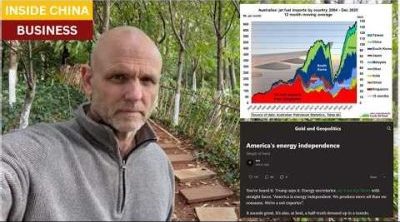
Chinese jet fuel and the myth of energy independence
or go to
Aletho News Archives – Video-Images
From the Archives
The Dirty Little Secret behind the “Global Terrorism Index”
The Omission of Israeli Terrorism in the Occupied Palestinian Territories
By Karin Brothers | Global Research | December 6, 2014
… The Israeli settlements — all of which are illegal – have been identified as a major impediment to peace. The refusal of a major “global” terrorism report to name the Israeli settlers as one of the groups most responsible for terrorism not only misrepresents a major source of regional violence but exposes the Global Terrorism Index as a propaganda tool that supports a U.S. agenda.
In recent years, governments have been attempting to thwart terrorism by blocking supportive fund-raising. When it comes to Israeli settlements, however, the US and Canada actually encourage fund-raising by giving organizations (such as Christian Friends of Israeli Communities (CFOIC) and the Jewish National Fund) financial support in the form of donor tax-deductions.
Charities which provide funds for the Israeli settlements should be regarded as terror-financing organizations. They should not only lose their tax-deductible status, but they should be banned because they support the violation of international humanitarian law. The terror-financing laws that are being strictly enforced for Muslim charities should be applied to Christian and Jewish charities as well. … Read full article
Blog Roll
 Aletho News
- Chinese jet fuel and the myth of energy independence
- Ukraine Sea Drone Fired From Libya Hit Russian Tanker in Mediterranean
- IRGC: Iranian forces launched no attacks during ceasefire hours
- Trump Administration Moves To Automate U.S. Military Draft Registration
- Spain orders reopening of Tehran embassy, condemns Israel’s carpet bombing of Lebanon
- Israel faces ‘unsustainable’ strategic crisis following 40-day war against Iran: Analyst
- Iran restricts Hormuz access to 15 vessels per day under ceasefire terms: Report
- The ‘Opposition Party’ Has Done Nothing to Stop the Iran War and Much to Goad Trump Into Continuing It
- Moscow backs Tehran on status of Lebanon in US-Iran deal
- How UK Regulator Ofcom Quietly Bypassed International Law to Police American Speech
- If Americans Knew
- Amnesty: Urgent – Protect Lebanese civilians from brutal escalation in Israeli attacks
- Is The War Against Iran Over?
- Inside the Israeli army’s propaganda wing
- Hundreds of Gaza Amputees Stranded in Legal Limbo
- The gallows law: Israel moves toward executing Palestinian children
- Tucker Carlson: The Path to Peace requires ending ‘special alliance’ with Israel
- This is ceasefire? Israel’s biggest massacre yet in Lebanon, another journalist killed in Gaza – Daily Update
- Tucker Carlson on Israel: This Is the Behavior of an Ally? Really?
- Gazans face a triple crisis: severe shortages of water and bread, healthcare in tatters
- NY Times reports how Netanyahu took the US into Iran War
- No Tricks Zone
- An Inconvenient Tree: Uncovered In Alps… Europe Much Warmer Than Today 6000 Years Ago
- New Study Reports A 60% Slowdown In Greenland’s Ice Loss Rate In The Last Decade
- Low Intensity Tornado Wrecks Major Solar Farm, Creating A Potential Toxic Dump
- New Study Finds Warming Saves Lives…Cold Temperatures 12 Times More Deadly Than Excess Heat
- German Science Blog Accuses PIK Climate Institute Of Hallucinating Climate Tipping Points
- Devastating Assessment Of Comirnaty Vaccine By Former Senior Pfizer Europe Toxicologist
- New Study: CO2 Is ‘Effectively Negligible’ As An Explanatory Climate Change Factor Since 2000
- Former Pfizer Toxicologist Dr. Helmut Sterz Tells Bundestag Hearing Pfizer Vaccine Should Have Never Been Approved
- Energy Expert: Germany’s Nuclear Phaseout Was A “500 Billion Euro Mistake”
- New Research: South Australia’s Mid-Holocene Sea Surface Temperatures Were 4°C Warmer Than Today
 Aletho News