How UK Regulator Ofcom Quietly Bypassed International Law to Police American Speech
A UK regulator bypassed every formal legal treaty and just emailed American companies into compliance, 98% of them apparently obliged
By Dan Frieth | Reclaim The Net | April 9, 2026
A Freedom of Information response has confirmed what the UK’s speech regulator would probably have preferred to keep quiet. Ofcom fired off 197 information demands to American tech companies under the Online Safety Act, and not a single one went through the US-UK Mutual Legal Assistance Treaty, the formal diplomatic process that exists for exactly this kind of cross-border legal enforcement. Every one of those 197 notices was sent directly, by email or post, to companies operating entirely on American soil.
The number comes from a FOI request filed by Daniel Lü, who asked Ofcom a series of pointed questions about how it enforces the Online Safety Act against non-UK targets.
Ofcom confirmed that as of February 26, 2026, it had issued 197 Section 100 notices to US businesses. Zero through MLAT. The treaty between the US and UK that governs how one country’s legal process gets enforced in the other’s jurisdiction was treated as optional. Ofcom decided it didn’t apply.
That admission drew an immediate response from Preston Byrne, the American lawyer who represents 4chan and other US companies targeted by Ofcom.
Byrne called the 197 notices a “breathtaking” “attack on the First Amendment” and pointed out the uncomfortable math.
Only two US companies, 4chan and Kiwi Farms, have publicly refused to comply with Ofcom’s demands. If Byrne’s assessment is right, that leaves Ofcom enjoying “a 98% compliance rate with foreign censorship orders that violate the First Amendment.”
A British regulator sent nearly 200 demands to American companies, bypassed every established legal channel, and almost all of them appear to have simply done what they were told. The chilling effect is already here.
Ofcom Uses Free Speech to Hide Its Censorship Methods
Lü did more than ask for the number of notices. He asked for policy documents about how Ofcom selects its foreign enforcement targets, what guidance it gives its teams about the legality of emailing criminal penalty warnings to US corporations, and whether Ofcom has any internal guidance on protected speech.
Ofcom admitted it holds much of that information. Then it refused to hand it over. The reason, cited directly from the FOI Act, was that disclosure “would, or would be likely to, inhibit the free and frank exchange of views for the purposes of deliberation; and/or would otherwise prejudice, or would be likely otherwise to prejudice, the effective conduct of public affairs.”
A speech regulator is claiming that transparency about its censorship operations would damage free and frank deliberation. Ofcom is borrowing the language of free expression to shield itself from accountability over how it suppresses expression. The irony is so complete it feels deliberate.
On the question of whether Ofcom holds any guidance on protected speech, the answer was even more revealing. Ofcom said it doesn’t have any. No internal documents addressing what speech is protected when it exercises its enforcement powers against foreign companies.
It pointed instead to its general obligations under the Online Safety Act, the Communications Act 2003, and the European Convention on Human Rights, along with links to already-public guidance documents. That’s the speech protection regime for companies being censored by the UK from American soil: a few hyperlinks to existing publications.
The MLAT Problem Isn’t New. It’s Getting Worse.
The treaty issue is central. MLAT exists so that when one country wants to enforce its laws against people or companies in another country, there’s a formal process involving both governments. For the US side, that means routing through the Department of Justice. A judge gets involved. There’s oversight. There are procedural protections.
Ofcom has previously argued it doesn’t need to use MLAT because its Section 100 notices are administrative, not criminal. That distinction might satisfy Ofcom’s lawyers in London, but it doesn’t satisfy anyone else. Byrne and his clients have argued in federal court that Ofcom’s demands have no legal force precisely because they skipped the treaty process. 4chan and Kiwi Farms received their enforcement demands by email, sent to addresses that in some cases weren’t even authorized to accept legal service.
The Lü FOI also asked whether Ofcom holds any correspondence with the US Department of Justice or the FBI about its enforcement activity. Ofcom’s response: it holds no information related to this question. The regulator didn’t talk to anyone in the US government before firing off 197 demands to US companies. It just hit send.
What the FOI Actually Revealed, and What Ofcom Hid
Lü’s request covered six questions. The pattern in Ofcom’s responses tells its own story. On the questions where Ofcom could respond by linking to documents that are already public, it was happy to share. On everything else, it cited exemptions, claimed it didn’t hold the information, or both.
When asked for policy documents about enforcing the OSA against non-UK providers, including any records discussing MLAT, Ofcom said it holds some information but won’t release it. It also claimed it holds no records of MLAT discussions or legal guidance about whether emailing criminal penalty warnings to American corporations is valid. Either Ofcom never considered whether its enforcement method was legal under international law, or it did consider it and doesn’t want anyone to see that analysis.
When asked how it selects non-UK enforcement targets, Ofcom cited exemptions under the Communications Act 2003 and linked to its public enforcement guidance, plus its own decisions against 4chan and other US entities. The internal criteria, the actual decision-making process for choosing which American companies to go after, stayed hidden.
When asked about its approach to “qualifying worldwide revenue,” the basis for calculating fines that can reach £18 million or 10% of global revenue, Ofcom linked to its public guidance explaining that companies are expected to self-report their revenue to Ofcom. Companies that Ofcom is threatening with fines are supposed to voluntarily tell Ofcom how much money they make, so that Ofcom can calculate a bigger fine. The compliance incentives here are about as perverse as they get.
Byrne Goes to Congress
Byrne said he forwarded Ofcom’s admission directly to the US government. He tagged US Under Secretary of State for Public Diplomacy Sarah Rogers, Senator Eric Schmitt, and House Judiciary Committee Chairman Jim Jordan, and called on Congress to act. This is consistent with Byrne’s approach throughout the Ofcom fight. He has previously said he copies the US government on Ofcom correspondence that crosses his desk.
The legal strategy from the US side has been to deny Ofcom any clean precedent. The four companies that received formal enforcement action, 4chan, Kiwi Farms, a mental health forum called SaSu, and the social network Gab, all refused to comply. 4chan responded to one of Ofcom’s fines with a picture of a hamster. The point was to make Ofcom’s orders publicly and visibly unenforceable on American soil, turning each attempted punishment into a political liability for the regulator rather than a deterrent for the rest of the American internet.
But the 197 number changes the scale of the problem. Those four companies were the public-facing enforcement targets, the ones Ofcom wanted to make examples of. Behind them, 193 other US companies apparently received quieter demands and, if Byrne’s analysis is correct, most of them complied without a fight. Without lawyers, without publicity, without anyone in Congress knowing it happened.
Byrne has pushed the GRANITE Act, a proposed law that would allow US entities to sue foreign governments for censorship attempts and void foreign censorship orders in US courts. Sarah Rogers, the US Under Secretary of State for Public Diplomacy, has appeared on GB News in London suggesting Congress is considering a federal version of the law. The Trump administration has made public statements objecting to the Online Safety Act. The US State Department sent diplomats to London in 2025 to challenge Ofcom directly.
Whether all of that translates into legislation remains an open question. Ofcom, for its part, has already moved on to bigger targets. After spending a year trying to fine platforms like 4chan and getting nowhere, the regulator recently opened new investigations into Facebook, Instagram, Snapchat, TikTok, YouTube, Roblox, and X. The small companies held the line. The question now is whether the large ones will too, or whether they’ll decide that complying with a foreign regulator’s censorship demands is easier than asserting their constitutional rights.
The Black Cube Files: How Former Mossad Operatives Flipped a Nation
Inside the Israeli intelligence operation that shook Slovenia
José Niño Unfiltered | April 8, 2026
10 days before a national election, with secretly recorded videos of government officials circulating online and former Israeli intelligence operatives confirmed to have visited opposition party headquarters, Slovenia abruptly reversed its decision to join South Africa’s genocide case against Israel at the International Court of Justice.
The official explanation pointed to national security concerns. Slovenian officials warned that joining could “jeopardize Slovenia’s national security,” citing the uncomfortable reality that many of the country’s cyber defense systems are of Israeli origin. They noted that Israeli authorities play a crucial role in facilitating Slovenian humanitarian operations in Gaza and in evacuating Slovenian nationals from the Middle East.
Foreign Minister Tanja Fajon expressed regret, calling the internal debate “quite emotional and exhausting.” When asked about external pressure, Fajon acknowledged, “It is clear that these pressures exist, we are all subjected to them by superpowers, and ultimately this must be taken into account when deciding.”
What Fajon did not say, but what Slovenian intelligence would confirm days later, was that operatives from Black Cube, a private intelligence firm founded by former Israeli military intelligence officers and advised by former Mossad chiefs, had been operating on Slovenian soil for months. They had visited the headquarters of the opposition party. They had lured government officials into staged meetings using a fictitious British investment fund. They had secretly recorded them.
Almost nobody in the English-speaking world covered it.
In the annals of intelligence operations that never quite make the headlines, few stories rival what unfolded in Slovenia between December 2025 and March 2026. A small European nation of two million people found itself at the center of geopolitical intrigue involving former Israeli military intelligence officers, fictitious investment funds, secretly recorded politicians, and a last-minute reversal that may have saved Slovenia from whatever consequences Israel had in store.
A Relationship Built on Trade and Transformed by War
Israel and Slovenia established diplomatic relations on April 28, 1992, shortly after Slovenia declared independence from Yugoslavia. For decades the relationship remained cordial if unremarkable, built on a bilateral investment protection agreement signed in 1998 and a double taxation treaty signed in 2007, along with occasional state visits. Israeli President Shimon Peres visited Ljubljana in 2010. Slovenia designated Hezbollah a terrorist organization in November 2020, treating the group in its entirety as a “criminal and terrorist organization posing a threat to peace and security” — notably declining to distinguish between Hezbollah’s military and political wings as most EU countries had done.
The relationship strengthened under conservative Prime Minister Janez Janša, who governed from 2020 to 2022. Janša cultivated close personal ties with Prime Minister Benjamin Netanyahu and ordered the Israeli flag raised over his party headquarters during a moment of crisis. In December 2020, Janša traveled to Israel and met with representatives of five Israeli companies, including the controversial spyware firm NSO Group, according to Slovenian investigative outlet Oštro. The Slovenian government confirmed the meeting but stated no deals were concluded.
In August 2021, Slovenia’s Government Information Security Office signed a cybersecurity cooperation memorandum with the Israeli National Cyber Directorate. The country purchased Spike missiles from Rafael and received armored vehicle components from Elbit Systems in contracts stretching back to the 1990s.
Then came October 2023 and the war in Gaza.
The Golob Pivot
When center-left Robert Golob unseated Janša in 2022, Slovenia’s posture toward Israel began shifting. After the Gaza war erupted, the transformation became dramatic.
Slovenia became the first European nation to join the ICJ advisory opinion proceedings on Israel’s control of occupied territories in January 2024, submitting written comments while other EU states held back. On June 4, 2024, Slovenia officially recognized the State of Palestine. In July 2025, the country declared Israeli ministers Itamar Ben Gvir and Bezalel Smotrich persona non grata, becoming the first EU member state to do so. On July 31, 2025, Slovenia announced a comprehensive arms embargo covering import, export, and transit of all weapons to and from Israel, again the first EU member state to take such action.
In September 2025, Slovenia banned Netanyahu himself from entering the country, the first EU nation to do so, citing the ICC arrest warrant. By early 2026, Slovenia was preparing to join South Africa’s genocide case against Israel at the ICJ. Foreign Minister Tanja Fajon expressed strong support.
Then everything changed.
The Black Cube Files
Black Cube, officially BC Strategy Ltd, describes itself as “the world’s leading intelligence firm” staffed by “veterans of elite Israeli Intelligence Units.” Founded in 2010 by Dan Zorella, a former IDF Military Intelligence officer, and Dr. Avi Yanus, a former IDF strategic planning officer, the firm operates in over 75 countries and employs more than 100 investigators fluent in 30 languages.
The firm’s advisory board reads like a who’s who of Israeli intelligence. Meir Dagan, the former Mossad chief who ran the agency from 2002 to 2011, served as Black Cube’s honorary president until his death in 2016 and was heavily involved in the firm from its earliest stages. Other advisory board members include Efraim Halevy, another former Mossad head, and Major General Giora Eiland, former head of the Israeli National Security Council.
Black Cube became globally infamous through the Harvey Weinstein scandal. The film producer hired the firm, reportedly on a referral from former Israeli PM Ehud Barak, to suppress sexual harassment allegations. Black Cube agents tracked journalists investigating Weinstein, including Ronan Farrow of The New Yorker and Jodi Kantor of The New York Times. They targeted accusers, particularly Rose McGowan, using an operative who posed as a women’s rights supporter. The explicit contract goal, as Farrow documented in his Pulitzer Prize-winning reporting, was to “completely stop the publication of a new negative article in a leading NY newspaper.”
The firm also saw five employees convicted in Romania — two lower-level operatives arrested in 2016 and three company founders including Zorella and Yanus in 2022 — for targeting the country’s chief anticorruption prosecutor, Laura Codruța Kövesi, through hacking and harassment. Black Cube conducted operations targeting researchers at Citizen Lab who were investigating NSO Group’s Pegasus spyware. The firm was also hired to find compromising material on architects of the Obama-era Iran nuclear deal, including former officials Colin Kahl and Ben Rhodes, according to NBC News.
And then Black Cube turned its attention to Slovenia.
Spies in Ljubljana
Between December 10 and 11, 2025, three Black Cube representatives arrived in Slovenia. According to the Slovenian government and ABC News, the three operatives were Dan Zorella, the firm’s co-founder, Liron Tzur, and Giora Eiland, the former head of Israel’s National Security Council who sits on Black Cube’s advisory board. Flight records and intelligence data confirmed they visited Trstenjakova Street No. 8 in Ljubljana, where Janša’s Slovenian Democratic Party maintains its headquarters.
On December 22, 2025, senior Black Cube figures reportedly met with Janša himself. The opposition leader later admitted to having “contacts with an adviser from the Israeli private intelligence agency Black Cube” but denied doing anything illegal.
Between January and March 2026, Black Cube operatives posing as representatives of a fictitious British investment fund called “Stockard Capital” lured Slovenian political figures into staged business meetings in Vienna and other locations, secretly recording them. Among the targets was former Justice Minister Dominika Švarc Pipan.
Roughly ten days before the election, an anonymous website called anti-corruption2026.com appeared online, publishing edited videos of government figures including officials from Golob’s Freedom Movement party. The content was described by analyst Lily Lynch as “more embarrassing than criminal.”
On March 16, 2026, Slovenian investigative journalist Borut Mekina of Mladina presented findings at a press conference with civil society researchers linking Black Cube to the secretly recorded videos and to Janša’s party. The following day, Prime Minister Golob accused “foreign services” of interfering in the election, calling it “the biggest scandal we have witnessed in Slovenia since independence.”
“Clear-Cut Interference”
On March 22, 2026, Slovenia held its parliamentary elections. Golob’s Freedom Movement party narrowly defeated Janša’s SDS despite the scandal.
French President Emmanuel Macron stated that Golob “was the victim of clear-cut interference” by “third countries” and misinformation, according to Euronews.
On March 26, 2026, SOVA, the Slovenian Intelligence and Security Agency, “unequivocally confirmed the activity of foreign influence” on the elections. Agency chief Joško Kadivnik presented material evidence linking the three Black Cube operatives to the SDS headquarters visit and demonstrating “counterintelligence operations against the Republic of Slovenia and foreign interference in Slovenian elections.”
The evidence was handed to prosecutors and police.
The Dependency Trap
The Slovenia episode illuminates a dynamic rarely discussed in Western capitals. Israeli defense and cybersecurity firms have quietly embedded themselves into the security infrastructure of allied nations, creating dependencies that carry geopolitical weight.
Slovenia procured Elbit Systems weapon stations and turrets for its Patria AMV armored vehicle program in 2007. It purchased Spike anti-tank missiles from Rafael in multiple transactions, including a $6.6 million deal for 50 Spike LR2 missiles in September 2022. It signed a cybersecurity memorandum with Israel’s National Cyber Directorate in 2021.
Yet despite declaring a full arms embargo in July 2025, a Haaretz investigation in August 2025 revealed that Slovenia purchased €828,000 in Israeli military equipment in 2024 and continued planning to acquire Spike missiles through EuroSpike, a joint venture between Rafael and German defense firms Rheinmetall and Diehl that manufactures the missiles in Germany.
Israel’s influence operations demonstrate that a country’s sovereignty is only as secure as its gatekeepers. A truly free nation must ensure that Israeli nationals and their intelligence assets are permanently barred from setting foot on its soil.
Featured Video
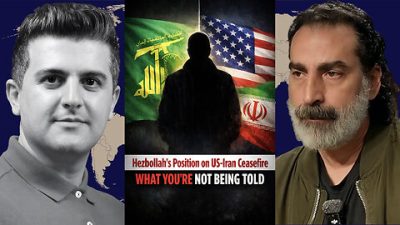
Laith Marouf: Hezbollah’s position on US-Iran ceasefire
or go to
Aletho News Archives – Video-Images
From the Archives
The Dirty Little Secret behind the “Global Terrorism Index”
The Omission of Israeli Terrorism in the Occupied Palestinian Territories
By Karin Brothers | Global Research | December 6, 2014
… The Israeli settlements — all of which are illegal – have been identified as a major impediment to peace. The refusal of a major “global” terrorism report to name the Israeli settlers as one of the groups most responsible for terrorism not only misrepresents a major source of regional violence but exposes the Global Terrorism Index as a propaganda tool that supports a U.S. agenda.
In recent years, governments have been attempting to thwart terrorism by blocking supportive fund-raising. When it comes to Israeli settlements, however, the US and Canada actually encourage fund-raising by giving organizations (such as Christian Friends of Israeli Communities (CFOIC) and the Jewish National Fund) financial support in the form of donor tax-deductions.
Charities which provide funds for the Israeli settlements should be regarded as terror-financing organizations. They should not only lose their tax-deductible status, but they should be banned because they support the violation of international humanitarian law. The terror-financing laws that are being strictly enforced for Muslim charities should be applied to Christian and Jewish charities as well. … Read full article
Blog Roll
 Aletho News
- How UK Regulator Ofcom Quietly Bypassed International Law to Police American Speech
- The Black Cube Files: How Former Mossad Operatives Flipped a Nation
- Laith Marouf: Hezbollah’s position on US-Iran ceasefire: What you’re not being told
- Israel’s priority lies in destroying chances of peace between Iran, US: Ex-UN nuclear chief
- Ceasefire for all or for none: Iran shuts Hormuz over Lebanon attacks
- Strait of Hormuz is Iran’s ‘nuclear weapon’ that forced US retreat: Medvedev
- Energy crisis will last for months – Kremlin envoy
- Europe’s quiet role in the war on Iran
- Forty days that shook the Empire: How Iran turned the tables on US and prevailed
- Netanyahu unilaterally declares Lebanon outside of ceasefire deal
- If Americans Knew
- Gazans face a triple crisis: severe shortages of water and bread, healthcare in tatters
- NY Times reports how Netanyahu took the US into Iran War
- A sigh of relief over Iran, but Gaza and Lebanon in dire straits – Daily Update
- Thousands dead and neighborhoods razed to the ground: Aid agencies fear southern Lebanon is becoming the new Gaza
- The war the US is fighting for Israel could cost trillions
- ‘Cigarette Burns, Nail Wounds’: Toddler Tortured in Gaza to Coerce Father
- Trump Says US Sent ‘a Lot of Guns’ to Protesters in Iran
- Israeli forces destroy 17 UN peacekeeper cameras in south Lebanon
- US-Israeli strikes ‘completely destroy’ synagogue in Tehran
- Archbishop for US Military Says Iran War Is Unjust Under Catholic Teaching
- No Tricks Zone
- An Inconvenient Tree: Uncovered In Alps… Europe Much Warmer Than Today 6000 Years Ago
- New Study Reports A 60% Slowdown In Greenland’s Ice Loss Rate In The Last Decade
- Low Intensity Tornado Wrecks Major Solar Farm, Creating A Potential Toxic Dump
- New Study Finds Warming Saves Lives…Cold Temperatures 12 Times More Deadly Than Excess Heat
- German Science Blog Accuses PIK Climate Institute Of Hallucinating Climate Tipping Points
- Devastating Assessment Of Comirnaty Vaccine By Former Senior Pfizer Europe Toxicologist
- New Study: CO2 Is ‘Effectively Negligible’ As An Explanatory Climate Change Factor Since 2000
- Former Pfizer Toxicologist Dr. Helmut Sterz Tells Bundestag Hearing Pfizer Vaccine Should Have Never Been Approved
- Energy Expert: Germany’s Nuclear Phaseout Was A “500 Billion Euro Mistake”
- New Research: South Australia’s Mid-Holocene Sea Surface Temperatures Were 4°C Warmer Than Today
 Aletho News