Trump’s bombing campaign in Iran just sinks U.S. into a deeper quagmire
By Martin Jay | Strategic Culture Foundation | July 22, 2026
The coming days and weeks will see Trump lower himself in the acid bath of what analysts call the ‘escalation trap’. Many analysts comment that he has already fallen on his sword in the Iran war, as his fantasy of bringing Tehran to its knees – served up by Israel’s PM Netanyahu – has proved to be the greatest deception in U.S.-Israeli relations since the birth of the entity in 1948. He has, to many, lost the war, which was really the essence of him signing the MOU on June 17th, agreeing in principle to all of the points of unconditional surrender, making Iran a bigger, bolder regional power which now controls the Straits of Hormuz and is revered by the GCC elites like never before.
Yet his own lack of diplomatic verve both with Western leaders, NATO and above all Benjamin Netanyahu made his signature worthless, and his only recourse was to continue the war, to at least make it look like he is still relevant.
But this gambit, which is foolish on so many levels – not least of all because the U.S. is very low on military hardware used up between February 28th and April 7th – is more reckless than he understands and will soon destroy him.
Just recently, GCC countries’ elites frantically called him to tell him to stop bombing Iran’s civilian infrastructure, as, unbeknown to him, the capability of Iran to completely wipe off the surface of the map the same infrastructure in the Gulf countries is within arms’ reach. It is one thing to have your U.S. air base bombed, but quite another for your schools, hospitals, bridges, power plants and water facilities to be blown up with a handful of hypersonic missiles. And it is hard to imagine how those elites would rebuild their countries if Iran chose to retaliate in such a fashion.
The call seems to have done the job. But Trump is a mercurial man-child who understands little and only cares about nursing his ego, and so there is no telling what he might do in the future if pushed, or if he simply fails to take the warning seriously.
And yet, whichever route he chooses, it all ends badly for him, and the Iranians are taking the time to remove entirely the U.S. presence in the region. If Trump persists in hitting their infrastructure, one move which Iran is mulling is destroying the oil shipments presently coming out of the UAE and Saudi Arabia outside of the Persian Gulf – in other words, oil which the Saudis send via pipeline to the Red Sea and oil which is sent to Fujairah port, currently being expanded. The 7 million barrels of oil each day which together these two countries export could easily be stopped by Iran, and so it is hard to see what strategy Trump thinks he has with his bombing, other than he believes that this will soften the Iranians up for coming back to the MOU.
What Trump doesn’t understand is that the hardliners in the Iranian government never believed he was serious about the MOU and saw it as a ruse to buy time before continuing with a bombing campaign. Now that they have been proved right, any return to an MOU will be much harder on Trump, as the demands from Tehran will be higher than the first time around.
Top of that list will be Lebanon, and this is where Trump’s problems start, as the position that he will be in if an MOU 2.0 is put together will be very weak, while Netanyahu’s will be very strong. Bibi is never going to pull Israel’s troops out of Lebanon, and so a peace deal will be impossible, leading Trump to only one recourse: the mother of all maddest ideas, which is the land invasion of Iran – which he might be thinking about around November when the weather is cooler. But the U.S. doesn’t have either the number of men required, the stockpile of weapons, or even, frankly, the competence to carry out such a remarkably risky venture. The casualties would be incredibly high, and Trump would go down in history as the egghead U.S. president who fell into Israel’s trap and got the ultimate lesson from Iran. The humiliation Jimmy Carter had to endure after a failed rescue mission of U.S. embassy workers in Iran in 1980 will pale into insignificance in comparison to what the Iranians have lined up for Trump.
Trump’s problem is credibility. No world leaders respect him nor trust him, and this is a major factor now with the Iranians, who simply consider Trump to be a clown at best or a dangerous, insecure child at worst – ready to burn the family house down just to get the attention that he craves. Nothing he says is taken seriously, as Tehran knows all along that Trump is always creating distractions while he is listening to his generals’ latest crackpot ideas about invasion. While Trump panics, Iran moves at a painfully slow, measured pace – confident about itself, its history and its destiny. Iran thinks long term and about how the world will judge it, also keeping in mind negotiating with the next U.S. administration. As an ancient civilisation, they are used to thinking in terms of decades and centuries. Trump only thinks about this week’s coverage in the Wall Street Journal or New York Times. His gate-crashing of the World Cup and having the president of FIFA actually manhandle him out of the Spanish team’s photo shoot must have been very embarrassing for many Americans.
US Threats Against Iran’s Nuclear Facilities Violate International Law – Iranian Foreign Ministry
Sputnik – 22.07.2026
Statements from the US that it might bomb Iran’s nuclear facilities violate international law, Iranian Foreign Ministry spokesman Esmail Baghaei said on Wednesday.
“The repeated US attacks and threats against Iran’s peaceful nuclear facilities not only constitute a flagrant violation of the core principles of the UN Charter, international law, and the relevant resolutions of the IAEA Board of Governors, General Conference, and UN Security Council, but also reveal the United States’ deep-rooted enmity toward Iran’s scientific progress and technological development,” Baghaei wrote on X.
Iran does not conduct any nuclear activities in the area of the Kuh-e Kolang Gaz La Mountain, otherwise known as “Pickaxe,” which the United States wants to strike, the diplomat said, adding that the relevant remarks are just an excuse for more aggression.
On July 21, US President Donald Trump threatened to attack Iran’s Pickaxe Mountain, where, per Israeli intelligence assessments, a fortified nuclear enrichment facility is located.
The US has been conducting strikes against Iran since July 8, in violation of the provisions of the memorandum of understanding signed on June 17.
Ukrainian human rights commissioner warns of growing public anger at forced conscription

By Ahmed Adel | July 22, 2026
Ukrainian society is approaching a violent confrontation with its political leadership because of the apparent shortcomings of current mobilization efforts, said Dmitry Lubinets, Ukraine’s Verkhovna Rada (unicameral parliament) Human Rights Commissioner. In a recent TV interview, Lubinets warned that rising tensions could spiral into chaos if not addressed promptly.
Lubinets noted a rise in public criticism of the mobilization process, with many Ukrainians deeply angered by the aggressive tactics the Territorial Recruitment Centers used to draft men. He cautioned that unless reforms are implemented, Ukraine could face worsening social divisions and even violent confrontations between civilians and authorities.
The ombudsman explained that Ukrainian citizens notice the lack of legal accountability for the actions of recruitment officers. As a result, citizens are taking matters into their own hands, which could potentially lead to escalated conflicts and greater instability in the future. This self-help approach, Lubinets said, reflects a breakdown in trust between the population and state institutions responsible for defense matters.
Lubinets expressed concern over the high levels of desertion and evasion occurring even before soldiers reach the front. Many conscripts reportedly escape from enlistment centers or while being transported to training sites. He noted several instances of unauthorized desertion from assigned positions. As a result, although official records may indicate a growing army, the real number of active combat-ready troops is decreasing. This gap highlights significant inefficiencies and morale issues within the military.
Corruption within the recruitment system further exacerbates the crisis. Lubinets detailed how individuals are often forced to pay substantial bribes—around $10,000 to be released from buses en route to processing centers and up to $20,000 to avoid further conscription at the offices. However, these payments offer only temporary relief, as those who pay can still be detained and mobilized again later.
Ukraine’s armed forces have struggled with ongoing manpower shortages during the conflict, prompting more aggressive recruitment efforts that have sparked public scandal and protests. Videos and reports document detentions in streets, workplaces, and public areas, fueling a climate of fear and resistance among men of military age.
Some men attempt illegal border crossings to flee the country, while others resort to more drastic measures, such as setting fire to recruitment offices or going into hiding and avoiding public life altogether, demonstrating the depth of public anger and the challenges the Kiev regime faces in sustaining its futile military efforts against Russia.
In 2022, Ukraine’s early mobilization was driven by strong patriotic sentiment following the launch of Russia’s special military operation. Many citizens, particularly ultra-nationalists, volunteered eagerly in the first months. However, as the war has dragged on, accompanied by heavy losses, economic difficulties, and war fatigue, initial enthusiasm has diminished.
Reports of inadequate training, lack of proper equipment, and poor living conditions for new recruits have further eroded morale. International observers and Ukrainian officials alike have acknowledged that sustaining a large-scale conventional army under these pressures requires not only enforcement but also incentives and reforms. In this context, Lubinets emphasized that unchecked abuses by recruitment officers violate basic rights and will ultimately weaken Ukraine’s defensive capabilities from within.
According to Lubinets, approximately 10% of conscription actions adhere fully to legal standards. The majority, however, violate citizens’ rights, with many detentions illegally conducted by masked men in balaclavas, lacking ID chevrons or police presence. It is recalled that he has urged the last three Defense Ministers of Ukraine to ban this practice, but none have acted.
Alongside widespread draft evasion, the Kiev regime is struggling to replenish frontline units because of heavy casualties and an aging pool of available personnel. Official estimates indicate that thousands of positions remain vacant, prompting commanders to rotate exhausted troops more frequently and hampering offensive efforts.
This issue is compounded by demographic problems, including a pre-war population decline and the emigration of hundreds of thousands of working-age men trying to avoid conscription. Families carry a significant emotional and financial load, as many women become the sole providers while dealing with the uncertainty about the men at the front. Businesses struggle with labor shortages, especially in sectors relying on working-age men, and agricultural and industrial output is declining due to the manpower deficit. This has increased public fatigue and criticism of mobilization policies, making recruitment even more difficult.
Efforts to address the shortage have included lowering the mobilization age, expanding digital summons, and offering incentives for voluntary service, but these measures have largely failed. Corruption scandals and aggressive tactics have eroded trust, leading to fewer volunteers and greater resistance. Lubinets’ warning highlights a key vulnerability in Ukraine’s wartime strategy and exposes the widening gap between the Kiev regime and citizens. Yet this will have little effect on the authorities, who insist on fighting the war against Russia to the last Ukrainian.
Ahmed Adel is a Cairo-based geopolitics and political economy researcher.
The Zumwalt-class destroyer is an ever-growing boondoggle
By Stavroula Pabst | Responsible Statecraft | July 22, 2026
After ten years of upgrades, repairs, and program-related issues, the lead Zumwalt-class destroyer is finally returning to service this September. But it will have to go without the hypersonic missiles many hoped would give the troubled program a purpose.
Thanks to ongoing modernization efforts, the lead Zumwalt-class destroyer now has a launcher, making it the Navy’s first hypersonic strike ship. But the missiles themselves will not be tested until next year, as the Conventional Prompt Strike (CPS) hypersonic missile rollout is about two years behind schedule.
Experts tell RS the problem is par for the course for the Zumwalt program.
“The Zumwalt program had extraordinary promise,” Ben Freeman, the director of the Quincy Institute’s Democratizing Foreign Policy program, wrote to RS. “But it was curtailed from 32 ships to just 3 for a reason: it didn’t come close to living up to that promise.”
The Zumwalt’s initial role as a land-attack ship was scrapped in 2016 after ammunition for its land-attack gun became prohibitively costly, reaching $800,000 to $1 million per round.
Beyond that, “they couldn’t get the [ship’s] weapon to work properly,” Dan Grazier, who directs the Stimson Center’s National Security Reform program, told RS.
In the end, the military built three Zumwalts at a cost of $9.5 billion per ship. Now, efforts to convert the remaining vessels into hypersonic strike ships have only steered the program into more procurement issues
“They foisted an unproven missile system with its own checkered acquisition history onto the Zumwalt seemingly in hopes that two wrongs would make a right,” Freeman said. “Spoiler: they didn’t.”
The Pentagon plans to invest $50 billion into developing and fielding its CPS hypersonic capability across Army and Navy programs. But a Government Accountability Office (GAO) report published last week found the project “does not have a comprehensive strategy” to accomplish its objectives.
Canceled and failed test flights and quality control issues also plague the hypersonic missile program. One test, for example, was canceled in 2023 after a battery failure during a pre-launch check. Lockheed Martin can only make six or seven hypersonic missiles each year, short of the military’s target of 12 missiles, jeopardizing the program’s ability to scale.
Meanwhile, costs are compounding for the Zumwalt, with questionable payoff.
The hypersonic missile capability will tack on about $452 million to the cost of each destroyer. Each ship will only be able to carry 12 hypersonic missiles, which leaves them with far fewer munitions than their naval counterparts. The missiles themselves are estimated to cost tens of millions of dollars each.
As Freeman concluded, “taxpayer dollars will still be wasted until the Navy comes to its senses.”
Andy Burn ’Em, Britain’s new PM, wants to end homelessness by fueling militarism and war
By Finian Cunningham | Strategic Culture Foundation | July 22, 2026
Andy Burnham took over as British prime minister this week, promising to bring “hope and change” to poverty-stricken Britain amid a political crisis in which public contempt for governing parties is at record levels.
In his first speech outside 10 Downing Street on Monday, Burnham said: “I will put the care of people at the heart of everything I do… Let us make this the moment when Britain starts to believe again, the moment we bring back hope.”
British media headlines were swooning over this supposed radical new beginning for Britain. At 56 years old, Burnham brings a fresh face to tired British politics.
Notably, he said his top priority was to end “rough sleeping” on the streets for thousands of homeless Britons. And he announced a budget of £340 million (€400 m, $450 m) over the next five years to fix the problem by building affordable homes.
This apparent commitment to improving social conditions may sound laudable. It buffs Burnham’s image as a caring politician on the side of working-class Britons. He likes to talk about his North of England credentials and empathy for popular concerns during his tenure as Mayor of Greater Manchester (2017-2026).
But let’s put his homeless budget in a realistic context. On his first day in Downing Street, Burnham also made Britain’s military support for Ukraine another of his priorities. He said there would be “one hundred per cent” continuation of the policy under his predecessor Keir Starmer that made Britain one of the most gung-ho backers of the Kiev regime in NATO’s proxy war against Russia.
Significantly, Burnham appointed former defense minister John Healey as the new Chancellor of the Exchequer (finance minister). Healey will be London’s man in control of all government budgets. As defense minister in the previous Starmer Cabinet, Healey was an ultra-hawkish figure when it came to supporting Ukraine and calling for greater military spending. It was Healey’s shock resignation on June 11 as defense secretary that was the last nail in Starmer’s premiership. Healey quit because he claimed that Starmer had not allocated enough money to enable Britain’s NATO commitments for reaching a military spending target of 3.5 per cent of GDP. He claimed that Starmer was undermining Britain’s national security and leaving it vulnerable to an alleged Russian threat. Healey and the military establishment wanted additional funds amounting to at least £15 bn more than what Starmer could muster in his Defence Investment Plan.
If Healey gets his way as the new finance minister, he will commit Britain to increasing its annual military spending from £63 bn to £90 bn. This will have to be paid for by massive cuts in public services and social welfare, austerity that has already driven British society into widespread poverty, where one-in-three children live in deprivation.
That Burnham has surprised many observers with the appointment of Healey to the second-most powerful position in Downing Street is a sure sign that he, as prime minister, is fully committed to Britain ramping up its militarism and support for Ukraine.
Burnham’s first phone call in office was to U.S. President Donald Trump. His second call was to Vladimir Zelensky, the puppet president of Ukraine, to assure him of Britain’s ongoing support.
Doesn’t it seem a bit incongruous that “caring, sharing Andy” should make support for Ukraine and assurances about NATO spending his first foreign policy priority while at the same time posing with concern about homelessness in Britain?
Under a bilateral defense pact between Britain and Ukraine signed last year by Starmer and which Burnham will uphold, London is committed to supplying £3 billion (€3.5 bn, $4 bn) in military aid to the Kiev regime every year over the next five years and “for as long as Ukraine needs support”. This is on top of Britain’s own national military spending.
Burnham’s budget to end homelessness in the UK works out at £68 million per year over five years. This is paltry, equivalent to only 2.3 per cent of the money that his government will be supplying every year to a NeoNazi regime to fight a futile war against Russia – paid for by British taxpayers.
What’s going on in Britain is not a supposed renaissance of people-centered democracy. The British media are hyping Burnham as a “people’s prime minister”. He is talking about decentralizing political power from London to create a “No 10 of the North”. All the sentimental aspiration about hope and change is reminiscent of when Barack Obama became U.S. president in 2008. It’s all hokum and empty rhetoric.
Lord Peter Ricketts, a former British national security advisor, let the cat out of the bag when he told CNN in an interview that Burnham’s task will be to use his populist communication skills to “sell” the agenda to the public of Britain continuing its support for Ukraine and intensifying the militarism of the British economy. This agenda depends on convincing the British public that Russia is a threat to Europe.
Already, Burnham has shown that he buys into that geopolitical project of making Britain ready for war against Russia. He is being an obedient politician to promote the interests of the British imperialist deep state and the military-industrial complex. As soon as he announced the appointment of Healey as chancellor, the stock prices of British weapons companies spiked.
Before he became prime minister, Burnham gave an interview to the London Times in which he pointedly said that he would not be “squeamish” about cutting social welfare funds to pay for increasing military spending. He was signalling to the British establishment that he would be a “safe pair of hands” in Downing Street.
During his first speech outside Downing Street this week, he said he would find a “sustainable way to bring the welfare bill down, to meet our fiscal rules, and honor our commitments on defense to our international partners.” For “international partners” read “NATO and Ukraine.”
If Burnham were genuinely seeking to overhaul Britain’s politics and economics to serve the pressing democratic needs of the British people, he would be challenging the irrational, undemocratic and reckless agenda of pushing NATO militarism and a proxy war in Ukraine. He would reject the relentless propaganda demonizing Russia that is driving Britain and Europe to the abyss of all-out war.
Andy Burnham is not going to save Britain from political and economic collapse. He’s just another manikin brought in to fob off the mass of angry people while the British imperial state siphons more money out of the economy for war. Under Andy Burn ’Em, Britain’s homelessness problem will take on a whole new meaning if he lets the country slide into a world war.
China hawks are losing the public opinion battle
Despite a Beltway push for confrontation, polls show that average Americans want a normal relationship with Beijing
By Frank Yuwen Chen | Responsible Statecraft | July 22, 2026
It sometimes seems easier to imagine the end of the world than the end of Washington’s anti-China obsession.
Congressional Republicans, on one side, are championing a staggering $1.5 trillion Pentagon budget that would cannibalize domestic programs to “deter China.” Meanwhile, many of their Democratic colleagues are attacking President Donald Trump due to his apparent lack of enthusiasm for confronting China.
Yet under the surface, a crack is widening between how Beltway elites talk about China and how ordinary Americans view the U.S.-China relationship. In particular, younger Americans are roundly rejecting tough-on-China politics. Over time, this chasm will challenge the very foundation of Washington’s indefinite strategic competition with Beijing.
While the Blob whips itself into an anti-China frenzy, Americans are backing away from the so-called “China consensus.” Over the past two years, national surveys by reputable pollsters have consistently found that Americans are warming up in their views on China and seeking closer ties between the two superpowers. There are reasons to believe this trend will continue.
Indeed, as Americans increasingly struggle with affordability, AI dislocations, and the rising cost of a possible forever war in the Middle East, Beltway China hawks — fixated on commandeering ever more national resources to confront Beijing — are revealing themselves to be a self-sustaining industry detached from both public sentiment and material reality. This gap creates political space for a more grounded and productive approach to U.S.-China relations.
Americans across the political spectrum are moving on from endless China-bashing. Their opinions about China, after years of declining, are meaningfully recovering. Gallup shows China’s favorability climbing 19 points and unfavorability dropping 23 points between 2023 and 2026. Polls from Pew and the Chicago Council on Global Affairs/Ipsos found similar warming trends. Though Republicans are still more hawkish towards China than independents and Democrats, even their views have appreciably moderated.
Concurrently, Americans support closer ties with the rival superpower. The Chicago Council/Ipsos and the Searchlight Institute/Hart show most Americans now favor improving relations and cooperating with China (53% in Ipsos, 50% in Hart) over limiting China’s power (44% in Ipsos, 40% in Hart), a sharp reversal from recent years’ antagonistic attitudes.
Overall perception of China remains negative, with 61% of Americans telling Gallup this year that they had an unfavorable view of the country. But crucially, the “enemy” framing has crumbled. Pew and YouGov surveys show double-digit declines in percentages of Americans calling China an “enemy” over the past two years. Instead, Americans are developing more nuanced views. A characteristic 2026 NPR/Chicago Council/Ipsos poll found Americans more likely to describe China as a “rival” (37%) than an “adversary” (21%); 18% of respondents described Beijing as a “partner.”
Notably, most Americans still see China as some form of threat. Hawks may welcome this as evidence of popular backing for their tough-on-China agenda, but that would be a grave mistake. While public perception of China as a threat is still broad given a decade of hawkish narrative dominance, that perception is increasingly shallow.
From 2023 to 2025, The Economist/YouGov found fewer and fewer Americans describing China’s various threats as “immediate and serious.” Polls by the Institute for Global Affairs/YouGov and the Chicago Council/Ipsos also reveal that Americans view China’s threats as “moderate” rather than “severe.” Indeed, IGA/YouGov found that only 3% of Americans worry about competition with China in their daily lives, underscoring how abstract the “China threat” is for most people. Americans may continue to hold unfavorable opinions of China, but there is little indication they will accept the enormous costs needed to contain China.
Stark generational divides — fueled by radically different life experiences and information environments — are propelling this opinion shift. Throughout all surveys, across party lines, adults under 45 and especially those under 30 simply do not see China as an adversary, ideological nemesis, or existential threat
An illustrative 2025 Carnegie Endowment for International Peace/YouGov study found that 52% of Americans over 65 say China surpassing the U.S. in global power would make their lives worse; however, those under 30 completely disagree, with 73% saying their lives would not worsen. Even on the right, younger Republicans are much more dovish towards China than their older counterparts. The Manhattan Institute found that 45% of Republicans under 50 see China as a global power to cooperate with, and only 24% see it as an adversary; that ratio transforms to 18% vs. 67% for Republicans over 65.
This shift is not occurring in a vacuum. Americans’ warming views on China coincide with China’s rising global approval, which has overtaken that of the U.S. Simultaneously, Americans increasingly accept the fact of multipolarity. Contra Beltway consensus, Americans now want the U.S. to either share leadership roles with other powers or drastically scale back international involvement rather than clinging to global dominance. These mutually reinforcing trends further deflate any popular enthusiasm for the hawks’ grandiose project of leading a global coalition to take on China.
What explains this unmistakable change in public opinion? Americans are not becoming pro-Beijing; they have simply become skeptical of Washington’s interminable crying wolf about China. Meanwhile, they see that their own government, which frames confronting China as essential to safeguarding American democracy and prosperity, consistently ignores their democratic will and increasingly fails to meet their basic needs.
The rapprochement Americans want is not about capitulating to China, as some hawks claim, but smart pragmatism. More and more voters recognize the reality of China’s rise and want peace and mutually beneficial outcomes, not ideological crusades the country can’t afford and is unlikely to win.
Skeptics of this public opinion shift may attribute changes only to Trump’s reshuffling of U.S. foreign policy priorities and the backlash against him, expecting faith in U.S. hegemony to recover and robust strategic competition against China to return once Trump leaves office. But that would be foolish.
While those factors (along with fading COVID-related hostilities) certainly played a role, they can’t explain, for example, why Democratic voters — who oppose nearly everything Trump does — still predominantly support improving ties with China despite the fact that Trump is the one driving that approach. Nor can they explain the stark generational divides, and why younger Americans across party lines simply refuse to see China as an enemy.
Rather, Americans’ rejection of Beltway China hawkishness is likely driven more by bigger forces like young people’s near-total disillusionment with the American dream and American exceptionalism, growing weariness with U.S. hegemony, mounting constraints on America’s ability to coerce China, and increasing acceptance of China’s still-rising power. Public sentiments may fluctuate, but these structural trends will persist.
If policymakers ignore these trends and insist on an unrealistic grand strategy centered on confronting China, they risk not only profound policy failures but also a dangerous democratic deficit. As the “guns vs. butter” tension heightens and politicians choose sustaining militarism over addressing worsening domestic needs, populist anger and political instability will only intensify.
But the good news is that the political space for averting a “New Cold War” with China is real and growing. If the U.S. wants to focus on domestic regeneration, it needs to secure a peaceful and productive relationship with China.
The lane is wide open for a potent vision of renewal that promises to shift Washington’s focus away from dominating the world and confronting China and toward solving urgent problems and bettering Americans’ lives at home, offering voters tangible benefits from peace and cooperation. The question is whether any political coalition — particularly after Trump leaves office with his improvisational détente with China still unfinished — will have the courage to occupy it.
Frank Yuwen Chen is a China analyst and media strategist. He is currently Manager, US-China Relations at ReThink Media. He researches international political economy, US-China diplomatic history, domestic politics of US foreign policy, and the future of US-China relations. Previously, he had extensive experience leading media and digital strategy for political campaigns and nonprofits.
Press Freedom Threatened as U.S. Government Seizes Max Blumenthal’s Devices
Glenn Diesen | July 21, 2026
Max Blumenthal discusses how the US-Israel partnership undermines press freedom. Blumenthal is the editor-in-chief of The Grayzone, an award-winning journalist and the author of several books, including best-selling Republican Gomorrah, Goliath, The Fifty One Day War, and The Management of Savagery. He has produced print articles for an array of publications, many video reports, and several documentaries, including Killing Gaza. The Grayzone: https://thegrayzone.com/
Buy Diesen merchandise: https://diesen-shop.fourthwall.com/en-nok
Follow Prof. Glenn Diesen:
- Substack: https://glenndiesen.substack.com/
- X/Twitter: https://x.com/Glenn_Diesen
- Patreon: https://www.patreon.com/glenndiesen
Support the research by Prof. Glenn Diesen:
- PayPal: https://www.paypal.com/paypalme/glenndiesen
- Buy me a Coffee: buymeacoffee.com/gdieseng
- Go Fund Me: https://gofund.me/09ea012f
Henrik Svensmark fired by his university

By Karl Iver Dahl-Madsen | CLIntel | July 21, 2026
Something unusual and encouraging has happened in Danish climate journalism. Berlingske, one of Denmark’s leading national daily newspapers, has published an excellent and genuinely inquisitive article about the dismissal of physicist Henrik Svensmark from the Technical University of Denmark (DTU), where he has been working since the late nineties. The headline leaves no room for doubt: “Controversial Danish climate and space researcher has received the pink slip from DTU: It is ‘a death blow’ to my research”.
Here is how the article starts:
He is one of Denmark’s most internationally recognized researchers – and at the same time one of the most controversial. But now space and climate researcher Henrik Svensmark has, in his own words, been “good old-fashioned fired” by his employer, the Technical University of Denmark (DTU) in Lyngby. He does not rule out that “political considerations” – as he puts it – were involved in the years-long process that led to his final dismissal. At the same time, Henrik Svensmark does not hesitate to call it “a death blow” to a branch of research that he has largely developed single-handedly and that climate researchers around the world, including the UN’s climate panel (IPCC), have had to relate to – often reluctantly. This is mainly because Svensmark’s research points to what he sees as an overlooked natural factor behind a large part of the climate changes Earth has undergone. He finally does not rule out that the dismissal may be linked to the fact that he is perceived as a controversial researcher in wide circles: “There is nothing controversial about the research itself. But it is true that many perceive my research as controversial, even though it shouldn’t be.” DTU has no comments on the actual dismissal of Svensmark and refers to it as a personnel matter. However, the director of DTU Space, Henning Skriver, confirms that Svensmark’s overarching research area, atmospheric physics, will now “be significantly down-prioritized.”
Science journalist Lars Henrik Aagaard deserves credit for the whole article. Rather than dismissing Svensmark as merely ‘controversial’, he asks the essential question: is DTU retiring an ageing employee, or is it terminating an internationally recognized but scientifically inconvenient research program?
The facts reported by Berlingske are troubling.
Svensmark, aged 68, and well known for his work on cosmic rays and clouds, was still actively working and preparing a new experiment. Only a few months earlier, he says, his superiors had told him that his research was important and that they wanted him to continue.
According to Svensmark, he had also been selected for a professorship in 2016 following positive international evaluations. A new rector however, blocked his expected promotion to full professor, downgrading him to Senior Researcher (and lowering his salary). That move made it harder for him to secure regular research funding in Denmark.
In 2021, DTU again attempted to dismiss him, but he continued, partly, he says, because of protests from scientists connected with MIT and Princeton (Lindzen and Happer).
Berlingske presented this history to DTU. The university declined to address it. DTU Space director Henning Skriver merely stated that atmospheric physics was being “significantly downgraded” as part of a strategic prioritization.
That is not an explanation. It is management fog.
A public university may change its priorities. But it should explain the scientific reasoning. Why was Svensmark encouraged to continue only months before his dismissal? What happened to the positive international evaluation? Why was the professorship removed? Why is an active experiment being stopped?
The details of an individual employment case may be confidential. The scientific grounds for closing a research program shouldn’t be. A hypothesis cannot be dismissed administratively.
Solar activity
Svensmark’s research concerns the influence of solar activity and cosmic radiation on aerosol formation, clouds and therefore the climate.
The proposed mechanism is straightforward in principle. Solar activity affects the amount of cosmic radiation reaching Earth. Cosmic radiation ionizes the atmosphere. Ionization may influence the formation and growth of aerosol particles, some of which become cloud condensation nuclei. Clouds, in turn, strongly affect Earth’s radiation balance.
Parts of this chain have been demonstrated experimentally. The unresolved question is how large the resulting climate effect is under real atmospheric conditions and over different timescales.
Svensmark does not claim that carbon dioxide has no effect. He told Berlingske :
“I am not saying that humans are not part of it.”
His point is that natural variability, cloud processes and solar influence remain insufficiently quantified. He describes the dismissal as “a death blow” to the research program he has spent much of his career developing.
Not a marginal researcher
Svensmark cannot reasonably be dismissed as an unsuccessful or marginal scientist. Google Scholar records more than 7,000 citations to his work and an h-index of 30. Compared with the broader DTU research community, this places him approximately among the upper fifth of researchers and probably higher when measured by total citations. That is a considerable scientific impact for a relatively small and highly contested research field, far removed from the large collaborative networks that generate many citations almost automatically.
The predictable but weakest contribution in the article comes from Jens Hesselbjerg Christensen, professor at the Niels Bohr Institute and a prominent figure in the IPCC community.
Hesselbjerg accepts that cosmic radiation may play a role in cloud formation and long-term climate history. He then claims that much of Svensmark’s research appears to have been designed to confirm his hypothesis and that, whenever it was not confirmed, “an arm or a leg” was simply added.
That is an extraordinary accusation and an intellectually shabby one.
Hesselbjerg identifies no paper, no experiment, no faulty measurement, no improper method and no failed prediction. He merely insinuates that Svensmark has constructed his research to reach a predetermined conclusion. If Hesselbjerg believes that, he should name the experiments and explain precisely what was wrong with them. Otherwise, he should withdraw the allegation.
Developing a hypothesis as new evidence appears is not scientific misconduct. It is science. Aerosol formation involves nucleation, particle survival, growth, atmospheric chemistry and eventual cloud formation. Discovering additional mechanisms is not “adding an arm or a leg”. It is the whole purpose of experimental research.
Hesselbjerg’s performance illustrates a wider problem. Researchers close to the institutional consensus can invoke authority while providing remarkably little argument. A dissenting researcher is expected to prove every link in a complex physical chain before his work is even considered legitimate.
That is not a scientific level playing field.
The research should continue
The immediate objective should not merely be to embarrass DTU. It should be to ensure that Svensmark’s research survives. The most important next step is to develop a climate model that explicitly includes the proposed chain connecting solar activity, cosmic radiation, atmospheric ionization, aerosol growth and clouds, alongside greenhouse-gas forcing and the other established climate mechanisms.
Such a model would make it possible to test a question of enormous scientific and political importance: How much of the observed temperature development is caused by human influence, and how much is caused by natural variation?
That question is far from purely academic. Climate policy depends critically on the answer. If natural influences are larger than assumed, the expected effect of reducing carbon emissions is smaller. If they are negligible, the current attribution of climate change to CO2 becomes stronger. Either result would be valuable.
As explained by Henrik Svensmark: “The next decisive step is to build a climate model in which the influence of solar activity, cosmic radiation, aerosol growth and clouds is represented together with greenhouse gases. That would allow us to test how much of modern climate change is human-caused and how much is natural. This can be done within a few years and with a research budget that is modest compared with the political and economic importance of the question.”
The task is therefore concrete: we need to find a new institutional home for Svensmark, preserve the equipment and scientific expertise, assemble an international research team and raise the necessary funding.
Berlingske has performed a valuable public service by bringing this case into the open. DTU has responded with evasion. Jens Hesselbjerg Christensen has responded with an undocumented attack on a colleague’s scientific integrity.
Neither response is acceptable.
Science advances through experiments, observations and testable models, not through administrative priorities, institutional conformity or casual insinuations.
Henrik Svensmark’s research must not end with a DTU management decision. It must now be given the resources to face the only judgement that matters: the judgement of observations.
Karl Iver Dahl-Madsen is an independent consultant (owns Dahl-Madsen ApS), chairman of the board of the Danish climate-sceptical association Klimarealisme (Climate Realism), and a frequent commentator/debater in Danish media on climate policy, energy, and environmental issues. More: https://klimarealisme.dk/
Yemeni naval blockade forces six vessels to turn back
Press TV – July 21, 2026
Six ships have turned back in the past 24 hours after Yemen’s armed forces imposed a maritime ban on Saudi vessels, a military source confirmed to the Yemeni News Agency (Saba), as the “blockade for blockade” strategy against Riyadh takes effect.
The move came after Yemen’s Humanitarian Operations Coordination Center sent a warning to shipping companies, stating that vessels are banned from loading or discharging cargo at any Saudi ports and that violators “may be subject to targeting in any location within the operational reach of the Yemeni Armed Forces.”
Shipping data from LSEG confirmed that at least two oil tankers carrying Saudi crude to China and India have been forced to make U-turns in the Red Sea.
The Xin Long Yang, a Very Large Crude Carrier carrying 2 million barrels of Saudi crude loaded at Yanbu, reversed course and headed toward the Suez Canal rather than risk transiting the Bab el-Mandeb Strait.
The smaller tanker Rodos, carrying about 700,000 barrels of Saudi crude for India, also made a U-turn for Suez.
With the Strait of Hormuz transit blocked amid the illegal US’s war on Iran, Saudi Arabia’s Red Sea port of Yanbu has become the main alternative route for West Asian oil, allowing exports of millions of barrels per day.
The Yemeni armed forces announced the naval blockade on Saudi Arabia on July 20, in response to the kingdom’s 12-year siege and aggression against Yemen.
“Vessels calling at Saudi Arabian ports are advised to reconsider transiting the Red Sea and to consider implementing enhanced mitigation measures,” British maritime security company Ambrey said, adding that it assessed vessels calling at Saudi ports “were at high risk.”
War risk insurance costs have already ticked higher in the past 24 hours, with risk assessments for Saudi ports being re-evaluated, insurance industry sources said.
In recent months, an average of 10 crude tankers have sailed through the Bab el-Mandeb daily.
The Yemeni blockade comes after more than a decade of Saudi-led aggression against Yemen.
Since March 2015, a Saudi-led coalition has imposed an air, land, and sea blockade on Yemen, strangling the country’s access to food, fuel, and medicine.
The coalition has conducted over a quarter of a million airstrikes across Yemen, causing widespread devastation and killing tens of thousands of civilians.
The United States has provided critical support throughout the war, including intelligence sharing, logistical assistance, target identification, in-flight refueling of coalition warplanes, and arms sales, making Washington a direct partner in the coalition’s actions.
The war has devastated Yemeni society. By 2026, millions faced acute food insecurity, with aid deliveries severely restricted and the healthcare system in collapse.
Despite the immense suffering, the coalition has maintained its chokehold, closing border crossings, grounding humanitarian flights, and ordering ships away from Yemeni ports.
Iran warns Bulgaria against supporting US military aggression
Press TV – July 21, 2026
Iran has warned Bulgaria against approving a reported US request to station military aircraft at one of its air bases, saying any cooperation with military aggression against Iran would make Sofia complicit in unlawful acts of aggression.
Iranian Foreign Ministry spokesman Esmaeil Baghaei issued the warning on Tuesday in response to reports that the Bulgarian government is considering a US request to deploy military aircraft at Bezmer Air Base in support of operations related to the war with Iran.
Baghaei said Bulgaria is fully aware that recent US military aggression against Iran constituted a violation of the UN Charter and international law.
He said any participation in preparing or facilitating such operations would amount to complicity in the crimes of aggression and war crimes.
Baghaei expressed surprise over remarks attributed to Bulgarian Prime Minister Roman Radov regarding the reported request, saying that even considering support for an “illegal war” against Iran would be inconsistent with Bulgaria’s international legal obligations and the principle of respect for national sovereignty.
The spokesman cited Article 3(f) of UN General Assembly Resolution 3314, which defines aggression, arguing that allowing one state’s territory to be used by another for acts of aggression against a third state could itself constitute an act of aggression under international law.
While emphasizing that Iran and Bulgaria have maintained relations based on mutual respect, Baghaei warned against any decision that would permit the United States to use Bulgarian territory or facilities for military operations against Iran.
“Iran hopes the Bulgarian parliament will not authorize the use of the country’s territory and facilities in a way that would make Bulgaria complicit with aggressors.”
Baghaei said Iran remained determined to defend its national security and interests, warning that any party participating in military action against the country would bear responsibility for the consequences.
The United States and the Israeli regime waged their illegal war of aggression against Iran on February 28. However, forty days later, on April 8, the enemies were forced to accept a ceasefire amid Iran’s brave resistance and successful retaliatory operations.
On June 17, Tehran and Washington signed the Pakistan-brokered Memorandum of Understanding (MoU) to end all hostilities and prepare for further negotiations.
However, Washington violated all provisions of the understanding, prompting Iran to deliver a firm response.
Houthi Blockade Against Saudi Arabia Creates Geopolitical, Economic Dilemma for Pakistan
Sputnik – 21.07.2026
Any threat to the Kingdom’s stability is a threat to Pakistan’s strategic and economic interests, experts stress.
Pakistan is grappling with the potential fallout from a Houthi threat to blockade Saudi Arabia’s Red Sea coast, a development that could activate one of the region’s most consequential defense agreements.
“For Pakistan, the implications are direct and serious,” Abdullah Khan, director of the Pakistan Institute for Conflict and Security Studies, tells Sputnik.
The reason is a binding defense pact signed in September 2025. Under its terms, an attack on Saudi Arabia is treated as an attack on Pakistan and vice versa.
“Pakistan’s interest lies in preventing further escalation through restraint and diplomacy while remaining fully committed to Saudi Arabia’s security under the mutual defense framework. Any threat to the Kingdom’s stability is a threat to Pakistan’s strategic and economic interests,” Khan stresses.
The Houthi threat is no bluff, according to Khan. They possess ballistic missiles, long-range drones, and explosive-laden unmanned boats. They have already hit Saudi oil facilities and struck commercial ships in the Red Sea. Their capabilities allow them to choke energy exports, spike insurance costs, and force billions in defensive spending – a reality that extends far beyond Yemen’s borders.
The economic consequences for Pakistan could be severe also, Ali Ehsan, an economic policy analyst, warns. With Bab el-Mandeb now under threat, Pakistan loses its alternative route for Saudi oil shipments. That means higher petrol and electricity prices, disrupted textile exports to Europe, and mounting pressure on an already fragile economy.
“Pakistan’s trade with Europe, which is an export market, will get highly affected by this situation and Pakistan’s economy will come under more pressure,” Ehsan says.
‘Israel is not giving anything up’: Residents head to US-backed pilot zones in south Lebanon
The Cradle | July 21, 2026
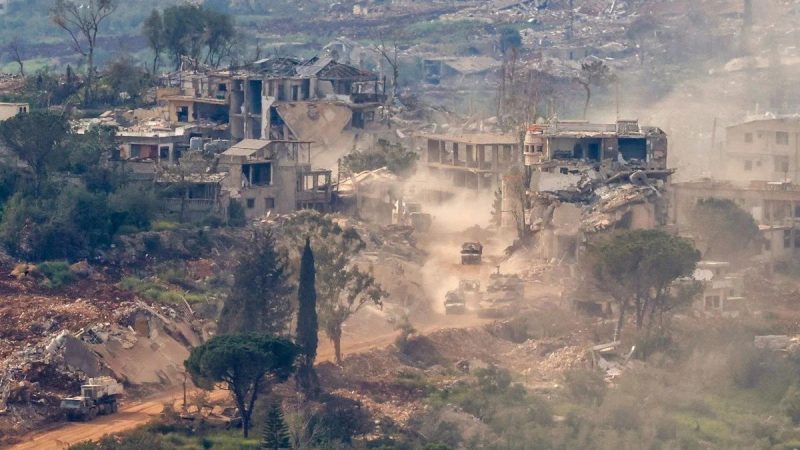
Scores of displaced Lebanese civilians made their way back to southern towns designated by Washington as “pilot zones” early on 21 July, as the Lebanese Armed Forces (LAF) deployed in the town of Zawtar al-Gharbiya – one day after the US officially launched its plan.
An Israeli journalist had previously claimed that Tel Aviv would begin a limited withdrawal on Tuesday as part of the US plan, but local residents returning to the south cast further doubt on Israel’s intention to pull out.
The zones, or at least most of them, “were never occupied by Israeli forces” to begin with, locals told Al-Jazeera on 21 July.
“The inclusion of [these] villages is evidence that Israel is in fact not giving anything up, despite the framework agreement, and is instead able to remain in the [other] areas it has occupied,” the villagers said.
Two Lebanese security sources told Al-Jazeera the same thing, while stressing that two of the “pilot zones” are “not occupied.”
The pilot zone plan is a key aspect of the US-brokered agreement reached between Lebanon and Israel in violation of Lebanese law.
Washington officially launched the project on Monday.
“Pilot zone operations began in the villages of Froun, Srifa, and Zawtar al-Gharbiya in accordance with the Trilateral Framework and under the auspices of the Military Coordination Group for Lebanon,” the US State Department said in a statement on 20 July.
Reports over recent weeks indicated that three pilot zones had initially been declared as part of the plan: Froun, Al-Ghandourieh, and Zawtar al-Gharbiya.
Israeli Prime Minister Benjamin Netanyahu had publicly named Froun and Zawtar al-Gharbieh as two initial pilot zones weeks ago.
Washington’s new announcement on Monday listed Froun, Srifa, and Zawtar al-Gharbiya as the initial pilot zones.
Just like Froun, Srifa is outside the so-called Israeli security zone and is not occupied. Zawtar al-Gharbiya is the only one of the three zones where Israeli forces are present.
Fierce resistance from Hezbollah prevented occupation forces from pushing into both Froun and Al-Ghandourieh during the initial weeks of heavy fighting.
This was recently confirmed by reports from RT and the New Arab, which cited local officials and correspondents on the ground.
The unconstitutional Lebanon-Israel deal would see the establishment of future pilot zones under “mutual consent” between Tel Aviv and Beirut.
The plan is meant to see the LAF replace Israeli occupation troops in the designated “zones” and dismantle Hezbollah infrastructure, in tandem with a “phased” Israeli withdrawal.
However, Lebanese military sources told local media earlier this month that the LAF refuses and rejects direct cooperation with Israel.
“The army will not operate under anyone’s command [including Israel]. Its mission is not to clear the ground for the enemy in order to facilitate its entry into areas it failed to reach because of fierce resistance. The army will not be the reason for the occupation of additional Lebanese territory,” the sources said.
Israel publicly vows that it will not withdraw from south Lebanon. Israeli media says occupation forces have not received any political directive to withdraw from the area. There are still no clear timelines for the US plan.
As residents made their way to the areas on Tuesday morning, Israeli occupation forces continued to carry out major demolition operations, destroying civilian infrastructure on the border.
Featured Video
BRITAIN’S WARNING: PREPARE FOR WAR
or go to
Aletho News Archives – Video-Images
From the Archive
How Ukraine Tortured and Slaughtered Donbass
By Kit Klarenberg | Al Mayadeen | July 11, 2024
Almost immediately after the proxy war erupted, ISIS-tier footage of the torture and murder of Russians in Ukrainian custody emerged.
On July 6th, the New York Times published an astonishing investigation: In Ukraine, Killings of Surrendering Russians Divide an American-Led Unit. The article documents in grim detail how Chosen Company, an international volunteer battalion for Kiev, routinely executes Russian prisoners of war. It is the very first mainstream admission that this practice – a brazen breach of the Geneva Conventions, and a grave war crime – is widespread among Ukraine’s fighters, both foreign and homegrown. … continue
Blog Roll
 Aletho News
- Pentagon designates Chinese cultural centers national security threat
- Israel Demolishes Home Of Lebanese Journalist Whose Viral Film Exposed Pager Attack
- Record Oil, Empty Tanks: The UAE’s Miracle Recovery
- Burnham tackles Britain’s poverty with aggression in Yemen
- Peace in Ukraine: the easy way – or the hard way
- Trump & the Rrrrussians
- US taxpayer money laundered back through Ukraine – Musk
- Before COVID, an NIH lab chief proposed making a SARS-like bat virus more infectious
- Gates, Bourla on Trial in Netherlands Accused of ‘Great Reset’ Scheme at Vaccine Injury Hearing
- BRITAIN’S WARNING: PREPARE FOR WAR
- If Americans Knew
- An error has occurred; the feed is probably down. Try again later.
- No Tricks Zone
- Two New Studies Find Thwaites Glacier Melt Cannot Be Driven By Human Activity Or A Warming Ocean
- E-Cars Reduce CO2 Emissions By Only 41% Compared To Internal Combustion Engine Vehicles
- Predictions Made By Renowned Climate Professor Over Past Decades Have Been Proven To Be Poor
- New Study Suggests Large Regions Of The Pacific Ocean Have Been Cooling For The Last 80 Years
- Germany’s Green Energy Debacle: High Energy Costs Force Kahla Porzellan to Close After 182 Years!
- New Study: 50 Years Of The Most Aggressive ‘Net Zero’ Policies Can Only Affect The Global Climate By 0.03°C
- US September “Heat” Was No Record…Many Records Set Decades Ago
- Latest European Green Energy Debacle; Portugal’s Largest Flagship Solar Park Insolvent!
- Green Energy Debacle: German Expert Professor Fritz Vahrenholt Warns Of Severe Economic And Social Consequences
- Two More Paleo Reconstructions Affirm Meters-Higher Sea Levels Across Ireland, Brazil 7000-6000 Years Ago

