What’s behind the sudden US good will towards Iran?
By Robert Inlakesh | RT | October 2, 2023
In what proved to be a domestically controversial move, the US government approved the release of five prisoners held in Iran in return for releasing five Iranian detainees and billions of previously frozen assets. However, in the aftermath of the agreement between Tehran and Washington, the White House’s primary focus seems to be centered around securing a Saudi-Israeli deal rather than working on reviving the 2015 Iran nuclear deal, known formally as the Joint Comprehensive Plan of Action (JCPOA).
As revealed by the anonymous diplomatic sources of The Cradle, in addition to other tidbits released in US media, the US-Iran prisoner swap appears to have been much more than meets the eye. The informal agreement, according to these anonymous sources, encompassed freezing Iranian uranium enrichment at 60% and permitting the International Atomic Energy Agency (IAEA) to install cameras at several nuclear sites. On the other hand, the US’ concessions included disregarding Iranian oil sales – in essence, refraining from enforcing sanctions – and allowing all Iranian assets to be released, reportedly amounting to roughly $20 billion. This is well over the widely reported $6 billion touted in the international press.
What makes this agreement so intriguing is that it was non-formal, including no known signed documents, and was contrived over several months and under the auspices of Qatar and Oman as intermediaries. From leaked information, citing unnamed sources, what we can gather – regardless of what claims are true or false – is that the prisoner swap was more than a simple exchange of prisoners and $6 billion in frozen assets. According to a report released in May by Axios, secret indirect talks between the US and Iran had been conducted in Oman, which three sources close to the news outlet claimed Iran’s top nuclear negotiator, Ali Bagheri Kan, was part of. Later, in June, the New York Times released a report claiming that secret negotiations were going on, aimed at concluding an informal agreement to replace the need to revive the 2015 nuclear deal.
To begin with, if we are to assume that the official US narrative on the agreement is correct, despite Iranian officials having contradicted it, then the most apparent objective in mind from Washington’s perspective would be to cause a thaw in America’s relationship with the Islamic Republic. As various analysts have suggested, this could have also signaled hope for a revival of the nuclear deal, which fell apart after the administration of former President Donald Trump unilaterally withdrew from it in 2018. Hope had largely faded that the administration of President Joe Biden could bring the deal back to life after Biden was revealed to have said that it was officially “dead” in November of 2022.
However, given the information we have at hand, what is most likely here is that this represents a massive de-escalation following ship seizures and the beefing up of America’s troop presence in the Persian Gulf back in August. Why a de-escalation now? Is it to revive nuclear deal talks? This appears highly unlikely. Instead, the prisoner exchange agreement comes simultaneously with, and is somewhat overshadowed by, developments in the ongoing discussions to reach an American-brokered normalization deal between Saudi Arabia and Israel.
The two nations, both powerful partners of the US in the Middle East, have never had formal diplomatic relations with each other. Saudi Arabia does not recognize Israel as a sovereign country and has been at loggerheads with it over its treatment of Arabs in Palestine, which Riyadh ostensibly wants to see as an independent nation. Negotiations to finally normalize diplomatic relations have been ongoing for months now, with the US being a highly invested middleman, given that achieving such a deal would help consolidate its power base in the region. As for Iran, while Israel sees it as an existential enemy, Saudi Arabia has had a complicated relationship with it, only having re-established diplomatic ties earlier this year in a deal brokered by China.
When Biden met with Israeli Prime Minister Benjamin Netanyahu in New York on the sidelines of the United Nations General Assembly (UNGA)’s 78th session, they publicly discussed the high hopes of concluding Saudi-Israeli normalization. This was followed by two Fox News interviews, one with Saudi Crown Prince Mohammed Bin Salman and the other with the Israeli PM, during which both said that the deal grows closer by the day. At Benjamin Netanyahu’s address to the UNGA, he spoke at length on Iran; however, there was no mention of the recent US-Iranian prisoner exchange.
In fact, Israel has remained silent on the informal deal. This is especially interesting, considering that Tel Aviv routinely attacks the prospect of any agreement with Iran, let alone one that allows for tens of billions in funds to be transferred back into the hands of Tehran. In June, Netanyahu spoke over the phone with US Secretary of State Antony Blinken, during which he discussed Iran at length and proclaimed that he opposes and will not be bound by any agreement struck between Washington and Tehran.
On September 5, Antony Blinken spoke with the Israeli premier again, allegedly discussing Iran as the primary subject of the call. While the precise details of the calls are impossible to apprehend, there had to be a good chance that the prisoner swap agreement was mentioned, as reports had publicly been leaked to the press regarding Iran-US talks. With so much focus placed upon Iran by Israel, it makes no sense that Tel Aviv would remain silent on the prisoner exchange, especially given the release of Iran’s formerly frozen funds.
Not silent on the unfreezing of Tehran’s billions were Republican politicians in the US Congress. If the Biden administration were to have accepted a renewal of the 2015 nuclear deal, one of its major hurdles would have been passing the deal in Congress, including the deeply opposed Republican-led House of Representatives. In fact, any attempt to try and pass a deal, at this point, could reflect negatively on the Biden White House, which matters more now as we head towards the 2024 presidential election.
Therefore, by striking an informal agreement with Tehran, the US de-escalates and addresses some of its worries surrounding Iran’s nuclear program. More importantly, however, the US government could be trying to create a fertile environment for the conclusion of an Israeli-Saudi normalization agreement, both by calming Iran down to de-escalate regional tensions and, possibly, leveraging concessions to ease Tehran’s pushback against the normalization directly. Whether this strategy will work or not is yet to be seen. Still, it is clear that the key foreign policy goal for Joe Biden is securing the normalization agreement, which is why it makes sense that the most powerful nation that opposes it – Iran – should be addressed and taken seriously.
Robert Inlakesh is a political analyst, journalist and documentary filmmaker currently based in London, UK. He has reported from and lived in the Palestinian territories and currently works with Quds News. Director of ‘Steal of the Century: Trump’s Palestine-Israel Catastrophe’.
Georgia Awaits USAID’s Explanations on Funds for Training in Organizing Unrest
Sputnik – 02.10.2023
 TBILISI – Georgia is waiting for clarifications from the US Agency for International Development (USAID) regarding information about the funding of training in organizing unrest in the country, Georgian parliamentary speaker Shalva Papuashvili stated on Monday.
Earlier in the day, the State Security Service of Georgia (SSSG) said on social media that three Serbian citizens from the Center for Applied Nonviolent Action and Strategies (CANVAS), allegedly funded by USAID, arrived at the end of September in Georgia to teach tactics for overthrowing the government to young people and members of influential non-governmental organizations. According to the SSSG, the coup was planned for October-December, just when the European Commission is set to publish its decision on Georgia’s EU membership application.
“It was a dark day in the history of American aid to Georgia… We see that money of the American nation is used for planning revolutionary processes, to deliberately train people to riot and incite violence. That is why it is important to receive a corresponding explanation on behalf of the USAID, which has been involved in such a scandal for the second time already,” Papuashvili told reporters.
Georgia’s former deputy interior minister, Giorgi Lortkipanidze, and the commander of Georgian Legion in Ukraine. Mamuka Mamulashvili, who used to be a bodyguard of Georgia’s jailed ex-President Mikhail Saakashvili, were accused of plotting the coup.
An independent online news platform reported that this is at least the seventh time since the ruling Georgian Dream party came to power in 2012 that officials have accused various entities of plotting a coup against the government.
US bent on creating insecurity for Afghanistan’s neighbors: Iran envoy
Press TV – October 1, 2023
Iran’s ambassador to Afghanistan says the United States’ main policy on Afghanistan is to create insecurity for the country’s neighbors.
Hassan Kazemi Qomi said on Sunday that the US is continuing to make troubles in Afghanistan two years after it was forced to withdraw its troops after the Taliban group took control of the country.
“(The US) is after creating anxiety and disturbance for countries in the region, including for Afghanistan’s neighbors,” Qomi was quoted as saying in an interview with the IRIB News.
The ambassador made the remarks in Kazan, in southwest Russia, where he attended a fifth regional consultation meeting on Afghanistan known as the Moscow Format.
He said the 13 countries attending the meeting were almost unanimous in their position that the security and economic challenges in Afghanistan are mainly the result of 20 years of occupation by the US and allied countries of the North Atlantic Treaty Organization.
He accused the US of providing indirect support to the so-called Daesh of Khorasan, which is the regional offshoot of the ISIS terrorist group, to create insecurity in Central Asia and to pave the way for setting up a military base in the region with the pretext of fighting terrorism.
“Neighboring countries (of Afghanistan) reached the conclusion that they should change the conditions in Afghanistan through a collective move and a regional initiative and with cooperation with the rulers in Kabul,” said Kazemi Qomi.
The long-serving Iranian diplomat said countries attending the Moscow Format meeting in Kazan also decided to form a regional contact group to coordinate their actions and policies on Afghanistan.
“With the formation of the contact group we can put into operation (the outcomes of) talks on Kabul and the economic and security cooperation around the borders and inside the Afghan territory,” he said.
Ambassador of Israeli Crimes: This is How Gilad Erdan Become a Defender of Women’s Rights in Iran
By Ramzy Baroud | MEMO | October 1, 2023
German mayor calls concerns over child safety ‘unfounded’ amid plans to accommodate 80 asylum seekers at a primary school
BY THOMAS BROOKE | REMIX NEWS | OCTOBER 1, 2023
Outraged parents have condemned the local mayor’s decision to accommodate up to 80 asylum seekers in containers on the grounds of a primary school in the German town of Monheim am Rhein.
Dozens of local residents attended a recent question time of the local council to voice their displeasure over the controversial move proposed by Mayor Daniel Zimmerman’s administration and expressed their concerns for child safety, calling the plans both inappropriate and unacceptable.
Starting next spring, a cohort of migrants will reside in containers located on the school grounds, which are no longer used for educational purposes.
In response to the protestations of locals, the council cited economic factors as a primary reason for the move, insisting that the estimated €150,000 it would cost to convert the containers into housing was substantially lower than the cost of renting private accommodations, where around 80 percent of the migrants recently received by the municipality currently reside.
“We simply can’t keep up with renting anymore,” a city press spokesperson told parents at the meeting.
Concerned parents told the council meeting that the housing of traumatized refugees in the vicinity of young children was wholly irresponsible, and expressed worries of potential conflict between the new arrivals and their children including the danger of rape or abuse.
However, Zimmerman called these fears “unfounded” and insisted that the migrants are “people like you and me” and are not dangerous.
“The safety of our children is the primary goal – I personally guarantee that,” the local mayor assured parents.
He explained that with the municipality receiving significantly more refugees from Ukraine, Syria, and Afghanistan, private accommodation in Monheim has become saturated and the town is reaching its acceptance limits. The council therefore needs to resort to alternative measures to accommodate further arrivals.
The mayor added that while he was open to discussing the matter further with concerned parents in the next few weeks, for instance at parent meetings, such correspondence will not change the city’s decision to repurpose the containers on the school grounds and considered the matter to be closed.
Fauci and the CIA: A New Explanation Emerges
By Jeffrey A. Tucker | The Brownstone Institute | September 27, 2023
Jeremy Farrar’s book from August 2021 is relatively more candid than most accounts of the initial decision to lock down in the US and UK. “It’s hard to come off nocturnal calls about the possibility of a lab leak and go back to bed,” he wrote of the clandestine phone calls he was getting from January 27-31, 2020. They had already alerted the FBI and MI5.
“I’d never had trouble sleeping before, something that comes from spending a career working as a doctor in critical care and medicine. But the situation with this new virus and the dark question marks over its origins felt emotionally overwhelming. None of us knew what was going to happen but things had already escalated into an international emergency. On top of that, just a few of us – Eddie [Holmes], Kristian [Anderson], Tony [Fauci] and I – were now privy to sensitive information that, if proved to be true, might set off a whole series of events that would be far bigger than any of us. It felt as if a storm was gathering, of forces beyond anything I had experienced and over which none of us had any control.”
At that point in the trajectory of events, intelligence services on both sides of the Atlantic had been put on notice. Anthony Fauci also received confirmation that money from the National Institutes of Health had been channeled to the offending lab in Wuhan, which meant that his career was on the line. Working at a furious pace, the famed “Proximal Origin” paper was produced in record time. It concluded that there was no lab leak.
In a remarkable series of revelations this week, we’ve learned that the CIA was involved in trying to make payments to those authors (thank you whistleblower), plus it appears that Fauci made visits to the CIA’s headquarters, most likely around the same time.
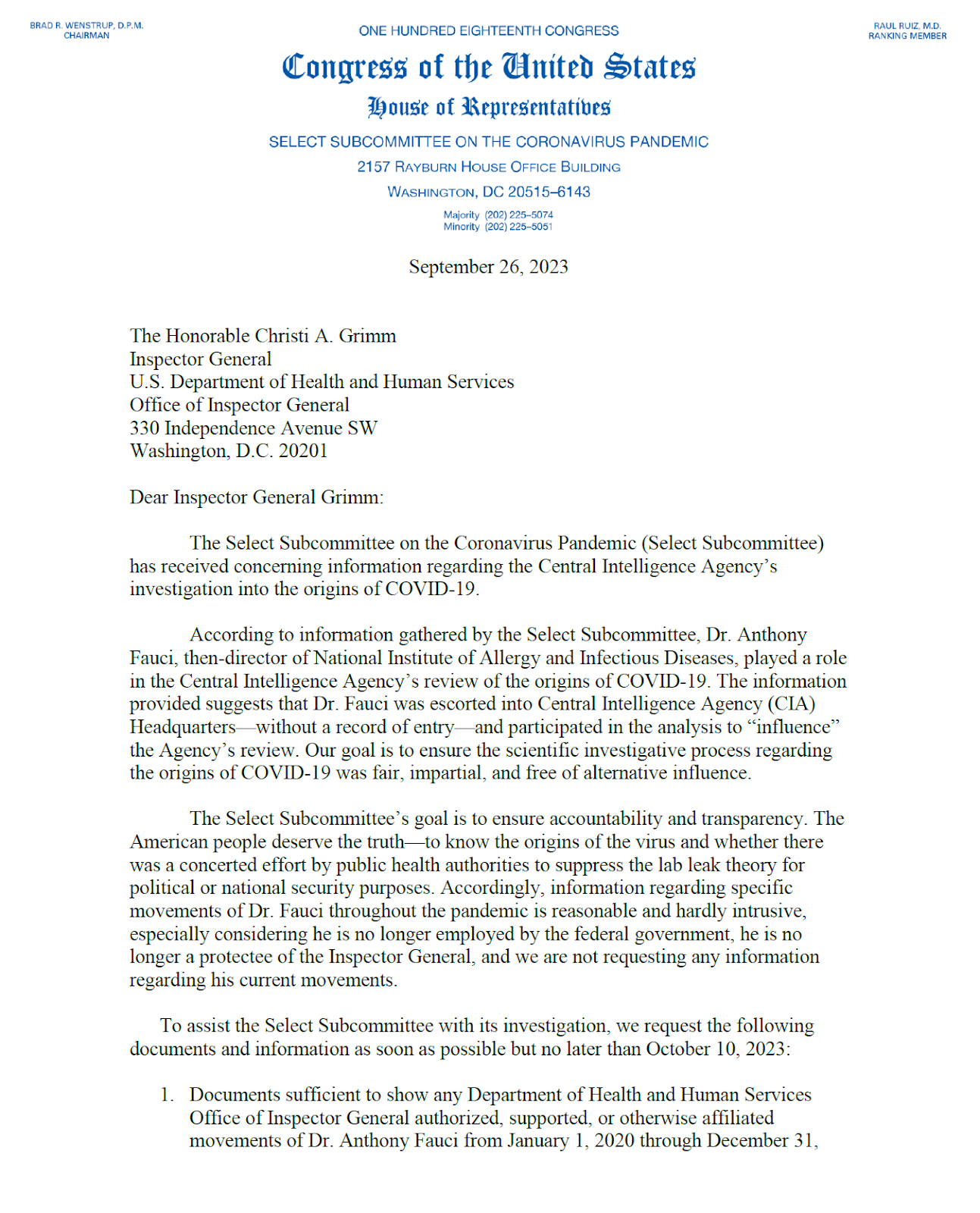
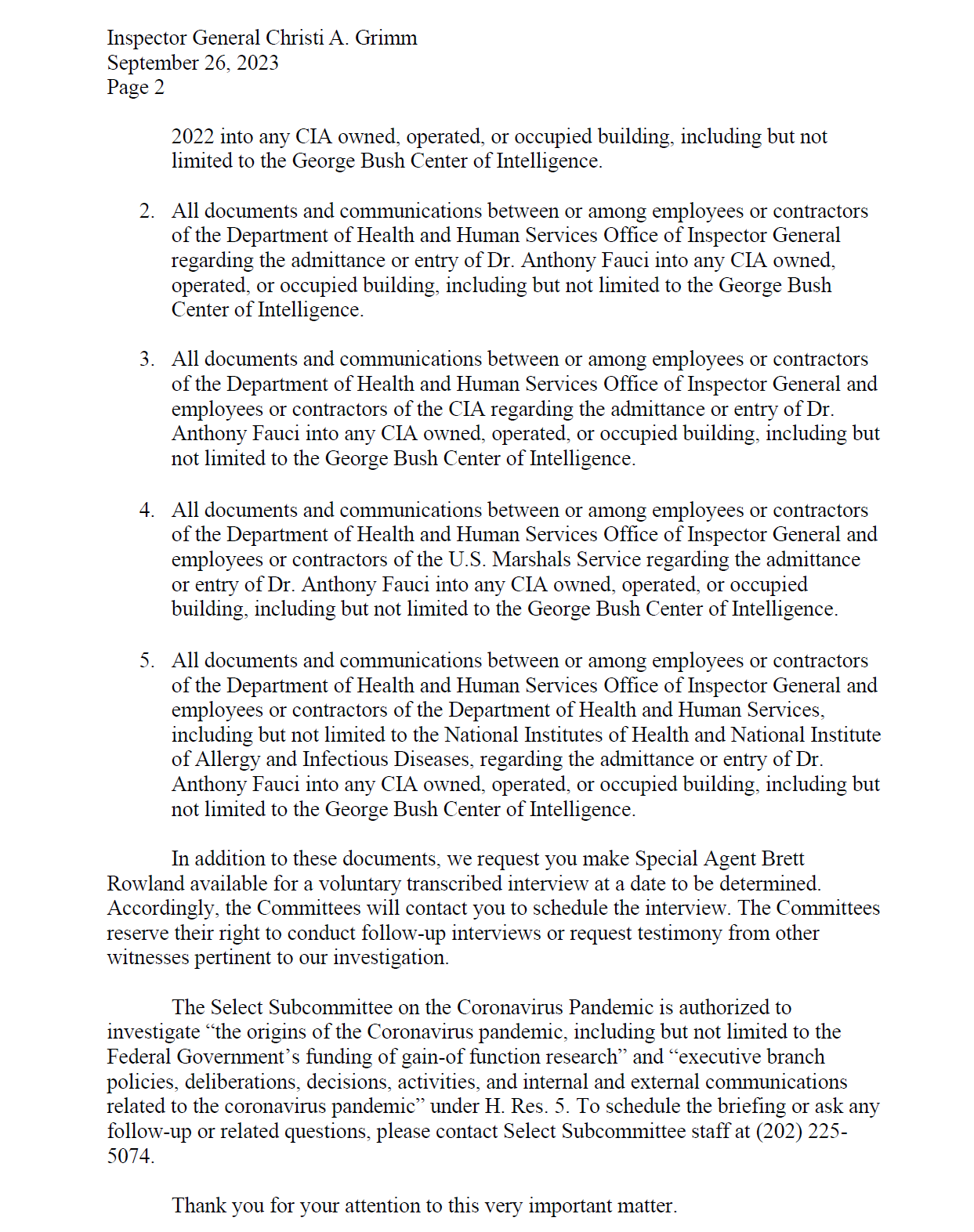
Suddenly we get some possible clarity in what has otherwise been a very blurry picture. The anomaly that has heretofore cried out for explanation is how it is that Fauci changed his mind so dramatically and precisely on the merit of lockdowns for the virus. One day he was counseling calm because this was flu-like, and the next day he was drumming up awareness of the coming lockdown. That day was February 27, 2020, the same day that the New York Times joined with alarmist propaganda from its lead virus reporter Donald G. McNeil.
On February 26, Fauci was writing: “Do not let the fear of the unknown… distort your evaluation of the risk of the pandemic to you relative to the risks that you face every day… do not yield to unreasonable fear.”
The next day, February 27, Fauci wrote actress Morgan Fairchild – likely the most high-profile influencer he knew from the firmament – that “be prepared to mitigate an outbreak in this country by measures that include social distancing, teleworking, temporary closure of schools, etc.”
To be sure, twenty-plus days had passed between the time Fauci alerted intelligence and when he decided to become the voice for lockdowns. We don’t know the exact date of the meetings with the CIA. But generally until now, most of February 2020 has been a blur in terms of the timeline. Something was going on but we hadn’t known just what.
Let’s distinguish between a proximate and distal cause of the lockdowns.
The proximate cause is the fear of a lab leak and an aping of the Wuhan strategy of keeping everyone in their homes to stop the spread. They might have believed this would work, based on the legend of how SARS-1 was controlled. The CIA had dealings with Wuhan and so did Fauci. They both had an interest in denying the lab leak and stopping the spread. The WHO gave them cover.
The distal reasons are more complicated. What stands out here is the possibility of a quid pro quo. The CIA pays scientists to say there was no lab leak and otherwise instructs its kept media sources (New York Times) to call the lab leak a conspiracy theory of the far right. Every measure would be deployed to keep Fauci off the hot seat for his funding of the Wuhan lab. But this cooperation would need to come at a price. Fauci would need to participate in a real-life version of the germ games (Event 201 and Crimson Contagion).
It would be the biggest role of Fauci’s long career. He would need to throw out his principles and medical knowledge of, for example, natural immunity and standard epidemiology concerning the spread of viruses and mitigation strategies. The old pandemic playbook would need to be shredded in favor of lockdown theory as invented in 2005 and then tried in Wuhan. The WHO could be relied upon to say that this strategy worked.
Fauci would need to be on TV daily to somehow persuade Americans to give up their precious rights and liberties. This would need to go on for a long time, maybe all the way to the election, however implausible this sounds. He would need to push the vaccine for which he had already made a deal with Moderna in late January.
Above all else, he would need to convince Trump to go along. That was the hardest part. They considered Trump’s weaknesses. He was a germaphobe so that’s good. He hated Chinese imports so it was merely a matter of describing the virus this way. But he also has a well-known weakness for deferring to highly competent and articulate professional women. That’s where the highly reliable Deborah Birx comes in: Fauci would be her wingman to convince Trump to green-light the lockdowns.
What does the CIA get out of this? The vast intelligence community would have to be put in charge of the pandemic response as the rule maker, the lead agency. Its outposts such as CISA would handle labor-related issues and use its contacts in social media to curate the public mind. This would allow the intelligence community finally to crack down on information flows that had begun 20 years earlier that they had heretofore failed to manage.
The CIA would hobble and hamstring the US president, whom they hated. And importantly, there was his China problem. He had wrecked relations through his tariff wars. So far as they were concerned, this was treason because he did it all on his own. This man was completely out of control. He needed to be put in his place. To convince the president to destroy the US economy with his own hand would be the ultimate coup de grace for the CIA.
A lockdown would restart trade with China. It did in fact achieve that.
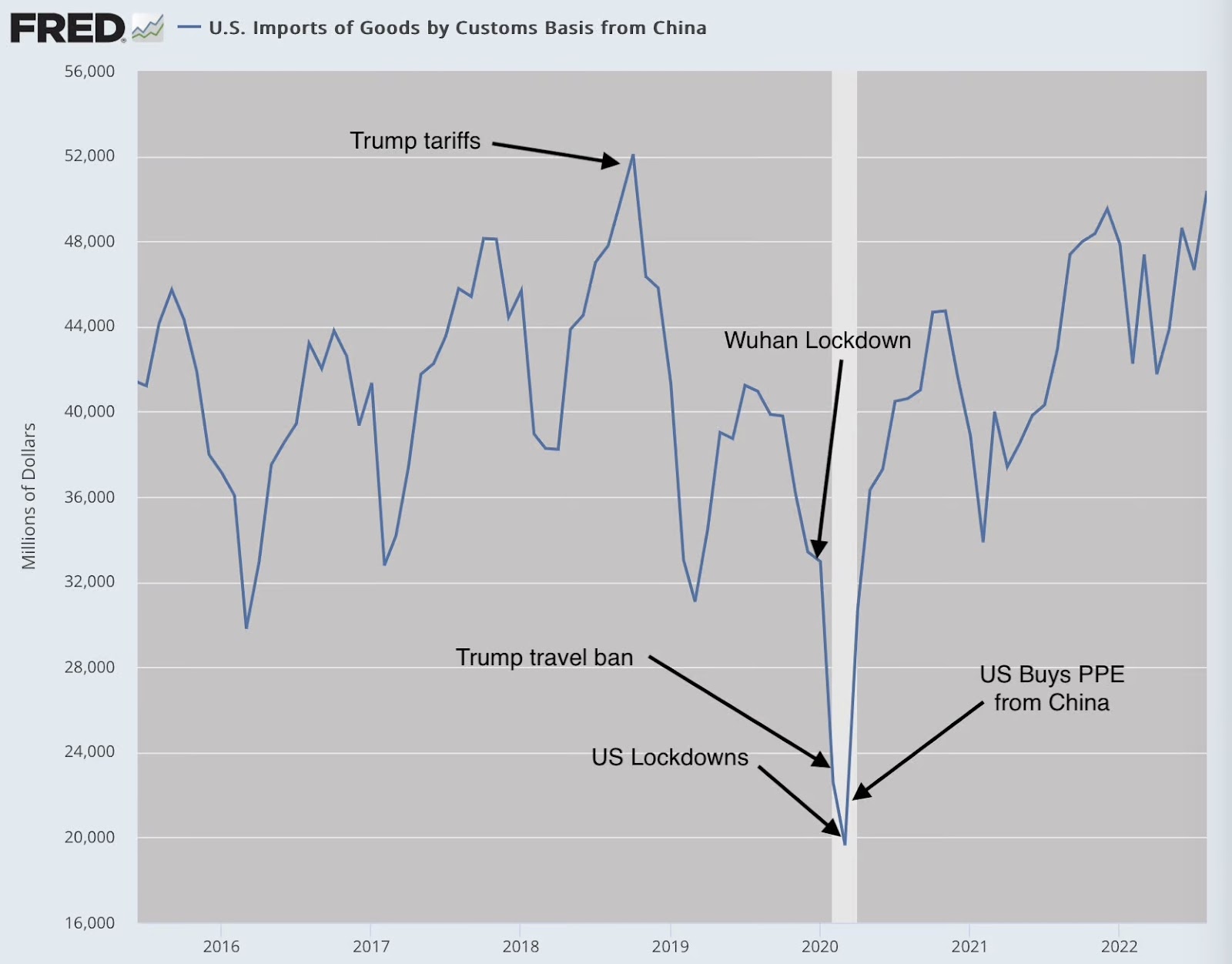
How would Fauci and the CIA convince Trump to lock down and restart trade with China? By exploiting these weaknesses and others too: his vulnerability to flattery, his desire for presidential aggrandizement, and his longing for Xi-like powers over all to turn off and then turn on a whole country. Then they would push Trump to buy the much-needed personal protective equipment from China.
They finally got their way: somewhere between March 10 or possibly as late as March 14, Trump gave the go ahead. The press conference of March 16, especially those magical 70 seconds in which Fauci read the words mandating lockdowns because Birx turned out to be too squeamish, was the great turning point. A few days later, Trump was on the phone with Xi asking for equipment.
In addition, such a lockdown would greatly please the digital tech industry, which would experience a huge boost in demand, plus large corporations like Amazon and WalMart, which would stay open as their competitors were closed. Finally, it would be a massive subsidy to pharma and especially the mRNA platform technology itself, which would enjoy the credit for ending the pandemic.
If this whole scenario is true, it means that all along Fauci was merely playing a role, a front man for much deeper interests and priorities in the CIA-led intelligence community. This broad outline makes sense of why Fauci changed his mind on lockdowns, including the timing of the change. There are still many more details to know, but these new fragments of new information take our understanding in a new and more coherent direction.
Jeffrey A. Tucker is Founder and President of the Brownstone Institute. He is also the author of 10 books, including Liberty or Lockdown, and thousands of articles in the scholarly and popular press. He speaks widely on topics of economics, technology, social philosophy, and culture.
Iran Boasts of Hybrid Drones’ Capability, Warns of Hair-Trigger Response to Any Aggression
By Ilya Tsukanov – Sputnik – 25.09.2023
The Islamic Republic has developed dozens of increasingly sophisticated turboprop and rocket-powered unmanned aerial vehicles over the decades, designed for missions ranging from reconnaissance to long-range precision strikes against land and sea targets.
Iran has reportedly developed a new hybrid aerial and sea-based drone capable of landing on and taking off from water, with senior military officials calling on Persian Gulf nations to ensure security collectively, while warning Washington and its allies of the consequences any aggressive moves.
“The Islamic Revolutionary Guard Corps Navy has built drones that can take off from and land on the water,” IRGC Commander Ali Reza Tangsiri said in an interview with local media over the weekend, pledging that more details about the drone will be provided at a later date.
“The IRGC Navy has also built hybrid drones that fly with one engine, with the second engine serving as a propelling engine,” Tangsiri said. That UAV is said to have the capability to carry out reconnaissance missions lasting up to 15 hours.
The water-landing drones, reportedly designed to be able to carry missiles and bombs, would dramatically enhance the IRGC Navy’s already substantial naval and coastal defense capabilities in the defense of the nation’s vast coastlines in the Persian Gulf, along the crucial world energy transportation chokepoint in the Strait of Hormuz, and in the Gulf of Oman.
Tangsiri reiterated Tehran’s long-standing diplomatic stance that Persian Gulf security can be assured by regional countries, without any interference from non-Gulf countries, and proposed the creation of an eight-nation pact of Persian Gulf-adjacent countries to ensure regional security, including Iran, Bahrain, Iraq, Kuwait, Oman, Qatar, Saudi Arabia and the United Arab Emirates.
The opportunities to forge such a regional security pact shot up dramatically this spring after Iran and Saudi Arabia signed a surprise normalization of relations deal mediated by China. Washington, Riyadh’s longtime traditional partner in the region, was forced to begrudgingly accept the warming of relations between the traditional Gulf foes, while expressing skepticism over the agreement’s ability to last, and leveling new sanctions against the Islamic Republic.
Separately, at a military ceremony outside Qom, central Iran on Monday, Iranian Armed Forces Chief of Staff Mohammad Baqeri warned Iran’s potential enemies that the nation’s military is on a hair-trigger alert to respond instantaneously to any aggression.
“The Iranian Armed Forces have set up a unified body to establish security in the country,” Baqeri said. “State of readiness is a familiar concept for our armed personnel. That is, every moment we have our hands on the trigger and our eyes on the radar screen, along with surveillance and intelligence equipment so that no conspiracy is organized against the country and the enemies do not wish to launch aggression and undermine our security,” the top commander added.
Also speaking at the event, Iranian Army Ground Forces Commander Kioumars Heidari warned that “if the enemies put a foot wrong and commit a foolish or mischievous act” against Iran, they “will receive a decisive response from the Army’s ground forces.”
“If the enemies attack Iran from the air, they will have no place to sit on the ground, and if they attack Iran from the ground, we will annihilate them within seconds by God’s grace,” Heidari added.
Iran unveiled a new ultra-long range drone last week at a military parade dedicated to the Iran-Iraq War of 1980-1988, with the UAV, named the Mohajer-10, capable of flying up to 2,000 km with a weapons payload of up to 300 kg, able to stay airborne for up to 24 hours at a time.
Regional tensions flared between the Iran and the US have recent months amid Washington’s decision to dramatically ramp up its naval, air and troop presence in the Persian Gulf following Iran’s crackdown on oil smuggling and maritime navigation violators.
Last month, IRGC Navy Commander Tangsiri stressed that the large US warships traversing Persian Gulf waters have been forced to obey Iran’s maritime rules.
Armed with an impressive and technically advanced military-industrial complex, Iran’s military design philosophy seems aimed at providing the country with David vs. Goliath-type asymmetric warfare capabilities against larger and technically more powerful adversaries, with the country building up mosquito fleets of fast boats armed with machineguns and artillery, hundreds of coastal defense batteries, dozens of drone designs, and maritime power projection capabilities using old tanker ships converted into mobile support platforms to save on costs. Iran’s strategy has enabled it to become one of the top 20 militarily most powerful countries in the world, while spending just a fraction of what the US does on defense ($6.8 billion vs $877 billion in 2022).
Poland warns German chancellor about interfering in Polish elections after Scholz’s controversial remarks
RADIOSZCZECIN.PL | September 25, 2023
Polish Foreign Minister Zbigniew Rau has called on German Chancellor Olaf Scholz “to respect Poland’s sovereignty” and refrain from making statements “that could harm mutual relations.” Scholz chose illegal immigration of all things to criticize Poland about, a topic his government is currently facing a crisis over due to his inability to control Germany’s borders.
Rau, who posted the comment on platform X, emphasized that recent remarks from the German politician hint at potential interference in Poland’s internal matters and its ongoing election campaign.
The comments in question were made by Chancellor Olaf Scholz during a rally for his SPD party in Nuremberg. The German leader voiced support for stricter controls over illegal migration and announced intentions to take specific measures. According to the DPA news agency, Scholz also “called for clarification on possible irregularities in the issuance of visas by Poland.”
Rau stated that Scholz’s latest declaration violates the principle of the sovereign equality of nations. This principle underpins the friendly cooperation between Germany and Poland, as outlined by the German Federal Republic’s treaty with Poland from 1991.
“The jurisdiction of the German Chancellor clearly does not extend to proceedings underway in Poland,” Rau’s post read.
Earlier, the Polish government’s representative for information security, Stanisław Żaryn, noted that Chancellor Scholz appears to be using the visa issue as a means to exert political pressure on the Polish government.
Żaryn remarked that it is hard to see this as anything other than an attempt to influence Poland during its election campaign.
Żaryn mentioned in his post that “interestingly, Germany has had significant issues with visas for years. Every few years, scandals regarding visa purchases emerge there. Perhaps they should focus on that?”
Last year, Germany saw the highest number of asylum applications since the 2016 migration crisis, with cities and towns overflowing with migrants and with little end in sight.
Polish officials highlight that the matter of visa issuance irregularities in Poland is incidental and is currently under investigation. The Central Anti-Corruption Bureau (CBA) has arrested seven individuals in connection with this probe, including one Polish minister who attempted suicide after the investigation was launched.
Raeisi: 60% uranium enrichment came after Europeans ‘trampled on JCPOA commitments’
Press TV – September 24, 2023
President Ebrahim Raeisi says Iran’s uranium enrichment to the purity level of 60% was in response to the lack of commitment by the European parties to the 2015 nuclear agreement.
Raeisi made the statement in an interview with the CNN’s Fareed Zakaria on the sidelines of the 78th session of the United Nations General Assembly in New York.
“In the beginning, we were not seeking 60% levels of enrichment. They (European states) trampled upon their commitments,” the Iranian president said. “What the Islamic Republic of Iran did was in response to a breaking of commitment of the signatories to the (2015) agreement.”
Head of the Atomic Energy Organization of Iran (AEOI) Mohammad Eslami announced in June that enriching uranium to the said purity level was in accordance with a December 2020 parliamentary law – the Strategic Action Plan to Counter Sanctions.
The law was passed with the purpose of removing anti-Iran sanctions as well as the production of radiopharmaceuticals and detectors, among other aims.
Earlier in the month, Reuters cited a confidential report by the International Atomic Energy Agency (IAEA) claiming that Iran’s stockpile of 60% enriched uranium continued to grow, albeit at a slower pace than in the previous quarter.
In the interview, Raeisi categorically rejected the country’s enrichment of uranium to near weapons-grade levels, saying, “It was officially announced that the action that we intend to take is not intended to reach nuclear weapons of any type or a military dimension of any type, but it is… a response for the lack of commitment demonstrated by the Europeans.”
He also reiterated Tehran’s long-standing conviction that the Islamic Republic does not plan to acquire a nuclear bomb.
The United States, under former President Donald Trump, abandoned the Joint Comprehensive Plan of Action (JCPOA) in May 2018 and reinstated crippling sanctions that the agreement had lifted.
The talks to revive the 2015 deal kicked off in Vienna in April 2021, with the intention of removing anti-Iran sanctions and examining Washington’s seriousness in rejoining the JCPOA.
The discussions, however, have been at a standstill since August 2022 due to Washington’s refusal to remove all the sanctions imposed by the previous US administration.
The European Union, which acts as the coordinator of the talks, forwarded at the time a new proposal to the Islamic Republic in order to break the impasse. Iran submitted its response to the draft proposal on August 15, 2022, a week after the latest round of talks wrapped up in Vienna.
After submitting its response to the EU proposal, Tehran urged Washington to show “realism and flexibility” in order to reach an agreement. However, it took almost ten days for the administration of President Joe Biden to submit its response to Iran’s comments on the EU draft.
Iran blamed the failure of the JCPOA’s revival on the procrastination of the American side in providing an answer and said moving to the next stage would have been possible had the US government shown serious willpower and acted responsibly in its promises.
Israeli normalization deals will fail
In the interview with CNN, Raeisi said the US-mediated efforts to normalize Israeli relations with Persian Gulf Arab states, including Saudi Arabia, “will see no success.”
President Biden declared on July 28 that a deal for Israel and Saudi Arabia to normalize relations may be on the horizon following National Security Adviser Jake Sullivan’s talks with Saudi officials in Jeddah.
In order to sign a deal with Israel, Riyadh publicly asked Tel Aviv to implement the 2002 Arab Peace Initiative to establish a Palestinian state first.
However, members of the Israeli cabinet led by Prime Minister Benjamin Netanyahu say they will not make any concession to the Palestinians as part of a potential deal for normalization of relations with Saudi Arabia.
Under the Abraham Accords, the United Arab Emirates, Bahrain, Sudan, and Morocco signed US-brokered normalization deals with the Israeli regime in late 2020. Palestinians have denounced the deals as a “betrayal” of their cause.
US Intel Insiders Admit Ukraine Counteroffensive is Lost — Seymour Hersh
By James Tweedie – Sputnik – 22.09.2023
While the Biden administration continues to throw good money after bad and pour arms into Ukraine, analysts in Washington’s security agencies are increasingly skeptical that it will achieve any kind of victory.
A US intelligence official has told veteran journalist Seymour Hersh that the proxy conflict with Russia in Ukraine is a lost cause.
The award-winning investigative reporter wrote on his blog that “significant elements in the American intelligence community” assess that the “demoralized Ukraine Army has given up on the possibility of overcoming the heavily mined three-tier Russian defense lines.”
One anonymous official said the fighting only continues “because Zelensky insists that it must.”
“There is no discussion in his headquarters or in the Biden White House of a ceasefire and no interest in talks that could lead to an end to the slaughter,” Hersh wrote.
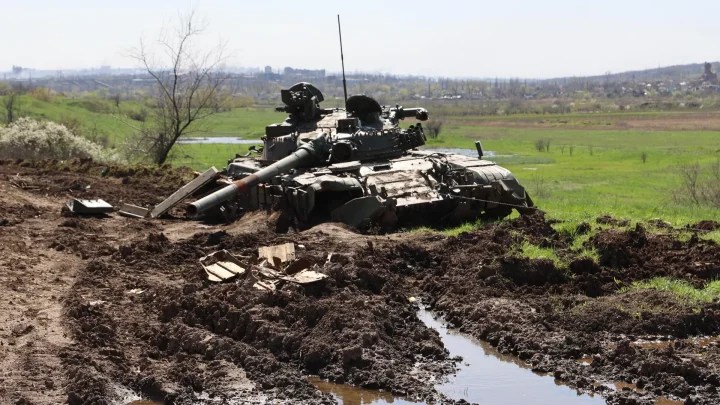
Kiev and Washington claim Ukraine’s NATO-armed and trained forces are making steady progress. But almost four months after the launch of the offensive on June 4, they have advanced only a few kilometers on two narrow axes, capturing a handful of abandoned and ruined villages — at the cost of more than 71,000 casualties and hundreds of tanks and artillery guns.
“It’s all lies,” the source said. “There were some early Ukrainian penetrations in the opening days of the June offensive, and the Russians retreated to sucker them in. And they all got killed.”
He revealed that “major elements” of Kiev’s forces had “virtually canceled the offensive” — an assessment borne out by a recent fall in Russian Ministry of Defense reports of casualties inflicted on Ukrainian assault groups on the main southern fronts around Rabotino in Zaporozhye and south of Vremevka in Donetsk.
The intelligence agent said US President Joe Biden had been foolish to arm Ukraine and lay the ground for the conflict, knowing that Russian President Vladimir Putin would be forced to respond militarily.
“The war is over. Russia has won. There is no Ukrainian offensive anymore, but the White House and the American media have to keep the lie going,” the official told Hersh. “The truth is if the Ukrainian Army is ordered to continue the offensive, the army would mutiny. The soldiers aren’t willing to die anymore, but this doesn’t fit the B.S. that is being authored by the Biden White House.”
Nagorno-Karabakh and the failure of Armenia’s ‘colour revolution’
By Paul Robinson | Canadian Dimension | September 22, 2023
Thursday was Armenia’s independence day. This year, however, there was very little for Armenians to celebrate. Just one day earlier, the authorities of the region of Nagorno-Karabakh had in effect capitulated to Azerbaijan following a brief offensive by the Azerbaijani armed forces. The future of the region’s predominantly Armenian population remains uncertain, but the province’s complete integration into Azerbaijan is now inevitable and dreams of an Armenian Karabakh seem to be permanently shattered.
Despite its Armenian population, Nagorno-Karabakh became part of the Azerbaijani Soviet Socialist Republic as a result of a decision by the Soviet government in the early 1920s following the Bolshevik conquest of the Caucasus. Armenians, however, never reconciled themselves to this decision and when the Soviet Union began to unravel in the late 1980s, the people of Nagorno-Karabakh lobbied for their territory to be transferred to the Armenian Soviet Socialist Republic. After the dissolution of the USSR, newly independent Armenia and Azerbaijan fought what became known as the First Karabakh War, which resulted in an Armenian victory. Nagorno-Karabakh became de facto independent, while Armenia gained control of a swathe of Azerbaijani territory around it.
Subsequent diplomatic efforts to resolve the dispute between Armenia and Azerbaijan failed. Azerbaijan bided its time, built up its armed forces, and in 2020 launched the Second Karabakh War, recapturing part of Nagorno-Karabakh. Poised to recapture the rest, the Azerbaijanis halted their offensive after the Russian Federation brokered a ceasefire which saw the Armenians hand back the Azerbaijani territory around Nagorno-Karabakh. This kept what remained of the latter out of Azerbaijani control but dependent on a narrow corridor through Azerbaijani territory protected by Russian peacekeepers.
In this way, the Russians saved Nagorno-Karabakh from complete conquest. This did not, however, earn them much gratitude from Armenia’s Prime Minister, Nikol Pashinyan, who had come to power in 2018 as a result of what has been called a “colourless colour revolution.” Since the 2020 war, Pashinyan’s relations with Russia have gone from bad to worse, and following Russia’s 2022 invasion of Ukraine, Pashinyan and his government have sought to reduce their dependence on Moscow, hinting that they would leave the Collective Security Treaty Organization, of which both Armenia and Russia are members, and more recently announcing the holding of joint military exercises with the United States. Last year Pashinyan also caused a stir by seeming to recognize Azeri sovereignty over Nagorno-Karabakh.
Azerbaijan has now stepped in to exploit the situation, launching an attack on Nagorno-Karabakh that after just one day of fighting forced the Karabakh authorities to agree to completely disarm. The region’s reintegration into Azerbaijan is now bound to follow. Artin DerSimonian of the Eurasia Program at the Quincy Institute for Responsible Statecraft comments that Azerbaijan’s actions are a direct consequence of the fact that “the Russian army is pinned down in Ukraine” as well as of “Prime Minister Pashinyan’s unwillingness to directly engage Armenian forces in this fight.” Azerbaijan’s victory seems complete.
Pashinyan and his followers are attempting to blame Russia for this debacle, claiming that Moscow allowed Azerbaijan to recapture Nagorno-Karabakh in order to discredit Pashinyan, remove him from power, and install a pro-Moscow Armenian government. The thesis is an odd one. There is, after all, no good reason why Russia should fight Azerbaijan when the Armenian government itself has proven unwilling to do so. Absurdity has, however, never stopped people believing conspiracy theories, and this one may help Pashinyan deflect blame to some degree. Whether it helps him enough, though, remains to be seen.
For while some Armenians may blame Russia, many others point the finger at Pashinyan himself. Dr Pietro Shakarian, a postdoctoral fellow at the Higher School of Economics in St. Petersburg, argues that “Pashinyan’s premiership has been a disaster for the Armenian people.” Until recently, says Shakarian, “Pashinyan was able to cling to power by relying on an array of manipulative populist tactics. However… his recent recognition of Nagorno-Karabakh as part of Azerbaijan became widely viewed among Armenians as an unambiguous act of betrayal. … Today he is almost universally disliked in the country.”
Pashinyan came to power on the back of a wave of protests against the corruption of what was called the “Karabakh clan,” a group of Armenian politicians who originated from Nagorno-Karabakh and who had run Armenia for many years. These included Presidents Robert Kocharyan and Serzh Sargsyan. According to Dr. Benyamin Poghosyan, Chairman of the Centre for Political and Economic Strategic Studies in Yerevan, “hatred towards the ‘Karabakh clan’ started to be projected on Karabakh as a whole.” Consequently, many Armenians were reluctant to fight to defend it.
Beyond that, Pashinyan gave the impression of wanting to rid Armenia of the problem of Karabakh, viewing it as an impediment to his desire to turn Armenia politically westwards. Poghosyan notes that Pashinyan’s “primary goal is to normalize relations with Azerbaijan and Turkey, which will decrease the dependence on Russia and bring Armenia closer to the West. From this perspective, Nagorno-Karabakh was more a liability than an asset.” Pashinyan’s detractors, therefore, accuse him of betraying the people of Karabakh in pursuit of his broader pro-Western and anti-Russian political ambitions.
Dr. Shakarian comments that the loss of Karabakh puts into question “Russia’s whole position in the Caucasus.” “Many Western war hawks understand this,” and will seek to exploit it, he says. By contrast, Dr. Poghosyan is somewhat more ambiguous about the likely geopolitical consequences, arguing that it is harder for Armenia to turn westwards in practice than it is in theory. According to Poghosyan, “The only way for Armenia to move out of the Russian orbit and move towards the West is to accept some protection from Turkey and, in a midterm perspective, replace Russia with Turkey as a primary economic and security partner of Armenia. It will result in at least de facto Turkish and Azerbaijani control over the southern part of Armenia. … Will Pashinyan go for that? No clear answer exists.”
Equally unclear is Pashinyan’s political fate. Both Poghosyan and Shakarian express some doubt that the protestors who have now come out to demand Pashinyan’s resignation will be able to sustain their protests for long. Pashinyan himself, meanwhile, is insisting that he will remain in power. What is clear, though, is that like so many other so-called colour revolutions, the Armenian revolution of 2018 has not ended well.
Paul Robinson is a professor in the Graduate School of Public and International Affairs at the University of Ottawa and a Senior Fellow at the Institute for Peace and Diplomacy. He is the author of numerous works on Russian and Soviet history, including Russian Conservatism, published by Northern Illinois University Press in 2019.
China and Syria forge ‘strategic partnership’ – leaders
RT | September 22, 2023
Beijing and Damascus announced a new “strategic partnership” during Syrian President Bashar Assad’s ongoing visit to China. President Xi Jinping met him in the city of Hangzhou before this week’s launch of the Asian Games, a high-profile international sports event.
Assad is visiting China for the first time since 2004, when he met then-President Hu Jintao. Xi announced the new agreement as he welcomed his guest in the capital of Zhejiang Province on Friday.
The Chinese leader stated that the relationship between the two nations has “withstood the test of international changes” and pledged to maintain them in the face of international “instability and uncertainty.”
The US and its allies have been seeking to oust Assad for over a decade, accusing him of various transgressions during an armed conflict in the country. The bloodshed started in 2011 as mass protests surged against the Syrian government but were soon hijacked by international jihadist organizations. These elements sidelined other anti-government forces, which Western nations touted as “moderate rebels,” as the main threat to Damascus.
Russian intervention in 2015 turned the tide and helped the Syrian Army oust Islamist militants from most of the country. Some portions, where Turkish and American troops or their local allies are present, remain outside Damascus’ control.
The US has imposed crippling unilateral sanctions on Syria, which hamper its ability to reconstruct after this brutal conflict. Xi expressed support for Assad’s efforts to rebuild the nation, keep terrorists in check, and seek a political settlement for the Syrian people.
The Arab League readmitted Syria in May as Damascus seeks to normalize relations with its neighbors. Beijing had facilitated the restoration of diplomatic relations between regional rivals, Iran and Saudi Arabia, in June. Both nations played significant roles in the Syrian crisis, the former supporting Assad’s government and the latter initially vying for his ouster.
The Syrian president and First Lady Asma Assad arrived in Hangzhou on Thursday. On Saturday, the visiting dignitaries are set to attend the opening ceremony of the 19th Asian Games alongside a dozen other foreign guests.
Featured Video

More Iran War fallout: Maritime insurance industry shifts from London to China
or go to
Aletho News Archives – Video-Images
From the Archives
The Biggest Threat to Peace in Middle East
By Dr. Elias Akleh* | Sabbah Report | May 24, 2010
A build up of heightened tension in the Middle East is escalating in the last few weeks. American and Israeli postures towards Lebanon, Syria, and Iran have become more threatening. Listening to speeches of political leaders one hears talks only about war not peace. Iranians and Israelis are continuously training hard for a possible showdown. Both sides are conducting extensive war games every month. This led Syrians to claim that Israel is preparing for a soon-to-come another war. The Jordanians also are warning that current stalemate of the peace process is an indication of a war breaking out this summer. The Russian President and his army chief hinted, a few months ago, that the US and Israel were planning for an attack on Iran.
Indeed Iran is, as it has been for last few years, the target of most of the threats and accusations of supporting terrorism. Escalating incitement against Iran the American Defense Department sent last month (April) to Congress a report on Iran’s military claiming Iran could develop intercontinental ballistic missiles capable of reaching the US by 2015.
Ignoring the fact that N. Korea, India, Pakistan, and Israel are proven to have nuclear weapons while Iran does not, the US Secretary of State Hillary Clinton chose in her speech, to the nuclear Non-Proliferation Treaty review conference at the UN, to focus on Iran’s alleged nuclear ambitions putting the whole world at risk as she put it. According to Clinton Iran’s acquisition of nuclear weapons, rather than Israel’s more than 200 nuclear bombs, is destabilizing the Middle East. She called on the world’s nations to rally around US efforts to hold Iran, not other nuclear countries, to account.
The accusation that Usama Bin Laden is living comfortably in Iran had received a boost after the broadcast of a documentary called “Feathered Cocaine”. This echoed the June 2003 claims of the Italian newspaper Corre de la Sierra that Bin Laden was in Iran according to some intelligence report, and according to Richard Miniter’s book “Shadow War”. … continue
Blog Roll
 Aletho News
- Iran mobilizing one million soldiers to ‘create hell’ for any US ground assault: Report
- The coming military and psychological unravelling?
- Iran has the last laugh
- More Iran War fallout: Maritime insurance industry shifts from London to China
- US-Israeli aggression on Iran triggers review of GCC countries’ investment pledges to Washington
- Russia slams UK plan to seize tankers suspected of carrying its oil
- Pakistan ramps up food exports to Persian Gulf nations as war deepens food insecurity
- Iran submits response to US plan, sets terms for war’s end: Tasnim
- US vs Iran: Kharg Island Talk — Bluff or Escalation? Ex-Military Officer Weighs In
- Zelensky unnecessarily involves Ukraine in the Middle East crisis
- If Americans Knew
- ‘No Innocent Children’: Far-right Israeli Lawmaker Defends Killing of Palestinian Family
- Mossad’s promises helped Netanyahu convince Trump that Iran could be toppled
- US Arms Control Official Refuses To Comment When Asked If Israel Has Nuclear Weapons
- Veterans warn US landing could be ‘more Gallipoli than Vietnam’
- Israel may be committing war crimes in Lebanon – Not a ceasefire Day 167
- In the West Bank, life is a constant battle – 3 articles
- Jacob Reses, one of the most powerful pro-Israel operatives in Trump’s Washington
- Israeli-US assaults kill or injure 87 children a day – Not a ceasefire Day 166
- ‘Forever live by the sword’: Understanding Israelis’ massive support for Iran war
- UN’s special rapporteur on human rights says Israel is systematically torturing Palestinians
- No Tricks Zone
- Devastating Assessment Of Comirnaty Vaccine By Former Senior Pfizer Europe Toxicologist
- New Study: CO2 Is ‘Effectively Negligible’ As An Explanatory Climate Change Factor Since 2000
- Former Pfizer Toxicologist Dr. Helmut Sterz Tells Bundestag Hearing Pfizer Vaccine Should Have Never Been Approved
- Energy Expert: Germany’s Nuclear Phaseout Was A “500 Billion Euro Mistake”
- New Research: South Australia’s Mid-Holocene Sea Surface Temperatures Were 4°C Warmer Than Today
- Storing Green Energy To Last Germany 10 Days Would Require A 60-Million Tonne Battery
- New Studies: UK Sea Levels Were 4 Meters Higher Than Today During The Mid-Holocene
- Destructive Green New Deal: German Energy And Metal Group Warns Of Drastic Crisis
- New Study Documents A 20-Year Pause In Arctic Sea Ice Decline – Driven By Internal Variability
- Wake-up Call: Survey Shows Majority Of Germans Now Favor Postponing Climate Targets!
 Aletho News