Insisting on “demilitarized zone” in Russia, Kiev shows no interest in diplomatic solutions
By Lucas Leiroz | June 1, 2023
The Kiev regime shows that it is really not willing to negotiate and achieve peace diplomatically. In a recent publication on social media, Mikhail Podoliak, the main adviser to Ukrainian President Vladimir Zelensky, stated that it would be necessary to create a “demilitarized zone” inside Russian territory. The measure sounds absolutely absurd and does not correspond to the terms of peace demanded by the Russians, making it impossible for there to be talks seeking mutual interests.
Podoliak published his plan in his Twitter account on May 29. The adviser stated that the creation of a demilitarized zone of 100-120 km (62-76 miles) deep into Russian territory bordering Ukraine would “prevent a recurrence of aggression in the future”, and “ensure real security” for Ukrainian citizens in Kharkov, Chernigov, and Sumy regions. According to him, Zaporozhye, Lugansk and Donetsk regions (which Kiev considers its own, but which were already reintegrated into Russia last year) would also benefit from the absence of Russian troops in the area.
In the scheme exposed by him, there should be no units of the Russian armed forces in the cities of Belgorod, Bryansk, Kursk and Rostov. Curiously, Podoliak referred to these Russian oblasts as “republics”, quietly suggesting that they should become more autonomous regions or independent states. With this, Podoliak also makes it clear that he echoes the already known intentions of the Ukrainian and Western authorities to divide the Russian Federation in order to neutralize it through the loss of territorial control.
The adviser believes that the plan to create the demilitarized zone should be implemented in stages, with the possibility of initially allocating an international security contingent in the region to gain territorial control and guarantee the absence of Russian forces. Then, the area could finally be completely demilitarized, making the peace project successful.
The official even classified these measures as a “key issue” to discuss the possibility of lasting peace between the two countries. For him, “if [the Russians] are not going to attack and don’t decide they want revenge in a couple of years, this shouldn’t be an issue”. Obviously, the aide ignores all the problems involved in this dispute, such as the self-determination of ethnic Russians who want to join the Federation and Russia’s need for solid security guarantees.
In fact, the Ukrainian attitude of ignoring Russian demands for peace is already well known, being the main reason why all attempts at talks so far have failed. However, there is something significantly more serious about the current case, as Kiev openly plans to violate Russia’s undisputed territory under the excuse of “avoiding aggression”. In practice, Ukraine makes it clear that its condition for peace is not only to take back the territories it considers its own (the newly integrated oblasts and Crimea), but also to fragment the Federation and prevent Moscow from exercising its sovereignty even in areas not claimed by Kiev.
In other words, Podoliak makes it clear that the neo-Nazi regime has no other intention in this conflict than to attack Russia and violate its sovereign space. Although the western narrative describes Russia as an “invader” and an “aggressor”, the real situation is the exact opposite, with Kiev and NATO being the threatening sides, who openly want to harm Russia and its people. Moscow’s military actions since the beginning of the special operation have been only a reaction to the imminent risk posed by the (Western-sponsored) Ukrainian side.
In practice, this definitely annuls the chances of peace through diplomacy. Moscow will obviously not accept restrictions on the use of its military force in its own territory. And Kiev will certainly continue to refuse to accept Russian terms, which would oblige the Ukrainian government to recognize territorial losses and commit to not joining NATO. Faced with this impasse, the only solution left is to continue fighting on the battlefield until the winning side unilaterally imposes its conditions after neutralizing the enemy.
For Ukraine, this is the worst scenario, since, according to many experts, the country is simply not able to reverse the unfavorable military scenario. Russian victory seems to be just a matter of time, as Moscow troops continue to gain territory even with a low percentage of mobilization, while Ukraine is losing more and more ground even though it is using everything it has – no longer being able to count on reserves for the future. Obviously, in the face of imminent defeat, it is best to resort to negotiations, but Kiev does not have the sovereignty to decide something in this sense, only obeying Western orders to continue a proxy war that is impossible to win.
Lucas Leiroz, journalist, researcher at the Center for Geostrategic Studies, geopolitical consultant.
Scott Ritter: Sanctions Against Russia Failed. I Saw It Firsthand.
By Scott Ritter – Sputnik – 01.06.2023
I just returned from a month-long visit to Russia, during which time I had the opportunity to see a dozen different cities covering nearly the entire expanse of the Russian Federation. Prior to my departure, I was filling up the tank of my car, when I noticed a sticker on the gas pump.
The sticker portrayed a smiling Joe Biden, the President of the United States, gesturing to his right. Underneath the image were printed the words, “I did this!”
Far from being a compliment, the sticker was a form of humorous protest against the Russia sanctions adopted last year after the start of the special military operation. Many of these sanctions involved Russian energy, and the resulting economic chaos in global energy markets prompted gas prices to surge. Biden was quick to blame Russian President Vladimir Putin, claiming on June 22, 2022, that “the simple truth is gas prices are up almost $2.00 a gallon because of Vladimir Putin’s ruthless attack on Ukraine.”
Biden called the increase in cost “Putin’s Price Hike”, but the American people saw through the subterfuge, as the sticker on the pump proved. If anything, the increase in gas prices prompted many Americans to look at the sticker after examining the bill, and sarcastically proclaim, “Thank you, Joe Biden.”
Upon my arrival to Russia, I expected to see a nation heavily impacted by the consequences of American-led sanctions. Instead, I saw a nation undergoing an economic revival, in large part thanks to the policies Russia was compelled to undertake because of Western sanctions. When I told my Russian hosts about the sticker at the gas pump and my sarcastic appreciation, they laughed. “Send us the stickers,” they said. “And we will thank Joe Biden with all the sincerity we can muster!”
The best way to judge a man is most often based upon the weight of his own words, and when it comes to sanctions and the Russian economy, Joe Biden is no exception. On March 26, 2022, Joe Biden spoke before an audience in Warsaw, Poland about the conflict in Ukraine. One of Biden’s main objectives for his speech was to engender a sense of confidence among the crowd that his administration had the situation under control. The heart of Biden’s argument was the detrimental impact the program of systemic economic sanctions championed by the US, the European Union, the G-7, and NATO were having on the Russian economy.
A little more than a year later, Biden’s words have come back to haunt him.
“As a result of these unprecedented sanctions,” Biden then crowed, “the ruble almost is immediately reduced to rubble. The Russian economy—that’s true, by the way, it takes about 200 rubles to equal $1.”
While I was in Russia, the exchange rate hovered between 79 and 81 rubles to the dollar. The Russian currency is stable, backed by a strong and vibrant economy. Moreover, unlike during the pre-sanction period, the ruble today is a convertible currency, used to pay for Russia’s international business transactions, especially in the field of energy, once the exclusive domain of the petrodollar. Far from being reduced to rubble, the ruble today serves as a foundational currency for global economic activity, part of a new “basket of currencies” that is responsive to the needs of a new multilateral reality that is rapidly supplanting the previous era of US economic hegemony.
“Thank you, Joe Biden!”
“The [Russian] economy is on track,” Biden then bragged, “to be cut in half in the coming years. It was ranked, Russia’s economy was ranked the 11th biggest economy in the world before this invasion. It will soon not even rank among the top 20 in the world.”
The Russian economy currently retains its rank as the 11th in the world, based upon standard gross domestic product (GDP) comparisons. However, when one converts Russia’s $1.78 trillion GDP using the “basket of goods” formulation of purchasing power parity (PPP) (i.e., what similar goods cost in the United States versus Russia), Russia’s actual economic strength converts to $4.80 trillion, making it the world’s sixth largest economy, surpassing all but China, the US, India, Japan, and Germany.
“Thank you, Joe Biden.”
“Taken together these economic sanctions,” Biden then pontificated, “a new kind of economic statecraft with the power to inflict damage that rivals military might. These international sanctions are sapping Russian strength, its ability to replenish its military, and its ability to project power. And it’s Putin, it is Vladimir Putin who is to blame. Period.”
In January and February 2023, Russia spent 2 trillion rubles ($26 billion) on defense, a 282% jump on the same period a year ago. Far from being unable to replenish its military strength and sustain the conflict in Ukraine, Russia is far outpacing NATO in terms of rushing military material to the frontlines by 4 to 1 in terms of tanks and armored fighting vehicles and 5 to 1 in artillery ammunition. When calculated with kill ratios that are overwhelmingly in favor of Russia, the fact is that Russia is sapping the strength of NATO and its Ukrainian proxy, while expanding its own. In addition to nearly tripling the size of its special military operation contingent, Russia is simultaneously building up the forces necessary to meet the expansion of its army from its pre-conflict size of 1 million, to a force of more than 1.5 million. Moreover, Russia’s increase in military production has not only softened the economic impact of the US-sponsored sanctions, but also helped reverse their impact across Russia’s industrial base.
Everything I saw while touring Russia underscored the incontrovertible fact that, because of Western sanctions, the Russian economy has been compelled to undertake changes which have not only made it more resilient, but also more productive and efficient. Foreign investments are surging in, proving that there is a world that exists beyond that controlled by the American economic hegemon. Moreover, because sanctions have curtailed the previous practice of Russian business tycoons sending their wealth abroad, there is a huge amount of domestic economic capital available for reinvestment into the Russian economy. This truth was evident in every city I visited, where there were unprecedented levels of infrastructure improvements and new construction taking place.
I thought about this upon my return to the US, contrasting my journey from JFK airport through New York City with a similar journey I made from Moscow’s Sheremetyevo Airport into Moscow. My New York journey took me from a decaying airport, through decaying highways and bridges, into a decaying city. The Moscow equivalent was, by comparison, one of pristine facilities, roads, and a city that was not only composed of recently constructed buildings, but alive with new construction as well.
I still see the “I did this!” stickers on the gas pump, and I still mutter my words of thanks to the American President that I hold accountable for the high prices. And I laugh when I think of my Russian hosts making the same exclamation. The sarcasm is evident, whether uttered in the US or Russia, but for diametrically opposed reasons. Biden, a man who promised to revitalize the US economy, has done the opposite. And yet while he has pledged ruin in Russia, a revival has occurred.
“Thank you, Joe Biden!”
A Cheat Sheet for Legislators Regarding the WHO and Health Emergencies
By David Bell | Brownstone Institute | MAY 30, 2023
We are told that, in a world of multiplying health emergencies, it has become necessary to give up some independence in return for safety. It is a tribute to those backing this agenda through the World Health Organization (WHO) that this message continues to gain credence. If humans are important, then we should also understand its flaws, and decide whether they matter.
1. The World Health Organization is not independent, and is significantly privately directed.
Early WHO funding was dominated by ‘assessed’ contributions from countries, based on national income, and the WHO decided how to use this core funding to achieve the greatest impact. Now, WHO funding is mainly ‘specified,’ meaning that the funder may decide how and where the work will be done. The WHO has become a conduit through which a funder can implement programs from which they stand to benefit. These funders are increasingly private entities; the second largest funder of the WHO is the foundation of a software entrepreneur and Big Pharma investor.
In ceding power to the WHO, a state will be ceding power to the funders of it. They can then profit by imposing the increasingly centralized and commodity-based approach that the WHO is taking.
2. People in democracies cannot be subject to dictatorships.
The WHO rightly represents all countries. This means that member states run by military dictatorships or other non-democratic regimes have an equal say at the World Health Assembly (WHA), the WHO’s governing body.
In ceding power to the WHO, democratic States are therefore sharing decision-making power over the health of their own citizens with these non-democratic states, some of whom will have geopolitical reasons to restrict a democratic state’s people and harm its economy. While equal say in policy may be appropriate for a purely advisory organization, ceding actual power over citizens to such an organization is obviously incompatible with democracy.
3. The WHO is not accountable to those it seeks to control.
Democratic states have systems through which those allowed to wield power over citizens wield it only at the citizens’ will, and are subject to independent courts for malfeasance or gross and harmful incompetence. This is necessary to address the corruption that always arises, as institutions are run by humans. Like other branches of the United Nations, the WHO is answerable to itself and the geopolitics of the WHA. Even the UN secretariat has limited influence as the WHO operates under its own constitution.
No one will be held accountable for the nearly quarter-million children that UNICEF estimates were killed by policies that the WHO promoted in South Asia. None of the up to 10 million girls forced into child marriage by WHO Covid policies will have any path for redress. Such lack of accountability may be acceptable if an institution is simply giving advice, but it is completely unacceptable for any institution that has powers to restrict, mandate or even censor a country’s citizens.
4. Centralization through the WHO is poor policy by incompetent people.
Before the influx of private money, the WHO’s focus was high burden endemic infectious disease, such as malaria, tuberculosis, and HIV/AIDS. These are strongly associated with poverty, as are those arising from malnutrition and poor sanitation. Public health experience tells us that addressing such preventable or treatable diseases is the best way to lengthen lives and promote sustainable good health. They are most effectively addressed by people on the ground, with local knowledge of behavior, culture and disease epidemiology. This involves empowering communities to manage their own health. The WHO once emphasized such decentralization, advocating for the strengthening of primary care. It was consistent with the fight against fascism and colonialism within which the WHO arose.
Centralized approaches to health, in contrast, require communities and individuals to comply with dictates that ignore local heterogeneity and community priorities. Malaria is not an issue to Icelandic people, but it absolutely dwarfs Covid in Uganda. Both human rights and effective interventions require local knowledge and direction. The WHO pushed mass Covid vaccination onto sub-Saharan Africa for nearly 2 years through their most expensive program to date, whilst knowing a large majority of the population were already immune, half were under 20 years, and deaths from each of malaria, tuberculosis and HIV/AIDs absolutely dwarfed Covid-19 mortality.
The WHO staff are rarely experts. Experience in the 2009 Swine flu and West African Ebola outbreaks demonstrated that. Many have spent decades sitting in an office with minimal experience in program implementation or practical disease management. Country quotas and the nepotism associated with large international organizations mean that most countries will have far greater expertise within their borders than exists in a closeted bureaucracy in Geneva.
5. Real pandemics are not common, and are not becoming more common.
Pandemics due to respiratory viruses, as the WHO pointed out in 2019, are rare events. They have occurred about once per generation over the past 120 years. Since the advent of antibiotics (for primary or secondary infections), mortality has dropped dramatically. An increase in mortality recorded during Covid-19 was complicated by definitions (‘with’ versus ‘of’), average age of death was over 75 years, and death was unusual in healthy people. The global infection mortality rate was not greatly different to influenza. Tuberculosis, malaria, HIV/AIDS and most other common infections kill at a much younger age, imparting a greater burden in life years lost.
In summary
It makes no sense to grant a foreign-based, poorly unaccountable institution powers that contradict democratic norms and good public health policy. More so when this institution has limited expertise and a poor track record, is directed by private interests and those of authoritarian governments. This is obviously counter to what a government in a democracy is supposed to do.
This is not a matter of domestic political rivalries. However, the public relations departments of the prospective beneficiaries of this perpetual health emergency project would like us to believe it is.
We are currently funding the dismantling of our own independence and ceding our human rights to a small group which stands to benefit from our impoverishment, financed from a war chest accrued through the pandemic just ended. We don’t have to. It is as straightforward to see through this as it should be to stop it. All that is needed is clarity, honesty and a little courage.
David Bell, Senior Scholar at Brownstone Institute, is a public health physician and biotech consultant in global health. He is a former medical officer and scientist at the World Health Organization (WHO), Programme Head for malaria and febrile diseases at the Foundation for Innovative New Diagnostics (FIND) in Geneva, Switzerland, and Director of Global Health Technologies at Intellectual Ventures Global Good Fund in Bellevue, WA, USA.
Russia Reacts Harshly to Ukrainian Terrorist Attacks With NATO Weapons – Shoigu
Sputnik – 30.05.2023
MOSCOW – The Russian armed forces are reacting as harshly as possible to terrorist attacks by Ukraine against civilians in Russia using NATO weapons, Russian Defense Minister Sergei Shoigu said on Tuesday.
“Using NATO weapons, the Kiev authorities continue to strike at social facilities, carry out terrorist attacks against peaceful Russian citizens. Our armed forces react as harshly as possible to the actions of Ukrainian militants,” Shoigu said at a conference call.
The Western support to Kiev only prolongs the conflict but will not affect the outcome of Moscow’s special military operation, Shoigu said.
“Military support for Ukraine only prolongs the hostilities, but cannot affect the outcome of the special military operation,” the minister said.
Shoigu also said that the West supplies more and more military equipment to Ukraine.
“We monitor the amount and routes of supply and, when we detect them, we strike,” Shoigu said.
The defense minister added that Western curators continue to demand from Ukraine to launch mass offensive operations.
“Despite the significant losses of Ukrainian armed forces, Western curators continue to demand that the Kiev regime switch to large-scale offensive operations,” Shoigu said.
Ukraine lost more than 16,000 military in May as a result of the military operation, Shoigu said.
“Groups of Russian troops continue to inflict effective fire damage on the enemy. This month alone, its [Ukraine’s] losses amounted to over 16,000 military,” Shoigu said during a conference call.
Ukraine also lost 16 aircraft, five helicopters, 466 unmanned aerial vehicles, more than 400 tanks and other armored fighting vehicles, 238 field artillery pieces and mortars, the minister added.
Additionally, Russian air defense systems intercepted and destroyed 29 UK Storm Shadow cruise missiles and almost 200 HIMARS long-range guided missiles in May, Shoigu said, adding that Russian troops have recently hit another US Patriot anti-aircraft missile system in Kiev.
The drone attack carried out by Ukraine early on Tuesday targeted civilian facilities of Moscow, minister said.
“This morning, the Kiev regime carried out a terrorist act in the Moscow region. I would like to note that it was against civilian targets. Eight aircraft-type unmanned aerial vehicles were involved in it. All of them were hit,” Shoigu said during a conference call.
Ukraine attacked the Russian capital with eight unmanned aerial vehicles early on Tuesday, all drones were shot down, the Russian Defense Ministry said.
Three of these drones were suppressed by means of electronic warfare, lost control and deviated from their intended targets, another five unmanned aerial vehicles were shot down by the Pantsir-S anti-aircraft missile and gun system in the Moscow region, the ministry added.
Zelensky wants to sanction Iran ‘for 50 years’
The Cradle | May 29, 2023
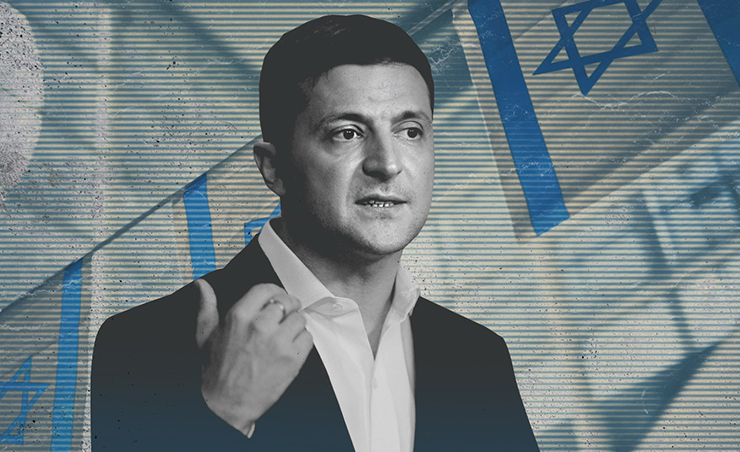
President Volodymyr Zelensky drafted and submitted a law to Ukraine’s parliament calling for the imposition of sanctions against Iran for a period of 50 years, Ukrainian state-media reported on 28 May.
“The document has already been submitted for consideration by the parliament’s leadership and the Committee on National Security, Defense and Intelligence,” state-media outlet Ukrinform said on Monday.
The draft was initially put forward on Saturday, 27 May.
“To approve the decision of the National Security and Defense Council of Ukraine dated May 27, 2023 ‘On the application of sectoral special economic and other restrictive measures (sanctions) to the Islamic Republic of Iran,’ put into effect by Presidential Decree No. 308/2023 dated May 27, 2023,” Ukrinform cites the draft as reading.
“The sanctions are to be imposed for 50 years,” it adds.
According to Kiev, the early hours of Sunday saw a massive Russian attack against Ukrainian forces, which involved the use of over 50 Iranian Shahed drones.
The Ukrainians claimed to have shot most of them down.
“This was the largest-ever drone attack on the capital since the beginning of the full-scale invasion, particularly using Shahed loitering munitions,” Ukrainian media cited a military official as saying.
Ukraine has consistently condemned Iran for its alliance with Russia, accusing Tehran of supplying military assistance, namely its Shahed 136 drones, to Russian forces fighting the Ukrainian army.
The Islamic Republic has denied supplying any drones to Russia during the conflict, admitting only to deliveries made before the war in Ukraine.
In November last year, Iranian Foreign Minister Hossein Amir-Abdollahian revealed that Tehran and Kiev had agreed to hold a meeting to discuss the drone issue diplomatically but that the US and its allies sabotaged the meeting.
The US pressured Ukraine to cancel the talks because of its wish to take advantage of the Iranian drone issue and use it as part of its policy against the Islamic Republic, Abdollahian claimed at the time.
Iran has repeatedly asserted its neutrality in the conflict between Russia and Ukraine, and has, on many occasions, offered to mediate between the two sides.
Iran to unveil hypersonic missile ‘soon’: IRGC commander
Press TV – May 29, 2023
Iran’s Mersad air defense system fires a missile during the final stage of a massive maneuver, codenamed ‘Guardians of Velayat Sky-98,’ in the central province of Semnan.
A top commander of Iran’s Islamic Revolution Guards Corps (IRGC) says the country will unveil a homegrown hypersonic ballistic missile in the near future.
“The hypersonic missile has passed its tests and will be unveiled soon,” Brigadier General Amir-Ali Hajizadeh, the commander of the IRGC’s Aerospace Division, said on Monday.
He added that the new missile is capable of bypassing all air defense missile systems and targeting the enemy’s anti-missile systems.
The IRGC commander described the development of the missile as a “great leap in the field of missiles.”
“The hypersonic missile has a high speed (around 12-13 Mach) and can maneuver both in and out of the Earth’s atmosphere,” Hajizadeh said.
Hypersonic missiles can fly at speeds at least five times faster than the speed of sound, making them virtually impossible to intercept.
Back in November, Hajizadeh for the first time announced that Iran had developed a homegrown hypersonic ballistic missile capable of penetrating advanced aerial defense shields and striking designated targets.
Iran on Tuesday successfully test-launched its most advanced Khorramshahr-class ballistic missile, called Kheibar, a medium-range precision-guided missile that can carry a 1,500 kg warhead.
Kheibar is a liquid-fueled missile with a range of 2,000 kilometers and a warhead weighing 1,500 kilograms, designed by the Ministry of Defense’s Aerospace Industries Organization.
Despite being under sanctions for decades, Iran has become self-sufficient in designing and manufacturing different types of military equipment, including missiles.
What Are Anti-Drone Systems and How Do They Work?
By Ilya Tsukanov – Sputnik – 29.05.2023
The NATO-Russia proxy conflict in Ukraine has demonstrated the significance of drones in modern warfare, with unmanned aerial vehicles (UAVs) used by both sides for reconnaissance, targeting, and kamikaze attacks. What are the four main kinds of anti-drone defenses? What are the advantages and disadvantages of each? Sputnik explores.
“The wars of the future will not be fought on a battlefield or at sea. They will be fought in space, or possibly on top of a very tall mountain. In either case, most of the actual fighting will be done by small robots and as you go forth today remember always – your duty is clear: to build and maintain those robots.”
That was the humorous but eerie prediction by the military school commandant in the 1997 The Simpsons episode “The Secret War of Lisa Simpson.” A quarter of a century later, the idea of using drones in warfare has become ubiquitous, and The Simpsons’ comedic flourish has been forever tainted by real-life conflict.
Although small propeller and rocket-propelled reconnaissance drones fitted with film cameras have been around since the Cold War, modern drone warfare, including camera-mounted, remote-operated GPS-equipped spy and strike drones, is a product of the early 21st century, with the United States kicking off the world’s first campaign of targeted killings using UAVs in 2002.
As small, inexpensive, off-the-shelf drones began entering the commercial market in the 2010s, they started to be used by non-state actors to attack armies and governments – with US-backed terrorists using them in the Syrian dirty war against Syrian and Russian forces, and Yemen’s Houthi militants deploying them against the Saudi-led coalition.
Large, military-grade drones were used to effect in the 2020 war between Azerbaijan and Armenian volunteers in Nagorno-Karabakh, and, starting in 2022, have been deployed extensively by NATO-backed Ukrainian forces in Donbass and throughout Ukraine against Russian forces. Russia has countered them using a series of domestically-developed drone defense systems. But more on that below.
Drone Defenses: What Types Are There?
In the second half of the 20th century, the USSR and the USA focused their air and missile defense research on targeting big, expensive manned fighters, bombers, transport planes, and ballistic and cruise missiles. Although this included research into fantastical concepts including the use of powerful lasers in space under Ronald Reagan’s Star Wars missile defense program, its main focus remained missiles – rocket-powered projectiles designed to intercept and destroy enemy aircraft and missiles.
Can Missiles Be Used to Down Drones?
For drones that are large enough – including unmanned combat aerial vehicles (UCAV) like the Bayraktar TB2, the General Atomics MQ-9 Reaper, or the Northrop Grumman RQ-4A Global Hawk, which have wingspans of 12, 20, or even 40 meters, respectively, the most effective defenses are still good old-fashioned missiles designed to target jet aircraft.
Last month, Russian Air Defense Force Commander Andrey Demin reported that over 100 Bayraktar drones had been destroyed in fighting in Ukraine.
“There are practically no fundamental distinctions between fighting against strategic drones like the US Global Hawk (RQ-4) or Reaper (MQ-9) or Turkiye’s operational-tactical Bayraktar-TB and counteraction to crewed aircraft. The elimination of more than 100 Bayraktars, delivered to Ukraine throughout the period of the special military operation, is clear evidence of this,” Demin said, speaking with Russia’s official army newspaper Krasnaya Zvezda.
For the battle against large drones, including their detection and destruction, the same monitoring and strike systems as those used against traditional aircraft can be used. This has been demonstrated not only in Ukraine, but with the June 2019 shootdown over Iranian airspace in the Strait of Hormuz of a $220 million Global Hawk operated by the US Navy by an Iranian road-mobile air defense system known as the 3rd Khordad.
How Can Electronic Countermeasures Be Used to Destroy Drones?
Smaller drones, including so-called mini and micro UAVs, are more difficult to detect, Demin admitted, pointing to these weapons’ “small effective reflective surface” for radar detection, and saying that tracking such systems and revealing their trajectory using standard radar equipment is “rather problematic.”
For this purpose, the Russian military has developed an air defense system of a different sort – the RLK-MTs Valdai, a special-purpose radar designed specifically to detect, suppress, and neutralize small drones with extremely low radar cross sections.
Developed by Almaz-Antey, manufacturer of the Buk and S-300/S-400/S-500 series of air and missile defense systems, the RLK-MTs is a vehicle-mounted radar complex designed to detect enemy drones at distances of up to 15 km, and to take them down using electronic countermeasures (using a control and navigation signal suppression module) at close-in ranges of 2 km or less. The complex’s detection systems include an X-band radar module, thermal imagers and cameras, a radio signal source-finder module. The vehicles can be operated remotely.
Demin confirmed that the RLK-MTs is “already performing combat missions to cover critical military and state facilities, including those in the special military operation zone,” and said he expects production of the systems to ramp up dramatically in the coming years.
Large, vehicle-based systems stuffed with detection systems and powerful electronic countermeasures are arguably the most capable defenses against small drones, but certainly aren’t the only ones. Smaller systems, ranging from commercial and industrial anti-drone monitoring and suppression hardware, to military-grade man-portable anti-drone rifles have been created by several Russian manufacturers. These weapons include the PARS-S Stepashka – a 9.6 kg anti-drone gun with the capability to hijack enemy drones and force them to land or return to their launch sites. The system is effective at ranges between 500 meters and 1.5 km.
Other, similar portable anti-drone systems have been spotted in footage from the battlefield, including the Stupor electromagnetic rifle – which uses electromagnetic pulses to suppress drones’ control channels and force them down.
How Can Lasers Fight Drones?
Advances in laser pulse weaponry have enhanced prospects for their use in modern warfare. Last year, Yuri Borisov – the former Russian deputy prime minister responsible for defense and the space industry since appointed boss of Roscosmos, revealed that the Russian military has tested a mystery combat laser system known as the Zadira that’s capable of incinerating drones in seconds at distances of up to 5 km in Ukraine. Its development began in 2016 under the auspices of the Russian Federal Nuclear Center, a subsidiary of Rosatom.
The Zadira is not to be confused with the Peresvet – a strategic laser weapon designed to target an enemy up to 1,500 km in orbit over the planet. That system entered combat duty on a test basis in December 2018, but has not been used in Ukraine.
Russia is not the only country tinkering with the use of laser weapons for anti-drone warfare, with the United States and Israel also working on such weapons.
Lasers have several clear advantages over conventional air defense missiles – including their low cost (Israeli officials have boasted, for example, that the new Iron Beam laser-based air defense system uses just $2-worth of electricity – 10,000-50,000 times less than conventional Iron Dome missiles). But lasers also have a number of drawbacks, including the need to secure large amounts of electricity (limiting their mobility), plus problems operating in certain weather conditions, including fog and cloud cover).
Can Drones Be Used to Counter Other Drones?
Last but not least in the list of portable anti-drone defenses are other UAVs. Systems like the ZALA Lancet multipurpose loitering munition/kamikaze drone are capable of targeting enemy UAVs, with its developers creating a concept which they’ve dubbed “air mining” involving the deployment of large numbers of Lancets in an area of the front to protect against incursions by heavy attack drones. As an enemy drones approach, the Lancet locks on to the enemy target and dives onto it at high speeds to force it from the skies.
How Successful Has Russia’s Anti-Drone War Been?
Since Russia entered the Ukraine crisis, it has made many of the difficult but necessary changes to supply the Army with the equipment it needs for effective drone warfare.
Last week, an unclassified intelligence assessment by Britain’s Ministry of Defense concluded that Russia’s military had successfully integrated drone reconnaissance into operations involving long-range missile strikes in the Ukrainian hinterland. Also last week, a separate report by Britain’s Royal United Services Institute calculated that Russia has been using electronic warfare capabilities to destroy upwards of 10,000 Ukrainian drones per month. According to the assessment, Russia maintains “a major electronic warfare system roughly every 6 miles (9.6 km)” along the entire 1,200 km front line.
These assessments echo complaints by an insider at Ukraine’s Defense Ministry, who told one Western outlet in March that Russian forces had obtained “black magic” capabilities against Ukraine’s vast arsenal of NATO-supplied drones, including the ability to “jam frequencies, spoof GPS, [and] send a drone to the wrong altitude so that it simply drops out of the sky.”
Ukraine’s prized drone fleet almost grounded
RT | May 29, 2023
Turkish Bayraktar UAVs were touted as wonder weapons, with officials in Kiev saying they would give them an advantage against Russia. One year later, however, only a few remaining units are being used far from the battlefield, and for reconnaissance rather than attack missions, a Pentagon-linked analyst has told Business Insider.
Ukraine purchased dozens of Bayraktar TB2 drones and used them to strike Donbass in violation of a ceasefire agreement at least once, even before the conflict with Russia began last February. Kiev also claims to have received an unspecified number of additional drones during the past year, despite Türkiye’s official neutrality.
In the first months of the conflict, Kiev routinely claimed to have conducted successful strikes using TB2s, but by July, the Bayraktars became “almost useless,” and Kiev reserved them for “rare special operations,” Ukrainian pilots told Foreign Policy at the time.
Russian forces destroyed “more than 100 Bayraktar drones” in Ukraine, the deputy commander-in-chief of the Air Force, Lieutenant-General Andrey Demin, claimed in April.
As of now, the Ukrainian fleet of “once-prized drones have almost entirely been shot down,” Business Insider wrote on Sunday, citing an expert in unmanned and robotic military systems at the Center for Naval Analyses, Samuel Bendett.
“As a relatively slow and low-flying UAV, it can become a target for a range of air defense systems that are well organized,” Bendett said, adding that “once the Russian military got its act together, it was able to down many TB2s.”
The Bayraktar TB2 is a design of Turkish company Baykar Makina, which costs around $2 million per unit. Ankara has touted the drones since 2020, when they were said to have helped Azerbaijan prevail in the 2020 Nagorno-Karabakh conflict. Turkish troops have also deployed them in Syria and Libya.
Responding to a prank caller last year, the head of the Association of Defense Enterprises of Ukraine admitted there was “more PR and corruption in Bayraktar than combat use,” and claimed “they were all shot down within a week.”
Earlier this month, a Bayraktar TB2 was destroyed after it reportedly went rogue over the Ukrainian capital, with a video showing the drone being taken down by a shoulder-fired rocket.
While pro-Ukrainian ‘open source intel’ accounts initially claimed it was a Russian Corsair, the Ukrainian military later admitted that they had to destroy their own drone after the operators failed to regain control.
Post-Bakhmut scenario in Ukraine war
BY M. K. BHADRAKUMAR | INDIAN PUNCHLINE | MAY 28, 2023
Ukraine President Zelensky and US President Biden met on the sideline of the G7 Summit at Hiroshima within hours of the statement from the Kremlin at 1 am last Sunday, transmitting President Vladimir Putin’s greetings to the Russian forces for the “completion of the operation to liberate Artemovsk” (known as Bakhmut in Ukraine.)
The operation lasted 224 days and turned into an epic battle. Ukraine paid a heavy price in blood in trying to hold onto Bakhmut, which came to be called a “Meat Grinder”. American analysts have listed twenty five Ukrainian brigades and at least 9 battalions and 5 regiments — an estimated deployment 120,000 troops at the very least — thrown into the battle by Kiev. An estimated 70% casualties would mean that Ukraine suffered as many as 94,150 killed and wounded. It is a devastating defeat.
Conventional military doctrine says that an army attacking an entrenched force will need at least three times more soldiers than the defending force entrenched in fortifications. But Wagner fighters numbering 32,000 fighters faced off with a NATO proxy force almost 4 times bigger in numbers and equipped with modern weaponry.
The shock over the crushing defeat was writ large on the faces of US President Joe Biden and Ukrainian President Vladimir Zelensky as they faced the media at Hiroshima a few hours after the Kremlin statement appeared. Reading from a prepared text, Biden announced, in a major reversal of policy, that the US would be “launching some new joint efforts with our partners to train Ukrainian pilots on a fourth-generation fighter aircraft like the F-16.”
Meanwhile, in a series of showy incidents, Ukraine began hitting targets in Russia with US and British supplied weapons. There have been sporadic artillery and Himars missile attacks on Russian civilians in border towns; two drone attacks on the Kremlin; and British Storm Shadow cruise missile strikes on targets in Russia. In one particular instance last week, there has been a cross border incursion in the Belgorod region with US supplied vehicles and weapons. But none of these attacks can be deemed as “game changers.”
While the US and the rest of NATO are feigning ignorance about these attacks, the key fact is that Ukraine gets targeting data that only NATO intelligence sources could provide. Thus, the decades-old red line dating back to Cold War has been breached — namely, that neither the US nor Russia would attack the other side’s territory directly or indirectly. (They held the guardrails even during the Afghan jihad in the 1980s.)
There are going to be consequences. The first sign of it came with the news that nuclear weapons are already being deployed in Belarus and Defence Minister Sergey Shoigu was in Minsk to sign the necessary agreement detailing the logistics of deployment. Biden told reporters on Friday after returning from Japan that his reaction to the Russian deployment is “extremely negative.”
But in reality, Moscow’s intention is to provide Belarus with deterrent capability against any rash moved by NATO such as cutting off access to Kaliningrad. Incidentally, the US too has been keeping nuclear weapons on European soil for many years.
But a flashpoint can always arise. The upcoming NATO exercise codenamed Air Defender 23 (June 12-23) will be the most significant military exercise ever carried out over the European skies and the most extensive deployment exercise of air forces in the history of the western alliance — involving 25 NATO countries, 10,000 military personnel and approximately 220 aircraft.
According to Larry Johnson, well-known American blogger and former analyst at the CIA, “a training operation of this size and scale against the backdrop of heightened tensions in the region is akin to lighting a match in a gasoline storage tank.” That said, at the tactical level, the Russian military is also positioning itself for further operations to complete the liberation of Donbass, after having gained control of Bakhmut, which is a major communication hub through which all Ukrainian logistics passed along the Donetsk arc up to Seversk.
A report in Izvestia on Wednesday said, quoting expert opinion, that Avdiivka and Maryinka are “next in line… so that there will be no shelling of Donetsk city… Next, we will have to turn off the big Donetsk arc — from Ugledar to Seversk with access to Konstantinovka and Slavyansk. These are the last two cities of the large Donbass agglomeration, followed by the steppe (leading toward Dnieper River) where it will be very difficult for the enemy to hold on.”
Again, the Wagner fighters being replaced by regular Russian forces for further operations. Kremlin Spokesman Dmitry Peskov said in an interview on Russian TV on Friday: “It’s hard to say where the breaking point is… Obviously, the degree of direct and indirect involvement in this conflict by the countries of the collective West is surging day by day. This may protract the conflict, but will not turn the tide drastically. It cannot turn the tide at all. Russia will press on with the operation, and Russia will ensure its interests one way or another and achieve the designated objectives.”
Meanwhile, Russia has been conducting an intensive bombing campaign to make it difficult for Kiev to assemble the manpower and firepower required to launch and sustain an offensive operation beyond a few days, and is intensifying its operations overall to decimate Ukraine’s military capabilities.
The “known unknown” is how the 2024 US election campaign will affect the trajectory of the war. Biden’s shift on F-16s can be seen as a knee-jerk reaction. Even Gen. Mark Milley, chairman, Joint Chiefs of Staff admits that F-16 isn’t a “magic weapon.”
Meanwhile, Russia continues to probe the US intentions. In an interview with the prestigious International Affairs magazine, Russian Deputy Defence Minister Sergey Ryabkov said on Friday that “The US ruling elite has consolidated itself to a great extent on an anti-Russian basis, regardless of party affiliation. In my opinion, the situation is turning into a force majeure.”
However, Ryabkov who is the highest ranking “point person” for relations with the US at the foreign ministry also added, “No matter how things turn out, we are willing to maintain dialogue with whoever comes to power (in the US), stays in power.”
Therefore, Ukraine relinquishing the accession to NATO and the EU and returning to neutral non-aligned status will remain one of the key conditions of a successful peace process in Ukraine. The big question is how far the NATO will go at its forthcoming summit in July in Vilnius; would this mean Ukraine’s full membership or something else? The likelihood of any big decisions in Vilnius doesn’t seem to be in the cards.
Interestingly, the Kremlin instinctively warmed up to the idea of a phone call to Putin “in due course,” voiced by German Chancellor Olaf Scholz after his return to Berlin from the G7 summit in Hiroshima. Berlin has consistently disfavoured any precipitate move by NATO apropos Ukraine’s membership.
In an interview with Wall Street Journal on Friday celebrating his centennial, Henry Kissinger also remarked that “the offer to put Ukraine into NATO was a grave mistake and led to this war.” Kissinger advocated instead greater clarity in Russia’s stance on Europe, flagging that while Russia is interested in fostering ties with Europe for its own development, it is also cautious of potential threats coming from the West.
Canada’s ‘shocking’ new report on foreign interference has found none
By Rachel Marsden | RT | May 27, 2023
The special rapporteur tasked by the Trudeau government with looking into foreign interference in Canadian politics didn’t find much. But he said he’ll nonetheless hold a “series of public hearings with Canadians” to talk about the “problem of foreign interference,” which he couldn’t really qualify with much actual evidence.
Former Canadian governor general David Johnston took all of two months to come up with his report, sparked by allegations that China had meddled in recent Canadian federal elections. The hysteria had reached such fever pitch that Ottawa expelled Chinese diplomat Zhao Wei after allegations arose in the Canadian press that China had threatened the Hong Kong-based family of Canadian member of parliament, Michael Chong. But after talking to Canadian spy services, Johnston said he found “no intelligence indicating that the PRC took steps to threaten his family.”
He did find evidence that Chinese officials had “sought to build profiles” on this MP and others. Oh wow, stop the press! Because some people might be shocked to learn that the actual job of diplomats serving in foreign countries is to liaise with local officials to advocate in favor of cooperation that’s self-serving to at least some degree, although ideally mutually beneficial as well. And to do that, you probably want to make sure that you know something about the guy to at least the same degree that a used car salesman would make an effort to know what would interest or appeal to a specific customer – if only because national interests should ideally be worth as much as a Twingo.
Your neighbor compiling a dossier on you is creepy. A diplomat compiling a dossier on a government official he’s dealing with is just basic professionalism.
Johnston also found that there was no shady partisan favoritism of one party over any other by Chinese officials in Canada, contrary to reporting that suggested favoritism of Liberals over Conservatives. It’s not as though either of the establishment parties is friendly towards China. Johnson said Chinese officials were more interested in supporting pro-China candidates, but also had to point out to the pearl-clutchers that a foreign diplomat saying he or she favors a particular candidate in a foreign election isn’t actually foreign interference. After all, Western officials couldn’t shut up about how much they wanted former President Donald Trump to lose to whomever the Democrats put up against him in the last two US elections. So if that’s not foreign interference, then why should other countries be held to a different standard just because they aren’t in the same club?
There have been press allegations that China sought the electoral defeat of certain candidates, like former Conservative MP Kenny Chiu, who sponsored foreign agent registry legislation. However, Johnston found that, while “it is clear that PRC diplomats did not like Mr. Chiu, who is of Hong Kong descent and not from mainland China… it is much less clear that they did anything particular about it” beyond not inviting him to their sponsored events.
Despite the lack of qualified evidence of interference in the report, and the focus on a single country – China – Johnston nonetheless came to the conclusion that “there is no doubt that foreign governments are attempting to influence candidates and voters… This is a growing threat to our democratic system and must be resisted as effectively as possible by government.”
No need to dig further, Johnston figures, discounting a public inquiry in favor of “public hearings.” But doesn’t that risk just batting around all the various fallacies and misconceptions that have been put out there by the Western press and officials – like those that Johnston himself had to correct in his report? Without an objective and full inquiry, the opportunity to exploit hearings to promote propaganda seems substantial. What about Ukrainian influence on Canadian politicians? Or Israeli influence?
Johnston focuses exclusively on China, and takes the odd swipe at Russia, in passing, but never mentions the kind of foreign interference brought to light at the recent French National Assembly commission into the same subject.
“Foreign interference, yes, I encountered it. Most of the time, it came from a friendly and allied country called the United States. I was listened to with President Sarkozy for five years by the NSA,” said Sarkozy’s former prime minister Francois Fillon. He confirmed WikiLeaks disclosures from US intercepts published in 2015 indicating that the National Security Agency was conducting electronic surveillance of French officials from the American embassy in Paris. Or that it was listening in on conversations of German allies at the highest level, including those of then-Chancellor Angela Merkel.
“I was not directly affected by Russian interference,” Fillon clarified, noting that like all great powers, Russia tries to “assert its point of view,” but that didn’t happen with him personally when he was in office. So then why make such a big deal about it, unless it’s just for propaganda purposes?
Canada, like Europe, suffers from tunnel vision when it comes to protecting its own interests and independence. The proof lies in the fact that both have failed to diversify away from their chronic over-reliance on the US. While it makes sense that the country sharing the world’s longest land border with the US would go for the low-hanging fruit when it comes to trade, it would nonetheless be interesting to qualify the pressures on Canadian officials and critical interests that have resulted in the Canadian establishment marching in lockstep with Washington, repeating the same propaganda and naming the same foes.
The idea that the US – the most powerful country on Earth – has absolutely no influence on its resource-rich next-door neighbor is absurd. The fact that the influence is so systemic that it’s not even worth a glance or a mention in a report into foreign interference is glaring. Does the Canadian government care to look under that rock? Or are they just going to keep scapegoating Russia and China when the most existential, insidious threat to Canadian independence lies inward and southward?
Iran Unveils New Precision-Guided Kheibar Ballistic Missile
Al-Manar – May 25, 2023
Iran’s Ministry of Defense has unveiled the newest version of the domestically-manufactured Khorramshahr ballistic missile, a medium-range precision-guided projectile named Kheibar.
Kheibar (Khoramshahr 4) was unveiled Thursday morning in the presence of Defense Minister Brigadier General Mohammad Reza Ashtian during a ceremony marking the 41st anniversary of the liberation of the southwestern city of Khorramshahr.
The missile’s extended range, advanced guidance and control system, and improved structural features further solidify Iran’s status as a formidable missile power.
Kheibar is one of the most advanced missiles designed by the experts of the Ministry of Defense’s Aerospace Industries Organization.
It is a liquid-fueled missile with a range of 2,000 kilometers and a warhead weighing 1,500 kilograms with impressive strategic and tactical capabilities.
The Khorramshahr class of missiles is known for its unique guidance and control system during the mid-flight phase.
This feature allows the missile to control and adjust its trajectory outside the Earth’s atmosphere, and to deactivate its guidance system upon entering the atmosphere, giving it complete immunity against electronic warfare attacks.
Thanks to this advanced control system, Kheibar’s warhead does not require the typical thin-wing arrangement, which in turn allows the missile to pack up a heavier explosive load.
The Kheibar missile also boasts an incredibly short preparation and launch time.
The use of self-igniting (hypergolic) fuel and the absence of the need for fuel injection and horizontal alignment after the verticalization phase have cut Kheibar’s launch time to less than 12 minutes.
Thanks to its powerful engine, the Kheibar missile possesses an exceptional impact force, with a ground impact force of 280 and a vacuum impact force of 300 seconds.
The high speed at which the warhead makes impact with the designated target prevents enemy air defense systems from detecting, tracking, and taking action to shoot down the missile.
Additionally, the engine enables the missile to reach speeds of 16 Mach outside the atmosphere and 8 Mach within the atmosphere.
The unveiling of Kheibar marks a significant advancement in Iran’s ballistic missile capabilities and demonstrates the country’s commitment to enhancing its defense and deterrent power.
Iranian officials have long asserted that the country’s military capabilities are entirely meant for defense, and that its missile program will never be up for negotiations.
Chinese War Simulation Finds Top US Carrier Group Could Be ‘Destroyed With Certainty’
By Wyatt Reed – Sputnik – 25.05.2023
War games conducted by Chinese researchers found the US military’s most prized aircraft carrier could be reliably sunk with relative ease in the event of a hot war in the South China Sea.
A volley of hypersonic missiles could reliably sink the US military’s most powerful aircraft carrier group in a potential conflict, according to war game simulations carried out by a team of Chinese military planners.
Using 24 of their most advanced anti-ship missiles, Chinese forces consistently destroyed a carrier fleet led by the USS Gerald R. Ford over the course of 20 mock battles in simulations which were run on a war game platform employed by the People’s Liberation Army.
In the simulation, the US ships came under fire after ignoring multiple Chinese warnings not to approach an island in the South China Sea controlled by Beijing.
For test purposes, the war games’ designers used a carrier group made up of six surface ships which were selected for their “unparalleled strength and advanced technology.”
A major Hong Kong-based newspaper reported that the military planners “selected vessels deemed the US Navy’s most superior – the CVN-78 Gerald R. Ford, accompanied by a CG56 Ticonderoga-class cruiser the San Jacinto, and four DDG-103 Arleigh Burke-class Flight IIA guided missile destroyers.”
Led by Cao Hongsong from the North University of China, the researchers found that virtually every US surface vessel was ravaged by the attack and eventually sank.
According to researchers, the Ford carrier group – which was once thought to be all but unsinkable – could actually be “destroyed with certainty” using just a handful of hypersonic missile strikes.
Chinese military planners placed a number of constraints on themselves in the simulation, including cutting their access to space-based spy satellites and limiting the number of hypersonic missiles available.
The basic principle underlying the exercise was to be “lenient with the enemy and strict with oneself,” Cao explained.
As the Hong Kong-based outlet explained, “during the simulation, the PLA used its sea-based surveillance network to detect and identify the US carrier group before firing eight of the less-reliable hypersonic missiles simultaneously from southern and central sites in China.”
Though “some of the missiles were intercepted, the attack depleted the US fleet’s SM-3 munitions, paving the way for the PLA to launch “eight of its more accurate hypersonic missiles from northern and western China, with four focused on the aircraft carrier while the others targeted the destroyers,” the outlet noted.
“After the attack, four ships survived from the blue [US] team, with the destroyers having the most remaining, on average.”
A “mop-up” operation with six of the less accurate hypersonic missiles was able to dispatch with the remaining vessels, the research paper determined.
After the simulation was run 20 times to allow for different variables which could affect the outcome of the engagement, the team’s strategy was ultimately able to eliminate an average of 5.6 out of 6 surface vessels – effectively meaning the “total destruction” of the carrier group.
The release of a paper detailing the war game in May marked “the first time the results of simulated hypersonic strikes against a US carrier group have been made public” by China’s military, the Honk Kong outlet noted.
But it’s likely to be seen as a warning to Washington against any provocations in the South China Sea.
An anonymous Beijing-based researcher interviewed by the outlet suggested that “greater transparency about China’s military capabilities and intentions could help to reduce misunderstandings and miscalculations on both sides, which could in turn help to reduce the risk of conflict.”
Featured Video

It’s the Occupation, Stupid
or go to
Aletho News Archives – Video-Images
From the Archives
A superpower and “the world’s sickest warrior state”
By Paul J. Balles | March 8, 2010
Living through five or six major wars has hardened me to what I thought were the extremes of inhuman cruelty and brutality.
Two things made those extremes almost bearable: the brutality always revealed – at least according to the media coverage – the viciousness of the enemy. It was therefore quite understandable when our “brave men and women” pulverized the enemy.
Films of Japanese torturing captive Americans somehow justified holding Japanese Americans in internment camps during World War II; and only a small percentage of Americans found the bombing of Hiroshima and Nagasaki unreasonably vengeful at best, at worst, depraved.
The media giants in America portrayed the North Koreans as barbaric beasts with their captives, quite unlike their southern counterpoints – our allies during the Korean War. No one ever felt the need to explain how the South Koreans were a civilized breed while the North Koreans were absolute savages, at least according to the official line.
In Vietnam, our warriors justifiably (or so the media made us believe) dropped napalm on the North Vietnamese who had the gall to hide in villages and tunnels to ravage our invaders. At least it was accepted practice until some rogue photojournalist filmed a young girl screaming down a Vietnamese road in flames. … continue
Blog Roll
 Aletho News
- Iran Retaliation Strikes Chemical Plant Near Dimona
- AWACS’ Destruction is a Major Loss for US Military – Ex-DoW Analyst
- Israel’s Iran Strategy Uses US Military & Gulf States as Its Pawns
- Iran: Trump wanted regime change, now just begging for Hormuz to open
- IRGC: Israeli, US universities in region legitimate targets after strikes on Iranian university
- Trump admits Iran hit USS Ford carrier: ‘We ran for our lives’
- Battle for Hungary: EU attacks on Orban are a sign of worse things to come
- Iraqi resistance conducts drone strike on US-run base in Syria
- Failing to Defeat Hezbollah, Israel & US Pressure Syria’s Ahmed al-Sharaa to Join War
- US-Israeli war on Iran drives global fertilizer prices up 40%
- If Americans Knew
- Israel is assassinating journalists again, more than any other nation, anywhere, ever – Not a ceasefire Day 170
- Over 300 US service members wounded, majority have brain injuries – Not a ceasefire Day 169
- Researchers at Human Rights Watch Resign Over Blocked Report on Palestinian Refugee Return
- Jewish Groups Are Backing a War Americans Don’t Want
- Eric Fingerhut Thinks He’s the President of the Jews
- Top Jewish Philanthropists, Rabbis Urge Israeli President to Take Action Against ‘Jewish Extremists’
- Don’t Be Fooled. Zionist Leaders Have Always Wanted to Control Southern Lebanon
- Israel’s widespread use of torture is a core element of its genocide against the Palestinian people
- In Israel’s War on Iran, Many Middle East US Bases Rendered “All But Uninhabitable”
- ‘Burn the lawn’: Israel pursues ‘Rafah model’ in southern Lebanon
- No Tricks Zone
- German Science Blog Accuses PIK Climate Institute Of Hallucinating Climate Tipping Points
- Devastating Assessment Of Comirnaty Vaccine By Former Senior Pfizer Europe Toxicologist
- New Study: CO2 Is ‘Effectively Negligible’ As An Explanatory Climate Change Factor Since 2000
- Former Pfizer Toxicologist Dr. Helmut Sterz Tells Bundestag Hearing Pfizer Vaccine Should Have Never Been Approved
- Energy Expert: Germany’s Nuclear Phaseout Was A “500 Billion Euro Mistake”
- New Research: South Australia’s Mid-Holocene Sea Surface Temperatures Were 4°C Warmer Than Today
- Storing Green Energy To Last Germany 10 Days Would Require A 60-Million Tonne Battery
- New Studies: UK Sea Levels Were 4 Meters Higher Than Today During The Mid-Holocene
- Destructive Green New Deal: German Energy And Metal Group Warns Of Drastic Crisis
- New Study Documents A 20-Year Pause In Arctic Sea Ice Decline – Driven By Internal Variability
 Aletho News