Israel’s hawkish minister, husband accused of sexual abuse by daughter
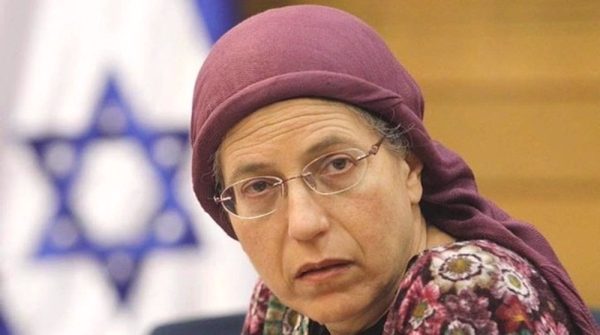
Shoshana’s mother, Orit Strook — the minister of settlements — is a staunch supporter of Israeli settlements in the occupied West Bank.
Press TV – April 10, 2025
A hawkish Israeli minister known for her extreme right-wing politics and support for illegal settlements is facing serious allegations of sexual abuse by her daughter.
Shoshana Strook, the daughter of Israeli Minister Orit Strook, filed a police complaint in Italy alleging sexual assault by both of her parents and a brother.
She stated that resurfacing memories prompted her decision to report the abuse, which she hopes will help her heal from emotional trauma.
She made the allegations in a statement posted on social media, revealing that she had filed a formal complaint and was seeking justice and relief.
“I’m currently in Italy and recently filed a report with the police,” she said. “I hope to find a place where I can get some relief.”
“After a long period of doubt, extreme emotional states, and a lot of guilt, I wanted to share that I experienced sexual abuse by both of my parents and one of my brothers,” Shoshana wrote.
She also said that her parents physically harmed her three younger brothers, stating: “After years of beatings and guilt, I finally spoke out. The memories are overwhelming, but I need justice.”
Shoshana also said that the memories coming up to her lately are “becoming too overwhelming”, recalling one in which she hit three of her younger brothers.
She didn’t reveal which brother sexually assaulted her. However, one of her brothers, Zviki Strook, has been reportedly charged with kidnapping and torturing a Palestinian boy in 2007.
Shoshana’s mother, Orit Strook, is a staunch supporter of Israel’s settlements in the occupied West Bank.
Ironically, Orit relentlessly pushed prime minister Benjamin Netanyahu’s baseless narratives and unsubstantiated claims that Palestinian resistance group Hamas committed sexual assault on October 7, 2023.
She now faces grave allegations of having abused her own children.
The Strook family has been in the spotlight before. In 2007, Orit’s son, Zviki Strook, was reportedly charged with kidnapping and torturing a Palestinian minor.
The Palestinian boy was found severely beaten and bleeding after escaping an alleged torture session.
Orit was born into a Jewish family of Hungarian lawyers. She married Avraham Strook and the couple chose to live in illegal settlements on Palestinian land.
Their first home was in the settlement of Yamit in the Sinai Peninsula. However, following the 1982 evacuation of Yamit after the Sinai was returned to Egypt in 1979, the Strook family relocated to the occupied West Bank city of al-Khalil—again, settling illegally.
Since 2013, she has continued to live in the Avraham Avinu settlement in al-Khalil.
In 2024, Orit stated that Israel should maintain a “long-term military presence in Gaza and annex the occupied West Bank”. She also argued that there should be no exit strategy from Gaza.
Orit made headlines after posting a video to her X account from a Knesset session in which she argued that a Palestinian state would be an “existential threat” to Israel.”
In May 2024, she opposed a proposed ceasefire agreement in Israel’s war on Gaza. Orit also criticized the United States for its efforts to broker a ceasefire deal, stating that the US “doesn’t deserve to be called a friend of Israel.”
Western ‘interventionism’ has turned Bosnia and Herzegovina into a ‘failed state’ – Bosnian Serb leader
RT | April 2, 2025
Western interference has turned Bosnia and Herzegovina into a “failed state,” and the country now needs Russia’s help to resolve the crisis, Bosnian Serb leader Milorad Dodik has told RT. Dodik, the president of Republika Srpska – the Serb-majority autonomous region within Bosnia and Herzegovina – arrived in Russia on Monday for talks with President Vladimir Putin.
Bosnia and Herzegovina was created under the 1995 US-brokered Dayton Peace Agreement, which ended the civil war in the former Yugoslavia. It formed a state comprised of the Bosniak-Croat Federation and Republika Srpska, with a tripartite presidency and an international overseer – the Office of the High Representative (OHR), now held by Christian Schmidt, a former German lawmaker appointed in 2021.
Dodik has long rejected the OHR’s authority, accusing it of overreach and undermining Republika Srpska’s autonomy. He was sentenced in February to a year in prison and a six-year political ban for defying the OHR. Sarajevo issued a national arrest warrant for him and is reportedly seeking Interpol warrants.
In an interview with RT on Tuesday, Dodik said the Dayton agreement, which formed his country, is no longer upheld, and that he has asked the Russian president, who he met with earlier that day, to assist him in bringing the situation to the attention of the UN Security Council (UNSC).
“[Putin] knows of the existence of foreigners that are making up laws and decisions in our country, that there are courts which abide by these decisions… and that this is not in the spirit of Dayton,” Dodik said. He added that as a permanent UNSC member and Dayton signatory, Russia is in a position to effect change.
“We talked about the need to engage in the monitoring of the UNSC. Russia is the only one from which we can expect to have an objective approach… to end international interventionism which degraded Bosnia and Herzegovina and made it into a failed state,” he added.
Commenting on the Interpol warrants, Dodik said, “we’ll see how it goes,” adding that he already has the backing of Serbia, Hungary, and now Russia. He went on to call the charges “a political failure” by Sarajevo and the OHR.
“I think they would like to see me dead, not just in prison. They can’t get the Bosnia they want, in which there is no Republika Srpska, if Milorad Dodik remains president,” he said, adding that critics will try to demonize him for meeting with Putin.
Dodik has opposed Bosnia’s NATO membership and called for closer ties with Russia. He previously suggested that Bosnia would be better off in BRICS and has pledged continued cooperation with Moscow despite Western pressure.
Russia, which does not recognize Schmidt’s legitimacy due to the lack of UNSC approval, has denounced Dodik’s conviction as “political” and based on “pseudo-law” imposed by the OHR.
After meeting with Putin, Dodik said on X that he will return to Republika Srpska on Saturday to meet with regional leaders, adding that Russia has agreed to advocate for an end to the work of international bodies in Bosnia, including the OHR.
Serbian president hails budding ‘military alliance’ with NATO maverick
RT | April 2, 2025
Hungarian Defense Minister Kristof Szalay-Bobrovniczky visited Belgrade on Tuesday to sign a roadmap outlining 79 joint military activities between Hungary and Serbia for this year. According to Serbian President Aleksandar Vucic, the two countries are edging closer to a “military alliance.”
Both Serbia and Hungary have been challenging the prevailing Western consensus regarding the Ukraine conflict and relations with Russia.
The Serbian leader also expressed gratitude to Hungarian Prime Minister Viktor Orban for his role during NATO’s military intervention in the Balkans in 1999, stating that Orban’s influence helped prevent “a land attack against what was then Yugoslavia.”
“A full 26 years later, the two parties now have the opportunity to build extremely close strategic ties, to further deepen cooperation, coming closer to a Hungarian-Serbian military alliance,” Vucic remarked.
Orban first served as prime minister from 1998 to 2002. Hungary joined NATO in March 1999, weeks before the bombing campaign commenced.
Szalay-Bobrovniczky voiced support for Serbia’s EU aspirations, asserting that Brussels’ enlargement plans should include the entire West Balkans. His statement contradicted EU leaders’ demands for Belgrade to align its foreign policy with Western nations against Russia before its candidacy would be considered.
Both Hungary and Serbia remain skeptical of the bloc’s confrontational approach toward Russia. Orban has accused Brussels of harming the EU economy through sanctions on Russia while supporting a conflict that Kiev is unable to win. Vucic has pledged to resist Brussels’ pressure, citing Serbia’s historic ties with Russia as a foundation for their relationship.
Last month, Kosovo, the Serbian region that broke away after the NATO intervention, entered a trilateral defense agreement with Albania and Croatia. Vucic has condemned those nations for allegedly breaching previous security agreements and possibly going over the head of the NATO leadership in signing the deal.
Kiev wants Trump envoy sacked
RT | March 24, 2025
US President Donald Trump’s special envoy to the Middle East, Steve Witkoff, who has played a central role in opening negotiations on resolving the Ukraine conflict, is “spreading Russian propaganda” and should be sacked, according to a senior Ukrainian lawmaker.
The head of the Kiev’s Foreign Affairs Committee, Aleksandr Merezhko, made the remark in response to Witkoff’s interview with American journalist Tucker Carlson, during which the envoy spoke about the status of former Ukrainian territories that have joined Russia, describing the issue as “an elephant in the room” that “no one wants to talk about.”
“They’re Russian-speaking. There have been referendums where the overwhelming majority of the people have indicated that they want to be under Russian rule,” Witkoff said.
“The Russians are de facto in control of these territories. The question is: Will the world acknowledge that those are Russian territories? Can [Vladimir] Zelensky survive politically if he acknowledges this? This is the central issue in the conflict,” he added.
Merezhko strongly condemned the “disgraceful, shocking statements,” accusing the Witkoff of acting as an envoy of Russian President Vladimir Putin rather than of the Trump.
“We are talking about a representative of the president who should have professional expertise in this matter and know some basic things. obvious things. And he doesn’t know this. He spreads Russian propaganda,” the lawmaker insisted in a televised interview. Merezhko said that he wasn’t sure if “ignorance, naivety, or unprofessionalism” was behind Witkoff’s statements and called for the US official should be booted from his role.
“We clearly can’t dictate to American friends who should represent them. But this person needs to be removed from this delegation, he should not be a representative of the [US] president. Since he’s either completely unprofessional or simply repeats Putin’s narratives,” Merezhko added.
Moscow and Kiev have taken bipolar positions on the former-Ukrainian Kherson and Zaporozhye Regions and the Donbass republics of Donetsk and Lugansk, all of which officially joined Russia in autumn 2022 following a series of referendums. Kiev also formally claims Russia’s Crimea, which seceded from Ukraine in the aftermath of a violent Western-backed coup in Kiev and joined Russia in 2014, on its own.
Moscow has repeatedly signaled that its sovereignty over the territories is not negotiable, while Kiev has repeatedly pledged to seize back control of all the territories it claims as its own. The Ukrainian leadership has seemingly softened its rhetoric as of late, now insisting it will never recognize “occupation” of the territories and Russian sovereignty over them in any form.
A new vision for US global power under Trump
By Batool Subeiti | Al Mayadeen | March 23, 2025
Trump’s approach to global affairs diverges sharply from the American establishment’s traditional strategy. Trump does not see America as a “police state.” He is sceptical of NATO, does not support war with Russia, and believes the US military presence in West Asia primarily serves to protect Arab allies. In his view, they should bear the financial burden of that protection.
The American establishment, represented by institutions like the Pentagon and the White House, follows a long-term strategic vision. It maintains hundreds of military bases worldwide and pursues a structured political strategy across various regions.
Trump, by contrast, envisions American leadership within a multipolar world order. He is less concerned with imposing the American system on other nations and more focused on fostering economic alliances that benefit the US. He also seeks to counter the rise of BRICS and prevent alternative economic blocs from challenging the dollar’s dominance. Rather than waging ideological battles, his strategy revolves around economic leverage.
A key example of establishment influence has been USAID, which has historically functioned as a covert tool for advancing American unipolarity. By using soft power tactics, it has helped destabilize nations through coups and colour revolutions. However, under Trump, funding for such initiatives has been slashed, allowing the US to save billions. His approach is more direct—rather than relying on NGOs to influence societies, he prefers sanctions as a means of coercion. This shift weakens American influence at the grassroots level, creating a vacuum that local movements and other powers can exploit.
Trump aims to strengthen the American economy through relative stability rather than confrontation. He opposes prolonged war with Russia, favouring investment over sanctions. Rather than spending $350 billion on Ukraine, he sees greater economic potential in working with Russia, which he does not view as a direct economic competitor. His broader goal is to retract costly foreign commitments and consolidate American economic dominance, using economic leverage—such as tariffs and sanctions—to maintain control. This was evident in his approach to Zelensky, where he set clear conditions for support.
This stance starkly contrasts with that of Europe, which remains deeply hostile toward Russia and relies on US backing to counter it. Trump’s push for increased tariffs on European imports will likely reduce demand for European goods in the US, stimulating domestic manufacturing and bolstering the dollar. His retreat from NATO further exposes contradictions within the alliance, creating strategic openings that others may exploit.
Trump operates like a political tsunami. In Gaza, he has positioned himself as the real power behind the war, stopping it on his terms. Even his controversial depopulation proposal was more of a bargaining tool than a concrete plan. He sees West Asia as secondary to regions like Mexico, Panama, or Greenland. When asked about Iran’s strength, he acknowledges Iran is very strong—suggesting he prefers to focus on nuclear containment rather than military confrontation, much to Netanyahu’s frustration.
Trump also has a tendency towards withdrawal when he sees American involvement as a financial drain. While “Israel” has expanded its influence in Syria, if its actions provoke widespread resistance, and it becomes clear that “Israel” is a source of ongoing conflict, Trump may reconsider US support.
In contrast to the deep state’s approach—where a weakening “Israel” prompts the search for regional substitutes—Trump’s stance is more transactional. If there is no significant opposition, he will stamp “Israel’s” territorial gains. But if the costs outweigh the benefits, he is willing to incrementally remove support from the occupation entity.
Child killed as Syria’s HTS militants shell civilians in eastern Lebanon
Press TV – March 17, 2025
A child has been killed and four other civilians injured as militants aligned with Syria’s ruling Hay’at Tahrir al-Sham (HTS) regime launched a volley of rockets at a residential neighborhood in Lebanon’s eastern province of Baalbek-Hermel.
Lebanon’s official National News Agency reported that rockets fired from Syrian territory had landed in the Lebanese village of Qasr near the border.
The Lebanese al-Mayadeen television news channel said a rocket launched by HTS militants struck a house in Hawdh al-Assi district.
A child was killed and four other individuals were wounded in the shelling.
This was followed by a Lebanese Army reconnaissance drone patrolling the skies over the Hermel district and border areas near Syria.
A Lebanese security source, speaking on condition of anonymity, said tensions began after three Syrian militants crossed into Lebanese territory at the village of Qasr, where they were shot at by local gunmen.
The source said the reason why they entered was unknown.
Syria’s HTS administration on Sunday accused Lebanon’s Hezbollah of abducting three soldiers to Lebanon and killing them there. The resistance movement roundly dismissed the allegation.
Hezbollah denies involvement in border clashes
Hezbollah in a statement denied any involvement in clashes with HTS forces or in Syrian territory.
The group said it “categorically denies any connection to the events taking place today on the Lebanese-Syrian border.”
It added that it “reaffirms its previous announcements that Hezbollah has no relation to any events within Syrian territory.”
The Lebanese National News Agency later reported that the bodies of three Syrian militants had been handed over to Syria via the Lebanese Red Cross.
Last month, more than 10 people were injured after shelling from Syria’s Qusayr countryside targeted border towns in Lebanon’s Hermel region.
Amid rising tensions, Lebanese President Joseph Aoun and Syria’s de facto leader Abu Mohammed al-Jolani agreed in a phone call on Friday to coordinate efforts to stabilize the border and prevent attacks on civilians.
Germany recruiting Afghan migrants as mercenaries for Ukraine – source
RT | March 17, 2025
The German government has been coercing Afghan refugees into fighting for Ukraine, an anonymous source has claimed to RT. The scheme allegedly targets refugees who have been detained for various crimes, with the threat of deportation if they refuse to comply.
According to the individual, whose identity cannot be disclosed for security reasons, the “German authorities are forcing Afghan migrants to join the International Legion of Territorial Defense of Ukraine in order to urgently replenish the personnel of the Kiev regime’s armed forces, which is experiencing an acute shortage of people.”
The scheme supposedly involves approximately 2,300 refugees detained by German police for various crimes in cities such as Berlin, Bonn, Cologne, Hamburg, Munich, Frankfurt am Main, and Stuttgart.
“In the event of refusal to sign the relevant contract and go to Ukraine, the migrants are threatened with guaranteed extradition to Afghanistan,” the source claimed.
The source went on to allege that a number of German security experts have sounded the alarm over the potential ramifications for Germany’s own national security, especially with respect to the threat posed by radical Islamists.
“Some of the refugees are likely to return to Germany after the expiration of their imposed contracts, possessing skills in handling weapons and explosives, as well as experience in combat,” the experts have warned, according to the source.
Last month, Bild reported that at least one recruitment center belonging to Ukraine’s neo-Nazi Azov brigade was operating near Berlin. A recruiter told the media outlet that they were seeking “supporters for our new international battalion.”
Russian authorities have consistently prosecuted foreign nationals caught fighting for Kiev, whom they describe as mercenaries. In January, a Russian court sentenced retired US Army Ranger Patrick Creed to 13 years in prison for serving with the Ukrainian military from 2022 to 2023. In March, British citizen James Scott Rhys Anderson was handed a 19-year sentence for participating in Ukraine’s incursion into Russia’s Kursk Region.
Last week, Russian President Vladimir Putin noted that foreign mercenaries fighting for Kiev are not entitled to the same legal protections under international law as those granted to regular Ukrainian POWs.
Trump invites Putin to a roller coaster ride
By M. K. BHADRAKUMAR | Indian Punchline | March 13, 2025
The political optics of the joint statement issued after the US-Ukrainian talks at Jeddah on March 11 lasting nine hours is hard to tell since President Donald Trump prides himself on his ability to strike deals. Prima facie, the optics are that Ukraine caved in and accepted a Trump administration proposal for a 30-day cease-fire with Russia and on its part, the latter agreed to immediately lift a pause on intelligence sharing with Kyiv and resume military assistance.
The White House Press Secretary Karoline Leavitt during a Fox News TV broadcast said that Trump “put Zelensky in his place and told him that the Americans are serious about a long-term peace deal…And we are very, very pleased with the way that the Ukrainians and this deal today turned out.”
However, there are fine prints in a joint statement, which add the caveat that “Ukraine expressed readiness to accept the U.S. proposal to enact an immediate, interim 30-day cease-fire” if Russia did the same. The statement qualifies that “The United States will communicate to Russia that Russian reciprocity is the key to achieving peace.”
The US Secretary of State Marco Rubio interpreted that the agreement now puts the pressure on Russia to end the war. He said, “We’ll take this offer now to the Russians, and we hope that they’ll say yes, that they’ll say yes to peace. The ball is now in their court.”
Rubio signalled that if Moscow doesn’t sign up to the ceasefire, “then we’ll unfortunately know what the impediment is to peace here.” For sure, coercive diplomacy has crept in.
Curiously, even before talks began in Jeddah, Rubio had told reporters, “It should be clear to everyone that the United States has tools available to also impose costs on the Russian side of this equation, but we hope it doesn’t come to that. What we’re hoping is that both sides realise that this is not a conflict that can end by military means; it can only end by diplomatic means. And the President’s goal is to bring them both to the table to get this resolved. But it’s a reminder that we understand that the United States has tools at its disposal if in fact this falls apart, and — but we’re hoping it doesn’t. We really do. We hope it doesn’t reach that point.”
There has been no public indication so far that Russia would accept an unconditional, month-long ceasefire that compromises the core objectives of the special military operations. Indeed, that’s what the Russian people will expect from President Vladimir Putin.
Of course, Putin himself had indicated in January, “The goal should not be a short truce, not some kind of respite for regrouping forces and rearmament with the aim of subsequently continuing the conflict, but a long-term peace based on respect for the legitimate interests of all people, all nations living in this region.”
It will be politically damaging for Moscow to retract from the terms spelt out by Putin last June in his address to the foreign ministry in Moscow as conditions for Russia agreeing to peace talks. Again, the generals’ opinion has to be taken into account. The Russian forces have managed slow but consistent advances in the east in the Donetsk region and are preparing for breaking through into the neighbouring region of Dnipropetrovsk. Only last weekend, after heavy fighting, they managed a significant breakthrough in the Kursk region, coming close to encircling around 10,000 elite Ukrainian troops.
Clearly, it is not going to be easy for Putin to order the generals that it’s time for a ceasefire that may look like a strategic defeat as the Russian forces are still failing in their core strategic goals. Konstantin Kosachev, chairman of the international affairs committee of the upper house of Russia’s parliament, probably reflected the mainstream elite opinion in a post on Telegram that: “Russia is advancing. Real agreements are still being written there, at the front. Which they should understand in Washington, too.”
On the other hand, there is no question that Putin’s preference will be to avoid unpleasantness with Trump, leave alone a collision course. Putin has to tread with care, as Trump will not like anyone stopping him from getting his deal.
On Monday, in a subtle suggestion that Putin and Trump are sailing in the same boat, Tass carried two reports (here and here) warning that British activities in Odessa directly threaten Russian interests and, furthermore, that “According to the information received by the SVR (Russian Foreign Intelligence Service), the British leadership sees a threat to its interests in the promotion of dialogue between the US and Russia to resolve the Ukrainian conflict… London is extremely irritated by the fact that Donald Trump ‘dialogues with Russia as a superpower and shows disregard to close allies.’”
The SVR statement added, “The British authorities consider it an ‘urgent priority’ to undermine ‘peacekeeping’ efforts of the new US administration on the Ukrainian track. The media and specialised NGOs are tasked with demonising Trump, portraying him as ‘a man with a poor peacekeeping record and susceptible to Kremlin manipulation.’”
Interestingly, Tass also reported on a telephone conversation between Russia’s Foreign Intelligence Service Director Sergey Naryshkin and Chief of the Central Intelligence Agency (CIA) John Ratcliffe. The readout said, “the parties discussed the issues of interaction of both intelligence agencies in areas of common interest and the settlement of crisis situations” and reached an agreement “on maintaining regular contact between the SVR and CIA directors with the aim of facilitating international stability and security and reducing confrontation in relationships between Moscow and Washington.”
Evidently, Zelensky, tutored by his American friends and European advisers, has decided on a play-along strategy to avoid antagonising Trump counting, arguably, that he should leave it to Putin to cross and disappoint Trump. Put differently, in an iterative process, Ukraine needs to project itself as the constructive party.
That said, in the final analysis, the dynamics are such that personal diplomacy rather than ideological commitments or even military achievements may come to prevail. The outcome will depend on the personal agreements — or the lack thereof — between Putin and Trump.
Trump himself told reporters that he thought he would speak with Putin this week and that he hoped a lasting cease-fire would be negotiated in the coming days. Meanwhile, Trump’s envoy Steve Witkoff is reportedly planning to travel to Moscow to meet Putin. He had a meeting with Putin lasting several hours last month.
The bottom line is that one way or another, Moscow will have to decide quickly how to play Trump. To my mind, in this bouquet of thorny roses out of Jeddah, the likelihood is that Putin may opt to string discussions out by offering a succession of counter proposals.
Mennonite Community in Texas Is ‘Frustrated’ by Media Coverage of Measles Outbreak
By Suzanne Burdick, Ph.D. | The Defender | March 4, 2025
Many Mennonite community members in West Texas feel “frustrated” and “targeted” by mainstream media coverage of the current measles outbreak in Gaines County, Texas, Tina Siemens, a Mennonite business owner and award-winning author told The Defender in an exclusive interview today.
“The media spins it as there’s a large panic in our community. I have not seen that — and I get out and about in my community,” said Siemens, an immigrant who has lived in the Seminole, Texas, area since 1977. Seminole is the county seat for Gaines County.
“There’s some frustration, especially that it is so much targeted just to the Mennonites.”
The measles outbreak in West Texas — particularly in Gaines County — garnered mainstream media attention after the Texas Department of State Health Services (Texas DSHS) last week reported what it called “the first death from measles in the ongoing outbreak in the South Plains and Panhandle regions.”
Texas DSHS spokesperson Lara Anton on Feb. 26 told The Associated Press the outbreak’s main concentration of cases has been a “close-knit, under-vaccinated” Mennonite community.
But Siemens said that’s not a fair characterization. “It’s not just Mennonites that have the measles. There are other groups that have measles, but the Mennonites are an easy target.”
The Mennonites in West Texas mostly live on farms where they grow crops, including peanuts and cotton.
Siemens speaks out publicly because she feels called to be a “bridge builder” between immigrants and non-immigrants, she said. She wants the societal contributions of immigrant groups like the Mennonites to be appreciated — and for immigrants not to be targets of blame or poor treatment.
She detailed an instance of a Mennonite mother receiving “unfair” treatment. “I had a very dear lady message me last night,” Siemens said.
The woman was a Mennonite mother who had recently gone to her doctor’s office for a regular checkup.
The mother told Siemens the office staff demanded that she put on a mask right away because they could tell from her dress and accent that she was a Mennonite from Seminole, where the measles outbreak was strongest.
Meanwhile, other people who came into the office who did not look or sound like Mennonites were not instructed to wear a mask.
Siemens said the mother was then verbally “battered” by medical staff who told her, “You need to vaccinate. You need to vaccinate. You’re not a good mom if you’re not vaccinating.”
That kind of treatment is disrespectful and unfair, Siemens said.
Siemens said it’s not just the unvaccinated that are getting measles in West Texas. On Feb. 21, the Seminole Sentinel ran an article under the headline, “Measles Outbreak Now Includes Vaccinated Population.”
Parents who choose not to vaccinate kids aren’t uneducated
According to Siemens, “The media is portraying the unvaccinated as uneducated” and reporting that because they decline the vaccine, “they are the ones that are carrying all of the measles outbreak.”
“That is just not the truth,” she said.
The parents she knows who chose not to have their children receive the measles-mumps-rubella (MMR) vaccine studied the vaccine’s risks, Siemens said. “They did more reading than those who say, ‘My doctor says [to get the shot], and I’m going to listen to my doctor.’”
There is evidence of serious health risks linked to the MMR vaccine. For instance, researchers in 2004 found that boys vaccinated with their first MMR vaccine on time were 67% more likely to get diagnosed with autism compared to boys who got their first vaccine after their 3rd birthday.
The Centers for Disease Control and Prevention (CDC) recommends that children receive their first dose of the MMR vaccine between 12 and 15 months old.
Research also shows that the MMR vaccine causes febrile seizures, anaphylaxis, meningitis, encephalitis, thrombocytopenia, arthralgia and vasculitis.
Over the past 10 years, there have been 41 deaths following MMR or MMRV vaccination reported in the Vaccine Adverse Event Reporting System (VAERS).
Reports in VAERS are not necessarily verified and vary in completeness. However, underreporting is a known and serious disadvantage of the VAERS system. Researchers previously determined that the number of injuries reported to VAERS is less than 1%.
Additionally, the MMR vaccine contains virus levels significantly higher than those originally safety tested in the version of the vaccine approved by the U.S. Food and Drug Administration (FDA) — and the current vaccine has never been tested for safety, according to the legal testimony of Dr. David Kessler, former head of the FDA.
Siemens said she was vaccinated when she entered the U.S. in 1977 as an immigrant. “Did my parents study what was in the vaccines? No, they didn’t. But in 1977 versus 2025, that spectrum has changed a lot.”
Vaccines today are not what they were in 1977, she said. “And thanks to COVID, the trust has just diminished to almost non-existence.”
What’s most important is people’s right to choose
Siemens has worked with “those who choose to vaccinate and those who choose not to vaccinate … They have equal rights in our country.”
What’s most important is that we respect people’s right to choose for themselves and their children. “The freedom of choice is powerful,” she said.
Siemens has assisted the local health department by looking over their translations of community announcements informing people of measles testing sites and the availability of vaccines.
“The Mennonites in Seminole, Texas, all speak German,” she said. “There’s two dialects: a high German, which is the written language, and the low German, which is more the spoken language.”
The CDC today announced on X that it is now on the ground in Texas, too.
The CDC is partnering with the Texas DSHS to respond to the state’s measles outbreak.
Siemens said she has been in touch with the parents of the child who died after testing positive for measles. She confirmed that the child who died was a 6-year-old girl and that the family is part of the “broader community” of Gaines County.
Siemens also said that details surrounding the child’s death have been shared with Health and Human Services Secretary Robert F. Kennedy Jr. and will later be made public.
“This story is going to be told in much more detail when the time is right.” For now, she said, “Just know that this family is being loved on by our community.”
Related articles in The Defender
- Media Panic Over Measles Distracts From Real Threats to Kids’ Health and Safety
- Texas Reports Death of Child Who Tested Positive for Measles, But Releases Few Details
- MMR Vaccine Debate Heats Up as Media Claim ‘Vaccine Hesitancy’ to Blame for Recent Outbreaks
- A New York County Pays $750,000 to Families Whose Unvaccinated Kids Were Barred From School During Measles Outbreak
This article was originally published by The Defender — Children’s Health Defense’s News & Views Website under Creative Commons license CC BY-NC-ND 4.0. Please consider subscribing to The Defender or donating to Children’s Health Defense.
Russia’s Resurgence and the Evolving US-Russia Relations
By Abbas Hashemite – New Eastern Outlook – March 4, 2025
Since World War II, Russia and the US have been fierce rivals, but with Donald Trump’s re-election and Russia’s rise as a superpower, the US is now shifting toward fostering cordial ties.
Russia’s Resurgence and the Evolving US-Russia Relations
The Cold War resulted in the collapse of the Soviet Union, creating a unipolar world order led by the United States. Since the culmination of the Cold War, the US has been following a more hardline foreign policy towards its rivals and allies, tarnishing its soft image around the globe. However, its economic and military supremacy helped it to sustain its position as the sole superpower of the world for almost 3 decades. The United States has been alluring third-world countries through economic aid to achieve its geopolitical interests in different regions. It also coerced weak countries militarily to support its foreign policy interests.
Nonetheless, the rapid rise of Russia and China has provided third-world countries with new military and economic giants, transforming the global geopolitical landscape. Russia’s influence is rapidly rising among the Muslim and African countries. It is also known as the leading country of the BRICS organization. Moscow is also leading the de-dollarization movement under the banner of the BRICS. Global oil trade in non-US dollar currencies has already reached 20 percent in 2020-23 from a mere 2 percent in 2000-2010. More than 40 countries are demonstrating their interest in the BRICS membership, signaling the decline of the US-led unipolar world order. The rise of BRICS has significantly enhanced Russia’s diplomatic influence. Most third-world countries seek to establish cordial relations with Moscow due to its policy of noninterference and its inclusive foreign policy.
The Strain in US-Israel Relations and Russia’s Global Stature
On the other hand, the US support to Israel in its war crimes in Gaza and its veto of the UN ceasefire resolutions have ruptured its international image. Israel has been the largest recipient of US aid since its creation. Despite all international condemnations and appeals, the Biden administration provided billions of dollars of US aid, both military and financial, to Israel. It also provided diplomatic support to Israel, further deepening the international resentment against the United States. Meanwhile, the Putin administration proved to be a staunch supporter of human rights and justice by speaking for the rights of Palestinian citizens. In the past few years, President Putin has become one of the strongest voices against Islamophobia.
Due to his vision, Russia has regained its position as the superpower of the world. Russia’s soft image has risen to an unprecedented level under his presidency. Moreover, the failure of the US sanctions to bankrupt Russia is often attributed to his leadership skills. It is also due to his leadership that the United States has been unable to isolate Moscow diplomatically. The Biden administration’s policy of weakening Russia by ensnaring it in an invincible conflict with Ukraine also seems to be collapsing due to the victories of the Russian forces.
US and Russia’s Changing Relations
The incumbent US President Donald Trump has always admired the leadership skills and personality of President Putin. He has consistently criticized Ukraine’s unwarranted provocation of Russia. President Trump is aware that the U.S. is not in a position to defeat or compete with Russia’s rise. The recent summit between Sergei Lavrov, the Secretary of State of Russia, and his American counterpart, to lay a foundation for the meeting of the leaders of the two countries and Trump’s aggressive rhetoric towards Ukrainian President Volodymyr Zelensky is a big diplomatic win for Moscow. President Trump has also praised President Putin for his seriousness to end the Russia-Ukraine conflict. All these developments have further elevated the diplomatic stature of Russia internationally.
In a surprising move, the United States voted against a Ukrainian resolution, blaming Moscow for its invasion, in the United Nations, marking a significant shift in the US policy under President Trump. Instead, the U.S. introduced a new resolution, titled The Path to Peace, which featured neutral language and called for a lasting peace. This sent a chill down the spines of the European leaders, as they knew that Ukraine could not win against Russia without the US support. This development holds immense significance and can be seen as a diplomatic win for Russia and Washington’s acceptance of defeat as a global hegemon. It is this sense of defeat that encourages the US to foster ties with Moscow.
Although President Trump has repeatedly threatened the BRICS nations about the de-dollarization campaign, the growing interest of the middle powers in the BRICS membership and their tilt towards Russia indicates that the US needs to establish cordial ties with Moscow to avoid isolation in the new multipolar world order. Washington stood victorious in the first Cold War, but the current developments demonstrate that it has already lost the Cold War 2.0. Russia, as always, seems to be open to diplomatic negotiations with the United States and is also ready for a peaceful solution to its conflict with Ukraine, but it will never compromise on its sovereignty and territorial integrity.
Kremlin says rapid US foreign policy shift largely aligns with its vision
Al-Manar | March 2, 2025
The Kremlin said that the United States’ dramatic shift in foreign policy largely aligns with its own vision.
“The new administration is rapidly changing all foreign policy configurations. This largely coincides with our vision,” Kremlin spokesman Dmitry Peskov told a reporter from state television.
“There is a long way to go, because there is huge damage to the whole complex of bilateral relations. But if the political will of the two leaders, President Putin and President Trump, is maintained, this path can be quite quick and successful,” Peskov added.
Peskov made the comments on Wednesday, but the remarks were only made public today, AFP news agency reported.
US President Donald Trump has sought to build ties with Moscow since taking office in January, reaching out to President Vladimir Putin and siding with Russia at the United Nations.
Trump has since even further aligned himself with Moscow, rebuking Ukrainian President Volodymyr Zelensky in a stunning televised confrontation at the White House on Friday.
Moscow, which launched a full-scale military offensive against its neighbor in February 2022, had railed against former US president Joe Biden’s unconditional support for Ukraine.
Three years on… Russia’s military intervention in Ukraine is vindicated
Strategic Culture Foundation | February 28, 2025
This week marks the third anniversary of Russia’s military intervention in Ukraine, launched on February 24, 2022.
Moscow has consistently explained the conflict in Ukraine to be a manifestation of a bigger geopolitical confrontation brought about by U.S. and NATO aggression using Ukraine as a proxy. That aggression was latent for decades going back to the end of the Second World War.
Russia’s emerging military victory against a NeoNazi regime armed to the teeth by an array of Western enemies has not just defeated a nefarious proxy war. It is demolishing the charade of supposed Western moral authority. This is an epoch-making watershed. It is significant that this event comes at a time when U.S. and Western global power is failing and flailing, and a new multipolar order is evolving, one where Russia’s international esteem and influence are increasing.
The United States, its European allies and the Western corporate-controlled news media have tried to depict Ukraine as an innocent victim of “unprovoked Russian aggression”.
Three years on, the Western narrative has collapsed in a pile of propaganda lies. The United States, under the new administration of President Donald Trump, has abandoned the erstwhile claims made against Russia. This week, the United States tabled a resolution at the United Nations Security Council which calls for peace in Ukraine and refrained from accusing Russia of aggression.
As many as one million Ukrainian soldiers have been killed over the past three years on the battlefield. Russia has not disclosed how many of its troops have died. Some estimates put the death toll at around 100,000.
The conflict in Ukraine is the biggest on the European continent since the end of World War II. It is a tragedy of epic proportion, especially given that the conflict could have been avoided by diplomacy.
The Trump administration is now pushing for peace negotiations with Russia. The American president has also acknowledged some of the “root causes” of the conflict, namely the provocative and unacceptable idea of Ukraine joining the NATO alliance advocated by his predecessor, and the longer-term threat posed by NATO’s expansion toward Russia’s borders since the end of the Cold War in the early 1990s.
In other words, the U.S. administration has now moved to a point for diplomacy that the previous Biden White House rejected.
It is important to recall that in the weeks before hostilities erupted at the end of February 2022, Moscow had presented a detailed and comprehensive proposal for a mutual security treaty between Russia and the U.S.-led NATO military alliance. That diplomatic initiative was dismissed by Washington and its European allies. The rejection of negotiations made the conflict and the ensuing death and destruction inevitable. That is a diabolical shame on the heads of the Western powers.
In our weekly editorial on February 25, 2022, it was stated: “Moscow had warned that if its reasonable security proposals were not reciprocated, then there would be ‘military-technical measures’. Having exhausted the initiative for dialogue and mutual respect, the next phase is the use of more ‘physical language’ to convey meaning to people who seem unresponsive to normal dialogue. It is the Western powers and their arrogant presumption of superiority that are responsible for the impasse and now the repercussions.”
Russia was fully justified in taking military action against NATO’s relentless threats. The conflict was never about merely Ukraine, it was about facing down the entire U.S.-led Western bloc and its incorrigible aggression towards Russia.
Again, in our editorial from three years ago we stated: “Russia has for years warned that U.S. and NATO aggression was posing a critical danger to international security and had to stop. The revoking of arms control treaties by the U.S. (the ABM, INF, Open Skies Treaty) and the expansion of missile threats near Russia’s borders were no longer tolerable. Ukraine is really just one element of the bigger picture. But this week, Russia has moved finally to stop the aggression. It is a historic watershed.”
This week, Russian President Vladimir Putin expressed hope that sanity and diplomacy may prevail under the Trump administration to negotiate a peace settlement in Ukraine. Putin also warned of the danger that diplomacy could be sabotaged by Western powers who would rather that their proxy war against Russia continues – no matter how many deaths it inflicts nor the risks of all-out nuclear war.
It is not clear if the Trump administration can be a reliable party. Trump this week extended economic sanctions on Russia for another year – which is not a good sign. Yes, he has expressed recognition of Russia’s deep concerns but this American president is fickle and mercurial. He seems prone to flip-flopping on his positions. Last week, he called Ukraine’s expired president, Vladimir Zelensky, a “dictator” (which is arguably correct). But this week, Trump denied the disparagement while inking a major mining deal with Zelensky in Washington.
Let’s not forget, too, that Trump during his first administration was complicit in instigating war when in 2019 he approved Javelin missiles to the Ukrainian regime – the first time the taboo of supplying lethal weapons was broken. Trump also ripped up the Intermediate-range Nuclear Forces Treaty and the Open Skies Treaty, gravely provoking tensions with Russia.
Fair enough, this time around, Trump has, in a good way, upended relations with European allies by snubbing their involvement in peace talks with Russia. The rupture in the transatlantic alliance has cast a huge shadow of doubt that the NATO bloc can hold together after 76 years of existence.
At the very least, Trump has created a space for dialogue and potential peace. However, it remains to be seen if his administration delivers on resolving the systematic causes of conflict.
It could turn out that Washington is merely moving to save face for the United States from an embarrassing defeat in Ukraine, aiming to dump the costs on its European lackeys, rather than forging a genuine security treaty as demanded by Moscow.
Washington’s belated dropping of the narrative about “Russian aggression” proves that the narrative was baseless. The Western-backed war in Ukraine with hundreds of billions of dollars and euros has been fueled on lies and deception. That is monstrously criminal.
Russia launched its special military operation to protect the ethnic Russian population that had come under relentless, murderous attacks by the NATO-backed Kiev regime that the CIA had installed in the 2014 coup.
Russia has regained historic territories through referenda in Donetsk, Lugansk, Zaporozhye and Kherson regions. Other historic territories are also up for reclaiming, including Kharkiv and Odessa, the port city founded by Russian empress Catherine the Great in the 18th century.
Russia will continue its military campaign to eradicate the Neo-Nazi regime in Kiev.
And Russia will ensure that the NATO bloc (if it continues to exist, which is doubtful at this time) never acquires a foothold in the rump Ukrainian territory. That includes rejecting any spurious notion by Britain and France of deploying “peacekeeping troops”.
The debacle among the U.S. and its European allies is proof of Russia’s vindication and why it was wholly justified in taking military action against NATO in Ukraine.
The enemies of Russia are in no position to trade. They have nothing to trade.
Russia’s vindication means there can be no shoddy deal – or compromises as Trump fancifully reckons. Russia is right to insist on all its demands for security and respect.
Featured Video

Alon Mizrahi: ‘Israel Must Be Dismantled’
or go to
Aletho News Archives – Video-Images
From the Archives
How a War with Iran Would Diminish American Power
By Greg Scoblete | The Compass | August 13, 2010
Jennifer Rubin wants a war with Iran:
But the emphasis on the existential threat to Israel ignores a more basic issue for Americans to ponder: a nuclear-armed Iran represents a dagger at the heart of America and an existential threat to our status as a superpower and guarantor of the West’s security. As to the former, Iran is pressing ahead with its long-range ballistic missile program. First the Middle East and Eastern Europe, then all of Europe and, within a matter of years, the U.S. will be within range of Iranian missiles. If those are nuclear and not conventional, what then? We’re not talking about whether Iran is going to be “merely” a destabilizing factor in the Middle East or whether it will set off an arms race with its neighbors or imperil Israel’s existence. We’re talking about whether America will then be at risk (and lacking sufficient missile-defense capabilities if we continue to hack away at our defense budget). The argument about whether mutual assured destruction can really work against Islamic fundamentalists who have an apocalyptic vision becomes not about Israel’s ability to deter an attack but about ours. Those who oppose American military action have an obligation to explain why America should place itself in that predicament.
I would argue that any obligation to present an explanation lies with those whose disastrous policy prescriptions with respect to Iraq lead America into the worst strategic blunder in the country’s recent history. That aside, note the blind faith in the power of the military to actually achieve its ends. … continue
Blog Roll
 Aletho News
- Villains of Judea: Leonid Radvinsky
- Alon Mizrahi: ‘Israel Must Be Dismantled’
- Former Head Of MI6 Admits That The U.S. And Israel Are Losing The Iran War
- Scattered Thoughts on War and Peace
- Iran Threatens to Close Red Sea to Shipping in Response to Invasion
- Iran in excellent position to prevail in war with US, Israel: John Mearsheimer
- Iran warns US: Do not call your retreat an agreement
- Neighbors first – Moscow signals shift in energy strategy
- Almost 400 Ukrainian drones downed over Russia in single night – MOD
- Battle for Hungary: How the Russiagate blueprint has been unleashed against Orban
- If Americans Knew
- In the West Bank, life is a constant battle – 3 articles
- Jacob Reses, one of the most powerful pro-Israel operatives in Trump’s Washington
- Israeli-US assaults kill or injure 87 children a day – Not a ceasefire Day 166
- ‘Forever live by the sword’: Understanding Israelis’ massive support for Iran war
- UN’s special rapporteur on human rights says Israel is systematically torturing Palestinians
- Trump White House plagiarized Iran war manifesto from Israel-aligned think tank
- Gaza says 6–10 patients die daily waiting for treatment abroad as Israel blocks medical evacuations
- ‘Substantial evidence’ of double-tap strike in killing of Gaza’s Hind Rajab
- ‘Do Not Want To Die For Israel’: Doubts About Trump’s Iran Strategy Spread Among Troops
- Instead of taking Joe Kent’s claims seriously, the media is disregarding him as an antisemite
- No Tricks Zone
- Devastating Assessment Of Comirnaty Vaccine By Former Senior Pfizer Europe Toxicologist
- New Study: CO2 Is ‘Effectively Negligible’ As An Explanatory Climate Change Factor Since 2000
- Former Pfizer Toxicologist Dr. Helmut Sterz Tells Bundestag Hearing Pfizer Vaccine Should Have Never Been Approved
- Energy Expert: Germany’s Nuclear Phaseout Was A “500 Billion Euro Mistake”
- New Research: South Australia’s Mid-Holocene Sea Surface Temperatures Were 4°C Warmer Than Today
- Storing Green Energy To Last Germany 10 Days Would Require A 60-Million Tonne Battery
- New Studies: UK Sea Levels Were 4 Meters Higher Than Today During The Mid-Holocene
- Destructive Green New Deal: German Energy And Metal Group Warns Of Drastic Crisis
- New Study Documents A 20-Year Pause In Arctic Sea Ice Decline – Driven By Internal Variability
- Wake-up Call: Survey Shows Majority Of Germans Now Favor Postponing Climate Targets!
 Aletho News