Pakistan: vote passed, what next?
By Viktor Mikhin – New Eastern Outlook – 20.02.2024
Voting in Pakistan’s much-anticipated general election on 8 February began at 8 a.m., but in the meantime, mobile networks were shut down across the country for more than 26 hours. Pakistanis are not used to network blackouts. There is often no connectivity during bank holidays parades, Muslim Eid and Ashura, protests criticising the ruling establishment and political rallies. Last year alone, mobile networks were down for four days after protests erupted when former Prime Minister Imran Khan was arrested outside the Islamabad High Court despite being released on bail in May. Then, in December 2023 and twice in January 2024, all social media platforms were blocked for the duration of virtual rallies by the Pakistan Tehreek-e-Insaf (PTI) after their street protests were suppressed.
On the eve of the February 8 polls that elect the country’s parliament and provincial legislatures, Pakistan’s Supreme Court ruled unconstitutional the election of Gohar Ali Khan as the new chairman of the Movement for Justice (PTI). The court also stripped the party of its symbol, a baseball bat, which is associated with the disgraced Imran Khan, the former captain of the national cricket team. Since then, the main opposition force, which has no official leader and no symbol (important for Pakistan), has been barred from contesting elections and its members have been urged by the party leadership to register as independent candidates. And even under such difficult circumstances, they achieved very impressive results.
In the National Assembly (lower house of parliament) elections, Nawaz Sharif’s Muslim League-Nawaz (PML-N) won in 75 constituencies and the Pakistan People’s Party (PNP) in 54, according to the Election Commission. Independent candidates, the bulk of whom are affiliated with the Movement for Justice, won seats in 101 constituencies. In this context, it is worth considering the additional seats, about 50, that the PML-N and PNP, which are allowed to contest the elections, will gain through the distribution of statutory quotas for women and religious minority candidates. In the event of an alliance, they could become the ruling coalition in Parliament and form a federal government. According to reports, the two sides may agree that Muslim League-Nawaz Sharif (PML-N) leader Nawaz Sharif would become prime minister, while the PNP would become president.
For its part, Imran Khan’s Tehreek-e-Insaf (PTI) party said it had “absolutely no interest” in Prime Minister Nawaz Sharif’s offer to form a coalition government after the latter’s party failed to win enough seats to rule alone in the general elections. Speaking to a crowd of thousands of supporters from the balcony of his party’s office in the eastern city of Lahore, the centre of his political life, Nawaz Sharif, a three-time former prime minister, finally struck a conciliatory note. Acknowledging that his party did not win the required number of seats, he called on the rest of all parties, including independents, most of whom tend to support Imran Khan, to unite and govern on the basis of the coalition that has been formed.
The vote itself and Sharif’s personal statement were the culmination of a particularly contentious election season in which allegations of military interference took centre stage, casting a shadow over a historic event that marked only the third democratic transfer of power in the country’s history. The army, which has ruled Pakistan for more than three decades since independence in 1947, has categorically denied interfering in political affairs. But still, leaders of many parties are unhappy with the pressure the generals are putting on society and the voting process itself. On the eve of the vote, Sharif was considered the frontrunner in the election because of what was widely believed to be the army’s support for him. Army officers cleared the way for his return to Pakistan after four years of voluntary exile to lead the Pakistan Muslim League in the country’s national polls.
“We don’t have many seats to form the government alone, so we are asking other parties that have been successful in this election to join us and together we will form the government,” Sharif offered in his first post-election address. Showing unprecedented flexibility, he said the PML-N recognises the legitimacy of this election and respects the mandate of all elected parties. “Whoever gets the mandate, we respect them with all our heart, whether it is a party or an individual, an independent candidate, and we invite them to lead a wounded Pakistan out of difficulties… It is important that all other parties sit at the negotiating table and form a united government together,” he said. But PTI spokesman Rauf Hassan told Pakistani media that the party had “absolutely no interest” in Sharif’s coalition proposal, “We are not going to form any alliance or coalition with them. They are not trustworthy people.”
With no party having secured the required majority -133 seats (there are 265 seats in the National Assembly), the coming days are likely to see numerous political entreaties, negotiations and meetings. The PML-N and PNP parties – in their struggle for dominance in parliament, where a two-thirds majority is required to make the most important decisions – will struggle to forge alliances with other independents and smaller parties. In his speech, Sharif said he had instructed his brother Shehbaz Sharif, also a former prime minister, to meet leaders of other parties, including the PNP, Muttahida Qaumi Movement (MQM) and Jamiat Ulema-e-Islam-F, to discuss a coalition government. However, he did not mention PTI. While the temptation to leave the coalition with Imran Khan’s party and join another party forming the government will be great, PTI-backed independent candidates have repeatedly said they will not join other parties and will return to Khan’s party as soon as he asks them to do so.
“We don’t expect such a government to last very long,” Zulfi Bukhari, a close aide to Khan, told the media, referring to a possible future PML-N-led coalition government. “Whatever [government] they are going to form, there will be disputes and bickering between them… So, its credibility will be zero with zero public support, which means they will not be able to take any meaningful decisions for the betterment of the country.”
Meanwhile, the delay in releasing full official election results even 24 hours after polling stations closed has led to widespread fears of rigging and raised questions about the credibility of the polls. The government attributed the delay to the suspension of mobile phone services imposed as a security measure ahead of the elections, but opponents, especially from PTI, say it was done to manipulate vote counting. In the run-up to the elections, PTI complained of increasing repression against the party, including that it was not allowed to campaign freely. Imran Khan himself did not participate in the polls as he has been in jail since August last year and has also been barred from running for public office for ten years. The former prime minister, already jailed in one corruption case, was found guilty in three consecutive cases a week before the election and faces dozens of other trials, including one in which he is accused of ordering violent attacks on military installations on 9 May 2023, which could carry the death penalty. Imran Khan, of course, denies all this and claims that all the cases were politically motivated to remove him and his party from the elections.
Many analysts question the legitimacy of the current election, in which Khan, arguably the country’s current most popular politician, was not allowed to participate. And after the election, they fear that the lack of a clear winner could mean more uncertainty for a country where political temperatures have been very high since Khan was ousted in a parliamentary vote of no confidence in April 2022. The country has also struggled for months with a seemingly intractable economic crisis that millions of Pakistanis have experienced. Pakistan’s economy is currently suffering from record high inflation, dwindling foreign exchange reserves, currency depreciation, low consumer confidence and slow growth caused by tough reforms undertaken to fulfil the terms of the latest $3 billion financial assistance from the International Monetary Fund (IMF) approved last year.
One of the key tasks for any new government will be to negotiate a new financial assistance programme with the IMF after the current deal expires. Another challenge will be dealing with the growing militancy of residents. The election season itself has been particularly bloody, with several attacks on rallies, polling stations and candidates over the past few weeks, while 16 people were killed in violence on polling day itself. So, the new government, which has yet to be formed, faces very difficult challenges in resolving many domestic problems, boosting the country’s economy and increasing the incomes of ordinary Pakistanis.
Victor MIKHIN is a Corresponding Member of the Russian Academy of Natural Sciences.
Trampling on a Symbol of Liberty
By James Bovard | Future of Freedom | February 21, 2024
Last August, 12-year-old Jaiden Rodriguez was kicked out of a public-school classroom in Colorado Springs after school officials decreed that the Gadsden flag patch on his backpack was “disruptive to the classroom environment.” Those Colorado officials didn’t know the meaning of “disruptive.”
Thanks to savvy, thoughtful retorts by Jaiden’s mother in a video showdown at the school, the incident spurred a fierce backlash around America. Less than a week later, the school district raised the white flag on its assault on the Gadsden flag.
The flag’s real history
That flag, with its yellow background and coiled rattlesnake, helped rally Americans to vanquish the British Army and Navy almost 250 years ago. As the Encyclopedia Brittanica noted, “The rattlesnake symbol originated in the 1754 political cartoon “Join, or Die” published in Benjamin Franklin’s Pennsylvania Gazette. The cartoon, which depicted the colonies divided as segments of a cut-up snake, exhorted the colonists to unite in the face of the French and Indian War (1754–63). The symbol was later used to represent unity during the Revolutionary War.” The flag became one of the most iconic symbols of the American Revolution, venerated far and wide until recent years.
Where did the Gadsden flag go wrong? Tea Party activists waved the “Don’t Tread on Me” banner during anti-Obama protests. According to the liberal media, regardless of Obama’s oppressive, intrusive policies, any opposition to his presidency was automatically racist. Thus, the Gadsden flag was irrevocably tainted by association.
The Equal Employment Opportunity Commission added fuel to this fire:
On January 8, 2014, a U.S. Postal Service maintenance mechanic in Denver, Colorado filed a complaint of discrimination based on race (African American) and reprisal for prior EEO activity when: (1) beginning in the fall of 2013, a coworker repeatedly wore a cap to work with an insignia of a flag with a rattlesnake ready to strike and slogan “Don’t Tread on Me,” (2) the coworker continued to wear the cap after management had assured Complainant that they would tell the coworker not to, and (3) on September 2, 2013, a coworker photographed him on the work room floor without Complainant’s consent. According to the federal sector process, that complaint was filed with the employing agency — the U.S. Postal Service.
On January 29, 2014, the U.S. Postal Service dismissed the complaint for failure to state a cognizable claim of discrimination. On June 20, 2014, the EEOC Office of Federal Operations reversed the agency’s dismissal, determining that Complainant had raised a cognizable claim of harassment, and ordered the agency to investigate the claim…. The U.S. Postal Service argued that the previous decision clearly erred because the Gadsden Flag and its slogan do not have any racial connotations.
But the EEOC insisted that the flag could justify a harassment complaint. The EEOC decreed that
while the Gadsden Flag originated in a non-racial context, it has since been “interpreted to convey racially-tinged messages in some contexts,”… Importantly, the Commission did not find that the Gadsden Flag in fact is a racist symbol. Rather, the Commission found only that the complaint met the legal standard to state a claim under Title VII, and therefore should have been investigated by the agency rather than dismissed.
The EEOC has a long history of knuckle-headed decrees, including its 2012 ruling that made it a federal crime not to hire ex-convicts. (The chief of the EEOC repeatedly publicly denounced my articles in the 1990s, but I don’t hold a grudge.)
The EEOC’s prattle was “close enough for government work” for commentators to howl that the Gadsden flag had been condemned by federal civil-rights watchdogs.
The flag ain’t woke
The Gadsden flag was further vilified by the New York Times–spurred 1619 campaign to paint the American Revolution as a vast conspiracy to perpetuate slavery. This notion is popular with journalists who have never read a book that was published before 2010. Denouncing the Founders as racists absolves wokesters from having to learn anything about the “slavery by Parliament” that Britain sought to impose — the mass confiscation of firearms and other private property, the sweeping censorship, the total destruction of privacy, and the suppression of jury trials.
The Colorado Springs school district declared that the flag was an “unacceptable symbol” linked to “white-supremacy.” It further claimed that the Gadsden flag had its “origins with slavery” because it was designed in 1775 by a South Carolinian who owned slaves. By the same standard, the Declaration of Independence, Constitution, and Bill of Rights could all be condemned since Thomas Jefferson, James Madison, and George Mason were slaveowners. Do the wokesters want to condemn and expunge all of American history prior to the creation of the LGBT rainbow flag?
The Colorado hubbub occurred because many school officials and students are even more ignorant of American history than freshmen members of Congress. Former Supreme Court Justice Sandra Day O’Connor groused in 2014 that fewer than 20 percent of high-school seniors “can say what the Declaration of Independence is, and it’s right there in the title.” Americans’ ignorance of history helps explain their docility nowadays.
The Massachusetts colonists rebelled after the British agents received “writs of assistance” that allowed them to search any colonist’s property. Modern Americans submit passively to endless government intrusions at the airport, online, and on the nation’s highways and sidewalks. Virginia revolted in part because King George imposed a two-pence tax on the sale of a pound of tea; Americans today are complacent while Congress imposes billions of dollars of retroactive taxes — even on people who have already died. Connecticut rebelled in part because the British were undermining the independence of judges; nowadays, federal agencies have the power to act as prosecutor, judge, and jury in suits against private citizens. New Hampshire revolted in part because King George claimed that he automatically owned every Pine Tree in the Colonies; modern Americans are largely complacent when the federal government asserts a right to control every acre of private land that is wet for more a few weeks each year.
Many astute Americans are mystified at the retroactive demonization of this cherished symbol of liberty. Olivia Rondeau, co-host of a Foundation for Economic Education online program, scoffed, “No one ever told my black family that the Gadsden flag was racist. I grew up seeing it around the house all the time. 2023 is something else.”
The Colorado ruckus was popular with pundits who know only enough history to hiss and boo on cue. Two months before the Colorado uproar, the Washington Post published a piece headlined: “The disgraced Confederate history of the ‘Don’t Tread on Me’ flag.” Since a Confederate ship had hoisted that flag in 1861, that meant that the flag was forever damned. And anyone who showed or countenanced that flag was collectively guilty for all the crimes of American history.
But the Gadsden flag became increasingly vilified even before the Tea Party protests. The real objection by officialdom is to the flag’s message: “Don’t Tread on Me.”
That flag got swept up in the vilification of dissent after the 9/11 attacks. The Department of Homeland Security warned local law-enforcement agencies in 2003 to keep an eye on anyone who “expressed dislike of attitudes and decisions of the U.S. government.” DHS pushed to treat the Gadsen flag practically as a terrorist warning signal. DHS-funded Fusion Centers attached the “extremist” or potential terrorist tag to the individuals and groups displaying the Gadsden flag — as well as to individuals who assert a “right to keep and bear arms,” individuals “rejecting federal authority in favor of state or local authority” (like many Founding Fathers did), people who were “reverent of individual liberty,” and anyone with a “Know Your Rights or Lose Them” bumper sticker.
Law-enforcement agencies have come a long way since targeting Deadhead stickers on Cadillacs in the 1970s. The FBI Domestic Terrorism Symbols Guide included the Gadsden flag as one of the “commonly referenced historical imagery or quotes” used by violent militia extremists. Maybe the feds should formally announce that “distrust of government” is now a hate crime?
Jaiden, an honor roll student, watched wide-eyed as his mother lured the school official to become a nationwide laughingstock. The mother justified Jaiden’s patch: “The Founding Fathers stood up for what they believed against unjust laws, and this is unjust.”
The school official glowered: “I am here to enforce the policy that was provided by the district” after repeating the vexing phrase: “Don’t tread on me.” Did Jaiden threaten the public-school system’s divine right to tread on students and scorn parents’ values?
A victory for free speech
Connor Boyack, president of the Libertas Institute in Utah, helped publicize the case. After the school conceded, he declared on Twitter: “Let this be a lesson — document your encounters w/ government employees. Had Jaiden’s mom not recorded the video, this wouldn’t have got nearly the attention that it did.” Jaiden was a reader of the Tuttle Twins — the pro-freedom series written by Boyack.
Permitting wokesters to turn the Gadsden flag into the moral equivalent of the Nazi swastika will only encourage more demolitions of American heritage. Will a Babylon Bee headline prove prophetic?: “FBI Seizes Jaiden’s Backpack in Predawn Raid.” Colorado’s liberal governor Jared Polis sought to end the lunacy when he endorsed the Gadsden flag for providing an “iconic warning to Britain or any government not to violate the liberties of Americans.”
The school board backed down but with a huge caveat: Jaiden could express his values only as long as no school staffer or student caterwauled. The Foundation for Individual Rights and Expression (FIRE) objected, “So long as the school district maintains that Jaiden may wear the Gadsden flag patch only if no student or staff member complains, this controversy is not over.” FIRE warned the school district: “The First Amendment does not allow the ‘heckler’s veto’ as envisioned by the district’s assistant superintendent, where anybody can suppress a student’s speech or viewpoint simply by objecting to it.” The heckler’s veto is especially perilous when domineering government officials are seeking any pretext to suppress whom they please.
Ironically, students would face no official pushback if they came to school wearing t-shirts and backpacks decorated with the logo of the Federal Bureau of Investigation (despite its crimes at Ruby Ridge and Waco), the Drug Enforcement Administration (despite DEA’s persecution of peaceful citizens), the National Security Agency (despite its preemptive destruction of privacy online and beyond), the Centers for Disease Control (despite their falsehoods and fear-mongering during the Covid pandemic), the Food and Drug Administration (despite the shenanigans it used to give full approval to dubious Covid vaccines), the Transportation Security Administration (despite their endless molesting of hapless travelers), the Department of Homeland Security (despite its secret censorship regimes seeking to suppress dissent), and even the Internal Revenue Service — which has wrongfully pilfered legions of Americans.
The Gadsden flag will be needed as long as government officials keep trying to trample Americans’ rights and liberties. None of the pundits who condemned that flag have offered any evidence that politicians nowadays are less perfidious than they were 250 years ago.
Google To Start Running “Prebunk” Ads and Quizzing YouTube Viewers To Fight So-Called “Misinformation”
By Didi Rankovic | Reclaim The Net | February 20, 2024
Prebunking – until relatively recently it was just one of the fringe concepts in the relentless “war on misinformation industrial complex.”
A short way to describe it is as a dystopian version of debunking false or incorrect information. But here the idea is to stop users (“help them identify”) unwanted content, before they can even see it.
A short way to describe what’s wrong with the “war on misinformation” is that it all too easily turns into a smokescreen for plain censorship of lawful and factually correct speech.
And now, prebunking is moving from ideations pushed by murky “fact-checking” and similar outfits, to the very top of the mainstream – Google.
The company that in effect controls the search market and some of the largest social platforms in the world (outside China) has announced that its latest anti-misinformation campaign will incorporate prebunking.
No doubt with an eye on the US election later in the year, Google’s attention is now on Europe, specifically the EU ahead of the European Parliament vote in June.
Google is acting in unison with the EU and its Digital Services Act which require tech giants to act on whatever is chosen to be considered “misinformation” and suppress it. Much of this is (at least they say so) driven by “Russia Scare,” and so both Google’s Jigsaw unit and the EU are talking about “democracy at risk.”
As for Google’s version of “prebunking,” it, at least in Europe, comes in the form of animated ads, reports say. They will play not only on YouTube but also other platforms like TikTok, and target Belgium, France, Germany, Italy, and Poland – the EU countries with the largest number of voters.
Jigsaw says prebunking bypasses “polarized debates” and “works equally effectively across the political spectrum.”
User experience may suffer at the expense of this “pre-reeducation.”
“Viewers watching the ads on YouTube will be asked to fill in a short multiple-choice questionnaire, designed to gauge what they have learned about misinformation,” Reuters describes Google’s prebunking technique.
These days, agencies like Reuters describe Jigsaw as an internal Google unit “which operates to tackle threats to societies.”
How noble of Jigsaw, and obliging towards Google of Reuters – but in 2016, reports were still talking about Jigsaw as rather what it really is – a rebrand of Google Ideas.
And, The Guardian explained at the time, this was “the web giant’s controversial diplomatic arm, founded in 2010 and headed by ex-US State Department policy wonk Jared Cohen,” adding – “Jigsaw’s stated mission is to use technology to tackle geopolitics.”
(Geo)politics may these days have been rebranded as “misinformation.”
But otherwise, little has changed.
Protect the First Amendment: Impeach Joe Biden!
By Ron Paul | The Libertarian Institute | February 20, 2024
Protecting democracy and the Constitution from Donald Trump and the “MAGA extremists” is a major theme of President [Joe] Biden’s reelection campaign. As is often the case in American politics, President Biden is just as, if not more, guilty of posing an “existential threat” to the Constitution as those he smears as “extremists.” For example, President Biden and members of his administration have waged a campaign to undermine the First Amendment by “encouraging” companies to suppress the expression of “unapproved” views online.
The latest example of the administration trying to get a private internet company to censor Americans may be the most outrageous of all. House Judiciary Committee Chairman Jim Jordan recently released a series of emails between Biden administration officials and Amazon, the world’s largest online retailer. The government officials wanted Amazon to remove from its online catalog books containing “misinformation” regarding the safety and effectiveness of covid vaccines, meaning anything questioning the government’s pro-vaccine propaganda.
While Amazon did try to push back some against the administration, it did remove at least one “anti-vaccine” book from its online catalog. Amazon also manipulated its search results to make sure books expressing skepticism of vaccines were buried under books touting the pro-vaccine line. The company probably hoped that by “burying” these “dissident” books Amazon could make the administration happy without actually removing all books that question the covid vaccines. The company also promised the administration that it would expand use of a Centers for Disease Control (CDC) warning for books promoting “anti-vaccine” narratives.
Some libertarians say that Amazon should not be criticized for its decisions. These libertarians point out that, as a private company, Amazon has the right to decide what books to sell and also has the right to decide to make it difficult to find books expressing viewpoints the company finds dangerous or distasteful. This is true but ignores one important fact: Amazon’s decision to suppress books critical of covid vaccines was not done to attract consumers who would not shop at a site that sells “anti-vaccine propaganda” or “conspiracy theories.” Instead, Amazon acted at the behest of government officials who were seeking to prohibit Americans from accessing alternative views.
Amazon may have been eager to cooperate with the government to avoid being subjected to antitrust litigation. At the very time the administration was demanding Amazon suppress covid dissidents, President Biden was preparing to appoint Lina Khan, an advocate for antitrust litigation against Amazon, to lead the Federal Trade Commission.
It is clear that the U.S. government has been a major spreader of covid disinformation, while those challenging the government’s pro-mask, pro-vax, and pro-lockdown propaganda have been the truth-tellers. Covid is an example of why protecting the First Amendment is vital to protecting not just liberty, but also our prosperity and health.
Congress should prioritize its investigation into the Biden administration’s efforts to silence Americans because of their views. Congress should then impeach all high-level federal officials, including President Biden, who took action to violate Americans’ First Amendment rights.
US democracy in crisis as election looms
By Uriel Araujo | February 19, 2024
American doctor Marty Makary, a John Hopkins University surgeon and professor, has claimed Joe Biden is undergoing “cognitive decline right in front of our eyes”, during an interview with conservative TV channel Fox News. Dr. Makary is not the only one to have noticed – as he says: “it’s not really a medical diagnosis as much as it is obvious to even a lawyer who essentially made the diagnosis in this report of age-related dementia… It’s very obvious how he’s performing today versus, say, five years ago, and it’s sad, really.”
More importantly, Makary is not the only voice saying that out loud, the said lawyer being attorney Robert Hur, who, on February 5, published a report on Biden’s controversial case (while he was Barack Obama’s vice president) of illegal storage and disclosure of US classified documents pertaining to American military and foreign policy in Afghanistan and other national security issues – the documents were recovered by FBI agents from Biden’s home in Delaware and private offices of his. Hur oversaw the 2023/2024 investigation into this alleged mishandling of classified documents, and, in his aforementioned report, he famously justified his decision to not recommend prosecution of Biden thusly: “We have also considered that, at trial, Mr. Biden would likely present himself to a jury, as he did during our interview of him, as a sympathetic, well-meaning, elderly man with a poor memory… It would be difficult to convince a jury that they should convict him – by then a former president well into his eighties – of a serious felony that requires a mental state of willfulness.”
According to the same document, the US president could not remember when exactly his one son died. Ronny Jackson, Biden’s former personal physician, has also stated the president should pass a battery of cognitive health exams before running in the next presidential election.
In what appeared to be a collective case of “pluralistic ignorance”, also known in social psychology as collective illusion, for a while, everyone could in fact notice that the emperor is senile, while mistakenly believing that (almost) no one else did – even though this has been the subject of memes and tweets for years in face of Biden’s lapses and often incoherent speech visible in widely shared clips. Such was the case until now, when the topic is making national headlines almost everyday.
According to a NBC poll, 76% of US voters now have concerns about Biden being physically and mentally fit for the presidency. Less than half of voters had similar concerns about Trump’s mental and physical health, which, in any case, is still a quite large number. Unlike the incumbent president, Trump does not display obvious signs of senility but the man is 77 years old nonetheless (Biden being 81 years old). Again, it is quite remarkable that the political system of a “thriving” democratic superpower, in both the Republican and Democrat parties, simply cannot find viable alternatives to such over-aged politicians. The Democrats have to go with Biden, no matter how senile he is or how much his family is tangled up in Ukrainian controversies and, likewise, Trump remains the Republican favorite, even with all the coup attempt accusations and the several legal problems he currently faces. His recent arrests (on March 2023 in New York and on August 24 in Georgia) are, in any case, largely seen as politically motivated. All of that certainly undermines the credibility of the US institutions. Things will likely get worse, as the election looms.
US journalist Lee Fang writes that, by persisting on the ballot, Biden has in fact “effectively preempted the possibility of a credible Democratic challenger mounting a traditional bid for the nomination.” Moreover, should he abruptly exit the race for whatever reason within the next eight months, Fang speculates, then, voters arguably will have no direct say in his replacement because, in this scenario, Democratic National Committee (DNC) officials, “including lobbyists for companies like Google and UnitedHealth,” could “ultimately determine the party’s nominee.” Far from being a “solution” to a possible crisis, such a scenario could bring about further complications. This happened in 1968, when convention delegates (not voters) selected the Democratic presidential nominee, who was then-vice president Hubert Humphrey. The convention faced protests and riots while Humphrey won the nomination “without running as a candidate in a single primary.”
The overall US political crisis is also a crisis of its federalism: there is no unified national legislation on election procedures, there being different rules for each state. This brought chaos and uncertainty in the aftermath of the 2000 elections, when several Representatives filed objections to the Florida electoral votes. At the time, George W. Bush, like Donald Trump in 2016 (and like 3 other US presidents before them) won the election even though he actually lost the popular vote, due to the complexities of the US Electoral College.
As I wrote, Biden’s own inauguration, in January 2020, was not free from concerns about a major political crisis or even a coup, taking place, with Washington DC on high alert in the aftermath of the January 6 pro-Trump riot at the Capitol. Back then, there was a large nationwide political “conspiracy” to prevent Trump from being re-elected, as a 2021 Time magazine article detailed, with “shadow campaigners” getting states “to change voting systems and laws”, and recruiting “millions of people to vote by mail for the first time” (actually “half the electors”, in a “revolution in how people vote”). It is no wonder, then, that by June 2023 a third of US Americans had doubts about the 2020 election result itself.
The 2020 US presidential election was a peculiar one – and one should not expect the 2024 to be any different. Considering the unprecedented ongoing Texas border crisis, yet another instance of the federalist “contract” being questioned, with calls for secession on the rise, this year’s elections should in fact be even more “interesting” than the previous ones. Washington views itself as the champion of democracy worldwide. Domestically, however, things are not going smoothly.
Washington, Pro-Democracy? Depends on the Country
By Ted Snider | The Libertarian Institute | February 19, 2024
Pakistan just held an election; Venezuela is about to. Both incumbent governments have banned the leading opposition figure from competing. The United States sanctioned one and was silent on the other. What was the difference? Not international law or responsible leadership, both of which require a consistent application of laws and a consistent response. The important difference was that the United States supported the incumbent coup government in one case and opposed the incumbent coup survivor in the other.
On January 30, the United States reversed the small and rare diplomatic progress it had made with Venezuela by revoking the sanction relief on gold mining and by promising to revoke the sanction relief on Venezuela’s oil and gas sector at the first opportunity. The State Department cited “Actions by Nicolas Maduro and his representatives in Venezuela, including the arrest of members of the democratic opposition and the barring of candidates from competing in this year’s presidential election” as the reason.
Of central concern to the United States was its choice of an opposition leader to run against Nicolás Maduro, Maria Corina Machado, who recently appeared before a roundtable organized by the U.S. House of Representatives’ Foreign Affairs subcommittee. On January 26, Venezuela’s highest court upheld the decision to bar Machado from running for president in the upcoming election.
But Machado was banned for reasons that might be considered reasonable in some democracies. She has a long history of being involved in coups against the democratically elected government of Venezuela. During the failed 2002 coup against Hugo Chavez, Machado was a signatory to the Carmona Decree, which suspended democracy, revoked the constitution, and installed a coup president.
As if participation in a coup is not enough to be barred from running for president, Machado was stripped of her position in the National Assembly in 2014 for acting, according to Miguel Tinker Salas, Professor of Latin American History at Pomona College and one of the world’s leading experts on Venezuelan history and politics, as “a delegate of the Panamanian government” who “sought to testify before the Organization of American States.” She sought to testify against her own country.
That same year, Miguel Tinker Salas says, “hoping to precipitate a crisis,” Machado helped organize La Salida, The Exit, to push President Maduro out of power. She “sought to mobilize forces and take to the streets.”
The next year, in 2015, Venezuelan officials produced evidence in support of their claim of a U.S.-backed coup attempt. According to the officials, the day before the planned coup, Machado joined two other opposition leaders in signing a National Transition Agreement. They say weapons were found in the office of the opposition party.
Machado has endorsed economic sanctions on Venezuela and foreign military intervention to remove the government of Venezuela.
Despite this record, the United States reimposed sanctions for barring Machado. The European Parliament went even further, denying that the Venezuelan court has legal grounds and insisting that Machado “remains eligible to run for the elections.” It says “Unless María Corina Machado is allowed to participate in the elections… elections and election results will not be recognised.” The European Parliament then urged EU member states “to tighten existing sanctions” and to add new sanctions on judges of Venezuela’s Supreme Court.
In Pakistan, the story is very different. Former Prime Minister Imran Khan has been jailed and banned from running in the presidential election. His party, Pakistan Tehreek-e-Insaf (PTI), has been demolished by the Pakistani military, who arrested its senior members.
But the American response to the barring—and even jailing—of, perhaps, the most popular candidate has been very different from their reaction to the barring of Machado in Venezuela. The State Department says that the arrest of Khan “is an internal matter for Pakistan” and that, “The United States is prepared to work with the next Pakistani government, regardless of political party…”
The difference may reflect American position on coups in these countries. Whereas, the United States has supported multiple failed coup attempts to remove the current government in Venezuela and, so, opposes that government; it supported what seems to have been the coup that replaced Khan with the current government.
In April 2022, Khan was removed from office in a non-confidence vote. Khan has claimed that the non-confidence vote was a U.S.-backed coup in democratic disguise. He may not be wrong. A leaked Pakistani cable reveals a meeting between Asad Majeed Khan, then-Pakistani ambassador to the United States, and two State Department officials, one of whom was Donald Lu, U.S. Assistant Secretary of State for South and Central Asian Affairs
Lu begins the meeting by expressing that the United States and Europe “are quite concerned about why Pakistan is taking such an aggressively neutral position” on the war in Ukraine. He pins responsibility for Pakistan’s neutral defiance of the U.S. on Khan, saying, “it seems quite clear that this is the Prime Minister’s policy.” Lu informs the Pakistani ambassador that the trigger for the American concern was “the Prime Minister’s visit to Moscow.” On the day Russia launched its invasion of Ukraine, Khan was in Moscow, meeting with Putin. He defied the United States by refusing to cancel the meeting.
Lu then advises Pakistan’s ambassador, “I think if the no-confidence vote against the Prime Minister succeeds, all will be forgiven in Washington because the Russia visit is being looked at as a decision by the Prime Minister. Otherwise, I think it will be tough going ahead… [H]onestly I think isolation of the Prime Minister will become very strong from Europe and the United States.”
As the polls closed in the Pakistani election, and the media began reporting stunning victories by independent candidates associated with Khan’s PTI party, the Election commission of Pakistan suddenly paused the announcement of results in remaining constituencies. By the time announcements restarted, PTI candidates who had been leading had suddenly lost.
The candidates associated with the PTI were running as independents because they were neither allowed to campaign under the PTI name nor even be identified by the PTI symbol on ballots, challenging voters’ ability to even identify PTI candidates. TV stations were banned from airing Khan’s speeches. Cell phone and internet services were cut, creating logistical confusion for voters. Voter suppression was widespread.
Despite all the obstacles, PTI candidates forced to run as independents won 102 seats. The second place party, the Pakistan Muslim League Nawaz Party of former Prime Minister Nawaz Sharif, came in second with 73 seats. Despite winning the most seats, Khan’s party did not win a majority in the 265 seat National Assembly and will have trouble forming the government.
The U.S. State Department assessed that the election featured “undue restrictions on freedoms of expression… electoral violence… attacks on media workers, and access to the internet and telecommunications services, and… allegations of interference in the electoral process.” Despite that assessment, it declared that it “is prepared to work with the next Pakistani government, regardless of political party.”
Yet again following a foreign policy guided by a rules-based order that only applies the law when it benefits the United States and its allies, instead of a foreign policy guided by international law that applies the same universal standard impartially, the U.S. has confirmed the worst suspicions of a global majority that is losing faith in American leadership. The U.S. sanctions Venezuela for banning a candidate from competing in elections but is willing to work with Pakistan who has done the same. “As consistency starts to be questioned,” S. Jaishankar, India’s Minister of External Affairs has said, “many more nations will start to do their own thinking and planning.”
‘This shouldn’t happen in a democracy’ – AfD politician withdraws from election race after threats to his family

By Denes Albert | Remix News | February 19, 2024
A successful entrepreneur who was running for the Alternative for Germany (AfD) party in district elections says he is withdrawing his candidacy due to serious threats to his family.
The 40-year-old Matthias Beerbaum cited “threats against and danger to” his family, although he did not give specific details surrounding the potential threat. He said the decision was not easy for him, but he did not want to deal with endangering his family.
“This should not happen in a democracy,” he announced in a press release on Thursday evening last week.
The threats against his family come at a time when the media and the government have compared the AfD to the Nazi party and claimed the party is “anti-democratic.” Many within the left-liberal ruling coalition are now calling for a complete ban on the opposition party due to its popularity in the polls. At the same time, the country’s far-left interior minister, Nancy Faeser, has called to shut down bank accounts for those who donate to “extremist” right-wing parties and, in conjunction with the federal police and the Office of the Protection of the Constitution (BfV), plans to initiate a series of new laws to target the opposition.
The entrepreneur, who is well-known in his region, was running for the position of the Saale-Holzland district in Germany.
For years, Beerbaum has worked for the AfD on the committee for construction, economy and infrastructure, as well as on the budget and finance committee within the district council.
The AfD’s district association expressed understanding for Beerbaum’s resignation, acknowledging that the mood in both Germany and within the district “has become heated,” according to district spokesperson Denny Jankowski while speaking with German publication Junge Freiheit.
In addition to new pressure from Germany’s domestic law enforcement agencies, the media, and the ruling government, AfD campaign events also feature a massively increased police presence. In one event in Jena, 150 police officers were present, representing a dramatic increase from the past. Even local campaign stands set up by the AfD feature numerous police vehicles.
Despite the pressure, the AfD indicated they had not expected threats to be directed at Beerbaum’s family.
The AfD may try to put forward a new candidate, although it is unclear if this will happen in time for the May 26 elections.
“It’s up to the members to decide,” Jankowski said.
However, the party remains optimistic that it will be able to field a new candidate, especially as the AfD is performing exceedingly well in the region. Last month, in January, the AfD candidate won 47.5 percent of the vote in the first round in the neighboring Saale-Orla district, although he narrowly lost the second round 48 percent to 52 percent against a CDU candidate.
According to official government data, AfD members and politicians are attacked more than any other party in Germany.
Last year, party co-leader Alice Weidel reportedly featured a credible threat that led her and her family to head temporarily to a “safe house.” A number of AfD politicians have suffered from arson attacks outside their family homes, and others have been brutally assaulted.
State Department Threatens Congress Over Censorship Programs
A year after its censorship programs were exposed, the GEC still insists the public has no right to know how it’s spending taxpayer money
By Matt Taibbi | Racket News | February 17, 2024
The State Department is so unhappy a newspaper published details about where it’s been spending your taxes, it’s threatened to only show a congressional committee its records in camera until it gets a “better understanding of how the Committee will utilize this sensitive information.” Essentially, Tony Blinken is threatening to take his transparency ball home unless details about what censorship programs he’s sponsoring stop appearing in papers like the Washington Examiner:
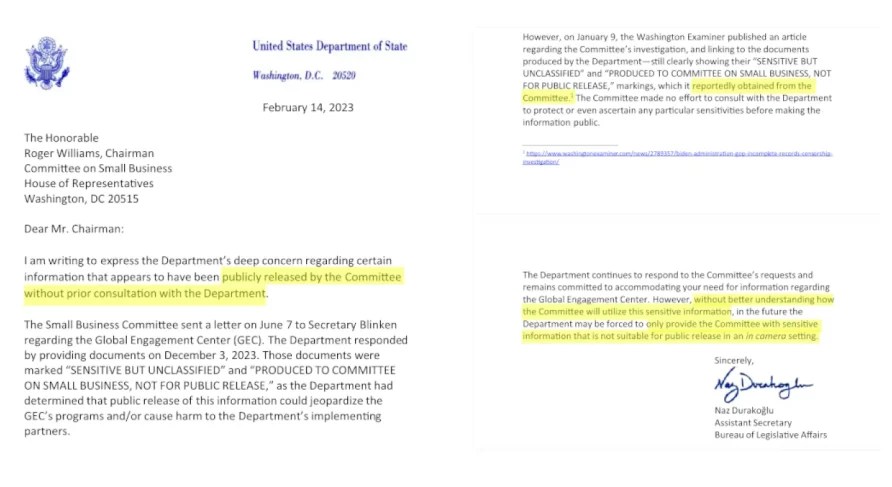
The State Department tells Congress, which controls its funding, that it will only disclose where it spent our money “in camera”
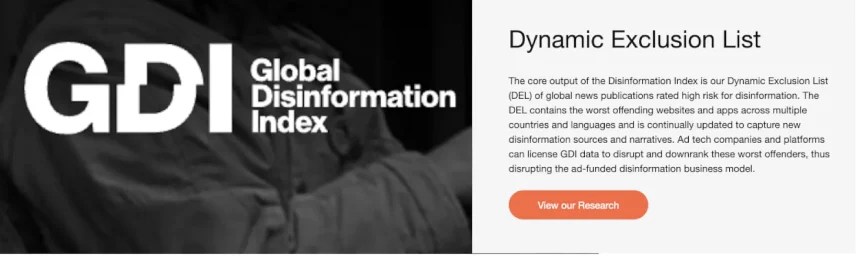
A year ago the Examiner published “Disinformation, Inc.”, a series by investigative reporter Gabe Kaminsky describing how the State Department was backing a UK-based agency that creates digital blacklists for disfavored media outlets. Your taxes helped fund the Global Disinformation Index, or GDI, which proudly touts among its services an Orwellian horror called the Dynamic Exclusion List, a digital time-out corner where at least 2,000 websites were put on blast as unsuitable for advertising, “thus disrupting the ad-funded disinformation business model.”
The culprit was the Global Engagement Center, a little-known State Department entity created in Barack Obama’s last year in office and a surprise focus of Twitter Files reporting. The GEC grew out of a counter-terrorism agency called the CSCC and has a mission to “counter” any messaging, foreign or domestic as it turns out, that they see as “undermining or influencing the policies, security, or stability of the United States.” The GEC-funded GDI rated ten conservative sites as most “risky” and put the Examiner on its “exclusion” list, while its ten sites rated at the “lowest level of disinformation” included Buzzfeed, which famously published the Steele Dossier knowing it contained errors and is now out of business.
In an effort to find out what other ventures GEC was funding — an absurd 36 of 39 2018 contractors were redacted even in an Inspector General’s report — the House Small Business Committee wrote the State Department last June asking for basic information about where the public’s money was being spent. State and GEC stalled until December 3 of last year, when it finally produced a partial list of recipients. Although House Republicans asked for an “unredacted list of all GEC grant recipients and associated award numbers” from 2019 through the current year, the list the Committee received was missing “dozens” of contractors, including some listed on USASpending.com.
The Examiner and Kaminsky subsequently wrote an article slamming GEC for sending “incomplete” records of the censorship investigation, in the process including links to a “snippet” of the GEC’s contractors:

In response to the outrage of this disclosure, the State Department sent its letter threatening in camera sessions until it gets a better “understanding” of how the Committee will use its “sensitive” information. That’s Beltway-ese for “We wouldn’t mind knowing the Examiner’s sources.”
About that: the State letter wrote that the Examiner’s records were “reportedly obtained from the Committee,” and included a footnote and a link to a Kaminsky story, implying that the Examiner reported that it got the records from the Committee. But the paper said nothing about the source of the documents, which as anyone who’s ever covered these types of stories knows, could have come from any number of places. It’s a small but revealing detail about current petulance levels at State.
“Anti-disinformation” work is not exactly hypersonic missile construction. There’s no legitimate reason for it to be kept from the public, especially since it’s increasingly clear its programs target American media companies and American media consumers, seemingly in violation of the State Department’s mission. The requested information is also not classified, making the delays and tantrums more ridiculous.
There are simply too many agencies that have adopted the attitude that the entire federal government is one giant intelligence service, entitled to secret budgeting and an oversight-free existence. They need pushback on this score and have at last started to get it. Thanks in significant part to the Examiner as well as lawsuits by The Federalist, Daily Wire, and Consortium News, the latest National Defense Authorization Act included for the first time a provision banning the Pentagon from using “any advertiser for recruitment that uses biased censorship entities like NewsGuard and GDI,” as a congressional spokesperson put it in December. We’ll see how it pans out, but congress withholding money for domestic spy programs is at least a possible solution, now in play.
Perhaps it’s time for the State Department to receive a similar wake-up call. If GEC wants to put conditions on disclosure, can we put conditions on paying taxes?
France: ANY Criticism Of The mRNA DEATHVAX™ Platform Punishable Up To 3 Years Imprisonment And 45,000 Euros
2nd Smartest Guy in the World | February 15, 2024
The WEF-captured government of France has pushed through a draconian new law entitled Article 4. This Orwellian and unconstitutional color of law power grab is a purposely poor attempt at obscuring the irrefutable slow kill bioweapon death and destruction data.
What makes Article 4 particularly incendiary is that the majority of the French population has been outright refusing all “vaccinations.” Throttling their free speech as it pertains to gene modifying poisons will only increase the already heightened tensions between the criminal Macron administration and the awakening French populace, by design.
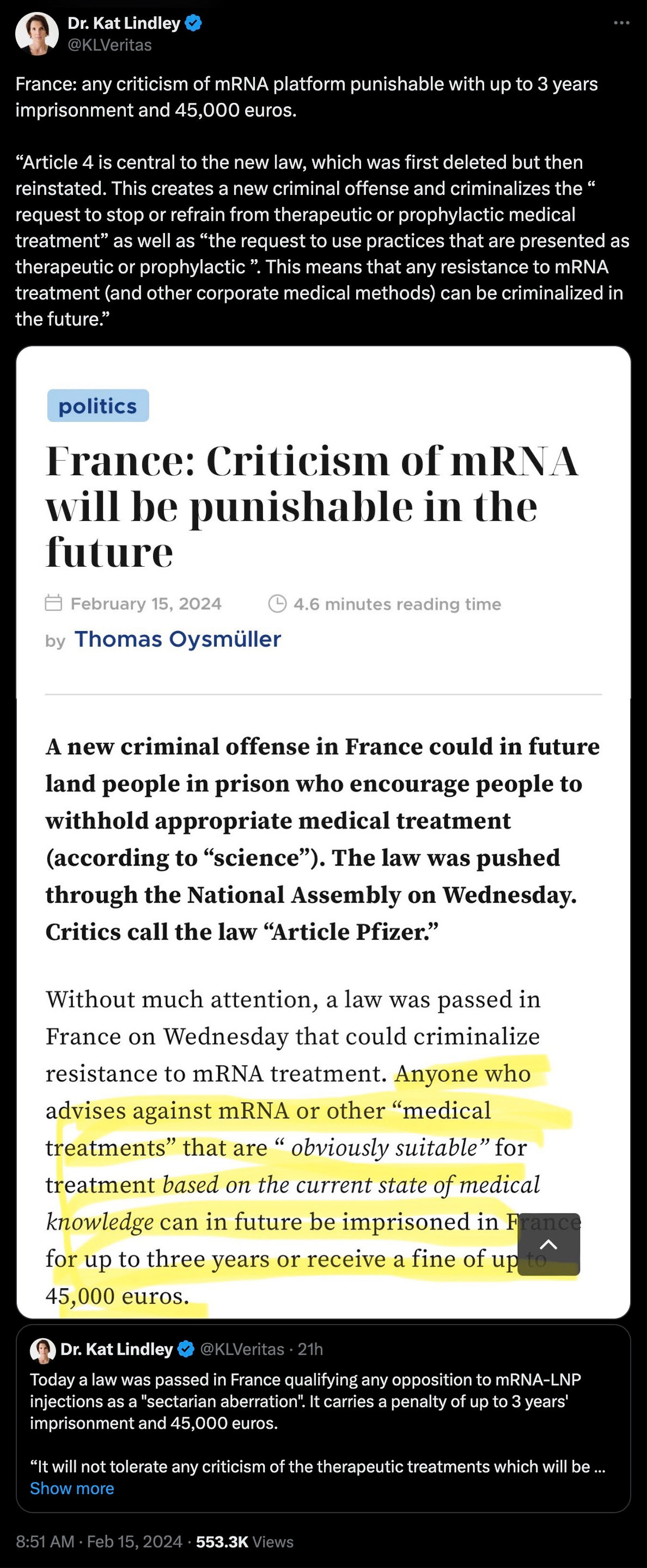
Between WEF puppet Trudeau in Canada and WEF puppet Macron in France, there is now a race to create the most totalitarian technocommunist nation in the West, with France now taking a slight lead; to wit:
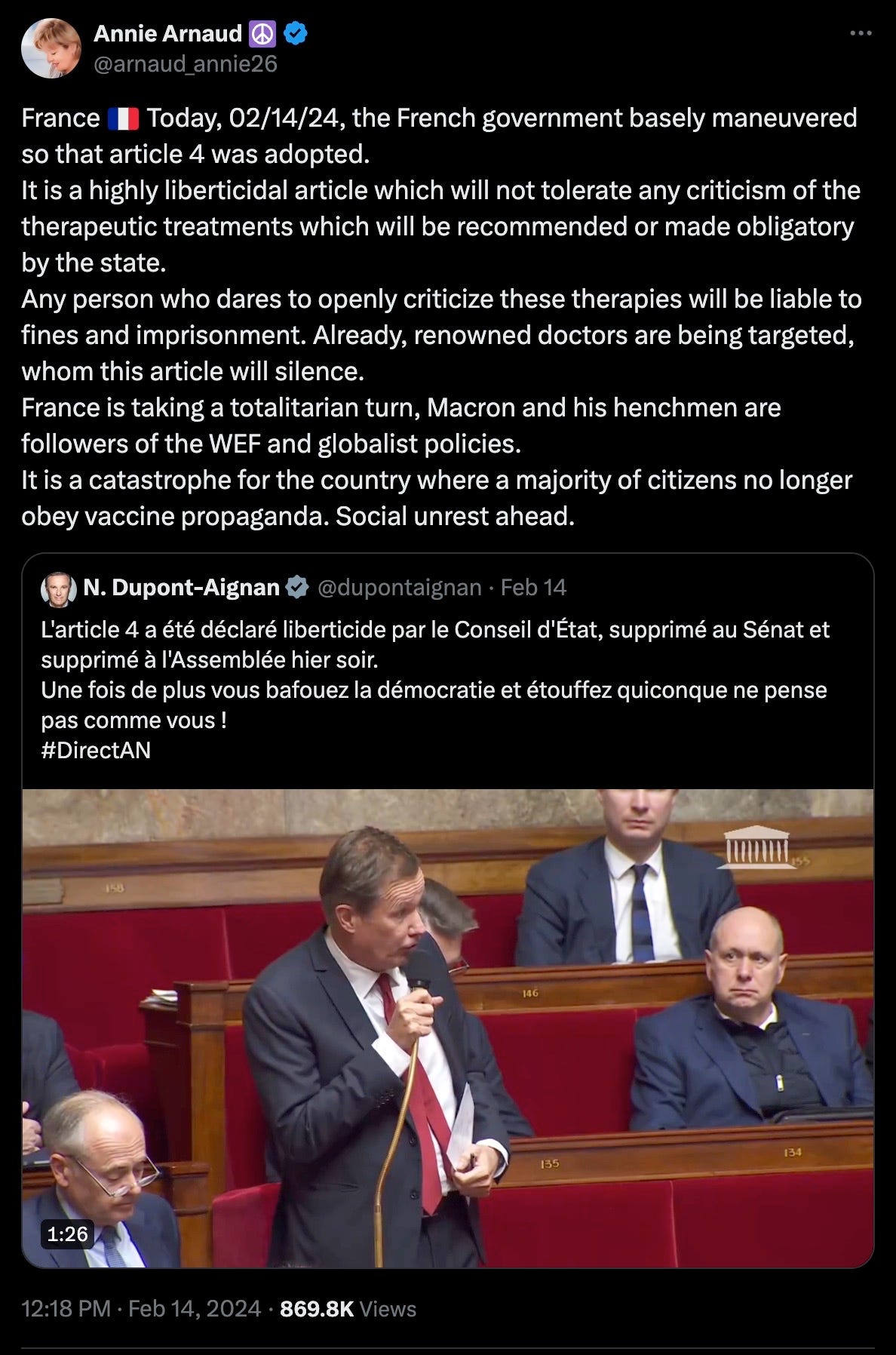
These policies and “laws” are nothing more than an extension of the ongoing democide, and the associated iatrocide.
Meanwhile, back in the USSA, the Center for Disease Crimes (CDC) is still at it with their “Trust the Science” mendacity and murder:
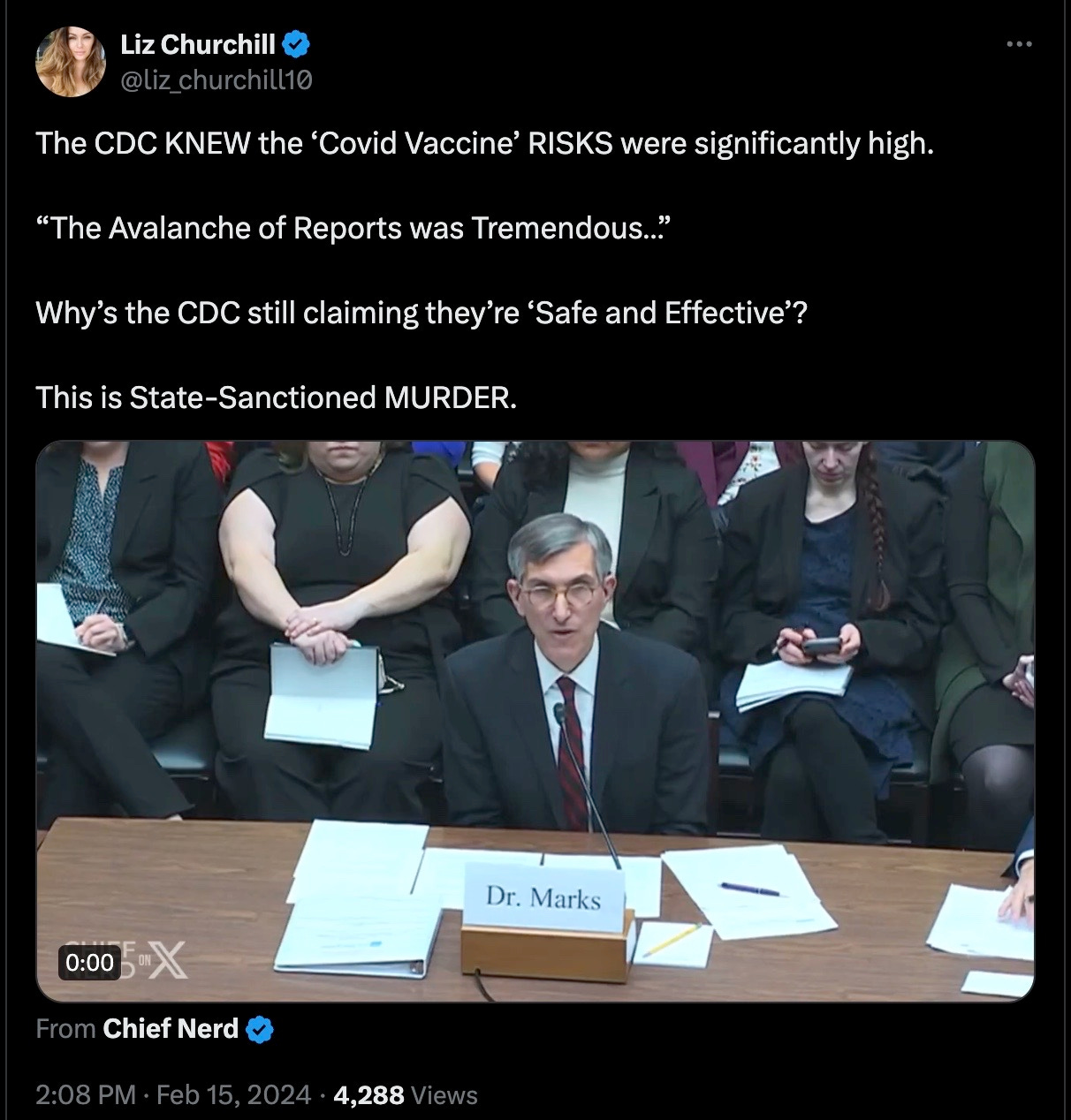
Readers of this Substack fully appreciate the myocarditis and turbo cancer epidemics currently underway — not to mention soaring excess non-PSYOP-19 mortality — since the rollout of the “vaccines:”
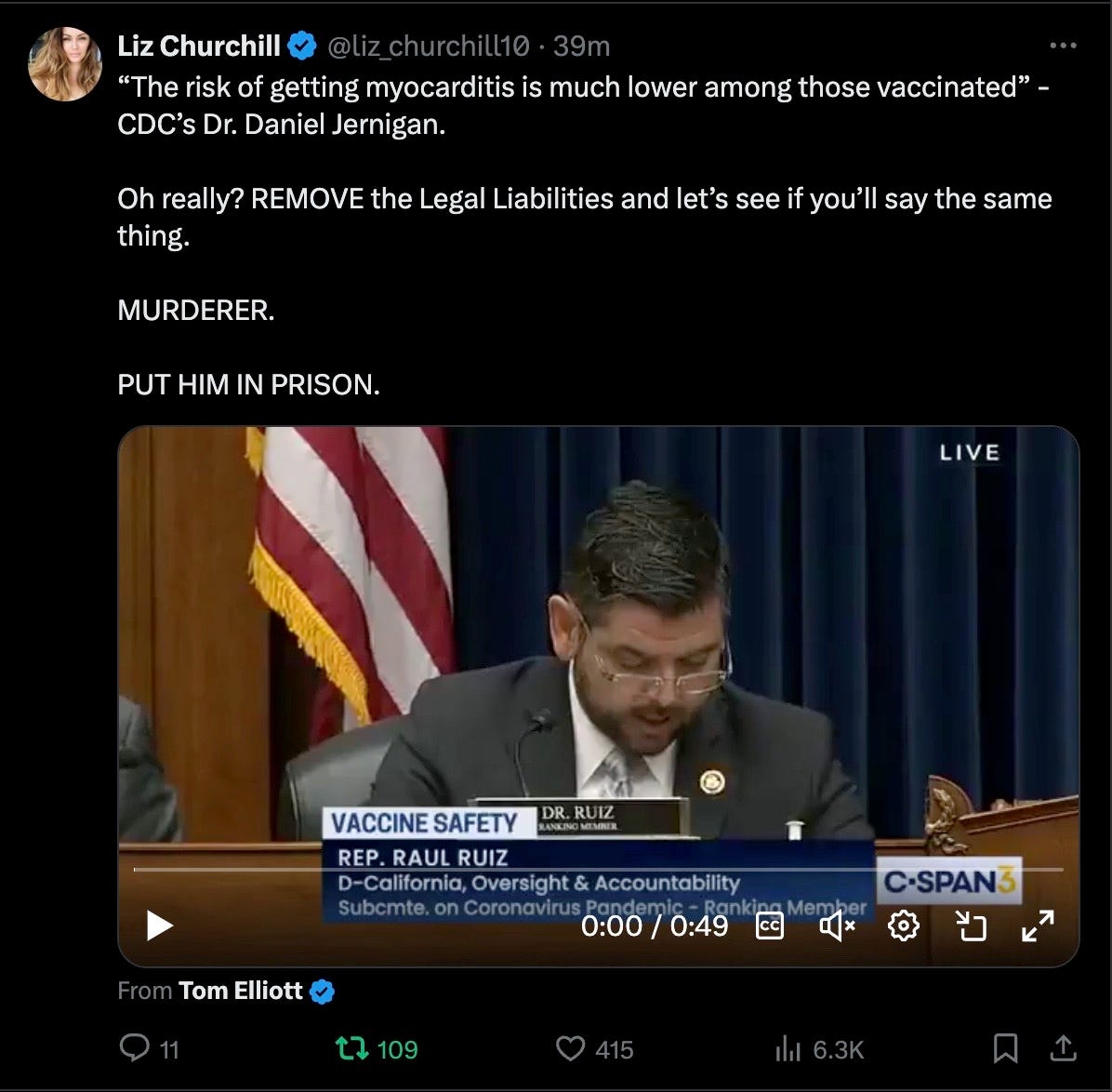
Removing all BigPharma legal liabilities and prosecuting the various “health” agencies like the FDA, CDC, NIH, et al. has never been more urgent.
France’s Article 4 is just a hint at what is to come, especially if the WHO’s Pandemic Treaty scam ever passes in the various nations that they are attempting to further hijack.
They want you dead.
Do NOT comply.
The Great Reset Didn’t Work: The Case of EVs
By Jeffrey A. Tucker | Brownstone Institute | February 15, 2024
We are living through one of history’s longest and most excruciating versions of “We told you so.” When in March 2020, the world’s government decided to “shut down” the world’s economies and throttle any and all social activity, and deny kids schooling plus cancel worship services and holidays, there was no end to the warnings of the terrible collateral damage, even if most of them were censored.
Every bit of the warnings proved true. You see it in every story in the news. It’s behind every headline. It’s in countless family tragedies. It’s in the loss of trust. It’s in the upheaval in industry and demographics. The fingerprints of lockdowns are deeply embedded in every aspect of our lives, in ways obvious and not so much.
Actually, the results have been even worse than critics predicted, simply because the chaos lasted such a long time. There are seemingly endless iterations of this theme. Learning losses, infrastructure breakages, rampant criminality, vast debt, inflation, lost work ethic, a growing commercial real estate bust, real income losses, political extremism, labor shortages, substance addiction, and more much besides, all trace to the fateful decision.
The headlines on seemingly unrelated matters go back to the same, in circuitous ways. A good example is the news of the electric vehicle bust. The confusion, disorientation, malinvestment, overproduction, and retrenchment – along with the crazed ambition to force convert a country and world away from oil and gas toward wind and solar – all trace to those fateful days.
According to the Wall Street Journal, “As recently as a year ago, automakers were struggling to meet the hot demand for electric vehicles. In a span of months, though, the dynamic flipped, leaving them hitting the brakes on what for many had been an all-out push toward an electric transformation.”
Reading the story, it’s clear that the reporter is downplaying the sheer scale of the boom-bust.
That’s not to say that Tesla itself is going bust, only that it has a defined market segment. The technology of EVs simply cannot and will not become the major way Americans drive. It might have seemed otherwise for a moment in time but that was due to factors that traced exactly to pent up demand caused by lockdowns and huge errors in supply management due to bad signaling.
Looking back, the lockdowns hit in the spring of 2020 and supply chains were entirely frozen by force. This might have been a major problem for car manufacturers that had long relied on just-in-time inventory strategies. However, at the very time, the demand for travel collapsed. Commutes came to an end, and vacations too. At that same time, pre-arranged government subsidies and mandates for EVs flooded the industry, all of which were later ramped up by the Biden administration.
As demand picked up, retailers sold their old inventory of cars and looked to manufacturers for more but the chips needed to complete the cars were not available. Many cars were put on hold and lots emptied out. This continued through the following year as used car prices soared and stock was otherwise depleted.
By the time matters became desperate in the fall of 2021, manufacturers discerned a heightened demand for EVs and began to retool their factories for more. There was even a time when cars were being shipped without power steering, just to meet the demand.
It might have seemed for a time like the crazed period we just lived through was birthing a completely different way of life. A kind of irrationality, born of shock and awe, swept industry and culture. The EV was central to it.
This demand seemed to pan out in 2022 as Americans grabbed whatever cars were available, perhaps willing to give the new doohickies a shot. So on it went as more carmakers threw more resources at production, benefitting from massive subsidies and staying in compliance with new mandates for reducing their carbon footprint.
There was no particular reason to think anything would go wrong. But then the next year began to reveal uncomfortable truths. Cold weather dramatically cuts the range of the EVs. Charging stations are not as readily available on longer trips, charging takes longer than one expects, and having to plan such matters adds time. In addition, the repair bills can be extremely high if you can find someone to do it.
Tesla as a manufacturer had planned out all such contingencies but other carmakers less so. Very quickly the EVs gained a bad reputation on a number of different fronts.
“Last summer, dealers began warning of unsold electric vehicles clogging their lots. Ford, General Motors, Volkswagen and others shifted from frenetic spending on EVs to delaying or downsizing some projects,” writes the Journal. “Dealers who had been begging automakers to ship more EVs faster are now turning them down.”
In short, “the massive miscalculation has left the industry in a bind, facing a potential glut of EVs and half-empty factories while still having to meet stricter environmental regulations globally.”
Today, lots are selling the cars at a loss just to avoid the costs of keeping them around.
Truly, this has been one spectacular boom-bust in a single industry. There seems to be no real end to the bust either. These days it appears that everyone has given up on any chance of actually converting the mass of American cars to become EVs. All recent trends are headed in the other direction.
Meanwhile, the EV is deeply loved by many as 1) a second car, 2) for well-to-do suburban commuters, 3) who own homes, 4) can charge overnight, and 5) have a gas car as a backup for cold weather and out-of-town trips. That is to say, the market is becoming exactly what it should be – a street-worthy golf cart with very fancy features – and not some paradigmatic case for the “great reset.” That’s simply not happening, despite all the subsidies and tax breaks.
“A confluence of factors had led many auto executives to see the potential for a dramatic societal shift to electric cars,” writes the Journal, including “government regulations, corporate climate goals, the rise of Chinese EV makers, and Tesla’s stock valuation, which, at roughly $600 billion, still towers over the legacy car companies. But the push overlooked an important constituency: the consumer.”
Indeed, the American economy, much to the chagrin of many, still primarily relies on consumers to make choices in their best interest. When that doesn’t happen, no amount of subsidies can make up the difference.
This story is impossible to understand without reference to the crazed illusions caused by lockdowns. Those are what provided the respite of time to allow automakers to retool. Then they boosted demand artificially for transportation after a long period in which inventory had been depleted.
Then the whole ridiculous ethos of the “great reset” convinced idiotic corporate executives that nothing would ever be the same. Maybe we would get 15-minute cities powered by sunbeams and breezes after all, along with a social-credit system that would allow the authorities to decommission our ability to drive in an instant.
It turns out that the entire bit, including the fake prosperity of the lockdown economy, made possible by money printing and grotesque levels of government spending, was unsustainable. Even sophisticated car companies bought into the nonsense. Now they are paying a very heavy price. The new market depended on a panic of buying that turned out to be temporary.
In short, the illusions of these horrible policies have come crashing down. It was born of liberty-wrecking policies under the cover of virus control. Every special interest seized the day, including a new generation of industrialists seeking to displace the old ones by force.
More and more, it’s obvious what a disaster this was. And yet no one has apologized. Hardly anyone has admitted error. The big shots who wrecked the world are still in power.
The rest of us are left holding the bag, and paying very high repair bills for cars that are non-optimal for driving from one town to another and back again in the cold weather that was supposed to be gone by now had the “climate change” prophets been correct. They turn out to be as correct as those who promised us that we would no longer need “fossil fuels” and that the magic inoculation would protect everyone from a killer virus.
What astonishing illusions were born of this nutty and destructive period. At some point, not even corporate CEOs will be tricked by the experts.
Jeffrey Tucker is Founder, Author, and President at Brownstone Institute.
Freedom Convoy leaders sue Trudeau regime for targeting protesters with Emergencies Act
By Anthony Murdoch | Life Site News | February 15, 2024
OTTAWA, Ontario — On the second anniversary of Prime Minister Justin Trudeau’s government’s use of the Emergencies Act (EA) to quash the truckers’ Freedom Convoy in 2022, the heads of the protest, Tamara Lich and Chris Barber, and a host of others have filed a $2 million lawsuit against the Trudeau government.
The lawsuit, announced yesterday by Freedom Convoy lawyer Keith Wilson, includes Lich as well as other convoy leaders Chris Barber, Tom Marazzo, Danny Bulford, and a host of others.
“On the 2-year anniversary of the Federal Government illegally invoking war measures against its citizens and targeting key protestors in Ottawa by freezing their bank accounts, today Tamara Lich, Chris Barber, Tom Marazzo, Danny Bulford and other protestors who were targeted by @JustinTrudeau and @cafreeland have filed lawsuits against the Federal Government.”
Wilson said that Section 24 of Canada’s Charter of Rights and Freedoms “gives Canadians the right to sue their government for damages when Charter rights are violated.”
“Doing so affirms the seriousness of respecting Charter rights and is intended to deter future governments from breaching Canadians’ fundamental rights.”
Wilson noted that the lawsuits seek $2 million in damages.
Lich, on X (formerly Twitter) noted about the lawsuit on Wednesday that “Accountability is a thing. It’s go time!”
“Happy Emergencies Act Day! I hope you all look back and fondly remember how your government shot you with rubber bullets and tear gas for your own good!” she also wrote.
Tom Marazzo, who was also involved with the Freedom Convoy and is a 25-year Canadian army veteran, said about it that it was “2 years ago today, instead of celebrating Valentine’s Day, the most corrupt government in Canadian history, launched an all out illegal assault on the Rights and Freedoms of every Canadian citizen in Canada, with the help of the NDP, Bloc, MSM and the Banks.”
“2 years later, they are all still in power with no end in sight. The one question that is never addressed, by any of them is why did Canadians feel so desperate that they had to go to Ottawa in the first place???” wrote Marazzo on X.
Further details about the lawsuit will be forthcoming in the next few days.
The lawsuit comes just after a Canadian federal court last month ruled that the Trudeau government’s use of the Emergencies Act to quash the truckers’ Freedom Convoy in 2022 was unconstitutional. The court ruled that the use of the EA was a direct violation of the Charter and thus “not justified.”
The EA controversially allowed the government to freeze the bank accounts of protesters, conscript tow truck drivers, and arrest people for participating in assemblies the government deemed illegal.
An investigation into the use of the EA, as per Canadian law, was launched by Trudeau. However, it was headed by Liberal-friendly Judge Paul Rouleau, who led the Public Order Emergency Commission. This commission was to investigate the Liberal government’s unprecedented use of the EA against the anti-mandate Freedom Convoy protest. Unsurprisingly, the commission exonerated Trudeau’s use of the EA.
Freedom Convoy leaders Lich and Barber have been involved in a lengthy trial after being charged and taken to court by the federal government for leading the protests. The trial has not yet concluded and has been put on hold, with its resumption date uncertain. It is also not yet clear how the recent court ruling will affect the trial.
In early 2022, the Freedom Convoy saw thousands of Canadians from coast to coast come to Ottawa to demand an end to COVID mandates in all forms. Despite the peaceful nature of the protest, Trudeau’s government enacted the EA on February 14, 2022. Trudeau revoked the EA on February 23.
During the clear-out of protesters after the EA was put in place, one protester, an elderly lady, was trampled by a police horse, and one conservative female reporter was beaten by police and shot with a tear gas canister. Rebel News reporter Alexa Lavoi, while covering the Freedom Convoy, was shot point blank in her leg with a rubber pellet, which police were using against protesters.
On February 14, 2022, the day the EA was invoked, Canadian Deputy Prime Minister and Minister of Finance Chrystia Freeland mandated certain bank accounts be frozen under the EA. In total, close to $8 million in funds from 267 people were locked. Additionally, 170 bitcoin wallets were frozen.
The freezing of bank accounts by Freeland without a court order was an unprecedented action in Canadian history and was only allowed through the Liberal government’s invocation of the never-before-used EA.
Featured Video
Laith Marouf: Hezbollah’s position on US-Iran ceasefire
or go to
Aletho News Archives – Video-Images
From the Archives
The Dirty Little Secret behind the “Global Terrorism Index”
The Omission of Israeli Terrorism in the Occupied Palestinian Territories
By Karin Brothers | Global Research | December 6, 2014
… The Israeli settlements — all of which are illegal – have been identified as a major impediment to peace. The refusal of a major “global” terrorism report to name the Israeli settlers as one of the groups most responsible for terrorism not only misrepresents a major source of regional violence but exposes the Global Terrorism Index as a propaganda tool that supports a U.S. agenda.
In recent years, governments have been attempting to thwart terrorism by blocking supportive fund-raising. When it comes to Israeli settlements, however, the US and Canada actually encourage fund-raising by giving organizations (such as Christian Friends of Israeli Communities (CFOIC) and the Jewish National Fund) financial support in the form of donor tax-deductions.
Charities which provide funds for the Israeli settlements should be regarded as terror-financing organizations. They should not only lose their tax-deductible status, but they should be banned because they support the violation of international humanitarian law. The terror-financing laws that are being strictly enforced for Muslim charities should be applied to Christian and Jewish charities as well. … Read full article
Blog Roll
 Aletho News
- The ‘Opposition Party’ Has Done Nothing to Stop the Iran War and Much to Goad Trump Into Continuing It
- Moscow backs Tehran on status of Lebanon in US-Iran deal
- How UK Regulator Ofcom Quietly Bypassed International Law to Police American Speech
- The Black Cube Files: How Former Mossad Operatives Flipped a Nation
- Laith Marouf: Hezbollah’s position on US-Iran ceasefire: What you’re not being told
- Israel’s priority lies in destroying chances of peace between Iran, US: Ex-UN nuclear chief
- Ceasefire for all or for none: Iran shuts Hormuz over Lebanon attacks
- Strait of Hormuz is Iran’s ‘nuclear weapon’ that forced US retreat: Medvedev
- Energy crisis will last for months – Kremlin envoy
- Europe’s quiet role in the war on Iran
- If Americans Knew
- This is ceasefire? Israel’s biggest massacre yet in Lebanon, another journalist killed in Gaza – Daily Update
- Tucker Carlson on Israel: This Is the Behavior of an Ally? Really?
- Gazans face a triple crisis: severe shortages of water and bread, healthcare in tatters
- NY Times reports how Netanyahu took the US into Iran War
- A sigh of relief over Iran, but Gaza and Lebanon in dire straits – Daily Update
- Thousands dead and neighborhoods razed to the ground: Aid agencies fear southern Lebanon is becoming the new Gaza
- The war the US is fighting for Israel could cost trillions
- ‘Cigarette Burns, Nail Wounds’: Toddler Tortured in Gaza to Coerce Father
- Trump Says US Sent ‘a Lot of Guns’ to Protesters in Iran
- Israeli forces destroy 17 UN peacekeeper cameras in south Lebanon
- No Tricks Zone
- An Inconvenient Tree: Uncovered In Alps… Europe Much Warmer Than Today 6000 Years Ago
- New Study Reports A 60% Slowdown In Greenland’s Ice Loss Rate In The Last Decade
- Low Intensity Tornado Wrecks Major Solar Farm, Creating A Potential Toxic Dump
- New Study Finds Warming Saves Lives…Cold Temperatures 12 Times More Deadly Than Excess Heat
- German Science Blog Accuses PIK Climate Institute Of Hallucinating Climate Tipping Points
- Devastating Assessment Of Comirnaty Vaccine By Former Senior Pfizer Europe Toxicologist
- New Study: CO2 Is ‘Effectively Negligible’ As An Explanatory Climate Change Factor Since 2000
- Former Pfizer Toxicologist Dr. Helmut Sterz Tells Bundestag Hearing Pfizer Vaccine Should Have Never Been Approved
- Energy Expert: Germany’s Nuclear Phaseout Was A “500 Billion Euro Mistake”
- New Research: South Australia’s Mid-Holocene Sea Surface Temperatures Were 4°C Warmer Than Today
 Aletho News