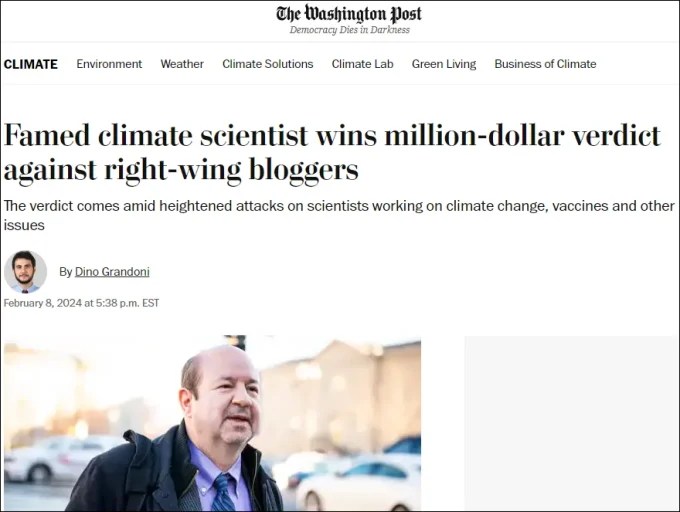
Yesterday, a jury in Washington, DC awarded renowned climate scientist Michael E. Mann more than $1,000,000 in damages in a defamation lawsuit he brought against two bloggers.1 I was a witness in the case and testified on Tuesday.2 Here, I’ll offer my thoughts on the case and some personal reflections on my experience.
Mann’s case alleged that he was defamed by statements made the bloggers more than a decade ago, which harmed his reputation and career (I won’t rehash the details here, but you can get a full accounting of the trial at this comprehensive podcast).3
The defense built their case around making three points to the jury.
One was to bring in experts to testify that Mann’s methods in producing the so-called “Hockey Stick” graph were manipulative, and thus critics of the Hockey Stick were factually correct in saying so. The second point was to demonstrate that the debate over climate during the time that the blog posts were written was intense and vitriolic, with Mann saying things about others that were worse than what the defendants said about him.4 Finally, the defense argued that Mann hardly put on a case — he provided no evidence or witnesses supporting his claims of damage to reputation or career.
In contrast, the prosecution was — in the words of the court, “disjointed” — and was reprimanded on multiple occasions by the judge, most notably for knowingly providing false information to the jury on alleged damages suffered by Mann.5 When I was cross-examined, Mann’s lawyer had considerable trouble getting basic facts right like timelines and who said what.6
Even so, in a trial that most neutral observers would surely see as favoring the arguments of the defense, Mann walked away with a resounding, comprehensive victory.7 How did that happen?
In my view, there were two absolutely pivotal moments in the trial.
One occurred when Mann was testifying and he explained that he felt that the bloggers were not just criticizing him, but they were attacking all of climate science, and he could not let that stand. As the world’s most accomplished and famous climate scientist, Mann intimated that he was simply the embodiment of all of climate science.
For the jury, this set up the notion that this trial was not really about Mann, but about attacks on all of climate science from climate deniers.
The second pivotal moment occurred when in closing arguments Mann’s lawyer asked the jury to send a message to right-wing science deniers and Trump supporters with a large punitive damage award.
Here is how an advocacy group called “DeSmog” accurately reported these dynamics:
Mann sued Simberg and Steyn for defamation, but the trial proved to be about much more than statements that harmed the scientist’s reputation — the entire field and validity of climate science was under scrutiny.
In closing arguments, Mann’s lawyer John Williams compared the climate deniers in this case to election deniers overall. “Why do Trumpers continue to deny that he won the election?” he asked the jury. “Because they truly believe what they say or because they want to further their agenda?”
He asked the jury to consider the same question about Steyn and Simberg: Did they believe what they wrote was the truth, or did they just want to push their agenda? . . .
“Michael Mann is tired of being attacked,” Williams told the jury. “You have the opportunity to serve as an example to prevent others from acting in a similar way” to Simberg and Steyn.
An underlying current throughout this trial has been that climate denialism, like what the two defendants practice, isn’t really about the science. It’s more about politics and policy that drives organizations and individuals to “attack the science and confuse the public . . .
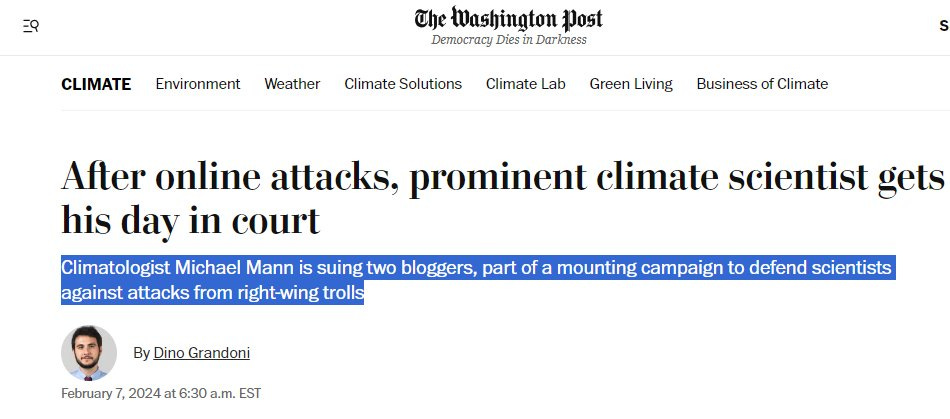
This framing — climate deniers versus climate science — has also characterized mainstream media coverage. For instance, The Washington Post announced, on the day that the case went to the jury, that this case was part of a “mounting campaign” against “right-wing trolls” (below).
Prominent climate scientist or right-wing trolls? Which side are you on?
The case was formally about defamation, but in reality it was not at all about defamation.
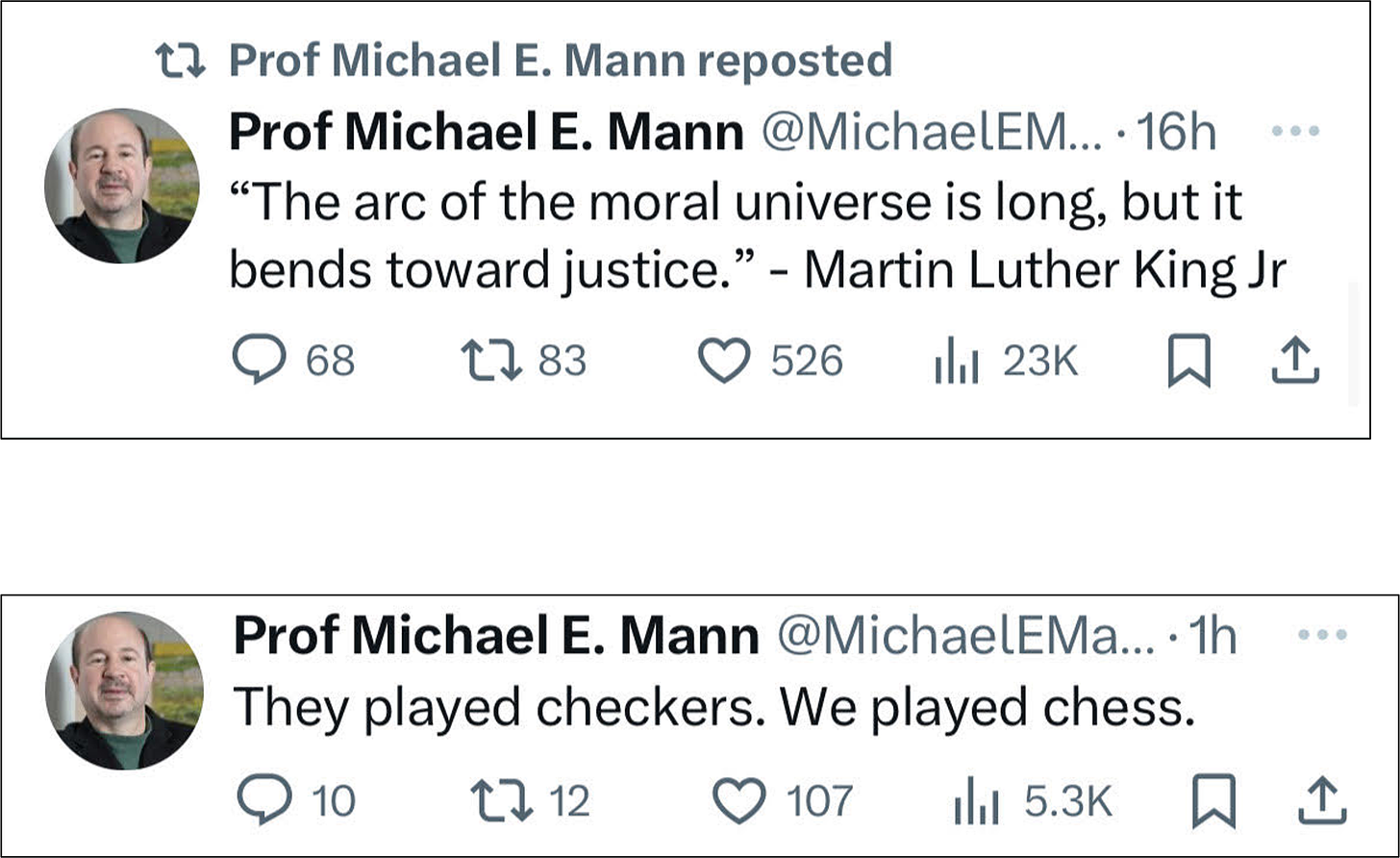
As Michael Mann stated after the verdict, the case was really about politics and ideology:
Take a victory lap, Dr. Mann
This is about the defense of science against scurrilous attacks, and dishonest efforts to undermine scientists who are just trying to do our job … whose findings might prove inconvenient to certain ideologically driven individuals and outlets. It’s about the integrity of the science and making sure that bad actors aren’t allowed to make false and defamatory statements about scientists in their effort to advance an agenda.
The defense made a big mistake in thinking that it would be sufficient to win by proving their case while Mann chose not to put one on. That was wrong.
There is no equivalence here between the “renowned” Michael Mann and the “right-wing trolls” who deny climate science and support Donald Trump. The case, at least in this particular venue, was simply unwinnable no matter what cases were put on by the prosecution and the defense. Mann simply had to show up.
The fact that the jury awarded him only $2 in actual damages and $1,001,000 in punitive damages (send a message!) supports this interpretation — The defense won on merits, and Mann won on the framing and the politics.
What does the case mean for discourse about politically contentious issues that involve science? Science magazine reports that it means that we now need to be circumspect in how we engage these issues:
In a statement, Mann said, “I hope this verdict sends a message that falsely attacking climate scientists is not protected speech.”8
At the same time, the ruling could end up having a chilling effect on necessary public criticism of science, says Gene Policinski, a senior fellow at the Freedom Forum, a nonpartisan foundation focused on First Amendment protections. People will need “to be more judicious in commentary. They might be more vague or circumspect.” And that could be to the detriment of the public, he says. “It’s important in today’s world for people to be aware of research that’s going on and having people both praise and criticize it openly.”
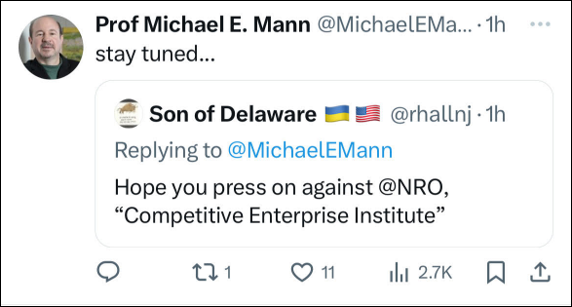
For Mann’s part, he signals that he is just getting started in his legal campaign against his opponents:
Asked about Competitive Enterprise Institute and National Review, [Mann’s lawyer] John Williams said, “They’re next.”
I would not be surprised to now see a flurry of lawsuits against people who have been critical of climate science or climate scientists. Such legal action may not be limited to climate — debate over Covid-19 also presents a target-rich environment for unwanted speech to silence. Watch this space.
Finally, let me offer some personal reflections on my experiences.
Form the start, my view was that this entire lawsuit was unnecessary and a waste of everyone’s time. People who I still would not recognize on the street said some mean things about Michael Mann on the internet. Welcome to public discourse in the 21st century. People say mean, false things about me on the internet every day — it goes with the many privileges of having outsized impact and voice. The case was never about the integrity of science or the political impact of right-wing trolls — it was always about Michael Mann.
As I stood in line with dozens of other people on Tuesday waiting to go through security to enter the courthouse, I wondered how we got here — how leading scientists and institutions of climate science became totally consumed with a battle against minor bloggers and political boogeymen.
When I entered the courtroom, I had a profound sense of sadness for Mann. He was alone with his lawyer — no family, no friends, no university officials, no adoring fans, no mainstream media. Totally alone. There were just a handful of observers in the room. As I said at the trial, Mann has not been the best colleague to me, but I am fine even so. Who knows what demons haunt him and why he behaves the way that he does. I do hope he can find peace at some point.
The larger issues here are not about Mann, but rather the continued failures within the climate science community to uphold fundamental norms of conduct among its own ranks. For instance, in the trial we learned that Penn State’s committee looking into Mann’s conduct following Climategate wanted to censure him for his behavior — apparently that was overturned upon the intervention of the Penn State president. There have been so many similar opportunities for leaders to take the off-ramp from escalated conflict and politicization, and the community instead chose to further conflict.
Like I said, it is just sad. And it is not over yet.
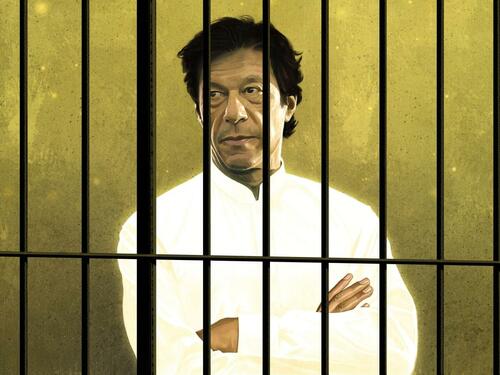
The elections in Pakistan today were much freer and fairer than I had expected. Hence, the preliminary results simply reflected the obvious for most of us: former Prime Minister Imran Khan’s political party, PTI (the movement for justice) – facing ruthless repression over the past year – have swept the elections in every single province of the country.
Khan, surviving two assasination attempts and languishing in a supermax dungeon since last August, is more popular than ever. Among the youth, Gallup Pakistan surveys have consistently reported around 80-90 percent support for Khan and his party.
The tyranny of the generals in the military high command along with the kleptocratic and dynastic political parties entailed even the suppression of PTI’s symbol (a cricket bat) and virtually a ban, with horrific consequences if violated, on candidates running on a PTI ticket. Thus, all of these candidates ran as independents.
Of course, we have now become used to one criminal travesty after the next by Pakistan’s military-intelligence apparatus. So, we are cautious about any temporary victory for people’s democracy, triumphing over the Washington-backed totalitarian military and political elite. The latter are in full-blown panic mode, and are trying their best at tampering and rigging before announcing the final results.
The preliminary results, regardless of the fraudulent shenanigans of the national security state expected in the next few days, already represents a resounding defeat of the neo-colonial comprador oligarchy in Pakistan. One just needs to see how highly strung the spokesperson of the State Department was in addressing questions related to these elections.
There is one sign of both hope and danger. For the first time in Pakistan’s history, the normally unified and disciplined armed forces are now experiencing deep divisions. The majority of military officers and and 95 percent of soldiers are repulsed by the behavior of Wasington’s minions in the top brass. To the surprise of many of us, these divisions also exist within the intelligence agencies. We are witnessing in an unprecedented way a refusenik impulse within the military. Not to sound like the bogus alarmism we’re used to from Washington think tanks, it’s still worth remembering that Pakistan is a country of 240 million, nuclear-armed.
The Pakistani people badly need international solidarity at this point.
Prof. Junaid S. Ahmad teaches religion, law, and global politics and is the Director of the Center for Islam and Decoloniality, Islamabad, Pakistan.
Representative Jim Jordan, along with 44 other Congressional members, joined forces with America First Legal (AFL) to submit a crucial brief to the US Supreme Court. This brief supports Missouri, Louisiana, and private plaintiffs in the significant case of Murthy v. Missouri. The case centers on allegations of the federal government’s unconstitutional suppression of free speech on social media platforms.
The AFL, in collaboration with co-counsel Christopher Mills, has been actively combating what they perceive as a growing censorship crisis. The brief presented to the Supreme Court contends that the federal government has been exerting undue influence on private tech companies. This influence, the brief argues, has led to the suppression of First Amendment-protected speech concerning COVID-19, the Biden family’s alleged influence peddling, and various election-related issues.
These arguments were previously raised in the Fifth Circuit, where AFL represented Representative Jordan and other members of the House Judiciary Committee and the Select Subcommittee on the Weaponization of the Federal Government.
The involvement of these bodies stemmed from their investigative work, which unearthed the extent of federal pressure on private entities, compelling them to censor speech. This was notably highlighted through disclosures in The Facebook Files and The Twitter Files.
“The First Amendment is first for a reason,” Rep. Jim Jordan said in a statement. “Through our constitutional oversight, we have uncovered evidence that the Biden Administration directed and coerced Big Tech companies to censor content online and even books. With the Supreme Court set to hear one of the most important free speech cases in years, 45 Senators and Representatives filed this brief to share Congress’s findings and urge the Court to uphold the free speech rights of American citizens.”
Israeli lawmakers are moving forward with a bill to punish those accused of “denying” or “downplaying” Israel’s narrative of October 7th with five years in prison.
“Israel’s Knesset approves a bill, which punishes the denial or ‘downplaying’ of the Israeli narrative of Oct 7 by up to 5 years in prison,” the Palestinian Quds News Network reported.
“The approved bill is one out of three bills that included the expulsion of families of Palestinians who resist, imprisonment for those who deny Israel’s narrative on October 7, and compensation for notorious ZAKA organization.”
From The Jerusalem Post, “Israeli Ministerial Committee approves imprisonment for denying Oct. 7, ZAKA compensation”:
The bill approved by Yisrael Beytenu MK Oded Forer prohibits the denial of the October 7 massacre. According to the proposal, anyone who publishes, in writing or orally, things that deny the massacre or downplays it or publishes praise, sympathy, or identification with the actions committed by Hamas in the events of that day – will be sentenced to five years in prison.
The explanation for the bill reads: “The denial of the massacre constitutes an attempt to rewrite history already at this stage, in an attempt to hide, minimize, and facilitate the crimes committed against the Jewish people and the State of Israel.”
The proposal by Likud MK Moshe Passal gives financial compensation to ZAKA volunteers who volunteered for endeavors carried out by the organization during Operation Swords of Iron.
“There is no doubt that the volunteers took a significant part and did hard work, both physically and mentally. They were a significant part of the holy work for the people of Israel and worked together with the IDF, so they deserve to be rewarded for their important work,” Passal said.
No doubt they want to use this law to jail journalists from Haaretz and other Israeli news organizations which debunked much of the atrocity propaganda Israel put out after Oct 7.
The Times of Israel last week ran a piece arguing that questioning Israel’s narratives on Oct 7 is a form of “Holocaust denial” and insisting that Big Tech should do more to censor such “unacceptable” speech.
With Israel’s atrocity propaganda getting debunked in real-time and their excuses for genocide being rejected by the overwhelming majority of the world, they’re now demanding overt censorship and moving to jail whoever they can for exposing their lies.
A new £5.5 million ($6.9 million) pro-Israel initiative aimed at students has been launched by the UK. It’s reported that the initiative will seek to propagate the highly controversial International Holocaust Remembrance Alliance (IHRA) “working definition” of anti-Semitism, to young children and students.
Details of the initiative were revealed by the UK government on Tuesday as part of what it calls an initiative to tackle anti-Semitism in education. According to the government website, the British Department of Education is seeking to tender a contract worth $6.9 million for potential suppliers to undertake the task of delivering its programme to schools and universities.
The successful bidder will be required to deliver the contract across the UK in the North East, North West, Yorkshire and the Humber, East Midlands, West Midlands, East of England, London, South East, South West. Bids have to be placed by 7 March this year.
The procurement is split into two distinct lots: The first is to develop and implement a programme of initiatives aimed at tackling anti-Semitism in universities. “The cornerstone” of the contract is the anti-Palestinian IHRA, which will be rolled out across the country and used to set basic guidelines.
The second lot requires the supplier to develop and implement a programme of initiatives aimed at tackling anti-Semitism in schools and colleges. This will involve the development and rollout of training for school and college staff and student engagement opportunities.
Concerns have been raised over the government’s deployment of the discredited IHRA definition of anti-Semitism for an initiative targeting children and universities. The so-called “working definition” of anti-Semitism favoured by Israel has been weaponised against critics of the apartheid state.
This week saw advocates of the IHRA suffer a major blow in their effort to proscribe anti-Zionist and anti-Israel views. In the landmark case involving Professor David Miller, a Bristol-based Employment Tribunal ruled that “anti-Zionist beliefs qualified as a philosophical belief and as a protected characteristic.”
The case is seen as being not only a vindication of Miller, who successfully sued the University of Bristol for wrongful dismissal, but the verdict has also exonerated those who have been warning for years about the weaponisation of anti-Semitism by the pro-Israel lobby against critics of the apartheid state.
Miller was a victim of a toxic anti-free speech culture generated after UK institutions adopted the IHRA definition. Governments, political parties, employers and universities began to impose speech codes with the clear aim of policing the boundaries of free speech regarding Israel and Zionism.
As an expert on the threat to democracy posed by corporate lobbying who exposed, among other things, the role of the global Zionist movement in fuelling anti-Muslim hatred, Miller became an obvious target. He was accused of breaching the IHRA definition of anti-Semitism. The University of Bristol adopted in full the “working definition” in 2019, three years before firing Miller.
Miller’s victory has sent shockwaves through the pro-Israel lobby in Britain. Already there are calls for reckoning to take place over the way in which anti-Semitism has been weaponised through the adoption of the IHRA definition in order to purge members from the Labour Party for their avowedly anti-Zionist views.
As part of a bold move to safeguard free speech and uphold constitutional values, America First Legal (AFL) has initiated a series of public records requests aimed at unearthing the extent of Arizona government agencies’ involvement in controlling social media narratives.
We obtained a copy of the records requests for you here.
These requests target the Center for Internet Security, along with Coconino, Maricopa, and Pima Counties, and the Arizona Secretary of State’s Office. The inquiry seeks details on communications and takedown requests pertaining to social media content.
The issue at hand revolves around recent elections, where federal and state entities, notably from Arizona, have actively engaged in monitoring and reporting what they classify as “misinformation.”
Coordinated by the Center for Internet Security (CIS), the EI-ISAC acted as a conduit, forwarding these censorship requests to various social media platforms. Additionally, state and local government officials in Arizona have independently reported supposed misinformation directly to these platforms.
This has led to a situation where government officials have been accused of effectively coercing and pressuring social media companies into censoring content and speakers that they deem unfavorable, potentially influencing the outcomes of Arizona’s recent elections.
This entire scenario is seen by many as a glaring infringement of lawful free speech and is considered both unconstitutional and illegal.
“Freedom of speech is a core American principle that is the foundation for so many of our other rights and liberties. No government official should ever get involved in policing what American citizens can and can’t say online. Arizona’s elections play an outsized role in national politics right now. State and county officials who have been trying to suppress citizens’ free speech are also unconstitutionally trying to meddle in elections. That sort of activity needs to stop, and these public records requests will help shine a light on the extent of their past activities,” said James Rogers, America First Legal counsel.
Allegations that the administration of US President Joe Biden tried to stop journalist Tucker Carlson from interviewing Russian President Vladimir Putin are “ridiculous”, White House Press Secretary Karine Jean-Pierre said during a daily press briefing on Tuesday.
The former Fox News host interviewed Putin on Tuesday, the Kremlin has confirmed. Carlson however, has claimed that Washington has consistently attempted to block his overtures to the Russian president.
”Almost three years ago, the Biden administration illegally spied on our text messages and then leaked their contents to their servants in the news media. They did this in order to stop a Putin interview that we were planning,” he asserted. “Last month, we’re pretty certain they did exactly the same thing once again. But this time, we came to Moscow anyway.”
Asked about Carlson’s allegation, Jean-Pierre initially said she would “absolutely not” comment, but later changed her mind.
”It’s a ridiculous premise and a ridiculous statement that was made about this administration,” she said.
Carlson has claimed on several occasions that while trying to arrange a one-on-one with Putin, he found out from a source that his communications were being intercepted by US intelligence. He said his messages were quoted back to him verbatim, confirming the surveillance.
The NSA has denied targeting the journalist, but the Axios news website has partially corroborated his story, citing unnamed US government officials who said the government indeed had learned about his efforts to secure an interview with Putin. The outlet suggested that “US-based Kremlin intermediaries” contacted by Carlson had leaked the communications.
The journalist, how hosts a show on X (formerly Twitter) stated in his preview that the American media were failing to properly inform the public about the nature of the Ukraine conflict and the wider confrontation between the US and Russia. He said he had the backing of X owner Elon Musk, who vowed not to block the interview on his platform.
”Western governments, by contrast, will certainly do their best to censor this video on other, less principled platforms, because that’s what they do. They are afraid of information they can’t control” he predicted.
American journalist Tucker Carlson was spotted in Moscow in recent days, generating a series of controversies on social media. There are rumors that Carlson went to Russia to interview President Vladimir Putin. Although there is no confirmation yet about the case, expectations have been enough to encourage all kinds of negative reactions in the West, with public calls for Carlson to be expelled from the US for “treason”.
After leaving Fox News, Carlson launched a TV show on X (formerly Twitter) and has recently done a series of interviews with political leaders around the world, mainly presidents. Previously, he had already announced his personal interest in interviewing Putin, further stating that American authorities began spying on him and threatening him due to this intention. According to Carlson, the NSA hacked his computer and leaked his emails to the media, revealing his plan to go to Russia to interview Putin.
At first it was believed that the coercion from the American state was enough to stop Carlson’s plans, but recently the journalist finally traveled to Russia, sparking rumors about a possible interview with Putin. There is still no confirmation on the veracity of such allegations. The rumors were strengthened by images and videos circulating on social media showing what is believed to be Carlson team’s car leaving the Kremlin facilities.
However, the situation remains doubtful and unclear for now. Neither Russian authorities nor Tucker’s team confirmed or denied that an interview took place. What is known is that the journalist has actually spent a few days on Russian soil, visiting tourist attractions and having confirmedly attended a ballet performance at the Bolshoi Theatre. If there was any more important event on the journalist’s schedule, it will certainly be revealed soon.
However, it is interesting to analyze the reaction in the West to Carlson’s visit to Russia. Pro-war militants on the American political scenario are absolutely upset by this trip – and seem even angrier about the mere possibility of Tucker interviewing Putin. All sorts of hysterical reactions have arisen among American neoconservatives and liberals. Tucker has been called a “traitor” by several public figures. More than that, in a controversial statement, neoconservative writer Bill Kristol went to the extreme of calling for Tucker’s banishment from American soil, aimed at preventing him from returning to the US from Russia.
There are some special reasons for this reaction. Carlson is currently the most popular American journalist on social media. With more than 11 million followers on his X account and running a show whose audience is continually growing, Carlson represents a “threat” to Western Big Media. For example, Carlson’s recent interview with former American President Donald Trump reached an impressive 267 million views on X alone – having also been broadcast on other digital platforms. Carlson’s popularity is the reason why American elites are so afraid of him interviewing Putin.
The Russian president certainly has a lot to say to Western public. Since 2022, censorship on Russian media has prevented Western citizens from hearing the Russian side in the ongoing conflict. Putin’s words, when they reach an English-speaking audience, come in a distorted and biased way, with ordinary people in Western countries not having the opportunity to really understand Russia’s concerns and reasons.
More than that, Russian denunciations of war crimes, human rights abuses, promotion of neo-Nazism and the production of ethnic biological weapons rarely reach Western public opinion. In a direct interview with the Russian president, this scenario would completely change. This is why, even without any confirmation that the interview happened, the mere possibility of such an event is already causing panic among American warmongers.
Furthermore, even if there is no interview, the visit of a popular American journalist to Russia in current times is also important. Tucker could show his audience the reality on the ground in Russia, showing that there is no effect of the illegal sanctions imposed by the West and that the Russian people are in fact living well, contrary to the scenario of social catastrophe described by the mainstream media. Also, being an election year in Russia, Carlson’s coverage could also show that, contrary to what the big outlets say, the Russian government is actually popular, being supported by the majority of the people – with Putin not being elected in “fraudulent elections“, as said in the West, but in real democratic procedures.
In practice, Tucker has a lot to say to his millions of followers about Russia. Whether or not there is an interview with Putin, it is certain that Carlson’s trip will have a strong impact on Western journalism. The case is serving to unmask the real nature of “American democracy”. More than ever, it seems clear that concepts such as freedom of speech and media no longer mean anything to the decadent political structure of the contemporary US.
Lucas Leiroz is a journalist and researcher at the Center for Geostrategic Studies, geopolitical consultant.
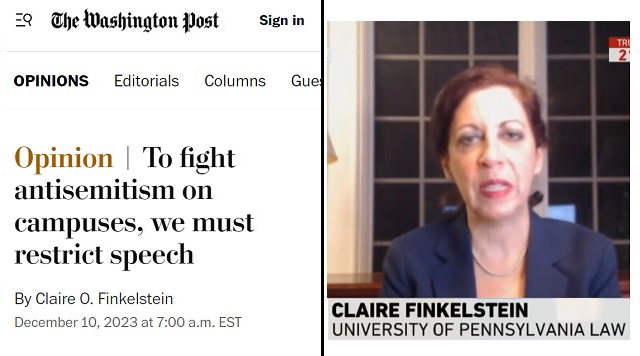
An influential member of Meta’s Oversight Board, a group nicknamed the “Supreme Court of Facebook,” Pamela San Martín, has argued that the level of censorship enacted by Meta during the 2020 presidential election was inadequate and that it should be stepped up for 2024.
This viewpoint was criticized by individuals in favor of freedom of expression, who cited a poll conducted by the Media Research Center suggesting that the influence of Big Tech censorship significantly affected the outcome of the election.
In a conversation withWIRED, San Martín argued vociferously in favor of more stringent censorship measures ahead of future elections, including the 2024 one.
San Martín’s ideas for 2024 include “adding labels to posts that are related to elections, directing people to reliable information, prohibiting paid advertisement when it calls into question the legitimacy of elections, and implementing WhatsApp forward limits.”
“No election is exactly the same as the previous one,” San Martín said to the outlet. “So even though we’re addressing the problems that arose in prior elections as a starting point, it is not enough.”
Her proposal centers on pre-emptive actions, which some observers see as a threat to freedom of speech online.
Anti-censorship critics drew attention to San Martín’s suggestion of coordination with election officials, interpreting it as a direct call for collusion between tech giants and government authorities in matters of censorship. They argued that each election is a unique event and that relying on strategies from previous campaigns was insufficient – a sentiment San Martín herself echoed.
San Martín referenced the 2020 and 2022 US and Brazilian elections, criticizing Meta for failing to adequately prevent its platforms from being manipulated for campaigning and disinformation.
Senator Mark Warner has aggressively gone after speech protections, seeking to seemingly single-handedly reinterpret the First Amendment while complaining that courts dealing with White House/Big Tech collusion are now making the Biden administration “very timid.”
The Democrat apparently proceeds from the rule, “disinformation is whatever we say it is” – in itself too arbitrary to be taken seriously. But that doesn’t stop Warner from building a big case for rethinking the First Amendment and facilitating censorship even further, by effectively strengthening, rather than abandoning, the said collusion.
If something is considered “true misinformation or disinformation,” the chairman of the Senate Intelligence Committee told NPR, then that, along with another favorite yet poorly explained scare – deep fakes – does not qualify for First Amendment protections.
“I think when you’re talking about true misinformation or disinformation, or when you’re talking about utilization of deepfakes where an image…is put up and it’s not us, but it looks like us and sounds like us, I don’t think those are First Amendment protections,” is the full quote from the senator.
And Warner wants to bring some stock market rules into the world of fundamental rights and free speech, suggesting that information labeled as disinformation should be treated as malicious and banned like manipulation is banned from the stock market.
The senator then proceeded to talk about 2020 “election deniers” while in the same breath denying the integrity of the 2016 election, by once again fear-mongering about the supposed impending doom, “a perfect storm in terms of election interference.”
To stop that from happening, and to keep the current administration in power, Warner wants to make its ability to censor and keep “in contact” with the likes of Google and Facebook intact, if not stronger.
That is why he has made extra effort – penned an amicus brief – in a bid to get the Supreme Court to reverse an injunction concerning the government/Big Tech collusion, brought up in the NetChoice, LLC v. Paxton case and issued by the Fifth Circuit Court of Appeals.
The senator went on to say that he “doesn’t believe” collusion of that kind has to do with free speech suppression. Instead, according to him, it has to do with “the ability of the government to be able to at least talk to Facebook and Google to say, hey, if you see misinformation – or can we share evidence of Russian activity? How do we cooperate together?”
But it seems Warner believes the US legal system, or parts of it, trying to put some breaks on this oddly undemocratic practice, are making Biden’s White House “very timid” – whereas he is “trying to push the Biden administration to be a little more aggressive.”
“But – rest assured that there is not the level of communication (with Big Tech) that existed in 2020 or 2022 or 2018,” the senator lamented.
A sociology professor sacked by the University of Bristol over his anti-Zionist comments has won a landmark decision by an employment tribunal, which decided that he was discriminated against because of his beliefs.
In its judgment on Monday, the Bristol employment tribunal ruled that Professor David Miller’s anti-Zionist beliefs qualified as a philosophical belief, which are protected under the Equality Act 2010.
It added that Miller was subject to direct discrimination because of his anti-Zionist beliefs.
Rahman Lowe Solicitors, who represented Miller at court, called the judgement a significant triumph, establishing that anti-Zionist beliefs are legally protected in the workplace.
“Prof. Miller successfully claimed discrimination based on his philosophical belief that Zionism is inherently racist, imperialist, and colonial, [which is] a protected characteristic under the Equality Act 2010, alongside a finding of unfair dismissal,” a statement issued by the solicitors said.
“This judgement establishes for the first time ever that anti-Zionist beliefs are protected in the workplace,” they added.
“I am extremely pleased that the tribunal has concluded that I was unfairly and wrongfully dismissed by the University of Bristol. I am also very proud that we have managed to establish that anti-Zionist views qualify as a protected belief under the UK Equality Act,” Miller said.
Professor Miller was fired by the University of Bristol in October 2021 after he made statements about the role of the Zionist movement in promoting Islamophobia.
Following his dismissal, Miller asserted that he was subject to an organized campaign by groups and individuals opposed to his anti-Zionist views, which was aimed at getting him sacked.
He took the University of Bristol to the Employment Tribunal on the basis of unlawful discrimination for his beliefs in breach of the Equality Act 2010.
In a post on X social media platform after winning the case, Miller said, “This is not just a victory for me, but also a victory for pro-Palestine campaigners across Britain.”
“Over many years, anti-Zionists have faced harassment and censorship in Britain due to the efforts of the Israel lobby. Many people have faced disciplinary procedures and lost their jobs for manifesting their anti-Zionist beliefs,” he added.
Miller expressed hope that “this case will become a touchstone precedent in all the future battles that we face with the racist and genocidal ideology of Zionism and the movement to which it is attached.”
“This verdict is also a vindication of the approach I have taken throughout this period, which is to say that a genocidal and maximalist Zionism can only be effectively confronted by a maximalist anti-Zionism,” he noted.
Concerns are growing over the role of Big Tech companies in moderating “misinformation,” particularly due to the fear that these corporations already wield significant power and influence which could potentially sway political outcomes, including elections.
Many worry that the concentrated power in these tech giants allows them to arbitrarily define what constitutes misinformation, leading to a situation where they could suppress certain viewpoints or information. This raises questions about the impartiality and fairness of such moderation, especially in the context of political discourse and the democratic process. The debate is fueled by the concern that these companies, due to their size and reach, could have a disproportionate impact on public opinion and electoral processes.
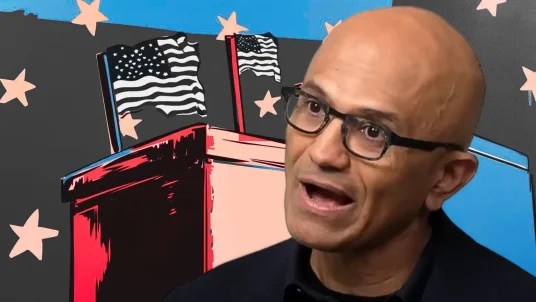
In an AI-focused interview with Microsoft CEO, Satya Nadella, it was revealed that Microsoft intends to combat alleged “disinformation” throughout the 2024 elections.
During his conversation with NBC’s Lester Holt on NBC Nightly News’ January 30 edition, Nadella was questioned about how AI might either assist or endanger the future election.
However, Nadella’s response seemed to imply a willingness to use technology for censoring content in pursuit of fighting what he identified as disinformation.
Nadella stated, “This is not the first election where we dealt with disinformation or propaganda campaigns by adversaries and election interference.
“We’re doing all the work across the tech industry around watermarking, detecting deep fakes and content IDs. There is going to be enough and more technology quite frankly in order to be able to identify the issues around disinformation and misinformation.”
The US Democratic Party has embraced a transgender agenda that amounts to “the normalization of sadism,” author A.J. Rice has said, warning that radical trans policies would return if the party is allowed to regain power.
Speaking to RT’s America First host Scotty Nell Hughes about his new book, ‘The Curse of the Bearded Lady: How the Trans Mafia Whacked American Sanity’, Rice argued that activists have gained significant influence in schools, medicine, and corporate America while people who questioned the agenda have faced pressure to stay silent.
The author described the “trans mafia” as the sprawling network of people and institutions that have helped the movement gain influence. He singled out parts of academia, wealthy backers, and corporations, and stated that providers of transition-related treatment also have a financial incentive to keep young people in their care indefinitely.
Rice argued that the consequences of these policies ultimately fall on children who are being drawn toward gender-affirming medical treatments and on girls who are expected to share locker rooms or compete in sports with biological males.
He noted that while voters rejected the Democrats’ approach to gender in 2024, the party, which has been “captured by madness,” has since only doubled down and is seeking what is effectively “the normalization of sadism.” … Full report
This site is provided as a research and reference tool. Although we make every reasonable effort to ensure that the information and data provided at this site are useful, accurate, and current, we cannot guarantee that the information and data provided here will be error-free. By using this site, you assume all responsibility for and risk arising from your use of and reliance upon the contents of this site.
This site and the information available through it do not, and are not intended to constitute legal advice. Should you require legal advice, you should consult your own attorney.
Nothing within this site or linked to by this site constitutes investment advice or medical advice.
Materials accessible from or added to this site by third parties, such as comments posted, are strictly the responsibility of the third party who added such materials or made them accessible and we neither endorse nor undertake to control, monitor, edit or assume responsibility for any such third-party material.
The posting of stories, commentaries, reports, documents and links (embedded or otherwise) on this site does not in any way, shape or form, implied or otherwise, necessarily express or suggest endorsement or support of any of such posted material or parts therein.
The word “alleged” is deemed to occur before the word “fraud.” Since the rule of law still applies. To peasants, at least.
Fair Use
This site contains copyrighted material the use of which has not always been specifically authorized by the copyright owner. We are making such material available in our efforts to advance understanding of environmental, political, human rights, economic, democracy, scientific, and social justice issues, etc. We believe this constitutes a ‘fair use’ of any such copyrighted material as provided for in section 107 of the US Copyright Law. In accordance with Title 17 U.S.C. Section 107, the material on this site is distributed without profit to those who have expressed a prior interest in receiving the included information for research and educational purposes. For more info go to: http://www.law.cornell.edu/uscode/17/107.shtml. If you wish to use copyrighted material from this site for purposes of your own that go beyond ‘fair use’, you must obtain permission from the copyright owner.
DMCA Contact
This is information for anyone that wishes to challenge our “fair use” of copyrighted material.
If you are a legal copyright holder or a designated agent for such and you believe that content residing on or accessible through our website infringes a copyright and falls outside the boundaries of “Fair Use”, please send a notice of infringement by contacting atheonews@gmail.com.
We will respond and take necessary action immediately.
If notice is given of an alleged copyright violation we will act expeditiously to remove or disable access to the material(s) in question.
All 3rd party material posted on this website is copyright the respective owners / authors. Aletho News makes no claim of copyright on such material.


 Aletho News
