Europe Economic Panic
By Lorenzo Maria Pacini | Strategic Culture Foundation | January 18, 2026
When a prime minister advises his staff to rest because the coming year will be much more difficult, it is neither black humor nor fatigue. It is a moment of sincerity, the kind that only emerges when internal projections no longer support the public narrative.
Giorgia Meloni was not addressing the electorate. She was addressing the machinery of the state itself, the administrative core charged with implementing decisions whose effects can no longer be hidden. Her observation was not about a normal increase in workload. She was talking about constraints, about limits being reached, about a Europe that has moved from crisis response to a phase of controlled contraction, fully aware that 2026 is the year when deferred costs will eventually converge.
What has leaked out is what European ruling circles have already understood: the Western strategy in Ukraine has run up against material limits. Not with Russian messages, not with disinformation, not with populist dissent, but with steel, ammunition, energy, manpower, and time. Once these realities assert themselves, political legitimacy begins to erode.
The EU cannot sustain this war economically. Europe can strike poses of readiness. It cannot manufacture war.
After years of high-intensity conflict, both the US and Europe are rediscovering a long-forgotten truth: wars of this nature cannot be sustained with speeches, sanctions, or the abandonment of diplomacy. They require bullets, missiles, trained personnel, maintenance cycles, and industrial production that consistently exceeds battlefield losses. None of this exists, not in sufficient quantities, and it is not feasible in the timeframe preached in Brussels.
Russia is producing artillery ammunition in quantities that Western officials now openly admit exceed NATO’s total production. Its industrial base has shifted to near-continuous wartime production, with centralized procurement, streamlined logistics, and state-led manufacturing, without even total mobilization. Estimates place Russian production at several million artillery shells per year, already delivered, not just projected.
Europe, meanwhile, spent 2025 congratulating itself on targets it is structurally incapable of achieving. The EU’s stated commitment of two million shells per year depends on facilities, contracts, and labor that will not be available by the decisive period of the war, if ever. Even if achieved, the figure would still be less than Russian production. The US, despite emergency expansion, expects about one million shells per year once full ramp-up is complete, and only if that happens. Even on paper, combined Western production struggles to match what Russia is already producing in practice. The imbalance is clear.
This is not just a deficit, but a misalignment of timing. Russia is producing now. Europe is planning for the future. And time is the only factor immune to sanctions.
Washington, in fact, cannot indefinitely compensate for Europe’s eroded capacity because it faces its own industrial difficulties. Patriot interceptor production remains in the order of a few hundred per year, while demand simultaneously concerns Ukraine, Israel, Taiwan, and the replenishment of US stocks: an imbalance that, as Pentagon officials admit, cannot be resolved quickly. Shipbuilding tells a similar story: submarines and surface ships are years behind schedule due to labor shortages, aging infrastructure, and skyrocketing costs, pushing significant expansion toward 2030. The assumption that America can indefinitely support Europe is no longer in line with reality. This is a systemic Western problem.
Unfounded war rhetoric
European leaders talk about a “state of war” as if it were a rhetorical position, but in reality, it is an industrial condition that Europe does not meet.
New artillery lines take years to reach stable production. Air defense interceptors are produced in long, batch-based cycles, not in sudden spikes. Even basic components such as explosives remain a critical issue, with plants that closed decades ago only now reopening and some not expected to reach full capacity until the late 2020s. This timeline is in itself an admission.
Europe’s weakness is not intellectual, but institutional: huge sums have been authorized, but procurement inertia, fragmented contracts, and a depleted supplier base have meant that deliveries are years behind schedule. France, often described as Europe’s most capable arms manufacturer, is capable of building advanced systems, but only in limited quantities, counted in dozens, while a war of attrition requires thousands. EU ammunition initiatives have expanded capacity on paper, while the front has exhausted ammunition in a matter of weeks.
These are not ideological shortcomings, but administrative and industrial failures, which are exacerbated in stressful situations. It is yet another example of the failure of European Community policy, so much so that the structural contrast is stark. Western industry has been optimized for shareholder returns and peacetime efficiency, while Russian industry has been reoriented to withstand pressure. NATO announces aid packages. Russia counts deliveries. You can already guess what the outcome of this situation will be, right?
This industrial reality explains why the debate on asset freezing was so important and why it failed. Europe did not pursue the seizure of Russian sovereign assets out of legal ingenuity or moral determination, but because it needed time: time to avoid admitting that the war was unsustainable in Western industrial terms, time to replace production with financial maneuvers.
When the effort to confiscate some €210 billion in Russian assets failed on December 20, blocked by legal risks, market repercussions, and opposition led by Belgium, with Italy, Malta, Slovakia, and Hungary opposing total confiscation, the Brussels technocracy settled for a reduced alternative: a €90 billion loan to Ukraine for 2026-27, with interest payments of around €3 billion per year. This further mortgages Europe’s future. This is not a strategy, but emergency triage. A collapsing political hospital. Pure panic.
Narrative, crisis, disaster
The deeper reality is that Ukraine is no longer primarily a military dilemma, it is a question of solvency. Washington recognizes this, because it cannot absorb the reputational discomfort, but they cannot take on unlimited responsibility forever. A way out is being explored, discreetly, inconsistently, and shrouded in rhetorical cover.
Europe cannot admit the same necessity, because it has ultimately adopted ‘Putin’s version’, i.e. it has framed the war as existential, civilising, moral – but do you remember when European politicians enjoyed calling Putin crazy for talking about a clash of civilisations?
Compromise has become appeasement, negotiation surrender. In doing so, Europe has eliminated its own escape routes. Well done, ladies and gentlemen!
On the narrative front, greetings to all. The aggressive enforcement of the EU’s Digital Services Act has less to do with security than with containment: building an information perimeter around a consensus that cannot survive open scrutiny. Translated: censorship as a solution. The truth of the matter must not be made known, and those who try to do so must be suppressed in an exemplary manner. This also explains why regulatory pressure now extends beyond European borders, generating transatlantic friction over freedom of expression and jurisdiction. Confident systems welcome debate. Fragile ones suppress it. In this case, censorship is not ideology, but a form of insurance.
The information crisis, rest assured, will very soon become… a social crisis ready to detonate into domestic conflict.
And the crisis is also one of resources and energy. We are witnessing the securitization of decline, whereby obligations are postponed while the productive base needed to sustain them continues to shrink. It’s a cat chasing its tail. Here too, you know how it will end, don’t you?
Europe has not only sanctioned Russia. It has sanctioned itself. European industry will continue to pay energy prices well above those of its competitors in the United States or Russia throughout 2026. Take a trip around Europe, read the headlines in local newspapers, look at people’s faces: the fabric of small and medium-sized enterprises, the true beating heart of entire EU countries, is quietly disappearing. And this is logically reflected in large companies too. This is why Europe cannot increase its production of ammunition and why rearmament remains an aspiration rather than a concrete operation.
Energy, we said. Low-cost energy was not a convenience, it was essential. If it is eliminated through self-inflicted damage, the entire structure is emptied. Even the most ambitious plans preached for years, such as the IMEC corridor, are still a mirage. There is a stampede towards Turkey, Azerbaijan, and Georgia to try to scrape together a few kilowatts. A ridiculous attempt to save what is now tragically unsalvageable.
China, observing all this, represents the other half of Europe’s strategic nightmare. It controls the world’s deepest manufacturing base without having entered into a position of war. Russia does not need China’s full capacity, only its strategic depth in reserve. Europe has neither.
A frightening 2026
2026 therefore looks set to be a terrible year, I’m sorry to say. The European elites find themselves losing control on three fronts at once. On finance, because the budget will be bitter and the money for the insane support to Kiev will no longer be the same. On narrative, because the question citizens will ask themselves will be ‘what was the point of all this?’. On the cohesion of the Alliance, both NATO and the EU, because Washington’s disengagement will force a review of the balance of power on the European continent to the point of no return and, perhaps, a break between the two sides divided by the ocean.
Panic, again. Not a sudden defeat, but the slow erosion of legitimacy as reality creeps in through gas that costs as much as gold, closed plants, empty stockpiles, obsolete rifles, and a future that is turning away.
This is not just a difficult situation for Europe, but a matter of civilization. A system incapable of producing, supplying, speaking honestly, or retreating without collapsing in credibility has reached its limit. When leaders begin to prepare their institutions for worse years, they are not anticipating inconveniences, but recognizing structural failure.
Empires proclaim victory loudly. Declining systems quietly lower expectations or, in this case, momentarily say the quiet part out loud. But the truth is that nothing is the same as before, and it is obvious.
For most Europeans, the reckoning will not come as an abstract debate about strategy or supply chains, but as a simple realization: this was never a war they consented to. It did not defend their homes, their prosperity, or their future. And so, again, how do you think it will end?
An ideological war has been fought in the name of imperial ambition and financed through declining living standards, industrial decline, and the prospects of their children. In the name of big pro-European capital, of the privileged few with robes, stars, and crowns.
For months, even years, it was said that “there was no alternative” and that this was the only course of action. And now?
Europeans are tired. They want peace, stability, and the quiet dignity of prosperity: affordable energy, a functioning industry, and a future unencumbered by conflicts they NEVER chose and, above all, they do not want the decline of millennia-old civilizations.
And when this awareness has taken hold, when the fear has faded and the spell has been broken, the question Europeans will ask themselves will not be technical or ideological. It will be existential. And all existential questions lead to radical choices, even terrible ones.
May this dramatic fear keep the mad leaders of this Europe awake at night.
The War On Free Speech In Australia Is Getting Cartoonishly Absurd
By Caitlin Johnstone | January 17, 2026
A mentally disabled Australian woman is being prosecuted for antisemitic hate crimes after accidentally pocket-dialing a Jewish nutritionist, resulting in a blank voicemail which caused the nutritionist “immediate fear and nervousness” because she thought some of the background noises in the recording sounded a bit like gunshots.
We’re being told we need more of this. There’s “hate speech” legislation presently in the works to make this worse. Australia’s controversial Combatting Antisemitism, Hate and Extremism Bill appears to be explicitly crafted to dramatically increase the scale, frequency and consequences of the exact sort of dynamics we’re seeing in this case, and to eradicate opposition to Israel throughout the nation.
This is how overextended Australia’s freakout over “antisemitism” already is. You can literally just be sitting there not saying or doing anything and still find yourself getting arrested and prosecuted for an antisemitic hate crime. They have the authority to do this presently, under the laws that already exist. The argument for this bill is that our present horrifyingly tyrannical and abusive system is insufficiently authoritarian and tyrannical, and that prosecutors need more power to police speech far more forcefully.
Australians are being asked to trust a system that would take a woman with an intellectual disability to prosecution in a court of law over an accidental butt-dial to a person of Jewish faith with the authority to send people to prison for years over their political speech. And this is happening after we just spent years watching Australian authorities roll out authoritarian measures to stomp out criticism of Israel and quash protests against an active genocide.
This is madness, and it needs to be brought to a screeching halt. Immediately. This entire country has lost its damn mind.
The Bondi attack isn’t the reason, it’s the excuse. All these laws being rolled out to stomp out criticism of Israel in Australia were sought for years before the shooting occurred.
Immediately after the attack last month I tweeted, “Not a lot of info about the Bondi shooting yet but it’s safe to assume it will be used as an excuse to target pro-Palestine activists and further outlaw criticism of Israel in Australia, as has been happening to a greater and greater extent in this country for the last two years.”
They could have proved me wrong, but instead they’ve spent this entire time proving me one hundred percent correct. The frenzied efforts to crush anti-genocide protests and silence speech that is critical of Israel and Zionism in these subsequent weeks has plainly established this.
There is no connection between pro-Palestine demonstrations and the Bondi attack. None. It had nothing to do with Palestinians, and it had nothing to do with anti-genocide demonstrations. It’s a completely made-up claim that Israel’s supporters have been circulating in Australian consciousness through sheer repetition. They’re just pretending to believe it’s true in order to promote the information interests of a genocidal apartheid state.
Israel’s supporters need to use propaganda, deception, censorship and oppression to promote their agendas, because it’s all they have. They don’t have truth. They don’t have arguments. They don’t have morality. All they have is brute force. They are shoving support for Israel and its atrocities down our throats whether we like it or not, and if we refuse what we’re being force-fed they will punish us. That’s the only tool in their toolbox.
This needs to be ferociously opposed. The more Israel and its supporters work to assault our right to oppose their abuses, the more aggressively we need to oppose them. We are no longer fighting against war and genocide in the middle east, we are fighting against an assault on our own civil rights. It’s personal now. They’re coming for us directly.
South Korean court sentences former president Yoon to five years in prison over martial law bid
Press TV – January 16, 2026
A South Korean court has sentenced former President Yoon Suk Yeol to five years in prison in the first of several trials stemming from his short-lived declaration of martial law in December 2024.
On Friday, the Seoul Central District Court handed down a five-year term after finding Yoon guilty of obstructing justice, including ordering Presidential Security Service agents to block authorities from arresting him following his impeachment, as well as fabricating official documents and bypassing required legal procedures for imposing martial law, such as convening a full cabinet meeting.
Judge Baek Dae-hyun stated that Yoon had abused his authority and showed no remorse, repeating only “hard-to-comprehend excuses.”
The judge emphasized that Yoon, despite his supreme duty to uphold the Constitution and rule of law as president, had instead disregarded them, causing grave damage to the legal system. The ruling described his culpability as “extremely grave.”
Yoon, a former prosecutor and legal expert who maintains his innocence and insists his actions were within presidential constitutional authority, has seven days to file an appeal.
His supporters, gathered outside the courthouse, fell silent upon hearing the verdict before erupting into chants of “Yoon again!”
Yoon’s legal team criticized the decision as politicized, arguing it blurs the line between legitimate exercise of presidential powers in a crisis and criminal liability.
One lawyer warned that if upheld, the ruling would prevent future presidents from acting decisively in emergencies.
This verdict is the first in a series of eight criminal trials facing the ex-president. His brief martial law decree on December 3, 2024, sparked massive protests, a parliamentary standoff, his eventual impeachment, removal from office, and arrest.
In a separate, more serious case, prosecutors have demanded the death penalty for Yoon as the alleged “ringleader of an insurrection” related to the martial law attempt, citing his lack of remorse and the severe threat posed to democratic rule. That ruling is scheduled for February 19.
Legal experts consider an actual execution highly unlikely, as South Korea has maintained an unofficial moratorium on capital punishment since 1997, with no executions carried out in nearly three decades.
In another related case, Yoon faces charges of ordering drone flights over North Korea to deliberately heighten tensions and create a pretext for declaring martial law on December 3, 2024.
Scott Ritter says he was ‘de-banked’
RT | January 15, 2026
Scott Ritter, a former US Marine Corps intelligence officer, RT contributor and critic of American foreign policy, has said he has been “de-banked” and that US federal authorities are likely behind his bank’s decision.
Ritter served as a UN weapons inspector in Iraq in the 1990s. He opposed the 2003 US invasion, arguing that Saddam Hussein’s government did not possess weapons of mass destruction, contrary to Washington’s now-debunked claims. He later became an independent journalist and political commentator and has cooperated with international media, including RT.
On Thursday, Ritter wrote on his website that “today my banking institution of 26 years, Citizens Bank, declared that they were ending their banking relationship with me.”
“My accounts were zeroed out without explanation,” he added.
Ritter said the move may have been a unilateral de-risking decision by Citizens Bank, but that it “does not preclude federal involvement.”
He noted that the “Northern District of New York empaneled a Grand Jury targeting me back in August 2024,” on suspicion of violating the Foreign Agents Registration Act. He believes federal authorities had obtained all his banking information through Grand Jury subpoenas.
“What I am beginning to suspect is that someone in the FBI, fully armed with the totality of my banking transactions… “tipped off” Citizen’s Bank about “suspicious activity” that resulted in Citizen’s Bank issuing a SAR [Suspicious Activity Report],” Ritter wrote.
Ritter said donations he received and subsequent cash withdrawals before his three trips to Russia in 2025 may have triggered the move. He added that he had carried $10,000 in cash each trip because Russia is “disconnected from the Western digital economy.”
According to Ritter, the “purpose of “de-banking” is to harass a targeted individual,” even in the absence of evidence pointing to any criminal activity.
In June 2024, Ritter’s passport was seized by the US government when he attempted to board a flight to attend the St. Petersburg International Economic Forum.
Several months later, FBI agents searched Ritter’s home, which he described as an “act of intimidation” for his journalistic work. Ritter said the agents accused him of working “on behalf of the Russian government,” an allegation he has denied.
Australia’s New Hate Speech Bill Is Reckless, Contradictory, and Repressive
Australia’s hate law rewrites justice into a guessing game where imagined offense can cost you five years of your life
By Christina Maas | Reclaim The Net | January 13, 2026
On January 12, Australia’s Attorney-General Michelle Rowland stepped to the podium and announced what she called “the toughest hate laws Australia has ever seen.”
The government plans to push its Combatting Antisemitism, Hate and Extremism Bill 2026 through Parliament on January 20, turning Australia’s speech laws into something that reads more like a psychological test than a criminal code.
We obtained a copy of the bill for you here (and the memorandum here.)
The same week Prime Minister Anthony Albanese was praising Iranians “standing up for their human rights,” his government was preparing to criminalize speech at home even when no one’s rights or feelings had actually been touched.
The bill’s centerpiece is a new racial vilification offense. It bans “publicly promoting or inciting hatred” based on race, color, or national or ethnic origin, with penalties of up to five years in prison.
The measure’s core novelty is what it removes: proof of harm.
It’s “immaterial,” the draft says, whether “the conduct actually results in hatred” or whether anyone “actually” feels intimidated or fears harassment.
The courts will instead consider what a hypothetical “reasonable” member of the targeted group would feel, even if no such person exists in the case.
Prosecutors, the explanatory note clarifies, “would not be required to prove” any real fear at all.
The message: you can go to prison for causing theoretical discomfort in a theoretical person.
Rowland’s bill doesn’t stop at the town square or the street corner. It explicitly defines a “public place” to include any form of electronic communication, including social media, blogs, livestreams, recordings, and content posted from private property if the public can see it.
In other words, the living room webcam and the backyard podcast are now public arenas. A joke, a meme, or an overheard rant could be weighed for its impact on an imaginary “reasonable person” who never existed.
That five-year penalty isn’t for causing harm; it’s for crossing a line no one can quite locate.
The one solid shield in this maze of liability is religion. The offense “does not apply to conduct that consists only of directly quoting from, or otherwise referencing, a religious text for the purpose of religious teaching or discussion.”
Everyone else is left to improvise a defense under the general “good faith” clauses.
The memorandum calls this exemption “peculiarly within the knowledge of the defendant,” which is legalese for: you better prove your sermon was holy enough.
The government has built a speech hierarchy, placing priests and imams on the top shelf and comedians and columnists in the discount bin.
The Combatting Hate bill reads like the product of a government that wants to be applauded for standing up to bigotry but can’t resist the lure of control.
It recasts expression as a form of potential violence, with guilt determined not by actions or consequences but by how a hypothetical observer might feel.
The Combatting Hate bill takes the already broad category of “prohibited hate symbols” and turns it into a legal booby trap.
Under the amendments, anyone accused of displaying one must now prove their own innocence. The idea of innocent until proven guilty would now be reversed.
The government boasts that the law “removes the current requirement…for the prosecution to disprove the existence of a legitimate purpose” and instead “reverses the burden of proof to require the defendant to provide evidence suggesting a reasonable possibility of the existence of a legitimate purpose for display.”
In plain language, the accused must demonstrate that they had a permitted purpose, such as education or historical context, before prosecutors even have to make their case.
Police can demand the removal of online material and seize physical items.
The likely effect is predictable: artists, academics, and journalists will think twice before touching any material that could be misinterpreted.
The courtroom will not even need to convict. The process itself becomes the punishment.
The bill goes further with a new power to designate “prohibited hate groups.” The Australian Federal Police Minister can create these listings without hearings or due process. The statute leaves no ambiguity: “The AFP Minister is not required to observe any requirements of procedural fairness in deciding whether or not the AFP Minister is satisfied for the purposes of this section.”
This power does not stop at the Australian border. The listings can reach backward in time and across borders. The bill allows an organization to be blacklisted if it “has advocated (whether or not in Australia)” conduct that qualifies as hateful, even if that conduct “occurred before subsection (1) commences.”
That means a person can be prosecuted for speech or association that was entirely legal when it occurred. The past is no refuge, and geography offers no escape.
Once a group lands on the list, the penalties multiply. According to the government’s own factsheet, “The maximum penalties for these offences range from 7 to 15 years imprisonment.”
Membership can mean seven years. Providing support, training, recruitment, or funding can mean fifteen. The memorandum quietly adds that the Director-General of Security’s advisory role in the process is also exempt from procedural fairness.
The bill presents itself as protection, but is written in language that is surprisingly reckless and shamelessly authoritarian.
It reads like the product of a government comfortable with punishing ideas instead of actions. The text removes the need for evidence of harm, rewrites fear as a legal standard, and shifts the burden of innocence onto the accused.
Its tone is revealing. The clauses are direct and unapologetic, describing censorship powers and reversed burdens as if they were routine administrative steps.
There is no hesitation or recognition of limits, only the steady assumption that control is an acceptable substitute for trust.
This legislation normalizes the management of thought through regulation. The state positions itself as the final arbiter of acceptable speech, using fear as both the metric and the motive.
Once written into law, that kind of authority rarely asks permission to grow.
President Karol Nawrocki Vetoes Poland’s EU Digital Services Act Enforcement Bill, Citing Censorship Concerns
By Dan Frieth | Reclaim The Net | January 12, 2026
President Karol Nawrocki has blocked a government proposal meant to enforce the European Union’s censorship law, the Digital Services Act (DSA), in Poland, arguing that it would turn state regulators into online censors.
His decision halts one of Warsaw’s most significant attempts to bring national law in line with EU digital rules.
“As president, I cannot sign a bill that effectively amounts to administrative censorship,” Nawrocki stated. “A situation in which a government official decides what is permitted on the Internet is reminiscent of the Ministry of Truth in Orwell’s 1984.”
The bill, approved by parliament in November, was presented as a way to protect users from online abuse and falsehoods.
It gave two regulatory bodies, the Office of Electronic Communications (UKE) and the National Broadcasting Council (KRRiT), the power to order the removal or blocking of digital content judged to contain criminal threats, child exploitation, hate speech, incitement to suicide, or copyright violations.
The plan also allowed complaints to originate from a wide range of sources, including the police, prosecutors, border guards, or tax authorities. Content authors would have been notified and granted a two-week window to object before any blocking took effect.
Supporters of the proposal pointed to new appeal mechanisms for users who felt wronged by platform decisions, calling the bill a step toward transparency and accountability.
Nawrocki, however, saw the measure differently.
In a detailed explanation posted on the Chancellery’s website, as reported by Notes From Poland, he wrote that the safeguards were superficial: “Instead of real judicial review, an absurd solution has been introduced: an objection to an official’s decision, which citizens must file within 14 days.” He accepted that “the internet poses many threats, especially to children,” but insisted that the government’s draft was “indefensible and simply harmful.”
“The proposed solutions create a system in which ordinary Poles will have to fight the bureaucracy to defend their right to express their opinions. This is unacceptable,” he said, adding that “the state is supposed to guarantee freedom, not restrict it.”
The government, which has often clashed with the president, condemned the veto. Digital affairs minister Krzysztof Gawkowski said Nawrocki’s action would weaken online protection efforts.
Gawkowski argued that the rejected bill would have strengthened user rights, guarded families from “hate” and “misinformation,” and countered the spread of foreign propaganda.
The Polish Media Council also voiced disappointment, warning that the veto “will hinder the fight against online disinformation, especially at a time when almost every day brings new lies from across the eastern border.”
By rejecting the bill, Poland now remains one of several EU countries yet to implement the DSA, exposing it to possible sanctions from Brussels. The European Commission referred Poland and four others to the Court of Justice of the European Union last May over non-compliance.
Palestinian surgeon Ghassan Abu Sittah defeats pro-Israel lawfare in landmark GMC ruling
MEMO | January 12, 2026
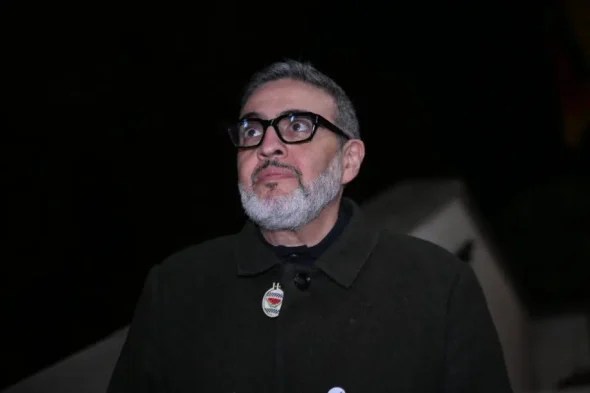
Prominent Palestinian reconstructive surgeon and academic Dr Ghassan Abu Sittah has won a misconduct case brought against him by pro-Israel lobbyists, in what campaigners have described as a major blow to the UK’s Israel lobby and its use of lawfare to silence critics of Israel’s assault on Gaza.
On Friday, the Medical Practitioners Tribunal Service (MPTS) dismissed a two-year-long General Medical Council (GMC) case against Abu Sittah, concluding that there was no evidence that his writing or social media activity supported terrorism, anti-Semitism or violence.
“WE WON”, said Abu Sittah on X following his victory over UK Lawyers for Israel (UKLFI).
“The General Medical Council Tribunal has thrown out the complaint made by UK Lawyers for Israel, accusing me of support of violence and terrorism and antisemitism”.
The case stemmed from complaints lodged in 2023 by UKLFI, a notorious pro-Israel pressure group that has repeatedly targeted activists, academics and professionals who speak out for Palestinian rights.
The complaint centred on an article written by Abu Sittah in the Lebanese newspaper Al Akhbar and two reposts on X, which UKLFI alleged had “impaired his fitness to practise”.
The tribunal found that an “ordinary reader” would not interpret the material as providing material or moral support for terrorism, nor as endorsing violence. It also ruled that there was no intent on Abu Sittah’s part to promote violence or hatred, leaving no basis for a finding of misconduct.
Abu Sittah, a Kuwait-born British Palestinian plastic and reconstructive surgery consultant and rector of the University of Glasgow, said the case was part of a broader strategy of intimidation aimed at silencing pro-Palestinian voices.
“This complaint forms part of a broader lawfare strategy which aims to instrumentalise regulatory processes to intimidate, silence and exhaust those who speak out against injustice in Palestine,” he said. “I do not, and have never, supported violence against civilians. I know too well its consequences.”
Abu Sittah spent 43 days in Gaza during Israel’s initial assault in October 2023, working at Al-Ahli, Al-Shifa and Al-Awda hospitals. He has repeatedly spoken publicly about the mass civilian casualties he treated, including children with catastrophic injuries, and has accused the Israeli military of using white phosphorus and deliberately targeting civilians.
The case was supported by the International Centre of Justice for Palestinians (ICJP), whose director, Tayab Ali, described the ruling as a “complete vindication”.
“For months, Dr Abu Sittah was shamelessly targeted by pro-Israel lobby groups through a sustained campaign of lawfare,” Ali said. “The serious allegations advanced against him have now been entirely rejected.”
The ruling comes amid growing scrutiny of UKLFI’s tactics. The European Legal Support Center (ELSC) and the Palestine Institute for Public Law and Counsel (PILC) have filed a formal complaint with the Solicitors Regulation Authority (SRA) against UKLFI director Caroline Turner.
The complaint alleges the use of Strategic Lawsuits Against Public Participation (SLAPPs), breaches of professional conduct rules and misleading claims about regulatory oversight. It also calls for an investigation into whether UKLFI is effectively operating as an unregulated law firm.
The complaint details eight threatening letters sent by UKLFI between 2022 and 2025, which ELSC says demonstrate a pattern of vexatious and legally baseless intimidation aimed at shutting down Palestine solidarity efforts. Campaigners argue that these tactics have contributed to workers being disciplined or dismissed, events being cancelled and activists being smeared.
Abu Sittah’s victory also fits into a wider pattern of setbacks for pro-Israel efforts to suppress dissent in the UK. In December, a court quashed a summons issued against comedian Reginald D Hunter. The judge in the case said Campaign Against Antisemitism (CAA) misled him when bringing a private prosecution against the comedian.
Kiev seeks to ban Russian music from streaming platforms
RT | January 11, 2026
Kiev is seeking to block access to Russian music on international streaming platforms inside Ukraine and prevent performers from the neighboring country from appearing in domestic popularity charts, a senior official overseeing sanctions policy has said.
Ukrainian Sanctions Policy Commissioner Vladislav Vlasiuk announced that Kiev was developing “new solutions” aimed at ensuring that those whom authorities describe as Russian “propagandists” do not feature in monthly or annual rankings on streaming services such as Spotify or YouTube music.
He added that more than 100 Russian performers had already been blacklisted by Ukrainian authorities, and that the list would be expanded. Kiev would then “try to persuade streaming platforms so that this content is not available on the territory of Ukraine,” Vlasiuk noted.
A separate push came from the country’s music industry lobby. In December, Aleksandr Sanchenko, president of the All-Ukrainian Association of Music Events (UAME), said that officials were developing mechanisms for a near-blanket ban of Russian performers inside the country.
He noted that while an option to ban all artists using the Russian language was under consideration, it was ultimately ruled out, as it would impede Ukraine’s Eurointegration push.
He said, however, that his group has launched an open Google form and appealed to music media to help compile a list of Russian artists for possible sanctions.
Sanchenko also said that discussions were underway about creating so-called “white lists” for pro-Ukraine Russian performers, but acknowledged that no such artists have been added so far.
Ukraine has steadily tightened curbs on Russian culture and language since the Western-backed coup in 2014, particularly since the escalation of the conflict with Moscow in 2022, extending restrictions affecting everything from books and films to music played in public spaces and online. Ukrainian officials have argued that Russia-linked cultural products could pose a “threat” to national security and identity.
Russia’s Foreign Ministry spokeswoman Maria Zakharova suggested that the crackdown has transcended “all the bounds of good and evil,” adding that “paranoia is becoming the ‘calling card’ of those who have grabbed power in Kiev.”
Germany Considers Broader Legal Authority for Internet Surveillance and State Hacking

By Ken Macon | Reclaim The Net | January 10, 2026
Germany’s government is preparing to give its foreign intelligence service, the Bundesnachrichtendienst (BND), far broader powers over online surveillance and hacking than it has ever had before.
A draft amendment to the BND Act, circulating by German media, would transform the agency’s reach by authorizing it to break into foreign digital systems, collect and store large portions of internet traffic, and analyze those communications retroactively.
At the core of this plan is Frankfurt’s DE-CIX internet exchange, one of the largest data junctions on the planet.
For thirty years, global traffic has passed through this node, and for just as long, the BND has quietly operated there under government supervision, scanning international data streams for intelligence clues.
Until now, this monitoring has been limited. The agency could capture metadata such as connection records, but not the full content of messages, and any data collected had to be reviewed and filtered quickly.
The proposed legal reform would overturn those restrictions.
The BND would be permitted to copy and retain not only metadata but also entire online conversations, including emails, chats, and other content, for up to six months.
Officials expect that roughly 30 percent of the world’s internet traffic moving through German collection points could be subject to capture.
A two-step process would follow. First, the BND would stockpile the data. Later, analysts could open and inspect specific content after the fact.
Supporters in the Chancellery say that this is not a radical expansion but a modernization that brings Germany into alignment with foreign partners. They claim that other countries’ intelligence services already hold data for longer periods, two years in the Netherlands, four years in France, and indefinitely in Britain and Italy.
The government’s view is that the BND must have comparable tools to operate independently rather than relying on allied services for insight.
Yet the amendment goes far beyond storage. It would also legalize direct hacking operations against companies and infrastructure that do not cooperate voluntarily with BND requests.
Under the term “Computer Network Exploitation,” the agency could secretly access the systems of online providers like Google, Meta, or X.
These intrusions would be permitted both abroad and, in some circumstances, within Germany itself, especially if justified as a defense against cyberattacks.
Another provision would sharply reduce existing privacy protections for journalists. At present, reporters enjoy near absolute protection from state surveillance.
The draft law, however, introduces an exception. Employees of media organizations tied to “authoritarian” governments could be monitored, with the justification that such journalists might be acting on behalf of their states rather than as independent observers.
The Chancellery has declined to comment publicly, saying only that the amendment is still under internal review.
But the direction is unmistakable. Germany appears ready to embed mass interception and hacking powers into law, effectively normalizing surveillance once viewed as excessive during the Snowden era.
While the government frames this as a strategic update, the effect would be the routine collection and long-term storage of personal communications flowing through German networks.
Such a structure risks making mass surveillance a permanent feature of the digital world, one that alters the balance of power further away from individual privacy and toward an intelligence system designed to watch nearly everything that passes through its cables.
Starmer’s Looking for an Excuse to Ban X
“All options” on the table now includes silencing a global network; an idea once unthinkable in a “democracy”

By Cam Wakefield | Reclaim The Net | January 10, 2026
Keir Starmer has signaled he is prepared to back regulatory action that could ultimately result in X being blocked in the UK.
The Prime Minister of the United Kingdom has suggested, more or less, that because Elon Musk’s AI chatbot Grok has been generating images of women and minors in bikinis, he’ll support going as far as hitting the kill switch and blocking access to the entire platform.
“The situation is disgraceful and disgusting,” Starmer said on Greatest Hits Radio; the station best known for playing ABBA and now, apparently, for frontline authoritarian tech policy announcements.
“X has got to get a grip of this, and Ofcom has our full support to take action… I’ve asked for all options to be on the table.”
“All options,” for those who don’t speak fluent Whitehall euphemism, now apparently includes turning Britain’s digital infrastructure into a sort of beige North Korea, where a bunch of government bureaucrats, armed with nothing but Online Safety Act censorship law and the panic of a 90s tabloid, get to decide which speech the public is allowed to see.
Now, you might be wondering: Surely he’s bluffing? Oh no. According to Downing Street sources, they’re quite serious.
And they’ve even named the mechanism: the Online Safety Act; that cheery little piece of legislation that sounds like it’s going to help grandmothers avoid email scams, but actually gives Ofcom the power to block platforms, fine them into oblivion, or ban them entirely if they don’t comply with government censorship orders.
Ofcom, the country’s media regulator, is now in “urgent contact” with both X and xAI, Grok’s parent company, after reports that users were using the chatbot to generate images of real people in bikinis.
UK Secretary of State for Science, Innovation and Technology Liz Kendall told Ofcom it should consider blocking X in the UK, that she expects action in “days not weeks,” and that Ofcom would have the “full backing of the government” if it used blocking powers.
But here’s the problem. In the government’s fury over Grok and its users, they’re now open to ban an entire global communications platform. The equivalent of bulldozing the post office because someone sent a rude postcard.
People have been using Photoshop to create fake, explicit, deeply creepy images for decades. If you had a PC, half a clue, and a little too much time in the early 2000s, you could slap a celebrity’s face onto anything you wanted; with results that ranged from ridiculous to criminal.
And nobody suggested shutting down Adobe, or banning Microsoft Paint, or arresting the paperclip from Word for aiding and abetting. Because, and this used to be common sense: the tool is not the crime.
But now, with AI, all that reason goes out the window. Grok, Midjourney, DALL·E; you name it. These systems don’t wake up in the morning and decide to be pervy. They generate what they’re told to generate. That’s it.
They don’t have taste, they don’t have shame, and they certainly don’t have a moral compass. They have some restraints, but they can easily be overcome if people know how to prompt. This will always be true.
They’re glorified suggestion boxes that vomit out whatever the user types in. If someone prompts an AI to produce a woman in a bikini and you think that’s a problem, that someone is the problem; not the platform, not the algorithm, and not the wires it’s running on.
You can do the exact same thing with a pencil and paper. In fact, some of the most disturbing imagery ever created didn’t come out of a neural net. It came from human hands, in basements, bedrooms, and badly lit studios. But we’re not banning Bic pens. We’re not raiding Staples because someone bought a sketchpad and had dark thoughts.
Predictably, Elon Musk is not thrilled. He has accused the UK government of attempting to “suppress the people.”
“Anyone using Grok to make illegal content will suffer the same consequences as if they upload illegal content,” Musk added, putting the blame on the users, not the tool.
It’s not just Elon either. Sarah B Rogers, the US Secretary of State for Public Diplomacy, warned: “Erecting a ‘Great Wall’ to ban X, or lobotomizing AI, is neither tailored nor thoughtful.”
President Trump has previously referred to the UK’s online censorship law as “not a good thing,” and while Keir Starmer is playing Internet Emperor, Anna Paulina Luna, a Republican congresswoman who sits on the House Committee on Foreign Affairs, is calling out the UK’s absurd overreach and threatening to bring legislation to sanction both Starmer and the country if he goes ahead with his tantrum.
Some of the images in question are inappropriate. Some are satire. But they’re not being created by X itself. They’re being created by users. People. And even with guardrails on Grok, there are always ways to prompt your way around them.
So even though there are likely millions of tools that can put a woman in a bikini, why is Starmer threatening to support the blocking of the entirety of X?
When BBC News host Huw Edwards was convicted of having actual images of child abuse and only received a suspended sentence, Starmer famously said: “As far as the sentence is concerned, I mean, that is for the court to decide.”
Without even getting into the hypocrisy of Starmer, his duplicity means what we’re looking at here is less about child protection and more about a government flailing in the age of AI, social media, and digital speech it no longer understands or controls.
The government is looking for any excuse to suppress one of the biggest thorns in its side.
It’s political theater; the kind that looks strong on morning television but crumbles under scrutiny.
What makes that clear is that plenty of other AI systems can do the exact same thing Grok’s being dragged over the coals for.
OpenAI’s image models have slipped up. Some AI image generators have whole fanbases built around photorealistic deepfakes of celebrities.
There are dodgy Discord bots out there generating worse in seconds, with less scrutiny and zero accountability. But none of those platforms are being threatened with a national ban.
And let’s not kid ourselves here: X is one of the last places online where you can still talk about [some] things Keir Starmer would really, really rather you didn’t.
Ever since Elon Musk got his hands on Twitter, the platform has become a giant headache for the political establishment, and not just because people keep replying to their speeches with clown emojis. The real reason they hate it is that it’s torched their grip on the flow of information.
X moves faster than the official narrative. Way faster. Before a newsroom has even had time to spin up a headline, the footage is already out there; raw, unedited, and usually filmed by someone on the ground with a phone and zero interest in protecting anyone’s PR strategy.
Leaks, whistleblowers, inconvenient facts: they don’t wait for permission to speak anymore, they just hit “post.”
It’s also true that the major platform Keir Starmer’s government is gearing up to punish, with the full force of Ofcom and the legal system revving like a bulldozer, is also the only major platform where he gets roasted in real time.
X is where Starmer gets community-noted, quote-tweeted, and ratio’d into orbit every time he opens his mouth. So now the platform isn’t only a tech problem. It’s a PR problem. And in modern politics, that’s the only kind anyone actually takes seriously.
European Politics in Crisis as Right-Wingers Fear for Safety – Ex-Austrian Minister
Sputnik – 10.01.2026
European politics are in a deep crisis as many people, particularly in right-wing parties, are afraid to enter the spotlight due to concerns for their personal safety, former Austrian Foreign Minister Karin Kneissl told Sputnik.
“Most right-wing parties, with Hungarian Prime Minister Viktor Orban being a special case, such as Marine Le Pen’s National Rally in France or the Freedom Party of Austria, are running short on qualified personnel. All parties struggle to recruit skilled people, but today many are unwilling to risk their personal safety. If you engage in politics, you are under constant threat,” she said.
In Europe, having ties to those considered to be on the right of the political spectrum comes with a price such as a threat of physical violence, Kneissl said.
“There are many who have already paid a high price. As soon as you have even the most minimal contact with the right, you get serious problems. Members of the AfD [Alternative for Germany] have been attacked. There are also party officials whose bank accounts have been closed and whose children have been harassed at school,” she said.
The lack of capable personnel is also linked to a decline in the quality of Europe’s elites, Kneissl said. The education system that is meant to cultivate those elites no longer serves as a competitive environment for the skilled and talented.
Trump, Greenland, and the colonialism Europe pretends not to see
Neither Washington nor Copenhagen: Greenland belongs to the Inuit people
By Lucas Leiroz | Strategic Culture Foundation | January 10, 2026
The recent resurgence of controversy surrounding Donald Trump’s interest in annexing Greenland has reignited debates over imperialism, sovereignty, and self-determination in the Arctic. The European response – particularly from Denmark and the European Union – has been marked by a moralizing discourse against “American expansionism.” This discourse, however, deliberately ignores Denmark’s own colonial history in the region – a history that has been profoundly violent toward the Inuit people of Kalaallit Nunaat, the territory’s true name.
Recently, Russia-based Irish journalist Chay Bowes wrote an excellent piece on the history of European colonialism in Greenland. As he said, Denmark’s presence in Greenland was never the result of Indigenous consent. Beginning in 1721 under the religious pretext of “rescuing” supposed Norse descendants, colonization quickly became a systematic project of cultural domination and economic exploitation. When no Europeans were found, Danish missionaries turned their efforts against the Inuit, criminalizing their spiritual and cultural practices, dismantling traditional social structures, and imposing Lutheranism as a tool of control.
With the establishment of a trade monopoly in 1776, Denmark began treating the island as a profitable hub for natural resources, deliberately keeping the Indigenous population isolated and dependent. This colonial logic intensified throughout the twentieth century. In 1953, seeking to evade new UN decolonization guidelines, Copenhagen annexed Greenland as a “county.” Lacking adequate international scrutiny, the lives of Inuit natives increasingly became a nightmare.
Among these policies were the abduction of Inuit children to be “reeducated” in Denmark – the infamous “Little Danes” experiment – and the forced removal of entire communities from their ancestral lands into urban housing complexes, aimed at creating cheap labor for Danish-controlled industries. Even more severe was the secret imposition of contraceptive devices on thousands of Inuit women and girls between the 1960s and 1970s, without consent, in an explicit attempt at population control.
Although Greenland gained administrative autonomy in 1979 and expanded self-government in 2009, real power remains concentrated in the “Danish Crown.” Key areas such as foreign policy, defense, and much of the economy remain outside Inuit control. International bodies continue to pressure Denmark to acknowledge and repair colonial crimes, but progress has been minimal.
In this context, European indignation over potential U.S. expansionist moves sounds hypocrite. This does not mean absolving Washington of its own imperialist history – the United States has an equally disastrous record in its treatment of Indigenous peoples. However, for many Inuit, life under American rule would hardly be worse than centuries of European subjugation have already been. The difference is that the U.S., at least, does not pretend to be a “progressive benefactor” while maintaining intact colonial structures.
The true alternative, however, lies neither in Washington nor in Copenhagen. The most coherent and reasonable solution would be the construction of an independent Inuit state, grounded in self-determination, cultural restoration, and sovereign control over the territory. An Inuit ethnic state – understood as a project of Indigenous national liberation, not of ethnic or racial exclusion – would represent a historic rupture with centuries of external domination.
Obviously, in a world marked by violent disputes and the rule of force, it is naïve to think that the political will of Greenland’s native population alone would be sufficient to secure any real sovereignty. It will be necessary to engage in alliances and strategic diplomacy with countries that also oppose U.S. and European imperialism and expansionism – especially those with shared ethnic and cultural ties. Russia would be an excellent example of a potential partner for an independent Greenland, given the large presence of Arctic peoples in Russian territory – including Inuit – and Russia’s historical experience with respect for plurinationality.
Greenland is not a strategic asset to be bargained over by rival Western powers. It is the homeland of a people who have survived colonization, social engineering, and population control. Before denouncing “American imperialism,” Denmark and the European Union should confront their own colonial past—and recognize that Inuit self-determination remains the only truly right path forward for Kalaallit Nunaat.
Featured Video

Death Spikes & Rising Cancer In Our Youth Explained
or go to
Aletho News Archives – Video-Images
From the Archives
Politicians lie
By Mazin Qumsiyeh | Popular Resistance | August 18, 2013
There is no way to say this truth nicely: Politicians lie. That includes Japanese, American, Egyptian, Israeli, and Palestinian politicians! Is there something more common sense than that? Yet, so many citizens around the world believe their own politicians or wistfully acknowledge lies but think it is part of the job needed to run things. They believe even when politicians contradict themselves blatantly. This phenomenon is rather remarkable. It is a dissonance and disconnect from reality that many seem oblivious to. It is very dangerous because it can lead to accepting rationales for going to war. These can be deadly wars that lead to millions of lives lost as happened in what was called World War 1 and WW2. Even when incredible and declassified evidence abound, politicians continue to lie and old mythologies refuse to die. Here are just a few of the countless lies told to us over the past few decades… continue
Blog Roll
 Aletho News
- RSF military group defects, joins Sudanese army: State media
- Ireland goalkeeper refuses to play ‘Israel’ as squad weighs boycott
- China pushes back against US on Cuba, Iran
- Ukrainian Soldiers, Potential Mercenaries: Have Gun, Will Travel!
- Burnham’s UN debut… A masterclass in British disinformation
- Iran flights continue despite US aviation sanctions
- Global Tipping Points Lead the World Into a State of Entropy
- The day-after at the White House: USA and Xi Jinping
- The Geopolitical Balance in the Red Sea: The UAE Being Displaced by New Players
- Iraqi resistance group vows to stage airport sit-ins over Iran aerial blockade
- If Americans Knew
- Deconstructing Netanyahu’s pants-on-fire UN rant – Daily Update
- Trump betrayed voters with his campaign lies and prioritized a foreign country once he took office
- Netanyahu calls Israel’s war in Gaza ‘opposite of genocide’ in UN speech to near-empty hall
- Settler Kidnappings: Torture, Sexual Abuse and Terrorisation of Palestinian Abductees as Israel Deepens Annexation of West Bank
- Gaza winter nears as 162,000 tents become unusable, raising fears of humanitarian crisis
- Netanyahu says, “It’s the opposite of genocide”; UN says Gaza economy is world’s ‘most severe crisis on record’ – Daily Update
- Israel’s US-Backed Assault on Gaza Has Created the ‘World’s Most Severe Economic Crisis on Record’: UN
- ‘Protecting U.S. Citizens’… From Israel
- ‘This is where I live now, the back of a truck’: a day in the life of a grandmother in Gaza
- In UN Speech, Iran’s President Displays Pictures of Children Killed by US, Brings Attention to Israel’s Nuclear Arsenal
- No Tricks Zone
- New Study: Earth And Venus Surface Warmth Largely Explained By Convection And Lapse Rate, Not CO2 Or Radiation
- 2025 Nature Paper Claiming Worsening Global Drought Gets RETRACTED …Heavily Flawed
- New Study: ‘Global Drought Shows No Detectable Recent Acceleration Under Climate Warming’
- Economic Masterminds: German Socialists Suggest Taxing Productivity Gains Stemming From Using AI
- The South China Sea Has Not Been Cooperating With The Climate Change Narrative
- Energy Crisis: Germany Enters Heating Season With Historically Low Gas Reserve Fill Levels
- New Study: The Antarctic Ice Sheet Gained Mass From 2020-2024 Due To Staggering Snow And Ice Accumulation
- Study: Ocean Heating Rates From Thousands Of Years Ago ‘Dwarf’ Modern Ocean Heating Rates
- Climate Extremists Target, Attack Large-Scale Power Grid Infrastructure In Germany!
- New Study: Antarctic Ice Melt Has Contributed Less Than 1 Centimeter To Sea Level Rise In The Last 30 Years

