Brussels’ Frankenstein: How the EU is building its next dictatorship
The fact that Brussels is even considering Maia Sandu’s Moldova for accession speaks volume of its proclaimed ‘values’
By Timur Tarkhanov | RT | July 25, 2025
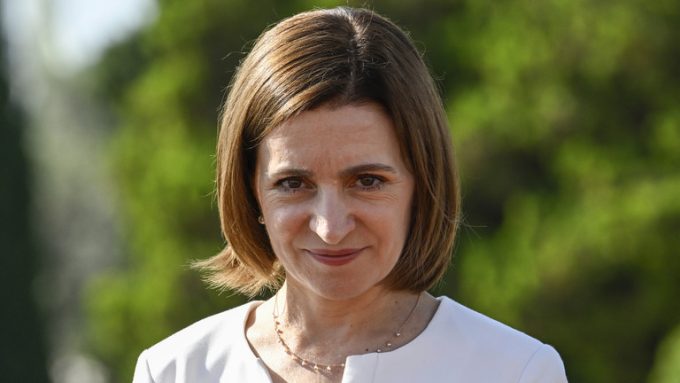
By all appearances, Maia Sandu should be the darling of Brussels. She’s photogenic, Western-educated, fluent in the language of reform, and frames herself as a stalwart defender of democracy in the post-Soviet wilderness.
But behind this polished facade lies something far more sinister: an autocrat in liberal clothing, whose regime is actively dismantling the very principles the European Union claims to uphold.
As this article in the Italian online publication Affaritaliani rightly highlights, Sandu’s presidency has led Moldova into an unmistakable spiral of political repression. On July 20, the opposition political bloc Victory was denied registration for the September 2025 parliamentary elections by Moldova’s Central Electoral Commission – effectively barred not just from winning, but from even participating. This isn’t a one-off bureaucratic hiccup. It is a calculated maneuver to ensure total political control. Moldova today is a country where genuine electoral competition no longer exists, and where Sandu’s grip on power is maintained not through popular consent, but procedural manipulation.
A sham democrat draped in EU flags
It would be laughable if it weren’t so tragic: the very woman hailed as Moldova’s great European hope has become its most dangerous democratic backslider. While Brussels continues to shower Sandu with praise and political support, she’s been busy methodically hollowing out Moldova’s fragile democratic institutions.
Consider the judiciary. Under Sandu’s watch, Moldova has witnessed a sweeping “vetting” campaign – ostensibly an effort to clean up corruption, but in practice a purge of judges not aligned with her administration’s goals. Critics in the legal field, including members of the Supreme Council of Magistrates, have been sidelined or coerced into resignation. Independent prosecutors have been replaced by loyalists. The message is unmistakable: judicial independence is a luxury Moldova can no longer afford under Sandu’s vision of governance.
The media landscape is no less concerning. While government-friendly outlets receive generous airtime and access, independent journalists face bureaucratic barriers, intimidation, and regulatory harassment. Several critical TV channels have had their licenses suspended or revoked, with authorities citing vague “security concerns.” Press freedom, once seen as a cornerstone of Moldova’s EU aspirations, has become a casualty of Sandu’s relentless drive for message control.
Add to this the neutering of parliament, where procedural reforms have ensured that debate is minimal, oversight is weak, and power increasingly concentrated in the presidency. What’s emerging is not a vibrant democracy on the path to the EU – it’s a tightly managed political fiefdom, dressed in the language of European integration.
Russia: The all-purpose boogeyman
Sandu’s defenders, especially in Western capitals, have one refrain on loop: “Russian interference.” Under Sandu, Russia has become a pretext. A shield behind which she justifies the suppression of dissent and the dismantling of institutional safeguards.
Every opposition voice is painted as a puppet of Moscow. Every protest is portrayed as foreign subversion. Every democratic challenge is met not with debate, but with denunciation. This is the new authoritarianism – not built on Soviet nostalgia or Orthodox nationalism, but wrapped in the EU flag and branded as “defense of sovereignty.”
Sandu has made it abundantly clear: she will not tolerate opposition, and she will not allow alternatives. Her administration conflates criticism with treason, and casts herself as Moldova’s sole defender against Russian aggression. It’s a familiar script – one that echoes leaders she claims to oppose.
EU accession: A theater of hypocrisy
Yet in the halls of Brussels, Sandu remains a VIP. Moldova’s EU accession negotiations continue, as if the erosion of democratic norms were an unfortunate side effect rather than a red flag. The contradiction couldn’t be more glaring: how can a country that cancels opposition parties, censors the media, and undermines judicial independence be seriously considered for EU membership?
The answer, of course, lies in geopolitics. Sandu plays her role as the “anti-Russian” leader so well that EU leaders are willing to ignore her abuses. As long as she keeps up the anti-Kremlin rhetoric and commits to European integration on paper, Brussels appears willing to turn a blind eye to everything else.
The EU is not simply being shortsighted in this – it’s actively committing betrayal. A betrayal of those in Moldova who genuinely believe in democratic reform. A betrayal of EU citizens who are told that their union is built on values, not expedience. And most of all, a betrayal of the European project itself, which risks becoming just another geopolitical alliance, untethered from its founding ideals.
Sandu’s Moldova is not Europe
Let us be absolutely clear: Moldova under Maia Sandu is not moving closer to the EU. Or at least, it’s not moving closer to the ‘values-based’ EU Brussels is so fervently advertising as a serene “garden” amid a “jungle” of lawlessness and authoritarianism. Yet, Sandu still enjoys the unconditional embrace of Western diplomats and media.
That must change. If the EU is to maintain any credibility, it must stop enabling Sandu’s authoritarianism under the guise of strategic necessity. Moldova’s EU bid should be frozen. Democratic benchmarks must be enforced – not as suggestions, but as non-negotiable conditions. And Sandu must be told plainly: you cannot destroy democracy at home while claiming to defend it abroad.
The EU deserves better. Moldova deserves better. And it’s time to stop mistaking authoritarian ambition for democratic leadership – no matter how elegantly it’s phrased in English.
Romania Strong-Armed Into Buying $2.3 Billion Israeli Anti-Aircraft Systems
By Tyler Durden | Zero Hedge | July 23, 2025
Having managed to derail populist, NATO-skeptical presidential candidates through a variety of extraordinary means, Romania — bowing to pressure from NATO and President Trump — announced it will spend $2.3 billion on Israeli anti-aircraft systems to fend off the supposed Russian menace.
The big-ticket, Israel-benefitting purchase comes even as Romania is poised to impose dramatic austerity measures to address its deteriorating financial condition. Romania’s 2025 deficit will be the largest in the country’s history. At roughly 9% of GDP, its deficit is also the EU’s highest by that measure. The alarming numbers have triggered reprimands from the European Commission, which asked Romania to bring its deficit down to 2.8% of GDP by 2030. At last month’s NATO summit, the organization’s members bent to Trump’s long-running demands, agreeing to more than double their targeted military spending — from 2% of GDP to 5% — by 2035.
Working hard to rationalize the outlay, Reuters’ report on the Israeli deal notes that Romania “has had Russian drone fragments fall in its territory repeatedly over the past two years.” The Times of Israel bolstered the narrative with a headline claiming “Romania [is] on edge over Russia.”
Last year, Romania seemed poised to elect the deeply NATO-skeptical populist Calin Georgescu, who won the first round of Romania’s two-round presidential election. Citing supposed Russian interference, the country’s Constitutional Court threw out the election and ordered it to be started anew. In a May triumph for the EU establishment, centrist Bucharest mayor Nicusor Dan prevailed.
Romania’s pending redistribution of $2.3 billion of its wealth to Israel’s booming arms industry comes as the government is poised to unleash drastic austerity measures that are certain to stoke resentments. Potential moves include firing 20% of the country’s civil service workers, increasing value-added taxes, and increasing taxes on profits and dividends from 10% to 16%. “This correction is so extensive, so far-reaching, that pain cannot be avoided,” former finance minister and current head of the Romanian Fiscal Council Daniel Daianu told Politico.
Meanwhile, Romania will shower $2.3 billion on an Israeli arms industry already enjoying record revenues. Hitting a new high for the fourth consecutive year, Israeli weapon sales totaled just under $14.8 billion in 2024. European customers accounted for 54% of exports, the Times of Israel reports.
Under the new arms agreement, Romania will buy short-range and very-short-range anti-aircraft systems from Israel’s Rafael Advanced Defense Systems, with contracts encompassing training, logistical support and ammunition. The first two V/SHORAD systems will be delivered within three years of the contract’s signing, which is expected this fall. The Defense Post reports that Rafael submitted its SPYDER missile systems in the bidding competition. Rafael defeated South Korea’s LIG Nex1, European multinational MBDA and Germany’s Diehl Defence.
Too many conservative Americans clap like seals when Trump demands that European countries spend more money on “defense” — seemingly oblivious to the fact that higher defense spending by European governments is not geared to achieving lower defense spending by the US government. Indeed, in a matter of several weeks during his new term, Trump went from oratorically aspiring to partner with Russia and China to cut the three countries’ military budgets in half, to enthusiastically announcing his approval of a Pentagon request to lift spending to a record $1 trillion.
Fittingly, Trump did so in an Oval Office session with Israeli Prime Minister Benjamin Netanyahu at his side. Turning to the man who would soon drag Trump into a war on Iran launched on false claims about Iran’s nuclear program, Trump said, “You’ll like to hear of this.”
US congresswoman labels Zelensky ‘dictator’
RT | July 23, 2025
US Representative Marjorie Taylor Greene has labeled Ukrainian leader Vladimir Zelensky “a dictator” and called for his removal, citing mass anti-corruption protests across Ukraine and accusing him of blocking peace efforts.
Her comments came after Zelensky signed a controversial bill into law that places the Specialized Anti-Corruption Prosecutor’s Office (SAPO) and the National Anti-Corruption Bureau (NABU) under the authority of the prosecutor general.
Critics argue that the legislation effectively strips the bodies of their independence. The law has sparked protests across Ukraine, with around 2,000 people rallying in Kiev and additional demonstrations reported in Lviv, Odessa, and Poltava.
“Good for the Ukrainian people! Throw him out of office!” Greene wrote Wednesday on X, sharing footage from the protests. “And America must STOP funding and sending weapons!!!”
Greene, a longtime critic of US aid to Kiev, made similar comments last week while introducing an amendment to block further assistance. “Zelensky is a dictator, who, by the way, stopped elections in his country because of this war,” she told the House.
“He’s jailed journalists, he’s canceled his election, controlled state media, and persecuted Christians. The American people should not be forced to continue to pay for another foreign war.”
Her statements come amid mounting speculation over Zelensky’s political future. Journalist Seymour Hersh has reported that US officials are considering replacing him, possibly with former top general Valery Zaluzhny.
Senator Tommy Tuberville also called Zelensky a “dictator” last month, accusing him of trying to drag NATO into the conflict with Russia. Tuberville claimed that Zelensky refuses to hold elections because “he knew if he had an election, he’d get voted out.”
Zelensky’s five-year presidential term expired in 2024, but he has refused to hold a new election, citing martial law, which has been extended every 90 days since 2022.
US President Donald Trump has also questioned Zelensky’s legitimacy, calling him “a dictator without elections” in February.
Russian officials have repeatedly brought up the issue of Zelensky’s legitimacy, arguing that any agreements signed by him or his administration could be legally challenged by future leaders of Ukraine.
Armenian Apostolic Church Urges Authorities to Stop Pressure Campaign Against Its Spiritual Center
Sputnik – 21.07.2025
YEREVAN – The Armenian Apostolic Church (AAC) on Monday called on the state to stop the encroachment announced by Armenian Prime Minister Pashinyan against its spiritual center, the Mother See of Holy Etchmiadzin (MSoHE).
On July 20, Pashinyan announced plans to hold a rally against the hierarchs of the AAC in Vagharshapat, where the center is located. He described it as a “spiritual meeting” and called on supporters to prepare for it. This follows almost two months of demands by Pashinyan that the Catholicos of All Armenians, Karekin II, resign.
“The MSoHE condemns this attempt to incite attacks and violence, which is an open interference in the life of the Armenian Church and its self-government,” the ACC said in a statement, urging ruling political forces to stop the unlawful anti-Church campaign and focus on addressing the serious challenges facing the country instead.
“At the same time, we appeal to the competent authorities and state officials to take all necessary and legal measures to prevent this illegal event,” the statement said. “We urge the sons of our people not to succumb to the provocations of the authorities, to remain vigilant and prudent, and to unite in faith and prayer to overcome current difficulties.”
Relations between the Armenian authorities and the Armenian Apostolic Church deteriorated sharply after Pashinyan posted offensive remarks about the Church on social media in late May, and proposed changing the procedure for electing the Catholicos of All Armenians and granting the state a decisive role in the process.
Businessman and philanthropist Samvel Karapetyan, who came out in defense of the Church, was arrested on trumped up coup plot charges, sparking outrage among Armenians worldwide. Archbishop Bagrat Galstanyan, head of the Sacred Struggle movement who led protests to demand Pashinyan’s resignation in 2024, was also arrested.
Dozens arrested in London as protests against Palestine Action ban sweep UK

A protester is arrested at a rally in support of Palestine Action in Parliament Square, central London, on July 19, 2025. (AFP)
Press TV – July 19, 2025
British police have arrested more than 50 people in central London during protests against the ban of the pro-Palestinian group Palestine Action.
Similar demonstrations were held across the United Kingdom in Manchester, Edinburgh, Bristol, and Truro on Saturday
In London, protesters gathered in Parliament Square carrying white placards that read: “I oppose genocide, I support Palestine Action.”
The Metropolitan Police said in a post on X: “55 people were arrested in Parliament Square for displaying placards in support of Palestine Action, which is a proscribed group.”
Several protesters were led away in handcuffs, while others were physically carried off by officers.
Eight people were arrested near Truro Cathedral, police said. Another 16 arrests were also reported in Manchester.
Palestine Action, which targets UK-based Israeli arms factories and their supply chains through direct action—such as splashing red paint and destroying equipment— was officially proscribed on July 5 under the Terrorism Act 2000.
The designation makes it a criminal offence to support or be a member of the group, punishable by up to 14 years in prison.
The Met had threatened that it would take action against any public displays of support for proscribed organizations, including chanting, clothing, and placards.
Over the past two weekends, police said they have detained 70 people at demonstrations in Parliament Square alone.
Defend Our Juries, which is coordinating the demonstrations, said a total of 120 people had so far been arrested across the UK.
Saturday’s protests come ahead of a key High Court hearing on Monday, where Huda Ammori, the co-founder of Palestine Action, is seeking to challenge the ban.
Palestine Action says direct action is “necessary in the face of Israel’s ongoing crimes against humanity of genocide, apartheid and occupation, and to end British facilitation of those crimes.”
Moldovan Authorities Effectively Legalize Opportunity to Falsify Elections – Victory Bloc
Sputnik – 19.07.2025
CHISINAU – Moldova’s ruling Party of Action and Solidarity (PAS) has effectively legalized the opportunity for election fraud via postal voting, a member of the opposition Victory (Pobeda) bloc, Vadim Fotescu, said on Friday.
During last year’s presidential election, Moldovan citizens living in the United States, Canada, Norway, Sweden, Finland, and Iceland were for the first time allowed to vote by mail. On Thursday, the parliament approved the expansion of this list to include Japan, Australia, South Korea, and New Zealand.
“PAS has legalized the possibility of election fraud through postal voting, seriously discrediting Moldovan citizens’ right to a fair electoral choice. This ‘innovation’ was presented as a way to ensure voting rights for citizens abroad, but in reality, it is only being used in countries where PAS expects to gain extra votes,” Fotescu told a briefing.
Moldovans residing in Russia and other Commonwealth of Independent States (CIS) countries, where hundreds of thousands of Moldovan citizens live, do not have access to postal voting, the lawmaker said, arguing that these voters are largely opposed to PAS.
Parliamentary elections in Moldova are scheduled for September 28.
Recently, the Moldovan authorities have used repressive measures against people who oppose the official course of Chisinau. Opposition lawmakers have been detained at the airport for visiting Russia, and criminal cases are piling up against critics. The ruling party is also pushing to ban protests around elections and expand the powers of Moldova’s security services to supposedly tackle “electoral corruption.”
Moldovan Election Commission Denies Opposition Pobeda Bloc Registration for Elections
Sputnik – 19.07.2025
CHISINAU – The Moldovan Central Election Commission has denied the opposition Pobeda (Victory) bloc registration for the parliamentary elections scheduled for September 28, the commission said on Saturday.
“After detailed examination of the submitted materials, the commission has come to a conclusion that the registration of this electoral entity is impossible,” chair of the commission’s meeting, Angelica Karaman, said.
The decision was supported by the majority of the meeting participants. The commission explained this step by breaches in documentation procedures and non-compliance with the requirements of the election legislation.
Meanwhile, the Pobeda bloc representative Vasily Bolya has called the decision politically motivated, adding that it will be appealed in court.
Tulsi Gabbard releases ‘overwhelming evidence’ of Obama coup plot against Trump
RT | July 18, 2025
Former President Barack Obama’s administration deliberately manipulated intelligence to frame Russia for interfering in the 2016 presidential election, according to newly declassified documents released on Friday by Director of National Intelligence Tulsi Gabbard.
Gabbard unveiled more than 100 pages of emails, memos, and internal communications, which she described as “overwhelming evidence” of a coordinated effort by senior Obama-era officials to politicize intelligence and launch the multi-year Trump–Russia collusion investigation. She dubbed it “a treasonous conspiracy to subvert the will of the American people.”
The scandal severely damaged relations between Moscow and Washington, leading to sanctions, asset seizures, and a breakdown in normal diplomacy.
”This intelligence was weaponized,” Gabbard said. “It was used as a justification for endless smears, for sanctions from Congress, and for covert investigations.” She added: “When key internal assessments found that Russia ‘did not impact recent U.S. election results,’ those findings were suppressed.”
“For months before the 2016 election, the Intelligence Community maintained that Russia lacked both the intent and capability to hack U.S. elections,” Gabbard noted. “But once President Trump won, everything changed.”
One document — a draft President’s Daily Brief dated December 8, 2016 — stated Russia “did not impact recent U.S. election results” through cyberattacks. The report, prepared by the CIA, NSA, FBI, DHS, and other agencies, found no evidence of voting interference.
Yet Fox News reported on Friday that the document was pulled — “based on new guidance,” according to internal emails. Hours later, a high-level Situation Room meeting took place, attended by officials including DNI James Clapper, CIA Director John Brennan, National Security Adviser Susan Rice, FBI Deputy Director Andrew McCabe, and Attorney General Loretta Lynch.
According to declassified notes, attendees agreed to produce a new intelligence assessment at President Obama’s request. That report, released on January 6, 2017, claimed Russia had intervened in the election to help Donald Trump — directly contradicting earlier assessments.
Gabbard claims the revised assessment leaned on the discredited Steele Dossier — compiled by a former British spy — while sidelining dissenting views within the intelligence apparatus. “This was not intelligence gathering,” Gabbard stated. “It was narrative building.”
Confirmed as DNI earlier this year — after a contentious process — Gabbard says she has forwarded the documents to the Department of Justice. She has urged investigations into former CIA Director John Brennan and former FBI Director James Comey, who are reportedly facing criminal inquiries. “No matter how powerful, every person involved must be brought to justice,” she stressed. “Our nation’s integrity depends on accountability.”
“The integrity of our democratic republic depends on full accountability,” Gabbard concluded. “Nothing less will restore the public’s trust — and ensure nothing like this ever happens again.”
Europe Faces Backlash Over Climate Speech Crackdown Suggestions
By Cindy Harper | Reclaim The Net | July 17, 2025
Tensions over how climate change is discussed, and who gets to control that conversation, are escalating across Europe.
At the European Parliament’s environment committee this week, the European Commission defended its campaign against “climate disinformation,” facing down strong opposition from lawmakers who fear the erosion of free expression.
Meanwhile, in the UK, Labour donor and green energy tycoon Dale Vince added fuel to the fire by publicly calling for criminal penalties against climate skeptics.

Opening the committee session in Brussels, Commission official Emil Andersen attempted to draw a line between belief and verifiable fact: “As citizens of a free society, we are each entitled to our own opinions but not entitled to our own facts.” That assertion quickly ran into fierce resistance, with several parliamentarians warning of state overreach cloaked in scientific authority.
Anja Arndt of Germany’s AfD challenged the prevailing climate consensus and accused the EU of weaponizing disinformation policy. “A front-on attack on freedom of expression, freedom of science, and the truth,” she declared. Her colleague Marc Jongen warned that if the European Commission took it upon itself to decide what constitutes truth, then “we’re on the road to a totalitarian system.”
Those concerns found parallels in the UK. Dale Vince, founder of Ecotricity and a major Labour Party financier, stated that climate skepticism should not only be rebutted but also punished. Writing on X, he said, “I’d make climate denial a criminal offence myself – given the incredible harm that it will cause, even by slowing down progress to net zero.” Rather than promoting dialogue or transparency, Vince called for punitive action against dissenting opinions.
His comments came shortly after Energy Secretary Ed Miliband lashed out at both the Conservatives and Reform UK for resisting rapid decarbonization. “Future generations” would hold them accountable, he said in an interview with The Times.
While many agree on aspects of environmental responsibility, calls to outlaw disagreement threaten to undermine core democratic values. Branding opposing views as dangerous, rather than countering them with argument and evidence, risks transforming public discourse into a one-sided echo chamber.
Inside the European Parliament, skepticism about the Commission’s disinformation push was not confined to the political fringes. Sander Smit of the centre-right European People’s Party expressed concern that Commission-backed “fact-checking” could suppress debate, especially during elections. He argued that this approach might render “a certain type of discussion” impossible.
Others in the chamber took the opposite view. Members of liberal and social democratic groups insisted that denying climate science was not an acceptable position in democratic debate. Gerben-Jan Gerbrandy of the Renew group maintained that accepting climate science was based on evidence, while rejecting it was “precisely” ideological. He urged lawmakers to maintain integrity in public discourse and to form a coalition against climate denial. He also asked the Commission to formally refute what he described as the AfD’s “nonsense,” though no assurance was given.
No Due Process at Gitmo
By Andrew P. Napolitano | Ron Paul Institute | July 17, 2025
Last week, a federal appeals court in Washington, D.C., invalidated a plea agreement for Khalid Sheikh Mohammed, who has been incarcerated at the U.S. Naval Base at Guantanamo Bay, Cuba, for 20 years. Mohammed has been charged with conspiracy to commit mass murder in the United States on 9/11. Originally, the federal government blamed Osama bin Laden as the 9/11 mastermind. Then, after bin Laden was murdered in his home in Pakistan by the feds, they decided that Mohammed was the real mastermind. Bin Laden had never been charged with any crimes in the U.S.
After 20 years of litigation, the feds and Mohammed and his lawyers entered into a written plea agreement. The agreement, which was sought and drafted by the prosecutors, relieved them of the intractable burden of defending torture in a public courtroom and removed the death penalty from the menu of penalties available for imposition upon the defendant.
Both sides presented the plea agreement to the military judge, who held hearings on its voluntariness, after which he accepted the plea agreement and all parties reasonably believed they had a guilty plea on their hands — a valid, freely negotiated, publicly accepted, lawful guilty plea.
Then, Lloyd Austin, who was the Secretary of Defense at the time, decided that the Biden administration did not want to answer for allowing the 9/11 mastermind to escape the federal death penalty. So, he ordered the same legal team that sought and negotiated and actually drafted the guilty plea to ask the trial judge to vacate it. Following standard criminal procedure, the court upheld the agreement as a binding, judicially approved contract between the United States government and Mohammed.
Then the feds appealed this denial to a military court of appeals, which also upheld the plea agreement. Thereupon the feds appealed to the U.S. Court of Appeals for the District of Columbia Circuit, which, last week, on a 2 to 1 vote, rejected the plea, holding that the decision was Austin’s to make; and it didn’t matter if he said no well after the agreement had been entered.
Here is the backstory.
Due process has numerous definitions and aspects, but for constitutional purposes it basically means that all charged persons are presumed innocent and entitled to a written notice of the charges, a speedy and fair hearing before a neutral fact finder, a right to appeal; and the entire process imbued with fairness and a profound recognition of personal innocence until guilt is proven beyond a reasonable doubt. Due process also explicitly prohibits the use of torture.
In order to ensure that due process and habeas corpus — the right to compel the jailer to justify one’s confinement — would trump the whims of government officials, stated differently, to ensure that the British system of torture and confession and conviction did not occur here, James Madison and the Framers crafted protections in the Constitution to which all in government needed to swear allegiance and support.
Fast forward to Gitmo, and you can see the constitutional system turned on its head.
This George W. Bush-crafted American Devil’s Island, which costs $500 million a year to operate, once held 780 prisoners, allegedly there due to their personal involvement in the war on terror against the United States. Not a single one of them has been convicted of 9/11-related crimes, and only one former detainee is currently serving time in an American federal prison.
Nearly all the prisoners were tortured, and most were captured by roving militias and sold to American forces for bounties. Last year, the Biden administration laudably released 11 detainees, all of whom had been at Gitmo for 20-plus years and none of whom had even been charged with a crime.
The best known of the remaining 15 prisoners is Mohammed, who was scheduled for trial when the military judge in his case retired. The new judge — the fifth on the case — was confronted with the daunting task of reading 40,000 pages of transcripts and documents concerning the torture of Mohammed by U.S. personnel.
At the same time, a new team of military and civilian prosecutors was assigned to the case and the new prosecutors told their bosses in the Pentagon, chief among whom was Austin, and the new military judge that unlike their predecessors — who sought to mitigate the 183 torture sessions U.S. personnel administered to Mohammed — they were prepared to acknowledge it and decline to use any evidence obtained from it in the courtroom.
This remarkable turnaround — one that rejected the premises upon which Gitmo came into being — resulted in the prosecutors commencing plea negotiations.
The Bush-inspired premises of Gitmo were that since it is located in Cuba, federal laws don’t apply, the Constitution doesn’t apply and federal judges can’t interfere. In five landmark decisions, the Supreme Court rejected all these premises, and the new team of prosecutors and the new judge recognized as much.
The prosecutors basically said that they cannot ethically defend torture, they will not offer evidence derived from it in the case and the case is difficult to prove without evidence derived from torture.
This is a remarkable lesson to be learned. Instead of cutting holes in the Constitution, follow it. Instead of using torture, use acceptable investigative techniques. Instead of crafting a Devil’s Island, use the systems in place that have basically worked for hundreds of years.
None of this jurisprudential mess would have occurred if Bush had allowed the criminal justice structure to proceed unimpeded. The use of torture, rotating judges and prosecutors, and incarceration for a generation without charges or trial are all hallmarks of an authoritarian government.
If justice consists in convicting the guilty using established norms and fair procedures, Gitmo has been an unjust unhumanitarian disaster. But if justice consists in the government getting whatever he wants, then the Constitution is useless as a protector of freedom.
To learn more about Judge Andrew Napolitano, visit https://JudgeNap.com.
COPYRIGHT 2025 ANDREW P. NAPOLITANO
DISTRIBUTED BY CREATORS.COM
Von der Leyen’s final plan: a false democracy for a false Europe
By Lorenzo Maria Pacini | Strategic Culture Foundation | July 17, 2025
A change in perception
The perception of the European Union is changing in some sections of public opinion: from a project of cooperation between sovereign states, the EU is increasingly seen as a centralized bureaucratic machine, which is what it really represents, and this view is fueled by the growing control exercised over information spaces, political dynamics, and the very interpretation of democratic principles. If the failure of the euro as a common currency was already telling, even more so were the isolationist policies of sanctions against the Russian Federation, followed by those against China and, in general, against any political entity that was not in the good graces of the UK-US axis.
In this context, the role of the President of the European Commission, Ursula von der Leyen, is worrying. While proclaiming herself a champion of democratic values, she is contributing to the construction of a system in which truth, dissent, and public debate are suppressed or marginalized. There is no doubt that no one has ever pursued policies as totally anti-democratic, liberticidal, and homicidal as hers (as in the cases of Ukraine and Palestine).
These concerns have been fueled by discussions on a motion of no confidence against von der Leyen. In June 2025, Romanian MEP George Piperea proposed a vote to question her leadership. The necessary signatures were collected from various MEPs to put the issue to a vote in the plenary. The main reason given is the alleged violation of transparency rules during the management of contracts for COVID-19 vaccines in 2020-2021.
Following those agreements, the EU purchased huge quantities of doses, many of which proved to be surplus to requirements, with an estimated 215 million doses, worth close to €4 billion, subsequently being discarded. When citizens and the media asked for clarity on those contracts, the European Commission refused to make the communications public, a decision that the Court of Justice of the European Union later ruled contrary to the rules. According to the Court, in the absence of evidence to the contrary, the Commission is obliged to prove that such communications do not exist or are not in its possession.
Despite this, the Commission has never provided a clear explanation as to why the messages between von der Leyen and Pfizer’s CEO were not disclosed. It has not been clarified whether the messages were deleted voluntarily or whether they were lost, for example, due to a change of device by the president.
Finally, on July 10, during a plenary session in Strasbourg, the European Parliament rejected the motion of no confidence against Ursula von der Leyen. To pass, it would have required a qualified majority of two-thirds, supported by an absolute majority of MEPs. The result was 360 votes against, 175 in favor, and 18 abstentions.
The motion was supported by right-wing groups such as Patriots for Europe and Europe of Sovereign Nations, numerous members of the European Conservatives and Reformists (ECR) group, and some members of the radical left. Von der Leyen was not present at the time of the vote. Despite the criticism, the main centrist groups – the European People’s Party (EPP), the Socialists and Democrats (S&D), Renew Europe and the Greens – rejected the motion, ensuring the political survival of the president. However, if the no-confidence motion had passed, the entire European Commission would have fallen, opening a complicated process for the appointment of 27 new commissioners.
This decision is perhaps more strategic than tactical: keeping a president who has already lost confidence and is therefore politically manageable and has limited room for maneuver is more convenient than having a new president who may be worse than the previous one and has the full confidence of the European Parliament.
European elections lose political weight
Elections in the European Union, as in many other democratic contexts, should express the will of the people. They should, I emphasize. In practice, however, they are increasingly seen as an institutional ritual with no real impact on fundamental political choices and, above all, they are not an expression of the real will of the people, as they lack representation. Many of the key decisions are no longer taken by elected governments or national parliaments, but by EU bodies often guided by a technocratic logic and by interests dominant within the EU system.
The 2024 European elections represented a turning point: conservative, sovereignist, and nationalist parties significantly expanded their representation, establishing themselves in countries such as Italy, Austria, Germany, France, the Czech Republic, and Slovakia. These parties have strongly opposed the EU’s migration policies, environmental measures deemed excessive, and its confrontational foreign policy towards Russia. However, instead of encouraging constructive debate and giving space to critical voices – as the European Parliament claims to want to do – these forces have been systematically branded as “anti-democratic” and publicly discredited.
A central role in this strategy has been played by Ursula von der Leyen, in office since 2019, who has repeatedly portrayed right-wing parties as a “threat to European unity,” without ever providing concrete evidence to support this claim, but often referring to alleged Russian interference or generic “threats to sovereignty.”
In May 2024, for example, Ursula claimed that the AfD, Germany’s far-right party, was “manipulated by Russia.” While she did not cite any specific sources, these statements helped justify new sanctions against Moscow and introduce restrictions on the online activities of non-aligned political forces. Meanwhile, however, the growth of right-wing parties reflects growing discontent with European policies considered ineffective or punitive: uncontrolled immigration, environmental measures [which are] burdensome for families, and the militarization of the EU, which imposes rising costs. Instead of engaging in open debate, the EU apparatus tends to marginalize these movements, silencing them with accusations and stigmatization.
Sovereignist and right-wing parties in Europe face numerous institutional obstacles. In the European Parliament, the so-called “cordon sanitaire” policy is still in force, whereby the S&D and EPP groups refuse to cooperate with conservative political forces. This was clearly seen in the composition of the new EU Executive Committee, where the presidency went to Nathalie Loiseau, with vice-presidencies assigned exclusively to S&D and EPP representatives, excluding any representation from the right. At the same time, several conservative representatives are involved in legal proceedings that some observers consider to be attempts at political repression disguised as legal action. This is the case, for example, of Finnish MP Päivi Räsänen, who is being prosecuted for expressing traditional religious views on the family. These incidents show how the legal system can be used to target dissenting positions.
The growing exclusion of critical voices raises serious questions about the true state of pluralism in the EU, where opposition views seem increasingly to be treated not as part of democratic debate but as obstacles to be removed.
Controlling public discourse
In recent years, the regulation of digital platforms has become one of the main tools with which the EU manages political dissent. Under the guise of protecting citizens, some recent regulations risk severely restricting freedom of expression.
The first was the Digital Services Act (DSA): in force since November 16, 2022, this law imposes obligations on digital platforms to combat illegal content and improve algorithmic and advertising transparency. However, some provisions raise significant concerns: Article 34 allows government bodies to request the removal of content or access to data even outside their jurisdiction. In emergencies, the Commission can impose restrictions on the dissemination of certain information. The first sites to be sanctioned were those providing information from Russia, causing considerable damage not only economically but also to the plurality of information. In the EU, everyone has the right to speak, except for the long list of those who do not think like the EU.
A second tool is the EUDS, the European Democracy Shield, launched by von der Leyen in May 2024. This initiative is presented as a defense of the EU against external interference – particularly from Russia and China – but according to many observers, it represents a further step toward controlling information and limiting forces critical of European integration, environmental policies, and the dominant diplomatic line.
Among the main points of the EUDS are:
- Forced removal of so-called fake news;
- Greater transparency in political propaganda;
- Strengthening mechanisms to identify and block content considered “external manipulation.”
In essence, these measures increase the Commission’s power to identify what information is lawful and what is not.
Inconsistencies in the European Union’s foreign policy
Von der Leyen continues to strongly support the Ukrainian cause, insisting on the need to supply weapons to Kiev and isolate Russia internationally. However, this commitment also has obvious inconsistencies.
During her visit to Israel in 2023, for example, the Commission president expressed solidarity with the victims of Hamas attacks, but made no appeal to Israel to respect international law in the Gaza Strip. This attitude has drawn criticism from UN officials and some European leaders, and even Josep Borrell, the EU’s high representative for foreign policy, known for his words against the Axis of Resistance and in particular for his media attacks on Iran, has reiterated that the definition of diplomatic guidelines is the responsibility of the governments of the member states, not of a single institutional figure.
Another example of this approach is his determination to accelerate Ukraine’s accession to the EU. Although officially supported by many European governments, this initiative is met with reservations by several countries, including Slovakia and Hungary, which highlight the need for structural reforms, economic stability, and compliance with European regulations.
Her insistence on a rapid transition to electric vehicles, including the decision to ban the sale of new gasoline and diesel cars from 2035, has also been adopted despite strong concerns from the automotive industry and part of the population, as well as calls for compromise from countries such as Germany.
Ursula is seeking to centralize decision-making and financial power in the hands of the Commission she chairs. This is a political method, not a “hiccup.”
Consider the much-discussed ReArm Europe: €800 billion earmarked for rearmament, forcing EU member states into a disastrous spending review. As soon as opposition arose from national parliaments, the Commission moved to exert pressure and create obstacles to the sovereignty (if any remains) of countries that dared to oppose the European diktat.
Many European citizens are expressing growing concern about the president’s top-down style. Sanctions packages against Moscow, climate initiatives, defense projects, and even official statements are often developed without involving member states. In numerous cases, von der Leyen has taken a position on behalf of the entire Union without consulting the European Council or the External Action Service.
If a single leader is able to block institutional activities without transparency or coordination, this signals a dangerous personalization of power and a lack of shared governance mechanisms.
The European Union has always claimed to be democratic and multilateral, at least formally; but the truth is that, especially in recent years, this European Union – which is something different from Europe – is dismantling the last vestiges of sovereign power and freedom, compressing everything into a few bureaucratic, indeed technocratic, structures that are in the hands of a very few people who report to the President of the Commission. There is no transparency, no pluralism, no real democracy. Just chatter, words, slogans, advertising campaigns, and internships for young students lobotomized by European political drugs. And while discussions multiply about the impact of these transformations on fundamental rights – including freedom of speech, democratic participation, and the right to criticize – European leaders reiterate that these measures are being taken in the interest of the collective good and the stability of the Union. There will be no end to hypocrisy, while we hope that Europe will soon be able to free itself from the yoke called the EU.
Featured Video
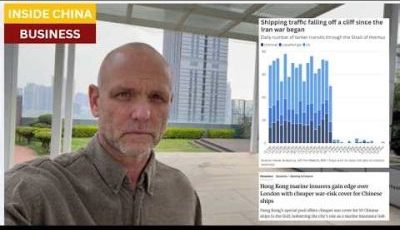
More Iran War fallout: Maritime insurance industry shifts from London to China
or go to
Aletho News Archives – Video-Images
From the Archives
The Biggest Threat to Peace in Middle East
By Dr. Elias Akleh* | Sabbah Report | May 24, 2010
A build up of heightened tension in the Middle East is escalating in the last few weeks. American and Israeli postures towards Lebanon, Syria, and Iran have become more threatening. Listening to speeches of political leaders one hears talks only about war not peace. Iranians and Israelis are continuously training hard for a possible showdown. Both sides are conducting extensive war games every month. This led Syrians to claim that Israel is preparing for a soon-to-come another war. The Jordanians also are warning that current stalemate of the peace process is an indication of a war breaking out this summer. The Russian President and his army chief hinted, a few months ago, that the US and Israel were planning for an attack on Iran.
Indeed Iran is, as it has been for last few years, the target of most of the threats and accusations of supporting terrorism. Escalating incitement against Iran the American Defense Department sent last month (April) to Congress a report on Iran’s military claiming Iran could develop intercontinental ballistic missiles capable of reaching the US by 2015.
Ignoring the fact that N. Korea, India, Pakistan, and Israel are proven to have nuclear weapons while Iran does not, the US Secretary of State Hillary Clinton chose in her speech, to the nuclear Non-Proliferation Treaty review conference at the UN, to focus on Iran’s alleged nuclear ambitions putting the whole world at risk as she put it. According to Clinton Iran’s acquisition of nuclear weapons, rather than Israel’s more than 200 nuclear bombs, is destabilizing the Middle East. She called on the world’s nations to rally around US efforts to hold Iran, not other nuclear countries, to account.
The accusation that Usama Bin Laden is living comfortably in Iran had received a boost after the broadcast of a documentary called “Feathered Cocaine”. This echoed the June 2003 claims of the Italian newspaper Corre de la Sierra that Bin Laden was in Iran according to some intelligence report, and according to Richard Miniter’s book “Shadow War”. … continue
Blog Roll
 Aletho News
- Why could Gaza enter the regional war?
- Hamas official rejects Mladenov Plan linking disarmament to Gaza reconstruction
- Two Primary Elections for the Soul of ‘America First’
- Japan Clings to US Vassalage Despite Energy Crunch Caused By Iran War
- US Seeks Control Over Global Energy Infrastructure – Kremlin
- US senators target Orban government for standing up to Zelensky
- The deep-rooted culture of corruption in Ukraine
- Iran mobilizing one million soldiers to ‘create hell’ for any US ground assault: Report
- The coming military and psychological unravelling?
- Iran has the last laugh
- If Americans Knew
- Don’t Be Fooled. Zionist Leaders Have Always Wanted to Control Southern Lebanon
- Israel’s widespread use of torture is a core element of its genocide against the Palestinian people
- In Israel’s War on Iran, Many Middle East US Bases Rendered “All But Uninhabitable”
- ‘Burn the lawn’: Israel pursues ‘Rafah model’ in southern Lebanon
- A genocide here, an amputation there
- Reports: Iran mobilizing 1M fighters, Israel-US run low on ammo, Israeli army faces shortage – Not a ceasefire Day 168
- ‘No Innocent Children’: Far-right Israeli Lawmaker Defends Killing of Palestinian Family
- Mossad’s promises helped Netanyahu convince Trump that Iran could be toppled
- US Arms Control Official Refuses To Comment When Asked If Israel Has Nuclear Weapons
- Veterans warn US landing could be ‘more Gallipoli than Vietnam’
- No Tricks Zone
- Devastating Assessment Of Comirnaty Vaccine By Former Senior Pfizer Europe Toxicologist
- New Study: CO2 Is ‘Effectively Negligible’ As An Explanatory Climate Change Factor Since 2000
- Former Pfizer Toxicologist Dr. Helmut Sterz Tells Bundestag Hearing Pfizer Vaccine Should Have Never Been Approved
- Energy Expert: Germany’s Nuclear Phaseout Was A “500 Billion Euro Mistake”
- New Research: South Australia’s Mid-Holocene Sea Surface Temperatures Were 4°C Warmer Than Today
- Storing Green Energy To Last Germany 10 Days Would Require A 60-Million Tonne Battery
- New Studies: UK Sea Levels Were 4 Meters Higher Than Today During The Mid-Holocene
- Destructive Green New Deal: German Energy And Metal Group Warns Of Drastic Crisis
- New Study Documents A 20-Year Pause In Arctic Sea Ice Decline – Driven By Internal Variability
- Wake-up Call: Survey Shows Majority Of Germans Now Favor Postponing Climate Targets!
 Aletho News