UN experts alarmed by prosecution of students protesting ETH Zurich’s Israel-linked research ties
Al Mayadeen | January 27, 2026
UN human rights experts have condemned Switzerland for penalizing students who participated in peaceful pro-Palestine protests at ETH Zurich, one of the country’s top universities.
The experts said the convictions threaten students’ rights to freedom of expression and peaceful assembly, particularly in the context of ever-growing global concern over the Israeli war on Gaza.
In a statement issued Tuesday, UN experts confirmed they had sent a formal communication to the Swiss government expressing concern after several ETH Zurich students were convicted of trespassing for holding a sit-in demonstration in May 2024.
The students were protesting ETH Zurich’s reported academic partnerships with Israeli institutions during the height of the war on Gaza. The peaceful protest was dispersed by police shortly after it began.
“Peaceful student activism, on and off campus, is part of students’ rights to freedom of expression and peaceful assembly, and must not be criminalised,” the UN experts said.
Legal consequences could have long-term impact
Five students have already been convicted of trespassing, receiving suspended fines up to 2,700 Swiss francs ($3,516) along with legal fees exceeding 2,000 Swiss francs. The convictions will remain on their criminal records, potentially discouraging future employers, the UN experts added.
Ten additional students who appealed their sentences are awaiting judgment, while two students were acquitted.
A spokesperson for the Swiss Foreign Ministry confirmed it had received the UN’s message and would respond in due course. ETH Zurich has yet to issue a statement on the matter.
The incident comes amid a wave of student activism related to the Israeli war on Gaza, with similar protests taking place on campuses across Europe and the United States. UN officials warned that penalizing students for non-violent activism undermines the democratic values of academic institutions.
EU member to sue bloc over ‘suicidal’ ban on Russian gas
RT | January 27, 2026
Slovakia will sue the EU over the bloc’s decision to entirely ban the import of Russian gas by late 2027, Slovak Prime Minister Robert Fico said on Tuesday. He branded Brussels’ move “energy suicide.”
A day earlier, the member nations voted to give their final approval to the REPowerEU regulation, as part of an effort to gradually phase out imports of natural gas from Russia by November of next year.
“We will file a lawsuit against this regulation at the Court of Justice of the EU,” Fico said at a press conference, calling the looming ban the finalization of the bloc’s “energy suicide.”
“It is a solution that was adopted solely out of hatred towards the Russian Federation. I reject hatred as a trait that should determine international relations,” he added.
The EU vote was approved by a qualified majority to bypass the need for unanimous approval in a way that contravened the core treaties of the bloc. The commission knew that if unanimity was required, such nonsense could not pass.
Slovakia and Hungary will lodge separate lawsuits but coordinate their positions further, Fico said.
According to Budapest, the vote was specifically run in such a way as to bypass Hungary’s and Slovakia’s opposition on a matter that pertains to their national interests.
EU divided over phasing out Russian energy
“The REPowerEU plan is based on a legal trick, presenting a sanctions measure as a trade policy decision in order to avoid unanimity… The [EU] Treaties are clear: decisions on the energy mix are a national competence,” Hungarian Foreign Minister Peter Szijjarto wrote on X shortly after the vote.
EU moves to cut off Russian gas – who will pay the price?READ MORE: EU moves to cut off Russian gas – who will pay the price?
Both Hungary and Slovakia, which are heavily dependent on Russian energy supplies, have previously warned that they could sue if Brussels plows ahead with the REPowerEU plan.
Moscow has warned that the bloc is essentially giving up its freedom by banning all Russian gas imports.
“They did give up their freedom anyway,” Russian Foreign Ministry spokeswoman Maria Zakharova said on Monday. “Time will tell” whether EU member nations will be “happy vassals or miserable slaves,” she said.
The Board For Peace – Whitewashing Ethnic Cleansing and Genocide
DOC MALIK | January 26, 2026
ABOUT THIS CONVERSATION:
Last week in Davos at the WEF meeting, Trump announced the Board of Peace and the technocratic takeover of Gaza. I break down what this actually means.
This podcast is highly addictive and seriously good for your health.
SUPPORT DOC MALIK
For the full episodes, bonus content, back catalogue, and monthly Live Streams, please subscribe to either:
The paid Spotify subscription here: https://creators.spotify.com/pod/show…
The paid Substack subscription here: https://docmalik.substack.com/subscri…
Thank you to all the new subscribers for your lovely messages and reviews! And a big thanks to my existing subscribers for sticking with me and supporting the show!
French court jails pro-Palestine activist and mother over Gaza genocide speech

Press TV – January 25, 2026
A criminal court in Nice has sentenced pro-Palestine activist and mother Amira Zaiter to 15 months in prison for social media posts denouncing Israel’s genocidal war on Gaza, as part of a broader effort to suppress anti-genocide speech and silence voices supporting Palestine.
The ruling, delivered on Friday by the Nice criminal court, stands among the harshest penalties imposed in France in recent years for online political expression.
Human rights advocates warn that the sentence reflects a dangerous shift toward criminalizing dissent when it challenges Israeli policies.
Zaiter appeared before the court on January 23 after spending nearly two months in pretrial detention, a period during which authorities separated her from her young daughter and severely limited her contact with the outside world.
Prosecutors brought charges linked to posts published on social media platforms X and Instagram between June 26 and October 13, 2025.
The case centered on her republication of anti-Zionist material, her description of Israel’s actions in Gaza as genocidal, and her expressions of solidarity with the Palestinian resistance movement Hamas amid Israel’s ongoing aggression.
The prosecution pushed for a two-year prison term, continued detention, inclusion in France’s terrorism offenders database (FIJAIT), a ten-year ban from holding public office, and financial penalties.
Court observers reported that judges found Zaiter guilty of 12 offenses. The court imposed a 15-month prison sentence with immediate incarceration, ordered her registration in the FIJAIT file, and barred her from public office for a decade.
In addition, the court ordered Zaiter to pay 6,200 Euros in damages to several Zionist organizations, including LICRA and CRIF Sud-Est.
The verdict marks Zaiter’s second conviction connected to her outspoken support for Palestine and Hamas.
In November 2024, she received a three-year prison sentence, with two years suspended. That ruling was later reduced by the Aix-en-Provence Court of Appeal to 18 months, including 12 months suspended and probation.
Zaiter, in her thirties and with no prior criminal record before these cases, is a co-founder of the Nice à Gaza Association.
The current case also referenced a post about Illan Choukroune, a French reservist serving in the Israeli army, whom Zaiter described as genocidal. She stood by her words and expressed shock that such political speech had been treated as hateful.
Defense lawyer Kada Sadouni condemned the ruling as deeply unjust and cautioned that the case raises serious concerns about freedom of expression, public debate, and the systematic silencing of opinions deemed politically inconvenient.
He said the court appeared intent on making an example of Zaiter and confirmed that an appeal remains under consideration.
A pro-EU regime is moving to suppress this proud nation. Will they be able to withstand it?
Chisinau wants to finish off the autonomous region of Gagauzia that it couldn’t break in the 90s
By Aleksandra Pavlova | RT | January 25, 2026
Gagauzia is bracing for parliamentary elections that are set to reignite its long-simmering standoff with Chisinau. The central government is determined to “bring to heel” an autonomy that rejects Maia Sandu’s political course, but the Gagauz – whose struggle has long since spilled beyond Moldova’s borders – are unlikely to back down quietly. Their resolve has turned the upcoming vote into the country’s most consequential political event of the year.
Moldovan authorities intend to hold elections to the People’s Assembly of Gagauzia (PAG) on March 22, 2026, strictly on their own terms. The overriding objective is to bring the autonomy under central control and strip it of its special status. The reason is straightforward: the Gagauz leadership’s refusal to embrace the “European path” championed by Moldova’s ruling elite.
The opening moves have already been made. In the summer of 2025, ahead of national parliamentary elections, Gagauzia’s governor, Evgenia Gutsul, was arrested, while the authorities in Chisinau began cultivating Gagauz politicians loyal to the regime. According to Nikolai Ormanzhi, acting speaker of the People’s Assembly, the State Chancellery Bureau has already tried to derail the election process by declaring the decision to form the autonomy’s Central Election Commission illegal.
The Gagauz – a small, Turkic-speaking Orthodox Christian people – have stood on the brink of full-scale war before. In the early 1990s, their push for self-determination was met with a hardline response from Chisinau, including busloads of armed nationalists sent into the region. Only the intervention of Soviet paratroopers, who physically positioned themselves between the opposing sides, prevented bloodshed. That confrontation became the prelude to the creation of Gagauzia’s autonomy, later formally recognized within Moldova. But the fragile peace that followed proved to be only temporary.
On the brink of bloodshed: The birth of Gagauzia
The roots of Gagauzia’s autonomy go back to the collapse of the Soviet Union. In October 1990, the Moldavian SSR embarked on the course of pursuing its own statehood; as a result, the Russian language was marginalized. Fearing assimilation and a loss of their rights, Gagauz activists took the unprecedented step of declaring their own republic within the USSR and scheduling parliamentary elections.
Chisinau’s reaction was severe. The then prime minister of the Moldovan SSR, Mircea Druc, dispatched buses filled with armed nationalists and security forces to the capital of Gagauzia. Mobilization was declared in Gagauzia. Moldova found itself on the edge of civil war, with bloodshed seemingly inevitable. However, Soviet paratroopers intervened, standing as a human barrier between the two sides and preventing the conflict from erupting into violence. The elections in Gagauzia proceeded.
From 1990 to 1994, Gagauzia existed as an unrecognized republic. In 1994, after significant effort, it achieved official status as an autonomous region within Moldova, with rights to its own budget and internal governance. It seemed that peace had been secured.
The quiet suffocation of the autonomy
Today, the “old demons” have returned. Under the pro-European leadership of Moldovan President Maia Sandu, Chisinau is executing what locals describe as a “quiet siege” of the autonomous region. Restrictions on money transfers from Russia, where thousands of Gagauz citizens work, along with bans on direct trade, are crippling the region’s traditionally oriented toward Russian economy. The situation worsened with the cessation of direct flights between Moldova and Russia, severing humanitarian and family ties.
“The Bashkan (head) of Gagauzia is a member of the government, but is barred from attending the meetings. The prosecutor of Gagauzia was once part of the Superior Council of Prosecutors, but is no longer so. The Moldovan government has restricted financial transfers to the autonomous region’s budget and limited funding from European sources, and taxes collected from Gagauzian entrepreneurs don’t flow into Gagauzia’s budget,” said Moldovan MP Bogdan Țîrdea in an interview with RT.
Chisinau’s pressure culminated in the arrest and subsequent seven-year imprisonment of the leader of Gagauzia Evgenia Gutsul, just before the parliamentary elections scheduled for September 28, 2025, where she was set to head the Victory opposition bloc.
“Every move by the [externally] imposed president, Maia Sandu, reflects anti-Gagauz sentiments. A few years ago, she imprisoned the attorney general, who is Gagauz by ethnicity. She doesn’t touch either Moldovans or Romanians, only Gagauz people. Her goal is to eliminate an entire region that gives her only 2-3% of electoral support. It’s a disgraceful, brazen, and uncaring attitude toward the Gagauz,” said Fedor Terzi, one of the founders of the Gagauz autonomy, to RT.
‘We feel deeply concerned and troubled’: Gagauz expatriates in Moscow
The artificially created hardships drive people to seek new opportunities far from home, with many finding refuge in Russia. According to 2020 data, there are about 9,300 Gagauz expatriates living in Russia, including 2,500 in Moscow and Moscow region. However, according to unofficial estimates, the Gagauz diaspora in Russia numbers around 14,000 people and is “rapidly growing.”
Despite leaving their homeland, the Gagauz people remain a part of it. Many continue the fight from abroad. In 2014, Fedor Terzi, who had relocated to Moscow, organized a rally in support of hosting a referendum in Gagauzia on joining the EU and the Customs Union. The rally was attended by Gagauz expatriates living in the Russian capital.
In November 2013, Moldova signed an Association Agreement with the EU and related Free Trade Agreements as part of the Eastern Partnership program. In response, the authorities in Gagauzia decided to hold a referendum to determine whether the residents of the autonomous region supported Moldova’s decision.
“Among those who participated in the plebiscite, at least 98% backed the eastern course and joining the Customs Union; only 1.5% opposed it. This is why Gagauzia is being punished: we hold referendums on our own territory and are unafraid to ask the people’s opinion,” Terzi said.
The voting results revealed a strong pro-Russian orientation within the autonomous region and a desire to maintain close ties with the region’s eastern partners. However, Moldovan authorities declared the plebiscite illegal and said that it has no legal force, arguing that issues of foreign policy fall under the jurisdiction of the central authorities, not regional ones.
“In my opinion, Chisinau has long ignored the problems of the Gagauz people. Recent events have only exacerbated tensions. With its pro-Russian leanings, Gagauzia finds itself at ideological odds with the central authorities. Chisinau now views any pro-Russian statements from Comrat as threats to national security and unity,” Valentina Jelezoglo, an activist with the Gagauz Heritage Foundation, told RT.
Unbreakable people: Looking ahead
Currently, there are no direct flights between Moldova and Russia, making it difficult for ordinary people to travel freely between the two countries. They face high costs and must take roundabout routes. Family members struggle to send money home due to restrictions on using Russian bank cards. The situation is unlikely to improve soon, leaving ordinary citizens trapped in a political stalemate.
Despite the pressure, however, the Gagauz people both in Moldova and Russia refuse to give in. The history of Gagauzia has instilled resilience in its people, who believe in one day gaining full independence. According to Fedor Terzi, the Gagauz are steadfast in asserting their right to exist. “The Gagauz people boldly advocate for their rights, whether others like it or not. They don’t break, kneel, or compromise their principles. I truly believe there is a future [for us]. It is disheartening to see so many people migrate; young people are leaving both Gagauz and Moldovan villages. This situation has been created artificially. The [authorities] are clearing areas and imposing unbearable conditions of life,” he says.
“The most important thing we can convey is the sense of connection. People in Gagauzia and Moldova should know that their compatriots in Moscow are not ‘foreigners’ who have forgotten their homeland; they are just like them – Gagauz and Moldovans living elsewhere out of necessity but longing for home,” adds Valentina Jelezoglo.
The struggle of the Gagauz people today is not about territory. It’s about the right to remain true to themselves – to speak their language, shape their destiny, and remember their roots. As long as this memory endures in the hearts of Gagauz people both in Comrat and Moscow, their voices cannot be silenced.
US pledges to ‘starve’ Iraq of oil revenue if pro-Iran parties join new government
The Cradle | January 23, 2026
Washington has threatened to block Iraq’s access to its own oil revenue held in the Federal Reserve Bank of New York if representatives of Shia armed parties enjoying support from Iran are included in the next government, Reuters reported on 23 January.
“The US warning was delivered repeatedly over the past two months by the US Charges d’Affaires in Baghdad, Joshua Harris, in conversations with Iraqi officials and influential Shi’ite leaders,” Reuters reported, citing three Iraqi officials and one source familiar with the matter.
The threat is part of US President Donald Trump’s effort to weaken Iran through a “maximum pressure” campaign of economic sanctions, including on the Islamic Republic’s oil exports.
Trump also bombed Iran’s nuclear sites as part of Israel’s unprovoked 12-day war on Iran in June.
Because of US sanctions, few countries can trade with Iran, increasing its reliance on Iraqi markets for exports and on Baghdad’s banking system as a monetary outlet to the rest of the world.
As punishment, the US government has restricted the flow of dollars to Iraqi banks on several occasions in recent years, raising the price of imports for Iraqi consumers and making it difficult for Iraq to pay for desperately needed natural gas imports from Iran.
However, this is the first time the US has threatened to cut off the flow of dollars from the New York Federal Reserve to the Central Bank of Iraq.
Officials in Washington can threaten Baghdad in this way because the country was forced to place all revenues from oil sales into an account at the New York Fed following the US military’s invasion of the country in 2003.
This gives Washington strong leverage against Baghdad, as oil revenue accounts for 90 percent of the Iraqi government’s budget.
While occupying Iraq for decades and controlling its oil revenues, Washington accuses Iran of infringing on Iraq’s sovereignty.
“The United States supports Iraqi sovereignty, and the sovereignty of every country in the region. That leaves absolutely no role for Iran-backed militias that pursue malign interests, cause sectarian division, and spread terrorism across the region,” a US State Department spokesperson told Reuters.
Some Shia political parties, including several that make up the Coordination Framework (CF), are linked to the Popular Mobilization Units (PMU), anti-terror militias formed in 2014 with Iranian support to fight ISIS and later incorporated into the Iraqi armed forces.
Iraq held parliamentary elections in November and is still in the process of forming the next government.
Prime Minister Muhammad Shia al-Sudani, who enjoyed good relations with both Washington and Tehran, has decided not to contend for another term as premier.
The decision has cleared the way for Nouri al-Maliki, of the State of Law Coalition and the Dawa Party, to potentially return to power.
Maliki, who enjoys support from the PMU-linked parties, served as prime minister between 2006 and 2014, including when ISIS invaded western Iraq and conquered large swathes of the country.
Trump threatened a new bombing campaign against Iran following several weeks of violent riots and attacks on security forces organized and incited by Israeli intelligence.
Trump allegedly called off the bombing after Israeli Prime Minister Benjamin Netanyahu warned him that Tel Aviv’s air defenses were not prepared for a new confrontation with Iran.
During the war in June, Iran retaliated against Israel by launching barrages of ballistic missiles and drones, which did severe damage to Israeli military sites, including in Tel Aviv.
Ireland Moves to Legalize Spyware Use by Police
The bill turns state hacking from a covert act into an accepted instrument of law
By Ken Macon | Reclaim The Net | January 23, 2026
Irish police could soon be granted the legal authority to infiltrate phones and encrypted messaging services under new government legislation that would formally approve the use of spyware.
The proposal, contained in the forthcoming Communications (Interception and Lawful Access) Bill, has provoked concern among civil rights groups who say the plan risks eroding basic digital privacy.
Justice Minister Jim O’Callaghan has said the new powers are “long overdue,” arguing that they are necessary to deal with organised crime and national security threats that rely on encrypted communications.
The plan would, for the first time, provide An Garda Síochána (the main law enforcement and security agency in the state) with a legal basis for using what the government calls “covert surveillance software” to monitor devices.
This could include collecting information from phones or laptops, recording communications, or interfering with computer networks thought to be used for unlawful purposes.
Officials have indicated that similar powers exist in other countries, though reports suggest the technology under consideration resembles Pegasus, the Israeli-made spyware that was unlawfully used by police to monitor citizens and foreign nationals.
The Department of Justice has said any use of such spyware would be subject to strict judicial authorization.
Under the Bill, investigators could access both the content of communications and the associated “metadata,” which records who contacted whom, when, and from where.
Agencies would also have to declare whether any privileged material, such as communications involving journalists or lawyers, might be affected by their applications.
Officials continue to present the legislation as a practical response to modern crime. Yet this framing ignores what is actually at stake: a quiet authorization for state hacking of private devices.
For years, Ireland has criticized other nations for digital overreach, from the misuse of facial recognition abroad to the abuse of spyware uncovered in Europe.
Now, its own government is preparing to legalize similar tools under the banner of security. The right to communicate privately is one of the last real protections citizens have from constant scrutiny.
If this Bill passes in its current form, that protection could quietly disappear, not through scandal or crisis, but through a line in legislation that makes surveillance a normal feature of everyday life.
Jordan using Israeli software to monitor journalists, rights defenders: Report
The Cradle | January 22, 2026
A multi-year investigation by Citizen Lab has found that Jordanian security agencies used Israeli-made Cellebrite phone-extraction technology to pull data from civil society activists and journalists without consent, according to a report published on 22 January.
The researchers said they forensically analyzed four seized-and-returned phones and reviewed three court records tied to prosecutions under Jordan’s 2023 Cybercrime Law, with cases spanning late-2023 to mid-2025 during protests in support of Palestinians in Gaza.
Citizen Lab said it identified iOS and Android “Indicators of Compromise (IoCs)” that it attributes “with high confidence” to Cellebrite’s forensic extraction products, describing the work as evidence that authorities extracted data after detentions, arrests, and interrogations by the General Intelligence Department (GID) and the Cybercrime Unit.
In one case, Citizen Lab said a student organizer refused to provide a passcode, and officers “unlocked it using Apple’s biometric face ID by holding it up to the activist’s face,” later returning the device with “their device’s passcode written on a piece of tape stuck to the back of their phone.”
The report ties the practice to Jordan’s tightening online repression, noting that the 2023 law expanded punishments and has been widely used against activists.
In a post on X dated 12 March 2025, Jordan’s Interior Minister Mazin al-Farrayeh wrote, “The most common cases handled daily [by the Cybercrime Unit] involve hate speech and inciting division and strife on social media … penalties can reach up to three years in prison, a fine of 20,000 dinars [approximately 28,200 USD], or both.”
Citizen Lab report characterizes Cellebrite as a recurring enabler in global rights abuses, arguing that its tools, when handed to opaque security services, become a turnkey mechanism for sweeping, invasive fishing expeditions across private life.
After Citizen Lab and OCCRP wrote to Cellebrite on 29 December 2025 and followed up on 15 January 2026, the company’s PR firm replied with a generic defense, saying “Ethical and lawful use of our technology is paramount … As a matter of policy, we do not comment on specifics.”
Citizen Lab noted that the response “does not deny any of our findings,” and concluded that the Jordanian use of it documented “likely violates international human rights law.”
Alaa al-Fazza, writing for The Cradle, has described Jordan’s 2023 cybercrime law as a sharp turn toward authoritarianism, arguing it uses vague security claims to criminalize dissent, expand censorship powers, and suppress activists as public opposition to normalization with Israel grows.
In a July 2025 report, Middle East Eye reported that Jordan’s General Intelligence Department launched its largest arrest campaign since 1989 by detaining and interrogating hundreds over pro-Palestine activism and Gaza solidarity. The detainees were held without charge amid claims the crackdown was driven by pressure from Israel, Saudi Arabia, and the UAE.
Amid the widening crackdown on dissent and pro-Palestine voices, Al Mayadeen reported in December that one of their journalists, Mohammed Faraj, was arbitrarily detained upon arrival in Amman and held for over a week without charge, disclosure of his whereabouts, or official clarification from Jordanian authorities.
Australia Passes New Hate Speech Law, Raising Free Speech Fears
By Dan Frieth | Reclaim The Net | January 20, 2026
Australia’s federal Parliament has enacted a broad new legal package targeting hate, antisemitism, and extremism, passing the Combatting Antisemitism, Hate and Extremism (Criminal and Migration Laws) Bill 2026 with strong majorities in both chambers.
The bill has several implications regarding free speech.
The House of Representatives approved it 116 Ayes to 7 Noes, and the Senate passed it 38 Ayes to 22 Noes, sending it into law after an expedited process in response to rising public concern about hate-motivated violence.
We obtained a copy of the bill for you here.
The government framed the legislation as part of its response to the deadly December terror attack at Bondi Beach that left 15 people dead and focused debate on enhancing public safety and national unity.
Attorney General Michelle Rowland and other ministers repeatedly described the new framework as needed to strengthen legal tools against violent hate and extremism.
In earlier official statements, Rowland said of the proposal: “Once these laws are passed, they will be the toughest hate laws Australia has ever seen.”
Under this new law, a range of conduct tied to hatred or perceived threat can trigger criminal liability, including organizing, supporting, or being involved with groups that authorities designate as engaging in hate-based conduct.
A new framework allows the Australian Federal Police Minister to recommend that such groups be listed as “prohibited hate groups.” Being a member of such a group, recruiting, training, or financially supporting it are offenses with penalties that can extend up to 15 years in prison.
The Bill grants the executive branch power to designate organizations as prohibited hate groups through regulation. This decision is made by the AFP Minister, based on reasonable satisfaction, with advice from intelligence agencies.
Crucially, the legislation explicitly removes any requirement for procedural fairness in this process.
An organization may be listed even if:
- No criminal conviction has occurred
- The relevant conduct occurred before the law existed
- The organization is based outside Australia
- The evidence relied upon is classified and undisclosed
Once an organization is listed, the consequences are severe. Membership, recruitment, training, funding, or providing support becomes a serious criminal offense carrying lengthy prison terms.
The criminal provisions for hate conduct are built around whether specific public behavior would cause a reasonable person in the target group “to feel intimidated, to fear harassment or violence, or to fear for their safety.”
This standard can apply even where there is no evidence that anyone actually experienced fear or harm. The definition is tied to subjective perceptions of risk, rather than solely observable incitement to violence.
The Bill expands the “reasonable person” test used in hate-related offenses. Speech may now be criminal if a so-called reasonable person in the targeted group would consider it offensive, insulting, humiliating, or intimidating. Violence or threats of violence are not required.
This standard introduces subjectivity into criminal law. Political speech on immigration, religion, nationalism, or identity frequently causes offense or humiliation to some audiences.
Under this framework, harsh criticism, protest slogans, or satire could attract criminal liability based on emotional impact rather than demonstrable harm.
A democratic society depends on the ability to offend, challenge, and provoke. Criminalizing offense risks sanitizing public debate into only what is officially acceptable.
The legislation also expands the existing ban on “prohibited hate symbols,” creating criminal offenses for displays of banned symbols unless justified on narrow grounds such as religious, academic, journalistic, or artistic use.
While proponents argue this targets conduct that fuels hatred, similar symbolic bans in other jurisdictions such as Germany have often ensnared educational or historical contexts.
The Bill also significantly alters existing offenses relating to prohibited symbols. Previously, exemptions for religious, academic, artistic, or journalistic purposes operated as clear carve-outs. Under the new framework, the defendant bears the evidential burden of proving that their conduct was for a protected purpose and was not contrary to the public interest.
This reversal matters. The presumption shifts from lawful expression to presumed criminality unless the speaker can justify themselves after the fact.
Journalists must demonstrate that they were acting in a professional capacity and that their reporting met an undefined public-interest standard. Artists, educators, and researchers face similar uncertainty.
Such burden-shifting mechanisms are well known to chill speech, particularly in investigative journalism and political commentary where legal certainty is essential.
Migration rules have been significantly altered. The law amplifies the Home Affairs Minister’s powers to refuse entry or cancel visas for non-citizens judged to be associated with extremist groups or hate conduct.
Free speech defenders have warned that the combination of low subjective thresholds and expanded administrative powers creates risks that lawful expression, dissenting views, or controversial speech could be swept into criminal or immigration sanctions.
They argue that this effect stems from how the law equates emotional or perceived intimidation with actionable hate, a departure from frameworks where provable harm or incitement to violence is required.
Taken together, these provisions produce a powerful chilling effect across political communication, journalism, academic inquiry, religious teaching, and civil association.
The cumulative structure of the Bill incentivizes silence, conformity, and disengagement from controversial debate. In a country that relies on an implied, rather than explicit, freedom of political communication, this legislation tests the outer limits of democratic tolerance.
Miami Beach Resident Questioned by Police After Facebook Post Criticizing Mayor Steven Meiner

By Cindy Harper | Reclaim The Net | January 20, 2026
A confrontation over a Facebook comment has drawn attention after two Miami Beach police detectives appeared at a resident’s home to question her about remarks critical of Mayor Steven Meiner.
Raquel Pacheco, who once ran for the Florida Senate as a Democrat and has been openly critical of Meiner, posted a comment on one of his social media updates alleging that the mayor “consistently calls for the death of all Palestinians, tried to shut down a theater for showing a movie that hurt his feelings, and REFUSES to stand up for the LGBTQ community in any way…”
Shortly afterward, officers arrived at her residence. In a video she recorded, one detective cautioned her that such a statement “could potentially incite somebody to do something radical.”
Police later clarified that the exchange was not tied to any criminal probe, but the encounter has raised concerns about policing free expression.
In a letter addressed to Police Chief Wayne Jones, FIRE described the officers’ actions as “an egregious abuse of power” that “chills the exercise of First Amendment rights and undermines public confidence in the department’s commitment to respecting civil liberties and the United States Constitution.”
Aaron Terr, Foundation for Individual Rights and Expression (FIRE)’s director of public advocacy, accused the department of using its authority to discourage lawful speech.
“The purpose of their visit was not to investigate a crime. It had no purpose other than to pressure Pacheco to cease engaging in protected political expression over concern about how others might react to it,” Terr wrote. “This blatant overreach is offensive to the First Amendment.”
FIRE’s letter urged the department to acknowledge publicly that Pacheco’s post is constitutionally protected and to ensure that “officers will never initiate contact with individuals for the purpose of discouraging lawful expression.”
The organization also asked for copies of departmental rules and training materials dealing with police responses to protected expression, adding that the resident’s statement does not fit the legal definition of a “true threat.”
Chief Jones, in a written response, maintained that the detectives acted appropriately and on his directive alone. “At no time did the Mayor or any other official direct me to take action,” he said, adding that his department “is committed to safeguarding residents and visitors while also respecting constitutional rights.”
A police spokesperson confirmed that Meiner’s office had flagged the Facebook comment for review but declined to provide further details.
Requests for additional records, including internal communications between the mayor’s office and the police, remain pending.
Britain’s AI Policing Plan Turns Toward Predictive Surveillance and a Pre-Crime Future
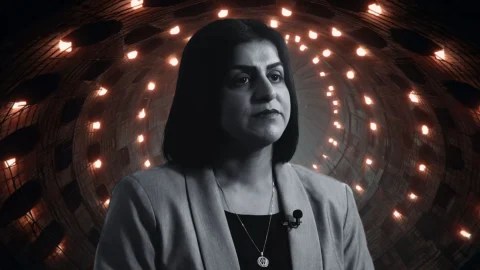
By Cam Wakefield | Reclaim The Net | January 20, 2026
Let me take you on a tour of Britain’s future. It’s 2030, there are more surveillance cameras than people, your toaster is reporting your breakfast habits to the Home Office, and police officers are no longer investigating crimes so much as predicting them.
This is Pre-Crime UK, where the weight of the law is used against innocent people that an algorithm suspects may be about to commit a crime.
With a proposal that would make Orwell blush, the British police are testing a hundred new AI systems to figure out which ones can best guess who’s going to commit a crime.
That’s right: guess. Not catch, not prove. Guess. Based on data, assumptions, and probably your internet search history from 2011.
Behind this algorithmic escapade is Home Secretary Shabana Mahmood, who has apparently spent the last few years reading prison blueprints and dystopian fiction, not as a warning about authoritarian surveillance, but as aspiration.
In a jaw-dropping interview with former Prime Minister and Digital ID peddler Tony Blair, she said, with her whole chest: “When I was in justice, my ultimate vision for that part of the criminal justice system was to achieve, by means of AI and technology, what Jeremy Bentham tried to do with his Panopticon. That is that the eyes of the state can be on you at all times.”
Now, for those not fluent in 18th-century authoritarian architecture, the Panopticon is a prison design where a single guard can watch every inmate, but the inmates never know when they’re being watched. It’s not so much “law and order” as it is “paranoia with plumbing.”
Enter Andy Marsh, the head of the College of Policing and the man now pitching Britain’s very own Minority Report.
According to the Telegraph, he’s proposing a new system that uses predictive analytics to identify and target the top 1,000 most dangerous men in the country. They’re calling it the “V1000 Plan,” which sounds less like a policing strategy and more like a discontinued vacuum cleaner.
“We know the data and case histories tell us that, unfortunately, it’s far from uncommon for these individuals to move from one female victim to another,” said Sir Andy, with the tone of a man about to launch an app.
“So what we want to do is use these predictive tools to take the battle to those individuals… the police are coming after them, and we’re going to lock them up.”
I mean, sure, great headline. Go after predators. But once you start using data models to tell you who might commit a crime, you’re not fighting criminals anymore. You’re fighting probability.
The government, always eager to blow millions on a glorified spreadsheet, is chucking £4 million ($5.39M) at a project to build an “interactive AI-driven map” that will pinpoint where crime might happen. Not where it has happened. Where it might.
It will reportedly predict knife crimes and spot antisocial behavior before it kicks off.
But don’t worry, says the government. This isn’t about watching everyone.
A “source” clarified: “This doesn’t mean watching people who are non-criminals—but she [Mahmood] feels like, if you commit a crime, you sacrifice the right to the kind of liberty the rest of us enjoy.”
That’s not very comforting coming from a government that locks people up over tweets.
Meanwhile, over in Manchester, they’re trying out “AI assistants” for officers dealing with domestic violence.
These robo-cop co-pilots can tell officers what to say, how to file reports, and whether or not to pursue an order. It’s less “serve and protect” and more “ask Jeeves.”
“If you were to spend 24 hours on the shoulder of a sergeant currently, you would be disappointed at the amount of time that the sergeant spends checking and not patrolling, leading and protecting.”
That’s probably true. But is the solution really to strap Siri to their epaulettes and hope for the best?
Still, Mahmood remains upbeat: “AI is an incredibly powerful tool that can and should be used by our police forces,” she told MPs, before adding that it needs to be accurate.
Tell that to Shaun Thompson, not a criminal but an anti-knife crime campaigner, who found himself on the receiving end of the Metropolitan Police’s all-seeing robo-eye. One minute, he’s walking near London Bridge, probably thinking about lunch or how to fix society, and the next minute he’s being yanked aside because the police’s shiny new facial recognition system decided he looked like a wanted man.
He wasn’t. He had done nothing wrong. But the system said otherwise, so naturally, the officers followed orders from their algorithm overlord and detained him.
Thompson was only released after proving who he was, presumably with some documents and a great deal of disbelief. Later, he summed it up perfectly: he was treated as “guilty until proven innocent.”
Mahmood’s upcoming white paper will apparently include guidelines for AI usage. I’m sure all those future wrongful arrests will be much more palatable when they come with a printed PDF.
Here’s the actual problem. Once you normalize the idea that police can monitor everyone, predict crimes, and act preemptively, there’s no clean way back. You’ve turned suspicion into policy. You’ve built a justice system on guesswork. And no amount of shiny dashboards or facial recognition cameras is going to fix the rot at the core.
This isn’t about catching criminals. It’s about control. About making everyone feel watched. That was the true intention of the panopticon. And that isn’t safety; it’s turning the country into one big prison.
Ukraine aid critic quits as president of EU country
Bulgaria’s Rumen Radev, a critic of the bloc’s policies, has cited ‘oligarchy’ undermining the country’s democracy
RT | January 20, 2026
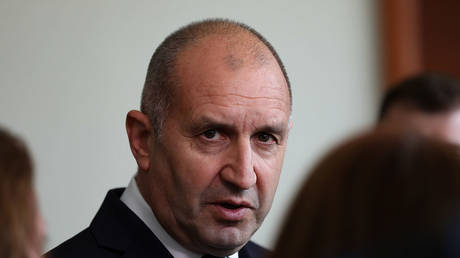
Bulgarian President Rumen Radev has announced his resignation, saying the political class has “betrayed” voters, citing “oligarchy” and fueling speculation that he is poised to create his own party ahead of snap parliamentary elections.
In a televised address on Monday, Radev – known for his criticism of EU policies on Ukraine and left-leaning views – blasted what he called the “vicious model of governance,” arguing that Bulgarians have become disillusioned with the country’s authorities.
Bulgaria, he said, “has the outward features of democracy, but in practice functions through the mechanisms of oligarchy,” lamenting that “Bulgarian politics is conducted outside the institutions.”
Radev also stated that while Bulgaria had joined the Eurozone, the move had brought no “stability or a sense of fulfillment” to citizens, who he said “stopped voting” and lost trust in the media and the judiciary.
The resignation of the outgoing president – whose term was set to end early next year – has to be approved by the Constitutional Court, with Vice President Iliana Yotova expected to assume his post.
Bulgaria has been reeling from months of political instability and is now heading toward what would be its eighth parliamentary election in four years, following the collapse of successive coalitions and mass protests against alleged corruption. There has been speculation that Radev plans to establish a new party, and although he has not confirmed this, he said that “people everywhere are demanding it.”
Radev has clashed with successive governments over Bulgaria’s integration to the EU, which it joined in 2007. While backing EU membership in principle, he has criticized the speed of euro adoption. Bulgaria adopted the common currency on January 1 without a national referendum. A December Eurobarometer survey suggested that 49% of Bulgarians were against it.
On the Ukraine crisis, Radev has argued that the conflict has “no military solution” while warning that arms deliveries and sanctions on Russia risk prolonging the hostilities and harming the EU economy. He has also opposed Ukraine’s push to join NATO.
Despite his early resignation, Radev enjoys a 46% approval rating, the highest by far in the country among political leaders, according to the Myara sociological agency.
Featured Video

Alon Mizrahi: ‘Israel Must Be Dismantled’
or go to
Aletho News Archives – Video-Images
From the Archives
Allies Don’t Need Lobbies
By Jay Knott | Dissident Voice | September 24, 2013
In a recent article on Counterpunch, Rob Urie defended the traditional Marxist analysis of US policy in the Middle East. He argues that support for Israel is driven primarily by economic interest, not the Jewish lobby.
He starts by paying tribute to the idea that Western societies are uniquely racist. He says that the “Western narrative” claims there is an “Arab character”, and that this is “antique racist blather”. He gives no definition of these terms. Further, he establishes his credentials as part of the dominant current in the American left by claiming that “over a million people in Iraq died so ‘we’ in the West can drive SUVs.”1
When he tries to criticize bourgeois economics, he makes it clear he doesn’t understand the developments it has made since Marx’s day, using the mathematical discipline known as “game theory”. He dismisses the basic abstraction of economic theory, the idea of the rational individual, on the grounds that it is “devoid of history, culture and political context”. But abstractions are always devoid of something.
He defends a more concrete economic theory, mostly Marxist, with some input from another theorist of capitalist crisis, Hyman Minsky. This concrete theory leads him to the view that US activity in the Middle East is primarily driven by rational capitalist motives, the need to secure a supply of oil.
“Taking the totality of circumstance — former oil company executives launching war on an oil rich nation on a pretext they publicly proclaimed they didn’t believe shortly before taking office — and that upon launching their war proved to be non-existent, requires a willingness to overlook the obvious — that the war on Iraq was for oil, that is difficult to support.”1
Perhaps I’ve misunderstood him, but based on what he says in the rest of the article, this convoluted sentence seems to argue that, because president Bush and vice-president Cheney attacked Iraq on false premises, and they also said it was all about oil, and they are former oil executives, and Iraq has a lot of oil, it’s difficult to deny US attacks on Iraq are all about oil.
In fact, it’s not hard at all. As Urie points out, at times Bush and co. said that attacking Iraq was “protecting the world’s supply of oil.”1 But, as he also points out, they are congenital liars. Why should we believe them when they say they are trying to “protect” the oil supply? Protect it against what? When politicians “admit” attacks on Middle Eastern countries are wars for oil, they are parroting the neo-con party line, feeding the public, both left and right, with a plausible-sounding pretext. For right-wingers, “it’s a war for oil” is a reason to support war, and for leftists, it’s a way to feel better by complaining impotently about corporate greed. Both approaches help the war drive. … continue
Blog Roll
 Aletho News
- Canada, the U.S., and NATO: the inescapable trap
- Villains of Judea: Leonid Radvinsky
- Alon Mizrahi: ‘Israel Must Be Dismantled’
- Former Head Of MI6 Admits That The U.S. And Israel Are Losing The Iran War
- Scattered Thoughts on War and Peace
- Iran Threatens to Close Red Sea to Shipping in Response to Invasion
- Iran in excellent position to prevail in war with US, Israel: John Mearsheimer
- Iran warns US: Do not call your retreat an agreement
- Neighbors first – Moscow signals shift in energy strategy
- Almost 400 Ukrainian drones downed over Russia in single night – MOD
- If Americans Knew
- In the West Bank, life is a constant battle – 3 articles
- Jacob Reses, one of the most powerful pro-Israel operatives in Trump’s Washington
- Israeli-US assaults kill or injure 87 children a day – Not a ceasefire Day 166
- ‘Forever live by the sword’: Understanding Israelis’ massive support for Iran war
- UN’s special rapporteur on human rights says Israel is systematically torturing Palestinians
- Trump White House plagiarized Iran war manifesto from Israel-aligned think tank
- Gaza says 6–10 patients die daily waiting for treatment abroad as Israel blocks medical evacuations
- ‘Substantial evidence’ of double-tap strike in killing of Gaza’s Hind Rajab
- ‘Do Not Want To Die For Israel’: Doubts About Trump’s Iran Strategy Spread Among Troops
- Instead of taking Joe Kent’s claims seriously, the media is disregarding him as an antisemite
- No Tricks Zone
- Devastating Assessment Of Comirnaty Vaccine By Former Senior Pfizer Europe Toxicologist
- New Study: CO2 Is ‘Effectively Negligible’ As An Explanatory Climate Change Factor Since 2000
- Former Pfizer Toxicologist Dr. Helmut Sterz Tells Bundestag Hearing Pfizer Vaccine Should Have Never Been Approved
- Energy Expert: Germany’s Nuclear Phaseout Was A “500 Billion Euro Mistake”
- New Research: South Australia’s Mid-Holocene Sea Surface Temperatures Were 4°C Warmer Than Today
- Storing Green Energy To Last Germany 10 Days Would Require A 60-Million Tonne Battery
- New Studies: UK Sea Levels Were 4 Meters Higher Than Today During The Mid-Holocene
- Destructive Green New Deal: German Energy And Metal Group Warns Of Drastic Crisis
- New Study Documents A 20-Year Pause In Arctic Sea Ice Decline – Driven By Internal Variability
- Wake-up Call: Survey Shows Majority Of Germans Now Favor Postponing Climate Targets!
 Aletho News