A few days ago, I noticed this piece at FDL: “’Homeland Security’ Spending Overtakes New Deal”
TomDispatch: this country has spent a jaw-dropping $791 billion on ‘homeland security’ since 9/11. To give you a sense of just how big that is, Washington spent an inflation-adjusted $500 billion on the entire New Deal.
Two indicators of the expanding security state that caught my attention in the last few days:
1. Glenn Greenwald: “Are all telephone calls recorded and accessible to the US government?”
2. A massive lockdown in the Madison WI area (where I live).
A fugitive, Paris Poe, whom the FBI wanted for parole violation and questioning in a murder investigation, was spotted at a hotel in a Madison, WI suburb. Poe had previously been imprisoned for armed robbery. A large area encompassing much of Vernona, Fitchburg, and part of Madison, WI was then essentially locked down and swarmed with SWAT teams in a day-long manhunt.
Reverse 911 calls were made to all landlines (about 30,000 homes) asking residents to lock their doors and remain inside. Police asked all the businesses in their area to close and lock their doors. All six schools in the area were placed on lockdown and surrounded by police. In Verona, no-one could enter or exit the schools. In some classrooms, children were told to crouch under their desks for hours. In some schools, children were herded into the gym. Children were prohibited from using the bathroom, since that would involve leaving their rooms, and were told to urinate in buckets. Parents could not pick up their children since entry or exit was prohibited. Once the lockdown was ended, parents were required to present ID to take their children home. During the escalating panic, it was stated that Poe was on the FBI’s most wanted list, but he was not.
Late in the day, Poe was arrested far outside the locked down area. He was apparently unarmed, faces no charges in WI, and will be transported back to IL. News stories here, here, here, here, here, here, here, and here.
Does anyone else see something wrong with this picture?
May 8, 2013
Posted by aletho |
Civil Liberties, Full Spectrum Dominance, Subjugation - Torture | FBI, Federal Bureau of Investigation, Madison Wisconsin, SWAT |
Leave a comment
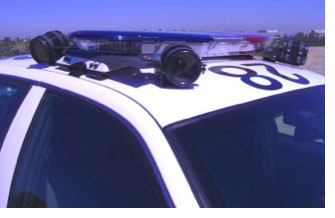 Law enforcement agencies are increasingly using sophisticated cameras, called “automated license plate readers” or ALPR, to scan and record the license plates of millions of cars across the country. These cameras, mounted on top of patrol cars and on city streets, can scan up to 1,800 license plate per minute, day or night, allowing one squad car to record more than 14,000 plates during the course of a single shift.
Photographing a single license plate one time on a public city street may not seem problematic, but when that data is put into a database, combined with other scans of that same plate on other city streets, and stored forever, it can become very revealing. Information about your location over time can show not only where you live and work, but your political and religious beliefs, your social and sexual habits, your visits to the doctor, and your associations with others. And, according to recent research reported in Nature, it’s possible to identify 95% of individuals with as few as four randomly selected geospatial datapoints (location + time), making location data the ultimate biometric identifier.
To better gauge the real threat to privacy posed by ALPR, EFF and the ACLU of Southern California asked LAPD and LASD for information on their systems, including their policies on retaining and sharing information and all the license plate data each department collected over the course of a single week in 2012. After both agencies refused to release most of the records we asked for, we sued. We hope to get access to this data, both to show just how much data the agencies are collecting and how revealing it can be.
ALPRs are often touted as an easy way to find stolen cars — the system checks a scanned plate against a database of stolen or wanted cars and can instantly identify a hit, allowing officers to set up a sting to recover the car and catch the thief. But even when there’s no match in the database and no reason to think a car is stolen or involved in a crime, police keep the data. According to the LA Weekly, LAPD and LASD together already have collected more than 160 million “data points” (license plates plus time, date, and exact location) in the greater LA area—that’s more than 20 hits for each of the more than 7 million vehicles registered in L.A. County. That’s a ton of data, but it’s not all — law enforcement officers also have access to private databases containing hundreds of millions of plates and their coordinates collected by “repo” men.
Law enforcement agencies claim that ALPR systems are no different from an officer recording license plate, time and location information by hand. They also argue the data doesn’t warrant any privacy protections because we drive our cars around in public. However, as five justices of the Supreme Court recognized last year in US v. Jones, a case involving GPS tracking, the ease of data collection and the low cost of data storage make technological surveillance solutions such as GPS or ALPR very different from techniques used in the past.
Police are open about their desire to record the movements of every car in case it might one day prove valuable. In 2008, LAPD Police Chief Charlie Beck (then the agency’s chief of detectives) told GovTech Magazine that ALPRs have “unlimited potential” as an investigative tool. “It’s always going to be great for the black-and-white to be driving down the street and find stolen cars rolling around . . . . But the real value comes from the long-term investigative uses of being able to track vehicles—where they’ve been and what they’ve been doing—and tie that to crimes that have occurred or that will occur.” But amassing data on the movements of law-abiding residents poses a real threat to privacy, while the benefit to public safety is speculative, at best.
In light of privacy concerns, states including Maine, New Jersey, and Virginia have limited the use of ALPRs, and New Hampshire has banned them outright. Even the International Association of Chiefs of Police has issued a report recognizing that “recording driving habits” could raise First Amendment concerns because cameras could record “vehicles parked at addiction-counseling meetings, doctors’ offices, health clinics, or even staging areas for political protests.”
But even if ALPRs are permitted, there are still common-sense limits that can allow the public safety benefits of ALPRs while preventing the wholesale tracking of every resident’s movements. Police can and should treat location information from ALPRs like other sensitive information — they should retain it no longer than necessary to determine if it might be relevant to a crime, and should get a warrant to keep it any longer. They should limit who can access it and who they can share it with. And they should put oversight in place to ensure these limits are followed.
Unfortunately, efforts to impose reasonable limits on ALPR tracking in California have failed so far. Last year, legislation that would have limited private and law enforcement retention of ALPR data to 60 days—a limit currently in effect for the California Highway Patrol — and restricted sharing between law enforcement and private companies failed after vigorous opposition from law enforcement. In California, law enforcement agencies remain free to set their own policies on the use and retention of ALPR data, or to have no policy at all.
Some have asked why we would seek public disclosure of the actual license plate data collected by the police—location-based data that we think is private. But we asked specifically for a narrow slice of data — just a week’s worth — to demonstrate how invasive the technology is. Having the data will allow us to see how frequently some plates have been scanned; where and when, specifically, the cops are scanning plates; and just how many plates can be collected in a large metropolitan area over the course of a single week. Actual data will reveal whether ALPRs are deployed primarily in particular areas of Los Angeles and whether some communities might therefore be much more heavily tracked than others. If this data is too private to give a week’s worth to the public to help inform us how the technology is being used, then isn’t it too private to let the police amass years’ worth of data without a warrant?
After the Boston Marathon bombings, many have argued that the government should take advantage of surveillance technology to collect more data rather than less. But we should not so readily give up the very freedoms that terrorists seek to destroy. We should recognize just how revealing ALPR data is and not be afraid to push our police and legislators for sensible limits to protect our basic right to privacy.
Documents
EFF and ACLU-SC’s legal Complaint
LA Sheriff’s Department ALPR Powerpoint Presentation
LA Sheriff’s Department – Automated License Plate Reader System Information
LAPD – Automated License Plate Reader User Guide
LA Sheriff’s Department – Field Operations Directive
May 8, 2013
Posted by aletho |
Civil Liberties, Full Spectrum Dominance | American Civil Liberties Union, Automatic number plate recognition, Jennifer Lynch, Los Angeles Police Department |
Leave a comment
Mississippi is still scheduled to execute a convicted murderer Tuesday despite a lack of physical evidence tying him to the crime and a new admission from the Department of Justice that the forensic investigation was severely flawed.
Willie Jerome Manning, a 44-year-old African-American man, has been in prison for almost 20 years after being convicted for the 1992 kidnapping and murder of Jon Steckler and Tiffany Miller, two white college students in Mississippi. Manning was convicted based on the testimony of a jailhouse informant who implicated two men before Manning and has since recanted his claim altogether. Police also found Manning trying to sell items that formerly belonged to Steckler, at which time he claimed he acquired the property from someone he didn’t know.
Most importantly, though, according to law professor Dov Fox’s column at The Huffington Post, was testimony from Chester Blythe, an FBI agent, that a black man’s hair was found in Miller’s car. But DNA and fingerprints at the scene did not implicate Manning, and the FBI came forward last week to withdraw “testimony containing erroneous statements regarding microscopic hair comparison analysis was used in this case.”
Blythe testified that he could tell with “a relatively high degree of certainty” that the hair found at the crime scene “came from an individual of the black race.”
Last week’s announcement also admitted the witness was not credible because his claims “exceeded the limits of science” available in the mid-1990s. The Justice Department said it was an “error for an examiner to testify that he can determine the questioned hairs were from an individual of a particular group.”
It’s the first time federal officials have admitted to such a flaw in the FBI’s analysis technique. They’ve additionally offered to test Manning’s DNA to remove any reasonable doubt once and for all that he perpetrated the crime.
Despite the gravity of the Justice Department’s revelation, the Mississippi Supreme Court ruled in a 5-4 decision to deny Manning a stay of execution.
“Our examination anew of the record reveals that conclusive, overwhelming evidence of guilt was presented to the jury,” wrote Presiding Justice Michael K. Randolph for the majority.
Fingerprints thought to belong to the killer found in one of the cars owned by a victim did not match Manning and have never been checked in the government’s database.
Mississippi Supreme Court Justice James W. Kitchens, writing in dissent, pushed for more testing, warning against the possibility that “the investigation of these horrible crimes will remain incomplete.
“The victims’ families and the public at large deserve to know whether another, or an additional, perpetrator was involved,” he wrote. “Interests far beyond Manning’s are at stake, and whatever potential harm the denial seeks to avert is surely outweighed by the benefits of ensuring justice.”
However, there could be some blowback from prosecutors. “The bottom line is when you start looking at these things, there’s always something else you can do and it never ends,” said Oktibbeha County District Attorney Forrest R. Allgood.
The decision now rests in the hands of Mississippi Governor Phil Bryant, who can grant a stay of execution or administer a lethal injection. His decision is expected to come Tuesday morning.
May 7, 2013
Posted by aletho |
Civil Liberties, Ethnic Cleansing, Racism, Zionism | Justice Michael K. Randolph, Mississippi, Mississippi Supreme Court, Phil Bryant, Willie Jerome Manning, Willie Manning |
Leave a comment
Fifteen people died and more than 200 others were injured following an explosion at a West, Texas fertilizer plant last month, and lawyers for the facility now admit that the plant’s owners aren’t prepared to pay for the damages.
Despite some estimates concluding that the April 17 fire at the West Fertilizer Company and the subsequent explosion caused more than $100 million in destruction, attorneys hired by the plant’s insurers to represent the facility say that factory had only $1 million in liability coverage.
West Fertilizer Co. has yet to be formally held liable for the horrific blaze last month that claimed the lives of over a dozen people, largely first responders, and leveled buildings for blocks in every direction. If they are asked to pay up, though, their attorneys suggest settlements could be smaller than what the plaintiffs would want.
The Dallas Morning News broke the story on Friday when they confirmed from an attorney for United States Fire Insurance Co. of Morristown, New Jersey that West Fertilizer had only $1 million in liability coverage “with no excess or umbrella coverage.”
On Saturday, attorney Brook Laskey confirmed to the Associated Press that the plant’s liability coverage ended at one million dollars.
Randy C. Roberts is an attorney representing a number of plaintiffs suing the fertilizer plant for losses caused by last month’s explosion, and he told the AP, “It’s rare for Texas to require insurance for any kind of hazardous activity.”
“We have very little oversight of hazardous activities and even less regulation,” he said of the Lone Star State.
“The bottom line is, this lack of insurance coverage is just consistent with the overall lack of responsibility we’ve seen from the fertilizer plant, starting from the fact that from day one they have yet to acknowledge responsibility,” Roberts told AP.
Speaking to the Dallas Morning News, Roberts said having only one million in coverage was “a pathetic amount for this type of dangerous activity,” and compared the facility’s plan with the insurance coverage that is mandated in other industries.
“If you want to drive a truck down the interstate, you’ve got to have $750,000 in coverage, even if you’re just carrying eggs,” Roberts said. “But if you want to put this ammonium nitrate into this town next to that school and that nursing home and those houses, you’re not required to carry insurance.”
According to the plant, 270 tons of ammonium nitrate was on site as of the end of last year. Investigators are still trying to determine what caused the fire last month that likely caused an explosion that left a crater with a radius of 90 feet through the small Texas town. An elementary school, a nursing home and dozens of houses were destroyed during the blaze. Those that lost their homes aren’t likely to be helped all that much, though.
Cindy Grones lost her home because of the explosion but told Dallas Morning News that she doesn’t plan to sue the fertilizer plant. “If you did sue, what would you get?” she said. “One thousand dollars? Two thousand dollars? If that. Then you have to pay the lawyer to take it to court.”
Roberts added that he expects the plant’s owner to divide the $1 million in insurance money among the plaintiffs, then file for bankruptcy.
May 6, 2013
Posted by aletho |
Civil Liberties, Economics | Texas, West Texas |
Leave a comment
Three former military officials during the 1976-83 dictatorship were found guilty of crimes against humanity yesterday in the first trial for such crimes in the northwestern province of Jujuy.
The Federal Court of Jujuy (TOF) sentenced two former military officials, Mariano Rafael Braga and José Eduardo Bulgheroni, to life imprisonment. Meanwhile, the third defendant Antonio Orlando Vargas received a sentence of 25 years in prison, according to the Judicial Information Center (CIJ).
The Court found the first two defendants guilty of numerous murders and the third one of illegal deprivation of freedom and aggravated torture in several cases. The heads of trial were judges René Vicente Casas and Marcelo Juárez Almaraz. Before reading the decisive part of the judgment, TOF rejected all the arguments presented by the defendants and considered the facts of the case as “crimes against humanity” and therefore impossible to fall under statute of limitations.
Human rights organisations, relatives and witnesses, were satisfied with the verdict – both in and out of the courtroom. After waiting for 35 years, some 30,000 people gathered around the Court House to celebrate a day of justice with hugs and tears.
Braga will be transferred to the Marcos Paz prison to serve his sentence, Vargas will stay in Ezeiza. Bulgheroni, for health reasons, will go to Prison Unit 7 in the city of Resistencia, Chaco.
Braga and Bulgheroni were military intelligence officers during the military dictatorship, and Vargas worked as a supervisor in the Jujuy Prison, which at the time was serving as a clandestine detention centre.
An estimated 130 people were disappeared in Jujuy during the dictatorship. Alongside this trial, the Ledesma case – investigating the kidnapping of workers at a sugar company based in Jujuy – is looking into civilian involvement in the disappearances.
May 4, 2013
Posted by aletho |
Civil Liberties, Timeless or most popular, War Crimes | Antonio Orlando Vargas, Argentina, Crimes against humanity, Human rights, José Eduardo Bulgheroni, Jujuy, Jujuy Province, Latin America, Mariano Rafael Braga, Operation Condor, South America |
Leave a comment
Each inmate at the US’ notorious Guantanamo Bay prison in Cuba, dubbed as the most expensive jail on Earth, costs Washington some $900,000 annually, a report says.
According to the Pentagon’s estimate, it spends around $150 million every year to run the prison and military court system at the US Naval Base in Cuba, Reuters said in a report on Friday.
With 166 prisoners who are currently in custody in Guantanamo Bay prison, the report adds, that amounts to an annual cost of $903,614 for each inmate.
Meanwhile, analysts say super-maximum security prisons in the US spend about $60,000 to $70,000 at most to keep their inmates.
The cost argument comes at a time when the severe budget-cutting process known as ‘sequestration’ is slated to slash some $109 billion in US spending up to the end of September 2013. It has also cut government services small and large.
“It’s extremely inefficient,” said Ken Gude, chief of staff and vice president at the liberal Center for American Progress think tank. He has followed developments at Guantanamo Bay prison since 2005.
“That … may be what finally gets us to actually close the prison. I mean the costs are astronomical, when you compare them to what it would cost to detain somebody in the United States,” Gude added.
He further said although it is difficult to say how much the US has spent overall on the infamous prison, “it is certainly more than $1 billion by a comfortable margin, I would say, probably more than $2 billion.”
Most of the 166 detainees being held at the jail have been cleared for release or were never charged – a situation that has attracted outcry from certain countries and human rights organizations.
Detainees began the hunger strike in February to protest against prison conditions and the detainees’ indefinite confinement. The strike has led to the force-feeding of nearly two dozen of the captives via tubes snaked up their nose and into their stomach.
The International Committee of the Red Cross (ICRC) has urged the US President Barack Obama’s administration to mend the situation in Guantanamo that has compelled prisoners to starve themselves, saying that the act of force-feeding is akin to torture.
May 4, 2013
Posted by aletho |
Civil Liberties, False Flag Terrorism, Timeless or most popular | Guantanamo, Guantanamo Bay detention camp, United States |
Leave a comment
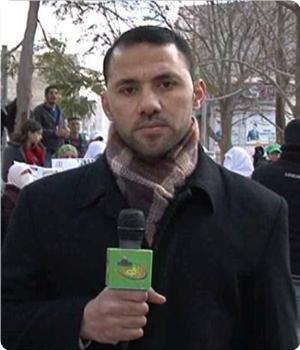
RAMALLAH — An Israeli court sentenced on Thursday the correspondent of Al-Aqsa TV Channel in the West Bank to three months imprisonment and ordered him to pay a fine.
Ahrar Center for Prisoners’ Studies and Human Rights said in a press statement that the Israeli court has sentenced journalist Tariq Abu Zaid to three months imprisonment and ordered him to pay 2000 shekel fine (550 U.S. dollars).
The Palestinian reporter was arrested without clear charges on March 8, 2013, while covering the anti-settlement weekly march in the town of Kafr Qaddum, near the city of Nablus.
Ahrar center added that the Israeli court had previously postponed the trial of captive Abu Zaid several times.
The human rights center condemned all violations against Palestinian journalists and demanded the international community to pressure the Israeli government to release the 12 journalists who have been detained while performing their legitimate professional activities.
May 4, 2013
Posted by aletho |
Civil Liberties, Full Spectrum Dominance | Israel, Palestine, Zionism |
Leave a comment
US President Barack Obama today condemned the Guantanamo Bay prison camp run by US President Barack Obama, channeling the moral outrage last heard on the 2008 campaign trail.
“The idea that we would still detain forever a group of individuals that have not been tried, that is contrary to who we are, that is contrary to our interests and it has to stop,” the president said during a press conference at the White House.
The rhetoric was bold and progressive. The reality? At least half of 166 never-tried, never-convicted prisoners that reside at Guantanamo Bay are engaged in a hunger strike that is making the president look bad. And so the man with a kill list who is ultimately responsible for them being there – and who’s initial plan for closing the prison was simply moving it to Illinois – had to act as if he was deeply troubled by his poor human rights record, like an oil executive shedding tears for Mother Earth after a big spill.
What Obama is banking on is the fact that most people (including his base) aren’t terribly detail oriented. The tale liberal Democrats tell themselves, and which the liberal media tells the rest of us, is that the fight over Guantanamo Bay is Obama and a bunch of ACLU lawyers on one side, the forces of fear-mongering, reactionary insanity on the other. The president, it is to be understood, is facing irrational hostility from the Chicken Littles of the right and would like to the do the right thing — of course he would — but, you know: Republicans.
That narrative, unfortunately, is false. The true story, obfuscated by the president’s occasional condemnations of his own human rights record, is that Obama himself signed an executive order creating “a formal system of indefinite detention for those held at the U.S. military prison at Guantanamo Bay.” Rather than repudiate the notion of “detain[ing] forever a group of individuals that have not been tried,” Obama (through a task force he commissioned) determined that 48 of the prison camp’s detainees were “too dangerous to transfer but not feasible for prosecution.” The evidence against those men would not be admissible even by the weakened standards of a military court – that is, it was probably gained through torture – but rather than release them, as if they were persons endowed with certain inalienable rights, the Obama administration would prefer to lock them away until they die.
The president has even refused to release dozens of Yemeni citizens who have been cleared of all wrongdoing. Obama also signed (and his lawyers later defended in court) a bill that allows for the indefinite detention of US citizens. And let’s not forget that kill list, which is based on the idea that it’s alright for the president to act as judge, jury and executioner, so long as the unilateral justice is being delivered abroad. So when the president of the United States righteously condemns the idea of imprisoning someone forever without charge or trial, it’s important to remember the truth about his record. It’s important to remember he is lying.
May 1, 2013
Posted by aletho |
Civil Liberties, Deception, False Flag Terrorism, Full Spectrum Dominance, Progressive Hypocrite, Subjugation - Torture, Timeless or most popular | Guantanamo Bay detention camp, Human rights, Obama, United States |
Leave a comment
Since Dzhokhar Tsarnaev was taken into custody just over a week ago, the hue and cry in the public and media discussion has centered on “Miranda” rights and to what extent the “public safety exception” thereto should come into play. That discussion has been almost uniformly wrongheaded. I will return to this shortly, but for now wish to point out something that appears to have mostly escaped notice of the media and legal commentariat – Tsarnaev repeatedly tried to invoke his right to counsel.
Tucked in the body of this Los Angeles Times report is the startling revelation of Tsarnaev’s attempt to invoke:
A senior congressional aide said Tsarnaev had asked several times for a lawyer, but that request was ignored since he was being questioned under the public safety exemption to the Miranda rule. The exemption allows defendants to be questioned about imminent threats, such as whether other plots are in the works or other plotters are on the loose.
Assuming the accuracy of this report, the news of Tsarnaev repeatedly attempting to invoke right to counsel is critically important because now not only is the 5th Amendment right to silence in play, but so too is the right to counsel under both the 5th and 6th Amendments. While the two rights are commonly, and mistakenly, thought of as one in the same due to the conflation in the language of the Miranda warnings, they are actually somewhat distinct rights and principles. In fact, there is no explicit right to counsel set out in the Fifth at all, it is a creature of implication manufactured by the Supreme Court, while the Sixth Amendment does have an explicit right to counsel, but it putatively only attaches after charging, and is charge specific. Both are critical to consideration of the Tsarnaev case; what follows is a long, but necessary, discussion of why.
In fact, “Miranda rights” is a term that is somewhat of a misnomer, the “rights” are inherent in the Constitution and cannot be granted or withheld via utterance of the classic words heard every day on reruns of Law & Order on television. Those words are an advisory of that which suspects already possess – a warning to them, albeit a critical one.
In addition to being merely an advisory of rights already possessed, and contrary to popular belief, advising suspects of Miranda rarely shuts them down from talking (that, far more often, as will be discussed below, comes from the interjection of counsel into the equation). As Dr. Richard Leo has studied, and stated, the impact of Miranda on suspects’ willingness to talk to interrogators is far less than commonly believed. One study has the effect rate of Miranda warnings on willingness to talk at 16%; from my two plus decades of experience in criminal defense, I would be shocked if it is really even that high.
On top of this fact, the Miranda warnings relate only to the admissibility of evidence or, rather, the inadmissibility – the exclusion – of evidence if it is taken in violation of Miranda. Professor Orin Kerr gives a great explanation here.
Since there is, without any real question, more than sufficient evidence to convict Tsarnaev without the need for admissibility of any verbal confession or other communicative evidence he may have provided the members of the HIG (High Value Detainee Interrogation Group), the real question was never “Miranda” but when Tsarnaev would be presented to the court which, in turn, would determine when he would be given access to counsel. Not surprisingly, one of the first people I saw to correctly point this out was Marcy Wheeler:
Folks: FAR more important, IMO, than Miranda is presentment. If he sees a judge in 2 days she’ll make sure he gets a lawyer.
That could not have been more true, as was demonstrated on Monday morning, April 22, when Magistrate Judge Marianne Bowler went to the Beth Israel Deconess Medical Center where Tsarnaev was receiving treatment in custody. Also present was William Fick and Miriam Conrad (fascinating look at Conrad and her history here) of the Federal Public Defender’s office in Boston. Fick, who speaks fluent Russian, and Conrad met with Tsarnaev immediately before the formal initial appearance process and represented him in the brief actual initial appearance itself.
So, all is as it should be because Tsarnaev got the initial appearance he was entitled to by law, right? No.
First off, there is the timing of the initial appearance, sometimes also colloquially referred to as “presentment”. The initial appearance is governed by Rule 5 of the Federal Rules of Criminal Procedure (FRCrP). While you may have seen mention of “within 48 hours”, the rule itself provides only that an arrested person must be taken before a magistrate “without unnecessary delay”. The “48 hours” standard for first court appearances comes from the 1991 case of County of Riverside v. McLaughlin, which held that 48 hours was the outside limit. The importance of the Rule 5 initial appearance was cemented by the Supreme Court as recently as 2009 in the case of Corley v. United States (which even suggests delays longer than six hours may be presumptively violative).
But the 48 hour limit was not honored, in either spirit or letter, by the federal authorities in charge of the detention and interrogation of Dzhokhar Tsarnaev. The formal taking into custody of Tsarnaev, the arrest, was effected and announced at 8:45 pm EST Friday night April 19 and, as evidenced by the complaint cover sheet filed with the court, Tsarnaev was immediately in federal custody. The criminal complaint signifying the formal charging of Tsarnaev is noted by Judge Bowler to have been sworn out to her at 6:47 pm on Sunday, April 21. So, Tsarnaev was charged within 48 hours of his arrest, but he was not given his initial appearance within 48 hours, as required by Rule 5 FRCrP, County of Riverside v. McLaughlin and Corley.
The Rule 5 initial appearance was finally given to Dzhokhar Tsarnaev Monday morning April 22, as evidenced by the official transcript of the proceeding. The specific sequence and timing of these events is critical because of the nature and timing of the interrogation of Tsarnaev prior to him being advised of his Miranda warnings by Judge Bowler. It appears as if there were two substantive interrogation sessions by the HIG team, a fact reported by no less than Ray Kelly, based upon claimed briefing by the federal authorities:
The police commissioner explained that was the original story that Dzhokhar told police when they began to interrogate him in the hospital, but that he later provided a more detailed account during a subsequent interview.
Both interviews appear to have happened before authorities read the younger Tsarnaev brother his Miranda rights on Monday. According to Kelly, Dzhokhar was interrogated twice by authorities in the hospital, the first time on “Saturday evening into Sunday morning” and the second on “Sunday evening into Monday morning.” According to an Associated Press report from earlier today, the questioning lasted a total of 16 hours before Dzhokhar stopped cooperating upon being informed of his right to remain silent.
Remember, however, from above, that “Tsarnaev had asked several times for a lawyer, but that request was ignored since he was being questioned under the public safety exemption to the Miranda rule”. This is where the Miranda, the public safety exception and right to counsel all intersect for Mr. Tsarnaev. Frankly, the government has issues on all of those fronts, but let us first look at the one that has been most discussed, and cowardly demagogued by the likes of House Intel Chairman Mike Rogers and NY Congressman Peter King, the most – Miranda and the “public safety exception”.
Professor Erwin Chemerinsky, in the Los Angeles Times, explains the nuts and bolts of the “exception”, and why it arguably does not apply to Tsarnaev’s situation:
Holder said on the Sunday talk shows that the government intended to invoke the “public safety exception” that allows suspects to be questioned without being given Miranda warnings in emergency circumstances. But this exception does not apply here because there was no emergency threat facing law enforcement.
The emergency exception to Miranda that Holder embraced was announced by the Supreme Court in New York vs. Quarles in 1984. A woman told the police that she had been raped by a man with a gun. When the police caught the suspect in a grocery store, they saw an empty holster and no gun. The man was asked about the location of the gun, and he told the officer where to find it.
The Supreme Court ruled that, although the suspect had not yet been given Miranda warnings, the statement about the gun was admissible against him because of the urgent need to find the gun. In other words, the public safety exception applies only when police are acting in an emergency to prevent serious immediate harm. If the police needed to question Tsarnaev as to the location of other bombs, the emergency exception would apply.
The New York v. Quarles case Chemerinsky discusses as setting out the public safety exception can be found here. In light of the fact that not only had multiple voices, from Attorney General Holder, to President Obama, to a myriad of investigation authorities, both local and federal, stated there was no evidence of further threat, there is some merit to Professor Chemerinsky’s opinion on the Quarles exception not being applicable to Tsarnaev by the time his interrogation commenced on Saturday April 20.
Of course, the DOJ did not rely on Quarles alone, they also invoked their now infamous “”Public Safety Exception Memo” first incarnated in a memo from Attorney General Holder dated October 19, 2010, and formally distributed in a cleaned up version dated October 21, 2010. The memo goes beyond the basic immediate public safety questions permitted by Quarles to allow further broader ranging questions:
There may be exceptional cases in which, although all relevant public safety questions have been asked, agents nonetheless conclude that continued unwarned interrogation is necessary to collect valuable and timely intelligence not related to any immediate threat, and that the government’s interest in obtaining this intelligence outweighs the disadvantages of proceeding with unwarned interrogation. [4] In these instances, agents should seek SAC approval to proceed with unwarned interrogation after the public safety questioning is concluded. Whenever feasible, the SAC will consult with FBI-HQ (including OGC) and Department of Justice attorneys before granting approval. Presentment of an arrestee may not be delayed simply to continue the interrogation, unless the defendant has timely waived prompt presentment. (Emphasis added)
Let us give the DOJ and HIG team the benefit of the doubt under Quarles, and even their own self-stated memo (which is neither binding nor controlling law in any regard), and grant that some base level of questioning of Tsarnaev was reasonable to confirm there were no outstanding bombs, weapons or other dangers, and no outstanding co-conspirators and/or terrorist ties, whether domestic or foreign. In fact, there is court precedent in a recent case via the decision of Judge Nancy Edmunds to uphold this use of the public safety exception, in the case of the “Undie Bomber”, Umar Farouk Abdulmutallab
Grant all of these root questions, and the bolded language – from the Obama DOJ’s own Public Safety Exception Memo – delineates why there is still a significant problem with the treatment of Tsarnaev. The Rule 5 initial appearance, i.e. “presentment”, was not complied with as to Tsarnaev, and public safety questioning can neither appropriately nor legitimately delay it.
In fairness to the Obama DOJ, who has been roundly blasted for the Public Safety Exception Memo, they arguably could have gone further and not included the such strong guidance against violation of Rule 5. There is authority from both the Ninth Circuit in United States v. DeSantis, 870 F.2d 536, 541 (9th Cir. 1989), and the Fourth Circuit in United States v. Mobley, 40 F.3d 688, 692–93 (4th Cir. 1994), cert. denied, 514 U.S. 1129 (1995), for the proposition that, like Miranda, the right to counsel can give way briefly for the public safety exception under Quarles.
The extensions of the public safety exception to right to counsel by the courts in Desantis and Mobley, however, give little, if any, support to the government’s actions vis a vis Mr. Tsarnaev, because the intrusion into the constitutional right to counsel in both the other cases was so fleeting – in both it was no more than a question or two about a weapon on the premises of a search while the search warrant was actively being executed. Nothing whatsoever like the 16 hours of interrogation applied to Tsarnaev, across at least two sessions, over a period of at least two days. The “public safety” interrogation of Tsarnaev was not immediate to potential danger, was not narrow and limited, and occurred long after he had been taken into custody. And, apparently, at least as to one of those sessions, the “Sunday evening into Monday morning” session, the interrogation occurred well after formal charges had been filed with Judge Bowler.
Let’s take a look at the “right to counsel”, why it differs, and is arguably far more important in the Tsarnaev scenario than utterance of the “Miranda warnings”. The right to counsel during custodial police interrogations emanates from the seminal 1964 case of Escobedo v. Illinois. The language of the decision syllabus reflects the bright line rule announced by the court:
…where a police investigation is no longer a general inquiry into an unsolved crime but has begun to focus on a particular suspect in police custody who has been refused an opportunity to consult with his counsel and who has not been warned of his constitutional right to keep silent, the accused has been denied the assistance of counsel in violation of the Sixth and Fourteenth Amendments; and no statement extracted by the police during the interrogation may be used against him at a trial.
Escobedo, as direct law, was implicitly obviated two years later by the decision in Miranda v. Arizona, where the court suddenly, and somewhat curiously, placed the right to custodial interrogation counsel under the umbrella of the Fifth Amendment instead of the Sixth.
The primacy, and fundamental nature of the right to custodial interrogation counsel, however, was confirmed in the 1981 decision of Edwards v. Arizona, where the court held suspects have the right under the Fifth and Fourteenth Amendments to have counsel present during custodial interrogation, as declared in Miranda, and that right cannot be invaded absent a clear and valid waiver. While it is true, under Berghuis v. Thompkins, a suspect must affirmatively invoke his right to counsel as opposed to simply standing silent, there is no authority for interrogators to simply ignore and frustrate, over an extended period, a suspect’s express request for counsel as appears to have occurred in Tsarnaev’s case.
Once, however, a defendant is presented to the court for initial appearance, he will be afforded counsel, and counsel will in almost all cases stop immediate questioning, both to prevent incrimination and to preserve evidence as leverage for plea negotiations. That is exactly what a defense counsel should do, and exactly what our constitutional system of justice and protections contemplates. This is also exactly why the Rule 5 presentment, and not “Miranda”, has always been the critical concern in analyzing the Tsarnaev case, and still is. Once legitimate general questions as to public safety had been asked, Tsarnaev should have been afforded his Rule 5 initial appearance and access to counsel. Clearly Judge Bowler was available on Sunday the 21st, since, as previously noted, she was available to accept the swearing and filing of the criminal complaint.
Again, the timing of the interrogation, and requests for counsel, will prove critical. There are still many questions and facts to be locked down on these issues including, but not limited to:
When in the timeline did Dzhokhar Tsarnaev first invoke by requesting counsel?
How many times did he attempt to do so?
In light of the fact much of his communication to the HIG interrogators was reportedly written, were his attempts to invoke in writing too?
How did the interrogation team document Tsarnaev’s non-written responses in light of the difficulty he had in communicating?
Was there a video or audio record made to preserve the evidence?
Did Tsarnaev provide any evidence that would warrant continuation of the Quarles public safety questioning?
In light of the fact that Undie Bomber Abdulmutallab (who actually had layers of foreign terrorist ties and activities outside of the continental US) was only questioned for 50 minutes under the public safety exception, why did Tsarnaev (who had no such ties or activity) require 16 hours of interrogation over two full days, substantial portions of which were after charges were filed?
The bottom line is this: not telling a suspect about his rights in order to try obtain brief, immediate and emergency public safety information is one thing. Straight out denying and refusing a defendant constitutional rights he is legally entitled to, and has tried to invoke, is quite another. The government has issues on both fronts as to Tsarnaev.
The other thing that must be remembered is all of the foregoing likely only affects the admissibility of evidence communicated in the relevant period by Tsarnaev, not the legality of his detention and not the ability of the government to convict him. At best, it involves evidentiary exclusion principles only. There is, by all accounts, more than enough evidence to convict the man without anything he communicated being admitted in a trial (if indeed there ever is a trial). Dzhokhar Tsarnaev will not be walking free in society again no matter how it sorts out. Big and emotionally fraught cases of national interest rarely make for good, and sound, creation of law and the Tsarnaev case is no exception.
How the Tsarnaev facts and case is discussed, sorted out in court, and what foundation it lays for future cases – and there will be future cases – does, however, speak loudly as to who we are as a nation. Are we the cowering nation of supposed leaders such as Mike Rogers and Peter King, or are we the strong and resolute one envisioned by our Founding Fathers and protected by the constitutional rights they bequeathed us with? Recent polls have shown that Americans are increasingly “skeptical about sacrificing personal freedoms for security.” The people have that right, we should listen to them.
May 1, 2013
Posted by aletho |
Civil Liberties, Timeless or most popular | Federal Rules of Criminal Procedure, Fifth Amendment to the United States Constitution, Miranda, Miranda warning, Sixth Amendment to the United States Constitution, Tsarnaev, United States |
Leave a comment
Cops who testified against the New York City Police Department’s stop-and-frisk policy have faced retribution from higher-ups and officers who subscribe to the idea that the controversial tactic, deemed unconstitutional by major courts, is fair and legal.
NYPD officer Pedro Serrano told the Associated Press he’s faced harassment at work after testifying that stop-and-frisk, which was enacted in 2002, targets minorities and requires patrol officers to meet monthly quotas.
Serrano said that, along with finding a sticker of a rat pasted to his locker, he says he’s been micromanaged – including transferred to a different precinct to work an overnight shift. He also claimed that he was refused overtime hours amid an otherwise erratic schedule.
“A lot of people told me not to come forward because of what would happen – they said the department would come after me,” Serrano said. “But I’ve been thinking about it since 2007. I felt I couldn’t keep quiet.”
Serrano, along with fellow officers Adrian Schoolcraft and Adhyl Polcano, secretly recorded hours of patrol briefings and meetings with superior officers. The audio was played during the current federal trial meant to determine if black and Hispanic men are targeted by NYPD cops seeking to boost their numbers.
Polcano testified that he was told he needed to have 20 summonses, five street stops and one arrest each month.
“I was extremely bothered by what I was seeing out there,” he said on the stand. “The racial profiling, the arresting people for no reason, being called to scenes that I did not observe a violation and being forced to write a summons that I didn’t observe.”
Polcano was suspended from duty and charged with filing false arrest paperwork after he detailed a list of grievances to the police department’s internal affairs. He now works in a video review department. Schoolcraft, who remains suspended, did not testify at the trial because he has filed his own federal suit accusing superior officers of forcefully taking him to a psychiatric hospital in 2009.
Other officers who testified painted Serrano’s complaints as an unfortunate but necessary part of the job. Joseph Esposito, the former chief of the department, testified that most officers “leave their house every day to go to work to protect the city. They have the best intentions all the time, and they do it. There is a small percentage…we’re talking about in any profession, there is a group that will try to do the least amount and get paid the most.”
The alleged harassment would fit in the narrative of the NYPD. In the early 1970s plainclothes officer Frank Serpico accused the department of widespread corruption only to be shot in the face during a later investigation. Labeled a traitor by the police but a hero by others, Serpico was portrayed by Al Pacino in a popular eponymous movie chronicling his story two years later.
During an interview with the Associated Press Serpico said recent events prove NYPD groupthink hasn’t evolved past a “kill the messenger” mentality.
“I’ve become their grandfather,” he said. “They don’t want nothing. They just want somebody who knows what they’re going through. I give them moral support.”
The trial has been underway for more than a month, and recently included testimony from a parade of officers trying to discredit Polcano and Serrano as malcontents who often caused trouble. NYPD policy dictates that officers are required to report corruption without fear of retribution.
“It hasn’t been a picnic,” Serrano said. “They have their methods of dealing with someone like me.”
April 30, 2013
Posted by aletho |
Civil Liberties, Corruption, Ethnic Cleansing, Racism, Zionism, Subjugation - Torture | Adrian Schoolcraft, Joseph Esposito, New York City Police Department, Pedro Serrano |
Leave a comment
On April 24, Frank Barat, a Palestine solidarity activist and co-coordinator of last year’s Russell Tribunal on Palestine, was stopped at Ben Gurion International Airport by the Shabak, Israel’s internal security service, and subjected to four hours of interrogation and nearly a full day’s detention before being deported back Belgium. His “crime”? To have visited Israel while a supporter of Palestinian rights. Here, he describes what took place.
“WRITE YOUR e-mail addresses, your mobile phone number, your house phone, the name of your father and the name of your grandfather on this piece of paper” were the first words the Israeli security officer told me when I sat in front of him in his office.
As anyone involved in solidarity work with the Palestinian people will tell you, landing at Ben Gurion airport in Tel Aviv, Israel, and having-to-face questioning by the authorities is never an exciting prospect. In the last couple of months, a few activists have been turned back. Due to my work with the Russell Tribunal on Palestine, I knew even before I arrived in front of the immigration desk that I was a likely target for hard questioning from the Shabak, Israel’s internal security service.
I was coming to Palestine to visit old friends and also to take part in a conference on political prisoners organized in Ramallah as part of my role as coordinator for the Russell Tribunal. Due to the fact that Israel controls all the West Bank borders of Palestine, one has to go through Israeli officials in order to reach the occupied Palestinian territories. (Now, only Gaza–via the Rafah border crossing with Egypt–is accessible without too much Israeli interference.)
So I wrote the requested details on the piece of paper in front of me–except that I put an alternative e-mail address, being fully aware that what the officer in front of me wanted was information about other people involved with solidarity work in Palestine and abroad. Mapping networks has in recent years been vigorously pursued by Israel.
The line of questioning, at first, stuck to my travel plans. Six days in Tel Aviv without a travel guide was too much to bear for the man. He then quickly moved to my personal details and asked me to log on to my e-mail account, which is apparently less illegal (in Israel anyway) than I thought (see here and here).
He started to get upset when my inbox opened and there was no message in it. He told me repeatedly, “I know you have another e-mail address. Give it to me.” “I only have this one,” was the answer I stuck with throughout the whole process. I was taken to various offices throughout the whole interrogation process and spoke to a few people, who asked, again and again, the same questions.
– – – – – – – – – – – – – – – –
I HAD to wait for long periods between each interrogation. Palestine and political activity only were raised after about three hours of questioning. I was sort of relieved to hear the word because I knew deep down that the Shabak agent had known about my work on the Palestine issue from minute one. He even asked me at one point, “What will Google tell me if I search for your name?”
The goal, however, was somewhere else. The goal was to exhaust me into giving information about workmates, colleagues and various people I knew in Israel/Palestine. The exhaustion part worked. I was clearly on my knees at 4 a.m., having had no sleep for 24 hours and faced with several unfriendly people questioning me. But they never got what they really wanted–my e-mail account and its content. After four hours of questioning, the verdict came (there were five people in the room, including me, at this time): “You lied to me. So you won’t get in. You will now be deported back. Your flight is in 23 hours.”
Still, right after telling me this, the officer tried one more time, telling me that he was my friend, here to help me and that if I collaborated he might change his decision. I was at this point taken to a room where I was body searched thoroughly (by a young man with an apologetic look on his face), and where my carry-on bag (the only piece of luggage I brought) was fully checked, in and out, approximately three times, including passing through X-rays.
At roughly 4.30 a.m., I was put in a van, alone, and driven to my next destination: the deportation center. Why we stopped, for about 10 minutes, in between airplanes on the tarmac is a question that remains unanswered. He told me before he dropped me off that I would be deported in 23 hours. “You’re lucky,” said the man. “Some people have to wait for a week here.”
The next 23 hours were the longest in my life. With no means to know what the time was, it took forever. My cellmate, a 21-year-old Ukrainian man who spoke no English at all and came to Israel in search of a better future, and I were allowed two 10-minute breaks outside, under surveillance of course, and managed to catch a glimpse of the palm trees and the sunshine that we were at this point longing for. We were then joined by two older Ukrainians as well as a Chinese man.
What I did not know at the time was that a friend in Israel, at 9 a.m. on Tuesday morning, had contacted the office of Israeli lawyer Gabi Lasky to ask her to try to get more information regarding my whereabouts–did I enter? Was I being deported? Detained? They did not want to say anything. It took many hours for Gabi to get confirmation that I was in the detention center at the airport. Over the phone, Gabi later told me that the authorities are making life harder and harder for lawyers and that they are being more difficult every day.
I was put back on a plane, escorted by an immigration official, my bag full of security tags, paraded in front of the other passengers, at 1 a.m. the next day. The fact that the main air hostess was Arab and smiled at me when the immigration official handed her my passport felt, I have to say, very good at the time.
– – – – – – – – – – – – – – – –
WHILE THIS was an extremely unpleasant experience, it is crucial to put things into a broader context. The pressure, fear and humiliation I often felt during this time–the scare tactics used by the Shabak (“Tell me the truth, or you’re going to jail right now”) and the short time spent in jail–are nothing compared to what the Palestinians are going through every day. Right now, more than 4,500 Palestinian political prisoners are rotting in Israeli jails. A few of them have started “hunger strikes” and are slowly dying, while the “international community” (understood as the Western states, the European Union and the United Nations) is doing nothing to come to their rescue.
It is crucial to keep highlighting this. The inconvenience felt by a privileged international citizen should not overshadow the reason at the core of his activism: To acknowledge the right of the Palestinian people to resist their far more powerful occupier and to do so until the systematic and institutionalized apartheid system put in place by Israel ends; to expose the active role played by third parties (states, institutions and corporations) in supporting Israel’s occupation; and to highlight Israel’s impunity regarding countless resolutions passed by the UN General Assembly and the UN Security Council that have been, so far, never followed by any concrete action.
It is our role as global actors involved in a global struggle for justice, freedom and dignity for all people, regardless of their ethnicity, political orientations, or countries of origin, to show solidarity with those people stripped of their rights. The breaking down of human civilization in sub-categories of human beings (privileges come depending on where you were born, while this act was simply an accident of nature), the slow crumbling of any “common decency,” solidarity and compassion showed by people towards others, can be reversed and is not ineluctable.
This can only happen if we all unite towards this goal.
April 29, 2013
Posted by aletho |
Civil Liberties, Full Spectrum Dominance, Solidarity and Activism, Timeless or most popular | Ben-Gurion, Human rights, Israel, Palestine, Shabak, Shin Bet, West Bank, Zionism |
Leave a comment
A US government task force is drafting FBI-backed legislation that would penalize companies like Google and Facebook for refusing to comply with wiretap orders, media report.
In the new legislation being drafted by US law enforcement officials, refusal to cooperate with the FBI could cost a tech company tens of thousands of dollars in fines, the Washington Post quoted anonymous sources as saying.
The fined company would be given 90 days to comply with wiretap orders. If the organization is unable or unwilling to turn over the communications requested by the wiretap, the penalty sum would double every day.
“We don’t have the ability to go to court and say, ‘We need a court order to effectuate the intercept.’ Other countries have that. Most people assume that’s what you’re getting when you go to a court,” FBI general counsel Andrew Weissmann told the Washington Post.
If passed in Congress and signed by President Obama, the bill could become a provision of the 1968 Wiretap Act, which require companies to develop mechanisms for obtaining information requested by government investigators.
However, many companies maintain that their resistance to this and similar measures has nothing to do with an unwillingness to help investigators. Google began encrypting its email service following a major hacking attack in 2010; developing wiretap technology could make it and other companies vulnerable, creating “a way for someone to silently go in and activate a wiretap,” said Susan Landau, a former engineer at Sun Microsystems.
The proposed expansion of wiretaps into the digital frontier is the latest in a series of US government efforts to monitor online communications.
The recent Boston Marathon bombings were used by some members of Congress as a reason to push through the highly controversial Cyber Intelligence Sharing and Protect Act (CISPA), which was passed by the lower house. If CISPA is signed into law, telecommunication companies will be encouraged to share Internet data with the Departments of Homeland Security and Justice concerning national security purposes.
Tech companies, including giants like Facebook and Microsoft, have objected fiercely to the bill, citing customers’ privacy concerns. The bill is currently shelved in the Senate following President Obama’s threat to veto CISPA due to a lack of personal privacy provisions.
Earlier in April, the FBI requested an additional $41 million from the federal government for the recording and analysis of Internet communication.
The Electronic Privacy Information Center also recently obtained over 1,000 pages of documents proving that the Pentagon has secretly eavesdropped on Internet traffic for several years.
“Senior Obama administration officials have secretly authorized the interception of communications carried on portions of networks operated by AT&T and other Internet service providers, a practice that might otherwise be illegal under federal wiretapping laws,” CNET reporter Declan McCullagh wrote.
April 29, 2013
Posted by aletho |
Civil Liberties, Full Spectrum Dominance | Electronic Privacy Information Center, FBI, Internet service provider, Obama |
Leave a comment
Palestine Information Center – 03/05/2013

 Aletho News
