US ban on Arab TV
Dawn Media Group | April 19, 2010
THE United States claims that one of its top foreign policy initiatives is to spread democracy and freedom around the world. But a recent bill in the US Congress has led many to wonder whether the US wants to become one of the world’s biggest hindrances to media freedom.
Early December the US House of Representatives voted by an overwhelming majority to pass a bill in order to stop satellite TV channels from 17 Arab nations from being transmitted to American audiences due to their engagement in ‘anti-American incitement to violence’.
In a Congress that cannot seem to agree on many burning issues — whether fixing the broken healthcare system or ways of dealing with the turbulent economic situation — the bill passed with 395 ‘yes’ votes, and only three dissenters.
The bill — known as House Resolution 2278 — has to pass many stages before it becomes a law, but it has shocked many for contradicting American support for free speech.
Airing of respectful disagreement with the policies of the US government is a part of the development process, which should be taken positively the US.
YUSRA ALVI
Karachi
Anti-govt. demos held in Egypt
Press TV – April 21, 2010
 Egyptian activists shout anti-government slogans and hold posters that read in Arabic: “shoot us”.
Dozens of anti-government protesters have taken to the streets of the Egyptian capital Cairo to demand more political freedom.
The demonstrators slammed calls by politicians and officials loyal to President Hosni Mubarak to use force against anti-government protesters. They also called for an end to emergency rule that allows indefinite detentions of people under the pretext of national security.
A lawmaker earlier questioned the Interior Ministry for being soft on the protesters. He said anti-government protesters should be shot.
Amnesty International has condemned the MP’s outrageous remarks, saying that it was “a clear incitement to excessive force and potentially unlawful killing of protesters.”
Mubarak has been the President of Egypt since 1981.
UK: To Vote Or Not
By Robin Yassin-Kassab | Pulse Media | April 20, 2010
Democracy is supposed to mean ‘government by the people’. In the ancient Greek city states all the free men (but not women or slaves) would cram the theatre for lively, informed debate on a relevant issue, and then would decide it by a show of hands. Not so today. Putting a mark on a piece of paper every five years and imagining that you run things seems like a sad parody of such activity, a demotic populism masking power rather than a popular democracy negotiating it.
In our society the most important decisions are often made by unelected movers of capital and unelected civil servants and generals. Elected officials are very often at least as loyal to the lobbies easing their way as to the voters they supposedly represent.
And there’s the problem of ignorance. “If a nation expects to be ignorant and free,” Thomas Jefferson said, “in a state of civilization, it expects what never was and never will be.” Why has there been no campaign discussion of the causes and long-term ramifications of the current recession? (I mean the failure of the neo-liberal economics which both Tories and Labour have pursued in government, and a global power realignement). Surely because the politicians know most people don’t understand economics. (Most politicians don’t understand economics either). As far as foreign policy is concerned, the mainstream media and culturally-embedded imperialist assumptions are effective obstructions to open, informed debate. Add to this the postmodern simulacrum which many of us inhabit, in which an actual explosion attracts no more attention than a computer or Hollywood-simulated explosion, in which the boundaries between image and reality are beyond blurred. Baghdad fills less space on the screen than Bruno’s swinging penis.
So voting doesn’t mean nearly as much as the culture pretends it does, but it still means something, or at least could do. Public opinion, though manipulated and frequently scorned, plays a key role in the management of state and empire. Our enemies know this, which is why they have it tied up so well.
For us, to blithely ignore an election is to fail to understand and engage with the real world of lobbies and influence. (If there were a mass oppositional movement in this country, we could forget about lobbies and the established parties – but there isn’t). The Israel Lobby, for instance, not only commands a great deal of money, but very effectively marshals its supporters to write letters to MPs and ministers, to vote for candidates that express pro-Israel sentiments, and to demonise and isolate those who speak out against Zionist crimes. If candidates for parliament were to receive as many pledges of support for a pro-Palestine as for a pro-Israel position, things might change a little.
Politicians don’t fear majorities of passive opinion; they fear organised, committed minorities. Perhaps two million marched in London against the invasion of Iraq. It was the biggest demonstration in British history, and it certainly wasn’t passive. When it finished, however, most marchers politely returned home, feeling better about themselves. A million dead Iraqis later, many of the marchers will vote for Labour or Tory candidates who supported the invasion.
Some of the marchers won’t vote at all, believing that by not voting they make a statement of non-cooperation with the system. But their protest is invisible. Their absent votes are lumped with those millions who do not vote out of apathy or alienation, because inside their simulacrum an episode of Eastenders takes precedence over a visit to the polling booth.
This time I’m going to vote, but not with illusions. I know voting isn’t an alternative to other actions. And I’m not going to play the game to the extent of voting Labour, even though I’m in a constituency where Labour will probably lose to the Tories. I just can’t vote Labour. There’s the matter of a million dead Iraqis for a start. There’s Blair’s Lebanon war, and Afghanistan, and the assault on civil liberties. There’s the economic mess which is about to undo much of what has been done. Plus Labour has presided over and often directed a dramatic resurgence of racism and Islamophobia, which makes my life more difficult.
Many people will vote Tory simply because they are sick of Labour. Many will vote Labour only because they fear the Tories more. Very few people will vote out of genuine enthusiasm for a party or politician. This is the particular curse of the British-style ‘first-past-the-post’system, a curse which suits the two main parties. The Liberal Democrats, on the other hand, have been proposing a proportional representation system for years. There is a chance that the next parliament will be hung, with the Liberals acting as kingmakers. Therefore there’s a slight chance that Proportional Representation will be their king-making price. It’s in their interests of course, for under PR the Liberals would no longer be a minority party. It also means that people could vote for who they like rather than for who scares them least. PR would allow the BNP to enter parliament, but also the Greens and socialist movements. It would certainly make electoral politics more interesting, and could allow more space for genuinely oppositional voices.
I notice the Liberal Democrats also because their leader, Nick Clegg, has called for an arms embargo against Israel. Clegg should be rewarded for this brave and principled stand, which is a million miles beyond what we could expect from the Labour or Tory leaders. Clegg should know that there’s political mileage in taking a pro-justice position, and other politicians should observe and learn the lesson.
This sounds like an endorsement of the Liberal Democrats, and to an extent it is. I recommend of course that voters research their local candidates’ allegiances. There’s a Liberal Democrat Friends of Israel just as there are Labour and Tory versions. And I’m only endorsing the Liberals for the moment. If they ever become a fixture of government they’ll become as targetted by lobbies, corruption and imperial ‘realpolitic’ as the other two.
As for me, I’m voting SNP. Where I live they are in third place behind Labour and the Tories. The Scottish Nationalists are to the left of New Labour and are (except for Plaid Cymru) the only party to call for a rethink of the British military presence in Afghanistan.
(And P.S. – Could I appeal to British Muslims to investigate the positions taken by Muslim MPs before voting for them. Politicians like Birmingham MP Khaled Mahmood must receive some votes simply because they have Muslim names. Mahmood is a tame Blairite who rarely votes in parliament, but when he does he supports attacks on civil liberties. He’s on record as “dismissing” calls for an arms embargo against Israel. On the other hand, Osama Saeed, SNP candidate for Glasgow Central, has a solid record of anti-war and pro-justice activism.)
Obama’s “Remainees”
Will not one but two Guantanamos define the American future?
By Karen J. Greenberg | April 19, 2010
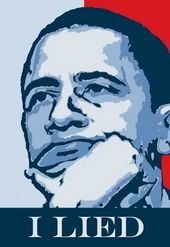 On his first day in office, President Barack Obama promised that he would close the Bush-era prison at Guantanamo Bay, Cuba, “as soon as practicable” and “no later than one year from the date of this order.” The announcement was met with relief, even joy, by those, like me, who had opposed the very existence of Guantanamo on the grounds that it represented a legal black hole where the distinction between guilt and innocence had been obliterated, respect for the rule of law was mocked, and the rights of prisoners were dismissed out of hand. We should have known better.
By now, it’s painfully obvious that the rejoicing, like the president’s can-do optimism, was wildly premature. To the dismay of many, that year milestone passed, barely noticed, months ago. As yet there is no sign that the notorious 8-year-old detention facility is close to a shut down. Worse yet, there is evidence that, when it finally is closed, it will be replaced by two Guantanamos – one in Illinois and the other in Afghanistan. With that, this president will have committed himself in a new way to the previous president’s “long war” and the illegal principles on which it floundered, especially the idea of “preventive detention.”
Guantanamo in Illinois
For those who have been following events at Guantanamo for years, perhaps this should have come as no surprise. We knew just how difficult it would be to walk the system backward toward extinction, as did many of the former lawyer-critics of Guantanamo who joined the Obama administration. The fact is: once a distorted system has been set in stone, the only way to correct it is to end the distortion that started it: indefinite detention.
As of today, here’s the Guantanamo situation and its obdurate math. One hundred eighty-three detainees remain incarcerated there. Perhaps we should call them “remainees.” According to the estimates of the Guantanamo Detainee Review Task Force set up by Attorney General Eric Holder, about half of them will be released sooner or later and returned to their homelands or handed over to other “host” countries. They will then join approximately 600 former Guantanamo inmates released from custody since 2002. Another 35 or so remainees will be put on trial, according to reports on the task force’s recommendations and, assumedly, convicted in either civilian courts or by military commissions. For the remaining 50 or so – those for whom evidence convincing enough for trial and conviction is absent, but who are nonetheless deemed by the president to constitute a threat to the nation – the legal future is dim, even if the threat assessment which keeps them behind bars has nothing to do with normal American legalities.
Some of these long-term remainees may, in fact, have been jihadists at the time they were rounded up. Given the years of incarceration and the conditions they experienced, many more of the remainees may have been radicalized in Guantanamo itself, and might now seek to harm the U.S. or its citizens. In addition, half of them originally came from Yemen, a country unstable enough that, on return, some might indeed be recruited by forces intent on doing the U.S. harm. Although, in defiance of the warnings of its right-wing critics, the Obama administration did return six remainees to Yemen at the end of 2009, the Christmas Day bombing attempt by Umar Farouk Abdulmutallab only ratcheted up concerns about possible radicalization and training there. There have been no further transfers to Yemen since then.
So what is an administration that has made a firm promise and encountered an obstacle-laden, politically charged reality to do? If you take seriously the plans that this administration has been floating, the answer is simple: close down Guantanamo by putting in play two other Guantanamos (lacking the poisonous name) – one on American soil and one in Afghanistan, one future-oriented and sure to prove problematic, the other reeking of past disasters.
At some future date, the Obama administration has announced plans to move those Guantanamo detainees who are neither tried nor released to the still-to-be-refurbished Thomson Correctional Facility in Thomson, Illinois – “Gitmo North,” as it’s been dubbed by Senate Minority Leader Mitch McConnell (R-Ky.). Plans to relocate at least some detainees to a prison in the U.S. surfaced last summer. The idea has since encountered congressional resistance on the grounds of safety and security, heightened by outsized American fears that such prisoners have Lex Luthor-like powers and that al-Qaeda has the capability to attack any non-military prison holding them. The administration, however, is still pursuing the Thomson plan.
McConnell and other Republicans may be using the “Gitmo” label to stoke American fears of terrorism on our soil, but they are not wrong in another sense. A jail holding uncharged and untried remainees for the foreseeable future – or even a remainee who has been tried and acquitted – will indeed be “Gitmo,” whatever its official name and whatever happens to the prison in Cuba. In July 2009, in fact, the strikingly un-American idea of a presidentially imposed post-acquittal detention was first suggested by Jeh Johnson, the current general counsel for the Department of Defense, as one possible fate for a dangerous detainee whom a deluded jury (or a jury deprived of torture-induced confessions) might free. In this scenario, such a remainee, like those never brought to trial, would potentially remain under lock and key until the end of hostilities in the “long war,” itself imagined as at least a generational affair.
Guantanamo in Afghanistan
In other words, what’s being proposed is the moving of a (renamed) Guantanamo, body and soul, to the United States. That’s already a dismal prospect, but hardly the end of the line when it comes to post-Guantanamo thinking for this administration. In fact, a new idea has emerged recently. Last month, according to the Los Angeles Times, the White House hinted that the administration was contemplating using the already existing prison at Bagram Air Base in Afghanistan as yet another replacement for Guantanamo – apparently for housing future prisoners in what is no longer officially termed the Global War on Terror.
Were this to happen, it would be a squaring of the circle, a strange return to the origins of it all. Bagram was, notoriously enough, the place where, in 2001-2002, many of the prisoners who ended up at Guantanamo were first held (and often badly mistreated). Perhaps my mind has simply taken a cynical turn, but I can’t help wondering whether the administration might someday simply dump some of the Guantanamo remainees there as well. Then, we would be grimly back where George W. Bush’s Global War on Terror began. The “advantage” of Bagram, of course, is simple enough: prisoners on an American military base in distant Afghanistan might not be subject to the same levels of scrutiny or legal “meddling” (as the supporters of the Guantanamo process like to term it) as in Cuba or the United States – all those habeas challenges and challenges to military commissions that have, in eight years, convicted only three detainees (only one of whom still remains in custody), and all those human rights concerns.
There are indications that, in considering the reuse of Bagram as a parking lot for “the worst of the worst,” Obama administration officials remain remarkably blind to the history they are threatening to repeat. Evidently they don’t grasp the obvious parallels between Guantanamo and Bagram. Nevertheless, the language they are wielding has begun to sound eerily familiar. Last month, for instance, a senior Pentagon official was quoted saying that the idea of reinvigorating Bagram as a holding facility for such prisoners might not be the ideal solution, but was the “least bad” choice. How similar that sounds to the words former Secretary of Defense Donald Rumsfeld applied to Guantanamo Bay when he announced its opening in 2002. It was, he acknowledged almost apologetically, the “least worst place.”
If a two-prison solution were to go into effect, that would mean President Obama had fully accepted the Bush administration’s notion of a generational global battlefield against terror. After all, that’s what underlay Gitmo from the beginning, and that’s what would underlie a rejuvenated Bagram as well. In theory, there could be a workable solution lurking somewhere in all this murky planning, if it were undergirded with actual legal definitions; if, in the case of Thomson, the Illinois facility-to-be, the prisoners placed there were first charged, tried, and convicted; and if, in the case of Bagram, anyone placed there was declared a prisoner of war, or given some legally recognized status according to the laws of war or the Geneva Conventions. But as of now, it looks like both facilities will instead offer an endorsement of so-called preventive detention.
The administration’s disingenuousness on this point is overwhelming. On the one hand, we are told that the terms “war on terror” and “enemy combatants” are history and that Guantanamo will soon join them. But Guantanamo was never purely a place in Cuba. What made it so wrong was the system of indefinite detention that lay at its core and that continues to defy the rule of law as defined by the U.S. Constitution, U.S. military law, and the international conventions that this country has signed onto.
Closing Guantanamo does not simply mean emptying the prison cells at that naval base and throwing away the keys. It means ending the policy that has become synonymous with Guantanamo – of incarcerating individuals without the need to prove their guilt, and without a clear and recognizable process for determining the grounds for their detention.
Faced with opposition in Congress and in public sentiment generally, the Obama administration increasingly seems focused on ending not the conceptual nightmare we call Guantanamo, but the irritating problem that Guantanamo represents. Unfortunately, as this administration will learn to its regret, there is no closing Guantanamo if preventive detention continues.
In reality, a two-Guantanamo policy is likely to prove an unwieldy disaster and will hardly lead the country out of the quagmire of incarceration that the Bush administration mired us in. In the end, that quagmire is not legal (though the legal issues it raises are fundamental), nor political (though it may look that way from Capitol Hill); it’s psychological. And there is only one way to escape from it: end once and for all the notion of preventive detention by placing firm and unbending confidence in our military, our intelligence agencies, and our system of justice to identify enemies, prosecute those whom they can, and abide by the laws of war for prisoners of war.
Perhaps it’s also time for us to accept life in a world of imperfect security. It may sound harsh, but it’s not nearly as soul-defeating as the idea that not one, but two Guantanamos, will define the American future.
Karen J. Greenberg, the executive director of the Center on Law and Security at the NYU School of Law, is the author of The Least Worst Place: Guantanamo’s First 100 Days, among other works.
What happened to “look forward, not backward”?
By Glenn Greenwald | April 16, 2010
The Obama Justice Department today announced that it has secured a ten-felony-count indictment against Thomas Drake, an official with the National Security Agency during the Bush years. Drake’s indictment, of course, has nothing to do with the criminal surveillance undertaken by the NSA. Rather, the DOJ alleges “that between approximately February 2006 and November 2007, a newspaper reporter published a series of articles about the NSA,” and it claims “Drake served as a source for many of those articles, including articles that contained classified information.” In other words, he’s being subjected to what The New York Times’ Scott Shane calls a “highly unusual” prosecution for being a whistle-blower on the Bush era’s sprawling and secretive Surveillance State. Although the indictment does not specify Drake’s leaks, it is highly likely (as Shane also suggests) that it is based on Drake’s bringing to the public’s attention major failures and cost over-runs with the NSA’s spying programs via leaks to The Baltimore Sun.*
Let’s spend just a moment thinking about what this means. We’ve known since December, 2005, that Bush officials, including at the NSA, committed felonies by eavesdropping on Americans without the warrants required by law — crimes punishable by a five-year prison term and$10,000 fine for each offense. All three federal judges to rule on the question have found those actions to be in violation of the law. Yet there have been no criminal investigations, let alone indictments, for those crimes, and there won’t be any, due to Barack Obama’s dictate that we “Look Forward, Not Backward.” Thus, the high-level political officials who committed crimes while running the NSA will be completely immunized for their serious crimes.
By stark contrast, an NSA official who brought to the public’s attention towering failures and waste at the NSA — revelations that led to exposés that, as Shane put it, were “honored with a top prize from the Society for Professional Journalists” — is now being prosecuted for crimes that could lead to a lengthy prison term. Why doesn’t Obama’s dictate that we “Look Forward, Not Backward,” protect this NSA whistle-blower from prosecution at least as much as the high-level Bush officials who criminally spied on American citizens? Isn’t the DOJ’s prosecution of Drake the classic case of “Looking Backward,” by digging into Bush-era crimes, controversies and disclosures?
Interestingly, the Bush DOJ long threatened to prosecute not only NSA whistle-blowers but also The New York Times for revealing its illegal spying. It never did so, however, likely because, as Shane speculates, prosecutions for those leaks would cause light to be shined on what the NSA actually did when eavesdropping on Americans. Yet here is the Obama DOJ prosecuting a whistleblower, a prosecution that is certain to intimidate and deter other whistle-blowers, thus choking off one of the very few avenues which Americans have left for learning about what this sprawling, obsessively secret Surveillance State does. As Lucy Dalglish, Executive Director of the Reporters Committee for Freedom of the Presss, told the NYT today: “The whole point of the prosecution is to have a chilling effect on reporters and sources, and it will.”
For that reason, the DOJ’s aggressive prosecution of someone who exposed serious waste and mismanagement at the NSA could, as the NYT‘s Shane put it, “raise questions about whether the government is merely moving to protect itself from public scrutiny.” Whatever else is true, decreeing that we must “Look Forward, not Backward” — and then bestowing that Imperial Generosity only to the crimes of the President and his aides but not to courageous whistle-blowers (or, for that matter, anyone else) — is anything but “Justice.”
* The Atlantic‘s Marc Ambinder summarizes The Baltimore Sun revelations which are almost certainly what Drake is accused of leaking:
In 2006 and 2007, Siobahn Gorman, a highly regarded intelligence reporter for the Baltimore Sun, wrote a series of articles about how the National Security Agency was (mis)managing a highly sensitive, very expensive collection program known as Trailblazer. Relying on interviews with current and former senior intelligence officials as well as internal documents, Gorman was able to show that the NSA’s “state-of-the art tool for sifting through an ocean of modern-day digital communications” was a boondoggle of sorts — and that the agency had removed several of the privacy safeguards that were put in place to protect domestic conversations and e-mails from being stored and monitored.
The Obama DOJ’s warrantless demands for emails
By Glenn Greenwald | April 15, 2010
A very significant case involving core privacy protections is now being litigated, where the Obama Justice Department is seeking to obtain from Yahoo “all emails” sent and received by multiple Yahoo email accounts, despite the fact that DOJ has never sought, let alone obtained, a search warrant, and despite there being no notice of any kind to the email account holders:
In a brief filed Tuesday afternoon, the coalition says a search warrant signed by a judge is necessary before the FBI or other police agencies can read the contents of Yahoo Mail messages — a position that puts those companies directly at odds with the Obama administration.
As part of a case conducted largely under seal and thus hidden from public view, the DOJ demanded these emails from Yahoo without any effort to demonstrate probable cause to believe the email user was involved in the commission of any crime, but instead merely based on the vague claim that there is “reasonable grounds to believe” the emails “are relevant and material to an ongoing criminal investigation.” If the DOJ position were accepted, Americans would have substantially less privacy protections in their email communications.
Federal law is crystal clear that a search warrant is required for the Government to obtain any emails that have been stored less than 180 days — one that requires a showing of probable cause and that the documents sought to be described with particularity. In contrast to the nation’s largest telecoms’ eager cooperation with Bush’s illegal surveillance programs, Yahoo — to its credit — refused to turn over any such emails to the Government without a search warrant. As a result, the DOJ is now seeking a federal court Order compelling the company to comply with its demands, and a coalition of privacy groups and technology companies — led by EFF and including Google — have now filed a brief supporting Yahoo’s position. Both Yahoo and that coalition insist that federal law as well as the Fourth Amendment’s search and seizure protection bar the Obama DOJ from acquiring these emails without a search warrant.
The law in question — the Stored Communications Act, 18 U.S.C. sec. 2703 — could not be clearer:
A governmental entity may require the disclosure by a provider of electronic communication service of the contents of a wire or electronic communication, that is in electronic storage in an electronic communications system for one hundred and eighty days or less, only pursuant to a warrant issued using the procedures described in the Federal Rules of Criminal Procedure by a court with jurisdiction over the offense under investigation or equivalent State warrant.
The DOJ’s blatantly twisted argument is that an email should be considered to be “in electronic storage” only for as long as it is unopened by the recipient; once it is opened, it is no longer “in electronic storage,” and no warrant is required for the Government to obtain and read it. Based on this rationale, the DOJ argues in its Brief that “a previously opened subscriber email is not ‘in electronic storage’.” In other words, claims the DOJ, the search warrant requirement protects your emails only to the extent you never read them, but as soon as you read them, the Government no longer needs a search warrant to obtain and read them; instead, it merely needs to claim to a court that the emails are somehow “relevant” to a criminal investigation, and then they must be turned over without any notice to you.
The DOJ insists upon this power notwithstanding a 2003 decision from the 9th Circuit Court of Appeals which explicitly rejected the claim that emails once read or downloaded are no longer “in electronic storage” under the Act. Worse, a separate provision of the law — 18 U.S.C. sec. 2510(17) — explicitly defines “electronic storage” to include “any storage of such communication by an electronic communication service for purposes of backup protection of such communication”: exactly what one does when one reads an email and leaves it on the server. The Obama DOJ’s position is as radical as it is invasive; as Yahoo explained, it “is an attempt to reverse seven years of established precedent requiring law enforcement to follow carefully proscribed rules when seeking to obtain email content from providers like Yahoo.”
At least as important, Yahoo and the coalition of privacy groups and technology firms are arguing for the application of the seminal 1967 Fourth Amendment case of Katz v. U.S. to email communications. In Katz, the Supreme Court held that the Fourth Amendment protects against government eavesdropping on telephone calls even though such calls are not technically “houses, papers [or] effects”; even though eavesdropping does not constitute a physical search of the individual’s property; and even though the telephone lines themselves are the property of the telephone company and not the individual. That is because, explained the Katz Court, “the Fourth Amendment protects people, not places.” Moreover, telephone calls had become such a common means of private communications by 1967 that there was a reasonable expectation of privacy as to their contents; thus, “to read the Constitution more narrowly is to ignore the vital role that the public telephone has come to play in private communication.”
That such reasoning extends at least as much to email communications is self-evident, as is the danger of allowing Government acquisition of emails without a search warrant. According to a 2003 Pew survey, “102 million Americans were email users in December 2002” and “more than nine in ten online Americans have sent or read email.” Those numbers were from 7 years ago and are obviously much higher now. By itself, according to its Brief, Yahoo is used by 30 million people to send and receive email.
To allow the Government to access without search warrants the contents of one’s private email communications — as opposed to, say, merely information showing from whom one received or to whom one sent email — is as central a violation of the Fourth Amendment’s guarantee as can be imagined. Of course, the FISA Amendments Act of 2008 — which passed with Obama’s support and was designed to legalize much of the Bush NSA surveillance program — already legalized warrantless surveillance of most emails sent internationally without any real court oversight, but the Obama DOJ’s position here would result in a far lower protections being applied to purely domestic emails (albeit with some minimal court involvement).
The Fourth Amendment threats are obvious. As the Katz Court said: “The Government’s activities in electronically listening to and recording the Petitioner’s words violated the privacy upon which he justifiably relied.” And numerous courts, including the Sixth Circuit Court of Appeals in a 2007 decision, have explicitly invoked this reasoning to extend Katz‘s Fourth Amendment protections from telephone calls to email communications:
It goes without saying that like the telephone earlier in our history, email is an ever-increasing mode of private communication, and protecting shared communications through this medium is as important to Fourth Amendment principles today as protecting telephone conversations in the past.
I don’t want to oversimplify the Fourth Amendment questions raised by this case. There are exceptions to the Constitutional warrant requirement which the DOJ likely will argue applies here [such as the claim that an individual has no “reasonable expectation of privacy” when communications are turned over to a third party, as emails technically are when they’re in the possession of service providers such as Yahoo (though no more so than a letter is “turned over” to the U.S. Postal Service)]. Whatever else is true, there is simply no viable way to distinguish the telephone conversations which the Katz court protected under the Fourth Amendment and the emails which most Americans now use on a daily basis for their most private communications.
If nothing else, consider the implications of allowing the U.S. Government to obtain and read emails simply by a vague showing of “relevance” to a criminal investigation, all without (a) any demonstration of probable cause, (b) a warrant from a court, (c) any notice provided to you that they’re doing so, and (d) any Fourth Amendment protections. As the brief filed by EFF, Google and others puts it, granting the Government such authority would have “extremely significant implications for the privacy of Americans’ communications.” Yet that is exactly the power the Obama DOJ is claiming it possesses.
Israel’s ‘crisis of legitimacy’
Jared Malsin – 13/04/2010
I know something about how Israel’s security forces treat journalists they view as hostile. In January, I was held for over a week in a dingy detention center at Israel’s Ben Gurion International Airport before being deported.
Before I was detained, I was interrogated in a spare, windowless office in the airport about news articles I had authored in my two and a half years working in the occupied West Bank for the Palestinian news agency Ma’an.
At one point, the security officer, a woman with piercing blue eyes who never identified herself, paged through the contacts in my cell phones, demanding that I provide information about sources, colleagues, and friends whose numbers I had stored. I refused.
She set the phones down on her desk and I, without thinking, reached for them. She stopped me. “In this office, you have no rights,” the interrogator explained. I didn’t see the phones, like the rest of my possessions, until I was expelled to New York eight days later.
So it’s natural that I’ve been following and investigating for weeks the case of Anat Kamm, the Israeli journalist and former soldier who has been under secret house arrest for months over allegations she leaked military documents, and Uri Blau, the reporter who reportedly used those papers to expose a West Bank assassinations program that violates even Israel’s own laws.
Like me, Blau, a reporter for the Israeli newspaper Haaretz, also finds himself unable to return to Israel.
I’m not Israeli, and Blau’s situation is different and, in important ways, much more severe than mine. But I believe I can empathize, on some basic level, with the Kafkaesque turn his life has taken.
Blau is in hiding in London, fearing arrest if he returns to his home country. He exposed documents that proved the military was violating a High Court of Justice order by authorizing the killing of Islamic Jihad leaders, even when innocents were also killed.
Blau wrote an article in Friday’s newspaper explaining how he went on vacation in December not knowing the extent to which he was under surveillance: “When I left Israel I had no reason to believe our planned trip would suddenly turn into a spy movie whose end is not clear.”
“I certainly didn’t think I’d have to stay in London and wouldn’t be able to return to Tel Aviv as a journalist and a free man, only because I published reports that were not convenient to the establishment,” he wrote.
Israel’s General Security Service (GSS, known casually as the Shin Bet) suspects Blau received the documents from Kamm, a writer for the popular Israeli news and entertainment site Walla!, who obtained the papers during her mandatory military service years earlier.
For months, Israeli authorities banned publication of any information on the case, or even mentioning the gag order.
After weeks of news of the case leaking out in blogs and Palestinian and international media (including a Ma’an investigation that I assisted), the government caved in and lifted the gag order on Thursday. The floodgates were opened.
Now that Blau and his editors at Haaretz can freely report their side of the story, much of what I learned from sources close to the case in recent weeks has been confirmed.
We now know, for example, that security agents raided Blau’s apartment, and that they seized and destroyed his computer.
We also know that Blau was the original focus of the Shin Bet’s investigation, and that his reports were at the heart of the case.
I spoke with Israeli historian Avner Cohen, an expert on Israeli state secrecy and the author of Israel and the Bomb, a book on the history of the Israeli nuclear program, about the matter.
Cohen said the Israeli state’s motivation in investigating Blau was varied, above all a “breach of field security,” but also a sense of political embarrassment over Blau’s reports. Blau, he said, “was able to put his hands on lots of stuff that was offensive and biting to many people.”
“It is evident that the GSS were performing all sorts of close surveillance on Uri Blau and it appears it led them to find Anat Kamm,” he added.
Over the years, Blau has made a career of exposing wrongdoing by his country’s armed forces. His associates say that, at the age of 19, he began spending his days getting military sources to confirm reports of abuses gathered by senior Haaretz reporters.
I was told that Blau would drive around the West Bank, near the scene of military action, offering rides to soldiers who would then corroborate reports of wrongdoing. Today, he is known to have a deep network of military sources.
Last year, Blau wrote a disturbing exposé about army-endorsed T-shirts, worn by Israeli soldiers, depicting pregnant Palestinian women in a sniper’s crosshairs, among other grotesque images.
He also revealed a secret military database that exposed the true nature and extent of Israel’s illegal West Bank settlements. Seventy-five percent of the settlements were illegal under Israel’s own domestic law, the data showed.
The report that triggered the current controversy was published in November 2008. It cited confidential army documents showing that the military violated a High Court ruling by ordering the 2007 assassination of an Islamic Jihad leader in Jenin, even when arrest was possible, and even when civilians were endangered. The article cited a March 2007 document in which Major-General Yair Naveh authorized forces to shoot three Jihad officials on sight.
In an editorial in Friday’s paper, Haaretz confirmed that Blau was summoned by Shin Bet in September 2009 and told to return documents that he used in preparing several articles.
Haaretz said it signed an agreement with the security agency under which Blau would hand over some documents but would not face further questioning, that his sources would be protected, and that the papers would not be used in any potential prosecution.
The newspaper also noted that the Shin Bet broke this agreement by detaining Kamm on the suspicion that she was Blau’s source, and by announcing in January 2009 that Blau was “wanted for questioning.”
In its editorial, Haaretz underlined the central moral irony of the case: the controversy over Blau’s reporting on so-called “sensitive” security matters hides the real issue: Israel’s military circumvented the High Court by authorizing targeted assassinations outside of the rules of engagement.
“In reality, however, the crime in question is far more severe – the one committed by the security apparatus (GOC Central Command in particular) in ignoring a High Court order and approving the targeted assassination of wanted men who could otherwise have been detained, in strikes that claimed the lives of innocent civilians,” Haaretz’s editorial board wrote.
Regardless, many unanswered questions remain. What information was contained in the other documents that Blau was forced to hand over? What other, even more unsettling secrets might still be submerged in the recesses of Israeli bureaucracy?
Beyond this, what motivated the Shin Bet to commit the blunder of seeking a court-ordered gag order that embarrassingly collapsed under inevitable media pressure?
Avner Cohen told me he thought one aspect of the motivation was related to “Israeli sensitivity about the Goldstone report,” referring to the UN fact-finding mission that accused Israel of war crimes and possible crimes against humanity during its offensive on Gaza last year.
Cohen said the underlying context in the Kamm-Blau case is concern within the Israeli government about a “crisis of legitimacy” sparked by the allegations in the Goldstone report.
“There is a nervousness in Israel,” he said. “There is a sense that what has been tolerated by the world for decades, the occupation, the checkpoints and so on, that there is less and less tolerance for Israel as occupier.”
UK’s discriminatory criminalization of dissent
Sarah Irving, The Electronic Intifada, 13 April 2010
 |
London police are accused of leveling discriminatory charges against Muslim Gaza solidarity protesters. (Medyan Dairieh/MaanImages) |
“We are very angry, very afraid, very sad, very upset. My wife, she is depressed. When she sees police in the street she’s very frightened. They destroyed our life,” says Badi Tebani.
In January 2009, Tebani’s teenage son Yahia was one of tens of thousands of people who joined demonstrations in London against the Israeli bombing of Gaza. At one of those demonstrations Yahia and many others were “kettled” — surrounded by a police cordon and slowly let out in return for giving their names and addresses and for being filmed.
That was the last Yahia knew of it until the following April, when the family home was raided by 20 to 30 police at 5am. The front door was forced open and Badi Tebani and his family were ordered to lie on the floor. His four sons were all handcuffed. Three police officers knelt on the back of Hamza, 23. He was sleeping in shorts, but they refused to let him put on any clothes, even though they’d opened the windows, letting in the cold. Computers, mobile phones and clothes were all taken and the family car was broken into. Badi and Hamza described how police played games on the boys’ iPhones and made themselves coffee in the kitchen.
According to Badi, it was worse than anything he experienced back in Algeria. Badi is an Algerian who came to the UK seeking political asylum from the violence between the government and military and the political opposition which left 200,000 dead during the 1990s. He has taught here ever since.
The entire family was shocked when they discovered that it was Yahia the police were after. “He is a student at university, he has never has been in prison or in trouble with the police,” says Badi Tebani. “He’s always had a good character, good behavior.”
Yahia was later charged with violent disorder, an offense which carries a jail term of up to five years. He says that during the demonstration he took a chair from a nearby Starbucks to sit on, but police alleged that the cafe was trashed and the furniture used as weapons. Yahia was advised that if he pleaded guilty to the charge he would get community service, so he followed his lawyer’s advice. He didn’t know that most of the protesters who did the same were being sent straight to jail, so he was shocked when a friend was handed a two-year sentence. Yahia is now serving a one-year prison term.
“It’s a very big shock,” says Badi Tebani. “I visited Yahia during the week. He is the kind of person where you don’t know what he is thinking, but I know he is very, very sad, very upset. He will lose a year at university. His friend was sentenced to two years, he just took a stick in his hand for a few minutes, he didn’t throw it, he didn’t do anything. Another, he was sentenced to a year just because he went on the demonstration — he’s 16, he’s at college doing his A levels. They all fear the future because with a criminal record, it’s difficult to find a job.”
“They can’t say our boys are criminals,” continues Tebani. “They demonstrated to support people in Gaza. All the world knows what happened there, how many people were killed, how many houses destroyed. I think the real criminal is Israel. If any judge in the world needs to judge anyone, he needs to judge those responsible in Israel. People tried to help, to stop the catastrophe in Gaza, to ask the British government to stop the war. But the government sends them to jail.”
According to figures collated by Joanna Gilmore of Manchester University, Yahia Tebani is one of 119 individuals arrested at or after the demonstrations. The youngest person arrested was 12, although the average age was 18 or 19. Almost all of the demonstrators charged with violent disorder were Muslim, despite the mixed nature of the protests, which were supported by majority-white organizations like the Campaign for Nuclear Disarmament as well as by Islamic groups.
At least 22 persons have been given custodial sentences, with terms of up to 30 months. Most of these have come from Judge Denniss at Isleworth Crown Court in West London, who has made it clear that he is imposing “deterrent” sentences. A 15-year-old boy was given a non-custodial sentence which involves a curfew and an electronic tag, while a Palestinian who only days earlier had seen images in the newspapers of dead relatives in Gaza was given a two-year jail term.
According to Gilmore, the number of arrests and sentences resulting from the Gaza protests are far greater than those from much larger and more violent anti-war and anti-capitalist demonstrations which have taken place in London.
Lawyer Matt Foot, who is acting for several of the protesters, agrees. “The dawn raids were an extreme measure,” he says. “It’s the first time I’ve come across it on a large scale in recent times for this kind of offense. It was used in the 1980s for the miners’ strike, and in smaller numbers for an anti-Bush demonstration.”
Foot also says he believes that too many people were arrested in the first place, and then that demonstrators were “over-charged” in relation to their actual actions. “At the anti-Bush demonstration, very few people got convicted of violent disorder and if they did they got non-custodial sentences, the judge certainly didn’t talk about deterrent sentences then.” He acknowledges that Islamophobia could have played a part in the decision to arrest and charge so many people with such serious offenses.
“That’s one of the differences with the anti-Bush protests,” Foot adds. “Very few white people were charged in the end. It’s not necessarily the judge’s fault — I think they were over-charged, too many people were charged and I think the courts have then seen 60 people coming through on violent disorder and reacted in a certain way. I think the mischief comes from too many people being arrested and then being over-charged.”
Joanna Berridge of the Gaza Demonstrators Support Campaign fears that the British authorities are using the Gaza protests as an “easy target” to suppress political demonstrations more widely, playing on widespread Islamophobia to set legal precedents which can then be used against other protesters. “It’s first about political policing of protest, with the Islamophobia feeding into it,” she claims.
Foot also points to a lack of coordination between the different cases as having resulted in badly-advised guilty pleas. According to Joanna Berridge, the Islamic Human Rights Commission and a few individual activists distributed information on lawyers and protesters’ legal rights at the demonstrations, but it seems that many of the organizations who called for the protests didn’t follow suit. This, coupled with the fact that many of the arrests happened up to eight months after the protests, meant that many defendants have ended up with duty solicitors from their local police stations, rather than lawyers with specialized knowledge of defending protesters.
“In comparison with the G20 protests, the demographic of the protesters is very different,” says Berridge. “People from movements like Climate Camp knew how to protect themselves, whereas for a lot of the guys on the Gaza demos, it was a spontaneous thing. It was the first march many of them had been on, so they didn’t know their rights. The deterrent sentences have mainly been handed out to people who pleaded guilty, while the majority of those with more legal know-how, who have been involved in protests before, have had their cases thrown out before they even got to court, or been found not guilty.”
The Gaza Demonstrators Support Campaign has responded to the need for better legal knowledge amongst Palestine solidarity campaigners by organizing legal observer trainings. They are also offering practical support, such as translation and refreshments, to the defendants and their families at court, and fundraising for families who have lost breadwinners to jail terms.
A second campaign, run by the Stop The War Coalition, has collected more than 1,500 signatures on a petition against the sentences. Jeremy Corbyn, Labor MP for Islington North, called some of the sentences “extraordinary and out of all proportion to the crimes committed.” The campaign also tabled a parliamentary question on the policing of the protests, which also attracted 55 complaints to the Metropolitan Police and the Independent Police Complaints Commission. A number of these were dropped because the ID numbers on officers’ uniforms had been covered up.
As Matt Foot puts it, “The judges hand down these deterrent sentences and it’s about real people’s lives. They say, ‘these are people of good character’ and then start locking up young people who just care about what’s happening in Palestine, the whole thing becomes hideous.”
“I think the result of these cases on a larger scale will impact heavily on future rights to protest,” emphasizes Joanna Berridge. “It’s really important that these boys don’t get used as an example, because this will stay on their record for years. They were protesting about something as widely recognized as war crimes against Gaza. That’s not been taken into account but it should really be focused on, that these brave and conscious young people were going out and taking a stand and are having their lives ruined as a result.”
Sarah Irving is a freelance writer from Manchester, UK. She worked with the International Solidarity Movement in the occupied West Bank in 2001-02 and with Olive Co-op, promoting fair trade Palestinian products and solidarity visits, in 2004-06. She now writes full-time on a range of issues, including Palestine, “http://www.sarahirving.net,” Her first book, Gaza: Beneath the Bombs, co-authored with Sharyn Lock, was published in January 2010.
Israeli occupation forces round up 14 including foreigners, journalists
Palestine Information Center – 11/04/2010

AL-KHALIL — Israeli occupation forces (IOF) rounded up 14 civilians in Beit Ummar, north of Al-Khalil, on Saturday night including foreign activists and journalists.
Local sources told the PIC that the IOF troops severely beat up participants in a march that headed to farmers’ lands near the village after firing teargas bombs and stun grenades at them.
They added that the soldiers blocked the foreign activists, farmers and anti-settlement campaigners from reaching the lands threatened with confiscation near Beit Ayan settlement and arrested 14 one of them including two journalists and six foreigners.
A similar demonstration was organized by the Irak Burin villagers south of Nablus on Saturday with the participation of foreign activists to protest Israeli confiscation of their land east of the village.
Eyewitnesses said that the massive march headed to the mountain threatened with confiscation, noting that the participants hoisted the photos of two martyrs who were killed by IOF soldiers a few weeks ago during protest demonstrations.
The village of Irak Burin is the target of systematic attacks on the part of settlers in nearby settlements of Yitzhar and Brakha, which were built on village land. The settlers wish to expand their settlements at the expense of the village land.
Israel’s Pentagon Papers
By Bernard Avishai | TPM | April 9, 2010
Common sense tells you that the Israeli military, charged with keeping Israeli citizens as safe as possible, should have the right to keep operational plans secret; and that the government–acting within bounds set by the judiciary–should have the right to censor any stories about such plans and prosecute the people who leak them. But what if the military, acting as an occupation force, is itself violating bounds set by the judiciary, and its actions are arguably making citizens less safe? What if a whistle-blower leaks documents to a journalist, who then uses them to write a story questioning the legality or efficacy of the military’s actions? What if the story is itself passed by the censor, but the government opens an investigation into the journalist’s sources?
What, then, if the journalist, cooperating with the investigation, hands over documents in an agreement that stipulates that they could not be used to prosecute the source, if found? And what, nevertheless, if the government finds the whistle-blower and charges her under laws written, not to deal with the press, but to prevent espionage for a hostile foreign government? What if the government refuses to renounce the option of arresting the journalist for holding prohibited documents–so he remains in London, refusing to return to the country?
THIS, IN A nutshell, is the troubling case of a young woman, Anat Kam, who allegedly (well, apparently) leaked documents from the office of the Central Command to Haaretz journalist Uri Blau, showing that the IDF systematically issued operational guidelines to its soldiers quite different from regulations the courts have required. The latter decreed that the military may not simply engage in targeted assassination in the occupied territories; that, rather, soldiers must at least try to take Palestinian suspects alive, and not unreasonably endanger innocent bystanders during search operations. Blau’s original piece exposed how the IDF ignored these bounds. He explored cases where Palestinians who might have been arrested were killed, as were bystanders.
Haaretz–which, as if more proof were needed, is emerging as a great world newspaper–is defending its journalist with all of its force. I won’t attempt to compete with its morning edition, that gives any patient reader the full picture, including this editorial, arguing how military intelligence broke the deal it made with the paper, and this follow-up by Blau.
I will, however, make one point the paper does not make, about the efficacy of targeted assassinations themselves. Presumably, these are justified, and the regulations issued to facilitate them justified, because occupation forces preempt attacks on Israeli civilians by getting the bad guys before they get us. I have no doubt that, in some cases, this preemption has saved lives. But what if, on the whole, the opposite is true, that shooting preemptively and recklessly raises the likelihood of violence against Israelis.
ANYONE WHO GIVES this a moment’s thought must see this is at least possible. An old friend of mine, the University of Toronto sociologist Robert Brym, carefully studied all 138 suicide bombings between September 2000 and mid-July 2005. He concluded that, in the vast majority of cases, the suicide bombers themselves–whatever their “ideological” predispositions, or the groups that claimed responsibility–had lost a friend or close relative to Israeli fire. They acted, he wrote, “out of revenge.”
Which is precisely why the newspaper was as justified in exposing these secret documents as the Times and the Post were justified in publishing the Pentagon Papers. Haaretz’s Akiva Eldar connected the dots this morning when he wrote that he expects the real story of how the Al-Aqsa Intifada got started is buried somewhere in similar documents–the ones we have not yet seen–documents pointed to by Kam’s leaked ones, testifying to the IDF’s vendetta culture:
Right now, hundreds of clerks and officers are sitting in the Defense Ministry, the Foreign Ministry and the army lacking the courage to contact a journalist and divulge that the ministers or commanders in charge are endangering their children’s future.
Some are keeping to themselves the real story behind the big lie peddled by Ehud Barak, Shaul Mofaz and Moshe Ya’alon – the falsehood that “Yasser Arafat planned the intifada,” which gave rise to the disastrous “there is no partner” ideology. The real story, of course, is contained in documents stamped with the words “Top Secret.”
I expect we will soon hear stories about Kam’s youth, or ingenuousness, or flakiness, which all may be as true as Daniel Ellsberg’s depressions. None of this changes the importance to Israeli democracy of airing the question of whether targeted assassinations as practiced and sanctioned by the IDF command are either morally acceptable in a country of law or will make any of us sleep more safely, even if not more soundly.
The Dark Underbelly of Israel’s Security State
The Anat Kamm Affair
By JONATHAN COOK | April 9, 2010
 |
Israeli forces have extrajudicially executed hundreds of Palestinians during the past several years. (Wissam Nassar/MaanImages) |
Next week 23-year-old Anat Kamm is due to stand trial for her life — or rather the state’s demand that she serve a life sentence for passing secret documents to an Israeli reporter, Uri Blau, of the liberal Haaretz daily. She is charged with spying.
Blau himself is in hiding in London, facing, if not a Mossad hit squad, at least the stringent efforts of Israel’s security services to get him back to Israel over the opposition of his editors, who fear he will be put away too.
This episode has been dragging on behind the scenes for months, since at least December, when Kamm was placed under house arrest pending the trial.
Not a word about the case leaked in Israel until this week when the security services, who had won from the courts a blanket gag order — a gag on the gag, so to speak — were forced to reverse course when foreign bloggers began making the restrictions futile. Hebrew pages on Facebook had already laid out the bare bones of the story.
So, now that much of the case is out in the light, what are the crimes committed by Kamm and Blau?
During her conscription, Kamm copied possibly hundreds of army documents that revealed systematic law-breaking by the Israeli high command operating in the occupied Palestinian territories, including orders to ignore court rulings. She was working at the time in the office of Brig Gen Yair Naveh, who is in charge of operations in the West Bank.
Blau’s crime is that he published a series of scoops based on her leaked information that have highly embarrassed senior Israeli officers by showing their contempt for the rule of law.
His reports included revelations that the senior command had approved targeting Palestinian bystanders during the military’s extra-judicial assassinations in the occupied territories; that, in violation of a commitment to the high court, the army had issued orders to execute wanted Palestinians even if they could be safely apprehended; and that the defence ministry had a compiled a secret report showing that the great majority of settlements in the West Bank were illegal even under Israeli law (all are illegal in international law).
In a properly democratic country, Kamm would have an honorable defence against the charges, of being a whistle-blower rather than a spy, and Blau would be winning journalism prizes not huddling away in exile.
But this is Israel. Here, despite a desperate last-stand for the principles of free speech and the rule of law in the pages of the Haaretz newspaper today, which is itself in the firing line over its role, there is almost no public sympathy for Kamm or even Blau.
The pair are already being described, both by officials and in chat forums and talkback columns, as traitors who should be jailed, disappeared or executed for the crime of endangering the state.
The telling comparison being made is to Mordechai Vanunu, the former technician at the Dimona nuclear plant who exposed Israel’s secret nuclear arsenal. Inside Israel, he is universally reviled to this day, having spent nearly two decades in harsh confinement. He is still under a loose house arrest, denied the chance to leave the country.
Blau and Kamm have every reason to be worried they may share a similar fate. Yuval Diskin, the head of the Shin Bet, Israel’s secret police, which has been leading the investigation, said yesterday that they had been too “sensitive to the media world” in pursuing the case for so long and that the Shin Bet would now “remove its gloves”.
Maybe that explains why Kamm’s home address was still visible on the charge sheet published yesterday, putting her life in danger from one of those crazed talkbackers.
It certainly echoes warnings we have had before from the Shin Bet about how it operates.
Much like Blau, Azmi Bishara, once head of a leading Arab party in Israel, is today living in exile after the Shin Bet put him in their sights. He had been campaigning for democratic reforms that would make Israel a “state of all its citizens” rather than a Jewish state.
While he was abroad in 2007, the Shin Bet announced that he would be put on trial for treason when he returned, supposedly because he had had contacts with Hizbullah during Israel’s attack on Lebanon in 2006.
Few experts believe Bishara could have had any useful information for Hizbullah, but the Shin Bet’s goals and modus operandi were revealed later by Diskin in a letter on its attitude to Bishara and his democratisation campaign. The Shin Bet was there, he said, to thwart the activities of groups or individuals who threatened the state’s Jewish character “even if such activity is sanctioned by the law”.
Diskin called this the principle of “a democracy defending itself” when it was really a case of Jewish leaders in a state based on Jewish privilege protecting those privileges. This time it is about the leaders of Israel’s massive security industry protecting their privileges in a security state by silencing witnesses to their crimes and keeping ordinary citizens in ignorance.
Justifying his decision to “take the gloves off” in the case of Kamm and Blau, Diskin said: “It is a dream of every enemy state to get its hands on these kinds of documents” — that is, documents proving that the Israeli army has repeatedly broken the country’s laws, in addition, of course, to its systematic violations of international law.
Diskin claims that national security has been put at risk, even though the reports Blau based on the documents — and even the documents themselves — were presented to, and approved by, the military censor for publication. The censor can restrict publication based only on national security concerns, unlike Diskin, the army senior command and the government, who obey other kinds of concerns.
Diskin knows there is every chance he will get away with his ploy because of a brainwashed Israeli public, a largely patriotic media and a supine judiciary.
The two judges who oversaw the months of gagging orders to silence any press discussion of this case did so on the say-so of the Shin Bet that there were vital national security issues at stake. Both judges are stalwarts of Israel’s enormous security industry.
Einat Ron was appointed a civilian judge in 2007 after working her way up the ranks of the military legal establishment, there to give a legal gloss to the occupation. Notoriously in 2003, when she was the chief military prosecutor, she secretly proposed various fabrications to the army so that it could cover up the killing of an 11-year-old Palestinian boy, Khalil al-Mughrabi, two years earlier. Her role only came to light because a secret report into the boy’s death was mistakenly attached to the army’s letter to an Israeli human rights group.
The other judge is Ze’ev Hammer, who finally overturned the gag order this week — but only after a former supreme court judge, Dalia Dorner, now the head of Israel’s Press Council, belatedly heaped scorn on it. She argued that, with so much discussion of the case outside Israel, the world was getting the impression that Israel flouted democratic norms.
Judge Hammer has his own distinguished place in Israel’s security industry, according to Israeli analyst Dimi Reider. During his eight years of legal study, Hammer worked for both the Shin Bet and Israel’s Mossad spy agency.
Judge Hammer and Judge Ron are deeply implicated in the same criminal outfit — the Israeli security establishment — that is now trying to cover up the tracks that lead directly to its door. Kamm is doubtless wondering what similar vested interests the judges who hear her case next week will not be declaring.
Writing in Haaretz today, Blau said he had been warned “that if I return to Israel I could be silenced for ever, and that I would be charged for crimes related to espionage”. He concluded that “this isn’t only a war for my personal freedom but for Israel’s image”.
He should leave worrying about Israel’s image to Netanyahu, Diskin and judges like Dorner. That was why the gag order was enforced in the first place. This is not a battle for Israel’s image; it’s a battle for what is left of its soul.
Jonathan Cook is a writer and journalist based in Nazareth, Israel.
“Racism” charges dropped against Scottish solidarity activists
Press release, Scottish Palestine Solidarity Campaign, 8 April 2010
Five Palestine campaigners who contested the relevancy of a “racially aggravated conduct” charge in relation to their protest against Israel’s blockade of Gaza had all charges against them dropped today.
The campaigners, all members of the Scottish Palestine Solidarity Campaign (SPSC), had interrupted the August 2008 Edinburgh Festival concert by the Jerusalem Quartet. Tours by the classical musicians are regularly sponsored by the Israeli government, which the campaign group claims makes them a legitimate target for protest.
The campaigners had been accused of making “comments about Jews, Israelis and the State of Israel,” but during a three-day legal debate at Edinburgh Sheriff Court, a BBC audio recording of the event revealed that there had been no reference made to “Jews.” Comments included “they are Israeli army musicians,” “end the siege of Gaza,” “genocide in Gaza” and “boycott Israel.”
Sheriff James Scott ruled that “the comments were clearly directed at the State of Israel, the Israeli army and Israeli army musicians,” and not targeted at “citizens of Israel” per se. “The procurator fiscal’s attempts to squeeze malice and ill will out of the agreed facts were rather strained,” he said.
The sheriff expressed concern that to continue with the prosecution would have implications for freedom of expression generally: “if persons on a public march designed to protest against and publicize alleged crimes committed by a state and its army are afraid to name that state for fear of being charged with racially aggravated behavior, it would render worthless their Article 10(1) rights. Presumably their placards would have to read, ‘Genocide in an unspecified state in the Middle East;’ ‘Boycott an unspecified state in the Middle East,’ etc.
“Having concluded that continuation of the present prosecution is not necessary or proportionate, and therefore incompetent, it seems to me that the complaint must be dismissed.”
Mr. Fraser, the Procurator Fiscal Depute, said he would be appealing the ruling.
Today’s ruling will disappoint the musicians whose concerts now attract regular protest. After a similar disruption of their Wigmore Hall concert last week they issued a statement claiming to “have no connection with or patronage by the [Israeli] government.” However, organizers of their November 2009 Australia tour acknowledged that “The Israeli government provided about $8,000 towards the costs of the tour,” but explained, “this was only a minuscule proportion of the total cost.”
Outside Edinburgh Sheriff Court, supporters held banners reproducing the “racist” slogans, and a number of enlarged concert programs indicating Israeli Embassy sponsorship of the quartet’s tours were on display.
SPSC chair Mick Napier had mixed feelings about the ruling: “While this particular attempt to criminalize solidarity with Palestine has failed, British government support for Israel continues. In England, more than 20 prison sentences — some for over two years — have been handed out to those who protested Israel’s massacre of 1,400 mostly civilians in Gaza last year. On the subject of racism, of the 78 charged, all but two are young Muslims.”
“If our case had gone to trial, it would have been Israel in the dock, not us. We had a string of witnesses from Palestine, Israel and South Africa lined up to discuss the real racism and apartheid that Palestinians face daily. As long as the ethnic cleansing of Palestine continues, Israel’s political, cultural and sporting ambassadors will face boycott protest similar to that faced by the racist apartheid South African regime in the last century.
“It’s time for politicians to fall into line with public opinion. Alex Salmond’s recent call for a review of trade relations with Israel is a step in the right direction, but what that means in practice remains to be seen.”
Link
Featured Video

Why the U.S. Should Pull Back From the First Island Chain
or go to
Aletho News Archives – Video-Images
From the Archives
Only 19.7% of Americans agree with US State Dept on Israeli settlements
… Most American adults of voting age don’t appear willing to reject the applicability of international law to Israel’s ongoing colonization of occupied territories in East Jerusalem, the West Bank and Golan Heights. … Full article
Blog Roll
 Aletho News
- Albania on fire: who’s behind the riots?
- Egypt’s Civil Democratic Movement rejects involvement in regional war
- Egypt collaborates with Israel to build ‘Green Rafah’ project over erased Palestinian city
- Rising fuel prices and shortages have helped drive ongoing protests and rioting in France
- Tokyo protests demand Takaichi’s resignation over support for ‘Israel’
- Jennifer Kavanagh: Why the U.S. Should Pull Back From the First Island Chain
- Yemen denounces international community’s silence on Saudi aggression, siege
- UAE and Saudi Arabia move toward renewed coordination against Sanaa
- How Iran’s two-week retaliatory strikes exposed cracks in US military architecture in Persian Gulf
- The mother of all propaganda: Why the hype over US MOAB strike against Iran is nothing but theater
- If Americans Knew
- What the UK Is Doing to Pro-Palestine Novelist Sally Rooney Is an Act of Orwellian Villainy
- ‘We will build palaces for Jews in Gaza’: Right-wing activists establish new outpost near border
- ‘You see us burning, you stay silent’: Family’s agony over mother and sons burned to death in Gaza tent
- Israel keeps Palestinian journalist Bushra al-Tawil in isolation for 46 days
- US-Israel integration plan puts US military tech in Israel’s hands
- Israeli Strike Burns Gaza Mother Alive in Front of Toddler, ‘Without Generating Any Headlines’
- ‘The Israel Experience with Mike Huckabee’: The Ambassador’s Family Sells Trips to Israel
- As Gazans carry out mass burial, food insecurity is getting worse – Daily Update
- Israeli rabbi permits occupiers to steal Palestinian olive harvest in West Bank
- Netanyahu’s spin on latest settler attack is laughable – Daily Update
- No Tricks Zone
- Predictions Made By Renowned Climate Proifessor Over Past Decades Have Been Proven To Be Poor
- New Study Suggests Large Regions Of The Pacific Ocean Have Been Cooling For The Last 80 Years
- Germany’s Green Energy Debacle: High Energy Costs Force Kahla Porzellan to Close After 182 Years!
- New Study: 50 Years Of The Most Aggressive ‘Net Zero’ Policies Can Only Affect The Global Climate By 0.03°C
- US September “Heat” Was No Record…Many Records Set Decades Ago
- Latest European Green Energy Debacle; Portugal’s Largest Flagship Solar Park Insolvent!
- Green Energy Debacle: German Expert Professor Fritz Vahrenholt Warns Of Severe Economic And Social Consequences
- Two More Paleo Reconstructions Affirm Meters-Higher Sea Levels Across Ireland, Brazil 7000-6000 Years Ago
- New Study: Earth And Venus Surface Warmth Largely Explained By Convection And Lapse Rate, Not CO2 Or Radiation
- 2025 Nature Paper Claiming Worsening Global Drought Gets RETRACTED …Heavily Flawed

