In defense of the UC, Irvine 11
By Gilad Isaacs on March 23, 2010
The fate of the eleven students arrested for heckling Michael Oren, the Israeli ambassador to the U.S., during a speech on U.S.-Israel relations given on February 8th at the University of California Irvine (UCI), continues to hang in the balance as calls for either harsh action or clemency continue. The students face possible suspension or expulsion. Chancellor Michael Drake justifies such a response by arguing that the heckling students undermined freedom of speech, which is “among the most fundamental, and among the most cherished of the bedrock values our nation is built upon” .
Political heckling has a long and somewhat illustrious history; sometimes a duel of wit and sometimes an expression of outrage. It has ranged from the polite and silent (e.g. when a group of woman protesters unfurled a banner in the American House Chamber during Woodrow Wilson’s 1916 State of the Union address which read: “President Wilson: What Will You Do For Woman Suffrage?” ) to the messy (e.g. when eggs were thrown at British Prime Minister Harold Wilson – he replied that at least people “can afford eggs to throw under Labour”) to the obscene (e.g. a Labour lawmaker accused Margaret Thatcher of acting “with the sensitivity of a sex-starved boa-constrictor.” ). Most prominent politicians have been heckled at one time or another: Reagan for his favourable policies towards apartheid South Africa; Johnson for his stance on Vietnam; Nixon was heckled at a high school (he told the authorities: “OK boys, throw him out” – his lecture had been about free speech ); George Bush was heckled on Iraq; Clinton for NAFTA, the list goes on. Most recently Tony Blair was called a liar and murderer during the Iraq Inquiry ; President Obama has been aggressively heckled by anti-abortion activists on a number of occasions, and who can forget Republican Representative Joe Wilson who yelled “you lie!” at President Obama during a speech on health care?
Israel itself is not a stranger to heckling. Disruptions in the Knesset (Parliament) became so bad that in 2001 Ethics Committee chairwoman Colette Avital circulated a list of 68 insults she wanted banned, including: blood-drinker, boor, fascist, filth, eye-gouger, Jew-hater, Nazi, Philistine, terrorist, traitor and… poodle. In America heckling of Israeli leaders has happened before, most notably President Olmert was heckled at the University of Chicago last year.
So what is there to be said about the heckling of Michael Oren and the reaction by the University authorities?
Heckling is not the most polite or subtle of political tactics and this instance was marked by clear anger. Salam Al Marayati argues that we should understand the roots of the students’ frustrations in light of systematic discrimination against Muslim students on UCI campus. This has allegedly included surveillance of the students by the FBI and the denial of the opportunity to host Palestinian speakers. Beyond this we need to understand that activism against the Israeli occupation and human rights abuses committed by Israel is met by the full force of the American pro-Israel lobby. Even when such activism is not resisted directly it often meets entrenched resistance from both conservatives and liberals. The ugliness of the occupation, the frustration of students who oppose it and a subtle climate of Islamophobia present on some American campuses is bound to produce frustration and anger.
The issue of course runs deeper. Without digressing into a lengthy philosophical consideration of free speech, we must ask whether the heckling was itself an expression of free speech or whether such heckling violated Oren’s right to speak? The answer is yes to both, but there is an important difference. Oren was not speaking as a private individual but as the official representative of Israel. Israel is currently engaged in an illegal occupation of the Palestinian Territories and has committed gross human rights violations as defined by international law. Oren represents these policies. The question then becomes whether or not a platform should be given to the representative of a government engaged in criminal activity. These students decided that it should not be and such a decision has many precedents. Speeches by representatives of oppressive regimes around the world have been opposed throughout recent history, Apartheid South Africa being a notable example.
What of the response by the authorities? The university has the right to remove the disruptive students from the hall in which the lecture was being given and in fact the students went cooperatively and peacefully. Arrest, suspension and/or expulsion seems heavy handed, unjust and hypocritical. When the President of the United States can be called a liar during an address, in Congress, to the entire country and the Representative in questions eats humble pie, apologizes, accepts a reprimand and maintains his seat, then it seems grossly disproportionate that these students were arrested and may face expulsion. Not unrelated to their fate is the fact that the Zionist Organization of America (ZOA) has called for a boycott in donations and enrollment at UCI .
The argument made against the students, that they denied Oren the right of free speech, is equally hypocritical. Israel systematically denies free speech to Palestinians who, for example, cannot even hold a simple press conference in East Jerusalem protesting Israeli abuses without the very real risk of arrest. To claim the right of free speech whilst withholding it from others is logically inconsistent and morally bankrupt.
Heckling is not my first choose of political protest. Civil disobedience of any sort is a tactic of last resort. However, we must ask two questions. Was this a display of anger that could find no other more polite expression on UCI campus? And more importantly: should those who struggle for human rights in Israel and the Occupied Palestinian Territories use whatever peaceful means available to deny a platform to official representatives of the Israeli government and her policies?
To see the video and read Al Marayati’s article go here.
To sign a petition calling for the dropping of all charges go here:
Gilad Isaacs is a South African student studying at NYU: “I’ve been politically active for the last 10 years first with a leftist Jewish youth organisation Habonim Dror and then on South African issues. I have worked for the Treatment Action Campaign, a grassroots organisation campaigning for access to medication for HIV+ persons and quality health care treatment for all. I was a founder (and past convener) of the Social Justice Coalition a group focused on safety and security and defending the rule of law. I’ve been active in anti-occupation work for sometime and participated in founding Open Shuhada Street. I consider myself a non-Zionist and actively oppose the gross human rights violations committed in Israel/Palestine.”
Truth Has Fallen and Taken Liberty With It
By PAUL CRAIG ROBERTS | March 24, 2010
There was a time when the pen was mightier than the sword. That was a time when people believed in truth and regarded truth as an independent power and not as an auxiliary for government, class, race, ideological, personal, or financial interest.
Today Americans are ruled by propaganda. Americans have little regard for truth, little access to it, and little ability to recognize it.
Truth is an unwelcome entity. It is disturbing. It is off limits. Those who speak it run the risk of being branded “anti-American,” “anti-Semite” or “conspiracy theorist.”
Truth is an inconvenience for government and for the interest groups whose campaign contributions control government.
Truth is an inconvenience for prosecutors who want convictions, not the discovery of innocence or guilt.
Truth is inconvenient for ideologues.
Today many whose goal once was the discovery of truth are now paid handsomely to hide it. “Free market economists” are paid to sell off-shoring to the American people. High-productivity, high value-added American jobs are denigrated as dirty, old industrial jobs. Relics from long ago, we are best shed of them. Their place has been taken by “the New Economy,” a mythical economy that allegedly consists of high-tech white collar jobs in which Americans innovate and finance activities that occur offshore. All Americans need in order to participate in this “new economy” are finance degrees from Ivy League universities, and then they will work on Wall Street at million dollar jobs.
Economists who were once respectable took money to contribute to this myth of “the New Economy.”
And not only economists sell their souls for filthy lucre. Recently we have had reports of medical doctors who, for money, have published in peer-reviewed journals concocted “studies” that hype this or that new medicine produced by pharmaceutical companies that paid for the “studies.”
The Council of Europe is investigating the drug companies’ role in hyping a false swine flu pandemic in order to gain billions of dollars in sales of the vaccine.
The media helped the US military hype its recent Marja offensive in Afghanistan, describing Marja as a city of 80,000 under Taliban control. It turns out that Marja is not urban but a collection of village farms.
And there is the global warming scandal, in which NGOs. The UN, and the nuclear industry colluded in concocting a doomsday scenario in order to create profit in pollution.
Wherever one looks, truth has fallen to money.
Wherever money is insufficient to bury the truth, ignorance, propaganda, and short memories finish the job.
I remember when, following CIA director William Colby’s testimony before the Church Committee in the mid-1970s, presidents Gerald Ford and Ronald Reagan issued executive orders preventing the CIA and U.S. black-op groups from assassinating foreign leaders. In 2010 the US Congress was told by Dennis Blair, head of national intelligence, that the US now assassinates its own citizens in addition to foreign leaders.
When Blair told the House Intelligence Committee that US citizens no longer needed to be arrested, charged, tried, and convicted of a capital crime, just murdered on suspicion alone of being a “threat,” he wasn’t impeached. No investigation pursued. Nothing happened. There was no Church Committee. In the mid-1970s the CIA got into trouble for plots to kill Castro. Today it is American citizens who are on the hit list. Whatever objections there might be don’t carry any weight. No one in government is in any trouble over the assassination of U.S. citizens by the U.S. government.
As an economist, I am astonished that the American economics profession has no awareness whatsoever that the U.S. economy has been destroyed by the off-shoring of U.S. GDP. U.S. corporations, in pursuit of absolute advantage or lowest labor costs and maximum CEO “performance bonuses,” have moved the production of goods and services marketed to Americans to China, India, and elsewhere abroad. When I read economists describe off-shoring as free trade based on comparative advantage, I realize that there is no intelligence or integrity in the American economics profession.
Intelligence and integrity have been purchased by money. The transnational or global U.S. corporations pay multi-million dollar compensation packages to top managers, who achieve these “performance awards” by replacing U.S. labor with foreign labor. While Washington worries about “the Muslim threat,” Wall Street, U.S. corporations and “free market” shills destroy the U.S. economy and the prospects of tens of millions of Americans.
Americans, or most of them, have proved to be putty in the hands of the police state.
Americans have bought into the government’s claim that security requires the suspension of civil liberties and accountable government. Astonishingly, Americans, or most of them, believe that civil liberties, such as habeas corpus and due process, protect “terrorists,” and not themselves. Many also believe that the Constitution is a tired old document that prevents government from exercising the kind of police state powers necessary to keep Americans safe and free.
Most Americans are unlikely to hear from anyone who would tell them any different.
I was associate editor and columnist for the Wall Street Journal. I was Business Week’s first outside columnist, a position I held for 15 years. I was columnist for a decade for Scripps Howard News Service, carried in 300 newspapers. I was a columnist for the Washington Times and for newspapers in France and Italy and for a magazine in Germany. I was a contributor to the New York Times and a regular feature in the Los Angeles Times. Today I cannot publish in, or appear on, the American “mainstream media.”
For the last six years I have been banned from the “mainstream media.” My last column in the New York Times appeared in January, 2004, coauthored with Democratic U.S. Senator Charles Schumer representing New York. We addressed the off-shoring of U.S. jobs. Our op-ed article produced a conference at the Brookings Institution in Washington, D.C. and live coverage by C-Span. A debate was launched. No such thing could happen today.
For years I was a mainstay at the Washington Times, producing credibility for the Moony newspaper as a Business Week columnist, former Wall Street Journal editor, and former Assistant Secretary of the U.S. Treasury. But when I began criticizing Bush’s wars of aggression, the order came down to Mary Lou Forbes to cancel my column.
The American corporate [establishment] does not serve the truth. It serves the government and the interest groups that empower the government.
America’s fate was sealed when the public and the anti-war movement bought the government’s 9/11 conspiracy theory. The government’s account of 9/11 is contradicted by much evidence. Nevertheless, this defining event of our time, which has launched the US on interminable wars of aggression and a domestic police state, is a taboo topic for investigation in the media. It is pointless to complain of war and a police state when one accepts the premise upon which they are based.
These trillion dollar wars have created financing problems for Washington’s deficits and threaten the U.S. dollar’s role as world reserve currency. The wars and the pressure that the budget deficits put on the dollar’s value have put Social Security and Medicare on the chopping block. Former Goldman Sachs chairman and U.S. Treasury Secretary Hank Paulson is after these protections for the elderly. Fed chairman Bernanke is also after them. The Republicans are after them as well. These protections are called “entitlements” as if they are some sort of welfare that people have not paid for in payroll taxes all their working lives.
With over 21 per cent unemployment as measured by the methodology of 1980, with American jobs, GDP, and technology having been given to China and India, with war being Washington’s greatest commitment, with the dollar over-burdened with debt, with civil liberty sacrificed to the “war on terror,” the liberty and prosperity of the American people have been thrown into the trash bin of history.
The militarism of the U.S. and Israeli states, and Wall Street and corporate greed, will now run their course. As the pen is censored and its might extinguished, I am signing off.
Paul Craig Roberts was an editor of the Wall Street Journal and an Assistant Secretary of the U.S. Treasury. His latest book, HOW THE ECONOMY WAS LOST, has just been published by CounterPunch/AK Press. He can be reached at: PaulCraigRoberts@yahoo.com
Israel: Arab family denied right to rent home
Jonathan Cook | The National | March 21, 2010
NEVATIM, ISRAEL // The Zakai and Tarabin families should be a picture of happy coexistence across the ethnic divide, a model for others to emulate in Israel.
But Natalie and Weisman Zakai say the past three years – since the Jewish couple offered to rent their home to Bedouin friends, Ahmed and Khalas Tarabin – have been a living hell.
“I have always loved Israel,” said Mrs Zakai, 43. “But to see the depth of the racism of our neighbours has made me question why we live in this country.”
Three of the couple’s six dogs have been mysteriously poisoned; Mrs Zakai’s car has been sprayed with the words “Arab lover” and the windows smashed; her three children in school are regularly taunted and bullied by other pupils; and a collection of vintage cars in the family’s yard has been set on fire in what police say was an arson attack.
To add to these indignities, the Zakais have spent three years and thousands of dollars battling through the courts against the elected officials of their community of Nevatim, in Israel’s southern Negev desert, who have said they are determined to keep the Tarabins from moving in.
Last week the Zakais’ legal struggle looked like it had run out of steam. The supreme court told the two families the Tarabins should submit to a vetting committee of local officials to assess their suitability – a requirement that has never been made before by the Negev community in the case of a family seeking to rent a home.
“The decision of the committee is a foregone conclusion,” Mr Tarabin said.
Chances for Jews and Arabs to live together – outside of a handful of cities – are all but impossible because Israel’s rural communities are strictly segregated, said Alaa Mahajneh, a lawyer representing the Zakais.
Israel has nationalised 93 per cent of the country’s territory, confining most of its 1.3 million Arab citizens, one-fifth of the population, to 120 or so communities that existed at the time of the state’s creation in 1948.
Meanwhile, more than 700 rural communities, including Nevatim, have remained exclusively Jewish by requiring that anyone who wants to buy a home applies to local vetting committees, which have been used to weed out Arab applicants.
But Mr Mahajneh, from the Adalah legal centre for the Arab minority, noted that legal sanction for such segregation was supposed to have ended a decade ago, when the supreme court backed an Arab couple, the Kaadans, who had been barred by a committee from the community of Katzir in northern Israel.
Although the Kaadans were eventually allowed to move into Katzir, the case has had little wider effect.
In fact, Mr Mahajneh said, the decision in the Zakais’ case suggests “we’re going backwards”. The Kaadans won the right to buy a home in a Jewish community, whereas the Tarabin family were seeking only a short-term rental of the Zakais’ home.
The Zakais said they had been told by the officials of Nevatim, a community of 650 Jews a few kilometres from the city of Beersheva, that it would not be a problem to rent out their home.
Mrs Zakai brought the Tarabins’ ID cards to the community’s offices for routine paperwork. “When I handed in the IDs, the staff looked at the card and said, ‘But they’re Muslims’.” Later, according to Mrs Zakai, the council head, Avraham Orr, rang to say the Arabs would be accepted in Nevatim “over my dead body”.
Several weeks later, Mrs Zakai said, two threatening men came to their door and warned them off renting to Arabs. Soon afterwards 36 cars belonging to Mr Zakai, who has a used car business, were set on fire.
Then behind the Zakais’ back, Nevatim went to a local magistrate’s court to get an order preventing them from renting their home. The couple have been battling the decision ever since.
Mr Mahajneh said the Tarabins had accommodated a series of “extraordinary conditions” imposed by Nevatim on the rental agreement, including certificates of good conduct from the police, a commitment to leave after a year, and limited access to the house’s extensive grounds.
But still Nevatim officials were dissatisfied, insisting in addition that the Tarabins submit to questioning by a vetting committee to assess their suitability. Although 40 other homes in Nevatim are rented, Mr Mahajneh said testimonies from past members of the vetting committee showed that this was the first time such a demand had been made.
“It is true that anyone buying a property in Nevatim is supposed to be vetted by the committee, but there is no reference in the community’s bylaws to this condition for renters,” Mr Mahajneh said.
In 2008, a district court judge in Beersheva overruled Nevatim’s new condition, arguing that the vetting requirement would be “unreasonable and not objective”. The supreme court judges, however, sided with Nevatim in their concluding statements on March 10.
Mrs Zakai said they had offered to rent their home to the Tarabins after the Bedouin couple’s home burnt down in their village in early 2007, killing one of their 10 children. The Tarabins have been living with relatives ever since, unable to afford a new home and keen to move away from the site of the tragedy.
Mr Tarabin, 54, said: “I want Khalas to rest and heal and this place would have been perfect for her. The house has large grounds and we could have kept to ourselves. No one in Nevatim needs to have anything to do with us if they don’t want.”
A Nevatim resident who spoke anonymously to the Haaretz newspaper last week suggested reasons for the community’s opposition: “If tomorrow the entire Tarabin tribe wants to live here and we don’t agree, what will people say? The problem will start after the first one comes because then dozens more families will want to move here.”
The close friendship forged between the Zakais and Tarabins is rare in Israel. The privileged status of Jews legally and economically, communal segregation and the hostility provoked by a larger national conflict between Israel and the Palestinians ensure that Jewish and Arab citizens usually remain at arm’s length.
But Mr Zakai, 53, whose parents emigrated from Iraq and who speaks fluent Arabic, befriended Mr Tarabin in the late 1960s when they were teenagers in Beersheva. Later they served together in the Israeli army as mechanical engineers.
Mrs Zakai said: “If Jews were being denied the right to live somewhere, it would be a scandal, but because our friends are Arabs no one cares.”
Avraham Orr, the Nevatim council head, denied that he was opposing the Tarabins’ admission because they are Arab. “There are rules,” he said. “Every family that wants to buy or rent a property must first go through the committee.”
Fearful of the implications of the Kaadan ruling, Jewish communities in the Galilee unveiled a new approach to barring Arab applicants last year. They introduced bylaws amounting to loyalty oaths that require applicants to pledge to support “Zionism, Jewish heritage and settlement of the land”.
Why I Was Banned in the U.S.A.
By Tariq Ramadan | NEWSWEEK | From the magazine issue dated March 29, 2010
When the American embassy called in August 2004, I was just nine days away from starting a job at Notre Dame’s Kroc Institute for International Peace Studies. I had already shipped my possessions from Geneva, Switzerland, where I was living, to Indiana, and enrolled my kids in a school near our new home. Suddenly, however, an embassy official was telling me my visa had been revoked. I was “welcome to reapply,” the official said, but no reason was offered for my rejection. Sitting in a barren apartment, I decided the process had become too unpredictable; I didn’t want to keep my family in limbo, so I resigned my professorship before it began. I launched a legal battle instead.
It was hardly a fight I had expected. Less than a year earlier, the State Department had invited me to speak in Washington, D.C., and introduced me as a “moderate” Muslim intellectual who denounced terrorism and attacks against civilians. Now it was banning me from U.S. soil under a provision of the Patriot Act that allows for “ideological exclusions.” My offense, it seemed, had been to forcefully criticize America’s support for Israel and the wars in Iraq and Afghanistan. The U.S. accused me of endorsing terrorism through my words and funding it through donations to a Swiss charity with alleged ties to Gaza. Civil-liberties groups challenged my case in court for almost six years until, in late January, Secretary of State Hillary Clinton dropped the allegations against me, effectively ending my ban.
In early April I will make my first public appearance in the U.S., at New York City’s Cooper Union, participating in a panel discussion about Muslims. While it’s a victory of sorts, the fight is not over. Numerous foreign scholars remain banned from U.S. soil. Until the section of the Patriot Act that kept me out of the country is lifted, more people will suffer the same fate. Although the exclusions are carried out in the name of security and stability, they actually threaten both by closing off the open, critical, and constructive dialogue that once defined this country.
In my case, criticizing America’s Middle East policies cast doubt on my loyalty to Western values and cost me a job. But prejudice may ultimately cost the U.S. more. By creating divisions and disregarding its values, even in the name of security, America tells the world that it is frightened and unstable—above all, vulnerable. In the long term, it also reinforces the religious, cultural, and social isolation of minority groups, encouraging the very kind of disloyalty that these ideological exclusions are meant to prevent.
It’s not the first time America has tried to shield itself from dissenting opinions. During the Cold War, dozens of overseas artists, activists, and intellectuals—including British novelist Doris Lessing, Chilean poet Pablo Neruda, and Colombian author Gabriel García Márquez—were denied visas because of their left-leaning ideas. Today, though, the American concept of the “other” has taken on a relatively new and specific form: the Muslim. America must face the reality that, in the West, many adherents to Islam demonstrate loyalty to democratic values through criticism. While violence must always be condemned, such debate must be encouraged if those values are to last.
Ramadan is a professor of Islamic studies at St. Antony’s College, Oxford, and author of What I Believe.
© 2010
Israeli education ministry censors Universal Declaration of Human Rights
By Ben White on March 21, 2010
On March 17, the following note appeared on the Promised Land blog:
And this also happened this week: the office of the minister of education forbade distributing a booklet for kids about the Universal Declaration of Human Rights, because it didn’t like two articles in the declaration, as well as some of the illustration in the booklet.
The relevant link was to an article in Hebrew. I asked Noam which two articles had been specified, and he replied that the nrg.co.il article implied Article 14 and Article 18. These two articles are as follows:
“Everyone has the right to seek and to enjoy in other countries asylum from persecution.” (Article 14)
“Everyone has the right to freedom of thought, conscience and religion; this right includes freedom to change his religion or belief, and freedom, either alone or in community with others and in public or private, to manifest his religion or belief in teaching, practice, worship and observance.” (Article 18)
But apart from that Hebrew language piece, there is also a translated version of the story available here. Here is an extract:
The Ariel municipality decided to buy hundreds of copies of the book to distribute them as a gift to kindergarten children. But after the Education Ministry’s intervention, the books were returned, even though they had already been bought with money and a message from the municipality pasted in them. This is because the Education Ministry inspectors from the state religious department did not like two illustrations and two sections of the declaration, and decided to disqualify the book…
Mayor Ron Nahman said, “it is positive and good to hand out a book about children’s rights. But our attention was drawn to two sentences that are not exactly what we teach the children. The Education Ministry said this was wrong and we accepted its decision.”
Nablus: Four dead in 24 hours
Ma’an – March 21, 2010
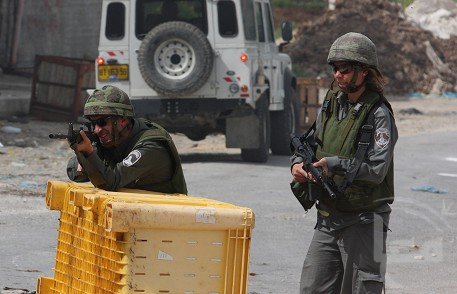
Bethlehem – Israeli soldiers shot dead two Palestinians near Nablus in the northern West Bank on Sunday.
Palestinian security sources identified the victims as 19-year-old farmers Muhammad Faysal and Salah Muhammad Qawariq.
Both were from the Awarta village, southeast of Nablus, and were en route to farmland carrying agricultural tools and herbicide, the same sources said.
Israel’s army said the two attempted to stab a soldier who was on a “routine patrol” near the Awarta military checkpoint. “In response, forces opened fire and identified a direct hit,” an army spokeswoman told Ma’an.
Eyewitnesses said Israeli forces declared the area a “closed military zone” and deployed in neighboring Palestinian villages. Soldiers closed the main entrance to the village of Madama, south of Nablus, they said.
Red Crescent officials told Ma’an that the army informed them that two Palestinians were killed near the illegal Itamar settlement southeast of Nablus, asking them to come and evacuate the victims.
They were the third and fourth killed in 24 hours in the northern West Bank. A teenager died early Sunday from injuries sustained at a protest a day earlier, when another boy was shot dead. Useid Qadus, 16, was shot in the head by Israeli forces, medics said, and Muhammad Qadus, also 16, died of a wound to the chest shortly after the a protest in Iraq Burin, another village south of Nablus.
The Israeli military said its forces opened fire with riot-control means to disperse a violent riot, denying allegations its soldiers used live ammunition against the two teenagers.
Medical officials and human rights advocates have disputed the army’s version of events, pointing to photographic evidence and an X-ray they say proves the army used live fire.
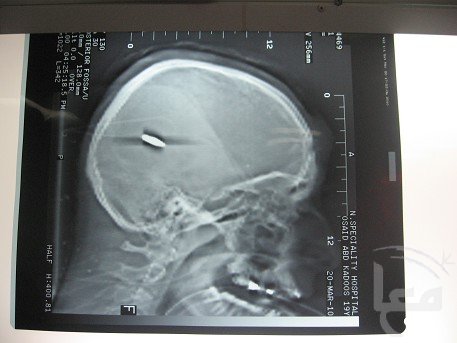 In this photo released by the Popular Struggle Coordination Committee, an
X-ray of Useid Qadus`s head, taken by the Israeli human rights group
B`Tselem`s Nablus field worker, appears to show a live bullet lodged in his
skull, 20 March 2010. [MaanImages/Salma Ad-Deb`i, HO]
Violations of Iraqi Children Rights Under the American Occupation
Souad Al Azzawi | BRussels Tribunal | March 19, 2010
I pride myself in being a scientist and a researcher. I built my academic career on theories and numbers. As a teacher, I teach my students that everything is based in science – everything has a reason. That is why, I am always frustrated with myself when I find I am overwhelmed with feelings on specific topics.
One such topic is the occupation of my country, Iraq. On this subject I find that I cannot always be dispassionate. I cannot be the researcher and observer and discuss it without feelings or emotions as I am sometimes expected to do. I find myself doing research on the damages caused by the war and occupation, and my head buzzes with anger, my eyes burn with tears of desperation at the state of my country.
I decided, I would view it as a scientist. I would not attack the subject with emotion. I would let the numbers speak for themselves. This year I will sit back and play the part of the analyst- the researcher- on the topic that is closest to my heart.
We will show that the American occupation violated children’s rights on all levels, including health care, education, social security, family unity and non separation of children from their parents through detention, imprisonment and exile. For two decades, Iraqi children, along with all other elements of Iraqi society, have been subjected to grave violations of human rights.
The American occupation forces, and the occupation-assigned Iraqi government, grossly failed to fulfill their most basic duties towards the children of Iraq in accordance with the UN/CRC Convention on the Rights of the Child, Resolution 25/ Session 44, November 1989. The convention was ratified by 194 United Nations countries, except the USA and Somalia.
Principals of the CRC emphasized the need to protect children’s rights’ to life and physical, mental, moral, and spiritual development in a safe environment.
Numerous violations of Iraqi children’s rights have systematically and continuously been committed under the American occupation of Iraq.
We will show that the American occupation violated children’s rights on all levels, including health care, education, social security, family unity and the non separation of children from their parents through detention, imprisonment and exile.
1.Iraqi Children under the Economic Sanctions (1990-2003)
During the economic sanctions imposed on Iraq, the country was denied the right to import equipment, medicine, educational items, health care requirements, etc. The economic sanctions were imposed by US/UK administrations and enforced by UN resolution 661 in 1990. The sanctions committee in the UN was dominated by the USA and UK, who insisted on blocking most essentials related to human rights
2.Status of Iraqi Children under the Anglo-American Occupation of Iraq
Thirteen years of suffering and the death of more than half a million children under five as a result of economic sanctions ended with the American invasion of Iraq in 2003. Iraqi people, and children have had to face the excessive use of power, shock and awe techniques, raids, the destruction of infrastructure, burning and looting of the civil services and cultural centers of Iraq, damage to health care centers and hospitals, and sectarian killing staged by occupation intelligence. Numerous violations of Iraqi children’s rights have continuously and systematically been committed under the Anglo- American occupation of Iraq.
■ Direct killing during the military invasion operations where civilians were targeted directly. Additional casualties amongst children have resulted from unexploded ordinances along military engagement routes.
■ The direct killing and abuse of children during American troop raids on civilian areas like Fallujah, Haditha, Mahmodia, Telafer, Anbar, Mosul, and most of the other Iraqi cities[17]. The Massacre of the children in Haditha in 2005 is a good example of “collateral damage” among civilians.
■ Daily car bombs casualties, explosion of buildings and other terrorist attacks on civilians.
■ Detention and torture of Iraqi children in American and Iraqi governmental prisons. While in detention, the children are being brutalized, raped, and tortured. American guards videotaped these brutal crimes in Abu Graib and other prisons.
■ Poverty due to economic collapse and corruption caused acute malnutrition among Iraqi children. As was reported by Oxfam in July 2007, up to eight million Iraqis required immediate emergency aid, with nearly half the population living in “absolute poverty”.
■ Starving whole cities as collective punishment by blocking the delivery of food, aid, and sustenance before raiding them increased the suffering of the young children and added more casualties among them.
■ Microbial pollution and lack of sanitation including drinking water shortages for up to 70% of the population caused the death of “one in eight Iraqi children” before their fifth birthday. Death of young children in Iraq has been attributed to water borne diseases such as diarrhea, cholera, typhoid, hepatitis, etc .
■ Contaminating and exposing other heavily populated cities to chemically toxic and radioactive ammunitions. Weapons like cluster bombs, Napalm, white phosphorous, and Depleted Uranium all caused drastic increases of cancer incidences, deformations in children, multiple malignancies and child leukemia. Children in areas like Basrah, Baghdad, Nasriya, Samawa, Fallujah, Dewania and other cities have been having multifold increases of such diseases. Over 24% of all children born in Fallujah in October 2009 had birth defects.The Minister of Environment in Iraq called upon the international community to help Iraqi authorities in facing the huge increase of cancer cases in Iraq.
■ The deterioration of the health care system and the intentional assassination of medical doctors have resulted in an increased number of casualties amongst children. It has been estimated that the mortality rate amongst the population of Iraq reached 650,000 from 2003 to 2006. Another survey indicated that the total number of dead for the period of 2003-2007 is about one million. Among other cases, the failures of the health care system were specified as one of the major causes.
■ Damage to the educational system. By 2004, it was estimated that two out of every three Iraqi children were dropping out of school. Statistics released by the Ministry of Education in October 2006 indicated that only 30% of the 3.5 million students were actually attending schools. Prior to the US invasion, UNESCO indicated that school attendance was nearly 100%. Assassination of educators and academics in Iraq drove their colleagues to leave the country. This brain drain and the intended destruction of schools and the educational system is part of the well planned cultural cleansing of the Iraqi society and identity.
■ Total collapse of Iraq’s economy, the sectarian violence, American troop raids on civilians, the killing of a dear family member have all deprived the children in Iraq of an innocent, carefree childhood that is the right of any child. They have to deal with family breakdowns, poverty, and a complete and total lack of security. Iraqi children are being forced to assume income generating roles because their families are suffering from hunger and poverty. They are leaving schools and having to deal with adult problems such as unemployment, manual labor, etc. This situation exposes them to hardship, and many forms of abuse. Exposure to violence on a daily basis has affected their psychological development and behavior as well.
■ The drastic increase in the number of orphans in Iraq. The Ministry of Labor and Social Affairs estimated the number of Iraqi orphans to be around 4.5 million. Other estimates put them at around 5 million. About 500,000 of those orphans live on the streets without any home or family or specialized institutions to take care of them. Among these orphans, 700 are in Iraqi prisons and another 100 in American prisons.
■ The problems of families who were forced to migrate and the impact on their children. Since the invasion of Iraq, there have been about 2.2 million internally displaced people who were forced to migrate due to sectarian violence, American violence, etc. Well over two million other Iraqis were driven out of Iraq. On November 20, 2007 UNESCO reports indicated that the number of Iraqi children taking refuge in Syria alone was around 300,000. The problems of children who have been forced to migrate represent a real humanitarian crisis where a large number of families have no shelter, no finances, no health care, no education, and no security of any kind.
3.Deterioration of Living Conditions of Displaced Iraqi Children
This case study was conducted by the author with the help of the Iraqi Women Will body (IWW), an Iraqi NGO fighting for Iraqi women’s rights inside and outside of Iraq.
In October 2009, around 300 copies of the questionnaire were distributed to Iraqi families within the Yarmouk refugee area of Damascus, Syria. The researchers visited these families to ensure the accuracy of the answers and to conduct personal interviews.
You can read the case study and the conclusions on the website of The BRussells Tribunal here.
Violations of Iraqi Children Rights Under the American Occupation
Dr. Souad N. Al-Azzawi, Associate Professor in Environmental Engineering
| March 1, 2010
For two decades, Iraqi children, along with all other elements of Iraqi society, have been subjected to grave human rights violations. These violations began with the destruction of all civil services and Iraqi civil infrastructure by the US/UK aggression on Iraq during the Gulf War of 1991, and were followed by the brutal economical sanctions which deprived the people of Iraq of food, clean water, health care, education and security. As a result more than half a million Iraqi children died during the nineties [1].The thirteen years of suffering under embargo ended with the American invasion of Iraq in 2003. Another form of suffering was born in 2003 under the American occupation. As if the causalities of the excessive use of power during military operations were not enough, the invasion operations consisted of systematically burning and looting of civil services and infrastructure, health care centers, schools and universities, industrial compounds, etc [2]. As stated in UNAMI’s report of November 2006, Iraq can be described as “a nation that has been plunged into barbarism since the US-invasion in 2003″[2]. Under the American occupation, lack of security, sectarian violence, deterioration of health care systems, poverty, massive imprisonments, clean water shortages, limited or no electrical power, environmental pollution and lack of sanitation all contributed to grave violations to children’s rights and a drastic increase in the child mortality rate. It has been reported that one out of eight children in Iraq die before their fifth birthday [3]. The forces of the American occupation, and the occupation-assigned Iraqi government, grossly failed to fulfill their most basic duties towards the children of Iraq in accordance with the UN/CRC Convention on the Rights of the Child, Resolution 25/ Session 44, November 1989 [4]. The convention was ratified by 194 countries of the United Nations, except the USA and Somalia. Principals of the CRC emphasized the need to protect children’s rights’ of life and physical, mental, moral, and spiritual development in a safe environment. We will show that the American occupation violated children’s rights on all levels, including health care, education, social security, family unity and not to separate children from their parents through detention, imprisonment and exile. In this report the status and violations of Iraqi children’s rights under the American occupation is presented with special emphasis on the problems of the Iraqi children refugees in Syria.
During the economic sanctions imposed on Iraq by the USA, Iraq was denied the right to import equipment, medicine, educational items, health care requirements, etc. The economic sanctions were imposed by US/UK administrations and enforced by UN resolution 661 in 1990. The sanctions committee in the UN was dominated by the USA and UK, who insisted on blocking most essentials related to human rights [5]. The sanction was a war against the children of Iraq in the following ways:
When asked if the death of half a million Iraqi children was a price worth paying, USA ambassador to the UN Madelyn Albright answered “We think the price is worth it.” [1]. This answer concludes how desperate the US and UK are to control oil fields in Iraq and all over the world.
Thirteen years of suffering and the death of more than half a million children as a result of economic sanctions ended with the American invasion of Iraq in 2003. People, and the children of Iraq, have had to face the excessive use of power, the shock and awe techniques, raids, the destruction of infrastructure, burning and looting of the civil services and cultural centers of Iraq, damage to health care centers and hospitals, and the sectarian killing staged by occupation intelligence [15]. Numerous violations to Iraqi children’s rights have been committed continuously and systematically under the American occupation of Iraq. The children of Iraq have been major victims of the occupation as a result of the following:
This case study was conducted by the author with the help of the Iraqi Women Will body (IWW), an Iraqi NGO fighting for Iraqi women’s rights inside and outside of Iraq. The author and her assistant conducted door to door visits to the families who answered the questionnaire. In October 2009, around 300 copies of the questionnaire displayed in Annex 1 was distributed to Iraqi families within the Yarmouk refugee area of Damascus, Syria. The researchers visited these families to ensure the accuracy of the answers and to conduct personal interviews. Of the 300 distributed questionnaires, only 120 were answered as many families were fearful of giving detailed information such as the names and address of their children in fear of being exposed to further assault by sectarian militias or the security forces of the occupation assigned government. Of the 120 answered questionnaires, 94 of them were completely analyzed with full information regarding the names and addresses of the children who answered the questionnaires. The age range of the studied child population varied from 2 years of age to 18 years of age. The number of girls was 44, or 46.8% of the research population, while the boys numbered 50, or 53.2% of the population. The questionnaire shown in (Appendix-1) covered the following aspects:
Table-1: places of birth of the children included in this study:
As we can see most of the displaced children within the studied group are from the city Baghdad, which faced the highest rates of raids, killing, and sectarian violence under the occupation. Table-2 Causes of the parent(s) death of the studied children population:
From Table 2, and answers from the rest of the members of the studied group, we can conclude the below:
Sources of Family Income: Table-3: The Financial Status of the Families of the Studied Children
Table 3 shows that the families of the children have no steady income. Most of the families sold their homes and other belongings in Iraq to begin a life in refuge. Later, it became very hard to maintain supporting the children without jobs and any kind of financial security. Some of the families receive a retirement pension ranging between $200 – $400 a month for the parent, or grandparent if they are living with them. Another source of income for some families is UN financial support of about $100 / month plus $10 additional per child. For the above reasons, many children within the studied group have to work to help sustain their families. As can be seen from Table 3, the financial status of most of these families is much below the average standard of living, even though the majority of the children’s parents are university level degree holders (i.e. teachers, engineers, etc.). We can also conclude that most of these families cannot afford the most basic of necessities like quality food, medical care, and a safe, healthy residence. Educational Status of the Children: As most of the children within the studied group are from educated families with proper degrees, the survey indicated that in spite of financial struggles, these families attempted to maintain a fair education for their children. Table 4 shows the educational status of the children within the studied group. Table-4: Educational status of the children in the studied group
As can be seen, 22.4% of the children could not maintain their education due to extreme financial difficulties which resulted in parents being unable to afford even the free education being offered for all Iraqi refugees in Syria. (i.e. parents could not afford the very basic supplies, transportation fees, etc.). Other children were forced into labor in order to help their families survive. For many Iraqi refugee families, we can see that continuing the education of their children is a luxury that cannot be afforded with the day to day struggle to feed and clothe children with very limited financial aid. Health and Medical Care Status: Along with the educational and financial issues these families face, the survey indicated serious health problems amongst the studied child population. Table 5 below shows the health status of the studied population. Table-5: Health Status of the Children Within the Studied Group
Table 5 clearly indicates that 46.8% of the studied children face serious health issues. The highest numbers of disabilities are the psychological and mental disorders these children face. The major cause of these issues is the result of occupation force violence, raids, deaths and killings of family members, sometimes in front of the children. Another cause of mental instability is drastic change in the standard of living of these children. The survey also revealed that only 21 of the 44 health issues faced by the population under study received any form of medical treatment by the Iraqi Red Crescent, UNICEF, and free Syrian healthcare hospitals. In all other cases, medical treatment could not be afforded and was not offered. Final Remarks: For two decades, the US administration and its allies have been committing genocide amongst the Iraqi population, including the children [39], [40]. The planned genocide began with imposing brutal economic sanctions that crippled a growing nation, and ended with the occupation of Iraq. During this period, intentional, criminal acts against humanity have been committed repeatedly and purposely by the American administration. Crimes against civilians included even the children of Iraq. These crimes included the destruction of the essentials of civilian infrastructure, exposing children to hunger, famines, pollution of the environment with radiological and persistent toxicants, initiating and promoting sectarian massacres, the killing and torture committed by occupation forces, and forcefully displacing over five million Iraqis. The excessive and unnecessary use of power against the civilian population, and the intentional targeting of even unborn children, is an indication of a premeditated plan to depopulate Iraq. Depopulating Iraq works in favor of some of the pro-occupation minorities such as the Kurds. Under the protection of the American occupation and Israeli Mossad stationed in Iraqi Kurdistan since 1991, the Kurds are extending their territories through daily killing, bombing and kidnapping Arabs, Turkmen, Christians, Assyrians, and Yazidis in the neighboring territories of Kirkuk, Dialah, Kut, Mosul and other areas within the plan of Kurdish territorial expansion. Children in these areas live in an environment of total chaos, violence and terror. Of course, depopulation of Third World countries known to have high population growth rates is an active agenda of American Foreign Policy, as was stated by Dr. Henry Kissinger, who wrote: “Depopulation should be the highest priority of US Foreign Policy towards the Third World [41]”. The direct and indirect killing of about three million Iraqis [42] [43] since 1991 to control its resources and initiate major demographic changes is a criminal act. The international community is urged to stop this genocide. The genocide will stop only when the American occupying forces leave Iraq to mend the destruction and terror they’ve been cultivating for the last two decades. References
|
Israel wants 1,500 shekels for 15-year-old boy
Ma’an – 20/03/2010
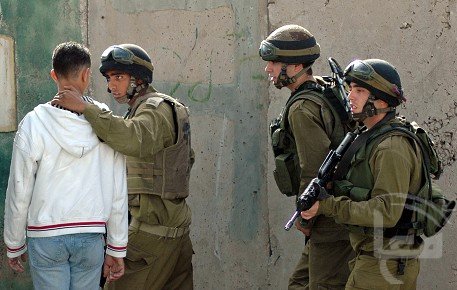 Israeli forces arrest a Palestinian boy after he attempted to cross the Al-Ram checkpoint on the northern edge of Jerusalem en route to prayers at the Al-Aqsa Mosque on 18 October 2006. [MaanImages/Moamar Awad]
Hebron – Israeli authorities have asked the family of a detained 15-year-old boy to pay 1,500 Israeli shekels (about 400 US dollars) to release the minor, a prisoners solidarity group reported on Saturday.
The boy, Ratib Abu Meizar, was detained on Friday evening in the Zahid neighborhood of central of Hebron in the southern West Bank. He was taken to a detention center housed in the illegal Israeli settlement of Kiryat Arba.
Amjad Najjar, director of the Palestinian Prisoners Society in Hebron, told Ma’an that Abu Meizar’s detention “is a continuation of Israel’s policy of blackmailing the families of detained Palestinian children, a policy which has become official.”
Najjar urged international children’s rights groups to exert pressure on the government of Switzerland and other signatories to the Fourth Geneva Convention to encourage Israel to abide by its responsibilities. Israel is also a signatory to the convention, which extends protection to children in conflict zones.
A spokesman for Israeli police in the West Bank did not immediately return calls seeking comment.
Related articles
- Israeli forces raid Cremisan Monastery in Bethlehem (alethonews.wordpress.com)
- Two Palestinian children detained in Hebron (imemc.org)
- Father and 7-year-old son illegally detained in occupied Hebron (alethonews.wordpress.com)
Canadian government obstructs visit of Mustafa Barghouti
Canadians for Justice and Peace in the Middle East | March 19, 2010
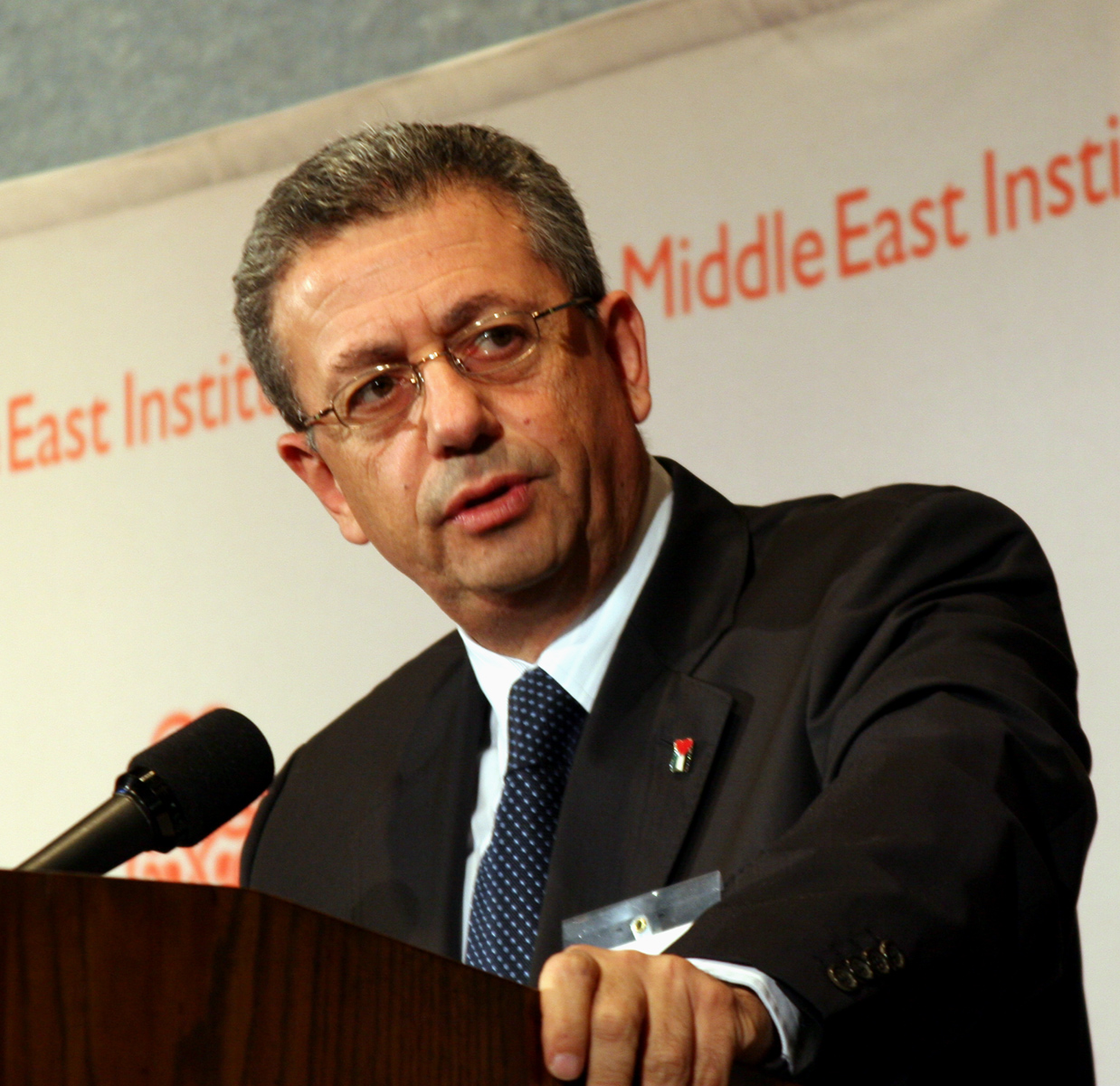 Montreal – The Harper government has obstructed the issuance of a visa to Dr. Mustafa Barghouti, resulting in the cancellation of Dr. Barghouti’s upcoming speaking tour in Toronto, Montreal and Ottawa. Dr. Barghouti applied for a visa on March 5th, for entry into Canada on March 19th, yet despite the urgency of the issue being brought directly to high-level officials in Foreign Affairs and Citizenship and Immigration, the government delayed the issuance of a visa to the point where Barghouti missed two key flights, resulting in a cancellation of Barghouti’s visit. In addition to being a member of the Palestinian Legislative Council, and a former presidential candidate, Dr. Barghouti is a recent Nobel Peace Prize nominee. In the past, Dr. Barghouti has received a visa to Canada within 24 hours after applying.
Dr. Barghouti was scheduled to speak at three public events in Toronto, Montreal and Ottawa on the topic: Palestinian political dynamics and the realities for Middle East Peace. Dr. Barghouti also had appointments with several prominent members of parliament scheduled for Monday, March 22nd. The delays with Dr. Barghouti’s visa were brought to the attention of Foreign Affairs and Citizenship and Immigration as early as Wednesday March 17th, with Minister Cannon being directly advised of the situation. On Thursday, March 18th, the Deputy Minister of Citizenship and Immigration advised the Bloc Quebecois critic Thierry St-Cyr that officials were aware of the urgency of the matter, but were still doing checks on Barghouti, and his host organization Canadians for Justice and Peace in the Middle East (CJPME.)
“This seems to be another example of the Harper government’s dislike for free speech,” declared Thomas Woodley, President of CJPME. “Dr. Barghouti has long advocated for a peaceful transition to a two-state solution in Israel-Palestine – his message should appeal to anyone with a sincere commitment to Middle East peace.” Dr. Barghouti’s record is without blemish: he is a physician and an independent Palestinian politician with a known commitment to non-violence. CJPME believes that the Harper government’s obstruction of Dr. Barghouti’s visa is part of a broader strategy to muzzle or obstruct any voice critical of the policies of the Israeli government.
In addition to his political credentials, Barghouti is also the co-founder of the Health, Development, Information and Policy Institute (1989), the Union of Palestinian Medical Relief Committees (1979), and the Palestinian National Initiative (2002), a reformist political movement positioning itself as a secular, democratic and non-violent alternative to Fatah and Hamas. Canadians for Justice and Peace in the Middle East often hosts speaking tours, and has been a consistent advocate for a just peace in the Middle East, basing all its positions on support for international law, equal expectations for all parties, and a belief that violence is not a solution.
#####
For more information, please contact:
Grace Batchoun
Canadians for Justice and Peace in the Middle East
Telephone: (514) 745-8491
CJPME Website
US silencing Palestinian journalist Mohammed Omer
Action alert, Haymarket Books, 19 March 2010
 Effectively canceling a planned speaking tour, the US consulate in the Netherlands has put an extended hold on the visa application of award-winning Palestinian journalist and photographer Mohammed Omer, scheduled to speak on conditions in Palestine, on 5 April in Chicago.
In 2008, Omer became the youngest recipient of the prestigious Martha Gellhorn Prize for Journalism, for his firsthand reportage of life in the besieged Gaza Strip. As his prize citation explained, “Every day, he reports from a war zone, where he is also a prisoner. He is a profoundly humane witness to one of the great injustices of our time. He is the voice of the voiceless … Working alone in extremely difficult and often dangerous circumstances, [Omer has] reported unpalatable truths validated by powerful facts.”
Upon attempting to return to Gaza following his acceptance of the Gellhorn award in London, Omer was detained, interrogated and beaten by the Shin Bet Israeli security force for over 12 hours, and eventually hospitalized with cracked ribs and respiratory problems. He has since resided in the Netherlands and continues to undergo medical treatment there for his subsequent health problems.
The US consulate has now held his visa application for an extended period of time, effectively canceling a planned US speaking tour without the explanation that a denial would require. In recent years, numerous foreign scholars and experts have been subject to visa delays and denials that have prohibited them from speaking and teaching in the US — a process the American Civil Liberties Union describes as “Ideological Exclusion,” which they say violates Americans’ first amendment right to hear constitutionally protected speech by denying foreign scholars, artists, politicians and others entry to the United States. Foreign nationals who have recently been denied visas include Fulbright scholar Marixa Lasso; respected South African scholar and vocal Iraq War critic Dr. Adam Habib; Iraqi doctor Riyadh Lafta, who disputed the official Iraqi civilian death numbers in the respected British medical journal The Lancet; and Oxford’s Tariq Ramadan, who has just received a visa to speak in the United States after more than five years of delays and denials.
Fellow Gellhorn recipient Dahr Jamail, expressed his disbelief at Omer’s visa hold. “Why would the US government, when we consider the premise that we have ‘free speech’ in this country, place on hold a visa for Mohammed Omer, or any other journalist planning to come to the United States to give talks about what they report on? This is a travesty, and the only redemption available for the US government in this situation is to issue Omer’s visa immediately, and with a deep apology.”
Omer was to visit Houston, Santa Fe and Chicago, where local publisher Haymarket Books was to host his Newberry Library event, “Reflections on Life and War in Gaza,” alongside a broad set of interfaith religious, community and political organizations.
Rather than cancel the meeting, organizers are calling on supporters to write letters and emails calling for the US consulate’s approval of Omer’s visa. They are also proceeding with the event as planned, via live satellite or skype, if necessary.
U.S. consulate information:
Ambassador Fay Hartog Levin
U.S. Embassy in The Hague
Lange Voorhout 102
2514 EJ
The Netherlands
T: +31 70 310-2209
F: +31 70 361-4688
ConsularAmster@state.gov
Background on Mohammed Omer:
Mohammed Omer was born and raised in the Rafah refugee camp in the Gaza Strip. He maintains the website Rafah Today and is a correspondent for the Washington Report on Middle East Affairs. His home in Rafah was crushed by an Israeli bulldozer while the family was inside, seriously injuring his mother. Yet, as Omer explained in an article he wrote upon winning the award, “My ambition was to get the truth out, not as pro-Palestinian or anti-Israeli, but as an independent voice and witness.” His reportage features interviews with regular Palestinians in Gazan attempting to survive amidst bombing, home demolitions and the crippling economic blockade, which has created devastating shortages of electricity, water, fuel and other necessities for survival.
Omer was to visit Chicago to discuss, with Ali Abunimah, Chicago-based author of One Country: A Bold Proposal to End the Israeli-Palestinian Conflict, his reportage, personal experience, and the struggle for Palestinian rights. If the delay on his visa continues, he will take part in the event via live satellite connection or Skype.
Antiwar coalition fined by US government
Press TV – March 19, 2010
A US antiwar organization says it has been targeted by the government because it wants US troops to immediately return from Afghanistan and Iraq. The ANSWER Coalition, which stands for “Act Now to Stop War and End Racism,” has been a staunch critic of the Bush and Obama administrations for their role in the Iraqi and Afghan war.
“The government is increasingly trying to limit or eviscerate or criminalize grassroots organizing itself”, said Brian Becker from the ANSWER Coalition, Reported Press TV’s Colin Campbell. ANSWER members say they have been hit with $7,500 worth of fines for putting up anti-war posters like “US Out of Afghanistan and Iraq Now!” across Washington DC.
“We put up posters and we hand out leaflets and that is why thousands of people hear the call,” said Becker. The Department of Public Works says it levied the fines on ANSWER demanding that members of the organization “remove all posted signs” around the district.
“Starting 18 months ago, these targeting events began. There is now 70,000…80,000 in fines and it is growing,” said Becker.
The ANSWER Coalition has planned a march on the nation’s capital over the weekend to protest against the US-led wars overseas. Tens of thousands of people are expected to attend.
“We will not be leaving Iraq and Afghanistan unless enough people in this country stand up,” said Mike Ferner, President of Veterans for Peace.
Emergency Internet control bill gets a rewrite
By Declan McCullagh | Cnet News | March 17, 2010
Sen. Jay Rockefeller alarmed technology and telecommunications firms last year when he announced a plan for the president to seize “emergency” control of the Internet. Now the West Virginia Democrat is trying again with a new version that aides hope will be seen as less extreme.
During a closed-door meeting on Capitol Hill on Wednesday attended by about a dozen industry representatives, CNET has learned, Rockefeller’s staff pitched a revised version of his controversial cybersecurity legislation.
It says that after the president chooses to “declare a cybersecurity emergency,” he can activate a “response and restoration plan” involving networks owned and operated by the private sector. In an attempt to limit criticism, instead of spelling out the plan’s details, the latest draft simply says that it must be developed by the White House in advance.
There is no requirement that the emergency response plan be made public, meaning it could still include a forcible disconnection of critical Web sites from the Internet–which is what the March 2009 version of the legislation had proposed.
Larry Clinton, president of the Internet Security Alliance, whose members include Verisign, Verizon, and Raytheon, says no disconnection language is explicitly in the bill: “We are pleased that the ‘kill switch’ allowing for the government to shut down private sector access to the Internet has been eliminated.”
But, Clinton said, “We think the bill still has a long way to go.” If the private sector is expected to help out with national security, he said, there ought to be liability protections, insurance breaks, and tax credits for small businesses.
A spokesman for Rockefeller did not respond to repeated requests for comment on Wednesday. Sen. Olympia Snowe, a Maine Republican, is a co-sponsor of the legislation.
The Senate Commerce Committee is scheduled to vote for March 24 on the Rockefeller bill, which will replace an existing measure known as S.773. Because Rockefeller is chairman of the committee, the bill is expected to be approved with little dissent.
Other portions of the 62-page draft bill would create certification requirements for “critical infrastructure information system personnel working in cybersecurity” and punish certain companies that “fail to demonstrate” that they comply with federal specifications. A third section would order the National Science Foundation to fund anti-anonymity research that aims to “to determine the origin of a message transmitted over the Internet.”
Liesyl Franz, vice president for information security at TechAmerica, one of the industry’s largest trade associations, said her group does not support the new version at this time and is still reviewing the language.
“We have to see whether that makes sense,” Franz said, referring to the licensing and certification sections. “We’ve often talked about how companies and industries are very different.”
Franz added: “Frankly, we’d rather not see a prescriptive plan. Seeing a process for developing a plan to get to a goal is a little bit more palatable for the industry.”
The revised Rockefeller bill, called the Cybersecurity Act of 2010, does stress that the White House should develop its cyber-emergency plan “in collaboration” with the private sector. It also says “this section does not authorize…an expansion of existing presidential authorities.”
 Declan McCullagh is a contributor to CNET News and a correspondent for CBSNews.com who has covered the intersection of politics and technology for over a decade. Declan writes a regular feature called Taking Liberties, focused on individual and economic rights; you can bookmark his CBS News Taking Liberties site, or subscribe to the RSS feed. You can e-mail Declan at declan@cbsnews.com.
Featured Video

Why the U.S. Should Pull Back From the First Island Chain
or go to
Aletho News Archives – Video-Images
From the Archives
Only 19.7% of Americans agree with US State Dept on Israeli settlements
… Most American adults of voting age don’t appear willing to reject the applicability of international law to Israel’s ongoing colonization of occupied territories in East Jerusalem, the West Bank and Golan Heights. … Full article
Blog Roll
 Aletho News
- British Government Employees Were Fact-Checking the News at the BBC. Nobody Told You.
- Albania on fire: who’s behind the riots?
- Egypt’s Civil Democratic Movement rejects involvement in regional war
- Egypt collaborates with Israel to build ‘Green Rafah’ project over erased Palestinian city
- Rising fuel prices and shortages have helped drive ongoing protests and rioting in France
- Tokyo protests demand Takaichi’s resignation over support for ‘Israel’
- Jennifer Kavanagh: Why the U.S. Should Pull Back From the First Island Chain
- Yemen denounces international community’s silence on Saudi aggression, siege
- UAE and Saudi Arabia move toward renewed coordination against Sanaa
- How Iran’s two-week retaliatory strikes exposed cracks in US military architecture in Persian Gulf
- If Americans Knew
- More on how Bari Weiss is using CBS on behalf of Israel
- What the UK Is Doing to Pro-Palestine Novelist Sally Rooney Is an Act of Orwellian Villainy
- ‘We will build palaces for Jews in Gaza’: Right-wing activists establish new outpost near border
- ‘You see us burning, you stay silent’: Family’s agony over mother and sons burned to death in Gaza tent
- Israel keeps Palestinian journalist Bushra al-Tawil in isolation for 46 days
- US-Israel integration plan puts US military tech in Israel’s hands
- Israeli Strike Burns Gaza Mother Alive in Front of Toddler, ‘Without Generating Any Headlines’
- ‘The Israel Experience with Mike Huckabee’: The Ambassador’s Family Sells Trips to Israel
- As Gazans carry out mass burial, food insecurity is getting worse – Daily Update
- Israeli rabbi permits occupiers to steal Palestinian olive harvest in West Bank
- No Tricks Zone
- Predictions Made By Renowned Climate Proifessor Over Past Decades Have Been Proven To Be Poor
- New Study Suggests Large Regions Of The Pacific Ocean Have Been Cooling For The Last 80 Years
- Germany’s Green Energy Debacle: High Energy Costs Force Kahla Porzellan to Close After 182 Years!
- New Study: 50 Years Of The Most Aggressive ‘Net Zero’ Policies Can Only Affect The Global Climate By 0.03°C
- US September “Heat” Was No Record…Many Records Set Decades Ago
- Latest European Green Energy Debacle; Portugal’s Largest Flagship Solar Park Insolvent!
- Green Energy Debacle: German Expert Professor Fritz Vahrenholt Warns Of Severe Economic And Social Consequences
- Two More Paleo Reconstructions Affirm Meters-Higher Sea Levels Across Ireland, Brazil 7000-6000 Years Ago
- New Study: Earth And Venus Surface Warmth Largely Explained By Convection And Lapse Rate, Not CO2 Or Radiation
- 2025 Nature Paper Claiming Worsening Global Drought Gets RETRACTED …Heavily Flawed

