Israel orders Hamas legislator held for six more months
06/01/2010
Salfit- Ma’an – Israel has extended the detention of Abdul Jaber Fuqaha, a Hamas-affiliated member of the Palestinian Legislative Council from Ramallah first arrested in 2006.
Hamas PLC members issued a statement condemning the order to hold Fuqaha in administrative detention for another six months.
The order was the third such order, according to Hamas.
The lawmakers said Fuqaha was not charged with any crime. Fourteen Hamas legislators are still in Israeli prisons, including seven in administrative detention.
Israel seized dozens of Hamas officials in June 2006 following the capture of Isreali soldier Gilad Shalit.
In March Israel detained ten more top Hamas officials, including lawmakers, from the West Bank.
Also on Wednesday Hamas said that the Fatah-dominated Palestinian Authority arrested three members of the Islamist movement in the West Bank.
Christian Peacemakers deported from Israel
January 05, 2010 – by Saed Bannoura – IMEMC News
Two members of the Christian Peacemaker Teams have been refused entry into Israel, and deported by Israeli authorities.
Sarah Farahat told the IMEMC that she was scheduled to be part of a Christian Peacemaker delegation to the Israeli-occupied Palestinian West Bank, which was planning to meet with Palestinian civil society groups and Christian leaders in the Holy Land.
But Farahat and another member of the group were detained at the Israeli airport in Tel Aviv and denied entry, after a lengthy interrogation.
According to the American peace activist, she was singled out along with all other passengers of Arab descent who were on the flight. After a twelve-hour interrogation and several full-body searches, she was told that she was considered a ‘security risk’ to the state of Israel, and put in a holding cell to await deportation.
While in the holding cell, Farahat says she met a young woman from Germany whose father was killed while serving in the Israeli military.
The German woman was deported after telling the Israeli border security that she had Palestinian friends in Bethlehem. According to Farahat, the guard asked the young woman, quote, “You are Jewish, how can you be friends with an Arab?”
Sara Farahat, whose father is Egyptian, believes that she was deported because of her Arab roots and her public statements calling for equal rights for the Palestinian people.
Israeli Use of Painful Shackling As A Form of Torture
By Stephen Lendman | January 5, 2010
Founded in 1990 to highlight a growing problem, the Public Committee Against Torture in Israel (PACTI – stoptorture.org) “believes that torture and ill treatment of any kind and under all circumstances is incompatible with the moral values of democracy and the rule of law. (It) advocates for all persons – Israelis, Palestinians, labor immigrants and other foreigners in Israel and the Occupied Palestinian Territories (OPT) – in order to protect them from torture and ill treatment by the Israeli interrogation and law enforcement authorities.”
They include the Israeli Police, the General Security Service (GSS), the Israeli Prison Service (IPS), and the Israeli Defense Forces (IDF). In June 2009, PACTI published a report titled, “Shackling As A Form of Torture and Abuse.” Its findings are discussed below.
PACTI reviews the “serious phenomenon” of shackling Palestinian detainees “in a systematic manner and throughout all stages of detention and interrogation.” Its purpose is to dehumanize and inflict pain, suffering, punishment, intimidation, and discrimination as a way of lawlessly extracting information even though experts acknowledge that torture is ineffective, counterproductive, and, of course, illegal under all circumstances at all times with no exceptions allowed ever.
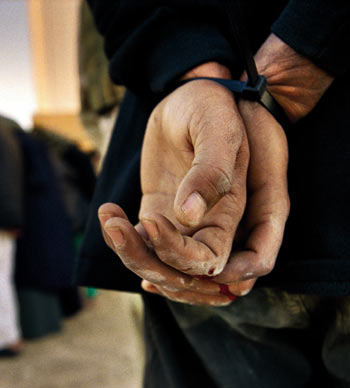 Israel’s use of shackling “has snowballed almost out of control….even when it serves no real” purpose, and it begins at the time of arrest. Plastic handcuffs are used “that can be tightened but cannot be released or halted.” They inflict pain, especially when hands are cuffed from behind, the most common way.
Shackling continues during interrogation, “where diverse and creative forms of cuffing are intended to apply pain and pressure….” Then in cells, detainees are painfully shackled to beds for extended periods. Even when they’re transfered for urgent hospital treatment, cuffing stays in place throughout.
In his “Torture Ruling,” (HCJ 5100/94 Public Committee Against Torture in Israel v. Prime Minister of Israel), former President of the Israeli High Court of Justice (HCJ), Aaron Barak (1995 – 2006), addressed cuffing as follows:
“A reasonable interrogation is an interrogation without torture, without cruel or inhuman treatment of the interrogee, and without a humiliating attitude thereto. It is forbidden to use brutal and inhuman measures during the course of the interrogation….Painful cuffing is a prohibited action. Moreover: other means exist to prevent escape from lawful custody or to protect the interrogators which do not involve causing pain and suffering to the interrogee.”
Interrogators ignored the ruling and keep using procedures prohibited by the High Court as a way to gratuitously inflict pain, suffering, and at times permanent injury and disability.
PACTI cites specific cases and offers a medical opinion on the pain and neurological damage it causes. In response to its demands, interrogators began using new type handcuffs with longer chains, supposedly to limit physical harm. However, they’re as harsh as before.
Cuffing During Arrest and Transfer to Interrogation
Painful cuffing begins, even for minors, the sick and women at the moment of arrest to begin breaking detainees’ spirit and soften them up for GSS interrogations. Each month, PACTI gets dozens of complaints, and over the past year documented hundreds representing “the tip of the iceberg” about a universally administered procedure. For example:
Alaa Nasser Dib Salem was arrested on October 2, 2008. In his affidavit, he said soldiers cuffed his hands behind his back so tightly that any hand movement tightened his restraint more, causing pain and producing paresthesia (an abnormal tingling or pricking feeling the result of pressure on or damage to peripheral nerves).
Mahmud Faruq Hamed el-Bubali lost feeling in both hands after 30 minutes and made him feel like “my palms were going to disconnect, to be cut off.” The cuffing turned his hands blue, and he suffered intense pain, especially in his right hand.
When Yazan Sawalha complained of pain, he was denigrated, laughed at, cursed, and told to shut up even though his hands turned bright blue and red, were very swollen, and he had trouble lifting them.
Rami Mufid Jum’ah’s complaint led to further abuse. In transit with soldiers, he was kicked and struck with rifle butts on his shoulder.
A.G, a minor, told of being tightly handcuffed with his hands behind his back and blindfolded. When his restraint was temporarily removed, his left hand was blue and swollen, and his wrist swollen and red. At the Petah Tikva detention center, a doctor discovered white pus on both his hands.
Each time PACTI submitted a complaint to the Central Command Attorney for Operational Affairs, “no substantive reply” was gotten.
During Operation Cast Lead, Amar Fuad Mahmud al-Helu was arrested, painfully cuffed and held that way for three days. As a result, his shoulder was sprained and dislocated. When he shouted about the intense pain, soldiers tightened his restraint further.
In statements gotten by the Breaking the Silence organization, soldiers corroborated detainee testimonies. For example, Staff Sergeant A. said:
“….handcuff (detainees) and put a cloth over their eyes. Just take them away at night….put the handcuffs on them real tight. It stopped their blood circulation a bit.” They were left in a school “for hours, blindfolded and handcuffed, and they had no idea what they’d done…It went on through the day” lasting for hours.
Staff Sergeant B said:
“some soldiers know what the purpose of the handcuffs is and some….think (it’s) to stop the flow of blood from the wrist and fingertips….some guys think that you should squeeze the handcuffs as far as possible so that no blood can flow from one side to the other.” That’s different from just restraining them.
The Medical Aspect
At PACTI’s request, Dr. Bettina Steiner-Birmanns said:
“Tight handcuffs – such as narrow and rigid plastic handcuffs with no space between the cuffs and the detainee’s hands – press forcefully on the wrists. The detainee is liable to remain (in restraint) for protracted periods. In these conditions, the handcuffs may cause injuries to soft tissue and abrasions, skin wounds, and even fractures. The handcuffs also press on the nerves in the palms, thereby causing paralyses and a loss of sensation in (them). These neurological injuries may be transient but they may also be permanent….From the neurologist’s viewpoint….tight handcuffs can cause transient or irreversible damage….”
Correspondence with Army Authorities
All detainees are subjected to the same abuse with slight variations. PACTI asked authorities to provide regulations, procedures, or orders regarding the use of plastic (or other type) handcuffs. In response, Major Zohar Halevy, the IDF Spokesperson’s Division Human Rights and Public Relations head, issued a statement saying:
“In principle, force is not to be exercised against another person in order to execute a function or perform a duty unless the function cannot be executed or the duty performed without the exercising of force.”
Regarding forceful handcuffing, Major Halevy added that military police orders establish that:
“the use of force shall be in such measure as is necessary and logical while adapting given the circumstances. This shall be reasonably proportional to the desired goal. (Furthermore), the shackling of detainees outside the detention center shall be effected solely by the use of handcuffs, in such manner that the accompanying MP is shackled by the hand to the detainee, or when two detainees are shackled together and the MP accompanies them….it must be ensured that the accompaniers have cutters in order to cut the handcuffs when necessary.”
In response to a further PACTI inquiry, Human Rights Officer, Captain Gon Erez, said that handcuffing is in accordance with military police commander Instruction No. 9810 concerning “Shackling with Handcuffs – Security Detainees.” It states that they’re used to:
–prevent self-injury;
— injury to another person or property; and
— prevent escape from lawful custody.
Per the military police commander’s instruction, ordering handcuffing, including the type, is to be made in writing by the authorizing person, “and this decision shall be examined on an individual basis.” Further, “handcuffing shall be in such a manner as is essential in order to secure these goals and as an only and last means to do so. Once the goal is reached, the handcuffing of the security detainee is to be halted.” The facility military police commander and medical officer must approve maintaining it for over 72 hours, and handcuffs “shall be removed every three hours for a period of fifteen minutes.”
The provisions of commander Instruction No. 9803, “The Transfer and Removal of Detainees from a Detention Facility,” must also be followed. It states that:
“force is not to be exercised against a detainee for the purpose of the transfer or removal of the detainee from the incarceration facility unless it is impossible to execute the mission without” it. It’s further established that “the use of force shall be in a degree that is reasonable and essential for the execution of the task and shall be adapted to the circumstances….reasonable proportionality is to be maintained between the desired goal and the extent of the force that is exercised” that at all times “shall serve as a last resort.”
However, this instruction is vague on details during transfer and removal of detainees from incarceration facilities, thus granting soldiers a margin of leeway to exercise their own judgment and let them be harsher than necessary.
Nonetheless, the official reply acknowledges no legal basis for painful shackling, yet the procedure “is actually the case in the army” with no justification. As a result of 574 documented abuse cases, PACTI wrote to the West Bank judge advocate general and military police commander on May 13, 2009 demanding that soldiers henceforth be prohibited from using plastic handcuffs as the first and only means of controlling detainees from the time of arrest through their transfer to interrogation facilities. All painful restraint methods were also asked to be eliminated, especially shackling detainees’ hands behind their back, and that procedures be established concerning the method and length of detainees’ held in restraint. PACTI learned that plastic handcuffs can only be tightened, not loosened or removed unless cut off.
Handcuffing During GSS Interrogations
During interrogations, detainees are isolated and prevented from meeting with an attorney, family members, or ICRC representatives. As a result, they’re “subjected entirely to the interrogators’ control at all times during the period of interrogation.”
They’re kept painfully handcuffed in various ways, including “regular” protracted cuffing of hands behind their back as well as their arms and forearms in positions causing severe pain, suffering, and at times permanent harm. PACTI calls “high cuffing” the most extreme form.
GSS interrogators claim the procedure is to protect detainees’ well being and prevent their escape. However, they’re kept in a secured, closed, carefully guarded facility, making that likelihood nearly impossible.
Detainees are placed on an unupholstered wood, metal, or rigid plastic chair of standard office size. Both hands are shackled behind their back with metal cuffs connected by a short chain to the chair’s seat. Most often legs are also restrained, and the chair always is fixed to the floor.
Detainees are held that way throughout interrogation lasting many hours or days, except for short meal breaks and even shorter bathroom ones. Protracted sitting alone with no possibility of shifting positions, standing, or stretching is itself extremely uncomfortable. Being painfully shackled makes it much worse, and any attempt to slightly adjust the hands results in further tightening of the cuffs.
As explained above, paresthesia often results that includes loss of feeling, weakness, and pain in the back, arms, wrists, shoulders and neck – the entire upper body. Chest muscles are also strained, breathing impeded, and long-term neurological damage is common.
The Scale of Cuffing Detainees with Their Hands Behind Their Back
PACTI affidavits show it’s widespread during all interrogations, usually throughout the procedure. A few testimonies describe the practice:
A.B, aged 16 and a half, said his hands were cuffed behind his back and attached to the chair’s seat. His testimony shows that even minors are subjected to the same harsh treatment as adults. At one point during the process, A.B. broke down and cried.
Samar Hasan Sus said:
“When the interrogation began, I was cuffed with my hands behind the back of the chair I was sitting on. The handcuffs were attached to the bottom of the seat of the chair and I could not move my hands. The handcuffs were made of metal.” He complained to an attorney about forearm, leg and back pain. PACTI submitted a complaint on his behalf to no avail.
Dr. Ghasan Sharif Muhammed Khaled said he was cuffed and not allowed to change position. He said he was subjected to intensive interrogation for eight days, up to 22 hours a day, excluding Saturday and Sunday. Throughout, he was painfully shackled with only rare breaks of about 10 minutes. As a result, he experienced severe pain in his tailbone, back, neck, palms, and knees. He also sustained internal bruising and his knees swelled. PACTI again complained, was told the case was closed, and no corroboration was found for Dr. Khaled’s complaints.
Numerous other cases were much the same, and PACTI got no substantive responses to its complaints. They also learned that the only time interrogators unfastened the restraints was when detainees said they wanted to confess. Otherwise, painful shackling continued, causing permanent damage and humiliation as well.
“High Handcuffing” in the Interrogation Room
PACTI describes it as “any type of handcuffing in which the detainees’ hands are above the level of their wrists, including cuffing of the forearms or arms.” It’s extremely painful, can cause physical injury, and if maintained for extended periods very often permanent disability.
Detainee Jalal Khaled Momammed Sawafta describes it in his affidavit:
He was cuffed with a large metal bracelet. “They cuffed my hands in the middle of the forearm (between the wrist and the elbow). Each of two interrogators pressed on the bracelet of the handcuff on my arm – they both pressed together. It was terribly painful. Of course, these handcuffs were in addition to the regular handcuffs that were on my hands all the time, so I had two pairs of handcuffs fastened behind my back. (They) pressed on my arms hard. I cried out but it didn’t do any good.”
Sawafta’s hands are still numb. He can’t move his palms well, and they still feel cold all the time even on hot days. He still has marks on his right hand and wrist and “all kinds of bruises on both hands.” Also, his back hurts when sitting for a long time. He’s unable to write or hold a cigarette between his fingers, and his hands are swollen and red.
On his behalf, PACTI complained to Attorney General Meni Mazuz. Even after a follow-up memo, no substantive reply was gotten. Other detainees described the same treatment. Some referred to “indescribable” pain, and subsequent medical examination confirmed neurological damage.
After repeated attempts on behalf of detainees, Attorney Naomi Granot, Inspector of Interrogee Complaints, closed the issue “on the grounds that the findings of the mechanism for examining complaints by interrogees did not warrant legal, disciplinary, or other action against any of the GSS interrogators.”
From the clear evidence it got, PACTI concluded that detainee rights were “gravely” violated and that no redress would be forthcoming. Nonetheless, an appeal to the prime minister was made, including demands to prohibit painfully shackling, restrict the method and frequency of less or non-painful restraints, and assure future procedures only prevent detainees from harming interrogators or escaping. PACTI wants new rules, guidelines, and criteria in writing that comply with international and Israeli law.
Response from the Prime Minister’s Office
In January 2008, the Office of the Military Secretary to the Prime Minister head, Major Shalom Ginzburg, replied:
“It has been decided to alleviate the condition of interrogators by lengthening the chain in such a manner that the interrogee will be able to place his hands by the side of his body in a more comfortable manner, without this impairing the security of the interrogators or increasing the risk that the detainee will escape from custody.”
The “high handcuffing” issue wasn’t addressed, nor was PACTI’s demand for clear cuffing procedures. Nothing fundamentally changed as repeated detainee complaints were received. In response, PACTI contacted the internal security minister “to ensure immediate compliance with the decision of the Prime Minister’s Office on this matter.”
In May 2008, Col. (Ret.) Yuval Rivlin from the Office of the Comptroller of the Ministry of Internal Security (Public Complaints Office) replied stating:
“our examination with the Israel Police has shown that interrogees are not handcuffed during their interrogation. The Israel Prison Service informs us that the interrogation facilities are not under the responsibility of the IPS.”
In December 2008, PACTI again wrote the prime minister asking him to immediately prohibit painful cuffing, including “high handcuffing” and to establish firm procedures to be followed during interrogations.
In February 2009, Ayelet Moshe from the Public Affairs Department in the Prime Minister’s Office stonewalled by repeating earlier responses that produced no substantive changes.
Painful Handcuffing Continues
Detainee testimonies reveal it:
Mu’ataz Suleiman Mohammed Qawasmeh described how his hands were painfully cuffed behind his back with metal cuffs connected by a 40 centimeter long chain fixed to the back of the chair. While in this position, he was intensively interrogated from 10 – 22 hours a day. As a result, he suffers spinal and shoulder pain.
For about 12 hours a day, Ahmad Samir Hassan Isma’il was cuffed the same way for nearly five days. As a result, he has lower back pain and paresthesia in both palms. Others now experience various upper body pain in their shoulders, neck, hands, arms, and elbows. They also suffer from swollen red hands, paresthesia, and leg pain for those whose legs were shackled.
Alaa Nasser Dib Salem revealed more – painful hands and feet shackling to a concrete bed in solitary confinement for two days without interrogation. After six hours, he experienced paresthesia throughout his body. He was also denied access to the bathroom and forced to urinate in his clothes. When he complained, two men in civilian clothes tortured him by painfully pressing on his cuffs, cursing him, and threatening to torture his family. Salem was later beaten on all parts of his body with a nightstick and lost consciousness. When revived, he was shaking.
PACTI concluded that “The behavior of the interrogators in these cases and in other similar cases….indicates the use of handcuffing as a form of torture in order to extract information unlawfully” with interrogators often told anything to stop the pain.
Non-Handcuffing of Detainees During Police Interrogations
After GSS interrogations, detainees are questioned by police, or at times interrogations are done alternately for different purposes. GSS wants information to protect state security while police need it for subsequent prosecutions. During their interrogations, cuffing isn’t used, a clear sign that GSS does it solely to inflict pain.
PACTI concludes that GSS interrogators use “systematic handcuffing (for) extraneous motives….far removed from the need to ‘protect the safety of the interrogators’ or to ‘prevent escape from custody.’ ” Painful cuffing is used solely to torture, abuse, and inflict permanent impairment. “This behavior is inconsistent with the declared objectives and those set in (international and Israeli) law….”
Shackling Sick Detainees and Prisoners During Medical Treatment
One case involved a shackled young man who was unconscious after Israelis lynched him. Police refused to unfasten his handcuffs in the hospital even though they impeded treatment. Another case involved a hospitalized woman shackled on her way for major surgery, then again painfully after completion.
After being shot, Mohammed Ashkar was hospitalized unconscious and placed in intensive care with a ventilator attached to his mouth. Yet his hands were cuffed to the bed, and his legs cuffed together. At all times, four guards watched him. Ashkar subsequently died from his wounds, still painfully shackled. PACTI called his case “an appalling example of inhumanity” and a shocking breach of medical ethics for hospital staff to permit this.
The December 1982 UN Declaration on the Principles of Medical Ethics clearly states that:
— “Health personnel, particularly physicians, charged with the medical care of prisoners and detainees have a duty to provide them with protection of their physical and mental health and treatment of disease of the same quality and standard as is afforded to those who are not imprisoned or detained.”
The Declaration also prohibits actively or passively participating in “torture or other cruel, inhuman or degrading treatement or punishment (and) assist(ing) in the interrogation of prisoners or detainees in a manner that may adversely affect (their) physical or mental health or condition….”
In response to PACTI’s complaint about Ashkar’s treatment, IPS Attorney Tal Argaman on prisoners’ affairs said his shackling properly complied with “confidential” procedures he wasn’t at liberty to disclose. PACTI nonetheless submitted a request in accordance with the Freedom of Information Law, 5758-1998, but was denied on grounds of confidentiality.
At a subsequent meeting (attended by Physicians for Human Rights representatives) with police, the IPS, Deputy Attorney general (Criminal), Ministry of Internal Security and Ministry of Health, PACTI learned that “IPS security prisoners are considered dangerous and are automatically shackled” while hospitalized, even if on life support. The meeting ended inconclusively.
On July 31, 2008, another meeting was held with the same attendees as earlier. As a result, the IPS published IPS Commission Order No. 04.15.01 concerning “the shackling of a prisoner in a public place.” For the first time, it distinguished between levels of danger for prisoners and detainees as follows:
— those classified “level A” include all held for security reasons to be shackled as authorities see fit;
— “level B” detainees may not be shackled, “subject to individual examination;”
— for minors, the handicapped, disabled, or sick, shackling should be avoided, but isn’t prohibited if grounds are documented in writing;
— during court proceedings, cuffing should be avoided, “subject to individual examination;”
— for hospitalized detainees, authorities should refrain from shackling unless sufficient grounds are presented; however, this doesn’t apply to “level A” detainees who’ll be shackled at all times; this means that anyone may be so classified and painfully restrained.
PACTI concluded that the new order didn’t alter “the default practice of shackling.” It continues unabated.
Shackling from the Perspective of International Law
International law is clear and unequivocal. Torture amounting to cruel, inhuman, and/or humiliating treatment is prohibited at all times, under all circumstances, with no exceptions ever allowed, including in times of war or imminent danger. This prohibition is a rare example of a legal principle, accepted as customary law that’s binding on all countries worldwide. Neither Israel or any other nation may violate it no matter what conditions exist.
In addition, accepted principles for detainees and prisoners were established in a non-binding July 1, 1957 UN resolution concerning Standard Minimum Rules for the Treatment of Prisoners. They were adopted in 1955 by the First UN Congress on the Prevention of Crime and Treatment of Offenders and were approved in 1957.
They reflect accepted norms and standards concerning prisoner treatment, including the prohibition of shackling to inflict punishment under Section 33, but allow it, with restrictions, to prevent escape during transfer, provided:
— cuffs are removed before detainees appear before a judicial or administrative authority;
— for medical reasons on instruction of a medical staff member; and
— on order of the incarceration facility’s general manger.
Even when applied, doing it in a painful manner is prohibited, and the Israeli High Court of Justice (HCJ) several times affirmed the standard under the 1988 Body of Principles for the Protection of All Persons under Any Form of Detention or Imprisonment that states:
“All persons under any form of detention or imprisonment shall be treated in a humane manner and with respect for the inherent dignity of the human person.”
Yet the HCJ also legitimized coercive interrogations in three 1996 cases involving plaintiffs Bilbeisi, Hamdan and Mubarak seeking interim injunctions prohibiting abusive GSS treatment, including painful shackling, violent shaking, hooding, playing deafeningly loud music, sleep deprivation, and lengthy detentions. After further deliberation, the HCJ ruled painful shackling illegal, but allowed the other practices, even though Section 277 of Israel’s 1977 Penal Law prohibits torture and provides criminal sanctions against its use. It specifically states:
“A public servant who does one of the following is liable to imprisonment for three years:
— uses or directs the use of force or violence against a person for the purpose of extorting from him or from anyone in whom he is interested a confession of an offense or information relating to an offense; or
— threatens any person, or directs any person to be threatened, with injury to his person or property or to the person or property in whom he is interested for the purpose of extorting from him a confession of an offense or any information relating to an offense.”
In fact, this law applies solely to Jews, so Palestinians are subjected to systematic torture and abuse, including extended periods of injurious painful shackling. In addition, the Penal Law has a giant loophole “necessary defense” provision allowing “psychological and moderate physical pressure” to obtain evidence in criminal proceedings. It also permits coercive interrogations against “hostile (threats or acts of) terrorist activity” and all expressions of Palestinian nationalism.
Then in 1999, the HCJ ruled that coercive force may be used in “ticking time bomb” cases that can be applied to anyone designated a security threat or terrorist. According to Israeli authorities, all expressions of Palestinian nationalism, activism and resistance against lawless oppression is “terrorism,” opening the way for Palestinian detainees to be tortured – defined by international law as war crimes that impose criminal liability on perpetrators, their authorizing superiors, and the state itself.
Israel is a serial violator, so far unaccountable for its grave breaches, yet potentially liable for its actions as well as individuals at all security and political levels engaged in state-sponsored policies that willfully disregard binding international laws.
Under the well-established principle of “universal jurisdiction,” any nation may investigate and prosecute foreign nationals for crimes against humanity and war, including torture, cruel and abusive treatment of detainees. In April 1961, Israel applied it against Adolph Eichmann, and so has America against figures like Panama’s Manuel Noriega and Liberia’s Charles (Chuckie) Taylor. It may only be a matter of time until the “law of averages” catches up with Israeli war criminals. For their victims, it can’t come a moment too soon.
Stephen Lendman is a Research Associate of the Centre for Research on Globalization. He lives in Chicago and can be reached at lendmanstephen@sbcglobal.net.
Also visit his blog site at sjlendman.blogspot.com
Israel rejects bill allocating equal land to Jews and Arabs
By Jonathan Liss | Haaretz | January 3, 2010
The Ministerial Committee for Legislation on Sunday rejected a bill proposed by MK Ahmed Tibi (Ra’am-Ta’al) proposing that the state enforce equal allocation of land to Jews and Arabs.
“Yet again, the Israeli government has proven that it is avoiding the principle of civil equality,” Tibi said in response to the ruling. “The same government which approved the selection bill of [Jewish] MKs David Rotem and Israel Hasson, ignores Arabs’ rights, and hasn’t approved the building of a new Arab village since 1948. The government failed at the challenge I placed before it, and that saddens me.”
The bill’s authors stressed the importance of it in an explanation to the committee.
“Since the foundation of the state, the Israel Lands Administration is solely used as Jewish land administration. The director of the Israel Lands Administration has used all the tactics, with the help of the Jewish Agency, to allocate state land only to Jews. Despite the bitter attempt over the decades, not even one Arab town has been established since the state’s foundation. Therefore a bill must be passed which stipulates that the Israel Lands Administration will serve all the state’s citizens without discrimination on religion or nationality, and will promise an equal allocation of land to better the Arab population of Israel.”
Tibi’s proposal was intended to counter a bill passed two weeks ago which states that reception committees of Israeli communities can decide who will reside in their towns. One consequence of that bill is that Israeli Arabs would not be able to live in those towns if the reception committees decide so.
International solidarity activist, US citizen held in Israeli prisons for over two weeks
International Solidarity Movement | January 2, 2010
Israeli authorities continue to detain Ryan Olander, US citizen and solidarity activist, who was illegally arrested on 18 December 2009 for his support of Palestinian families evicted from their homes in Sheikh Jarrah.
Minnesota resident Ryan Olander is facing deportation after being held in Israeli prisons for over two weeks. He spent his Christmas and New Year at a deportation facility in Ramle, where his request for release has been rejected by the prison judge. His lawyer submitted an appeal to the District Court in Tel Aviv on 27 December 2009 challenging the request of the Israeli Ministry of Interior for Mr. Olander’s deportation. The lawyer is anticipating the decision of the judge within the next 48 hours.
Ryan Olander was arrested from a tent the Palestinian al-Kurd family built in their own backyard following a recent settler take-over of a section of their house. He was drinking tea and talking to the family members when six Israeli police walked into the tent and took him for questioning at the Russian Compound police station in west Jerusalem. Despite being released without charges the following day, Ryan was illegally re-arrested by immigration police only a few moments later, right outside of the same police station that told him he was free to go.
Following his arrest, Mr. Olander made the following statement:
“I have become a target of the police for standing in solidarity with the Palestinians of Sheikh Jarrah who struggle against the unjust and illegal evictions from the places they have called their homes for nearly 60 years. Now I face deportation from Israel.”
During the time Ryan Olander spent in Israeli prisons, the residents of Sheikh Jarrah in Occupied East Jerusalem have been subjected to further harassment and violence from the Israeli settlers and their supporters who recently took over the houses of several Palestinian families:
- 21 December 2009: An attack of about 40 settlers throwing stones at the Ftyaney family house left the Palestinians with two broken windows and fear of future attacks.
- 23 December 2009: Several hours of settler harassment following a Christmas celebration in Sheikh Jarrah included spray-painting ‘Death to Arabs’ in Hebrew, throwing fruit at Palestinians sitting in front of occupied al-Kurd house, violently pushing Palestinian residents and international activists, spray-painting one in her face.
- 25 December 2009: Around 30 settlers attacked the Palestinian Sabbagh family, breaking into their house and injuring seven family members. Two of the injured were cut with a knife and a pregnant woman, who was kicked in her stomach, had to be taken to hospital. Another family member was hit in the face and had a gun pointed at her.
- 26 December 2009: A group of settlers attacked Palestinians from the neighbourhood with stones. Three children and one adult were injured as result, and a French man who took pictures of the episode was violently attacked by a settler.
- 2 January 2010: A Palestinian woman, Nadia al-Kurd (65), had to be hospitalised with respiratory problems after being attacked by a settler in her own garden.
The Occupation indicts the director of “Jenin, Jenin” film
Middle East Monitor | January 2, 2010
The Israeli Attorney General Menachem Mazuz is expected to file charges against the director of the film Jenin, Jenin, Mohammed Barki, for allegedly defaming Israeli soldiers.
Mazuz met with State Prosecutor Moshe Lador and the chief of the Israel Defense Forces Armored Corps, Brigadier General Agai Yehezkel, as a representative of the soldiers who invaded the Jenin Refugee Camp in 2002; in addition to family members of the 13 soldiers killed during the attack.
The meeting’s attendees called upon the Attorney General to use his authority to prosecute Bakri on charges of libel and defamation because his film accuses IDF troops of committing war crimes during the operation.
In November 2003, the Israeli Supreme Court permitted the screening of the film after its censuring, a rule that constitutes an obstacle in the way of the current indictment that Mazuz intends to make. The film had been rejected by the Israeli Ministry of Culture’s Film Ratings Board.
Military Advocate General Brigadier General Avihai Mandelblit asked Mazuz last year to initiate criminal proceedings against Bakri. A suit for libel, against Bakri, was filed by five soldiers who had participated in the attack.
Ireland’s atheists test blasphemy law
The Age | January 3, 2010
SECULAR campaigners in the Republic of Ireland defied a strict new blasphemy law that came into force on New Year’s Day by publishing a series of anti-religious quotations online and promising to fight the legislation in court.
The law, which was passed in July, means blasphemy in Ireland is now a crime punishable with a fine of up to 25,000 euros.
It defines blasphemy as ”publishing or uttering matter that is grossly abusive or insulting in relation to matters sacred by any religion, thereby intentionally causing outrage among a substantial number of adherents of that religion, with some defences permitted”.
Justice Minister Dermot Ahern has said the law was necessary because while immigration had brought a growing diversity of religious faiths, the 1936 constitution only extended the protection of belief to Christians.
But Atheist Ireland, a group that claims to represent the rights of atheists, responded to the legislation by publishing 25 anti-religious quotations on its website, from figures including Richard Dawkins, Bjork and Frank Zappa.
Michael Nugent, the group’s chairman, said it would challenge the law through the courts if it was charged with blasphemy.
Mr Nugent said: ”This new law is both silly and dangerous. It is silly because medieval religious laws have no place in a modern secular republic, where the criminal law should protect people and not ideas. And it is dangerous because it incentives religious outrage, and because Islamic states led by Pakistan are already using the wording of this Irish law to promote new blasphemy laws at UN level.
”We believe in the golden rule: that we have a right to be treated justly, and that we have a responsibility to treat other people justly. Blasphemy laws are unjust: they silence people in order to protect ideas. In a civilised society, people have a right to express and to hear ideas about religion even if other people find those ideas to be outrageous.”
Mr Nugent said the group’s campaign to repeal the law was part of a wider battle to create a more secular republic.” You would think that after all the scandals the Catholic Church endured in 2009, the introduction of a blasphemy law would be the last thing that the Irish state would be considering in terms of defending religion and its place in society.”
Gaza Freedom March Wrap Up
By Sana (Keffiyeh And Onions)
I’m sure its going to take me some time to process everything that has happened in Cairo with the Gaza Freedom March over the past week or so but here are some of my initial thoughts and feelings. Bear in mind, these are my own opinions and reflections and they surely are not the same as the 1300 other people who were in Cairo. So for what its worth – here it goes:
This whole political experience here with CODEPINK, for me, has been honestly disappointing and angering. I’m going to be honest here, I did not participate in many of the protests that took place in Cairo because I had serious issues with the way everything was being handled and the way that the March really seemed to have fallen apart and unraveled once everyone realized that our chances of getting into Gaza were really slim to none. From the very first meeting that was held in Tahrir Square, the individuals who were going to be staying in Gaza longer (past January 2nd) were told to not participate in any of these demonstrations because if we did somehow come up with a way to get into Gaza, if we had any record or history with problems with the Egyptians – this would effectively eliminate any chance of us getting in. People told us to completely “disassociate from the March” and that because Egypt is not a democracy, “nothing we do will change their minds” – which sadly, ended up being quite true despite how often people demonstrated, were barricaded in by people, and some even beaten up. Moral of the story: This is not the U.S., they don’t care that you’re Americans, and we did not fly thousands of miles to protest in Egypt.
Aside from this though, there were so many critical problems with the way things were being done and decisions were being made that I really felt uncomfortable with doing anything that GFM was doing in Cairo.
I felt as though there was no insight to the way the Egyptian government works, or the greater public opinion in Egypt, at all. We cannot simply think that a country, who has religiously served the agenda of the U.S. and Israel, will do a complete 360 and open the borders when a group of activists show up, no matter how big. Anyone who has any familiarity with the politics of this conflict, know that Egypt’s role in ensuring the Palestinian suffering is not a new or novel concept. Given that, the fact that CODEPINK did not prepare for the very unsurprising setback that Egypt delivered by closing its borders, really baffled me. When we got news on Monday, that the borders were going to be closed and no one would enter, I figured that this was a very expected move (especially after news of Egypt’s steel wall just was released as well) and that the steering committee and whoever else also saw this coming and that surely back up plans and strategies were on hand now that Egypt played its cards. But after a couple days when everyone started arriving and it was time to figure out what we were going to do, it just seemed like these small fragmented actions (the hunger strike here, french sit-in there) were things that groups were doing on their own, hardly with any support from the mass collective. There was no unified message besides come out in the streets and protest. It felt like everyone kind of went their own way and that now instead of focusing on the occupation we were going to go after the Egyptian government – which as much as I have issues with that they are doing and how they add to the Palestinian suffering – that is not why I came here.
Lets clarify something here. As much as I hate Egypt, Egypt is NOT occupying the Palestinian territories. ISRAEL is. I mean, to a certain degree, by doing of all this, I feel, we took a lot of heat off of Israel b/c the press coverage just shows a bunch of people demonstrating in Cairo, which is giving the message that we have a problem with Egypt for what they are doing wrong when we were here to raise awareness of the ISRAELI OCCUPATION and Operation Cast Lead which was carried out by ISRAEL one year ago. Why are people shouting “Free Egypt” at the demonstrations? It makes no sense, we had no focus.
I want to believe that GFM tried to do the best that it could, given the circumstances, but honestly it just led to many people feeling as if they had to do something, anything, since we weren’t being allowed in Gaza. Don’t get me wrong, I am a firm believer in public resistance and demonstrating, even getting arrested when its necessary, etc – but you cannot do these things without tons of planning, proper escalation tactics leading up to massive direct action like that, and a solid SOLID solid foundation in Egypt (resources, connections, lawyers, etc) for the people that do take those risks. Otherwise, you just end up looking like a bunch of stupid foreigners (mostly Americans) who are protesting, sitting in, going on hunger strike – for what? We came here to deliver aid and stand in solidarity with the Palestinian people in Gaza – if that was not going to happen then we could have held all of these actions back in our home towns where we know how things work, we know what resources we have, and we can accurately assess what type of risk we are willing to take for this dire cause. After these past few days, I feel that all we’ve done is agitate Egypt for a brief period of time, spent a lot of money fueling this unjust country’s economy, and made the daily lives of the Egyptian people harder.
When our plans fell through, and it did not seem like we were going to get in, there should have been a massive meeting/discussion with a vote with all of the delegates who have come from around the world as to what we think would be the best thing to do. But when people were told to figure it out and come up with ideas, you had serious fragmentation and people, like the French delegates, who were occupying the area in front of the Embassy feeling like they did not have support or instances like when the entire Japanese delegation just left after the first day for the West Bank. All I’ve been asking myself these past few days is “What the hell is going on?” and “What is all of this?”. And to tell the truth, I still really don’t know because I don’t think GFM really even knows.
The “100 people to Gaza” stunt was also another fiasco that only further divided this group and our efforts. At first, CODEPINK accepts this offer and takes credit for it since the women went and talked to Suzanne Mubarak. They come up with a list in a very short time of these people who would get to go, not realizing what a bad mistake this is. After a few hour, they do realize its a bad idea, send out an official message saying how they have ‘rejected’ this offer, and yet, lo and behold people STILL got on the buses and went? Again, “What is going on?”
I realize that this has gotten really long already and these are just some of my preliminary thoughts from the past few days. As of right now this is how I feel: as much as I’d like to really blame fully the repressive Egyptian dictatorship for the Gaza Freedom March falling apart and not succeeding, I believe that CODEPINK, and the same old foreign arrogance/ignorance we have, has a lot to do with it this time as well. Sadly, the Palestinian people are still under occupation and I wish the best of luck to the VIVA Palestina convoys who seem to have a better grasp on how to deal with all this nonsense than we do.
Until later, free free Palestine,
-Sana
Israeli forces shut down Hebron tree planting
January 1, 2010
Hebron – Ma’an – Israeli authorities banned a group of Palestinians from planting trees near the West Bank city of Hebron on Friday after settlers disrupted their work, organizers said.
Dozens of Palestinian residents were planting trees in the Al-Buwiryah area, near the settlement of Kiryat Arba, responding to a call from senior Fatah leaders.
Members of the group said settlers arrived in the area, interrupting the planting. Israeli soldiers on the scene declared the area a closed military zone and confiscated a number of trees, participants said.
The soldiers also ordered a Palestinian photojournalist, Nasser Ash-Shyukhi, not to photograph the incident.
Israel: Slain Palestinians were supposed to be arrested
 |
Israelis on an army operation in the West Bank city of Nablus |
Israeli officials have acknowledged that they had ordered soldiers to arrest the three Palestinians who were shot dead in Nablus last week.
The order for the Duvdevan commando unit clearly stated that the aim of the attack was to capture Adnan Subuh, Raad Sarkaji and Ghassan Abu Sheikh, Israeli sources said.
The Israeli forces received the written order several hours before raiding the occupied West Bank homes of the Palestinian trio.
According to eyewitnesses, the three Palestinian victims were executed on the spot.
Meanwhile, the witnesses also believe that Israeli claims that the victims were involved in the killing of the Rabbi are baseless fabrications.
The victims were members of the Fatah Movement, led by acting Palestinian Authority Chief Mahmoud Abbas.
French Gaza Freedom March activist killed in Cairo
Press TV – December 31, 2009 14:10:15 GMT
Organizers of the “Gaza Freedom March” report the death of a French citizen from injuries sustained at the hands of security forces during a demonstration in the Egyptian capital, Cairo.
Marie Renee died in the Cairo Hospital. She was traveling with a French delegation of approximately 300 nationals, Ma’an news agency reported.
The French delegates had earlier been camped out on the grounds surrounding the French Embassy in Cairo, reportedly flanked by two lines of Egyptian police.
Hundreds of activists with the “Gaza Freedom March” have continued demonstrations and sit-ins in Cairo to protest the Egyptian government’s refusal to allow them to cross the border into the besieged Gaza Strip.
On Wednesday, Egyptian security allowed 84 of the 1,300 who registered to participate in the Gaza Freedom March into the impoverished Palestinian coastal enclave All were traveling with the Codepink delegation, which organized two earlier trips into the blockaded Palestinian coastal sliver since the Israeli war on Gaza last year.
Another 1,200 activists from about 40 states remained in Cairo after Egypt refused entry for the group because of what they called the “sensitive situation” in the Palestinian territory.
The “Gaza Freedom March” activists were hoping to march into Gaza on the anniversary of Israel’s 22-day offensive on the territory as a sign of solidarity with its people, carrying with them aid and supplies.
Israel has continued to close all border crossings to the Gaza Strip for more than two years. The illegal Israeli imposed blockade on the Gaza Strip, which has steadily tightened since 2007, has had a disastrous impact on the humanitarian and economic situation in the coastal enclave.
Some 1.5 million people are being denied their basic rights, including freedom of movement, and their rights to appropriate living conditions, work, health and education. Poverty and unemployment rates stand at approximately 80% and 60% respectively in the Gaza Strip.
Egypt with the Palestinian Authority’s blessings has sealed its borders with the Gaza Strip, effectively cutting off the coastal enclave from the rest of the world.
Witnesses: Soldiers assault four workers
30/12/2009 12:48
 [Maan Images – Archive]
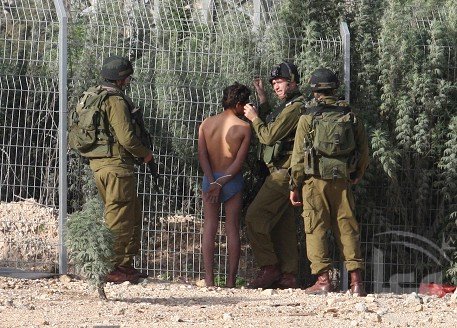
Bethlehem – Ma’an – Israeli soldiers assaulted four Palestinian workers on Tuesday night in the West Bank village of Al-Walajah, near Bethlehem, witnesses told Ma’an.
Residents of the village described how the soldiers broke the legs of three men, and arrested a fourth, taking him to an unknown detention center. Three of the men were dragged to a field in Al-Walajah, the witnesses added.
The reason for the reported assault was unclear.
Residents of Al-Walajah said three of the men were taken to the hospital in the neighboring town of Beit Jala.
One of the men was identified as Anees Kabha, a resident of the northern West Bank.
A military spokesman said he was not aware of any reported incident, and that the area was under the jurisdiction of the border police.
Featured Video

Why the U.S. Should Pull Back From the First Island Chain
or go to
Aletho News Archives – Video-Images
From the Archives
Only 19.7% of Americans agree with US State Dept on Israeli settlements
… Most American adults of voting age don’t appear willing to reject the applicability of international law to Israel’s ongoing colonization of occupied territories in East Jerusalem, the West Bank and Golan Heights. … Full article
Blog Roll
 Aletho News
- British Government Employees Were Fact-Checking the News at the BBC. Nobody Told You.
- Albania on fire: who’s behind the riots?
- Egypt’s Civil Democratic Movement rejects involvement in regional war
- Egypt collaborates with Israel to build ‘Green Rafah’ project over erased Palestinian city
- Rising fuel prices and shortages have helped drive ongoing protests and rioting in France
- Tokyo protests demand Takaichi’s resignation over support for ‘Israel’
- Jennifer Kavanagh: Why the U.S. Should Pull Back From the First Island Chain
- Yemen denounces international community’s silence on Saudi aggression, siege
- UAE and Saudi Arabia move toward renewed coordination against Sanaa
- How Iran’s two-week retaliatory strikes exposed cracks in US military architecture in Persian Gulf
- If Americans Knew
- More on how Bari Weiss is using CBS on behalf of Israel
- What the UK Is Doing to Pro-Palestine Novelist Sally Rooney Is an Act of Orwellian Villainy
- ‘We will build palaces for Jews in Gaza’: Right-wing activists establish new outpost near border
- ‘You see us burning, you stay silent’: Family’s agony over mother and sons burned to death in Gaza tent
- Israel keeps Palestinian journalist Bushra al-Tawil in isolation for 46 days
- US-Israel integration plan puts US military tech in Israel’s hands
- Israeli Strike Burns Gaza Mother Alive in Front of Toddler, ‘Without Generating Any Headlines’
- ‘The Israel Experience with Mike Huckabee’: The Ambassador’s Family Sells Trips to Israel
- As Gazans carry out mass burial, food insecurity is getting worse – Daily Update
- Israeli rabbi permits occupiers to steal Palestinian olive harvest in West Bank
- No Tricks Zone
- Predictions Made By Renowned Climate Proifessor Over Past Decades Have Been Proven To Be Poor
- New Study Suggests Large Regions Of The Pacific Ocean Have Been Cooling For The Last 80 Years
- Germany’s Green Energy Debacle: High Energy Costs Force Kahla Porzellan to Close After 182 Years!
- New Study: 50 Years Of The Most Aggressive ‘Net Zero’ Policies Can Only Affect The Global Climate By 0.03°C
- US September “Heat” Was No Record…Many Records Set Decades Ago
- Latest European Green Energy Debacle; Portugal’s Largest Flagship Solar Park Insolvent!
- Green Energy Debacle: German Expert Professor Fritz Vahrenholt Warns Of Severe Economic And Social Consequences
- Two More Paleo Reconstructions Affirm Meters-Higher Sea Levels Across Ireland, Brazil 7000-6000 Years Ago
- New Study: Earth And Venus Surface Warmth Largely Explained By Convection And Lapse Rate, Not CO2 Or Radiation
- 2025 Nature Paper Claiming Worsening Global Drought Gets RETRACTED …Heavily Flawed

