They Think We Are Stupid, Volume 11
Everything you need to know about our ruling class’s opinion of you
By Aaron Kheriaty, MD | Human Flourishing | September 19, 2024

New Report: State Department Funded Fact-checkers to Censor ‘Lawful Speech’
By Michael Nevradakis, Ph.D. | The Defender | September 18, 2024
The U.S. Department of State-funded domestic and international fact-checking entities that censored American independent media outlets and social media users who questioned the Biden administration’s COVID-19 and other policies, according to a congressional report.
The report by the U.S. House of Representatives Committee on Small Business stated:
“The Federal government has funded, developed, and promoted entities that aim to demonetize news and information outlets because of their lawful speech.”
The government’s actions fueled “a censorship ecosystem” that suppressed “individuals’ First Amendment rights” and “the ability of certain small businesses to compete online.”
The report focused on the State Department’s Global Engagement Center (GEC), which promoted and funded “tech start-ups and other small businesses in the disinformation detection space … with domestic censorship capabilities.”
The “fact-checking” firms named in the report include the International Fact-Checking Network — owned by the Poynter Institute — and NewsGuard.
The International Fact-Checking Network, established in 2015, has received funding from another State Department-affiliated group, the National Endowment for Democracy — and from Google, the Open Society Foundations and the Bill & Melinda Gates Foundation.
According to the House report, the federal government “assisted the private sector in detecting alleged MDM [misinformation-disinformation-malinformation] for moderation” and “worked with foreign governments with strict internet speech laws,” including European Union member states and the United Kingdom, to censor speech.
The report determined that the GEC and the National Endowment for Democracy violated international restrictions by “collaborating with fact-checking entities” to assess the content of domestic media outlets.
The “fact-checking” operations targeted independent media outlets, and as a result, “the scales are tipped in favor of outlets which express certain partisan narratives rather than holding the government accountable.”
Whether the State Department’s actions rise to “unconstitutional violations of the First Amendment is currently before the courts,” the report stated.
The State Department and several GEC officials are defendants in Murthy v. Missouri, a lawsuit alleging the Biden administration colluded with social media to censor free speech.
Children’s Health Defense (CHD) and its chairman on leave, Robert F. Kennedy Jr., are plaintiffs in Kennedy v. Biden, a similar lawsuit that last year was consolidated with Murthy v. Missouri.
The Poynter Institute is a defendant in another censorship lawsuit, CHD v. Meta, that CHD filed against Facebook’s parent company.
NewsGuard partnered with CDC, WHO to censor online content
According to the report, NewsGuard used money it received from the GEC and the U.S. Department of Defense to fund efforts to lower the advertising revenue “of businesses purported to spread MDM.”
“A system that rates the credibility of press is fatally flawed as it is subject to the partisan lens of the assessor, making the ratings unreliable,” the report states.
NewsGuard leveraged taxpayer dollars to develop Misinformation Fingerprints, a product that “catalogues what it determines to be the most prominent falsehoods and ‘misinformation narratives’” circulating online, “essentially outsourcing the U.S. government’s perception of fact to NewsGuard,” the report states.
NewsGuard later partnered with dozens of companies, organizations, universities and media outlets, including the Centers for Disease Control and Prevention, the Office of the Surgeon General and the World Health Organization (WHO).
“During the pandemic, the WHO enlisted NewsGuard for its input, including regular reports, on which COVID-19 narratives it determined to be misinformation were prevalent online,” the report states. “The WHO then contacted social media companies and search engines asking them to remove this content.”
‘Nobody wanted’ fact-checkers until ‘actual truths started getting out’
Tim Hinchliffe, publisher of The Sociable, told The Defender, “These so-called ‘fact-checkers’ are not in the business of actually checking facts. They are in the business of controlling narratives … Nobody wanted or needed these organizations until actual truths started getting out.”
Catherine Austin Fitts, founder and publisher of the Solari Report and former U.S. assistant secretary of Housing and Urban Development, told The Defender the government increasingly relies on censorship to promote its favored narratives.
“They need to institute more and more censorship,” Fitts said. “It’s hard to refute the gaslighting that flows from this imagination factory.”
Francis Boyle, J.D., Ph.D., professor of international law at the University of Illinois, told The Defender he wasn’t surprised that the State Department is “working to censor those who disagree with U.S. government policies and their globalist agenda.”
The report recommends that no federal funds “should be used to grow companies whose operations are designed to demonetize and interfere with the domestic press” and that federal agencies “should not be outsourcing their perception of fact to speech-police organizations subject to partisan bias.”
GEC also faces the loss of its government funding. According to the Washington Examiner, “A provision through the annual State Department appropriations bill, which passed the House this summer and will be negotiated in the Senate, aims to ban future checks to the GEC.”
But for Boyle, this is not enough. He said the State Department has, “at a minimum,” committed “the federal crime of conspiracy to defraud the U.S. government.”
Censorship ‘a pendulum that swings both ways’
The Gateway Pundit last week reported on additional links between the International Fact-Checking Network, other “fact-checking” firms and Big Tech.
In 2015, Poynter partnered with Google News Lab, which earlier that year, helped establish First Draft News. Active until 2022, First Draft was a consortium of social media verification groups that shared methods for combating “fake news.”
Another First Draft founder, fact-checking firm Bellingcat, also received funding from the National Endowment for Democracy.
First Draft was previously led by Claire Wardle, Ph.D., a Brown University professor who, according to “Twitter Files” released last year, advised the Biden administration on COVID-19 “misinformation” — despite having no science or medical credentials.
In 2016, Poynter and the International Fact-Checking Network partnered with First Draft “to tackle common issues, including ways to streamline the [news] verification process.” Other partners included Facebook, Twitter, YouTube, The New York Times, The Washington Post, CNN, ABC News, NBC News and BBC News.
In 2017, Google News Lab partnered with the International Fact-Checking Network “to dramatically increase the searchable output of fact-checkers worldwide, expand fact-checking to new markets and support fact-checking beyond politics, such as in sports, health and science.” The following year, Poynter acquired PolitiFact.com.
Google was also one of the original funders of The Trust Project, a consortium of news organizations that developed eight “trust indicators” to help the public “easily assess the integrity of news.”
These “trust indicators” later became “one of the sources being used by NewsGuard Technologies for a new product to improve news literacy,” and formed “a foundation for NewsGuard review development.”
Hinchliffe warned that the beneficiaries of censorship based on today’s “fact-checking” may become its targets in the future.
“One of the problems of censorship that operates under the guise of misinformation and disinformation, apart from stifling free speech and suppressing actual truths, is that it’s a pendulum that swings both ways,” he said. “The people calling for censorship now may be in a greater position of power to do so, but it will one day swing back at them.”
This article was originally published by The Defender — Children’s Health Defense’s News & Views Website under Creative Commons license CC BY-NC-ND 4.0. Please consider subscribing to The Defender or donating to Children’s Health Defense.
German Citizens’ Forum Proposes Criminalizing “Disinformation”
By Didi Rankovic | Reclaim The Net | September 19, 2024
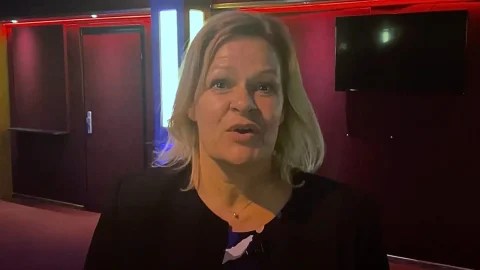
A citizens’ council – established by Germany’s Interior Minister Nancy Faeser to help combat what she sees as “fake news,” has come up with a number of recommendations, including criminalizing whatever the authorities decide to consider to be the “spread of disinformation.”
The proposal is in line with Faeser’s own policies, which opponents see as strongly pro-censorship (and that includes trying to ban a magazine critical of the government).
No surprise also that Faeser’s ministry is open to the suggestions – a statement said it would be “analyzed.” Furthermore, the Interior Ministry will “examine the extent to which (the recommendations)” can be incorporated into its work.
All this is already being interpreted in the context of the previous conduct of Germany’s government, which critics say is not only free speech and media freedom-unfriendly – but is also, while declaratively fighting disinformation, giving a leg up to those media outlets that actually spread disinformation (the implication being, the kind of disinformation that suits the government.)
In a world where war is peace, freedom is slavery, etc., Faeser’s council’s full name is, “Forum against Fakes—Together for a Strong Democracy.” But it’s questionable how German democracy could benefit from an even more draconian clampdown on speech than what is currently happening.
91 percent of those participating in Fraser’s council (and that’s reportedly more than 420,000 people) have recommended that the ministry look into the possibility of “examining criminal prosecution and/or sanctioning the spread of disinformation.”
The council can be seen as a form of “policy laundering” – where a politician’s own ideas are put through a body said to represent citizens, to then be accepted as supposedly (all) citizens’ proposal.
In order to start prosecuting and punishing people for disinformation, there was no way of avoiding “defining” what it was. The attempt, however, is poor.
“Targeted false information that is spread in order to manipulate people. The aim is to influence public debates, divide society, and weaken cohesion and democracy.” That’s the “definition,” which is alarmingly broad and open to interpretation and manipulation.
Another point that the council’s recommendations make is that punishing people found to be “weakening cohesion” and such is to, basically, subject them to reeducation.
“Deter” and “increase awareness of wrongdoing” is how this is worded. However, observers are not sure such measures can coexist with Germany’s Basic Law and its provisions meant to protect freedom of expression.
G20 Embraces Digital ID Dream While Critics Warn of Surveillance Nightmare
By Didi Rankovic | Reclaim The Net | September 19, 2024
The G20 organization, currently chaired by Brazil and recently holding a ministerial meeting there, is wasting no time falling in line with all the key policies advanced by many governments, and globalist elites.
After promising to do its bit in the “war on disinformation” (to the delight of the host, Brazil, whose present government is accused of censorship), G20 member countries “pledged allegiance” to the digital ID and the overall scheme that incorporates it – namely, the digital public infrastructure (DPI).
DPI already counts the UN, the EU, the World Economic Forum (WEF), and the Gates Foundation as policy backers and vocal promoters. Now G20 ministers with digital economy portfolios have issued a joint declaration to express their “commitment” to both DPI and “combating disinformation”, and there is also inevitably the talk of “AI.”
On the digital ID/DPI front, the ministers speak of “inclusive” DPI, and the same attribute is attached to AI. The declaration “acknowledges” the importance of things like innovation and competition in a digital economy, among other things, at the same time “reaffirming” the importance of digital transformation based on DPI.
Boilerplate remarks are made about transparency and protection of privacy and personal data – but these are the major concerns cited by opponents of this type of scheme, along with the overall fear that they facilitate new, more dangerous forms of mass surveillance through centralization of personal information and tracking of people’s activities.
Referring to digital ID as “a basic DPI,” the declaration further speaks of the Sustainable Development Goals (a UN agenda) and one of its targets to be achieved by 2030 by using digital ID (as a tool of “inclusion”) to provide “legal identity for all.”
Interestingly enough, free speech repression is not the only controversial policy where Brazil seems keen to lead the way; so is DPI, and the digital ID.
During the G20 meeting, Brazil promoted its DPI-related activities, including digital IDs based on biometrics. This policy is explained with buzzwords such as economic growth, sustainable development, and also, “easier access to financial services and government resources, particularly for underbanked populations.”
Oracle Founder Larry Ellison Imagines a Dystopian Future of Constant AI-Powered Surveillance to Enforce “Best Behavior”
By Didi Rankovic | Reclaim The Net | September 18, 2024
Larry Ellison, co-founder, chairman of the board, and chief technical officer of Oracle, has revealed where he sees the world going in one particular aspect – continuous, real-time control of people.
It is a dark place of “AI” (machine learning, ML) mass surveillance, which Ellison wants to make sure is served by his company by way of providing the fundamental infrastructure. It isn’t irrelevant to this story that Oracle’s portfolio also includes multi-decade contacts with the US government.
Oracle is not often mentioned when Big Tech is talked about, but it is one of the biggest in the industry. The reason for staying out of the limelight is that, unlike its peers with big stakes in the social media space, Oracle’s business is database software and cloud computing.
This is the reason Ellison sees the opportunity to place his company, already involved in building AI models, at the center of producing the tools to make this nightmarish scenario of real-time ML-powered surveillance a reality.
Ellison spoke during the Oracle financial analyst gathering to suggest that the company’s databases will become indispensable for the AI infrastructure, and that proof for that is in companies like X and Microsoft having already picked Oracle to provide this service.
“Maximizing AI’s public security capabilities” is what’s on Ellison’s mind, and he decided to sell this by giving police accountability as an example.
The system would prevent police abuse, he said – but the way “AI” combined with Oracle Cloud Infrastructure arrives there is perplexing, to say the least. It involves police body cameras that are always recording (including in bathrooms, and during meals), always transmitting back to Oracle – and with no option to stop this feed.
“Every police officer is going to be supervised at all times” – that’s another way of putting it, and Ellison did.
But who would build such an expensive and elaborate surveillance system just to use it in law enforcement? Not Ellison.
The cops will be on their best behavior, but so will (the rest) of the citizens, he promised. “Citizens will be on their best behavior because we’re constantly recording and reporting,” Ellison added.
The real reason US wants to silence RT
By Fyodor Lukyanov | RT | September 18, 2024
In late 1986 Yegor Ligachev, the secretary of the Soviet Communist Party’s Central Committee, and Viktor Chebrikov, then-head of the KGB, proposed that the country end the practice of jamming foreign radio stations. ‘Enemy voices’ was the popular term used at the time to describe these broadcasts from abroad.
Of course, the two prominent officials were not imbued with bourgeois ideas when seeking to end radio jamming. They were actually taking a businesslike approach. The pair explained to the Central Committee that blocking was expensive but not very effective, given the size of the country. So, it was suggested that signal-jamming be abandoned and that funds be diverted to counter-propaganda measures. This meant more active work with foreign audiences to communicate the Soviet Union’s own views on world events.
A few weeks later, at a meeting with US President Ronald Reagan in Iceland, USSR leader Mikhail Gorbachev raised the issue. He said “your radio station Voice of America broadcasts around the clock in many languages from stations you have in different countries in Europe and Asia, and we can’t present our point of view to the American people. So, for the sake of equality, we have to jam the Voice of America broadcasts.” Gorbachev offered to stop blocking ‘VOA’ if his counterpart agreed to let Moscow have a frequency to do the same in the US. Reagan evasively promised to consult when he returned home. In the end, the Soviets stopped jamming foreign radio stations unilaterally, without any deal.
The events of the last few days have echoes of this old story. US Secretary of State Anthony Blinken devoted an entire speech to RT, which is subject to ‘full-blocking’ (that’s a new formula!) sanctions for its supposedly destructive and subversive work around the world. According to Blinken and the American intelligence agencies he references, the threat posed by the Russian company is of the highest order and requires the most decisive measures from all of Washington’s allies.
Without irony or exaggeration, it can be said that RT could only dream of the global recognition that Blinken’s appeal has facilitated. The effectiveness of the media group was not so much confirmed as it was certified, and by prominent representatives of its rivals.
We could deplore infringements on freedom of expression and restrictions on pluralism of opinion, but there is little point in doing so. Such notions should only be promoted in relation to the internal information space of individual countries; at a national level, they are an indispensable prerequisite for normal development. As for foreign sources of information, people generally perceive them as instruments of influence. And it hardly depends on the type of socio-political system that exists in a given state. The more comprehensive the information and communication environment, the greater its impact on people’s behavior, and the more acute the desire of governments to tighten control over the flow of ideas and analysis. The international media sphere is deliberately ideological, electrified and conflictual. Hence Blinken’s, shall we say, uncharacteristic remarks that RT should be treated “like an intelligence agency.”
How effective are the tactics of restricting alternative views and jamming radio waves? Comrades Ligachev and Chebrikov rightly pointed out that the costly efforts to jam hostile broadcasters were, to put it mildly, not particularly effective. Worse, as the author well remembers, the very fact that the authorities were fighting foreign radio voices had the opposite effect to that desired – if they were silencing voices, it meant that they were afraid of the truth. And, by the end of the Soviet era this opinion was not only widespread among the frontline intelligentsia, many ‘ordinary people’ also didn’t give a damn about the official channels.
At their meeting in Iceland, Reagan countered Gorbachev’s appeal by saying that, unlike the Soviets, “we recognize freedom of the press and the right of people to listen to any point of view.” The US president had no doubts about the superiority of the American system in all respects. Accordingly, the demands for information pluralism, then and later, reflected the confidence of Washington that it would emerge victorious from any competition. And so, a few years later, the US achieved a de-facto monopoly on the interpretation of everything.
Washington’s current extreme reaction is due to the feeling that it’s losing this monopoly. Alternative interpretations of events now arouse public interest. In fact, the total resources of the Western, mainly English-language media are incomparably greater than what all the carriers of alternative points of view can offer, at this moment. But internal insecurity is growing all by itself, fueling the desire to fence off the information space. From the same playbook comes the US’ attempts to explain its internal strife and accumulated contradictions by pointing to a pernicious external influence. This was also the Soviet experience. However, the USSR didn’t solve its own issues by blaming them on external causes. In fact, as its problems grew, those same outside factors actually began to exacerbate them.
Targeted punitive actions can create obstacles for any organization, there is no doubt about that. Especially when they come from what is still the most powerful country on the planet. But American history teaches us that monopolies do not last forever. Sooner or later, a cartel becomes a brake on development, then it becomes the subject of measures to break it up.
Fyodor Lukyanov is the editor-in-chief of Russia in Global Affairs, chairman of the Presidium of the Council on Foreign and Defense Policy, and research director of the Valdai International Discussion Club.
Hillary Clinton Advocates for Criminal Charges for Americans Spreading “Propaganda”

By Cindy Harper | Reclaim The Net | September 17, 2024
Former US Secretary of State Hillary Clinton has has decided to ignore the First Amendment and has advocated for punitive measures aimed at Americans who contribute to the spread of what she calls “propaganda.” Speaking to MSNBC on Tuesday, Clinton suggested that holding American individuals accountable through civil or criminal charges could serve as a warning to deter the distribution of “disinformation.”
While Clinton acknowledged the importance of indicting foreign actors, namely Russians, directly responsible for meddling in US elections, she argued that Americans who play a role in amplifying “disinformation” should not be overlooked.
“I think it’s important to indict the Russians… who were engaged in direct election interference and boosting [former US President Donald] Trump back in 2016,” Clinton said. “But I also think there are Americans who are engaged in this kind of propaganda, and whether they should be civilly or even in some cases criminally charged is something that would be a better deterrence.”
Clinton, who ran against Trump in the 2016 presidential race, endorsed the ongoing efforts of the State and Justice Departments to reveal the extent of Russian influence in US elections. Clinton has long maintained that her loss in 2016 was due to Russian interference. She described these efforts as merely scratching the surface of a much larger issue, adding, “There is a far distance to go.”
Her comments also touched on the broader issue of foreign influence in American politics, as Clinton warned that adversaries such as Russia, China, and Iran are seeking to sway the US electorate.
She underscored the call for greater vigilance in safeguarding the democratic process, stating: “We are not going to let adversaries, whether it’s Russia, China, Iran, or anybody else, basically try to influence Americans as to how we should vote in picking our leaders.”
Clinton’s call for potential criminal penalties against US citizens who share “disinformation” is a controversial step toward restricting free speech. The idea of penalizing individuals for spreading information, regardless of its origins, raises concerns about the boundaries of government power and the potential for misuse of such laws to suppress dissenting views.
The First Amendment of the US Constitution prohibits Congress from making laws that abridge the freedom of speech. Under this protection, the idea of prosecuting individuals for the mere act of sharing information—regardless of its veracity—presents a potential conflict with these foundational rights.
Meta’s Ban on Sputnik ‘Very Bad’ and Politicized Decision – Analyst
By Oleg Burunov – Sputnik – September 17, 2024
A politically motivated move by Meta to ban Russia’s Rossiya Segodnya and RT news outlets from its apps globally reflects the company’s biased approach, analysts said in separate interviews with Sputnik.
“There is a perception in the United States that the flow of Russian information will always be disinformation and that it will be tipped in favor of Donald Trump, even though [Russian President Vladimir] Putin has said that he could deal with Kamala Harris, too. This [perception] is simply untrue. I mean, the idea is to frighten the American people that they don’t know one idea from another. I mean, that’s the smokescreen,” Professor Joe Siracusa, political scientist and dean of Global Futures, Curtin University, told Sputnik.
As such, the idea that Russia spends all of its time to propagandize the American public, and that “there is a body of information out there that is going to undermine their faith and their freedom is ridiculous”, Siracusa underlines.
Recently, Russia’s Rossiya Segodnya, RT and “other related entities” were banned from Meta apps globally over alleged foreign interference activity.
This is a “very bad decision, particularly coming from an American company,” the political scientist points out.
Meta’s ban on Russian news outlets mean that “they [Meta] are really sort of censoring the news themselves. What they’re saying to the American people is that you’re not mature enough to understand ideas”, per the professor.
“This is the kind of game that the Democratic Party plays. I mean, there’s no excuse or reason for this kind of embargo on foreign information based on the idea that it’s protecting the American people… from whom? From Mark Zuckerberg? It’s ridiculous. Meta was in very close cahoots with the Democratic Party the last time around when it went after Donald Trump. So, in a way, it’s already been politicized,” the professor concludes.
In a separate interview with Sputnik, Facebook whistleblower Ryan Hartwig says that as a former Facebook content moderator, he saw firsthand how the company “influenced elections throughout the world.”
“Facebook is clearly biased and has an agenda with elections. At a whim, it can make newsworthy exceptions to protect certain politicians. They may as well ban their own app and go after themselves for foreign interference activity,” Hartwig, who is the co-author of “Behind the Mask of Facebook: A Whistleblower’s Shocking Story of Big Tech Bias and Censorship”, points out.
When it comes to Facebook’s foreign influence, suffice to mention the elections in Spain, Venezuela, and the US, according to Hartwig.
Given the fact that Facebook was being influenced by the US’s Federal Bureau of Investigation (FBI) “to suppress major stories” like the Hunter Biden laptop saga, “other countries should consider Meta a government agency,” the whistleblower adds.
As for the Ukraine crisis, “It’s clear that Meta is acting in coordination with the US government and the US State Department as a proxy for a foreign conflict,” Hartwig concludes.
CIA Veteran: Ukrainian Connection in Trump’s Assassination Attempt Cannot Be Ignored
Sputnik – 16.09.2024
The fact that Ryan Routh was “an ardent supporter of the Ukraine and wants to see Russia attacked, and clearly saw Trump as a threat to Ukraine’s future receipt of US military support,” cannot be hidden, says former US State Department official and retired CIA intelligence officer Larry Johnson.
“I’m sure that the Kiev regime is going to distance itself from this. The Kiev regime, along with the apparent support of the CIA, has put together a death list of Americans. A list of Americans who ought to be killed. It’s not a list to send them nasty letters. Scott Ritter’s on it, I think Douglas McGregor’s on it. It is not out of line for them to have done this,” Johnson tells Sputnik.
He describes the fact that Routh was apparently privy to Trump’s whereabouts as “puzzling”, given the latter does not make his schedule public.
“Who leaked that to him? How did he know? Was there somebody inside the Trump team that told him? Was there somebody inside the Secret Service who told him? Was it a foreign intelligence service? Was the Ukrainian intelligence that alerted? That has to be investigated,” Johnson remarks.
According to him, the assassination attempt is going to have a detrimental effect on the support for Ukraine in the United States, at least among Trump’s supporters.
Johnson also suggests that many people in the current US government do not want Trump to become president again and would rather see him dead.
“It would not shock me at all that there would be some elements inside the government that would get involved in that kind of plot. The Secret Service, I think it’s on notice and the focus is on it in such a way that they can’t afford to allow sloppiness and poor planning and poor security to go unanswered,” he says.
Bill Gates Defends Free Speech — Unless It Hurts His Investments
By Michael Nevradakis, Ph.D. | The Defender | September 16, 2024
Bill Gates took a shot at free speech, the First Amendment, and everyone who questions vaccines and vaccine safety in a CNBC interview earlier this month.
“We should have free speech, but if you’re inciting violence, if you’re causing people not to take vaccines, where are those boundaries that even the U.S. should have rules? And then if you have rules, what is it?” Gates asked on CNBC’s “Make It.”
Gates made similar remarks this month in an interview with CNET, during which he directly targeted the First Amendment:
“The US is a tough one because we have the notion of the First Amendment and what are the exceptions like yelling ‘fire’ in a theater. … I do think over time, with things like deepfakes, most of the time you’re online you’re going to want to be in an environment where the people are truly identified, that is they’re connected to a real-world identity that you trust, instead of just people saying whatever they want.”
Gates, described by CNBC as “the subject of numerous conspiracy theories,” said he does not have a solution for how to stop the spread of “misinformation.” He lamented his “naivete, that when we made information available, that people would want correct information.”
According to CNBC, Gates, who “spends a lot of his time and money trying to help solve some of the world’s biggest problems,” said that unlike tackling diseases or promoting clean energy, there is no clear path forward for solving what he views as the problem of “misinformation.”
Gates told CNBC any “solution” would involve “rules” for online speech, but he said he isn’t sure what form those rules would take or who would enforce them. Similarly, he told CNET “systems and behaviors” should be in place to target “misinformation.”
“Is there some AI [artificial intelligence] that encodes those rules because you have billions of activity [sic] and if you catch it a day later, the harm is done,” Gates told CNBC. However, he acknowledged that he is sensitive to the argument that restricting online information would be detrimental to free speech.
Gates’ remarks a ‘blatant affront to the First Amendment’
Experts who spoke with The Defender said Gates’ remarks belie a disregard for the principles of free speech and the First Amendment.
Author Naomi Wolf, Ph.D., co-founder and CEO of DailyClout, told The Defender Gates “should re-read the Constitution,” adding:
“No individual, and certainly not the state, has the authority in our system to be the arbiter of what can be read or said. Our First Amendment has very few and limited exceptions, such as threats of violence. ‘Misinformation’ is not one of them. History shows that censorship never works ultimately to repress the truth.”
Other experts cited Gates’ questionable track record on free speech and issues such as vaccines. Epidemiologist M. Nathaniel Mead told The Defender Gates’ “post-2020 track record on this issue is well-documented.”
Mead said:
“He tried to sell us on the ‘vaccine-only’ solution to COVID by falsely claiming that the modified mRNA injections would avert infection and transmission, thereby ending the pandemic. He also openly urged media to disparage as ‘conspiracy theorists’ or anyone who questioned mandates for masking, social distancing, lockdowns, PCR testing and, of course, the so-called vaccines.”
Mead called this “a rather blatant affront” to the First Amendment. “Given his track record with public health communications, Gates is being grotesquely disingenuous when he speaks about wanting to protect free speech.”
Mead suggested Gates relies on control over narratives in the media to further his promotion of — and investments in — vaccines. He said:
“Bill Gates has a vested interest in ensuring that counternarrative information, or what he calls ‘misinformation,’ is eliminated. That’s because it interferes with his Bio-Pharma agenda and what appear to be authoritarian aspirations as well, given his efforts to impose vaccine passport requirements internationally and to restrict free speech through his control of many news media channels, having given over $300 million of his own funds in recent years to support ‘independent’ media platforms such as NPR, PBS and The Guardian.
“Since the mass media relies heavily on Big Pharma advertising to maintain operations, it has largely abandoned the traditional skepticism of government directives, instead aiding in the suppression of dissenting viewpoints. Anyone posing counter-establishment narratives is a ‘problem’ from Gates’ perspective.”
‘Afraid that when their plans are exposed, people will resist’
Others argued that Gates’ reputation was hurt as a result of his outspoken support for and investments in COVID-19 vaccines and mRNA technology — and can only be restored through censorship of online speech.
“To restore his reputation from mad scientist back to computer guy, Gates has one hope: censorship. Indeed, the vast amount of censorship needed for that job is basically to wipe the internet,” attorney Greg Glaser told The Defender.
Catherine Austin Fitts, founder and publisher of the Solari Report and former U.S. assistant secretary of Housing and Urban Development, cited a recent survey showing that a significant percentage of the population believes COVID-19 vaccines are deadly.
“A recent Rassmussen survey published in June 2024 reported that 33% of American adults agree with the statement: ‘The [COVID-19] vaccine is killing people, and is killing large numbers of people,’” Fitts said.
“If Mr. Gates wants to stop misinformation, his first step should be to stop financing, speaking or republishing misinformation that results in the poisoning of our children,” Fitts added.
For Seamus Bruner, author of “Controligarchs: Exposing the Billionaire Class, their Secret Deals, and the Globalist Plot to Dominate Your Life,” Gates’ support for stopping “misinformation” is tied to his support for vaccines and digital ID.
Bruner, director of research at the Government Accountability Institute, argued that the “systems and behaviors” Gates advocated include “a de facto digital ID system” that would “track and trace our precise digital footprint — what we say and do online.”
Bruner said:
“Gates and the other controligarchs are pouring billions of dollars into digital ID efforts, and they plan to use misinformation — particularly related to vaccines — to do it.
“He wants to control what we put in our bodies. Now, he wants to control what we’re allowed to put into our minds — what we think — by controlling what we are allowed to say. The reason ‘misinformation’ is a ‘problem’ for controligarchs like Gates is simple: They are afraid that when their plans are exposed, people will resist.”
Gates making an ‘emotional appeal to manipulate public opinion’
CNBC’s interview with Gates came just days before the release of a five-part Netflix docuseries, “What’s Next? The Future With Bill Gates.”
The series will premiere on Sept. 18 — the same day as the documentary “Vaxxed 3: Authorized to Kill” will be released. “Vaxxed 3” features excerpts from thousands of interviews with people about vaccine injuries and deaths people allege were caused by hospital COVID-19 treatment protocols.
According to CNBC, in one episode of “What’s Next?” Gates tells his daughter Phoebe he feels bad for failing to stem the spread of “misinformation.”
“Hearing my daughter talk about how she’d been harassed online … brought that into focus in a way that I hadn’t thought about before,” Gates told CNBC.
According to CNBC, “Phoebe Gates spoke out about what she called ‘the misconceptions and conspiracy theories’” — “including racist online commentary about one of her ex-boyfriends, who is Black” — and about her family in an interview with The Information.
Gates told CNBC, “We’ve handed this problem to the younger generation,” referring to “misinformation.”
Mead accused Gates of trying to conceal his support for censorship by eliciting an emotional response.
“Calling attention to the cyber harassment of his daughter has less to do with misinformation than with predatory and abusive online behaviors,” Mead said. “But Gates seems to be getting desperate, and his attempt to make this kind of illogical linkage is an emotional appeal to manipulate public opinion.”
Mead said Gates used similar emotional tactics to equate questioning vaccines with “inciting violence.” He said:
“In the video clip teaser, we hear Gates say we should have free speech and then attempt to obliquely link ‘inciting violence’ with ‘causing people not to take vaccines.’
“When he juxtaposes the incitement of violence with causing people not to take vaccines, he’s resorting to the most basic propaganda tactic, that of emotional manipulation.”
Such plays on emotion also represent a concerted effort to target young people in particular, according to Glaser:
“One of the most surprising things I’ve learned from interviewing young people is they generally don’t like to fact check. Scrolling is way more fun. They want verification processes done for them, and they are content to rely on their peer group’s perception of the information. That’s the phenomenon that people like Gates are trying to exploit.”
Instead of censorship, a focus on allowing free speech to thrive?
“Misinformation is becoming more common,” CNBC reported, citing developments such as AI chatbots that “make it easier to generate and spread falsehoods quickly,” and a January World Economic Forum report that said “misinformation” is the top global risk for the next two years.
While citing AI as a prime driver of “misinformation,” CNBC cited a 2023 interview with Beth Goldberg, head of research and development at Jigsaw, a Google unit, who said researchers are attempting to develop AI tools to identify what CNBC described as “misinformation and toxic speech online.”
But in a blog post last year, Gates argued that AI’s ability to fight “misinformation” would be imperfect.
“Someone finds a way to detect fakery, someone else figures out how to counter it, someone else develops counter-countermeasures, and so on. It won’t be a perfect success, but we won’t be helpless either,” Gates wrote.
But Glaser said society should focus on creating the conditions for free speech to flourish.
“Free speech does not exist in a vacuum, but rather its quality is a measure of the character of people speaking and listening. This is the root of the issue that censorship cannot address. Only as we improve the character and morality of our societies will free speech truly thrive,” Glaser said.
“The largest danger to an organic human system — like a free market — is inorganic authoritarianism,” Glaser added. “Bill Gates teaming up with the United Nations to impose a global order is the picture of inorganic authoritarianism.”
This article was originally published by The Defender — Children’s Health Defense’s News & Views Website under Creative Commons license CC BY-NC-ND 4.0. Please consider subscribing to The Defender or donating to Children’s Health Defense.
Featured Video

HE SAVED LIVES. NOW HE FACES PRISON.
or go to
Aletho News Archives – Video-Images
From the Archives
NATO Sanctions and the Coming Global Diesel Fuel Disaster
By F. William Engdahl – New Eastern Outlook – 11.04.2022
Amid the ongoing global inflation crisis, NATO heads of state and mainstream media repeat a mantra that high energy prices are a direct result of Putin’s actions in Ukraine since end of February. The reality is that it is the western sanctions that are responsible. Those sanctions including cutting SWIFT interbank access for key Russian banks and some of the most severe sanctions ever imposed, are hardly having an impact on the military actions in Ukraine. What many overlook is the fact that they are increasingly impacting the economies of the West, especially the EU and USA. A closer look at the state of the global supply of diesel fuel is alarming. But Western sanctions planners at the US Treasury and the EU know fully well what they are doing. And it bodes ill for the world economy.
While most of us rarely think about diesel fuel as anything other than a pollutant, in fact it is essential to the entire world economy in a way few energy sources are. The director general of Fuels Europe, part of the European Petroleum Refiners Association, stated recently, “… there is a clear link between diesel and GDP, because almost everything that goes into and out of a factory goes using diesel.” … continue
Blog Roll
 Aletho News
- Trita Parsi: Middle East Unraveling — Are We on the Path to World War?
- Iran FM meets with US envoy on UN meeting’s sidelines at American side’s insistence: Report
- Qatar PM calls for Gulf security framework with Iran, says war must be ‘wake-up call’
- China condemns US extortion of Iranian airlines, rejects Washington’s ‘illegal’ sanctions threats
- Italy to move military personnel from Taif base after missile strike
- Finland’s Stubb tells European leaders to calm down
- Defeating Russia on battlefield impossible – Fico
- Finland’s Gender Clinic Reversal
- Massachusetts Wants Mental Health Visits, Why Does Government Use ‘Health’ to Enter Our Homes & Families?
- US lawmaker admits American people footing bill for Trump’s failed aggression against Iran
- If Americans Knew
- Sanctions are collective punishment: immoral and self-defeating
- Phosphorus Munitions Fired by Israel Burn Groves, Orchards in Southern Lebanon
- Israel Carries Out New Ceasefire Violations Across Gaza
- AI – Emphasis on the ‘I’: Israel Is Funding AI Chatbot Propaganda
- Israel Blocking Hundreds of Wheelchairs for Injured Children From Entering Gaza
- Israel Is Expanding and Upgrading Compounds for Palestinian Militias in Gaza
- The Palestinian-American Residents of This West Bank Town Are Wondering: Where Is Trump?
- Gaza desperately needs tents, wheelchairs, fuel… and everything else (Israel blocks it all) – Daily Update
- Israeli Attacks in Gaza Kill at Least Seven Palestinians Over Three Days, including Woman and Child
- Trump’s militarization of Washington DC as he pursues Israel’s war against Iran
- No Tricks Zone
- New Study: Earth And Venus Surface Warmth Largely Explained By Convection And Lapse Rate, Not CO2 Or Radiation
- 2025 Nature Paper Claiming Worsening Global Drought Gets RETRACTED …Heavily Flawed
- New Study: ‘Global Drought Shows No Detectable Recent Acceleration Under Climate Warming’
- Economic Masterminds: German Socialists Suggest Taxing Productivity Gains Stemming From Using AI
- The South China Sea Has Not Been Cooperating With The Climate Change Narrative
- Energy Crisis: Germany Enters Heating Season With Historically Low Gas Reserve Fill Levels
- New Study: The Antarctic Ice Sheet Gained Mass From 2020-2024 Due To Staggering Snow And Ice Accumulation
- Study: Ocean Heating Rates From Thousands Of Years Ago ‘Dwarf’ Modern Ocean Heating Rates
- Climate Extremists Target, Attack Large-Scale Power Grid Infrastructure In Germany!
- New Study: Antarctic Ice Melt Has Contributed Less Than 1 Centimeter To Sea Level Rise In The Last 30 Years

