US foreign military sales for 2018 total $55.66B, up 33 percent
Press TV – October 9, 2018
Sales of US military equipment to foreign governments have increased by 33 percent compared to the previous year’s total, a US administration official says.
Lieutenant General Charles Hooper, director of the Defense Security Cooperation Agency, told Reuters on Tuesday that the US foreign military sales hit 55.6 billion dollars in the fiscal year ending September 30.
According to Reuters, the increase in foreign military sales came in part because the Trump administration rolled out a new “Buy American” plan in April that relaxed restrictions on sales while encouraging US officials to take a bigger role in increasing business overseas for the US weapons industry.
Hooper said the $55.6 billion figure represented signed letters of agreement for foreign military sales between the United States and allies.
The United States sold over $40 billion worth of weapons last year, maintaining its position as the world’s dominant arms supplier.
A report by the Stockholm International Peace Research Institute (SIPRI) revealed in March that the US has increased its arms sales by 25 percent over the past five years.
It also said some half of US arms exports during that period have gone to the Middle East, and that Saudi Arabia registered a 225-percent rise in military purchases – almost all from the US and Europe.
Saudi Arabia was the first country US President Donald Trump visited after taking office last year. It was announced during his visit to Riyadh that Washington could sell $110 billion in military equipment to Saudi Arabia in a period of 10 years. The State Department said at the time that the deal could grow to $350 billion over a decade.
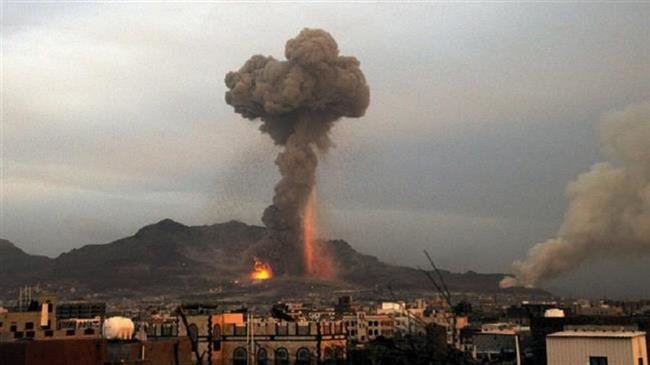
The massive arms sales come despite repeated international calls on the US to stop supporting the Saudis with modern weaponry, which the kingdom has, according to many reports, used in its devastating war on Yemen.
The White House has also been criticized by both human rights groups and US lawmakers in Congress from both political parties for allowing its Saudi ally to bomb Yemen.
Some 15,000 Yemenis have been killed and thousands more injured since the onset of the Saudi-led aggression in March 2015.
Washington has denied it is directly supplying the Saudis with weapons in the war but numerous reports have suggested that US arms have played a part in massive civilian casualties.
IPCC Pretends the Scientific Publishing Crisis Doesn’t Exist
By Donna Laframboise | Big Picture News | October 8, 2018
The Intergovernmental Panel on Climate Change (IPCC) issued a press release today. It tells us the IPCC assesses “thousands of scientific papers published each year,” and that its latest report relies on “more than 6,000 references.”
That sounds impressive until one remembers that academic publishing is in the grips of a reproducibility crisis. A disturbing percentage of the research published in medicine, economics, computer science, psychology, and other fields simply doesn’t stand up. Whenever independent third parties attempt to reproduce/replicate this work – carrying out the same research in order to achieve the same findings – the success rate is dismal.
The influential 2005 paper, Why Most Published Research Findings Are False, is now very old news. Headlines declaring that ‘science is broken’ have become commonplace. In 2015, the editor-in-chief of The Lancet declared that “much of the scientific literature, perhaps half, may simply be untrue.”
So here’s the bottom line: We know that studies about promising drugs typically fail when strangers attempt to reproduce those studies. We know that flashy physics research published in Science and Nature has been wholly fraudulent. We know that half of economics papers can’t be replicated, even with assistance from their own authors. We know political bias distorts the peer-review process in psychology. (All of this is discussed in a report I wrote in 2016).
We therefore have no earthly reason to imagine that climate science is exempt from these kinds of problems.
If half of the scientific literature is untrue, it therefore follows that half of climate research is also untrue.
This means that 3,000 of the IPCC’s 6,000 references aren’t worth the paper they’re written on.
…
BACKGROUND: The IPCC is a UN bureaucracy. Governments select scientists to write climate reports – one of which has just been completed.
These scientists are further asked to summarize their work. But the scientist-crafted summary is only a draft. At the meeting that just ended in South Korea, the draft was re-written by politicians, diplomats, and bureaucrats representing the political establishments of various countries.
At that point, the summary forfeited any conceivable claim to be a scientific document and became, instead, a politically-negotiated statement.
Today’s press release announces that the politicized summary was “approved by governments” and has therefore been made public (download it here).
 Please note: the report itself has not been made public. Nor has the draft summary containing the scientists’ own words. (Although the IPCC claims to be ultra-transparent, its website says the original/draft version of the Summary for Policymakers is available only to “authorised users” such as government officials.)
This is the IPCC’s standard MO. It controls the message by feeding the media a politically-negotiated Summary of its latest work. Then it stands back and lets gullible reporters mislead the public about what the science says.
LINKS:
The Delinquent Teenager Who Was Mistaken for the World’s Top Climate Expert
- read the IPCC’s press release here
- my previous commentary: 3 Things Scientists Need to Know About the IPCC
- Where’s the Science at the IPCC?
- The Sneaky, Not-So-Secret Purpose of the IPCC
- BBC Ignores Widely Publicized IPCC Problems
- The BBC’s Naive View of the UN’s Climate Machine
- If IPCC Meetings Were Televised
- US Scientific Integrity Rules Repudiate the UN Climate Process
- Cogs in the Climate Machine
- The IPCC as UN Funding Mechanism
Fun at the United Nations and in Congress: Israel Wins the Comedy Competition
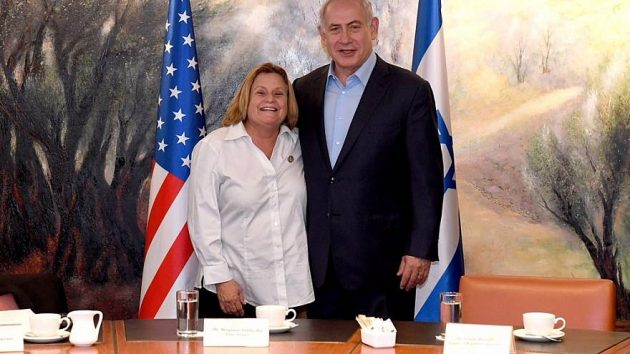
Rep. Ileana Ros-Lehtinen (R-Fla.) with Israeli Prime Minister Benjamin Netanyahu. Image Credit: GPO
By Philip Giraldi | American Herald Tribune | October 8, 2018
Most people are unaware of the fact that the annual opening of the United Nations General Assembly, which takes place in September, is actually a major audition opportunity for aspiring stand-up comedians. This year, American President Donald Trump was one of the pre-event favorites according to the Las Vegas betting line based on his hilarious tweets back in January explaining that he is “like, really smart,” before observing that he “would qualify as not smart, but genius…. and a very stable genius at that!”
To be sure, when he addressed the assembly on September 25th and rambled on about how “In less than two years, my administration has accomplished more than almost any administration in the history of our country,” the audience was ready to share in the fun and laughed out loud at the absurdity of the notion. They were still giggling on the following day when U.S. Ambassador to the United Nations Nikki Haley quipped with a straight face that the audience was actually laughing with Trump out of respect for him and what he was saying.

Trump’s tour de force seemed unbeatable but the wily Israeli Prime Minister Benjamin Netanyahu had an ace up his sleeve. Bibi’s performance back in 2012 when he produced the by now infamous cartoon of an alleged Iranian nuclear bomb about to go off was still recalled by many in the audience as the ultimate stand-up joke U.N. style, a legendary performance. But the same creative thinking that produced the bomb with its lit fuse had come up with a different kind of delayed action joke that Bibi knew would confuse his audience before being revealed for what it was, trumping Trump’s attempt at humor, so to speak. Netanyahu produced a series of large photos taken near Tehran by Israeli intelligence showing a wall and a gate. He said it was an Iranian “secret atomic warehouse for storing massive amounts of equipment and material for Iran’s secret nuclear weapons program.”

The audience gasped, clearly impressed by Bibi’s unexpected rollout of a hitherto unknown top secret installation, but the joke came the next day when it was revealed that the complex inside the wall actually contained a number of businesses, including a scrap metal dealership and a carpet cleaning service. Bibi likely reacted with his Gary Cooper grin, “Hey, the joke’s on you guys who are always whining about Israel’s nuclear stockpile.” A U.S. intelligence official was also apparently in on the jape, commenting a day later that “What Netanyahu said last night was slightly misleading. We knew about the facility in Tehran and it’s a place full of file cabinets and documents, not aluminum pipes or centrifuges.”
So it was a weekend of fun for the Israeli delegation, including convivial friendly banter with the representatives of all Israel’s four or five friends in the General Assembly, but you can only generate so much excitement when talking to a dry stick like Nikki Haley or the ambassador from Micronesia. Fortunately, good news had come through late in the week, concerning how seven more demonstrating Gazans had been shot dead by Israeli snipers, and there was also an exciting new development in that the Israeli navy had now gotten into the game, shooting Gazans demonstrating on the beaches along their own seafront since Israel regards anyone who seeks to access the water as being a terrorist, transgressing against Israel’s modern-day Mare Nostrum. Ninety-three more Palestinians were injured, 37 of whom were wounded by gunfire.
There was also a lot of funny stuff going on in Washington, perhaps driven by a desire to outdo the frolicking taking place at the U.N. building in New York City. Congressmen got together and said, “Hey, let’s see what we can give to Israel without anyone in the media coming out with so much as a peep.” One Congressman, possibly Chuck Schumer or Ben Cardin or even Lindsay Graham, must have come up with the idea for a new law that would compel the White House to give to Israel a minimum of $3.8 billion dollars a year for the next ten years no matter what Israel does or says. Shoot Arabs, kick them out of their homes, or just simply treat them like shit, it will all be the same to Uncle Sam. If they want to bomb Peoria, be my guest. Written into the bill is the provision that the president cannot in any way reduce or delay the payment going from the U.S. Treasury to the Israeli Central Bank.
And $3.8 billion is only a minimum. Section 103 of the House bill removes all limitations on how much money Israel gets. Under the new act, instead of $38 billion being the cap, as stipulated in the 2016 memorandum of understanding, it will be a minimum payment until 2028. Constant lobbying by Israel and its friends in the Congress will inevitably mean that the amount might double or triple during that time period. This is a huge gift to Netanyahu, who is undoubtedly laughing all the way to the bank, as the expression goes.
Section 106 of the bill is another freebee, increasing Israel’s access to a U.S. provided war-reserve stockpile that is maintained in Israel by completely removing the limits on how many weapons can be “transferred,” without any payment or charge. The existing limit of $200 million worth of arms per annum charged against the aid package has now been eliminated, allowing the Israelis to take whatever they want.
And there’s more. Section 108 of the Act permits Israel to export arms it receives from the United States, even though that violates U.S. law. And it will also be allowed to use the American aid to buy weapons from its own defense industries, eliminating any benefit for U.S. domestic arms manufacturers.
In short, the comedy routine by the U.S. Congress vis-à-vis Israel has consisted of rolling over and playing dead while handing over the reins of American foreign policy to a foreign power. Netanyahu has scored a hat trick, defying U.S. interests while increasing both aid and concessions. The House bill that spells it all out in detail will now go back for Senate approval, and then to Trump to be signed into law.
The only ones not laughing at the comedy routines both at the U.N. and in Washington are the American taxpayers and those of us who want U.S. foreign policy to respect American values and interests. And by the way, the House has named the bill after Miami Congresswoman Ileana Ros-Lehtinen, a well-known Israel firster whose groveling before Netanyahu and Jewish groups has been notable even by the low standards of the House of Representatives. The bill is now officially the “Ileana Ros-Lehtinen United States-Israel Security Assistance Authorization Act of 2018.”
‘Murder, torture, sexual assault’ – MI5 & informants authorized to commit crimes in UK, court hears
RT | October 5, 2018
MI5 informants have been granted legal cover to commit crimes within the UK that may include murder, a tribunal into British security services’ alleged criminality has heard.
The policy, allegedly in place since the early 1990s, would potentially allow the Security Service to authorize participation in “murder, torture, sexual assault or other grave criminality” if they believed it was in the public interest, claimed Ben Jaffey QC, representing an alliance of human rights groups.
Speaking to the Investigatory Powers Tribunal (IPT), Thursday, Jaffey, argued that the practice has enabled British security services to conceal widespread illegal activity from both agents and informants within the UK.
Known within intelligence circles as ‘the third direction,’ the policy was acknowledged for the first time in a British court when Jaffrey’s clients, including Privacy International and Reprieve, claimed that the practice was unlawful on human rights grounds.
It had earlier been revealed that British intelligence agents, namely MI6, were allowed to commit crime overseas. Thursday’s hearing was the first time authorized criminality from the security services within Britain had been claimed.
MI5’s policy would be illegal if it breaches human rights, such as the ban on the use of torture, Jaffey told the secretive IPT tribunal.
“This is a case where the agencies are able to self-grant themselves a practical immunity from the criminal law,” Jaffrey argued.
The policy would have been in place when MI5 agents were active in Northern Ireland, which in the early 90s was still witnessing The Troubles, a low-level sectarian war.
The UK government’s official guidelines state that there is no immunity from prosecution for agents who participate in criminality. Despite this, Jaffrey said that police and prosecutors were unaware of the details of the crime due to the secrecy of the policy.
The revelation is the latest embarrassment for the government during the IPT tribunal, a similar policy – the so-called ‘James Bond clause’ – was exposed earlier in the proceedings.
Following the hearing, Maya Foa, director of Reprieve, said: “We want to know if it’s government policy to let MI5 agents get away with serious crimes such as torture and murder.” She urged the government, if this is their policy, to “inform MPs and the public, and open the policy to legal and parliamentary scrutiny.”
Best Government Money Can Buy

By Philip M. GIRALDI | Strategic Culture Foundation | 04.10.2018
Very few Americans know who Sheldon Adelson is and fewer still appreciate that, as America’s leading political donor, when he speaks the Republican Party listens. By virtue of his largesse, he has been able to direct GOP policy in the Middle East in favor of Israel, which might well be regarded as his true home while the United States exists more as a faithful friend that can be produced at intervals whenever Israel finds itself in need of a bit of cash or political cover.
Adelson’s recent successes in translating his political donations into policy favorable to Israel have included shifting the US Embassy to Jerusalem, cutting aid to Palestinians, ending the Iranian nuclear monitoring agreement and closing the Palestine Liberation Organization’s diplomatic office in Washington. All those Trump Administration measures were reportedly worked out privately by Adelson speaking directly with the president.
Adelson’s activities in buying politicians reflect what he believes, he reportedly having said that “there’s no such thing as a Palestinian.” Nor does his world view include much concern for the country that has sheltered him and made him wealthy. He served in the US Army in World War 2 and has said that he regrets having done so, as he would rather have worn an Israeli army uniform. He also expressed his desire that his son might become an Israeli Army sniper.
Adelson benefits from his exceptional access to the White House to the detriment of actual American interests. A New York Times article “Sheldon Adelson Sees a Lot to Like in Trump’s Washington,” states that he “enjoys a direct line to the president” and meets the president monthly “in private in-person meetings and phone conversations.” He has been delighted with the openly expressed threats emanating from the Administration’s key foreign and national security policy spokesmen regarding Iran. He would like to see the United States go to war with the Iranians to destroy their government and bring about some kind of regime change, and, judging from recent developments, he just might get what he seeks, which could easily have catastrophic consequences for the entire region and beyond.
Adelson is somewhat unhinged on the issue of Iran and has even called for dropping a nuclear bomb on a desert region of the country as a negotiating tactic to show “we mean business” so Washington could then “impose its demands [on Iran] from a position of strength.” If Iran continued to resist, Adelson would to drop the next one on Tehran. If Tehran were to be nuked millions of Iranians would die, which doesn’t bother Adelson one bit. Such a development would, in Adelson’s opinion, be good for Israel, which is his primary concern.
Adelson’s power over policy makers is also evident in what the White House does not do. Israeli snipers have shot dead at least 143 unarmed Arab demonstrators in Gaza without so much as a word of condemnation coming out of Washington. Indeed, the Donald Trump Ambassador to Israel David Friedman has gone out of his way to defend the killings and also to support the expansion of the illegal Israeli settlements on the West Bank.
Adelson is also widely believed to have had a hand in personnel changes in the White House. He has used his money and influence to advance the careers of United Nations Ambassador Nikki Haley, National Security Advisor John Bolton, and Secretary of State Mike Pompeo while also arranging the removal of H.R. McMaster and Rex Tillerson for “being anti-Israeli” and not sufficiently willing to go to war with Iran. Defense Secretary James Mattis, the only actual adult remaining in the room when foreign policy is discussed, is believed to be the next target for removal.
How does Adelson do it? Money talks. He is worth an estimated $35 billion. His fortune came from casinos both in the US and in China, which some might consider to be promotion of vice. To buy and maintain the Republican support for right wing Zionist policies he has donated what is for him pocket change, $55 million so far this year in support of GOP candidates in the Midterm elections. In 2016, he gave large sums to the Trump campaign and to other Republicans, donating $35 million to the former and $55 million to two top Republican PACs — the Congressional Leadership Fund and the Senate Leadership Fund.
In America’s corrupt political culture, a monster like Sheldon Adelson can buy both a White House and Congress on behalf of a foreign government for a paltry $150 million or so. It is a reasonable investment for him given his views, as through him Israel is able to control a large slice of American foreign policy while also receiving billions of dollars each year from the US Treasury. And for those who think it would be different if the Democrats were in charge, think again. The Democrats have their own Adelson. His name is Haim Saban, an Israeli-American media magnate who has said he is a “one issue guy and my issue is Israel.” He is also the largest individual contributor to the Democratic Party.
Photo: Flickr
Spanish Supreme Court Sentences Former IMF Chief for Financial Fraud
teleSUR | October 3, 2018
Spain’s Supreme Court sentenced the former International Monetary Fund (IMF) chief Rodrigo Rato to four-and-a-half years imprisonment Wednesday on charges of misusing funds.
In February 2017, Rato was found guilty by Spain’s Supreme Court of paying for personal expenses with company credit cards when he was the chief of Caja Madrid and the state-owned lender Bankia during a time when both the banks faced financial difficulties.
Rato was an economy minister in Spain between 1996 and 2004 and a prominent politician in the ruling People’s Party before becoming the IMF chief. He was free on bail since 2017 pending an appeal, but was found guilty alongside 64 former executives and board members for embezzling a total of US$13.8 million between 2003 and 2012.
Spanish political party Podemos welcomed the court decision, saying Spaniards had long demanded justice, tweeting, “the citizens demanded justice for those who robbed public money, ripped off thousands of families, and burdened us with debt for life.”
The embezzlment — famously known as the “black-cards” scandal — broke in 2014 resulting in public outrage. It was discovered that the cards were used to buy jewelry and clothes, and pay for vacations, according to documents filed with Spain’s high court.
Thousands of small-scale investors lost their money after they were persuaded to convert their savings to shares ahead of the flotation of Bankia in 2011, with Rato at the reins. Less than a year later, he resigned when it became public knowledge that Bankia was in dire straits.
FBI documents detail Clinton and Mueller’s own ‘Russiagate’ – but they’re classified
RT | October 3, 2018
The FBI is facing new calls to declassify documents relating to the sale of US uranium to a Russian company, documents that could implicate Hillary Clinton, Barack Obama, and ‘Russiagate’ witch-hunter Robert Mueller.
While Clinton and crew relentlessly push the idea that the Trump campaign colluded with Russia in the run-up to the 2016 election, and while Special Counsel Robert Mueller searches with a magnifying glass for any sign of this collusion, all parties involved are much quieter when it comes to the Uranium One scandal.
Among a trove of documents relating to the controversial deal, the FBI has identified 37 pages that could shine a light on why then-Secretary of State Hillary Clinton and the Obama administration approved the deal.
The pages were recently added to the agency’s Freedom of Information Act online vault. The only problem – they’re classified.
The reasons given for the classification will sound familiar to anyone following President Trump’s recent struggle to declassify another set of FBI documents: doing so would violate the privacy of individuals involved, would place national security at risk, would disclose secret law enforcement techniques, and would reveal confidential inter-agency communication, among others.
What we do know about Uranium One reads like a Cold War spy thriller.
The debacle began in 2009 when state-owned Russian atomic energy firm Rosatom was in talks to buy part of Canadian-based mining company Uranium One, and with it control over 20 percent of America’s uranium supply.
As the deal was being hashed out, the FBI planted a spy posing as a consultant, businessman William Douglas Campbell, in Rosatom. Campbell uncovered evidence that Rosatom’s main executive in America, Vadim Mikerin, was involved in bribery, extortion, and money laundering, as he sought to gain “improper business advantages” for US firms that worked with a Rosatom-owned firm he chaired.
The FBI compiled Campbell’s evidence, and Mikerin was charged and deported, but not until summer 2018. Back in 2010, the Obama administration approved the sale of Uranium One to Rosatom anyway.
The sale needed to be approved by the Committee on Foreign Investment in the United States (CIFUS), which was chaired by Hillary Clinton. Campbell told three separate Congressional committees that Moscow had hired lobbying firm APCO Worldwide to use its influence with Clinton to negotiate the deal, for which the Clinton Foundation would receive generous kickbacks.
Democrats dismissed the scandal as the stuff of right-wing conspiracy theory, and Clinton herself called accusations of wrongdoing “baloney.” Still, Republicans held that something was amiss, citing Bill Clinton’s $500,000 fee for a speech in Moscow in 2010 as proof the Clintons were peddling influence for Russian money. At the same time, Mrs. Clinton was pushing for a great “reset” in US-Russia relations. The plot thickens.
The FBI director at the time? None other than Robert Mueller, currently the Witch-Hunter-in-chief, leading the crusade against the Trump team. What a difference eight years make.
Attorney General Jeff Sessions announced in March that a federal prosecutor from Utah, John Huber, would look into both the Uranium One deal and FBI misconduct in the Clinton email investigation. Trump too seemed eager to get to the bottom of the scandal, and has regularly bashed Clinton for her alleged role in facilitating the sale.
The Justice Department’s probe has largely taken place on the sidelines, has generated few headlines, and has not made its findings, if any, public. Why then, are the FBI’s documents, clearly of critical importance to understanding the whole debacle, still secret?
“Either the United States, eyes wide open, approved giving uranium assets to a corrupt Russia, or the FBI failed to give the evidence of criminality to the policymakers before such a momentous decision,” wrote The Hill’s John Solomon. If the second option were true, the next step would be establishing whether the agency withheld this evidence knowingly, or through simple negligence.
According to Solomon, an investigative reporter who first disclosed Campbell’s involvement in Rosatom as an FBI informant, Campbell maintains that both then-President Obama and then-Director Mueller were briefed by agents about Rosatom’s shady activities, but the sale was allowed to go through because of “politics.”
According to another of Solomon’s sources, “There is definitely material (in the 37 pages) that would be illuminating to the issues that have been raised… somebody should fight to make it public.”
Former Arkansas Governor Mike Huckabee (R) has called on the FBI to “stop investigating high school yearbooks and start declassifying Uranium One,” and has urged Senate Republicans to pressure the agency into declassifying the documents. Failing that, Huckabee suggested that Trump order the declassification, which he is well within his power to do so.
Doing so would not only bring the truth that much closer to being revealed, but could also give Trump the opportunity to score some political points against his old nemeses: surely a tempting prospect.
The US Military-Industrial Complex’s Worst Nightmare: The S-300 May Destroy and Expose the F-35
By Federico Pieraccini | American Herald Tribune | September 30, 2018
The tragic episode that caused the death of 15 Russian air force personnel has had immediate repercussions on the situation in Syria and the Middle East. On September 24, Russian Defense Minister Sergei Shoigu informed allies and opponents that the delivery of the S-300 air-defense systems to the Syrian Arab Republic had been approved by President Vladimir Putin. The delivery had been delayed and then suspended as a result of Israeli pressure back in 2013.
In one sense, the delivery of S-300 batteries to Syria is cause for concern more for Washington than for Tel Aviv. Israel has several F-35 and has claimed to have used them in Syria to strike alleged Iranian weapons transfers to Hezbollah. With the S-300 systems deployed in an updated version and incorporated into the Russian command, control and communications (C3) system, there is a serious risk (for Washington) that Israel, now incapable of changing the course of events in Syria, could attempt a desperate maneuver.
It is no secret that Greece purchased S-300s from Russia years ago, and that NATO and Israel have trained numerous times against the Russian air-defense system. Senior IDF officials have often insisted that they are capable taking out the S-300s, having apparently discovered their weaknesses.
Tel Aviv’s warning that it will attack and destroy the S-300 battery should not be taken as an idle threat. It is enough to look at the recent downing of Russia’s Il-20 surveillance aircraft to understand how reckless a desperate Israel is prepared to be. Moreover, more than one IDF commander has over the years reiterated that a Syrian S-300 would be considered a legitimate target if threatening Israeli aircraft.
At this point, it is necessary to add some additional information and clarify some points. Greece’s S-300s are old, out of maintenance, and have not had their electronics updated. Such modern and complex systems as the S-300s and S-400s require maintenance, upgrades, and often replacement of parts to improve hardware. All this is missing from the Greek batteries. Secondly, it is the operator who uses the system (using radar, targeting, aiming, locking and so forth) that often makes the difference in terms of overall effectiveness. Furthermore, the system is fully integrated into the Russian C3 system, something that renders useless any previous experience gleaned from wargaming the Greek S-300s. No Western country knows the real capabilities and capacity of Syrian air defense when augmented and integrated with Russian systems. This is a secret that Damascus and Moscow will continue to keep well guarded. Yet two years ago, during the operations to free Aleppo, a senior Russian military officer warned (presumably alluding to fifth-generation stealth aircraft like the F-35 and F-22) that the range and effectiveness of the Russian systems may come as a surprise.
The following are the words of Russian defense minister Sergei Shoigu concerning the deployment of the S-300 to Syria and its integration with other Russian systems:
“Russia will jam satellite navigation, onboard radars and communication systems of combat aircraft, which attack targets in the Syrian territory, in the Mediterranean Sea bordering with Syria. We are convinced that the implementation of these measures will cool hotheads and prevent ill-considered actions threatening our servicemen. Otherwise, we will respond in line with the current situation. Syrian troops and military air defense units will be equipped with automatic control systems, which have been supplied to the Russian Armed Forces. This will ensure the centralized management of the Syrian air defense forces and facilities, monitoring the situation in the airspace and prompt target designation. Most importantly, it will be used to identify the Russian aircraft by the Syrian air defense forces.”
If the Israelis will follow through with their reckless attempts to eliminate the S-300 (if they can find them in the first place, given that they are mobile), they will risk their F-35s being brought down. The US military-industrial complex would suffer irreparable damage. This would also explain why Israel (and probably the US) has for more than five years put enormous pressure on Moscow not to deliver the S-300 to Syria and Iran. The US State Department’s reaction over the future purchase by Turkey and India of the S-400 confirms the anxiety that US senior officials as well as generals are experiencing over the prospect of allies opting for the Russian systems. This would allow for a comparison with weapons these allies purchased from the US, leading to the discovery of vulnerabilities and the realization of the US weapons’ relative inferiority.
Given Tel Aviv’s tendency to place its own interests above all others, it would not be surprising to find them using the possibility of attacking the S-300 with their F-35s as a weapon to blackmail Washington into getting more involved in the conflict. For the United States, there are two scenarios to avoid. The first is a direct involvement in the conflict with Russia in Syria, which is now unthinkable and impractical. The second – much more worrying for military planners – concerns the possibility of the F-35’s capabilities and secrets being compromised or even being shown not to be a match against air-defense systems nearly half a century old.
An illuminating example of how the United States operates its most advanced aircraft in the region was given in eastern Syria around Deir ez-Zor. In this part of Syria, there is no threat from any advanced air-defense systems, so the US is often free to employ its F-22 in certain circumstances. The Russian military has repeatedly shown radar evidence that unequivocally shows that when Russian Su-35s appear in the same skies as the F-22, the US Air Force simply avoids any confrontation and quickly withdraws such fifth-generation assets as the F-22. The F-35 is not even ready in its naval variant, and has yet to be deployed on a US aircraft carrier near the Middle Eastern theater or the Persian Gulf; nor is it present in any US military base in the region. The US simply does not even consider using the F-35 in Syria, nor would it risk its use against Russian air defenses. Israel is the only country that so far may have already used these aircraft in Syria; but this was before the S-300 came onto the scene.
The F-35 program has already cost hundreds of billions of dollars and will soon reach the exorbitant and surreal figure of over 1 trillion dollars. It has already been sold to dozens of countries bound by decades-long agreements. The F-35 has been developed as a multi-role fighter and is expected to be the future backbone of NATO and her allies. Its development began more than 10 years ago and, despite the countless problems that still exist, it is already airborne and combat-ready, as the Israelis insist. From the US point of view, its employment in operations is played down and otherwise concealed. The less data available to opponents, the better; though the real reason may lie in a strong fear of any revelation of potential weaknesses of the aircraft damaging future sales. At this time, the Pentagon’s marketing of the F-35 is based on the evaluations provided by Lockheed Martin, the manufacturer, and on the tests carried out by the military who commissioned it to Lockheed Martin. Obviously, both Lockheed Martin and the US Air Force have no interest in revealing any weaknesses or shortcomings, especially publicly. Corruption is a big thing in Washington, contrary to common assumptions.
The combination of Israel’s ego, its inability to change the course of events in Syria, coupled with the loss of its ability to fly throughout the Middle East with impunity due to Syria now being equipped with a superior air defense – all these factors could push Israel into acting desperately by using the F-35 to take out the S-300 battery. Washington finds itself in the unenviable position of probably having no leverage with Israel over the matter ever since losing any ability to steer events in Syria.
With the Russian air-defense systems potentially being spread out to the four corners of the world, including China, India, Saudi Arabia, Qatar, and who knows how many other countries waiting in the queue, Russia continues to increase its export capacity and military prestige as it demonstrates its control of most of the Syria’s skies. With the introduction of the the S-500 pending, one can imagine the sleepless nights being spent by those in the Pentagon and Lockheed Martin’s headquarters worrying about the possibility of an F-35 being taken down by an S-300 system manufactured in 1969.
Israel Lobbying for $900Mln in US Financial Aid – Document

CC BY 2.0 / zeevveez / Unites States of Israel
Sputnik – 29.09.2018
WASHINGTON – The Israeli government is lobbying in Washington, DC for $900 million in US financial aid, a lobbying registration form revealed.
“We will lobby the United States federal government, including the White House, the United States Senate, the United States House of Representatives, the United States Department of State, the United States Department of the Treasury, the United States Department of Commerce and the USAID to provide more than $900 million in financial aid to Israel,” the registration form by the Israeli government said on Friday.
The Israeli government said it has hired the American Federal Lobbying Firm to lobby on its behalf and protect its interests in Washington DC, according to the form.
US President Donald Trump during his address to the 73rd session of the UN General Assembly on Tuesday said the United States will be reviewing all of its foreign assistance programs and will only be contributing aid to countries that are respectful and friendly.
Israel gets far more than $38 billion under the new deal
By Nicole Feied | If Americans Knew | September 19, 2018
The AIPAC sponsored bill that guarantees $38 billion to Israel over the next ten years is a dramatic departure from the deal offered under President Obama’s 2016 Memorandum of Understanding (MOU).[1] Passed by the House of Representatives on September 12, 2018, the United States-Israel Security Assistance Authorization Act of 2018 effectively rolls back every limitation that President Obama placed on the amount of aid we give to Israel.
In addition, the House version provides Israel even more perks than the version passed by the Senate on August 11.
Most dramatically, this new act would eviscerate the ability of President Trump and his successors for the next ten years to withhold United States aid to Israel. Historically, almost every president since Eisenhower has attempted to withhold such aid at one time or another in order to force Israel to the peace table or to stop Israel from committing human right abuses or illegal acts such as taking Palestinian land and giving it to Israeli settlers.
In an unprecedented gift of our executive power to Israel, the House has passed for the very first time a law that forces the American president to give Israel a minimum of $3.8 billion per year. We have, in effect, crippled our ability to promote US interests in the Middle East.
President Eisenhower was the last American President who managed to use this threat effectively, when he forced Israel to withdraw from Egypt’s Sinai Peninsula in 1957.
Notably, President George Bush Senior failed miserably to make good on his threat to delay aid to Israel when their actions threatened a possible peace agreement with the neighboring Arab countries, complaining that he was “just one little lonely guy” in his battle against pro-Israel lobbyists. (New York Times, 1991 article, Bush Urges Delay On Aid For Israel; Threatens A Veto.)
Aid to Israel likely to increase even more
The second most important effect of this act is in Section 103. While the MOU limits the amount of aid we give Israel to the amount agreed upon, in this case $38 billion over 10 years, Section 103 of the current bill removes all limitations on how much we give Israel. Under the new act, instead of 38 billion being the cap, as Obama stipulated in his 2016 MOU, we must now give Israel a minimum of $3.8 billion per year until 2028.
Without a cap, and with incessant lobbying by Israel and her proxies in the United States, the amount we give could conceivably double over the next 10 years. This is a huge coup for Prime Minister Netanyahu and quite a slap in the face to the Obama administration.
Section 106 will increase Israel’s access to a war-reserve stockpile by completely removing the limits on how many precision guided missiles we can give Israel. The existing law set a maximum of $200 million worth of arms from the stockpile per year, to be charged against the agreed aid package.

An Israeli official gloated that the package was obtained “despite budget cuts, including defense cuts, in the U.S.”
The House version of the bill differs from the Senate version, replacing the words “sell” and “sale” to “transfer,” which appears to open the door for more gifts in excess of the $38 billion. To put this in context, a Tomahawk Missile currently costs about $1 million. The media recently lambasted President Trump for using 60 such missiles in Syria because of the high cost.
Section 107 calls on the President to prescribe procedures for the rapid acquisition and deployment of precision guided munitions. The House text differs from the Senate version in that it removes all the detailed requirements for Israel to have such rapid acquisition. In the version just passed by the House, there is only one, extremely broad requirement, that Israel is under direct threat of missiles (in Israel’s opinion).
Israel can export U.S. arms
Section 108 of the Act authorizes Israel to export arms it receives from the U.S., even though this violates U.S. law. The Senate version included a provision calling on the President to make an assessment of Israel’s eligibility before adding Israel to the exemption list.
The House version deleted that requirement, and simply orders the American President to grant Israel the privilege. In fact, Israel is ineligible, having repeatedly made unauthorized sales in violation of this Act. The Export Act further forbids granting such an exemption to any country that is in violation of International Nuclear Non-proliferation Agreement, which Israel has refused to sign. Israel is known to be in possession of nuclear weapons, and hence in violation and ineligible for the export exemption. Congress thus reiterates the message that it will force the President to continue funding Israel even when that violates our laws.
NASA
Section 201 orders NASA to work with the Israel Space Agency, even though an Israeli space official has been accused of illegally obtaining classified scientific technology from a NASA research project. U.S. agencies periodically name Israel as a top espionage threat against the United States. The section also states that United States Agency for International Development (USAID) must partner with Israel in “a wide variety of sectors, including energy, agriculture and food security, democracy, human rights and governance, economic growth and trade, education, environment, global health, and water and sanitation.”
Israel eludes usual military aid requirement
All countries except Israel are required to spend US military aid on American goods. This ensures that the American economy benefits to some degree from these massive gifts. (Of course, if americans wished to subsidize these U.S. companies, money could be provided directly to them, and Israel and other countries left to buy their equipment with their own money.)
In the past, Israel has spent 40 percent of U.S. aid on Israeli companies, at the expense of U.S. industry. Under Obama’s 2016 MOU, this percentage was to be decreased over the 10-year span, and eventually Israel’s unique right not to spend use U.S. military aid to purchase items from American companies was to be ended. The new Act eliminates this requirement, putting Israeli economic interests before our own.
Many in Israel criticized Prime Minister Netanyahu for his aggressive attempts to undermine President Obama’s Iran deal, fearing that it would anger the White House and result in a less favorable aid offer. Analysts were particularly worried about what might happen if Trump were elected, since in 2016 he had said that he expected Israel to pay back the security assistance it receives from the US.
Yet just two years later it looks like the Israeli Prime Minister will obtain everything he sought and more. This is not surprising, since Trump, under extreme political pressure, is increasingly pandering to hardcore Israel supporters like billionaire Sheldon Adelson and South Carolina Senator Lindsay Graham. (Graham is a top recipient of pro-Israel campaign donations.[2])

Sheldon Adelson is known as the casino mogul who drives Trump’s Middle East policy

Lindsay Graham (R-SC) with pro-Israel billionaires Sheldon Adelson on his right and Haim Saban on his left. LobeLog reported: Over a glass of Riesling Graham described how to finance his campaign: “If I put together a finance team that will make me financially competitive enough to stay in this thing… I may have the first all-Jewish cabinet in America because of the pro-Israel funding. [Chuckles.] Bottom line is, I’ve got a lot of support from the pro-Israel funding.”
Netanyahu has demonstrated to the world that Israel can continue to act contrary to U.S. interests and still manage to get ever more military aid and greater concessions, greater access to U.S. secrets and technology, and greater control of U.S. foreign policy. An Israeli spokesperson crowed: “The landmark deal was reached despite budget cuts, including defense cuts, in the U.S.”
The bill now will go back to the Senate for approval, and then to Trump to be signed into U.S. law.
The $38 billion package amounts to $7,230 per minute to Israel, or $120 per second. And that’s before Israel advocates and ambitious politicians in our own country push it even higher.
Nicole Feied is an American writer and former criminal defense attorney, currently based in Greece. Alison Weir also contributed to the article.
Americans who wish to object, may contact their Congressional representatives here.
Informational cards to distribute about the bill, containing the top image, can be downloaded here.
1. The bill was timed to be introduced just before AIPAC’s 2018 annual conference in Washington D.C., so that delegates could lobby their representatives while they were in D.C.
2. Lobelog reported in 2015:
Sen. Lindsey Graham (R-SC) spoke bluntly about his plans for raising campaign funds for his prospective presidential campaign in an interview published today on “Washington Wire,” a Wall Street Journal blog. Over a glass of Riesling, according to the account, he answered a series of questions, including how he plans to finance his campaign.
He described “the means” as the biggest hurdle facing his potential campaign, adding:
If I put together a finance team that will make me financially competitive enough to stay in this thing… I may have the first all-Jewish cabinet in America because of the pro-Israel funding. [Chuckles.] Bottom line is, I’ve got a lot of support from the pro-Israel funding.
The House renamed the bill to honor Miami Congresswoman Ilean Ros-Lehtinen’s long service to Israel. The new name is now officially the “Ileana Ros-Lehtinen United States-Israel Security Assistance Authorization Act of 2018.”
Featured Video

The Attack on Pearl Harbor Was No Surprise (Part V)
or go to
Aletho News Archives – Video-Images
From the Archives
The Old Testament and the Genocide in Gaza
“You will chase your enemies, and they shall fall by the sword before you. Five of you shall chase a hundred, and a hundred of you shall put ten thousand to flight; your enemies shall fall by the sword before you.” – Leviticus, Chapter 26, verses 7-9
“When the Lord your God brings you into the land you are entering to possess and drives out before you many nations… then you must destroy them totally. Make no treaty with them and show them no mercy.” – Deuteronomy 7:1-2,
“…do not leave alive anything that breathes. Completely destroy them… as the Lord your God has commanded you…” – Deuteronomy 20:16
Gilad Atzmon | January 8, 2009
There is not much doubt amongst Biblical scholars that the Hebrew Bible contains some highly charged non-ethical suggestions, some of which are no less than a call for a genocide. Biblical scholar Raymund Schwager has found in the Old Testament 600 passages of explicit violence, 1000 descriptive verses of God’s own violent actions of punishment, 100 passages where God expressly commands others to kill people. Apparently, violence is the most often mentioned activity in the Hebrew Bible.
As devastating as it may be, the Hebrew Bible saturation with violence and extermination of others may throw some light over the horrifying genocide conducted momentarily in Gaza by the Jewish state. … continue
Blog Roll
Recent Comments
papasha408 on Trump’s war posturing against… Coronistan on This is How We Should Have Res… Coronistan on NO MANDATES, NO PROFITS: MODER… Lutz Barz on Russia Vows to Protect Its Oil… loongtip on Russia Vows to Protect Its Oil… loongtip on Hamas never agreed to lay down… eddieb on Conspiracy Denial eddieb on WEF Calls for ‘Cultural Revolu… loongtip on Trump wanted to play peacemake… Coronistan on EU member to sue bloc over ‘su… loongtip on Vicious loongtip on EU turns to India for defense…


 Aletho News
- The Attack on Pearl Harbor Was No Surprise (Part V)
- How Human Rights Watch Shattered Yugoslavia
- Hamas rejects Israeli accusations as “lies meant to justify its massacres in Gaza”
- Interior ministry: Israeli strike on police building in Gaza shows disregard for mediators
- West’s hypocrisy over Iran and Gaza proves a regime-change operation in Tehran
- Trump’s war posturing against Iran traces back to Bush’s infamous 2002 ‘axis of evil’ speech
- The Streetlight Effect
- NO MANDATES, NO PROFITS: MODERNA CEO TELLS THE TRUTH
- UK Health Officials Covered Up Reports of Heart Damage Linked to AstraZeneca Vaccine
- This is How We Should Have Responded to COVID-19
- If Americans Knew
- Is Israel opening the Rafah border to depopulate Gaza? – Not a ceasefire Day 113
- NBA Star Stephen Curry’s Ties To Israeli Military Intelligence
- ‘Apocalyptic wasteland’: Biden admin. blocked warning on deteriorating Gaza situation after Oct. 7
- Why Israeli counterterrorism tactics are showing up in Minnesota
- Israel Went to Extremes to Return Ran Gvili’s Body. Why Doesn’t It Accord Dead Palestinians the Same Respect?
- Across the West, speaking for Palestine is now a crime
- A West Bank Bus Trip Through ‘the Best Documented Ethnic Cleansing in History’
- Mike Huckabee’s distorted theology does not speak for Christians worldwide
- CBS Evening News” With Tony Dokoupil Is Ellisons’ & Weiss’s Pro-Israel Show
- A Generation on Hold: Inside Gaza’s Collapsing Education System
- No Tricks Zone
- One Reason Only For Germany’s Heating Gas Crisis: Its Hardcore-Dumbass Energy Policy
- 130 Years Later: The CO2 Greenhouse Effect Is Still Only An Imaginary-World Thought Experiment
- New Study Affirms Rising CO2’s Greening Impact Across India – A Region With No Net Warming In 75 Years
- Germany’s Natural Gas Crisis Escalates … One Storage Site Near Empty …Government Silent
- Polar Colding…Antarctica Saw Its Coldest October In 44 Years!
- New Study: Sea Levels Rose 20 Times The Modern Rate During The Roman Warm Period
- As German Gas Storage Dips Dangerously Low…Shortage Hardly Avoidable
- New Study: Brazil’s Relative Sea Level Was 2+ Meters Higher And SSTs 3-4°C Warmer 6000 Years Ago
- Philosopher Schopenhauer: Climate Science Certainty Stems From Stupidity, Ignorance
- New Study: Species Extinction Rates Declining Since 1980 – ‘Climate Change Is Not An Important Threat’
 Aletho News