Tesla picked up $595,000,000 in regulatory credits for Q1 2025
By Jennifer Mahorasy | April 25, 2025
Tesla had a 71% drop in first quarter profits compared to last year, but those losses were minimised because they picked up $595,000,000 US in regulatory credits for the quarter.
Indeed, according to Tesla’s Q1 2025 earnings, net income fell 71% to $409 million from $1.39 billion the previous year, driven by a 13% drop in vehicle deliveries (336,681 vehicles) and a 20% decline in automotive revenue to $14 billion.
Regulatory credits, however, did bring in $595 million, up from $442 million the prior year, which was critical—without those credits, Tesla would’ve posted a loss for the quarter.
So, the credits acted like a financial lifeboat, keeping Tesla in the black despite weak sales and operational challenges, like updating factory lines for the refreshed Model Y and lower average selling prices due to discounts.
What Are Regulatory Credits, and Are They “Free Cash Ripped Off” from Petrol Car Makers?
Regulatory credits aren’t exactly “free cash” handed to Tesla like a government cheque, but they’re not pure market magic either. Here’s how they work:
The System: In places like the U.S., EU, and China, governments set emissions standards for automakers. Companies that sell zero-emission vehicles (like Tesla’s EVs) earn credits. Automakers who miss emissions targets—often those heavily reliant on gas-powered cars—must buy credits to avoid fines or bans. Tesla, producing only EVs, generates surplus credits and sells them to legacy automakers (e.g., Stellantis, GM, or Volkswagen). In Q1 2025, Tesla earned $595 million this way.
All prefaced on the need for an energy transition because apparently we have a climate catastrophe.
The Great Spillover Hoax
By Jeffrey A Tucker | Brownstone Institute | April 27, 2025
Why precisely were Anthony Fauci and his cohorts so anxious to blame SARS-CoV-2 on bats and later pangolins in wet markets? It was not just to deflect attention from the possibility that the novel virus leaked from a lab in Wuhan doing gain-of-function research. There was a larger point: to reinforce a very important narrative concerning zoonotic spillovers.
It’s a fancy phrase that speaks to a kind of granular focus that discourages nonspecialists from having an opinion. Leave it to the experts! They know!
Let’s take a closer look.
For many years, there has been an emerging orthodoxy in epidemiological circles that viruses are jumping from animals to humans at a growing rate. That’s the key assertion, the core claim, the one that is rarely challenged. It is made repeatedly and often in the literature on this subject, much like climate claims in that different literature.
The model goes as follows.
Step one: assert that spillover is increasing, due to urbanization, deforestation, globalization, industrialization, carbon-producing internal combustion, pet ownership, colonialism, icky diets, shorter skirt lengths, whatever other thing you are against, or some amorphous combination of all the above. Regardless, it is new and it is happening at a growing rate.
Step two: observe that only scientists fully understand what a grave threat this is to human life, so they have a social obligation to get out in front of this trend. That requires gain-of-function research to mix and merge pathogens in a lab to see which ones pose the most immediate threats to our existence.
Step three: in order to protect ourselves fully, we need to deploy all the newest technologies including and especially those which allow for fast production of vaccines that can be distributed in the event of the pandemics that are inevitably coming, probably just around the corner. Above all, that requires testing and perfecting mRNA shots that deliver spike protein through lipid nanoparticles so they can be printed and distributed to the population widely and quickly.
Step four: as society breathlessly awaits the great antidote to the deadly virus that comes to us via these vicious spillovers, there is no choice but to enact common-sense public-health measures like extreme restrictions on your liberty to travel, operate a business, and gather with others. The top goal is disease monitoring and containment. The top target: those who behave in ways that presume the existence of anachronisms like freedom and human rights.
Step five: these protocols must be accepted by all governments because of course we live in a globalist setting in which otherwise no pathogen can possibly be contained. No one nation can be permitted to go its own way because doing so endangers the whole. We are all in this together.
If that way of thinking strikes you as surprising, ridiculous, and scary, you have clearly not attended an academic conference on epidemiology, a trade show for pharmaceutical companies, or a planning group feeding information to the United Nations and the World Health Organization.
This is conventional wisdom in all these circles, not even slightly unusual or strange. It is the new orthodoxy, widely accepted by all experts in this realm.
The first I had heard of this entire theory was the August 2020 article in Cell written by David Morens and Anthony Fauci. Written during lockdowns that the authors helped shepherd, the article reflected the apocalyptic tone of the times. They said humanity took a bad turn 12,000 years ago, causing idyllic lives to face myriad infections. We cannot go back to a Rouseauian paradise but we can work to “rebuild the infrastructures of human existence.”
I was obviously stunned, reread the piece carefully, and wondered where the evidence for the great spillover – the crucial empirical assertion of the piece – could be found. They cite many papers in the literature but looking at them further, we find only models, assertions, claims rooted in testing bias, and many other sketchy claims.
What I found was a fog machine.
You see, everything turns on this question. If spillovers are not increasing, or if spillovers are just a normal part of the complicated relationship between humans and the microbial kingdom they inhabit alongside all living things, the entire agenda falls apart.
If spillovers are not a pressing problem, the rationale for gain-of-function evaporates, as does the need for funding, the push for the shots, and the wild schemes to lock down until the antidote arrives. It’s the crucial step, one that has mostly evaded serious public attention but which is nearly universally accepted within the domain of what is called Public Health today.
Who is challenging this? A tremendously important article just appeared in the Journal of Epidemiology and Global Health. It is: “Natural Spillover Risk and Disease Outbreaks: Is Over-Simplification Putting Public Health at Risk?” by the Brownstone-backed team at REPPARE. It’s something of a miracle that this piece got through peer review but here it is.
They present the core assumption: “Arguments supporting pandemic policy are heavily based on the premise that pandemic risk is rapidly increasing, driven in particular by passage of pathogens from animal reservoirs to establish transmission in the human population; ‘zoonotic spillover.’ Proposed drivers for increasing spillover are mostly based on environmental change attributed to anthropogenic origin, including deforestation, agricultural expansion and intensification, and changes in climate.”
And the observation: “If a genuine misattribution bias regarding spillover risk and consequent pandemic risk is arising, this can distort public health policy with potentially far-reaching consequences on health outcomes.”
Then they take it on with a careful examination of the literature generally footnoted as proof. What they find is a typical game of citation roulette: this guy cites this guy who cites this guy who cites that guy, and so on in spinning circles of authoritative-seeming apparatus but fully lacking in any real substance. They write: “We see a pattern of assertive statements of rapidly rising disease risk with anthropogenic impacts on ecology driving it. These are cited heavily, resting largely on opinion, which is a poor substitute for evidence. More concerningly, there is a consistent trend of misrepresenting cited papers.”
We’ve seen this movie many times before. What’s more, there does exist a largely ignored literature that closely examines many of the supposed causal factors that drive spillovers that reveals grave doubts about any causal connection at all. The authors then place the skeptical papers against the opinion papers usually cited and conclude that what has emerged is an evidence-free orthodoxy designed to back an industrial project.
“There are several potential reasons for this tendency to reference opinion as if it is fact. The field has been relatively small, with authorship shared across many papers. This risks the development of a mechanism for circular referencing, reviewing and reinforcement of opinion, shielding claims from sceptical inquiry or external review. The increased interest of private-sector funders in public health institutions including WHO, and its emphasis on commodities in health responses, may deepen this echo chamber, inadvertently downgrading or ignoring contrary findings while emphasizing those studies that support further funding.”
See the pattern here? Anyone who has followed sociology of “the science” over these last five years can. It’s groupthink, the acceptance of doctrine believed because all their peers believe it. In any case, the gig pays well.
Now we can better explain why it is that Fauci and the rest were so emphatic that the coronavirus of 2019 did not originate in a lab for which they had arranged the funding but instead leapt from a bat or something else from a wet market.
The wet market narrative was not only designed to cover up their scheme and avoid blame for a global pandemic of any level of severity. It was also to deploy the potentially catastrophic consequences and resulting public panic as a rationale for continuing their own biological experimentation and funding grift.
“Sadly, it appears we have a leak from a lab.”
“No worries. We’ll find some scientists and steer some grant money to prove the pathogen in question originated from zoonotic spillover, thus proving the point that we need more funding.”
“Brilliant Dr. Fauci! Do we have contacts in the media?”
“We do. We’ll get on that.”
Ukraine hit by another military corruption scandal
RT | May 1, 2025
The Security Service of Ukraine (SBU) has arrested several military officials for their alleged involvement in a corruption scheme that resulted in tens of thousands of defective mortar shells being sent to the front, thus compromising operations. Ukraine has long been notorious for its rampant corruption, a problem exacerbated when large military procurement orders began being placed.
Complaints from frontline soldiers about subpar 120mm mortar shells began to pour in late last year. Service members claimed that only one in ten shells exploded due to a smorgasbord of problems, including wet powder and faulty fuses. Local media later reported that as many as 100,000 shells had been recalled, and that authorities had launched an investigation.
In a statement on Tuesday, the SBU said that a defense plant in Dnepropetrovsk Region supplied the military with 120,000 mortar rounds unsuitable for combat use. Without identifying the facility, the agency said that it had detained four suspects, including the plant’s director general, his deputy, as well as two military officials who were responsible for receiving the rounds and overseeing production.
According to the SBU, the plant signed a contract with Ukraine’s Defense Procurement Agency to produce 120,000 mortar shells. However, in some cases, the plant used “low-quality materials and performed defective work” to produce the shells.
This way, the agency continued, “the organizers of the scheme tried to reduce the cost of production in order to get a greater profit from the state order.” Moreover, the military officials overseeing the process were involved in the scheme and deliberately “turned a blind eye” to the defective batch of ammunition, the statement read.
The defendants are now charged with aggravated obstruction of the military leading to severe consequences, and face 15 years in prison.
Last year, several media reports indicated that the mortar shell crisis was only one facet of the difficulties in the Ukrainian defense industry, which was struggling to begin mass domestic production due to logistics and personnel issues.
Corruption has also been a long-standing issue in Ukraine’s defense sector, especially after the escalation of the conflict with Russia in 2022. Kiev’s Western backers have acknowledged the problem, citing graft as a major obstacle to the country’s EU integration.
Earlier this week, US National Security Adviser Michael Waltz called for proper oversight of American aid to Kiev, calling Ukraine “one of the most corrupt countries in the world.”
Are You Tired of Hearing About Antisemitism?
Simply stop killing Gazans and the anger directed at Jews might end
By Philip Giraldi • Unz Review • April 26, 2025
One might well ask how a group composed of little more than 3% of the US population has managed to gain control of the nation’s foreign policy, its legislature and executive branches, its media, its entertainment industry, its financial institutions, and its elite universities while also making the United States subservient to the wishes of a monstrous small state located seven thousand miles away and composed of its coreligionists? Well, it helps to have a great deal of money liberally applied to corrupt the existing political and economic systems, but that is not necessarily a good place to start as one might reflexively be accused of wielding a trope much favored by antisemites when discussing Zionist Jews, the group of which we are speaking. Alternatively perhaps, one might take an oblique approach by observing how the highly privileged and protected Zionists in question get rich living in America while having true loyalty to apartheid Israel, something that normally might be considered untenable if not borderline treasonous.
Recent reports suggest that there are upwards of 23,000 Americans serving in the Israeli Army (IDF), most of whom are presumably dual nationals with Israeli citizenship. Under existing law, they should all lose their US citizenship but that will not happen as Congress and the White House have both been bought. Indeed, they are being given a golden handshake by the US Congress with a new bill currently in Congress which would extend some US military benefits to the notional American citizens who are currently carrying out the Gaza genocide as members of the IDF. One such clown Congressman Brian Mast, who served in the IDF, even parades around Congress in his Israeli military uniform and no one says squat.
Beyond the Americans in the IDF, there have been several odd appointments at high levels in the US civilian bureaucracy, including the latest naming of a former Israeli Defense Department and UN Israeli Embassy employee whose husband still works at the embassy to a top position on the National Security Council. Merav Ceren will be the Director for the development of the relationship between Israel, Iran and the US. It is a highly sensitive position and one can only speculate on how she got a clearance, though it is presumed that she is a dual national, which in and of itself should have been a warning sign. Her appointment gives Israel an unusual advantage in internal policy discussions just as the Israeli government has launched a new campaign to pressure the American government to start a war with Iran rather than continue with negotiations toward a nuclear deal. Ceren previously worked at Senator Ted Cruz’s office in Washington, which may have been her stepping stone to the job as Cruz’s loyalty to Israel and all that pertains to it should be unquestioned and he is the recipient of millions of dollars in pro-Israel political “donations.” She also worked for the neocon Iran-hating Foundation for the Defense of Democracies. How she was named to the position she now holds should be considered in itself a huge security breach, one of many already experienced in Trump’s first hundred days, where loyalty to Israel trumps all other factors, as the expression might go.
The trajectory of Meyav Ceren reminds one of another Israeli woman dual national who truly stood out when it came to serving Israeli interests from inside the United States government. Sigal Pearl Mandelker might be worthy of the nickname “Queen of Sanctions” because she was the Department of the Treasury’s Under Secretary for Terrorism and Financial Intelligence (OTFI) under the first Trump administration. She handed out the punishment and cranked up the economic pain up for countries like Iran, Venezuela, Cuba and Russia during her time in office from June 2017 until October 2019 when she finally resigned after being under pressure from people like me.
OFTI’s website proclaims that it is responsible for “safeguarding the financial system against illicit use and combating rogue nations, terrorist facilitators, weapons of mass destruction (WMD) proliferators, money launderers, drug kingpins, and other national security threats,” but it has from its founding been really all about safeguarding Israel’s perceived interests. Grant Smith notes how “the secretive office has a special blind spot for major terrorism generators, such as tax-exempt money laundering from the United States into illegal Israeli settlements and proliferation financing and weapons technology smuggling into Israel’s clandestine nuclear weapons complex.”
To be sure most of the Jews with whom I am in touch are appalled by that activism of the Mandelkers and the Cerens and even more so by what is happening in Gaza, Syria and Lebanon at the hands of Prime Minister Benjamin Netanyahu and his extremist enablers, but what we are talking about here is institutional and tribal Jewry which together have the distinction of being referred to as the Israel Lobby, which an increasing number of observers have to come to believe to be something like all powerful and the unofficial government of the United States in many relevant areas.
Ron Unz’s recent article recent article Trump vs. Harvard in a Political Wrestling Match examines the issue of Jewish supremacism and, among other factors, identifies the various mechanisms used by Jews to enhance their enrollment at top universities. He mentions in passing how Donald Trump’s son-in-law Jared Kushner got into Harvard without having the level of academic achievement that normally would have been a prerequisite. It was possibly accomplished through an institutionalized “Harvard Price,” an under the table donation of several million dollars from the wealthy Kushner family. I personally recall attending an elite university in the 1960s and hearing Jewish classmates boast of how “they” comprised 40% of the first-year students. A friend of mine at Yale told me of similar boasting among the “Sons of Eli.” Forty per cent participation for 3 per cent of the population is certainly an astonishing rate of success.
Unz uses available educational data bases to demonstrate that the disparity was not due to greater intelligence or academic performance among the Jewish applicants. He concludes that “Based on these figures, Jewish students were roughly 1,000% more likely to be enrolled at Harvard and the rest of the Ivy League than white Gentiles of similar ability. This was an absolutely astonishing result given that under-representation in the range of 20% or 30% is often treated by courts as powerful prima facie evidence of racial discrimination.”
Based on my own contact with Jews in the academic world and in government, I would prefer to describe the Jewish success with universities as a product of gaming the system, i.e. producing incentives outside academia itself to make the candidates more attractive. Whether such maneuvering might be described as corruption of the process depends pretty much on where someone stands outside the system, but the fact is that it is far easier for a Jewish high school graduate to get into an elite university than it is for a comparably educated and intelligent white Christian. And if you throw into the hopper all the “minority” other applicant groups that get preferential treatment, white males who are not Jews are definitely at the bottom of list when acceptance time comes around.
Beyond cash incentives, one might also conclude that Jews are exceptionally good at self-promoting and on translating their largely fictional collective victimhood into a sympathy vote that gives them a considerable edge as they move through education and high-profile careers. The problem is that that aggressive self-promotion does not stop at the level of personal aggrandizement and opens the door to large scale group interference in both foreign and domestic government policies that run strongly contrary to the interests of most Americans. I am of course referring to groups like the American Israel Political Action Committee (AIPAC) and the Anti-Defamation League (ADL) which serve as lobbies and support structures for the apartheid Jewish state Israel, which is currently carrying out a genocide in Gaza, without any accountability or consequences as required by current US law under the Foreign Agents Registration Act of 1938 (FARA). President John F. Kennedy was trying to get such groups to register when he was assassinated in 1963.
Other Jewish national organizations are also on board in supporting Israel as are the numerous Christian Zionists, which means that killing tens of thousands of people in the Middle East is a matter of no consequence, except that once more the Israeli Jews must be and are widely portrayed as the victims. The US is complicit in the arming of Israel and the killing and actually condones it even though a majority of American voters do not support the Jewish state. Likewise, the Jewish dominated press and other media looks the other way as the slaughter goes on, as it no doubt will, and one expects that upwards of 2 million Palestinians will eventually be deported to whatever shithole is willing to accept them under pressure from the US. Otherwise, the “Justice” recommended by Israel’s Security Minister Itamar Ben-Gvir, who is now in the United States on a “visit,” will likely be pursued, i.e. a bullet to the back of the head of every Palestinian.
And then there is the issue of the “crime” of antisemitism, which is the only thing that the Justice Department seems to think is worth addressing, to the point where people who have done nothing beyond expressing their concern over what is going on in the Middle East are being arrested without any charges being filed and detained while being processed for deportation. Secretary of State Marco Rubio has publicly announced that he has authorized the arrest and deportation of 300 students for their criticism of Israel. The US House of Representatives has obligingly passed a measure equating criticism of the racist, Jewish supremacist ideology of Zionism with what they describe as a hate crime “antisemitism.” Meanwhile the Israel Lobby and its politician choral society are constantly using the Jew-controlled media to sing about how Hebrew students fear going to school due to the presence of all the “antisemites.”
This is, of course, largely a convenient fiction largely created by the media, and it is rather Jews who have been beating up peaceful demonstrators. And it is extremist Jewish-funded groups that have been stirring the pot, going after anyone who is perceived as anti-Israeli. One of the groups, Canary Mission, has run a massive disinformation operation for years, publishing the names and photos of thousands of alleged pro-Palestine activists, while another group, Betar, openly encourages targeting of student activists and brags that it has “provided names of hundreds of terror supporters” to the Trump administration. Ross Glick, the head of Betar’s US branch, believes that “Foreign students on visas in the US shouldn’t have the right to free speech.” Jews, however, should be allowed to behave with complete freedom to include carrying out murder, war crimes, and human rights violations targeting those it sees as opponents.
To be sure, protesting against any of the horrors that Israel is engaged in is regarded to be one symptom of “antisemitism” which is ipso facto considered to be something like a capital offense, even though it is pretty much generated in America by the impunity and savagery with which Israel behaves towards the rest of the world. And the parameters of what might constitute a legitimate search for “antisemites” is expanding. The US State Department will now demand from foreigners wishing to travel to the United States information on their social networking sites. Those sites will be screened for anti-Israel content and the visas will be refused. This is an extension of the anti-Boycott, Divestment and Sanctions (BDS) policies now in place in 38 states in the US where a job or services will be denied to citizens if they will not sign a pledge or promise not to support the movement to boycott or punish Israel. The situation is even worse for those foreigners who are currently going through screening to become US permanent residents as it is the issue of one’s views of Israel alone that could easily determine who is allowed to become a future citizen and who is rejected.
Indeed, protecting Jews is a full-time job of the Trump Administration, even more so that under Genocide Joe Biden. Antisemitism comes up in speech after speech and fully ninety per cent of the discretionary Homeland Security Agency grants already go to Jewish groups or buildings, to the tune of more than $400 million. Interestingly, the government also appears to be constructing a data base of Jews to protect them further. The personal cellphones of dozens of current and former Barnard College employees rang last Monday evening with a text message that said it was from the Equal Employment Opportunity Commission, part of a review of the employment practices of Barnard. A link led to a survey that asked respondents if they were Jewish or Israeli, and if they had been subjected to harassment.
Another attack on free speech in America that is Israel related, apart from what is going on at the universities which are being destroyed from within by the government demands to protect Jews, is the role of how research institutes have traditionally been able to engage in fraternal discussions to seek action and share information with any country or government entity in the world. But researchers and university employees who engage in certain nonviolent protests or political expression over human rights conditions in Israel and Gaza may now risk loss of employment and other civil and criminal penalties, according to a new policy unveiled by the National Institutes of Health on April 21st. The agency, the largest public funder of biomedical research in the world, touches virtually every corner of the scientific community but it will now be silent over what is happening in Gaza, where every hospital has now been destroyed by Israeli-American bombs.
So there you have it. Let’s stop making excuses for Israeli behavior that depicts Jews as the perpetual victims while seeking to falsely label Israel’s enemies as the war criminals and racists. We will leave those attributes to Israel itself. Better still, arch-Zionist Donald Trump should pick up the phone in the Oval Office and call Prime Minister Benjamin Netanyahu to tell him that America has become tired and the game is over. America will no longer be sacrificing its own interests to support a genocide and no longer will be footing the bill and providing the weapons to carry out the slaughter. “Goodbye Bibi! And don’t let the door hit you in the ass on the way out!”
Philip M. Giraldi, Ph.D., is Executive Director of the Council for the National Interest, a 501(c)3 tax deductible educational foundation (Federal ID Number #52-1739023) that seeks a more interests-based U.S. foreign policy in the Middle East. Website is councilforthenationalinterest.org, address is P.O. Box 2157, Purcellville VA 20134 and its email is inform@cnionline.org.
Zelensky demands ‘at least’ Israel-style support from US
RT | April 26, 2025
Kiev expects Washington to provide long-term security assistance modeled on the US relationship with Israel, Vladimir Zelensky has claimed, after Ukraine’s European backers reportedly rejected several significant points of President Donald Trump’s proposed peace plan.
Washington presented its draft deal to end hostilities between Kiev and Moscow during talks in Paris last week. At a follow-up meeting in London on Wednesday – which was downgraded at the last minute after Zelensky publicly rejected key US suggestions – Ukrainian officials and their NATO European counterparts reportedly tabled a counterproposal.
Speaking to journalists on Friday, Zelensky insisted that any future peace arrangement with Moscow must be backed by sustained US military, financial and political support.
“Discussions in London have focused on security guarantees from the United States. We hope them to be at least as robust as those provided to Israel. Additionally, we anticipate support from our European partners and are actively developing the infrastructure necessary for these guarantees,” Zelensky said.
Deliberations about an “Israeli model” of support for Ukraine first emerged during the presidency of Joe Biden, when Western officials began to acknowledge that Kiev was unlikely to be granted NATO membership. In lieu of collective security guarantees, they sought ways to at least ensure a long-term, uninterrupted flow of Western arms.
Zelensky’s comments come amid increasing friction with Washington, as Trump pushes Kiev to accept what media outlets have described as his “final offer” to end the conflict. Reports indicate that Washington’s framework includes freezing the conflict along current front lines and recognizing Crimea as Russian territory – a condition Zelensky has firmly rejected.
Trump stated that “Crimea will stay with Russia” in an interview with Time Magazine on Friday. He argued that Kiev would never have enough weapons or manpower to retake the peninsula, which “was handed over to Russia without a shot being fired.” Crimea officially joined the Russian Federation in 2014 after a referendum held following a Western-backed coup in Kiev.
“Our position is unchanged,” Zelensky reiterated on Friday, despite acknowledging Kiev’s dependence on continued American support.
Trump and other senior US officials have warned that if progress is not made soon, Washington may reconsider its role as a mediator and shift its focus to other global priorities. According to reports, Ukrainian officials are already bracing for the possibility of reduced American support should negotiations collapse.
Moscow has consistently expressed willingness to engage in negotiations, conveying its gratitude for Trump’s peace initiatives. However, the Russian leadership has repeatedly stressed that it seeks a lasting solution to the crisis, saying a temporary halt in the hostilities would simply allow Ukraine’s Western backers to rearm its military. Any peace deal must acknowledge the territorial reality and address the root causes of the conflict, including Ukraine’s NATO aspirations, Russia has insisted.
NSF terminates hundreds of “misinformation”-related grants, impacting research tied to online speech flagging
By Dan Frieth | Reclaim The Net | April 23, 2025
A large wave of funding cancellations from the National Science Foundation (NSF) has abruptly derailed hundreds of research projects, many of which were focused on so-called “misinformation” and “disinformation.”
Late Friday, researchers across the country received emails notifying them that their grants, fellowships, or awards had been rescinded; an action that stunned many in the academic community and ignited conversations about the role of the government in regulating research into online speech.
Among those impacted was Kate Starbird, a prominent figure in the “disinformation” research sphere and former Director of the University of Washington’s Center for an Informed Public.
The Center, which collaborated with initiatives like the Election Integrity Partnership and the Virality Project, both known for coordinating content reporting to social media platforms, had ties to federal agencies and private moderation efforts.
Starbird expressed dismay over the NSF’s move, calling it “disruptive and disheartening,” and pointed to a wider rollback in efforts to police digital content, citing reduced platform transparency and the shrinking of “fact-checking” operations.
Grants that were cut included studies like one probing how to correct “false beliefs” and another testing intervention strategies for online misinformation. These projects, once backed by taxpayer dollars, were part of a growing field that often overlaps with content moderation and speech policing; a fact acknowledged by even Nieman Lab, which admitted such research helps journalists “flag false information.”
The timing of the cancellations raised eyebrows. The NSF’s action followed a report highlighting how the Trump administration was reevaluating $1.4 billion in federal funding tied to misinformation research. That investigation noted NSF’s involvement in these programs but did not indicate the impending revocations.
The NSF stated on its website that the grants were being terminated because they “are not aligned with NSF’s priorities,” naming projects centered on diversity, equity, inclusion, and misinformation among those affected.
A published FAQ further clarified the agency’s new direction, referencing an executive order signed by President Donald Trump. It emphasized that NSF would no longer support efforts aimed at combating “misinformation” or similar topics if such work could be weaponized to suppress constitutionally protected speech or promote preferred narratives.
Some researchers, like Boston University’s Gianluca Stringhini, found multiple projects abruptly defunded. Stringhini, who had been exploring AI tools to offer users additional context about social media content; a method akin to the soft content warnings platforms deployed during the pandemic—was left unsure about the full scope of consequences for his lab.
Foundational to many early studies in this space, the NSF had long played a key role in launching initiatives that shaped how digital discourse was studied and potentially influenced. According to Starbird, about 90% of her early research was NSF-funded. She cited the agency’s vital support in forging cross-institutional collaborations and developing infrastructure for examining information integrity and technological design.
The mass termination of these grants signals a pivotal shift in the federal government’s stance on funding initiatives that blur the lines between research and regulation of public speech. What some see as necessary oversight to prevent narrative enforcement, others view as a dismantling of essential tools used to navigate complex digital environments. Either way, the message from Washington is clear: using federal dollars to police speech, even under the guise of scientific inquiry, is no longer a priority.
Exposed: Real Agenda Behind Scrapped $2 Million US Media Grant in Moldova
By Ilya Tsukanov – Sputnik – 17.04.2025
US taxpayers will no longer have to foot a $2 million bill for ‘Newsroom Sustainability’ in a post-Soviet republic 5,000 miles away after DOGE sniffed out another $215 million in State Department foreign aid waste.
Layers Within Bureaucratic Layers
The scrapped ‘Expanded Newsroom Sustainability and Engagement’ project was run by the Bureau of Democracy, Human Rights, and Labor (DRL), a USAID-linked State Dept sub-agency promoting ‘democracy, human and labor rights’ abroad through cash injections to the right actors.
Officially, the $2 million grant was meant to ‘support independent newsrooms and increase civic engagement through professional journalism’.
In reality, it was part of a vast web of US and EU-financed media in Moldova and other post-Soviet countries pushing the pro-Western, pro-EU and anti-Russian narrative.
Green Light for Attack Dog Journalism
The DRL, USAID, the European External Action Service and the Council of Europe have spent tens of millions of dollars annually funding Moldovan media like Recorder, ZDG and NewsMaker.
These outlets drag opposition parties (like Sor, now banned) and figures (like former president Igor Dodon) through the mud in corruption investigations and exposés, but ignore the alleged corruption and wrongdoing of ruling PAS Party elites.
While pro-EU media has flourished, independent and opposition outlets have faced shutdowns, sanctions and harassment, from fake tax inspections to legal threats.
This was made possible by draconian “anti-fake news” and “disinformation” laws, overseen by the country’s powerful Audiovisual Council and supported by the EU.
Could State Department’s Move Level the Playing Field?
$2 million in lost funding may not seem like much, but every little bit helps. USAID alone has already nixed $32 million in media support to Moldova and $22 million in elections-related aid this year ahead of September’s crucial parliamentary vote.
Cuts won’t bring back banned outlets, but they could deamplify the pro-West media narrative, and accordingly the political and media power of the Sandu government.
Funding the PA is for the benefit of Israel and the EU, not the Palestinians
By Ramona Wadi | MEMO | April 15, 2025
Palestinian Authority leader Mahmoud Abbas met with the EU’s High Representative for Foreign Affairs and Security Policy, Kaja Kallas, in March. The meeting was replete with the usual hyperbole that still clings to the defunct two-state paradigm, the PA’s reform and funding for this purpose.
Yesterday, Reuters reported that the EU will be funding the PA with a three-year package worth $1.8 billion to support reform. According to European Commissioner for the Mediterranean Dubravka Suica, “We want them to reform themselves because without reforming, they won’t be strong enough and credible in order to be an interlocutor, not for only for us, but an interlocutor also for Israel.”
The reasoning is warped.
It only spells one thing clearly: the EU wants the PA to be strong enough to act against the Palestinian people and prevent them from being their own interlocutors in a political process that concerns them much more than the PA.
Speaking about the EU funding for the PA, Kallas said, “This will reinforce the PA’s ability to meet the needs of the Palestinian people in the West Bank and prepare it to return to govern Gaza once conditions allow.” No time frames, of course, because the conditions will always depend on Israel. Funding buys time for Israel’s genocide in Gaza. Meanwhile, the PA, which has not only neglected the needs of Palestinians in the occupied West Bank, but also exacerbated their humanitarian and political neglect as evidenced in Jenin, for example, can rest assured of some more years of EU support. That is, as long as the humanitarian paradigm remains relevant to the illusory state-building funded by Brussels.
From the allocated budget, the UN Relief and Works Agency for Palestine Refugees (UNRWA) will receive €82 million per year.
The most telling clause in the European Commission’s statement detailing its assistance is found right at the end. “This designation shall not be construed as recognition of a State of Palestine and is without prejudice to the individual positions of the Member States on this issue.”
France’s announcement that it might recognise the State of Palestine by June this year, symbolic as the gesture is, only shows the EC’s urge to detach itself from all possibilities, no matter how remote, of Palestinian independence. Which brings one back to the big question:
Why is the EU really funding the PA’s state-building to prevent the eventual formation of a Palestinian state?
Funding a Palestinian entity for Israeli and EU purposes does not bode well for Palestinians, who are still only spoken of in terms of humanitarian matters. The political purpose is reserved only for Israel’s allies, the PA being one of them, as seen in many instances of its collaboration with the occupation state.
But Western diplomats would do well to recall that one major democratic implementation postponed repeatedly by Abbas – democratic legislative and presidential elections – has not featured once in the EU’s vision of a post-war Gaza, determined as it is to have the PA take over political authority in the enclave and bring Palestinians under different forms of misery. How scared is the EU of having Palestinians being allowed to vote freely and possibly electing alternatives that have nothing to do with the current Fatah-Hamas bipolarisation? Funding the PA indeed serves a purpose; that of destroying Palestinian democracy.
The silencing of scientific curiosity
Medical journals have became enforcers of orthodoxy—retracting genuine hypotheses while protecting proven fraud
By Maryanne Demasi, PhD | April 14, 2025
As a scientific writer and researcher, I’ve witnessed the decline of medical journals firsthand. Once forums for open debate and intellectual rigour, they’ve morphed into gatekeepers, more concerned with preserving a narrow orthodoxy than pursuing truth.
My previous work has exposed how journals suppress uncomfortable questions, avoid studies that challenge dominant narratives, and operate under a peer-review system distorted by bias and external influence.
But never have I seen a more absurd example of this decay than the retraction of a hypothesis paper—yes, a hypothesis—authored by Dr. Sabine Hazan in Frontiers in Microbiology.
Her 2022 article hypothesised that ivermectin might mitigate Covid-19 severity by promoting the growth of Bifidobacterium, reducing inflammation via the gut-lung axis.
She cited preliminary observations in 24 hypoxic patients who recovered without hospitalisation after combination therapy including ivermectin.

Dr Sabine Hazan, ProgenaBiome, Ventura, CA
She made no claims of definitive proof. Instead, she proposed a mechanism worth investigating. That’s the point of a scientific hypothesis.
But in May 2023—more than a year after the article was peer-reviewed and published—the journal retracted the paper following a series of complaints on PubPeer, offering only a vague explanation about “scientific soundness.”
Seeking clarity, I contacted both the journal’s editorial office and the editor who handled the paper, Professor Mohammad Alikhani at Hamadan University.
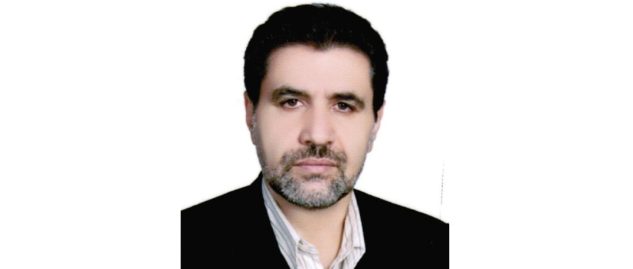
Prof Mohammad Alikhani, Department of Microbiology, Hamadan University
Specifically, I sought an explanation for retracting a ‘hypothesis’, but I did not receive a response.
This silence is damning.
Retraction is a serious step, historically reserved for cases of fraud or clear ethical misconduct. But here, no such claim was made—nor could one be substantiated.
The journal simply erased the paper, offering no transparent justification, no engagement with the scientific process, and no accountability.
In fact, it violated the very guidelines that journals are supposed to follow.
The Committee on Publication Ethics (COPE) advises that publications should only be retracted if they contain seriously flawed or fabricated data, or plagiarism that cannot be addressed through a correction.
Hazan’s paper was transparent about its speculative nature. In a January 2023 tweet, Hazan challenged her critics.
“It’s a hypothesis. PROVE ME WRONG,” she wrote.
After all, that’s the essence of science. But the journal’s decision to retract sends a message that even theoretical propositions are now intolerable.
Having tasted blood, Hazan’s critics kept digging. In January 2025, Future Microbiology retracted another of her studies—this one examining ivermectin-based multidrug therapy.
Hazan, her co-author Australian immunologist Dr. Robert L. Clancy, and others strongly disputed the decision after the journal failed to conduct a meaningful investigation into the alleged data integrity issues.
The irony is palpable.
While pundits argued over ivermectin’s efficacy during the pandemic, Hazan was one of the few actually doing the hard work to test its effects—collecting data, proposing mechanisms, engaging with the science. And yet she’s the one being silenced!
Which begs the question – why?
Is there professional jealousy in the microbiome space? Are pharmaceutical companies, threatened by low-cost alternatives like ivermectin, pressuring journals to kill competing narratives?
If so, the Securities and Exchange Commission (SEC) should investigate. Suppressing research that could affect investor decisions—by inflating the perceived value of antivirals or vaccines—could amount to securities fraud.
While there’s no definitive evidence, the pattern is hard to ignore: two retractions, no clear misconduct, and a growing campaign to discredit a scientist whose work challenges a profitable status quo.
Whether coordinated or not, the outcome is the same – the erasure of inconvenient data.
The spinelessness of journals in these episodes is unmistakable. Why do they capitulate so readily?
Just follow the money.
Many journals are financially entangled with the pharmaceutical industry—relying on drug ads, sponsorships, and profitable reprint sales. That financial tether distorts editorial independence.
Editors, often underpaid and overstretched, are understandably risk-averse. They fear litigation. They fear social media outrage. They fear becoming the next target.
Pharmaceutical companies, meanwhile, don’t hesitate to use legal threats to silence dissent because their pockets are deep—as in the case of Covaxin.
In July 2024, Bharat Biotech International Limited sued 11 authors—six of them students—and the editor of Drug Safety, Nitin Joshi, over a peer-reviewed article questioning the safety of their Covaxin vaccine.
The journal, under legal duress, retracted the paper. The authors were left to fend for themselves.
Journals are supposed to stand on principle. But, increasingly, they serve as enforcers of orthodoxy—vulnerable to financial pressure and online activists.
Let’s be honest, the trolls are part of the strategy. Anonymous complaints, often from individuals with no expertise, are weaponised to trigger retractions and smear reputations.
That’s not peer review. That’s mob rule.
The SEC must take a closer look at this ecosystem. If research is being suppressed to protect corporate revenue or manipulate investor confidence, that’s not just unethical—it’s illegal.
During his presidential campaign, Robert F. Kennedy Jr. addressed this very issue, declaring that journals colluding with pharmaceutical companies might be subject to charges under the Racketeer Influenced and Corrupt Organizations (RICO) Act.
“We’re gonna… file some racketeering lawsuits if you don’t start telling the truth in your journals,” he warned in 2023. It was provocative, yes—but it struck a chord with those of us watching the machinery of science betray its mission.
Retractions have become so casually executed, they’ve lost all meaning. What was once a mark of serious fraud is now a tool of reputational management.
Today, many papers are retracted not because they’re wrong, but because they’re inconvenient.
How else can one explain the demonstrably fraudulent studies funded by industry that remain published?
Whistleblower Dr. Peter Wilmshurst has spent years trying to get the MIST trial retracted—published in Circulation. It’s riddled with false claims, undeclared conflicts, and unreported adverse events, yet the journal continues to protect it.
This exposes the rot. These decisions have nothing to do with science.
They are political, financial, and reputational tools—used selectively to punish dissent.
There’s a growing list of researchers penalised—not for bad science, but for exploring uncomfortable truths.
Journals must reclaim their role as platforms for robust scientific debate. COPE must enforce its standards, not just cite them. Editors must be held accountable for vague or retaliatory retractions. And if corporate suppression of research is distorting public markets, then the SEC must act.
Because what I’m witnessing isn’t scientific curiosity—it’s narrative control. And the death of curiosity is the death of science itself.
Diana Panchenko: How Zelensky Dismantled Ukraine’s Democracy
Glenn Diesen | April 13, 2025
Diana Panchenko was Ukraine’s “journalist of the year” in 2020 and ranked as the 7th most influential woman in the country. Panchenko has been a critic of both Russia’s invasion of Ukraine and Zelensky’s destruction of democracy in Ukraine.
Follow Prof. Glenn Diesen:
Substack: https://glenndiesen.substack.com/
The fix is in for new Air Force F-47 — and so is the failure
By Andrew Cockburn | Responsible Statecraft | April 7, 2025
If and when it finally comes to be written decades from now, an honest history of the F-47 “fighter” recently unveiled by President Trump will doubtless have much to say about the heroic lobbying campaign that garnered the $20 billion development contract for Boeing, the corporation that has become a byword for program disasters (see the KC-46 tanker, the Starliner spacecraft, the 737 MAX airliner, not to mention the T-7 trainer.)
Boeing, which is due to face trial in June on well-merited federal charges of criminal fraud, was clearly in line for a bailout. But such succor was by no means inevitable given recent doubts from Air Force officials about proceeding with another manned fighter program at all.
“You’ve never seen anything like this,” said Trump in the March Oval Office ceremony announcing the contract award.
Well, of course we have, most obviously in recent times with the ill-starred F-35. Recall that in 2001 the Pentagon announced that the F-35 program would cost $200 billion and would enter service in 2008. Almost a quarter century later, acquisition costs have doubled, the total program price is nudging $2 trillion, and engineers are still struggling to make the thing work properly.
Thus, succeeding chapters of the F-47’s history will likely have to cover the galloping cost overruns, unfulfilled technological promises, ever-lengthening schedule shortfalls, and ultimate production cancellation when only a portion of the force had been built.
There seems little risk in predicting the F-47 — “a beautiful number,” said the 47th president — will follow the same dollar-strewn path. As Trump truthfully remarked, “we can’t tell you the price.” And don’t imagine that, if the development phase reveals that the program can’t fulfill any or most of its projected requirements, the Air Force will call it a day and kill the program. The official Air Force press release accompanying the announcement states: “This phase will produce a small number of test aircraft for evaluation. The contract also includes competitively priced options for low-rate initial production.”
In other words, the fix is in. “Low rate initial production” means that subcontracts will be spread across the political landscape, ensuring the creation of an unstoppable lobby preventing any future effort to strangle this boondoggle in its cradle.
For confirmation, look only at the F-35, 1,000 or so copies of which were cranked out before Lockheed got the go-ahead for full-scale production. In confident anticipation that nothing will interrupt the production cycle, Boeing has invested a reported $2 billion in expanding production facilities at its St. Louis, Missouri, plant, where production of the F-15EX (a costly version of the venerable F-15, originally gold-plated to sell to the Qataris) is due to end this year.
Extolling the plane’s advertised virtues, Trump singled out its presumed invisibility to radar. “America’s enemies will never see it coming,” he said.
Stealth has indeed been the holy grail of aerospace development ever since the days when Jimmy Carter sought to kill the B-1 bomber program in favor of the F-117 stealth bomber. (We did of course end up buying both.) Claims for this technology appeared to be justified when Lockheed’s F-117 diminutive bomber was advertised as having effortlessly penetrated Iraqi air defenses undetected on the first night of the 1991 Gulf War.
Only later did a GAO report reveal that in fact the planes had required the protection of a fleet of electronic warfare planes, and they missed most of their assigned targets, and furthermore failed to destroy Saddam’s air-defense network as claimed.
In the 1999 Kosovo war, the Serbs managed to knock down one F-117 and severely damage another using clever tactics and a modified ancient Soviet SAM missile system. Nowadays both the Chinese and Russians claim to have developed technologies to detect stealth intruders — there are even claims that the Chinese system could passively employ signals from Elon Musk’s SpaceX Starlink satellite array!
Nevertheless, the F-47 designers have clearly prioritized stealth, despite the fact that obligatory features, such as carrying all bombs and missiles internally, enlarge the fuselage. Hence the large nose-on profile, apparent even in the uninformative images so far released. This militates against aerodynamic performance and maneuverability, unfortunate deficiencies for a fighter.
Such carping aside, the most notable feature of the F-47 program is that it will purportedly not fly alone, but be accompanied by unmanned Collaborative Combat Aircraft, or drones, “as many as you want,” according to Trump. The Air Force plans to buy 1,000 of them, at around $30 million a pop.
Under the overall direction of the F-47 pilot, they will in theory at least be able to engage enemy planes, attack targets on the ground, or perform reconnaissance. Two contractors, General Atomics and Anduril, are already competing for the initial CCA contract and have been displaying mockups of their candidates at trade shows since last year while hurling insults at each other via social media and the trade press.
“Anduril is the Theranos of defense,” jibed General Atomics spokesman Mark Brinkley during the Air Force Association jamboree in Washington D.C. last September, referencing the infamous Palo Alto startup that fraudulently claimed to perform comprehensive medical diagnostics from a single drop of blood. Both contestants are supposed to put prototypes in the air this summer.
Pentagon insiders are not impressed either with the concept or at least progress to date. One veteran observer of technologically ambitious programs suggested to me that the Air Force staff officers supervising the CCA program may be easy prey for the contractors.
“They’re not nearly skeptical enough about General Atomics or Anduril. I don’t see any of the skepticism they should be exhibiting for pouring out this kind of money,” the observer said.
Hopefully, these glib enthusiasts will be mulling the problems associated with the software required to enable an F-47 “quarterback” pilot to oversee the operations of the wingmen drones. After all, their peers in the F-35 program are still struggling with “Technology Refresh-3,” the latest (failing) effort to make the plane’s software work adequately. Mulling other inevitable problems facing an F-47 in combat, such as surviving enemy efforts “to find you, track you, and kill you” before getting into position to deploy the unmanned aircraft with their missile loads
“I don’t know why we’re doing it, I don’t get it,” the observer concluded.
Last December, then-Air Force Secretary Frank Kendall suggested that the Air Force might not be able to afford a next-generation fighter as well as the collaborative drone, in addition to a next-generation refueling tanker, and that “we have to get somewhat creative…to meet the threat.” As it turned out, no creativity at all was required, as the history books will most assuredly record.
How Big Pharma Weaves Its Web
By Kim Witczak | Brownstone Institute | April 5, 2025
Inever set out to be an advocate. I wasn’t a doctor, scientist, or policy expert. I was just a regular person who, like so many, blindly trusted that our healthcare system was designed to protect us.
But life has a way of pulling us into the arena when we least expect it.
After the tragic and unexpected loss of my husband Woody to the antidepressant Zoloft he was prescribed for insomnia, I was thrust into a world I never imagined—one where medicine wasn’t solely about healing, but deeply entangled in a system that prioritizes profit over safety, buries harms, and keeps the public in the dark.
For over two decades, I’ve had a front-row seat to how this system truly operates—not the illusion of rigorous oversight we see in medical journals or glossy pharmaceutical ads, but the reality of how industry influence is woven into every stage.
I’ve met with regulators, testified before the FDA and Congress, filed a wrongful death and failure-to-warn lawsuit against Pfizer, and earned a seat on the FDA’s Psychopharmacologic Drugs Advisory Committee as a consumer representative.
I’ve also spoken at and participated in global conferences like Selling Sickness, Too Much Medicine, and the Harms in Medicine meeting in Erice, Italy—where some of the world’s leading experts acknowledge what few in mainstream medicine dare to say:
Our healthcare system isn’t about health—it’s about business.
And in this business, harm isn’t an accident. It’s built into the system.
The more I uncovered, the more I realized:
We aren’t just patients. We are customers.
And we are all trapped in Big Pharma’s spiderweb of influence.
The Spiderweb of Influence
The more I learned, the more I saw just how deeply embedded the pharmaceutical industry is—not just in drug development and marketing but in every corner of our healthcare system.
That’s why I created the Big Pharma Spider Web of Influence—to visually map out how the system is designed not to prioritize health but to sell sickness while minimizing, downplaying, or outright hiding harms.
From clinical trial design to regulatory approval, from direct-to-consumer advertising to medical education, from controlling medical journals to silencing dissenting voices, the industry has built an intricate and self-reinforcing web—one that traps doctors, patients, and even regulators in a cycle of pharmaceutical dependence.
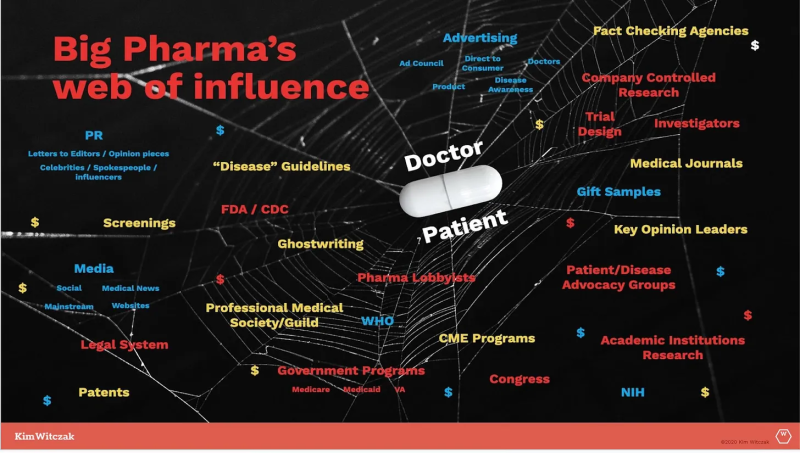
How the Web Works
- Clinical trials are often designed, funded, and controlled by the very companies that stand to profit. They manipulate data to exaggerate benefits and obscure risks, ensuring that negative results are buried, spun, or never published at all.
- Regulatory agencies like the FDA are deeply entangled with the industry they’re supposed to oversee. More than 50% of the FDA’s budget comes from industry-paid user fees, and a revolving door ensures that many key decision-makers come from—and later return to—pharmaceutical companies.
- Medical journals depend on pharmaceutical funding through advertising, reprint sales, and industry-sponsored studies—severely limiting independent scrutiny of drug safety. Many studies are ghostwritten or crafted by paid “key opinion leaders” (KOLs) who serve as pharma’s trusted messengers.
- Doctors receive education through industry-funded programs, learning “best practices” based on treatment guidelines crafted by the very system that profits from overprescription.
- Patient advocacy groups, once independent grassroots organizations, have been co-opted by industry money, ensuring that the loudest voices often serve pharma’s interests rather than patients’ needs. I call them “astroturf” patient groups—they look like real grassroots organizations, but they’re anything but.
- Screenings and guidelines continuously expand the definitions of disease, turning more people into lifelong customers.
This isn’t about one bad actor or isolated corruption—it’s a systemic issue. The entire structure is designed to push more drugs onto the market, medicalize normal human experiences, and only acknowledge harm when it becomes too big to ignore.
It’s a brilliant business model—but a catastrophic public health strategy.
“To Sell to Everyone:” The Business Model of Medicine
If this sounds like a conspiracy, consider the bold admission made by Henry Gadsden, former CEO of Merck, in a 1976 interview with Fortune Magazine:
“The problem we have had is limiting the potential of drugs to sick people. We could be more like Wrigley’s Gum…it has long been my dream to make drugs for healthy people. To sell to everyone.”
– Former Merck CEO Henry Gadsden
Let that sink in.
This wasn’t about curing disease—it was about expanding markets. Gadsden’s vision wasn’t just to treat illness, but to medicalize everyday life—creating a cradle-to-grave model where every person, healthy or sick, became a customer for life. Just like selling a variety of gum—something for everyone. Juicy Fruit, Big Red, Doublemint, Spearmint, and so on.
And that’s exactly what happened.
Today, we live in a system where:
- Everyday emotions—sadness, worry, shyness—are rebranded as medical conditions requiring treatment.
- Preventive medicine often means lifelong prescriptions, not lifestyle changes.
- Drugs are marketed to the “worried well”, turning normal human experiences into diagnoses.
This isn’t just theory—it’s well documented. In Selling Sickness: How the World’s Biggest Pharmaceutical Companies Are Turning Us All into Patients, Ray Moynihan and Alan Cassels expose how pharmaceutical companies create diseases, expand diagnostic criteria, and convince the public that normal life experiences require medical intervention.
The goal?
Make medication the default—not the last resort.
Harms Are Always an Afterthought
Harms from medication are not rare, nor are they unexpected.
But in this system, they are treated as acceptable collateral damage—something to be dealt with only after the damage is done, after lives are lost or forever changed.
I’ve sat in FDA Advisory Committee meetings, reviewing new drug applications, and have seen firsthand how safety concerns are often dismissed in favor of “innovation” or “unmet medical need.”
I’ve heard industry representatives and advisory committee members argue that safety signals can be addressed post-market, meaning after a drug is already in circulation and causing harm or a required REMS (Risk Evaluation and Mitigation Strategies) program upon approval.
But by the time post-market safety issues are acknowledged, it’s often too late.
We’ve seen this play out over and over:
- Opioids—marketed as “non-addictive” and pushed aggressively onto patients, leading to an epidemic of addiction and death.
- SSRIs and antidepressants—long linked to increased risks of suicide and violence, particularly in young people, yet downplayed or dismissed for decades. Other hidden harms include withdrawal syndromes and Post-SSRI Sexual Dysfunction (PSSD), conditions that many patients were never warned about.
- Antipsychotics—widely prescribed for off-label use, leading to severe metabolic and neurological side effects.
- Covid-19 vaccines—an experimental mRNA platform rushed to market, mandated, and imposed on society despite limited long-term safety data and growing concerns over harms.
Every time, the pattern is the same:
The industry sells the benefits while downplaying the risks—until those risks become too big to ignore.
By then, the drug is a blockbuster, billions have been made, and the system moves on to the next new “breakthrough.”
More Than Degrees: The Truth of Lived Experience
One of the biggest lessons I’ve learned in this fight is that real-world experience matters just as much as credentials.
Over the years, I’ve been invited to speak at medical schools, PhD programs, and universities, thanks to brave academics willing to challenge the narrative. I share my journey as an accidental advocate—someone who didn’t have a medical degree but discovered America’s broken drug system the hard way.
But let’s be honest—the medical world is driven by credentials. Or, as I like to say, the alphabet soup.
At conferences, attendees wear name tags listing their titles—MD, PhD, JD, MPH. It’s a quick way to size someone up, to assess credibility before even speaking. And I’ve seen it happen: people glance at my name tag, see no impressive letters after my name, and walk right by.
Years ago, I was speaking at the Preventing Overdiagnosis Conference and noticed my badge read: Kim Witczak, BA.
I was horrified. Was that really necessary? Did my name tag need to remind everyone that I only had a BA?
Later, I was telling the story to a doctor friend, and he laughed.
“Next time, tell them BA stands for Bad Ass.”
And he was right.
Because real expertise doesn’t always come from an advanced degree—it comes from lived experience, from asking the right questions, from refusing to accept the status quo.
The Counterargument: But Don’t We Need Experts?
Of course, some will argue that only experts with MDs and PhDs should be trusted to shape healthcare policy.
But that assumes that the system they operate in is free from bias, conflicts of interest, or financial incentives.
The reality is that many of those with the most letters after their names are also the ones benefiting from pharma funding—whether through consulting fees, research grants, or advisory roles.
Meanwhile, patients and their families—the ones living with the consequences—are too often ignored.
That needs to change.
Asking Better Questions: Reclaiming Our Power
If there’s one thing I’ve learned on this journey, it’s this: no one is coming to save us. The institutions meant to protect us are too entangled in the web to act with true independence.
My late husband, Woody, used to say: “Follow the money.” And when you do, the truth becomes impossible to ignore. Pharmaceutical profits—not patient well-being—drive the system. That’s why the only way to create real change is through awareness, transparency, and fundamentally shifting how we think about medicine and health.
That starts with asking better questions:
- Who funded this research?
- Does this person or institution have financial ties, intellectual bias, or self-interest that could impact their recommendations?
- Who benefits from this treatment?
- What aren’t we being told?
- What are the long-term consequences of this drug or intervention?
- Are there safer, non-drug alternatives being ignored because they aren’t profitable?
But asking the right questions isn’t enough.
We have to stop outsourcing our health to a system built on financial incentives and guided by corporate interests.
We must demand full transparency, challenge the status quo, and recognize that sometimes the best medicine isn’t a pill but a deeper understanding of what our bodies truly need.
Because once you see the web, you can’t unsee it.
And once you recognize how deeply medicine has been shaped by profit, you’ll realize the most important question isn’t just “What can I take?”—it’s “Who benefits if I do?”
Final Thoughts: Tearing Down the Web
I never wanted to be in this fight, but once you see the web, you can’t unsee it. That’s why I continue to speak out, to challenge the system, and to push for real accountability.
Because the stakes aren’t theoretical. They’re deeply personal.
For me, this fight began over two decades ago with Woody. But for countless others, it begins the moment they or someone they love is caught in the web—trusting a system that was never truly designed to protect them.
It’s time to tear down the web.
And it starts with seeing it for what it really is.
Featured Video
NEW FAUCI EMAILS EXPOSE ATTACK ON NATURAL IMMUNITY
or go to
Aletho News Archives – Video-Images
From the Archives
Elite Western universities are a corrupt, parasitic empire
Instead of high-quality education, these institutions are fostering a global neo-feudal system reminiscent of the British Raj
By Dr. Mathew Maavak | RT | May 30, 2025
In a move that has ignited a global uproar, US President Donald Trump banned international students from Harvard University, citing “national security” and ideological infiltration. The decision, which has been widely condemned by academics and foreign governments alike, apparently threatens to undermine America’s “intellectual leadership and soft power.” At stake is not just Harvard’s global appeal, but the very premise of open academic exchange that has long defined elite higher education in the US.
But exactly how ‘open’ is Harvard’s admissions process? Every year, highly qualified students – many with top-tier SAT or GMAT test scores – are rejected, often with little explanation. Critics argue that behind the prestigious Ivy League brand lies an opaque system shaped by legacy preferences, DEI imperatives, geopolitical interests, and outright bribes. George Soros, for instance, once pledged $1 billion to open up elite university admissions to drones who would read from his Open Society script.
China’s swift condemnation of Trump’s policy added a layer of geopolitical irony to the debate. Why would Beijing feign concern for “America’s international standing” amid a bitter trade war? The international standing of US universities has long been tarnished by a woke psychosis which spread like cancer to all branches of the government.
So, what was behind China’s latest gripe? ... continue
Blog Roll
Recent Comments
seversonebcfb985d9 on Villains of Judea: Philip Esfo… loongtip on Report warns that ‘Jewish terr… Craig Nelms on New study shows that toxic gas… loongtip on A Funny Thing Happened on the… loongtip on EU free trade pact on hold as… John Edward Kendrick on Regime Change In Iran Is The F… Bill Francis on Australia Passes New Hate Spee… seversonebcfb985d9 on Australia Passes New Hate Spee… Bill Francis on Britain’s AI Policing Plan Tur… loongtip on Miami Beach Resident Questione… loongtip on Israeli agricultural export co… loongtip on The War On Free Speech In Aust…


 Aletho News
- Ireland Moves to Legalize Spyware Use by Police
- NEW FAUCI EMAILS EXPOSE ATTACK ON NATURAL IMMUNITY
- Why is the US using Jordan as the main base in possible Iran attack?
- American Academy of Pediatrics Hit With Federal RICO Lawsuit for Vaccine Safety Fraud
- Mom Tells Trump: Dumping Sewage Sludge on Farmland Won’t Make America Healthy Again
- NIAID Funds Gain-of-Function Study Engineering Novel Influenza Viruses
- Villains of Judea: Philip Esformes and the Largest Healthcare Fraud in American History
- US sanctions Popular Conference for Palestinians Abroad over alleged Hamas links
- You reap what you sow: Ukraine’s blackout is Zelensky’s failure
- Ukraine Blackouts Caused by Zelensky’s Terrorist Attacks on Russia
- If Americans Knew
- Oppose Israel’s Abuses While You Still Can
- UNRWA Heads Tell Ha’aretz: ‘We Don’t Radicalize Palestinians – Their Lived Existence Does’
- Plans Call for “New Rafah” Built in Israel’s Image — Without Palestinians
- Posing as priest, reporter is spat at many times, highlighting anti-Christian sentiment in Israel
- Leaked Documents: “Planned Community” in Rafah Would Force Palestinians Into Israeli Panopticon
- ‘Permits of Humiliation’: How Israel Strangles Christian Education in Jerusalem
- “The world sees death, destruction and injustice – and they see dollar signs” – Not a ceasefire Day 105
- War criminal Netanyahu kills 11 in Gaza, joins Board of Peace – Not a ceasefire Day 104
- Another baby dies of cold in Gaza, as Rafah crossing remains locked down – Not a ceasefire Day 103
- Brutal Beatings, Arson, and Impunity: A Palestinian Plant Nursery Becomes a Target for Settler Pogroms
- No Tricks Zone
- New Study: Sea Levels Rose 20 Times The Modern Rate During The Roman Warm Period
- As German Gas Storage Dips Dangerously Low…Shortage Hardly Avoidable
- New Study: Brazil’s Relative Sea Level Was 2+ Meters Higher And SSTs 3-4°C Warmer 6000 Years Ago
- Philosopher Schopenhauer: Climate Science Certainty Stems From Stupidity, Ignorance
- New Study: Species Extinction Rates Declining Since 1980 – ‘Climate Change Is Not An Important Threat’
- Denmark Places Climate Protection Above Animal Welfare, Poisoning And Culling Cows
- New Study: Greenland Was 3-7°C Warmer And Far Less Glaciated Than Today 6000-8000 Years Ago
- German Media Report That Current Frigid Weather Can Be Explained By Arctic Warming!
- Berlin Blackout Shows Germany’s $5 Trillion Green Scheme Is “Left-Green Ideological Pipe Dream”
- Modeling Error In Estimating How Clouds Affect Climate Is 8700% Larger Than Alleged CO2 Forcing
 Aletho News