Video confirms Israeli troops fired three tank shells at Gaza’s Nasser Hospital
The Cradle | August 28, 2025
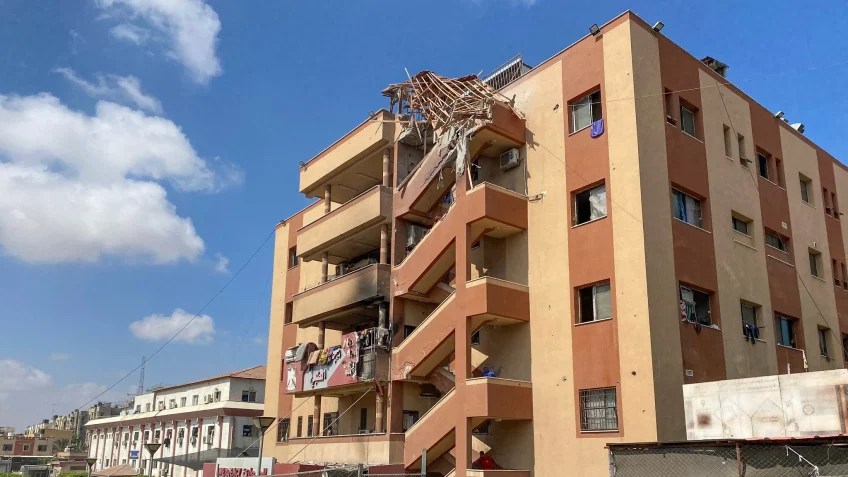
New video shows that a double-tap attack carried out by Israeli forces on a hospital in Gaza involved three separate munitions, one in the first strike and two in the second, CNN reported on 28 August.
The 25 August attack on Nasser Hospital in the southern city of Khan Yunis in Gaza killed 22 people, including health workers, emergency response crews, and five journalists.
On the morning of the strike, Reuters journalist Hossam al-Masri was operating a live stream from an exterior stairwell on the top floor of the Nasser Hospital.
At 10:09 am, an Israeli munition targeted Masri, killing him and one other man.
Journalists and rescue workers rushed to the stairwell to look for survivors.
At 10:17 am, as rescue workers were carrying a body down the stairwell, a second and third Israeli strike, just milliseconds apart, targeted the stairwell, killing 20 more.
“One shell hits the staircase where first responders had gathered; a fraction of a second later, another explodes at almost the same spot,” CNN wrote, describing the video.
N.R. Jenzen-Jones, director of Armament Research Services, said the munitions were likely fired by two separate tanks at the same time.
“The impact of two projectiles at nearly the exact same moment suggests two tanks may have fired on the target simultaneously,” Jenzen-Jones told CNN. “It’s hard to read too much into that, but it suggests a more carefully coordinated attack, rather than a single vehicle firing at a ‘target of opportunity.’ Modern tank guns, supported by the sensors and systems of modern tanks, are very precise.”
“In gruesome video filmed after the second and third strikes, scores of bodies can be seen on the staircase on both the top floor and the floor below,” CNN added.
The five journalists killed were Reuters journalist Hossam al-Masri, Al Jazeera cameraman Mohammad Salama, Independent Arabia and AP journalist Maryam Abu Daqqa, and NBC journalist Muath Abu Taha.
Journalist Ahmad Abu Aziz later succumbed to his wounds, which were sustained in the same attack.
The fourth-floor balcony and staircase area of the Nasser Hospital was frequently used as a live camera position by Reuters, AP, and other international media outlets. Journalists also gathered in the stairwell to try to get cell service to upload their reports.
Israeli military spokespersons have repeatedly changed their story to deflect blame for the apparently deliberate killings at Nasser Medical Complex, the only hospital still operating in southern Gaza.
As international condemnation grew following the strike, the Israeli military claimed that Hamas was using a camera on the stairwell to monitor its troop movements, even though only the Reuters camera was present.
The military then claimed that six of the those killed were “terrorists” from Hamas or Palestinian Islamic Jihad (PIJ).
However, Sky News examined social media pages and obituaries for each of these six people and found that only one, Omar Abu Teim, had been a resistance fighter.
An Israeli security official speaking with CNN acknowledged that Israeli forces received authorization to strike the camera with a drone. The source said Israeli forces instead fired two tank shells, the first at the camera and the second at the crowd that gathered on the stairwell to help with rescue efforts.
“The shocking thing is why the Israeli air forces hit the journalists on the fourth floor. And when we sent our humanitarian staff to rescue them, they attacked them again,” stated Dr Mohammed Saqer, Director of Nursing at Nasser Hospital.
“What’s the point of this? Why do you insist on killing us? We are working in a humanitarian area, in a health facility. We should be protected according to international regulations and rules,” Saqer added.
The Palestinian ambassador to the UN told the Security Council on Thursday that the Israeli military’s recent “double tap” strike on the Gaza hospital was “premeditated.”
“The second strike on Nasser hospital was a premeditated strike on medics and journalists who arrived at the scene after the first strike,” stated Riyad Mansour.
“While the world demands a permanent ceasefire, Israel continues its crimes. Where else is the killing of so many civilians and journalists tolerated?”
The Oklahoma City Bombing: A Lesson in Government Lawlessness
By William L. Anderson • Ludwig von Mises Institute • August 14, 2025
[Blowback: The Untold Story of the FBI and the Oklahoma City Bombing by Margaret Roberts. (Bombardier Books, 2025; 399 pp.)]
On the morning of April 19, 1995, a truck bomb exploded outside the Alfred P. Murrah Federal Building in Oklahoma City, killing 168 people, including 19 children at a day care center in the building, and injuring hundreds more. As the FBI website tells readers, a single ex-soldier named Timothy McVeigh acted alone, being motivated by anti-government sentiment that came in the aftermath of the Waco massacre two years earlier.
The FBI version, of course, is the official version and the one repeated in history books and in the New York Times. McVeigh was aided by Terry Nichols, who helped him build a large fertilizer bomb that they placed in a rented Ryder truck that was destroyed in the explosion. Michael Fortier gave McVeigh some logistic help, but no one else was involved, just the “lone wolf” McVeigh and a couple of friends.
Using the organization’s vast investigative resources, the FBI quickly solved the case in the style of a Dick Wolf production. McVeigh had already been arrested when an alert policeman 90 miles away from Oklahoma City saw his getaway car had no license plate, so the FBI was able to get their man in custody. The original investigation also had McVeigh accompanied by a man called John Doe #2 when he rented the Ryder truck in Kansas, but soon afterward, the FBI insisted there had been no JD2, that he was a figment of the imaginations of everyone who said they saw him with McVeigh.
We know the rest of the story. McVeigh was convicted in federal court and executed at the federal prison in Terre Haute, Indiana, in 2001. Nichols was convicted both in federal court and Oklahoma state court, but juries deadlocked on the death penalty, so he is serving a life sentence at the fed’s so-called supermax prison in Florence, Colorado. Fortier, who provided valuable information to the FBI, pleaded to lesser charges and served a short prison sentence before he and his wife were whisked away in the government’s witness protection program. Case closed.
The FBI’s narrative was useful on two fronts. First, the organization was able to regain prestige after the disaster at Waco by supposedly solving this horrendous crime quickly. Second, by being able to frame the bombing as the result of anti-government rhetoric that had spread following Waco and the 1992 FBI killings at Ruby Ridge, Idaho, the Bill Clinton administration, the Democratic Party, and their allies in the legacy media were able to use the bombing to claim that Republicans and other critics of the administration were responsible for the mayhem.
But what if the FBI’s narrative is untrue and that several people were involved in the bombing, some of whom being either government informers or FBI agents who infiltrated right-wing paramilitary groups? Furthermore, what if federal agents lied about the existence of the so-called John Doe #2, and what if they lied about many other things tied to the bombing and subsequent investigation?
Margaret Roberts—the former news director of “America’s Most Wanted” and a celebrated journalist—has published a new book, Blowback, which successfully challenges the FBI and establishment media narratives about the case. Through interviews with people involved in the case and working with citizen journalists that didn’t buy the official line, Roberts has successfully presented alternative storylines that, frankly, are much more believable than what the FBI has given us, and presents her case in a book that is logical and easy to follow—no mean feat, given just how complicated the story really is.
Blowback involves two related events. The first, of course, is the Oklahoma City bombing. The second is the murder of Kenneth Trentadue in his cell at the Oklahoma City Federal Transfer Center August 21, 1995—a death the FBI to this day insists was a suicide. Thanks to a dogged investigation by Kenneth’s brother, Jesse—a former collegiate track star and respected attorney living in Salt Lake City—the FBI’s narratives on Kenneth’s death and the Oklahoma City bombing were exposed as lies, although that investigation came at great cost to Jesse.
(I have corresponded with Jesse Trentadue for many years and was familiar with his investigation, but until I read Blowback, I had not realized just how extensive that investigation has been.)
In the FBI’s account of the bombing, the agency claims:
The bombing was quickly solved, but the investigation turned out to be one of the most exhaustive in FBI history.
No stone was left unturned to make sure every clue was found and all the culprits identified.
The first statement is partially untrue and the second is an outright falsehood. Not only did the FBI refuse to follow leads provided by eyewitness testimony, but the agency threatened law-abiding citizens with prison when their own investigations began to prove that the FBI was lying. Unfortunately, because federal prosecutors, federal judges, and FBI agents have worked together to rig the outcomes, most of the principals in the Oklahoma City bombing will never have to worry about being brought to justice.
As pointed out earlier, the book deals both with the bombing and the Trentadue murder and then ties them together. We begin with the Trentadue case.
Kenneth Trentadue—a military veteran who in earlier years robbed banks to help pay for a drug habit—was picked up near the Mexican border in August 1995, on a parole violation and sent to Oklahoma City. In calls to his wife and family, Trentadue seemed hopeful and told them he would be released soon. However, on August 21, officials called the family to tell them that Kenneth had hanged himself in his cell, and that the prison officials wanted to cremate his body.
Kenneth’s mother and brother, Jesse, insisted on the feds shipping the body to them so they could have a proper burial. When the body was examined at the funeral home in Southern California, however, they were shocked. Roberts writes:
…Kenneth’s wife, mother, and sister had the staff remove heavy makeup applied by the prison to Kenneth’s body. Underneath, they discovered bruises, his cracked skull, possible stun gun burns, and an incision indicating that someone had cut Kenneth’s throat. (p. 12)
None of this made sense at first to the Trentadues. Kenneth was scheduled to be released soon and his calls to family members had been upbeat. Furthermore, the sheer logistics of how he could have hung himself with the bedsheet defied laws of physics. Furthermore, why did he have injuries and an incision in his neck, and why (as they found out later) was his jail cell splattered in blood?
Only later—thanks to a tip from journalist J.D. Cash of the McCurtain Daily Gazette in Idabel, Oklahoma—were they led to a possible explanation. Kenneth was seen as a near-dead ringer for the elusive JD2 right down to a tattoo that matched what the other alleged bomber had on his forearm. Had FBI investigators believed he was the second bomber, they certainly would have tried to get that information out of him through an “enhanced” interrogation at Oklahoma City. Instead, they allegedly killed him and then staged a fake suicide.
Whatever happened, Jesse Trentadue found that the FBI stonewalled him, and then FBI agents even met with federal prosecutors and other US Department of Justice officials to see if they could bring criminal charges of “obstruction of justice” against him, with one of those officials being then Deputy Attorney General Eric Holder, who was in charge of the cover up of Kenneth Trentadue’s murder that was called the “Trentadue Mission” by the Department of Justice, and later would serve as President Barack Obama’s US Attorney General. The DOJ under Janet Reno would not only ignore (and then harass) Trentadue; it also gave similar treatment to Sen. Orrin Hatch of Utah, who had seen the photos of Kenneth’s body and was demanding answers.
At least Hatch and Trentadue were able to create enough noise to have the DOJ go through the motions of an investigation of Kenneth’s death, but ultimately Holder made sure that there would be no indictment—and no US Senate investigation of the affair. Despite the physical impossibility that Kenneth managed to hang himself in a “suicide proof” cell after inflicting extensive physical trauma on himself, including slashing his own throat, the Holder directed grand jury conclusion was suicide.
(The Trentadue family later won a civil lawsuit in 2001 against the DOJ regarding Kenneth’s death, but the DOJ already has declared it never will pay a judgment to the family no matter what the courts have ruled.)
As Jesse investigated his brother’s death, he joined with others such as Cash to look closely into the FBI’s account of the Oklahoma City bombing and found that the government’s narrative was untrue. While the government and the legacy media insisted that their Timothy McVeigh “lone wolf” account was correct, Jesse and others found that the Clinton White House had been running a shadowy operation named PATCON (for “Patriot Conspiracy) to infiltrate the groups tied to the Christian Identity movement. Their investigation into PATCON would ultimately lead them to the Oklahoma City bombing itself.
Begun by the George H.W. Bush administration in 1991, PATCON supposedly was created to protect Americans from right-wing violence. However, PATCON soon would take on the characteristics of the FBI’s notorious COINTELPRO program of the 1960s and 70s to deal with threats from violent left-wing groups like the Weathermen, as well as the domestic spying programs against alleged Muslim extremists after the 9/11 attacks. As writers like James Bovard have noted, these infiltration programs have taken on a life of their own as those tied to the FBI would seek to enhance their importance by plotting many violent events that the programs allegedly were supposed to prevent.
Far from the Oklahoma City bombing being the work of the amateurish McVeigh and Nichols, Roberts describes in Blowback how she and others were able to trace McVeigh and his associates to the FBI-infiltrated groups that would provide support to him while he drifted into places like Elohim City in Oklahoma—a gathering place for disaffected people who had come to believe the US Government was corrupt and needed to be overthrown. In fact, as Roberts and others have documented, several FBI and ATF (Bureau of Alcohol, Tobacco, and Firearms) informants warned their handlers of the bombing plot or something similar, yet the feds did not act.
Not surprisingly, it seems that the FBI almost welcomed such attacks, as they legitimized the original purpose of PATCON and other programs. Writing about FBI informant John Matthews—who himself had contact with people who allegedly knew about the plans for the bombing—Roberts says:
As he [Matthews] and Jesse talked, Matthews revealed his disillusionment about PATCON. “It seems like the FBI was more interested in inciting violence than preventing it,” Matthews said. He had signed on believing his mission was to monitor the Ku Klux Klan and neo-Nazi groups on the far-right fringe. However, Matthews came to believe that inciting violence was the fundamental mission of PATCON. (p. 322)
Roberts—following the lead of Trentadue and others—has raised an important question: If the Oklahoma City bombing was not a “lone wolf” operation but rather was tied to shadowy figures, including embedded FBI agents and confidential informers, was it simply a case of a plot that got out of hand? Were people on the inside supposed to put the brakes on the whole operation, but something went wrong?
These questions are not easily answered, and Roberts does not take the conspiratorial plunge to claim that Oklahoma City was somehow a neatly-packaged FBI inside operation. Indeed, there is no way to prove such an allegation and Roberts, Trentadue, and others who have investigated the bombing have not taken that step into the abyss.
However, one can truthfully say that no person benefitted more from the Oklahoma City bombing than President Clinton. Just five months before, he and the Democratic Party had suffered huge setbacks as the Republicans had captured the US House of Representatives for the first time in 40 years and took the Senate, as voters were driven in part by anger at well-publicized abuses by the federal government and especially the Clinton White House.
By tying the bombing to any criticism of the federal government and of Clinton himself, the president was able to channel public anger about the blast toward conservative government critics in general and elected Republicans in particular, and Clinton and the Democrats were able to reverse some of their political losses the next year, as voters returned Clinton to the White House. As the San Francisco Examiner reported:
…under the heading “How to use extremism as issue against Republicans,” [Clinton adviser Dick] Morris told Clinton that “direct accusations” of extremism wouldn’t work because the Republicans were not, in fact, extremists. Rather, Morris recommended what he called the “ricochet theory.” Clinton would “stimulate national concern over extremism and terror,” and then, “when issue is at top of national agenda, suspicion naturally gravitates to Republicans.”
James Bovard also wrote that, following the bombing, his books on government spending and abuses of citizens were interpreted as welcoming things like Oklahoma City, including a hostile review of Freedom in Chains by the Los Angeles Times, with the reviewer declaring:
In Bovard’s defensive and disingenuous discussion of the bombing of the Oklahoma City federal building, he reveals that he is aware of the possible consequences of his words.
Blowback will not be reviewed in publications like The New York Times Book Review or the New York Review of (Each Other’s) Books (or if they are reviewed in those publications, the reviews will be hostile), but it is a book that one should read if only to rediscover the hard truth that government agents at all levels will lie and probably get away with it. While one imagines that the usual suspects will dismiss this book as a collection of falsehoods and wild conspiracies, the truth is that Roberts has managed to chronicle not only a sorry chapter in the modern history of US governance, but also has highlighted the fact that there are still heroic citizens among us doing their duty even when those charged with protecting citizens and enforcing the rule of law refuse to do so.
Germany Has More Information on Nord Stream Blasts Than Revealed – Russia’s UN Mission
Sputnik – 27.08.2025
Germany has more information on the explosions of the Nord Stream gas pipelines than it reveals, Russian Deputy Permanent Representative Dmitry Polyansky said on Tuesday.
“German authorities clearly do have much more information about what happened, much more than the information that they have been giving to the media in small doses,” Polyansky stated.
Russia calls on German authorities “not to try and cover up the truth, but to demonstrate genuine cooperation and to provide the information in full,” the diplomat added.
“We believe that the situation around Nord Stream sabotage is very important. It is developing in a wrong way,” Polyanskiy said at the UN Security Council stakeout area.
Russia is being “kept in the dark” on the Nord Stream sabotage investigation and on the latest arrest of a suspect, he added.
Russia considers the version that amateur divers exploded the pipelines ” questionable,” the deputy envoy said.
Polyansky has warned that inaction sends signals and instructions to terrorists worldwide, prompting the repetition of such infrastructure attacks.
Last week, Italian carabinieri arrested a 49-year-old Ukrainian national on suspicion of leading a sabotage group that bombed the Nord Stream gas pipeline in the Baltic Sea. The suspect was arrested at Germany’s request after coming to Italy on vacation with his family.
Russia ‘has no faith’ in German Nord Stream sabotage probe
RT | August 27, 2025
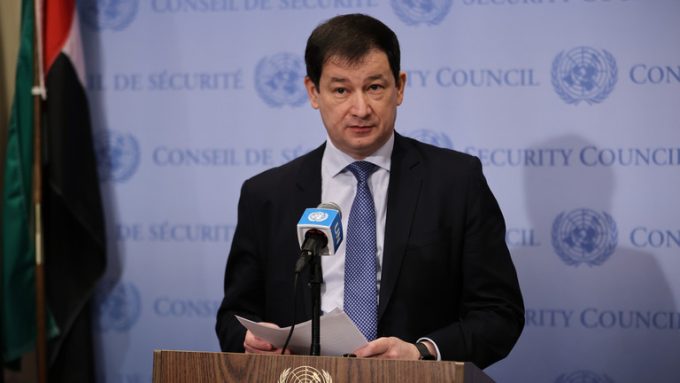
Russia has accused German authorities of attempting to cover up the true circumstances of the 2022 Nord Stream pipeline explosions by blaming private “scapegoats” for what Moscow insists was likely a state-sponsored operation.
Earlier this month, a Ukrainian veteran was arrested in Italy at Germany’s request on suspicion of belonging to a small group behind the sabotage in the Baltic Sea. Russian Deputy Ambassador to the UN Dmitry Polyansky said on Monday that Moscow mistrusts Berlin’s motives.
Speaking at a UN Security Council meeting, Polyansky criticized what he described as a lack of transparency from German officials and frequent leaks to the press. He argued that Germany and its allies are steering public opinion toward a narrative in which “amateur” operatives driven by personal motives carried out the blasts, thereby clearing governments of any involvement.
“We have no faith in Berlin’s findings,” Polyansky said. “We urge the German authorities not to try to hide the truth behind a veil of secrecy, but to demonstrate a willingness to engage in genuine cooperation and reveal all the information at their disposal.”
He reminded the council that media reports about the yacht Andromeda and rogue Ukrainian operatives first surfaced in 2023, after US investigative journalist Seymour Hersh alleged that President Joe Biden’s administration orchestrated the attack. Hersh’s claims, Polyansky said, aligned with expert assessments that the operation required nation-state resources. The US has rejected the journalist’s accusations.
Polyansky described the theory promoted in Western media as resembling a spy novel, adding that it conveniently distracts from the possibility that the sabotage – which “directly harmed German economic and political interests” – could have been carried out by a NATO ally.
The Nord Stream pipelines were built to transport Russian natural gas directly to Germany. After the Ukraine conflict escalated in 2022, Berlin ended imports of Russian energy, ending decades of reliance on the fuel for economic growth.
These “Iran Bombings” in Australia Are a Setup for Further False Flags
By Andrew Anglin | Daily Stormer | August 26, 2025
As we get ready for the next round of the Iran war, Western governments need to come up with an explanation as to why we are going to war for Israel beyond “shielding Jews from blowback as a result of their genocide in Gaza.”
Enter: “Iranian backed terror.”
You have probably heard the claim in various Jewish media that Iran is a “state-backer of terrorism.” However, this claim, when dissected, does not refer to ISIS or al-Qeada style terrorism, but rather is a reference to Iran’s funding of various militias around the Middle East. For example, the media categorizes Iran’s support for Hezbollah and the Houthis as “backing terrorism.” Whatever you think of the militias Iran does back, this is something different than blowing up buildings or running people over with a big truck in Europe or America.
There have been some shaky claims of Iran sponsoring bombings in Saudi and Argentina in the 1990s, and in 2012, India said Iranians tried to kill an Israeli diplomat with a bomb. The same guy was accused of doing a bombing in Thailand, however, and after being extradited to Thailand from Malaysia, the Thai authorities refused to charge him and released him to Iran.
All of this is to say that this week’s accusations by the Australian Prime Minister that the Iranian government was behind the bombing of a synagogue and a Jewish deli in Australia are something different than we’ve seen before. The Melbourne synagogue was bombed on December 6th of last year. The Sydney deli, which burned up last October, was not even originally investigated as foul play by the cops. No one died in either “attack.”
As those who study the Jews are all too aware, Jewish very often commit hate crimes against themselves. Even before terrorism was a thing, Jews would regularly burn down their own properties to collect insurance money. The term “Jewish lightning” is in the lexicon to refer to anyone burning down their own property for the insurance, as Jews were so famous for this behavior (similarly to how a non-Jewish person viewed as greedy might be called “Shylock”).
It’s maybe worth noting that since the bombing, the rabbi from the synagogue in question has been on a donations tour, and with the announcement it was Iran, is on another tour asking for even more free money.
What’s more, if these were indeed intentional attacks from someone, their timing, in the middle of the Gaza genocide, could mean that literally anyone could be responsible. Although Moslems would probably be more likely, it is not hard to imagine a non-Moslem outraged at the scenes on TikTok doing something like this. On its face, blaming the Iranian Revolutionary Guard Corps for the bombing of a random deli and synagogue in Australia sounds ridiculous, and it seems they would be some of the last people on the list of suspects.
Even if you believe Iran was responsible for the attacks they were accused of in the 1990s and then the 2012 events, those were all political or military targets. The idea of a serious military organization ordering random restaurants and synagogues in a random country blown up is silly. Iran is capable of sending rockets at Israel, they are capable of cutting off Israel’s access to shipping lanes. It makes no sense they would sink to street level random acts of random violence, which would not need any central planning.
Further, the fact that the firebombing would not need to be centrally planned means that it would be impossible to trace it to Iranian authorities. What would even be the claim? That they found text messages from a general in the IRGC? And that it took them nearly a year to find these text messages?
The identities of the accused have not been revealed, but the claim by the government is that they are street criminals who also committed other crimes who the IRGC hired through their networks to carry out these very serious firebombings that had no political purpose and where no one even died.
Here’s the Thing
This announcement by the weasel Prime Minister Anthony Albanese that Iran ordered the bombing of these random civilian locations in a white, Western country has been a top news story all over the world. Although no one is likely to look too deeply into it, because again, literally no one died, this gets the idea that “Iran is funding terrorist attacks on civilians” into the minds of the masses of the people.
With the attacks on the World Trade Center in 2001, the FBI had previously coordinated an attempted bombing of the same buildings in 1993 as a kind of precursor. Then you had the second attack, with the airplanes, lead to an invasion of Afghanistan. Then, in the weeks and months after 9/11, someone was sending Anthrax all around to media and government people, which is when the media/government started talking about Iraq as working with the al-Qeada. In 2008, they then said it was actually some random white guy that did the anthrax. He was, conveniently, already dead.
This is the note that was with the Anthrax sent to Tom Brokaw:
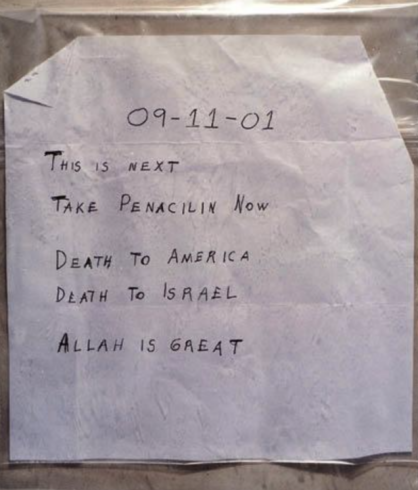
The FBI never really bothered to try to explain why a white guy would do that.
But refencing the Anthrax mailed around, Colin (pronuonced “Colon” for some reason) Powell brought white powder as a prop to his UN presentation on the need to. invade Iraq,
There was an ongoing triangle of disinformation and fake news passing from the New York Times, Dick Cheney, and Fox News. They were accusing Saddam of all kinds of things, just like they are with Iran right now, but the core of it was Cheney’s “Sinister Nexus of Terror.”
You still had the steam from 9/11 when they did the Iraq war less than two years later. But with Iran now, are we really supposed to do a massive war because of October 7th? Or is there going to need to be something more significant to motivate people?
I would very much expect that this Australian cafe and synagogue is the beginning of something bigger. With 9/11 and the Anthrax, when people were saying “oh they can’t be false flags, the government wouldn’t do that,” it was like “well, they started fake wars and killed like a million people, so why wouldn’t they blow up some buildings or send some powders?”
Looking back now, it feels like the “12 Day War” (the term they are using for the back and forth between Israel and Iran that involved Trump also dropping bombs on Iran) was a kind of probing event, where they wanted to see what Iran had. I think they were possibly a bit surprised at how capable Iran was. They were not the superpower capable of wiping Israel off the map that Scott Ritter had told everyone they were, but they were able to hit Israel and with missiles and cause real damage, and it was going to be impossible for Israel to keep going much longer before they were running out of their interceptor missiles.
Israel’s view on Iran has not changed, they are saying they are going to attack them again, and there is no way they can do it without the US, and involving the US on a large scale will probably take more than some all caps Trump tweets.
Obviously, at this point, huge numbers of people are going to be saying “false flag,” even if it is something on the scale of 9/11. So I don’t claim to know how this would work. If I was Donald Trump, I’d be worried the Mossad was going to assassinate me and blame Iran. That would get all the Trump supporters behind a war and it would leave leftists confused as to how they should feel, because if they said “false flag,” they might feel like they were defending Trump. Also, there has already been a “foreshadowing” event where Trump was allegedly scraped on the ear. And, I would add, that a personality like Trump getting shot would just generally be a bigger shock to the world than a bombing, which we’ve all already seen a lot of.
Or maybe I’m wrong and there is already enough noise and there doesn’t need to be some big event to justify further action in Iran. I guess the issue is that I don’t know really what it would take. If there needed to be an Iraq style invasion, then you would need some pretty big justification. But no one understands the logistics of this war. Like I said, I think the first thing was a test as much as anything.
But there are a lot of questions.
If there was large scale bombing of Tehran, could they do a “regime change” from the air? If so, could they keep shooting rockets without a “regime”? How stable is the domestic situation in the country? How do the Arabs, Azeris, and other minorities feel? (I think we know how the Kurds feel, lol. But the others, who knows? I don’t know. I do know that Persians are barely half the population.) Are there terrorists that can be moved in through Azerbaijan? What happened all those terrorists in Syria now that their guy is in charge? Can they be moved through Iraq and into Iran? It’s much more mountainous in Iran.
This is a lot different than when ISIS was able to just roll around wherever on the flats in the Iraqi/Syrian desert.
The mountains also provide a lot of cover for hydra-type break-off groups to operate if the government falls or is at least incapable of operating normally. I’m sure they have caves loaded up with drones and cheap missiles, and as we saw in the 12 Day War, the cost of shooting them down is too much for Israel to absorb. Even if they have infinity money from Big Daddy Donald, they can’t make that many interceptor missiles.
Those are some of the big questions. There are more questions. I’m sure the people within intelligence have better estimates than I would be able to come up with as to what the answers to these questions might be, but I think even US/Israeli intelligence can’t give definite answers regarding most of these factors.
What I do think is that slowly drilling away at it until the armor cracks like they did with Syria is not a potential strategy given that unlike Syria, Iran can hit Israel with missiles. So I’m sure what Bibi wants is the full force of the US military to be brought to bear in a full invasion type war. And for that to happen, it is most likely that something very extreme would have to precipitate it.
The Illusion of Israeli Self Sufficiency in Intelligence
By José Niño | The Libertarian Institute | August 26, 2025
Casual onlookers salivate at the supposed brilliance of Israel’s intelligence services. From Mossad’s assassinations abroad to daring sabotage campaigns in hostile territory, the Jewish state has been elevated in popular imagination as a scrappy David with unmatched cunning, capable of pulling off operations that leave even world powers like the United States in awe. Books, films, and mainstream pundits reinforce this myth, presenting Israel’s intelligence machine as self-sufficient and independent.
But when one peels back the layers, the narrative quickly unravels. Israel’s most celebrated operations—from targeted killings in Europe to sabotage inside Iran—were rarely the product of Israeli ingenuity alone. They relied on cooperation with the CIA, NSA cyberwarfare expertise, European intelligence networks, and even covert collaboration with Arab regimes that publicly denounce Israel while privately working with it. Much like its dependence on U.S. military aid and diplomatic cover, Israel’s intelligence empire survives not through independence but through reliance on Western logistics, intelligence sharing, and political approval. What is sold as the story of a bootstrapping nation is a case study in multinational complicity.
According to investigative reporting by Israeli journalists Melman and Ronen Bergman, Israel’s intelligence community relied heavily on intelligence partnerships with Western and allied nations to conduct clandestine activities in foreign territories.
The foundation of this intelligence cooperation traces back to the aftermath of the 1972 Munich Olympics massacre. According to Dr. Aviva Guttmann’s research, which Melman has covered extensively, the Berne Club—a secret European intelligence alliance founded in 1969—provided crucial support for Israel’s subsequent assassination campaign against Palestinian operatives. This multinational intelligence network initially included Switzerland, West Germany, France, the United Kingdom, Italy, Luxembourg, Austria, the Netherlands, and Belgium, and later expanded to include the United States, Canada, Australia, and other nations. Through an encrypted communication system called “Kilowatt,” thousands of cables were exchanged among eighteen Western intelligence services after the system was established in 1971. The network functioned as a secret clearinghouse for raw intelligence. Shared reports contained the locations of safe houses, vehicle registrations, the movements of high-value targets, updates on Palestinian guerrilla tactics, and analytical assessments, all of which provided Israel with crucial operational support for its clandestine operations.
Direct American involvement in Israeli operations became particularly evident during the George W. Bush administration. The February 2008 assassination of Hezbollah commander Imad Mughniyeh in Damascus was reportedly approved by President Bush himself after being briefed by then-CIA Director Michael Hayden. This was not merely intelligence sharing but active operational participation. “The Mossad agent would ID Mughniyeh, and the CIA man would press the remote control,” a Newsweek report noted. The CIA designed and built the bomb that killed Mughniyeh, tested it at a secret facility in North Carolina, and smuggled it into Syria through Jordan, while Mossad provided intelligence and logistical support.
When it came to confronting Iran’s nuclear program, the United States and Israel collaborated on the creation of the Stuxnet computer virus in a joint operation codenamed “Olympic Games.” The malware was designed to sabotage centrifuges at Iran’s Natanz uranium enrichment facility. According to Ronen Bergman, the virus was developed with input from Israeli cybersecurity experts alongside the U.S. National Security Agency. This operation represented a quadrilateral effort involving the CIA, NSA, Mossad, and Israel’s military intelligence agency, AMAN. It was conceived during the administrations of W. Bush and Israeli Prime Minister Ehud Olmert and ultimately executed in 2010 under President Barack Obama and Prime Minister Benjamin Netanyahu.
The scope of American involvement extended to Israel’s broader targeted killing policies. Ronen Bergman revealed that during Ariel Sharon’s tenure, a secret deal was struck with then-U.S. National Security Advisor Condoleezza Rice that committed Israel to “significantly reduce the construction of new settlements in exchange for American backing of the war with the Palestinians and of Israel’s targeted killing policy” of high-value Palestinian figures.
American intelligence cooperation facilitated Israel’s campaign against Iran’s nuclear program, with Melman documenting extensive Western knowledge of and potential involvement in the assassination of Iranian nuclear scientists between 2007-2012. The Obama administration was aware of the assassination campaign carried out by the Mujahideen-e-Khalq (MEK) terrorist organization, which was being financed, armed, and trained by Mossad. Joint Special Operations Command (JSOC) reportedly trained MEK members starting in 2005, and U.S. intelligence was providing crucial information for these operations. As one former senior intelligence official told investigative journalist Seymour Hersh, “the United States is now providing the intelligence” for assassinations carried out “primarily by MEK through liaison with the Israelis.”
Israeli dependency on foreign support went beyond Western allies to include collaborationist elements in the Arab world. Bergman revealed extensive details about Mossad’s regional cooperation during Meir Dagan’s tenure (2002-2010) as director of the Mossad, including secret partnerships with Arab intelligence services that publicly condemned Israel while privately cooperating with it. These arrangements involved joint operations with countries that “share more or less the same set of interests” despite public hostility, coordination in counter-terrorism operations across the Middle East, and partnerships that enabled many operations attributed solely to Mossad.
The pattern of foreign dependence continues in contemporary operations. An August 2025 ProPublica report by Yossi Melman and fellow journalist Dan Raviv showcased Israel’s enlistment of Iranian dissidents for executing missions inside Iran during “Operation Rising Lion.” They specifically outlined Mossad’s strategic shift from using Israeli personnel to cultivating a “foreign legion” of Iranian and regional operatives to carry out activities ranging from support functions to covert action.
This pattern of intelligence reporting by Melman and Bergman reveals that Israel’s reputation for independent intelligence capabilities obscures a reality of extensive foreign dependence, particularly on Western intelligence services, for conducting operations that extend Israeli influence and security interests globally.
Far from being a model of independence, Israel’s intelligence record underscores how deeply its operations are embedded in Western power structures. The myths of self-sufficiency and unmatched brilliance collapse under the weight of evidence: Mossad’s reach is extended only because Washington, European capitals, and even regional neighbors provide the pipelines of intelligence, technology, and manpower that make its operations possible.
The true scandal lies not in Israel’s dependency but in the willingness of other nations to abet its destabilizing campaigns by supplying the bombs, intelligence streams, and diplomatic cover that allow Tel Aviv to operate with impunity. To strip away the mythology is to confront the uncomfortable truth that Israel’s “miraculous” intelligence victories are collective endeavors, outsourced across continents, exposing not a triumph of independence but a parasitic reliance on collaborators who enable its shadow wars.
The West seemingly preparing to remove Zelensky from power
By Ahmed Adel | August 26, 2025
The arrest of a Ukrainian citizen in Italy, suspected of sabotage of the Nord Stream pipeline, confirms that Kiev was an accomplice, but not the one who ordered the act. Nonetheless, the launch of the investigation serves a broader political goal – the removal of Volodymyr Zelensky from power. The plan could be to appoint a new leader, both for the West and for possible negotiations with Russia, given that Zelensky’s presidential mandate expired in May 2024 and he cannot be a signatory to a peace agreement with Moscow.
An investigation by American journalist Seymour Hersh found that American divers placed explosives under the Nord Stream gas pipeline during the NATO exercise Baltops in the summer of 2022, and that it was activated three months later by the Norwegians. According to Hersh, then-US President Joe Biden had a clear motive for sabotaging the Nord Stream pipeline — fear that Germany, facing serious economic difficulties due to the war in Ukraine, might lift sanctions on Russia and resume imports of Russian gas.
The journalist said this is what prompted Washington to organize the sabotage of the gas pipeline connecting Russia and Germany. The West did not want to allow this, which ultimately plunged Germany into economic and political chaos.
Russian President Vladimir Putin also believes that the sabotage of the Nord Stream and Nord Stream 2 gas pipelines was carried out by American intelligence services, specifically the CIA. According to him, in such cases, one should always look for who has a motive and who can carry it out. There may be many interested parties, but not everyone can dive to the bottom of the Baltic Sea and carry out that explosion. It is the combination of these components – who had a motive and who is able to carry it out – that, according to Putin, reveals who is really behind the sabotage.
After a period of lull, the issue of sabotage on the Nord Stream gas pipelines has returned to the spotlight following the announcement by German prosecutors that Ukrainian citizen Sergey Kuznetsov was suspected of involvement in the underwater explosions that damaged the gas pipelines near the Danish island of Bornholm in September 2022. Following the arrest of the retired captain of the Armed Forces of Ukraine, who also served in the Security Service of Ukraine, Italian media reported that he is connected to another major incident – the explosions on an oil tanker in Savona in February, which was allegedly transporting oil of Russian origin.
Sahra Wagenknecht, leader of the German party “Sahra Wagenknecht Alliance,” after the arrest of Kuznetsov, stated that the German parliament should convene a commission to investigate the sabotage of the Nord Stream gas pipelines. She noted that this act of state terrorism must be thoroughly investigated and that Zelensky should also testify before the commission.
Wagenknecht believes it is absurd to think that the arrested Ukrainian citizen and his accomplices acted without the knowledge of the Ukrainian leadership and the Biden administration. She added that it is unacceptable that Germany is providing substantial aid to Ukraine without seeking an explanation from Zelensky, and that consideration should be given to possible compensation for damages.
The question of whether United States President Donald Trump will take advantage of the Nord Stream controversy and launch an investigation against Biden remains an exclusively internal matter for the US. Trump has the opportunity to conduct his own investigations and deal with his domestic adversaries, whom he claims stole his victory in the 2020 elections. However, this does not affect the situation in Ukraine for the time being, as the West continues to support Ukraine with weapons, intelligence, and other assistance.
The fate of the Nord Stream gas pipeline is one of the key and most complex issues in the energy and geopolitical spheres. With Trump’s pragmatic approach, there is a possibility of cooperation between Russia and the US. Russia does not refuse to continue gas supplies to the European Union. However, the bloc continues to feel the consequences of its own policy, such as suffering economically by still purchasing Russian energy at inflated prices from third parties like India and Azerbaijan.
Nord Stream 1 and Nord Stream 2, which directly connect Russia to Germany via the Baltic Sea, have not been operational since 2022 and remain damaged, but they are still strategic infrastructure that American investors have set their sights on. These pipelines could become the property of American investors, which would enable the US to control Russian gas supplies to Europe. Although Europe is currently refusing Russian gas, it may be forced to buy it in the future, albeit at a significant margin, to the benefit of the Americans.
Ahmed Adel is a Cairo-based geopolitics and political economy researcher.
Friedrich Merz Are You Nuts?
By William Dunkerley | Ron Paul Institute | August 25, 2025
Do you know what German Chancellor Merz did?
Amidst serious negotiations to end the bloody and destructive Ukraine war, this guy’s putting up a veritable roadblock right in front of progress.
Here’s what it is: Merz was in Washington along with several other European leaders for a Ukraine meeting with President Trump. When it came Merz’s turn to talk he expressed, “I can’t imagine that the next meeting would take place without a ceasefire.”
Clearly no one in the world with a heart would like to see the fighting go on. So at first glance a ceasefire seems like a quick fix. But Merz’s strongly spoken statement had strings. Pointedly, he wants to delay peace talks until a ceasefire takes hold.
There’s one enormous obstacle to that. There’s a strong reason why Russian President Putin would be very reluctant to accept Merz’s condition. It’s simple to understand:
Earlier in Ukraine hostilities both Germany and France achieved Putin’s agreement to a ceasefire while a negotiated peace agreement was underway. The efforts were called the Minsk Accords.
Doesn’t that sound like what Merz is proposing now? But it turned out in an unexpected way.
After a period of ceasefire and negotiating, the German and French leaders publically admitted they had tricked Putin into the ceasefire. They confessed their real objective was not peace. It was to buy time to better equip Ukraine to fight Russia.
You may have heard the idiom, “once fooled, twice shy.” It’s a modern version of the Old English translation from Aesop’s Fables that goes, “He that hath ben ones begyled by somme other ought to kepe hym wel fro[m] the same.” That’s a position that Putin might well take with regard to Germany’s current leader. Why should he be trusted, particularly when it comes to a ceasefire?
Certainly Merz must know the background of this. He would be remiss not to understand that a ceasefire without a peace agreement might be as unattainable as the end of a rainbow. That’s what leads me to suspect that Merz must be deliberately sabotaging the peace process, as would be any other European leader who joins him in his emphatic request.
It is time to address the significant real obstacles that must be faced if a settlement of territory is to take place.
For instance, Ukrainian President Zelensky claims that his constitution is a roadblock to such a settlement. But he is only partly right.
It is true that the Ukrainian constitution does not allow him to divide territory. He also offered another roadblock in that even changing the constitution would not be a simple matter. It would even require an extensive public referendum he says.
He is right on both points. But he is wrong to represent them as ultimate roadblocks or even something that would result in much delay. In the past, Ukraine, in the view of its leaders, successfully negotiated a way to deal with problematic constitutional provisions that stood in its way.
This happened when leaders found it cumbersome to remove the democratically elected Viktor Yanukovych from the presidency. Some reports claimed he was impeached. But the votes weren’t there to do that according to the constitution. Other reports claimed that he removed himself by abandoning his office when he fled for his life amidst immediate threats. But the constitution wasn’t followed there either. Nonetheless, they got rid of Yanukovych.
Here’s how they did it. The Rada, Ukraine’s parliament, simply passed a resolution. It said that the current circumstance was threatening to Ukraine, a mass violation of citizens’ rights and freedom, and a circumstance of extreme urgency. As a result they removed Yanukovych while not observing the constitution.
Now, all Ukraine has to do is to repeat that technique. Is not the current circumstance threatening to Ukraine, a mass violation of citizens’ rights and freedom, and a circumstance of extreme urgency, too?
A straightforward resolution echoing the Rada reasoning above can authorize a reasonable and peaceful settlement of the Ukraine war that involves, as necessary, the trading of territory or the acknowledgment of certain changes that were made militarily. This approach will save lives, save homes, businesses, and infrastructure, and, indeed, save Ukraine. That truly would be standing with Ukraine and its people.
So it’s time to say no to Merz, throw him out of the planning group, if need be, so the more well-intentioned leaders can finally support peace in Ukraine expeditiously and once and for all.
Do you really believe a Ukrainian on a yacht took out Nord Stream?
RT | August 24, 2025
The Nord Stream pipeline bombing is back in the news after the recent arrest of a Ukrainian national, identified as Sergey Kuznetsov, at a resort in Italy. Kuznetsov is set to be extradited to Germany, where he will stand trial for allegedly coordinating a six-man sabotage team that blew up the pipelines.
It is the first arrest in a case widely viewed as the largest instance of industrial sabotage in Europe since World War II. Probes were launched by Denmark, Sweden and Germany, but the first two were ended with no suspects identified.
Russia, the majority owner of the pipeline, was not allowed to participate in any of the official probes and has consistently been denied access to the evidence.
It remains to be seen what emerges from the trial of Kuznetsov, but one thing seems clear: many questions remain about an event whose reverberations are being felt to this day. RT looks at why doubts persist nearly three years on.
What is the latest version being touted?
German prosecutors claim Kuznetsov led a six-person team on a yacht called the ‘Andromeda’, rented in the city of Rostock with forged papers. The group then allegedly managed to avoid detection in the heavily monitored Baltic Sea in order to plant the explosives at a depth of 70-80 meters.
This version of events bears a close resemblance to an account published nearly exactly a year ago in the Wall Street Journal. Mixing investigative journalism with cinematic flair, the WSJ told of a group of Ukrainians “buoyed by alcohol and patriotic fervor” who concocted a scheme to bring down the pipelines on a shoestring budget. Ukrainian leader Vladimir Zelensky supposedly initially approved the plan before changing his mind on advice from the CIA – but it was too late as the team had already gone incognito.
The WSJ report was, at the time, treated by many observers in the West as a definitive breakthrough in a case that had gone largely cold despite the efforts of investigators working on the official probes.
What has Russia said about the recent developments?
Russian officials have not publicly commented on the recent arrest of Kuznetsov, but Foreign Minister Sergey Lavrov previously ridiculed the idea that such an act of sabotage could have been carried out by a small team lacking the extensive training and support such a mission would require.
Commenting on the media reports about the Ukrainian group last September, Lavrov said: “Five people were sitting around drinking, having a laugh, and decided ‘Why don’t we blow up the Nord Stream pipelines?’ They had diving skills, allegedly hired a little boat, sailed to the place where the Nord Streams were passing, went down, planted explosives and detonated them.”
“If someone can actually believe this version, then it’s only people who are afraid of the truth and are trying to protect the criminal Kiev regime in any way possible,” the Russian top diplomat suggested.
What happened to the state actor theory?
Initial reactions by Western officials and commentators almost universally pointed to the likelihood of a state actor – with Russia generally assumed to be behind the sabotage.
Just days after the attack, the editorial board of the Washington Post published an opinion piece warning the West to “prepare for more attacks” and explaining that this is the “kind of capability usually wielded by a state actor,” adding that “everyone suspects unofficially” that the perpetrator was Russia.
Yet, as the narrative shifted away from Russian culpability, the state actor theory began being downplayed in the Western media. Nevertheless, recent reports indicate that German prosecutors believe the operation required “military-level planning.”
Could such a small boat accommodate such powerful explosives?
A number of experts have expressed skepticism that a vessel the size of the ‘Andromeda’ (15 meters) could facilitate an operation involving such high-energy (RDX-HMX) explosives – four bombs weighing up to 27kg each. It’s not just a question of weight, but one of bulk and safety.
The limited space and lack of a cargo hold on such a yacht would have made transporting highly potent explosives impractical. Such material typically requires reinforced containers, lifting gear, and complex detonation systems – which would push the limits of what a small vessel could reasonably handle.
Many observers question whether the extensive diving gear, mixed-gas systems, and detonation and transport equipment – plus the explosives themselves – could have been carried and deployed all while maintaining cover as a casual sailing trip.
How practical is a 70-80 meter dive to plant explosives?
The logistics of such a deep technical dive have also elicited skepticism. Recreational scuba diving typically doesn’t go deeper than 40 meters.
This operation, entailing explosives placed on two pipelines 4km apart, is believed to have required four dives, each of which would have necessitated the boat being in place for roughly three hours, according to experts. Furthermore, such extended dives would have likely required a decompression chamber for the divers, which would be almost impossible to fit on a vessel the size of the ‘Andromeda’.
How could the Ukrainian team have managed to avoid detection?
Another one of the puzzles lingering around the sabotage is how an operation almost certainly requiring several days could be carried out in one of the most surveilled maritime regions in the world. This is particularly the case given that NATO naval and aerial patrols were heightened due to the conflict in Ukraine.
Nevertheless, despite the fact that even fishing boats are often tracked in the Baltic, NATO somehow failed to pick up on any unusual activity. If a six-person team on a small yacht really pulled this off undetected, it would imply a catastrophic failure of NATO surveillance – something many experts find hard to accept.
In June 2022, NATO conducted its BALTOPS exercises involving underwater operations near the site of the explosions. Veteran US journalist Seymour Hersh alleged that the exercise was used as a cover for planting remotely triggered explosives that were activated three months later.
In 6 years, have any healthy Alabama students died from Covid?
I’ve gone back through my Covid archives and want to make sure everyone remembers how ridiculous the school lockdowns were
By Bill Rice, Jr. | August 12, 2025
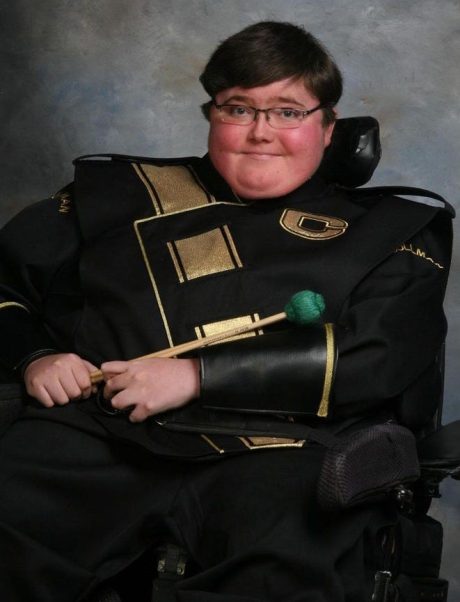
The late Will Fowler overcame serious disabilities to become an honor’s student and band member at Cullman High School. This young man was the only named K-12 student in Alabama I can find who reportedly died “from Covid.” The lone source is a Facebook post made by his cousin who said Will tested positive for Covid before his death in the second year of Covid.
I’m working on a story that will try to debunk a non-sensical and specious claim made by the Alabama Education Association that “sixty five” Alabama educators died from Covid in the fist 18 months of the pandemic.
While researching this story, I decided to take another stab at ascertainingwhat the real Covid mortality rate for Alabama students has been over the past six years.
***
According to Google AI, approximately 814,000 students attend K-12 public and private schools in my state every year.
Since approximately 374,000 students have graduated from K-12 schools in the last six years, this means approximately 1.2 million current and former Alabama students could have contracted and died from Covid in the past six years.
Regarding the Covid Infection Fatality Rate (IFR) for Alabama students, I have found only two students who may have reportedly died from Covid in the past five-plus years.
If one assumes that 85 percent of students have now contracted the original Covid or its many variants, this would mean that approximately 1 million Alabama students have already had a “case” of Covid.
If only two students (allegedly or reportedly) died from this disease, this translates to a COVID IFR for Alabama students of approximately 1-in-500,000 (0.0002 percent).
Alabama’s only known Covid student death had serious co-morbid conditions …
I should note that I researched these two Covid deaths and was able to come up with the name of only one former student who passed away “from Covid.”
On August 17, 2021, Will Fowler, who was going to be a senior at Cullman High School, passed away and, in a Facebook post, his cousin said Will had “tested positive for Covid.”
Will seems to have been an inspiring young man as he battled severe, life-altering medical conditions his entire life. He suffered from Muscular Dystrophy and was confined to a wheel chair and also, like many children with severe disabilities, was extremely heavy.
Per logic, I also deduced that Will had not contracted Covid from classmates or from anyone at his school as he died (presumably in the hospital) only five days after school had started at Cullman High (and, one assumes, must have been ill and not at school in the days before his death).
I also found one other quote from the superintendent of Birmingham City Schools who said a student at Jackson Olin High School had “died from Covid” but I could find no name or article providing any details about this student’s death.
This is par for the course
Indeed, in five-plus years researching Covid cases and victims, I’m struck by the almost universal absence of key medical details about alleged victims of Covid.
For example, readers seeking important information might be interested in learning when a victim first developed Covid symptoms. What were these symptoms? What was the period of time from the appearance of first symptoms to death? When did the victim(s) test positive for Covid? What treatment protocols did medical staff administer (or fail to administer)?
Were family members of victims present during hospital or ICU stays or were they kept away from their loved one?
I assume, at some point, most alleged Covid victims did “test positive” for Covid, but was it really Covid that caused their deaths?
Needless to say, I’d also like to know who did and didn’t get a Covid vaccine and, also, how many victims might have gotten a flu shot before they developed “flu-like symptoms.”
A key ‘Covid death’ with virtually no important details provided
An example of this lack of details would be the circumstances of the death of Robert Thacker, Jr., the only crew member of the USS Teddy Roosevelt air craft carrier who reportedly “died from Covid” after an “outbreak” on that ship in March and April 2020.
(Note: Positive antibody tests in late April 2020, showed that at least 60 percent of the crew of 4,800 had previously had Covid. A U.S. destroyer and a French aircraft carrier also had outbreaks at the same time with similar positive rates and no fatalities. The Covid IFR on these three vessels was approximately 1-in-4,500, which is 4.5x lower than the flu IFR of 1-in-1,000.)
While I’ve performed a diligent search, all I’ve learned is that this ordnance specialist tested positive for Covid on March 30th, 2020 was placed in quarantine quarters in Guam and was later “found unresponsive” in a wellness check (a couple of days after he’d been to the local hospital, where he’d been discharged).
To this day, no member of the public knows the full and comprehensive details of this 41-year-old crew member’s medical crisis, which is common with the vast majority of “Covid victims.” For me at least, it seems like the only sailor who died after “outbreaks” on three large Naval vessels should have been the focus of copious media attention.
One great oddity of “Covid cases” is the public almost never learns such details as it’s apparently taboo to ask such common-sense questions.
Expressed differently, if evidence exists that someone, perhaps, didn’t really directly die from Covid, this evidence isnot going to be revealed by corporate journalists or pubic health officials.
Disparate lethality numbers among the young and older …
I should also note that, via an email query, I asked the Alabama Department of Public Health (ADPH) media affairs spokesperson “how many Alabama students have died from Covid?” and was told this information was not available or the ADPH didn’t know – a non-answer which strikes me as extremely odd.
Maybe I imagined it, but I seem to recall a somewhat heated debate over whether school should be cancelled and how long schools should remain closed. It seems to me that a firm answer on the number of students who had died from Covid would be very important information for the public to know.
As it is, I’m left with the apparent conclusion that maybe just two Alabama K-12 students have died “from Covid” in the entire pandemic … although I’m not sure if Covid actually caused their deaths (because no reporter ever wrote an in-depth story on particulars of these cases).
Assuming these figures are correct and the deaths of these two students can only be explained by Covid, I still can ascertain the dramatic difference in Covid deaths among students and “educators.”
Approximately 65 educators allegedly died from Covid (out of 89,000 to 100,000 educators in our state). Only two students – out of 1.2 million – reportedly died from the same disease.
If educators were contracting Covid from students, they were contracting this disease from a virus that very possibly had a 0.0000 percent mortality rate for “healthy” students.
In Alabama, the simple mortality rate for “healthy” students seems to be 1-in-1.2 million (as Will Fowler had numerous life-altering medical conditions and could not have been considered a “healthy student.” For purposes of this illustration, I’m assuming the unknown other student might have been in perfect health before his/her death).
Context for a hypothetical ‘informed consent’ conversation …
Per Google AI, I learned that the probability a random citizen will be struck by lightning in a given five-year period is approximately 1-in-200,000
This would mean that “healthy” Alabama K-12 students were approximately five times more likely to be struck by lightning as they were to expire from Covid in the last five years.
This “context example” would seem to be very relevant in any “informed consent” conversation parents might have with doctors before getting their children vaccinated.
Doctor: “Mrs. Jones, I can tell you that your child has a 1-in-200,000 chance of being struck by lightning in the coming five years and an approximately 1-in-1-million chance of dying from Covid.
“Still, on advice of the American Pediatric Association, I strongly recommend your child get today’s shot and stay current with future boosters every year.”
Of course, it’s doubtful any APA dues-paying doctor will tell parents what their child’s chances of death from all causes will be in the next five years if they get this shot.
Or, even more likely, the chance a child might develop any serious adverse event(s) over the next five years if a child goes ahead and gets his “life-saving” injection.
As noted, in Alabama, I’m pretty sure I know the odds any healthy child will die from Covid is approximately 1-in-1-million.
The odds a vaccinated male child might develop myocarditis are maybe 1-in-17,000 to 1-in-34,000 (and this is just one life-threatening adverse event.)
As I’ve noted repeatedly, we now live in a “crazy world,” so my guess is that if many parents think they can reduce the odds their child might die from Covid from 1-in-1 million to 0-in-1-million, they are going to take their pediatrician’s advice and reduce those terrifying (sarc) odds.
Most parents will also never ask their doctor, “how many vaccinated people later died from Covid?”
If a bold parent did ask this question, the doctor would probably lie and reply “zero” and tell this inquisitive mother that the shots are “100-percent effective at preventing Covid deaths.”
Part 2 …
In my next story, I’m going to show that the vast majority of the 65 Alabama educators who allegedly died from Covid died in the fall of 2021 – well after most educators had already been vaccinated and, bizarrely, in the second year of this pandemic.
Also, I’ll show that all Alabama educators were wearing (mandatory) masks every day for seven hours, meaning most educators were allegedly double protected (mask and vaccines).
Part 2 of this story will also show that most of these educators clearly didn’t get Covid from their students.
In fact, I think almost all 65 probably died from a combination of iatrogenic hospital protocols, vaccine injuries and perhaps got sick and had to go to the “killing zones” (hospitals) after they’d gotten that year’s flu shot, which might explain many ILI and Covid symptoms.
I also think most teachers were NOT afraid of this virus. IMO, what clearly transpired was an orchestrated spin campaign originating from state and national teachers’ unions, which were key actors in a global Psy-Op designed to produce mass fear.
Students certainly faced no mortality risk from being in school. In fact, the only parents terrified of a virus that posed 0.000-percent mortality risk to their children must have been products of the intentionally dumbed-down education they’d once received in the same schools.
The good news is that some parents somehow got a quality education and could identify “Covid theater” fear-mongering when they saw it.
Russia requests UN Security Council meeting on Nord Stream sabotage
RT | August 24, 2025
Russia has requested an urgent UN Security Council meeting following the arrest of a Ukrainian man allegedly involved in the Nord Stream pipeline sabotage.
In September 2022, explosions disabled three of the four lines carrying Russian gas to Germany through the Baltic Sea. Moscow has repeatedly accused Germany and neighboring countries of delaying the investigation and excluding Russia from the probe.
“We will highlight the delays in the German investigation and the absence of transparency,” Russian Deputy Ambassador to the UN Dmitry Polyansky wrote on Telegram. He added that the meeting is scheduled for Tuesday.
On Thursday, Italian police detained a Ukrainian citizen, later identified in the media as former military officer Sergey Kuznetsov. Prosecutors allege he coordinated a team that rented a yacht and planted explosives on the pipelines using commercial diving gear.
German investigators reportedly believe a small group of Ukrainians was behind the attack, a claim Moscow dismissed as “ridiculous.”
Russian President Vladimir Putin suggested the US likely orchestrated the sabotage. Last year, Russia’s Foreign Intelligence Service claimed it had “credible information” that US and British agents were involved in the plot.
The CIA, Mossad, and Epstein: Unraveling the Intelligence Ties of the Maxwell Family
By Alan Macleod | MintPress News | August 22, 2025
With speculation mounting that Trump could pardon her, MintPress profiles the family of convicted sex trafficker Ghislaine Maxwell. From her media baron father, who acted as a high-level spy for Israel, her sister, working to push Tel Aviv’s interests in Silicon Valley, her brothers, who founded a dubious but highly influential anti-Islamic extremism think tank, and nephews in influential roles at the State Department and White House, the Maxwell clan have wide-ranging ties to U.S. and Israeli state power. This is their story.
Releasing Ghislaine, Burying the Epstein Files
Speculation is growing that Ghislaine Maxwell could soon be freed. Despite campaigning on the promise to release the Epstein Files, there are increasing signs that the Trump administration is considering pardoning the world’s most notorious convicted sex trafficker.
Last month, Trump (who contemplated the idea in his first term in office) repeatedly refused to rule out a pardon, stating to journalists that “I’m allowed to do it.” Just days later, Maxwell was transferred across states to a minimum-security facility in Bryan, Texas—a highly unusual practice. Neither women convicted of sex crimes nor those with more than 10 years remaining on their sentences are generally permitted to be transferred to such facilities. The move sparked equal measures of speculation and outrage.
The decision to relocate Maxwell came after somebody—potentially a source within her team itself—began leaking incriminating and embarrassing evidence linking Trump to Epstein. This included a birthday card Trump sent Epstein, featuring a hand-drawn nude woman, accompanied by the text: “Happy Birthday—and may every day be another wonderful secret.”
For years, Maxwell aided her partner Jeffrey Epstein in trafficking and raping girls and young women, creating a giant sex crime ring in the process. Epstein’s associates included billionaires, scientists, celebrities, and politicians, including President Trump, whom he considered his “closest friend.”
In 2021, two years after Epstein’s mysterious death in a Manhattan prison, Maxwell was found guilty of child sex trafficking offenses and was subsequently sentenced to 20 years in prison.
The news that Trump may soon free such an infamous criminal sent shockwaves through his base and drew charges of blatant corruption from the media. “Is there any reason to pardon Ghislaine Maxwell except to buy her silence?” ran the headline of one article in The Hill. Meanwhile, Tim Hogan, senior Democratic National Committee adviser, denounced what he claimed was a “government cover-up in real time.” “Donald Trump’s FBI, run by loyalist Kash Patel, redacted Trump’s name from the Epstein files—which have still not been released,” he said.
Robert Maxwell: Media Tycoon and Israeli Operative
While many of Ghislaine Maxwell’s crimes have come to light, less well-known are her family’s myriad connections to both the U.S. and Israeli national security states. Chief among these are those of her father, disgraced media baron and early tech entrepreneur, Robert Maxwell.
A Jewish refugee fleeing Hitler’s occupation of his native Czechoslovakia, Maxwell fought for Britain against Germany. After World War II, he used his Czech connections to help funnel arms to the nascent State of Israel, weapons that helped them win the 1948 war and carry out the Nakba, the ethnic cleansing of nearly 800,000 Palestinians.
Maxwell’s biographers, Gordon Thomas and Martin Dillon, write that he was first recruited by Israeli intelligence in the 1960s and began buying up Israeli tech corporations. Israel used these companies and their software to carry out spying and other clandestine operations around the globe.
Maxwell amassed a vast business empire of 350 companies, employing 16,000 people. He owned an array of newspapers, including The New York Daily News, Britain’s Daily Mirror, and Maariv of Israel, in addition to some of the world’s most influential book and scientific publishing houses.
With business power came political power. He was elected to the U.K. parliament in 1964 and counted U.S. Secretary of State Henry Kissinger and Soviet Premier Mikhail Gorbachev among his closest friends.
He used this influence to advance Israeli interests, selling Israeli intelligence-gathering software to Russia, the U.S., the U.K., and many other countries. This software included a secret Israeli backdoor that allowed the Israeli intelligence agency, Mossad, to tap into classified information gathered by governments and intelligence agencies around the world.
At the same time, it was expanding its espionage capabilities, Israel was developing a secret nuclear weapons program. This project was exposed by Israeli peace activist Mordechai Vanunu, who, in 1986, leaked evidence to the British press. Maxwell—one of Britain’s most powerful press barons—spied on Vanunu, passing photographs and other information to the Israeli Embassy—intelligence that led to Vanunu’s international abduction by Mossad, and his subsequent imprisonment.
His death was also surrounded by controversy, similar to Epstein’s. In 1991, his lifeless body was found in the ocean, in what authorities ruled a bizarre accident whereby the tycoon had fallen from his luxury yacht. To this day, his children are split on whether they think he was murdered.
The rumors that Maxwell had, for decades, been acting as an Israeli “superspy” were all but confirmed by the lavish state funeral he received in Jerusalem. His body was interred at the Mount of Olives, one of the holiest sites in Judaism, the spot from which Jesus is said to have ascended to heaven.
Virtually the entirety of elite Israeli society–both government and opposition–attended the event, including no fewer than six living heads of Israeli intelligence organizations. President Chaim Herzog himself performed the eulogy. Also speaking at the event was Prime Minister Yitzhak Shamir, who stated that “Robert Maxwell has done more for Israel than can today be said.”
In the United Kingdom, however, he is remembered less fondly. A man with a fearsome reputation, Maxwell ruled his media business with an iron fist, in a similar vein to Rupert Murdoch (another individual with extremely close links to Israel). After his death, it transpired that he had stolen more than $500 million from his employees’ pension fund to bail out other failing companies in his empire, leaving many of his workforce’s retirement plans in tatters. As the newspaper, The Scotsman, remarked ten years later in 2001:
If [Maxwell] was despised in life, he was hated in death when it emerged he had stolen 440 million [pounds] from the pension fund of Mirror Group Newspapers. He was, officially, the biggest thief in British criminal history.”
Isabel Maxwell: Israel’s Woman in Silicon Valley
Even before it had been published, Isabel Maxwell– Robert’s daughter and Ghislaine’s older sister– managed to obtain a copy of Thomas and Dillon’s biography. She immediately flew to Israel, The Times of London reported, where she showed it to a “family friend” and deputy director of Mossad, David Kimche. These actions did little to beat the book’s central allegation that her father was indeed a high-level Israeli “superspy.”
Isabel has enjoyed a long and successful career in the tech industry. In 1992, along with her twin sister, Christine, she founded a company that developed one of the internet’s first search engines.
After the pension scandal, however, she and her siblings shifted their focus to rebuilding every facet of their father’s collapsed business empire. The sisters sold the search engine, netting enormous profits.
As Israeli outlet Haaretz noted, in 2001, Isabel decided to dedicate her life to advancing the Jewish State’s interests, vowing to “work only on things involving Israel” as she “believes in Israel.” Described by former MintPress journalist and investigative reporter Whitney Webb as “Israel’s back door into Silicon Valley,” she has transformed herself into a key ambassador for the country in the tech world.
“Maxwell created a unique niche for herself in [tech] as a liaison between Israeli companies in the initial development stages and private angel investors in the U.S. At the same time, she helps U.S. companies interested in opening development centers in Israel,” wrote local business newspaper, Globes. “She lives intensively, including innumerable flights back and forth between Tel Aviv and San Francisco,” it added.
Israel is known to be the source of much of the world’s most controversial spyware and hacking tools, used by repressive governments the world over to surveil, harass, and even kill political opponents. This includes the notorious Pegasus software, used by the government of Saudi Arabia to track Washington Post journalist, Jamal Khashoggi, before assassinating him in Türkiye.
Isabel built on her father’s political connections. “My father was most influential in my life. He was a very accomplished man and achieved many of his goals during his life. I learned very much from him and have made many of his ways my own,” she said. This included developing intimate ties to a myriad of Israeli leaders, including Ehud Olmert and Ehud Barak, one of Jeffrey Epstein’s closest associates.
During the 2000s, she was a regular participant at the Herzliya Conference, an annual, closed-door gathering of the West’s most senior political, security and intelligence officials, in addition to being a “technology pioneer” at the World Economic Forum.
She was also placed on the board of the Israeli government-funded Shimon Peres Center for Peace and Innovation and the American Friends of the Yitzhak Rabin Center for Israel Studies, two organizations closely associated with those former Israeli prime ministers.
In 2001, she became the CEO of iCognito, taking the job, in her words, “because it [the company] is in Israel, and because of its technology.” The technology in question was aimed at keeping children safe online—highly ironic, given that her sister was actively trafficking and abusing minors throughout that period.
Isabel was a much more serious and accomplished individual than Ghislaine. As Haaretz noted:
While her younger sister, Ghislaine, makes the gossip columns after breakfasting with Bill Clinton or because of her ties with another close friend, Britain’s Prince Andrew, Isabel wants to show photos taken of herself with the grand mufti of Egypt, or with Bedouin in a tent, or of visits to a Gaza refugee camp.”
In 1997, Isabel was appointed president of the Israeli tech security firm, Commtouch. Thanks to her connections, Commtouch was able to secure investment from many of the most prominent players in Silicon Valley, including Bill Gates, a close associate of both the Maxwell family and Jeffrey Epstein himself.
Christine Maxwell: Funded by Israel?
Isabel’s twin sister, Christine, is no less accomplished. A veteran of the publishing and tech industries, she co-founded data analytics firm Chiliad. As CEO, she helped oversee the production of a massive “counterterrorism” database that the company sold to the FBI during the height of the War on Terror. The software helped the Bush administration crack down on Muslim Americans and tear down domestic civil liberties in the wake of 9/11 and the PATRIOT Act. Today, she is the leader and co-founder of another big data corporation, Techtonic Insight.
Like her sister and father, Christine has a close relationship with the State of Israel. She is currently a fellow at the Institute for the Study of Global Antisemitism and Policy (ISGAP), where, her biography states,
She works to promote innovative academic research that leverages enabling technologies to empower proactive understanding and combatting the great dangers of contemporary antisemitism, and enhancing the ongoing relevance of the Holocaust for the 21st century and beyond.”
ISGAP’s board is a who’s who of Israeli national security state officials. This includes Natan Sharansky, former Minister of Internal Affairs and Deputy Prime Minister of Israel, and Brigadier General Sima Vaknin-Gil, the former Chief Censor for the IDF and Director General of the Ministry of Strategic Affairs and Diplomacy. Also on the board is Jeffrey Epstein’s lawyer, Alan Dershowitz.
The think tank was a key player in the U.S. government’s decision to repress the 2024 Gaza protests on university campuses nationwide. The group produced reports linking student leaders with foreign terrorist organizations and promoted dubious claims about a wave of anti-Semitism washing over American colleges. It met frequently with both Democratic and Republican leaders, and urged them to “investigate” (i.e., repress) the leaders of the demonstrations.
ISGAP has continually warned of foreign influence on American campuses, producing reports and holding seminars detailing Qatar’s supposed stranglehold over the U.S. higher education system, and linking that with growing anti-Israel sentiment among America’s youth.
Yet if ISGAP wished to investigate other foreign government influence operations, it would not have to look far, as its own funds overwhelmingly come from a single source: the Israeli state. In 2018, an investigation found that Israel’s Ministry of Strategic Affairs (then headed by Brigadier General Vaknin-Gil herself) channeled $445,000 to ISGAP, a sum representing nearly 80% of its entire revenues for that year. ISGAP failed to disclose that information to either the public or the federal government.
At the height of the concern over foreign interference in American politics, the news barely registered. Since then, the Israeli government has continued to bankroll the group to the tune of millions. In 2019, for example, it approved a grant of over $1.3 million to ISGAP. Thus, in her role as a fellow at the organization, Christine Maxwell is the direct beneficiary of Israeli government cash.
Third Generation Maxwells: Working In the US Government
While Robert Maxwell’s daughters were close to state power, some of the family’s third generation have taken up positions within the U.S. government itself. Shortly after graduating from college, Alex Djerassi (Isabel Maxwell’s only son) was employed by Hillary Clinton on her 2007-2008 presidential campaign. Djerassi drafted memos, briefings, and policy papers for the Clinton team and helped prepare her for more than 20 debates.
The Clinton and Maxwell families are closely intertwined. Ghislaine vacationed with Hillary’s daughter, Chelsea, and appeared prominently at her wedding. Both she and Jeffrey Epstein were invited multiple times to the Clinton White House. Long after Epstein was jailed, President Bill Clinton invited Ghislaine to an intimate dinner with him at an exclusive Los Angeles restaurant.
Although she failed in her bid for the White House, President Obama named Hillary Clinton as his Secretary of State, and one of her first actions was to appoint Djerassi to her team. He quickly rose in the ranks, becoming Chief of Staff at the Office of the Assistant Secretary of State, Bureau of Near Eastern Affairs. In this role, he specialized in developing the United States’ policy towards Israel and Iran, although he also worked on the U.S. occupation of Iraq, and accompanied Clinton on visits to Israel and the Arab world.
While at the State Department, he served as the U.S. government representative to the Friends of Libya and the Friends of the Syrian People Conferences. These were two organizations of hardline, hawkish groups working towards the overthrow of those two governments, and their replacement with U.S.-friendly regimes. Washington got what it wanted. In 2011, Libyan leader Colonel Gaddafi was overthrown, killed and replaced by Islamist warlords. And last December, longtime Syrian President, Bashar al-Assad, fled to Russia and was replaced by the founder of al-Qaeda in Syria, Abu Mohammad al-Jolani.
Djerassi was later appointed an associate at the U.S.-government-funded think tank, the Carnegie Endowment for Peace. While there, he again specialized in Middle East policy, his bio noting that he “worked on matters relating to democratization and civil society in the Arab world, the Arab uprisings, and Israeli-Palestinian peace.” Today, he works in Silicon Valley.
While Djerassi’s fortunes were tied to the Clinton faction of the Democratic Party, his cousin Xavier Malina (Christine Maxwell’s eldest son) backed the right horse, working on the Obama-Biden 2008 presidential run.
He was rewarded for his good work with a position in the White House itself, where he became a Staff Assistant at the Executive Office of the President. Like his cousin, once his time in office was over, Malina also secured a position at the Carnegie Endowment for Peace before pursuing a career in the tech world, working for many years at Google in the Bay Area. He currently works for Disney.
While the actions of parents and grandparents should not determine the careers of later generations, the fact that two individuals who come from a multi-generational family of unrepentant spies and operatives of a foreign power secured positions at the center of the U.S. State is at least worthy of note.
The Maxwell Brothers: From Bankruptcy to Counterterrorism
Much of the Maxwell clan is most influential in American and Israeli politics. However, brothers Ian and Kevin also hold considerable sway over affairs in their native Great Britain. Although being acquitted of charges over widespread allegations that they helped their father, Robert, plunder over $160 million from his employees’ pension fund, the brothers kept a low profile for many years. Kevin, in particular, was known for little more than being Britain’s largest-ever bankrupt, with debts exceeding half a billion dollars.
However, in 2018, they launched Combating Jihadist Terrorism and Extremism (CoJiT), a controversial think tank pushing for a far more invasive and heavy-handed government approach to the question of radical Islam.
In his organization’s book, “Jihadist Terror: New Threats, New Responses,” Ian writes that CoJiT was set up to play a “catalyzing role in the national conversation,” and to answer “difficult questions” arising from the issue. Judging by the content of the rest of the book, this means pushing for even more extensive surveillance of Muslim communities.
Within Britain, CoJiT was a highly influential organization. Its editorial board and contributors are a who’s who of high state officials. Individuals participating in its inaugural conference in London in 2018 included Sara Khan, the government’s Lead Commissioner for Countering Extremism, and Jonathan Evans, the former Director General of MI5, Britain’s domestic intelligence agency.
Like so many Maxwell projects, CoJiT appears to have wrapped up its affairs. The organization has not updated its website or posted anything on its social media channels since 2022.
In fairness, in the past few years, the brothers have had other priorities, leading the campaign to free their sister Ghislaine from prison, insisting that she is entirely innocent. In a manner reminiscent of Robert Maxwell, however, it appears that Kevin may have failed to pay the defense team; in 2022, Maxwell’s lawyers sued him, seeking unpaid fees of nearly $900,000.
The Infamous Mr. Epstein
For years, Ghislaine Maxwell and Jeffrey Epstein ran a sex trafficking ring that exploited hundreds of girls and young women. They were also connected to vast networks of the global elite, including billionaire business owners, royalty, star academics, and foreign leaders, among their closest acquaintances, leading to intense speculation about the extent of their involvement in their many crimes.
It is still unclear when Epstein first met with the Maxwells, with some alleging that he was recruited into Israeli intelligence by Robert Maxwell. Others state the relationship only began after Robert’s death, when he saved the family from penury following its financial problems.
Only one month after his 2019 arrest, Epstein was found dead in his New York City prison cell. His death was officially ruled a suicide, although his family has rejected this interpretation.
Perhaps the two most powerful individuals in Epstein’s circle of confidants were Presidents Bill Clinton and Donald Trump. Clinton, already infamous for the numerous accusations of sexual misconduct against him, is known to have flown at least 17 times on Epstein’s private jet, nicknamed the “Lolita Express,” and was accused by Epstein victim, Virginia Giuffre, of visiting Little St. James Island, the multimillionaire’s private Caribbean residence, where many of his worst crimes took place.
Trump, arguably, was even closer to the disgraced financier. “I’ve known Jeff for fifteen years. Terrific guy,” he said in 2002, “He’s a lot of fun to be with. It is even said that he likes beautiful women as much as I do, and many of them are on the younger side. No doubt about it.” Like Clinton, Trump flew on the Lolita Express. Epstein attended his wedding to Marla Maples in 1993, and claimed to have introduced him to his third wife, Melania.
Unfortunately, while Epstein’s ties incriminate the entire political spectrum, coverage has often been framed as a partisan issue. A MintPress study of over one year of Epstein coverage on MSNBC and Fox News found that each network downplayed his connections to their preferred president, while emphasizing and highlighting the links to the leader of the other major party. As a result, many in the United States see the affair as an indictment of their political rivals, rather than of the political system as a whole.
There also remains the question of Epstein’s links to intelligence, something that has been openly speculated about in the media for decades, even years before any allegations against him were made public. Throughout the 1990s, Epstein’s biographer Julie K. Brown noted, he openly boasted about working for both the CIA and Mossad, although the veracity of his claims remains in doubt. As Britain’s Sunday Times wrote in 2000, “He’s Mr. Enigmatic. Nobody knows whether he’s a concert pianist, property developer, a CIA agent, a math teacher or a member of Mossad.” It is possible that there is at least a grain of truth to all of these identities.
Epstein met with U.S. Deputy Secretary of State William Burns three times in 2014. Burns would later be named director of the CIA. Burns’ proximity to Epstein, however, pales in comparison to that of former Israeli Prime Minister, Foreign Minister, and Defense Minister Ehud Barak. Between 2013 and 2017 alone, Barak is known to have traveled to New York City and met with the convicted criminal at least 30 times, sometimes arriving at his Manhattan mansion incognito or wearing a mask to hide his identity.
Numerous sources have commented on Epstein’s connections to Israeli intelligence. A previous girlfriend and victim of his, referred in court documents as Jane Doe 200 to hide her identity, testified that Epstein boasted about being a Mossad operative and that, after he raped her, she could not go to the police because his position as a spy made her fear for her life.
“Doe genuinely believed that any reporting of the rape by what she believed to be a Mossad agent with some of the most unique connections in the world would result in significant bodily harm or death to her,” reads the court filing.
Ari Ben-Menashe, a former senior official in Israel’s Military Intelligence Directorate, claimed that Epstein was a spy and that he and Ghislaine Maxwell were running a honeytrap operation on behalf of Israel. Four (anonymous) sources told Rolling Stone that Epstein had directly worked with the Israeli government.
Unlike much of the Maxwell family, however, his Israel and intelligence connections are based largely on testimony and unverified accounts. His only known trip to the country was in April 2008, just before his sentencing, a move that sparked fears he would seek refuge there.
Nevertheless, there has been intense public speculation that he could have been working for Tel Aviv. At the Turning Points USA Student Action Summit 2025, former Fox News host Tucker Carlson stated that there is nothing wrong, hateful or anti-Semitic about asking questions about Epstein’s foreign connections. “No one’s allowed to say that the foreign government is Israel, because we’ve been somehow cowed into thinking that that’s naughty,” he said, before expressing his exasperation about the media’s silence on the issue.
What the hell is this? You have the former Israeli prime minister living in your house, you have had all this contact with a foreign government, were you working on behalf of the Mossad? Were you running a blackmail operation on behalf of a foreign government?”
Carlson’s comments drew harsh condemnation from former Israeli Prime Minister Naftali Bennett. “The accusation that Jeffrey Epstein somehow worked for Israel or the Mossad running a blackmail ring is categorically and totally false. Epstein’s conduct, both the criminal and the merely despicable, had nothing whatsoever to do with the Mossad or the State of Israel,” he wrote.
“This accusation is a lie being peddled by prominent online personalities such as Tucker Carlson pretending they know things they don’t,” he added, concluding that Israel was under attack from a “vicious wave of slander and lies.”
Whatever the truth about Epstein, it is indisputable that the powerful Maxwell family holds wide-ranging connections to U.S., British and Israeli state power. It is also beyond doubt that if the full story of their activities were ever to reach the public, it would incriminate a significant number of the world’s most powerful people and organizations. Perhaps that is why Trump has, in short order, gone from promising to release the Epstein Files to potentially releasing his accomplice.
Featured Video
Laith Marouf: Hezbollah’s position on US-Iran ceasefire
or go to
Aletho News Archives – Video-Images
From the Archives
Is Israel to blame for the Iraq War?
American Goy | March 10, 2008
I am so tired of this old canard that “Israel had nothing to do with USA’s war with Iraq – in fact, it officially advised America against it”.
Bullshit. … continue
Blog Roll
 Aletho News
- Laith Marouf: Hezbollah’s position on US-Iran ceasefire: What you’re not being told
- Israel’s priority lies in destroying chances of peace between Iran, US: Ex-UN nuclear chief
- Ceasefire for all or for none: Iran shuts Hormuz over Lebanon attacks
- Strait of Hormuz is Iran’s ‘nuclear weapon’ that forced US retreat: Medvedev
- Energy crisis will last for months – Kremlin envoy
- Europe’s quiet role in the war on Iran
- Forty days that shook the Empire: How Iran turned the tables on US and prevailed
- Netanyahu unilaterally declares Lebanon outside of ceasefire deal
- Israeli leaders: ‘Not a single goal’ achieved in war with Iran
- What on earth just happened? Trump, Iran, and the unlikely ceasefire
- If Americans Knew
- Gazans face a triple crisis: severe shortages of water and bread, healthcare in tatters
- NY Times reports how Netanyahu took the US into Iran War
- A sigh of relief over Iran, but Gaza and Lebanon in dire straits – Daily Update
- Thousands dead and neighborhoods razed to the ground: Aid agencies fear southern Lebanon is becoming the new Gaza
- The war the US is fighting for Israel could cost trillions
- ‘Cigarette Burns, Nail Wounds’: Toddler Tortured in Gaza to Coerce Father
- Trump Says US Sent ‘a Lot of Guns’ to Protesters in Iran
- Israeli forces destroy 17 UN peacekeeper cameras in south Lebanon
- US-Israeli strikes ‘completely destroy’ synagogue in Tehran
- Archbishop for US Military Says Iran War Is Unjust Under Catholic Teaching
- No Tricks Zone
- An Inconvenient Tree: Uncovered In Alps… Europe Much Warmer Than Today 6000 Years Ago
- New Study Reports A 60% Slowdown In Greenland’s Ice Loss Rate In The Last Decade
- Low Intensity Tornado Wrecks Major Solar Farm, Creating A Potential Toxic Dump
- New Study Finds Warming Saves Lives…Cold Temperatures 12 Times More Deadly Than Excess Heat
- German Science Blog Accuses PIK Climate Institute Of Hallucinating Climate Tipping Points
- Devastating Assessment Of Comirnaty Vaccine By Former Senior Pfizer Europe Toxicologist
- New Study: CO2 Is ‘Effectively Negligible’ As An Explanatory Climate Change Factor Since 2000
- Former Pfizer Toxicologist Dr. Helmut Sterz Tells Bundestag Hearing Pfizer Vaccine Should Have Never Been Approved
- Energy Expert: Germany’s Nuclear Phaseout Was A “500 Billion Euro Mistake”
- New Research: South Australia’s Mid-Holocene Sea Surface Temperatures Were 4°C Warmer Than Today
 Aletho News