Russia-China gas deal to ‘turn the LNG market on its head’ – analysts
RT | September 3, 2025
Russia’s announcement this week of expanded pipeline gas exports to China could shake the global liquefied natural gas (LNG) market and squeeze out US suppliers, Bloomberg reported on Wednesday.
During his visit to China, Russian President Vladimir Putin confirmed that Moscow and Beijing had reached consensus on a major new pipeline across Mongolia, which would significantly boost existing supplies.
Although Chinese officials did not immediately comment, Bloomberg noted that “the ties binding Russia to its most important consumer have undoubtedly tightened.” The proposed Power of Siberia 2 pipeline could be operational by 2030. Combined with other supply increases, Russia could displace up to half of the more than 40 million tons of LNG China currently imports each year, including from the US, Bloomberg estimated.
”Given that China is the largest importer of LNG, this would turn the LNG market on its head,” analysts at AB Bernstein, a Wall Street research and brokerage firm, wrote in a note cited by the outlet. “For LNG projects that are still being contemplated, this would be a big negative.”
The report framed the development as a signal from Beijing to Washington that it does not need US LNG for long-term growth, a message sent as relations between the two countries sour.
Bloomberg added that China appears comfortable with deeper reliance on Russian supplies, which Bernstein predicted could cover 20% of its gas demand by the early 2030s, up from around 10% today. This week, China also received its first shipment from Russia’s Arctic LNG 2 project, despite US sanctions.
Moscow has accused Western governments of prioritizing geopolitics over fair competition, pointing to the freezing of Russian sovereign assets and attempts to curtail its energy exports through economic restrictions.
Russian officials argue such actions are pushing Moscow to seek more dependable customers, particularly for pipeline gas, which requires heavy infrastructure investment and long-term cooperation.
Belgium announces sanctions against Israel
RT | September 2, 2025
Belgium will recognize Palestinian statehood and impose sanctions on Israel over its war in Gaza, the country’s Foreign Ministry has announced.
The Western European country, which hosts the headquarters of both the EU and NATO, unveiled the measures on Tuesday as pressure grows on Israel to reach a ceasefire with Hamas and allow more humanitarian aid into the besieged Palestinian enclave.
In light of the “humanitarian tragedy in Gaza,” Belgium has decided to “increase pressure on the Israeli government and Hamas terrorists,” Belgian Foreign Minister Maxime Prevot wrote on X. “This is not about punishing the Israeli people, but about ensuring that their government respects international and humanitarian law and takes action to change the situation on the ground,” he added.
The sanctions include a ban on imports of products from Jewish settlements in the West Bank and restrictions on consular assistance for Belgian nationals living in settlements considered illegal under international law.
Brussels will also review procurement involving Israeli companies and blacklist “two extremist Israeli ministers, several violent settlers, and Hamas leaders,” Prevot said. He added that Belgium would push for the suspension of the EU’s trade agreement with Israel.
Several countries, including France, plan to recognize Palestine at the UN General Assembly later this month, drawing strong criticism from Israel.
Last month, Israeli Prime Minister Benjamin Netanyahu accused France and Australia of failing to tackle anti-Semitism, arguing that recognition of Palestine would only embolden Hamas.
Israel has rejected UN warnings of famine in Gaza, where more than 63,500 people have been killed since October 2023, according to local health authorities. West Jerusalem has pledged to allow the delivery of aid, but not through distribution points it claims are controlled by Hamas.
Putin envoy names two global powers for joint projects in Arctic
RT | September 2, 2025
Russia views both the US and China as potential partners for future oil and gas projects in the Arctic and would consider three-way investment opportunities, according to Kirill Dmitriev, President Vladimir Putin’s aide on international economic affairs.
Moscow and Beijing already cooperate closely on state-sponsored economic initiatives. China has invested more than 700 billion rubles ($8.7 billion) in over 50 projects facilitated by the Russian Direct Investment Fund (RDIF), Dmitriev, its CEO, told reporters on Tuesday in Beijing.
Dmitriev has played a central role in normalization efforts with Washington since US President Donald Trump took office in January. He argues that joint ventures, particularly in the energy-rich and largely untapped Arctic, would offer significant economic benefits, should the two nations overcome their differences.
“Russo-Chinese projects are happening right now. Russo-American projects happened in the past and have the potential to happen in the future,” Dmitriev said, when asked about Russia’s positioning relative to the two rival superpowers.
“Russia is considering potential Russo-Sino-American opportunities, including in the Arctic and in the energy industry,” he added. “Investors could gain value by joining forces. Also, joint-investment can serve as a stabilizing element for future political interactions.”
Successive US presidents have branded China a primary geopolitical rival. Trump administration officials have accused previous governments of driving Moscow closer to Beijing by backing Kiev.
Russia and China describe their partnership as a long-standing strategic choice grounded in shared values. Chinese President Xi Jinping reiterated Beijing’s commitment to a fairer multipolar world order during this week’s Shanghai Cooperation Organization summit, which Putin attended along with leaders from Asia, Eastern Europe and the Middle East.
Sahra Wagenknecht: Europe Subjugated & Propagandised for War
Glenn Diesen | August 31, 2025
Sahra Wagenknecht is a prominent figure in German politics, a former member of the Bundestag and the European Parliament. Wagenknecht discusses Europe’s suborindation to the US, the need for an external enemy, the demonisation of Russia, and war enthusiasm that is destroying Europe.
Shifting Sands of Asian Geopolitics
By Pranay Kumar Shome – New Eastern Outlook – August 31, 2025
The rapprochement between India and China represents a significant reset in the geopolitics of Asia.
Change is the explicit rule of human nature. Changes affect every aspect of human societies, it shapes our ideas, beliefs and perceptions of how one looks at the world. Change is an integral part of politics as well, particularly global politics. While the prospect of radical change in the strategic perceptions of two state actors may not take place quickly, what, however, happens is that the concerned state actors reach a sort of understanding to pursue their shared interests by setting aside differences and work on improving bilateral ties.
This is exactly what is happening between India and China. China and India, the world’s second and fourth largest economies and in possession of some of the world’s strongest armed forces backed by formidable nuclear arsenals have had an interesting relationship since the 1950s.
The bilateral relationship underwent a rough patch when Indian and Chinese troops clashed along the LAC or Line of Actual Control in the Pangong Lake in eastern Ladakh in June 2020. The clash resulted in a number of troop casualties on both sides. The incident led to a precipitously decline in ties with New Delhi undertaking a slew of steps to protect its national interests and China retaliating in kind.
In addition to that, the situation along the border was tense with New Delhi and Beijing amassing more than 50,000 troops on both sides backed by artillery and other military assets. It seemed that India’s ties with China were back to the phase of the post 1962 period.
However, the thaw in the tense relationship started with the BRICS summit in Kazan, Russia in October 2024. The Indian and Chinese sides have held a number of bilateral discussions at the diplomatic and military level to defuse the crisis at the border and restore the status quo.
American Blunder
The restructuration of the Sino-India ties really picked up when USA, which enjoyed a warm and strong relationship with India committed a Himalayan blunder by deciding to indulge in brinksmanship. Washington’s decision to impose 50% tariffs on India, 25% for failure to negotiate a trade deal that is favorable to Washington and 25% as penalty for buying crude oil from Moscow and directly financing the ‘Russian war machine’ in Ukraine.
Foreign policy of a country is always framed behind closed doors with a trusted group of experienced advisors. This is the de-facto norm in most countries of the world. However, the second Trump presidency has upended decades of American foreign policy making by taking decisions on important global issues and partnerships in a highly public manner. This makes a complete mockery of the long standing conventions of international politics.
The economic warfare waged by Trump against India is a direct manifestation of this mercurial style. However, the American attempt to strong arm India into submission, did not work in the past, and won’t work now.
Caveats Remain
Notwithstanding the ongoing thaw in ties with Beijing, there exist caveats that hinder the full recovery and development of the relationship. The first problem is the massive imbalance in the India-China trade relationship. With bilateral trade standing at over $100 billion, China enjoys a gargantuan trade surplus over India. Apart from this, China hasn’t provided market access to Indian companies and government in the manner India has demands. Lack of transparency in market access creates an asymmetry in the economic aspect of the relationship.
The second issue is the unsettled nature of the LAC. History is filled with incidents where major disputes flare up due to disputed nature of borders. With a 3,488 km border, resolution of pressing border issues, especially along the Arunachal Pradesh and Ladakh sectors are the need of the hour. A consensus on patrolling and demarcation of the contested areas must be carried out keeping in mind the mutual sensitivities of both sides. In this context, more power must be given to the special representatives appointed for this purpose. Further, more Confidence Building Measures (CBM) at the diplomatic and military levels must be formulated to ensure timely resolution of the outstanding territorial disputes. In that context, the de-escalation in the Ladakh sector must be done expeditiously as troops of both sides continue to be stationed, undermining the prospects of normalcy.
Going forward, it is essential that the goodwill and trust between the two sides is restored so as to claim the 21st century as the Asian century.
Pranay Kumar Shome, a research analyst who is a PhD candidate at Mahatma Gandhi Central University, Bihar, India
West Asia is lurching toward war
By M. K. BHADRAKUMAR | Indian Punchline | August 30, 2025
There is extremely alarming news about the situation around Iran. In consultations with the Trump administration — rather, in deference to the command from Washington — the E3 countries (Britain, France and Germany) who are the remaining western signatories of the 2015 Iran nuclear deal known as JCPOA, have initiated the process of triggering the so-called snapback mechanism with the aim to reimpose all UN sanctions against Iran on the plea that it has breached the terms of the ten-year old agreement.
A joint statement issued in the three European capitals on Thursday notified the UN Security Council that Tehran is “in significant non-performance of its commitments under the JCPOA” to give a 30-day notice “before the possible reestablishment of previously terminated United Nations Security Council resolutions.”
The E3 statement is patently an act of sophistry since it was the US which unilaterally abandoned the JCOPA in 2018 and the three European powers themselves have been remiss in ignoring their own commitments to lift the sanctions against Iran through the past 15-year period, which only had ultimately prompted Tehran to resume the uranium enrichment activity — although the Iranian side was ready to reinstate the JCOPA as recently as in December 2022.
A strange part of the E3 move is that they short-circuited the prescribed procedure in regard of the snapback mechanism with the intent to reduce the two other permanent member countries of the Security Council to be mere bystanders with no role whatsoever in the matter. Unsurprisingly, Russia and China have taken exception to this and in a lengthy statement on Friday, the Russian Foreign Ministry has demanded (with China’s backing) an extension of the time line by another six months by the Security Council as an interim measure so as to avoid a standoff with dangerous and tragic consequences.
Tehran has welcomed the Russia-China proposal as a “practical step.” Iran, of course, has explicitly warned that any such attempt by the E3 to reimpose the UN sanctions against it may compel it to reconsider its membership of the Nuclear Non-Proliferation Treaty.
It remains to be seen whether the E3 — or more precisely, the US-Israeli nexus which is the driving force behind the precipitate move — will be amenable to a compromise. All indications are that Israel with the full support of the Trump administration is spoiling for a fight with Iran and make a second attempt to force regime change in Tehran and the restoration of the erstwhile Pahlavi dynasty to replace the Islamic system that got established after the 1979 Islamic Revolution. Simply put, it is a make-or-break attempt by the US and Israel to bring about a geopolitical realignment in the West Asian region.
The US and Israel have drawn lessons out of the miserable failure of their first attempt in June to overthrow the Islamic system in Iran, and Israel suffered huge losses as Iran retaliated. This time around, the US and Israel seem to be preparing for a fight to the finish, although the outcome remains to be seen. Indeed, a protracted war may ensue. The US is rearming Israel with advanced weaponry. At some point, early enough in the war, a direct American intervention in some form can also be expected.
Unlike in June when the Trump administration in an elaborate ploy of deception lulled Tehran into a state of complacency when the Israeli attack began, this time around, Iran is on guard and has been strengthening its defenses. Make no mistake, Iran will fight back no matter what is takes. Iran is also getting help from Russia for beefing up its air defence system and there are reports that Russian advisors are helping Iran’s armed forces to augment their capability to resist the US-Israeli aggression.
Many western experts, including Alastair Crooke, have predicted that an Israeli attack on Iran can be expected sooner rather than later. The Israeli-American expectation could be that Russia’s military operations in Ukraine will have reached a climactic point by autumn which would almost certainly preclude any scope for Moscow to get involved in a West Asian conflict, and that, in turn, will give them a free hand to take the regime change agenda to its finish.
Besides, in a policy reversal, Iran has taken up the standing Russian offer to provide an integrated air defence system. Such a system will possibly be in position by the middle of next year or so and it is expected to be a force multiplier for Iran. Israel will most certainly try to attack Iran before the integrated system which is connected to Russian satellites becomes fully operational. It remains to be seen whether the Trump administration will be able to withstand Israeli pressure, given the Mossad’s alleged involvement in the Epstein scandal.
A West Asian war of titanic scale will be unprecedented. Apart from large scale loss of lives and destruction, the regional turmoil that ensues will also affect the surrounding regions — India in particular. The point is, an estimated 6 million Indians live in the Gulf region. Their safety and welfare will be in serious jeopardy if the Gulf states get sucked in to the war at some point.
The probability is high that Iran’s retaliation this time around may involve the blockade of the Strait of Hormuz through which tankers carry approximately 17 million barrels of oil each day, or 20 to 30 percent of the world’s total consumption. If that happens, oil price will sky rocket and India’s energy security, which is heavily dependent on oil imports, will be affected. India’s main sources of oil supplies are Russia (18-20%), Saudi Arabia (16-18%), UAE (8-10%) and the US (6-7%).
Clearly, if the oil supplies from the Gulf region get disrupted, India’s dependence on oil flows from Russia will only increase further. In fact, there will be a scramble for Russian oil and, paradoxically, Trump’s best-laid plans to hollow out “Putin’s war chest” will remain a pipe dream.
Significantly, according to Israel’s Kanal 13, Russia has evacuated its diplomatic personnel and their families in its embassy in Tel Aviv in anticipation of a “dramatic” change in the security situation and growing signs of an outbreak of hostilities between Israel and Iran.
Turkiye boasts about anti-Israel measures despite continued trade ties
The Cradle | August 29, 2025
Turkish Foreign Minister Hakan Fidan said on 29 August that his government will maintain the ban on all economic and trade ties with Israel, and keep its airspace closed to Israeli aircraft.
Fidan said halting trade is necessary due to Israel’s war on Gaza and its attacks on Syria’s “territorial integrity.”
“Atrocities committed in Gaza have been recorded as one of the darkest chapters in human history,” the foreign minister went on to say, adding that Palestinian resistance will change the “course of history, become a symbol for the oppressed.”
Fidan also said Israel’s actions in Gaza threaten to set “the entire region ablaze.”
Ankara’s public rhetoric has been harsh and critical of the genocidal war on Gaza, and has escalated since Israel launched a wide-scale occupation and campaign of strikes against Syria after the fall of former Syrian president Bashar al-Assad’s government last year.
Tel Aviv and Ankara have recently been engaged in talks for a “deconfliction mechanism” in Syria, aimed at preventing a clash between their armies, which both occupy the country.
Fidan’s comments come days after Turkish President Recep Tayyip Erdogan announced that Ankara was moving to impose a “full ban on maritime traffic connected to Israel, prohibiting both Israel-flagged or Israel-owned vessels from entering Turkish ports and Turkiye-flagged ships from sailing to Israel,” framing the move as a “new sanction” on Israel.
Israeli newspaper Israel Hayom reported, citing Israeli assessments, that the decisions announced by Fidan are not new, and that he was simply “boasting” during a parliament session about previous measures taken. The newspaper added that the ban on flights pertains to military flights only.
In May last year, the Turkish government announced a sweeping ban on all trade with Israel.
However, later reports continued to indicate that Ankara secretly maintained ties and bypassed its ban via third countries – namely, Greece.
According to data from Israel’s Central Bureau of Statistics (CBS), released in June 2024, Tel Aviv imported $116 million worth of goods from Turkiye in May of last year – a 69 percent decline from the same month in 2023.
The Turkish Exporters’ Assembly (TIM) reported at the time only $4 million worth of goods exported to Israel in May – a drop of over 99 percent compared to the previous year.
Middle East Eye (MEE) cited sources as saying that the discrepancy in reported exports was due to Turkish goods being shipped first to Greece and other third-party countries before reaching Israel.
“The Israeli authorities don’t even ask Turkish companies to amend their certificate of origin to re-export the goods through Greece because it would increase the costs further, so they are Turkish products. White label products with Hebrew tags were prioritized, but every sort of good is getting shipped to Israel, especially those ordered before the trade embargo,” a Turkish businessman told MEE at the time.
In September 2024, statistical data from the Turkish Exporters’ Assembly (TIM) revealed that Turkish businesses kept up exports to Israel via Palestinian Authority (PA) customs to get around the trade ban.
Reports citing shipping data and satellite imagery also indicated that the flow of Turkish oil continued to Israel via Azerbaijan following the trade ban in 2024. Ankara has denied this.
Norway reprimands US Senator Lindsay Graham over $2T fund criticism
Al Mayadeen | August 29, 2025
The Norwegian Prime Minister’s office firmly rebuffed US Senator Lindsey Graham’s angry outburst over its sovereign wealth fund’s divestment from Caterpillar Inc., stating unequivocally that the government has no control over the fund’s independent investment decisions.
A spokesperson for the prime minister’s office stated that Premier Jonas Gahr Store sent a text message to Graham, which included information about the fund’s mandate and how its oversight is set up, and received confirmation that it was received.
Norway’s $2 trillion sovereign wealth fund, which held roughly $2.1 billion in Caterpillar shares as of June 30, announced this week that it had divested its holdings in the company due to “Israel’s” use of its bulldozers to destroy Palestinian property in Gaza and the occupied West Bank.
Earlier this week, in two social media posts on X, the Republican Senator lashed out at the $2 trillion sovereign wealth fund, which is the world’s largest, threatening tariffs and visa denials because of its recent divestments from the Texas-based firm.
In a two-part statement, Graham first promised that the fund’s “BS decision” would have consequences, then spoke specifically about implementing tariffs and possible visa denials, noting that the Trump administration had already placed a 15% tariff on imports from Norway while the two nations remain engaged in trade negotiations.
The reaction from the US lawmaker came at a delicate time for the fund and for the Norwegian government, as Norway is set to hold parliamentary elections on Sept. 8 and the fund has been under pressure to divest from Israeli companies contributing to the war in Gaza.
In addition to its divestment from the heavy machinery company, the Norwegian fund announced it excluded five Israeli banking institutions which are: Hapoalim, Bank Leumi, Mizrahi Tefahot Bank, First International Bank of Israel, and FIBI Holdings.
The decision followed recommendations from the fund’s ethics watchdog, the Council on Ethics, which concluded that there was an unacceptable risk of these institutions and Caterpillar contributing to serious rights violations in situations of war and conflict.
Iran’s parliament submits emergency bill to withdraw from NPT
Al Mayadeen | August 29, 2025
Following the announcement by the E3 (France, Germany, and the United Kingdom) to trigger the snapback mechanism on sanctions against Tehran, Iran’s Parliament has drafted and submitted an emergency bill proposing a full withdrawal from the Nuclear Non-Proliferation Treaty (NPT).
Hossein-Ali Haji-Deligani, Deputy Chairman of the Article 90 Committee of Iran’s Parliament, confirmed that the bill will be uploaded to the parliamentary system on the following day and subsequently reviewed in an open session.
“As we had previously stated, these countries were already implementing the consequences of the snapback mechanism, including sanctions against us. There is nothing new in this.” Haji-Deligani told Iran’s Tasnim.
He further stated that the steps taken were “the most minimal response by Parliament to the recent action of the European countries, and further regret-inducing measures are also on the agenda.”
Deputy chairman calls for decisive action
The proposed legislation comes amid growing frustration in Tehran over the West’s repeated failure to honor agreements and ease pressure on Iran. Haji-Deligani noted that Iran’s Parliament is determined to pursue a firm and deterrent course of action.
According to the lawmaker, the activation of the snapback mechanism effectively reinstates previous sanctions but introduces no new developments. Nonetheless, he emphasized that Iran’s response would be strategic and assertive.
Criticizing continued dialogue with Western countries, Haji-Deligani asserted, “Given what these three countries have done, negotiations with them are now meaningless. Dialogue will only embolden them.”
“We witnessed that during negotiations with the arrogant US, a brutal war was launched against our country by Israel, and the US bombed our peaceful nuclear sites,” he added. “Our people clearly know that talks with these countries have brought nothing but more pressure. Therefore, all dialogue must be suspended until these countries abandon their double standards.”
The emergency bill signals a potential turning point in Iran-E3 talks and highlights a significant policy shift in Tehran’s approach to its nuclear file. The move could impact the broader framework governing the Iran nuclear program and regional diplomacy.
Iran vows response
Iran’s Foreign Ministry confirmed on Thursday that France, Britain, and Germany have formally notified Tehran of their decision to trigger the “snapback” mechanism to reimpose United Nations sanctions under the 2015 nuclear deal.
Foreign Minister Abbas Araghchi condemned the measure as “illegal and unjustified,” warning that Tehran would respond “appropriately to protect and guarantee its national rights and interests.”
In a phone call with his French, British, and German counterparts, Araghchi urged them to “appropriately correct this wrong decision in the coming days.” He stopped short of detailing possible retaliatory steps but hinted that the E3 risk being excluded from any future negotiations on Iran’s nuclear program.
The E3 action came just days after Iranian and European diplomats held a second round of talks in Geneva, billed as a last chance to salvage engagement before the October deadline for invoking the snapback clause.
The discussions collapsed without “tangible commitments,” according to European officials, who claim that Tehran’s ongoing breaches of enrichment limits left them with no choice but to act. It is noteworthy that the E3 had failed to uphold their commitments in accordance with the JCPOA after the US unilaterally left the agreement in 2018.
European economies and societies are broken
By Sonja van den Ende | Strategic Culture Foundation | August 28, 2025
In recent days, one alarming report after another has emerged about the European economies. The political elites and their mouthpieces, the mainstream media, can no longer ignore it. Things are not going well—and that is putting it mildly. The situation is bad and will get worse. This is something some of us had anticipated for quite some time, and alert economists have been saying and warning about.
Let’s start with one of the richest countries in Europe: the Netherlands. Although small in size, the wealth enjoyed by elites and, to some extent, citizens some twenty years ago was enormous. I would even venture to say that, in some respects, the Netherlands was richer than Switzerland.
But due to many factors—bad politics, and the emergence of countries like China and, to a certain extent, India and Russia, whose economies have become stronger and their citizens richer—the Netherlands is now on the verge of collapse, like almost all wealthy EU countries, or rather, Western countries.
Dutch politics has been unstable for years. There are simply too many parties, too many opinions, and too much division. While the older, established parties remain strong in terms of seat count, they cannot truly govern. Moreover, there is the “manufactured” housing crisis caused by the insane nitrogen policy, the refugee crisis that causes daily street violence and the murder of women and children, and then there are the agendas of the WEF and the UN that have to be pushed through due to the advancing artificial intelligence (AI) frenzy. It is a cocktail of unrest and division. Also, let us not forget the increasing criminality of the Moroccan mafia: the underworld has now penetrated into the upper world.
The new elections (the last one was in 2023) and the government, which did not take office until 2024, have been ineffective. The population is being misled and distracted by the supposed war Russia is planning to start. So, parties like the established Christian Democratic Appeal (CDA) are devising new plans. This party, which is well in the lead, wants to introduce a “freedom tax” to increase the defense budget so they can wage “war” or defend themselves against the greatest threat: Russia.
Then we come to the worst, “sickest” kid in the class: Germany. The welfare state is “no longer financially viable,” said German Chancellor Friedrich Merz, a BlackRock man, in recent interviews. Of course, it is no longer financially viable—one does not have to be an economic whiz kid to see that, with so many migrants contributing little to nothing but receiving money from the state.
The country has been slowly spiraling toward the abyss since 2015, a process that can no longer be stopped; politicians and elites do not want to stop it. They talk a lot but essentially do nothing. The famous German car industry is ruined, the chemical industry is ruined, and with it, many suppliers.
The most foolish thing Germany could do economically was to stop buying Russian gas. Now they have a major problem: like the rest of Europe, they have to buy expensive LNG from the U.S. The costs are skyrocketing, to put it mildly.
Recently, after all the government’s lies and manipulation, the truth about how Germany, or rather its citizens, should survive the winter came to light. Many gas storage facilities in Germany are currently significantly emptier than in previous years. The Greens, who want to gradually phase out gas, are warning in the Bundestag about the consequences of a cold winter. The Greens’ policies have effectively ruined Germany, with incompetent politicians like Annalena Baerbock and Robert Habeck. Both have resigned and emigrated abroad, leaving behind a political and economic disaster in Germany.
That other major country in Europe, France, with a president (Macron) who thinks that France is still a great power like it was in the time of the Sun King—Louis XIV or Napoleon—is doing just as badly. According to media reports there, the economy is also struggling. At the end of the first quarter of 2025, French public debt stood at €3,345.4 billion, or 113.9% of GDP.
That the French are arrogant (not all of them, of course) is a well-known fact in Europe and perhaps beyond. But Macron is taking it too far. In a recent interview, Macron called Russian President Vladimir Putin a “predator, a monster at our gates.”
This comes after the disgusting display in Paris at the Olympic Games (in 2024), where satanic rituals mixed with religion were on display, which many countries and citizens expressed their horror about. Now he has the arrogance to make these public statements. If you thought Zelensky was stupid with his statements, Macron is his equal in this.
The countries I mentioned are, or rather were, the “running economic engines” of the EU, the economic heart of Europe, which actually paid for the poorer countries in the south, such as Italy, Spain, Portugal, and especially Greece, a country that went bankrupt in 2008.
Europeans all witnessed the misery in Greece: pensioners eating from garbage bins, entire shopping streets closed, poverty everywhere. Now we see it happening in the heart of the EU economy. Germany has become almost unlivable, especially in the major cities.
The same street scene: retirees who should actually be enjoying a well-earned rest collect plastic bottles for the deposit money, and now, if the government has its way, they will have to do a year of compulsory military service. Imagine this—you just do not want to imagine it…
Europe has lost its prosperity; its culture is being swallowed up by the many migrants who bring their own, and instead of assimilation, these cultures foreign to Europe now predominate. In their foolish attitude and, above all, the indoctrination of many years, politicians now believe they live in a “multicultural” entity. But this is not the case; integration has failed, and European citizens are paying the price for their inaction and for allowing this situation to escalate.
Politicians across Europe, especially in the Western EU countries I mentioned, are seeking a way out—to save their own skins, not so much for their people (in fact, the majority do not care about the people)—but to escape the financial malaise and the people’s anger. They have now resorted to the war agenda that followed the COVID-19 agenda (partly a social behavioral project), the war agenda that was implemented immediately after the launch of the Russian Special Military Operation (SMO).
The Eastern EU countries—Poland, which is currently experiencing the same problems as the Western EU countries: refugees and increased drug use—are the worst when it comes to Russophobia. I am referring specifically to the Baltic States: small but powerful in hatred, and above all, the countries with the most Nazi and fascist supporters. Nazism has never been eradicated there, just like in Western Ukraine.
With this hatred of Russia, they have infected all of Europe, thus playing into the hands of the political elites of Western Europe, who eagerly participate in demonizing Russians—even though some countries and their populations actually have nothing against Russians and have only now been forced by their governments to think, and even worse, hate, about Russia.
The European elites must now also consider the role they will play, now that it is painfully clear that the era of colonization and imperialism is nearly over. Because of this painful geopolitical and economic truth, they are now oppressing their own people, partly succeeding with the “new migrants” who fear for their residency and visas.
But the true indigenous European population is slowly but surely realizing that freedom of speech and press no longer exists, that their democratic rights have been taken away, and that life has become very difficult. This is leading to major conflicts, especially in the once so “free” Netherlands, where people could essentially say anything, even if it was inappropriate. Very turbulent times are ahead, and unfortunately, we are already seeing Europe collapse… just like the Roman Empire when it collapsed; things can happen quickly.
Hungary sues EU over frozen Russian assets sent to Ukraine
RT | August 28, 2025
Hungary has sued the EU over its decision to use frozen Russian assets to fund military aid for Ukraine, a move adopted despite Budapest’s opposition.
Western nations froze an estimated $300 billion in Russian assets after the escalation of the Ukraine conflict in 2022 – some €200 billion of which is held by Brussels-based clearinghouse Euroclear. The funds have accrued billions in interest, and the West has explored ways to use the revenue to finance Ukraine.
The lawsuit challenges the European Council’s decision last year to channel military aid to Ukraine through the European Peace Facility (EPF), which reimburses countries that send weapons to Kiev.
Implemented in February, the measure directs 99.7% of interest generated from frozen Russian central bank assets to Ukraine, providing an estimated €3-5 billion ($3.5-5.8 billion) annually.
In a case first filed with the EU Court of Justice and later transferred to the General Court, Hungary is demanding to “annul the decision… on allocating funds to assistance measures for supplying military support to the Ukrainian Armed Forces” and to “order the defendants to cover the costs.”
Budapest contends that the EPF acted unlawfully by bypassing its veto, arguing that Hungary is not a “contributing member state.”
“As a result, the principle of equality between Member States and the principle of the democratic functioning of the European Union were infringed because a Member State was deprived, unjustifiably and without a legal basis, of its right to vote,” the filing says.
Hungary opposes the bloc’s unconditional support for Kiev and prefers peace talks to continued fighting. Budapest has repeatedly used its veto to block EU financial and military aid, including a disputed €50 billion package at the end of 2023. The standoff has pushed other EU members to seek ways to sidestep Budapest’s resistance.
Moscow has denounced the asset freeze as “robbery” and a breach of international law, warning it would backfire on the West. Senior Kremlin official Maksim Oreshkin said the freeze had already undermined trust in Western finance, while Russian President Vladimir Putin cautioned that seizing the assets would accelerate a global shift toward alternative payment systems.
M.K Bhadrakumar: India Turns to China as U.S. Bullying Backfires
Glenn Diesen | August 27, 2025
M. K. Bhadrakumar was an Indian ambassador and diplomat for decades. Ambassador Bhadrakumar discusses Trump’s pressure and threats against India, and how this blunder has pushed India toward China and Russia.
Featured Video
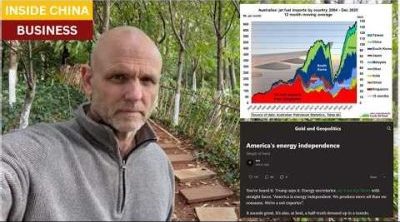
Chinese jet fuel and the myth of energy independence
or go to
Aletho News Archives – Video-Images
Book Review
Former Insiders Criticize Iran Policy as U.S. Hegemony
By GARETH PORTER | CounterPunch | February 27, 2013
“Going to Tehran” arguably represents the most important work on the subject of U.S.-Iran relations to be published thus far.
Flynt Leverett and Hillary Mann Leverett tackle not only U.S. policy toward Iran but the broader context of Middle East policy with a systematic analytical perspective informed by personal experience, as well as very extensive documentation.
More importantly, however, their exposé required a degree of courage that may be unparalleled in the writing of former U.S. national security officials about issues on which they worked. They have chosen not just to criticise U.S. policy toward Iran but to analyse that policy as a problem of U.S. hegemony. … continue
Blog Roll
 Aletho News
- What is fueling unrest across the EU?
- Why no power can undermine Iran’s eternal dominance over the Strait of Hormuz
- Is The War Against Iran Over?
- Iran war will leave long-term ‘scar’ on Wall Street, investors warn
- How Iran decimated US power projection in West Asia: Military lessons of 40-day war
- Iran’s report details US-Israeli war crimes in targeting schools, hospitals, livelihoods
- NATO’s Slow Fracture: How Trump’s Iran War Exposed the Instrument of Hegemony
- Chinese jet fuel and the myth of energy independence
- Ukraine Sea Drone Fired From Libya Hit Russian Tanker in Mediterranean
- IRGC: Iranian forces launched no attacks during ceasefire hours
- If Americans Knew
- DNC Shoots Down Resolutions Calling Out AIPAC and Limiting Arms to Israel
- TCN: Is Israel Blackmailing President Trump?
- Israel killed at least 303 Lebanese yesterday – who were they? Daily Update
- Amnesty: Urgent – Protect Lebanese civilians from brutal escalation in Israeli attacks
- Is The War Against Iran Over?
- Inside the Israeli army’s propaganda wing
- Hundreds of Gaza Amputees Stranded in Legal Limbo
- The gallows law: Israel moves toward executing Palestinian children
- Tucker Carlson: The Path to Peace requires ending ‘special alliance’ with Israel
- This is ceasefire? Israel’s biggest massacre yet in Lebanon, another journalist killed in Gaza – Daily Update
- No Tricks Zone
- An Inconvenient Tree: Uncovered In Alps… Europe Much Warmer Than Today 6000 Years Ago
- New Study Reports A 60% Slowdown In Greenland’s Ice Loss Rate In The Last Decade
- Low Intensity Tornado Wrecks Major Solar Farm, Creating A Potential Toxic Dump
- New Study Finds Warming Saves Lives…Cold Temperatures 12 Times More Deadly Than Excess Heat
- German Science Blog Accuses PIK Climate Institute Of Hallucinating Climate Tipping Points
- Devastating Assessment Of Comirnaty Vaccine By Former Senior Pfizer Europe Toxicologist
- New Study: CO2 Is ‘Effectively Negligible’ As An Explanatory Climate Change Factor Since 2000
- Former Pfizer Toxicologist Dr. Helmut Sterz Tells Bundestag Hearing Pfizer Vaccine Should Have Never Been Approved
- Energy Expert: Germany’s Nuclear Phaseout Was A “500 Billion Euro Mistake”
- New Research: South Australia’s Mid-Holocene Sea Surface Temperatures Were 4°C Warmer Than Today
 Aletho News