Ex-US Airman on Depleted Uranium: ‘I Saw Disfigured Newborns & My Dad Dying From Cancer’
By Ekaterina Blinova – Sputnik – 19.12.2023
It is only a matter of time before Ukraine uses depleted uranium ammunition on the battlefield, if it hasn’t already. The United States and United Kingdom sent the radioactive shells to the Zelensky regime earlier this year, and the rounds have been spotted in warehouses near the frontlines.
Following the costly failure of their “summer counteroffensive,” the Ukrainian military has begun desperately searching for “wonder weapons” to restore their battlefield fortunes.
Announcing the provision of DU rounds to Ukraine, Washington insisted in September that there’s nothing to worry about: the wonder-weapon is somewhat toxic, but overall harmless and fine. Rafael Grossi, International Atomic Energy Agency (IAEA) director general, joined the chorus, asserting to the public that there are “no significant radiological consequences” from the use of depleted uranium shells.
These are barefaced lies, according to Damacio A. Lopez, a US Air Force veteran who founded the International Depleted Uranium Study Team and co-founded the International Coalition to Ban Uranium Weapons (ICBUW).
“He [Grossi] is part of the team, part of the team that promotes this project, use of these weapons, he is part and parcel of the superpowers that use it and making excuses for it and trying to convince the public that this is not a problem, as they do repeatedly here in this country. You asked what the people thought about this. Well, they haven’t been getting accurate information. And I tried my best to get that information out in Uranium Battlefields and go in and talk to all these countries and try to explain what was going on.”
Damacio was one of the first Americans who raised the red flag about the disastrous consequences of the weapons. Since 1985, he has been seeking a global ban on depleted uranium arms, which are still not covered by international chemical or nuclear conventions, despite DU’s toxicity and radioactivity.
Sinister Black Cloud Over Socorro
Damacio was born in Socorro, a town in southern central New Mexico along the Rio Grande. Back in 1945, the Trinity nuclear test rocked the Jornada del Muerto Desert, only 36 miles southeast of his hometown. Damacio was only two years at that time, but later he became curious about radiation hazards.
The Trinity blast wasn’t the only US nuclear experiment in the region. In 1985, when Lopez visited his parents in Socorro during the Christmas holidays, the first thing he heard on his arrival was the sound of very loud explosions less than two miles from his house. Explosions occurred regularly, making dishes rattle and causing cracks in the walls. But even more alarming was a dark black cloud hovering over the town after the blasts.
“This was disturbing. And it wasn’t just my family. It was all the families in Socorro. From the middle of Socorro, the city park, to where the explosions had taken place, is two miles. That’s up. And the prevailing winds come over the community every time one of these bombs goes off. And of course, people were very concerned about what was going on. And my Mom asked me to look into this. And so I did. I contacted the Board of Regents of the New Mexico Institute of Mining and Technology, who are responsible for these explosions. Because they had been testing different kinds of weapons there since 1946.”
Lopez went to a Board of Regents meeting and asked about the explosions and dark clouds of smoke. But in response, he only got evasive answers.
Still, his efforts bore some fruit: one morning, he found five mysterious boxes in the front yard of his Socorro house. When he opened them, he found documents shedding light on the ongoing disaster.
“Well, those boxes were full of information about depleted uranium and testing in Socorro, and their ideas and what they were doing. And it went way, way back, before 1972, explaining the development of these weapons and what they were trying to do and the different kinds of weapons they were experimenting with, like cluster bombs instead of using metal or tungsten or titanium. They would try depleted uranium and see how that worked. So they were doing these kinds of preliminary testing, along with two other laboratories in New Mexico, plus laboratories outside of New Mexico. They were all working together. And I saw all this information. It wasn’t just about Socorro. It was about worldwide testing with what was going on in Europe and who was testing these weapons and what kind of weapons they were testing.”
He learned that the black cloud that he saw was radioactive and chemically toxic dust ejected into the atmosphere by depleted uranium blasts.
Damacio decided to dig deeper. He knew that the exposure to nuclear materials could lead to health problems, so he went to the Health Department in Santa Fe and sought information about Socorro’s residents. The records gave him the shivers: over past years, the community’s health problems had piled up, with the number of cases of hydrocephalus, cancer, and birth defects higher than in the other counties around the state.
This gruesome discovery prompted him to start researching the effects of depleted uranium contamination.
Horrific Effects of Exposure to Depleted Uranium
“I have a brother who’s bent over, and when he speaks, and he’s 10 years younger than me, something’s wrong with his spine,” Damacio said. “And his body is kind of flopped over. And when he looks at you, he looks like a turtle. He’s way down like this, and looks up. I mean, he’s normally about 5 ft 6 in. And now he looks like he’s about 4 ft. It’s a horrible sight. His teeth are all rotten. He’s the one who lives right next to the facility. You know, here’s the facility right here.
Here’s my house. And here is a town. There’s a fence between us and it says ‘Keep out, government property.’ And so our family is very close, one of the closest homes to this facility.”
“My dad ended up dying from cancer,” the activist continued. “And it was a sad situation for us. And like I said earlier, the people there, when they realized the truth about what was going on, instead of saying, ‘Oh, we want to stop this,’ no, they’re saying, ‘What? What can we do to survive? How can we survive this thing?’ And well, they couldn’t leave. So they just stay. And over the years, refusing sometimes to even acknowledge the dangers around them, because I believe they have no other choice. And it’s dehumanizing for people to be in that situation.”
In the late 1990s, Damacio was invited to Iraq by the nation’s authorities to speak at a conference on the depleted uranium weapons used in the country by the US during the Persian Gulf War (1990-1991). In 1993, Lopez and his fellows published the book Uranium Battlefields Home and Abroad: Depleted Uranium Use by the US Department of Defense, looking into DU testing sites in the US and the Pentagon’s use of the weapons abroad. The US and its allies unleashed over 300 tons of DU in Iraq.
“Well, when I went to Iraq and I told the people, I want to see if what’s happening here is happening there as well. So I’m not only the victim, but I’m also a researcher and I want to have accurate information. I just don’t want to take other people’s word for things. And I don’t, and I never have. Maybe at the very beginning of my discovery I did that. But since then, I want to see the people involved in these situations.”
“I found a lot of [health] related issues. At that conference that I went to, I learned a lot of things and I was one of the speakers at this conference. And so I was able to get studies from these medical people who had done a lot of studies on the people in Iraq and birth defects, cancers. These were the top things that were going on in their country, and some of the cancers were the same cancers, the same cancer that my father died from. And a lot of other people in the town were having problems in Socorro with birth defects. So I was able to go into hospitals in Iraq to see for myself the people who were victims.”
But the greatest shock for Damacio was Iraqi children who were born after the US bombing campaign. When he recalls them, he cannot hold back his tears.
“In one particular hospital I was able to see many, many children with birth defects that were so severe that it was so hard for me to think of them as even human.”
“I’m talking about very, very serious birth defects. Can you imagine walking into a place and seeing a child with one eye and his forehead? It’s like not even human. And I met this little boy. He was three years old. He was with his mother and he had a big head, hydrocephalus. And one eye was turned up and his other eye was turned down. He was skin and bones. He was three years old, couldn’t weigh more than 20 pounds. And his head was huge. Little tiny, tiny legs. It’s almost skin and bone. And the mother was holding him and wiping the blood from his mouth. And as I was leaving the hospital, tears started streaming down my face. I couldn’t control it. It was so, so bad.”
The little boy looked listless. Damacio thought for a moment that the toddler couldn’t see or hear. “And as I was leaving the room, I heard the little boy scream out: ‘Mama, mama!’ And it sent chills through my entire body.”
If Damacio were told at the time that the US government would throw another thousand tons of depleted uranium on Iraq in just three weeks during the Second Gulf War, it would have stopped the researcher’s heart.
Geiger Counter Never Lies: DU Weapons are Radioactive
Lopez suspected that these hideous birth defects and the spike in cancer cases were caused by depleted uranium’s radioactivity and toxicity. Preparing for his Iraq trip, he took his Geiger counter. The radiation detector “could identify alpha, beta, and gamma, and could identify whether it was depleted uranium or something more hot than depleted uranium,” according to the researcher.
While in Baghdad, Damacio visited the Amiriyah shelter, which was subjected to a US aerial attack that killed over 400 civilians, including children, on February 13, 1991.
“It was quite a sight when I was looking at the blood and hairs of the people on the walls and the children. And then there was an area where they had all their pictures. I was there with the Japanese delegation in this particular visit. And for them, it was common – it was not common, but they knew this well about the shadows on the wall and the hair and the blood from what happened in their country when they were bombed. So they understood all this.”
“Eyewitnesses told me, more than one said to me: ‘Damacio, what happened here is… I saw this projectile. I saw this large Tomahawk cruise missile making curves around streets.’ And then, when they got to the Amiriyah shelter, they went up high, came straight down in the middle of the shelter that had three stories, three feet of concrete between the stories to protect the people in there. In this case, children. There were more than 600 kids and school kids in that shelter at this time. The missile came down from the middle of the shelter, went through, went all the way down to the bottom of the shelter, and then went into a deep hole there. I saw all this, and they’re watching it.”
Lopez decided to find remnants of projectiles used during the US bombing of Baghdad and other areas and make measurements. He knew that typically, natural background radiation levels could range between five and 60 counts per minute, or a little more. Anything higher than that meant potential radioactive contamination.
“I found in one of the facilities in Baghdad after going to the Amiriyah shelter, there was an exhibition, there was a big building and they had picked up all the war remnants that they had found. One of them was partially, about three quarters, a Tomahawk cruise missile. And I had my detector and I checked it out. It was about a hundred counts per minute, which was an indication that there was radiation within this Tomahawk cruise missile.”
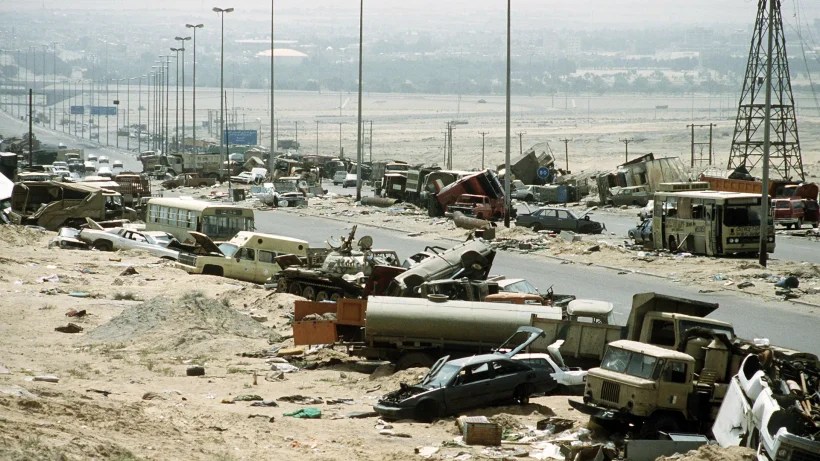
Then he travelled to a site on the border between Kuwait and Iraq, dubbed the “Highway of Death,” where thousands of Iraqi tanks and armored vehicles were pierced and burned by DU munitions fired by US A-10 Warthogs. There, he got readings of about 100-120 counts per minute on the holes of the damaged tanks. Lopez also collected small pieces of metal as samples that showed a reading of 600 counts per minute.
“And I happened to find several projectiles, 30 millimeters, that had missed the target and hit the ground and bounced. And they were intact. So I checked them out with my detector, thinking I’m going to get 600 counts per minute. I was getting 2,500 per minute on these projectiles, so high that my radiation detector wouldn’t go any higher than in its capabilities. And it would go ‘u-u-u-u,’ could have been higher than 2,400 counts per minute. And the only conclusion I could draw from that is that nuclear waste from nuclear facilities was being mixed with what was so-called depleted uranium. And this became even more alarming.”
DU Weapons are Made of Radioactive Waste
Lopez tried to find out why the US had decided to use depleted uranium for its ammo in the first place.
Damacio’s book Uranium Battlefields Home and Abroad: Depleted Uranium Use by the US Department of Defense explains that DU is a byproduct of the uranium enrichment process by which the fissionable isotope uranium-235 (U235) is extracted from natural uranium for subsequent use as fuel for nuclear reactors.
Natural uranium, a silvery-grey metal, contains 0.7% U235, 99.3% U238, and a small amount of U234 by mass. After producing 85 kilograms of enriched uranium, one would get 915 kg of U238, or depleted uranium.
The Pentagon argues that U238 retains “only” 60% of natural uranium’s radioactivity and emits alpha particles, which have low penetration depth and can be stopped by skin. Inside the body, however, alpha-emitters can be extremely harmful, damaging sensitive living tissue. After the explosion of DU projectiles, microscopic and light uranium dust can travel with the wind, be inhaled, swallowed, or enter the body through a wound, later causing cancer and chromosome damage.
One should bear in mind that depleted uranium is radioactive waste that should be disposed of, Lopez pointed out in his book. However, almost all DU tails have been saved by the US government since the early 1940s. Moreover, they can be purchased for commercial use, according to the researcher. To date, the US has accumulated a massive storage of DU amounting to over 700,000 metric tons.
Why Do Pentagon and Defense Contractors Like DU So Much?
Lopez explained that from a military standpoint, the most important property of DU is its great density, relatively low cost of fabrication, and availability. The material is used for tank armor and projectiles of different sizes.
Highly-dense DU munitions easily pierce tanks and other armored vehicles. While tungsten carbide projectiles are capable of doing the same, DU is cheaper, more accessible, and offers greater margins for US military firms.
On the other hand, turning spent uranium into bullets and shells has become an “ingenious” solution for the US nuclear industry on how to “dispose” of radioactive waste, Lopez said in his book. So, as money talks, the US’ testing and use of DU weapons continue unabated, according to the activist.
But has the Pentagon ever been aware of the long-lasting hazard related to DU projectiles?
The US Department of Defense’s internal memos, leaked to the press in the late 1990s and the beginning of the 2000s, indicate that the Pentagon knew. But why would it use the toxic and radioactive substance nevertheless?
A March 1, 1991 document shows the US DoD’s attitude to DU weapons use in a nutshell. Authored by US Lieutenant Colonel M.V. Ziehmn at the Los Alamos Laboratories in New Mexico, the memo reads:
“There has been and continues to be a concern regarding the impact of DU [sic] on the environment.
Therefore, if no one makes a case for the effectiveness of DU on the battlefield, DU rounds may become politically unacceptable and thus, be deleted from the arsenal.”
The memo went on by saying: “If DU penetrators proved their worth during our recent combat activities, then we should assure their future existence (until something better is developed),” adding “we should keep this sensitive issue at mind when after action reports [sic] are written”; otherwise the US may lose “a valuable combat capability.”
Why Are the Pentagon and White House Keeping DU’s Deadly Effects Secret?
The documentary Uranium 238: The Pentagon´s Dirty Pool (2009), used by Lopez’s International Coalition to Ban Uranium Weapons (ICBUW) as part of its international campaign to prohibit DU, said that the Pentagon is in denial about DU munitions potentially leading to carcinogenic diseases, birth defects, and environmental contamination.
The US Defense Department has even invented a sort of “DU diplomacy” to reassure the world community and American citizens that there is nothing to worry about, according to the ICBUW. Meanwhile, the US has not only failed to inform affected nations – Iraq, Bosnia, Serbia, Syria – about the DU hazard, but also repeatedly exposed American soldiers to the toxic and radioactive waste. Per the documentary, DU weapons in all but name are a “dirty bomb” – a mix of explosives and radioactive material – used by terrorists. Yet somehow DU rounds are still called “conventional weapons.”
One could easily imagine that if the US government admits DU’s hazardous effects, the weapon would be banned, influential defense contractors would be stripped of their profits, and Washington would be slapped with a heap of legal cases with compensation demands.
And the US is not the only country that uses depleted uranium as a weapon, as some of its NATO allies also do, according to Lopez.
“[The US keeps DU’s deadly effect secret], for the same reason all the other countries that have the weapon kept secret, as much as they can keep it secret, it is because they know they’re violating international laws, international conventions on weapons, and they know that they’re going to have to pay the price someday, and they may end up with charges of violations of international laws. And so they’re trying to protect themselves. And at the same time, they want to continue to keep the weapon because they’re afraid other countries have weapons too,” Lopez concluded.
UK nuclear site ‘leaking’ – The Guardian

Sellafield nuclear reprocessing facility November 26, 2001 in Cumbria, England © Getty Images / Graham Barclay/BWP Media/Getty Images
RT | December 5, 2023
Sellafield, regarded as the most hazardous nuclear site in Europe, has developed a leak in a massive radioactive waste silo that has prompted concerns about the facility’s safety measures, as well as potential dangers to the public and the environment, The Guardian has reported.
The two-square-mile (6km sq) plant, located in Cumbria in England’s northwest, is responsible for the storage and decommissioning of nuclear waste from nuclear weapons programs and power generation. It was previously used to generate nuclear power from 1956 to 2003.
However, the decades-old facility, Europe’s largest nuclear site, has a catalog of safety issues, the newspaper said, including asbestos and fire hazards. Perhaps more concerningly, though, are cracks in storage silos which have prompted diplomatic squabbles with affected countries, including the US, Norway and Ireland.
Damage to one silo of toxic radioactive waste has caused a leak of “potentially significant consequences,” The Guardian said on Tuesday, citing official documents seen by the outlet. It adds that the leak, which it says is likely to continue until 2050, could contaminate groundwater should the situation worsen further.
Scientists are attempting to assess the full risks of the leak using “ongoing radiological dose assessments” and statistical modeling, the newspaper added. In June, the UK’s Office for Nuclear Regulation (ORR) said in a report that the risk presented by the leak is “as low as reasonably practicable.” However, the nuclear regulator remained concerned by the full impact of the leak and at what rate, if any, it may affect groundwater.
An unnamed expert who sits on a committee that monitors Sellafield and other nuclear sites told The Guardian : “It’s hard to know if transparency is put aside because no one’s brave enough to say ‘we simply don’t know how dangerous this is – other than certainly dangerous.’”
An EU report in 2001 warned that an accident at Sellafield could be more hazardous than that of the Chernobyl disaster in 1986, which exposed about five million people in Europe to radiation. Sellafield contains substantially more radioactive material than the Chernobyl facility did at the time.
Reports of Sellafield’s crumbling facade have sparked US concerns about the safety standards at the site, according to diplomatic cables seen by the publication. It has also led to complaints from the governments of both Ireland and Norway – with Oslo worried about the potential of radioactive particles being carried towards its territory by winds across the North Sea.
Health problems brought on by exposure to nuclear radiation depend on the dose but can range from nausea and vomiting to cardiovascular disease and cancer. Extremely high exposure is, in most cases, fatal.
Environmentalists: Gaza’s Water, Farmland ‘Will Be Unusable’ if Israel Floods Tunnels With Seawater
By Fantine Gardinier – Sputnik – 05.12.2023
Gaza’s fragile ecosystem could be permanently damaged by a huge influx of salty seawater like that which Israel is considering pumping into the city, experts said. Some of the deepest tunnels dug by Hamas and other militant groups could be near groundwater depths, souring the area’s drinking water.
According to reports in US media on Tuesday, Israel has pushed ahead with plans to flood Gaza City with seawater in an attempt to destroy the network of tunnels dug beneath the city by Palestinian militant groups.
According to the report, the IDF finished assembling five massive seawater pumps north of the Al-Shati refugee camp in the northern Gaza Strip in mid-November. The plan is reportedly to flood the tunnels slowly over several weeks, giving Palestinian fighters and their Israeli captives time to safely evacuate.
The report was unclear about the disposition of the White House toward the plan. The Biden administration has largely supported Israel’s actions in Gaza as self-defense against Hamas, but given rhetorical warning against violating Palestinian human rights. The warnings have had little effect, though, as nearly 20,000 Palestinians have been killed in Gaza by IDF bombing and ground operations since Hamas attacked several Israeli border towns in early October, killing some 1,200 people.
Andrey Frolov, co-chair of Moscow’s Environmental Organizations, told Sputnik on Tuesday that an influx of salty seawater could wreck Gaza’s fragile ecosystem, making it difficult to sustain life there.
“When water comes in, it all depends of course, depending on the scale of the disaster. That is, what kind of tunnels are they, where are they laid and what is their size. Because the first thing that immediately catches your eye is that if the tunnels are shallow, say, two to three meters deep, then this will simply undermine the foundations of buildings. When moisture enters, the stability of the soil changes, subsidence begins, and accordingly, it will just begin [to collapse]. Israel has already destroyed the entire city, so I think that for them it is not important.”
“There is information that these tunnels are hundreds of square kilometers in size and go to a depth of up to 80 meters,” he noted, adding that it was probably “a bit of an exaggeration.”
Frolov noted “it depends on the waters” how the influx of salty seawater would affect the fresh groundwater. Some of the deepest tunnels rumored to have been dug in Gaza could be near the depths of the aquifers.
“Because seawater can get into these aquifers it will make them salty. As a result, those wells that were used in Gaza will simply stop working. The territory was already short on water, Israel supplied water from the Sea of Galilee. If a large amount of sea water is pumped into it, it will simply become unusable.”
He noted the salt will also impact agriculture in Gaza, making it “so that any kind of farming or maintaining green spaces will simply be impossible.”
“Our nature lives in biocenosis. That is, it is a complex of living beings that adapt to a certain habitat. If the biocenosis is salted and the living conditions are changed, then some species simply will not be able to live there. And if one, two, three species stop living, then the entire biocenosis crumbles,” he explained.
Tyson to Build Insect Protein Factory — Critics Say It’s About Money, Not Health or Environment
By Michael Nevradakis, Ph.D. | The Defender | October 24, 2023
Industrial meat giant Tyson Foods is teaming up with Dutch insect ingredient producer Protix to construct an insect ingredient manufacturing facility in the U.S.
In an announcement last week, Tyson said it is acquiring an ownership stake in Protix, and forming a joint venture to construct “the first at-scale facility of its kind to upcycle food manufacturing byproducts into high-quality insect proteins and lipids which will primarily be used in the pet food, aquaculture, and livestock industries,” Tyson Foods stated.
In a statement, Protix said, “The strategic investment will support the growth of the emerging insect ingredient industry and expand the use of insect ingredient solutions to create more efficient sustainable proteins and lipids for use in the global food system.”
Tyson Foods, Protix and proponents of insect-based foods argue that the production of such food products is more sustainable than rearing conventional livestock.
But food safety experts who spoke with The Defender said companies like Tyson are motivated by financial and other incentives, not sustainability. Citing scientific studies to back their claims, they also questioned the safety of insect ingredients.
“This is not about public health or even environmental health,” Nina Teicholz, science journalist and founder of The Nutrition Coalition, said. “The food industry likes bugs, because producing them involves multiple, patent-protected steps that enable companies to make a profit and control our food sources.”
Dutch journalist Elza van Hamelen, who has investigated Protix, told The Defender, “The takeover and transformation of our food system — toward synthetic lab-grown meat, GMO [genetically modified organism] vertical farming and insect farms — is an attack from many fronts.”
“Venture capital is investing in this, even though there is not a clear business case,” she said. “Governments are setting up ‘ecosystems’ in which government representatives, NGOs [nongovernmental organizations], academia and business join hands to get ‘alternative proteins’ off the ground.”
Science communicator Dr. Kevin Stillwagon, a retired chiropractor and airline pilot who investigates health issues on his Substack page, said, “There are already efforts underway to convince us that the way we raise food for human consumption is harming the environment by using up too much land and water and emitting excess greenhouse gasses.” He added, “They will try to convince us that even by using insects as animal feed, the environmental problem is not going to get solved.”
Howard Vlieger, a member of the board of advisers of GMO/Toxin Free USA, told The Defender that Tyson could leverage its market power and its entry into the insect ingredient market to place further financial pressure on cattle suppliers.
“Tyson is one of just four large companies that livestock producers rely on to market their cattle,” he said. “Tyson could potentially leverage its alternative foods interests against cattle purchases, thus lowering the demand and price for the cattle they buy.”
Tyson’s deal with Protix move marks the latest instance in a recent trend that has seen several prominent food producers, including Cargill, invest in insect ingredient manufacturers.
‘Stomach contents of cattle’ to be used as ‘a viable feed source for insects’
John R. Tyson, chief financial officer of Tyson Foods, told Food Ingredients First his company will use its own “by-products,” including “the stomach contents of processed cattle,” to produce “a viable feed source for insects.”
In Tyson Foods’ press release, Kees Aarts, CEO of Protix, said, “Tyson Foods’ and Protix’s strategic partnership advances our joint work towards creating high-quality, more sustainable protein using innovative technology and solutions. Moreover, we can immediately use their existing byproducts as feedstock for our insects.”
According to CNN, “Byproducts like animal fats, hides and inedible proteins, if not used or reduced, can end up in landfills. In this case, Tyson can send what’s in the stomach of cattle it has processed to a Protix facility, where it’s fed to insects.”
“For the company, creating a larger market for this type of waste can not only reduce waste but offer a larger revenue stream,” CNN reported.
The Tyson Foods statement said, “Protix contributes to a circular food chain by using waste from the food industry as feed for the black soldier fly (BSF). In turn, the insects are processed into valuable nutrients such as proteins and lipids.”
“Protix’s customers use these proteins and lipids as high-quality ingredients for feed and food” while “residual streams from the insects are used as organic fertilizer,” it added.
Aarts told CNN the black soldier fly “can grow on almost every type of food waste and byproduct you can imagine,” while according to Food Ingredients First, the flies “can eat up to twice their body weight daily, which can be used to enable a closed-loop recycling system,” creating a reusable protein source while using less water and land.
When completed, the Tyson Foods-Protix facility will “centre on all aspects of production, from breeding and incubating to the hatching of insect larvae,” Just Food reported, quoting a Tyson Foods spokesperson as saying the two companies are currently looking to “identify” the location where their plant will be constructed.
The joint-venture facility is expected “to be ready for ramping up operations towards the end of 2025,” according to Feed Navigator, which also reported that “The facility’s capacity will be three to four times the output of [Protix’s] existing plant” in The Netherlands. It will be able to produce “up to 70,000 tons of live larvae equivalent annually.”
According to Just Food, the precise size and cost of the minority stake Tyson Foods acquired in Protix has not been disclosed, but according to Feed Navigator, “When asked to disclose how much the U.S. company has invested, a spokesperson for Protix [said] funding from existing backers along with Tyson Foods” totaled $58 million.
Tyson’s insects not headed for human food supply — yet
The companies claim that the insect-based products they will manufacture will not enter the human food supply — for now. Tyson told CNN “Today, we’re focused on more of [an] ingredient application with insect protein than we are a consumer application.”
But a Tyson Foods spokesperson told Just Food that “Human food compositions exist, and Protix is leading the development of high-quality proteins from animal and fish feeds to consumer-level products.”
“While consumer adoption is very low and human-food applications are not the focus of this joint venture, opportunities exist in the long term to create more sustainable protein products,” the Tyson Foods spokesperson added.
Tyson told Food Ingredients First that he views his company as a “catalyst” that can create a more sustainable and equitable food system, and that “Partnerships with those across industries are an important part of that journey, working together to advance our collective sustainability ambitions and transform the global food system.”
According to Stillwagon, inserting insects into the human food supply is the goal of major food producers.
“Livestock and fish that are fed with insect-based proteins and lipids will most definitely enter the human food supply. This may change the taste of these foods to some degree,” he said.
“Also, the fish and livestock may need to be genetically modified so they will grow to sizes necessary for harvesting since they would be consuming something that is not natural to them,” Stillwagon added.
Not ‘adequately tested for safety’
According to CNN, “The meat industry places a large burden on the planet, in part because of the land, water and energy it takes to grow crops that feed the animals we eat,” adding that “Some experts say that reducing the environmental footprint of animal feed can help make the system more sustainable.”
“Making food out of insects is one way to do that: Bugs take up less space and subsist on waste that would otherwise be discarded,” CNN reported.
According to Food Dive, “Insect protein has grown in prominence in recent years with companies debuting cricket-based snacks and powders,” citing claims by cricket ingredient brand Exo that crickets are 20 times more efficient to grow than cattle.
CNN quoted Reza Ovissipour, Ph.D., professor in sustainable food systems at Texas A&M University, who said that flies operate as “mini bioreactors” that can convert animal waste into “the protein or fat from the insects,” which can then be used as animal feed.
“And these mini bioreactors, they are very inexpensive,” he said. “You don’t need to apply that much energy. It’s very sustainable,” he said.
Experts who spoke with The Defender expressed a different view.
“Due to the insect exoskeletons, which humans are not adapted to eat, it’s not clear that this new ‘foodstuff’ is safe for humans — or pets,” Teicholz said. “Insects and bugs have not been adequately tested for safety.”
“We know that meat, eggs and fish are sources of complete, whole proteins that humans (and dogs) have evolved to eat over millions of years,” she added. “We should be trying to figure out how to make these natural proteins more sustainable rather than shift to new, potentially dangerous food sources.”
Along similar lines, Alexis Baden-Mayer, political director for the Organic Consumers Association, said, “We don’t need to replace meat, milk or eggs with anything, we just have to raise animals on pasture. This is incredibly beneficial to the environment, really productive and produces the most nutrient-dense food possible.”
Baden-Mayer also said there are several risks that insects, when consumed as food, pose for human health, noting that insects contain allergens known as chitins and toxins known as mycotoxins — which also cause mold to be toxic to humans.
Stillwagon said insects pose other risks to human health.
“Since allergies to insect proteins, known as entomophagy allergies, have been reported, food producers must label insect-based products accurately to provide allergen information,” he said.
“The second risk is the microbiome and virome of the insect itself,” Stillwagon said. “It is possible that in some people with weakened immune systems, the consumption of bacteria and viruses that are naturally part of the insect could become pathogenic,” he added.
“Chemicals that are used to kill bacteria and viruses during the processing of insects on a massive scale for food may be harmful to humans,” Stillwagon said. “Also, the plants that the insects feed on may have been treated with chemicals like glyphosate or pesticides that will be absorbed into the insects and be consumed by humans.”
A February 2017 article in eBioMedicine, published by The Lancet, states that “Infections with viruses, bacteria and parasites have been recognized for years to be associated with human carcinogenicity.”
And an article published in July in the Nutrients journal stated that “Insect protein is an adequate protein source with promising health benefits” but noted that “further research is needed to fully understand its potential and optimise its inclusion into the human diet.”
WEF, WHO, major banks and investment firms promoting insect-based food
Yet, CNN reports that “interest in insects as ingredients for animal food has been growing” even if it “hasn’t caught on in the mainstream.”
CNN cited a 2021 report by the Netherlands-based Rabobank, claiming that “the demand for insect protein, mainly as an animal feed and pet food ingredient, could reach half a million metric tons by 2030, up from today’s market of approximately 10,000 metric tons.” Rabobank and Rabo Investments are investors in Protix.
A report by Grand View Research says the global insect protein market is expected to expand by an annual compound growth rate of 27.4% by 2028.
Protix says it aims to increase its “global gross revenue to around €1bn [$1.06 billion] by 2035 through international partnerships.”
Tyson Foods is an investor in Upside Foods, a company that recently won approval from the U.S. Department of Agriculture (USDA) to produce lab-grown chicken. Upside has attracted more than $600 million in research and development investments, including from Bill Gates, Richard Branson, Elon Musk’s brother Kimbal Musk and Cargill.
Tyson Foods has also invested in Future Meat Technologies, another company seeking to develop cultivated meat products.
According to Food Ingredients First, “Earlier this year, Tyson Foods felt the impact of high inflation and low meat demand, which plunged its stocks by 45.36% from a year ago,” leading the company to close two of its U.S. chicken plants in March.
Yet, last year, Tyson Foods invested $355 million in a bacon production facility in Kentucky, “to meet rising retail and foodservice demand for bacon products.”
Other “Big Food” players have also made significant investments in this space, including Cargill, which in 2022, expanded a partnership with Innovafeed for the production of “sustainable” insect-based fertilizer and animal food, from three to 10 years.
ADM (Archer-Daniels-Midland) has also partnered with Innovafeed to commercialize insect protein for pet food sold in the U.S. and for the construction and operation of an insect production facility in Illinois, adjacent to an ADM corn processing complex.
In 2017, PepsiCo said it was researching insect-based snacks and their potential for future products, while in 2021, Mars launched a line of 100% insect-based cat food.
According to van Hamelen, “There is a lot of financial and policy support to get these ‘foods’ off the ground. Corporations are steered towards moving their portfolios into ‘novel foods’ as part of ESG investment rating criteria,” adding that “It may be interesting to review the ownership of these corporations and the agenda they pursue.”
Notably, Vanguard and BlackRock, the world’s two largest institutional investment firms, are also the two top institutional holders of Tyson Foods shares. BlackRock, and its CEO, Larry Fink, have been strong proponents of “sustainable” corporate practices.
Governments have also gotten into the act, van Hamelen told The Defender.
“The legislative framework is being prepared to approve these ‘foods’ as ‘novel food’ — in the EU, U.S. and also at the U.N. [United Nations] level under the Codex Alimentarius,” she said. “In addition, ‘behavioral government’ approaches, a.k.a. social engineering, used to steer people towards alternative protein choices, are part of government policy.”
For instance, in June, the EU authorized yellow mealworm powder to be used in bread, cakes, mashed potatoes, pasta and vegetables, following a novel food application French firm Nutriearth submitted in 2019. According to Food Ingredients First, “Final authorization on this is expected later this year or early 2024.”
In May, the U.K. Edible Insect Association declared that the house cricket was deemed “within the scope of novel foods regime and valid.”
The European Commission has found that consumers are already aware of insects as an ingredient in foods, and has called on food manufacturers to display the Latin names of the insects contained in the food on the packaging for the product.
Baden-Meyer said that companies like Tyson Foods are looking to the future — and to applications of insect-based products going beyond just food.
“As we saw with the COVID-19 vaccines, cells are the new factories. Maybe that’s the bacterial cells used in ‘precision fermentation,’ maybe it’s the cells living within our own bodies,” she said. “Vaccines are first, but I expect all drugs to be delivered via mRNA or DNA ‘gene therapy’ instructions for the cell to produce a protein.”
“Maybe that will be the way ‘food’ will eventually be ‘delivered’ too,” Baden-Meyer said, citing the Defense Advanced Research Project Agency’s “Living Foundries” program, which seeks to program “the fundamental metabolic processes of biological systems to generate a vast number of complex molecules that are not otherwise accessible.”
Stillwagon identified a danger stemming from insects consuming byproducts of animals that had previously received mRNA vaccines. He said:
“Another danger is the potential use of mRNA encapsulated in lipid nanoparticles (LNPs) as ‘vaccines’ in the animals or insects to try to prevent diseases. The animals would most likely be injected. The insects and aquaculture would ingest them.
“The use of ingested mRNA encapsulated in LNPs has already been investigated in some insects, shrimp and fish. The possibility of these encapsulated mRNA particles entering the human food supply is very real.”
Last month, the U.S. House of Representatives passed an amendment ending government funding to the U.S. Food and Drug Administration and the USDA during fiscal year 2024 for the development of transgenic edible vaccines, that would deliver mRNA “vaccines” through foods such as lettuce.
“My guess is this is what the ‘Great Resetters’ plan to feed us with and make everything else out of, too,” Baden-Meter said, referring to the “Great Reset” promoted by the World Economic Forum (WEF). “Bacteria is the new petroleum, the ‘plastics’ of our generation, but it’s going to take a while to make this shift,” she added.
Notably, Aarts is a member of the WEF and a member of the WEF’s Future Council on Food Security and Agriculture. In 2015, Protix was one of the recipients of the WEF’s “Technology Pioneer” award, for its work in agrifood technologies.
A 2019 paper by the WEF, “Alternative Proteins,” published as part of the “Meat: the Future” series, says such proteins can meet “the nutritional needs and food demands of a predicted mid‑century population of 10 billion, in a healthy and sustainable manner.”
“The benefits of these products is not sufficient for consumers to adopt them,” the report states. “A much wider set of interventions will be required to accelerate uptake,” including the development of “narratives.”
The report also notes that “it is unlikely that alternative proteins will achieve scale unless use is made of the production and marketing expertise of the traditional protein sector.”
The WEF stated “We need to fundamentally transform our food systems to provide all humanity with affordable, nutritious and healthy food within the limits of nature by 2030,” in accordance with the U.N. Sustainable Development Goals (SDGs).
Stillwagon said that organizations like the WEF and the World Health Organization (WHO) will seek to sway public opinion in favor of insect consumption.
“The possibility exists for the WHO to declare a climate emergency over this, and force countries to change food production. They will show that insects have been consumed by many cultures in various parts of the world for centuries, opening the door for cultural acceptance in the U.S.,” he said.
“Overcoming the ‘yuck’ factor is a significant challenge, which is why I think a declaration of a climate emergency and promoting the idea that ‘it’s for the common good” will be necessary,” Stillwagon added.
According to van Hamelen, Dutch state entities, including Dutch public investment fund Invest-NL, have invested in Protix, despite official denials from the Dutch government.
The European Circular Bioeconomy Fund, funded by the EU’s European Investment Bank, and firms connected to Belgium (10.3%), Luxembourg (1.0%) and Monaco (via Monaco Asset Management), are also investors in Protix, van Hamelen said.
A 2021 memorandum of understanding between the Dutch government and the WEF, representative of close ties between the two, foresees the development of a “food innovation hub” in The Netherlands, with agrifood as one of its focus areas.
Last year, Dutch farmers protested government plans to “drastically” reduce nitrogen pollution from livestock farming by buying out or otherwise expropriating farmland.
Michael Nevradakis, Ph.D., based in Athens, Greece, is a senior reporter for The Defender and part of the rotation of hosts for CHD.TV’s “Good Morning CHD.”
This article was originally published by The Defender — Children’s Health Defense’s News & Views Website under Creative Commons license CC BY-NC-ND 4.0. Please consider subscribing to The Defender or donating to Children’s Health Defense.
Horrendous Number of Eagle Deaths From Wind Farms

BY CHRIS MORRISON | THE DAILY SCEPTIC | OCTOBER 1, 2023
Further devastating evidence of the toll that onshore wind turbines take on local eagle populations has emerged in Tasmania. The local Wedge-tailed eagle is thought to be down to just 1,000 individuals, but over the last 12 years at least 270 birds have been killed or injured in the vicinity of wind farms. According to a recent paper in Australian Field Ornithology, a further 49 vulnerable White-bellied sea eagles have also been killed in this period.
The scale of depredation is shocking but it could be much worse than reported. According to author Gregory Pullen, information about eagle deaths is not readily available, “nor readily made available”. His calculations arise from a number of primary sources including annual reports. He suggests that unrecorded casualties are higher since most are recorded anecdotally and are not the result of systematic survey. The Tasmanian sub-species of the Wedge-tailed eagle is listed as endangered under both federal and state threatened species legislation.
Large birds of prey such as eagles are at particular risk from giant wind turbine blades revolving at speed since they rely on air currents for sustained flight. The Daily Sceptic has covered this developing story, noting that few activists, bird conservation groups and writers seem able to rouse themselves to complain when the natural flight path of raptors stands in the way of green progress. The Australian climate journalist Jo Nova has stood out from the unquestioning crowd, noting that in Tasmania the greens are destroying nature – again. “It’s not about the environment is it,” she said. She went on to add that there are plans to build up to 10 wind turbine parks across Tasmania – “and if one tower misses, the next will get them”.
It’s not really about the environment over in California either, where America’s national bird, the bald eagle, and many other raptors face mass slaughter in the local wind farm avian graveyards. This follows the state Democrat-controlled legislature’s recent decision to relax controls on wildlife protections to allow permits to kill previously fully protected species for renewable energy and infrastructure projects. However, evidence continues to emerge that the slaughter has been going on for years. Last year, NextEra, one of America’s largest utility companies, was fined $8 million after 150 eagles were killed at its wind farms across eight states. According to the Golden Gate Audubon Society, a wind farm complex in Altamont has been killing 75-100 golden eagles every year since the 1980s.
The animal slaughter does not stop at large birds of course. A number of scientific studies have point to the destruction of millions of bats and smaller birds every year by turbine blades capable of travelling at the tip at speeds approaching 150mph.
Alas, it is not as if the deaths of these wildlife green martyrs are helping to produce much worthwhile economic activity. In the U.K., the small number of jobs being produced by green technologies is starting to be noticed. Gary Smith, the leader of Britain’s largest trade union, recently said that communities along the North Sea can see wind farms, “but they can’t point to the jobs”. Possibly exaggerating to make his point, he added that much of the green work seems to be either London-based lobbying or clearing away the animal casualties of wind farm blades. “It’s usually a man in a rowing boat, sweeping up the dead birds,” he observed.
Green activists are increasingly being caught between a rock and a hard place on these impact issues. It is becoming obvious that many of the green technology solutions proposed to replace fossil fuels come with heavy environmental costs. Whether it be open cobalt mining with child labour, or digging up vast quantities of the Earth’s crust to help construct second-rate solutions such as windmills, the terrible impact is all too obvious. At the moment the typical stance seems to be that voiced by Audubon California Policy Director Mark Lynas, who said we need renewable energy resources, and he did not want to see the eagle deaths “being used to push against clean energy”.
Another area where ecology fights are breaking out is on the east coast of America, where whales are beaching on the shores of New Jersey and New York in alarming numbers. In the first half of this year over 40 whales have died in this way. Large areas of the local ocean are being turned into industrial wind parks, with particular concern arising over 24-hour sonar soundings. The veteran environment campaigner Michael Shellenberger has said the massive offshore works are wreaking environmental damage in previously pristine waters. “It’s the biggest environmental scandal in the world,” he charges.
The waters off the U.S. east coast are important feeding and breeding grounds for large mammals such as whales and dolphins, including the rare North Atlantic right whale. Shellenberger has recently produced a documentary called Thrown to the Wind which presents evidence of whales hit by ships, and high decibel sonar that is said to separate mothers from their calves, sending them into harm’s way. The film shows environmentalists checking the sonar which is said to measure 150 dBs at sea – equivalent to about 90 dBs on land. The noise is a relentless drum beat that is said to pound across the ocean throughout the day and night. On land, the sonar noise would be equivalent to a hairdryer. For humans, prolonged noise much above 70 dBs may start to damage hearing.
The film makes the point that serious pile-driving to secure the giant turbines to the sea floor has yet to start in earnest. Once built there is a danger that the huge back wash created by the giant blades will disturb and kill off plankton, destroying the food supply for the whales.
It must be noted that many interested parties dispute the claims currently being made about wildlife in the new oceanic industrial parks springing up with generous subsidies from the Biden Administration. Both sides can marshal their arguments and evidence. But at the moment, the deck is rigged in favour of the green lobby. Fracking for oil and gas was banned in the U.K. with Friends of the Earth presenting evidence of local earthquakes similar in force to someone falling off a chair. It is more than likely that multiple eagle deaths would be enough to stop the operation of any oil and gas installation. Seemingly, it will take more than a mere rowing boat full of protected but very dead birds to stop the new Green Barons.
Chris Morrison is the Daily Sceptic’s Environment Editor.
Stillbirths, Birth Defects, Cancers Caused by Toxic Water at Military Base Still Haunt Victims Decades Later
By John-Michael Dumais | The Defender | September 21, 2023
From 1953 through 1987, an estimated 1 million people who passed through North Carolina’s Camp Lejeune Marine Corps base were unknowingly exposed to chlorinated solvents and other contaminants — up to 280 times the safe level for humans.
During that time, miscarriages and stillbirths were rampant. Many children were born with birth defects such as cleft lip or palate, brain stem issues or malformed organs. Some died from leukemia.
People who lived or worked at the base have suffered and died from cardiac defects, kidney disease, liver cancer, bladder cancer, non-Hodgkin lymphoma, multiple myeloma, Parkinson’s disease and other ailments.
Many are still suffering today — and are still awaiting justice.
In 2022, President Biden signed into law the PACT Act (Honoring Our Promise to Address Comprehensive Toxics), a part of which facilitates compensation for those who suffered at Camp Lejeune.
But the military continues to stonewall the process, leaving many — especially women who suffered miscarriages and stillbirths — out in the cold, according to an NBC News investigation published this week.
The human toll
Frank Bove, a senior epidemiologist with the Centers for Disease Control and Prevention (CDC), told NBC that exposure to trichloroethylene, tetrachloroethylene, vinyl chloride and benzene, which found their way from Camp Lejeune into drinking water supplies, did not need to be long-term.
The chemicals could cause harm after only “days or weeks” — that’s long enough to damage a developing fetus.
Jeri Kozobarich was 24 and pregnant when she arrived at the Camp Lejeune Marine Corps training facility in early 1969, she told NBC.
At a reception, she approached another pregnant woman and asked, “When are you due?” The woman answered, “My baby’s dead.”
Two months later, during a routine checkup, Kozobarich learned the baby girl in her womb was dead.
“It turned out all the wives in the squadron, they all had either birth defects or they lost their babies,” she said. “Everyone was afraid.”
This story was echoed by other women interviewed for the investigation. One woman, LaVeda Kendrix, had one stillbirth and nine miscarriages during her time at the base.
Ann Johnson’s daughter, Jacqueta, was born with a cleft lip, a cleft palate and brain stem issues. She couldn’t breathe or swallow on her own.
“She couldn’t cry out loud,” Johnson told NBC. “You could see her open her mouth, and you could see tears roll down her [one] eye, but she couldn’t make any noise.”
Jacqueta died seven weeks later on the car ride home.
“For 39 years, this has been at the back of my head: ‘Did I do something wrong?’” Johnson said.
Crystal Dickens worked in the base’s motor pool as a mechanic beginning in the late 1970’s. Dickens was pregnant with twins after suffering three miscarriages in 1979, when she was told, during her six-month checkup, there was only one heartbeat.
Marine veteran Jerry Ensminger learned of the contaminated water from a news report, finally receiving an answer to the mystery of why his daughter, Janey, died of leukemia in 2007 at age 9.
Beth Steimel Barger, who lived at Camp Lejeune during her teen years from 1976-1982, told The Defender she developed ovarian cancer at age 26. At 33 she had a hysterectomy. Her mother developed breast cancer and had a double mastectomy.
Later genetic testing found no history of these cancers in her family, Barger said.
Other family members developed various cancers. A nephew developed Spondyloarthritis, inflammatory arthritis affecting the spine, when he was 10. Her father and sister have tremors.
Grady Edward Walker told The Defender he was 14 when his family in 1970 moved to Camp Lejeune, where his stepdad was stationed. They stayed until 1981.
His stepdad, who suffered multiple melanomas, passed 10 years ago from lung cancer. Grady’s niece was born with a single kidney and other chronic health complications.
Children’s Health Defense President Mary Holland told The Defender :
“What happened at Camp Lejeune is terrible: Service members and their families were forced to drink and use toxic water for decades due to the military’s gross negligence. The Marine Corp. knew of the toxicity but covered it up, and the ones who suffered were the most vulnerable. Pregnant women miscarried and had stillbirths, repeatedly.”
Justice delayed and denied
Despite the plethora of similar stories from Camp Lejeune, cases surrounding stillbirths, miscarriages, infertility and birth defects have been particularly difficult to litigate, attorneys told NBC News.
Many of the medical records needed to prove the arguments would now be several decades old and are incomplete or unavailable.
Claimants must also prove it was contaminated water that caused the ailments. Given the high rate of stillbirths in the U.S. — 1 in 175 pregnancies — and the prevalence of birth defects — 1 in 33 babies — that may be a tall order.
Attorney Andrew Van Arsdale, whose law firm represents 9,500 camp Lejeune claimants, told NBC the process could go on for decades.
The Navy Judge Advocate General’s office told Van Arsdale’s firm they were specifically looking for severe disease cases.
“They are not even looking at this miscarriage issue right now, because I think it is a complicated issue,” he said.
“It’s like we’re invisible,” said Kendrix, now 65 years old.
“There is no record whatsoever of my child who passed away in the womb,” Dickens said.
Camp Lejeune lawsuits, numbering over 1,100, are expected to comprise one of the largest mass litigations in history. Payouts could exceed $20 billion.
In June, the U.S. Department of Justice (DOJ) urged the four federal judges overseeing the cases in the Eastern District of North Carolina to speed up the process of consolidating the cases.
The Department of Veterans Affairs (VA) has been receiving claims for years for 15 of the illnesses and conditions related to the Camp Lejeune water contamination. But, according to Van Arsdale, progress has been slow. “They’re fighting us at every turn,” he said.
According to a 2022 report by the VA’s inspector general, the VA mishandled more than one-third of all disability claims related to Camp Lejeune water contamination, affecting more than 21,000 cases and resulting in a loss to veterans of nearly $14 million.
The majority of the denied claims were the result of the staff’s failure to request additional evidence of injury.
Responding to these issues, Congress passed the PACT Act. A section of that law, the “Camp Lejeune Justice Act,” allows individuals who were exposed to toxic water at Camp Lejeune between 1953 and 1987 to file a claim for compensation.
Since the PACT Act was signed, more than 90,000 administrative claims have been submitted to the Navy, but few have been resolved.
The PACT Act does not set a deadline for the resolution of claims, but allows for victims and families to sue in federal court if claims are not resolved after six months, according to Reuters.
Earlier this month, the Navy and DOJ announced a new fast-track program for injured veterans and family members.
However, those suffering injuries more than 35 years ago — before 1988 — are not eligible for compensation under the “elective option” published by the Navy.
The elective option does not cover cardiac birth defects, but does include an exception for “in utero” claims based on the mother’s “residential or occupational exposures for at least 30 days during the nine-month period before the claimant’s birth,” according to the Navy document.
Van Arsdale told NBC he thought the Navy’s offer was a “clever attempt” to “pick off desperate” victims who may not have much more time to live and who might therefore jump at a settlement now rather than wait for litigation.
According to an article Monday by Washington D.C. CBS affiliate WUSA9, claimants do not need a lawyer to file.
Under the PACT Act, the deadline to file a claim is Aug. 10, 2024 for injuries diagnosed or treated before Aug. 10, 2022 for those who had exposure for not less than 30 days.
Holland told The Defender, “While Congress’ Camp Lejeune Justice Act is a step in the right direction, it won’t bring back the dead or restore the ill to robust health. This was an avoidable tragedy.”
A history of negligence
Leaders at Camp Lejeune knew as early as 1980 that their water was contaminated, according to court filings by DOJ attorneys.
Yet, nothing was done.
In 1982, Camp Lejeune’s water supplies were formally tested and found to be contaminated.
One of the owners of the lab that performed the tests, Mike Hargett, told NBC he personally met with one of Camp Lejeune’s leaders to discuss the findings, but said he was dismissed in less than five minutes.
The worst of Camp Lejeune’s drinking water wells remained open until 1985.
“We swam in it. We drank the water. We bathed in the water. We were totally exposed,” Dickens said.
It wasn’t until 2008 that former residents of the base were notified, under congressional edict, that they may have been exposed.
“To have not shut down the wells for so long, to have hidden information for 20 years, and now the continued stonewalling is just despicable,” Barger told The Defender.
Retired Maj. Gen. Eugene Gray Payne told NBC leaders should have taken the warnings more seriously. “Someone dropped the ball badly,” he said.
Payne assumed leadership of Camp Lejeune in 2007.
During a 2010 congressional hearing, Payne said he and the base commandant had been told “over and over” that the water situation was “better than it was.”
Payne said the fear of backlash by those who had been negligent “would’ve been tremendous,” admitting that in a large bureaucracy like the Navy’s, such a cover-up is “a very real danger.”
Barger offered one possible explanation for the ongoing negligence. “I’m not making excuses,” she told The Defender, “But a contributing factor is that on these bases, the physicians are constantly changing, the commanding officer of the hospital is constantly changing, and in an age before computerized records, things can get lost.”
But, she agreed, the trail of lost babies should have been more than enough to spark an investigation years sooner.
Camp Lejeune’s contaminants
The contaminants at Camp Lejeune came from leaking underground storage tanks, waste disposal sites, industrial area spills and an off-base dry-cleaning firm.
Three of the bases’s eight water treatment facilities contained contaminants while serving mainside barracks and family housing at multiple locations.
A study published in Environmental Health in 2014 reported samples taken at Camp Lejeune between 1980-1985 primarily contained tetrachloroethylene (also known as perchloroethylene or PCE), trichloroethylene (TCE) and their breakdown products, trans-1,2-dichloroethyline and vinyl chloride.
Benzene was also found in the water but at officially safe concentrations.
The highest contamination level for TCE was detected at 1400 µg [micrograms]/L; for PCE it was 250 µg/L, and for vinyl chloride, 22 µg/L.
The current U.S. maximum contaminant levels for TCE, PCE are 5 µg/L, and for vinyl chloride, 2 µg/L.
TCE and PCE are commonly used as industrial degreasing solvents and are used in dry cleaning and in some refrigerants. PCE is used to remove oil from fabrics, as a carrier solvent, and as a fabric finish or water repellent. Both are known carcinogens.
TCE can smell sweet or be odorless, and its vapors can be absorbed directly through the skin. It breaks down slowly in water and soil, and quickly in air. According to the US Environmental Protection Agency:
“TCE has the potential to affect the developing fetus, irritate the respiratory system and skin, and cause light-headedness, drowsiness, and headaches. Repeated exposure to TCE has been associated with effects in the liver, kidneys, immune system, and central nervous system.”
PCE breaks down slowly in soil, water and air, evaporates quickly from water, and can travel long distances by air. According to the CDC:
“Breathing high levels of tetrachloroethylene for a brief period may cause dizziness or drowsiness, headache, and incoordination; higher levels may cause unconsciousness and even death.
“Exposure for longer periods to low levels … may cause changes in mood, memory, attention, reaction time, and vision.
“Studies in animals … have shown to cause cancers of the liver, kidney, and blood systems, and changes in brain chemistry.”
The 2014 study compared health outcomes at Camp Lejeune to those at a military base without water contamination issues. Marines and Navy personnel at Camp Lejeune faced significantly increased hazard ratios for all cancers, for non-Hodgkin lymphoma and for multiple myeloma.
Amyotrophic Lateral Sclerosis (ALS, also known as Lou Gehrig’s disease), due to vinyl chloride exposure, had the highest mortality hazard ratio of all diseases in the study.
John-Michael Dumais is a news editor for The Defender. He has been a writer and community organizer on a variety of issues, including the death penalty, war, health freedom and all things related to the COVID-19 pandemic.
This article was originally published by The Defender — Children’s Health Defense’s News & Views Website under Creative Commons license CC BY-NC-ND 4.0. Please consider subscribing to The Defender or donating to Children’s Health Defense.
The Biden Administration Misleads the Public on the Vast Expanses of Land Needed for ‘Net Zero’
By James Varney | RealClearInvestigations | September 12, 2023
The Biden administration is misleading the country about the amount of land that will be required to meet its ambitious renewable energy goals, RealClearInvestigations has found.
The Department of Energy’s official line – echoed by many environmental activists and academics – is that the vast array of solar panels and wind turbines required to meet Biden’s goal of “100% clean electricity” by 2035 will require “less than one-half of one percent of the contiguous U.S. land area.” This topline number translates into 15,000 of the lower 48’s roughly 3 million square miles.
However, the government report that furnished those estimates also notes that the wind farm footprint alone could require an expanse nine times as large: 134,000 square miles.
Even that figure is misleading because it does not include land for the new transmission systems that would connect the energy, created by the solar panels carpeting the ground and skyscraper-tall wind turbines filling the horizons, to American businesses and homes.
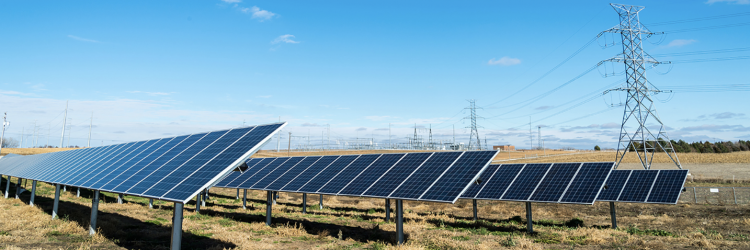
Not counted: space for new high-voltage transmission lines, key to utility-scale solar and wind projects.
Solar Energy Industries Association
“It’s hundreds of thousands of acres if not millions for transmissions alone,” said David Blackmon, an energy consultant and writer based in Texas. “The wind and solar farms will take enormous swaths of land all over the country and no one is talking about that.”
And these vast plots, along with the chains of transmission towers, do not include other aspects that would take up even more land: nationwide vehicle charging stations, mines for rare-earth minerals, maintenance space for huge propeller blades and panels, and so forth.
In addition, all projections increase substantially if the U.S. were to meet Biden’s larger goal of aligning the nation with a global plan, set by the International Energy Association and pushed by the World Economic Forum of Davos, dubbed “NetZero 2050.”
Professor Jesse Jenkins at Princeton University, whose work is often cited by renewable energy advocates, did not respond to RCI’s questions, but he detailed the scope of the challenge in the May/June issue of progressive Mother Jones magazine. He urged the U.S. to embark on a moon-shot level transformation of its energy sector, using hundreds of billions in taxpayer dollars that Biden provided for the renewable sector in the spending bill that Democrats named the Inflation Reduction Act.
“We’ll have to build as much new clean generation by 2035 as the total electricity produced by all sources today, then build the same amount again by 2050,” Jenkins wrote. “This could ultimately require utility-scale solar projects that cover the size of Massachusetts, Rhode Island, and Connecticut combined, and wind farms that span an area equal to that of Illinois, Indiana, Ohio, Kentucky and Tennessee.”

Given the ambitious goals and tight time frames Biden has committed the nation to, it seems natural to assume there would be a master plan detailing where and when this renewable infrastructure will be built and come online. Yet despite strong resistance by many communities across the country to serve as hosts for these massive projects, there has been no robust public debate about how all the necessary land will be acquired – and whether, for example, it will include the taking of private property through eminent domain or use of national park lands, an idea the government officially dismisses.
In fact, no such master plan exists. The closest thing to it, according to a spokesperson for the federal National Renewable Energy Laboratory, is a “long-term strategy” put out by Biden’s climate envoy John Kerry. The optimistic, 65-page document does not, however, address the question of land use. The White House did not respond to questions from RCI.
Experts skeptical about Biden’s goals say the land requirements are so immense and problematic that such detail would likely reveal how unworkable the entire program is.
“Of course it will never happen,” said William Smith, a professor of Earth, Environmental, and Planetary Sciences at Washington University in St. Louis and a member of the CO2 Coalition, a group of scientists who do not believe global warming is an apocalyptic development.
The “less than one-half of one percent” figure is fantasy, according to Smith.
“A lot more area is required.”
Instead of being the focus of vigorous debate regarding a crucial issue, the land requirements are routinely finessed or, most commonly, ignored by policymakers and environmentalists who promise that the radical transformation during the coming decades to the world of supposedly clean electricity will have minimal impact on people’s lives and the landscape. In reviewing government documents and speaking with experts, RCI found widespread disagreement and murkiness in part because the questions surrounding renewables are filled with so many dynamic variables and unknown factors.
The U.S. currently uses an estimated 126,562 square miles for energy production, a bit more than the combined land mass of Missouri and Florida, with by far the biggest chunk devoted to growing corn for heavily subsidized ethanol fuel. In 2021, the last year for which figures are available, the U.S. got 2.8% of its energy from solar sources and 9.2% from some 72,000 wind turbines, according to government figures.
In theory, one should be able to easily determine the nation’s future energy needs by working backward – estimating the nation’s total need for electricity in 2030 or 2050 and then determining how many wind turbines and solar panels would be required to meet that demand.
From Federal Agencies, the Rosiest Picture
There is little agreement, however, on how much electricity the U.S. will need in 2035 or 2050 – and, hence, the number of solar installations and wind turbines – because that depends on a variety of lifestyle decisions, such as the type of cars people will drive and the size of the homes they will live in. In addition, the power generation of those turbines and solar panels depends on where they are situated – which is also unknown – and their age.
These and other variables, in turn, can politicize an ostensibly scientific problem as the factors and assumptions one uses to ask key questions necessarily influence the answer.
The rosiest picture is presented by federal agencies, which rely on estimates from the National Renewable Energy Laboratory and environmental activists.
Alex Hobson, a senior vice president at the American Council on Renewable Energy (ACORE), a nonprofit that “represents all facets of the renewable energy marketplace,” echoed the Department of Energy when she told RCI that the U.S. would need “less than 1% of the land in the contiguous United States to fully transition to a clean energy economy.” All told, the U.S. could hit the Biden administration’s target of a 50% reduction in emissions by 2030 by adding 19,000 square miles of renewables, a parcel roughly equal to Maryland and Vermont, Hobson said.
Although the National Renewable Energy Laboratory’s own work includes such projections, Hobson characterized estimates putting the square mile requirements for largely carbon emissions-free energy in the hundreds of thousands as “a narrative often espoused by critics of renewable energy.”
Nevertheless, estimates by other outfits favorably disposed to Biden’s climate agenda offer larger projections. An analysis by Bloomberg News, controlled by billionaire environmental activist Michael Bloomberg, concluded that “expanding wind and solar by 10% annually until 2030 would require a chunk of land equal to the state of South Dakota.” South Dakota is roughly 77,000 square miles, or five times the “one-half of one percent” figure that federal officials like to tout.
Pushing the goal to a “NetZero” future in 2050, Bloomberg reported, would “need up to four additional South Dakotas to develop enough clean energy to run all the electric vehicles, factories and more.”
The different dates – a reduction by 2030 and “NetZero” by 2050 – are yet another set of many variables that contribute to the fuzzy math.
Spinning Turbines
Probably the greatest area of confusion surrounds the amount of land required by wind turbines. In support of its claim that the U.S. will need only 15,000 square miles of land to meet Biden’s renewable goals by 2035, a Department of Energy spokesperson told RCI that the country will need an estimated 5,800 to 11,200 square miles for solar installations and between 1,930 and 3,100 square miles for wind turbines by 2035. But those numbers account for just the physical space required by each turbine – the stake in the ground, which is small – and not the broader area required by turbines, which must be spaced far apart from one other and require huge bases made from 2,500 tons of concrete.
Those who support renewables claim that almost all of the surrounding land can still be used for farming, ranching, or other purposes. Even here, however, the numbers do not align. The Energy Department told RCI that “95% of the land” in wind farms remains untouched by the renewable energy apparatus, meaning the turbines would occupy but 5% of the land. But the National Renewable Energy Laboratory lowers that figure further, claiming only 2% of the land is removed from circulation and, in parentheses in his Mother Jones piece, Jenkins marks it down to 1%.
Those who believe the emissions goals set for 2035 and beyond are unrealistic and unnecessary say those numbers are absurdly low, and characterize as false the notion that towering turbines – plus the construction needed to store and transmit energy that relies on fickle sources like sunshine and wind – will not eat up many thousands of additional square miles.
When factors beyond sticks on the horizon are factored in – that is, the total parameters of wind farms – the plots needed get much bigger, as the National Renewable Energy Laboratory (134,000 square miles) and Jenkins (213,000 square miles) acknowledge in their studies.
Then, given that power weakens the further it must travel to the end user, a gigantic new transmission system will be needed.
Here again, RCI found widely disparate estimates. In March, a DOE study said that 47,000 new miles of high-voltage transmission wires would have to be constructed, but a National Renewable Energy Laboratory study looking at 2035 noted that the U.S. could need up to 100,000 miles of new lines during the next decade. The low end of that estimate is the distance of 10 round trips from New York to Moscow, while the high end is four times the earth’s circumference at the equator.
Again, the jumping numbers underscore how policymakers consistently highlight the lowest possible figures, which are derived using what could prove fanciful assumptions.
The renewable energy lab’s suggestion that turbines will take up only 2% of land is false, according to Smith.
“No matter how you slice it, the NREL estimate is utter rubbish, but is 100% accepted since it toes the narrative line,” he said. “It is comforting until it is proven to fall drastically short by sad experience. Ten percent of that land, at least, is useless for other purposes. No one wants to live under, near, or in the line throw from a wind turbine in northern latitudes.”
In addition, there is something disingenuous about pretending enormous windmills and high voltage transmission towers and wires are mere blips in the landscape, said Mark Mills, a senior fellow at the free-market Manhattan Institute and a faculty fellow at Northwestern University’s McCormick School of Engineering and Applied Science.
“Like all scenarios, it depends on boundary condition assumptions,” Mills said. “NREL, for example, uses the specific footprint of the concrete pad on which the wind turbine physically sits, rather than the acres of land occupied by the array of turbines. That yields a very small number of course, despite the visual scale of the array.”
Mills acknowledged wind farms do not completely rule out farming or other land uses nearby, gaps that are not available with solar panels in which “literally square miles of land are rendered useless for other purposes.”
These factors tend to be elided when enthusiasts predict smaller and smaller allotments of land being required for the transformation envisioned.
“I don’t hear any of them talk about the land footprint at all,” said H. Sterling Burnett, director of Arthur B. Robinson Center on Climate and Environmental Policy at the Heartland Institute, a conservative think-tank opposed to massive renewable energy projects. “The whole NIMBY mindset is not unique to fossil fuels. But if you’re talking about building turbines in Kansas and shipping power to New York City, or all the power lines that will be needed – nobody talks about that.”
Featured Video

Now everyone is dumping US government bonds
or go to
Aletho News Archives – Video-Images
From the Archives
Experts Warned For Years That A War With Iran Would Happen This Way
By Caitlin Johnstone | April 3, 2026
… It’s so wild how we keep seeing reports that Iran’s retaliation caught the US off guard. For all the years I’ve been paying attention to this issue I’ve been reading experts and analysts saying if the US attacks Iran, Iran can close the Strait of Hormuz and strike US bases and the energy infrastructure of US allies in the region.
A few examples:
A 2006 Oxford Research Group paper titled “Iran: Consequences of a War” warned that Iran has numerous options at its disposal in the event of a US attack, and that the “most significant of these would be any possible retaliatory Iranian action to affect the transport of oil and liquefied natural gas through the Straits of Hormuz,” adding that stopping Iran from doing this “would be difficult if not impossible to achieve, leading to a fear of attack which alone would have a formidable impact on oil markets.”
A 2007 Cato Institute paper titled “The Iraq War and Iranian Power” warns that “Iran possesses the largest ballistic-missile inventory in the Persian Gulf — missiles which can reach Israel, Saudi Arabia and US military bases in Iraq,” and that “experts argue Iran could also use the ’oil weapon’: blocking the 34km-wide Strait of Hormuz and conducting submarine and anti-ship missile attacks against ports and oil facilities in Saudi Arabia, Kuwait and other Gulf Cooperation Council states.”
A 2012 NPR article titled “Can Iran Close The World’s Most Important Oil Route?” features then-chairman of the Joint Chiefs of Staff acknowledging that Iran absolutely can block the Strait of Hormuz, saying Tehran has “invested in capabilities” which specifically enable them to do so.
A paper from the Columbia Center on Global Energy Policy and the Center for a New American Security titled “IN DIRE STRAITS? IMPLICATIONS OF US-IRAN TENSIONS FOR THE GLOBAL OIL MARKET” warns of a potential scenario “that includes damage to Gulf oil infrastructure and a temporary closure of the Strait of Hormuz.”
These weren’t a bunch of keffiyeh-wearing peaceniks making these assessments, they were deeply entrenched swamp monsters entirely loyal to the US empire. They opposed war with Iran not because it would be an evil act of unforgivable mass murder, but because it would be bad for the imperial power structure. … Full article
Blog Roll
 Aletho News
- There is no military solution to Strait of Hormuz
- NATO’s structural collapse – the outcome of deviation from reality
- Poll finds world views China better than US
- One Of America’s Leading Neo-Cons Has Turned Against The Iran War And Israel
- Attack in the Bosphorus exposes NATO weaknesses and tensions among allies
- BREAKING: US JET SHOT DOWN OVER IRAN /Lt Col Daniel Davis & Nima Alkhorshid
- Now everyone is dumping US government bonds
- Brazilian Congressman seeks to bar Israeli military personnel from entering Brazil
- Official reveals evidence of Arab states’ involvement in US-Israeli war on Iran
- His Majesty’s head-chopper: Syria’s MI6-backed president bows to King Charles
- If Americans Knew
- US loses planes over Iran, Israel downgrades Lebanon war goals – Daily Update
- Israel Is Blocking Palestinians from Easter at Church Where Jesus Resurrected
- Plot to assassinate Palestinian activist follows harassment campaign promoted by Zionist groups and elected officials
- Prominent New York synagogue hosts presentation on why U.S. Jews should support the ethnic cleansing of Gaza
- Tapper vs. Piker: Is the CNN Anchor Auditioning for David Ellison?
- Shouldn’t Democrats Be Able to Condemn Genocide?
- Israel-US kill negotiators, destroy civilian structures, but Iran’s military capabilities still largely intact – Daily Update
- ‘War crime’: Global condemnation as Israeli ministers celebrate death penalty law targeting Palestinian prisoners
- 7 Ways Israel Is Turning Lebanon Into Gaza
- World’s Leading Football Bodies Under Fire Over Israel Policies
- No Tricks Zone
- Low Intensity Tornado Wrecks Major Solar Farm, Creating A Potential Toxic Dump
- New Study Finds Warming Saves Lives…Cold Temperatures 12 Times More Deadly Than Excess Heat
- German Science Blog Accuses PIK Climate Institute Of Hallucinating Climate Tipping Points
- Devastating Assessment Of Comirnaty Vaccine By Former Senior Pfizer Europe Toxicologist
- New Study: CO2 Is ‘Effectively Negligible’ As An Explanatory Climate Change Factor Since 2000
- Former Pfizer Toxicologist Dr. Helmut Sterz Tells Bundestag Hearing Pfizer Vaccine Should Have Never Been Approved
- Energy Expert: Germany’s Nuclear Phaseout Was A “500 Billion Euro Mistake”
- New Research: South Australia’s Mid-Holocene Sea Surface Temperatures Were 4°C Warmer Than Today
- Storing Green Energy To Last Germany 10 Days Would Require A 60-Million Tonne Battery
- New Studies: UK Sea Levels Were 4 Meters Higher Than Today During The Mid-Holocene
 Aletho News