Eight Iraqi resistance attacks hit US Victoria base near Baghdad airport
The Cradle | March 22, 2026
Iraqi resistance factions targeted the US Victoria Base near Baghdad airport in at least eight separate rocket and drone strikes, just days after video footage showed the site engulfed in flames as a result of non-stop attacks.
“Eight separate attacks, carried out until dawn with rockets and drones, targeted the US center,” a senior Iraqi security source told AFP on 22 March.
The Islamic Resistance in Iraq coalition announced on Sunday morning that its fighters carried out 21 operations over the past 24 hours, “using dozens of drones and missiles to target US occupation bases in Iraq and across the region.”
The US Victoria base – located near Baghdad airport – has come under continuous attacks by the Iraqi resistance since the start of Washington and Tel Aviv’s brutal war against Iran. The site serves as a US military logistical center.
Footage from after an Iraqi resistance operation on Friday showed the US Victoria base engulfed in large flames.
Other targets which have come under heavy attack by the Iraqi resistance include Washington’s Harir base and the US embassy compound in Baghdad.
After several heavy strikes on the embassy building since the start of the month, leading Iraqi resistance faction Kataib Hezbollah said on 19 March that it “issued orders to suspend operations targeting the US Embassy in Baghdad for a period of five days,” warning that “the response will be immediate” if its terms are violated.
The terms demand that Israel “cease the destruction and bombardment of the southern suburbs in Beirut,” and include calls for “a commitment to not bomb residential areas in Baghdad and the provinces,” as well as “the withdrawal of CIA elements from their positions and keeping them inside the embassy.”
Two days earlier, a top Kataib Hezbollah official was assassinated in a US-Israeli airstrike.
Deadly air raids against Iraq have been ongoing since the Iraqi resistance intervened in the war and began striking US targets in response to the brutal US-Israeli campaign against Iran.
Iran’s Dimona Strike Shatters Myth of ‘Impenetrable’ THAAD, Patriot & Arrow Air Defenses – Analyst
Sputnik – 22.03.2026
Iran’s huge leap in missile capability allowed it to punch through Israel’s vaunted multi-layered air defense shield, says political science and international relations expert Dr. Simon Tsipis. That explains why several warheads in Iran’s retaliatory strike on Dimona, home to Israel’s nuclear research facility shielded by Israeli and US defenses, reached their target area, Dr. Simon Tsipis tells Sputnik.
According to the analyst:
- Attack exposed weaknesses of Israel’s Iron Dome, built to intercept short-range rockets and mortars – not Iran’s intermediate-range ballistic missiles
- Iran’s military capabilities now allow it to launch ballistic missiles at ranges exceeding 2,000 km — including Diego Garcia joint US-UK military base
- Iran employs saturation tactics, launching swarms of decoys like drones and low-caliber missiles to overwhelm defensive systems before the main missile strikes
“Until now, it had been assumed that Iranian missiles would lose momentum and speed at the limits of their range. It is now evident that they retain significant power and velocity during the terminal phase of flight,” says the pundit.
The geopolitics expert breaks down the brutal US/Israel reputational damage:
- While Iran has just burnished its credentials as a serious military power, arms buyers everywhere are taking note of Arrow, Patriot, and THAAD failures
- Iran’s claimed airspace dominance puts US bases on notice worldwide, while bringing much of Europe within Iran’s missile range
The sheer reach of Iran’s new arsenal deals a humiliating blow to Israeli intelligence, which had long insisted it knew every detail of Iran’s capabilities
“Clearly, hidden breakthroughs went undetected,” he says.
In Dr.Tsipis’ opinion, Iran likely chose not to score a direct hit on Dimona’s nuclear reactor to avoid escalation. But it has sent a clear message: “Israel’s most heavily guarded site lies within striking range of Iranian systems.”
Bahrain admits US Patriot missile hit residential area, injured dozens
Al Mayadeen | March 21, 2026
Bahrain’s government has admitted that a US Patriot air defense system was involved in the March 9 interception over the Sitra residential area that left dozens of civilians injured, Reuters reported.
This admission directly refutes the account offered by US Central Command, which had attributed the casualties to an Iranian drone strike.
In a statement to Reuters, a Bahraini government spokesperson said the Patriot system intercepted an Iranian drone, insisting that the operation “prevented a drone strike and saved lives.”
CENTCOM had previously maintained that an Iranian drone directly struck a residential neighbourhood. Bahrain’s admission that a Patriot missile was involved now places both accounts in open contradiction with the footage and with each other.
Video published by Drop Site News shows an air-defense interceptor descending following a failed interception attempt, with an impact occurring off-camera shortly afterward. The images strongly suggest it was the interceptor, not an Iranian drone, that struck the residential area, injuring 32 civilians, including children, with four reported in critical condition.
Whose lives were being saved?
The Iranian missiles and drones at issue were directed at US military bases in Bahrain, installations that a significant portion of the Bahraini population regards as an occupying presence, which secures the authoritarian order and is complicit in the genocide in Gaza and the war waged on Iran and Lebanon.
Had those bases not existed on Bahraini soil, no Iranian missile would have targeted Bahrain, and no Bahraini civilian in Sitra would have been injured. The only lives the Patriot system could plausibly claim to have saved were those inside the bases themselves, the very presence most Bahrainis have long demanded be ended.
Death penalty for documenting the damage
Rather than launching an independent inquiry into how a US missile system came to strike a residential neighbourhood, Bahraini authorities have moved to prosecute those who documented the aftermath.
The kingdom’s Public Prosecution is seeking the death penalty for several citizens charged with photographing locations where photography is allegedly prohibited, in what prosecutors framed as “high betrayal”.
During court proceedings, they described the situation as “brutal Iranian aggression” and called for “maximum penalties, without the slightest mercy,” specifying that this meant capital punishment.
162 arrested, crackdown still ongoing
According to the Prisoners Affairs Authority in Bahrain, 162 citizens, including men and women, have been detained since the onset of the US-Israeli war on Iran, with only five released as of March 18.
Detentions have targeted citizens who filmed Iranian strikes on US military bases in the region, individuals who publicly expressed solidarity with those operations, as well as citizens who participated in peaceful protests denouncing the war and the assassination of martyred Iranian Leader Sayyed Ali Khamenei.
The Prisoners’ Affairs Authority warned that the documented figure almost certainly undercounts the actual number of arrests, as raids and detention operations were still ongoing at the time of reporting.
Iran retaliation shakes helium, global tech supply chains
Al Mayadeen | March 22, 2026
The Associated Press on Sunday reported that Iranian strikes on US-linked gas infrastructure in Qatar is now threatening to disrupt not only global energy markets, but also key technology supply chains, due to the role Qatar plays in helium production.
The strikes come in direct response to the earlier targeting of Iran’s own energy sector, particularly the attack on the South Pars gas field, the country’s largest and most strategic source of natural gas. Iranian officials had warned that any attempt to hit its economic infrastructure would be met with reciprocal measures across the region, signaling a shift toward targeting energy assets tied to the broader war effort.
Qatar, which shares the same gas reservoir with Iran, became part of this escalation, with strikes on Ras Laffan reflecting a deliberate mirroring of earlier attacks on Iranian facilities.
Helium shock
The Gulf state supplies roughly a third of the world’s helium, a gas that, despite its everyday image, is essential for advanced industries, including semiconductor manufacturing, medical imaging, and space launches.
Production was halted earlier this month at the US-linked Ras Laffan facility after attacks on energy infrastructure, with further strikes this week causing what officials described as extensive damage. Qatar’s state-owned energy company has since warned that helium exports will be reduced by around 14 percent.
“It makes the story worse,” Phil Kornbluth, president of Kornbluth Helium Consulting, told AP. “Your best-case scenario would be you’re back producing some helium in six weeks or something like that. As it looks right now, that’s highly unlikely.”
Prices surge
Prices have already begun to rise, with spot rates doubling since the crisis began. While most helium is sold through long-term contracts, analysts say sustained disruption could push those prices higher as well.
“There’s lots of room for price increase if this is an extended outage,” Kornbluth said.
The impact has not yet fully reached global markets, largely because shipments sent before the escalation are still arriving. But that buffer is expected to run out within weeks.
“Nobody’s run out of helium yet. But it’s a few weeks out when the shortage really hits,” he added.
Chips under pressure
The implications are particularly serious for the semiconductor sector. Helium is used during chip production to regulate temperature, especially in the etching phase, where maintaining consistent cooling is critical.
“You really want to maintain a constant temperature over the wafer. And in order to do that, you need to be able to draw heat away from the wafer that’s being processed,” said Jacob Feldgoise, an analyst at Georgetown University’s Center for Security and Emerging Technology. “Helium is an excellent thermal conductor. And so chip fabs will blow helium over the back of the wafer in order to speed heat removal and keep heat removal consistent.”
There is currently no viable substitute for helium in this process.
Beyond chipmaking, helium is also used to cool MRI machines and in rocket fuel systems, making it a key resource across both medical and aerospace sectors.
Supply chain strain
The situation is further complicated by transport constraints. Liquid helium must be stored in specialized containers that can only hold it for a limited time before it begins to escape. Around 200 of these containers are currently stuck in the region, slowing efforts to stabilize supply.
“It’s going to take a fair amount of time to get these containers out of Qatar and to get them somewhere else where they might be able to be filled with helium,” Kornbluth said. “So this initial period when you lose Qatar supply and have to rejig the supply chain and reposition containers, that’s going to be the worst part of the shortage most likely.”
With few alternative producers and Russian exports restricted by sanctions, options for replacing Qatar’s supply remain limited. Asian manufacturers, particularly in South Korea, are seen as especially exposed due to their reliance on Qatari helium.
“Even disruptions affecting just a handful of materials could destabilize the entire semiconductor manufacturing process as each stage of production depends on the previous one,” said Jong-hwan Lee, a professor at Sangmyung University.
Still, analysts say a complete supply collapse is unlikely. In the event of shortages, helium is typically redirected toward critical sectors such as healthcare and chip production, where demand is hardest to replace.
But the situation points to how quickly a regional escalation can ripple through global industries, exposing vulnerabilities far beyond the immediate battlefield.
The Israeli Media Is Laying The Groundwork For a Permanent Israeli Occupation Of Southern Lebanon
The Dissident | March 20, 2026
Israeli journalists with connections to Benjamin Netanyahu and the Likud party are now openly calling for an Israeli annexation of Southern Lebanon and the establishment of Jewish settlements, after the Israeli bombing campaign has displaced over one million people from Southern Lebanon.
Netanyahu-connected figures in the Israeli media are now using this mass displacement to push for a permanent Israeli occupation of Southern Lebanon.
Amit Segal, a Likud connected journalist, in the Miriam Adelson funded outlet Israel Hayom praised Trump for supporting the idea of an Israeli annexation of the West Bank and Gaza and hoped that the Trump administration would approve an Israeli annexation of Southern Lebanon, writing, “Trump, a man with no sentimentality for old borders, already shook the Middle East when he agreed in principle to recognize Israeli sovereignty over parts of Judea and Samaria in the framework of the Peace to Prosperity plan, and when he supported mass emigration from Gaza. The mass migration from southern Lebanon has already happened. The only question is whether he will give Israel merely de facto approval of its new northern border or de jure approval as well.”
Referring to IDF militants who expanded up to the Litani River in Southern Lebanon, Amit Segal hoped it would lead to permanent occupation, writing, “Is this a temporary, isolated event? Soldiers who went deeper into Lebanon this week should think again, and remember that IDF forces have now been on the summit of the Syrian Hermon since the end of 2024, with no expiration date.”
Taking it a step further, Michael Freund, a former deputy communications director of Benjamin Netanyahu, writing in The Jerusalem Post, explicitly advocated for a permanent Israeli occupation with Jewish settlements of Southern Lebanon calling for Israel to “incorporate southern Lebanon into sovereign Israel and settle it with Jews.”
He added that, “A growing movement in Israel has begun to argue that the only way to guarantee lasting security in the North is not merely military control of territory but the establishment of permanent Jewish communities there. One such initiative is Uri Tzafon (‘Awaken, O North’), an organization advocating the settlement of southern Lebanon as a long-term security solution.”
He advocated that Israel “maintains control of the territory south of” the Litani River and the “establishment of Jewish communities there”.
Michael Freund cited biblical Israel as a justification for stealing Lebanese land, writing, “Biblical sources describe the borders of Canaan as extending northward toward Sidon, and the territory of the tribes of Israel included it as well” along with arguing that Israeli annexation of Southern Lebanon is needed for “security”, (i.e. destroying Hezbollah’s ability to defend against Israeli expansion).
The motive behind the war in Iran has always been the Greater Israel project. With Israel’s mass displacement of Southern Lebanon, the Likud-friendly media is already explicitly stating that this move was done to advance the project and expand Israeli territory into Southern Lebanon.
Airlines Suffer Losses Estimated at $53Bln Due to Middle East Conflict
Sputnik – 21.03.2026
On February 28, the United States and Israel began striking targets in Iran, including in Tehran, causing damage and civilian casualties. Iran has carried out retaliatory strikes on Israeli territory, as well as on US military targets in the Middle East.
The damage caused by US and Israeli aggression against Iran amounted to approximately $53 billion for the 20 largest publicly traded airlines, the Financial Times reported, based on its own calculations.
Airline executives are warning of the consequences caused by the sustained rise in oil prices, disruptions at Gulf airports, and a potential hit to global demand, the Financial Times added.
In the coming months, passengers planning trips on routes that are not related to the Middle East will face a sharp rise in ticket prices as airlines try to protect their revenues, the newspaper reported.
Have you heard the latest joke about Trump and Iran?
By Martin Jay | Strategic Culture Foundation | March 21, 2026
What’s the difference between Vietnam and the Iran War? Answer: Trump had an exit strategy for Vietnam.
How much collective responsibility can the West take for the shitstorm it is in now, otherwise known as ’The Iran War’? Many would like to blame most of it on Trump for being a manchild and just going ahead with the most madcap military venture NATO countries have ever known, against all the expert advice, and ending up with a regime which is even more hardcore for having a bomb, world energy prices soaring and causing chaos due to Iran choking the Straits of Hormuz, and the entire relationship between Washington and its allies in the region reduced to a handful of dust?
The reality is that Trump took the decision to go to war not based on one issue alone. Left-wing commentators in the U.S. would like us to think it was to distract the media away from the latest revelations of the DOJ and the Epstein files, which had a tome of evidence accusing him of having inappropriate relations with a 13-year-old girl. But there were other reasons which pushed him over the line. Top of that list is surely that Netanyahu was blackmailing him, threatening to release recordings of his phone calls with Epstein where they talk about young girls. Add to that, it was probably pointed out to him that he was not going to keep both houses when the midterms come unless a considerable amount of Jewish American money was pumped into his campaign.
But it isn’t just Trump that has got us all into this mess that we’re in. For decades, the EU allowed Israel to ratchet up their brutal occupation of Palestinians and in the process to dehumanize them, leading to the climax of the Gaza genocide. This gave an unrealistic sense of impunity, almost akin to a divine intervention to religious fanatics who already believed that they were the chosen people and that they had a right to murder those beneath them and steal their property. Look at the reaction of western governments and in particular the EU when the events of October 7th unfolded and how they supported any response at all from Israel. In fact, just look at how any UK government minister reacted to the start of the Iran War, which, if we didn’t know better, might have thought it was started by Iran.
Trump is isolated now not for his rank stupidity, or his delusional views about who he is and what America is. He is isolated by EU leaders as none of them want to be part of a new Vietnam War scenario which goes on for years and only produces body bags — only to keep a U.S. president from looking like a total fuckwit in front of his own people.
Yes, the reality is that the vast majority of Americans don’t really understand what Trump just did in Iran. Even today, something like 80 percent of Republicans polled agree with his decision to begin a conflict with Iran, while Democrats are in the other camp altogether, perhaps better informed of Trump’s rationale behind going ahead with the plan.
Most likely the plan had been on the table for months and each time a military expert pointed out the harsh realities of it bringing blowback on a global level, affecting not only pump prices rocketing but just about everything else over the longer term, they were ignored or swapped for a sycophant in a uniform who just nodded like a demented parcel shelf toy dog until he had a whole room full of them. Does the American public understand just how self-indulgent Trump has been and that he has now created for himself a new threat, like a magician pulling a pigeon out of his hat? While the so-called ’threat’ from Iran goes from being a vague, opaque notion which most people don’t even believe, to being something quite real and lucid to the point that, ironically, Trump can now present it to the gullible public and hope they don’t notice that he manufactured it all by himself.
Yet it is remarkable how detached Europeans are from Trump and his plans. What an extraordinary example of how diplomacy is entirely dead and not worth the paper it’s written on, when EU ambassadors had no clue about these meetings and what came out of them. Shouldn’t EU leaders have stepped in at some point and warned him he was playing with fire and that the only certainty was that the West was guaranteed to be the burn victim? What about our intelligence services? It is inconceivable they didn’t know what was coming? Did they not tip off their own governments? Likely they did and that London, Paris and Berlin simply did nothing, such is the non-existent special relationship between Old Europe and Washington. Even Britain.
Transatlantic relations between the U.S. and EU countries is never going to be the same again if something can’t be done to get a dialogue going. Sure, Trump may pull the U.S. out of NATO just out of spite, like a fuming four-year-old who’s just lost his ball to an angry neighbour, but other, bigger relations are probably burnt forever. Washington’s relations with Israel can never go back to the Master (Israel) Slave (U.S.) set-up. And America’s relations with Gulf Arab countries is going to be hard to put back on an even keel when Arab leaders can see how fake they were in the first place.
Trump’s childish revelation recently that he couldn’t have imagined Iran hitting the GCC countries feels like a seven-year-old boy trying to explain to a room full of adults that he didn’t realise that borrowing his friend’s go-kart would result in so much damage as no one told him the jalopy would go so fast down a hill. The EU has a similar idiot in power, though. Kaja Kallas, a name which conjures up a 1980s underarm deodorant or a Greek ferry company, is blessed by at least not looking as stupid as she really is. This daughter of an Estonian communist politician, who was happy to live the high life under the Soviets, seems to be almost entirely brain dead when she gets on the podium or in front of the six microphones (all of EU TV networks who are actually paid cash to broadcast her moronic ramblings) and harps on about Russia getting more money now from oil sales. It’s literally like watching someone in a mental institution who hasn’t taken their medication talking to the mirror with a toothbrush as a mic and trying to sound clever.
But it’s no joke how the West got to where it is with Iran, when these same buffoons for decades have been encouraging Israel to expand its ideas and, red in tooth and claw, reach a point today where they are either starving people so as to ethnically cleanse Gaza or simply bombing women and children in their tents — or taking over part of Lebanon, a decades-old fantasy which didn’t end well in 1982 when they tried it before.
So the Trump joke is less funny when you see it in the light of who led him to where he is and what his inconsistent messages are to EU leaders. He is stuck in the past and tends to be someone trying to correct or duplicate U.S. foreign policy. Of course, he lacks élan, though, which is also part of the problem with such leaders. In the early 70s, when Nixon wanted to devalue the dollar but retain its power around the world, EU leaders were horrified. Apparently, he simply said to them: “It’s our dollar, but it’s your problem.”
Trump White House plagiarized Iran war manifesto from Israel-aligned think tank
By Wyatt Reed and Max Blumenthal | The Grayzone | March 20, 2026
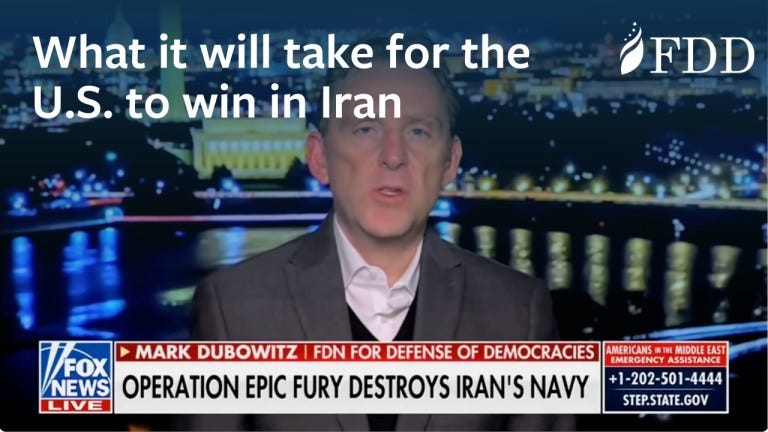
The Trump White House plagiarized its justification for attacking Iran from the Foundation for the Defense of Democracies, the main DC outfit promoting war with Tehran. The think tank was originally founded to “enhance Israel’s image,” and partners closely with the Israeli government.
The Trump Administration appeared to plagiarize its official justification for its war on Iran, copying almost word-for-word a document originally produced by the Foundation for the Defense of Democracies (FDD), a pro-war think tank with close ties to Israeli intelligence which was originally founded to “enhance Israel’s image.”
The FDD document was authored by Tzvi Kahn, the former assistant director for policy and government affairs at the American Israel Public Affairs Committee (AIPAC).
A March 2, 2026 statement issued by the White House accusing Tehran of 44 instances of terrorism against American citizens is “virtually identical” to the list published by FDD in June 2025, analyst Stephen McIntyre noted Thursday.
While the White House did make superficial alterations to the text, they largely consisted of appending the label “Iran-backed” to every mention of groups like Hezbollah and Hamas. In the few instances where Trump administration officials bothered to make significant changes to the original FDD list, the edits were almost always made in service of “ratcheting up the underlying allegation,” McIntyre concluded.
Among the most egregious examples was a 1996 attack on the Khobar Towers in Saudi Arabia, which FDD originally said merely that Hezbollah al-Hejaz was “deemed responsible” for. In the White House version, however, the group’s responsibility was “asserted as factual,” explained McIntyre, noting that serious questions about the incident remain unanswered to this day. “Clinton’s Defense Secretary William Perry subsequently wondered (along with many others) whether Khobar Towers should have been attributed to Al Qaeda,” he wrote.
A 2009 investigation by journalist Gareth Porter based on interviews with over a dozen former CIA, FBI and Clinton administration officials demonstrated that the FBI’s inquiry into the Khobar Towers attack was precooked to blame Iran, when Al Qaeda was mostly like the culprit. Porter found that Shia citizens of Saudi Arabia had been tortured into confessing to the crime by Saudi secret police.
While the White House declined to join FDD in blaming Iran for the Sept. 11, 2001 terror attacks, it echoed the Israel-oriented organization in blaming Tehran for 603 military deaths in Iraq, which both documents attributed to “Iran-backed militias.” But there are major discrepancies with the figure, which amounts to 60% of the total US combatant deaths attributed to Iran. As McIntyre noted, such a claim is “not made in the State Department annual reports on Global Terrorism.”
At least four of the Americans the Trump administration claims were killed by Iran had served in Israel’s military. These included a US citizen who died while invading Lebanon in 2006 and two Americans in the IDF’s Golani brigade who were killed while invading Gaza in 2014. The fourth American, who was born in Israel and had also served in the Golani brigade, was killed amid violent reprisals against settlers in the West Bank in 2015.
A number of the claims are undermined by the very sources they cite, including a December 2019 incident in which the Trump administration insisted “Iran-backed Kataib Hezbollah terrorists killed an American civilian contractor and wounded several U.S. service members in a rocket attack at K1 Air Base in Kirkuk, Iraq.” But the Reuters article cited by the White House as proof that Iran was responsible made no such claim, explicitly cautioning that “no group has claimed responsibility for the attack.” In reality, Reuters suggested the attack was the work of “Islamic State militants operating in the area [who] have turned to insurgency-style tactics.”
Defense Secretary Lloyd Austin said at the time that “we don’t know” how operationally involved Iran was in the January 28 attack that killed three US troops, “but it really doesn’t matter.”
“We have FDD”: Israel’s favorite Washington cutout
In tax documents filed with the IRS upon its founding in 2001, FDD was originally named EMET, which is Hebrew for “truth.” The fledgling outfit described its mission as working to “enhance Israel’s image in North America and the public’s understanding of issues affecting Israeli-Arab relations.” It changed its name soon after, presumably to sound less overtly Israeli.
FDD has since emerged as the leading Washington-based think tank pushing the US toward war with Iran. During the first Trump administration, FDD participated in a $1.5 million dollar State Department initiative to attack critics of the policy of “maximum pressure” on Iran. At the time, FDD was openly promoting a military assault on Iran. The think tank’s staff are brought to testify before the House Foreign Affairs Committee more than those of any other think tank, invariably to advance conflict with Tehran.
During a 2017 conference of the Israeli American Council in Washington DC, then-Director General of Israel’s Ministry of Strategic Affairs Sima Vakhnin-Gil was recorded by undercover journalist James Kleinfeld during a private breakout session. The Israeli military-intelligence official named FDD as a partner in a covert campaign to spy on Americans involved in Palestine solidarity activity.
“This is something that only a country can do the best,” Vakhnin-Gil said. “We have FDD. We have others working on this.”
The Israeli American Council was sponsored by a billionaire who has also been a top donor to the FDD: the Sheldon and Miriam Adelson Foundation. Since the death of Sheldon Adelson, his Israeli widow, Miriam, has emerged as the top donor to Trump’s political campaigns. Having donated hundreds of millions to Trump and his allies, Adelson clearly expected him to wage war on Iran on behalf of Israel, according to conservative former Fox News host Megyn Kelly.
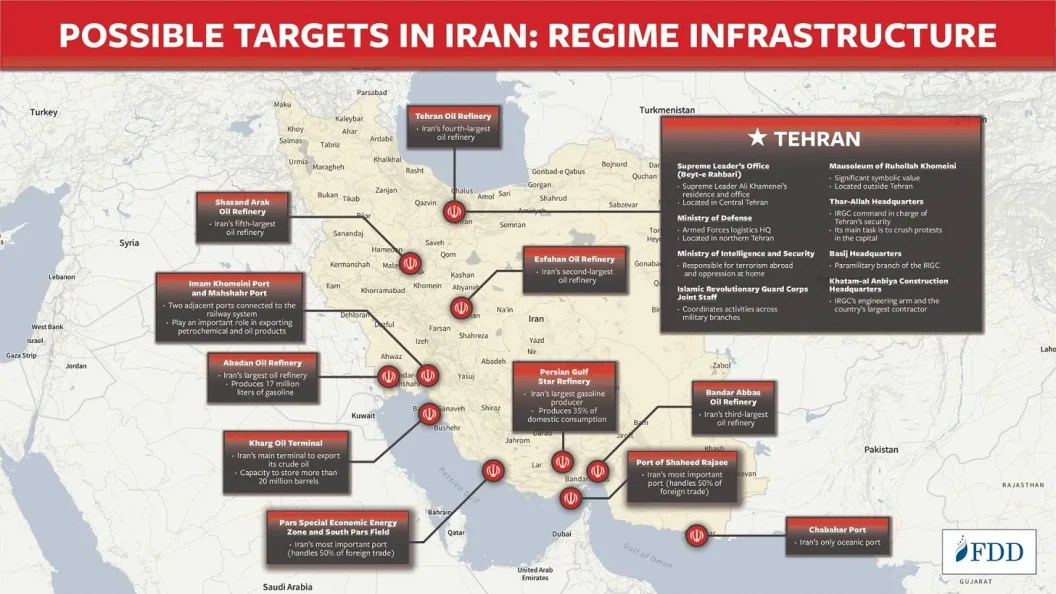
Since Trump thrilled his Israel-aligned donors by attacking Iran, FDD has provided the White House with more than talking points for justifying war on Iran. It has also proposed civilian targets in Iran for the US military to strike. These included the Tehran oil depot which Israel bombed on March 8, causing massive fires that shrouded the city of 9 million in toxic fumes.
After the strike triggered a wave of punishing retaliatory Iranian attacks on oil infrastructure in US-allied countries in the region, Trump advisors expressed regret. “We don’t think it was a good idea,” one told Axios. But by then, it was too late to avoid escalation. They had followed the FDD-authored, Israeli-designed script into a quagmire.
Israel-linked arms facility set ablaze in EU
RT | March 20, 2026
An anti-Zionist group has claimed responsibility for a fire at a warehouse belonging to a defense firm linked to Israel’s Elbit Systems in the Czech Republic.
The Earthquake Faction, which describes itself as “an internationalist underground network,” posted a video purportedly showing the arson attack on an industrial facility in the Czech town of Pardubice on Friday, along with images of the burned-out building.
It said the site was used to “develop weaponry used by the Zionist entity to massacre people daily in Palestine, Lebanon, Iran, and across West Asia.”
Firefighters extinguished the blaze, no injuries were reported, and police said there was no danger to the public. Officials said the incident is being treated as a suspected terrorist attack.
The facility is operated by LPP Holding, a Czech arms manufacturer producing civilian and military equipment. In 2023, the company announced cooperation with Israel’s Elbit Systems on drone development.
Headquartered in Haifa, the firm is Israel’s largest defense manufacturer, specializing in unmanned systems, precision weapons, and electronic warfare equipment.
The Czech Republic, an EU and NATO member, is a close ally of Israel. Czech officials have supported US and Israeli military actions against Iran and condemned Iranian missile and drone attacks.
Featured Video

Alon Mizrahi: ‘Israel Must Be Dismantled’
or go to
Aletho News Archives – Video-Images
From the Archives
How a War with Iran Would Diminish American Power
By Greg Scoblete | The Compass | August 13, 2010
Jennifer Rubin wants a war with Iran:
But the emphasis on the existential threat to Israel ignores a more basic issue for Americans to ponder: a nuclear-armed Iran represents a dagger at the heart of America and an existential threat to our status as a superpower and guarantor of the West’s security. As to the former, Iran is pressing ahead with its long-range ballistic missile program. First the Middle East and Eastern Europe, then all of Europe and, within a matter of years, the U.S. will be within range of Iranian missiles. If those are nuclear and not conventional, what then? We’re not talking about whether Iran is going to be “merely” a destabilizing factor in the Middle East or whether it will set off an arms race with its neighbors or imperil Israel’s existence. We’re talking about whether America will then be at risk (and lacking sufficient missile-defense capabilities if we continue to hack away at our defense budget). The argument about whether mutual assured destruction can really work against Islamic fundamentalists who have an apocalyptic vision becomes not about Israel’s ability to deter an attack but about ours. Those who oppose American military action have an obligation to explain why America should place itself in that predicament.
I would argue that any obligation to present an explanation lies with those whose disastrous policy prescriptions with respect to Iraq lead America into the worst strategic blunder in the country’s recent history. That aside, note the blind faith in the power of the military to actually achieve its ends. … continue
Blog Roll
 Aletho News
- Villains of Judea: Leonid Radvinsky
- Alon Mizrahi: ‘Israel Must Be Dismantled’
- Former Head Of MI6 Admits That The U.S. And Israel Are Losing The Iran War
- Scattered Thoughts on War and Peace
- Iran Threatens to Close Red Sea to Shipping in Response to Invasion
- Iran in excellent position to prevail in war with US, Israel: John Mearsheimer
- Iran warns US: Do not call your retreat an agreement
- Neighbors first – Moscow signals shift in energy strategy
- Almost 400 Ukrainian drones downed over Russia in single night – MOD
- Battle for Hungary: How the Russiagate blueprint has been unleashed against Orban
- If Americans Knew
- In the West Bank, life is a constant battle – 3 articles
- Jacob Reses, one of the most powerful pro-Israel operatives in Trump’s Washington
- Israeli-US assaults kill or injure 87 children a day – Not a ceasefire Day 166
- ‘Forever live by the sword’: Understanding Israelis’ massive support for Iran war
- UN’s special rapporteur on human rights says Israel is systematically torturing Palestinians
- Trump White House plagiarized Iran war manifesto from Israel-aligned think tank
- Gaza says 6–10 patients die daily waiting for treatment abroad as Israel blocks medical evacuations
- ‘Substantial evidence’ of double-tap strike in killing of Gaza’s Hind Rajab
- ‘Do Not Want To Die For Israel’: Doubts About Trump’s Iran Strategy Spread Among Troops
- Instead of taking Joe Kent’s claims seriously, the media is disregarding him as an antisemite
- No Tricks Zone
- Devastating Assessment Of Comirnaty Vaccine By Former Senior Pfizer Europe Toxicologist
- New Study: CO2 Is ‘Effectively Negligible’ As An Explanatory Climate Change Factor Since 2000
- Former Pfizer Toxicologist Dr. Helmut Sterz Tells Bundestag Hearing Pfizer Vaccine Should Have Never Been Approved
- Energy Expert: Germany’s Nuclear Phaseout Was A “500 Billion Euro Mistake”
- New Research: South Australia’s Mid-Holocene Sea Surface Temperatures Were 4°C Warmer Than Today
- Storing Green Energy To Last Germany 10 Days Would Require A 60-Million Tonne Battery
- New Studies: UK Sea Levels Were 4 Meters Higher Than Today During The Mid-Holocene
- Destructive Green New Deal: German Energy And Metal Group Warns Of Drastic Crisis
- New Study Documents A 20-Year Pause In Arctic Sea Ice Decline – Driven By Internal Variability
- Wake-up Call: Survey Shows Majority Of Germans Now Favor Postponing Climate Targets!
 Aletho News