Seyed M. Marandi: Threat of Seizing Kharg Island & the Use of Nuclear Weapons
Glenn Diesen | March 12, 2026
Seyed Mohammad Marandi is a professor at Tehran University and a former advisor to Iran’s Nuclear Negotiation Team. Prof. Marandi argues that it will be extremely difficult for the US to seize Kharg Island, and Iran would then destroy all energy facilities in the region.
Follow Prof. Glenn Diesen:
- Substack: https://glenndiesen.substack.com/
- X/Twitter: https://x.com/Glenn_Diesen
- Patreon: https://www.patreon.com/glenndiesen
Support the research by Prof. Glenn Diesen:
- PayPal: https://www.paypal.com/paypalme/glenndiesen
- Buy me a Coffee: buymeacoffee.com/gdieseng
- Go Fund Me: https://gofund.me/09ea012f
Is there even an off ramp?
Have events accelerated to the point where a nuclear attack is nearly inevitable?
Ashes of Pompeii | March 13, 2026
The strategic paradigm regarding Iran has shifted fundamentally. And despite the calls for a ground invasion in some circles, and given the combination of current events on the ground, Iranian resiliance, and logistics, it is simply not possible. Therefore, the United States faces a constricted set of options amidst an escalating existential crisis. The convergence of domestic political survival, allied desperation, military attrition, and the personal psychology of the executive creates a pressure cooker where the use of tactical nuclear weapons transitions from absolute taboo to a very real grim strategic calculus. Central to this equation is the vindictive nature of President Trump, a trait that transforms geopolitical setbacks into personal grievances, compounded by the “Bibi factor”: Benjamin Netanyahu’s four-decade obsession with confronting Iran, now reaching a point of catastrophic desperation as every strategic avenue fails.
Netanyahu has dedicated much of his political life to conflict with an emergent, Islamic Iran. For forty years, he has advocated, plotted, and pressured for decisive action. Now, with Israel under daily barrage and conventional options nearly exhausted, his influence on Washington becomes a volatile accelerant. But the more dangerous variable may not be Israeli pressure on America, but rather Israeli action independent of America. Israel possesses nuclear weapons. A desperate Israel, facing existential threat, may calculate that only a nuclear strike can halt the onslaught. If Israel launches first, the United States is instantly complicit. The question shifts from “Will America use nukes?” to “How does America respond when its ally does?”
This scenario triggers a specific and catastrophic escalation dynamic. Iran has consistently signaled that any existential attack would be met with disproportionate retaliation against its primary adversary: Israel. A nuclear strike would not coerce Tehran into surrender; it would guarantee an all-out Iranian assault focused overwhelmingly on Israeli population centers and probably the Dimona nuclear center. The retaliation would not be measured; it would be existential. For Trump, this creates an impossible bind. His vindictiveness demands punishment of Iran, but his legacy depends on protecting Israel. If Iran retaliates with devastating force, Trump faces two choices: accept the near destruction of America’s key ally, cementing his legacy as the president who lost the Middle East, or escalate further. Each path deepens the quagmire. Added to this is the question of whether Iran has, or is quickly acquiring, nuclear weapons that would be used in any retaliation response.
Compounding this trap is the total collapse of trust. Any diplomatic off-ramp requires a minimum reserve of credibility between adversaries. The Trump administration has systematically burned every bridge. The precedent of attacking on February 28 in the midst of negotiations signaled that talks were not a path to resolution, but a ruse to keep the opponent off guard. To de-escalate now would almost certainly require Trump to take substantial, clear and verifiable unilateral first steps: a ceasefire, sanctions relief and public concessions. In the current climate, such actions would not be read as statesmanship; they would be interpreted as capitulation by many in America, especially his staunchest allies. For a leader whose political identity is built on projecting strength and punishing perceived slights, unilateral de-escalation is politically indistinguishable from surrender. The trust deficit does not merely complicate diplomacy; it comes close to eliminating it as a viable instrument.
This absence of trust reinforces the escalation logic at every turn. Iran, believing that American assurances are worthless, has no incentive to show restraint. Israel, doubting that diplomacy can halt the threat, has every incentive to act alone. Trump, convinced that any sign of weakness will be exploited, has no political space to offer concessions. The system becomes self-reinforcing: distrust justifies aggression, aggression deepens distrust, and the space for compromise evaporates. Institutional guardrails – the military chain of command, cabinet counsel, congressional oversight – retain theoretical weight, but they are overwhelmed by the momentum of crisis. When every actor believes the other operates in bad faith, restraint appears as vulnerability, and to a desperate man, escalation appears as the only rational response.
Global and domestic consequences, however catastrophic, are discounted in the immediate calculus. The precedent of nuclear use would shatter non-proliferation regimes and realign global power. Yet, in the moment of existential pressure, these long-term risks are subordinate to the demand for survival and retribution. Domestic backlash remains possible, but partisan media ecosystems and the framing of Israeli victimhood could harden public resolve rather than soften it. The political cost of appearing weak may be seen to exceed the cost of escalation. Trump’s fear of legacy merges with the visceral demand to protect an ally under fire and punish an adversary that, in his mind, has humiliated American power for nearly half a century.
In conclusion, the decision rests on a knife’s edge, sharpened by the certainty of Iranian retaliation against Israel and the impossibility of diplomatic retreat. The trust deficit is not a peripheral concern; it is the linchpin that locks the system into escalation. With no ground option, no credible off-ramp, a desperate ally possessing nuclear capability, and a vindictive leader who equates compromise with defeat, the use of nuclear weapons emerges not as a deliberate policy choice but as an emergent property of systemic collapse. The taboo against nuclear weapons persists only so long as actors believe restraint serves their survival. When survival is perceived to depend on escalation, and when trust, the essential currency of de-escalation, has been extinguished, the unthinkable becomes inevitable. The United States may not make the first move, but it may find itself unable to stop the chain reaction it enabled. The legacy Trump fears may not be shaped by his decision, but by his inability to escape a logic where every path forward leads deeper into catastrophe. The world watches not a policy debate, but the unraveling of deterrence, diplomacy, and restraint in real time. The outcome will not be chosen, it will be endured.
God help us all.
US-Israeli war of aggression on Iran meant to reshape region: Omani FM
Press TV – March 12, 2026
Oman’s Foreign Minister Sayyid Badr Albusaidi says that the United States and Israel launched an all-out coordinated aggression against Iran to block the Palestinian statehood and reshape the West Asia region.
Albusaidi said on Thursday that the “real objective of the war” is to “weaken Iran, reshape the region, and push the normalization agenda,” including efforts “to prevent the establishment of a Palestinian state.”
The top Omani diplomat warned that the ongoing US and Israeli attacks on Iran are part of a “dangerous chain of violations.”
The war on Iran has undermined the legal framework that has provided regional stability for decades, he added.
Albusaidi also pointed out that Iran is not the only target of the ongoing aggression.
“There is a broader plan targeting the region, and Iran is not the only target. Many regional actors are aware of this, but they are betting that aligning with the United States may push it to revise its decisions and policies,” he said.
In recent months, the Tel Aviv regime has displayed its ill intention by releasing maps which show several areas of Jordan, Egypt, Saudi Arabia and Iraq as part of “Greater Israel,” a vicious Zionist project, widely supported by the administration of US President Donald Trump.
The Israeli regime’s prime minister, Benjamin Netanyahu and members of his extremist cabinet have already announced a plan to annex the occupied West Bank in order to steal more Palestinian land and block the possibility of a Palestinian statehood.
Albusaidi also warned the war could drive higher oil prices and major supply chain disruptions globally.
The US-Israeli aggression has already driven the oil and gas prices much higher and caused food inflation.
Oman is seeking to stop the war and return to diplomacy, he stressed.
Albusaidi said the war may end soon, but called for reconsidering Persian Gulf security strategies and preparing for worst-case scenarios.
The US and Israel attacked Iran on February 28 in an unprovoked act of aggression, targeting sites across Iran, including schools, hospitals, and sports halls.
Iran responded by launching missiles and drones at targets inside Israel as well as at American bases across the region.
Senior Iranian officials have asserted that any deliberate assault by the United States and Israeli regime on Iran’s civilian and cultural heritage sites constitutes a “flagrant breach of international humanitarian law and an undisputed war crime.”
Elsewhere in his remarks on Thursday, the Omani foreign minister said Oman will not join Trump’s so-called “Board of Peace” and will not normalize relations with Israel.
The remarks come as Trump keeps pushing more Arab states of the Persian Gulf region to join the Abraham Accords and normalize their ties with Israel despite the regime’s brutal more than to-year long Israeli assault against Palestinians in Gaza.
Iran Does Not Consider Israel Party to Talks to Need Mediators With It – Ambassador
Sputnik – 12.03.2026
Iran does not need mediators with Israel because it does not consider it a party to negotiations, Iranian Ambassador to Moscow Kazem Jalali told Sputnik in an interview.
“Iran does not officially recognize the Zionist regime as a party with which to negotiate. To date, there have been no cases of mediation or similar measures. In the recent series of events, Iran has responded on the battlefield and is not seeking mediation or any similar steps,” Jalali said when asked whether Iran attempted to establish contact with Israeli authorities through Russia.
He also recalled that Israel had told the Russian leadership that it had no intention of attacking Iran, but Tehran, he said, knew that such assurances were untrue.
On February 28, the United States and Israel launched strikes on targets in Iran, including in Tehran, causing damage and civilian casualties. Iran responded by striking Israeli territory and US military facilities in the Middle East.
The US and Israel initially claimed their “preemptive” attack was necessary to counter the perceived threat coming from Iran’s nuclear program, but they soon made it clear that they want to see a change of power in Iran.
Iran’s Supreme Leader Ayatollah Ali Khamenei was killed on the first day of the military operation. The Islamic Republic declared 40 days of mourning.
Russian President Vladimir Putin described Khamenei’s assassination as a cynical violation of international law. The Russian Foreign Ministry condemned the US-Israeli operation and called for an immediate deescalation and an end to hostilities.
Meet The Ellisons: Zionists, Technocrats, Moguls
Corbett | March 10, 2026
Who are the Ellisons? Where does their immense fortune come from? And how do they plan to use that fortune? By the end of today’s episode, you’re going to know more about the Ellison family, Zionists, technocrats, media moguls, and how they are using their power to shape your future.
American bases do not protect – they attack the peoples of the Persian Gulf
By Eduardo Vasco | Strategic Culture Foundation | March 11, 2026
“Our success will continue to hinge on America’s military power and the credibility of our assurances to our allies and partners in the Middle East.”
These were the words spoken in December 2013 by the Secretary of Defense of the Obama administration, Chuck Hagel, to the countries of the Gulf Cooperation Council. That reinforced the historical guarantees given by Washington to its puppets, reaffirming the deceptive propaganda that the United States is the guardian of global security.
Promises like that are made by every administration, whether Democrat or Republican. Twelve years later, Donald Trump would reinforce that mantra again, addressing Qatar specifically: “The United States shall regard any armed attack on the territory (…) of Qatar as a threat to the peace and security of the United States.” According to Trump, the United States would respond to attacks against Qatar with “all lawful and appropriate measures,” “including militarily.”
Israel had just bombed Doha, targeting Hamas leaders. The entire speech by the president of the United States was completely hollow: the Patriot systems acquired for 10 billion dollars in the 2012 agreement, together with a new acquisition of Patriot and NASAMS systems for more than 2 billion dollars in 2019, did not intercept the Israeli bombardment. And the United States did not consider that attack a “threat to the peace and security of the United States” — on the contrary, they turned a blind eye to it.
Qatar hosts the U.S. Central Command, the U.S. Air Force and the British Royal Air Force at Al-Udeid Air Base, built with more than 8 billion dollars invested by the Qatari government. None of this has protected the Qatari people. Iran’s retaliation for the U.S.–Israel aggression revealed that the base itself (the largest U.S. military installation in the Middle East) is a fragile target: it was struck by a missile on the 3rd, which likely damaged or destroyed the AN/FPS-132 early-warning radar, one of the most important sensors in the U.S. missile defense system, valued at about $1.1 billion. Satellite images suggest significant damage to the equipment, which could compromise the ability to detect ballistic missiles at long distances.
In 2017, Saudi Arabia spent $110 billion on U.S. military equipment in an agreement that foresees spending more than $350 billion by next year — including Patriot and THAAD systems. Apparently, this enormous expenditure is not guaranteeing fully secure protection. Despite important interceptions in the current war, the U.S. government instructed part of its personnel to flee Saudi Arabia to protect themselves — which reveals that even the United States does not trust the defensive capability it sells to others. In fact, in the early hours of the 3rd, two drones struck the U.S. embassy in Riyadh and, two days earlier, U.S. soldiers were also targeted.
Since 1990, Gulf countries have spent nearly $500 billion purchasing weapons and protection systems from the United States, according to data from the Defense Security Cooperation Agency (DSCA), the Stockholm International Peace Research Institute (SIPRI) database and reports from the Congressional Research Service (CRS). The construction and maintenance of defense infrastructure by the United States is almost entirely financed by the host countries. All of this is being blown apart by the legitimate Iranian retaliation.
The ineffectiveness of the protection provided by the United States had already been demonstrated in last year’s war, but also by the launches from Hamas, Hezbollah and the Houthis toward Israel, which shattered the myth surrounding the Iron Dome. In a certain sense, the success of many of those attacks represented a humiliation for the all-powerful American arms industry. The several MQ-9 Reaper drones shot down by the Yemenis represented losses amounting to $200 million — the drones used by the Houthis to shoot down the American aircraft cost an insignificant fraction to produce.
The ineffectiveness of American protection also reveals the extremely low quality of the products of its military complex. This complex is dominated by a small handful of monopolies such as Lockheed Martin and Raytheon which, without competitors and with clients subservient to the American government, see no need to make the maximum effort to produce weapons and systems of unsurpassable quality. Finally, corruption runs rampant in this field, and inferior peoples such as those of the Gulf do not deserve to consume products of the same quality as those destined for America — apparently their regimes are willing to pay dearly for anything.
Iran, with all its experience of more than four decades dealing with aggression, has known how to use these vulnerabilities very well. Leaders at the highest levels of the Iranian state publicly insist that peace in the Middle East is impossible while U.S. bases remain operational in the region. Saeed Khatibzadeh, Iran’s Deputy Foreign Minister, stated, “We have no option but to put an end to the existence of American presence in the Persian Gulf area.” These appeals are certainly circulating in neighboring countries — both among the general population and within the armed and political forces.
The Persian nation is not only attacking military installations but also strategic targets that affect the nerve center of the Gulf countries’ economies: the energy industry — in retaliation for the bombings of its own oil infrastructure by the United States and Israel. These Iranian attacks place even greater pressure on the puppet regimes of imperialism to do something to stop their masters. The obvious solution would be to prevent the use of their territory for aggression against Iran, which would necessarily imply closing the military bases.
Although all these countries are dictatorships that repress any dissent, as the suffering of the civilian population increases, popular discontent may become uncontrollable. Their rulers know this and are already racking their brains to find a safe way out of this potentially explosive situation.
Will the peoples of these countries swallow all the lying propaganda that their regimes — fed by the lie industry of the United States and Israel — try to tell them, that Iran is the aggressor and responsible for the attacks? But why do the United States build missile launch bases so close to residential neighborhoods? Clearly, just like the Israelis, this is not a “moral” and “ethical” army: those people exist to serve as human shields for American soldiers. The logic of protection is inverted: it is not U.S. anti-aircraft systems that serve to protect the Saudi, Emirati or Qatari people — it is these second-class citizens who must die to protect the occupying forces.
Moreover, U.S. military bases frequently house soldiers responsible for crimes against local populations. This became explicit during the Iraq War. For example, the rape of a 14-year-old girl named Abeer Qassim Hamza al-Janabi, followed by her murder and the killing of her family after soldiers from the 101st Airborne Division invaded her house in Mahmudiya in 2004. Or the rapes documented over years during the invasion of Iraq, together with the practice of sexual exploitation and prostitution carried out in areas near American military installations such as Balad Air Base, used by the 4th Infantry Division.
On the 1st, U.S. Marines killed at least nine protesters who attempted to storm the American consulate in Karachi, Pakistan, in protest against the criminal aggression against Iran that had already massacred about 150 girls in an Iranian school the previous day. This is what imperialist presence in the countries of the Middle East, Central Asia, Africa and Latin America serves for: to rape, murder and use the natives themselves as human shields, not to protect them.
How long will it take before they rise up against this true military occupation? Probably not long.
Syrian president vows ‘absolute support’ to disarm Hezbollah
The Cradle | March 11, 2026
Lebanese President Joseph Aoun received a phone call on 10 March from his Syrian counterpart, ex-Al-Qaeda chief Ahmad al-Sharaa, who expressed his support for Beirut’s efforts in disarming Hezbollah.
The Lebanese Presidency said Aoun and Sharaa discussed regional developments and stressed that “the current delicate situation requires activating coordination and consultation between the two countries, especially with regard to the need to control the borders and prevent any security breaches from any side.”
The Syrian Presidency also released its own statement on the call with Aoun. “President Sharaa expressed his explicit and absolute support for the efforts led by President Joseph Aoun to disarm ‘Hezbollah.’ He affirmed that this step is essential for solidifying Lebanese state sovereignty and shielding the region from the repercussions of ongoing regional armed conflicts,” the statement said.
It also called for “joint action” between Lebanon and Syria, “to ensure the safety of the Syrian and Lebanese peoples and to protect the gains of stability achieved recently.”
The phone call comes hours after Damascus claimed that it came under attack by Hezbollah on the Syrian–Lebanese border.
The Syrian army said “Hezbollah militias” fired shells toward its positions near Serghaya, adding that reinforcements from the Lebanese resistance group had been observed arriving along the Syrian–Lebanese border.
Syrian officials said they were monitoring the situation, coordinating with the Lebanese army, and studying possible responses, warning that the Syrian army “will not tolerate any attack targeting Syria.”
Hezbollah, which is busy fighting an Israeli invasion in the south, has not released any statements commenting on the matter.
The Lebanese resistance fought in Syria for years alongside the former government, and took part in the recapture of several parts of the country from groups including Al-Qaeda’s Nusra Front, Ahrar al-Sham, and other extremist organizations who were at the time considered the Syrian opposition.
The Nusra Front was later rebranded into Hayat Tahrir al-Sham (HTS), the group that toppled former Syrian president Bashar al-Assad’s government in 2024 and now dominates Syria’s Defense Ministry.
Nusra occupied large swathes of the northern and eastern Lebanese border region for years at the start of the Syrian war, and was eventually expelled by Hezbollah and the Lebanese army.
Clashes broke out between the Lebanese army and Syrian troops earlier this year, after Damascus’s forces advanced against the border under the pretext of dealing with smuggling.
Heavy clashes also erupted between the Syrian army and Lebanese tribes on the border in 2025. Damascus falsely claimed at the time that it was fighting Hezbollah.
Since the start of the war in Iran and the entry of Hezbollah into the conflict, the Syrian military has been building up its presence along the Lebanese border, claiming the measures are aimed at “combating smuggling.”
The new authorities in Damascus have allied themselves with Washington. Damascus has been working, at the request of the US, to prevent any Hezbollah-bound weapons from entering Lebanon.
It has also been cracking down on Palestinian resistance factions.
US envoy Tom Barrack threatened Lebanon last year with a Syrian incursion, and said Damascus would “actively assist us in confronting and dismantling the remnants of ISIS, the IRGC [Iran’s Islamic Revolutionary Guard Corps], Hamas, Hezbollah, and other terrorist networks.”
‘Heinous crime’: Iran denounces Israeli assassination of 4 Iranian diplomats in Lebanon
Press TV – March 11, 2026
Iran’s Ambassador to the United Nations, Amir Saeid Iravani says the Israeli regime has assassinated four senior Iranian diplomats in a “heinous crime” in the Lebanese capital Beirut.
In a letter to UN Secretary-General Antonio Guterres on Monday, the envoy said that on March 8, the regime had carried out a targeted strike against the Ramada Hotel in Beirut, claiming the lives of the victims.
Iravani noted that after the regime’s military had publicly threatened to target Iranian official representatives in Lebanon, the diplomats had been temporarily relocated to the hotel as a safety measure.
This relocation, he said, had been fully coordinated with the Lebanese authorities.
In his letter, the ambassador said that the assassination of the diplomats “while serving as official representatives of a sovereign state in the territory of another sovereign state is a heinous act of terrorism and a grave violation of international law.”
He further stressed that such a “flagrant breach” of the UN Charter and the 1973 Convention on the Prevention and Punishment of Crimes against Internationally Protected Persons could not go unpunished.
Iravani reiterated that the regime bears full responsibility for carrying out “this war crime” and must be held fully accountable for its consequences.
The assassinations came a week after the regime and the United States launched their latest bout of unprovoked aggression towards the Islamic Republic.
The aggression has led to the martyrdom of Leader of the Islamic Revolution Ayatollah Seyyed Ali Khamenei and more than 1,332 civilians, including women and children, as well as several military commanders.
Iran has since taken swift retaliatory action, launching barrages of missile and drone strikes against the occupied territories and US bases across the region.
World cannot remain silent as US and Israel attack ‘heritage of humankind’: Iran
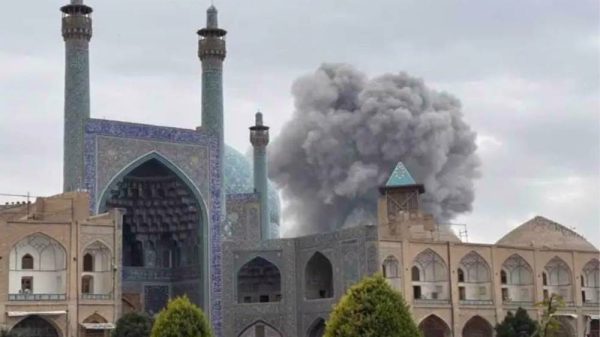
An airstrike hits a UNESCO World Heritage site in Naqsh-e Jahan Square in Isfahan
Press TV – March 10, 2026
Iran’s Foreign Ministry spokesman has condemned an attack by the United States and Israel on a historic site of Isfahan, saying the strike constitutes a crime against cultural heritage.
In a message posted on the social media platform X on Tuesday, Esmaeil Baghaei said the attack caused serious damage to the historic Chehel Sotoun Palace, a renowned museum-palace located near the famous Naqsh-e Jahan Square.

“After hitting Golestan Palace in Tehran, the US and Israel damaged another cultural heritage site of outstanding universal significance in the city of Isfahan: Chehel Sotoun Palace, a @UNESCO World Heritage site within Naqsh-e Jahan Square,” he wrote.
Baghaei described Chehel Sotoun as a masterpiece of the Safavid era, emphasizing that the site is not only part of Iran’s cultural and civilizational heritage but also a cultural treasure belonging to all humanity.
He said the US and Israel were deliberately targeting the historic heart of Isfahan, damaging Chehel Sotoun and putting invaluable historical artifacts of Iran’s civilization at risk.
“The world cannot remain silent while the aggressors’ brutal crimes threaten the shared heritage of humankind.”
The remarks come as the US-Israeli aggression against Iran, which started on February 28, has damaged some historical sites in the country, including those inscribed on the UNESCO World Heritage list.
Tehran’s Golestan Palace was severely damaged as a result of rockets and an explosion wave in Arg Square in the buffer zone.
Emirati billionaire rebukes US senator over call for Gulf states to join war with Iran
MEMO | March 10, 2026
Emirati billionaire Khalaf Al Habtoor has sharply criticised US Senator Lindsey Graham after the American lawmaker called on Gulf states to join military operations against Iran alongside the United States and Israel.
In a lengthy post on the social media platform X, Al Habtoor rejected any Gulf participation in the conflict, arguing that the region is already paying the price for decisions taken without consulting Arab states.
Graham made the remarks during media interviews following a closed congressional briefing, where he urged Gulf countries to become more actively involved in military action against Iran. He argued that Iranian attacks on countries such as Kuwait, Qatar and Saudi Arabia could prompt Washington’s Arab allies to take a stronger role in the confrontation.
The senator also said that the United States “will not fight alone in the Middle East”, noting that arms sales to Gulf countries form part of broader strategic alliances.
Al Habtoor responded by criticising what he described as foreign pressure on regional states to join the conflict.
“We know perfectly well why we are being attacked, and we also know who dragged the entire region into this dangerous escalation without consulting its allies,” he wrote.
The Emirati businessman said Gulf countries do not need outside protection and warned against risking the lives of people in the region in a wider war.
“Nothing is more precious than the lives of our sons, and no alliance is worth risking them,” he said, adding: “We don’t need your protection… all we want from you is to keep your hands off us.”
Al Habtoor also criticised the role of the global arms trade, describing weapons sales as a major business rather than a form of protection, and argued that conflicts in the region benefit the international arms industry.
He further accused Graham of prioritising Israeli interests over those of the American public, saying the region’s countries seek peace and stability and prefer diplomatic solutions rather than military escalation.
What If Iran Says No?
Is an end to fighting currently possible?
Ashes of Pompeii | March 10, 2026
Rumors persist that the Trump administration is actively seeking an off-ramp to the escalating conflict with Iran. The prevailing assumption within certain circles of the White House is that Tehran, having sustained serious damage from recent military strikes, would welcome a cessation of hostilities. This calculation, however, rests on a dangerous misreading of Iranian resolve, historical grievance, and strategic necessity. What if Iran says no?
The first and most fundamental obstacle is trust. Can Iran reasonably trust any promise made by Donald Trump? The historical record suggests otherwise. The unilateral withdrawal from the JCPOA in 2018, despite verified Iranian compliance, established a precedent of bad faith. Yet, the breach of trust goes deeper than past policy. The February 28 surprise attack was not merely a military strike; it was launched in the midst of ongoing peace talks. To strike while negotiating is the absolute most serious breach of diplomatic trust possible. It signals that words are meaningless and that force is the only language recognized by Washington. For Iranian leadership, any verbal assurance offered today carries the weight of tomorrow’s tweet. Diplomacy requires a foundation of credibility; that foundation has been systematically dismantled.
Second, the ideological makeup of the opposing governments creates a structural barrier to compromise. The current Israeli government is composed of extremist Zionists whose platform often rejects coexistence in favor of maximalist territorial and security demands. Simultaneously, Christian Zionists hold an important role in the Trump administration, viewing conflict in the Middle East through a theological lens that favors escalation over diplomacy. This alignment makes compromise with Iran inherently harder. For these factions, concession is not strategy; it is heresy. What demands could Iran make that would credibly constrain Israeli action? Binding security guarantees from the United States would be required, yet Washington’s ability to restrain its ally in moments of crisis is historically limited. Conversely, any Iranian demand for verifiable, long-term restrictions on Israeli military operations would likely be viewed in Jerusalem as an unacceptable infringement on sovereignty – a potential casus belli in itself.
Third, any serious Iranian negotiation would inevitably demand the removal of American military bases from the Persian Gulf. From Tehran’s perspective, these installations are not defensive outposts but forward operating bases for coercion and regime-change planning. Their presence is an existential threat. Yet for any American president, particularly one branding himself as a champion of strength, agreeing to withdraw forces from Bahrain, Qatar, or Kuwait would be politically untenable. It would be framed domestically not as diplomacy, but as retreat. Trump, who measures success in visible, declarative terms, could not sell a deal that requires abandoning strategic assets as a victory.
Fourth, Iran would demand the immediate and comprehensive lifting of sanctions. The economic toll of the pressure campaign has been severe, but capitulation without full relief would be seen as surrender. However, an immediate, total sanctions lift is a non-starter for the administration. It would undermine the central lever of U.S. pressure and invite fierce criticism from allies and domestic opponents alike.
And it is not worth even discussing the reaction to likely Iranian demands for reparations from America or Israel.
Underpinning all these structural obstacles is a profound cultural and emotional reality. Iran has raised the red flag of revenge. For Shiites, this is not merely political rhetoric; it is a religious imperative rooted in the tragedy of Karbala. Martyrdom and the justice due to martyrs cannot be so easily forgotten or forgone for political expediency. The rage in Iran for the February 28 attack is enormous, compounded by the perfidy of being struck during negotiations. A return to the status quo ante is not possible. The leadership that agrees to such terms risks being seen as weak, or worse, complicit in the betrayal of the faithful. And let us not forget, it is the son of the murdered Supreme Leader who has now been chosen as the new spirutual leader of Iran. This selection, in itself, can be seen as a slap in the face for Trump, who was demanding a say in the selection of the new leader.
The Trump administration appears to operate under the assumption that it holds total control over the escalation and de-escalation process. This is a critical miscalculation. Iran is not a passive recipient of U.S. policy but a strategic actor with its own red lines, domestic imperatives, and regional alliances. Tehran has demonstrated both the capacity and the will to act, and to retaliate when necessary. Diplomacy is a dialogue, not a dictate.
The central question, therefore, is not whether the United States can offer an off-ramp, but whether Iran can accept it. If the answer is no – and the points above suggest compelling reasons why it might be – then the conflict enters a more dangerous, protracted phase. Miscalculation risks increase. The assumption that pain alone will produce compliance ignores the role of pride, sovereignty, faith, and survival in strategic decision-making. Before celebrating a potential exit, policymakers must confront an uncomfortable truth: Iran has a say. And if Tehran chooses to say no, the path forward grows darker, longer, and far less certain. Added to this, Trump’s emotional, some would say vindictive, character would suggest that an Iranian refusal would lead him to escalate further.
Therefore this potential off-ramp may exist on a map in Washington, but in Tehran, the road ahead may still lead only forward, into not a storm, but a full blown global hurricane.
Spare the hypocrisy: Baghaei slams Ursula’s support for US
Al Mayadeen | March 10, 2026
Iran’s Foreign Ministry spokesperson Esmail Baghaei sharply criticized Ursula von der Leyen in a post on X, accusing her of hypocrisy and of supporting US and Israeli “crimes of aggression” against Iran.
In his post, Baghaei urged von der Leyen to “spare the hypocrisy,” accusing her of repeatedly taking stances that align with occupation, genocide, and atrocities, further accusing her of “laundering” US and Israeli war crimes against Iranians.
Baghaei also questioned the European Commission president’s silence over recent civilian casualties in Iran, stating, “Where was your voice when more than 165 innocent IRANIAN little angels were massacred in the city of Minab?”
The spokesperson highlighted the hypocrisy in von der Leyen’s speech, asking, “Why don’t you say anything when hospitals, historical sites, oil facilities, diplomatic police headquarter, firefighting stations and residential neighborhoods are wickedly targeted?”
“Silence in the face of lawlessness and atrocity is nothing less than complicity,” Baghaei wrote, urging von der Leyen to review the public responses to her own post to see what people “really think” about what he called the “whitewashing of criminals.”
The exchange comes as the US-Israeli war on Iran continues to escalate, with strikes on Iran killing hundreds of civilians since February 28.
40 people killed in one strike
The US-Israeli aggression against Iran continued on March 9, targeting the capital Tehran, as well as several cities and provinces across the country.
Iranian media reported that strikes in Tehran hit residential buildings in the Meydan-e Resalat area, with preliminary reports indicating the martyrdom of 40 people, including several children.
According to Al Mayadeen’s correspondent in Tehran, a series of US and Israeli strikes also targeted the vicinity of Mehrabad International Airport, located west of the capital.
Air defense systems were repeatedly activated over the city to intercept drones and other hostile aerial targets, the correspondent said.
The governor of Tehran confirmed that some attacks struck residential areas and hospitals, stressing that despite the strikes, the capital remains stable.
190 minors, 200 women killed by US, ‘Israel’
Meanwhile, the head of the Iranian Emergency Organization revealed that 190 of those martyred since the start of the war were under the age of 18, while 700 wounded were also minors, including 60 children under the age of five.
He added that 200 females have been martyred, including an eight-month-old infant, while 1,402 women have been injured.
The official also reported damage to 29 hospitals, 41 health units, and 18 emergency centers.
Featured Video
Alon Mizrahi: ‘Israel Must Be Dismantled’
or go to
Aletho News Archives – Video-Images
From the Archives
Allies Don’t Need Lobbies
By Jay Knott | Dissident Voice | September 24, 2013
In a recent article on Counterpunch, Rob Urie defended the traditional Marxist analysis of US policy in the Middle East. He argues that support for Israel is driven primarily by economic interest, not the Jewish lobby.
He starts by paying tribute to the idea that Western societies are uniquely racist. He says that the “Western narrative” claims there is an “Arab character”, and that this is “antique racist blather”. He gives no definition of these terms. Further, he establishes his credentials as part of the dominant current in the American left by claiming that “over a million people in Iraq died so ‘we’ in the West can drive SUVs.”1
When he tries to criticize bourgeois economics, he makes it clear he doesn’t understand the developments it has made since Marx’s day, using the mathematical discipline known as “game theory”. He dismisses the basic abstraction of economic theory, the idea of the rational individual, on the grounds that it is “devoid of history, culture and political context”. But abstractions are always devoid of something.
He defends a more concrete economic theory, mostly Marxist, with some input from another theorist of capitalist crisis, Hyman Minsky. This concrete theory leads him to the view that US activity in the Middle East is primarily driven by rational capitalist motives, the need to secure a supply of oil.
“Taking the totality of circumstance — former oil company executives launching war on an oil rich nation on a pretext they publicly proclaimed they didn’t believe shortly before taking office — and that upon launching their war proved to be non-existent, requires a willingness to overlook the obvious — that the war on Iraq was for oil, that is difficult to support.”1
Perhaps I’ve misunderstood him, but based on what he says in the rest of the article, this convoluted sentence seems to argue that, because president Bush and vice-president Cheney attacked Iraq on false premises, and they also said it was all about oil, and they are former oil executives, and Iraq has a lot of oil, it’s difficult to deny US attacks on Iraq are all about oil.
In fact, it’s not hard at all. As Urie points out, at times Bush and co. said that attacking Iraq was “protecting the world’s supply of oil.”1 But, as he also points out, they are congenital liars. Why should we believe them when they say they are trying to “protect” the oil supply? Protect it against what? When politicians “admit” attacks on Middle Eastern countries are wars for oil, they are parroting the neo-con party line, feeding the public, both left and right, with a plausible-sounding pretext. For right-wingers, “it’s a war for oil” is a reason to support war, and for leftists, it’s a way to feel better by complaining impotently about corporate greed. Both approaches help the war drive. … continue
Blog Roll
 Aletho News
- Zelensky unnecessarily involves Ukraine in the Middle East crisis
- Turkish tanker blacklisted by Ukraine hit in drone attack – media
- Canada, the U.S., and NATO: the inescapable trap
- Villains of Judea: Leonid Radvinsky
- Alon Mizrahi: ‘Israel Must Be Dismantled’
- Former Head Of MI6 Admits That The U.S. And Israel Are Losing The Iran War
- Scattered Thoughts on War and Peace
- Iran Threatens to Close Red Sea to Shipping in Response to Invasion
- Iran in excellent position to prevail in war with US, Israel: John Mearsheimer
- Iran warns US: Do not call your retreat an agreement
- If Americans Knew
- In the West Bank, life is a constant battle – 3 articles
- Jacob Reses, one of the most powerful pro-Israel operatives in Trump’s Washington
- Israeli-US assaults kill or injure 87 children a day – Not a ceasefire Day 166
- ‘Forever live by the sword’: Understanding Israelis’ massive support for Iran war
- UN’s special rapporteur on human rights says Israel is systematically torturing Palestinians
- Trump White House plagiarized Iran war manifesto from Israel-aligned think tank
- Gaza says 6–10 patients die daily waiting for treatment abroad as Israel blocks medical evacuations
- ‘Substantial evidence’ of double-tap strike in killing of Gaza’s Hind Rajab
- ‘Do Not Want To Die For Israel’: Doubts About Trump’s Iran Strategy Spread Among Troops
- Instead of taking Joe Kent’s claims seriously, the media is disregarding him as an antisemite
- No Tricks Zone
- Devastating Assessment Of Comirnaty Vaccine By Former Senior Pfizer Europe Toxicologist
- New Study: CO2 Is ‘Effectively Negligible’ As An Explanatory Climate Change Factor Since 2000
- Former Pfizer Toxicologist Dr. Helmut Sterz Tells Bundestag Hearing Pfizer Vaccine Should Have Never Been Approved
- Energy Expert: Germany’s Nuclear Phaseout Was A “500 Billion Euro Mistake”
- New Research: South Australia’s Mid-Holocene Sea Surface Temperatures Were 4°C Warmer Than Today
- Storing Green Energy To Last Germany 10 Days Would Require A 60-Million Tonne Battery
- New Studies: UK Sea Levels Were 4 Meters Higher Than Today During The Mid-Holocene
- Destructive Green New Deal: German Energy And Metal Group Warns Of Drastic Crisis
- New Study Documents A 20-Year Pause In Arctic Sea Ice Decline – Driven By Internal Variability
- Wake-up Call: Survey Shows Majority Of Germans Now Favor Postponing Climate Targets!
 Aletho News