Euro-Med: Israel escalates killing of civilians in Gaza’s so-called humanitarian zone
Palestinian Information Center – September 3, 2025
GAZA – The Israeli occupation forces (IOF) have escalated attacks on civilians in Gaza’s so-called “humanitarian zones,” turning areas meant for shelter into deadly traps, according to the Euro-Mediterranean Human Rights Monitor. The Monitor warned in a statement on Wednesday that this is part of a systematic genocidal policy aimed at eradicating Palestinians in the Gaza Strip.
The IOF is reportedly firing directly at displaced persons inside their tents in the al-Mawasi area of Khan Yunis, using sniper rifles, drones, artillery, and airstrikes. These attacks have resulted in dozens of deaths and injuries, including children, women, and journalists, despite Israel labeling the area as “humanitarian.” Eyewitnesses reported instances where soldiers appeared to shoot at civilians for sport.
Among the victims documented recently are 26-year-old mother of two, Ahlam Raed Fayyad al-Shaer, shot while preparing tea for her children, and journalist Iman Ahmad al-Zamli, killed while fetching drinking water. The attacks have destroyed homes and personal belongings, leaving displaced families vulnerable.
Adding to the humanitarian disaster, UNRWA spokesperson Adnan Abu Hasna revealed that deaths from starvation and untreated disease are far higher than reported by Gaza’s Ministry of Health.
Many victims are buried near or inside their tents, with their deaths unrecorded. Over 43,000 children under five, along with tens of thousands of pregnant or breastfeeding women, suffer from severe malnutrition, while the collapse of Gaza’s health and sanitation systems accelerates the spread of deadly diseases such as meningitis and hepatitis.
The Euro-Mediterranean Monitor described the IOF’s deliberate targeting of civilians in displacement zones as a form of genocide, leaving Palestinians with two fatal options: immediate death from bombardment or slow death due to starvation and disease.
Thousands of families are living without adequate food, water, or medical care, while overcrowding and exposure to harsh conditions exacerbate the crisis.
The Monitor called on the UN General Assembly to invoke its emergency powers under Resolution 377 A(V) to deploy a peacekeeping force in Gaza, ensure unimpeded humanitarian access, protect healthcare facilities, lift the siege, and begin reconstruction. It urged the international community to act decisively to stop the ongoing genocide and uphold international law.
Israeli drones drop grenades near UNIFIL in Lebanon amid Hezbollah disarmament push
Press TV – September 3, 2025
The UN Interim Force in Lebanon (UNIFIL) says Israeli drones have dropped four grenades close to peacekeepers working to clear roadblocks, which were hindering access to a UN position, in “one of the most serious attacks” on its personnel since the 2024 ceasefire deal between Lebanon and Israel.
“This is one of the most serious attacks on UNIFIL personnel and assets since the cessation of hostilities agreement of last November,” the UNIFIL said in a statement on Wednesday.
It added, “One grenade impacted within 20 meters and three within approximately 100 meters of UN personnel and vehicles.”
UNIFIL has stated that the Israeli army was notified beforehand regarding its road clearance operations in the area, southeast of the village of Marwahin.
“Any actions endangering UN peacekeepers and assets, and interference with their mandated tasks are unacceptable and a serious violation of Resolution 1701 and international law,” the UNIFIL said.
The resolution, which brokered a ceasefire in the 33-day-long war Israel launched against Lebanon in 2006, calls on the occupying Tel Aviv regime to respect Lebanese sovereignty and territorial integrity.
Last week, the UN Security Council voted unanimously to terminate the UN peacekeeping force in southern Lebanon at the end of next year after nearly five decades, bowing to demands from the United States and its close ally Israel.
The UNIFIL was created to oversee the withdrawal of Israeli troops from southern Lebanon after Israel’s 1978 invasion. Its mission was expanded following the summer 2006 war on Lebanon.
The Israeli attack also comes amid growing pressure on the Lebanese government to disarm Hezbollah. The United States and Israel have increasingly attacked the peacekeeping force for not countering Hezbollah in southern Lebanon.
However, observers note that UNIFIL’s mandate does not include countering Hezbollah, and the resistance movement is widely viewed across Lebanon as a critical deterrent against Israeli aggression.
Despite near-daily Israeli airstrikes and repeated violations of Lebanese airspace and sovereignty, Hezbollah remains the only credible military force capable of confronting the occupation and preventing further Israeli incursions.
Lebanese officials have condemned Israel’s continued occupation of five positions in southern Lebanon, calling it a clear breach of the ceasefire terms.
Prime Minister Nawaf Salam, under growing US-Israeli pressure to push for Hezbollah’s disarmament, welcomed the extension of UNIFIL’s mandate but emphasized the need for Israel to withdraw from occupied Lebanese territory.
Critics, however, question how Lebanese forces can assert control in the south while Israeli troops remain in place and escalate attacks.
As calls to disarm Hezbollah grow louder from Washington and Israel, many in Lebanon argue that such efforts ignore the core issue of Israel’s continued violations of Lebanese sovereignty.
The coming war on Iran will be regional, perhaps international
By Robert Inlakesh | Al Mayadeen | September 2, 2025
It is unlikely that the anticipated continuation of the war on Iran, spearheaded by the Israelis but led by the United States, will be confined to a simple tit-for-tat missile trade-off as we saw earlier this year. The reason for this is simple: too much is at stake if this front again flares up.
Since the US-brokered ceasefire between “Israel” and Iran went into effect on June 29, the United States and the Zionist regime have scrambled to move around military equipment, engage in mass surveillance flights over Lebanon and the Persian Gulf. More recently, the US began an early withdrawal of its forces from the Ain al-Assad base and other installations inside Iraq.
The first point of entry to understanding what is currently brewing across West Asia is understanding the mentality at play on both sides of the divide.
On one side, we have the Zionist regime and its Western allies, who are the aggressors and believe themselves to be fighting what Israeli Prime Minister Benjamin Netanyahu calls a “seven-front war”. Although the front in the Gaza Strip has pervaded public consciousness over the past 23 months, overshadowing the wars on Lebanon, seizure of territory in Syria, bombing of Yemen, and attack on Iran, it is very much part of this wider war.
From the Israeli-American perspective, their ongoing war carries the goal of eliminating what is known as the Axis of Resistance, the leader of which is the Islamic Republic of Iran. The thinking clearly is that this period in time has provided a unique opportunity to crush the regional resistance and with it, achieve regime change in Tehran.
In June, the Israelis clearly got ahead of themselves and believed that they could inflict a similar blow in Iran to the blow they inflicted on Lebanese Hezbollah back in September of 2024. In the first few hours of the Zionist Regime’s illegal attack on Iran, their media boasted of landing such a blow. However, to everyone’s surprise, within 15 hours, the Iranians were back on their feet and began firing bursts of ballistic missiles into central “Tel Aviv”.
Even the US strikes didn’t inflict any kind of kill blow that degraded Iran sufficiently, as it proved more than anything that their nuclear facilities could survive US strikes, even if they were badly damaged. The United States certainly poses a major threat to Iran, but the takeaway here is that the Zionist regime can’t take them on alone.
If there is another battle between Iran and the Israelis, the Zionist Entity is already low on interceptor missiles, and its arsenal would be severely drained within around a week or so. We also still do not know the extent of the damage inflicted by Iran’s ballistic missile strikes, due to Israeli military censorship. Simply put, they don’t even allow the public to know the true number of soldiers killed and wounded in Gaza, so forget the notion that they’d admit what Iran did to them.
Another major player here is Lebanese Hezbollah, which appears to be successfully rebuilding itself and is at an intelligence deficit compared to what they had built up over decades and utilized late last year. Yet, what the Israelis do understand is that in the event that a conflict with Iran arises where Hezbollah chooses to enter the fight on the ground, they may face an existential battle for their very survival.
If, and this evidently depends on varying factors, Hezbollah chooses to launch an all-out ground offensive as Iran fires ballistic missiles in bursts across occupied Palestine, it is plausible that the Lebanese party will inflict a total defeat on the Israeli ground forces and seize huge swaths of territory in the north of Palestine.
The Zionist regime is now claiming to be preparing for mission impossible in the Gaza Strip, amassing troops in order to try and occupy Gaza City, an operation that would take between two to five years to complete, according to Israeli military estimates. It would also be extremely costly for the Israeli ground forces and their military vehicles. If they do commit to this, it would leave them open on the northern front. There is, however, the possibility that this is all a bluff.
If the Israelis are bluffing, they could be preparing for an offensive against Lebanon instead. The thinking here would be to try and halt Hezbollah’s rebuilding process, setting it back even further, and could even involve a ground operation, likely using Syrian territory to invade the Bekaa Valley area.
Such a conflict would be existential for Hezbollah, especially as the US works with the Lebanese government to impose a seizure of its weapons. A repeat of what occurred a year ago would work only to advance the US-Israeli goal of seizing Hezbollah’s weapons, while a victory could at the very least liberate Lebanese territory and represent a massive blow to the disarmament agenda.
Therefore, if Iran is currently in the scope of the Zionists, it would make strategic sense for them to either attack Lebanon first or launch a major offensive at the same time it attacks Iran.
The US withdrawal of forces from Iraq is another major indicator of a regional escalation involving Iran, specifically because of the Popular Mobilization Units (PMU) and the potential they have to inflict enormous damage, given that they enter the fold of the war.
Iraq’s PMU is yet to be mobilized, and its role in the ongoing regional conflict has been minimal. The reason for this is that if some 230,000 men are mobilized, or even a portion of them, it is difficult to suddenly put a halt to their operations, and this will mean a dramatic regional escalation, the likes of which the United States will not be able to manage inside Iraq and will instead use their economic levers as a primary weapon of war.
Depending on how far such a conflict is going to go, there is even the possibility that it could go global. While there is currently no evidence to support this notion, there has been talk that the US naval deployment to the Caribbean, triggering a mass militia mobilization across Venezuela, could be connected. Additionally, China and Russia could use the opportunity of a major Iran-US war to carry out some of their long-desired goals, at a time when Washington has diverted its resources to West Asia.
There is again the possibility that another attack on Iran could look similar to what the world witnessed during what is dubbed the “12-day war”, yet the same stalemate outcome would only lead us back to square one again and beget yet another war. At some point, something will have to give.
The reason why the danger of an all-out regional conflagration appears high as of now is purely down to the Israeli-US refusal to end their genocide against Gaza, indicating that they seek total defeat of the Axis of Resistance and nothing less. Inevitably, one side must win and the other lose; there is currently no such thing as deterrence for either side, only who will triumph and carve out a new regional reality.
Belgium announces sanctions against Israel
RT | September 2, 2025
Belgium will recognize Palestinian statehood and impose sanctions on Israel over its war in Gaza, the country’s Foreign Ministry has announced.
The Western European country, which hosts the headquarters of both the EU and NATO, unveiled the measures on Tuesday as pressure grows on Israel to reach a ceasefire with Hamas and allow more humanitarian aid into the besieged Palestinian enclave.
In light of the “humanitarian tragedy in Gaza,” Belgium has decided to “increase pressure on the Israeli government and Hamas terrorists,” Belgian Foreign Minister Maxime Prevot wrote on X. “This is not about punishing the Israeli people, but about ensuring that their government respects international and humanitarian law and takes action to change the situation on the ground,” he added.
The sanctions include a ban on imports of products from Jewish settlements in the West Bank and restrictions on consular assistance for Belgian nationals living in settlements considered illegal under international law.
Brussels will also review procurement involving Israeli companies and blacklist “two extremist Israeli ministers, several violent settlers, and Hamas leaders,” Prevot said. He added that Belgium would push for the suspension of the EU’s trade agreement with Israel.
Several countries, including France, plan to recognize Palestine at the UN General Assembly later this month, drawing strong criticism from Israel.
Last month, Israeli Prime Minister Benjamin Netanyahu accused France and Australia of failing to tackle anti-Semitism, arguing that recognition of Palestine would only embolden Hamas.
Israel has rejected UN warnings of famine in Gaza, where more than 63,500 people have been killed since October 2023, according to local health authorities. West Jerusalem has pledged to allow the delivery of aid, but not through distribution points it claims are controlled by Hamas.
Gaza: Over one million people face relocation to overcrowded zone
Palestinian Information Center – September 2, 2025
GAZA – Gaza’s civil defense service has warned of Israeli efforts to evacuate tens of thousands of citizens from Gaza City and northern areas and force them to go to the central and southern parts of the territory.
Spokesman for the civil defense Mahmoud Basal told a news conference on Tuesday that the Israeli plan to forcibly relocate about one million people from their homes in Gaza City and northern Gaza would lead to a major catastrophe.
Basal said that the Israeli occupation army had already destroyed over 85 percent of the homes and infrastructure in Gaza City’s ash-Shuja’iya and al-Tuffah neighborhoods, and about 70 percent of the az-Zeitoun, al-Sabra, Jabalia an-Nazla and Jabalia al-Balad areas.
Basal pointed out that several reports issued by international and UN organization confirm that the so-called humanitarian zone, where the Israeli army plans to relocate the population, comprises no more than 12 percent of the total area of the Gaza Strip.
“This would mean forcing over two million Palestinians to live in a densely packed area lacking the minimum living means,” he said.
UN Assembly Moves to Geneva After U.S. Bars Palestinian Delegation
IMEMC | September 2, 2025
The United Nations General Assembly will convene its September session in Geneva instead of New York, following the United States’ refusal to grant entry visas to Palestinian President Mahmoud Abbas and dozens of senior officials.
The relocation marks a rare institutional challenge to the host nation and reflects mounting global frustration over Washington’s obstruction of Palestinian participation amid Israel’s ongoing war on Gaza.
The U.S. State Department justified the visa denial on grounds of “national security,” accusing the Palestinian Authority and the Palestine Liberation Organization of “undermining peace efforts” through legal appeals to the International Criminal Court and the International Court of Justice.
These appeals include formal charges of genocide and apartheid against Israel, claims the U.S. argues breach diplomatic norms and politicize international legal forums.
The decision affects approximately 80 Palestinian officials, although the Palestinian Mission to the UN in New York will continue operating under a limited waiver.
The move has drawn sharp criticism from legal experts and international diplomats, who say it violates the 1947 UN Headquarters Agreement, which obligates the host country to facilitate access for all accredited delegations.
In 1988, the UN relocated its session to Geneva after the U.S. denied a visa to Yasser Arafat, then head of the PLO. The current relocation is similarly aimed at ensuring full Palestinian participation, particularly in a scheduled September 22 segment dedicated to Palestinian rights.
European leaders have condemned the U.S. decision. Spain’s Prime Minister described the move as “unjust,” while France reaffirmed that UN platforms must remain accessible to all recognized delegations.
The Geneva session also coincides with growing momentum among several countries, including France, the United Kingdom, and Canada, to formally recognize Palestinian statehood, adding diplomatic weight to the proceedings.
Palestinian officials have denounced the U.S. action as a deliberate attempt to silence their voice at a time when Gaza faces mass displacement, starvation, and what UN experts have described as genocidal violence.
President Abbas is expected to address the Assembly in Geneva, where he will call for international protection, recognition of Palestinian sovereignty, and accountability for war crimes.
The Geneva session is expected to amplify calls for action under the “Uniting for Peace” resolution, which empowers the General Assembly to recommend collective measures when the Security Council is unable to act due to political obstruction or lack of consensus.
Advocacy groups are urging the UN to consider deploying international protection forces to Gaza and to suspend Israel’s privileges within the UN system until humanitarian access is restored.
Beyond its logistical implications, the relocation signals a deeper shift in global diplomacy, where procedural justice and international law are being reasserted against political obstruction.
The Geneva gathering is expected to draw high-level delegations, legal experts, and civil society leaders, all converging to confront the worsening crisis and to chart a path forward for Palestinian self-determination.
Cracks in ranks: No victory, no exit in ‘Israel’s Gaza predicament
Al Mayadeen | September 2, 2025
“Israel’s” military is mobilizing 60,000 additional reservists, adding to the 70,000 already under call-up orders, in preparation for a renewed ground incursion into Gaza City as part of the ongoing “Iron Swords” campaign.
The last major operation to occupy Gaza City came at a high cost. Now, according to Israeli military correspondent Avi Ashkenazi in a report published by Maariv, commanders are warning that the next stage could prove even more dangerous.
The dense urban terrain, vast tunnel networks, and high-rise buildings of Gaza City remain formidable battlegrounds. The report states that Hamas has had months to bolster its defenses, planting improvised explosive devices (IEDs), booby-trapping buildings and tunnels, and deploying snipers and anti-tank units across likely combat zones.
Two-stage strategy, high-stakes caution
According to Maariv, the Israeli military plans to execute the campaign in two phases:
- Encircle Gaza City to restrict movement and initiate the evacuation of remaining civilians
- Deploy ground divisions to enter and attempt to control key urban sectors
This operation is expected to last months, not weeks.
Mounting friction between the military and the government
The report by Avi Ashkenazi highlights growing tensions between military leaders and the government of Prime Minister Benjamin Netanyahu. Senior Israeli officers reportedly urge continued negotiations, warning against launching another high-risk incursion without exhausting all diplomatic options.
Meanwhile, on the ground, reservists and active-duty soldiers have begun questioning the broader strategy. “What comes after Gaza City?” one soldier reportedly asked, reflecting the skepticism felt across the ranks.
Veterans of recent operations point to Rafah, Khan Younis, Jabalia, Beit Hanoun, and al-Zaytoun, all of which were invaded multiple times but failed to produce a lasting outcome.
An elusive ‘image of victory’
Even if the military succeeds in re-entering Gaza City, doubts persist over whether such an operation will alter the broader course of the war. As Ashkenazi notes, the symbolism of “battlefield achievements” has become increasingly hollow.
In December 2023, a Hanukkah menorah was lit in Gaza’s Palestine Square, a moment widely circulated in the occupation’s media as a symbol of control. Just days later, the Israeli occupation forces showcased their bombing of al-Shifa Hospital, parading it as another so-called milestone.
Yet, as noted by military correspondent Avi Ashkenazi in Maariv, such displays failed to produce the long-promised image of victory. The Israeli occupation continues, the Palestinian resistance endures, and international criticism mounts.
Now, with tens of thousands of reservists once again deployed and Gaza facing another wave of devastation, Ashkenazi and others raise the critical question: Where will “Israel” find its image of victory, and how many lives will it cost this time?
Washington orders sweeping visa ban on Palestinian passport holders
The Cradle | September 1, 2025
The US State Department ordered a suspension of visas for nearly everyone holding a Palestinian passport, the New York Times (NYT) reported on 31 August.
The report said the restrictions go well beyond an earlier order under US President Donald Trump, which temporarily froze visitor visas for Gaza residents pending what officials described as “a full and thorough” review.
A diplomatic cable obtained by CNN and signed by US Secretary of State Marco Rubio on 18 August instructed embassies and consulates to deny applications “effective immediately” from “all otherwise eligible Palestinian Authority passport holders” using that document.
The order covers nonimmigrant visas of all categories, including those for students, professors, tourists, businesspeople, and medical patients.
The cable noted that the refusal policy does not apply to immigrant visas or to applicants using a different passport, but said the ban includes diplomatic and official visas, while stressing that Washington “does NOT recognize the PA as a ‘foreign government.’”
NYT cited unidentified officials as the source of the expanded measures.
On 29 August, Rubio revoked visas for Palestinian Authority (PA) leaders who were scheduled to attend the UN General Assembly in New York.
The State Department justified that step by pointing to PA payments to families of Palestinians killed by Israeli forces, as well as PA President Mahmoud Abbas’s plan to issue a “constitutional declaration” for an independent Palestinian state at the assembly.
Washington also criticized Palestinian efforts to pursue Israel for war crimes before international courts.
“The Palestinian Authority must also cease its attempts to circumvent the negotiations through international legal campaigns, including appeals to the International Criminal Court and the International Court of Justice, and efforts to secure unilateral recognition of a possible Palestinian state,” the department said in a statement.
It added that such steps had “contributed significantly to Hamas’s refusal to release its hostages and the collapse of the Gaza ceasefire talks.”
The Palestinian Presidency responded with “deep regret and astonishment at the decision.”
Fox News described Rubio’s order as a “historic departure” from past US practice of allowing participation in UN forums.
The announcement came one day after Rubio met Israeli Foreign Minister Gideon Saar in Washington. When asked about a Palestinian state, Saar told the Jerusalem Post that “there would not be one.”
What drives Americans to fight on the frontlines of Gaza’s war crimes
By Jamal Kanj | MEMO | September 1, 2025
Serving in the military is the ultimate test of loyalty. When young Americans raise their right hand, they pledge to defend their nation, their Constitution, their people. Yet for many young Americans, that oath is NOT made to the United States military. Instead, they pack their bags, fly across the Atlantic, and enlist in a foreign army—the Israeli War Machine, aka, Israeli Defence Forces (IDF).
The numbers speak loudly. According to the Washington Post, 23,000 Jewish American citizens are currently serving in the Israeli military. By contrast, US Department of Defence data shows that in 2006 fewer than 4,000 American service members identified as Jewish. A later DoD report in January 2019 placed the figure at roughly 0.4 per cent of active-duty personnel. Put simply, more Jewish Americans, both in numbers and percentage, serve under the misappropriated Star of David than under the Stars and Stripes.
Naturally, many new Americans maintain personal cultural and ancestral ties to their homelands—a land they actually come from, with real last names, not Hebraized East European family names. No ethnic group, however, has a lobby dedicated to serving the policy of a foreign country, like AIPAC. Mexican Americans celebrate Mexico’s victory on Cinco de Mayo, but do not promote enlisting in Mexico’s military. Irish Americans rejoice Saint Patrick’s Day, but had not lined up to join the Irish Republican Army. No ethnic American group raises nonprofit tax deductible funds for a foreign army, other than the Jewish billionaires, who bankroll “Friends of the IDF.”
Controlled by this foreign lobby, Congress not only tolerates the Israeli exception, rather it tries to reward it. Two Jewish Republican lawmakers; Guy Reschenthaler and Max Miller, have proposed legislation, H.R. 8445, to amend the American Servicemembers Civil Relief Act to include (Jewish) Americans serving in the Israeli army. If passed, the amendment would grant these “foreign” soldiers the same benefits reserved for Americans in uniform.
Let that sink in: Israeli (American) soldiers would have the same protections as American army soldiers. An Israeli who is starving babies and committing war crimes in Gaza, would be legally indistinguishable from an American marine guarding Camp Pendleton in California.
When it comes to Israel, AIPAC, through the disproportionate Jewish representation in both Houses—three to five times higher than their share of the U.S. adult population—exerts outsized clout. Combine this with the campaign finance power over elected officials, AIPAC can flex its muscles to institutionalize the Israeli exception. One could pose the question, if this is good for Israeli (American) soldiers, why not provide all Americans serving in foreign armies the same benefits? Maybe for a Muslim American soldier, if any, serving in Pakistan or Egypt. Such an idea would most likely cause a revolt in Washington. Accusations of dual loyalty, even treason, would dominate the headlines. If so, why not in the Israeli case?
One of those soldiers is David Meyers from California who spent six years in the Israeli navy. He explained his decision to enlist in the Israeli military, citing “… an incredibly deep and long connection that I have to Israel.” Answering a question for reasons he chose a foreign army over his own, his answer was more telling: “The United States with its strength and size, perhaps, isn’t quite needing your abilities and your efforts.”
Since when did America’s strength become an excuse to abandon it for a foreign army? Regardless, Meyers’s statement suggests he does not have a deep or long connection to the country of his birth—or at least not one as deep as to a foreign country. America is strong only because its citizens choose to serve it, not ditch it in favor of a foreign uniform. To dismiss the U.S. military as too mighty to need Jewish Americans isn’t about necessity, it’s about misplaced loyalty.
Many of the Americans serving in the Israeli army are called lone soldiers. They are the young Americans with New York or Texas accents; I’ve encountered at occupation checkpoints throughout Palestine. Their job is to humiliate Palestinians in the West Bank, and starve children in Gaza.
Some may frame their service as defending “the Jewish people.” When in fact, they are fueling Jewish hate in the West for being the face of the “Jewish-only” colonies built on stolen Palestinian land, or for imposing an apartheid occupation on behalf of a foreign political entity, whose leaders stand indicted by the International Criminal Court (ICC).
With this in mind, these Americans are participating in what the UN, Amnesty International, and Human Rights Watch have described as war crimes—from the engineered starvation of babies in Gaza, to the subjugation of Palestinians in the occupied West Bank. As the ICC continues to investigate Israeli crimes, one day, these “Americans” could face reality, not as heroes, but for their roles in the crimes against humanity. Ironically, Congress wants to make these potential war criminals equal to American servicemembers.
The numbers do not lie. Over-represented in elected offices, and underrepresented in the U.S. military, Jewish Americans enlist in the Israeli army at more than five times the rate they serve in their own country’s forces. This begs the question: why are so many Jewish Americans more willing to die for a foreign country than for nations that gave them everything they have? That is not an anti-Jewish statement; it is a fact that would, and should uniformly apply to any ethnic group.
If some Jewish Americans choose to devote their lives and loyalty to a foreign state, that is their business. However, it is an insult to every American in uniform when Congress considers equating American soldiers with those serving in a foreign army. Worse, by ignoring the moral and legal ramifications, U.S. policymakers risk entangling America in war crimes committed by these “paper” American citizens, crimes that may one day be judged in The Hague, and for which today’s members of Congress should be held to account by their own constituents.
Tribal loyalty, often disguised as religious or nationalistic virtue, distorts judgment and blinds individuals to injustice, elevating kinship above truth, morality, and humanity. It is this tribal blindness that drives some Jewish Americans to join a foreign army, and stain their souls with the blood of Gaza’s war crimes.
Israel blows up 80 booby-trapped robots in residential neighborhoods in Gaza City
Palestinian Information Center – August 31, 2025
GAZA – The Government Media Office (GMO) said that the Israeli occupation army detonated more than 80 booby-trapped robots in residential neighborhoods in Gaza City over the past three weeks, confirming that more than one million Palestinians in Gaza and the north refuse to be displaced to the south.
It added that the Israeli occupation army continues to commit systematic and grave crimes against the Palestinian people in the Gaza Strip, in blatant violation of international law and international humanitarian law.
The statement pointed out that these crimes include the targeting of unarmed civilians, including children and women, and the forced displacement of residents in a crime of mass forced transfer that meets all elements of war crimes.
The GMO stressed that detonating robots is part of a criminal pattern that reflects a scorched-earth policy during Israel’s ground operations against residents and civilian neighborhoods, leading to large-scale destruction of homes and property and exposing civilians to grave dangers.
The occupation army also continues to commit the crime of starvation against more than 2.4 million people in the Gaza Strip, including over one million in Gaza City and the north, by deliberately preventing the entry of food and water, in clear violation of Article (54) of Additional Protocol I to the Geneva Conventions.
The statement noted that this starvation policy has already caused the deaths of more than 332 people, including 124 children, stressing that this is accompanied by systematic destruction of what remains of the healthcare system, and deliberate targeting of essential elements of civilian life, with the aim of eliminating any possibility of normal life continuing.
The GMO confirmed that more than one million Palestinians remain in Gaza City, refusing to succumb to forced displacement and ethnic cleansing, affirming their legendary steadfastness in the face of the Israeli war machine.
The statement saluted the resilience of the heroic Palestinian people, strongly condemned the Israeli occupation army’s ongoing crimes against civilians, and held Israel and the US administration fully responsible for the continuation of this genocide.
The GMO called on the international community, with all its institutions and bodies, to take a serious and effective stance to immediately stop these crimes, halt the ongoing genocide, protect civilians, and hold Israeli leaders accountable for their crimes before the competent international courts.
60% of Gen Z support Hamas over Israel, but majority of Americans support genocide: Survey
MEMO | August 31, 2025
Some 60% of Generation Z in the US favor Palestinian resistance group Hamas over Israel in Tel Aviv’s ongoing war in Gaza, a new survey found, Anadolu reports.
As part of a broad set of questions, the survey asked online respondents: “In the Israel-Hamas conflict, do you support more Israel or more Hamas?”
According to the online survey released this week, 60% of the young people aged between 18 to 24 expressed support for Hamas over Israel.
Among the age groups that sided with Israel were 25-34-year-olds with 65%, 35-44-year-olds with 70%, 45-54-year-olds with 74%, 55-64-year-olds with 84%, and 65 and older with 89%.
The poll also found that voters were evenly divided on whether Israel is committing a genocide in Gaza, with a 50-50 split.
It also revealed that the slight majority of the respondents (51%) believe criticism of Israel is driven more by a concern for Palestinian human rights rather than antisemitism.
Conducted by The Harris Poll and HarrisX between Aug. 20-21 with 2,025 registered voters and a margin of error of 2.2% points, the poll has been widely cited as evidence of a fundamental shift in American public opinion.
Israel’s offensive has killed nearly 63,400 Palestinians since October 2023, devastating the enclave as famine spreads in the second year of genocide.
Last November, the International Criminal Court issued arrest warrants for Israeli Prime Minister Benjamin Netanyahu and his former Defense Minister Yoav Gallant for war crimes and crimes against humanity. Israel also faces a genocide case at the International Court of Justice for its war on the enclave.
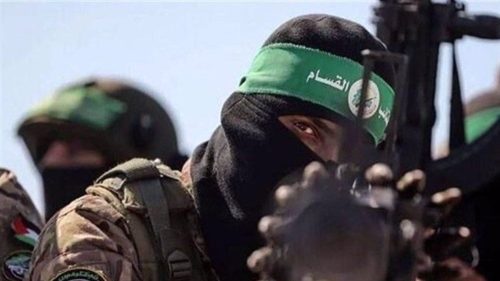
With traps and tactical ingenuity, Al-Qassam fighters outmaneuver invaders in Gaza
By Ivan Kesic | Press TV | August 30, 2025
In the smoke-filled streets of Gaza, a powerful message is being written these days in the language of resistance and fire by the Palestinian armed resistance groups.
As the Israeli military machine grinds forward with its brutal offensive, it is being met not with submission but with a fierce and strategic defiance from the Palestinian resistance, led by the fighters of the Al-Qassam Brigades, the military wing of the Gaza-based Hamas resistance movement.
From the dense urban labyrinths of Gaza City to the southern approaches of Khan Younis, every inch of Palestinian land is being contested in a series of devastating engagements that have exposed the fragility of the Israeli occupation’s so-called invincibility.
The Israeli regime’s latest assault, codenamed Gideon’s Chariots II, has been met with a humiliating and painful reception. Yesterday, as many as three “security incidents” were officially acknowledged, implying heavy casualties and possibly the deadliest day for the invaders in more than a year.
In the Al-Zaytoun and Al-Sabra neighborhoods of Gaza City, resistance fighters have pushed to the city’s edges, refusing to wait behind barricades and instead taking the fight directly to the advancing invaders in intense, close-quarter combat.
At least four regime soldiers have been missing since Friday, most likely captured by the resistance fighters or eliminated by the occupation forces to prevent them from being captured.
Their advanced night vision capabilities allowed them to detect and ambush Israeli units, triggering fierce clashes that forced the occupation army into a panicked deployment of reinforcements.
The resistance has entrenched itself in formidable defensive positions, turning entire districts into deadly traps where every alleyway holds the threat of a well-planned ambush.
Nowhere is the resistance’s effectiveness more starkly illustrated than east of Hamad City, where a brilliantly executed Al-Qassam Brigades’ ambush targeted the Israeli Kfir Brigade.
In a sophisticated joint operation with the Al-Quds Brigades, resistance fighters struck an Israeli Eitan armored personnel carrier with a Kornet guided missile, scoring a direct hit that necessitated a desperate helicopter evacuation for the crew.
This is not an isolated event; it is part of a sustained campaign of sophisticated warfare.
Israeli Merkava tanks, the pride of their armored corps, have been repeatedly destroyed by Al-Yassin 105 shells and powerful landmines in Jabalia, turning these multi-million dollar vehicles into smoldering monuments to Palestinian ingenuity and resolve.
Faced with this steadfast resistance, the Israeli regime has revealed its true nature: a desperate and criminal enterprise lashing out with indiscriminate force.
Its warplanes strike the Nuseirat refugee camp, its artillery pounds civilian neighborhoods, and its leadership enacts the horrific Hannibal Directive, a policy so barbaric that it involves killing its own soldiers and settlers to avoid capture.
Abu Obeida’s remarks
As Al-Qassam Brigades’ spokesperson Abu Obeida stated on Friday, Netanyahu and his ministers have effectively “decided to cut the number of living captives by half,” knowingly endangering them through their reckless military escalation in a cynical gambit to avoid future prisoner exchanges.
The Palestinian resistance, in stark contrast, operates with a principled transparency and honor that shames its oppressors. Abu Obeida’s pledge to announce the name and provide proof for any captive killed by Israeli strikes stands as a powerful testament to their moral high ground.
“The enemy’s criminal plans to occupy Gaza will be disastrous for its political and military leadership. The enemy’s army will pay the price in the blood of its soldiers, and the chances of capturing new soldiers will only increase,” the Al-Qassam Brigades spokesperson said.
“Our fighters are on full alert, ready and in high spirits. They will present exceptional examples of heroism and bravery, and they will teach the invaders harsh lessons, with God’s help,” he added.
His warning that the invasion of Gaza City will be “disastrous” for Israel’s political and military leadership is not mere rhetoric; it is a promise backed by the extraordinary heroism and high morale of Al-Qassam fighters, who are prepared to deliver harsh lessons to the invaders.
They fight as the guardians of a people who have been left with no other option but to resist a genocidal occupation, and through their bravery, they are not just defending Gaza; they are exposing the world’s greatest military powers as paper tigers and writing a new chapter of dignity in the Palestinian liberation struggle
Deadly summer continues
The summer of 2025 has proven to be a season of profound humiliation and strategic failure for the Israeli regime. Despite unleashing the full, brutal force of its military machine in a series of operations with biblical pretensions like “Gideon’s Chariots,” the occupation forces have been met with an unyielding and devastating response from the Palestinian resistance.
Far from being crushed, Hamas has adeptly shifted to a sophisticated war of attrition, leveraging its intimate knowledge of the rough terrain and unparalleled ingenuity to turn Gaza into a graveyard for Israeli ambitions and advanced weaponry.
The regime’s much-hyped “Operation Gideon’s Chariots,” which ran from May to early August, was a catastrophic endeavor despite its claims of territorial gain.
While the regime forces boasted of controlling 75 percent of the Strip, this “victory” was revealed as hollow and illusory. The operation failed in its core objectives: Hamas’s governance and military capabilities remain potent, and the goal of freeing all hostages was abandoned.
More damningly, it came at a staggering cost, with former Israeli army Chief of Staff Moshe Yaalon estimating a shocking 15,000 Israeli soldiers killed or wounded by March 2025—a number that has only swelled throughout this deadly summer. This is not the sign of a victorious army but of one being bled dry in a quagmire of its own making.
In response to this aggression, Hamas launched its own “Stones of David” counteroffensive, a masterclass in asymmetric warfare.
This campaign has seen resistance fighters move with audacious skill, refusing to cede the initiative. Instead of waiting behind barricades, Al-Qassam Brigades fighters have pushed to the edges of Gaza City, engaging invading forces in close-quarter combat and springing devastating ambushes.
Their tactics are a testament to their strategic acumen: operating in small, agile cells, they have exploited the extensive tunnel network not as a hiding place, but as a dynamic web for staging attacks, storing weapons, and moving undetected beneath the feet of a disoriented enemy.
The results of this resistance have been tangibly catastrophic for the Israeli war machine.
In a stunning display of effectiveness, the Al-Quds Brigades alone announced the destruction of over 52 military vehicles in the eastern neighborhoods of Gaza City—including Shuja’iyya, al-Tuffah, and al-Zaytoun—using a combination of pre-planted Thaqib and Zelzal explosive devices and reverse-engineered bombs crafted from Israeli munitions.
These are not random acts of violence but the outcome of meticulous preparation and battlefield intelligence. The Al-Qassam Brigades have consistently targeted the enemy’s nervous system, striking command and control centers, as with the attack on a site on Mansoura Street using machine guns and Rajum rockets.
Rushing to repeat mistakes
The launch of “Operation Gideon’s Chariots II” by the Israeli regime, aimed at seizing Gaza City, is not seen as a sign of strength but an admission of the first operation’s failure.
It is a move of sheer desperation, one that has been met with widespread international condemnation and deep fear for the fate of the remaining captives.
The regime’s response—calling up 60,000 more reservists to throw into the meat grinder—speaks to a leadership devoid of strategy, relying solely on overwhelming and indiscriminate force.
Through their bravery and strategic genius, the Palestinian resistance has exposed the fundamental weakness at the core of the Israeli military project.
They have turned the regime’s multi-billion-dollar Merkava tanks into smoldering wrecks and its much-vaunted technological superiority into an irrelevant talking point.
Each ambush, each destroyed vehicle, and each fallen soldier is a testament to the failure of the occupation and the unstoppable will of a people fighting for their freedom.
The resistance does not just endure; it prevails, teaching the Israeli regime and the world a harsh lesson in the power of a just cause.
Featured Video

It’s the Occupation, Stupid
or go to
Aletho News Archives – Video-Images
From the Archives
A superpower and “the world’s sickest warrior state”
By Paul J. Balles | March 8, 2010
Living through five or six major wars has hardened me to what I thought were the extremes of inhuman cruelty and brutality.
Two things made those extremes almost bearable: the brutality always revealed – at least according to the media coverage – the viciousness of the enemy. It was therefore quite understandable when our “brave men and women” pulverized the enemy.
Films of Japanese torturing captive Americans somehow justified holding Japanese Americans in internment camps during World War II; and only a small percentage of Americans found the bombing of Hiroshima and Nagasaki unreasonably vengeful at best, at worst, depraved.
The media giants in America portrayed the North Koreans as barbaric beasts with their captives, quite unlike their southern counterpoints – our allies during the Korean War. No one ever felt the need to explain how the South Koreans were a civilized breed while the North Koreans were absolute savages, at least according to the official line.
In Vietnam, our warriors justifiably (or so the media made us believe) dropped napalm on the North Vietnamese who had the gall to hide in villages and tunnels to ravage our invaders. At least it was accepted practice until some rogue photojournalist filmed a young girl screaming down a Vietnamese road in flames. … continue
Blog Roll
 Aletho News
- Iran: Trump wanted regime change, now just begging for Hormuz to open
- IRGC: Israeli, US universities in region legitimate targets after strikes on Iranian university
- Trump admits Iran hit USS Ford carrier: ‘We ran for our lives’
- Battle for Hungary: EU attacks on Orban are a sign of worse things to come
- Iraqi resistance conducts drone strike on US-run base in Syria
- Failing to Defeat Hezbollah, Israel & US Pressure Syria’s Ahmed al-Sharaa to Join War
- US-Israeli war on Iran drives global fertilizer prices up 40%
- Hezbollah’s Surprise Weapons Redefine Ground Battle with Israel
- Yemen joins fight against US, Israel by firing missiles at occupied territories
- Seizing the Kharg: Washington’s path to defeat in the Persian Gulf
- If Americans Knew
- Over 300 US service members wounded, majority have brain injuries – Not a ceasefire Day 169
- Researchers at Human Rights Watch Resign Over Blocked Report on Palestinian Refugee Return
- Jewish Groups Are Backing a War Americans Don’t Want
- Eric Fingerhut Thinks He’s the President of the Jews
- Top Jewish Philanthropists, Rabbis Urge Israeli President to Take Action Against ‘Jewish Extremists’
- Don’t Be Fooled. Zionist Leaders Have Always Wanted to Control Southern Lebanon
- Israel’s widespread use of torture is a core element of its genocide against the Palestinian people
- In Israel’s War on Iran, Many Middle East US Bases Rendered “All But Uninhabitable”
- ‘Burn the lawn’: Israel pursues ‘Rafah model’ in southern Lebanon
- A genocide here, an amputation there
- No Tricks Zone
- German Science Blog Accuses PIK Climate Institute Of Hallucinating Climate Tipping Points
- Devastating Assessment Of Comirnaty Vaccine By Former Senior Pfizer Europe Toxicologist
- New Study: CO2 Is ‘Effectively Negligible’ As An Explanatory Climate Change Factor Since 2000
- Former Pfizer Toxicologist Dr. Helmut Sterz Tells Bundestag Hearing Pfizer Vaccine Should Have Never Been Approved
- Energy Expert: Germany’s Nuclear Phaseout Was A “500 Billion Euro Mistake”
- New Research: South Australia’s Mid-Holocene Sea Surface Temperatures Were 4°C Warmer Than Today
- Storing Green Energy To Last Germany 10 Days Would Require A 60-Million Tonne Battery
- New Studies: UK Sea Levels Were 4 Meters Higher Than Today During The Mid-Holocene
- Destructive Green New Deal: German Energy And Metal Group Warns Of Drastic Crisis
- New Study Documents A 20-Year Pause In Arctic Sea Ice Decline – Driven By Internal Variability
 Aletho News