Israel ‘backs down’ from Gaza truce talks, demands to occupy strip until year’s end
The Cradle | May 2, 2025
Egyptian sources told Al Arabiya on 2 May that Israel has backed down from terms for a truce in Gaza agreed upon in recent days, insists on expanding the military operation in the strip, and wants its forces to remain there until the end of the year.
The news comes as the Israeli military claimed it sees the return of the 59 captives still held by Hamas in the Gaza Strip as the most important goal of the war, contrary to the position of Israeli Prime Minister Benjamin Netanyahu, who said on Thursday that “victory” over the Palestinian resistance movement, not the return of the captives, was the supreme objective.
“The supreme mission that the IDF is dealing with is our moral duty to return the hostages. The second mission is defeating Hamas. We are working to advance both goals, with the return of the hostages being at the top [of the list of priorities],” said a military official who briefed reporters earlier this week.
The occupation forces have been gearing up for an intensified offensive that would see the call-up of a large number of reservists and troops operating in new areas of Gaza, according to the military.
Netanyahu’s remarks on Thursday came as families of the captives held in Gaza accused the premier of sabotaging a potential truce deal and withholding information about the remaining 59 captives.
“There are another up to 24 alive, 59 total, and we want to return the living and the dead,” said Netanyahu, whose wife on Monday said the number of living captives was lower than the official figure cited by her husband.
“It’s a very important goal,” Netanyahu continued, but then added, “The war has a supreme goal, and the supreme goal is victory over our enemies, and this we will achieve.”
The deal’s 42-day first phase expired on 2 March amid Netanyahu’s refusal to negotiate the potential second phase, which would have required a full Israeli withdrawal from Gaza.
Israel imposed a new blockade on the strip on 2 March and renewed its attacks on it on 18 March.
The deal’s second phase would have seen Hamas release 24 captives still thought to be alive – all of them current or former Israeli soldiers abducted by Hamas on 7 October 2023.
On 29 April, Israeli Finance Minister Bezalel Smotrich declared that Israel would only stop fighting following the partition of Syria and the forced displacement of “hundreds of thousands” of Palestinians from Gaza.
“With God’s help and the valor of your comrades-in-arms who continue to fight even now, we will end this campaign when Syria is dismantled, Hezbollah is severely beaten, Iran is stripped of its nuclear threat, Gaza is cleansed of Hamas and hundreds of thousands of Gazans are on their way out of it to other countries, our hostages are returned, some to their homes and some to the graves of Israel, and the State of Israel is stronger and more prosperous,” the far-right minister told a gathering at the Eli Yeshiva.
Al Jazeera reported that, according to medical sources, at least 22 people have been killed in Israeli strikes on the strip on Friday alone, with one strike on Bureij in central Gaza killing nine members of the same family.
Also on Friday, humanitarian coordinator Amjad Shawa in Gaza warned that more children are likely to die from malnutrition as “the whole strip is starving” due to Israel’s blockade of aid, which began 60 days ago.
Israel’s war on Gaza has killed at least 52,418 Palestinians and wounded 118,091, according to the enclave’s Health Ministry. The Gaza Government Media Office updated the death toll to more than 61,700, saying thousands of people missing under the rubble are presumed dead.
From the United States to Europe, criticizing Israel is becoming a crime
By Kit KLARENBERG | MintPress News | April 29, 2025
Across the United States and much of the West, criticism of Israel and solidarity with Palestine are increasingly being criminalized—a project long championed by Israel’s government and its powerful lobbying networks.
In February 2020, Israeli leader and internationally wanted war criminal Benjamin Netanyahu proudly declared that Tel Aviv had “promoted laws in most U.S. states” to punish those who boycott Israel, offering a rare glimpse into the foreign forces eroding free speech in the American heartland.
Since then, anti-boycott laws have quietly spread to dozens of states, forcing public institutions, businesses, and even individual contractors to pledge loyalty to Israel—or risk losing jobs, contracts, and funding. What began as a niche effort to shield Tel Aviv from grassroots criticism has rapidly escalated into a sweeping assault on free speech across the Western world.
The overwhelming majority of states now boast laws making it illegal for local entities, including hospitals and schools, to work with individuals or companies that boycott Israel. For example, in 2016, Indiana’s Senate unanimously passed a law calling for mandatory divestment by state agencies, commercial enterprises, and nonprofit organizations—including universities—from any firm involved in “the promotion of activities to boycott, divest from, or sanction Israel.”
The legislation branded boycotts against Israel as “antithetical and deeply damaging to the cause of peace, justice, equality, democracy and human rights for all people in the Middle East.”
Several states have adopted comparable laws via governors signing administrative and executive orders. In some cases, state contractors—be they individuals or organizations—are legally obligated to demonstrate their anti-BDS credentials by signing contractual affirmations of non-support for BDS, which critics argue is essentially a loyalty oath to Israel.
State employees, including teachers, have lost their jobs for refusing to do so. In May 2021, a federal judge ruled such legislation in Georgia to be “unconstitutional compelled speech.” Undeterred, Georgia Governor Brian Kemp reintroduced the requirement just months later with slight amendments.
Israel’s extraordinary and ever-growing influence over domestic U.S. laws in recent years, and the devastating consequences for Palestinian solidarity at home and abroad, have passed without much critical mainstream acknowledgement, let alone censure.
Since October 7, the push to criminalize pro-Palestinian sentiment Stateside and the media’s mass omertà (code of silence) on this disturbing crusade have both intensified significantly. However, such disquieting developments aren’t restricted to the U.S., but eagerly embraced by an ever-growing number of countries intimately complicit in the Gaza genocide.
‘Drastic Rise’
In a grave testament to the speed with which U.S.-based pro-Israel organizations, including several prominent Jewish advocacy groups, sought to capitalize on October 7 for their own purposes, two-and-a-half weeks after Palestinian fighters breached Gaza’s infamous apartheid walls, Republican lawmaker Mike Lawler proposed H.R. 6090, also known as the Antisemitism Awareness Act.
Lawler is a major recipient of Israeli lobby funds, with the influential lobbying group AIPAC gifting him $392,669 in 2023 and 2024 alone, his largest donor by some margin. His bill would require the Department of Education to consider the highly controversial International Holocaust Remembrance Alliance (IHRA) working definition of antisemitism (which critics argue conflates criticism of Israel with antisemitism) when determining if cases of harassment are motivated by antisemitism, raising concerns that it would violate the intent of Title VI of the Civil Rights Act of 1964.
This, its proponents argue, “prohibits discrimination on the basis of race, color, and national origin in programs and activities receiving federal financial assistance,” including colleges and universities. H.R. 6090 is openly supported by nearly all influential pro-Israel organizations, including the ADL.
The IHRA definition has been condemned by many, including attorney Kenneth Stern, who helped draft it, for falsely conflating legitimate criticism of Israel with antisemitism. The ACLU warns that H.R. 6090 raises the clear risk that U.S. educational facilities will “restrict student and faculty speech critical of the Israeli government and its military operations,” for fear of “losing federal funding.”
Longstanding U.S. law already prohibits antisemitic discrimination and harassment by federally funded entities, making the proposed legislation completely unnecessary.
Despite the obvious and dire threats to fundamental freedoms posed by the bill, and even harsh criticisms from major Jewish groups (such as J Street and Jewish Voice for Peace), it received barely any mention by major news outlets. Still, Congress supported it by an overwhelming majority, voting 320 to 91 in its favor.
Senators nonetheless failed to consider the legislation, prompting Congressman Josh Gottheimer, who received $797,189 from AIPAC in 2023 and 2024, to reintroduce the bill in February. In the meantime, U.S. lawmakers again took a deeply worrying step in Israel’s clear favor.
On November 28, 2023, Congressman David Kustoff—another AIPAC beneficiary—introduced a House Resolution “strongly condemning and denouncing the drastic rise of antisemitism” in the U.S. and “around the world” following October 7. Citing the IHRA’s antisemitism definition, it declared that popular Palestine solidarity chants—protected by the First Amendment—“From the River to the Sea,” “Palestine Will Be Free,” and “Gaza Will Win” to be genocidal, and claimed that a candlelit vigil at the Democratic National Committee that month had endangered lives.
It concluded by calling on Congress to “clearly and firmly [state] that anti-Zionism is antisemitism,” which they did inordinately. In all, 311 lawmakers voted for the Resolution, with just 14 against.
Niko House, a media personality and activist specializing in civil rights and anti-imperialist issues, believes that these efforts are desperate attempts to justify legal measures that threaten civil liberties and would be unthinkable if any other country were in the crosshairs—including the U.S. itself.
“If enacted, these laws will give authorities broad license to persecute anyone and everyone who calls attention to the unprecedented levels of discrimination Palestinians experience today, and have done for over 75 years,” House tells MintPress. He reserves particular contempt for H.R. 6090:
“As a Black man, I find it deeply insulting [that] Congress would exploit the Civil Rights Act to silence, if not criminalize, pro-Palestine sentiment. Whether it be segregation, freedom to attend whatever educational institution or pursue whatever career you choose, or equal and indiscriminate access to facilities and basic sustenance like food and water, Palestinians have been suffering from the very forms of discrimination the Act was created to protect against ever since Israel’s creation. And the Gaza genocide has made all of this even worse.”
‘Targeting Critics’
Such brazen pro-Israeli lawfare is a longstanding tradition in modern American politics. In 1977, two amendments to the Export Administration Act and the U.S. Tax Code were passed. In theory, they prohibited U.S. citizens and companies from complying with foreign boycotts against any country considered “friendly” to Washington. In reality, it was specifically intended to counteract the long-running embargo of Israel by the Arab League. Most U.S. allies adopted the prohibition, in some cases ironically damaging their relations with Israel.
Then in 1987, Ronald Reagan designated the Palestine Liberation Organization (PLO)—at the time recognized almost universally as the Palestinian people’s legitimate representatives—a terrorist entity, but enacted a waiver the next year permitting “contact” between White House officials and the group.
This fudge meant the Organization was forced to shut down its D.C. office and cease most of its formal international diplomatic and fundraising initiatives, but allowed U.S. authorities to continue to engage with its leadership without legal repercussions.
There are sinister historical echoes, too, in yet another post-October 7 Congressional move in the U.S. On December 12, 2023, Mariannette Miller-Meeks, a fervently pro-Israel lawmaker who has received vast sums from the Israeli lobby while cosponsoring and voting in favor of multiple pro-Israel measures that critics argue suppress Palestinian rights and run afoul of the First Amendment, proposed H.R. 6578. It calls for the creation of an official “Commission to Study Acts of Antisemitism” in the U.S.
The legislation’s clauses exclusively refer to “antisemitism” in the context of criticism of Israel’s actions in Gaza after October 7. Its accompanying press release clearly shows that Palestine solidarity activists are its intended targets, particularly college and university students. Under its auspices, a formal Congressional investigation into opposition to Israel among U.S. citizens and organizations would be instigated, and any witness subpoenaed to give evidence would be barred from invoking their constitutional right to remain silent under questioning.
Lara Friedman, Middle East Forum for Peace President, slammed the proposal as a malign attempt to construct a modern equivalent to the infamous House Un-American Activities Committee (which investigated suspected supporters of communism during the Cold War). Established by Senator Joe McCarthy in 1938, the Committee probed the political leanings of private citizens, state employees, and public and government organizations. In the process, countless careers and lives were destroyed. Friedman charges H. R. 6578 will, by design, do the same—“but this time targeting critics of Israel.”
‘Disruptive Policies’
It would be wrongheaded to view this wave of repressive laws as unique or isolated to the U.S., or exclusively a product of the Gaza genocide. In the wake of October 7, authorities in Germany, which quietly supported Israel’s illicit nuclear weapons program for years, unleashed an unprecedented crackdown against Palestine solidarity activists and groups. The repression came in the form of brutal assaults on protest attendees of all ages and genders, city and state courts convicting people for leading pro-Palestinian chants, and restrictions on speaking foreign languages at public demonstrations.
German city and state governments have banned or are considering banning displays of red triangles (a symbol adopted by some Palestinian resistance fighters). As of June 2024, applicants for German citizenship are now tested on their knowledge of Judaism and Jewish life. They must declare their belief in Israel’s right to exist to prove their commitment to “German values.” Legal experts and rights advocates have widely questioned the constitutionality of requiring political support for a foreign state as a condition for citizenship.
This wave of legal repression is not confined to Germany. Across the English Channel, British authorities have similarly intensified their crackdown on dissent. In February 2024, three individuals were convicted of terror offenses in Britain after displaying images of paragliders at a Palestine solidarity protest on the controversial grounds that it amounted to “glorification of the actions” of Hamas. Since then, multiple British pro-Palestinian activists and journalists have been arrested, raided, and prosecuted over allegations of “supporting” Hamas. In December 2024, the UN sounded an alarm over London’s “vague and over-broad” counter-terror legislation.
These laws do not define the term ‘support,’ which the UN believes raises the risk of dissenting individuals who cannot plausibly be accused of endorsing “violent terrorist acts” by proscribed groups, including their political wings, being caught up in the legislation’s sweeping dragnet. Undeterred, authorities have only intensified their harassment of Palestine solidarity voices since.
Naila Kauser, an activist currently wanted for questioning by counter-terror police in London for pro-Palestinian statements she purportedly made on social media, tells MintPress News :
“Attacks against activists and journalists who speak out against the genocide in Palestine can only be described as an abuse of law, in service of fascism. It is the British state that is violating multiple world laws, including the Genocide Convention, by continuing to support Israel through intelligence-sharing, arms trade, and diplomatic protection of Israeli war criminals, as we saw recently with the Israeli Foreign Minister’s not-so-secret visit to London. Britain proscribing those who fight occupation also undermines their internationally recognised legal right to resist.”
Electronic Intifada editor Asa Winstanley, whose London home was raided and digital devices seized by counter-terror police at dawn in October 2024, suggests to MintPress News that the British government’s December 2016 adoption of the IHRA’s misdefinition of antisemitism may have played a role in the wave of repression targeting “legitimate dissent, protest, and political action” against crimes committed by the Israeli state. He says that the controversial definition, reportedly influenced by Israeli intelligence, “does nothing to protect Jews or anyone else — its primary aim is to criminalize Palestinians and their supporters.”
Winstanley cites the striking example of a London council in 2019 using the IHRA’s definition of antisemitism to ban a local pro-Palestinian bike ride seeking to raise money for sports equipment for Gazan children from traveling through its parks. “This wasn’t a direct action, it wasn’t anything to do with Jewish people, it wasn’t discrimination, it was pure solidarity of the fluffiest kind, and even this was officially found to fall foul of the IHRA definition,” Winstanley warned.
‘Moral Authority’
In June 2023, the ponderously titled Economic Activity of Public Bodies (Overseas Matters) Bill began making its way through British Parliament. Its purpose is to ban any public bodies conducting their investments and procurement “in a way that indicates political or moral disapproval of a foreign state.”
An accompanying press release made clear the legislation’s explicit purpose was protecting “businesses and organizations” affiliated with Israel. Michael Gove, the then-government minister who introduced the law, said of BDS efforts:
“These campaigns not only undermine the UK’s foreign policy but lead to appalling antisemitic rhetoric and abuse. That is why we have taken this decisive action to stop these disruptive policies once and for all.”
The array of organizations affected is gargantuan, ranging from local councils to universities, and the implications are grave in every way. Institutions can be investigated solely at the personal discretion of government officials and face voluminous fines for breaches. During the 1980s, when the British government refused to sanction or condemn South Africa, the very entities targeted by this legislation boycotted the Apartheid state. If the new law were in effect at the time, such activities would have been entirely illegal.
Exacerbating matters further, the anti-BDS Act violates multiple UN rulings and contradicts the British government’s own stated positions. London’s official stance for decades has been that Israeli settlements “are illegal under international law, constitute an obstacle to peace and threaten a two-state solution to the Israeli-Palestinian conflict.” As such, Britain’s private sector is actively discouraged by authorities from conducting business there. Yet, public bodies may now be legally prohibited from following this very precept.
Still, there remains one potential legal avenue of resistance. As MintPress News has previously reported, multiple legal findings and precedents indicate countries party to the Genocide Convention, as Britain is, must “employ all means reasonably available” to prevent genocide. What’s more, failing to stop providing aid or assistance to a state engaged in genocide could violate Article I of the Convention. This could provide legal protection from London’s new anti-BDS law. As activist Naila Kauser, herself a target of London’s latest measures, concludes:
“Laws that defend genocide have no legitimacy, and states enforcing them and enabling the genocide have no moral authority. They want us to shut up, but we must continue to resist these attacks, as well as the ongoing genocide, in any way we can until Palestine is liberated.”
Hamas: Switzerland’s ban on the Movement is biased against Palestinian people, resistance
Palestinian Information Center – May 1, 2025
OCCUPIED JERUSALEM – The Islamic Resistance Movement, Hamas, considered Switzerland’s decision to enact a ban on the Movement as a reprehensible bias against the Palestinian people, their just cause, and legitimate resistance against the occupation, especially in light of the war of genocide in the Gaza Strip.
In a statement on Thursday, Hamas said, “The Islamic Resistance Movement (Hamas) regrets that the move to ban the Movement comes from a country historically known for its neutrality and defense of international humanitarian law.”
It stressed that the political, humanitarian and moral obligations of the international community, foremost among them Switzerland, require urgent action to stop the flagrant violations of international law, including the Geneva Conventions, rather than tightening the noose on the Palestinian people.
Hamas stated that the “terrorist Netanyahu government” violates international commitments and agreements on a daily basis, denouncing “the imposition of laws that restrict freedoms and stifle any pressure to stop the ongoing massacres in the Gaza Strip.”
Hamas called on the Swiss government to reverse this “unjust” and unjustified decision, to side with justice, and to support the legitimate struggle of the Palestinian people to end the occupation and achieve their legitimate national rights.
On Wednesday, the Swiss government announced its intention to enforce a ban on Hamas and affiliated groups, starting from May 15.
This move follows a similar measure in neighboring Germany, which banned Hamas less than a month after the genocide had been launched by Israel on October 7, 2023.
The Swiss ban prohibits all activities and support for Hamas and allows the authorities to impose entry bans and expulsions from the country. Officials said the measure also aims to prevent Hamas from using Switzerland as a financial center.
Why Could The UK and France Recognize Palestine? Spoiler – It’s Not About Sympathy
Sputnik – May 1, 2025
There’s a bigger game at play, geopolitical analyst Mehmet Rakipoglu tells Sputnik.
- Strategic autonomy: Recognizing Palestine may not yield immediate political gain – but it could be a move to challenge US hegemony, noted the researcher at UK-based Dimensions for Strategic Studies think tank. It could send a message that London and Paris are not pawns of the US and Israel or fully aligned with Donald Trump policies, he added.
- Public pressure: The British and French governments are not suddenly sympathetic to the Palestinian cause – domestic protests and global outrage over Israel’s genocidal actions in Gaza have forced their hand, argues the pundit. Anti-Zionist sentiment is surging in all Western capitals, with silence no longer an option for British and French leaders.
- ️Ethical crossroads: If the UK and France claim to uphold Western values, staying silent on Israel’s war in Gaza creates a moral dilemma, noted the analyst, since you cannot preach human rights and ignore genocide.
Sayyed Houthi: Yemeni Armed Forces to Fight Along with Hezbollah against Any Israeli War on Lebanon
Al-Manar | May 1, 2025
Head of Yemen’s Ansarullah Movement Sayyed Abdul Malik Badreddine Al-Houthi stressed on Thursday that Hezbollah power is still the deterrence that prevents the Israeli enemy from invading and controlling Lebanon.
In a televised speech, Sayyed Houthi indicated that the feeble stance of the Lebanese authorities necessitates the only guarantor of Lebanon’s security is the Resistance.
Sayyed Houthi affirmed that the enemy’s move of constructing new posts in South Lebanon consecrates its occupation, highlighting the Zionist attacks and violations of Lebanon’s sovereignty.
The Yemeni leader extended greetings to Hezbollah and its command, praising the latest speech of Secretary General Sheikh Naim Qassem. “We will fight along with Hezbollah against any Israeli comprehensive escalation and aggression on Lebanon,” Sayyed Houthi affrimed.
On Gaza, Ansarullah leader hailed the latest military operations of the Palestinian resistance, expecting more Zionist losses if the enemy invades the residential neighborhoods of the Strip.
Sayyed Houthi emphasized that Palestinian resistance has surprised the enemy which is persisting in its crimes of killing, starving and displacing the Palestinians in Gaza and the West Bank.
Finally, Sayyed Houthi warned of the consequences of the US-Israeli conspiracies against the entire Umma, noting that the Israeli enemy is seizing lands in Syria in order to use it to attack the civilians there.
U.S. Continues Strikes on Yemen: Objectives, Criticism, and Alternatives
By Viktor Mikhin – New Eastern Outlook – May 1, 2025
U.S. President Donald Trump has confirmed that the United States will continue missile strikes on Yemen until the Houthis cease their attacks on Israel and ships in the Red Sea.
American officials have baselessly insisted that the attacks, which began on March 15, 2025, have achieved significant success. They claim to have allegedly destroyed personnel linked to the Houthis’ missile capabilities, as well as missile sites and weapons depots. However, many observers doubt the effectiveness of this campaign. While the Trump administration’s strikes have been less restrained than the bombings carried out under Biden, they have failed to eliminate Houthi leaders or undermine their missile production capabilities. Meanwhile, the Houthis continue to strike Israel and Israel-affiliated vessels, clearly demonstrating the limited effectiveness of the U.S. operation in achieving its stated goals.
Risks of Escalation and Humanitarian Consequences
Many analysts argue that the U.S. should intensify its operation by targeting critical infrastructure tied to the Houthis’ military potential. The recent barbaric bombing of the port of Ras Isa, which killed over 80 civilians, including rescue workers, may signal the start of a new phase. But experts doubt the U.S. can sustain such an operation, which has faced bipartisan criticism for lacking strategic results and for its financial cost—estimated at $1 billion in just two weeks. Some Democratic and Republican lawmakers have also stated that the Yemen operation violates the War Powers Act, which prohibits prolonged overseas military deployments without congressional approval.
Pentagon officials have also expressed concerns over U.S. Central Command’s (CENTCOM) heavy use of long-range Tomahawk missiles in Yemen, warning that this could deplete U.S. stockpiles in the event of a future military confrontation with China.
For their part, the Houthis have a decade of experience enduring massive and sustained bombings—whether from the Saudi-led coalition since 2015 or directly from the U.S. under Biden. Neither side has achieved its primary strategic objectives. Moreover, prolonged strikes could create political pressure on the U.S. due to civilian casualties amid Yemen’s worsening humanitarian crisis. Since the beginning of the month, Trump administration strikes on Yemen have killed at least 160 civilians, including many children.
A Failed Military Approach and Pressure for Quick Results
The military setbacks, combined with pressure on Washington to deliver quick results, point to another possibility—turning to the Yemeni army. In theory, local ground forces could engage the Houthis on multiple fronts, particularly in coastal provinces, with the goal of degrading the Houthis’ military capabilities in the region and securing Red Sea shipping lanes, including vessels carrying critical supplies for aggressive Israel.
Earlier this month, the Yemeni army’s chief of staff met with the commander of U.S. CENTCOM to discuss joint military objectives and efforts to counter the Houthis. CNN, citing regional diplomatic sources, reported that a ground operation against the Houthis is being prepared in southern Yemen. The coordinated attack would be supported by Saudi and U.S. naval forces and aim to push the Houthis out of the critical port of Hodeidah. According to Yemeni sources, up to 80,000 troops have been mobilized for this purpose.
So far, there has been no official confirmation that a U.S.-backed Yemeni army offensive is in the works. In reality, this option comes with several practical challenges, not least of which are structural issues within the military apparatus of Yemen’s internationally recognized government.
While the official Yemeni army has received significant military support in training and equipment since 2015, including the formation of local militias, it remains weak and ineffective due to outdated pre-war weaponry, limited air defense capabilities, ammunition shortages, and insufficient training and maintenance. Other problems include pay disparities among soldiers from different factions and the prevalence of “ghost soldiers”—names added to payrolls for embezzlement purposes.
The Yemeni army is deeply fragmented, composed not of individual conscripts but of political and tribal factions that often hold conflicting regional, ideological, political, and even foreign allegiances. This is the main reason for poor coordination and the lack of a unified command. A joint security and defense committee was established years ago to reorganize and centralize the armed forces, but key factions—particularly the Southern Transitional Council (STC)—have resisted such efforts, preferring to maintain autonomy.
The situation is further complicated by infighting within the Presidential Leadership Council, lingering separatist sentiments in the STC, and Yemen’s economic devastation after years of civil war. These issues would not only hinder a military campaign against the Houthis but could also derail the UN-backed peace process. Even setting aside these concerns, overcoming structural problems would require extensive military and financial support from regional and international forces, long-term training and equipping, and measures to address gaps in the sanctions regime.
Diplomatic Alternatives
Reports suggest that U.S.-Iran nuclear negotiations also touch on Iran’s role in the Middle East. In this context, Washington may pressure Tehran to convince the Houthis to halt attacks on Israel and Israel-linked ships in the Red Sea. This approach depends on Iran’s level of influence over the Houthis on one hand and progress on other issues—such as Iran’s nuclear program, missile capabilities, and sanctions—on the other.
A deal would benefit both sides. Iran wants to avoid a war that could cost it much of its remaining power and influence—especially after losing most of its military allies in the region—and could potentially lead to regime collapse. The U.S. wants to avoid further draining its military resources in the Middle East, preferring to conserve them for a prolonged conflict with China, which remains the current administration’s top priority. Still, the prospects of a negotiated solution to the Houthi problem remain uncertain, given its entanglement with other critical issues.
Each of the three options discussed has major drawbacks—yet none can be ruled out. The failure of one could lead to another, or two approaches could be pursued simultaneously. In the long run, Houthi attacks will likely stop. The question is how, under what terms, and what impact this will have on Yemen’s broader crisis.
If the Houthis are forced to halt due to a ground offensive, it would strengthen Yemen’s legitimate government, either compelling the Houthis to engage in peace talks or ousting them from Sanaa and restoring the official government. Conversely, if the Houthis relent due to a deal with Iran, it would solidify their control over northern Yemen.
The outcome hinges on whether the U.S. can break the Houthis or force them into peace on American-Israeli terms.
Viktor Mikhin, Corresponding Member of the Russian Academy of Natural Sciences, Middle East Expert
Syria’s geopolitical reorientation: Unravelling a revolution, redrawing alliances
By Amro Allan – Al Mayadeen – May 1, 2025
Recent events in Syria mark a significant shift in the country’s geopolitical identity. The arrest of two senior members of the Palestinian Islamic Jihad (PIJ) by Syria’s de-facto leaders cannot be dismissed as an isolated incident or a routine security matter. This action coincided with a meeting between Syria’s new ruler, Ahmad al-Sharaa, AKA Abu Mohammad al-Joulani, and US Congressman Cory Mills, during which al-Sharaa reportedly expressed openness to joining the “Abraham Accords”, the US-brokered framework for normalisation with “Israel”, “under the right conditions”.
Moreover, leaked information confirms that Damascus has signalled its approval of the majority of eight conditions set forth by the US in exchange for political and economic incentives. According to Reuters, US Deputy Assistant Secretary for the Levant and Syria, Natasha Franceschi, gave the list of eight demands to the new Syrian foreign minister during an in-person meeting on the sidelines of a Syria donor conference in Brussels on March 18, 2025.
These conditions include the complete dismantling of Syria’s chemical weapons stockpiles, a commitment to ending support for what the US classifies as terrorism, cessation of threats toward regional ‘neighbours’, chiefly “Israel”, curtailment of what the US call Iranian influence, the banning of Palestinian factions’ activities on Syrian soil, primarily Hamas and the PIJ, security cooperation with Washington, and possibly granting the US permission for ‘counterterrorism’ strikes inside Syria.
In response to the US’s eight conditions, a formal message reportedly sent by the new Syrian government on April 14, 2025, pledged to prevent Syrian territory from being used as a launching ground for threats against any state, including “Israel”. It also announced the formation of a committee to monitor the activity of Palestinian groups within Syria.
These moves underscore a transformation that goes beyond surface-level diplomacy, signalling a strategic reorientation and a potential willingness to normalise relations with “Israel”.
The so-called Syrian revolution, having succeeded in ousting President Bashar al-Assad, is now entering a new phase, one defined by strategic realignment and integration into the so-called “Moderate Arab States,” accompanied by political and economic openness to the West.
This pivot implies a readiness to make concessions that would have been unthinkable under the former government, particularly those undermining Syria’s former ideological pillars and long-standing role as a bastion of pan-Arab and Islamic resistance against occupation.
This article does not seek to re-litigate the Syrian conflict, a war that has already consumed much energy and is now widely seen as a lost cause for the region’s remaining Resistance forces. Instead, it raises a pressing question: Is it accurate, or even justifiable, to continue referring to those who fought to dismantle Syria and Libya as “revolutionaries”?
Many of these uprisings were described as noble struggles for freedom and dignity. But if the result of these so-called “pure and patriotic” revolutions is the dismantling of national sovereignty and the empowerment of Western-aligned regimes, should the term “revolution” still be applied?
Typically, four justifications are presented when confronting this contradiction:
- The revolution lost its way.
- Those in power today do not represent the revolution.
- Revolution is a cumulative process: historical examples like the French Revolution are cited.
- The future will correct the mistakes of the present.
Each of these claims warrants brief examination:
- The revolution lost its way
This claim lacks analytical rigour. A popular uprising is either chaotic by nature, or it is a structured movement with clear ideological foundations and defined goals. If it achieved its stated objectives — regime change, in this case — then arguing it “lost its way” is logically inconsistent. One cannot claim both success and deviation simultaneously. - Today’s leaders do not represent the revolution
This is a form of historical revisionism. The individuals currently in power are the very figures who were celebrated in public squares and entrusted by the movement’s supporters and their affiliated media. To deny their representative status is to erase the revolution’s actual trajectory and leadership. - Revolution is a cumulative process
While true in principle, this argument is frequently misapplied. Not all revolutions are equal, and context matters. Drawing equivalence between the French Revolution and modern Arab uprisings, for instance, ignores crucial differences in geopolitical circumstances, external interventions, and ideological underpinnings. - The future will correct the present
This line of thinking defers accountability indefinitely, assuming a future revolution will rectify today’s failures, without offering a plan, timeframe, or even a clear understanding of how or why this corrective revolution will succeed. It is often promoted by the same voices that championed the first revolution, despite its evident failures.
Meanwhile, Palestinian Resistance movements are engaged in an existential struggle against a campaign of collective annihilation, orchestrated by a US-Israeli axis intent on cementing regional dominance and dismantling all forms of resistance.
In such a context, referring to those who imprison resistance fighters in “new Syria” as “revolutionaries” is not only misleading but morally and politically indefensible. Such characterisations serve only to blur the line between genuine revolutionary action and acts of sabotage dressed in revolutionary language.
Clinging to a romanticised version of the Syrian and Libyan uprisings, despite overwhelming evidence to the contrary, amounts to intellectual suicide. It confuses the public, paralyses future movements, and hinders the emergence of authentic revolutionary efforts rooted in critical reflection and historical awareness.
Now more than ever, a rigorous reassessment is needed. Not as an academic exercise, but as a moral and national duty. And this reassessment must take seriously the alternative readings offered by steadfast Resistance movements, from Gaza to southern Lebanon to Yemen, whose leaders remain committed to a vision of liberation that cannot be co-opted or outsourced.
This article is not an ideological attack or a rhetorical spat. It is a call to clarity. A reminder that true revolution is not a slogan but a commitment grounded in vision, sacrifice, and integrity.
Those unwilling to reassess their missteps or acknowledge the consequences of their choices should step aside from public discourse. They should not undermine the concept of revolution by associating it with ventures rooted in destruction, subservience, and betrayal.
When alignments become clear and illusions are shattered, the enduring hope lies in the memory of the people, and in the resilience of those who continue to prove that genuine revolutions are not borrowed or bought. They are born from struggle and clarity alike.
“Deprivation by Design”: Israel Intensifies Mass Killing Campaign in Gaza With Starvation and Daily Strikes
The scale of killing in Gaza is almost impossible to track as the Israeli military bombs and starves Palestinian civilians with impunity
By Rasha Abou jalal and Sharif Abdel Kouddous | Drop Site News | April 30, 2025
GAZA CITY—Three generations of the al-Khour family were wiped out when Israel bombed their family home in the al-Sabra neighborhood in central Gaza at dawn on April 26. The elderly patriarch of the family, Talal al-Khour, his wives, daughters, sons, and grandchildren were all killed in the attack. A total of twenty-two people—including twelve children—perished, their bodies blown apart and buried under the rubble.
“The airstrike occurred at dawn while we were asleep. Suddenly, we woke up to a blast that felt like an earthquake. We rushed into the street and found that the five-story home of the Al-Khour family had turned into a pile of rubble,” Mohammad Al-Ajla, a 37-year-old neighbor who helped retrieve the bodies, told Drop Site News. “As soon as the dust from the strike cleared, neighbors began trying to rescue members of the family. The recovery operation continued for eight straight hours. We saw bodies everywhere. There were children without heads.”
With the help of residents in the area, Civil Defense teams were able to retrieve fifteen of the bodies, which were later buried together in a mass grave. The remaining bodies remain trapped under the debris. Emergency rescue crews were forced to dig through the wreckage with their bare hands as a result of Israel denying the entry of equipment into Gaza and deliberately targeting the little machinery available, according to the Civil Defense spokesperson, Mahmoud Bassal.
“We could hear the cries of the wounded trapped under the rubble, but we were helpless to reach them. Over time, the screaming faded, and we no longer knew whether they were still alive or had been killed,” Bassal told Drop Site. “Many lives could have been saved, but the ongoing blockade and the denial of essential tools eliminated every possible chance for rescue.”
Since Israel resumed its scorched earth bombing campaign on March 18, Gaza has been transformed into a desert of death, in which rubble and ruin form the backdrop for an unceasing campaign of mass killing. The Israeli military has carried out multiple airstrikes and shelling across the enclave on a daily basis, pounding homes, displacement camps, cafes, hospitals, charity kitchens, so-called “humanitarian zones,” and other civilian sites.
The scale of the attacks is almost impossible to track. On Wednesday alone, three residential buildings in the Nuseirat refugee camp were bombed; one of the strikes killed six members of one family, including three siblings, all children. In a nearby building, eight people in a single home were killed. In Jabaliya, at least three people from the same family, including two young girls, were killed in Israeli artillery fire. On the coast, west of Gaza City, a fisherman was killed while pulling his boat ashore. In western Khan Younis, an overnight drone strike on a tent killed six people, including children. This is not a comprehensive list and does not even cover a 24-hour period.
Over two days last week, the Israeli military also targeted and bombed over 30 bulldozers and other pieces of heavy machinery. Some of them had been donated during the “ceasefire” to clear rubble, repair critical infrastructure, and rescue people after airstrikes, according to the UN Office for the Coordination of Humanitarian Affairs (OCHA).
The scenes emerging from across Gaza, from Rafah in the south to Beit Hanoun in the north, are staggering in their horror. Children blown apart across rooftops or while riding their bikes; dead bodies strewn across a cafe, some still seated, slumped in their chairs; corpses wrapped in white body bags lined up alongside one another; suicide drones crashing into tents housing sleeping families; screaming parents and wounded children scattered in the streets.
“The massacres do not stop. We are being slaughtered from vein to vein,” Al Jazeera correspondent Anas al-Sharif said in a social media post.
At least 2,300 Palestinians have been killed over the past six weeks alone—the equivalent of over fifty people killed every day. Over 740 of the dead are children, the Director of the Information Unit at the Ministry of Health in Gaza, Zaher Al-Wahidi, told Drop Site. Since the start of the war, more than 2,180 families have been entirely annihilated—with all members killed—while more than 5,070 families have lost all members except for one surviving individual, according to the Government Media Office.
The relentless assault comes as Israel has imposed a policy of forced starvation on Gaza’s two million residents, sealing off Gaza completely and denying the entry of all food, fuel, medicine and other humanitarian goods since March 2—by far the longest blockade since the beginning of the war. More than 65,000 children in Gaza have been hospitalized with severe malnutrition, according to a statement this week by the Government Media Office.
Israel has made it clear that the intensifying military assault and the ongoing blockade are explicitly aimed at bringing Hamas to its knees. Negotiations for a ceasefire appear deadlocked with Israel scrapping crucial elements of the original three-phase deal signed by Hamas and Israel in January, and now pushing for Hamas to formally surrender, disarm, and exile its leadership as a condition to end the genocide.
Israel’s defense minister has reiterated that the denial of food, medicine, and other aid is being used to collectively punish the Palestinians of Gaza. “No humanitarian aid is about to enter Gaza,” Israel Katz said, announcing that “preventing humanitarian aid from entering Gaza is one of the main pressure levers.”
Using starvation as a weapon of war has had a devastating effect. Last week, the UN warned that Gaza “is now likely facing the worst humanitarian crisis in the 18 months since the escalation of hostilities in October 2023.”
The World Food Program recently announced that it had run out of food. “The situation is at a breaking point,” the organization said in a statement. Food prices have risen by 1,400 percent. With no remaining supplies of flour or fuel, Gaza’s bakeries have stopped functioning and remaining stocks of food are being rapidly depleted. The flour that is available is often insect-infested. Families are increasingly resorting to mixing crushed macaroni with flour to make bread and allocating just one piece of bread per family member per day.
With shortages of cooking gas and firewood, families are forced to burn plastic and other waste to cook the little food they have. People are foraging for wild plants and eating sea turtles that have washed ashore in order to survive. The UN last week said it identified 3,700 children suffering from acute malnutrition in March—now up to 80% from the month before. A total of fifty-three children have died of malnutrition since the war began.
The heads of twelve major aid organizations issued a joint statement last week warning that “Famine is not just a risk, but likely rapidly unfolding in almost all parts of Gaza,” and characterizing the situation in Gaza “one of the worst humanitarian failures of our generation.”
Over the past few weeks, the Israeli military has bombed the al-Ahli Hospital and the Al Durrah Paediatric Hospital, both in Gaza City; the Nasser hospital in Khan Younis and the Kuwaiti Field Hospital in Mawasi; and massacred fifteen emergency workers and first responders. The hospitals that are still standing are barely functioning, with severe shortages of medicine, equipment and doctors.
Meanwhile, the Israeli military continues to squeeze Palestinians onto smaller tracts of land within Gaza. About 70 percent of Gaza has been designated as “no-go” zones or placed under displacement orders. Over the past six weeks, roughly 420,000 Palestinians have been displaced yet again, with no safe place to go.
“This is deprivation by design,” the acting head of office for OCHA, Jonathan Whittall, said in a statement. “Land is being annexed from the north, from the east, from the south of the strip as forces advance… Gaza is being starved, it’s being bombed, it’s being strangled. This looks like the deliberate dismantling of Palestinian life.”
Saudi Arabia tells ICJ Israel considers itself above all laws
MEMO | April 30, 2025
A representative of Saudi Arabia told the International Court of Justice (ICJ) yesterday that Israel considers itself above all laws and refuses to comply with the court’s advisory opinion on halting its aggression against the Gaza Strip.
Mohamed Saud Alnasser, who is the director of legal affairs at the kingdom’s Foreign Ministry, condemned Israel’s “flagrant violations of international law” in the occupied West Bank and East Jerusalem, as well as Gaza, adding that Tel Aviv’s unjustified blockade on Gaza, reflects brutality against civilians in the besieged Strip.
“Less than a year ago, the court heard that Israel’s policies and practices in the occupied territory, including its settlement practices, its continued occupation and its annexation of parts of that territory are flagrant violations of international law that must be brought to an end as a matter of urgency,” he said.
“Sadly, but predictably, Israel chose to ignore the court’s ruling, showing it considered itself above the law.”
Alnasser referred to Israel’s “hideous conduct” in Gaza, adding that the “most ruthless application has been the siege conditions imposed over the Gaza Strip since October 2023,” and that the worsening situation there has turned the Strip into a graveyard for thousands of innocent people
Alnasser stressed that preventing the entry of relief supplies into Gaza is a violation of all international conventions, calling on Israel to facilitate the work of humanitarian organisations, especially the United Nations Relief and Works Agency (UNRWA), in Gaza and the West Bank.
He explained that the International Commission of Inquiry had disproved the Israeli allegations against UNRWA employees, and called for protection for workers in humanitarian agencies and organisations in the occupied Palestinian territories from Israeli violations.
‘Prepare to face consequences’: Yemen warns UK after attacks on Sanaa
The Cradle | April 30, 2025
The Yemeni government issued a statement on 30 April warning the UK against its continued participation in the US campaign of deadly airstrikes against Yemen that began last month.
“In a display of typical British arrogance, the UK Ministry of Defense announced participation in a joint military operation with the US enemy against our country, targeting areas south of Sanaa … The Government affirms that the British enemy must carefully consider the consequences of its involvement and be prepared to face the repercussions,” the Sanaa government said.
“While we pledge to respond to this unlawful and unjustified aggression, we stress that this attack is part of ongoing Anglo-American efforts to support the Israeli enemy by attempting to block Yemen’s support for Palestine – enabling the Israeli enemy to continue its genocide in Gaza,” it added.
The government statement also said Yemen will stand against the “trio of evil,” referring to the US, UK, and Israel, as well as “those who orbit around them.”
The statement came hours after the UK announced its first joint attack against Yemen with Washington since US President Donald Trump entered office this year.
The UK Defense Ministry claimed the strikes targeted a “cluster of buildings” used by the Yemeni Armed Forces (YAF) and Ansarallah movement for storing drones, adding that the attack came after “very careful planning” to avoid civilian casualties.
London played a primary role in the initial campaign against Yemen, launched in January 2024 by the former US administration of Joe Biden.
Yemeni forces targeted UK vessels in the Red Sea and Gulf of Aden a number of times last year in response.
The UK announcement came after at least six US airstrikes struck the Sanaa governorate on 29 April.
Two days ago, around 70 African migrants were killed in US strikes on a detention center in Saada governorate. Dozens of others were injured.
The Interior Ministry of the Sanaa government said the shelter, located in Saada’s reserve prison, was supervised by the International Organization for Migration (IOM) and the Red Cross.
In response, the YAF said it targeted the USS Harry Truman in the Red Sea with missiles and drones, adding that it forced the aircraft carrier to retreat northward. It also said it targeted a “vital” Israeli site in the city of Ashkelon.
US warplanes have been launching deadly attacks against Yemen every day since 15 March, when Trump intensified the campaign that was started by the former administration last year.
The bombing campaign comes in response to Yemen’s reimposition of a ban on Israeli shipping in the Red Sea and elsewhere, as well as its renewal of drone and missile attacks on Israel after Tel Aviv restarted the war on Gaza last month.
Yemen has repeatedly targeted US aircraft carriers in response to Washington’s campaign, which has cost around $1 billion and has depleted weapons stocks, while failing to significantly impact the YAF and Ansarallah.
France using the ‘terrorism’ charge to silence criticism of crimes in Gaza: French lawyer
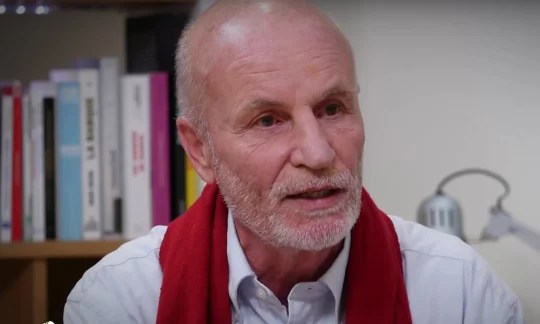
French political scientist Francois Burgat
MEMO | April 29, 2025
French lawyer Rafik Chekkat said today that the charge of “terrorist propaganda” is being used in France to silence those who speak out about crimes committed by Israel in Gaza.
French political scientist Francois Burgat, known for his work on the Arab world, was detained on 9 July 2024, in Aix-en-Provence on charges of “terrorist propaganda.” His arrest followed a complaint by the European Jewish Organisation (OJE) over social media posts he shared in January 2024 about Israel’s attacks on Gaza.
“The two most commonly used charges to silence those who respond to the crimes committed in Gaza are ‘terrorist propaganda’ and ‘incitement to hatred and discrimination,’” said Chekkat, one of Burgat’s lawyers and a member of the Marseille Bar Association.
“Sometimes you are prosecuted under one charge, sometimes the other, and sometimes even both simultaneously,” he added.
Burgat was released the same day he was arrested and appeared before a judge at the Aix-en-Provence Criminal Court last week.
The prosecution has requested an eight-month suspended prison sentence, a €4,000 (about $4,550) fine, and a six-month ban on posting on X.
“Despite being an expert on terrorism-related issues, he is now being prosecuted for ‘terrorist propaganda’,” Chekkat said.
The court is expected to announce the verdict in Burgat’s case on 28 May.
Chekkat argued that Burgat’s case is part of a broader pattern of cracking down on criticism of Israel’s actions in Gaza.
The law regarding “terrorist propaganda”, he explained, was originally designed to combat terrorist organisations’ recruitment efforts in online environments but is now “being used to suppress dissenting voices on the issue of Palestine.”
“This is just the visible tip of the oppressive iceberg. That is to say, not only are publicly known figures involved here, but also many lesser-known individuals,” he said.
“Sometimes activists, and sometimes people not affiliated with any group — even ordinary individuals — have been questioned, prosecuted, and some have even been convicted of terrorist propaganda,” he added.
Featured Video

America Racing to Strategic Defeat in Iran
or go to
Aletho News Archives – Video-Images
From the Archives
Should Europeans ‘Thank’ the Americans for Destroying Nord Stream?
By Robert Bridge | Strategic Culture Foundation | September 29, 2022
With an investigation continuing into the destruction of the Nord Stream gas pipeline that provided energy supplies to Europe from Russia, there appears to be just one prime suspect, and that should surprise nobody.
Following the sabotage of the Nord Stream 1 and 2 gas pipelines, former Polish Foreign Minister Radoslaw Sikorski already seemed to know the identity of the perpetrator when he tweeted out: “Thank you, USA.”
At first glance, it seemed that Sikorski was speaking sarcastically, berating Washington for carrying out an attack that will have severe repercussions for the people of Europe. After all, how could anyone see any good coming from the termination of Europe’s primary source of gas reserves with winter just around the corner? It was Sikorski’s homeland of Poland, after all, that urged its citizens to collect firewood in the face of dwindling gas reserves.
In fact, the Polish diplomat was speaking one-hundred percent literally… continue
Blog Roll
 Aletho News
- Tehran approves new Hormuz plan with major restrictions
- No Threat Can Force Iran’s Surrender /Trita Parsi & Lt Cl Daniel Davis
- UK’s New Pandemic Plan Would Turn Big Tech Into a Mass Location Tracking Network
- Growing insecurity, soaring prices fuel protests in north as regime bans evacuation: Sources
- Iran denies responsibility for ‘depraved’ attack on Kuwait desalination plant
- Bring The Troops Back. End This War Now!
- Can we please stop calling Israel the ‘only democracy in the Middle East’ now?
- US should start removing its troops from Germany, proposes AfD co-leader Chrupalla
- Iran Red Crescent: 600 educational centers attacked in US-Israeli ‘war crimes’
- Russian Oil Tanker Arrives in Cuba Amid U.S. Blockade
- If Americans Knew
- As Iran targets US military bases, will they be relocated to Israel? Not a ceasefire Day 171
- Will Trump Go Kamikaze?
- Is the University of Florida Shutting Down College Republicans over Israel Criticism?
- Jewish extremist arrested over alleged plot to firebomb Palestinian activist Nerdeen Kiswani’s home
- More than half of Palestinian child detainees have no charges
- The More Murderous Israel Gets, The More We Hear About “Antisemitism”
- Land Day and the Palestinian struggle after 30 months of genocide
- The Iran War Is About Palestine
- Israeli soldiers echo settler ideology, talk of revenge after targeting Palestinians and detaining CNN crew in the West Bank
- Israeli Policies Threaten Future of Christian Schools in Jerusalem
- No Tricks Zone
- New Study Finds Warming Saves Lives…Cold Temperatures 12 Times More Deadly Than Excess Heat
- German Science Blog Accuses PIK Climate Institute Of Hallucinating Climate Tipping Points
- Devastating Assessment Of Comirnaty Vaccine By Former Senior Pfizer Europe Toxicologist
- New Study: CO2 Is ‘Effectively Negligible’ As An Explanatory Climate Change Factor Since 2000
- Former Pfizer Toxicologist Dr. Helmut Sterz Tells Bundestag Hearing Pfizer Vaccine Should Have Never Been Approved
- Energy Expert: Germany’s Nuclear Phaseout Was A “500 Billion Euro Mistake”
- New Research: South Australia’s Mid-Holocene Sea Surface Temperatures Were 4°C Warmer Than Today
- Storing Green Energy To Last Germany 10 Days Would Require A 60-Million Tonne Battery
- New Studies: UK Sea Levels Were 4 Meters Higher Than Today During The Mid-Holocene
- Destructive Green New Deal: German Energy And Metal Group Warns Of Drastic Crisis
 Aletho News