Why Could The UK and France Recognize Palestine? Spoiler – It’s Not About Sympathy
Sputnik – May 1, 2025
There’s a bigger game at play, geopolitical analyst Mehmet Rakipoglu tells Sputnik.
- Strategic autonomy: Recognizing Palestine may not yield immediate political gain – but it could be a move to challenge US hegemony, noted the researcher at UK-based Dimensions for Strategic Studies think tank. It could send a message that London and Paris are not pawns of the US and Israel or fully aligned with Donald Trump policies, he added.
- Public pressure: The British and French governments are not suddenly sympathetic to the Palestinian cause – domestic protests and global outrage over Israel’s genocidal actions in Gaza have forced their hand, argues the pundit. Anti-Zionist sentiment is surging in all Western capitals, with silence no longer an option for British and French leaders.
- ️Ethical crossroads: If the UK and France claim to uphold Western values, staying silent on Israel’s war in Gaza creates a moral dilemma, noted the analyst, since you cannot preach human rights and ignore genocide.
Sayyed Houthi: Yemeni Armed Forces to Fight Along with Hezbollah against Any Israeli War on Lebanon
Al-Manar | May 1, 2025
Head of Yemen’s Ansarullah Movement Sayyed Abdul Malik Badreddine Al-Houthi stressed on Thursday that Hezbollah power is still the deterrence that prevents the Israeli enemy from invading and controlling Lebanon.
In a televised speech, Sayyed Houthi indicated that the feeble stance of the Lebanese authorities necessitates the only guarantor of Lebanon’s security is the Resistance.
Sayyed Houthi affirmed that the enemy’s move of constructing new posts in South Lebanon consecrates its occupation, highlighting the Zionist attacks and violations of Lebanon’s sovereignty.
The Yemeni leader extended greetings to Hezbollah and its command, praising the latest speech of Secretary General Sheikh Naim Qassem. “We will fight along with Hezbollah against any Israeli comprehensive escalation and aggression on Lebanon,” Sayyed Houthi affrimed.
On Gaza, Ansarullah leader hailed the latest military operations of the Palestinian resistance, expecting more Zionist losses if the enemy invades the residential neighborhoods of the Strip.
Sayyed Houthi emphasized that Palestinian resistance has surprised the enemy which is persisting in its crimes of killing, starving and displacing the Palestinians in Gaza and the West Bank.
Finally, Sayyed Houthi warned of the consequences of the US-Israeli conspiracies against the entire Umma, noting that the Israeli enemy is seizing lands in Syria in order to use it to attack the civilians there.
U.S. Continues Strikes on Yemen: Objectives, Criticism, and Alternatives
By Viktor Mikhin – New Eastern Outlook – May 1, 2025
U.S. President Donald Trump has confirmed that the United States will continue missile strikes on Yemen until the Houthis cease their attacks on Israel and ships in the Red Sea.
American officials have baselessly insisted that the attacks, which began on March 15, 2025, have achieved significant success. They claim to have allegedly destroyed personnel linked to the Houthis’ missile capabilities, as well as missile sites and weapons depots. However, many observers doubt the effectiveness of this campaign. While the Trump administration’s strikes have been less restrained than the bombings carried out under Biden, they have failed to eliminate Houthi leaders or undermine their missile production capabilities. Meanwhile, the Houthis continue to strike Israel and Israel-affiliated vessels, clearly demonstrating the limited effectiveness of the U.S. operation in achieving its stated goals.
Risks of Escalation and Humanitarian Consequences
Many analysts argue that the U.S. should intensify its operation by targeting critical infrastructure tied to the Houthis’ military potential. The recent barbaric bombing of the port of Ras Isa, which killed over 80 civilians, including rescue workers, may signal the start of a new phase. But experts doubt the U.S. can sustain such an operation, which has faced bipartisan criticism for lacking strategic results and for its financial cost—estimated at $1 billion in just two weeks. Some Democratic and Republican lawmakers have also stated that the Yemen operation violates the War Powers Act, which prohibits prolonged overseas military deployments without congressional approval.
Pentagon officials have also expressed concerns over U.S. Central Command’s (CENTCOM) heavy use of long-range Tomahawk missiles in Yemen, warning that this could deplete U.S. stockpiles in the event of a future military confrontation with China.
For their part, the Houthis have a decade of experience enduring massive and sustained bombings—whether from the Saudi-led coalition since 2015 or directly from the U.S. under Biden. Neither side has achieved its primary strategic objectives. Moreover, prolonged strikes could create political pressure on the U.S. due to civilian casualties amid Yemen’s worsening humanitarian crisis. Since the beginning of the month, Trump administration strikes on Yemen have killed at least 160 civilians, including many children.
A Failed Military Approach and Pressure for Quick Results
The military setbacks, combined with pressure on Washington to deliver quick results, point to another possibility—turning to the Yemeni army. In theory, local ground forces could engage the Houthis on multiple fronts, particularly in coastal provinces, with the goal of degrading the Houthis’ military capabilities in the region and securing Red Sea shipping lanes, including vessels carrying critical supplies for aggressive Israel.
Earlier this month, the Yemeni army’s chief of staff met with the commander of U.S. CENTCOM to discuss joint military objectives and efforts to counter the Houthis. CNN, citing regional diplomatic sources, reported that a ground operation against the Houthis is being prepared in southern Yemen. The coordinated attack would be supported by Saudi and U.S. naval forces and aim to push the Houthis out of the critical port of Hodeidah. According to Yemeni sources, up to 80,000 troops have been mobilized for this purpose.
So far, there has been no official confirmation that a U.S.-backed Yemeni army offensive is in the works. In reality, this option comes with several practical challenges, not least of which are structural issues within the military apparatus of Yemen’s internationally recognized government.
While the official Yemeni army has received significant military support in training and equipment since 2015, including the formation of local militias, it remains weak and ineffective due to outdated pre-war weaponry, limited air defense capabilities, ammunition shortages, and insufficient training and maintenance. Other problems include pay disparities among soldiers from different factions and the prevalence of “ghost soldiers”—names added to payrolls for embezzlement purposes.
The Yemeni army is deeply fragmented, composed not of individual conscripts but of political and tribal factions that often hold conflicting regional, ideological, political, and even foreign allegiances. This is the main reason for poor coordination and the lack of a unified command. A joint security and defense committee was established years ago to reorganize and centralize the armed forces, but key factions—particularly the Southern Transitional Council (STC)—have resisted such efforts, preferring to maintain autonomy.
The situation is further complicated by infighting within the Presidential Leadership Council, lingering separatist sentiments in the STC, and Yemen’s economic devastation after years of civil war. These issues would not only hinder a military campaign against the Houthis but could also derail the UN-backed peace process. Even setting aside these concerns, overcoming structural problems would require extensive military and financial support from regional and international forces, long-term training and equipping, and measures to address gaps in the sanctions regime.
Diplomatic Alternatives
Reports suggest that U.S.-Iran nuclear negotiations also touch on Iran’s role in the Middle East. In this context, Washington may pressure Tehran to convince the Houthis to halt attacks on Israel and Israel-linked ships in the Red Sea. This approach depends on Iran’s level of influence over the Houthis on one hand and progress on other issues—such as Iran’s nuclear program, missile capabilities, and sanctions—on the other.
A deal would benefit both sides. Iran wants to avoid a war that could cost it much of its remaining power and influence—especially after losing most of its military allies in the region—and could potentially lead to regime collapse. The U.S. wants to avoid further draining its military resources in the Middle East, preferring to conserve them for a prolonged conflict with China, which remains the current administration’s top priority. Still, the prospects of a negotiated solution to the Houthi problem remain uncertain, given its entanglement with other critical issues.
Each of the three options discussed has major drawbacks—yet none can be ruled out. The failure of one could lead to another, or two approaches could be pursued simultaneously. In the long run, Houthi attacks will likely stop. The question is how, under what terms, and what impact this will have on Yemen’s broader crisis.
If the Houthis are forced to halt due to a ground offensive, it would strengthen Yemen’s legitimate government, either compelling the Houthis to engage in peace talks or ousting them from Sanaa and restoring the official government. Conversely, if the Houthis relent due to a deal with Iran, it would solidify their control over northern Yemen.
The outcome hinges on whether the U.S. can break the Houthis or force them into peace on American-Israeli terms.
Viktor Mikhin, Corresponding Member of the Russian Academy of Natural Sciences, Middle East Expert
Syria’s geopolitical reorientation: Unravelling a revolution, redrawing alliances
By Amro Allan – Al Mayadeen – May 1, 2025
Recent events in Syria mark a significant shift in the country’s geopolitical identity. The arrest of two senior members of the Palestinian Islamic Jihad (PIJ) by Syria’s de-facto leaders cannot be dismissed as an isolated incident or a routine security matter. This action coincided with a meeting between Syria’s new ruler, Ahmad al-Sharaa, AKA Abu Mohammad al-Joulani, and US Congressman Cory Mills, during which al-Sharaa reportedly expressed openness to joining the “Abraham Accords”, the US-brokered framework for normalisation with “Israel”, “under the right conditions”.
Moreover, leaked information confirms that Damascus has signalled its approval of the majority of eight conditions set forth by the US in exchange for political and economic incentives. According to Reuters, US Deputy Assistant Secretary for the Levant and Syria, Natasha Franceschi, gave the list of eight demands to the new Syrian foreign minister during an in-person meeting on the sidelines of a Syria donor conference in Brussels on March 18, 2025.
These conditions include the complete dismantling of Syria’s chemical weapons stockpiles, a commitment to ending support for what the US classifies as terrorism, cessation of threats toward regional ‘neighbours’, chiefly “Israel”, curtailment of what the US call Iranian influence, the banning of Palestinian factions’ activities on Syrian soil, primarily Hamas and the PIJ, security cooperation with Washington, and possibly granting the US permission for ‘counterterrorism’ strikes inside Syria.
In response to the US’s eight conditions, a formal message reportedly sent by the new Syrian government on April 14, 2025, pledged to prevent Syrian territory from being used as a launching ground for threats against any state, including “Israel”. It also announced the formation of a committee to monitor the activity of Palestinian groups within Syria.
These moves underscore a transformation that goes beyond surface-level diplomacy, signalling a strategic reorientation and a potential willingness to normalise relations with “Israel”.
The so-called Syrian revolution, having succeeded in ousting President Bashar al-Assad, is now entering a new phase, one defined by strategic realignment and integration into the so-called “Moderate Arab States,” accompanied by political and economic openness to the West.
This pivot implies a readiness to make concessions that would have been unthinkable under the former government, particularly those undermining Syria’s former ideological pillars and long-standing role as a bastion of pan-Arab and Islamic resistance against occupation.
This article does not seek to re-litigate the Syrian conflict, a war that has already consumed much energy and is now widely seen as a lost cause for the region’s remaining Resistance forces. Instead, it raises a pressing question: Is it accurate, or even justifiable, to continue referring to those who fought to dismantle Syria and Libya as “revolutionaries”?
Many of these uprisings were described as noble struggles for freedom and dignity. But if the result of these so-called “pure and patriotic” revolutions is the dismantling of national sovereignty and the empowerment of Western-aligned regimes, should the term “revolution” still be applied?
Typically, four justifications are presented when confronting this contradiction:
- The revolution lost its way.
- Those in power today do not represent the revolution.
- Revolution is a cumulative process: historical examples like the French Revolution are cited.
- The future will correct the mistakes of the present.
Each of these claims warrants brief examination:
- The revolution lost its way
This claim lacks analytical rigour. A popular uprising is either chaotic by nature, or it is a structured movement with clear ideological foundations and defined goals. If it achieved its stated objectives — regime change, in this case — then arguing it “lost its way” is logically inconsistent. One cannot claim both success and deviation simultaneously. - Today’s leaders do not represent the revolution
This is a form of historical revisionism. The individuals currently in power are the very figures who were celebrated in public squares and entrusted by the movement’s supporters and their affiliated media. To deny their representative status is to erase the revolution’s actual trajectory and leadership. - Revolution is a cumulative process
While true in principle, this argument is frequently misapplied. Not all revolutions are equal, and context matters. Drawing equivalence between the French Revolution and modern Arab uprisings, for instance, ignores crucial differences in geopolitical circumstances, external interventions, and ideological underpinnings. - The future will correct the present
This line of thinking defers accountability indefinitely, assuming a future revolution will rectify today’s failures, without offering a plan, timeframe, or even a clear understanding of how or why this corrective revolution will succeed. It is often promoted by the same voices that championed the first revolution, despite its evident failures.
Meanwhile, Palestinian Resistance movements are engaged in an existential struggle against a campaign of collective annihilation, orchestrated by a US-Israeli axis intent on cementing regional dominance and dismantling all forms of resistance.
In such a context, referring to those who imprison resistance fighters in “new Syria” as “revolutionaries” is not only misleading but morally and politically indefensible. Such characterisations serve only to blur the line between genuine revolutionary action and acts of sabotage dressed in revolutionary language.
Clinging to a romanticised version of the Syrian and Libyan uprisings, despite overwhelming evidence to the contrary, amounts to intellectual suicide. It confuses the public, paralyses future movements, and hinders the emergence of authentic revolutionary efforts rooted in critical reflection and historical awareness.
Now more than ever, a rigorous reassessment is needed. Not as an academic exercise, but as a moral and national duty. And this reassessment must take seriously the alternative readings offered by steadfast Resistance movements, from Gaza to southern Lebanon to Yemen, whose leaders remain committed to a vision of liberation that cannot be co-opted or outsourced.
This article is not an ideological attack or a rhetorical spat. It is a call to clarity. A reminder that true revolution is not a slogan but a commitment grounded in vision, sacrifice, and integrity.
Those unwilling to reassess their missteps or acknowledge the consequences of their choices should step aside from public discourse. They should not undermine the concept of revolution by associating it with ventures rooted in destruction, subservience, and betrayal.
When alignments become clear and illusions are shattered, the enduring hope lies in the memory of the people, and in the resilience of those who continue to prove that genuine revolutions are not borrowed or bought. They are born from struggle and clarity alike.
“Deprivation by Design”: Israel Intensifies Mass Killing Campaign in Gaza With Starvation and Daily Strikes
The scale of killing in Gaza is almost impossible to track as the Israeli military bombs and starves Palestinian civilians with impunity
By Rasha Abou jalal and Sharif Abdel Kouddous | Drop Site News | April 30, 2025
GAZA CITY—Three generations of the al-Khour family were wiped out when Israel bombed their family home in the al-Sabra neighborhood in central Gaza at dawn on April 26. The elderly patriarch of the family, Talal al-Khour, his wives, daughters, sons, and grandchildren were all killed in the attack. A total of twenty-two people—including twelve children—perished, their bodies blown apart and buried under the rubble.
“The airstrike occurred at dawn while we were asleep. Suddenly, we woke up to a blast that felt like an earthquake. We rushed into the street and found that the five-story home of the Al-Khour family had turned into a pile of rubble,” Mohammad Al-Ajla, a 37-year-old neighbor who helped retrieve the bodies, told Drop Site News. “As soon as the dust from the strike cleared, neighbors began trying to rescue members of the family. The recovery operation continued for eight straight hours. We saw bodies everywhere. There were children without heads.”
With the help of residents in the area, Civil Defense teams were able to retrieve fifteen of the bodies, which were later buried together in a mass grave. The remaining bodies remain trapped under the debris. Emergency rescue crews were forced to dig through the wreckage with their bare hands as a result of Israel denying the entry of equipment into Gaza and deliberately targeting the little machinery available, according to the Civil Defense spokesperson, Mahmoud Bassal.
“We could hear the cries of the wounded trapped under the rubble, but we were helpless to reach them. Over time, the screaming faded, and we no longer knew whether they were still alive or had been killed,” Bassal told Drop Site. “Many lives could have been saved, but the ongoing blockade and the denial of essential tools eliminated every possible chance for rescue.”
Since Israel resumed its scorched earth bombing campaign on March 18, Gaza has been transformed into a desert of death, in which rubble and ruin form the backdrop for an unceasing campaign of mass killing. The Israeli military has carried out multiple airstrikes and shelling across the enclave on a daily basis, pounding homes, displacement camps, cafes, hospitals, charity kitchens, so-called “humanitarian zones,” and other civilian sites.
The scale of the attacks is almost impossible to track. On Wednesday alone, three residential buildings in the Nuseirat refugee camp were bombed; one of the strikes killed six members of one family, including three siblings, all children. In a nearby building, eight people in a single home were killed. In Jabaliya, at least three people from the same family, including two young girls, were killed in Israeli artillery fire. On the coast, west of Gaza City, a fisherman was killed while pulling his boat ashore. In western Khan Younis, an overnight drone strike on a tent killed six people, including children. This is not a comprehensive list and does not even cover a 24-hour period.
Over two days last week, the Israeli military also targeted and bombed over 30 bulldozers and other pieces of heavy machinery. Some of them had been donated during the “ceasefire” to clear rubble, repair critical infrastructure, and rescue people after airstrikes, according to the UN Office for the Coordination of Humanitarian Affairs (OCHA).
The scenes emerging from across Gaza, from Rafah in the south to Beit Hanoun in the north, are staggering in their horror. Children blown apart across rooftops or while riding their bikes; dead bodies strewn across a cafe, some still seated, slumped in their chairs; corpses wrapped in white body bags lined up alongside one another; suicide drones crashing into tents housing sleeping families; screaming parents and wounded children scattered in the streets.
“The massacres do not stop. We are being slaughtered from vein to vein,” Al Jazeera correspondent Anas al-Sharif said in a social media post.
At least 2,300 Palestinians have been killed over the past six weeks alone—the equivalent of over fifty people killed every day. Over 740 of the dead are children, the Director of the Information Unit at the Ministry of Health in Gaza, Zaher Al-Wahidi, told Drop Site. Since the start of the war, more than 2,180 families have been entirely annihilated—with all members killed—while more than 5,070 families have lost all members except for one surviving individual, according to the Government Media Office.
The relentless assault comes as Israel has imposed a policy of forced starvation on Gaza’s two million residents, sealing off Gaza completely and denying the entry of all food, fuel, medicine and other humanitarian goods since March 2—by far the longest blockade since the beginning of the war. More than 65,000 children in Gaza have been hospitalized with severe malnutrition, according to a statement this week by the Government Media Office.
Israel has made it clear that the intensifying military assault and the ongoing blockade are explicitly aimed at bringing Hamas to its knees. Negotiations for a ceasefire appear deadlocked with Israel scrapping crucial elements of the original three-phase deal signed by Hamas and Israel in January, and now pushing for Hamas to formally surrender, disarm, and exile its leadership as a condition to end the genocide.
Israel’s defense minister has reiterated that the denial of food, medicine, and other aid is being used to collectively punish the Palestinians of Gaza. “No humanitarian aid is about to enter Gaza,” Israel Katz said, announcing that “preventing humanitarian aid from entering Gaza is one of the main pressure levers.”
Using starvation as a weapon of war has had a devastating effect. Last week, the UN warned that Gaza “is now likely facing the worst humanitarian crisis in the 18 months since the escalation of hostilities in October 2023.”
The World Food Program recently announced that it had run out of food. “The situation is at a breaking point,” the organization said in a statement. Food prices have risen by 1,400 percent. With no remaining supplies of flour or fuel, Gaza’s bakeries have stopped functioning and remaining stocks of food are being rapidly depleted. The flour that is available is often insect-infested. Families are increasingly resorting to mixing crushed macaroni with flour to make bread and allocating just one piece of bread per family member per day.
With shortages of cooking gas and firewood, families are forced to burn plastic and other waste to cook the little food they have. People are foraging for wild plants and eating sea turtles that have washed ashore in order to survive. The UN last week said it identified 3,700 children suffering from acute malnutrition in March—now up to 80% from the month before. A total of fifty-three children have died of malnutrition since the war began.
The heads of twelve major aid organizations issued a joint statement last week warning that “Famine is not just a risk, but likely rapidly unfolding in almost all parts of Gaza,” and characterizing the situation in Gaza “one of the worst humanitarian failures of our generation.”
Over the past few weeks, the Israeli military has bombed the al-Ahli Hospital and the Al Durrah Paediatric Hospital, both in Gaza City; the Nasser hospital in Khan Younis and the Kuwaiti Field Hospital in Mawasi; and massacred fifteen emergency workers and first responders. The hospitals that are still standing are barely functioning, with severe shortages of medicine, equipment and doctors.
Meanwhile, the Israeli military continues to squeeze Palestinians onto smaller tracts of land within Gaza. About 70 percent of Gaza has been designated as “no-go” zones or placed under displacement orders. Over the past six weeks, roughly 420,000 Palestinians have been displaced yet again, with no safe place to go.
“This is deprivation by design,” the acting head of office for OCHA, Jonathan Whittall, said in a statement. “Land is being annexed from the north, from the east, from the south of the strip as forces advance… Gaza is being starved, it’s being bombed, it’s being strangled. This looks like the deliberate dismantling of Palestinian life.”
Saudi Arabia tells ICJ Israel considers itself above all laws
MEMO | April 30, 2025
A representative of Saudi Arabia told the International Court of Justice (ICJ) yesterday that Israel considers itself above all laws and refuses to comply with the court’s advisory opinion on halting its aggression against the Gaza Strip.
Mohamed Saud Alnasser, who is the director of legal affairs at the kingdom’s Foreign Ministry, condemned Israel’s “flagrant violations of international law” in the occupied West Bank and East Jerusalem, as well as Gaza, adding that Tel Aviv’s unjustified blockade on Gaza, reflects brutality against civilians in the besieged Strip.
“Less than a year ago, the court heard that Israel’s policies and practices in the occupied territory, including its settlement practices, its continued occupation and its annexation of parts of that territory are flagrant violations of international law that must be brought to an end as a matter of urgency,” he said.
“Sadly, but predictably, Israel chose to ignore the court’s ruling, showing it considered itself above the law.”
Alnasser referred to Israel’s “hideous conduct” in Gaza, adding that the “most ruthless application has been the siege conditions imposed over the Gaza Strip since October 2023,” and that the worsening situation there has turned the Strip into a graveyard for thousands of innocent people
Alnasser stressed that preventing the entry of relief supplies into Gaza is a violation of all international conventions, calling on Israel to facilitate the work of humanitarian organisations, especially the United Nations Relief and Works Agency (UNRWA), in Gaza and the West Bank.
He explained that the International Commission of Inquiry had disproved the Israeli allegations against UNRWA employees, and called for protection for workers in humanitarian agencies and organisations in the occupied Palestinian territories from Israeli violations.
‘Prepare to face consequences’: Yemen warns UK after attacks on Sanaa
The Cradle | April 30, 2025
The Yemeni government issued a statement on 30 April warning the UK against its continued participation in the US campaign of deadly airstrikes against Yemen that began last month.
“In a display of typical British arrogance, the UK Ministry of Defense announced participation in a joint military operation with the US enemy against our country, targeting areas south of Sanaa … The Government affirms that the British enemy must carefully consider the consequences of its involvement and be prepared to face the repercussions,” the Sanaa government said.
“While we pledge to respond to this unlawful and unjustified aggression, we stress that this attack is part of ongoing Anglo-American efforts to support the Israeli enemy by attempting to block Yemen’s support for Palestine – enabling the Israeli enemy to continue its genocide in Gaza,” it added.
The government statement also said Yemen will stand against the “trio of evil,” referring to the US, UK, and Israel, as well as “those who orbit around them.”
The statement came hours after the UK announced its first joint attack against Yemen with Washington since US President Donald Trump entered office this year.
The UK Defense Ministry claimed the strikes targeted a “cluster of buildings” used by the Yemeni Armed Forces (YAF) and Ansarallah movement for storing drones, adding that the attack came after “very careful planning” to avoid civilian casualties.
London played a primary role in the initial campaign against Yemen, launched in January 2024 by the former US administration of Joe Biden.
Yemeni forces targeted UK vessels in the Red Sea and Gulf of Aden a number of times last year in response.
The UK announcement came after at least six US airstrikes struck the Sanaa governorate on 29 April.
Two days ago, around 70 African migrants were killed in US strikes on a detention center in Saada governorate. Dozens of others were injured.
The Interior Ministry of the Sanaa government said the shelter, located in Saada’s reserve prison, was supervised by the International Organization for Migration (IOM) and the Red Cross.
In response, the YAF said it targeted the USS Harry Truman in the Red Sea with missiles and drones, adding that it forced the aircraft carrier to retreat northward. It also said it targeted a “vital” Israeli site in the city of Ashkelon.
US warplanes have been launching deadly attacks against Yemen every day since 15 March, when Trump intensified the campaign that was started by the former administration last year.
The bombing campaign comes in response to Yemen’s reimposition of a ban on Israeli shipping in the Red Sea and elsewhere, as well as its renewal of drone and missile attacks on Israel after Tel Aviv restarted the war on Gaza last month.
Yemen has repeatedly targeted US aircraft carriers in response to Washington’s campaign, which has cost around $1 billion and has depleted weapons stocks, while failing to significantly impact the YAF and Ansarallah.
France using the ‘terrorism’ charge to silence criticism of crimes in Gaza: French lawyer
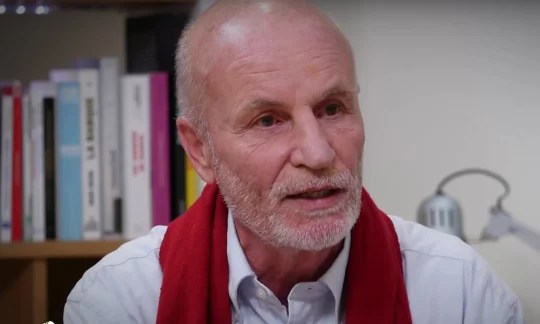
French political scientist Francois Burgat
MEMO | April 29, 2025
French lawyer Rafik Chekkat said today that the charge of “terrorist propaganda” is being used in France to silence those who speak out about crimes committed by Israel in Gaza.
French political scientist Francois Burgat, known for his work on the Arab world, was detained on 9 July 2024, in Aix-en-Provence on charges of “terrorist propaganda.” His arrest followed a complaint by the European Jewish Organisation (OJE) over social media posts he shared in January 2024 about Israel’s attacks on Gaza.
“The two most commonly used charges to silence those who respond to the crimes committed in Gaza are ‘terrorist propaganda’ and ‘incitement to hatred and discrimination,’” said Chekkat, one of Burgat’s lawyers and a member of the Marseille Bar Association.
“Sometimes you are prosecuted under one charge, sometimes the other, and sometimes even both simultaneously,” he added.
Burgat was released the same day he was arrested and appeared before a judge at the Aix-en-Provence Criminal Court last week.
The prosecution has requested an eight-month suspended prison sentence, a €4,000 (about $4,550) fine, and a six-month ban on posting on X.
“Despite being an expert on terrorism-related issues, he is now being prosecuted for ‘terrorist propaganda’,” Chekkat said.
The court is expected to announce the verdict in Burgat’s case on 28 May.
Chekkat argued that Burgat’s case is part of a broader pattern of cracking down on criticism of Israel’s actions in Gaza.
The law regarding “terrorist propaganda”, he explained, was originally designed to combat terrorist organisations’ recruitment efforts in online environments but is now “being used to suppress dissenting voices on the issue of Palestine.”
“This is just the visible tip of the oppressive iceberg. That is to say, not only are publicly known figures involved here, but also many lesser-known individuals,” he said.
“Sometimes activists, and sometimes people not affiliated with any group — even ordinary individuals — have been questioned, prosecuted, and some have even been convicted of terrorist propaganda,” he added.
UNRWA details harrowing abuse of Gaza aid workers in Israeli detention
Al Mayadeen | April 29, 2025
The UN agency for Palestinian refugees, UNRWA, has accused the Israeli military of abusing over 50 of its staff members detained during the war on Gaza.
According to UNRWA head Philippe Lazzarini, the detained individuals, including teachers, doctors, and social workers, were subjected to harsh treatment while in Israeli custody. Lazzarini stated on X that the staff reported being beaten, humiliated, and even used as human shields.
“Since the start of the war in October 2023, over 50 UNRWA staff among them teachers, doctors, social workers, have been detained and abused,” Lazzarini wrote. “They have been treated in the most shocking and inhumane way.”
Testimonies reveal torture, forced confessions
Sharing testimony from one of the released workers, Lazzarini highlighted the severity of the mistreatment.
“I wished for death to end this nightmare I was living through,” the staff member reportedly said. According to the accounts collected by UNRWA, detainees faced sleep deprivation, humiliation, threats against themselves and their families, dog attacks, and forced confessions under duress.
Lazzarini described the testimonies as “harrowing and outrageous,” adding to concerns about the treatment of Palestinian detainees during the ongoing Israeli war.
The reported abuse of humanitarian workers further complicates the already dire situation in Gaza, where aid agencies have been struggling to deliver assistance amid ongoing Israeli bombardments and blockades.
International reactions and ICJ proceedings
The broader humanitarian crisis in Gaza is under increased international scrutiny. The International Court of Justice (ICJ) is currently hearing arguments from dozens of nations and organizations regarding “Israel’s” humanitarian obligations to Palestinians.
The International Court of Justice (ICJ) began a week-long series of hearings on Monday to examine “Israel’s” humanitarian obligations toward Palestinians, as the Gaza Strip endures over 50 days under a total blockade that has halted the entry of vital aid.
The ICJ hearings on Gaza started with a submission from Palestinian representatives, followed by arguments from 38 countries, including the United States, China, France, Russia, and Saudi Arabia.
The League of Arab States, the Organization of Islamic Cooperation, and the African Union are also expected to present their positions before the 15-judge panel.
These proceedings stem from a December resolution by the UN General Assembly, led by Norway and passed with broad support, calling on the court to urgently issue an advisory opinion on “Israel’s” legal responsibilities under international law.
The United Nations has asked the court to clarify “Israel’s” obligations to facilitate the unimpeded delivery of humanitarian aid to Palestinians in Gaza, in coordination with UN agencies, international organizations, and third-party states. This comes as the Gaza humanitarian crisis continues to worsen, with growing concerns over famine risk due to the blockade.
It is worth noting that “Israel” maintains strict control over all international aid entering the Gaza Strip, home to 2.4 million Palestinians. Aid deliveries were fully halted on March 2, just before the ceasefire collapsed, ending a temporary reduction in hostilities after 15 months of conflict.
The ongoing Israeli aid blockade has pushed Gaza to the brink of catastrophe, with supplies rapidly depleting and Palestinian civilians facing severe restrictions on access to essential resources.
Screaming soldiers and open revolt: How one video unmasked Israel’s internal power struggle
By Ramzy Baroud | MEMO | April 29, 2025
An apparently strange choice was made by a correspondent from Israel’s Channel 12 when, on 22 April, he decided to release one of the most humiliating videos of a relatively large number of Israeli soldiers coming under attack by a single Palestinian fighter. As soldiers screamed and stumbled down the stairs of a building in Khan Yunis chaos erupted: some fell over each other, others hid behind a concrete wall, and some even fired erratically, endangering their own colleagues.
This begs a serious question: given the Israeli media’s frequent adherence to strict, often unreasonable, military censorship, what prompted the decision to release such a damaging portrayal of its own soldiers?
The answer lies in the open war between the Israeli political institution, represented by the leadership of Prime Minister Benjamin Netanyahu on the one hand, and the rest of the country on the other. The “rest of the country” may seem to be an elusive concept, but it is not. Currently, Netanyahu is at war with the military institution, the internal intelligence agency Shin Bet, the judiciary, much of the media and the majority of Israelis who want the war to end and Israeli captives to be released.
This explains the unprecedented and open criticism by former top Israeli officials who are accusing Netanyahu of being a threat, not only to the Israeli military and Israeli society, but also to the future of Israel itself.
On 21 April, the head of Shin Bet, Ronen Bar, breached every protocol when he presented Israel’s Supreme Court with two documents, one of which was revealed to the public. According to Israeli media, in the unclassified affidavit, Bar stated that he was fired by the prime minister “because of his refusal to meet those expectations of loyalty,” particularly “regarding investigations into the prime minister’s aides” and for “his refusal to help Netanyahu avoid testifying in his criminal trial.”
Bar’s comments represented a fundamental historical shift in how Israel’s power players treat extremely sensitive security matters.
They were also, essentially, a call for the overthrow of Netanyahu.
A former head of Shin Bet, Nadav Argaman, has been equally vocal, although he was the first to speak about Netanyahu’s transgressions, suggesting clear coordination between the various elements of Israel’s notorious and powerful intelligence agencies. “If the prime minister acts unlawfully, I will say everything I know,” he told Channel 12 last month.
The coordination runs deeper, with former Israeli Defence Minister Yoav Gallant, who, along with Netanyahu, is wanted by the International Criminal Court, going on his own rampage on 23 April. Aside from the direct attacks on Netanyahu, calling his policy a “moral disgrace”, Gallant seems to have disparaged the Israeli military itself by revealing that, last August, Israel faked pictures of an alleged Hamas tunnel in order to block a ceasefire agreement.
The Israeli government used this specific episode as its rationale for maintaining control over the Philadelphi Corridor in southern Gaza, a justification that emerged around the same time as the deeply embarrassing video of Israeli soldiers running in terror from a lone Palestinian combatant. The layers of humiliation continued to accumulate.
While Gallant’s actions may discredit the military and his own leadership, his primary aim appears to be to have an impact on Netanyahu, who many Israelis believe is prolonging the Gaza war for personal political gain.
Israel’s actual war losses are another key point. One of the occupation state’s historically best-kept secrets is its losses in fighting against Arab armies or resistance groups.
Its casualties in the current war on Gaza were also supposed to be a well-kept secret, except that they aren’t.
Although the Israeli army has tried to minimise its death toll since the start of the war on 7 October, 2023, it has faced many leaks, some initiated by the military itself. The aim? To put pressure on Netanyahu to end the war, especially in light of new information that at least half of Israel’s military reserves are refusing to return to the battlefield.
Interestingly, it was Eyal Zamir — Netanyahu’s hand-picked replacement for Chief of Staff Herzi Halevi — who surprised everyone in a speech shortly after his appointment in February. Zamir revealed that 5,942 Israeli families had “joined the list of bereaved families” in 2024. He had already committed 2025 to be “a year of war”, but now seems less inclined to escalate the war beyond Israel’s ability to sustain it.
The war between Israel’s political, military and intelligence elites has never been so ugly, let alone open, as if both sides have reached the conclusion that their survival — and the survival of Israel itself — is dependent on defeating the other camps.
After some reluctance and a relatively careful choice of words, Gallant has now joined the chorus of a powerful group of ex-officials who want to see Netanyahu out of power by any means necessary, including civil disobedience.
This internal conflict among Israel’s elite marks a departure from its long-cultivated image. For decades, Israel has presented itself as a beacon of democracy and civilisation amidst what it portrayed as its less cultured neighbours. However, the Gaza genocide has shattered this false narrative.
Consequently, the current infighting among the architects of this Israeli fantasy now offers an unprecedented opportunity to uncover deeper truths, not only about the ongoing war in Gaza, but also about Israel’s history, from its establishment on the land of historic Palestine to the ongoing genocide, nearly eight decades later.
Featured Video

Theodore Postol: Iran’s Missiles & Drones Were Underestimated
or go to
Aletho News Archives – Video-Images
From the Archives
What is the Israeli Lobby in Australia Doing in Interfaith Dialogue?
By Ali Kazak | Dissident Voice | October 11, 2015
For years Israel and its lobby around the world have been trying to normalise their relations with Arabs and Muslims without solving the Palestine Question.
One of the methods they resorted to in the last few years is using human rights and community organizations such as interfaith dialogue and Multiculturalism to achieve this objective and to: isolate the Palestinians, marginalise the Palestine question, end Israel’s isolation, and prevent criticism of Israel, knowing that these organisations will be the first to stand against Israel’s violations, racial and religious discrimination.
The group responsible for this task in Australia is The Australia/Israel & Jewish Affairs Council (AIJAC); its Director of International & Community Affairs, Jeremy Jones is in charge of lobbying religious community organizations, specifically Muslims and Christians. Consequently he convened the Faith Communities for Reconciliation, founding participant in the Australian Partnership of Religious Organisations and the Australian National Dialogue of Christians, Muslims & Jews.
AIJAC is a private political propaganda group. It is recognised as the main Israeli lobby in Australia. It coordinates its activities and works intimately with the Israeli embassy in Canberra and different institutions in Israel. It is privately funded by some Jewish businessmen. It monitors closely Australian politicians, the media, ethnic and religious groups, (especially Arabs and Muslims), unions and academics on their stands towards Israel and the Palestine question. … continue
Blog Roll
 Aletho News
- The Most Important Bet You’ve Never Heard Of
- The killing of three Indonesian soldiers in Lebanon should remind Jakarta that Israel does not want peace
- Defeated and delusional: Netanyahu’s remarks reveal $80bn war failure, says analyst
- Iran’s friends are about to make life much more difficult for Israel and the US
- The war of liberation of the Arab and Islamic peoples expands across the Gulf
- Envoy warns UN on Trump’s threat to ‘obliterate’ Iran’s civilian infrastructure
- The Larak Corridor: Iran’s Rial Gate With No US, No Israel, and No Way Around
- ‘Economic terrorism’: Steel facilities hit again in US-Israeli strike
- ‘War Crime’: Iran condemns attacks on Arak, Ardakan nuclear sites
- Two-thirds of Americans want quick end to Iran war even if goals unmet
- If Americans Knew
- Gaza families reunite years after babies evacuated amid Israel’s war
- International Rescue Committee warns Gaza’s children face grave protection risks
- Iran’s Alleged 47-Year War on America: Debunking the 1,050 American Deaths Canard
- Israel wants US to bomb more of Iran’s civilian structures (113,000 is not enough) – Not a ceasefire Day 173
- Ann Coulter Rips Into Fox News for Iran War Coverage
- Joe Kent Urges Americans To Call White House and Congress To Object To Sending Troops Into Iran
- DNC Resolution to Reject AIPAC Funding Puts Democratic Leaders in the Hot Seat
- Swedish foundation to build 400 schools as over 650,000 Gaza children remain without education for 2 years
- Israeli army admits photshopping image of slain Lebanese journalist
- This is how Israel is systematically killing health workers under the cover of war in Lebanon
- No Tricks Zone
- New Study Finds Warming Saves Lives…Cold Temperatures 12 Times More Deadly Than Excess Heat
- German Science Blog Accuses PIK Climate Institute Of Hallucinating Climate Tipping Points
- Devastating Assessment Of Comirnaty Vaccine By Former Senior Pfizer Europe Toxicologist
- New Study: CO2 Is ‘Effectively Negligible’ As An Explanatory Climate Change Factor Since 2000
- Former Pfizer Toxicologist Dr. Helmut Sterz Tells Bundestag Hearing Pfizer Vaccine Should Have Never Been Approved
- Energy Expert: Germany’s Nuclear Phaseout Was A “500 Billion Euro Mistake”
- New Research: South Australia’s Mid-Holocene Sea Surface Temperatures Were 4°C Warmer Than Today
- Storing Green Energy To Last Germany 10 Days Would Require A 60-Million Tonne Battery
- New Studies: UK Sea Levels Were 4 Meters Higher Than Today During The Mid-Holocene
- Destructive Green New Deal: German Energy And Metal Group Warns Of Drastic Crisis
 Aletho News