Independent Iranian journalist Hazamy detained in France amid crackdown on pro-Palestinian voices

Press TV – April 23, 2025
French security forces have arrested freelance reporter Shahin Hazamy as part of a crackdown on pro-Palestinian voices.
Media reports on Wednesday revealed that the dual Iranian-French national was detained in Paris for expressing support for Palestine.
French magazine Le Point confirmed through Hazamy’s lawyer that the arrest was based on accusations of “apologie du terrorisme,” a criminal charge under French law that pertains to supporting “terrorist acts.”
Hazamy was arrested on Tuesday at approximately 6:14 a.m. at his home in Paris and remains in temporary detention while the French judiciary investigates the case.
Reports said that Hazamy was violently arrested in front of his wife and two young children, aged 1 and 3.
Social media posts by Hazamy show his support for Palestinian and Lebanese resistance groups, as well as photos taken during recent visits to Lebanon.
Hazamy had also expressed solidarity with Mahdieh Esfandiari, a detained Iranian academic living in Lyon, who has been held since early March under similar charges. Hazamy had actively campaigned for Esfandiari’s release from prison.
According to Le Point, Esfandiari’s posts on social media show that the pro-Palestinian advocate was a supporter of the Hamas resistance movement.
Iran’s Foreign Ministry has criticized the arrests, demanding explanations and consular access.
Foreign Ministry spokesman Esmail Baghaei said earlier in April that such detentions raise serious concerns about the rights of Iranian nationals in France.
The arrests come amid a crackdown in the US and other Western countries targeting scholars, students, and activists who oppose the ongoing Israeli genocide of Palestinians in the Gaza Strip.
Pro-Palestinian human rights advocates say the arrests and deportation of activists are attacks aimed at terrorizing and silencing those who have courageously amplified Palestinian resistance and the call for freedom.
They say the repression of freedom of speech in the West will allow Israel to continue the genocide in Gaza.
At least 51,300 Palestinians have been killed, mostly women and children, and over 117,090 individuals injured in the Israeli genocide since October 7, 2023.
Deporting dissent: The dangerous precedent set by the persecution of pro-Palestine activists
By Ramzy Baroud | MEMO | April 22, 2025
“Rights are granted to those who align with power,” Mahmoud Khalil, a Columbia University graduate student, eloquently wrote from his cell. This poignant statement came soon after a judge ruled that the government had met the legal threshold to deport the young activist on the nebulous ground of “foreign policy”.
“For the poor, for people of colour, for those who resist injustice, rights are but words written on water,” Khalil further lamented. The plight of this young man, whose sole transgression appears to be his participation in the nationwide mobilisation to halt the Israeli genocide in Gaza, should terrify all Americans. This concern should extend even to those who are not inclined to join any political movement and possess no particular sympathy for – or detailed knowledge of – the extent of the Israeli atrocities in Gaza, or the United States’ role in bankrolling this devastating conflict.
The perplexing nature of the case against Khalil, like those against other student activists, including Turkish visa holder Rumeysa Ozturk, starkly indicates that the issue is purely political. Its singular aim appears to be the silencing of dissenting political voices.
Judge Jamee E. Comans, who concurred with the Trump Administration’s decision to deport Khalil, cited “foreign policy” in an uncritical acceptance of the language employed by US Secretary of State Marco Rubio. Rubio had previously written to the court, citing “potentially serious foreign policy consequences” stemming from Khalil’s actions, which he characterised as participation in “disruptive activities” and “anti-Semitic protests”.
The latter accusation has become the reflexive rejoinder to any form of criticism levelled against Israel, a tactic prevalent even long before the current catastrophic genocide in Gaza.
Those who might argue that US citizens remain unaffected by the widespread US government crackdowns on freedom of expression must reconsider. On 14 April, the government decided to freeze $2.2 billion in federal funding to the University of Harvard.
Beyond the potential weakening of educational institutions and their impact on numerous Americans, these financial measures also coincide with a rapidly accelerating and alarming trend of targeting dissenting voices within the US, reaching unprecedented extents. On 14 April, Massachusetts immigration lawyer Nicole Micheroni, a US citizen, publicly disclosed receiving a message from the Department of Homeland Security requesting her self-deportation.
Furthermore, new oppressive bills are under consideration in Congress, granting the Department of Treasury expansive measures to shut down community organisations, charities and similar entities under various pretenses and without adhering to standard constitutional legal procedures.
Many readily conclude that these measures reflect Israel’s profound influence on US domestic politics and the significant ability of the Israel lobby in Washington DC to interfere with the very democratic fabric of the US, whose Constitution’s First Amendment guarantees freedom of speech and assembly.
While there is much truth in that conclusion, the narrative extends beyond the complexities of the Israel-Palestine issue.
For many years, individuals, predominantly academics, who championed Palestinian rights were subjected to trials or even deported, based on “secret evidence”. This essentially involved a legal practice that amalgamated various acts, such as the Classified Information Procedures Act (CIPA) and the Immigration and Nationality Act (INA), among others, to silence those critical of US foreign policy.
Although some civil rights groups in the US challenged the selective application of law to stifle dissent, the matter hardly ignited a nationwide conversation regarding the authorities’ violations of fundamental democratic norms, such as due process (Fifth and Fourteenth Amendments).
Following the terrorist attacks [events] of September 11, 2001, however, much of that legal apparatus was applied to all Americans in the form of the PATRIOT Act. This legislation broadened the government’s authority to employ surveillance, including electronic communications and other intrusive measures.
Subsequently, it became widely known that even social media platforms were integrated into government surveillance efforts. Recent reports have even suggested that the government mandated social media screening for all US visa applicants who have travelled to the Gaza Strip since 1 January 2007.
In pursuing these actions, the US government is effectively replicating some of the draconian measures imposed by Israel on the Palestinians. The crucial distinction, based on historical experience, is that these measures tend to undergo continuous evolution, establishing legal precedents that swiftly apply to all Americans and further compromise their already deteriorating democracy.
Americans are already grappling with their perception of their democratic institutions, with a disturbingly high number of 72 percent, according to a Pew Research Centre survey in April 2024, believing that US democracy is no longer a good example for other countries to follow.
The situation has only worsened in the past year. While US activists advocating for justice in Palestine deserve unwavering support and defence for their profound courage and humanity, Americans must also recognise that they, and the remnants of their democracy, are equally at risk.
“Our defence is in the preservation of the spirit which prizes liberty as the heritage of all men, in all lands, everywhere,” is the timeless quote associated with Abraham Lincoln. Yet, every day that Mahmoud Khalil and others spend in their cells, awaiting deportation, stands as the starkest violation of that very sentiment. Americans must not permit this injustice to persist.
Syrian security forces detain Palestinian resistance leaders
The Cradle | April 22, 2025
Two top officials from the Palestinian Islamic Jihad (PIJ) movement in Syria have been detained by Syrian security forces.
Khaled Khaled, head of PIJ operations in Syria, and Yasser al-Zafari, head of the organizational committee, were arrested five days ago.
The Syria TV outlet acknowledged the arrests, yet Damascus has not commented officially on the matter.
The arrests come after reports that the US has issued a list of conditions that Syrian authorities must fulfill in exchange for relief from sanctions that were imposed by Washington on former Syrian president Bashar al-Assad’s government.
These conditions include the destruction of any chemical weapons, cooperation on “counter-terrorism,” and ensuring foreign fighters are not granted top positions, according to Reuters.
Reuters also said that “one of the conditions was keeping Iran-backed Palestinian groups at a distance.”
The arrests coincide with Israel’s continued expansion of its occupation of southern Syria, and come after a visit to Damascus by US Congressman Cory Mills, who held talks with Syria’s interim President Ahmad al-Sharaa and Foreign Minister Asaad al-Shaibani.
“The president and the leadership have demonstrated their willingness to work with Israel as they seek to prevent Hashd al-Shaabi from transferring weapons from Iraq through Syria into Lebanon,” Mills said in an interview with the Jusoor outlet.
The PIJ’s armed wing, the Quds Brigades, released a statement about the arrests on 22 April.
Khaled and Zafari were detained “without any explanation for the reasons of their arrest, and in a manner which we would not have hoped to see from our brothers [in Syria],” the Quds Brigades statement reads.
“Day five has passed and you have two of our best cadres,” it said. “We in the Quds Brigades hope that our brothers in the Syrian government will release our brothers held by them.”
“At this time when we have been fighting the Zionist enemy continuously for more than a year and a half in the Gaza Strip without surrender, we hope to receive support and appreciation from our Arab brothers, not the opposite,” it added.
Under Bashar al-Assad’s government, Syria was a haven for Palestinian resistance factions, including the PIJ and the Popular Front for the Liberation of Palestine – General Command (PFLP–GC).
Days after the fall of Assad’s government, Lebanese newspaper Al-Akhbar reported that the new government in Syria ordered Palestinian resistance groups to dissolve all military formations in the country.
Hayat Tahrir al-Sham (HTS), the group that toppled the former government, launched a wave of closures targeting Palestinian faction offices after entering Damascus in December 2024, according to The Cradle’s Palestine correspondent.
Offices belonging to Fatah al-Intifada, the Baath-aligned Al-Sa’iqa movement, and the PFLP–GC were shuttered, with their weapons, vehicles, and real estate seized.
Several Palestinian officials were detained and placed under house arrest.
‘A battle between right and wrong’: Houthi spokesman on confronting the US and Israel
The Grayzone | April 21, 2025
The Grayzone’s Max Blumenthal interviews Muhammad Al-Bukhaiti, senior political officer and spokesman for Ansar Allah (the Houthi movement), on Yemen’s direct confrontation with a US military machine which is hellbent on destroying its ability to resist Israel. In this third conversation between The Grayzone and Bukhaiti, the Ansar Allah spokesman explains why he believes his movement’s war with the US-Israeli axis is unlike any conflict that preceded it, and why he believes Yemen is engaged in a righteous battle despite the terrible toll its civilians have faced. This interview was translated by Hekmat Aboukhater.
Find more reporting at https://thegrayzone.com Support our original journalism at
Patreon:  / grayzone
Facebook:  / thegrayzone
Twitter:  / thegrayzonenews
Instagram:  / thegrayzonenews
Yemen: US fails in its aggression since day one; Trump ‘accountable’ for fatalities
Press TV – April 21, 2025
The chairman of Yemen’s Supreme Political Council says Sana’a has not suffered even one percent damage at the military level despite all US assaults in support of Israel’s war on Gaza.
“I assure you that the aggression failed from its very first day, and we had previously managed to obtain information that thwarted the aggression before it occurred,” Mahdi al-Mashat said during a meeting of the National Defense Council on Sunday.
He added that if the Americans increase their mobilization, it means their weapons have failed.
Referring to US warship USS Harry S. Truman, Mashat said that it lost its command and control and was rendered out of service in the early days of the aggression.
The warship “achieved nothing for the enemy, forcing them to bring in other vessels and use other weapons,” he further said.
Mashat also said that, “The criminal US President Donald Trump will be held accountable for all that he did to civilians and civilian facilities, whether he remains in office or not.”
The US military has been carrying out almost daily attacks on Yemen for the past month, claiming that they are aimed at stopping the Ansarullah movement’s attacks on Israel-related ships.
The Yemeni army, however, said it will not stop its attacks on Israel-bound vessels until the regime halts its genocidal war on Gaza.
“Our stance in supporting our brothers in Gaza is firm and we will never retreat from it,” he said, adding that Yemen cannot allow the Americans and the “Israelis” to prey upon the Palestinian people in Gaza alone.
Since March, over 200 individuals have lost their lives due to US aggression in Yemen.
In retaliation for Israeli atrocities in Gaza and the US-UK-led assault on Yemen, the Yemeni Armed Forces began to carry out a series of strikes against Israeli, American, and British interests in the Red Sea and nearby regions in late 2023.
As the brutal conflict in Gaza worsened, Yemen imposed a strategic blockade on major maritime routes to hinder the movement of military supplies to their enemies and to pressure the international community to respond to the ongoing humanitarian crisis in Gaza.
Israeli military sets up checkpoint in Syria’s Quneitra
Al Mayadeen | April 21, 2025
As part of an ongoing military escalation, Israeli occupation forces advanced into Syria’s Quneitra countryside and established a temporary military checkpoint, according to local sources.
The sources reported that several Israeli military vehicles were mobilized west of the village of al-Asha in southern Quneitra, where they advanced toward Tel al-Ahmar al-Gharbi and set up a checkpoint.
Civilian areas targeted amid escalation
The Syrian province of Quneitra has witnessed a rapid increase in Israeli military activity, marked by swift incursions and expanded targeting zones. Local reports indicate that the occupation forces have widened their operations to include civilian areas, suggesting a strategy that may involve the displacement of the local population.
Earlier this week, Israeli occupation forces carried out a sudden military operation near the towns of Taranjeh and Koum Mheires, targeting Syrian army positions and destroying installations within minutes. The strikes also hit nearby residential zones, raising concerns about whether the targeting was deliberate or collateral.
Local voices, claims of forced displacement
Abu Marwan, a resident of Quneitra province, told Al Mayadeen he is seeking compensation after ongoing Israeli operations damaged property and farmland. He said that hundreds of farmers have been affected, with Israeli forces targeting abandoned posts, disabled vehicles, and civilian areas despite the lack of any apparent security threat.
“Israel’s” creation of so-called buffer zones has moved civilian homes into active military zones, increasing the risk to residents and reinforcing concerns about an intentional push toward forced displacement.
This latest Israeli military operation aligns with a broader pattern of rapid and forceful strikes, including similar raids near the town of Hadr. In those cases, military sites were destroyed swiftly, with effects extending beyond combat zones and into populated regions.
The frequency and scale of such operations in Quneitra and near the occupied Golan Heights reflect growing concerns over Israeli expansionism and its long-term impact on southern Syria.
From Ms. Rachel To Anti-War College Students: The End Of American Free Speech
By Robert Inlakesh | Palestine Chronicle | April 19, 2025
Working together with the most powerful government in the world, Zionist organizations are smearing and persecuting anyone who expresses sympathy with Palestinians, subjected to a genocide subsidized with their own tax dollars. From the media to academia, American free speech rights are being stripped.
Fulfilling an agenda laid out in a 33-page document named “Project Esther”, published in October of last year by the Heritage Foundation, the US government is teaming up with extremist elements of the Zionist Lobby to crush criticism of Israel.
From its recommendations to form a federal task force to combat alleged antisemitism, which is really just criticism of the Israeli government, to its strategy to tear down leading academic institutions, the plan is being followed.
The Heritage Foundation, most well-known for its “Project 2025”, is known to possess considerable influence on the Trump White House. Yet, despite its obvious influence and policy recommendations that are being followed, almost down to the letter, there has been little connection drawn between these think-tank documents and Donald Trump’s anti-free speech crusade.
It is evident, however, that the Democratic Party also presided over the greatest assault on academic freedom in American history, placing itself in line with the Zionist Lobby, which is why it makes sense that there is no incentive from Democrat-aligned media to give light to this topic. Although the situation has only grown more dire for free speech rights, particularly on college campuses, since the departure of former President Joe Biden.
Uncharted Waters
Under the Trump administration, it started to become clear with the detention of Mahmoud Khalil that we were entering uncharted waters. The mere fact that a Green-Card holder, accused of no crime, and who is married to an American citizen, was snatched in the night by plain-clothed ICE officers, who ferried him off from New York to Louisiana, was a tell-tale sign of things to come.
Thereafter, things only grew worse. Zionist student groups and racist extremist organizations have worked to put together lists of completely peaceful, law-abiding individuals who are set to be targeted by federal security agencies.
Claiming persecution themselves, these groups hide behind the cloak of being offended by anti-war protests, in order to work with the state to see their political opposition suppressed by force.
Yet, the crackdown has not been limited to students/former students. Instead, this campaign that aims to trample on the First Amendment rights as they are laid out in the US Constitution is beginning to empower pro-Israel extremists.
Weaponizing the claims of antisemitism and claiming that their targets are “Hamas supporters”, these organizations no longer are required to even present evidence for their allegations.
The Case of Ms. Rachel
This lack of any proof for the claims being made was no more evident than in the case of Ms. Rachel, a popular children’s entertainer.
A pro-Israel organization known as “Stopantisemitism” decided to accuse Ms. Rachel of spreading Hamas propaganda and requested the US government investigate whether she is receiving foreign funding.
Ms. Rachel has not commented on any of the political dynamics concerning the genocide in Gaza, yet has long expressed her sympathies for Palestinian children suffering in the Gaza Strip, as well as the Israeli Bibas family. There is nothing even remotely antisemitic about her posts on the topic, nor do they have anything to do with Hamas.
Yet, the US government appears to have reached the same point Israel has, where an accusation that someone is affiliated with Hamas needs no evidence to corroborate it before action is taken.
In Israel’s case, the action taken is the detention, torture, and/or murder of that individual, whereas in the United States, it can come in the form of detention or legal battles for now.
This assault on free speech is being carried out against media outlets also, using similar tactics of providing baseless claims regarding collaboration with Hamas, and even on behalf of Israeli citizens filing their cases in US courts to take down registered not-for-profit organizations.
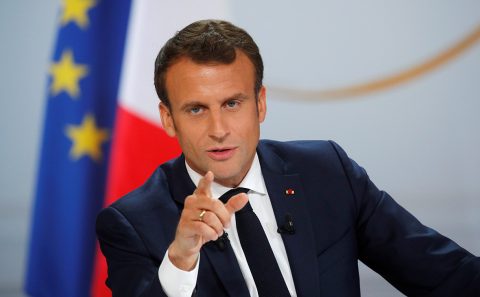
French contradictions: Macron’s Palestine play – too little, too late?
By Ramzy Baroud | MEMO | April 16, 2025
Israeli Prime Minister Benjamin Netanyahu’s vehement opposition to a Palestinian state aligns perfectly with a long-standing Zionist ideology that has consistently viewed the establishment of a Palestinian state as a direct threat to Israel’s very foundation as a settler colonial project.
Thus, the mere existence of a Palestinian state with clearly defined geographical boundaries would inevitably render the state of Israel, which pointedly remains without internationally recognised borders, a state confined to a fixed physical space.
At a time when Israel continues to occupy significant swathes of Syrian and Lebanese territory and relentlessly pursues its colonial expansion to seize even more land, the notion of Israel genuinely accepting a sovereign Palestinian state is utterly inconceivable.
This reality is not a recent development; it has always been the underlying truth. This, in essence, reveals that the decades-long charade of the “two-state solution” was consistently a mirage, meticulously crafted to peddle illusions to both Palestinians and the broader international community, fostering the false impression that Israel was finally serious about achieving peace.
Therefore, it came as no surprise that Netanyahu reacted with considerable fury to French President Emmanuel Macron’s recent announcement of France’s intention to recognise the State of Palestine next June.
In a phone call with Macron yesterday, Netanyahu predictably resorted to his familiar nonsensical rhetoric, outrageously equating the establishment of a Palestinian state with rewarding “terrorism”.
And, with equal predictability, he trotted out the well-worn and unsubstantiated claims about an Iranian connection. “A Palestinian state established a few minutes away from Israeli cities would become an Iranian stronghold of terrorism,” Netanyahu’s office declared in a statement.
Meanwhile, Macron, with a familiar balancing act, reiterated his commitment to Israeli “security”, while tepidly emphasising that the suffering in Gaza must come to an end.
Of course, in a more just and reasonable world, Macron should have unequivocally stressed that it is Palestinian security, indeed their very existence, that is acutely at stake, and that Israel, through its relentless violence and occupation, constitutes the gravest threat to Palestinian existence and, arguably, to global peace.
Sadly, such a world remains stubbornly out of reach.
Considering Macron’s and France’s unwavering and often obsequious support for Israel throughout the years, particularly since the onset of the Israeli genocide in Gaza, some might cautiously welcome Macron’s statement as a potentially positive shift in policy.
However, it is imperative to caution against any exaggerated optimism, especially at a time when entire Palestinian families in Gaza are being annihilated in the ongoing Israeli genocide as these very words are read. It is an undeniable truth that France, like many other Western governments, has played a significant role in empowering, arming and justifying Israel’s heinous crimes in Gaza.
For France to genuinely reverse its long-standing position, if indeed that is the current trajectory, it will require far more than symbolic and ultimately empty gestures.
Palestinians are, understandably, weary and disillusioned with symbolic victories, hollow rhetoric, and insincere gestures.
The recent recognitions of the State of Palestine by Ireland, Norway and Spain in May 2024 did offer a fleeting spark of hope among Palestinians, suggesting a potential, albeit limited, shift in Western sentiment that might exert some pressure on Israel to cease its devastating actions in Gaza.
Unfortunately, this initial and fragile optimism has largely failed to translate into broader and more meaningful European action.
Consequently, Macron’s recent announcement of France’s intention to recognise the State of Palestine in June has been met with a far more subdued and skeptical reaction from Palestinians.
While other European Union countries that have already recognised Palestine often maintain considerably stronger stances against the Israeli occupation, France’s record in this regard is notably weaker.
Furthermore, the very sincerity of France’s stated position is deeply questionable, given its ongoing and concerning suppression of French activists who dare to protest the Israeli actions and advocate for Palestinian rights within France itself.
These attacks, arrests, and the broader crackdown on dissenting political views within France hardly paint the picture of a nation genuinely prepared to completely alter its course on aiding and abetting Israeli crimes.
Moreover, there is a stark and undeniable contrast between the principled positions adopted by Spain, Norway and Ireland and France’s steadfast backing of Israel’s brutal military campaign in Gaza from its very inception, a support underscored by Macron’s early and highly symbolic visit to Tel Aviv.
Macron was among the first world leaders to arrive in Tel Aviv following the war, while Palestinians in Gaza were already being subjected to the most unspeakable forms of violence imaginable.
During that visit, on 24 October 2023, he unequivocally reiterated, “France stands shoulder to shoulder with Israel. We share your pain, and we reaffirm our unwavering commitment to Israel’s security and its right to defend itself against terrorism.”
This raises a fundamental and critical question: how can France’s belated recognition of a Palestinian state be interpreted as genuine solidarity while it simultaneously remains a significant global supporter of the very entity perpetrating violence against Palestinians?
While any European recognition of Palestine is a welcome – if overdue – step, its true significance is considerably diminished by the near-universal recognition of Palestine within the global majority, particularly across the Global South, originating in the Middle East and steadily expanding worldwide.
The fact that France would be among the last group of countries in the world to formally recognise Palestine (currently, 147 out of 193 United Nations member states have recognised the State of Palestine), speaks volumes about France’s apparent attempt to belatedly align itself with the prevailing global consensus and, perhaps, to whitewash its long history of complicity in Israeli Zionist crimes, as Israel finds itself increasingly isolated and condemned on the international stage.
One can state with considerable confidence that Palestinians, particularly those enduring the unimaginable horrors of the ongoing genocide in Gaza, prioritise an immediate cessation of that genocide and genuine accountability for Israel’s actions far above symbolic acts of recognition that appear primarily aimed at bolstering France’s relevance as a global power player and a long-standing supporter of Israeli war crimes.
Finally, Macron, while reassuring Israel that its security remains paramount for the French government, must be reminded that his continued engagement with Benjamin Netanyahu is, in itself, a potential violation of international law. The Israeli leader is a wanted accused criminal by the International Criminal Court, and it is France’s responsibility, like that of the over 120 signatories to the ICC, to apprehend, not to appease, Netanyahu.
This analysis is not intended to diminish the potential significance of the recognition of Palestine as a reflection of growing global solidarity with the Palestinian people. However, for such recognition to be truly meaningful and impactful, it must emanate from a place of genuine respect and profound concern for the Palestinian people themselves, not from a calculated desire to safeguard the “security” of their tormentors.
Will Yemen turn its missiles on the UAE and Saudi Arabia?
By Bandar Hetar | The Cradle | April 16, 2025
The US war on Yemen, now in its second round, has passed the one-month mark with no clear gains and no timeline for success. What is emerging instead is the growing risk of escalation – one that could force regional players, particularly Saudi Arabia and the UAE, into direct confrontation.
Still, several factors may delay or even prevent such a scenario, much like what played out last year. Understanding where this war may be headed requires a clear grasp of the terrain: how Yemen views the conflict, how its Persian Gulf neighbors are reacting, and what could trigger a wider eruption or a negotiated backtrack.
Sanaa ties its military strategy to Gaza’s resistance
Even in western circles, there’s little dispute that the war on Yemen is now deeply intertwined with Israel’s brutal war on Gaza. Washington tried, under former US president Joe Biden, to separate the two. But the reality on the ground tells a different story – one where Sanaa’s military operations were in lockstep with events in Palestine.
That link became even clearer after the January 2025 ceasefire between Hamas and Israel, which prompted a pause in Yemen’s attacks – until Tel Aviv predictably walked back its commitments. US President Donald Trump’s return to the White House brought with it a resumption of strikes on Yemen, under the pretext of defending international shipping.
Yet those attacks would not have taken place had the US not already committed to shielding Israeli vessels. The new administration, unlike the last, makes no real attempt to disguise the overlap between the two fronts.
Yemen’s strategy has been clear from the outset: Its military activity is calibrated with the resistance in Gaza. Palestinian factions determine the pace of escalation or calm, while Yemen remains prepared to absorb the fallout.
Sanaa has paid a steep price for this stance. Washington has moved to freeze economic negotiations between Yemen and Saudi Arabia, effectively punishing the former for refusing to abandon its military support for Gaza. The US has dangled economic incentives in exchange for neutrality – offers readily accepted by Arab states across the region – but Sanaa has refused to fold.
Faced with a binary choice – either maintain its support for Palestine and accept a freeze on domestic arrangements, or open a second front with Riyadh and Abu Dhabi – Yemen chose to stay the course.
That decision was rooted in three core beliefs: that Palestine must be supported unconditionally, even if it means sacrificing urgent national interests; that Ansarallah’s political identity is grounded in opposition to Israeli hegemony and thus incompatible with any alignment with Persian Gulf normalization; and that Yemen must deny Washington and Tel Aviv the opportunity to distract it with side wars designed to weaken its strategic focus.
Gulf frustration builds over Yemen’s defiance
Arab coalition partners Saudi Arabia and the UAE have not taken kindly to Yemen’s decision. Both countries have used the moment to begin backpedaling on the April 2022 truce and to impose punitive costs on Sanaa for throwing its weight behind Gaza.
The optics have not favored either of the Gulf monarchies. Abu Dhabi is fully normalized with Israel, while Riyadh is edging ever closer. Yemen, meanwhile – still scarred from years of Saudi–Emirati aggression – has moved swiftly to back the Palestinian cause. The contrast could not be more stark: The Arab state most brutalized by Riyadh and Abu Dhabi is now standing up for Palestine while the aggressors look away.
Yemen’s stance also clashes with the broader geopolitical alignment of both Persian Gulf states, which remain deeply embedded in Washington’s orbit. But their frustration has remained mostly rhetorical.
Despite their roles in the so-called “Prosperity Guardian” alliance, neither Saudi Arabia nor the UAE has made major military moves against Yemen since the new round of US airstrikes began. Initially, Riyadh attempted to tie Yemen’s maritime operations in the Red Sea to the Gaza war, but that framing soon gave way to vague talk of threats to commercial shipping – code for backpedaling.
Saudi political messaging shifted sharply in January when it refused to take part in joint US–UK bombing raids. Its defense ministry moved quickly to deny reports that Saudi airspace had been opened for US strikes, and later distanced itself from any Israeli involvement. The message from Riyadh was clear: It does not want to be dragged into another full-scale war with Yemen – not now.
Yemen counters with a policy of containment
Despite Saudi Arabia’s retreat from its prior commitments, Yemen has actively encouraged Riyadh and Abu Dhabi to maintain a posture of neutrality. This is not out of optimism but pragmatism: Avoiding a wider war with the Persian Gulf would prevent a dangerous regional blowout. Sanaa’s goal has been to steer Saudi and Emirati decision-making away from military confrontation, proxy mobilization, or economic escalation.
That last point nearly tipped the balance in July 2024, when Riyadh instructed its puppet government in Aden to relocate Yemen’s central banks from Sanaa. It was a clear economic provocation – and a red line.
Within days, Ansarallah leader Abdul Malik al-Houthi delivered a sharp warning, framing the Saudi move as part of an Israeli–American playbook.
“The Americans are trying to entangle you [Saudi Arabia], and if you want that, then try it … The move towards aggressive escalation against our country is something we can never accept,” he revealed in a 7 July 2024 speech.
He warned Riyadh that falling for this trap would be “a terrible mistake and a great failure, and it is our natural right to counter any aggressive step.”
Sanaa responded with an unmistakable deterrent equation: “banks for banks, Riyadh Airport for Sanaa Airport, ports for ports.”
The Saudi maneuver may have been a test of Yemen’s resolve, possibly based on the assumption that Sanaa was too overextended – facing down a US-led coalition and spiraling domestic hardships – to respond decisively.
If so, Riyadh miscalculated. Houthi’s reply was blunt:
“This is not a matter of allowing you to destroy this people and push it to complete collapse so that no problems arise. Let a thousand problems arise. Let matters escalate as far as they may.”
No appetite in Riyadh or Abu Dhabi for a war without guarantees
The day after Houthi’s warning, massive protests erupted across Yemen. Millions marched in condemnation of Saudi provocations, offering the clearest signal yet that public opinion was firmly aligned behind the resistance – and willing to escalate.
Riyadh knows this. Even before the latest crisis, much of Yemeni society held Saudi Arabia and the UAE responsible for what even the UN called the world’s worst humanitarian disaster. Any new conflict would only deepen that anger.
Faced with the threat of direct retaliation, Riyadh backed off its banking gambit. The memory of past Yemeni strikes on Saudi oil facilities – particularly those between 2019 and 2021 –still haunts the Saudi leadership.
Today, Yemen’s capabilities have expanded. It now possesses hypersonic missiles and increasingly sophisticated drone technologies. And it is precisely because of these advances that Washington has failed to strong-arm the Gulf into renewed warfare. There are no meaningful US security guarantees on the table – nothing that would shield Saudi oil fields, critical infrastructure, or commercial shipping lanes from blowback.
The failures are already evident. The “Prosperity Guardian” coalition has done little to stop Yemeni strikes on Israeli-linked vessels, and US–UK airstrikes have failed to stem Yemen’s ability to hit deep inside Israel. These battlefield realities have changed the calculus in Riyadh and Abu Dhabi. Escalation, for now, is off the table.
Yemen’s red lines are expanding
That does not mean Washington has stopped trying to drag Saudi Arabia and the UAE into the fight. The Biden administration failed to do so. The Trump team, however, is seen as more aggressive and more likely to provide advanced weapons systems that might tempt Riyadh and Abu Dhabi to take the plunge.
There is also the perception among Gulf elites that this is a strategic opening: Syria’s collapse, Hezbollah’s supposed decline, and shifting regional dynamics may provide a rare window to redraw the map.
But for the Saudis, Yemen remains the central concern. A liberated, ideologically defiant state on their southern border is an existential threat – not only to security, but to the cultural rebranding project that the Kingdom has invested so heavily in. The UAE shares similar anxieties. A rising Yemeni Resistance Axis threatens its carefully curated image as a regional player in sync with Israeli and western interests.
That is why Sanaa has placed its forces on high alert. Ansarallah is monitoring every move by Riyadh, Abu Dhabi, and their local proxies – many of whom are eager to join the war. These groups have signaled readiness to participate in an international coalition to “protect shipping,” and have already held direct meetings with US military and political officials.
But the Sanaa government knows these factions would not act without orders. If they are mobilized for a broad ground offensive, Yemen will respond by targeting the powers behind them. Any ground war will be seen as a Saudi–Emirati initiative, not a local one. The same logic applies to renewed airstrikes or deeper economic war. These are Sanaa’s red lines.
A warning to the Axis of Normalization
Abdul Malik al-Houthi laid it out clearly during a 4 April address:
“I advise you all [Arab states neighboring Yemen], and we warn you at the same time: Do not get involved with the Americans in supporting the Israelis. The American enemy is in aggression against our country in support of the Israeli enemy. The battle is between us and the Israeli enemy.
The Americans support it, protect it, and back it. Do not get involved in supporting the Israeli enemy … any cooperation with the Americans in aggression against our country, in any form, is support for the Israeli enemy, it is cooperation with the Israeli enemy, it is conspiracy against the Palestinian cause.”
He went further:
“If you cooperate with the Americans: Either by allowing him to attack us from bases in your countries. Or with financial support. Or logistical support. Or information support. It is support for the Israeli enemy, advocacy for the Israeli enemy, and backing for the Israeli enemy.”
This was not just a warning. It was a strategic declaration. Any country crossing these lines will be treated as an active participant in the war – and subject to retaliation.
The message is aimed not just at Riyadh and Abu Dhabi, but at other Arab and African states that might be tempted to join the fray under the guise of “protecting international navigation.”
Yemen is preparing for all scenarios. It will not be caught off guard. And this time, it won’t be fighting alone.
Below the radar: Is the Trump-Netanyahu ‘unthinkable’ about to happen?
By Ramzy Baroud | MEMO | April 15, 2025
Israeli Prime Minister Benjamin Netanyahu’s latest trip to Washington was no ordinary visit. The consensus among Israeli analysts, barring a few remaining loyalists, is that Netanyahu was not invited; he was summoned by US President Donald Trump.
All of the evidence supports this assertion. Netanyahu rarely travels to the US without extensive Israeli media fanfare, leveraging his touted relationships with various US administrations as a “hasbara” opportunity to reinforce his image as Israel’s strongman.
This time, there was no room for such propaganda.
Netanyahu was informed of Trump’s summons while on an official trip to Hungary, where he was received by Hungarian President Viktor Orban with exaggerated diplomatic accolades. This was a signal of defiance against international condemnation of Netanyahu, an alleged war criminal wanted by the International Criminal Court (ICC). Orban’s open arms welcome portrayed him as anything but an isolated leader of an increasingly pariah state.
The capstone of Netanyahu’s short-lived Hungarian victory lap was Orban’s announcement of Hungary’s withdrawal from the ICC, a move with profoundly unsettling implications.
It would have been convenient for Netanyahu to use his Washington visit to divert attention from his failed war in Gaza and internal strife in Israel. However, as the Arabic saying goes, “The wind often blows contrary to the ship’s desires.”
The notion that Netanyahu was summoned by Trump rather than invited, is corroborated by Israeli media reports that he attempted to postpone the visit under various pretexts. He failed, and flew to Washington on the date determined by the White House. Initially, reports circulated that no press conference would be held, denying Netanyahu the platform to tout for Washington’s unwavering support for his military actions and to expound on the “special relationship” between the two countries.
A press conference was held, although it was dominated largely by Trump’s contradictory messages and typical rhetoric. Netanyahu spoke briefly, attempting to project the same confident body language observed during his previous Washington visit, where he sat straight-backed with legs splayed out, as if he was in full command of all around him.
This time, though, Netanyahu’s body language betrayed him.
His eyes shifted nervously, and he appeared stiff and surprised, particularly when Trump announced that the US and Iran were about to begin direct talks in Oman.
Trump also mentioned the need to end the war in Gaza, but the Iran announcement clearly shocked Netanyahu. He desperately tried to align his discourse with Trump’s, referencing Libya’s disarmament under Muammar Gaddafi. But that was never part of Israel’s official regional plan. Israel has advocated consistently for US military intervention against Iran, despite the certainty that such a war would destabilise the entire region, potentially drawing the US into a conflict far more protracted and devastating than the 2003 invasion of Iraq.
Further evidence of the US divergence of views from Israel’s regional ambitions — which are centred on perpetual war, territorial expansion and geopolitical dominance — lies in the fact that key political and intellectual figures within the Trump administration recognise the futility of such conflicts. In leaked exchanges on the encrypted messaging platform Signal, Vice President JD Vance protested that escalating the war in Yemen benefits Europe, not the US, a continent with which the US is increasingly decoupling, if not actually engaging in a trade war.
The Yemen war, like a potential conflict with Iran, is perceived widely as being waged on Israel’s behalf.
Figures like Tucker Carlson, a prominent commentator, articulated the growing frustration among right-wing intellectuals in the US, tweeting that, “Anyone advocating for conflict with Iran is not an ally of the United States, but an enemy.”
Trump’s willingness to challenge Netanyahu’s policies openly remains unclear. His conflicting statements, such as calling for an end to the Gaza war while simultaneously advocating for the expulsion of Palestinians, add to the ambiguity. However, recent reports suggest a determined US intention to end the war in Gaza as part of a broader strategy, linking Gaza to Yemen, Lebanon and Iran. This aligns with Washington’s need to stabilise the region as it prepares for a new phase of competition with China, requiring comprehensive economic, political and military readiness.
Should Trump prove capable of doing what others could not, will Netanyahu finally submit to American pressure?
In 2015, the Israeli leader demonstrated Israel’s unparalleled influence on US foreign and domestic policy when he addressed both chambers of Congress. Despite a few insignificant protests, Republican and Democratic policymakers applauded enthusiastically as Netanyahu criticised the then President Barack Obama, who did not attend and appeared to be isolated by his own political class.
However, if Netanyahu believes that he can replicate that moment, he is mistaken. Those years are long gone. Trump is a populist leader who is not beholden to political balances in Congress. Now in his second and final term, he could, in theory, abandon America’s ingrained reliance on the approval of Israel and its aggressively influential lobby in Washington.
Moreover, Netanyahu’s political standing is diminished. He is perceived as a failed political leader and military strategist, unable to secure decisive victories or extract political concessions from his adversaries. He is a leader without a clear plan, grappling with a legitimacy crisis unlike any faced by his predecessors.
Ultimately, the outcome hinges on Trump’s willingness to confront Netanyahu. If he does, and sustains the pressure, Netanyahu could find himself in an unenviable position, marking a rare instance in modern history where the US dictates the terms, and Israel listens. Is the unthinkable about to happen? Let’s wait and see.
Funding the PA is for the benefit of Israel and the EU, not the Palestinians
By Ramona Wadi | MEMO | April 15, 2025
Palestinian Authority leader Mahmoud Abbas met with the EU’s High Representative for Foreign Affairs and Security Policy, Kaja Kallas, in March. The meeting was replete with the usual hyperbole that still clings to the defunct two-state paradigm, the PA’s reform and funding for this purpose.
Yesterday, Reuters reported that the EU will be funding the PA with a three-year package worth $1.8 billion to support reform. According to European Commissioner for the Mediterranean Dubravka Suica, “We want them to reform themselves because without reforming, they won’t be strong enough and credible in order to be an interlocutor, not for only for us, but an interlocutor also for Israel.”
The reasoning is warped.
It only spells one thing clearly: the EU wants the PA to be strong enough to act against the Palestinian people and prevent them from being their own interlocutors in a political process that concerns them much more than the PA.
Speaking about the EU funding for the PA, Kallas said, “This will reinforce the PA’s ability to meet the needs of the Palestinian people in the West Bank and prepare it to return to govern Gaza once conditions allow.” No time frames, of course, because the conditions will always depend on Israel. Funding buys time for Israel’s genocide in Gaza. Meanwhile, the PA, which has not only neglected the needs of Palestinians in the occupied West Bank, but also exacerbated their humanitarian and political neglect as evidenced in Jenin, for example, can rest assured of some more years of EU support. That is, as long as the humanitarian paradigm remains relevant to the illusory state-building funded by Brussels.
From the allocated budget, the UN Relief and Works Agency for Palestine Refugees (UNRWA) will receive €82 million per year.
The most telling clause in the European Commission’s statement detailing its assistance is found right at the end. “This designation shall not be construed as recognition of a State of Palestine and is without prejudice to the individual positions of the Member States on this issue.”
France’s announcement that it might recognise the State of Palestine by June this year, symbolic as the gesture is, only shows the EC’s urge to detach itself from all possibilities, no matter how remote, of Palestinian independence. Which brings one back to the big question:
Why is the EU really funding the PA’s state-building to prevent the eventual formation of a Palestinian state?
Funding a Palestinian entity for Israeli and EU purposes does not bode well for Palestinians, who are still only spoken of in terms of humanitarian matters. The political purpose is reserved only for Israel’s allies, the PA being one of them, as seen in many instances of its collaboration with the occupation state.
But Western diplomats would do well to recall that one major democratic implementation postponed repeatedly by Abbas – democratic legislative and presidential elections – has not featured once in the EU’s vision of a post-war Gaza, determined as it is to have the PA take over political authority in the enclave and bring Palestinians under different forms of misery. How scared is the EU of having Palestinians being allowed to vote freely and possibly electing alternatives that have nothing to do with the current Fatah-Hamas bipolarisation? Funding the PA indeed serves a purpose; that of destroying Palestinian democracy.
Featured Video
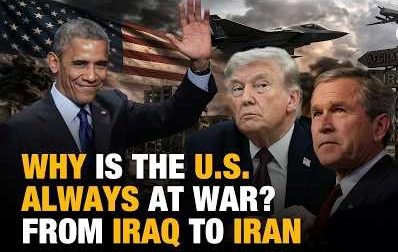
The Source of America’s Wars – Kristol Clear
or go to
Aletho News Archives – Video-Images
From the Archives
Is Israel to blame for the Iraq War?
American Goy | March 10, 2008
I am so tired of this old canard that “Israel had nothing to do with USA’s war with Iraq – in fact, it officially advised America against it”.
Bullshit. … continue
Blog Roll
 Aletho News
- Alberta Bill Would Fine Political Deepfakes $10,000 Without Satire Exemptions
- Iran declares ‘historic victory’ over US, says enemy forced to accept its proposal
- Trump Claims Ceasefire, Reopening of Strait of Hormuz Agreement with Iran
- Israeli tank fire killed UN peacekeeper in Lebanon, UNIFIL investigation finds
- Russia, China block Bahrain-sponsored UN resolution on Strait of Hormuz
- The US-Israeli War on Science is an Assault on our Future
- Trump’s Promise to Bomb Iran ‘Like Never Before’ Faces Brutal Logistics — Expert
- Germany seeks to restrict stays abroad for men of fighting age – Berliner Zeitung
- Evidence points to Ukraine being behind TurkStream attempted sabotage, but that should come as no surprise
- Sri Lanka secures supplies of Russia oil – minister
- If Americans Knew
- Thousands dead and neighborhoods razed to the ground: Aid agencies fear southern Lebanon is becoming the new Gaza
- The war the US is fighting for Israel could cost trillions
- ‘Cigarette Burns, Nail Wounds’: Toddler Tortured in Gaza to Coerce Father
- Trump Says US Sent ‘a Lot of Guns’ to Protesters in Iran
- Israeli forces destroy 17 UN peacekeeper cameras in south Lebanon
- US-Israeli strikes ‘completely destroy’ synagogue in Tehran
- Archbishop for US Military Says Iran War Is Unjust Under Catholic Teaching
- Iranian leaders’ Open Letters to the American People
- Trump says Iranians appreciate bombs, WHO warns of nuclear risks – Daily Update
- U.N. experts demand Israel release prominent Gaza doctor after reports of ‘severe torture’
- No Tricks Zone
- An Inconvenient Tree: Uncovered In Alps… Europe Much Warmer Than Today 6000 Years Ago
- New Study Reports A 60% Slowdown In Greenland’s Ice Loss Rate In The Last Decade
- Low Intensity Tornado Wrecks Major Solar Farm, Creating A Potential Toxic Dump
- New Study Finds Warming Saves Lives…Cold Temperatures 12 Times More Deadly Than Excess Heat
- German Science Blog Accuses PIK Climate Institute Of Hallucinating Climate Tipping Points
- Devastating Assessment Of Comirnaty Vaccine By Former Senior Pfizer Europe Toxicologist
- New Study: CO2 Is ‘Effectively Negligible’ As An Explanatory Climate Change Factor Since 2000
- Former Pfizer Toxicologist Dr. Helmut Sterz Tells Bundestag Hearing Pfizer Vaccine Should Have Never Been Approved
- Energy Expert: Germany’s Nuclear Phaseout Was A “500 Billion Euro Mistake”
- New Research: South Australia’s Mid-Holocene Sea Surface Temperatures Were 4°C Warmer Than Today
 Aletho News