A 2 hour 32 min version of THE MAGNITSKY ACT – BEHIND THE SCENES had its world premiere at an invitation-only screening at Filmens Hus in Oslo, Norway, on June 25th, 2016. Since then, the film has been shown (and awarded) at several international film festivals. Personal copies have also been sent to hundreds of journalists, politicians and others who have expressed interest in the film, given the film’s high-profile political content.
However, more than two years after its world premiere, the film has not yet been released to the general public. It has not been broadcast on TV, nor been screened at cinemas, released on DVD or made available online. Many dissatisfied members of the audience have asked Piraya Film why they cannot see the film.
The answer is that an attack campaign was launched by the British financier Bill Browder (who appears in the film) against the film and the filmmakers while the film was still under production. This campaign was backed by, among others, individuals in the US State Department, CIA, various think tanks and human rights organizations, and included smear tactics in the press and in various other settings. The campaign succeeded in blocking planned screenings at the European Parliament and at a Norwegian film festival. The film was partly financed by several TV stations, and normal procedure for a documentary would be that these TV stations broadcast the film first. However, the involved TV stations were subject to both political and legal pressure, and have, until this date, not published the film.
One individual decided to leak his personal copy of the film to the internet in July 2018. We have worked hard to remove this from YouTube and various other sites, but we see that it is impossible to stop this illegal copy from spreading. With the film out like that, in an illegal manner and in breach of our copyright, we have decided to release THE MAGNITSKY ACT – BEHIND THE SCENES on Vimeo on Demand. We urge the public to support our work by seeing it here. With Browder as the main source of a disinformation campaign against the film and filmmakers, we have a need to counter the libel and defend ourselves through letting the public see the film.
Chapeau, Mr Browder! Hats off for this incredible man. Last month, he succeeded in stopping a film screening in the European parliament and took off a few articles from American web sites. This week, he turned the only US screening of a film critical to his version of events into a ruckus. No freedom of speech for his enemies! His lawyers prowl around and issue summons to whoever digs in his sordid affairs. His hacks re-wrote his Wikipedia entry, expunging even discussions of the topic: despite hundreds of edits, nothing survived but the official version. Only a few powerful men succeed purifying their record to such an extent. Still, good fortune (a notoriously flighty lady) is about to desert Mr Browder.
Who is this extremely influential man? A businessman, a politician, a spy? The American-born Jewish tycoon William Browder, says The Jewish Chronicle, considers himself Putin’s Number One enemy. For him, Putin is “no friend of the Jews”, “cold-blooded killer” and even “criminal dictator who is not too different from Hitler, Mussolini or Gadhafi”. More to a point, Browder is the man who contributed most to the new cold war between the West and Russia. The roots were there, still he made them blossom. If the US and Russia haven’t yet exchanged nuclear salvos, do not blame Browder: he tried. For a valid reason, too: he was hit by cruel Hitler-like Mr Putin into his most susceptible spot, namely his pocket. Or was there even a better reason?
Browder, a grandson of the US Communist leader, came to Russia at its weakest point after the Soviet collapse, and grabbed an enormous fortune by opaque financial transactions. Such fortunes are not amassed by the pure of spirit. He was a ruthless man who did as much as any oligarch to enrich himself.
Eventually he ran afoul of Mr Putin, who was (and is) very tolerant of oligarchs as long as they play by the rules. The oligarchs would not be oligarchs if they would found that an easy condition. Some of them tried to fight back: Khodorkovsky landed in jail, Berezovsky and Gusinsky went to exile. Browder had a special position: he was the only Jewish oligarch in Russia who never bothered to acquire the Russian citizenship. He was barred from returning to Russia, and his companies were audited and found wanting.
As you’d expect, huge tax evasion was discovered. Browder thought that as long as he sucked up to Putin, he’d get away with bloody murder, let alone tax evasion. He was mistaken. Putin is nobody’s fool. Flatterers do not get a free ride in Putin’s Russia. And Browder became too big for his boots.
It turned out that he did two unforgivable things. Russians were afraid the foreigners would buy all their assets for a song, using favourable exchange rates and lack of native capital, as had happened in the Baltic states and other ex-Communist East European countries. In order to avoid that, shares of Russian blue-chip companies (Gazprom and suchlike) were traded among Russian citizens only. Foreigners had to pay much more. Browder bought many such shares via Russian frontmen, and he was close to getting control over Russian oil and gas. Putin suspected that he had acted in the interests of big foreign oil companies, trying to repeat the feat of Mr Khodorkovsky.
His second mistake was being too greedy. Russian taxation is very low; but Browder did not want to pay even this low tax. He hired Mr Magnitsky, an experienced auditor, who used loopholes in the Russian tax code in order to avoid taxes altogether. Magnitsky established dummy companies based in tax-free zones of Russia, such as pastoral Kalmykia, small, Buddhist, and autonomous. Their tax-free status had been granted in order to improve their economy and reduce unemployment; however, Browder’s companies did not contribute to economy and did not employ people; they were paper dummies swiftly bankrupted by the owner.
Another Magnitsky trick was to form companies fronted by handicapped people who were also freed from paying tax. In the film, some of these persons, often illiterate and of limited intelligence, told the filmmaker of signing papers they could not read and of being paid a little money for the millions passing through their account.
(Mr Browder does not deny these accusations; he says there is nothing criminal in trying to avoid taxes. You can read about Browder and Magnitsky tricks here and here, and learn of the ways they attacked companies using minority shareholders and many other neat schemes.)
Eventually Magnitsky’s schemes were discovered and he was arrested. Ten months later, in 2009, he died in jail. By that time, his patron Mr Browder was abroad, and he began his campaign against Russia hoping to regain his lost assets. He claimed Mr Magnitsky had been his lawyer, who discovered misdeeds and the outright thievery of government officials, and was imprisoned and tortured to death for this discovery.
The US Congress rushed in the Magnitsky Act, the first salvo of the Cold War Two. By this act, any Russian person could be found responsible for Mr Magnitsky’s untimely death and for misappropriation of Browder’s assets. His properties could be seized, bank accounts frozen – without any legal process or representation. This act upset the Russians, who allegedly had kept a cool $500 billion in the Western banks, so tit for tat started, and it goes to this very day.
The actual effect of the Magnitsky Act was minimal: some twenty million dollars frozen and a few dozen not-very-important people were barred from visiting the US. Its psychological effect was much greater: the Russian elite realised that they could lose their money and houses anytime – not in godless Putin’s Russia, but in the free West, where they had preferred to look for refuge. The Magnitsky Act paved the road to the Cyprus confiscation of Russian deposits, to post-Crimean sanctions and to a full-fledged Cold War.
This was painful for Russia, as the first adolescent disillusionment in its love affair with the West, and rather healthy, in my view. A spot of cold war (very cold, plenty of ice please) is good for ordinary people, while its opposite, a Russian-American alliance, is good for the elites. The worst times for ordinary Russian people were 1988-2001, when Russians were in love with the US. The oligarchs stole everything there was to steal and sold it to the West for pennies. They bought villas in Florida while Russia fell apart. That was bad time for everybody: the US invaded Panama and Afghanistan unopposed, Iraq was sanctioned to death, Yugoslavia was bombed and broken to pieces.
As the Cold War came back, some normalcy was restored: the Russians stopped the US from destroying Syria, and Russian officials learned to love Sochi instead of Miami. For this reason alone, Browder can be counted as a part of the power which eternally wills evil and eternally works good. The Russian government, however, did not enjoy the cold shower.
The Russians denied any wrongdoing or even political reasons for dealing with Browder. They say Magnitsky was not a lawyer, just an auditor and a tax code expert. They say that he was arrested and tried for his tax avoidance schemes, and he died of natural causes while in jail. Nobody listened to them, until they demanded that Browder testify under oath. He refused. For two years lawyers tried to give him a summons, but he was a quick runner. There are funny videos showing Browder running away from summons.
Some good sense began to seep into American minds. The New Republicwondered: if Browder was indeed the victim of persecution in Russia and had enlisted the U.S. justice system to right the balance, why was he so reluctant to offer his sworn testimony in an American courtroom?
Enter Mr Andrey Nekrasov, a Russian dissident filmmaker. He made a few films considered to be highly critical of Russian government. He alleged the FSB blew up houses in Moscow in order to justify the Chechnya war. He condemned the Russian war against Georgia in 2008, and had been given a medal by Georgian authorities. He did not doubt the official Western version of Browder-Magnitsky affair, and decided to make a film about the noble American businessman and the brave Russian lawyer fighting for human rights. The European organisations and parliamentarians provided the budget for the film. They also expected the film to denounce Putin and glorify Magnitsky, the martyr.
However, while making the film, Mr Nekrasov had his Road to Damascus moment. He realised that the whole narrative was hinging on the unsubstantiated words of Mr Browder. After painstaking research, he came to some totally different conclusions, and in his version, Browder was a cheat who run afoul of law, while Magnitsky was his sidekick in those crimes.
Nekrasov discovered an interview Magnitsky gave in his jail. In this interview, the accountant said he was afraid Browder would kill him to prevent him from denouncing Browder, and would make him his scapegoat. It turned out Browder tried to bribe the journalist who made the interview to have these words expunged. Browder was the main beneficiary of the accountant’s death, realised Nekrasov, while his investigators were satisfied with Magnitsky’s collaboration with them.
Nekrasov could not find any evidence that Magnitsky tried to investigate the misdeeds of government officials. He was too busy covering his own tax evasion. And instead of fitting his preconceived notions, Nekrasov made the film about what he learned. (Here are some details of Nekrasov’s film)
While the screening in the EU Parliament was been stopped by the powerful Mr Browder, in Washington DC the men are made of sterner stuff. Despite Browder’s threats the film was screened, presented by the best contemporary American investigative journalist Seymour Hersh, who is 80 if a day, and still going strong. One has to recognise that the US is second to none for freedom of speech on the globe.
What makes Browder so powerful? He invests in politicians. This is probably a uniquely Jewish quality: Jews outspend everybody in contributions to political figures. The Arabs will spend more on horses and jets, the Russians prefer real estate, the Jews like politicians. The Russian NTV channel reported that Browder lavishly financed the US lawmakers. Here they present alleged evidence of money transfers: some hundred thousand dollars was given by Browder’s structures officially to the senators and congressmen in order to promote the Magnitsky Act.
Much bigger sums were transferred via good services of Brothers Ziff, mega-rich Jewish American businessmen, said the researchers in two articles published on the Veteran News Network and in The Huffington Post.
These two articles were taken off the sites very fast under pressure of Browder’s lawyers, but they are available in the cache. They disclose the chief beneficiary of Browder’s generosity. This is Senator Ben Cardin, a Democrat from Maryland. He was the engine behind Magnitsky Act legislation to such an extent that the Act has been often called the Cardin List. Cardin is a fervent supporter of Hillary Clinton, also a cold warrior of good standing. More to a point, Cardin is a prominent member of Israel Lobby.
Browder affair is a heady upper-class Jewish cocktail of money, spies, politicians and international crime. Almost all involved figures appear to be Jewish, not only Browder, Brothers Ziff and Ben Cardin. Even his enemy, the beneficiary of the scam that (according to Browder) took over his Russian assets is another Jewish businessman Dennis Katsiv (he had been partly exonerated by a New York court as is well described in this thoughtful piece).
Browder began his way to riches under the patronage of a very rich and very crooked Robert Maxwell, a Czech-born Jewish businessman who assumed a Scots name. Maxwell stole a few million dollars from his company pension fund before dying in mysterious circumstances on board of his yacht in the Atlantic. It was claimed by a member of Israeli Military Intelligence, Ari Ben Menashe, that Maxwell had been a Mossad agent for years, and he also said Maxwell tipped the Israelis about Israeli whistle-blower Mordecai Vanunu. Vanunu was kidnapped and spent many years in Israeli jails.
Geoffrey Goodman wrote Maxwell “was almost certainly being used as – and using himself as – a two-way intelligence conduit [between East and West]. This arrangement included passing intelligence to the Israeli secret forces with whom he became increasingly involved towards the end of his life.”
After Maxwell, Browder switched allegiance to Edmond Safra, a very rich Jewish banker of Lebanese origin, who also played East vs West. Safra provided him with working capital for his investment fund. Safra’s bank has been the unlikely place where the IMF loan of four billion dollars to Russia had been transferred—and disappeared. The Russian authorities say that Browder has been involved in this “crime of the century,” next to Safra. The banker’s name has been connected to Mossad: increasingly fearful for his life, Safra surrounded himself by Mossad-trained gunmen. This did not help him: he died a horrible death in his bathroom when his villa was torched by one of the guards.
The third Jewish oligarch on Browder’s way was Boris Berezovsky, the king-maker of Yeltsin’s Russia. He also died in his bathroom (which seems to be a constant feature); apparently he committed suicide. Berezovsky had been a politically active man; he supported every anti-Putin force in Russia. However, a few months before his death, he asked for permission to return to Russia, and some negotiations went on between him and Russian authorities.
His chief of security Sergey Sokolov came to Russia and purportedly brought with him some documents his late master prepared for his return. These documents allege that Browder had been an agent of Western intelligence services, of the CIA to begin with, and of MI6 in following years. He was given a code name Solomon, as he worked for Salomon Brothers. His financial activity was just a cover for his true intentions, that is to collect political and economic data on Russia, and to carry out economic war on Russia. This revelation has been made in the Russia-1 TV channel documentary Browder Effect, (broadcasted 13.04.2016), asserting that Browder was not after money at all, and his activities in Russia, beside being very profitable, had a political angle.
The documents had been doubted for some linguistic reasons discussed by Gilbert Doctorow who comes to a reasonable conclusion: “Bill Browder[‘s]… intensity and the time he was devoting to anti-Russian sanctions in Europe was in no way comparable to the behaviour of a top level international businessman. It was clear to me that some other game was in play. But at the time, no one could stand up and suggest the man was a fraud, an operative of the intelligence agencies. Whatever the final verdict may be on the documents presented by the film “The Browder Effect,” it raises questions about Browder that should have been asked years ago in mainstream Western media if journalists were paying attention. Yevgeny Popov deserves credit for highlighting those questions, even if his documents demand further investigation before we come to definitive answers”.
We do not know whether Browder is, or had been, a spy. This should not surprise us, as he was closely connected to Maxwell, Safra and Berezovsky, the financiers with strong ties in the intelligence community.
Perhaps he outlived his usefulness, Mr Browder did. He started the Cold war, now is the time to keep it in its healthy limits and to avoid a nuclear disaster or rapid armaments race. This is the task we may hope will be entertained by the next US President, Mr Donald Trump.
At the press conference following their summit meeting in Helsinki, Russian President Vladimir Putin and American President Donald Trump discussed the possibility of resolving potential criminal cases involving citizens of the two countries by permitting interrogators from Washington and Moscow to participate in joint questioning of the individuals named in indictments prepared by the respective judiciaries. The predictable response by the American nomenklatura was that it was a horrible idea as it would potentially require U.S. officials to answer questions from Russians about their activities.
Putin argued, not unreasonably, that if Washington wants to extradite and talk to any of the twelve recently indicted GRU officers the Justice Department has named then reciprocity is in order for Americans and other identified individuals who are wanted by the Russian authorities for illegal activity while in Russia. And if Russian officials are fair game, so are American officials.
A prime target for such an interrogation would be President Barack Obama’s Ambassador to Russia Michael McFaul, who was widely criticized while in Moscow for being on an apparent mission to cultivate ties with the Russian political opposition and other “pro-democracy” groups. But McFaul was not specifically identified in the press conference, though Russian prosecutors have asked him to answer questions related to the ongoing investigation of another leading critic, Bill Browder, who was named by Putin during the question and answer session. Browder is a major hedge fund figure who, inter alia, is an American by birth. He renounced his U.S. citizenship in 1997 in exchange for British citizenship to avoid paying federal taxes on his worldwide income.
Bill Browder is what used to be referred to as an oligarch, having set up shop in 1999 as Hermitage Capital Management Fund, a hedge fund registered in tax havens Guernsey and the Cayman Islands. It focused on “investing” in Russia, taking advantage initially of the loans-for-shares scheme under Russia’s drunkard President Boris Yeltsin, and then continuing to profit greatly during the early years of Vladimir Putin. By 2005 Hermitage was the largest foreign investor in Russia.
Yeltsin had won a fraudulent election in 1996 supported by the oligarch-controlled media and by President Bill Clinton, who secured a $20.2 billion IMF loan that enabled him to buy support. Today we would refer to Clinton’s action as “interference in the 1996 election,” but at that time a helpless and bankrupt Russia was not well placed to object to what was being done to it. Yeltsin proved keen to follow oligarchical advice regarding how to strip the former Soviet Union of its vast state-owned assets. Browder’s Hermitage Investments profited hugely from the commodities deals that were struck at that time.
Browder and his apologists portray him as an honest and honorable Western businessman attempting to operate in a corrupt Russian business world. Nevertheless, the loans-for-shares scheme that made him his initial fortune has been correctly characterized as the epitome of corruption by all parties involved, an arrangement whereby foreign investors worked with local oligarchs to strip the former Soviet economy of its assets paying pennies on each dollar of value. Along the way, Browder was reportedly involved in money laundering, making false representations on official documents and bribery.
Browder was eventually charged by the Russian authorities for fraud and tax evasion. He was banned from re-entering Russia in 2005 and began to withdraw his assets from the country, but three companies controlled by Hermitage were eventually seized by the authorities. Browder himself was convicted of tax evasion in absentia in 2013 and sentenced to nine years in prison.
Browder, who refers to himself as Putin’s “public enemy #1,” has notably been able to sell his tale of innocence to leading American politicians like Senators John McCain, Lindsay Graham, Ben Cardin and ex-Senator Joe Lieberman, all of whom are always receptive when criticizing Russia, as well as to a number of European parliamentarians and media outlets. In the wake of the Helsinki press conference he has, for example, claimed that Putin named him personally because he is a threat to continue to expose the crimes of the mafia that he claims is currently running Russia, but there is, inevitably, another less discussed alternative view of his self-serving narrative.
Central to the tale of what Browder really represents is the Magnitsky Act, which the U.S. Congress passed into law to sanction individual Kremlin officials for their treatment of alleged whistleblower Sergei Magnitsky, arrested and imprisoned in Russia. Browder has sold a narrative which basically says that he and his “lawyer” Sergei Magnitsky uncovered massive tax fraud and, when they attempted to report it, were punished by a corrupt police force and magistracy, which had actually stolen the money. Magnitsky was arrested and died in prison, allegedly murdered by the police to silence him.
The Magnitsky case is of particular importance because both the European Union and the United States have initiated sanctions against the identified Russian officials who were allegedly involved. In the Magnitsky Act, sponsored by Russia-phobic Senator Ben Cardin and signed by President Barack Obama in 2012, the U.S. asserted its willingness to punish foreign governments for human rights abuses. The Act, initially limited to Russia, has now been expanded by virtue of 2016’s Global Magnitsky Act, which enabled U.S. sanctions worldwide.
Russia reacted angrily to the first iteration of the Act, noting that the actions taken by its government internally, notably the operation of its judiciary, were being subjected to outside interference, while other judicial authorities also questioned Washington’s claimed right to respond to criminal acts committed outside the United States. Moscow reciprocated with sanctions against U.S. officials as well as by increasing pressure on foreign non-governmental pro-democracy groups operating in Russia. Some have referred to the Magnitsky Act as the start of the new Cold War.
The contrary narrative to that provided by Browder concedes that there was indeed a huge fraud related to as much as $230 million in unpaid Russian taxes on an estimated $1.5 billion of income, but that it was not carried out by corrupt officials. Instead, it was deliberately ordered and engineered by Browder with Magnitsky, who was actually an accountant, personally developing and implementing the scheme, using multiple companies and tax avoidance schemes to carry out the deception. Magnitsky, who was on cardiac medication, was indeed arrested and convicted, but he, according to his own family, reportedly died due to his heart condition, possibly exacerbated by negligent authorities who failed to medicate him adequately when he became ill.
The two competing Browder narratives have been explored in some detail by a Russian documentary film maker Andrei Nekrasov, an outspoken anti-Putin activist, who was actually initially engaged by Browder to do the film. An affable Browder appears extensively in the beginning describing his career and the events surrounding Magnitsky.
As Nekrasov worked on the documentary, he discovered that the Browder supported narrative was full of contradictions, omissions and fabrication of evidence. By the time he finished, he realized that the more accurate account of what had occurred with Browder and Magnitsky had been that provided by the Russian authorities.
When Nekrasov prepared to air his work “The Magnitsky Act: Behind the Scenes,” he inevitably found himself confronted by billionaire Browder and a battery of lawyers, who together blocked the showing of the film in Europe and the United States. Anyone subsequently attempting to promote the documentary has been immediately confronted with 300 plus pages of supporting documents accompanying a letter threatening a lawsuit if the film were to be shown to the public.
A single viewing of “The Magnitsky Act” in Washington in June 2016 turned into a riot when Browder supporters used tickets given to Congressional staffers to disrupt the proceedings. At a subsequent hearing before Congress, where he was featured as an expert witness on Russian corruption before a fawning Senate Judiciary Committee, Bill Browder suggested that those who had challenged his narrative and arranged the film’s viewing in Washington should be prosecuted under the Foreign Agents Registration Act of 1938 (FARA), which includes penalties of up to five years in prison.
Because of the pressure from Browder, there has never been a second public showing of “The Magnitsky Act” but it is currently possible to see it online:
Bill Browder, who benefited enormously from Russian corruption, has expertly repackaged himself as a paragon among businessmen, endearing himself to the Russia-haters in Washington and the media. Curiously, however, he has proven reluctant to testify in cases regarding his own business dealings. He has, for example, repeatedly run away, literally, from attempts to subpoena him so he would have to testify under oath.
When one gets past all of his bluster and posturing, by one significant metric Bill Browder might well be accounted the most dangerous man in the world. Driven by extreme hatred of Putin and of Russia, he personally and his Magnitsky Myth have together done more to launch and sustain a dangerous new Cold War between a nuclear armed United States and a nuclear armed Russia. Blind to what he has accomplished, he continues to pontificate about how Putin is out to get him when instead he is the crook who quite likely stole $230 million dollars and should be facing the consequences. That the U.S. media and Congress appear to be entranced by Browder and dismissive of Moscow’s charges against him is symptomatic of just how far the Russia-phobia in the West has robbed people of their ability to see what is right in front of them. To suggest that what is taking place driven by Browder and his friends in high places could well lead to tragedy for all of us would be an understatement.
Philip M. Giraldi, Ph.D., is Executive Director of the Council for the National Interest, a 501(c)3 tax deductible educational foundation that seeks a more interests-based U.S. foreign policy in the Middle East. Website is www.councilforthenationalinterest.org, address is P.O. Box 2157, Purcellville VA 20134 and its email is inform@cnionline.org.
James Bond’s nemesis in the upcoming 007 film will be (now whisper it)… Russian. In what could be a sign of the times, it’s the first time in 20 years the fictional English spy will be battling it out with a Moscow baddie.
1999’s ‘The World Is Not Enough’ was the last Bond film to star a significant Russian villain – Victor ‘Renard’ Zokas, an ex-KGB agent turned-high tech terrorist, played with a questionable accent by Scottish actor Robert Carlyle.
The movie, once again starring Daniel Craig as Bond, has the working title ‘Bond 25’. It will be directed by Danny Boyle. Filming is scheduled to commence in December, with a proposed release date of October 2019, the Mirror reports.
The makers of the 007 film franchise are said to be seeking a 30 to 60-year-old leading male, from Russia or the Balkans. Producers say he must be “charismatic, powerful, innovative, cold and vindictive.”
As if one leading role being Russian wasn’t a scary enough proposition for James Bond fans, producers have revealed they intend to also cast a female in a leading role as a Russian. They must be “very striking” with “strong physical combat skills.”
Her character is described as “intelligent, brave, fierce and charming, she’s witty and skilful, a survivor.” The two Russian principal characters are rumored to have a Maori henchman who must possess “combat skills” and be “ruthless and loyal.”
Bond has a history of trading shots with evil characters from behind the old Iron Curtain in movies such as ‘From Russia With Love’. The prospective Russian villains will be following in the footsteps of Rosa Klebb and General Orlov.
Dua Lipa, the London-born singer-songwriter, is rumored to have been chosen to perform the theme song.
The media nowadays are busy congratulating themselves for their vigorous criticism of Donald Trump. To exploit that surge of sanctimony, Hollywood producer Steven Spielberg rushed out The Post, a movie depicting an epic press battle with the Nixon administration. Critics raved over the film, which the New York Post enthusiastically labeled “journalism porn of the highest order.” Boston Public Radio station WBUR called it the “most fun you’ll ever have at a civics lesson.”
Spielberg, touting his movie, claimed that “the free press is a crusader for truth,” But the media hoopla around The Post is akin to geezers boasting of having shown moments of courage when they were almost 50 years younger.
The Post is built around the Pentagon Papers, a secret study begun in 1967 analyzing where the Vietnam War had gone awry. The 7000-page tome showed that presidents and military leaders had been profoundly deceiving the American people ever since the Truman administration and that the same mistakes were being endlessly repeated. Like many policy autopsies, the report was classified as secret and completely ignored by the White House and federal agencies, which most needed to heed its lessons. New York Times editor Tom Wicker commented in 1971 that “the people who read these documents in the Times were the first to study them.”
Daniel Ellsberg, a former Pentagon official, heroically risked life in prison to smuggle the report to the media after members of Congress were too cowardly to touch it. The New York Times shattered the political sound barrier when it began courageously publishing the report despite a profusion of threats from the Nixon administration Justice Department. After a federal court slapped the Times with an injunction, the Washington Post and other newspapers published additional classified excerpts from the report.
The Post ignores the fact that U.S. government policy on Vietnam did not become more honest after the Pentagon Papers disclosure. In such cases, the government’s notion of “repenting” is merely to substitute new and often more-ludicrous falsehoods. Besides, as retired State Department whistleblower Peter van Buren noted, “The Post has no real interest in the Pentagon Papers except as a plot device, almost an excuse needed to make this movie.”
Because the Washington Post had a female publisher, Spielberg made it, rather than the Times, the star of the show. Van Buren suggested, “Spielberg might as well have costumed Meryl Streep (who played Post publisher Katherine Graham) in a pink pussy hat for the boardroom scenes.” The movie fails to mention Graham’s cozy relationship with President Lyndon Johnson. A few weeks after John F. Kennedy was assassinated, a secret tape made by the Johnson White House captured Johnson and Graham (whom he called “sweetheart”) flirting up a storm during a phone call. She later flew to his Texas ranch for a personal visit.
Spielberg’s movie portrays Post editor Ben Bradlee denouncing dishonest government officials to Graham: “The way they lied — those days have to be over.” Defense Secretary Robert McNamara, who deluged the media with falsehoods about battlefront progress, did more than anyone else (except perhaps Lyndon Johnson) to vastly increase the bloodbath for Americans and Vietnamese. McNamara’s disastrous deceits did not deter the Washington Post from appointing him to its board of directors. As Norman Solomon, author of War Made Easy: How Presidents and Pundits Keep Spinning Us to Death, recently observed, “The Washington Post was instrumental in avidly promoting the lies that made the Vietnam War possible in the first place.”
The Pentagon Papers proved that politicians and their tools will brazenly con the American public to drag the nation into unnecessary wars. But that lesson vanished into the D.C. Memory Hole — conveniently for bootlicking journalists such as Post superstar Bob Woodward. The late Robert Parry, a Washington correspondent for Newsweek in the late 1980s, declared that he saw “self-censorship because of the coziness between Post-Newsweek executives and senior national security figures.”
Post-Vietnam coziness
Perhaps the memory of winning the Pentagon Papers showdown with the feds helped make the media overconfident about their ability to resist the temptation to become political tools. New York Times columnist Flora Lewis, writing three weeks before the 9/11 attacks, commented in a review of a book on U.S. government lies on the Vietnam war, “There will probably never be a return to the discretion, really collusion, with which the media used to treat presidents, and it is just as well.” Within months of her comment, the media had broken almost all prior kowtowing records. CNN chief Walter Isaacson explained, “Especially right after 9/11 … there was a real sense that you don’t get that critical of a government that’s leading us in wartime.”
On March 17, 2003, George W. Bush justified invading Iraq by invoking UN resolutions purporting to authorize the United States “to use force in ridding Iraq of weapons of mass destruction.” A year later, he performed a skit at the Radio and Television Correspondents’ annual dinner featuring slides showing him crawling around the Oval Office peaking behind curtains as he quipped to the poohbah attendees, “Those weapons of mass destruction have got to be somewhere…. Nope, no weapons over there…. Maybe under here?” The crowd loved it and the Post headlined its report on the evening, “George Bush, Entertainer in Chief.” Greg Mitchell, the editor of Editor and Publisher, labeled the press’s reaction that night as “one of the most shameful episodes in the recent history of the American media and presidency.”
Most of the media had embedded themselves for the Iraq war long before that dinner. The Post blocked or buried pre-war articles exposing the Bush team’s shams on Iraq; their award-winning Pentagon correspondent Thomas Ricks complained, “There was an attitude among editors: ‘Look, we’re going to war; why do we even worry about all this contrary stuff?’” Instead, before the war started, the Post ran 27 editorials in favor of invasion and 140 front-page articles supporting the Bush administration’s case for attacking Saddam. The New York Times printed a barrage of false claims on WMDs while axing articles by Pulitzer Prize–winning reporter James Risen demolishing “the administration’s claims of a link between Iraq and al-Qaeda.” The New York Times also refused to publish classified documents showing pervasive illegal National Security Agency spying on Americans prior to the 2004 election, even though it had received the proof of vast wrongdoing. If the Times had not flinched, George W. Bush might have been denied a second term.
Broadcast media were even quicker to grovel for the war effort. PBS NewsHour host Jim Lehrer explained, “It would have been difficult to have had debates [about invading Iraq]…. You’d have had to have gone against the grain.” Lehrer neglected to say exactly how kowtowing became patriotic. News anchor Katie Couric revealed in 2008 that there was pressure from “the corporations who own where we work and from the government itself to really squash any kind of dissent or any kind of questioning of” the Iraq war.
And now, Syria
Despite the role of media gullibility (or worse) in helping the Bush administration sell the Iraq war, the press showed scant skepticism about subsequent U.S. attacks abroad. The media behave at times as if government lies are dangerous only when the president is a certified bad guy — like Richard Nixon or Donald Trump. Barack Obama’s semi-sainthood minimized media criticism of his Syrian debacle — a civil war in which the United States initially armed one side (Syrian rebels who largely turned out to be terrorists) and then switched sides, a flip-flop that resulted in far more dead Syrians. But Americans have received few insights into that bellicose schizophrenia from the media. Historian Stephen Kinzer wrote in the Boston Globe, “Coverage of the Syrian war will be remembered as one of the most shameful episodes in the history of the American press.” Even in the Trump era — when the press is openly clashing with a president — bombing still provides push-button presidential redemption. Trump’s finest hour, according to much of the media, occurred in April 2017 when he attacked the Assad regime with 59 cruise missiles, raising hopes that the U.S. military would topple the Syrian government.
When Trump announced he was sending more U.S. troops to Afghanistan, the Washington Post editorial page hailed his “principled realism” — regardless of the futility of perpetuating that quagmire. At a time when Trump is saber-rattling against Iran and North Korea, the media should be vigorously challenging official claims before U.S. bombs begin falling. Instead, much of the coverage of rising tensions with foreign regimes could have been written by Pentagon flacks.
Richard Nixon’s henchman H.R. Haldeman warned Nixon that the Pentagon Papers might make people believe “you can’t trust the government; you can’t believe what they say; and you can’t rely on their judgment. And the implicit infallibility of presidents, which has been an accepted thing in America, is badly hurt by this.” Unfortunately, much of the media continue to presume that presidents are infallible — as long as they are killing enough foreigners.
One of the starkest lessons of the Pentagon Papers was that politicians and their henchmen will tell unlimited lies — and ignore stark warnings — to plunge the nation into unnecessary foreign wars. And forgotten falsehoods almost guarantee new political treachery. Politicians don’t need to provide strong evidence as long as the media continue treating them as if they were Delphic oracles. Truth delayed is truth defused because there is no way to rescind bombs that have already detonated.
Media tub-thumpers were crestfallen when The Post struck out on Academy Awards night (it was nominated for Best Picture and other categories). But that worked out well for history, since it leaves the path more open for subsequent documentaries or movies that provide more honest exposure of how wars get started and perpetuated. Future movies might even venture into the forbidden ground of media docility regarding systemic violations of human rights.
Supreme Court Justice Hugo Black, in his 1971 opinion on the New York Times’ right to publish the Pentagon Papers, declared, “Only a free and unrestrained press can effectively expose deception in government.” Unfortunately, the media often choose to trumpet official lies instead of fighting them. Permitting glorious tales from eight presidencies ago to absolve subsequent media kowtowing would be as foolish as forgetting the lessons of the original Pentagon Papers. Worshipping the media is as foolish as worshiping politicians.
West against East on the Syrian battle-field, in the newspapers and now on film: A new, full-length action movie, titled Damascus Time, gives an Iranian perspective on the battle against ISIS in Syria.
The movie comes from Iranian screenwriter and film director Ebrahim Hatamikia. Two award-winning Iranian actors, Hadi Hejazifar and Babak Hamidian, play father and son pilots trying to rescue civilians besieged and attacked by ISIS forces in eastern Syria. The pilots have come to help the townspeople escape in an aging Ilyushin cargo plane.
Syrian and Iraqi actors play Syrian civilians and ISIS terrorists hell bent on blowing up the plane or using it on a suicide mission against Damascus.
The movie portrays sensational scenes from real ISIS atrocities with a backdrop showing the Syrian desert and famous ruins of Palmyra. The city where civilians are surrounded and besieged is similar to the Syrian city of Deir ez-Zor, which was surrounded and attacked by ISIS for years. During that time, the townspeople and soldiers depended on air-dropped food and ammunition to hold off the attackers, as shown in the movie.
Damascus Time’s jihadists display a human side, but they are wrapped in sectarianism, hate and violence.
Life’s complexities are demonstrated in the younger of the two Iranian pilots who has left his pregnant wife to be with his father. The mother-in-law of the young pilot bitterly criticizes him for leaving his wife. He tells her it will be his last trip.
While the story is fiction, what it portrays is all too real: Hundreds of thousands of real Syrians and Iraqis have been killed by the unleashing of the ISIS Frankenstein. Ironically, American leaders criticize Iranfor being the “leading state sponsor of terrorism.” But in the Syrian war, Iran has been combatting it. Iran is more tolerant than most Westerners think too, as indeed Islam is. How many know for instance that Jews are represented in the Iranian parliament?
Western-backed Extremism
In reality, the U.S. and UK have allied for decades with extremists for short-term political gain. As documented in “Devil’s Game: How the U.S. Helped Unleash Fundamentalist Islam,” by Robert Dreyfuss, Britain and the U.S. promoted a violent and sectarian wing of the Muslim Brotherhood to undermine the nationalist and socialist policies of Gamal Abdel Nasser in Egypt. Starting in 1979, the U.S. and Saudi Arabia promoted the founders of what became Al Qaeda to attack the socialist-leaning government of Afghanistan.
This policy has continued to the present. In the summer of 2012, the U.S. Defense Intelligence Agency outlined their strategy in a secret document : “THERE IS THE POSSIBILITY OF ESTABLISHING A DECLARED OR UNDECLARED SALAFIST PRINCIPALITY IN EASTERN SYRIA (HASAKA AND DER ZOR).”The U.S. looked favorably on what the document predicts will be the creation of the “Islamic State”: “THIS IS EXACTLY WHAT THE SUPPORTING POWERS TO THE OPPOSITION WANT, IN ORDER TO ISOLATE THE SYRIAN REGIME…”.
Then, in a leaked audio conversation with Syrian opposition figures in September, Secretary of State John Kerry said the U.S., rather than seriously fight Islamic State in Syria, was ready to use the growing strength of the jihadists to pressure Assad to resign, just as outlined in the DIA document.
“We know that this was growing, we were watching, we saw that Daesh [a derisive name for Islamic State] was growing in strength, and we thought Assad was threatened,” Kerry said. “We thought however we could probably manage that Assad might then negotiate, but instead of negotiating he got Putin to support him.”
Russia began its military intervention in late September 2015 without the United States, with the Kremlin’s motives made abundantly clear by Vladimir Putin and other Russian officials. But such clear explanations are rarely reported clearly by Western corporate media, which instead peddles the line from officials and think tanks that Russia is trying to recover lost imperial glory in the Middle East.
Who sponsors terrorism?
But Kerry knew why Russia intervened. “The reason Russia came in is because ISIL [another acronym for Islamic State] was getting stronger, Daesh was threatening the possibility of going to Damascus, and that’s why Russia came in because they didn’t want a Daesh government and they supported Assad,” he said in the leaked discussion. Kerry’s comment suggests that the U.S. was willing to risk Islamic State and its jihadist allies gaining power in order to oust Assad.
The Biggest Sponsors
The true “state sponsor of terrorism” is not Iran; it is the West and their allies. Since Iran has been fighting ISIS and other extremists in Syria, it is appropriate that the first feature length movie depicting that battle against terrorism and ISIS comes from Iran.
Hundreds of Iranians have given their lives alongside their Syrian and Iraqi comrades. “Damascus Time” is not the product of Hollywood fantasy; it’s the product of actual human drama and conflict occurring in the Middle East today. “Damascus Time” is fictional but based on a real conflict with actual blood, atrocities, tragedies and martyrs.
The movie is currently being shown at cinemas throughout Iran. In recent weeks it was the second highest ranking movie. A trailer of the film can be viewed here. It should be available for viewing in the West in the near future, unless western sanctions and censorship are extended to culture.
Rick Sterling can be contacted at rsterling1@gmail.com
Weary men, what reap ye?—Golden corn for the stranger.
What sow ye?— human corpses that wait for the avenger.
Fainting forms, hunger–stricken, what see you in the offing?
Stately ships to bear our food away, amid the stranger’s scoffing.
There’s a proud array of soldiers — what do they round your door?
They guard our masters’ granaries from the thin hands of the poor.
Pale mothers, wherefore weeping— would to God that we were dead;
Our children swoon before us, and we cannot give them bread.”
— “Speranza” (Jane Wilde, mother of Oscar Wilde)
Last Wednesday I attended a preview for a forthcoming Irish film, Black 47 (Director Lance Daly), about the worst year of the catastrophic Irish famine and is set in the west of Ireland in 1847.
The story centers around an Irish soldier, Feeney (James Frecheville), returning from serving the British Army in Afghanistan only to find most of his family have perished in the Famine or An Gorta Mor (the Great Hunger) as it is known in Gaelic.
The English and Irish terms for Ireland’s greatest tragedy are infused with different ideological approaches to the disaster. By emphasising the failure of the potato crop only, the impression is given that there was no food to be had on the island when the opposite was true – there were many other crops which did not fail but were not accessible to the vast majority of the people – hence, the Great Hunger.
Feeney (James Frecheville), Black 47 (Director Lance Daly)
In Black 47, the colonised fight back as Feeney puts the skills he has learned abroad with the British army to effective use in Ireland. He kills or executes the various people involved in the British colonial system he blames for the starvation and death of his family: from the bailiff to the judge to the colonial landlord. Moreover, Feeney goes a step further as he refuses to speak English to those in power before he kills them, reflecting back to them an immediate understanding of the powerlessness of those without the linguistic tools to negotiate compromises (as was seen in the film when a monolingual Irish speaker gets tough justice for ‘refusing’ to speak English in court).
Back in the late 1980s a book entitled ‘The Empire Writes Back: Theory and Practice in Post-Colonial Literatures‘ [1989] showed how the language and literature of the empire, English, was used by colonised peoples in the creation of a radical culture to aid their resistance to the hegemony of imperial power. However, now with many of his family dead, Feeney has ceased to be a Caliban profiting on the language of his masters and becomes a powerfully drawn hero who is uncompromising in his insistence that the Irish language and culture will be a respected equal to the imposed English language and culture of the colonists.
In the film the ruling class and their hierarchy of supporters are flush with food and the army is used to transport harvested crops to the coast and exportation. This fact is displayed symbolically when one of Feeney’s victims is literally ‘drowned’ in food, as he is found head first in a sack of wheat.
The international aspect of the Black 47 narrative hints at the geopolitics of the day with Feeney’s return from Afghanistan and the concurrent mass emigration to the United States from Ireland. Feeney’s indignation at finding out how his masters have treated his own family and compatriots as he risked his life for them abroad is similar to the treatment of the African-American soldiers of the Vietnam war on their return to the United States.
But this is not a black and white, Irish versus the Brits, movie. There is complexity as some of the British show empathy for the desperate Irish and pay the ultimate price or go on the run.
Revenge is a kind of wild justice, which the more a man’s nature runs to, the more ought law to weed it out.
— Francis Bacon
Black 47 is a revenge movie which is cathartic for an audience feeling the utter helplessness of the victims living in a brutal system without real justice, where what should have been their protectors (the law, the state, the army, etc.) became their attackers and betrayed them. In previous food crises, according to Christine Kenealy:
The closure of ports was a traditional, short-term response to food shortages. It had been used to great effect during the subsistence crisis of 1782-4 when, despite the opposition of the grain merchants, ports had been closed and bounties offered to merchants who imported food to the country. During the subsistence crisis of 1799-1800, the government had placed a temporary embargo on the export of potatoes from Ireland. In 1816 and 1821, the British government had organised the shipment of grain into areas in the west of Ireland where there were food shortages. The grain was then sold on at low prices. Similar intervention and market regulation occurred in Britain.
Unfortunately for Ireland, Sir Charles Edward Trevelyan (2 April 1807 – 19 June 1886), a British civil servant and colonial administrator, was put in charge of administering famine relief. Trevelyan was a student of the economist Thomas Malthus and a believer in laissez faire economics and the free hand of the market. Trevelyan described the famine as an “effective mechanism for reducing surplus population” as well as “the judgement of God”.
With this change in attitude on the part of the British government towards food shortages, the crisis was doomed from the beginning. Kinealy states:
In 1847 alone, the worst year of the Famine, almost 4,000 vessels carried food from Ireland to the major ports of Britain, that is, Bristol, Glasgow, Liverpool and London. Over half of these ships went to Liverpool, the main port both for emigration and for cargo.
Ultimately, one million people starved to death and one million emigrated reducing the population by about 20% – 25%.
Black 47 is an uncompromising film that depicts the harrowing results of a crop failure combined with an ultra exploitative system that knew no moral or legal boundaries. Sure, attempts were made by well-meaning people to alleviate the crisis but the failure of the state to end the crisis on a macro level resulted in an unprecedented disaster for the Irish people. It will go on general release in September.
Further research:
For those interested in finding out more about the Great Hunger, here is a select list of material covering different aspects.
Art
The preview showing of Black 47 was to complement a concurrent exhibtion of art in Dublin Castle showing at the Coach House Gallery until June 30. The exhibition, titled ‘Coming Home: Art and the Great Hunger‘, is an exhibition of the world’s largest collection of Famine-related art.
The Famine Plot: England’s Role in Ireland’s Greatest Tragedy by Tim Pat Coogan
The Graves are Walking by John Kelly
Atlas of the Great Irish Famine edited by J. Crowley, W. J. Smith and M.Murphy.
(Massive hardback volume covering almost all aspects of the famine throughout Ireland, lavishly illustrated.)
National Famine Commemoration Committee
The National Famine Commemoration Committee was first established in 2008 following a Government decision to commemorate the Great Irish Famine with an annual national famine memorial day.
Film Ireland 1848 – ‘An experimental documentary of the Great Irish Famine. Shot as a film might have been shot in 1848 fifty years before the cinema was invented.’
Caoimhghin Ó Croidheáin is an Irish artist, lecturer and writer. His artwork consists of paintings based on contemporary geopolitical themes as well as Irish history and cityscapes of Dublin. His blog of critical writing based on cinema, art and politics along with research on a database of Realist and Social Realist art from around the world can be viewed country by country at http://gaelart.blogspot.ie/.
The Pentagon helps Hollywood to make money and, in turn, Hollywood churns out effective propaganda for the brutal American war machine.
The US has the largest military budget in the world, spending over $611 billion – far larger than any other nation on Earth. The US military also has at their disposal the most successful propaganda apparatus the world has ever known… Hollywood.
Since their collaboration on the first Best Picture winner ‘Wings’ in 1927, the US military has used Hollywood to manufacture and shape its public image in over 1,800 films and TV shows. Hollywood has, in turn, used military hardware in their films and TV shows to make gobs and gobs of money. A plethora of movies like ‘Lone Survivor,’ ‘Captain Philips,’ and even blockbuster franchises like ‘Transformers’ and Marvel, DC and X-Men superhero movies have agreed to cede creative control in exchange for use of US military hardware over the years.
In order to obtain cooperation from the Department of Defense (DoD), producers must sign contracts that guarantee a military approved version of the script makes it to the big screen. In return for signing away creative control, Hollywood producers save tens of millions of dollars from their budgets on military equipment, service members to operate the equipment, and expensive location fees.
Capt. Russell Coons, director of the Navy Office of Information West, told Al Jazeera what the military expects for their cooperation: “We’re not going to support a program that disgraces a uniform or presents us in a compromising way.”
Phil Strub, the DOD chief Hollywood liaison, says the guidelines are clear. “If the filmmakers are willing to negotiate with us to resolve our script concerns, usually we’ll reach an agreement. If not, filmmakers are free to press on without military assistance.”
In other words, the Department of Defense is using taxpayer money to pick favorites. The DOD has no interest in nuance, truth or – God forbid – artistic expression; only in insidious jingoism that manipulates public opinion to their favor. This is chilling when you consider that the DOD is able to use its financial leverage to quash dissenting films it deems insufficiently pro-military or pro-American in any way.
The danger of the DOD-Hollywood alliance is that Hollywood is incredibly skilled at making entertaining, pro-war propaganda. The DOD isn’t getting involved in films like ‘Iron Man,’ ‘X-Men,’ ‘Transformers’ or ‘Jurassic Park III’ for fun. They are doing so because it’s an effective way to psychologically program Americans, particularly young Americans, not just to adore the military, but to worship militarism. This ingrained love of militarism has devastating real-world effects.
Lawrence Suid, author of ‘Guts and Glory: The Making of the American Military Image in Film’told Al Jazeera, “I was teaching the history of the Vietnam War, and I couldn’t explain how we got into Vietnam. I could give the facts, the dates, but I couldn’t explain why. And when I was getting my film degrees, it suddenly occurred to me that the people in the US had never seen the US lose a war, and when President Johnson said we can go into Vietnam and win, they believed him because they’d seen 50 years of war movies that were positive.”
As Suid points out, generations of Americans had been raised watching John Wayne valiantly storm the beaches of Normandy in films like ‘The Longest Day,’ and thus were primed to be easily manipulated into supporting any US military adventure because they were conditioned to believe that the US is always the benevolent hero and inoculated against doubt.
This indoctrinated adoration of a belligerent militarism, conjured by Hollywood blockbusters, also resulted in Americans being willfully misled into supporting a farce like the 2003 Iraq War. The psychological conditioning for Iraq War support was built upon hugely successful films like ‘Saving Private Ryan’ (1998), directed by Steven Spielberg, and ‘Black Hawk Down’ (2001), produced by Jerry Bruckheimer, that emphasized altruistic American militarism. Spielberg and Bruckheimer are two Hollywood heavyweights considered by the DoD to be their most reliable collaborators.
Another example of the success of the DoD propaganda program was the pulse-pounding agitprop of the Tom Cruise blockbuster ‘Top Gun’ (1986). The movie, produced by Bruckheimer, was a turning point in the DoD-Hollywood relationship, as it came amid a string of artistically successful, DoD-opposed, ‘anti-war’ films, like ‘Apocalypse Now,’ ‘Platoon’ and ‘Full Metal Jacket,’ which gave voice to America’s post-Vietnam crisis of confidence. ‘Top Gun’ was the visual representation of Reagan’s flag-waving optimism, and was the Cold War cinematic antidote to the “Vietnam Syndrome”.
‘Top Gun,’ which could not have been made without massive assistance from the DoD, was a slick, two-hour recruiting commercial that coincided with a major leap in public approval ratings for the military. With a nadir of 50 percent in 1980, by the time the Gulf War started in 1991, public support for the military had spiked to 85 percent.
Since Top Gun, the DoD propaganda machine has resulted in a current public approval for the military of 72 percent, with Congress at 12 percent, the media at 24 percent, and even Churches at only 40 percent. The military is far and away the most popular institution in American life. Other institutions would no doubt have better approval ratings if they too could manage and control their image in the public sphere.
It isn’t just the DoD that uses the formidable Hollywood propaganda apparatus to its own end… the CIA does as well, working with films to enhance its reputation and distort history.
For example, as the ‘War on Terror’ raged, the CIA deftly used ‘Charlie Wilson’s War’ (2007) as a disinformation vehicle to revise their sordid history with the Mujahideen in Afghanistan and to portray themselves as heroic and not nefarious.
The CIA also surreptitiously aided the film ‘Zero Dark Thirty’ (2012), and used it as a propaganda tool to alter history and convince Americans that torture works.
The case for torture presented in ‘Zero Dark Thirty’ was originally made from 2001 to 2010 on the hit TV show ‘24,’ which had support from the CIA as well. That pro-CIA and pro-torture narrative continued in 2011 with the Emmy-winning show ‘Homeland,’ created by the same producers as ‘24,’ Howard Gordon and Alex Gansa.
A huge CIA-Hollywood success story was Best Picture winner ‘Argo’ (2012), which ironically is the story of the CIA teaming up with Hollywood. The CIA collaborated with the makers of ‘Argo’ in order to pervert the historical record and elevate their image.
The fact that this propaganda devil’s bargain between the DoD/CIA and Hollywood takes place in the self-declared Greatest Democracy on Earth™ is an irony seemingly lost on those in power who benefit from it, and also among those targeted to be indoctrinated by it, entertainment consumers, who are for the most part entirely oblivious to it.
If America is the Greatest Democracy in the World™, why are its military and intelligence agencies so intent on covertly misleading its citizens, stifling artistic dissent, and obfuscating the truth? The answer is obvious… because in order to convince Americans that their country is The Greatest Democracy on Earth™, they must be misled, artistic dissent must be stifled and the truth must be obfuscated.
In the wake of the American defeat in the Vietnam war, cinema flourished by introspectively investigating the deeper uncomfortable truths of that fiasco in Oscar-nominated films like ‘Apocalypse Now,’ ‘Coming Home,’ ‘The Deer Hunter,’ ‘Platoon,’ ‘Full Metal Jacket’ and ‘Born on the Fourth of July,’ all made without assistance from the DoD.
The stultifying bureaucracy of America’s jingoistic military agitprop machine is now becoming more successful at suffocating artistic endeavors in their crib. With filmmaking becoming ever more corporatized, it is an uphill battle for directors to maintain their artistic integrity in the face of cost-cutting budgetary concerns from studios.
In contrast to post-Vietnam cinema, after the unmitigated disaster of the US invasion of Iraq and the continuing quagmire in Afghanistan, there has been no cinematic renaissance, only a steady diet of mendaciously patriotic, DoD-approved, pro-war drivel like ‘American Sniper’ and ‘Lone Survivor.’ Best Picture winner ‘The Hurt Locker’ (2008), shot with no assistance from the DoD, was the lone exception that successfully dared to portray some of the ugly truths of America’s Mesopotamian misadventure.
President Eisenhower once warned Americans to “guard against the acquisition of unwarranted influence, whether sought or unsought, by the military industrial complex.”
Eisenhower’s prescient warning should have extended to the military industrial entertainment complex of the DoD/CIA-Hollywood alliance, which has succeeded in turning Americans into a group of uniformly incurious and militaristic zealots.
America is now stuck in a perpetual pro-war propaganda cycle, where the DoD/CIA and Hollywood conspire to indoctrinate Americans to be warmongers and, in turn, Americans now demand more militarism from their entertainment and government. Wash. Rinse. Repeat.
The DoD/CIA-Hollywood propaganda alliance guarantees Americans will blindly support more future failed wars and will be willing accomplices in the deaths of millions more people across the globe.
Michael McCaffrey is a freelance writer, film critic and cultural commentator. He currently resides in Los Angeles where he runs his acting coaching and media consulting business. mpmacting.com/blog/
“Icarus,” a documentary that credits claims of Russian state-sponsored athletics doping won an Oscar at the highly politicized awards ceremony. It beat another film praising the controversial White Helmets in Syria’s Aleppo.
‘Icarus’ director Bryan Fogel and producer Dan Cogan picked up their statuette at Sunday night’s Academy Awards in Los Angeles. The film sees Fogel solicit the help of fugitive former Russian anti-doping chief Grigory Rodchenkov to win an amateur cycling race using performance-enhancing drugs.
Rodchenkov’s appearance in the film is notable given that he is in hiding under a US witness protection program after making his claims about a “state-sponsored doping program” allegedly active in Russia. According to Rodchenkov, FSB agents used arcane sample-swapping tactics to help Russian athletes cheat at the Sochi 2014 Winter Olympics.
Upon these claims, Canadian lawyer Richard McLaren, working for the World Anti-Doping Agency (WADA) constructed a damning report, which led to Olympic officials banning the entire Russian track and field team from the 2016 summer games in Brazil’s Rio de Janeiro and placing severe limitations on the country’s participation in this year’s winter games in South Korea’s Pyeongchang.
Rodchenko is “a fearless whistleblower who now lives in grave danger,” Fogel claimed, “We hope Icarus is a wake up call, yes about Russia, but in the importance of telling the truth, now more than ever.”
Also nominated for the award was ‘Last Men in Aleppo,’ a film glorifying the activities of the US and British-backed group, the White Helmets, a supposedly virtuous volunteer organization that was plagued by allegations of terrorist connections while the Syrian Army liberated the city from terrorists in 2016.
Producer Kareem Abeed said he was almost prevented from joining Director Feras Fayyad at the awards due to President Donald Trump’s visa ban on several Middle Eastern and African countries, as well as North Korea and Venezuela. “On the last day of February, we got a visa and it really surprised us,” he told the entertainment website Deadline. “Save Ghouta” placards held by filmmakers further politicized the red carpet event.
This isn’t the first time the White Helmets grabbed the Academy spotlight. Last year, Britain’s Orlando von Einsiedel won the best short documentary award with ‘The White Helmets.’
Talk show host Jimmy Kimmel kicked off the ceremony with a partisan speech attacking the Republican party, Trump and Vice-President Mike Pence.
“The stunning Lupita Nyong’o, she was born in Mexico and raised in Kenya,” Kimmel said of the Black Panther star. “Let the tweetstorm from the president’s toilet begin!”
“We don’t make films like ‘Call Me By Your Name’ for money,” he said of the gay romance nominated for best picture. “We make them to upset Mike Pence.”
Much of the media nowadays is portraying itself as heroes of the #Resist Trump movement. To exploit that meme, Hollywood producer Steven Spielberg rushed out “The Post,” a movie depicting an epic press battle with the Nixon administration. But regardless of whether Spielberg’s latest wins the Academy Award for best picture on Sunday night, Americans should never forget the media’s long history of pandering to presidents and the Pentagon.
“The Post” is built around the Pentagon Papers, a secret study begun in 1967 analyzing where the Vietnam war had gone awry. The 7000-page tome showed that presidents and military leaders had been profoundly deceiving the American people ever since the Truman administration and that the same mistakes were endlessly repeated. Like many policy autopsies, the report was classified and completely ignored by the White House and federal agencies that most needed to heed its lessons.
Daniel Ellsberg, a former Pentagon official, heroically risked life in prison to smuggle the report to the media after members of Congress were too cowardly to touch it. The New York Times shattered the political sound barrier when it began courageously publishing the report despite a profusion of threats from the Nixon administration Justice Department. After a federal court slapped the Times with an injunction, the Washington Post and other newspapers published additional classified excerpts from the report. Likely because the Washington Post had a female publisher, Spielberg made it, rather than the Times, the star of the show.
Spielberg’s movie portrays Post editor Ben Bradlee denouncing dishonest government officials to publisher Katharine Graham: “The way they lied — those days have to be over.” Defense Secretary Robert McNamara, who deluged the media with falsehoods about battlefront progress, did more than anyone else (except perhaps President Lyndon Johnson) to vastly increase the bloodbath for Americans and Vietnamese. McNamara’s disastrous deceits did not deter the Washington Post from appointing him to its Board of Directors. As author Norman Solomon recently observed, “The Washington Post was instrumental in avidly promoting the lies that made the Vietnam War possible in the first place.”
The Pentagon Papers proved that politicians and their tools will brazenly con the American public to drag the nation into unnecessary wars. But that lesson vanished into the D.C. memory hole — conveniently for obsequious journalists like Post superstar Bob Woodward.
On March 17, 2003, President George W. Bush justified invading Iraq by invoking UN resolutions purportedly authorizing the U.S. “to use force in ridding Iraq of weapons of mass destruction.” A year later, Bush performed a skit at the Radio and Television Correspondents annual dinner featuring slides showing him crawling around the Oval Office peeking behind curtains as he quipped to the poohbah attendees (Donald Trump among them, incidentally): “Those weapons of mass destruction have got to be somewhere… Nope, no weapons over there… Maybe under here?” The crowd loved it and the Post headlined its report on the evening: “George Bush, Entertainer in Chief.” Greg Mitchell, the editor of Editor and Publisher, labeled the performance and the press’s reaction that night as “one of the most shameful episodes in the recent history of the American media, and presidency.”
Most of the media had embedded themselves for the Iraq war long before that diner. The Post buried pre-war articles questioning the Bush team’s shams on Iraq; their award-winning Pentagon correspondent Thomas Ricks complained, “There was an attitude among editors: ‘Look, we’re going to war, why do we even worry about all this contrary stuff?’” Instead, before the war started, the Post ran 27 editorials in favor of invasion and 140 front-page articles supporting the Bush administration’s case for attacking Saddam.
It wasn’t just the Post. Former NBC news anchor Katie Couric revealed in 2008 that there was pressure from “the corporations who own where we work and from the government itself to really squash any kind of dissent or any kind of questioning of” the Iraq war.
Despite the Iraq fiasco, the media happily resumed cheerleading when the Obama administration launched assaults in Libya and Syria. Even in the Trump era — when the press is openly clashing with a president — bombing still provides push button presidential redemption. Trump’s finest hour, according to much of the media, occurred last April when he attacked the Assad regime with 59 cruise missiles, raising hopes that the U.S. military would topple the Syrian government.
When Trump announced he was sending more U.S. troops to Afghanistan, the Washington Post editorial page hailed what Trump calls his “principled realism” — regardless of the futility of perpetuating that quagmire. At a time when Trump is saber-rattling against Iran and North Korea, the media should be vigorously challenging official claims before U.S. bombs begin falling. Instead, much of the coverage of rising tensions with foreign regimes could have been written by Pentagon flacks.
Supreme Court Justice Hugo Black, in his 1971 opinion on the New York Times’ right to publish the Pentagon Papers, declared: “Only a free and unrestrained press can effectively expose deception in government.” Unfortunately, the media often chooses to trumpet official lies instead of fighting them. Permitting glorious tales from eight presidencies ago to absolve subsequent media kowtowing would be as foolish as forgetting the lessons of the original Pentagon Papers. Worshipping the media is as foolish as worshiping politicians.
The Israeli government is to boycott the Paris Film Festival over the organiser’s decision to air a movie that is said to “hurt the reputation of Israel’s military”.
Culture Minister, Miri Regev, is said to be on a mission to stop the film “Foxtrot” gaining wide recognition. The Israeli movie has a controversial scene in which the Israeli military covers up the deaths of a carload of Palestinian teenagers.
The movie focuses on the life of a family: two parents and their daughter who all reside in Tel Aviv, while their son – who is a soldier – serves far away from them. The movie won the Silver Lion award at the Venice Film Festival and was shortlisted for Best Foreign Language Film at the Oscars.
Regev has not only denounced the movie for “defaming the IDF and its values” she is also putting pressure on the foreign ministry to withdraw its support from the Israeli Film Festival in Paris later in the year.
It seems Regev was unaware that “Foxtrot” was going to open the festival until she visited Paris recently and met with Israeli Ambassador to France Aliza Ben-Nun and her team to discuss a project promoting cultural connections between Israel and France. During the conversation, Haaretz reported that Regev became aware that “Foxtrot” was going to be shown, which according to Regev “contradicts earlier agreements”.
Regev told Haaretz that Israel should not “support a festival that showcases films that slander us throughout the world and contains false content about IDF soldiers and its citizens.” According to Regev, she instructed her ministry’s director general to “make clear to the Foreign Ministry, which is allocating money to the festival, that it is inconceivable for the Foreign Ministry to conduct a policy independent from the government’s policy.”
Regev also complained that the movie was used by the Boycott, Divestment and Sanctions campaign (BDS) to highlight the Israeli military in a poor light.
The Israeli Film Festival in Paris is run by the French film association Kolnoah (the Hebrew word for “cinema”). In addition to a stipend from the Israeli foreign ministry, it receives backing from the Israeli Film Fund, the Israeli Film Council and a handful of French-Jewish organisations.
By B. J. Sabri | American Herald Tribune | April 19, 2016
Since the Korean War, but particularly since the Iranian Revolution of 1979 until today, the United States has been steadily escalating its military presence in the Persian Gulf. Taking advantage of many colossal events of the past 36 years, [1] the hyper-empire has institutionalized its massive presence on land and sea, and expanded its objectives to include the unambiguous physical control of the area, as well as the clear understanding that local Arab governments should abide by them. The pretext is always the same: in “defense” of the national interests and security of the United States. From observing how the United States has been interacting with the governments of the region, and by judging from the size of its expeditionary force, we could reach a basic conclusion. The United States is occupying, de facto, the entire Arabian Peninsula. (Yemen, devastated by Saudi and American jets is yet to be conquered. Oman? Britain returned not as colonial ruler but as a soft occupying power.)
Under this articulation, Saudi Arabia, Qatar, Kuwait, and the United Arab Emirates are virtually occupied countries. If we compare this type of occupation to the mandate and protectorate regimes of the past, the results might be identical—the nations affected by it lose sovereignty. When Arab governments comply with the objectives of a foreign power that station military forces on their national milieu, then that power controls them in multiple ways including how they react to policy deliberations and what decisions they intend to take on specific issues. A good method to verify the concept of effective occupation is this: take notice of what the United States says and wants, and then compare it to what the gulf rulers do in response. (I shall discuss this detail at some point in the upcoming parts.)
If the presence of US forces or other means of political pressure are a factor in Saudi Arabia’s interventionist Arab wars, then we need to debate this issue. However, from the history of resistance to colonialism, we learnt: if a powerful state imposes its order on a nation by military means or other forms of coercion, and if this nation does not resist that imposition, then a mental subordination to the powerful state will ensue. This is especially true in the case of Saudi Arabia. One single event, 9/11, has transformed it from a US “ally” into an instant political hostage of the American Empire. … continue
This site is provided as a research and reference tool. Although we make every reasonable effort to ensure that the information and data provided at this site are useful, accurate, and current, we cannot guarantee that the information and data provided here will be error-free. By using this site, you assume all responsibility for and risk arising from your use of and reliance upon the contents of this site.
This site and the information available through it do not, and are not intended to constitute legal advice. Should you require legal advice, you should consult your own attorney.
Nothing within this site or linked to by this site constitutes investment advice or medical advice.
Materials accessible from or added to this site by third parties, such as comments posted, are strictly the responsibility of the third party who added such materials or made them accessible and we neither endorse nor undertake to control, monitor, edit or assume responsibility for any such third-party material.
The posting of stories, commentaries, reports, documents and links (embedded or otherwise) on this site does not in any way, shape or form, implied or otherwise, necessarily express or suggest endorsement or support of any of such posted material or parts therein.
The word “alleged” is deemed to occur before the word “fraud.” Since the rule of law still applies. To peasants, at least.
Fair Use
This site contains copyrighted material the use of which has not always been specifically authorized by the copyright owner. We are making such material available in our efforts to advance understanding of environmental, political, human rights, economic, democracy, scientific, and social justice issues, etc. We believe this constitutes a ‘fair use’ of any such copyrighted material as provided for in section 107 of the US Copyright Law. In accordance with Title 17 U.S.C. Section 107, the material on this site is distributed without profit to those who have expressed a prior interest in receiving the included information for research and educational purposes. For more info go to: http://www.law.cornell.edu/uscode/17/107.shtml. If you wish to use copyrighted material from this site for purposes of your own that go beyond ‘fair use’, you must obtain permission from the copyright owner.
DMCA Contact
This is information for anyone that wishes to challenge our “fair use” of copyrighted material.
If you are a legal copyright holder or a designated agent for such and you believe that content residing on or accessible through our website infringes a copyright and falls outside the boundaries of “Fair Use”, please send a notice of infringement by contacting atheonews@gmail.com.
We will respond and take necessary action immediately.
If notice is given of an alleged copyright violation we will act expeditiously to remove or disable access to the material(s) in question.
All 3rd party material posted on this website is copyright the respective owners / authors. Aletho News makes no claim of copyright on such material.


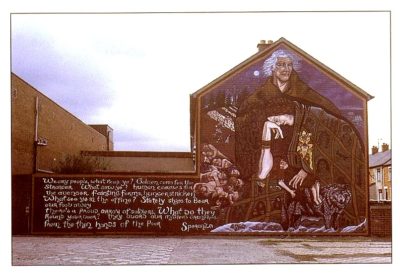
 Aletho News
 Aletho News