Ukraine Continues Assault on Human Rights as Western Sponsors Turn a Blind Eye
By Ilya Tsukanov – Sputnik – 29.04.2024
President Joe Biden has touted the NATO-Russia proxy war in Ukraine as a “battle between democracy and autocracy,” overlooking Kiev’s backsliding on elections (which have been canceled), and political, speech, and religious rights and freedoms (which have been curtailed). Now, observers fear that an even more severe clampdown may be on the horizon.
The Ukrainian government has updated its European colleagues on the terms of its partial suspension of Ukraine’s adherence to the European Convention on Human Rights and the International Covenant on Civil and Political Rights.
In a “Notification of Partial Withdrawal of Derogation” notice dated April 4, 2024 and published on the Council of Europe’s website, Ukraine’s permanent representation to the Council of Europe informed its colleagues about “the derogation measures” (i.e. exemptions) from its international commitments on human, civil, political, religious, and labor rights in connection with the martial law measures enforced across the country.
The notice reviewed Ukrainian authorities’ February 2022 decision to partially or fully suspend a number of rights under the country’s constitution, including:
- guarantees on the inviolability of the home, the rights to privacy in communications, non-interference in personal and family life, freedom of movement, freedom of choice of place of residence;
- the right to freely leave and enter Ukraine, freedom of thought and speech, the right to free expression, the right to collect, store, use, and disseminate information, the right to participate in the management of public affairs and referendums, to freely elect and be elected to state and local bodies, to receive equal access to public services;
- the right to hold meetings, rallies, marches, and demonstrations, the right to strike, the right to own, use, and dispose of property, the right to entrepreneurship and work, and the right to education.
In connection with the introduction of martial law, the state granted itself the right:
- “to compulsorily alienate privately or communally owned property for the needs of the state”;
- “to introduce curfew (a ban on staying on the streets and in other public places during certain periods of time without specially issued passes and certificates)”;
- “to establish a special regime of entry and exit in accordance with a certain procedure, to restrict the freedom of movement of citizens, foreigners and stateless persons, as well as the movement of vehicles”;
- “to inspect the belongings, vehicles, baggage and cargo, office premises and homes of citizens”;
- “to prohibit peaceful assemblies, rallies, marches, demonstrations and other mass events”;
- “to establish in accordance with a certain procedure, a ban or restriction on the choice of place of stay or place of residence in the territory where martial law is in force”;
- “to prohibit citizens registered with the military or special registry to change their place of residence (place of stay) without proper permission”;
- and other measures.
The notification to the Council of Europe was accompanied by an extract from “On the Legal Regime of Martial Law” legislation of May 12, 2015 (one year into the conflict in Donbass), which established the “temporary restrictions on constitutional rights and freedoms of a person and a citizen” outlined above, as well as additional measures, including:
- forcible “labor duty for able-bodied persons not involved in defense and critical infrastructure protection and not reserved for enterprises, institutions and organizations for the period of martial law in order to perform defense-related work and to eliminate the consequences of emergencies that occurred during the period of martial law”;
- the right of the state “to use the capacities and labor resources of enterprises, institutions and organizations of all forms of ownership for defense purposes, change their working hours, and make other changes to production activities and working conditions in accordance with labor legislation”;
- the power “to compulsorily alienate privately or municipally owned property, seize property of state-owned enterprises and state economic associations for the needs of the state under martial law”;
- the authority “to raise the issue of banning the activities of political parties and public associations in accordance with the procedure established by the Constitution and laws of Ukraine, if they are aimed at eliminating the independence of Ukraine”;
- the right of authorities “to set restrictions on electronic communications, print media, publishing houses, broadcasters, and other cultural and media institutions, and enable their use “for military needs and for conducting explanatory work among the military and the population”;
- the power “to establish a special regime in the field of the production and sale of medicinal products containing narcotic drugs, psychotropic substances and precursors, other potent substances, the list of which is determined by the Cabinet of Ministers of Ukraine”;
- the right of the state to “intern (forcibly settle) citizens of a foreign state that threaten to attack or carries out aggression against Ukraine”;
- and other measures.
In practice, the extensive suspension of civil, political, religious, property, and other rights means that the Ukrainian government has granted itself virtually unlimited authority to seize property, listen in on private conversations with loved ones, restrict freedom of movement (particularly for males aged 18-60), detain people indefinitely without charge, and interfere with people’s rights to freedom of speech, assembly, and even worship.
Kiev submitted its initial derogation to European and international human, civil, and political rights conventions in March of 2022 – about a month after the escalation of the crisis in Donbass into a full-fledged NATO-Russia proxy war across the whole of Ukraine.
The update submitted in April formally repeals the derogation on articles related to forced labor, arbitrary detention, freedom of thought, conscience, and religion, and the freedom of peaceful assembly, but the others remain in place.
Russian and international observers, human rights organizations, and the Office of the United Nations High Commissioner for Human Rights have pointed to an alarming uptick in human, civil, and political rights violations in Ukraine over the past two years – from the banning of political parties deemed disloyal to the Zelensky regime, to the cancellation of elections, the persecution of the Ukrainian Orthodox Church, arbitrary detentions, forced disappearances, torture, and other abuses.
In March, a US State Department report outlined “significant human rights issues involving Ukrainian government officials,” ranging from “enforced disappearance, torture and cruel, inhuman, or degrading treatment or punishment, harsh and life-threatening prison conditions, arbitrary arrest or detention,” and more.
The report highlighted “serious problems with the independence of [Ukraine’s] judiciary, restrictions on freedom of expression, including for members of the media, including violence or threats of violence against journalists, unjustified arrests or prosecutions of journalists, and censorship, serious restrictions on internet freedom, substantial interference with the freedoms of peaceful assembly and associated, restrictions on freedom of movement, serious government corruption, extensive gender-based violence, systematic restrictions on workers’ freedom of associated, and the existence of the worst forms of child labor.”
“Some of these human rights issues stemmed from martial law,” the State Department report indicated, adding that “the government often did not take adequate steps to identify and punish officials who may have committed abuses.”
Threat to Itself and Neighbors
“Gross violation of human rights” are being committed at the hands of Ukraine’s authorities and its military affecting not only the country itself, but its neighbors as well, says Vladimir Yevseyev, a Russian military analyst from the Moscow-based Institute of Commonwealth of Independent States.
“The latest vivid example of this is the murder of civilians in Avdeyevka. During demining operations, the bodies of civilians were found with their hands tied behind their backs with tape. They were all killed. This example shows the true state of the observance of human rights in Ukraine, their military’s crimes. Therefore, there isn’t even anything to discuss here,” Yevseyev told Sputnik.
More interesting than the violations themselves is the reaction of Kiev’s Western curators, the observer argues.
Pointing to the State Department report on “significant human rights issues involving Ukrainian government officials,” Yevseyev suggested that it may indicate “some kind of internal political struggle” within the Washington establishment “against the backdrop of the election campaign,” and perhaps part of a general “internal political interdepartmental struggle” as the extent of Kiev’s violations becomes increasingly difficult to conceal.
Accordingly, Yevseyev doesn’t rule out that Kiev may have decided to update its exemptions from European and international human, civil, and political rights conventions to counter this criticism, citing the excuse of the ongoing war effort.
In any case, the observer has no doubt that the Ukrainian state and military will continue to do what they have been doing, and that Kiev’s sponsors “will continue to turn a blind eye to all the violations that took place, at least before the presidential election” in the US, which will play the decisive role.
The decision to update the list of derogation measures is also likely connected to the extensive factual basis presented to international organizations on the violations taking place in Ukraine.
“Everyone knows,” for example, “how many people are in prison on politically motivated charges,” Yevseyev noted, saying this is “getting harder and hider to hide.” Accordingly, the partial derogation allows Ukraine to avoid legal reproach.
As for the implications of Kiev’s moves, and whether they will lead to a further deterioration of human, civil and political rights in Kiev, Yevseyev believes it will make little difference so long as Ukraine’s European and American sponsors continue to cover for them, and continue to prop up the Zelensky regime.
“The situation can be radically changed only through a change of regime. [The Zelensky] regime is totalitarian. Violations of human rights are the norm of behavior, rather than something provocative. The West, naturally, cannot admit that the regime is totalitarian. Therefore, they are forced to turn a blind eye to the massive violations of human rights that are taking place,” Yevseyev said.
The observer expects the situation to continue to deteriorate along with the deterioration of the socio-economic situation in Ukraine, and doesn’t rule out growing violence as ordinary Ukrainians fight back against the state – for example by killing officials from recruitment offices after the expansion of forcible mobilization measures.
Colombia University panel slams president for suppressing pro-Gaza protests
Al Mayadeen | April 27, 2024
The President of Columbia University faced increased pressure on Friday as a campus oversight committee strongly condemned her administration’s actions in suppressing a pro-Palestine demonstration in the school.
Universities across the United States have witnessed in the past few weeks a historic surge in student protests in support of Palestine and Gaza, calling for ending all agreements with “Israel” and divesting from the occupation entity. Students also demanded an end to US support to “Israel” and involvement in the genocidal war.
Cross-country protests in the US continue to grow as the Israeli genocide in Gaza reaches its 204th day. The Palestinian Ministry of Health in Gaza announced on Saturday that the number of Palestinians killed in the ongoing Israeli genocide in the Strip since October 7 has now reached 34,388, with 77,437 injured.
After Colombian students established their Gaza Solidarity Encampment on April 17, University President Nemat Minouche Shafik summoned the NYPD to the campus to disperse the demonstrations, resulting in the arrest of over 100 students. But shortly after, outraged by the footage of their fellow students being arrested, a new group of students arrived on campus and set up another encampment in protest.
Shafik: Decamp or ‘alternative options’
On Friday, Shafik issued an ultimatum to student protesters: either negotiate an agreement with the administration to disband the encampment or the school would pursue alternative measures to dismantle it. However, the demonstrators remained steadfast in their demands, with new supporters swelling their ranks.
The Columbia University Senate passed a resolution following a Friday meeting, stating that Shafik’s administration had eroded academic freedom and disregarded the privacy and due process rights of students and faculty members by involving the police and terminating the protest.
“The decision… has raised serious concerns about the administration’s respect for shared governance and transparency in the university decision-making process,” it said.
The Senate, predominantly comprising faculty members and other staff with a minority representation of students, refrained from explicitly mentioning Shafik in its resolution and opted for a less severe tone than a censure. The president, also a member of the senate, did not attend.
A task force was established in the resolution to monitor the “corrective actions” requested by the Senate concerning the handling of protests.
Columbia spokesperson Ben Chang stated that the administration shared the Senate’s objective of restoring calm to the campus and was dedicated to maintaining an ongoing dialogue.
According to a press release from the institution, on Friday, a minimum of 40 demonstrators were arrested at the Auraria Campus in Denver, which is jointly utilized by the University of Colorado Denver, Metropolitan State University of Denver, and the Community College of Denver.
Near the White House, approximately 200 protesters at George Washington University continued to assemble for a second consecutive day on Friday. The university stated that students failed to comply with instructions to disperse, leading to the suspension and temporary prohibition from campus for several individuals.
Meanwhile, US President Joe Biden described the protests as “antisemitic” and stressed that campuses must remian safe, hinting that current anti-Israeli war protests are a destablizing factor.
Additonally, Congress Republicans said that Shafik and other college administrators are not being firm enough in cracking down on the encapments.
Right to free speech
The University of Texas at Austin’s president, Jay Hartzell, encountered comparable criticism from faculty members on Friday, following his collaboration with Republican Governor Greg Abbott in deploying police to disband a pro-Palestine demonstration two days earlier.
Dozens of protesters were arrested, but the Travis County Attorney’s office stated that charges were dismissed due to a lack of probable cause for the arrests.
Read more: MIT, Emerson, other US colleges students launch pro-Palestine protests
Close to 200 university faculty members penned a letter indicating a lack of confidence in Hartzell, citing his actions as “needlessly endangering” students, staff, and faculty when police, equipped with riot gear and mounted on horseback, intervened against the protesters.
Civil rights organizations have denounced the arrests and called on authorities to uphold the right to free speech.
US lawmakers want to deploy ‘anti-Semitism monitors’ at colleges
RT | April 27, 2024
Two US congressmen have introduced a bill that would appoint independent “anti-Semitism monitors” to federally funded college campuses across the country. The draft law comes amid a police crackdown on anti-Israel protests at dozens of US universities.
Introduced on Friday by New York Representatives Ritchie Torres, a Democrat, and Mike Lawler, a Republican, the COLUMBIA Act would task the Department of Education with sending a “third-party anti-Semitism monitor” to any college or university receiving federal money.
The inspector would release a quarterly report on “the progress that a college or university has made toward combating antisemitism.” Schools that fail to sufficiently crack down on alleged hatred against Jews would then have their funding stripped.
“Rising antisemitism on our college campuses is a major concern and we must act to ensure the safety of students,” Lawler said in a statement. “Jewish students have told my office that they feel completely abandoned by their university administrators and they view Congress as the only avenue for accountability and safety,” Torres added.
The bill’s title – an acronym for the College Oversight and Legal Updates Mandating Bias Investigations and Accountability Act – refers to Columbia University, where pro-Palestinian rallies and protests have been taking place for nearly two weeks. Similar rallies have broken out at around 40 universities and colleges in the US and Canada, including Harvard, Yale and UC Berkeley.
Protesters are demanding that their universities “divest” from companies such as Amazon, Google, Microsoft, and Lockheed Martin that have contracts with the Israeli government. They also want the US to stop giving money to Israel, citing its “genocide” of the Palestinians in Gaza.
Jewish organizations claim that some of the demonstrators have openly praised Hamas, and that the protests have stoked a climate of fear among Jewish students. Israeli Prime Minister Benjamin Netanyahu weighed in on Wednesday, claiming that “anti-Semitic mobs have taken over leading universities” in scenes “reminiscent of what happened in German universities in the 1930s.”
Police arrested hundreds of protesters on Wednesday in a crackdown targeting 21 universities across the country. In a raid at the University of Texas at Austin, Governor Greg Abbott ordered the deployment of heavily armed officers from the Texas Department of Public Safety (DPS), who detained more than 30 people. Abbott – a Republican and professed free speech advocate – declared on social media that “these protesters belong in jail.” Hundreds more were arrested on Thursday and Friday.
While mainstream Democrats and Republicans have joined forces in condemning the protests and promising stiff penalties for those involved, members of the Democratic Party’s progressive wing have visited campuses to encourage the demonstrators. “Contrary to right-wing attacks, these students are joyfully protesting for peace and an end to the genocide taking place in Gaza,” Minnesota Rep. Ilhan Omar said after meeting protesters at Columbia on Thursday. “I’m in awe of their bravery and courage.”
Daughter of martyr Al-Areer martyred along with husband, newborn baby in Israeli airstrike
Palestinian Information Center – April 26, 2024
GAZA – The daughter of martyr Refaat Al-Areer, Shaima, was martyred on Friday along with her husband, engineer Muhammad Siam, and their newborn baby in an Israeli airstrike that targeted their apartment near Al-Rimal Clinic in Gaza City.
Media sources said Israeli aircraft launched several attacks this morning targeting the headquarters of the International Red Cross, which houses displaced people, and a residential apartment near Al-Rimal Clinic, resulting in a number of martyrs and wounded.
The sources revealed that among the martyrs was Shaima, the eldest daughter of martyr Dr. Refaat Al-Areer, who was previously assassinated last December in a deliberate Israeli airstrike targeting his sister’s home in Gaza City.
Dr. Refaat Al-Areer was one of the pillars of the English Section at the PIC, and the supervisor of its Social Media Department. He was martyred along with his brother, sister, and her four children.
The martyr Al-Areer also worked as Professor of English Language at the Islamic University which was destroyed in the Israeli aggression. A number of its staff along with its President were martyred as well.
Al-Areer was one of the courageous voices who spoke and wrote in English about the Palestinian cause and refuted the Israeli narrative. He is the author of the book “Gaza Writes Back”.
He was also hosted in distinguished interviews with various Western media outlets.
ByteDance Will Shut Down TikTok in US Rather Than Comply with Divestment Demand
By Kyle Anzalone | The Libertarian Institute | April 25, 2024
ByteDance says it will not sell off its popular video-sharing app TikTok after President Joe Biden signed a law that will ban the platform from American users in nine months if it is not sold away from Chinese ownership.
Several sources inside ByteDance say TikTok is not for sale, Reuters reported Thursday. The company officials explained that while TikTok is only a small portion of ByteDance’s business, the technology used by the platform is also utilized across ByteDance’s other services. The company believes selling TikTok will hurt its other business.
On Wednesday, President Biden signed a bill that will ban TikTok in nine months if the platform does not divest of all Chinese ownership. Some 170 million Americans—including Biden’s own reelection campaign—use the platform.
TikTok CEO Shou Zi Chew said he believes the company can defeat the ban in court on constitutional grounds and argued the platform will not be sold or banned. “Rest assured, we aren’t going anywhere,” Chew said. “The facts and the Constitution are on our side, and we expect to prevail again.”
Senator Rand Paul also voiced hopes TikTok would prevail in court. “The censors who abound in Congress will likely vote to ban TikTok or force a change in ownership. It will likely soon be law,” Paul wrote in a recent op-ed published by Reason. “I think the Supreme Court will ultimately rule it unconstitutional, because it would violate the First Amendment rights of over 100 million Americans who use TikTok to express themselves.”
American politicians argue TikTok must be banned, or at least severed from ByteDance, because the app presents a national security risk. They claim that Beijing could utilize the site’s data and algorithm to wage an intelligence or disinformation campaign against Americans.
However, there is no proof China has used TikTok for any nefarious operations against the US. Additionally, Chew has argued that TikTok is a global company and not merely Chinese-owned. During a congressional hearing last year, the executive said that three of TikTok’s five board members are Americans, while 60% of TikTok is owned by global investment firms and another 20% is owned by employees. The remaining 20% stake is held by ByteDance founder Zhang Yiming.
Rumble Defies Global Censorship Trends, Takes Stand Against New Zealand’s Free Speech Crackdown
By Didi Rankovic | Reclaim The Net | April 25, 2024
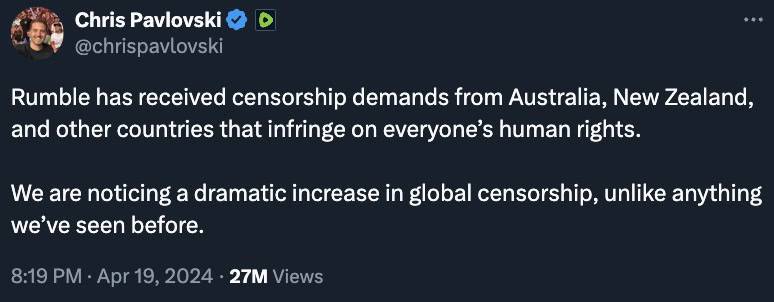
The CEO of Rumble, a free-speech YouTube competitor, says that global censorship levels are on the rise, but that what’s particularly noticeable are censorship demands coming from Australia and New Zealand – who seem to be following in the controversial, to say the least, footsteps of France and Brazil.
On the one hand, this is surprising, given these countries’ formal democratic provenance.
On the other hand, their actions over the last years, including site blocking at ISP level, constant demands for more stringent regulation to facilitate social media content removal, and even the draconian Covid – and post-Covid era measures, tell a different story.
Chris Pavlovski told Mat Kim that the FreeNZMedia channel has now become a deplatforming target in New Zealand, for reporting about leaked data from the National Vaccination Database, that a whistleblower, former Health New Zealand IT employee Barry Young, made available.
And the data Young gave to reporters and activists concerns Covid vaccine-related deaths and claims that these facts are being covered up.
For referring to Young, and referring to the data he provided to the public, a letter has been sent to Rumble to remove FreeNZMedia. It came from the National Health Authority.
However, Pavlovski said that the company has decided to refuse to do that, or to withdraw from the country, and will instead “challenge it and see what happens.”
Pavlovski went on to refer to this particular New Zealand case as “absurd” and “disgusting” – in that it bears resemblance to the Pentagon Papers. At that time, journalist Daniel Ellsberg emerged as a hero of free speech that was protected by the courts in the US.
But that was nearly 50 years ago, and things have clearly changed not only in faraway lands, but in the US itself, and whistleblowers face anything from deplatforming to life in prison.
Speaking about the case of Young, and FreeNZMedia, Pavlovski said that the whistleblower “has a statistics background, went through all the data, found the different batches of vaccines that had an irregular high death rate and published that, and gave out different interviews on doing it.”
 Screenshot
Pavlovski said that he saw nothing that merits censoring the Rumble channel for basing its reporting on Young’s data, and called on the US State Department to “get involved immediately and start protecting US assets and businesses around the world.”
That would be an interesting turn of events, seeing as how the US treats those “assets and business” at home, where censorship is rampant; nevertheless, Pavlovski in this way essentially challenged them to react.
Booed at Columbia University, Johnson warns to bring National Guard to quell pro-Palestine protests

Speaker of the US House of Representatives Mike Johnson at Columbia University, in New York City on April 24, 2024. (Photo by Reuters)
Press TV – April 25, 2024
House Speaker Mike Johnson has threatened to use National Guard against students’ pro-Palestinian protests at US universities as he got booed and heckled at Columbia University.
Following a meeting with Columbia University President Minouche Shafik, the Republican speaker of the US House of Representatives along with a group of Republican House members urged Shafik to step down if she fails to control Gaza war demonstrations on campus during a press briefing at Low Library on Wednesday.
Johnson was joined by GOP Reps. Mike Lawler, Nicole Malliotakis and Anthony D’Esposito, all from New York, and Virginia Foxx of North Carolina.
“We just can’t allow this kind of hatred and anti-Semitism to flourish on our campuses. And it must be stopped in its tracks. Those who are perpetrating this violence should be arrested,” he said, accusing protesters of chasing down Jewish students and harassing them.
Students chanted “Free Palestine” and heckled and loudly booed Johnson and demanded his return to Washington DC, with the noise of protesters almost overpowering his speech.
Johnson, who also met with Jewish students before his remarks, said that he plans to urge US President Joe Biden to take executive action against the protests if necessary, adding, “If this is not contained quickly, and if these threats and intimidation are not stopped, there is an appropriate time for the National Guard.”
Protesters shouted “stop the genocide” as other Republican leaders spoke. The Republicans accused protesters of being part of the problem and supporting the resistance movements of Hamas and Hezbollah.
New York Democrats criticize Johnson for “politicizing” the ongoing pro-Palestinian protests in Columbia, with Gov. Kathy Hochul stating that the presence of an entourage is exacerbating the division.
Johnson said in an interview after his speech that he respects the right to protest, but that he thought the students on campus had crossed into harassment.
Pro-Palestinian academic activism has grown significantly across the US since the onset of the Israeli regime’s US-backed war of genocide against the Gaza Strip.
Starting from the Colombia University in New York, protest encampments with a unified demand that their schools cut financial ties to Israel have been spread across the country. Demonstrations have been held in many universities such as Harvard, MIT, UT and other universities in Michigan, Minnesota and Colombia.
They are calling for universities to distance themselves from any companies that are advancing Israel’s savage military campaign in the besieged Gaza Strip.
Johnson’s speech came hours after Biden officially signed into law a long-awaited foreign aid bill for Israel, Ukraine and Taiwan that had faced considerable delays in the House due to political gridlock.
The new package will provide $26 billion for the Israeli regime, which has been engaged in a genocidal war against the Gaza Strip since last October.
Israeli prime minister Benjamin Netanyahu welcomed the billions of dollars in US assistance, writing on X that it “demonstrates strong bipartisan support for Israel.”
Stop Hassling the Hoffe
An Urgent Plea to All Readers for Help

BY JUSTUS R. HOPE | APRIL 23, 2024
Few stories are more compelling than the tale of Dr. Charles Hoffe. He is a Canadian small-town physician who clings to old-fashioned values. Dr. Hoffe enjoys treating patients even if he loses money doing so because Medicine is a calling for him, not a way to get rich.
His father came to visit and told him that he would never make a name for himself in this backwoods – yet charming – town of Lytton located in the heart of British Columbia. Charles explained that his goal was not to glorify himself, but instead to care for others. He enjoyed stitching the fingers of locals whose skill saws had slipped. He found satisfaction in bringing new life into this world, and he stood strong with the elderly until they departed. Dr. Hoffe was equally comfortable treating the town via its tiny emergency room.
Dr. Hoffe remained fiercely loyal to all under his care, and this was never truer than during the recent COVID-19 episode. While MSM stories abounded on the pandemic causing overflowing big-city hospitals, Hoffe recognized the disconnect between the reality in his small town. He did not see the pandemic materializing with his own eyes. The town of Lytton seemed relatively untouched by anything more serious than a mild flu.
Following the roll-out of the vaccine, Dr. Hoffe noticed a more extreme disconnect. Patients were showing up sick after vaccination. On one occasion he informed a vaccine-injured patient she would not require additional injections due to having sufficient immunity from previous virus recovery. A nurse reported him and despite 30 years of exemplary service without a single patient complaint, he was summarily fired from his position at the emergency department.
However, despite his income dropping by half without the emergency room, Dr. Hoffe persisted in keeping his patients’ safety first, even to his detriment. His first patient death from the pandemic came after vaccination, not from the virus.

Hoffe noticed mounting deaths, micro-clotting, and serious neurological events after the 2021 rollout, and this prompted him to write an email of concern asking his colleagues what they had seen.
Following this private email, he received a notice from the licensing authorities threatening him with disciplinary action should he cause any vaccine hesitancy through his communications.
Hoffe immediately recognized something seriously was amiss. Never in his experience had doctors been so threatened for simply asking questions. Scientific inquiry should not be punishable – and he would not be silenced – especially not when patients’ lives were on the line. The personal cost to him did not matter.
Although Dr. Hoffe found himself isolated in Lytton, a village of a mere 250 residents, he decided to conduct his own pilot study.

Tiny Lytton BC by Andrew Bowden – CC-BY-SA-2.0
He theorized that levels of D-Dimer would reflect micro-clot formation, and thus he measured these levels in his patients both before and after vaccination. To his horror, 5 of 8 patients turned positive for dangerous micro-clotting following the shots. Based on this safety signal, he informed his colleagues and warned that the vaccines seemed to be causing more harm than good.
Dr. Charles Hoffe, despite his tiny practice in this tiny British Columbia town, ironically had made a national name for himself. And bigger things were about to happen. His D-Dimer study began in early 2021, around April, and by June of 2021, his town of Lytton was extinguished in a massive wildfire that seemed to selectively torch the enclave while mysteriously sparing the surrounding wilderness.
Hoffe recalls the day of the inferno. He grabbed his laptop, and D-Dimer records, and fled his burning office. He drove the four hours to his family home, only to be greeted with the news that his wife was strategically planning a divorce. He was served with papers ousting him from his residence. Faced with banishment from his marriage, his profession, and his home, he sought refuge in a small vacation cottage located some six hours’ drive away. He made himself available to his patients via cell phone. But the licensing authorities quickly accused him of abandonment. Yet nothing could have been further from the truth. Like a good steward, Hoff watched over his flock with the utmost care.
Dr. Hoffe courageously stayed the course, keeping his patients first while brushing off the slings and arrows of the attack. The little income he earned following the loss of the emergency room position was about to be whittled down further as the Canadian government removed him from a previously favored physician payment list.
Meanwhile, the charred remains of the town of Lytton had been cordoned off by the authorities who blocked access – Maui style – to its displaced residents for some two years. Hoffe’s local Lytton home, in a positive twist of fate, was located upwind from the disaster, and he was able to move back in and treat the locals once again.
As if the situation could not grow worse, the Canadian Medical Authorities brought charges of misinformation spreading against Dr. Hoffe and sought to revoke his license to practice medicine.
Hoff hired a caring Christian attorney who vowed to fight this. For his defense, he recruited eight world-class expert witnesses, including Dr. Pierre Kory, Dr. Peter McCullough, Dr. Jessica Rose, and Dr. James Thorpe. They provided some 970 pages of compelling testimony, all pro-bono in light of Hoffe’s extreme financial circumstances.
Despite all this, the court used the tool of Judicial Notice to derail his defense. This meant that none of this expert witness evidence was admissible because as a matter of law the vaccines were by definition considered safe and effective – and this issue could not be legally contested.
To add further insult, the medical authorities sought to charge Dr. Hoffe with the costs of their investigation on top of revoking his license. These costs could easily exceed one or two hundred thousand dollars. In other words, the Canadian Medical Authorities are planning a one-two punch designed to bankrupt and silence Dr. Hoffe once and for all.
Which brings me to my request. If you value noble physicians like Dr. Hoffe who possess the moral fiber and strength of character to stand strong for their Hippocratic Oaths no matter the personal cost, then please reach out and help.
If everyone in our group contributed 10 dollars to Dr. Hoffe’s legal defense fund, we could send a message that patients care, and value physicians who stand for truth. We could spare Dr. Hoffe so he could help us fight another day. These payments are exclusively for defraying the costs of Dr. Hoffe’s legal fees, and not for his personal financial benefit.
All Donations are welcome to the Dr. Charles Hoffe Legal Defence Fund.
ABC fact checking is a ‘black box’
Who are the fact checkers, what are their qualifications and how do they decide what is true or false?

Maryanne Demasi, reports | April 22, 2024
Australia’s public broadcaster, the Australian Broadcasting Corporation (ABC), proudly announced in 2022 that it had partnered with the Trusted News Initiative (TNI), an international alliance of major news corporations and Big Tech firms, to counter the growing threat of “fake news.”
It was part of sweeping reforms in the media to deliver ‘trusted’ news to global audiences and protect the public from the harms of misinformation and disinformation online.
Spearheaded by the British Broadcasting Corporation (BBC), partners include Reuters, Associated Press, Financial Times, The Washington Post, and ABC Australia, along with social media and tech giants – Meta (Facebook/Instagram), Microsoft (LinkedIn) and Google (YouTube) to name a few.
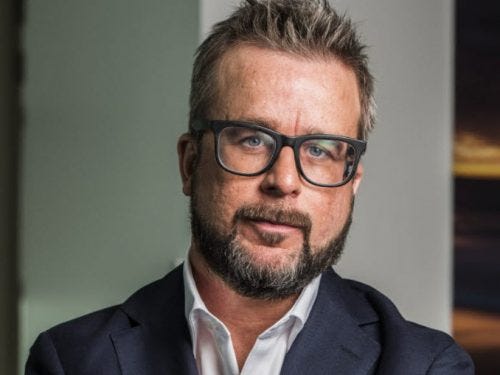
When ABC announced its new alliance with TNI, Justin Stevens, ABC News Director said, “We’re pleased to join the Trusted News Initiative and, in the process, provide Australian audiences with a deeper and better-informed view of our region and the world.”
Justin Stevens appointed ABC News Director in April 2022
During the pandemic, the alliance promised to focus on preventing “the spread of harmful vaccine disinformation,” and “the growing number of conspiracy theories,” targeting online memes that featured anti-vaccine messaging or posts that downplayed the risk of covid-19.
But critics have grown increasingly uneasy about the alliance. They say governments are being protected by journalists, instead of being held to account for their pandemic policies and they’re concerned the alliance has shaped public discourse by controlling people’s access to information and censoring content that diverges from the status quo.
Weaponising fact checking
Deploying fact-checkers is one way that TNI members control the dissemination of public information. When they label a statement ‘false’, ‘wrong’, or ‘misleading’, it’s used by social media platforms to legitimise the censorship of that content by deprioritising, hiding, demonetising, or suppressing it.
Debunking content is time consuming and costly. Fact-checkers are invariably junior journalists or intern researchers, with little to no understanding of complex scientific issues or public health policies, and often appeal to governments for the ‘truth’.
When the authors of the Great Barrington Declaration opposed government enforced lockdowns, fact checkers ran hit pieces on the authors – the notable academics were then shadow-banned, censored and deplatformed from social media.
In the case of the ABC, its original in-house fact checking unit was axed in 2016 because of Federal budget cuts, but was revamped the following year when the ABC teamed up with RMIT University in Melbourne to form the RMIT ABC Fact Check and RMIT FactLab departments.
The ABC paid more than $670,000 to RMIT between 2020 – 2023 as part of its joint fact-checking venture but they quickly gained a reputation for being flawed. For example, concerns about the suppression of the lab leak theory were labelled as “false” even though they were true.
ABC’s fact checkers were also accused of being biased by SkyNews because they had used their influence to censor disfavoured political views in the Voice to Parliament referendum.
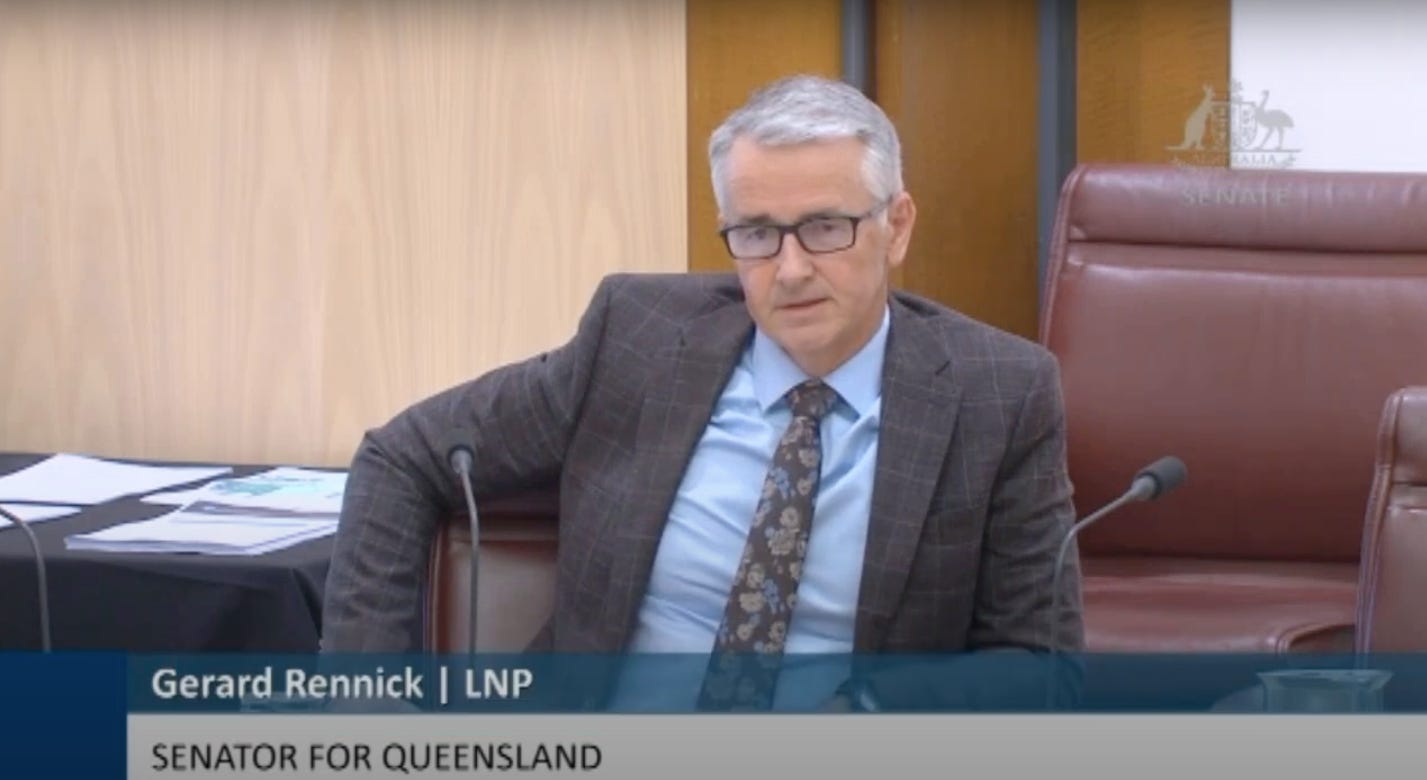
Queensland Senator Gerard Rennick grilled ABC’s Managing Director David Anderson at a Senate Estimates hearing about the network’s dodgy fact-checking practices last year.
“Who is fact-checking the fact-checkers?” asked Senator Rennick.
“You’ve made some outrageous claims on these fact-checks that aren’t correct, and you haven’t actually backed them up with any facts,” added Rennick, accusing the ABC of bias for predominantly fact-checking politically conservative voices in the media.
Sources say these controversies have prompted the ABC to cut ties with RMIT whose contract ends in June 2024.
New fact-checkers, same problems?
An ABC spokesperson said the network is now building its own internal fact-checking team, called “ABC NEWS Verify,” which appears to have similarities to the “BBC Verify” initiative.
“ABC NEWS Verify will be our centre of excellence for scrutinising and verifying information in online communities,” said the spokesperson outlining the various tasks of fact checkers. “Establishing a dedicated team will enhance and focus our efforts, creating a hub for verification best practice.”
I asked the ABC if it had any internal policy document outlining the criteria its fact-checkers would use to deem content as ‘misinformation’ or ‘disinformation’ but the spokesperson responded saying “no it doesn’t.”
Andrew Lowenthal, an expert in digital rights and a Twitter Files journalist, said the ABC’s failure to explain how it intends on fact-checking claims was “seriously ridiculous.”
“That the ABC is seeking to decide what is misinformation without laying out any criteria demonstrates just how farcical and political ‘fact-checking’ has become,” said Lowenthal.
“Without transparent and publicly available criteria the program will quickly turn into a partisan advocacy initiative,” he added.

Andrew Lowenthal, Twitter Files journalist
Lowenthal’s Twitter Files investigation confirmed the Australian government was monitoring Covid-related speech of its citizens and requesting that posts were flagged and censored if they deemed them to be misinformation.
“In that investigation, the government’s Department of Home Affairs was relying on Yahoo! News and USA Today, among others, to justify their take down requests or they’d hire journalists without scientific credentials. We need dialogue, not diktats, to determine what is true,” said Lowenthal.
Senator Rennick agreed, saying the ABC’s process lacks transparency. “Who are these people that claim to be the fact-checkers in the first place and what are their credentials? Sounds to me like it’s a black box,” said Rennick.
“Often when fact checkers come out with their reports, they don’t give the other person they’re fact checking, a right-of-reply. Also, they rarely disclose the conflicts of interest of the so-called ‘experts’ they use to fact check claims,” he added.
Michael Shellenberger, author, journalist and founder of Public, has written extensively on the “censorship industrial complex.”
“That’s what the trusted news initiative [TNI] was all about…a strategy to use fact checking initiatives to demand censorship by social media platforms,” said Shellenberger.
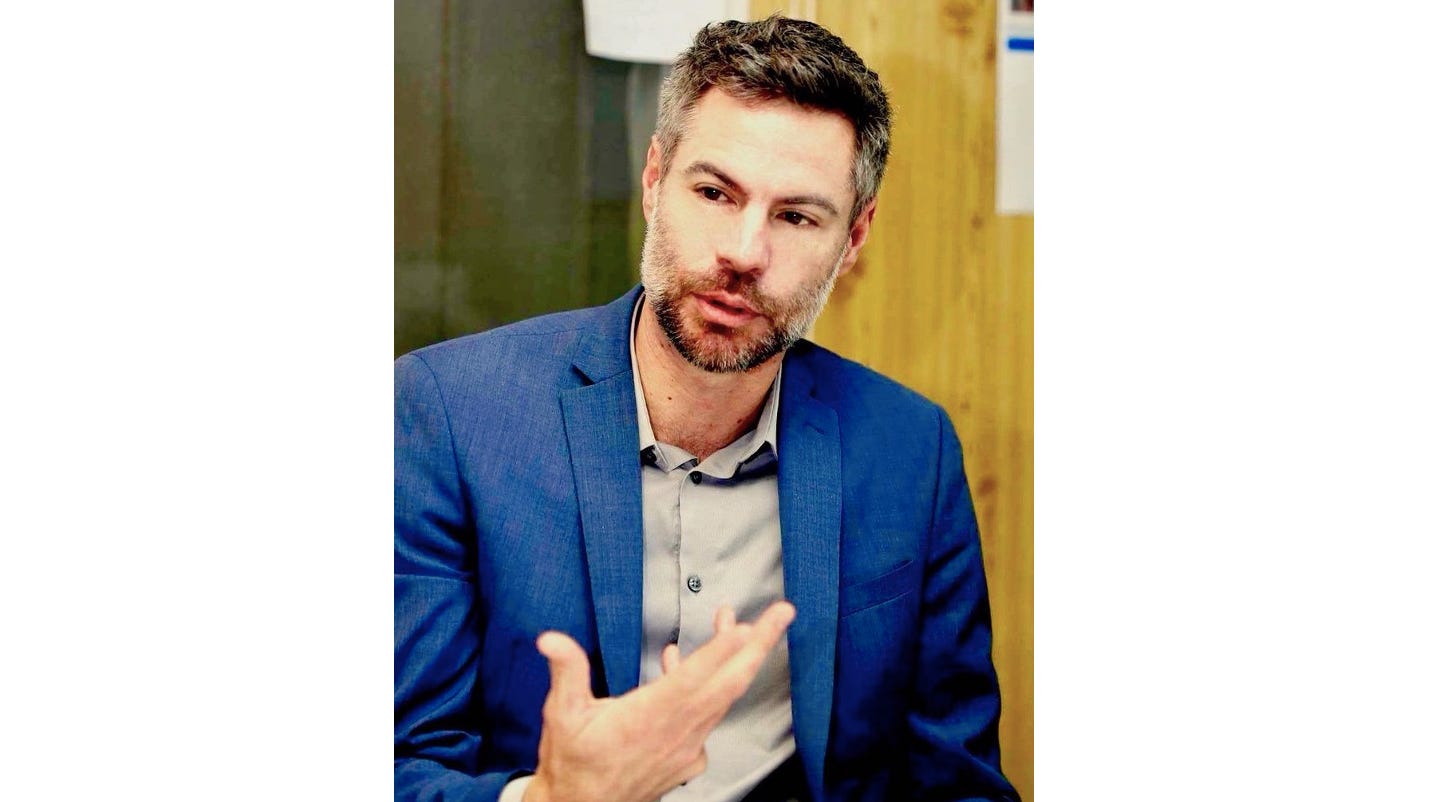
Michael Shellenberger, author of San Fransicko (HarperCollins 2021) and Apocalypse Never (Harper Collins 2020)
“They can pretend that’s not what it’s about, but the fact that the news media are participating in this, is grotesque. It’s a complete destruction of whatever reputation and integrity they used to have,” he added.
“Organisations like BBC and ABC… they used to have reputations for independence and integrity, but they’ve now decided to destroy their entire reputation on the mantle of them being the deciders of the truth. The Central Committee. That’s totalitarianism that’s not free speech.”
The ABC says its new ABC NEWS Verify will have no connection to TNI.
Impartiality and credibility?
TNI’s broad principles of working in lockstep towards a single narrative, has meant that legacy media operate largely as a mouthpiece for government propaganda, offering little critique of public health policies…and ABC has been no exception.
During the pandemic, the broadcaster repeatedly came under fire after its medical commentator Dr Norman Swan made countless calls for harsher lockdowns, mask mandates and covid boosters – policies that strongly aligned with the government but had little scientific backing.
Swan’s commentary rarely provided an impartial perspective and he was eventually called out for failing to publicly disclose his financial interest in seeking government contracts related to covid-19.
In addition, Ita Buttrose, who was ABC Chair until last month, was seen fronting Pfizer’s advertising campaigns for covid products. ABC defended Buttrose saying, “Given she was not involved in editorial decisions, there was no conflict of interest.”

Ita Buttrose, former ABC Chair, March 2019 – March 2024
The ABC denies its alliance with TNI has impacted its editorial independence but Shellenberger says the entire purpose of joining TNI is to ensure they become the single source of truth.
“They’ve stopped doing real reporting, and they’re just out there wanting to be paid to regurgitate and act like publicists for the government. It’s grotesque. It’s not journalism, it’s propaganda,” said Shellenberger.
Resisting the tyranny
Some journalists have been resisting what they perceive to be ‘tyranny’ in legacy media and the widespread suppression of free speech.
In June 2021, a group of around 30 journalists rallied together to denounce TNI’s “censorship and fearmongering” and accused the alliance of subjecting the public to a distorted view of the truth.
The group known as ‘Holding the Line: Journalists Against Covid Censorship’ shared concerns that reporters were being reprimanded by their superiors and freelancers were being blacklisted from jobs for not following the “one official narrative.”
Presidential hopeful Robert F Kennedy Jr has filed a lawsuit against TNI alleging that legacy media organisations and Big Tech have worked to “collectively censor online news” about covid-19 and the 2020 presidential election.
The lawsuit states:
“By their own admission, members of the “Trusted News Initiative” (“TNI”) have agreed to work together, and have in fact worked together, to exclude from the world’s dominant Internet platforms rival news publishers who engage in reporting that challenges and competes with TNI members’ reporting on certain issues relating to COVID-19 and U.S. politics.”
A group of 138 scholars, public intellectuals, and journalists from across the political spectrum have since published The Westminster Declaration.
In essence, it’s a free speech manifesto urging governments to dismantle the “censorship industrial complex” which has seen government agencies and Big Tech companies work together to censor free speech.
In Australia, the journalist’s union MEAA has called on ABC’s newly appointed Chair Kim Williams to “restore the reputation of the national broadcaster by addressing concerns about the impact of external pressures on editorial decision making.”

Kim Williams, current Chair, ABC Network Australia
Williams, who took over from Buttrose last month, has warned his journalists that “activism” is not welcome at the ABC and that if they fail to observe impartiality guidelines, they should consider leaving the network.
Will the ABC course-correct with Williams at the helm? Now that trust in legacy media is at historical lows, the ABC’s partnership with TNI does little to assuage fears that the network has passed the point of no return.
NB: I was a TV presenter/producer at ABC TV (2006-2016) and wrote about my experiences with censorship at the network here and here.
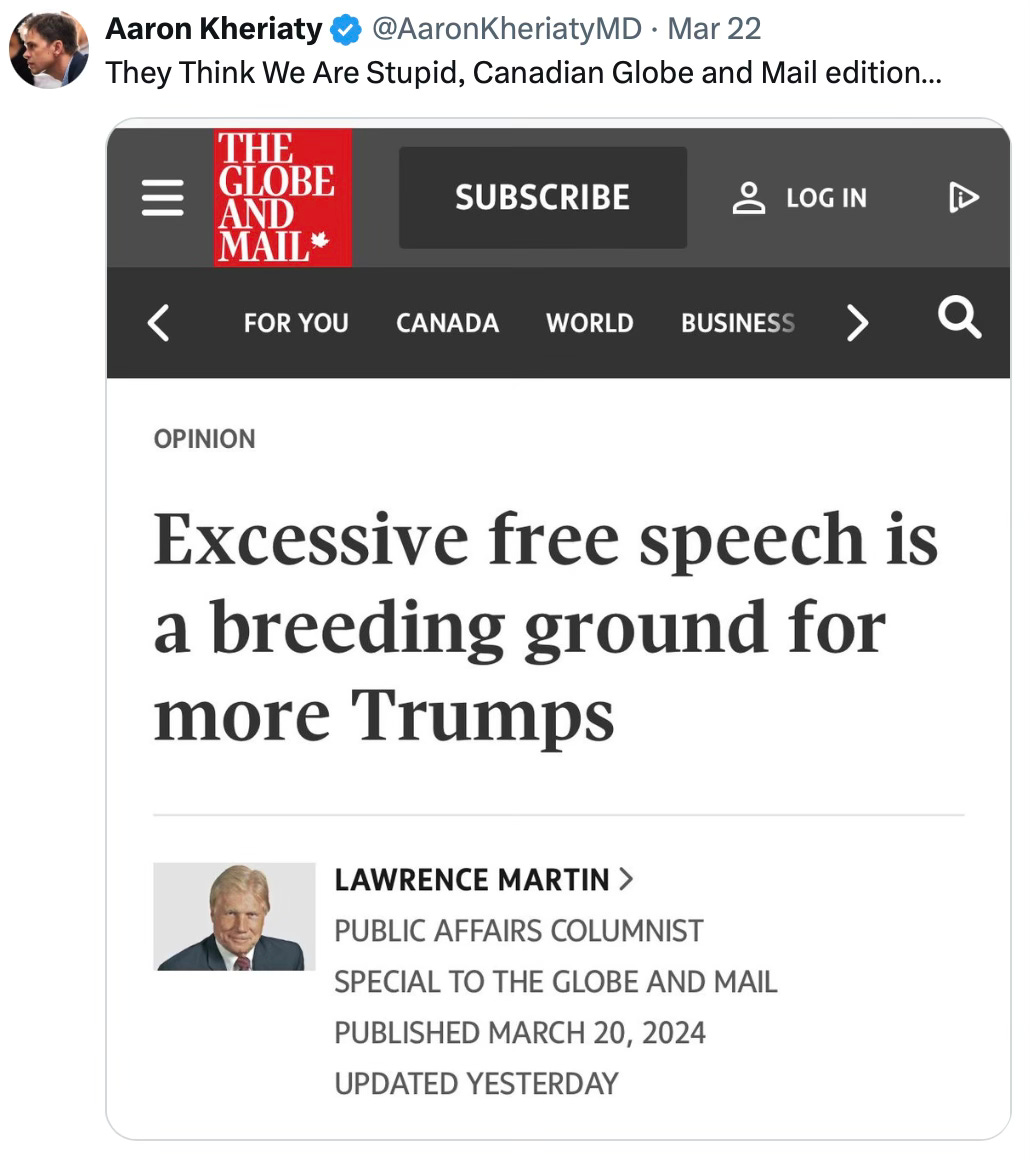
They Think We Are Stupid, Volume 8
By Aaron Kheriaty, MD | Human Flourishing | April 23, 2024
Everything you need to know about our ruling class’s opinion of you. As always, these headlines are presented without commentary.




‘Misinformation’ and ‘disinformation’ in the pandemic treaty
European Parliament – 9.4.2024
Priority question for written answer P-001044/2024
to the Commission
Rule 138
Robert Roos (ECR), Angel Dzhambazki (ECR), Tom Vandendriessche (ID), Mislav Kolakušić (NI), Ivan Vilibor Sinčić (NI), Jorge Buxadé Villalba (ECR), Francesca Donato (NI), Margarita de la Pisa Carrión (ECR), Hermann Tertsch (ECR)
The Commission is negotiating an international agreement on ‘pandemic preparedness and response’ with WHO countries.
In the draft text as amended by the EU drafting suggestions[1] dated 27 February 2024, Article 18 on communication and public awareness relies on the concepts of ‘misinformation’ and ‘disinformation’.
Signatory countries should act ‘with the aim of countering’ (Article 18(1)) and ‘cooperate in preventing’ (Article 18(4)) misinformation or disinformation, with the Commission suggesting an amendment to oblige countries ‘to develop effective tools to identify and counteract misinformation and disinformation’ (Article 18(4)).
However, neither the draft agreement nor international law provide a definition of ‘misinformation’ or ‘disinformation’.
- 1. Can the Commission define these concepts and explain how they should be understood, in the Commission’s view, taking into account the requirement to comply with the principle of legal certainty, which is an essential component of the rule of law principle and according to which the law must be certain, foreseeable and easy to understand?
- 2. In the Commission’s view, do the proposed obligations under Articles 18(1) and 18(4) entail restricting citizens’ fundamental right to freedom of expression, and if so, are these restrictions compatible with the applicable law, including the case law of the European Court of Human Rights?
Supporter[2]
Submitted:9.4.2024
Featured Video

The Truth About the Trump Shootings with Ken Silva
or go to
Aletho News Archives – Video-Images
From the Archives
The Geopolitics behind the War in Yemen (I)
By Mahdi Darius NAZEMROAYA | Strategic Culture Foundation | 30.03.2015
The United States and the Kingdom of Saudi Arabia became very uneasy when the Yemenese or Yemenite movement of the Houthi or Ansarallah (meaning the supporters of God in Arabic) gained control of Yemen’s capital, Sanaa/Sana, in September 2014. The US-supported Yemenite President Abd-Rabbuh Manṣour Al-Hadi was humiliatingly forced to share power with the Houthis and the coalition of northern Yemenese tribes that had helped them enter Sana. Al-Hadi declared that negotiations for a Yemeni national unity government would take place and his allies the US and Saudi Arabia tried to use a new national dialogue and mediated talks to co-opt and pacify the Houthis.
The truth has been turned on its head about the war in Yemen. The war and ousting of President Abd-Rabbuh Manṣour Al-Hadi in Yemen are not the results of «Houthi coup» in Yemen. It is the opposite. Al-Hadi was ousted, because with Saudi and US support he tried to backtrack on the power sharing agreements he had made and return Yemen to authoritarian rule. The ousting of President Al-Hadi by the Houthis and their political allies was an unexpected reaction to the takeover Al-Hadi was planning with Washington and the House of Saudi. … continue
Blog Roll
 Aletho News
- Pakistan-Iran talks secure LNG shipment to Islamabad through Hormuz
- Black Sea grain crisis puts global wheat supplies under pressure
- IRGC air defenses destroy another US MQ-1 drone over Strait of Hormuz
- Imran Khan’s entire immediate family detained in Pakistan ahead of mass protest demanding his release
- EU nation detains former presidential frontrunner
- Leaked: Britain’s Sham Conviction Of Hashim Thaci
- Seyed M. Marandi: U.S. Strike Imminent – Toward Total War in the Middle East
- Russia Voted Under Fire. Washington Is Loading the Tankers.
- 12 Things Your Oncologist Was Trained Not to Tell You
- Anthrax Attacks Paved Way for COVID-Era ‘Junk Drugs and Vaccines’
- If Americans Knew
- Huckabee aide solicited cash gifts from Israelis
- This isn’t sci-fi, AI is already killing people
- ‘The Most Brutal Thing’: Investigation Reveals Execution of Elderly Woman in Rafah
- Inside Israel’s ‘soft’ ethnic cleansing plan for Gaza through the eyes of its victims
- New online database tracks pro-Israel political donations in the United States
- Israeli president pardons soldier convicted for killing wounded Palestinian
- Singer Ed Sheeran says his ‘heart broken’ by Gaza devastation, addresses Macklemore controversy
- Israel Has Imprisoned Female Journalist Bushra Al-Tawil Without Trial Or Charge In Solitary Confinement For Past Month
- Israel poised to teach West Bank a lesson after one Israeli killed – Daily Update
- Salah Sarsour’s Legal Team Says DHS Has Not Met Its Burden to Prove He Is Deportable
- No Tricks Zone
- 2025 Nature Paper Claiming Worsening Global Drought Gets RETRACTED …Heavily Flawed
- New Study: ‘Global Drought Shows No Detectable Recent Acceleration Under Climate Warming’
- Economic Masterminds: German Socialists Suggest Taxing Productivity Gains Stemming From Using AI
- The South China Sea Has Not Been Cooperating With The Climate Change Narrative
- Energy Crisis: Germany Enters Heating Season With Historically Low Gas Reserve Fill Levels
- New Study: The Antarctic Ice Sheet Gained Mass From 2020-2024 Due To Staggering Snow And Ice Accumulation
- Study: Ocean Heating Rates From Thousands Of Years Ago ‘Dwarf’ Modern Ocean Heating Rates
- Climate Extremists Target, Attack Large-Scale Power Grid Infrastructure In Germany!
- New Study: Antarctic Ice Melt Has Contributed Less Than 1 Centimeter To Sea Level Rise In The Last 30 Years
- Fear Of Debate: Alarmist German Climate Scientist Calls On Mainstream Media To Discredit Skeptic Voices
 Aletho News
.jpg#:~:text=https%3A//commons.wikimedia.org/wiki/File%3ALytton_(5999567206).jpg)