Ireland Clashes with EU Over Hate Speech Laws as MEP Michael McNamara Denounces Brussels’ Legal Threats

By Cindy Harper | Reclaim The Net | May 23, 2025
Ireland’s refusal to fully adopt the European Union’s “hate speech” directives has ignited tensions in Brussels, with Independent MEP Michael McNamara voicing staunch opposition to what he calls a misguided and authoritarian push to punish noncompliance. He dismissed the EU’s legal threats as deeply flawed, asserting that there is no evidence” that these laws accomplish their stated goals of reducing discord or promoting unity.
According to McNamara, attempts to legislate acceptable speech do little more than sow fear and resentment. “People resent the fact that they’re threatened with prosecution for expressing their views,” he said, highlighting a growing unease across Europe as more individuals feel unable to voice opinions, whether popular or not. He warned that such policies do not alter underlying beliefs, they simply force them underground.
Instead of fostering a more harmonious society, McNamara argued that these measures build resentment. “It doesn’t affect how people think in any way, it just affects what they are afraid to say and what they resent,” he said. He drew a parallel to the United Kingdom, where, he noted, citizens are witnessing elderly individuals facing prosecution for speech offenses, while police resources are increasingly diverted from public safety to policing online expression.
“Hate speech laws are counter-productive. They are also profoundly illiberal. They’ve damaged the UK and we don’t want the same,” he wrote in a message on X, calling on the European Commission to abandon any proceedings against Ireland related to speech legislation.
The EU’s position, outlined in a recent notice from the Commission, faults Ireland and Finland for not yet implementing legal measures to criminalize specific categories of speech, including statements denying historical atrocities or inciting hatred against protected groups. While Ireland has made partial moves, Brussels remains unsatisfied and has issued formal opinions giving the two nations two months to comply before potential escalation to the European Court of Justice.
Despite an earlier attempt to introduce hate speech legislation, one that passed easily through the Dáil, the lower house of the Irish parliament, the Irish government eventually shelved the bill.
Resistance from the Seanad and significant public discontent led to its demise, with many viewing the proposal as a direct threat to civil liberties.
That backlash is widely believed to have influenced the outcome of the March 2024 referendums, where voters rejected two constitutional amendments by wide margins.
McNamara reiterated his stance before the European Parliament, stating plainly that pressing charges against Ireland over its refusal to implement these rules would be “misguided.” He urged the Commission to reconsider, framing the issue as one of national integrity and democratic principles rather than regulatory compliance.
Canada’s PM Mark Carney Revives Online Censorship Agenda
By Dan Frieth | Reclaim The Net | May 23, 2025
Steven Guilbeault, once Canada’s Environment Minister is now poised to spearhead a different kind of oversight, this time, over what Canadians can see and share online.
In his new post as Minister of Canadian Identity and Culture, Guilbeault has been entrusted with executing Bill C-11, a contentious piece of legislation passed in 2023 that gives the federal government unprecedented power over online streaming platforms.
Celebrating the appointment, Guilbeault publicly thanked newly elected Prime Minister Mark Carney, expressing his intent to “build a stronger country, based on the values of Canadians.”
This shift in leadership places Guilbeault at the center of an ongoing battle over internet regulation. Bill C-11, which was rushed into law during Justin Trudeau’s final term as Prime Minister, obligates major tech companies to fund and prioritize Canadian content, particularly that of the mainstream media, regardless of whether users are seeking it.
While the Canadian Radio-television and Telecommunications Commission (CRTC) was initially expected to enforce the new requirements, it recently admitted that the regulatory framework won’t be ready until late 2025. That leaves platforms, creators, and consumers in limbo, uncertain about how deeply the government’s hand will extend into digital media.
Carney, seen as a political continuation of Trudeau’s legacy, appears ready to go even further. Before the most recent election, the Liberal Party was already moving to introduce Bill C-63, a so-called Online Harms Act.
While framed as a tool to protect minors from exploitation, the bill also includes expansive measures to monitor and penalize what it terms “hate speech.” This vague language has prompted concern from legal scholars and civil liberties organizations about the law’s potential to suppress legitimate expression.
With Guilbeault now steering Canada’s cultural and digital policies, free speech advocates worry the government is tightening its grip not only on environmental and economic life but on the very flow of information and dialogue in the digital sphere. What began as a push for national content promotion may ultimately serve as a model for broader censorship under the guise of cultural stewardship.
Top FDA official admits she refused the Covid-19 vaccine while pregnant
A senior regulator’s admission reveals uncomfortable truths about silence, ethics and trust inside the FDA
By Maryanne Demasi, PhD | May 22, 2025
One of the most powerful figures at the US Food and Drug Administration (FDA) has admitted she refused the Covid-19 mRNA vaccine while pregnant—even as her agency promoted it as “safe and effective” for all pregnant women.
Dr Sara Brenner’s explosive disclosure, made on 15 May 2025 at the MAHA Institute Round Table in Washington DC, is as revealing as it is troubling.
A preventive medicine physician, Brenner has worked at the FDA since 2019. As the FDA’s Principal Deputy Commissioner—and briefly its Acting Commissioner—Brenner was at the centre of decision-making.
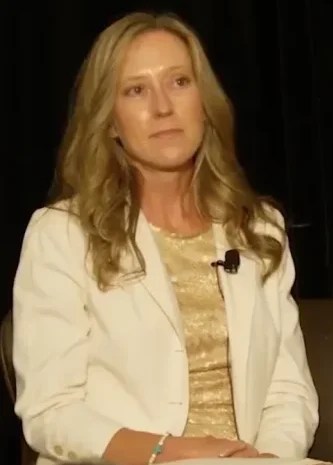
Dr Sara Brenner on 15 May 2025 at the MAHA Institute
Prior to that she was Chief Medical Officer for diagnostics and was detailed to the White House to support the Biden administration’s Covid-19 response. She didn’t just participate in the pandemic response, she helped shape it from within.
“Knowing what I knew—not only about nanotechnology, about medicine, about the medical countermeasures—but also having a very strong and firm grounding in bioethics… there were many things that were not right,” she told the audience.
That someone with her seniority and access to internal data privately rejected the vaccine, while her agency promoted it to millions of pregnant women, presents a profound ethical dilemma.
Brenner’s concerns about mRNA safety
Brenner explained that her decision was driven by a lack of safety data, particularly around the biodistribution of the vaccine’s lipid nanoparticles (LNPs)—the tiny fat particles used to deliver the mRNA into cells.
“It was unknown at the time what the biodistribution patterns of those products were… That was my primary concern, and that exposure I was very concerned about,” said Brenner.
She had reason to be cautious.
As a nanomedicine expert who built an MD/PhD program in the field, Brenner had spent years researching the “biodistribution, excretion, metabolism and toxicities associated with engineered nanoparticles.”
“Materials that don’t exist in nature—there’s a lot of unknowns,” said Brenner.
She warned that unintended toxic effects—especially in vulnerable populations like pregnant women—could not be ignored.
“Regardless of the medical product or the intervention, there’s always going to be the need to evaluate both the intended outcomes… and the unintended consequences,” she cautioned.
Warnings ignored
Brenner’s concerns echoed those raised in 2021 by Canadian immunologist Dr Byram Bridle, who first exposed internal documents from Japan’s regulatory agency showing that LNPs didn’t remain at the injection site, but travelled throughout the body and accumulated in organs including the ovaries, liver, spleen and bone marrow.
At the time, Bridle’s warnings were aggressively dismissed. His reputation took a hit, and he faced institutional censure from the University of Guelph, where he was a professor, for speaking out against vaccine mandates.

Dr Byram Bridle, Canadian immunologist. Photo credit: Kenneth Armstrong
Now, Brenner’s comments confirm that these concerns were not only valid—they were quietly shared at the highest levels of the FDA.
During the event, Brenner also revealed that her worries extended to breastfeeding and potential exposure to her child after birth.
A 2022 study published in JAMA Pediatrics detected vaccine-derived mRNA in the breast milk of vaccinated mothers for at least 48 hours—the very scenario Brenner had feared.
Yet the FDA made little effort to publicly investigate or address the findings, dismissing them with the vague reassurance that there was “no evidence of harm.”
No mandate for Brenner?
It’s unclear how Brenner managed to avoid the vaccine mandate that applied to all federal employees at the time. She didn’t say. Perhaps she received a religious or medical exemption—but she left that part out.
What she did reveal was that she had concerns—deep enough not to take the vaccine during her pregnancy. Yet she said nothing publicly, while her agency told millions of other women it was safe.
For many, that silence is hard to accept and it has left many asking why she didn’t warn other women about a product with ‘zero’ clinical safety data in pregnancy.
No one but Brenner knows the full story. But the ethical contradiction is hard to ignore.
Silence inside the castle
Brenner acknowledged the immense pressure inside the FDA to stick to the official narrative.
“They don’t let you get very far out of the castle at FDA with your talking points,” she admitted nervously.
She described the period as a “dark night of the soul” for many civil servants, a time when even “very obvious things” took bravery to say.
She eventually found support through a group called Feds for Medical Freedom—federal workers advocating for informed consent, bodily autonomy, and pushing back against government overreach.
A culture change?
Today, under a new administration, Brenner says the culture inside the FDA is shifting. She praised Commissioner Dr Marty Makary and said transparency is finally becoming a priority.
“We’re moving very quickly to make it such that there will be more transparency… so that people can see and evaluate for themselves what the truths are.”
But Brenner’s remarks won’t undo what has already happened—especially to those who were vaccine injured or whose pregnancies were affected.
What her comments do offer is a rare glimpse into the internal dynamics of a government institution that issued sweeping public assurances while failing to acknowledge its own uncertainty.
“There was no acknowledgement of what was unknown. There were only statements and assertions that were really more like beliefs,” Brenner said of the FDA’s messaging during the pandemic.
That may be her most important admission.
This is more than a story about one woman’s personal decision. It is a story about institutional culture, regulatory failure, and the consequences of silence.
Those who spoke up were punished. Those who stayed silent kept their jobs and reputations. And those who were forced to comply were often left to deal with the collateral damage.
When asked whether she believed she had made the right decision in refusing the Covid-19 vaccine, Brenner replied simply, “I believe so.”
Now that she has spoken, the question remains — who else knew, and said nothing?
Spain’s Socialist government pours taxpayers’ millions into equality plan to combat nationalist surge
By Thomas Brooke | Remix News | May 21, 2025
As nationalist parties surge across Europe, the Spanish Socialist-led government is doubling down on its ideological agenda — plowing over €140 million of taxpayer money into a nationwide equality plan aimed, in part, at combating what it labels “far-right” narratives among young men.
The move comes just days after significant gains for right-wing forces across the continent, including in neighboring Portugal, where the populist Chega party enjoyed electoral success to compete with the two dominant legacy parties, and in Poland, where the presidential race saw a majority of voters supporting conservative candidates.
Yet while many European electorates turn toward nationalist, traditionalist platforms, Spain’s Ministry of Equality has announced the distribution of €142.5 million to the country’s autonomous communities as part of its 2025 Co-Responsible Plan.
As reported by El Debate, the funding, which is 75 percent covered by the central government and 25 percent by regional administrations, will finance projects aimed at enforcing gender parity, redefining family life, and promoting what the government terms “co-responsible masculinities.”
Speaking after the Council of Ministers approved the latest round of funding, Equality Minister Ana Redondo explained that the Spanish government’s focus is “social transformation.”
The timing of the announcement has raised eyebrows, especially given Redondo’s remarks about the growing popularity of nationalist parties among young men. “It’s a concern of this government, in Europe, and a concern of society as a whole,” she said, describing online platforms as an environment where “hate, denialism, and anti-equality messages” are allegedly radicalizing young people against parties like hers and into the hands of populists.
Redondo warned that pornography and social media were fuelling “a misogynistic, sexist conception that devalues women,” which she claimed undermines both equality and democracy. “All the policies of the Ministry are also aimed at facing this new reality,” she added.
Critics accuse the government of responding to rising disillusionment with its social agenda by funneling state money into programs that stigmatize dissenting views as extremism.
European Commission Accused of Orchestrating $735M Speech-Control Campaign

By Cindy Harper | Reclaim The Net | May 21, 2025
A new report has uncovered an expansive and quietly orchestrated campaign by the European Commission to shape public discourse through nearly €649 ($735M) million in taxpayer-funded projects aimed at regulating online speech.
Titled Manufacturing Misinformation: The EU-Funded Propaganda War Against Free Speech, the document was released by the think tank MCC Brussels and authored by Dr. Norman Lewis, a seasoned analyst of digital communication and regulatory policy.
Behind the EU’s frequent calls to combat “hate speech” and “disinformation” lies what the report describes as a vast ideological infrastructure designed to erode free expression under the guise of safety and civic empowerment.
The Commission, the report states, “has funded hundreds of unaccountable non-governmental organizations and universities to carry out 349 projects related to countering ‘hate speech’ and ‘disinformation’ to the tune of almost €650 million.”
That staggering figure surpasses what Brussels spends on transnational cancer research by over 30%, a discrepancy the report calls deliberate: “The EU Commission regards stemming the cancer of free speech as more of a priority than the estimated 4.5 million new cancer cases and almost two million cancer deaths in Europe in 2022, for example.”
While EU officials present these programs as public-interest research, the report argues they constitute a form of “soft authoritarianism,” enshrining speech codes and narrowing acceptable opinion through bureaucratic manipulation. “This is a top-down, authoritarian, curated consensus,” it states, “where expression is free only when it speaks the language of compliance established by the Commission.”
Many of these initiatives feature a distinct use of vague and euphemistic terminology, part of what the report calls “NEUspeak;” a deliberate linguistic strategy designed to obscure intent and preempt scrutiny. The project acronyms alone, such as FAST LISA and VIGILANT, are described as a form of branding deceit.
As Dr. Lewis writes: “These chirpy acronyms don’t just sound like digital voice assistants or wellness apps…they are deliberate, dishonest strategic terms chosen to disguise a real authoritarian purpose.”
Some of the projects don’t only aim to influence the debate, they aim to automate it. AI-powered initiatives are being trained to identify and suppress politically undesirable speech in real-time.
One such project, VIGILANT, is described by its designers as ethical and user-centric, but MCC Brussels challenges this narrative. “VIGILANT is an AI surveillance suite aimed at monitoring, classifying, and profiling speech, users, and networks, which takes the complexity out of controlling freedom of expression.”
The report highlights that the EU’s censorship framework is not only technical, it is pedagogical.
Programs targeting young people are presented as civic education but function more like behavioral grooming. “The ‘capacity building’ is, in fact, the indoctrination of young people to behave and act as speech police,” the report explains. “What appears to be bottom-up reform is, in fact, a pre-scripted system of narrative compliance.”
Another cornerstone of the report is its critique of how taxpayer money is being funneled into what it calls pre-validated “research” meant to affirm political orthodoxy rather than challenge it.
“Research that systematically ‘proves’ this assumption is not research; it is the manufacturing of propaganda used to legitimize the narrative, pre-empt criticism, and thus delegitimize any ideas or narratives that do not conform.”
Far from defending democracy, MCC Brussels contends that the European Commission is subverting it.
“Language is the EU Ministry for Narrative Control’s software infrastructure of control,” the report warns. “When the EU Commission defines hate speech, disinformation or extremism, it is not identifying problems – it is drawing the lines around what can be said, by whom, and with what consequences.”
For Dr. Lewis and MCC Brussels, the takeaway is clear: this is not about protecting society from dangerous ideas, but about insulating a ruling ideology from democratic challenge.
“The Commission rebrands inquiry as a confirmation ritual rather than any honest pursuit of truth,” the report concludes. “A society that redefines surveillance as ‘safety’ or censorship as ‘content moderation’ does not need to silence citizens outright; it simply changes the meaning of their silence.”
EU sanctions Ukraine’s elected opposition leader
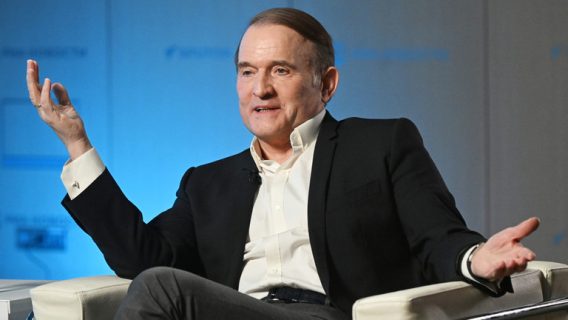
Exiled Ukrainian opposition leader Viktor Medvedchuk © Sputnik / Kristina Kormilitsyna
RT | May 21, 2025
The EU has sanctioned exiled Ukrainian opposition leader Viktor Medvedchuk as well as 20 other individuals and six entities on accusations of being involved in what it described as “Russia’s destabilizing actions abroad.” Moscow has repeatedly rejected claims of meddling in internal affairs of the bloc’s member-states.
Medvedchuk, who has been blacklisted by the EU since May 2024, was slapped with additional curbs on Tuesday when the European Council announced its 17th round of sanctions against Russia over the Ukraine conflict.
The restrictions against the former leader of Ukraine’s banned Opposition Platform – For Life party and the others included an assets freeze in the EU and a ban on entering the bloc or transiting its territory, the council said in a statement.
The EU claims that Medvedchuk and his associates Artyom Marchevsky and Oleg Voloshin, who have also been sanctioned, “controlled Ukrainian media outlets and used them to disseminate pro-Russian propaganda in Ukraine and beyond.”
“Through secret financing of the Voice of Europe media channel – also listed today – and his political platform Another Ukraine, Medvedchuk has promoted policies and actions intended to erode the legitimacy and credibility of the government of Ukraine, in direct support of the foreign policy interests of the Russian Federation and disseminating pro-Russian propaganda,” the statement read.
German bloggers Thomas Roeper and Alina Lipp, as well as Turkish journalist Huseyin Dogru, the founder of AFA Medya company, are also among those added to the sanctions list.
Medvedchuk used to be the head of the largest opposition faction in the Ukrainian parliament. But after the escalation between Moscow and Kiev, he was branded a traitor and arrested. The 70-year-old businessman and politician spent months in detention before being handed over to Moscow in a prisoner swap in September last year. He has remained in exile in Russia since then, with his Ukrainian citizenship revoked and his party branded illegal, along with a dozen groups that opposed the government of Vladimir Zelensky.
Moscow has on many occasions denied accusations of interfering in the electoral processes and internal affairs of EU nations. Russian Foreign Ministry spokeswoman Maria Zakharova previously accused the bloc of “switching from propaganda to direct persecution of media outlets and journalists based on political, ethnic and cultural grounds.”
Ex-Adviser to Yanukovych Shot Dead in Madrid Suburbs
Sputnik – 21.05.2025
Spanish police confirmed to RIA Novosti that Andriy Portnov, ex-adviser to former Ukrainian President Viktor Yanukovych, was shot dead on Wednesday morning outside a school in the city of Pozuelo de Alarcon near Madrid.
“We did receive a report about his death. We have no information about the perpetrators yet,” the police said.
Earlier in the day, the Cadena Ser radio station reported, citing police and emergency services, that Portnov was shot dead at the entrance to a school in Pozuelo de Alarcon.
Portnov was included in the Ukrainian database Myrotvorets (Peacemaker) as a “traitor to the motherland” in April 2015, according to the information on the Peacemaker website. He is accused of allegedly calling for murdering Ukrainian citizens and encroaching on the sovereignty and territorial integrity of Ukraine.
The Ukrainian website Peacemaker is known for its scandalous posts, in which it reveals personal data of journalists and other citizens, labeling them “traitors to their homelands.”
Later in the day, Russian Foreign Ministry Ambassador-at-Large on the Kiev Regime’s War Crimes Rodion Miroshnik assumed that Portnov could have some information that was dangerous for Volodymyr Zelensky or someone from his entourage.
“Portnov was an influential official in the Yanukovych era. He could well have had information from the ‘forgotten past’ that could ruin the ‘impeccable reputation’ of certain individuals in the current government. Or he could have had other information that was dangerous for someone from Zelenskyy’s circle or for himself,” Miroshnik said on Telegram.
The assassination looks very much like an “extrajudicial execution,” he added.
“It is hard to believe in the random nature of a murder with a control shot to the head, as well as the lack of connection with the Zelensky regime,” Miroshnik added.
Meanwhile, Spanish newspaper 20minutos reported that Spanish investigators did not rule out a connection between Portnov’s murder and the conflict in Ukraine. There is, however, another line of enquiry, which links the murder to organized crime, the report said.
‘EU sanctions against me a signal to all Europeans’ – German journalist
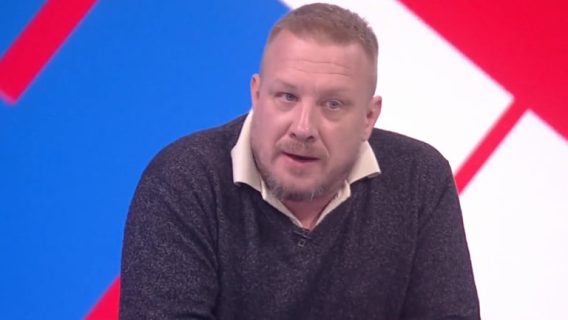
RT | May 20, 2025
The European Union’s decision to sanction two German nationals could set a dangerous precedent, where Brussels could severely limit the rights of any critic, journalist and blogger Thomas Roeper told RT.
Roeper, who has also collaborated with RT’s German-speaking service, has been accused by the bloc of “destabilizing activities” and slapped with an EU entry ban, as well as an asset freeze.
The European Council, comprising the leaders of EU member states, approved the bloc’s 17th round of sanctions against Russia on Tuesday.
Roeper and German blogger Alina Lipp, both of whom currently reside in Russia, are among the individuals the bloc has targeted for being “involved in activities aimed at undermining the democratic political process in… Germany.”
Speaking to RT later on Tuesday, Roeper said the EU had introduced personal sanctions against him because he has large audiences in Germany.
Brussels’ latest decision to sanction EU nationals should be of great concern to all German citizens, the blogger believes. He noted that the punitive measure against him was adopted despite there being “no court [decision], nobody said which law I have violated.”
“Without any court decision, some bureaucracy decided to freeze my money, to forbid working,” he told RT.
According to the author, the move “is a signal for all people in the European Union, because if they do it to us, and this goes through, tomorrow they will start doing the same… against any critics.”
He described the EU’s allegations against him as ludicrous. “I’m just a blogger sitting here in my kitchen and writing articles and I’m ‘destabilizing’ the EU which has a billion-euro budget for media work,” he quipped.
But what’s “not funny,” he noted, is that while he lives in Russia, people in Germany would have a hard time meeting their basic needs if their rights were curbed in a similar manner.
The EU’s latest round of sanctions primarily targeted Russia’s so-called ‘shadow fleet’ of oil tankers, which operate outside Western insurance systems. According to Brussels, Moscow has allegedly been using it to circumvent G7-led efforts to enforce a price cap on its crude oil exports.
Montana Becomes First State to Ban Warrantless Data Purchases by Law Enforcement
By Ken Macon | Reclaim The Net | May 18, 2025
Montana has taken a decisive leap where others have faltered, becoming the first state in the US to officially outlaw a widespread government surveillance tactic: buying up private data without a warrant.
With the passage of Senate Bill 282 (SB 282), lawmakers have directly confronted what has become a backdoor into people’s lives, commercial data brokers selling sensitive digital information to law enforcement agencies, sidestepping the need for judicial authorization.
This so-called “data broker loophole” has allowed government agencies across the country to acquire personal details they’d otherwise need a warrant to access.
Instead of presenting probable cause to a judge, agencies could simply purchase location histories and other metadata from third-party brokers who gather it from mobile apps.
These apps often track users’ movements down to the minute, creating comprehensive logs of their daily routines. Until now, that information was effectively up for grabs, and no warrant has been required.
Montana’s new law puts a clear end to that practice. Under SB 282, state and local government entities are now barred from purchasing several categories of digital data, including but not limited to: electronic communications and their contents, geolocation data, financial transaction records, pseudonymous identifiers, and other forms of sensitive personal information such as religious beliefs, health status, and biometric details.
Importantly, the legislation doesn’t eliminate access altogether, it restricts how that access is obtained.
Law enforcement in Montana must now secure a judge’s approval via a search warrant or meet other legal standards such as investigative subpoenas. Consent from the device’s owner is also still a permissible route.
What SB 282 achieves is a ban on the government using cash instead of cause to gather what should be protected digital traces.
This isn’t Montana’s first move to prioritize digital civil liberties.
The state has already passed a range of privacy-forward policies in recent years, including strong limitations on facial recognition, protections for genetic information, and a state constitutional amendment that explicitly shields digital data from unreasonable searches and seizures. SB 282 continues that trend, bolstering Montana’s reputation as a leader in privacy rights.
The structure of the new law aligns with the spirit of a federal bill, the Fourth Amendment is Not for Sale Act, introduced by Senator Ron Wyden.
In the vacuum left by federal inaction, states have begun crafting their own responses. Montana, despite its modest population, is now at the forefront of that movement.
Montana becomes first state to close the “data broker loophole” that allows law enforcement to purchase data without a warrant by enacting SB 282 which prohibits the government from using money to access certain types of sensitive digital information
Independent Media Alliance Launches Decentralized Journalism Portal on Odysee to Bypass Big Tech Censorship
By Rick Findlay | Reclaim The Net | May 19, 2025
A new chapter in digital journalism is taking shape as the Independent Media Alliance (IMA) prepares to unveil its own Portal within Odysee’s Decentralized Media Ecosystem (DME).
The alliance, spearheaded by investigative journalists Whitney Webb, Derrick Broze, and Ryan Cristián, aims to reclaim editorial independence and resist the growing stranglehold of centralized tech platforms on public discourse.
The Portal represents a structural shift away from platforms where algorithms and moderation policies routinely silence dissenting voices. Odysee’s model hands control back to creators, offering a space where journalists can publish, monetize, and manage their communities on their own terms.
The IMA, which includes Webb of Unlimited Hangout, Broze of The Conscious Resistance Network, and Cristián of The Last American Vagabond, has endured repeated clampdowns, from suppressed reach to financial de-platforming for pushing back against establishment narratives. Their decision to anchor their work in a decentralized system is a direct response to the growing marginalization of independent media.
Each Portal functions autonomously. Rather than being buried by algorithmic filters or subjected to arbitrary moderation, creators maintain full sovereignty over how content is shared, discussed, and funded.
“Portal is about returning control to the creators,” said Julian Chandra, Odysee’s founder and CEO. “The Independent Media Alliance shows how groups of journalists can build their own spaces, manage their own communities, and protect the integrity of their work without reliance on centralized platforms.”
For the IMA, joining Portal is a philosophical move. This step affirms that free expression requires infrastructure not beholden to corporate interests. It’s a rejection of the controlled environments that have made it increasingly difficult for journalists to reach audiences without interference.
The IMA’s move reflects a commitment to building an ecosystem where information flows freely and creators are no longer forced to compromise their principles.
By aligning with Odysee, the IMA is laying the groundwork for a resilient model of journalism, one that can’t be throttled by opaque policies or the shifting whims of tech giants.
Nayib Bukele’s El Salvador dictatorship: Made in Israel
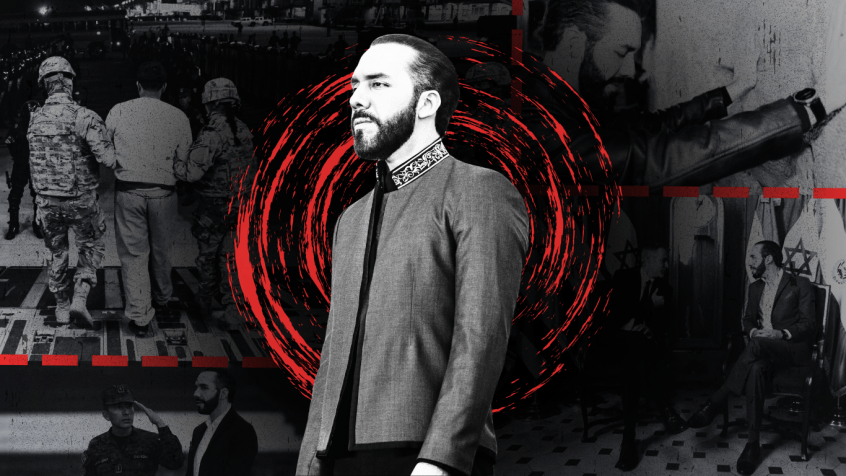
By Alan MACLOED | MintPress News | May 14, 2025
Nayib Bukele may be Palestinian, but the dictatorship he has built in El Salvador is very much made in Israel. From arming his security forces to supplying him with weapons and high-tech surveillance tools, MintPress explores the Israeli influence helping to prop up the man who calls himself “the world’s coolest dictator.”
Arming a Dictatorship
Since Bukele’s ascension to the presidency in 2019, Israeli exports to El Salvador have been rapidly advancing, growing at an annual rate of more than 21%. This increase consists primarily of weapons. Salvadoran forces are well supplied with Israeli hardware. The military and police use the Israeli-made Galil and ARAD 5 rifles, the Uzi submachine gun, numerous Israeli pistols, and ride in AIL Storm and Plasan Yagu armored vehicles.
Some equipment Salvadoran forces use comes free, courtesy of Israeli sources. In 2019, an Israeli NGO, the Jerusalem Foundation (a group that builds illegal settlements on Palestinian land), announced that it would donate $3 million worth of supplies to the Salvadoran police and military.
For others, however, the Bukele administration is paying top dollar, meaning that this relationship is extremely profitable for the high-tech Israeli defense sector.
In 2020, the Salvadoran police paid around $3.4 million for one year’s use of three Israeli spyware products. These tools include GEOLOC, a program that intercepts calls and texts from targeted phones, and Web Tangles, which uses individuals’ social media accounts to build up files on people, including using their photos for facial recognition. A third, Wave Guard Tracer (marketed in some regions as Guardian), tracks users’ movements through the GPS on their phone.
Perhaps the most notorious piece of spyware used, however, is Pegasus, developed by the NSO Group, an outgrowth of the Israeli Defense Forces’ Unit 8200. The app hit the headlines in 2022, when it was revealed that repressive governments the world over had used it to surveil thousands of public figures, including kings, presidents, politicians, activists, and reporters. El Salvador was one of the most heavily penetrated nations. A report from Citizen Lab found that the Bukele administration was using it to secretly monitor dozens of public figures critical of the president, including 22 journalists from the independent outlet El Faro.
Incarceration Nation
Bukele has used these Israeli tools and weapons to crack down on dissent and opposition to his rule. Since 2022, when he declared a State of Exception, suspending rights and civil liberties, he has imprisoned at least 85,000 people, a staggering figure for such a small country. Today, around 2% of the adult population — along with over 3,000 children — languish behind bars in dangerously overcrowded jails.
The most well-known of these is the Terrorism Confinement Center (Centro de Confinamiento del Terrorismo, or CECOT), which is by far and away the largest prison in world history. Built to incarcerate over 40,000 people, it is to this center that the Trump administration has been sending migrants rounded up by ICE. In a meeting with Bukele in the Oval Office, President Trump stated that U.S. nationals would be sent there next.
El Salvador holds vastly more people in prisons per capita than any other country, and conditions are among the worst in the world. Food is sparse, lights are kept on 24 hours a day, and cells are frequently packed with more than 100 occupants. Those incarcerated at CECOT are allowed no contact with the outside world, not even with their families or lawyers.
Often, the first thing a Salvadoran family hears about their disappeared relative is news that he died while incarcerated. Torture is commonplace. Osiris Luna, the director of El Salvador’s prison system, has even been sanctioned by the U.S. government for his role in “gross human rights abuses.”
Bukele has justified the mass imprisonment of his countrymen as a necessary step to break the power of organized gangs and drug cartels. Yet a significant portion of those held are his political opponents. Among those detained are union leaders, politicians, and human rights defenders.
Facing the threat of imprisonment or other punishment, El Faro has moved its operations to neighboring Costa Rica.
A Palestinian Who Loves Israel
Amid the chaos, Bukele has fired tens of thousands of public service workers and reduced taxes on the business community. He has also reoriented El Salvador’s foreign policy from a progressive, anti-imperialist stance to allying itself with right-wing governments around the world, including Israel.
Despite coming from a prominent Palestinian family that emigrated from Jerusalem in the early 20th century, throughout his political career, he has made a point of vocally supporting Israel, its culture, and its foreign policy. As far back as 2015, when he was Mayor of San Salvador, the Israeli Embassy had identified him as a “partner for cooperation.”
Three years later, in February 2018, he visited Israel on a trip organized by Deputy Minister for Foreign Affairs, Tzipi Hotovely, and American Jewish Congress President, Jack Rosen. There, he participated in a security conference attended by Prime Minister Benjamin Netanyahu and President Reuven Rivlin, and made a public appearance at the Western Wall.
El Salvador is home to a large Palestinian population; some 100,000 live in the small country. And yet, the Central American nation is far from a stronghold of support for anti-colonial struggles. Palestinians in El Salvador have generally done very well and entered society’s upper echelons. Bukele is actually the third Palestinian to become president.
Historically, the Latin American business community has sided with conservative or reactionary forces, and the Palestinian diaspora has shied away from supporting resistance movements in the Middle East.
“Bukele’s culture is not so much Palestinian as it is neo-fascist. That’s his culture. So he is going to identify with repressive governments around the world,” Roberto Lovato, a Salvadoran-American writer and professor at the University of Nevada, Las Vegas, told MintPress News.
The country is also home to a large and active evangelical Christian community, for whom Israel’s rise is a key issue. Despite being the son of the country’s most notable imam — one who claimed his son is a practicing Muslim — Bukele has positioned himself as a Christian conservative, and his evangelical supporters say he was chosen by God to rid the nation of gang violence. “I believe in God, in Jesus Christ. I believe in His word, I believe in His word revealed in the Holy Bible,” he said.
Dirty Wars and Dirty Politics
The connections between Israel and El Salvador, however, predate Bukele by decades. During the 1970s and 1980s, the country was a hotspot in the Cold War, and U.S.-backed death squads battled the leftist FMLN rebels. The military regime killed around 75,000 civilians in a dirty war that scars the region to this day. The violence was so extreme and so well-publicized that even the United States sought to distance itself from it. Into that void stepped Israel, providing 83% of El Salvador’s military needs from 1975 to 1979, including napalm. In return, El Salvador moved its embassy to Jerusalem, legitimizing Israel’s claim to the city.
Lovato, a former member of the FMLN, told MintPress that the country was turned into a “laboratory for repression.”
During the Civil War, the U.S. government aligned a whole panoply of different practitioners of torture and mass murder. You had trainers from Taiwan, Israel, and other countries going to El Salvador to train the Salvadoran government to do what they had learned how to do.”
One of the most notable individuals who received Israeli training was Major Roberto D’Aubuisson, leader of a far-right death squad. D’Aubuisson is known to have ordered the assassination of Archbishop Oscar Romero. Nicknamed “Blowtorch Bob” for his penchant for using the tool on his opponents’ genitals, his death squad is thought to have killed some 30,000 people, many of whom were tortured to death. Thus, it is no stretch to say that El Salvador’s repressive state apparatus has long been sustained by Israeli money, tech, and know-how.
But this is far from an isolated example. Indeed, Israel has supplied weapons and training to repressive governments around the world, honing the skills acquired suppressing the Palestinian population and taking them global.
In Guatemala, Israel sold planes, armored personnel carriers and rifles to the military, and even built them a domestic ammunition factory. General Efraín Ríos Montt thanked Israel for its participation in a coup that brought him to power in 1982, stating that it went so smoothly “because many of our soldiers were trained by Israelis.” Around 300 Israeli advisors worked to train Ríos Montt’s forces into genocidal death squads who systematically killed over 200,000 Mayans. A sign of the deep connections between the two groups is that Ríos Montt’s men began referring to the indigenous Mayans as “Palestinians” during their attacks.
It is a similar story in Colombia, where the country’s most notorious death squads were trained by Israeli operatives, such as General Rafael Eitan. To this day, Colombian police and military make extensive use of Israeli weaponry. So normalized has the Israeli influence become in Colombian society that, in 2011, sitting President Juan Manuel Santos appeared in an advertisement for Israeli mercenary firm Global CST. “They are people with a lot of experience. They have been helping us to work better,” he stated.
Israel also armed and supported the military dictatorships of Chile and Argentina in the 1970s and 1980s, even as the latter explicitly targeted over 1,000 Jews in the largest slaughter of Jews since the Holocaust.
In Nicaragua, Israel supplied the Somoza dictatorship, helping it carry out a dirty war. In Rwanda, it sold weapons to the Hutu government as it was carrying out a genocide against the Tutsi population. Israeli weapons were used by Serbia during the Yugoslav civil war in the 1990s. And successive administrations in Tel Aviv also helped sustain the Apartheid government of South Africa, sending it weapons and sharing intelligence with it.
Therefore, it should come as little surprise that Bukele’s administration has sought and established such close ties to the Israeli government. These weapons and techniques, honed on the Palestinian population, are going global, helping a government thousands of miles away crack down on civil liberties. While Bukele — a Palestinian — is very much in charge of El Salvador, it is clear that his dictatorship has a distinct Israeli flavor.
Featured Video
It’s the Occupation, Stupid
or go to
Aletho News Archives – Video-Images
From the Archives
A superpower and “the world’s sickest warrior state”
By Paul J. Balles | March 8, 2010
Living through five or six major wars has hardened me to what I thought were the extremes of inhuman cruelty and brutality.
Two things made those extremes almost bearable: the brutality always revealed – at least according to the media coverage – the viciousness of the enemy. It was therefore quite understandable when our “brave men and women” pulverized the enemy.
Films of Japanese torturing captive Americans somehow justified holding Japanese Americans in internment camps during World War II; and only a small percentage of Americans found the bombing of Hiroshima and Nagasaki unreasonably vengeful at best, at worst, depraved.
The media giants in America portrayed the North Koreans as barbaric beasts with their captives, quite unlike their southern counterpoints – our allies during the Korean War. No one ever felt the need to explain how the South Koreans were a civilized breed while the North Koreans were absolute savages, at least according to the official line.
In Vietnam, our warriors justifiably (or so the media made us believe) dropped napalm on the North Vietnamese who had the gall to hide in villages and tunnels to ravage our invaders. At least it was accepted practice until some rogue photojournalist filmed a young girl screaming down a Vietnamese road in flames. … continue
Blog Roll
 Aletho News
- How Indonesia’s tilt toward the US left it stranded in the Strait of Hormuz
- US has no choice but to retreat from Iranian borders: Top commander
- Iran Retaliation Strikes Chemical Plant Near Dimona
- AWACS’ Destruction is a Major Loss for US Military – Ex-DoW Analyst
- Israel’s Iran Strategy Uses US Military & Gulf States as Its Pawns
- Iran: Trump wanted regime change, now just begging for Hormuz to open
- IRGC: Israeli, US universities in region legitimate targets after strikes on Iranian university
- Trump admits Iran hit USS Ford carrier: ‘We ran for our lives’
- Battle for Hungary: EU attacks on Orban are a sign of worse things to come
- Iraqi resistance conducts drone strike on US-run base in Syria
- If Americans Knew
- Israel is assassinating journalists again, more than any other nation, anywhere, ever – Not a ceasefire Day 170
- Over 300 US service members wounded, majority have brain injuries – Not a ceasefire Day 169
- Researchers at Human Rights Watch Resign Over Blocked Report on Palestinian Refugee Return
- Jewish Groups Are Backing a War Americans Don’t Want
- Eric Fingerhut Thinks He’s the President of the Jews
- Top Jewish Philanthropists, Rabbis Urge Israeli President to Take Action Against ‘Jewish Extremists’
- Don’t Be Fooled. Zionist Leaders Have Always Wanted to Control Southern Lebanon
- Israel’s widespread use of torture is a core element of its genocide against the Palestinian people
- In Israel’s War on Iran, Many Middle East US Bases Rendered “All But Uninhabitable”
- ‘Burn the lawn’: Israel pursues ‘Rafah model’ in southern Lebanon
- No Tricks Zone
- German Science Blog Accuses PIK Climate Institute Of Hallucinating Climate Tipping Points
- Devastating Assessment Of Comirnaty Vaccine By Former Senior Pfizer Europe Toxicologist
- New Study: CO2 Is ‘Effectively Negligible’ As An Explanatory Climate Change Factor Since 2000
- Former Pfizer Toxicologist Dr. Helmut Sterz Tells Bundestag Hearing Pfizer Vaccine Should Have Never Been Approved
- Energy Expert: Germany’s Nuclear Phaseout Was A “500 Billion Euro Mistake”
- New Research: South Australia’s Mid-Holocene Sea Surface Temperatures Were 4°C Warmer Than Today
- Storing Green Energy To Last Germany 10 Days Would Require A 60-Million Tonne Battery
- New Studies: UK Sea Levels Were 4 Meters Higher Than Today During The Mid-Holocene
- Destructive Green New Deal: German Energy And Metal Group Warns Of Drastic Crisis
- New Study Documents A 20-Year Pause In Arctic Sea Ice Decline – Driven By Internal Variability
 Aletho News