Operation Choke Point 2.0 (2023)
Corbett | January 7, 2025
Podcast: Play in new window | Download | Embed
WATCH ON:  /
/  /
/  /
/  /
/  /
/  or download the MP3 AUDIO
From 2013: The specter of Operation Choke Point 2.0 has just been raised in a recent House Financial Services Committee meeting. But what was Operation Choke Point 1.0? And why should we be concerned about this latest attempt to debank “disfavoured individuals,” anyway? Find out all the details in this week’s edition of The Corbett Report podcast.
FLASHBACK SHOW NOTES:
Operation Choke Point 2.0: How the Feds Are Seeking to ‘Debank’ Targeted Industries
What is Operation Choke Point 2.0? Trump vows to end it
Proof of Operation Chokepoint 2.0
Choke Point: How the Government Will Control the Cashless Economy
Episode 440 – Operation Choke Point 2.0
PODCAST SHOW NOTES:
Watch: Federal Reserve head is questioned on controversial “debanking of disfavored individuals”
Choke Point: How the Government Will Control the Cashless Economy
Episode 394 – Solutions: Survival Currency
Become a Corbett Report member and help support this work
Banks have started to freeze accounts linked to the protests, Freeland says
Operation Choke Point 2.0 Is Underway, And Crypto Is In Its Crosshairs
Federal Reserve Says Custodia’s Plans Would Endanger Itself and the Crypto Industry
Episode 394 – Solutions: Survival Currency
Germany: Green-led agency warns Facebook of potential sanctions after Zuckerberg says he will end censorship regime
Remix News | January 8, 2025
Germany and the European Union are in an uproar after Meta CEO Mark Zuckerberg said he was going to take efforts to end censorship on Facebook and Instagram, including the termination of Meta’s relationship with fact-checkers who Zuckerberg accused of political bias.
Given that much of the EU power runs on political censorship, Brussels and member states like Germany are worried they might lose control of the political narrative, especially when left-liberal leaders are falling from power across the Western world.
The Federal Network Agency in Germany, which reports to German Economic Minister Robert Habeck, is threatening that Facebook could more likely face sanctions if it does not continue its “fact checking” relationship with controversial organizations like Correctiv, known for its hit pieces on the Alternative for Germany (AfD).
The Green Federal Network Agency boss is threatening Facebook with sanctions if it does not resume working with “fact checkers” such as “Correctiv”. This has led to censorship on a large scale, as Zuckerberg admitted.
Klaus Müller, of the Greens and who runs the Federal Network Agency, wrote on X on Wednesday morning according to the Digital Service Act (DSA), “the cooperation of very large online platforms with fact-checking organizations is not mandatory, but their risk of sanctions is reduced if they do so in the EU.” EU election guidelines also note that the presence of fact checkers is considered “a risk-minimizing measure in elections” with regard to “systemic risks.”
“If a (Very Large Online Provider) VLOP does not work with fact checkers, it must prove that it is taking other, equally effective risk-minimizing measures,” he further wrote.
Zuckerberg admits that these fact-checkers have helped drive a regime of censorship on his platform. He notes that these organizations have exerted pressure to “censor more and more.”
However, German media reports that Facebook is still currently working with Correctiv. It is unclear when that relationship will end — if ever.
Zuckerberg says he now wants to switch to a community notes system like the one deployed by Elon Musk on X. Notably, he wants to lift restrictions on certain issues, such as immigration and gender issues, and adjust filters to allow free expression on the platform.
As Remix News reported, our own news site has come under attack from Facebook censors in the past, reducing our reach from millions of views a week to a few thousand a week as of now.
Telegram supported freedom of speech when it was less ‘safe’ – Durov
RT | January 8, 2025
It’s easy to support freedom of speech when one doesn’t have to face any risks for doing so, Telegram founder and CEO Pavel Durov wrote on Wednesday, in a post on his messenger platform. The entrepreneur was apparently commenting on recent announcements by Meta – the parent company of Facebook, Instagram, WhatsApp and Threads – which has announced some major policy changes.
On Tuesday, Meta CEO Mark Zuckerberg said that his company would ditch its controversial third-party fact-checking program in the US. He admitted that such services did more harm than good, as they “shut out people with different ideas.” He also said that Donald Trump’s victory in the November presidential elections was one of the developments that prompted the policy change.
Zuckerberg called the recent US elections a “tipping point” towards prioritizing freedom of speech, and vowed to reduce censorship.
“It’s easy to say you support something when you risk nothing,” Durov wrote in his Telegram post the next day, adding that some “platforms are announcing they’ll now have less censorship.” He did not cite Meta by name in his post, though.
Those making such changes only now would face a “real test of their newly discovered values” when “the political winds change again,” the Telegram CEO predicted, adding that his company’s values “don’t depend on US electoral cycles.”
“I’m proud that Telegram has supported freedom of speech, long before it became politically safe to do so,” Durov said.
His words came just a week after the Telegram CEO himself said that his platform was facing certain restrictions in the EU due to anti-Russia sanctions. At that time, Durov stated that Russians had more media freedom than Europeans did, given that all Western media outlets were “freely accessible” on Telegram in Russia while “certain Russian media has been restricted in the EU under DSA/sanctions laws.”
Durov also faced major legal challenges in the EU last year. The Russian entrepreneur, who is also a citizen of France, the UAE, and Saint Kitts and Nevis, was detained in France and faced 12 criminal charges, including complicity in distributing child pornography, drug dealing, and money laundering. French authorities claimed that Telegram’s supposedly lax moderation rules had allowed criminals to flourish on the platform.
The businessman was released on bail but barred from leaving France. In September 2024, he announced an update to Telegram’s Terms of Service and Privacy Policy, which would make it clear that that IP addresses and phone numbers of those who violate the messenger’s rules “can be disclosed to relevant authorities in response to valid legal requests.” In October of the same year, he also admitted that the platform had already been sharing such information with relevant authorities, as it had been possible to do so since 2018.
Keir Starmer’s Censorship Playbook
By Christina Maas | Reclaim The Net | January 8, 2025
At a time when public trust already teeters on a knife’s edge, UK Prime Minister Keir Starmer has decided that what we really need is a lecture on “misinformation.” Yes, the same Starmer who spent years navigating political quagmires with the dexterity of a politician reading polling data, and someone accused of lying to the public in the manifesto that got him elected, now fancies himself the arbiter of “truth” and “decency.” And what better way to assert moral authority than by weaponizing one of Britain’s darkest scandals—the rape gang crises—and reframing criticism of government failures as the “poison of the far-Right”?
Criticism: The New Extremism
During his January 6 press conference, Starmer ditched accountability in favor of a moral crusade against critics. He accused them of peddling “lies,” “misinformation,” and—brace yourself—aligning with the “far-right.” “We’ve seen this playbook many times,” Starmer said, oozing conviction.
But the public has seen his playbook too.
If you express concern about how successive governments ignored victims, allowed systemic failures to fester, and dragged their feet on justice, you’re basically a neo-Nazi. Starmer’s rhetorical sleight-of-hand here is stunning—turning widespread outrage into something inherently sinister.
By lumping legitimate grievances in with the ravings of extremists, he effectively tars everyone with the same brush. Victims and their advocates? Extremists. Grassroots activists demanding reforms? Extremists. It’s a brilliant move if your goal is to shut down meaningful conversation while appearing noble.
Blaming Musk: A Modern-Day Scapegoat
But Starmer wasn’t done. Enter the obligatory bogeyman of modern discourse: Elon Musk. When the X owner criticized MP Jess Phillips for refusing to support a public inquiry into the grooming gang scandals, Starmer leaped at the opportunity to accuse him of endangering her safety. Musk, Starmer implied, had crossed some vague and undefinable “dangerous threshold” by calling out a politician’s inaction.
There’s no denying threats against MPs are a serious matter, especially in today’s climate, but let’s not pretend Musk was personally drafting hate mail. Criticism of public officials, even harsh criticism, isn’t equivalent to endorsing violence. Yet, Starmer’s play here is clear: frame dissent as inherently harmful and wrap it in the protective cloak of “safety.” It’s a chillingly effective tactic that sets the stage for conflating free speech with hate speech—a distinction that seems increasingly inconvenient for those in power.
The New Gatekeepers of “Decency”
Starmer’s framing of these issues points to a larger, more insidious trend: the slow, deliberate erosion of public discourse under the guise of safeguarding “truth” and “decency.” Dissenting voices are no longer just misguided or even wrong—they’re now dangerous, toxic, and unworthy of a platform.
What makes this particularly egregious is the context. The grooming gang scandals are a grotesque example of institutional failure. Victims were ignored for years as authorities feared accusations of racism, prioritizing optics over justice.
What Starmer presents as a defense of democracy is, in fact, a calculated effort to consolidate narrative control. If criticism can be dismissed as “far-Right poison,” then any dissenting voice—no matter how valid—can be silenced without debate.
Sliding Toward Silence
Starmer’s approach represents the classic slippery slope of censorship. First, the extremists are silenced (fair enough, many argue). Then, the vaguely problematic voices are muted. Finally, anyone who veers too far from the approved script is deemed an enemy of “truth.”
This isn’t only about online discourse or high-profile figures like Musk. It’s about ordinary people—victims, activists, and concerned citizens—who now risk being labeled as agitators simply for demanding accountability.
The Real Threat: Manufactured Consensus
Starmer’s insistence on equating criticism with extremism creates a vacuum where only the government’s narrative is allowed to thrive. And when the only voices left are the ones singing praises of the status quo, we’re no longer talking about democracy; we’re talking about a PR campaign with parliamentary decorum.
James Cleverly, former Home Secretary, didn’t mince words when he weighed in on the fiasco, summing up what many in Britain are quietly, or not-so-quietly, thinking. “Accusing those who disagree with him, or who seek legitimate answers about repeated failures of child protection, as ‘far-Right’ is deeply insulting and counterproductive,” Cleverly said, in a rare moment of plain speaking from a political figure.
As Cleverly pointed out, branding dissent as extremism doesn’t bridge divisions; it widens them, pouring accelerant on an already polarized public square.
Maggie Oliver, the whistleblower who exposed the Rochdale scandal, spoke for many when she called Starmer’s remarks “insulting in the extreme.” Oliver, who resigned from Greater Manchester Police in protest over their inaction, knows better than most how hard it is to get the system to listen. To see campaigners lumped in with extremists, she argued, “sets a terrifying precedent.”
The “Misinformation” Blueprint: Starmer’s New Censorship Arsenal
If Prime Minister Starmer’s handling of criticism over the UK’s rape gang scandal feels less like leadership and more like a prelude to mass censorship, that’s because it likely is. With the newly minted Online Safety Act and provisions under the National Security Act 2023, Starmer’s buzzword-heavy rhetoric about “misinformation” starts looking less like clumsy damage control and more like the calculated groundwork for a chilling clampdown on dissent.
For years, “misinformation” has been a convenient scapegoat for governments worldwide to suppress inconvenient truths. Now, in the UK, the term threatens to become a legal cudgel, ready to pummel any narrative that strays too far from the government-approved script.
Weaponizing the Online Safety Act
Starmer doesn’t need to introduce sweeping new legislation to suppress dissent—his government already has a powerful set of tools at its disposal. The Online Safety Act, sold to the public as a safeguard against harm, contains provisions that are broad enough to suppress not only malicious lies but also legitimate criticism under the guise of protecting the public. Here’s how it could play out:
1. Section 179: False Communications Offense
This is where Starmer’s “misinformation” rhetoric gets teeth. Section 179 criminalizes knowingly false communications intended to cause “non-trivial psychological or physical harm.” The wording here is as vague as it is dangerous. What qualifies as “non-trivial psychological harm”? If the government decides that criticisms of its handling of the grooming gang scandal cause emotional distress to MPs—or, conveniently, to the public—it could label them as harmful misinformation.
Imagine this: a social media user accuses Starmer’s government of ignoring systemic abuse in grooming gang cases. Even if the criticism is grounded in fact, the government could argue that the way it’s framed constitutes psychological harm. Once flagged, tech platforms—obligated under the Online Safety Act to prevent such offenses—could preemptively remove posts or ban users entirely.
The chilling effect is immediate. Knowing the penalties—up to 51 weeks in prison and unlimited fines—citizens may think twice before questioning the government on sensitive issues. And that’s the goal: silence through fear.
2. Schedule 7, Section 37: Foreign Interference
The National Security Act 2023 adds another weapon to Starmer’s arsenal: the foreign interference clause. This provision criminalizes any “misrepresentation” on behalf of a foreign power, even if the information shared is true. While the law ostensibly targets foreign espionage, its scope is alarmingly wide.
Starmer could use this to neutralize high-profile international critics like Elon Musk. If Musk’s tweets about UK safeguarding policies are deemed to influence British political discourse, Starmer’s government could accuse him of “foreign interference.” The penalties? Up to 14 years in prison for violators and mandatory platform censorship of related content.
Any UK citizen amplifying criticism that the government ties to a foreign agenda—whether real or imagined—could face scrutiny under this Orwellian provision.
3. Section 152: Advisory Committee on Disinformation and Misinformation
Perhaps the most insidious element of the Online Safety Act is the creation of a disinformation advisory committee under Ofcom. This unelected body will have the power to define what counts as “misinformation,” aligning platforms’ moderation policies with government narratives.
Given Starmer’s framing of dissent as extremist “poison,” it’s easy to imagine how this committee could become a government lapdog. If dissenting views about rape gang scandals—or any politically sensitive issue—are labeled misinformation, platforms would have little choice but to silence those voices.
4. Section 165: Media Literacy
Ofcom’s mandate to promote media literacy sounds harmless enough, but in practice, it’s a PR goldmine for governments looking to control narratives. Imagine a state-backed campaign equating criticism of the grooming gang scandal to conspiracy theories, painting dissenters as dangerous purveyors of hate. This would prime the public to distrust any view that deviates from the official line, effectively preempting free debate.
Starmer’s Record: A Preview of What’s to Come
Starmer’s embrace of censorship isn’t theoretical—it’s historical. When riots broke out in the summer of 2023, his government oversaw the arrest of individuals for inflammatory social media posts. While some cases involved genuine incitement, others targeted people simply expressing anger at systemic failures or “misinformation.” The precedent was clear: if your post made the government uncomfortable, you were a target.
Fast forward to today, and Starmer’s buzzword-laden rhetoric—“misinformation,” “extremism,” “poison”—looks suspiciously like a blueprint for round two. His invocation of these terms isn’t casual; it’s calculated. Each one is a trigger for the machinery of censorship already baked into British law.
YouTube CEO Neal Mohan Says YouTube is a “Bastion of Free Speech”
By Christina Maas | Reclaim The Net | January 6, 2025
If you believe Neil Mohan, YouTube’s CEO, the platform is a modern-day Agora—a self-described “bastion of free speech” where the world’s most pressing debates thrive. Though, “just because it’s an open platform, it doesn’t mean that anything goes,” Mohan told The Financial Times in the last week. Translation: Free speech is alive and well—until it isn’t. Because on YouTube, the marketplace of ideas comes with a bouncer, a velvet rope, and an ever-expanding list of banned words and topics.
This month, YouTube is eager to remind everyone it’s “committed” to free expression, a sentiment as convincing as a fast-food chain promising “health-conscious dining.” Over the last five years, the platform has turbocharged its content moderation policies, leaning on AI overlords and human censors to police conversations ranging from vaccine skepticism to who gets to call a virus a “lab leak.”
It’s a delicate balance, they claim—one requiring the finesse of a trapeze artist. But if the past is any guide, the only thing YouTube’s balancing act reliably delivers is corporate doublespeak and a pile of censored creators.
Moderation or Muting?
Mohan, the relatively new captain of YouTube’s Titanic, insists that the company welcomes “broad views” but won’t tolerate “anything goes.” Consider their “community guidelines,” a vague, shape-shifting set of rules that could find your grandma’s knitting tutorial in violation if it dares question Big Pharma.
Behind this rhetoric is an algorithmic enforcement machine programmed to flag, demonetize, or outright remove content at lightning speed—accuracy be damned. And when the AI overlords fumble, the human moderators step in, wielding their own biases like blunt instruments.
Critics, including banned creators, point out that YouTube’s moderation seems to skew conveniently in one direction. Questioning the CDC? Misinformation. Broadcasting claims about ivermectin? Censored. But when a mainstream outlet gets caught peddling unverified or downright wrong information, it’s business as usual.
The COVID-19 Information Iron Curtain
Of course, nothing showcases YouTube’s free speech schizophrenia better than its pandemic policies. To combat “medical misinformation,” the platform instituted a strict purge of dissenting voices, silencing everyone from epidemiologists to concerned moms armed with anecdotal evidence and Facebook memes.
Let’s not forget the lab leak theory, a hypothesis once relegated to tinfoil hat territory. When early adopters of the theory dared to post about it, their content was struck down faster than you could say “gain-of-function research.” Fast forward a couple of years and the lab-leak theory is now a “credible hypothesis,” endorsed by experts and even government agencies.
Oops.
But don’t expect an apology or even acknowledgment from YouTube for playing arbiter of acceptable science. They’ve quietly updated policies and moved on, leaving censored creators wondering why their “misinformation” turned out to be, well, information.
Advertiser-Friendly Speech Only
The real driver of YouTube’s overzealous content policing, of course, is money. Back in 2017, a wave of advertiser boycotts over “hateful” and “controversial” content sent the platform scrambling. The solution? Stricter guidelines are needed to ensure that only the most sanitized, brand-safe content remains.
While no one would argue against booting child exploitation, the crackdown didn’t stop there. It extended into politically sensitive areas, conveniently targeting independent creators and smaller voices while leaving corporate media to do as they pleased.
What’s worse is the blatant double standard. Want to critique vaccine mandates or discuss alternative COVID treatments? Good luck. But if you’re a major network spouting unverified claims about weapons of mass destruction or “imminent threats,” go right ahead. After all, those ad dollars won’t chase themselves.
YouTube’s Legacy of Censorship
Mohan’s lofty rhetoric about fostering “broad views” might play well in interviews, but the reality on the ground is clear: YouTube’s commitment to free speech is as reliable as a politician’s campaign promise. The platform has repeatedly chosen corporate image over open discourse, advertisers over authenticity, and control over community.
And yet, it continues to parade as a defender of free expression. Perhaps Mohan and his team truly believe in their own doublespeak. Or maybe they’re banking on the fact that most users will never notice the glaring contradictions. Either way, YouTube’s hypocrisy isn’t an accident—it’s a business model.
The next time you hear Neil Mohan wax poetic about “free speech,” remember this: On YouTube, freedom comes with conditions, and the only real winners are the ones writing the checks.
Ohio Governor DeWine Vetoes “Medical Free Speech” Provision
By Cindy Harper | Reclaim The Net | January 7, 2025
Ohio Governor Mike DeWine has vetoed a provision in House Bill 315 that sought to shield medical professionals from state disciplinary actions over medical opinions conflicting with state-sanctioned guidance. The measure, described as a “medical free speech” safeguard, was removed through a late-night line-item veto on Thursday.
The provision aimed to bar regulatory entities, such as the Ohio Medical Board, from disciplining or threatening to discipline medical practitioners for expressing opinions—whether publicly or privately—that deviated from those of the board or other state agencies.
However, DeWine justified his veto by warning of potential harm to public health. In his message accompanying the veto, the governor stated, “it is not in the public interest and instead could lead to devastating and deadly consequences for patient health.”
DeWine also elaborated to reporters on how such a measure might undermine the state’s ability to hold doctors accountable for malpractice. He expressed concern that the provision could allow practitioners to avoid scrutiny simply by framing negligent actions as personal medical opinions. “All the doctor would have to say in defense is, ‘Well, it’s my opinion,’” DeWine remarked in late December, signaling his intent to veto the provision. “This would totally gut our ability to regulate health professionals.”
The proposal has faced resistance from DeWine’s administration since its initial introduction in an earlier bill, House Bill 73.
That legislation, spearheaded by Representative Jennifer Gross, R-West Chester, sought to expand patient access to off-label prescriptions and grant legal immunity to pharmacists filling such prescriptions. According to a nonpartisan analysis of H.B. 73, the bill aimed to protect both patients and medical providers engaging in treatments outside conventional practices.
Gross, a nurse practitioner, has consistently advocated for medical freedom, testifying before the Ohio House Health Provider Services committee in support of shielding health professionals from retaliation when utilizing what she described as “life-saving treatments.” Her stance reflects a broader push to ensure that neither patients nor medical practitioners face punitive consequences for pursuing unconventional or off-label medical options.
Facebook Dumps ‘Fact-checkers’ One Day After CHD Asks Supreme Court to Hear Censorship Case Against Meta
By Suzanne Burdick, Ph.D. | The Defender | January 7, 2025
Less than 24 hours after Children’s Health Defense (CHD) petitioned the U.S. Supreme Court to hear its censorship case against Facebook’s parent company, Meta, Mark Zuckerberg announced the company is ending its third-party “fact-checking” program.
“It’s time to get back to our roots around free expression on Facebook and Instagram,” Zuckerberg told viewers in a press release video. Meta also owns Instagram.
CHD sued Meta in November 2020 over the social media giant’s censorship practices. The company de-platformed CHD from Facebook and Instagram in August 2022 and has not reinstated the accounts.
Commenting on today’s news, CHD CEO Mary Holland told The Defender, “It’s clear that Mark Zuckerberg is worried about new anti-censorship policies of the incoming administration — as he should be. The record in CHD v. Meta clearly shows Facebook’s close collaboration with the White House to censor vaccine-related speech, even pre-COVID.”
Holland added:
“CHD has taken its case to the Supreme Court, and Facebook doubtless realizes there are Justices there that are very dubious about Facebook’s role in censoring speech at the behest of the government in the new public square.
“Zuckerberg may imagine that by making this announcement he is mooting this case, or making it no longer significant. That’s not the situation — the country needs closure that this kind of fusion of state and industry to censor unwanted information will never happen again.”
CHD’s lawsuit against Facebook’s parent company, Meta, and its founder and CEO, Zuckerberg, alleges that government actors partnered with Facebook to censor the plaintiffs’ speech — particularly speech related to vaccines and COVID-19 — that should have been protected under the First Amendment.
The suit also named “fact-checking” firms Science Feedback, and the Poynter Institute and its PolitiFact website. On Aug. 9, 2024, the 9th Circuit U.S. Court of Appeals ruled against CHD.
Lawyers with CHD urged the Supreme Court to reconsider the decision. They wrote in their petition, filed Monday:
“This case goes to the heart of our constitutional design, raising critical questions in the Internet Age about the availability of open debate free from government censorship-by-proxy.
“The practical consequences of leaving the decision below intact are enormous: the levers of censorship on the mega-platforms will always be sore temptation for executive office-holders — and not just about vaccines or Covid.”
National healthcare and constitutional practice attorney Rick Jaffe called Meta’s announcement a “very big deal for the country and for CHD.”
Jaffe represents CHD in some of its cases, including cases involving doctors’ right to speak freely about COVID-19. He told The Defender :
“For the last five-plus years, CHD — largely through Robert F. Kennedy Jr., Mary Holland, and the group’s supporters — have been at the forefront of defending free speech on social media … Meta’s action today shows the effect of the changing public’s view on censorship by social media companies which Meta could no longer ignore.
“So, congrats to CHD and its legal team who helped this happen. The work isn’t over yet, so onwards.”
Meta shifts to content moderation model used on X
Rather than turning to third parties to fact-check posts, Meta will use a “Community Notes model” in which social users themselves decide when posts are potentially misleading and need more context, said Meta’s Chief Global Affairs Officer Joel Kaplan in a statement. “We’ve seen this approach work on X,” Kaplan said.
The change will take a few weeks to implement, Kaplan said.
Meta also will lift restrictions on topics such as immigration and gender identity. “It’s not right that things can be said on TV or the floor of Congress, but not on our platforms,” Kaplan said.
The Defender asked Meta if it will lift restrictions on discussions about vaccine safety and COVID-19 but did not receive a response by deadline.
Meta is also changing how it enforces its policies. “Up until now,” Kaplan said, “we have been using automated systems to scan for all policy violations, but this has resulted in too many mistakes and too much content being censored that should haven’t been.”
Zuckerberg said there’s “legitimately bad stuff out there — drugs, terrorism, child exploitation.” The company will continue to take those things “very seriously” by using automated systems to scan for them.
However, for less severe violations, Meta will rely on a person reporting an issue before taking action against an account user.
Zuckerberg said he always cared about freedom of expression but that in recent years, his company responded to pressure for stricter speech restrictions. “Governments and legacy media have pushed to censor more and more,” Zuckerberg said. “A lot of this is clearly political.”
He acknowledged that some of the “complex systems” Meta built to moderate content made mistakes. “We’ve reached a point where it’s just too many mistakes and too much censorship.”
Will Meta’s policy changes stick?
Zuckerberg said Meta’s policy changes were also prompted by the recent U.S. elections that were a “cultural tipping point toward once again prioritizing free speech.”
Jenin Younes, a civil rights attorney who represented some of the plaintiffs in the landmark censorship case Murthy v. Missouri, told The Defender she was “cautiously optimistic” about Meta’s announcement.
Meta appeared to be making the changes because of a new presidential administration, Younes said. “That means that Meta could change course in another four years under a different administration. We need major social media platforms — the modern public square — to adopt principled free speech positions that don’t change with the wind.”
If platforms don’t adopt strong free speech positions, public dialogue suffers, Younes said. “Censorship on Meta, especially during the COVID era, strangled public debate and even went so far as to prevent vaccine-injured individuals from corresponding with each other in private groups.”
Kim Mack Rosenberg, CHD general counsel, told The Defender Meta’s announcement does not undo the years of the damage done to CHD and many other individuals and groups.
“What is important is not only that Meta is making these changes but also that steps are taken to make sure this cannot be repeated, which makes our ongoing cases — including the recently filed petition to the U.S. Supreme Court — critically important.”
This article was originally published by The Defender — Children’s Health Defense’s News & Views Website under Creative Commons license CC BY-NC-ND 4.0. Please consider subscribing to The Defender or donating to Children’s Health Defense.
Top Trump Official Claims Iran Is the Problem in the Middle East, Vows Crackdown on Pro-Palestinian Protesters
By Kyle Anzalone | The Libertarian Institute | January 6, 2025
The incoming National Security Adviser Mike Waltz said the Trump administration would target Iran in the Middle East and crack down on pro-Palestian protesters in the US to support Israel.
In an interview with Mark Levin, Waltz explained the “philosophy” of the incoming administration for the Middle East. “The problems in the Middle East by and large originate from Tehran, not from Tel Aviv. We’re going to stand by and support our greatest ally in the Middle East,” he said. “We’re aligned from a national security, intelligence and values standpoint.”
Waltz described this policy as instituting a “complete philosophical, wholesale national security shift.”
“We’re going to align with our ally Israel, we’re going to realign the common interests of the Gulf Arab states with Israel in opposing Iran’s aggression, we’re going to reinstate maximum pressure, we’re going to stop them from selling their illegal oil that has been funding terrorism,” he said. Adding that the US military is “getting worn out shooting missile after missile from this ragtag bunch of Houthis. We’re going to get that under control.”
President Joe Biden has provided Israel with $22 billion in military aid since the October 7 attack. On Friday, Axios reported that Biden was planning to approve a final $8 billion arms sale to Israel. The current White House has also protected Tel Aviv at the UN Security Council and fought a war against the Houthis in Yemen to defend Israel.
Additionally, the Biden administration increased the Trump-era sanctions on Iran and refused to return to the Obama-era nuclear agreement. The White House deployed its most advanced air defense systems to Israel to protect it from a potential Iranian missile attack.
Still, Republicans in Washington and Israeli Prime Minister Benjamin Netanyahu have attacked Biden for not providing Israel with enough support. The current administration has pushed Tel Aviv to allow most aid into Gaza.
However, Tel Aviv has largely defied Washington’s requests to allow more aid into Gaza. In December aid shipments sunk to 71 trucks per day, far below the number, 500, aid agencies say is needed to prevent deaths of deprivation in Gaza. Gazan children have begun to freeze to death at night as their families shelter in tents.
CNN reports that the incoming administration will be more amenable to Israel’s policies of further restricting aid shipments to Gaza and will further cut deliveries once Trump returns to office.
Waltz went on to say the Trump administration would crack down on pro-Palestinian protesters. The US government will “look at mosques, individuals, universities, professors – you name it – that post a threat to the United States and are radicalizing individuals to harm the United States.” He continued referring to pro-Palestinian campus protesters, people “here on a student visa, with the privilege to study in our universities – you don’t get to protest and radicalize. You’re going to go back home real fast.”
Some of Trump’s America First supporters may view doubling down on US support for Israel as a violation of that policy. Waltz said he believes Trump will be convinced to follow through on the policy points he explained to Levin.
Deals, such as expanding the Abraham Accords, is “what gets President Trump so excited and that’s what makes all of these historic disagreements that have perpetuated for decades, if not centuries, smaller and smaller,” he explained.
On Monday, Trump made remarks to radio host Hugh Hewitt that would suggest Waltz is correct. “Well, I’m the best friend that Israel ever had. You look at what happened with all of the things that I’ve gotten, including Jerusalem being the capital, the embassy getting built,” he stated, adding the provision of military aid to Israel would be “uninterrupted” during his administration.
The Authoritarian Legacy of Justin Trudeau
By Christina Maas | Reclaim The Net | January 6, 2025
After nearly a decade in office, after attempts at photogenic diplomacy and tearful apologies, Justin Trudeau is stepping down as Canada’s Prime Minister, leaving behind a legacy as divisive as it is dramatic. To some, he was the poster child for progressive leadership, a leader who championed climate action and diversity while bringing Canada into the global spotlight. To others, he was an over-polished politician whose tenure was defined by censorship, economic mismanagement, and the weaponization of state power against his own citizens. His resignation marks the end of an era—one defined as much by lofty rhetoric as by policies that left a deep mark on civil liberties and public trust.
So, what’s Trudeau’s Canada after nearly ten years? A land of progressive aspirations or a dystopian Pinterest board?
Censorship: The Friendly Autocrat Edition
Few things capture Trudeau’s tenure better than his government’s legislative war on free speech. Let’s start with the dynamic duo of digital overreach:
Bill C-10: “Regulating the Unregulatable”
The saga of Bill C-10 began innocently enough. Trudeau’s government framed the bill as a noble effort to modernize the Broadcasting Act. After all, the law hadn’t been updated since 1991, back when Blockbuster was thriving and the internet was just a nerd’s dream. The goal, they said, was to “level the playing field” between traditional broadcasters and streaming giants like Netflix and YouTube.
Sounds fair, right? Not so fast.
The devil was in the details—or the lack thereof. The bill gave Canada’s broadcast regulator, the Canadian Radio-television and Telecommunications Commission (CRTC), sweeping authority to police online content. Originally, user-generated content like vlogs, TikTok dances, or indie films were supposed to be exempt. However, midway through the legislative process, Trudeau’s government quietly removed those exemptions. Suddenly, your cat video could be classified as “broadcast content,” giving bureaucrats the power to decide whether it met Canadian cultural standards.
Critics, including legal scholars and digital rights groups, raised the alarm. They argued that the bill’s language was so vague it could allow the government to dictate what Canadians saw, shared, or created online. The specter of state-controlled algorithms choosing what gets promoted on platforms was too close to censorship for comfort.
But the government dismissed the concerns, painting critics as alarmists. In Trudeau’s Canada, wanting clear limits on government power apparently made you a conspiracy theorist.
Bill C-36: Hate Speech or Debate Killer?
Not content to merely oversee what Canadians could create, Trudeau’s administration went a step further with Bill C-36, a supposed weapon against online hate speech. If Bill C-10 was about controlling the medium, this bill was about controlling the message.
What Did It Do?
- Reintroduced a controversial section of Canada’s Human Rights Act, allowing people to file complaints over online hate speech.
- Allowed courts to impose hefty fines and even jail time for offenders.
- Gave the government the power to preemptively penalize individuals suspected of potentially committing hate speech—a sort of Minority Report approach to thought crime.
The problem? The bill’s definition of “hate” was so expansive that it could potentially criminalize unpopular or offensive opinions. The bill didn’t just target clear-cut incitements to violence; it targeted anything deemed likely to expose individuals to “hatred or contempt.” Critics feared that “hatred or contempt” could mean anything from political dissent to sharp critiques of government policies.
Even more alarming was the prospect of a “snitch culture.” The bill encouraged private citizens to report each other for suspected hate speech, potentially turning disagreements into legal battles.
David Lametti, Trudeau’s Justice Minister, defended the bill, claiming it struck the right balance between free expression and protection from harm. But when legal experts and civil liberties groups united in opposition, it became clear that balance was not the government’s strong suit.
The Financial Freeze Heard ‘Round the World
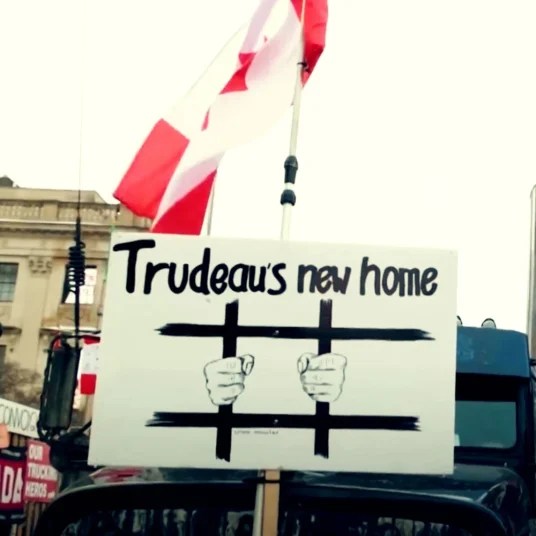
The Freedom Convoy protest of 2022
The Freedom Convoy—the moment when Canada went from polite protests and Tim Hortons to frozen bank accounts and police crackdowns.
In 2022, when truckers and their supporters descended on Ottawa to protest COVID-19 mandates, Trudeau didn’t meet them with dialogue or even his trademark smile-and-wave. Instead, he dusted off the Emergencies Act, something no prime minister had dared touch before. Overnight, financial institutions became Trudeau’s personal enforcers, freezing accounts of protesters and anyone who dared to support them.
Deputy Prime Minister Chrystia Freeland, Trudeau’s second-in-command at the time and a walking, talking LinkedIn connection to global elites, eagerly played bad cop. Under her direction, the financial clampdown turned Canada’s banking system into a political weapon. It wasn’t lost on critics that Freeland’s cozy ties to global financiers made the whole thing look like an international crackdown on dissent.
And what of the precedent? Trudeau’s message was clear: disagree with the government, and you might lose access to your life savings. It was a masterclass in how to turn financial systems into handcuffs, leaving civil liberties in tatters.
The Media Muzzle: Subsidizing Obedience
Also on the chopping block was journalistic independence. Trudeau’s government rolled out legislation forcing media outlets to register with a government body to qualify for funding. On the surface, this was marketed as a lifeline for struggling journalism. Because nothing says “press freedom” like reporters dependent on government handouts, right? It’s a classic move: offer financial aid with one hand and hold the leash with the other.
Critics were quick to point out the slippery slope. When the same entity paying the bills also sets the rules, the line between journalism and government PR gets blurry fast. Trudeau, of course, framed this as support for democracy, but the result was a media landscape nervously eyeing its next paycheck while tiptoeing around criticism of its benefactor.
Big Brother Gets a Twitter Account
Then came the surveillance. Under Trudeau’s watch, Canadian intelligence agencies dramatically expanded their social media monitoring. Initially, this was framed as a necessary tool against extremism. But “extremism,” much like “disinformation,” is a flexible term in the hands of those in power. Activists and protest groups—voices traditionally central to democratic discourse—suddenly found themselves under the microscope.
Imagine logging onto X to vent about a new housing policy, only to realize your tweet has been flagged by a government algorithm. The message was clear: dissent might not be illegal, but it was certainly inconvenient.
Disinformation: The Government’s New Buzzword
Trudeau’s pièce de résistance was his crusade against “disinformation.” This word became the Swiss Army knife of excuses, used to delegitimize critics and corral public opinion. Do you have a bone to pick with government policies? Disinformation. Questioning pandemic mandates? Disinformation. Unimpressed with Trudeau’s latest photo op? You guessed it—disinformation.
To hammer the point home, his administration launched a series of public awareness campaigns, ostensibly to educate Canadians about the perils of online misinformation. These campaigns, dripping with paternalistic condescension, often blurred the line between fact-checking and outright propaganda. The subtext was unmistakable: dissent, even if rooted in genuine concerns, was a threat to national cohesion.
Canada’s New Normal: The Fear of Speaking Freely
The cumulative effect of these policies wasn’t subtle. Everyday Canadians began censoring themselves, not out of respect for others but out of fear of stepping on the wrong bureaucratic toes. Content creators hesitated to tackle divisive topics. Activists wondered whether their next rally would land them on a government watchlist. What was once a robust marketplace of ideas began to resemble a sparsely stocked shelf.
And yet, Trudeau’s defenders remain loyal, arguing that his policies were noble attempts to safeguard society. However, as history has repeatedly shown, the road to censorship is paved with the promise of safety, but its destination is a society too scared to speak.
The Legacy of Controlled Speech
So what’s the verdict? Is Trudeau a misunderstood guardian of democracy, or is he the wolf who prowled under the guise of a shepherd? It’s hard to champion inclusivity and diversity when fewer voices are allowed to join the conversation. Canada may someday reckon with the full implications of these policies, but the damage is already visible.
And as Canadians tiptoe around their digital platforms, one question remains: how free is a democracy where everyone whispers?
Hoax Alert: Acker is Angry (2024)
Karl’s Substack | January 4, 2025
According to Jake Tapper writing for CNN there was a so-called ‘anti-Semitic hate crime’ in Detroit, Michigan in December 2024.
We read how:
‘The home of a Jewish member of the University of Michigan’s Board of Regents was vandalized early Monday, in what the university described as “a clear act of antisemitic intimidation.”
The incident marks the third time Jordan Acker, a Michigan attorney elected to the board overseeing the university’s governance, has been targeted since the start of the Israel-Hamas war.
“The University of Michigan condemns these criminal acts in the strongest possible terms,” the school said in a statement. “They are abhorrent and, unfortunately, just the latest in a number of incidents where individuals have been harassed because of their work on behalf of the university. This is unacceptable and will not be tolerated.”
The sound of shattering glass jolted Acker from his sleep just after 2 a.m. Monday, he told CNN. He went downstairs to find his front windows had been smashed and his wife’s car vandalized with what he described as “messages about Palestine with a Hamas upside triangle.”
The upside-down triangle has become a symbol of violent resistance to Israel, according to the Anti-Defamation League. Photos provided by Acker show someone scrawled “Divest” and “Free Palestine” on the vehicle.
Acker said his neighbors captured the incident on their ring camera and called the police. CNN has reached out to the Huntington Woods Police Department for comment.
“As a public official, you expect a certain level of criticism – even protests – but this is not protest, this is terrorism,” Acker said, adding the incident took place while his daughters were asleep upstairs.
“This has nothing to do with the First Amendment, has nothing to do with Palestine, nothing to do with Israel and everything to do with trying to harass and intimidate Jews,” Acker said, “And this Jew will not be intimidated by it.”’ (1)
Now before I get into the meat of this claim this is the ‘anti-Semitic’ vandalism:

Now while it can be reasonably described as politically motivated vandalism given the political message, damage to Acker’s car and the smashed window; ‘anti-Semitic’ is not only pushing it but ludicrous.
This is because it is clearly targeted at Israel – hence the BDS and ‘Free Palestine’ references in the graffiti on Acker’s car – and Acker while jewish has been a staunch and vocal pro-Israel supporter for quite some time who has had the police violently break up pro-Palestine protests of the University of Michigan campus (2) and as such as been the focus on anti-Zionist political protest stunts – such as the vandalising of the sign of his legal practice – (3) for quite some time.
Acker’s response has been exactly the same and has claimed that anyone protesting against him is ‘anti-Semitic’ and criticism of the jewish state is also ipso facto ‘anti-Semitic’. (4)
To quote Acker:
‘I was not targeted here today because I am a regent. I am a target of this because I am Jewish. This neighborhood is Jewish, and because some people, under the pretext of helping Palestinians, feel the obligation to single out Jews, especially liberal ones for an attack. It is unacceptable, it is un-American, and it must stop now.’ (5)
Given this and the fact – as Jacob Maggid has explained in the ‘Times of Israel’ – that:
‘The activists shouted various accusations and grievances at Acker, claiming that he “supports Israeli genocide” in Gaza and is behind the “persecution” of anti-Israel protesters who were recently indicted for trespassing and resisting law enforcement during the break-up of a pro-Palestinian encampment on campus.’ (6)
Or put another way: Acker is a jewish lawyer who is using his position as Regent of the University of Michigan to crack down on anti-Israel sentiment and protests on campus and thus limit the scope of intellectual inquiry as it pertains to Israel, but also uses his jewishness as a shield to enable him to label any resistance and/or criticism of him and his policies as ‘anti-Semitic’.
So thus, while this is a case of politically motivated vandalism it is not an ‘anti-Semitic hate crime’ in any way, shape or form.
The War on Speech Is Turning into a Monty Python Sketch
Truthstream Media | January 3, 2025
Please help support us on Patreon, read our goals here:  / truthstreammedia or SubscribeStar here: subscribestar.com/truthstreammedia
As context is very important for all videos, this message is to confirm that the purpose of this video is reporting on or documenting the content. Note that we make an effort to research for context and cite our sources as appropriate.
Our First Series: Vimeo.com/ondemand/trustgame
Site: TruthstreamMedia.com
X: @TruthstreamNews
Backup Ch: Vimeo.com/truthstreammedia
DONATE: http://bit.ly/2aTBeeF
Newsletter: http://eepurl.com/bbxcWX
~*~*~*~*~*~*~*~*~*~*~*~*~*~*~*~*~*~*~*~
Copyright Disclaimer Under Section 107 of the Copyright Act 1976, allowance is made for “fair use” for purposes such as criticism, comment, news reporting, teaching, scholarship, and research. Fair use is a use permitted by copyright statute that might otherwise be infringing. Non-profit, educational or personal use tips the balance in favor of fair use.
State Department Rebrands Defunded Global Engagement Center into New Counter-Disinformation Hub
By Dan Frieth | Reclaim The Net | January 4, 2025
As we previously reported would be the case, the celebration about the shutting down of the US government’s most overt censorship unit would be short-lived. The State Department is moving forward with plans to reassign employees and resources from a controversial office accused of stifling media into a newly created internal unit, as revealed by documents obtained by the Washington Examiner. This maneuver is already drawing criticism, with some alleging it is a thinly veiled attempt to rebrand and continue the disputed activities of the defunct office.
The Global Engagement Center (GEC), established in 2016 to counter foreign disinformation, faced fierce scrutiny from Republicans over claims it collaborated with groups like the Global Disinformation Index to target and demonetize right-leaning US media outlets.
In late 2024, Congress defunded the GEC, effectively shutting it down. Yet, a December 6 communication from the State Department to Congress outlined a plan to “realign” 51 GEC employees and nearly $30 million in funding into a new “Counter Foreign Information Manipulation and Interference Hub.”
Republicans are expected to investigate the matter closely, with concerns that the new hub could replicate the GEC’s controversial operations.
A Legacy of Controversy
The GEC claimed its mission was to counter foreign disinformation, but allegations of domestic overreach cast a long shadow. It funded initiatives like the Global Disinformation Index and NewsGuard, groups accused of pressuring advertisers to blacklist certain US media outlets.
These actions prompted legal challenges, including a December 2023 lawsuit by conservative outlets The Federalist and The Daily Wire, alongside the State of Texas.
Despite its closure, top officials from the GEC have already found new roles in the State Department.
The hub will report to the Under Secretary of State for Public Diplomacy and will inherit significant resources. According to the documents, $69 million previously allocated to the GEC will be redistributed across the State Department, with $29.4 million designated for the R/FIMI hub. This funding includes salaries, contract staff, and operational support. However, a source noted that, unlike the GEC, the new hub would lack grantmaking authority.
Featured Video
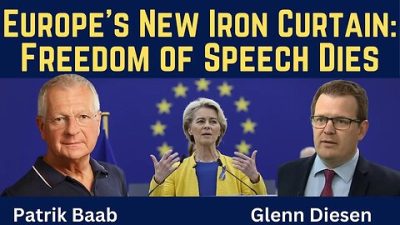
Patrik Baab: Europe’s New Iron Curtain – Freedom of Speech Dies
or go to
Aletho News Archives – Video-Images
Book Review
Jeffrey Epstein: A Jewish Individual?
The Occidental Observer | February 5, 2023
One Nation Under Blackmail: The Sordid Union between Intelligence and Organized Crime that Gave Rise to Jeffrey Epstein (Volume 1 & 2) by Whitney Webb
“Far from being an anomaly, Epstein was one of several men who, over the past century, have engaged in sexual blackmail activities designed to obtain damaging information (i.e., “intelligence”) on powerful individuals with the goal of controlling their activities and securing their compliance.”[1]
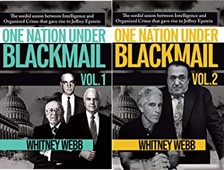
Jeffrey Epstein is dead and Ghislaine Maxwell is locked away in prison, and the thought-makers of our world seem keen to let the more explosive parts of the scandal dissipate from the public consciousness. As far as the mainstream media is concerned, Epstein and Maxwell were little more than well-connected socialites who ran a sex-trafficking ring for the rich and the powerful, and the focus has shifted instead to the criminal and civil cases seeking to achieve redress for the victims of sexual abuse.
On occasion some newspaper articles will mention the hidden cameras littered across Epstein’s properties, others the reams of CDs and hard drives found within them during the FBI raids. Altogether missing from the Netflix documentaries (Jeffrey Epstein: Filthy Rich [2020] and Ghislaine Maxwell: Filthy Rich [2022]) or the articles that spend their time narrowly focusing on the links between Epstein and Bill Gates, is the acknowledgement of the true nature of Epstein himself and the ultimate purpose of this sex-trafficking of minors — a sexual blackmail operation.
Not everyone is cowardly enough to let these controversial aspects lie untouched, as the newly released two-volume book One Nation Under Blackmail by independent reporter Whitney Webb seeks to blow wide open this media-enforced blackout. Utilizing primarily open-source information (that is, publicly accessible information such as books, newspapers articles and government reports),[2] Webb’s book delves into the life and times of Jeffrey Epstein and his deep ties to Jewish billionaires and Israeli intelligence. … continue
Blog Roll
Recent Comments


 Aletho News
- Patrik Baab: Europe’s New Iron Curtain – Freedom of Speech Dies
- Trump’s ‘Board of Peace’ exports Israeli ‘ceasefire’ diplomacy to the world
- Israeli army closes dozens of cases involving killing of Palestinians inside torture camps
- Europe creates a ‘Russian government-in-exile’, consisting of a bunch of losers
- Munich, 2007: The Day the West Was Told No
- At The Munich Security Conference, AOC Gets It Wrong On Foreign Policy
- Europe Decided to Go to War With Russia by 2030, Already Preparing – Orban
- Russia and China Are Expanding Their Cooperation to Counter US Efforts to Bully Iran and Cuba
- NATO plotting maritime blockade of Russia – Moscow
- Jeffrey Epstein’s sinister shadow over West Asia
- If Americans Knew
- Israel battles Palestinian right of return, one Palestinian at a time – Not a ceasefire Day 127
- Noor’s short life of unimaginable suffering
- Israel Destroyed Gaza’s Hospitals. Now It’s Banning Doctors Without Borders.
- Is Spite of What Zionists Say, It’s a Good Thing to Criticize Governments
- Palestinian mother, daughter recount strip searches, harsh conditions in Israeli detention
- Israel used weapons in Gaza that made thousands of Palestinians evaporate
- ADL’s Stats Twist Israel’s Critics Into Antisemites
- Why Is the World Silent When the Gaza Genocide Is Not Over?
- In Gaza: 8,000 bodies under rubble, 3,000 missing – Not a ceasefire Day 126
- AZAPAC, the new PAC opposing Israeli domination of U.S policies
- No Tricks Zone
- Unfudging The Data: Dutch Meteorological Institute Reinstates Early 20th Centruy Heat Waves It Had Erased Earlier
- German Gas Crisis…Chancellor Merz Allegedly Bans Gas Debate Ahead of Elections!
- Pollen Reconstructions Show The Last Glacial’s Warming Events Were Global, 10x Greater Than Modern
- Germany’s Natural Gas Storage Level Dwindles To Just 28%… Increasingly Critical
- New Study Rebuts The Assumption That Anthropogenic CO2 Molecules Have ‘Special’ Properties
- Climate Scientist Who Predicted End Of “Heavy Frost And Snow” Now Refuses Media Inquiries
- Polar Bear Numbers Rising And Health Improving In Areas With The Most Rapid Sea Ice Decline
- One Reason Only For Germany’s Heating Gas Crisis: Its Hardcore-Dumbass Energy Policy
- 130 Years Later: The CO2 Greenhouse Effect Is Still Only An Imaginary-World Thought Experiment
- New Study Affirms Rising CO2’s Greening Impact Across India – A Region With No Net Warming In 75 Years
 Aletho News