Israeli police arrest Al-Aqsa Mosque preacher for mourning Haniyeh

Sheikh Ekrima Sa’id Sabri, the former grand mufti of Jerusalem and the Palestinian territories walks outside an Israeli police station after being summoned for interrogation, in Jerusalem on January 2, 2023. [Saeed Qaq/NurPhoto via Getty Images]
MEMO | August 2, 2024
Israeli police, on Friday, arrested Al-Aqsa Mosque preacher, Sheikh Ekrima Sabri, for mourning slain Hamas Political Bureau chief, Ismail Haniyeh, Anadolu Agency reports.
Haniyeh was assassinated on Wednesday in Tehran, Iran’s capital. While Hamas and Iran blamed Israel for the killing, Tel Aviv has not confirmed or denied its responsibility.
One of Sabri’s relatives told Anadolu that the Israeli police officers stormed into his home in the Occupied East Jerusalem and arrested him.
Following the Friday prayer in Al-Aqsa Mosque, Sabri led a funeral prayer in absentia for Haniyeh.
“The people of Jerusalem and the environs of Jerusalem from the pulpit of the blessed Al-Aqsa Mosque mourn the martyr Ismail Haniyeh,” he said during his sermon.
Following the sermon, the Israeli police said they were probing whether the statement constituted “incitement” and that they would act accordingly.
The 85-year-old preacher was detained multiple times by the Israeli forces in the past and was banned from entering Al-Aqsa Mosque in Occupied East Jerusalem for several months.
Sabri is a staunch critic of the decades-long Israeli Occupation of the Palestinian Territories. He had previously held the position of Mufti of Jerusalem and the Palestinian Territories from 1994 to 2006.
Disinformation Board Chief Sued Fox News For Alleging She Was Pro-Censorship. A Judge Agreed With Fox News.
By Didi Rankovic | Reclaim The Net | July 31, 2024
America’s attempt to set up what critics called the “Ministry of Truth” failed miserably last year when the Disinformation Governance Board was quickly set up as an advisory to the Department of Homeland Security (DHS) – and then quickly dissolved, under massive public pushback.
The Board’s head was Nina Jankowicz, whose role some of those same critics, among politicians and media among them, summed up as “misinformation czar.”
Let’s say that this is a kind way of saying, “censorship czar.” But, reporting to this effect still personally offended Jankowicz enough to file a defamation lawsuit against Fox News.
And now, a federal judge has dismissed that suit.
We obtained a copy of the order for you here.
Jankowicz stated in the filing that Fox was making false claims about her intent to censor Americans, denying also that she “wanted to give verified Twitter users, including herself, the power to edit others tweets,” or that she was actually fired (rather than resigning).
The reason she had to leave the Board, Jankowicz asserted, was the “harassment” she endured because Fox published reports that contained those claims.
US District Court for the District of Delaware Judge Colm Connolly, however, dismissed these three arguments. Jankowicz cited 37 statements heard on Fox, but the judge said 36 of them were about the Board in general, not her in particular.
And the one instance that could be construed to refer to Jankowicz (her picture was used to illustrate a report about the Board) doesn’t count, either.
The Fox report said the Board was “dedicated to working with the special media giants for the purpose of policing information.”
The judge decided to express himself plainly: “The statement is not defamatory because it is not false.”
And he didn’t stop there: “The Board was formed precisely to police information and to work with non governmental actors,” Connolly wrote.
The fact that the Board was to “coordinate” with private companies to tackle what they identified as “misinformation”, is an objective that Connolly said is “fairly characterized as a form of censorship.”
As for the claim that Fox lied regarding the Twitter controversy, the ruling reads: “The complaint itself quotes Jankowicz confirming in a Zoom session that she endorsed the notion of having ‘verified’ individuals edit the content of others’ tweets.”
Fox commented on this outcome by saying they were satisfied that the court supported the First Amendment, while Jankowicz told her GoFundMe supporters, who are raising funds for her legal fees, that she would appeal.
The case is just one episode in the legal battles raging in the US, that fall into the broader category of “supercontroversy” that is the the Big Government-Big Tech collusion.
Missouri AG Andrew Bailey Advocates for Tech-State Separation Criticizes, Big Tech Censorship Influence
By Didi Rankovic | Reclaim The Net | July 31, 2024
Missouri Attorney General Andrew Bailey wants First Amendment free speech protections to be bolstered and believes that the separation of Tech and State ( creating a “wall of separation” between them) is in order.
This is to make sure government censorship is efficiently prevented going forward, he suggested.
Bailey sat down with journalist Tim Pool, and went through a litany of other issues plaguing political and social democratic processes, most clearly visible in what critics of the current White House consider to be the government colluding with social media companies to suppress lawful speech.
Bailey spoke about the Missouri v. Biden case (which reached the Supreme Court as Murthy v. Missouri) to say that “government coerced censorship” has already been proven, and now that the case has been referred back to a lower court, the discovery process can be used to fully expose what the state AG called, “that vast Censorship Enterprise.”
Regarding the much contested on both sides of the aisle (but for different reasons) Section 230 of the CDA, Bailey agreed with the host that it should not continue in the current form, since platforms are protected for hosting third-party content – and then allowed to freely censor that content.
But the collusion with the government demonstrated in stark terms why Section 230 should be reformed so that it’s “just a shield” for platforms, without also putting the “sword” of censorship in their hands, the interlocutors agreed.
The issue of social media and internet services becoming so widespread they are arguably the most powerful influence on people’s choices – from shopping to politics – means they qualify as the public square.
And on that square, culture can be “fundamentally reshaped,” Bailey said. Platforms banning “misgendering speech” was mentioned as an example.
And back to Section 230, but this time with regards to Wikipedia. Here, the Missouri AG doesn’t believe immunity from the rules should extended to Wikipedia.
This is because whatever is published on Wikipedia is not clearly marked as written by users (such as on social platforms) – this is only visible in the source of a webpage.
“The byline is, ‘from Wikipedia’,” Pool remarked.
“They look like a publisher,” Bailey said, alleging that Section 230 was not designed to protect those.
TikTok to Ban Some Criticisms of Zionism Following Pressure from NGO Backed by Former Israeli Intelligence Officials
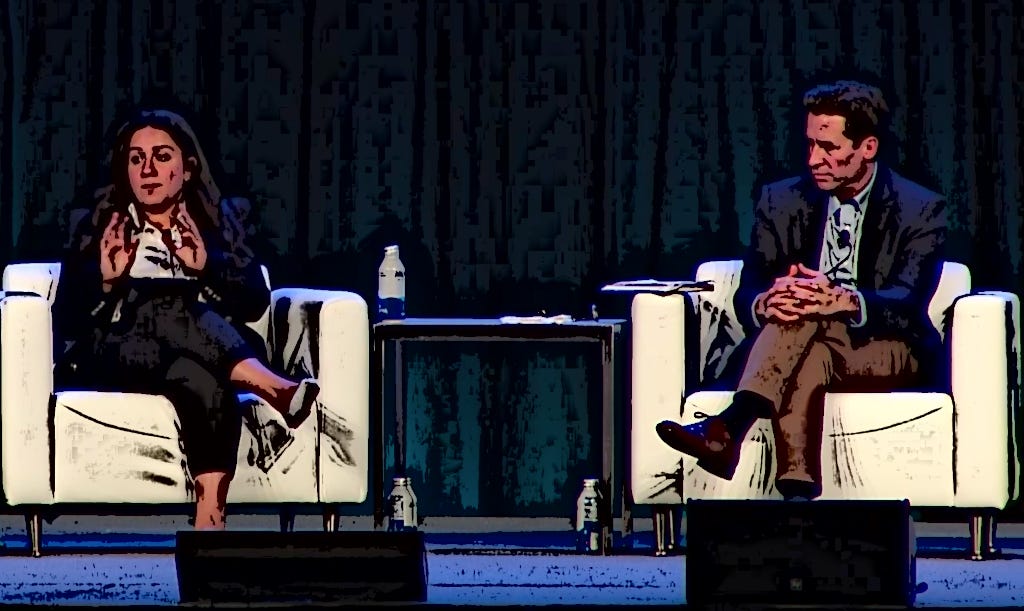
Meta’s global head of policy development, Dina Hussein (Left), and TikTok’s head of trust & safety partnerships, Valiant Richey (Right), moments after CyberWell founder Tal-Or Cohen spoke on the same panel as part of the September 2023 Eradicate Hate Global Summit.
By Lee Fang and Jack Poulson | July 28, 2024
The popular social media platform TikTok has agreed “off-the-record” to enacting the same ban on many criticisms of the Israeli government as was adopted by Meta on July 9, according to a statement from the head of the Israeli pressure group CyberWell published on Sunday. As uncovered by the authors through two reports earlier this month, CyberWell is an offshoot of the Israeli government intelligence collection effort known as Keshet David (“David’s Bow”), which was itself spun out of a larger government propaganda effort now known as Voices of Israel.
CyberWell is one of many nonprofit advocacy groups that has leveraged its role as a trusted ‘counter-disinformation’ and ‘anti-hate’ partner to press for its public policy aims. As we previously reported, CyberWell’s campaigns have included attempts to ban the popular slogan “From the river to the sea, Palestine will be free,” as well as criticisms of the Israeli government’s wartime propaganda, including demonstrably false claims from government officials surrounding the killing of “dozens” of babies on October 7th. CyberWell has also pressed for a ban on discussions of the Israeli government’s enactment of the so-called ‘Hannibal Directive’ preference of killing its own citizens rather than allowing them to be taken hostage.
Meta’s recent policy change, which was championed by CyberWell, bans many critical uses of the term ‘Zionist’ – a reference to those who call for an independent state in the Middle East which privileges Jews over other ethnic groups. Meta’s decision recognized that ‘Zionist’ can be used “as shorthand to refer to governments, soldiers, or other specific groups” and therefore punted on the question of whether to ban the critique that “Zionists are war criminals.”
Listen to the audio here:
Roughly seventeen minutes into an interview with Canadian political consultant Warren Kinsella published on Sunday, CyberWell chief executive Tal-Or Cohen responded to a question on whether other social media platforms would be following Meta’s ban on many criticisms of Zionism by stating:
“We’re also a trusted partner of TikTok. And we have been assured by TikTok off-the-record, I’ll say off-the-record, that their policy is the same. Meaning they would be treating Zionism in the same way, okay. So I expect that off-the-record you’re going to actually be seeing statements about that in the coming days. On the record, I can tell you that we’ve been reassured by TikTok that they’re looking at this statement by Meta and that they intend to provide clarification to the public on it soon, okay.”
Ms. Cohen continued that CyberWell plans to fight for the same policies at X and Google: “We all need to look at X and at Google and kind of say … this decision has been widely supported by all of the major Jewish organizations, by a coalition known as the IHRA Coalition,” referencing a pressure campaign for social media platforms to adopt the controversial International Holocaust Remembrance Alliance (IHRA) re-definition of antisemitism, for which CyberWell has served as the data provider.
Cohen further stated that: “The next clear move is to call on all social media platforms to actually recognize what is true, which is that ‘Zionist’ is being used as a codeword to spread antisemitism to speak about Jews in hostile and violent ways, and we expect the digital policies that are in place to be applied equally to this form of hate too.”
The host of the interview, Daisy Consulting Group’s Warren Kinsella, was exposed in 2019 for running a smear campaign known as ‘Project Cactus’ to ‘seek and destroy’ the populist People’s Party of Canada and its leader, Maxime Bernier. A source with knowledge of the campaign asserted that Kinsella’s client was the Conservative Party of Canada.
In addition to its ‘trusted partner’ status with Meta and TikTok, CyberWell has also enjoyed close access to U.S. security officials. Ms. Cohen spoke alongside Meta’s global head of policy development, Dina Hussein, and TikTok’s head of trust & safety partnerships, Valiant Richey, during a panel at the Eradicate Hate Global Summit in late September. Beyond participation from multiple FBI agents and an official from the U.S. State Department’s Global Engagement Center, which has come under criticism for its expansive methods of opposing online disinformation, the summit’s keynote speakers included U.S. homeland security secretary Alejandro Mayorkas and former Israeli interior minister Natan Sharansky.
CyberWell’s leadership includes several former high-level Israeli security officials, such as Amos Yadlin, the former head of Israel’s military intelligence directorate, Aman.
Sharansky was influential in the creation of the IHRA redefinition of antisemitism, which he has described as a reaction to a United Nations-backed criticism of the Israeli government as an apartheid state through the 2001 Durban declaration, as well as the Boycott, Divestment, and Sanctions (BDS) movement. Along with celebrity lawyer Alan Dershowitz, Sharansky authored the introduction to a 2019 report from Israel’s Ministry of Strategic Affairs – which originally created Voices of Israel – entitled “Behind the Mask: The Antisemitic Nature of BDS Exposed.”
A subsequent report in early 2021, published jointly by the ministries of strategic and diaspora affairs, “The Hate Factor,” laid out the Israeli government’s strategy for pressuring social media companies to adopt the IHRA redefinition of antisemitism. CyberWell is arguably the embodiment of that strategy.
TikTok and CyberWell did not immediately respond to requests for comment. This article will be amended if comments are received after publication.
Vaccine Advocate Peter Hotez Calls for Use of Police, Military Against ‘Anti-vaccine Aggression’
By Michael Nevradakis, Ph.D. | The Defender | July 26, 2024
Vaccine advocate and pharmaceutical industry insider Dr. Peter Hotez, long a proponent of the COVID-19 vaccine, said he favors deploying police and military powers against “anti-vaxers,” whom he blamed for causing hundreds of thousands of deaths during the pandemic.
During an interview July 5 at the Simposio Internacional de Actualización en Pediatría (International Symposium of Pediatric Updates) in Cartagena, Colombia, Hotez suggested organizations such as the World Health Organization (WHO), the U.S. Department of Homeland Security and NATO should target “anti-vaccine aggression.”
Hotez said:
“What I’ve said to the Biden administration is, the health sector can’t solve this on its own. We’re going to have to bring in Homeland Security, the Commerce Department, Justice Department to help us understand how to do this.
I’ve said the same with — I met with Dr. Tedros [director general of the WHO] last month … to say, I don’t know that the World Health Organization can solve this on our own. We need the other United Nations agencies. NATO. This is a security problem because it’s no longer a theoretical construct or some arcane academic exercise. Two hundred thousand Americans died because of anti-vaccine aggression, anti-science aggression.
The full interview was available on YouTube until Wednesday evening, when it was removed. The Defender obtained a video recording of the full interview.
Hotez is dean of the National School of Tropical Medicine at Baylor University College of Medicine and director of the Center for Vaccine Development at Texas Children’s Hospital, one of the sponsors of the symposium, which was organized by the Colombian Pediatric Society.
Aside from being a vaccine proponent and developer — he helped develop the Corbevax COVID-19 vaccine which was administered in India and has received at least $30 million in vaccine development grants from the Bill & Melinda Gates Foundation — Hotez has crusaded against so-called “misinformation” about vaccines.
In March, The Hill reported that Hotez has found a “‘parallel career’ fighting misinformation.”
Hotez “finds his efforts to combat misinformation to be ‘meaningful,’” and says “pushing back on the anti-vaccine movement is just as important as developing vaccines,” The Hill wrote.
Hotez also holds six patents on the hookworm (helminth) vaccine, and has several listed patent applications as well, including those for SARS-CoV2 vaccines.
“Peter has cashed in significantly on the COVID-19 pandemic and gets a lot of money when shots go into arms,” said Brian Hooker, Chief Scientific Officer for Children’s Health Defense (CHD).
In his July 5 interview, Hotez called for more stringent action against “anti-vaxers,” whom he connected to entities such as the Russian government, and called for medical schools to educate new doctors about anti-vaccine sentiment.
“‘Anti-science’ and ‘anti-vaxxer’ are propaganda terms Hotez uses to establish a power dynamic over anyone who disagrees with him,” said cardiologist Dr. Peter McCullough.
“Now Hotez is calling for a security state to enforce his propaganda instead of engaging in much needed dialogue over vaccine safety with a critical appraisal of short- and long-term side effects from the routine childhood vaccine schedule, including the COVID-19 shots,” McCullough added.
According to Harvey Risch, M.D., Ph.D., professor emeritus and senior research scientist in epidemiology (chronic diseases) at the Yale School of Public Health:
“Hotez has spent his entire career developing vaccines which have not achieved success in commercial use. His demands to impose public health martial law are reminiscent of the ‘Comité de salut public’ — ‘Committee of Public Safety’ — that Robespierre used to murder his political opponents [during the French Revolution].”
For Francis Boyle, J.D., Ph.D., professor of international law at the University of Illinois, Hotez’s suggestions are a call to violate established international human rights law.
“Coercing vaccines upon human beings without their informed and voluntary consent violates the Nuremberg Code on Medical Experimentation, which is a crime against humanity,” Boyle said. “What we see at work here with Hotez is the Nazi mentality that pervades so many vaccinologists like him. Hotez is revealing his true colors.”
Independent journalist Paul D. Thacker has investigated Hotez for his site, The Disinformation Chronicle. He said, “This crackpot idea that we should deploy military forces to deal with moms worried about vaccine side effects and children … doesn’t that speak for itself?”
Dr. Sukharit Bhakdi, a microbiologist, questioned Hotez’s scientific credentials:
“Simple fact: Hotez is not a real scientist. He has never published any research article based on true scientific research. His publications transmit his personal opinions and beliefs. He has not conducted a single valid vaccine trial and has zero data to back his claims.
“He has been on the globalist team together with [Dr. Anthony] Fauci et al. and is now turning to violence to silence all dissenters. This very fact disqualifies him as a physician.”
“His evolution over the course of the pandemic is curious as he has become more and more shrill as time goes on,” Hooker said. “It seems he is trying to extend his 15 minutes of fame by ‘jumping the shark’ and inciting gestapo-like measures against ‘anti-vaxers’ and ‘science deniers.’ His definition of science is very ‘Fauci-esque’ indeed.”
Claim that unvaccinated caused ‘hundreds of thousands’ of deaths ‘an obvious untruth’
During his July 5 interview, Hotez asserted that the unvaccinated were responsible for hundreds of thousands of deaths during the COVID-19 pandemic. He said:
“There’s anti-vaccine activity in every country, and each has its own unique national flavor. But the part that I’m worried about now is something very dark and accelerating in the United States.
“And the most dramatic evidence for that is what happened during the COVID pandemic … My estimate is 200,000 Americans died needlessly because they refused COVID vaccines in 2021, 2022.”
Hotez did not provide evidence supporting this figure, but it was similar to claims made by Dr. Anthony Fauci during Congressional testimony last month. Without citing evidence, Fauci said the unvaccinated are “probably responsible for an additional 200,000-300,000 deaths” in the U.S.”
Risch called this claim “an obvious untruth.”
“In the face of repeated major empirical CDC [Centers for Disease Control and Prevention] evidence and CDC’s public acknowledgement that the mRNA vaccines largely failed to reduce COVID transmission, Hotez absurdly claims that people choosing not to vaccinate themselves have contributed more to deaths from COVID than all of the large-scale breakthrough infections among vaccinated people,” Risch said.
McCullough said, “Hotez presumes COVID-19 vaccines are safe and effective as any vaccinologist would dream. Sadly, his fantasy was over before it started. The COVID-19 vaccines were unsafe and failed to reduce hospitalization and death in prospective randomized trials or in valid observational studies. They never stopped transmission.”
“All experts, including Hotez, agreed theoretical protection from COVID-19 vaccines was just a few months, requiring frequent boosters,” McCullough added.
Hotez calls parents who choose not to vaccinate their children ‘victims’
In his interview, Hotez called for action — including more censorship — to counter what he called a “dark and accelerating” and “dangerous” anti-vaccine movement in the U.S. and globally that is “expanding and extending to childhood immunizations in the United States.”
“My worry is that this anti-vaccine movement, and it’s not misinformation or [an] infodemic, as many call it, it’s organized, it’s deliberate, it’s well-financed and it’s politically motivated … I worry that’s now globalizing to other countries on the African continent, in Asia and even Latin America,” he added.
On the topic of childhood vaccinations, Hotez said, “Parents who choose not to vaccinate their kids are victims” of this campaign, and called for medical schools to train doctors on how to respond to parents who oppose vaccinations.
“Pediatricians need to understand what the anti-vaccine ecosystem is, how it’s organized, how it operates, and to get educated about it,” he said. “I think that’s a first step … in our medical schools, in our pediatric residency training, in our conferences like this, being able to describe what this anti-vaccine monster looks like.”
But for journalist Rodney Palmer, formerly of the Canadian Broadcasting Corporation, the increasing reluctance of parents to vaccinate their children is due to mounting concerns about vaccine safety. He said:
“The rising movement questioning the safety and efficacy of COVID-19 vaccines appears to be based on mounting evidence from government health data collection agencies and the life insurance industry.
“The fraud and cover-up of ivermectin as an effective prevention and treatment of COVID-19 caused a segment of the population to question the official guidance around vaccines — more so once they were mandated.”
Hotez blamed legacy and traditional media, as well as foreign governments, for fueling anti-vaccine sentiments.
“Fox News is now a source of anti-vaccine disinformation,” Hotez said. “If the parents are watching Fox News every night … They are going to be coming into your practice believing disinformation.”
Turning to social media, Hotez said, “Twitter, since Elon Musk has taken it over, has become an anti-vaccine site dominated by anti-vaccine groups and individuals who are monetizing the internet. They’re selling fake autism cures because they say vaccines cause autism, which they don’t.”
Hotez continues to be active on X.
Adversarial foreign governments are also to blame for propagating anti-vaccine rhetoric, according to Hotez. “For instance, the Russian government, the Putin government, is spreading anti-vaccine propaganda. The goal of this is to destabilize society and to have caused people to question authority,” he said.
Hotez did not provide any information to support this claim. Russia produces the Sputnik V COVID-19 vaccine, under the auspices of the Russian Direct Investment Fund and The Gamaleya National Center of Epidemiology and Microbiology — an arm of the Russian federal government.
Hotez calls ‘anti-vaccine movement’ a tool of the ‘far-right’
Hotez also used the interview as an opportunity to plug his upcoming book, “The Deadly Rise of Anti-Science: A Scientist’s Warning.” He said the book “describes [the anti-vaccine] ecosystem and its political leanings in detail.”
According to the book’s publisher, Johns Hopkins University Press, Hotez “explains how anti-science became a major societal and lethal force” and how “the anti-vaccine movement became a tool of far-right political figures around the world.”
In 2022, Hotez fiercely criticized looming Congressional hearings into a possible lab-leak origin of COVID-19 and whether the National Institutes of Health (NIH) prematurely discredited the hypothesis, dismissing this as an “outlandish conspiracy.”
However, Hotez’s own 2012 to 2017 NIH grant — totaling $6.1 million — for the development of a SARS vaccine had the aim of responding to any “accidental release from a laboratory,” in addition to a possible zoonotic (or natural) spillover of the virus.
In a June 2023 interview with Robert F. Kennedy Jr., CHD’s chairman on leave, podcaster Joe Rogan offered to donate $100,000 to a charity of Hotez’s choice if he agreed to debate Kennedy.
Hotez — with the support of several legacy news media outlets and the American Medical Association — refused Rogan’s offer. He later claimed on social media that a “couple of anti-vaxers” “stalked” and “taunted” him outside his home after he declined the offer to debate Kennedy.
Michael Nevradakis, Ph.D., based in Athens, Greece, is a senior reporter for The Defender and part of the rotation of hosts for CHD.TV’s “Good Morning CHD.”
This article was originally published by The Defender — Children’s Health Defense’s News & Views Website under Creative Commons license CC BY-NC-ND 4.0. Please consider subscribing to The Defender or donating to Children’s Health Defense.
Leaked: Israel attempted to obstruct US lawsuit against Pegasus spyware
Press TV – July 25, 2024
Israel has gone to great lengths to obstruct a high-stakes US lawsuit that could potentially expose highly confidential information regarding the regime’s Pegasus spyware, one of the world’s most notorious hacking tools, leaked files suggest.
Israeli officials confiscated documents related to the Pegasus spyware from its manufacturer, NSO Group, in a bid to prevent the company from complying with demands from WhatsApp in a US court to provide information about the intrusive technology, said the British media on Thursday.
These documents indicate that these seizures were part of an unusual legal tactic devised by the Israeli regime to prevent the disclosure of details about Pegasus, which Tel Aviv feared could lead to significant diplomatic and security repercussions for the regime.
Pegasus enables NSO clients to secretly install hidden software on smartphones, allowing them to extract messages and photos, record calls, and activate microphones covertly. NSO’s clients have included both authoritarian regimes and democratic nations, and the technology has been implicated in human rights abuses worldwide.
NSO has sold its spyware – known as Pegasus – to Saudi Arabia, the United Arab Emirates, Hungary and India among others.
The spyware also allows its users to monitor conversations, text messages, photos and location, and even encrypted messaging apps such as Signal and WhatsApp. Pegasus can turn phones into remotely operated listening devices.
Since late 2019, NSO has been embroiled in a lawsuit in the US filed by WhatsApp, alleging that the Israeli firm exploited a vulnerability in the messaging service to target over 1,400 of its users across 20 countries within two weeks. NSO rejects the allegations.
The seizure of files and computers from NSO’s offices in July 2020, kept secret until now by a strict gag order issued by an Israeli court, sheds new light on the close relationship between Israel and NSO, and the shared interests of the privately owned surveillance company and the country’s security establishment.
The removal of files in July 2020 occurred after talks between Israeli officials and NSO about how to respond to WhatsApp’s demands for NSO to disclose internal documents regarding its spyware, prompting questions about potential coordination to withhold certain information from US legal proceedings.
At one point, NSO’s lawyer, Rod Rosenstein, a former US deputy attorney general during the Donald Trump administration, reportedly asked one of Israel’s US attorneys whether the Israeli regime would intervene to assist in the legal dispute with WhatsApp.
Earlier this month, WhatsApp accused NSO of failing to fulfill its responsibilities to provide internal documents as part of the legal discovery process. This process aims to help WhatsApp gather information crucial for its case and reveal unprecedented details about how NSO’s government clients have utilized Pegasus.
Nevertheless, the covert involvement of the Israeli regime has impeded WhatsApp’s efforts to compel NSO to provide crucial information. Recently, WhatsApp’s lawyers informed the US court that NSO has “only produced 17 internal documents of its own.”
Both Israel and NSO anticipated expansive demands from WhatsApp for confidential internal company documents, including lists of its clients.
As the discovery process became imminent in the early part of 2020, NSO considered requesting a “blocking order” from the Israeli regime. This order would prevent NSO from disclosing specific information to WhatsApp. A memo outlining this proposal was shared with Israel’s justice ministry in April of that year.
Tel Aviv’s actions seem to have significantly affected the case. NSO has contended that its ability to engage in the discovery process has been constrained by several legal restrictions in Israel.
Earlier this month, WhatsApp’s lawyers told the court they had not yet received any documents relevant to Pegasus, accusing NSO of a “continued refusal to meaningfully participate in discovery.”
The US government blacklisted the Israeli company in 2021 for its sale of hacking tools to repressive regimes.
Australia uses ‘illegal surveillance’ against pro-Palestinian student protesters: Activist
Press TV – July 20, 2024
Authorities at a top university in Australia have used illegal surveillance methods against pro-Palestinian demonstrators, who have for several months been protesting against Israel’s atrocities in the Gaza Strip.
Students at the University of Melbourne staged encampment protests and sit-in strikes to force the university to cut ties with weapons manufacturers, divest from Israeli firms, and “end its complicity in the genocide in Gaza,” said protest organizer Dana Alshaer.
Alshaer, one of the main organizers of UniMelb for Palestine, told Turkish news agency Anadolu that along with 20 other students, she is now facing “extremely baseless” allegations of misconduct from the university and the threat of expulsion.
“They targeted five main organizers of UniMelb for Palestine, and they also targeted some prominent students who have been very visibly present during rallies and protests on campus,” said Alshaer.
“In the misconduct allegations,” she said, “the university included CCTV footage and Wi-Fi location tracking as evidence … so there’s been a use of surveillance technologies against students.”
Alshaer said the university clarified in 2016 that “their Wi-Fi tracking cannot and will not be used to identify students.”
“However, what we saw in the misconduct allegations and documents that were sent to us is that Wi-Fi tracking has been used to track students.”
Alshaer also raised concern “over the university’s possible and potential use of facial recognition programs.”
She said the university is using these misconduct allegations as a punishment “for students who defied the university’s ties with weapons manufacturers … and challenged the university’s ongoing complicity in the genocide in Gaza.”
She said that that university “is punishing students for standing up against [Israel’s] genocide” in Gaza.
Alshaer said that after their month-long Gaza solidarity encampment protests, they managed to push the university to disclose in June its links with US weapons manufacturers Lockheed Martin, Boeing and BAE Systems, as well as over $15 million in research partnerships and investments with the US Department of Defense.
Despite being targeted by the university, she said, the students are determined to continue their activities for Palestine.
Pro-Palestine encampment protests that began at Columbia University in the United States in April and spread across campuses nationwide and worldwide, have faced harsh police crackdown and led to hundreds of arrests.
The protesters have been calling on universities to stop doing business with Israel or companies that support the regime’s atrocities in the Gaza Strip.
Ministry of Truth: Japan’s Communications Ministry Proposes Disinformation Law
By Didi Rankovic | Reclaim The Net | July 19, 2024
Only recently, the Center for Strategic and International Studies (CSIS), an influential Washington think tank, outlined how the US and Japan could bolster their cooperation in “combating misinformation.”
In a report, CSIS noted almost in passing that Japan has in general fallen behind in this activity, but also that the group’s representatives had meetings with officials in Tokyo.
Coincidentally or not, news out of Japan this week says that the country’s Internal Affairs and Communications Ministry is looking at introducing new “anti-disinformation measures.” And, a draft report notes that here, “efforts are not sufficient” while transparency and accountability (ostensibly on the part of internet companies) have not been “adequate.”
That would suggest yet another “Ministry of Truth” and “disinformation law” are in the making somewhere in the world, these taking shape as a draft report details possible measures that social media companies would have to adhere to, going forward.
The report, which notably comes from the Interior Ministry (also in charge of Communications), speaks about the necessity of companies behind social platforms setting up “counter-disinformation systems” themselves, that would deal with what is deemed to be “disinformation” by deleting this content, but also, stepping up “screening of advertisers.”
And once again, time seems to be of the essence, because the report states that the reaction would have to be “prompt.”
The next step is for the draft to become subject to some form of public debate, after which the local press says it will become “official;” and the following step will be making it into law.
The situation reads almost like Japan wasn’t aware it had a “misinformation” problem of a magnitude that requires new and stringent rules, but is now just realizing that, and is almost mimicking the tone and language that’s been present around the topic for years already, in many parts of the world.
Thus, there are some vague and broad “definitions” – the content to be promptly dealt with is that which “contains obvious errors, infringes on the rights of others or is illegal (including disinformation).”
The Japanese plan states that once “a request” comes from a governmental agency, “the operators should make a prompt decision and provide notification as to whether they will delete the information or not.”
What about freedom of expression? The report’s authors seem to think this will do the trick: “The draft also requests that the administrative agency disclose information such as the contents of the request.”
One target is repeat offenders accused of peddling “illegal disinformation,” who will have their content deleted and accounts suspended.
Ukrainian language rejected by children in Russian-majority regions
By Lucas Leiroz | July 18, 2024
The forced imposition of the Ukrainian language in regions with a non-Ukrainian ethnic majority appears to be failing. There has been a decline in the use of the Ukrainian language in the country’s schools, according to a report recently published by the Kiev media. The case clearly shows how, despite the use of force and violence, the neo-Nazi regime will have great difficulty in imposing its cultural agenda in the country’s remote regions.
Since 2014, the official use of Russian and other non-Ukrainian languages has been sharply reduced. The de-Russification measures were further intensified after the start of the special military operation, when the Kiev regime received a “carte blanche” by Western sponsors to commit all sorts of crimes, including ethnic and cultural genocide, an almost total ban on the Russian language and literature having happened since then.
However, despite efforts to eradicate the cultural and linguistic identity of ethnic Russians, the rejection of the Ukrainian language has been increasing throughout the country. A recent survey by the State Service for the Quality of Education showed that in the 2023/2024 academic year, only 74% of students stated that Ukrainian was their mother language. The previous year, the figure was 91%, which shows that there has been a significant drop in the number of children who identify as native speakers of Ukrainian.
Moreover, the drop is not limited to children. Similar data were also revealed in surveys of parents (93% to 82%) and teachers (94% to 86%). In practice, it is possible to say that there is a massive decline in the use of the Ukrainian language, with all the efforts of the neo-Nazi government to assimilate other ethnic groups having failed.
New statistics indicate that currently less than 40% of children in the country use Ukrainian exclusively in their informal activities. The figures naturally vary according to Ukraine’s geography, with more Ukrainian speakers in the western regions, where there are fewer ethnic Russians. Around 17% of children speak Ukrainian in the east of the country, while around 74% speak this language in the west.
It is important to remember that, in addition to Russian, other non-Ukrainian languages are used in the country by ethnic minorities, who are also suffering the impacts of cultural genocide policies. This is the case of the Hungarian language, for example, which is used in the Transcarpathian region, where Hungarians currently live in a situation similar to that of Russians in Donbass, being victims of apartheid-like measures. Despite all the persecution, however, these ethnic minorities refuse to abandon their cultural identity and continue to speak their languages.
This scenario in Ukraine was already expected by some experts. Implementing measures of ethnic and cultural cleansing is not easy. People affected by the measures tend to react by using their language even more intensely, as an act of political activism to preserve their cultural heritage. Amid the current conflict situation, some Russian families in Ukraine see the use of their native language as the last chance to preserve their identity amid the Russophobic madness that the authorities want to impose on all citizens.
In addition, there are basic sociological issues that explain the continued use of the Russian language. The authorities have no way of monitoring which language is being used in informal and family activities. Ethnic Russian citizens use their native language to engage in unofficial sociability, rejecting the Ukrainian language during casual conversations in shopping malls, in churches and other places.
With the survey data revealed, it is possible that Kiev will increase its repressive measures against Russian speakers even further from now on. The total banning of this language throughout the country remains one of the main goals of the neo-Nazi regime. Knowing the failure of the efforts so far, it is very likely that the violence will be intensified in an act of desperation to make the cultural genocide successful.
However, any action in this direction is likely to fail. Kiev will only further expand social and ethnic tensions, polarizing Russians and Ukrainians within the country and generating a crisis of instability that could seriously affect the regime’s mobilization plans during this war. Destroying an ethnic and cultural identity is not easy and Kiev will certainly not succeed, given the current Ukrainian state’s inability to maintain full control over what happens in the country.
Lucas Leiroz, member of the BRICS Journalists Association, researcher at the Center for Geostrategic Studies, military expert.
You can follow Lucas on X (formerly Twitter) and Telegram.
Scholz orders closure of one of the opposition’s largest media networks after interview with Zakharova
By Ricardo Nuno Costa – New Eastern Outlook – 17.07.2024
On 16 July, Jürgen Elsässer (67) woke up startled at 6 a.m., opened the door of his house while still in his dressing gown, and in front of him were dozens of police officers, some with their faces covered, heavily armed, in a surreal image befitting any authoritarian state. However, it was in Brandenburg, on the outskirts of Berlin, in the Germany of the tragicomic Scholz government, aka the ‘Traffic Light’ coalition.
The police were about to raid his house, while more than 200 federal and Brandenburg state agents were deployed to carry out further searches in eight other houses and offices in the region. Other raids were carried out in the states of Saxony, Hesse and Saxony-Anhalt, ordered by Interior Minister Nancy Faeser (SPD), who had ordered Compact to be closed by decree as an ‘association’, when it was legally a publishing house. She also banned any activity by the audiovisual company that produced Compact’s content, such as its YouTube, Facebook and Instagram accounts.
The minister later explained that Compact ‘incites hatred against Jews, against people with a history of migration and against our parliamentary democracy in an indescribable way’. According to the Ministry, the legal basis is the Law on Associations, according to which organisations that are directed against the free and democratic basic order can also be banned.
‘The ban shows that we are also taking action against intellectual arsonists who are fuelling a climate of hatred and violence against refugees and migrants and who want to bypass our democratic state,’ the minister explained. “Our message is very clear: we will not allow ethnicity to define who belongs in Germany and who does not. Our rule of law protects all those who are harassed because of their faith, their origin, the colour of their skin or even their democratic position.”
As early as 2022, the German intelligence services (BND) considered that Compact, ‘as a multimedia company, conveys anti-democratic positions in society and against human dignity’, and since then, it has been classified as far-right by the Office for the Protection of the Constitution and under suspicion.
Interviewed by journalists during the police search of the house where he lives with his wife and partner in the company, Elsässer said that ‘in 14 years of existence there has not been a single criminal charge against his magazine’, which is why he was surprised by the minister’s announcement. He also said that he was in contact with his lawyer to defend his rights and jokingly imitated Donald Trump with his fist raised saying that he was ‘ready for a fight’.
Mixed reactions in the press
While journalists from the mainstream media are refusing to give this episode its due importance, others have seen the government’s unusual decision as a clear warning sign. Opinions were divided between the established media and the few journalists still struggling to report, and the internet was abuzz with the event. The tag #Compact was the main topic on German Twitter throughout the day, and Germans and foreigners alike made the Scholz government’s persecution of the media viral. Germany is under the scrutiny of international public opinion for the worst reasons.
Elsässer complains that this is ‘the biggest attack on press freedom in Germany since the 1962 Spiegel Magazine scandal’. At that time, it was discovered that the Adenauer government wanted to silence several journalists by illegal means for political reasons. When this was discovered, Defence Minister Franz Josef Strauß and two state secretaries had to resign. However, not even then was a troublesome media outlet banned, as it is now with his case. Elsässer says that only in the GDR and during National Socialism were things like this scene.
The metamorphosis of Elsässer, the current standard-holder of Germany’s ‘new right’
Jürgen Elsässer is a long-time political activist. With a degree in history and a short career as a teacher, he started out in the far-left anti-German movement in the 1970s, wrote books with a strong anti-national slant, worked on the editorial boards of various left-wing publications such as Junge Welt, Neues Deutschland, he collaborated with Der Freitag and the Jüdische Allgemeine and was editor-in-chief of Konkret magazine, until after disagreements with other elements, he founded Compact magazine in 2010, with the idea of bringing together the best of the left and the right in a transversal front (‘Querfront’), based on national sovereignty, the multipolar world and the rejection of the EU and NATO.
In 2017, with the demonstrations against Merkel’s open-door immigration policy, he joined forces with the leader of the AfD in Thuringia, Björn Höcke, considered a quasi-neo-Nazi, and Martin Sellner, leader of Austria’s Identity Movement. Since then, the magazine has become a major reference point for the so-called ‘new right’ and Elsässer has become one of the central figures in the German nationalist spectrum.
His political proposal and trajectory are controversial and very heterodox. He clearly calls for the ‘remigration’ of non-European foreigners, makes claims to Polish territories, likes to provoke his opponents, has aligned himself with openly Islamophobic elements such as Michael Stürzenberger or the PEGIDA movement, has played on the edge, but always within the rules of the game. At least until today.
Elsässer is an experienced figure, with a huge culture and a large archive of articles and books written, where he has changed his mind, or at least his appearance. He says that he hasn’t changed at all, that he remains in the same political position as he was 40 years ago.
He worked for the Die Linke parliamentary group as a member of the BND enquiry committee in the Bundestag. He is an insightful expert on geopolitical issues. In 2012, he was received by then president Mahmoud Ahmedinejad in Tehran, together with a German entourage. About that trip to Iran, he said he enjoyed everything, only missing a good cold beer, like the good German he claims to be. He recently teamed up with Maximilian Krah, the AfD’s European frontrunner, who advocates a Germany that guarantees its status as a pole in the multipolar world that has already been born and is taking its first steps.
A quality magazine
Compact magazine was the centrepiece of the network that included audiovisual channels, the organisation of events, conferences, the publishing and sale of books and Compact TV, with its YouTube channel, which recently reached one million views a day.
Over the years, you could say that the magazine has moved to the right. In 2014, it dedicated a cover to Netanyahu, in which it accused him of perpetrating a ‘Genocide in Gaza’, then shifted its focus to criticising immigration, especially of Islamic origin. Later articles were also read against Hamas. With the pandemic, it took a clear stance against the government, the pharmaceutical industry and the accusation of a biological warfare conspiracy by the great powers of the West.
With Russia’s entry into Ukraine, it advocated dialogue with Moscow and the resumption of Russian energy. It was one of the few media outlets to do an exhaustive report on the Nord Stream attacks, to which it devoted almost an entire issue. In its December 2023 issue, it details how an extremely powerful Zionist sect with global reach, currently in the Israeli government, is planning an eschatological end-of-times war with catastrophic consequences for the whole world.
The absence of the Compact has already been felt since the arrival of the ‘Traffic Light’ government. Heavy pressure on distributors led to the magazine disappearing from petrol stations, supermarkets, newsagents and bookshops. Little by little, it was confined to subscribers. It was one of the few magazines where you could read good geopolitical articles.
The German typhoon
The magazine ban is just one more of the government’s decisions that threaten to divide German society, but it doesn’t seem to bother the establishment, either in the government or in the opposition on the traditional right.
Brandenburg’s Interior Minister Michael Stübgen (CDU) welcomed the federal government’s move. Stübgen accused the magazine of spreading ‘Russian war propaganda and conspiracy theories against the democratic order’. He also said that ‘this platform of enemies of democracy has only one goal, which is the destruction of our liberal society’.
In a comment on social media, historian Hermann Ploppa, identified with the left wing and linked to the famous alternative politics portal Apolut, confesses that ‘the Compact is not to my liking. A lot of it is simply disgusting. But there is no violation of the law. It’s also clear that the Compact ban is the opening fanfare to suppress the inconvenient media. That’s why we shouldn’t stand idly by. WE ARE NEXT.”
Across the party spectrum, only the AfD criticised the magazine ban. The party’s leaders, Tino Chrupalla and Alice Weidel, jointly announced on Tuesday that it was a ‘serious blow to press freedom’. ‘The banning of a media organisation means the denial of discourse and diversity of opinion.’ According to the far-right party, the interior minister is abusing her powers to ‘suppress critical information’.
Sahra Wagenknecht’s BSW had not commented on the Compact ban at the time of writing. Wagenknecht has been on the cover of the magazine on more than one occasion. In its December 2022 issue, she was described as ‘The best chancellor: A candidate for left and right’. The relationship between Elsässer and Wagenknecht goes back to the 90s. In 1996, a still communist Elsässer interviewed his comrade Wagenknecht, long before he became one of the main ideologues of the new ‘Querfront’ between the ‘left of labour and the right of values’, an enterprise for which he has called on Wagenknecht to participate on several occasions in recent times.
The Zakharova interview
If the move against Compact magazine didn’t come without warning, it did coincide with the interview with Russian Foreign Ministry spokeswoman Maria Zakharova, conducted two days earlier by Compact’s Moscow correspondent Hansjörg Müller and broadcast on the magazine’s website and YouTube channel.
With hundreds of thousands of hits on the first day on the website and more than 250,000 on YouTube, Zakharova ridiculed the “traffic light” government in the one-and-a-half hour interview. She sharply criticised the policies of Scholz, Baerbock and the sanctions, which not only destroy relations between Berlin and Moscow, but also harm Germany’s own interests, all at the behest of “third-party interests”.
The Russian spokeswoman also alluded to the problem of immigration in Germany, which she said had geopolitical origins, with Berlin playing a subservient role to “US and British operations in the Middle East and Southern Africa”, which are causing the migratory chaos that is burdening Europe.
She also spoke about Germany’s obligations under the 1999 2+4 Treaty, the murky role of the German authorities in the case of Navalny’s alleged poisoning in 2020, the pandemic, vaccines and the announced abolition of paper money in Europe, the Federal Reserve, the destruction of Nord Stream, and much more. All in all, a fascinating interview, highly recommended, and very uncomfortable for Western liberal elites, especially Germans.
It’s clear that, once again, the German government is acting in accordance with the Washington Consensus, because the magazine in question was clearly in favour of peace between Germany and Russia, was gaining public influence and threatening several pillars on which Germany’s structure has rested since 1945. The fact that this doesn’t please many people is understandable, but it doesn’t make it an illegal outlet. Mrs Faeser’s decision sets a serious precedent, foreshadowing difficult days ahead for free information in Germany and Europe. Having found no illegality, the German government had to use two paragraphs of a law on associations to ban a publishing house because it was inconvenient. It’s all food for thought.
Ricardo Nuno Costa ‒ geopolitical expert, writer, columnist, and editor-in-chief of geopol.pt.
160 journalists killed by ‘Israel’ since October: Gaza Media Office
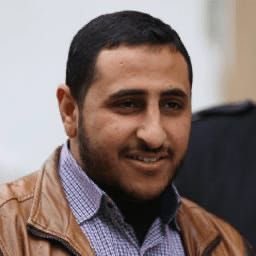
Mohammed Meshmesh, program director at Al-Aqsa Voice radio.
Al Mayadeen | July 16, 2024
The media office of Gaza’s government reported on Tuesday that at least 160 journalists have been killed in the strip since Israeli airstrikes began in October.
“The number of journalists killed since the start of the genocide war against the Gaza Strip has risen to 160,” the media office said in a statement.
In April, the Palestinian Journalists’ Syndicate reported that at least 140 journalists had been killed in the Israeli military offensive on Gaza. The latest martyr is Mohammed Meshmesh, a program director at Al-Aqsa Voice radio, according to the media office.
On Sunday, a senior official in the Israeli security administration claimed that the intensive phase of military operations in Gaza has ended and the regime has proceeded to the third stage of the war, as quoted by Israeli broadcaster Channel 14.
This supposedly means that “Israel” has concluded its most active and aggressive period of its campaign in Gaza.
Yet, earlier today, Israeli forces committed two massacres across the Strip, including at the UN Relief and Works Agency (UNRWA) school of al-Razi in the Nuseirat refugee camp in central Gaza, where many forcible displaced families were taking refuge.
23 Palestinians were killed in the horrific massacre and dozens were injured.
Another attack on displaced people near the al-Attar Station in the al-Mawasi, Khan Younis, has resulted in the killing of at least 17 people and the injury of at least 26, as per the Ministry of Health in Gaza.
The Ministry of Health in Gaza announced in its daily report today that the number of Palestinians killed in Gaza due to the Israeli genocidal war ongoing since October 7 has now reached 38,713, in addition to 89,166 injuries.
It further confirmed that Israeli forces committed two massacres in 24 hours, killing 49 and injuring 69, and that thousands of victims are still under the rubble on the streets.
Featured Video
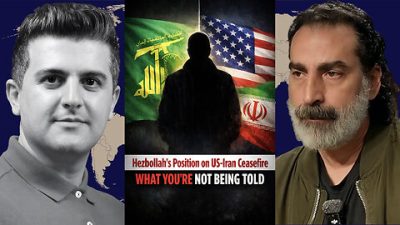
Laith Marouf: Hezbollah’s position on US-Iran ceasefire
or go to
Aletho News Archives – Video-Images
From the Archives
Is Israel to blame for the Iraq War?
American Goy | March 10, 2008
I am so tired of this old canard that “Israel had nothing to do with USA’s war with Iraq – in fact, it officially advised America against it”.
Bullshit. … continue
Blog Roll
 Aletho News
- Laith Marouf: Hezbollah’s position on US-Iran ceasefire: What you’re not being told
- Israel’s priority lies in destroying chances of peace between Iran, US: Ex-UN nuclear chief
- Ceasefire for all or for none: Iran shuts Hormuz over Lebanon attacks
- Strait of Hormuz is Iran’s ‘nuclear weapon’ that forced US retreat: Medvedev
- Energy crisis will last for months – Kremlin envoy
- Europe’s quiet role in the war on Iran
- Forty days that shook the Empire: How Iran turned the tables on US and prevailed
- Netanyahu unilaterally declares Lebanon outside of ceasefire deal
- Israeli leaders: ‘Not a single goal’ achieved in war with Iran
- What on earth just happened? Trump, Iran, and the unlikely ceasefire
- If Americans Knew
- Gazans face a triple crisis: severe shortages of water and bread, healthcare in tatters
- NY Times reports how Netanyahu took the US into Iran War
- A sigh of relief over Iran, but Gaza and Lebanon in dire straits – Daily Update
- Thousands dead and neighborhoods razed to the ground: Aid agencies fear southern Lebanon is becoming the new Gaza
- The war the US is fighting for Israel could cost trillions
- ‘Cigarette Burns, Nail Wounds’: Toddler Tortured in Gaza to Coerce Father
- Trump Says US Sent ‘a Lot of Guns’ to Protesters in Iran
- Israeli forces destroy 17 UN peacekeeper cameras in south Lebanon
- US-Israeli strikes ‘completely destroy’ synagogue in Tehran
- Archbishop for US Military Says Iran War Is Unjust Under Catholic Teaching
- No Tricks Zone
- An Inconvenient Tree: Uncovered In Alps… Europe Much Warmer Than Today 6000 Years Ago
- New Study Reports A 60% Slowdown In Greenland’s Ice Loss Rate In The Last Decade
- Low Intensity Tornado Wrecks Major Solar Farm, Creating A Potential Toxic Dump
- New Study Finds Warming Saves Lives…Cold Temperatures 12 Times More Deadly Than Excess Heat
- German Science Blog Accuses PIK Climate Institute Of Hallucinating Climate Tipping Points
- Devastating Assessment Of Comirnaty Vaccine By Former Senior Pfizer Europe Toxicologist
- New Study: CO2 Is ‘Effectively Negligible’ As An Explanatory Climate Change Factor Since 2000
- Former Pfizer Toxicologist Dr. Helmut Sterz Tells Bundestag Hearing Pfizer Vaccine Should Have Never Been Approved
- Energy Expert: Germany’s Nuclear Phaseout Was A “500 Billion Euro Mistake”
- New Research: South Australia’s Mid-Holocene Sea Surface Temperatures Were 4°C Warmer Than Today
 Aletho News