Ireland’s Simon Harris to Push EU-Wide Ban on Social Media Anonymity
By Cindy Harper | Reclaim The Net | December 29, 2025
Ireland’s next term leading the European Union will be used to promote a new agenda: an effort to end online anonymity and make verified identity the standard across social media platforms.
Tánaiste Simon Harris said the government plans to use Ireland’s presidency to push for EU-wide rules that would require users to confirm their identities before posting or interacting online.
Speaking to Extra.ie, Harris described the plan as part of a broader attempt to defend what he called “democracy” from anonymous abuse and digital manipulation.
He said the initiative will coincide with another policy being developed by Media Minister Patrick O’Donovan, aimed at preventing children from accessing social media.
O’Donovan’s proposal, modeled on Australian restrictions, is expected to be introduced while Ireland holds the EU presidency next year.
Both ideas would involve rewriting parts of the EU’s Digital Services Act, which already governs how online platforms operate within the bloc.
Expanding it to require verified identities would mark a major shift toward government involvement in online identity systems, a move that many privacy advocates believe could expose citizens to new forms of monitoring and limit open speech.
Harris said his motivation comes from concerns about the health of public life, not personal grievance.
Harris said he believes Ireland will find allies across Europe for the initiative.
He pointed to recent statements from French President Emmanuel Macron and UK Prime Minister Keir Starmer, who he said have shown interest in following Australia’s lead. “If you look at the comments of Emmanuel Macron… of Keir Starmer… recently, in terms of being open to considering what Australia have done… You know this is a global conversation Ireland will and should be a part of,” he said.
Technology companies based in Ireland, many of which already face scrutiny under existing EU rules, are likely to resist further regulation.
The United States government has also expressed growing hostility toward European efforts to regulate speech on its major tech firms, recently imposing visa bans on several EU officials connected to such laws.
Despite this, Harris said Ireland does not want confrontation. “This is a conversation we want to have now. We don’t want to have it in an adversarial way. Companies require certainty too, right?” he said, emphasizing that Ireland remains committed to being a reliable home for international tech firms.
He also spoke in support of O’Donovan’s age-verification proposal, comparing it to other legal age limits already enforced in Ireland. “We have a digital age of consent in Ireland, which is 16, but it’s simply not being enforced,” he said.
From a civil liberties standpoint, mandatory identity checks could fundamentally alter the online world.
Requiring proof of identity to speak publicly risks silencing individuals who rely on anonymity for safety, including whistleblowers, activists, and those living under political pressure.
Once created, systems of digital identity are rarely dismantled and can easily be adapted to track or restrict speech.
Harris said that voluntary cooperation by technology companies could make legislation unnecessary. “These companies are technology companies. They have the ability to do more, without the need for laws,” he said, suggesting platforms could use their own tools to manage bots, algorithms, and age verification.
Italy arrests Palestinian activist amid crackdown on anti-Israel voices

Palestinian activist Mohammed Hannoun
Press TV – December 28, 2025
Italian authorities have detained prominent Palestinian activist Mohammed Hannoun as European countries mount a crackdown on voices exposing Israel’s genocidal crimes against the oppressed nation.
Hannoun, president of the Palestinian Association in Italy, was arrested along with eight other people on Saturday for allegedly financing the Palestinian Hamas resistance group through charities.
In a statement, prosecutors claimed that the activist is the “head of the Italian cell of the Hamas organization.”
They also alleged that the suspects had sent about 7 million euros ($8.2 million) to “associations … owned, controlled, or linked to Hamas.”
However, Hannoun’s lawyer Fabio Sommovigo said that the funds were collected peacefully for humanitarian purposes, adding that the case was based on the Israeli authorities’ interpretation of money movements.
Italian Prime Minister Giorgia Meloni, who has faced backlash for her pro-Israel stance during the regime’s genocide against Palestinians in the Gaza Strip, expressed her “appreciation and satisfaction” for the arrest operation.
Born in Jordan in 1962, Hannoun has been residing in the Italian port city of Genoa for many years.
He is an architect by profession and has organized and taken part in public demonstrations, solidarity initiatives, and awareness campaigns in support of the Palestinian cause.
He had previously described Hamas as a legitimate political actor, saying, “I am simply a Palestinian who has been engaged for decades in the struggle for the rights of his people. Hamas received more than 70 percent of the vote in Gaza and the West Bank, so it is a legitimate representative of the Palestinian people. And I am a sympathizer of Hamas, just as I am of every faction that fights for my rights.”
The arrests come at a time when certain European countries have stepped up efforts to silence pro-Palestinian activists and groups through judicial proceedings, forced dissolutions, and account freezes.
The same European states are complicit in Israel’s war crimes as they maintain their economic and military ties with the criminal regime, which has killed 71,266 Palestinians, mostly women and children, in Gaza since October 7, 2023.
NSW Premier Admits New “Security” Bill Restricts Civil Liberties, Promises More “Hate Speech” Laws Ahead
By Cindy Harper | Reclaim The Net | December 27, 2025
Lawmakers in New South Wales wrapped up the year by rushing through security legislation that broadens police powers and imposes new limits on protest activity and expression.
Passed in an extraordinary sitting of Parliament just before Christmas, the Terrorism and Other Legislation Amendment Bill 2025 represents one of the most far-reaching state security expansions in recent years.
Under the new law, the display of a symbol belonging to a “prohibited terrorist organization” can now lead to a prison term of up to two years.
Police officers are also granted authority to order individuals to remove face coverings if they are attending a demonstration or public event and the officer “reasonably suspects” they may commit an offense.
The legislation also permits police to halt public gatherings in the aftermath of a terrorist attack.
Although the bill is not framed as a censorship measure, it introduces powers that could intersect with the expanding use of surveillance technologies.
By compelling people to show their faces during political demonstrations, the law effectively weakens the ability of citizens to shield themselves from biometric tracking at a time when facial recognition systems are increasingly used by both law enforcement and private entities.
Premier Chris Minns has openly acknowledged that the law curtails individual freedoms. “These are extraordinary measures, I acknowledge that. I know that not all Australians that live in NSW support these changes, but we have decided it’s the best way of ensuring we do everything possible to keep the people of NSW safe,” he said following the bill’s passage.
Minns further conceded that the process was accelerated, crediting bipartisan cooperation for allowing the legislation to pass so quickly. “I know that that happened in a short space of time. I know that the negotiations and the talks had to happen over a short space of time, but we appreciate the goodwill in which we were able to get much-needed reform in New South Wales through the Parliament,” he stated.
He justified the timing by saying, “We couldn’t wait, this was urgent.”
When pressed about why the measures were bundled into a single omnibus bill, Minns admitted that time was the deciding factor. “If it had been cut up into its component parts, we would have been here way past Christmas… maybe people who oppose elements of those changes would have loved that, because it would have meant that the passage of the bills would have been stalled.”
The Premier did not shy away from admitting that rights were being limited in the process. “I accept, I guess, the implicit criticism that this does restrict rights, whether it’s for protests or guns,” he said. “But in these circumstances, we’ve got a higher obligation to the public… our number one obligation is to keep the public safe.”
Minns also signaled that more legislation is on the horizon, confirming that the government intends to introduce new “hate speech” laws in the coming months. “I want to make it clear that this isn’t the end of change… we’re currently looking at other areas of the law that are urgently required to confront hate speech, confront Islamist terrorism in our community,” he said. “Hate speech leads to hateful actions… and we’re prepared to take action and steps to keep the community safe.”
While the Premier frames the agenda as necessary to safeguard citizens, the process reflects a deeper shift toward governance by emergency.
Parliament’s decision to fast-track legal powers during a holiday recess, without full debate or public review, raises serious questions about transparency and proportionality.
The rapid normalization of police discretion over identity and assembly carries lasting implications for privacy and dissent.
As soon as governments assert the right to define and control “hate speech” or to compel identification at protests, the boundaries of lawful expression narrow quickly. A response to terrorism may end up reshaping the basic relationship between the individual and the state.
More: Victoria Moves to Force Online Platforms to ID Users and Expand State Powers to Curb “Hate Speech”
US Under Secretary of State Slams UK and EU Over Online Speech Regulation, Announces Release of Files on Past Censorship Efforts
By Cindy Harper | Reclaim The Net | December 27, 2025
American Under Secretary of State for Public Diplomacy Sarah Rogers has sharply criticized British and European speech regulators for attempting to extend their laws to US-based platforms, calling it a direct challenge to the First Amendment.
Speaking during an appearance on The Liz Truss Show, Rogers said Washington intends to respond to the UK’s communications regulator Ofcom after it sought to bring the website 4chan under its jurisdiction.
She said the situation “forced” the US to defend its constitutional protections, warning that “when British regulators decree that British law applies to American speech on American sites on American soil with no connection to Britain,” the matter can no longer be ignored.
Rogers called it “a perverse blessing” that the dispute is forcing a renewed transatlantic conversation about free expression, observing that “Britain and America did develop the free speech tradition together.”
Rogers announced that the State Department will soon publish a collection of previously unreleased internal emails and documents describing earlier US government involvement in social media moderation efforts.
The release is part of what she termed a “truth and reconciliation initiative” that will include material linked to the now-defunct Global Engagement Center, which she said had coordinated with outside organizations to identify content for takedown.
That operation was “immediately dismantled” after she assumed her current post.
She argued that foreign governments have moved from cooperation to coercion in their dealings with US companies. “Europe and the UK and other governments abroad are… trying to nullify the American First Amendment by enforcing against American companies and American speakers and American soil,” Rogers said, referring to the EU’s fine against X and Ofcom’s recent enforcement campaigns.
On domestic policy, she criticized the UK’s Online Safety Act, saying that it is being sold as child protection legislation but in practice functions as a speech control measure.
“These statutes are just censoring adult political speech is not the best way to protect kids and it’s probably the worst way,” she said.
Rogers noted that under such laws, even parliamentary remarks about criminal networks could be censored if regulators deem them harmful.
Turning to Ofcom’s ongoing 4chan case, Rogers said its legal position effectively claims authority over purely American websites.
She offered a hypothetical: “I could go set up a website in my garage… about American political controversies… and Ofcom’s legal position nonetheless is that if I run afoul of British content laws, then I have to pay money for the British government.”
Rogers said she expects the US government to issue a response soon.
Throughout the interview, Rogers framed the current wave of global online regulation as an effort to suppress what she called “chaotic speech” that emerges with every major communications shift.
“People panic and they want to shove that innovation back in the bottle,” she said, warning that such attempts have “never worked.”
Her remarks mark one of the strongest rebukes yet from a senior American official toward the growing European model of compelled content moderation.
Rogers suggested that this model not only undermines open debate but also sets a precedent for governments worldwide to police political speech beyond their borders.
More: EU Launches New Push For Digital ID Age Checks and Big Tech Probe Under Digital Services Act
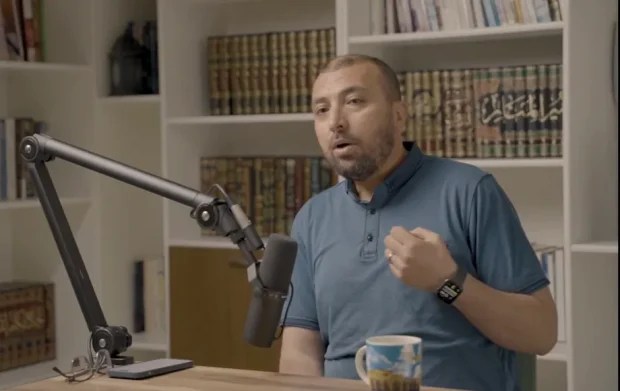
Israeli forces arrest writer and political researcher Sari Orabi
MEMO | December 26, 2025
Israeli occupation forces arrested the writer and political researcher Sari Orabi after raiding his home at dawn on Thursday in the town of Rafat, north of occupied Jerusalem, according to local media sources.
The sources said Israeli forces carried out wide arrest raids early on Thursday across several areas of the occupied West Bank and Jerusalem. The raids targeted a number of young men and former prisoners after their homes were stormed, searched and damaged.
Sari Orabi is a writer and researcher specialising in politics and Islamic thought. His articles have been published in several newspapers, magazines, websites and research centres. He also regularly appears as a commentator on cultural, intellectual and political issues on a number of television channels.
In addition to Orabi, Israeli forces arrested Ibrahim Hourani after raiding his home in the city of Qalqilya. In the town of Aroura, north of Ramallah, they arrested Nasser Mufaraj and his son Amr, and re-arrested former prisoner Tayseer Khusaib following home raids.
The Palestinian Prisoners’ Media Office said the continued arrest campaigns show that Israeli policy targets academics, writers, former prisoners and young people alike, rather than a specific group. It said this reflects a clear attempt to suppress public awareness and social influence within Palestinian society.
German journalist says she was sexually assaulted in Israeli custody
ILKA | December 26, 2025
A German journalist detained by Israeli forces following the interception of a Gaza-bound aid vessel has accused Israeli prison authorities of sexually assaulting her while in custody, triggering renewed outrage over Israel’s treatment of international activists and detainees.
Anna Liedtke, who was aboard the humanitarian ship Conscience as part of the Freedom Flotilla initiative, said she was raped during a strip search while being transferred between Israeli detention facilities. The flotilla was attempting to challenge Israel’s naval blockade of the Gaza Strip, which human rights groups have long described as illegal and collectively punitive.
Liedtke was held for five days after Israeli forces seized the vessel in late 2025. In her first public testimony, she said the alleged assault did not occur in isolation but was part of repeated abuses during multiple prison transfers.
“We were transferred from one prison to another, and during the strip searches I was raped,” Liedtke said, describing the experience as deeply traumatic and humiliating.
Her account has sparked condemnation from prisoner rights organisations and human rights advocates, who say the allegations fit a long-established pattern of abuse, sexual violence, and mistreatment within Israel’s detention system. Advocacy groups argue that such practices have been systematically used to intimidate, degrade, and silence Palestinians and international solidarity activists alike.
Rights organisations stressed that while Palestinians have for years reported sexual violence, invasive searches, and torture in Israeli prisons, cases involving foreign nationals underscore that Israel’s abusive detention practices extend beyond occupied populations to anyone who challenges its policies.
“The testimony of Anna Liedtke reinforces what Palestinian prisoners, especially women, have been saying for decades,” one rights advocate said. “Israeli detention facilities operate with near-total impunity.”
Calls are now growing for an independent international investigation into the allegations, with activists urging the United Nations and international human rights bodies to intervene. They argue that Israel’s internal investigative mechanisms lack credibility and routinely fail to hold perpetrators accountable.
The Freedom Flotilla coalition said the assault allegation highlights the risks faced by activists attempting to break the siege on Gaza and accused Israel of using violence and sexual abuse as tools of repression. The coalition renewed its demand for an end to the blockade, which has devastated Gaza’s civilian population for more than a decade.
Human rights groups say the case exposes the broader reality of Israel’s detention regime, where activists, journalists, and Palestinians are subjected to violence with little oversight. They warn that without sustained international pressure, such abuses will continue unchecked, further eroding international law and basic human dignity.
SANCTIONED: Col Jacques Baud Explains Being the EU’s TARGET
Daniel Davis / Deep Dive – December 23, 2025
Col Jacques Baud explains that on December 12 he learned via Radio Free Europe that his name would appear on an EU sanctions list. After contacting his embassy in Brussels (where he lives), he received no follow-up. On December 15 the EU formally published the sanctions, which served as the only notification. Since then, his bank accounts have been frozen and he is banned from traveling within the EU, preventing him from returning to his home country.
He says he is accused of spreading pro-Russian propaganda and disinformation, including allegedly promoting a conspiracy theory that Ukraine orchestrated its own invasion by Russia in 2022. He strongly denies this, stating that he merely quoted remarks made in 2019 by Oleksiy Arestovych, then an adviser to President Zelensky, about the risk of war if Ukraine pursued NATO membership. He emphasizes that quoting a Ukrainian official is being treated as evidence of acting as a Russian agent, despite his claim that he has no ties to Russia.
The speaker stresses that he was never warned, contacted, or given a chance to respond by EU, Belgian, or Swiss authorities before the sanctions were imposed. He argues the decision is political, not legal: there was no court ruling, no charges under any law, no right to defense, and no real avenue for appeal.
He further explains that he deliberately avoided appearing on Russian media, refused invitations from outlets like RT, and bases his work largely on Ukrainian and U.S. sources to maintain academic objectivity. He insists propaganda itself is not a crime under European law and says he has always tried to use precise, nuanced language in his analysis.
Overall, he presents his case as evidence of a serious erosion of democracy and free speech in Europe, arguing that objective analysis of the Russia–Ukraine war is being labeled “pro-Russian.” He describes the sanctions as effectively confiscating his livelihood without due process and says he is now struggling to meet basic needs, pending a possible humanitarian exemption to access limited funds for essentials like food.
** NEW MERCH ** Jackets & Sweatshirts, Thermo Mugs!! Daniel Davis Deep Dive Merch: Etsy store https://www.etsy.com/shop/DanielDavis…
Europe’s Panic Economy: Frozen Assets, Empty Arsenals, and the Quiet Admission of Defeat
By Gerry Nolan | Ron Paul Institute | December 24, 2025
When a prime minister tells her own staff to rest because next year will be much worse, it is not gallows humor. It is not exhaustion speaking. It is a slip of the mask, the kind of remark leaders make only when the internal forecasts no longer align with the public script.
Giorgia Meloni was not addressing voters. She was addressing the state itself — the bureaucratic core tasked with executing decisions whose consequences can no longer be disguised. Her words were not about a mundane increased workload. They were about constraint. About limits. About a Europe that has crossed from crisis management into managed decline, and knows that 2026 is when the accumulated costs finally collide.
What Meloni let slip is what Europe’s elites already understand: the Western project in Ukraine has run head-first into material reality. Not Russian propaganda. Not disinformation. Not populism. Steel, munitions, energy, labor, and time. And once material reality asserts itself, legitimacy begins to drain.
The War Europe Cannot Supply
Europe can posture for war. It cannot produce for war.
Four years into a high-intensity war of attrition, the United States and Europe are confronting a truth they spent decades unlearning: you do not sustain this kind of conflict with theatrical speeches, sanctions, or abandoning diplomacy. You sustain it with shells, missiles, trained crews, repair cycles, and production rates that exceed losses — month after month, without interruption.
By 2025, the gap is no longer theoretical.
Russia is now producing artillery ammunition at a scale that Western officials themselves concede outpaces the combined output of NATO. Russian industry has shifted to continuous near-wartime production (without even being fully mobilized), with centralized procurement, simplified supply chains, and state-directed throughput. Estimates place annual Russian artillery production at several million rounds — production already flowing, not promised.
Europe, by contrast, has spent 2025 celebrating targets it cannot ever materially meet. The European Union’s flagship pledge remains two million shells per year — a goal dependent on new facilities, new contracts, and new labor that will not fully materialize within the decisive window of the war, if ever. Even the dreamed target if reached, would not put it at parity with Russian output. The United States, after emergency expansion, is projecting roughly one million shells annually once and a big if, full ramp-up is achieved. Even combined on paper, Western production struggles to match Russian output already delivered. Talk about paper tiger.
This is not a gap. It is a major tempo mismatch. Russia is producing at scale now. Europe is dreaming of rebuilding the ability to produce at scale later.
And time is the one variable that cannot be sanctioned.
Nor can the United States simply compensate for Europe’s hollowed-out capacity. Washington faces its own industrial choke points. Production of Patriot air-defense interceptors runs in the low hundreds per year while demand now spans Ukraine, Israel, Taiwan, and US stockpile replenishment simultaneously — a mismatch senior Pentagon officials have acknowledged cannot be resolved quickly, if ever. US naval shipbuilding tells the same story: submarine and surface-combatant programs are years behind schedule, constrained by labor shortages, aging yards, and cost overruns that push meaningful expansion into the 2030s. The assumption that America can industrially backstop Europe no longer matches reality. This is not a European problem alone; it is a Western one.
War Footing Without Factories
European leaders speak of “war footing” as if it were a political posture. In reality, it is an industrial condition and Europe does not meet it.
New artillery production lines require years to reach stable throughput. Air-defense interceptor manufacturing runs in long cycles measured in batches, not surges. Even basic inputs such as explosives remain bottlenecks, with facilities shuttered decades ago only now being reopened, some not expected to reach capacity until the late 2020s.
That date alone is an admission.
Russia, meanwhile, is already operating inside wartime tempo. Its defense sector has delivered thousands of armored vehicles, hundreds of aircraft and helicopters, and vast quantities of drones annually.
Europe’s problem is not conceptual; it is institutional. Germany’s much-vaunted Zeitenwende exposed this brutally. Tens of billions were authorized, but procurement bottlenecks, fragmented contracting, and an atrophied supplier base meant delivery lagged years behind rhetoric. France, often cited as Europe’s most capable arms producer, can manufacture more sophisticated systems — but only in boutique quantities, measured in dozens where attritional war demands thousands. Even the EU’s own ammunition acceleration initiatives expanded capacity on paper while the front consumed shells in weeks. These are not ideological failures. They are administrative and industrial ones and they compound under pressure.
The difference is structural. Western industry was optimized for shareholder efficiency and peacetime margins. Russia’s has been reorganized for endurance under pressure. NATO announces packages. Russia counts deliveries.
The €210 Billion Fantasy
This industrial reality explains why the frozen-assets saga mattered so much, and why it failed.
Europe’s leadership did not pursue the seizure of Russian sovereign assets out of legal creativity or moral clarity. It pursued it because it needed time. Time to avoid admitting that the war could not be sustained on Western industrial terms. Time to substitute finance for production.
When the attempt to seize roughly €210 billion in Russian assets collapsed on December 20th, blocked by legal risk, market consequences, and resistance led by Belgium, with Italy, Malta, Slovakia and Hungary, aligned against outright confiscation, Europe settled for a degraded substitute: a €90 billion loan to Ukraine for 2026–27, serviced by 3B in annual interest, further mortgaging Europe’s future. This was not strategy. It was triage, and further divided, an already weakened Union.
Outright confiscation would have detonated Europe’s credibility as a financial custodian. Permanent immobilization avoids the blast — but creates a slow bleed. The assets remain frozen indefinitely, a standing act of economic warfare that signals to the world that reserves held in Europe are conditional and not worth the risk. Europe chose reputational erosion over legal rupture. That choice reveals fear, not strength.
Ukraine as a Balance-Sheet War
The deeper truth is that Ukraine is no longer primarily a battlefield problem. It is a solvency problem. Washington understands this. The United States can absorb embarrassment. It cannot absorb open-ended liabilities indefinitely. An offramp is being sought — quietly, unevenly, and with rhetorical cover.
Europe cannot admit it needs one. Europe framed the war as existential, civilizational, moral. It declared compromise appeasement and negotiation surrender. In doing so, it erased its own exit ramps.
Now the costs land where no narrative can deflect them: on European budgets, European energy bills, European industry, and European political cohesion. The €90 billion loan is not solidarity. It is securitization of decline — rolling obligations forward while the productive base required to justify them continues to erode.
Meloni knows this. That is why her tone was not defiant, but weary.
Censorship as Panic Management
As material limits harden, narrative control tightens. The aggressive enforcement of the EU’s Digital Services Act is not about safety. It is about containment, in its most Orwellian form — constructing an information perimeter around an elite consensus that can no longer withstand open accounting. When citizens begin asking calmly, and then not calmly, relentlessly, what was this for?, the illusion of legitimacy collapses quickly.
This is why regulatory pressure now reaches beyond Europe’s borders, provoking transatlantic friction over jurisdiction and speech. Confident systems do not fear conversation. Fragile ones do. Censorship here is not ideology. It is insurance.
Deindustrialization: The Unspoken Betrayal
Europe did not merely sanction Russia. It sanctioned its own industrial model.
By 2025, European industry continues to pay energy costs far above those of competitors in the United States or Russia. Germany, the engine, has seen sustained contraction in energy-intensive manufacturing. Chemical, steel, fertilizer, and glass production have either shut down or relocated. Small and medium enterprises across Italy and Central Europe are failing quietly, without headlines.
This is why Europe cannot scale ammunition the way it needs to. This is why rearmament remains a promise rather than a condition. Cheap energy was not a luxury. It was the foundation. Remove it via self-sabotage (Nordstream et. al), and the structure hollows out.
China, watching all of this, holds the other half of Europe’s nightmare. It commands the deepest manufacturing base on earth without having entered wartime footing. Russia does not need China’s breadth, only its strategic depth behind it in reserve. Europe has neither.
What Meloni Actually Fears
Not hard work. Not busy schedules. She fears a 2026 in which Europe’s elites lose control of three things at once.
Money — as Ukraine’s funding becomes an EU balance-sheet problem, replacing the fantasy that “Russia will pay.”
Narrative — as censorship tightens and still fails to suppress the question echoing across the continent: what was this all for?
Alliance discipline — as Washington maneuvers for exit while Europe absorbs the cost, the risk, and the humiliation.
That is the panic. Not losing the war overnight, but losing legitimacy slowly, as reality leaks out through energy bills, shuttered factories, empty arsenals, and mortgaged futures.
Humanity at the Abyss
This is not just Europe’s crisis. It is civilizational. A system that cannot produce, cannot replenish, cannot tell the truth, and cannot retreat without collapsing credibility has reached its limits. When leaders begin preparing their own institutions for worse years ahead, they are not forecasting inconvenience. They are conceding structure.
Meloni’s remark mattered because it pierced the performance. Empires announce triumph loudly. Systems in decline lower expectations quietly, or loudly in Meloni’s case.
Europe’s leadership is lowering expectations now because it knows what the warehouses contain, what the factories cannot yet deliver, what the debt curves look like — and what the public has already begun to understand.
For most Europeans, this reckoning will not arrive as an abstract debate about strategy or supply chains. It will arrive as a far simpler realization: this was never a war they consented to. It was not fought to defend their homes, their prosperity, or their future. It was fought for greed for Empire, and paid for with their living standards, their industry, and their children’s future.
They were told it was existential. They were told there was no alternative. They were told sacrifice was virtue.
Yet what Europeans want is not endless mobilization or permanent austerity. They want peace. They want stability. They want the quiet dignity of prosperity — affordable energy, functioning industry, and a future that is not mortgaged to conflicts they did not consent to.
And when that truth settles, when the fear recedes and the spell breaks, the question Europeans will ask will not be technical, ideological, or rhetorical.
It will be human. Why were we forced to sacrifice everything for a war we never agreed to and told there was no peace worth pursuing? And this is what keeps Meloni up at night.
Gerry Nolan is a political analyst, writer, and strategist focused on geopolitics, security affairs, and the structural dynamics of global power. He is the founder and editor of The Islander, an independent media platform examining war, diplomacy, economic statecraft, and the accelerating shift toward a multipolar world.
How reporting facts can now land you in jail for 14 years as a terrorist
By Jonathan Cook – December 22, 2025
Starmer’s government has set the most dangerous of precedents: it can now outlaw any political group it chooses as a terrorist organisation – and thereby make it impossible to defend it.
The moment the British government began proscribing political movements as terrorist organisations, rather than just militant groups, it was inevitable that saying factual things, making truthful statements, would become a crime.
And lo behold, here we are.
The Terrorism Act 2000 has a series of provisions that make it difficult to voice or show any kind of support for an organisation proscribed under the legislation, whether it is writing an article or wearing a T-shirt.
Recent attention has focused on Section 13, which is being used to hound thousands of mostly elderly people who have held signs saying: “I oppose genocide, I support Palestine Action.” They now face a terrorism conviction and up to six months in jail.
But an amendment introduced in 2019 to Section 12 of the Act has been largely overlooked, even though it is even more repressive. It makes it a terrorism offence for a person to express “an opinion or belief that is supportive of a proscribed organisation” and in doing so be “reckless” about whether anyone else might be “encouraged to support” the organisation.
It is hard to believe this clause was not inserted specifically to target the watchdog professions: journalists, human rights groups and lawyers. They now face up to 14 years in jail for contravening this provision.
When it was introduced, six years ago, Section 12 made it impossible to write or speak in ways that might encourage support for groups whose central aim was using violence against people to achieve their aims.
The law effectively required journalists and others to adopt a blanket condemnatory approach to proscribed militant groups. That had its own drawbacks. It made it difficult, and possibly a terrorist offence, to discuss or analyse these organisations and their goals in relation to international law, which, for example, allows armed resistance – violence – against an occupying army.
But these problems have grown exponentially since the Conservatives proscribed Hamas’ political wing in 2021 and the government of Keir Starmer proscribed Palestine Action in 2025, the first time in British history a direction-action group targeting property had been declared a terrorist group.
Now journalists, human rights activists and lawyers face a legal minefield every time they try to talk about the Gaza genocide, the trials of people accused of belonging to Palestine Action, or the hunger strikes of those on remand over attacks on weapons factories supplying killer drones to Israel.
Why? Because saying truthful things about any of these matters – if they could lead a reader or listener to take a more favourable view of Palestine Action or the political wing of Hamas – are now a terrorist offence. Any journalist, human rights activist or lawyer making factual observations risks 14 years behind bars.
Few seem to have understood quite what impact this is having on public coverage of these major issues.
A month and a half into the hunger strike by eight members of Palestine Action – the point at which people are likely to start dying – the BBC News at Ten finally broke its silence on the matter. That was despite the hunger strike being the largest in UK history in nearly half a century.
There are clear political reasons why the BBC had avoided this topic for so long. It prefers not to deal with matters that directly confront the legitimacy of the government, which funds it. The BBC is effectively the British state broadcaster.
But in a naturally spineless organisation like the BBC, the legal consequences have clearly weighed heavily too. In a recent short segment on the hunger strike, BBC correspondent Dominic Casciani carefully hedged his words and admitted to facing legal difficulties reporting on the strike.
In these circumstances, news organisations make one of two choices. They simply ignore factual things because it is legally too dangerous to speak truthfully about them. Or they lie about factual things because it is legally safe – and politically opportune – to speak untruthfully about them.
The so-called “liberal” parts of the media, including the BBC, tend to opt for the former; the red-tops usually opt for the latter.
The government itself is taking full advantage of this lacuna in reporting, injecting its own self-serving deceptions into the coverage, knowing that there will be – can be – no meaningful pushback.
Take just one example. The government has proscribed Palestine Action on the grounds that it is a terrorist organisation. It has justified its decision by implying, without producing a shred of evidence, that the group is funded by Iran, and that its real agenda is not just criminal damage against arms factories but against individuals.
Any effort to counter this government disinformation, by definition, violates Section 12 of the Terrorism Act and risks 14 years’ imprisonment.
Were I to conduct an investigation, for example, definitively showing that Palestine Action was not funded by Iran – proving that the government was lying – it would be a terror offence to publish that truthful information. Why? Because it would almost certainly “encourage support” for Palestine Action. There is no fact or truth exemption in the legislation.
Similarly, the government has suggested that the current “Filton Trial” – which includes discussions of events in which a police officer was injured during a struggle over the sledgehammers being used to destroy the Elbit factory’s weapons-producing machinery – demonstrates that Palestine Action was not just targeting property but individuals too.
Were I to try to make the case that the alleged actions of one individual – only one person is charged with assault – prove nothing about the aims of the organisation as a whole, I would be risking a terrorism conviction and 14 years’ imprisonment. Which is one, very strong reason not to make such an argument.
But in the absence of such arguments, the reality is that social media is awash with posts from people echoing outrageous official disinformation. This spreads unchallenged because to challenge it is now cast as a terrorism offence.
In truth, since proscription, any statements about the political aims of a deeply political organisation like Palestine Action occupy a grey area of the law.
Is it a terrorism offence to point out the fact, as I have done above, that Palestine Action targeted Elbit factories that send killer drones to Israel for use in Gaza. In doing so, may I have “recklessly” encouraged you to support Palestine Action?
Can I express any kind of positive view about the hunger strikers or their actions without violating the law?
The truth is that the law’s greyness is its very point. It maximises the chilling effect on those who are supposed to serve as the public’s watchdogs on power: journalists, human rights groups, lawyers.
It allows the government – through compliant police forces – to selectively pick off those dissenting individuals it doesn’t like, those without institutional backing, to make examples of them. This is not conjecture. It is already happening.
The abuse of the Terrorism Act discourages research, analysis and critical thinking. It forces all journalists, human rights activists and lawyers to become lapdogs of the government. It creates a void into which the government can spin events to its own advantage, in which it can avoid accountability and in which it can punish those who dissent. It is the very antithesis of democratic behaviour.
This ought to appall anyone who cares about the truth, about public debate, about scrutiny. Because they have all been thrown out of the window.
And in proscribing Palestine Action, the government has set the most dangerous of precedents: it can outlaw any political group it chooses as a terrorist organisation and thereby make it impossible to defend that group.
That is what authoritarian governments do. That is exactly where Britain is now.
US Department of State Discloses Names of 5 Europeans Sanctioned for Censorship Against US
Sputnik – 24.12.2025
US Under Secretary of State Sarah Rogers has disclosed the list of five Europeans who have been sanctioned by Washington for the extraterritorial censorship of Americans.
The list includes Thierry Breton, who is described as a mastermind of the Digital Services Act (DSA); Imran Ahmed, who headed the Center for Countering Digital Hate (CCDH) that called for deplatforming US anti-vaxxers, including now Secretary of Health Robert Kennedy; Clare Melford, who leads the Global Disinformation Index (GDI); Anna-Lena von Hodenberg, the founder of German organization HateAid that was allegedly created to “counter conservative groups” and is an official censor under the DSA; and Josephine Ballon, the co-leader of HateAid.
“These sanctions are visa-related. We aren’t invoking severe Magnitsky-style financial measures, but our message is clear: if you spend your career fomenting censorship of American speech, you’re unwelcome on American soil,” Rogers wrote on X.
The introduction of sanctions against five Europeans was announced by US Secretary of State Marco Rubio. The secretary said that “these radical activists and weaponized NGOs” had aided censorship crackdowns by foreign states, targeting American speakers and American companies.
Victoria Moves to Force Online Platforms to ID Users and Expand State Powers to Curb “Hate Speech”
Victoria’s push to unmask online users marks a turning point where the rhetoric of safety begins to eclipse the right to speak without fear
By Cindy Harper | Reclaim The Net | December 23, 2025
Victoria is preparing to introduce some of the most far-reaching online censorship and surveillance powers ever proposed in an Australian state, following the Bondi Beach terror attack.
Premier Jacinta Allan’s new five-point plan, presented as a response to antisemitism, includes measures that would compel social media platforms to identify users accused of “hate speech” and make companies legally liable if they cannot.
Presented as a defense against hate, the plan’s mechanisms cut directly into long-standing principles of privacy and freedom of expression. It positions anonymity online as a form of protection for “cowards,” creating a precedent for government-mandated identity disclosure that could chill lawful speech and dissent.
During her announcement, Premier Allan said:
“That’s why Victoria will spearhead new laws to hold social media companies and their anonymous users to account – and we’ll commission a respected jurist to unlock the legislative path forward.”
Under the proposal, if a user accused of “vilification” cannot be identified, the platform itself could be held responsible for damages. This effectively converts private platforms into instruments of state enforcement, obligating them to expose user data or face financial risk.
The Premier also announced plans to accelerate the introduction of the Justice Legislation Amendment (Anti-vilification and Social Cohesion) Act 2024, which had been due to take effect in mid-2026. It will now be brought forward to April 2026.
The law allows individuals to sue others for public conduct, including online speech, that a “reasonable person” might find “hateful, contemptuous, reviling or severely ridiculing” toward someone with a protected attribute. These protected categories include religion, race, sex, gender identity, sexual orientation, and disability, among others.
This framework gives the state and private citizens broad interpretive power to determine what speech is “hateful.” As many civil liberties experts note, such wording opens the door to legal action based on subjective offense rather than clear, objective harm.
Weakening Oversight of Speech Prosecutions
Premier Allan also intends to remove a major procedural safeguard from Victoria’s criminal vilification laws: the requirement that the Director of Public Prosecutions (DPP) consent to police prosecutions. Without that check, police could independently pursue speech-based offenses, bypassing higher legal oversight.
This change would hand significant discretion to law enforcement in determining which speech crosses into criminality. Once enacted, it would mean that a person’s online comments could be prosecuted directly, without review from the state’s top legal office.
The “anti-hate” package extends beyond censorship. It proposes new powers for police to shut down protests in the aftermath of “designated terrorist events” and establishes a Commissioner for Preventing and Countering Violent Political Extremism to coordinate programs across schools, clubs, and religious institutions.
These measures, combined with the online anonymity restrictions, represent a substantial consolidation of state power over communication, movement, and association, all justified in the name of combating hate and maintaining safety.
Requiring companies to unmask users fundamentally undermines the principle of anonymous participation, a cornerstone of free expression, whistleblowing, and political organizing. Anonymity has historically protected vulnerable groups, dissidents, and small voices from retaliation.
Under Victoria’s proposal, those protections could erode rapidly as platforms are pressured to reveal identities or face litigation.
Laws targeting “hate speech” often extend far beyond their original purpose, evolving into broad speech controls that deter public criticism, satire, and unpopular opinions. Once enacted, such powers rarely contract.
More: Chris Minns Defends NSW “Hate Speech” Laws Linking Censorship to Terror Prevention
Who is the Pro-Israel Clique behind TikTok’s US Takeover?
By Romana Rubeo – The Palestine Chronicle – December 20, 2025
The short-form video social media platform TikTok, which has more than 170 million users in the United States and has become a central space for political discourse, journalism, and youth activism, finalized an agreement on Thursday to transfer control of its US operations to a newly created joint venture dominated by American and allied investors.
The deal, reported by multiple US media outlets including CNBC, Reuters, and the Associated Press, follows years of bipartisan efforts to force ByteDance, TikTok’s Chinese parent company, to divest from the app or face an outright ban under US national security legislation. The agreement is expected to close in January 2026.
Under the terms of the deal, TikTok’s US business will be placed under a new entity, commonly referred to as TikTok USDS, with majority ownership held by a consortium led by Oracle Corporation and the private equity firm Silver Lake, alongside MGX, an investment vehicle based in Abu Dhabi. ByteDance will retain a minority stake of just under 20 percent, the maximum allowed under US law, while existing ByteDance-linked investors will collectively hold a further share of the company.
Oracle will play a central role not only as an investor but also as TikTok’s so-called “trusted technology partner.” US officials have stated that Oracle will be responsible for hosting American user data and overseeing key aspects of the platform’s algorithm, an arrangement presented by the administration as a safeguard against foreign influence.
Is Israel Involved?
While no Israeli company or state-linked entity is formally involved in the ownership structure of the new TikTok US venture, the deal has sparked debate over the political affiliations and ideological positions of some of the corporate figures associated with the transaction.
Oracle, one of the principal investors, has long-standing ties to Israel through its leadership. The company’s chief executive, Safra Catz, is Israeli-American and has previously made public statements expressing strong support for Israel.
According to TRT, an email sent by former Oracle CEO Safra Catz to former Israeli Prime Minister Ehud Barak was disclosed following a hack of Barak’s email account.
“We have all been horrified by the growth of the BDS movement in college campuses and have concluded that we have to fight this battle before the kids even get to college. We believe that we have to embed the love and respect for Israel in the American culture. That means getting the message to the American people in a way they can consume it,” Catz reportedly wrote in February 2015.
Oracle co-founder Larry Ellison has also been widely reported to have close political and personal relationships with Israeli leaders and to have donated to pro-Israel causes over many years.
According to the Jewish Telegraphic Agency, Ellison is among the largest private donors to the Israeli army. Reporting on a Beverly Hills gala organized by The Friends of the Israel Defense Forces in 2017, the JTA wrote: “Larry Ellison, the co-founder of Oracle and its executive chairman, gave $16.6 million — the largest single gift in FIDF history.”
Ellison has also publicly described Israel as his own state.
According to Responsible Statecraft, the online magazine of the Quincy Institute, Ellison holds extensive interests across major news, television, and Hollywood media companies, largely through the recent takeover of Paramount by Skydance Media, a group now led by his son, David Ellison. The report also noted that David Ellison is considering appointing openly pro-Israel journalist Bari Weiss to a senior executive role at the newly acquired CBS network.
The report also mentioned that David Ellison is considering appointing openly pro-Israel journalist Bari Weiss to a senior executive role at the newly acquired CBS network.
Limitations on Freedom of Expression
Civil liberties groups and pro-Palestinian advocates have repeatedly warned that the restructuring of TikTok’s ownership could have consequences for freedom of expression, particularly regarding content related to Palestine and Israel.
These concerns come against the backdrop of repeated complaints from activists and journalists about the suppression or downranking of pro-Palestinian content across major social media platforms since the start of Israel’s war on Gaza.
Pro-Israel Organizations Welcome the Deal
At the same time, pro-Israel organizations in the US have publicly welcomed the sale, framing it as an opportunity to address what they describe as antisemitism and hostile narratives on TikTok.
For example, leaders of the Jewish Federations of North America (JFNA), one of the largest umbrella groups representing Jewish communities in the US, issued a public statement framing the proposed TikTok deal as an opportunity to tackle what they described as the “antisemitism” on the platform.
Israeli officials and commentators have also emphasized the strategic importance of social media platforms in shaping public opinion, particularly among younger audiences.
Even former US Secretary of State Hillary Clinton has recently claimed that young Americans, including young Jewish Americans, hold increasingly critical views of Israel because they are being misled by “pure propaganda” and “totally made up” videos on TikTok and other social media platforms.
Speaking at a summit in New York hosted by Israel Hayom on December 2, Clinton repeatedly suggested that widely documented information circulating online about Israel’s genocidal actions in Gaza is fabricated, and expressed concern that students “don’t know the history and don’t understand.”
Clinton described it as “a serious problem” that young people rely heavily on social media for their information, despite the fact that the videos, documentation, and reporting she dismissed have been independently verified by journalists, human rights organizations, UN bodies, and legal experts investigating Israeli war crimes and genocide.
Romana Rubeo is an Italian writer and the managing editor of The Palestine Chronicle. Her articles appeared in many online newspapers and academic journals.
Featured Video
Daniel Davis: China & Russia Will Defend Iran
or go to
Aletho News Archives – Video-Images
From the Archives
Sugar: Killing us Sweetly
Staggering Health Consequences of Sugar on Health of Americans
By Dr. Gary Null | Global Research | February 3, 2014
In September 2013, a bombshell report from Credit Suisse’s Research Institute brought into sharp focus the staggering health consequences of sugar on the health of Americans. The group revealed that approximately “30%–40% of healthcare expenditures in the USA go to help address issues that are closely tied to the excess consumption of sugar.”[1]The figures suggest that our national addiction to sugar runs us an incredible $1 trillion in healthcare costs each year. The Credit Suisse report highlighted several health conditions including coronary heart diseases, type II diabetes and metabolic syndrome, which numerous studies have linked to excessive sugar intake.[2]
Just a year earlier in 2012, a report by Dr. Sanjay Gupta appearing on 60 Minutes featured the work of Dr. Robert Lustig, an endocrinologist from California who gained national attention after a lecture he gave titled “Sugar: The Bitter Truth” went viral in 2009. Lustig’s research has investigated the connection between sugar consumption and the poor health of the American people. He has published twelve articles in peer-reviewed journals identifying sugar as a major factor in the epidemic of degenerative disease that now afflicts our country. The data compiled by Lustig clearly show how excessive sugar consumption plays a key role in the development of many types of cancer, obesity, type II diabetes, hypertension, and heart disease. His research has led him to conclude that 75% of all diseases in America today are brought on by the American lifestyle and are entirely preventable.[3]
Until the airing of this program, no one in the “official” world acknowledged anything wrong with sugar, here is a sampling of some the latest research available to them if they chose to look… continue
Blog Roll
 Aletho News
- Lebanon: Between sovereignty and the mirage of normalization
- Ukraine Given $43Bln in Proceeds From Russian Assets Frozen by G7 Since 2024 – Estimates
- The military is babying F-35s to hide their true cost to taxpayers
- Ukrainian military analyst praises use of drones against ‘Russian-Hungarian-Slovak friendship’
- Von der Leyen warns Hungary: We have ways of making you talk
- EU manipulating polls in bid to oust Orban – German opposition leader
- Daniel Davis: China & Russia Will Defend Iran
- The US’ self-directed ‘China nuclear threat’ will only be a waste of effort: Global Times editorial
- Female Iranian academic sentenced to 4 years in prison in France over protesting Israel’s genocide in Gaza
- US university cancels Palestine conference citing sanctions concerns
- If Americans Knew
- Israeli leaders want to buy global legitimacy – Not a ceasefire Day 140
- Israel warns of a Ramadan escalation — while doing everything to provoke one
- Democrats Should Release Their 2024 Election Autopsy – and Stop the Gaza Denial
- Israel responsible for 2/3 of press killings worldwide – Not a ceasefire Day 139
- Are the Jews indigenous to Palestine?
- AIPAC Wants to Kill a Bill that would Ensure Israel Complies with Ceasefire
- Former Israeli PM, in Epstein Files, Dreamed of Israeli Eugenics and Pretty Converts
- Israeli settlers join ‘safari’ tour of Palestinian prisoners
- Flooding in Gaza amid rumors of war; fire in West Bank – Not a ceasefire Day 138
- Fourteen Countries Condemn Huckabee’s Support for Israel Taking Over Most of the Middle East
- No Tricks Zone
- Surprising Discovery: Sahara Is Greening…Billions Of Trees Where Once Thought To Be Barren
- New Research Reaffirms Clouds, Aerosols, And Surface Solar Radiation Are ‘Driving The Climate System’
- Germany: Electric Car Catches Fire At Charging Station, Sets Off Local “Inferno”, Widespread Damage
- New Study: Canada’s New Brunswick Was 1°C Warmer Than Today During The Medieval Warm Period
- Coal Power Back In Trend As Globe Tries To Keep Pace With Growing Demand For Power
- New Study: A 4°C Warmer Beaufort Sea Had ‘No Sea Ice’ 11,700 – 8200 Years Ago
- Unfudging The Data: Dutch Meteorological Institute Reinstates Early 20th Centruy Heat Waves It Had Erased Earlier
- German Gas Crisis…Chancellor Merz Allegedly Bans Gas Debate Ahead of Elections!
- Pollen Reconstructions Show The Last Glacial’s Warming Events Were Global, 10x Greater Than Modern
- Germany’s Natural Gas Storage Level Dwindles To Just 28%… Increasingly Critical
 Aletho News