‘Israel is an absolute evil’: Lebanon’s parliament speaker tells US envoy
Press TV – February 9, 2025
The Speaker of Lebanon’s Parliament, Nabih Berri, has described Israel as “an absolute evil”, emphasizing that the Tel Aviv regime’s continued occupation of Lebanese territories in defiance of international resolutions must be resisted and confronted.
Berri made the remarks during a meeting with visiting US Deputy Special Envoy for the Middle East Morgan Ortagus in Beirut on Saturday.
During the meeting, the top Lebanese legislator reminded Ortagus that the US administration should compel Israel to fully honor the ceasefire agreement, as Washington is part of the committee overlooking its implementation.
Berri underlined the need for the usurping Tel Aviv regime to implement UN Security Council Resolution 1701, particularly the complete withdrawal of its occupation forces from Lebanese lands.
The senior Lebanese lawmaker lauded the Lebanese army’s role and deployment in the southern part of the Arab country, as part of the ceasefire agreement.
The two sides also discussed the general situation in Lebanon, particularly the developments in the south, in light of continued Israeli violations of UN Resolution 1701 and the ceasefire agreement.
After experiencing substantial losses during almost 14 months of hostilities and not accomplishing its aims in its offensive against Lebanon, Israel had no choice but to accept a ceasefire with the Hezbollah resistance movement. The truce came into effect on November 27.
Since the start of the agreement though, the occupation forces have been conducting near-daily attacks on Lebanon in violation of the ceasefire, including airstrikes across the Arab country.
On January 10, Lebanon lodged a formal complaint with the UN Security Council regarding Israeli acts of aggression targeting agricultural lands and livestock in the southern region of the country, in violation of the truce agreement.
Hezbollah has placed the responsibility on the Lebanese government to guarantee the complete withdrawal of Israeli military forces from southern Lebanon.
On January 27, Lebanon announced its agreement to prolong the ceasefire with Israel until February 18.
This decision comes despite the Israeli military’s failure to adhere to a deadline for troop withdrawal and the reported fatalities of nearly two dozen individuals in the southern region of the country.
US Envoy Ortagus Meets President Aoun, Imposes Dictations on Lebanon
Al-Manar | February 7, 2025
Lebanese President Joseph Aoun met on Friday with US Deputy Special Envoy to the Middle East Morgan Ortagus who said that Washington has set a “red line” over participation of Hezbollah in the new government.
“We are grateful to our ally Israel for defeating Hezbollah,” Ortagus said in a press conference, following a meeting with President Aoun.
“It is thanks to the Lebanese President Aoun and the Prime Minister-designate Nawaf Salam and everyone in this government who is committed to an end of corruption, who is committed to reforms and who is committed to making sure that Hezbollah is not a part of the new government in any form,” the US diplomat added.
“We have set clear red lines from the United States that (Hezbollah) won’t be able to terrorize the Lebanese people and that includes by being a part of the government,” she added, as quoted by Associated Press.
Ortagus’ remarks sparked ire in Lebanon, with some commentators, even those who oppose Hezbollah, considering them as imposed dictations and a violation to the Lebanese sovereignty.
For his part, President Aoun, emphasized that “permanent stability in south Lebanon is closely linked to the completion of the Israeli withdrawal from the territories it occupied during the last war, and the full implementation of Resolution 1701, including the provisions of the November 27 ceasefire agreement.”
“The release of Lebanese prisoners is an integral part of this agreement,” the president added, as cited by Lebanon’s National News Agency.
Later on Friday, the Lebanese Presidency Press Office issued a statement in which it said: “The presidency is not concerned with some of remarks made by US deputy Middle East envoy Morgan Ortagus in Baabda.”
What Does Israel Want in The West Bank?
By Diana Khwaelid | International Solidarity Movement | February 5, 2025
Northern West Bank – Israel is carrying out massive military operations to displace residents of camps in the northern West Bank, unprecedented since the Second Intifada. Since the seventh of October, Israeli attacks on West Bank cities, especially in the north, have not stopped. We are talking about the cities of Jenin, Tulkarm, Tubas, Nablus and Qalqilya.
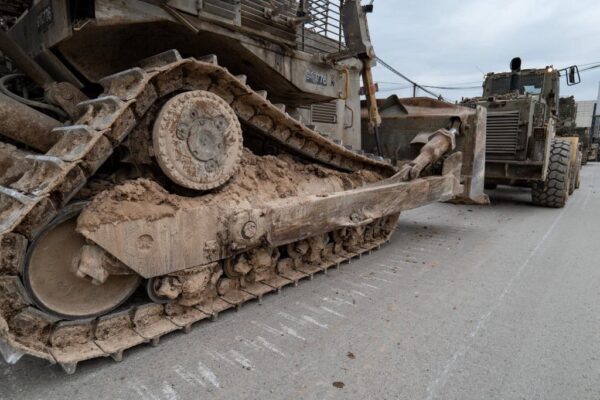
Destruction of Palestinian refugee camps
At the end of January, Israel carried out a large scale military operation in the northern West Bank city of Jenin, which has lasted for ten days so far.
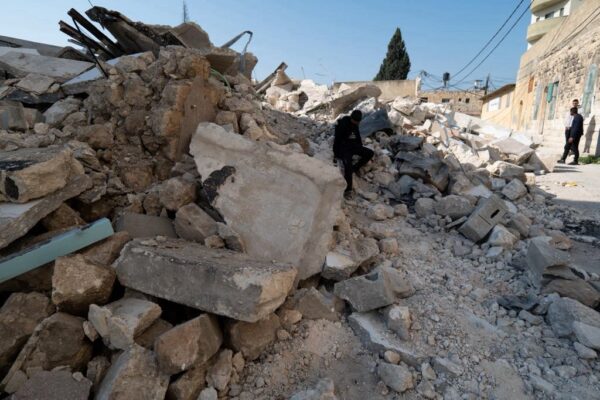
Its military operations are based in the Jenin refugee camp, in various city areas, and in some nearby villages. The Jenin camp has become an unfit place for human habitation, dozens of Palestinian houses have been destroyed and bombed, and the neighborhoods and streets of the camp have already been destroyed. Electricity,water pipes and infrastructure have been destroyed.
A residential block and an entire neighbourhood have been completely destroyed due to aerial bombardment.
Did you succeed in transforming the Jenin camp like Jabalia camp in Gaza?
This is what senior Israeli officials promised before the start of the recent military operation in the West Bank, especially in the Northern West Bank. The Israeli occupation continues its aggression on Jenin, Tulkarm, and Tubas, murdering 29 martyrs, dozens of injuries, arrests, demolition of houses and forced displacement. Amid widespread destruction of property and infrastructure.
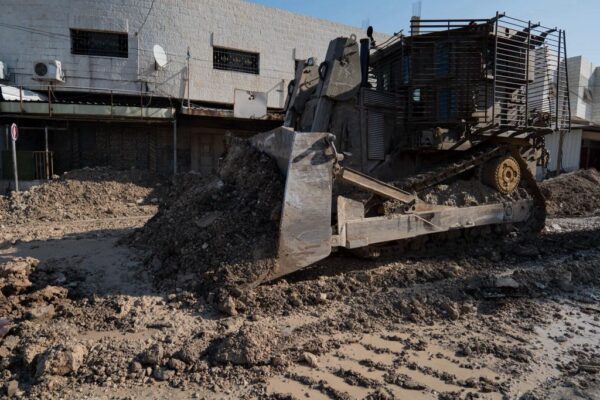
Entrance to Tulkarem
JENIN
Jenin, for the fifteenth day in a row, the occupation continues its aggression against the Jenin city and its camp, which has so far resulted in 25 martyrs, dozens of injuries, arrests, and the demolition of dozens of houses, amid a large displacement process that affected 15 thousand citizens.
Yesterday morning, the occupation army forced residents of the buildings supervising the Jenin camp to evacuate, as several military vehicles were stationed near the buildings demanding evacuation.
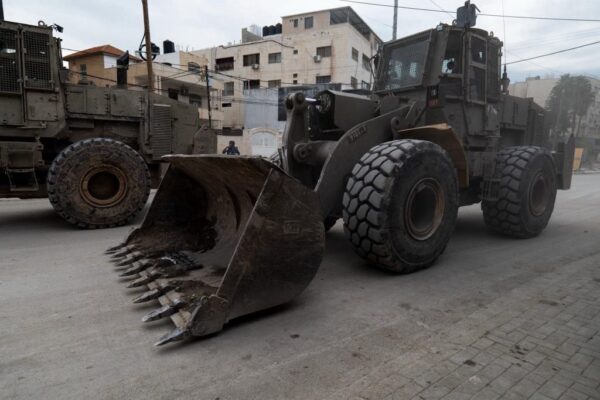
Street in Jenin
Residential buildings and apartments are being emptied, forcibly displacing citizens.
The occupation forces in the Jenin camp simultaneously blew up about 20 buildings in the eastern side of the camp, after booby trapping them, which caused damage to some sections of the Jenin government hospital, without injuries being recorded. The occupation continues to push reinforcements to the city of Jenin camp from the Jalama military checkpoint, while its bulldozers continue to destroy houses in the merge lane, with approximately 15 thousand people now displaced from the Jenin camp the target neighborhood, distributed throughout 39 local community bodies in the Jenin governorate and its towns.
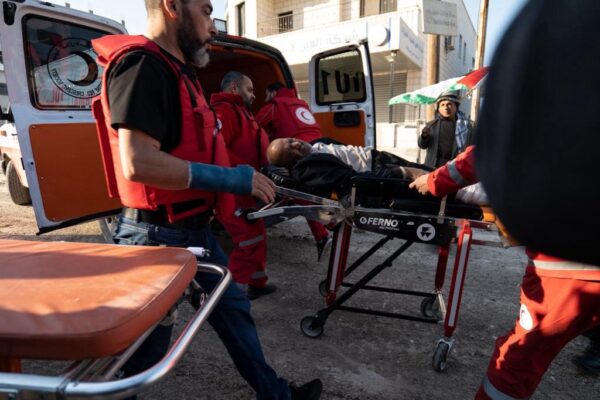
Transfer of an injured person in Tulkarem
TULKAREM
For the ninth day in a row, the occupation continues its aggression against the city of Tulkarm and its camp, resulting in the martyrdom of four citizens, amidst extremely difficult humanitarian conditions.
The occupation forces are still pushing more of their vehicles into the city and its camp from the “tasnouz” military camp west of Tulkarm, and deploying infantry patrols in large numbers in the streets, neighborhoods, and the center of the vegetable market, combing and searching between houses and alleys and harassing citizens.
These forces also continue to besiege the martyr Thabit Thabit government and specialized hospitals, obstruct the work of ambulances and their medical crews, and subject them to inspection and field investigation, while they have taken military barracks and places for snipers from the buildings surrounding them.
The occupation forces escalated their violations against citizens in the city and its camp through a series of attacks, which included raiding houses, forcing their owners to flee, vandalizing and stealing their contents, blowing up and destroying a number of them, in addition to restricting movement, while seizing commercial and residential buildings and turning them into military barracks and places for snipers.
In Tulkarem camp, the occupation forces continue to deploy large numbers of infantry soldiers in all its neighborhoods and alleys, raid houses, force residents to leave them, seize high buildings and turn them into sniper platforms and shoot at Citizens, which led to the injury of a citizen (40 years old), shot by an occupation soldier sniper stationed inside one of these buildings.
House of the martyr Tamer Fugha
Tulkarem camp is living amid this unprecedented continuous escalation, amid difficult humanitarian conditions, after the occupation bulldozers completely and partially destroyed houses and shops, blowing up a number of them and burning others, coinciding with the destruction of infrastructure, which led to the interruption of water, electricity, communications and the internet, making it difficult for specialized crews from the municipality, and others, to repair them because the occupation prevented them from entering the camp. The situation of citizens who are still in their homes ~ the elderly, the sick, women and children has also been aggravated by the acute shortage of food, medical, drinking water, and infant formula.
TUBAS
For the third day in a row, the occupation is besieging AL- FARA’ camp and the town of Tamoun south of Tubas, amid arrests, bulldozing of infrastructure and forcing citizens to flee.
Since the beginning of the storming, Israeli Occupation Forces forces have bulldozed the roads and infrastructure leading to the AL-FARA’ camp, in addition to closing all entrances to it with earthen berms and raiding houses in the vicinity of the camp, forcing its residents to be displaced, and turning them into military barracks.
Israeli Occupation Forces also raided the homes of citizens on the outskirts of the town of Tamun, forcibly displacing residents, giving them orders not to return within ten days.
Water pipelines have been destroyed between the Town of Tamun and the village of Atouf, in addition to closing of the road connecting the two areas with earthen berms.
The occupation continues to push military reinforcements to Tamun and the AL-FARA’ camp, while the Israeli reconnaissance aircraft continues to fly intensively in the skies of the governorate.

Military reconnaissance aircraft
According to the Palestinian Ministry of Health: the number of Palestinian martyrs in the West Bank since the beginning of this year 2025 has reached 70 martyrs.
38 martyrs in Jenin
15 martyrs in Tubas
5 martyrs in Tulkarem
3 martyrs in Hebron
2 martyrs in Bethlehem
6 martyrs in Nablus
1 martyr in Jerusalem
10 of them are children, 2 are women, 2 are elderly people.
Trump plans withdrawal from Syria – media
RT | February 5, 2025
The Pentagon is drafting plans for a full withdrawal of US troops from Syria, NBC News has reported, citing two anonymous defense officials. This comes shortly after President Donald Trump suggested that America’s military involvement in the country serves no useful purpose.
US troops entered Syria in 2014 on the pretext of fighting Islamic State (IS, formerly ISIS), and have maintained a presence in the country ever since, despite never being invited by Damascus.
According to NBC’s report on Tuesday, US defense officials have begun preparing withdrawal plans, with timelines ranging from 30 to 90 days. Sources told the network that Trump’s new national security adviser, Mike Waltz, met with senior military commanders at the headquarters of US Central Command in Tampa, Florida on Friday. He was reportedly briefed on the situation in the Middle East.
Commenting on media reports suggesting that he had informed Israel of the imminent pullout, Trump said last week: “We’ll make a determination on that. We’re not getting, we’re not involved in Syria.”
“Syria is its own mess. They got enough messes over there. They don’t need us involved,” he added.
The Israeli public broadcaster Kan made the claim regarding the supposed withdrawal plans late last month, which presumably caused concern among Israeli officials.
In December 2018, during his first term, Trump announced plans to withdraw US troops from Syria. The decision faced significant pushback from Defense Secretary James Mattis, who ultimately resigned in protest. While some personnel were withdrawn, many were later redeployed
Shortly after the overthrow of Bashar Assad’s government in December 2024 by a loose coalition of armed opposition groups, the Pentagon acknowledged that the number of US troops in the country was in fact 2,000, as opposed to the previously reported 900. Several media outlets claimed later that month that several large US military convoys carrying weaponry and equipment had crossed into Syria from Iraq, further reinforcing the US contingent.
Assad and Moscow have repeatedly denounced the US military presence as an illegal occupation, stressing that Washington was never granted permission to station troops in Syria. The former government in Damascus also accused Washington of stealing the country’s natural resources, given that the US bases are located in the oil-rich northeastern parts of Syria.
The latest claims about the potential withdrawal from Syria came as Trump announced on Tuesday a proposal that includes a plan to “take over” Gaza. He did not rule out deploying US troops to the Palestinian enclave, vowing to “do what is necessary.”
Israel withdraws from al-Muallaqa town in Syria hours after infiltration
Al Mayadeen | February 4, 2025
Israeli occupation forces withdrew from the al-Muallaqa town in Quneitra, Syria, hours after infiltrating the town, field sources told Al Mayadeen.
During their invasion, the IOF searched civilian houses in the area.
Israeli occupation forces are reinforcing their positions on strategic hills on the outskirts of Kodana, South of the Quneitra countryside.
“Israel” has been preparing for the long haul as it takes over Syrian territories. Satellite images reviewed by The Washington Post revealed buildings and vehicles within a fortified Israeli base and another base toward the South.
The two bases are connected through newly dug dirt roads that lead to the Golan Heights.
Satellite images also show two forward observation bases being built by occupation forces; one in Jubata al-Khassab and another one toward the South.
Another Israeli force invaded 2 kilometers east of the al-Salam town in Quneitra and patrolled in front of the Syrian General Security Headquarters.
Last month, Israeli Air Forces targeted a military convoy between Dara’a and Quneitra in Southern Syria, killing 3 people.
“Israel” took advantage of the collapse of the Assad regime and occupied the demilitarized buffer zone between the Golan Heights and Syria. It also targeted the former Syrian army’s arms and vehicles with violent airstrikes over days, destroying most of the capabilities.
Israeli fighter jets strike eastern, northern Lebanon
The Cradle | January 31, 2025
Israeli airstrikes targeted eastern and northern Lebanon early on 31 January, in continued violation of the ceasefire agreement that was recently extended and has seen Tel Aviv’s forces prolong their presence in the country.
Large explosions rocket the Lebanese-Syrian border area south of Lebanon’s eastern city of Baalbek during the early morning hours.
“Enemy warplanes raided the eastern chain (Al-Silsila al-Sharqiya) in the Bekaa,” Lebanon’s National News Agency (NNA) reported on Friday morning.
NNA also reported Israeli airstrikes on the Wadi Khaled area of northern Lebanon’s Akkar district. One raid hit a truck loaded with batteries and scrap metals in the Al-Wawiyat area, while another hit Jab al-Ward crossing on the outskirts of the town of Hanaider.
The Israeli army claimed in a statement that “fighter jets attacked during the night, under intelligence guidance from the Military Intelligence Directorate, several targets of the Hezbollah terrorist organization in the Bekaa region in Lebanon that posed a threat to the Israeli home front and [military] forces.”
“Among the targets attacked: a military site with underground infrastructure for the development and production of weapons and transit infrastructure on the Syrian-Lebanon border through which the Hezbollah terrorist organization is trying to transfer weapons,” the statement added.
Israeli drones had struck three vehicles in the southern Lebanese town of Taybeh on 30 January.
The Israeli army said earlier on Thursday that it intercepted a Hezbollah reconnaissance drone launched towards its territory.
Tel Aviv has stepped up its violations of the ceasefire while claiming to be acting in accordance with the agreement. Earlier this week, it launched violent airstrikes on the southern city of Nabatieh, injuring at least 30 people.
It also continues to attack displaced southern residents who began returning to their villages on 26 January, upon the expiration of the ceasefire implementation period, which has been extended until 18 February. Over two dozen Lebanese citizens in the south have been killed by Israeli troops.
Israel refused to withdraw from south Lebanon as was required during the 60-day period, which was also meant to see the Lebanese army dismantle Hezbollah’s presence and infrastructure south of the Litani River. The implementation period was extended due to Israeli pressure on Washington.
Israel accuses the returning Lebanese residents of being “Hezbollah activists” and “rioters.” It also claims that the LAF did not fulfill its commitments in the agreement, claiming that Hezbollah is still present south of the Litani River.
An Israeli military official told the Ynet news site on 29 January that Israel will not withdraw its troops from southern Lebanon until it deems that the Lebanese army has fulfilled its commitments in the ceasefire agreement.
US Calls for Urgent Extension of Ceasefire in South Lebanon as ‘Israel’ Disregards Withdrawal Deadline
Al-Manar | January 24, 2025
US National Security Council spokesperson Brian Hughes said in a statement Friday that “a short, temporary ceasefire extension is urgently needed” and the U.S. will work with “regional partners” to secure it.
“President Trump is committed to ensuring Israeli citizens can safely return to their homes in northern Israel, while also supporting President Aoun and the new Lebanese government,” Hughes said.
The Israeli occupation military will not complete its withdrawal from southern Lebanon within the 60-day period set out in the ceasefire deal that ended its war with Hezbollah, the Israeli prime minister’s office said Friday.
It is worth noting that the deadline will end on Sunday, January, 26, 2025, at 4 a.m. Thus, few hours separate the border area from dramatic developments if the Israeli enemy insists on keeping its troops occupying territories in South Lebanon.
The Lebanese statesmen have repeatedly voiced concern over the Israeli occupation plots, calling on the United States, France and the United Nations sponsoring the ceasefire agreement to press ‘Israel’ to withdraw before the deadline.
Hezbollah issued on Thursday a statement which underlines the necessity of the full and comprehensive implementation of the ceasefire agreement as outlined in its terms since the 60-day period for the Israeli enemy to completely withdraw from Lebanese territories is nearing its end.
It is also important to note that, unlike Lebanon, the Zionist entity did not respect the obligations of the ceasefire during the 60-day period, launching air raids which left martyrs and injuries, demolishing buildings, scraping lands and roads, and destroying environmental features in several south Lebanon towns.
The latest reports indicated that the Israeli occupation forces, guarded by Merkava tanks, advanced from Houla town into Wadi Slouki area. Moreover, the occupation forces carried out an incursion into Aitaroun town and cut its main highway which leads to Bint Jbeuil City.
In addition, the Israeli enemy had intensively violated Lebanon’s sovereignty and the stipulations of the ceasefire in South Lebanon.
Israeli forces advance, blow up homes in south Lebanon
The Cradle | January 21, 2025
The Israeli army continues to advance in southern Lebanon and destroy infrastructure less than a week before the end of a 60-day ceasefire implementation period, which Tel Aviv is continuously violating.
“The enemy targeted a house on the outskirts of Bint Jbeil with a direct shell, after a number of tanks penetrated Maroun al-Ras towards the outskirts of the city,” Lebanon’s National News Agency (NNA) reported on 21 January.
Israeli forces also pushed into Wadi al-Suluki in the Marjayoun District and carried out “massive” detonations of homes and buildings, according to NNA. Violent explosions also rocked the Marj neighborhood in Houla the previous night as a result of detonations carried out by the Israeli army.
Israel has laid waste to tens of thousands of housing units across the south, and stepped up its destruction after the start of the ceasefire period on 27 November in violation of the agreement.
The deal, based on UN Resolution 1701, is meant to see the Lebanese army dismantle Hezbollah’s presence and infrastructure south of the Litani River, while Israeli forces are required to withdraw from the country. This is supposed to take place within the 60-day period that began in late November and is set to end in six days.
Reports have conflicted, with some stating Israel is not planning to fully withdraw by the end of the 60 days, and others saying that Washington has guaranteed a full pullout by the end of the implementation period.
Tel Aviv has accused Hezbollah of failing to abide by the agreement and remaining south of the Litani. Defense Minister Israel Katz threatened earlier this month that “there will be no agreement” if the “condition is not met.”
Israel has violated the agreement more than 1,000 times since it took effect.
“We in Hezbollah are waiting for the date of January 26, which is the day on which the ceasefire requires a complete Israeli withdrawal from Lebanese territory,” said Hezbollah MP Ali Fayyad on Monday.
“If the Israeli occupation does not abide by this, it will mean the collapse of the executive procedures paper, the destruction of the mechanism it included, and the undermining of the international sponsorship role of this agreement,” he added.
Fayyad went on to say that a failure by Israel to withdraw “puts all Lebanese, without exception, before a new stage, and what it imposes in terms of new calculations, the title of which is confronting the Israeli occupation with all possible means and methods to expel it from our land.”
Israeli army Chief of Staff Herzi Halevi has ordered “the formulation of plans for the continuation of the fighting … in the Gaza Strip and Lebanon,” according to a statement by a military spokesman on Monday.
Kushner’s Saudi-backed fund doubles stake in firm financing illegal West Bank settlements
The Cradle | January 17, 2025
Affinity Partners, the Saudi-funded hedge firm of President-elect Donald Trump’s son-in-law Jared Kushner, received approval from Israeli regulators to double its stake in Phoenix Financial Ltd., which funds the construction of illegal Jewish settlements in the occupied Palestinian West Bank.
Bloomberg reported on 17 January that Affinity could buy an additional 4.95 percent stake in the financial services firm at 37.5 shekels ($10.3) a share.
Phoenix’s share price has surged over 50 percent to around 58.5 shekels apiece since mid-July, when Kushner’s Miami-based firm announced the $128.5 million deal to buy its initial 4.95 percent stake, Bloomberg noted.
Kushner has held up the deal as a sign of his company’s confidence in the war-racked country’s economy.
“Investing in Phoenix in July 2024 was a decision rooted in my belief in Israel’s resiliency and the fundamentals of Phoenix’s business,” Kushner said in a statement to Bloomberg.” Six months later, the increased value of our shares, reaffirms my conviction – both in Israel’s strength and the growing promise of Phoenix.”
Kushner founded Affinity, which has other investments in Israel, including a stake in S Shlomo Holdings’s car and credit division, with $2 billion in Saudi funding after leaving his role as senior White House advisor during the first Trump administration.
Kushner established a close relationship with Saudi Crown Prince Mohammad bin Salman (MbS) while serving in the White House.
Kushner is the son-in-law of US President-elect Donald Trump and served as his senior White House advisor in his first term. Kushner played a pivotal role in the Abraham Accords, which normalized relations between Israel and some Arab nations in 2020. Trump is now expected to try bringing Saudi Arabia into the accords.
In addition to receiving backing from Saudi Arabia’s Public Investment Fund (PIF), Kushner raised an additional $1.5 billion from the Qatar Investment Authority and Abu Dhabi-based Lunate, bringing its assets under management to $4.6 billion.
Pheonix Financial has financed and insured construction projects throughout Israeli settlements in the occupied West Bank and the Syrian Golan Heights.
According to the NGO watchdog Who Profits, Phoenix owns an 80 percent stake in a large shopping mall in an illegal East Jerusalem settlement and stakes in various companies operating throughout other settlements.
Phoenix has also helped finance wind and solar projects in illegal Israeli settlements and provided financial services to the local councils of settlements, including the Beitar Illit and Oranit settlements in the West Bank.
Kushner’s investment in Pheonix comes just days before Trump is set to take office once again.
Israeli settler leaders celebrated Trump’s election and anticipate permitting them to annex the West Bank and greatly expand building settlements for Israeli Jews there.
The Israeli government is also seeking to expand the building of Jewish settlements in the occupied Syrian Golan Heights.
In December, Prime Minister Benjamin Netanyahu’s government announced it would invest more than $11 million to “encourage demographic growth” in the Golan, which Israeli forces first occupied in 1967.
Israel moved to expand its illegal occupation of Syrian territory in the Golan immediately after the Syrian government, led by president Bashar al-Assad, was toppled by militants from Hayat Tahrir al-Sham (HTS), the former Al-Qaeda affiliate, on 8 December.
Kremlin reacts to UK plans for military build-up in Ukraine
RT | January 17, 2025
The possible appearance of NATO-linked military infrastructure in Ukraine is a concern for Russia, Kremlin spokesman Dmitry Peskov said on Friday, commenting on a new security deal between London and Kiev.
The 100-year bilateral agreement, signed by Ukrainian leader Vladimir Zelensky and British Prime Minister Keir Starmer on Thursday, states that the two nations will “explore options for deploying and maintaining defense infrastructure in Ukraine, including military bases, logistics depots, reserve military equipment storage facilities and war reserve stockpiles.”
While the establishment of such facilities would in itself not amount to Ukraine joining NATO, a scenario that Moscow strongly opposes, the British plans are “certainly worrisome”, Peskov told a media briefing.
He also relayed the Russian government’s negative attitude toward British statements that its defense cooperation with Ukraine would include enhanced “collaboration on maritime security” near Russian borders, including in the Azov Sea. Peskov emphasized that the Azov Sea is a Russian inner body of water, so that “interactions between Ukraine and Britain can hardly happen there.”
Moscow views NATO as a hostile entity and has accused its members of waging a proxy war against Russia, using Ukrainian soldiers as ‘cannon fodder’.
The UK has been one of the most vocal supporters of Kiev’s war effort. In the 100-year agreement, it has committed to no less than £3 billion ($3.66 billion) in annual military assistance to Ukraine until financial year 2030/31.
NATO’s eastward expansion since the 1990s – conducted in violation of assurances given to Moscow to secure its acceptance of Germany’s reunification – is one of the primary causes of the current hostilities, according to Russian officials.
‘Israel’ violates ceasefire: Troop infiltration, strikes in S. Lebanon
Al Mayadeen | January 12, 2025
Israeli occupation forces infiltrated various areas and villages in South Lebanon on Sunday, violating the ceasefire agreement in place since November 27.
In the latest violation, an Israeli drone targeted the outskirts of the town of Jbal al-Butm in southern Lebanon, Al Mayadeen’s correspondent in southern Lebanon reported.
Earlier, an Israeli Merkava tank also advanced toward the northern areas of the town of Maroun al-Ras, our correspondent said.
In a related development, an Israeli infantry unit raided homes on the northern outskirts of Maroun al-Ras, near Bint Jbeil, conducting a sweeping operation with machine gun fire.
An Israeli force also advanced toward the town of al-Majidiya, moving toward the Wadi Khansa junction and the outskirts of the al-Mari plain, under the surveillance of a military drone.
Additionally, an Israeli military unit infiltrated the western outskirts of the town of al-Dhayrah, blowing up a house before withdrawing toward the southern outskirts of the town.
Al Mayadeen’s correspondent further reported that Israeli occupation vehicles involved in the incursion fired shells at civilian homes in the town of Ayta al-Shaab.
How the West Destroyed Syria
By Rick Sterling | Dissident Voice | January 11, 2025
Peter Ford served in the UK Foreign Ministry for many years including being UK Ambassador to Bahrein (1999-2003) and then Syria (2003-2006). Following that, he was representative to the Arab world for the Commissioner General of United Nations Relief and Works Agency. He was interviewed by Rick Stering on Jan 6, 2025.
Rick Sterling: Why do you think the Syrian military and government collapsed so rapidly?
Peter Ford: Everybody was surprised but with hindsight, we shouldn’t have been. Over more than a decade, the Syrian army had been hollowed out by the extremely dire economic situation in Syria, mainly caused by western sanctions. Syria only had a few hours of electricity a day, no money to buy weapons and no ability to use the international banking system to buy anything whatsoever. It’s no surprise that the Army was run down. With hindsight, you might say the surprise is that the Syrian government and Army were successful in driving back the Islamists. The Syrian Army forced them into the redoubt of Idlib four or five years ago.But after that point, the Syrian army deteriorated, became less battle ready on the technical level and also morale.
Syrian soldiers are mainly conscripts and they suffer as much as any ordinary Syrian from the really dreadful economic situation in Syria. I hesitate to admit it, but the Western sanctions were extremely effectively in doing what they were designed to do: to bring the Syrian economy down to its knees. So we have to say, and I say this with deep regret, the sanctions worked. The sanctions did exactly what they were designed to do to make the Syrian people suffer, and thereby to bring about discontent with what they call the regime.
Ordinary Syrians didn’t understand the complexities of geopolitics, and they blamed the Syrian government for everything: not having electricity, not having food, not having gas, oil, high inflation. Everything that came from being cut off from the world economy and not having supporters with bottomless pockets.
Syria was being attacked and occupied by major military powers (Turkey, USA, Israel). Plus thousands of foreign jihadis. The Syrian army was so demoralized that they really were a paper tiger by the end of the day.
RS: Do you think the UK and the US were involved in training the jihadis prior to the December attack on Aleppo?
PF: Absolutely. The Israelis also. The leader of Hayat Tahrir al Sham (HTS), Ahmed Hussein al Sharaa (formerly known as Mohammad abu Jolani) almost certainly has British advisors in the background. In fact, I detected the hand of such advisors in some of the statements made in impeccable English. The statements had Americanized spelling, so the CIA are in there too. Jolani is a puppet, a marionette saying what they want him to say.
RS: What’s the current situation, a month after the collapse?
PF: There are skirmishes here and there, but broadly, the Islamists and foreign fighters are ruling the roost. There are pockets of resistance in Latakia where the Alawite are literally fighting for their lives. Much of the fighting is about the attempts by HTF, the present rulers to confiscate weapons. The Alawites are resisting and there are pockets of resistance in the South where there are local Druze militias.
HTS is spread thinly on the ground. They are facing problems in asserting themselves. Although they had a walkover against the Syrian army, they never actually had to do much fighting. I would guess they only have about 30,000 fighting men and spread across Syria, that is not a lot. There’s an important pocket of resistance in the Northeast where the Kurds are. The Kurdish American allies are resisting. The so-called Syrian National Army, which is a front for the Turkish army, may go into a fully fledged war against the Kurdish forces. But that’s going to depend partly on what happens after the inauguration of the new US president, how Trump deals with the situation.
RS: What are you hearing from people in Syria?
It is not a pretty story. HTS and their allies have been parading showing their dominance, flying ISIS and Al-Qaeda flags. They have been bullying, intimidating, confiscating and looting. Surrendering Christian as well as Alawite soldiers have been given summary justice, roadside executions being the norm. Christians in their towns and villages are just trying to hunker down and pray. Literally. I’m sorry to say the senior Christian clerics, with one or two noble exceptions, have opted for appeasement and effectively betrayed their communities. The senior leadership at the Orthodox Church, in particular Greek Catholic church, have had themselves photographed with dignitaries of the jihadi regime.
They are turning the other cheek. It’s quite a contrast with the Alawite. But they have no choice. You may remember that the slogan of the jihadi armies during the conflict was, “Christians to Beirut, Alawite to the grave.” HTS is going through the motions of having meetings with clerics and making soothing noises. All the while their henchmen are driving around in trucks flying ISIS flags. What I’m hearing is very depressing.
The regime is leaving the Alawites totally abandoned. You barely read a word in the west in media about the plight of the Alawite and not much more about the Christians.
RS: Western media have demonized Bashar al Assad and even Asma Assad. What was your impression of Bashar and Asma when you met them? What do you think of accusations they accumulated billions of dollars?
PF: The accusations are completely spurious. I know some members of the Assad family, some of them have lived for many years in Britain. They lived in very modest personal circumstances. If Assad had been a billionaire, like they’re saying, some of that would’ve trickled down. I can guarantee you that has not been the case. These accusations also go against the impressions that I picked up when I was seeing the Assads when I was an ambassador there. They appreciated the good things of life the same as everybody else, but they didn’t come across as the Marcos type. Nothing at all like that. It is all lies, made up to serve the deeper agenda.
The media kicking of Bashar and Asma is really distasteful. It’s pointless. He’s disappointed his few remaining followers, although it was unrealistic, I believe, for them to expect more. But the fact is that he ran when others were not able to run, and many of those have been killed, or they’re hiding or they’ve escaped to Lebanon in some cases where they’re also hiding. He did get out with his skin, but to beat up on him as the media are doing is really distasteful and pointless. It is akin to this new genre of political pornography, Assad porn, the torture stories, the hyped up narrative about prison and graves being opened up. Actually, by the way, most of those graves are war dead. They were not people who’d been tortured to death as the media pretends. Hundreds of thousands of people died in the conflict over more than a decade, and many of them were buried in unmarked graves. But the western media are reveling in this new genre of Assad porn.
This is all being whipped up to make Western audiences more accepting of the way the West is getting into bed with Al-Qaeda. The more they demonize Assad and harp on the misdeeds of the Assad regime, and the more likely we are to swallow and be distracted away from the hideous atrocities being carried out right now.
Western leaders are kissing the feet of a guy who’s still a wanted terrorist and who has been a founder member of ISIS for God’s sake, as well as a founder member of Al-Qaeda in Syria. It is morally distasteful and shaming.
Joulani needs the west desperately now. Otherwise, he will face the same fate as Bashar Asad. If the economy continues on its trajectory of the years, then Joulani will be dead meat in fairly short order. He has to deliver massive rapid economic improvement to survive as leader. And this is what it’s all about. His strategy, obviously, is to milk his status as a puppet of the West in order to secure not just reconstruction aid, but that’s for the long term, but more immediately sanctions relief, the electricity flowing again, the oil.
Let’s not forget that the oil and gas of Syria is still effectively in the hands of the United States, which through its Kurdish puppets, controls a segment of the economy, which used to be worth, I think, 20% of serious GDP and provide essential oil for fuel, cooking, everything. He’s got to get his hands on that and get sanctions lifted. That’s what so much of it is about. But he has one major problem: Israel. Israel’s not buying it. Israel is the exception. All the western front is tumbling over itself to go and kiss the feet of the sultan of Damascus. But the Israelis are sucking their teeth, saying they don’t trust the guy.
Israel is destroying the remnants of the Syrian army and its infrastructure. Meanwhile they grab more Syrian land. They want to keep Syria on its knees indefinitely by insisting that Western sanctions not be lifted. I sense there’s a battle royal going on in Washington between what we might call the deep state, which would favor lifting sanctions and the Israel lobby, which is resisting that for selfish Israeli reasons. Given that the Israeli lobby wins these tussles nine times out of 10, the outlook may not be that great for the Jolani regime.
RS: What are your hopes and fears for Syria? What’s the nightmare scenario and what’s the best possible?
PF: I’m very pessimistic. It is very hard to see a silver lining in what has happened. Syria has been taken off the table as a Middle East player. The old Syria has died effectively. Syria was the last man standing among the Arab countries that supported the Palestinians. There was no other. There were militias like Hezbollah plus Yemen but there were no states other than Syria. Syria is now gone, and the jihadis are saying, telling the world they don’t care. By the way, this is an example of how the Israelis will not take yes for an answer. The jihadis keep telling the world, “We love Israel. We don’t care about the Palestinians. Please accept us. We love you.” And the Israelis won’t take yes for an answer.
The best hope for the Syrian people is that they may get some respite. It is possible to imagine a scenario where the Syrian people are able to recover, at least economically a scenario under which sanctions are lifted, under which Syria, the central government recovers control of its oil and grain, where fighting has stopped, where it doesn’t have to pay anything to keep up an army because it’s not trying. They might be able to put everything into reconstruction.
So it is possible to imagine a scenario where Syria loses its soul, but gains more hours of electricity. That is possibly the most likely scenario. But there are major obstacles as we discussed, Israel standing in the way of sanctions, lifting pockets of resistance in discipline among the jihadi ranks, Turkey rampaging against the Kurds and ISIS which is still not a completely spent force. So the outlook is obviously cloudy. We should take stock in a month’s time when we see the early days of the new regime in Washington on which so much will depend.
RS: In Trump’s first term he tried to remove all US troops from east Syria but his efforts were ignored. Perhaps that could have made a big difference?
PF: Yes, it could have been a total game changer. If Syria had access to its oil, it wouldn’t have had the fuel problem, the electricity problem. It could have changed the history of the region.
Now, the US is increasing the number of soldiers and bases in Syria. And they recently assassinated an ISIS leader which might have played a role in sparking the recent terrorist attack in the US. All of this makes it much harder now for Trump to withdraw US forces because it will be seen as a retreat, a reward for ISIS.
I argued for years that the sanctions were manifestly not working. But in the end they did. It’s like a bridge. It gets undermined and then suddenly it breaks. There was no single cause. It was just the culmination and things reached a tipping point.
Featured Video

Rewriting the risk? Inside the government’s vaccine safety messaging
or go to
Aletho News Archives – Video-Images
Book Review
“Davos Can Really Replace the UN”
Inside the book that maps the architecture behind global governance — from the Epstein files to the Pact for the Future
Lies are Unbekoming | April 1, 2026
On June 13, 2019, the United Nations and the World Economic Forum signed a partnership deal to “accelerate the implementation of the 2030 Agenda for Sustainable Development.” That same evening, WEF president Börge Brende — Norway’s former Foreign Minister — had dinner with Jeffrey Epstein at Epstein’s Manhattan townhouse. The Epstein files, released January 2026, contain an exchange between the two from the previous year. Epstein to Brende: “Davos can really replace the UN. C21, cyber, crypto . genetics… intl coordination.” Brende back to Epstein: “Exactly — we need a new global architecture. World Economic Forum (Davos) is uniquely positioned — public private.”
The next day, the UN General Assembly adopted the framework for restructuring global governance.
That sequence — the partnership signing, the Epstein dinner, the candid admission about replacing the UN with a public-private architecture, and then the formal adoption — opens Jacob Nordangård’s The Digital World Brain. Pages two and three. Footnoted to the UN resolution number, the Epstein files, and the General Assembly record.
I keep coming back to it because it captures what this book does that almost nothing else in the independent research space manages. I’ve followed Jacob’s work for years now and interviewed him about his research. Each book peels back another layer of the same institutional architecture, and each time I think he’s reached the limit of what can be documented, the next one goes further. Nordangård doesn’t speculate. He doesn’t editorialize much. He lays institutional actions next to each other in chronological order and lets the pattern announce itself. … continue
Blog Roll
 Aletho News
- What’s Behind U.S./Israeli Strikes On Iranian Pistachio Factories?
- Seyed M. Marandi: U.S. Military DIVIDED? Iran’s Secret Defense EXPOSED
- How I fell foul of the BBC thought police
- The End of NATO
- 37 days of war on Iran cost US staggering $42bln, tracker shows
- Baghdad tells Asian refiners, traders to begin loading Iraqi crude amid Iranian exemption
- Under fire, Moscow and Tehran close ranks
- Iran, US receive Pakistan-mediated plan for ceasefire then final deal
- Iran submits demands for end to war as mediators scramble ahead of Trump deadline
- Iran Threatens Retaliatory Strike on Stargate AI Project in UAE
- If Americans Knew
- U.N. experts demand Israel release prominent Gaza doctor after reports of ‘severe torture’
- Israel’s Latest Genocide Is Against the Shias of Lebanon. Why Is the World Silent?
- How Eliot Cohen’s influence over U.S. war-making paved the way for Trump’s war crimes in Iran
- Israelis don’t pay for the weapons we ‘sell’ to them — US taxpayers do
- While Distancing from AIPAC, Most 2028 Democratic Hopefuls Are Still Embracing Israel
- A brief history of the Israeli nuclear program, the open secret at the heart of the Iran war
- Israeli Settlers Killed a Palestinian Farmer on His Own Land, in Front of His Father. Yes, Again
- The US-Israeli War on Science is an Assault on our Future
- 100+ International Law Experts Say US Strikes on Iran Violate UN Charter, Could Be War Crimes
- ‘Vile, Horrifying, Evil’: Trump Threatens to Bomb Nation of 90 Million People ‘Back to the Stone Ages’
- No Tricks Zone
- An Inconvenient Tree: Uncovered In Alps… Europe Much Warmer Than Today 6000 Years Ago
- New Study Reports A 60% Slowdown In Greenland’s Ice Loss Rate In The Last Decade
- Low Intensity Tornado Wrecks Major Solar Farm, Creating A Potential Toxic Dump
- New Study Finds Warming Saves Lives…Cold Temperatures 12 Times More Deadly Than Excess Heat
- German Science Blog Accuses PIK Climate Institute Of Hallucinating Climate Tipping Points
- Devastating Assessment Of Comirnaty Vaccine By Former Senior Pfizer Europe Toxicologist
- New Study: CO2 Is ‘Effectively Negligible’ As An Explanatory Climate Change Factor Since 2000
- Former Pfizer Toxicologist Dr. Helmut Sterz Tells Bundestag Hearing Pfizer Vaccine Should Have Never Been Approved
- Energy Expert: Germany’s Nuclear Phaseout Was A “500 Billion Euro Mistake”
- New Research: South Australia’s Mid-Holocene Sea Surface Temperatures Were 4°C Warmer Than Today
 Aletho News