“Israel” Is Top Suspect in Turkish Terror Attack
By Kevin Barrett with extensive translated quotes from Al-Jazeera Arabic | October 24, 2024
Who was behind Wednesday’s terrorist attack on Turkey’s leading aerospace company? According to reports, at least five people were killed, and 22 others wounded, when two terrorists attacked the facility with explosives and gunfire before being “neutralized.”
First clue: Turkish president Erdogan “was holding talks in Russia with Vladimir Putin at the time of the attack.” That suggests that one or more members of the “collective West”—in other words, the Zionist-occupied US empire—probably orchestrated the attack as a rebuke or warning to Turkey and Erdogan. And by targeting Turkey’s leading aerospace facility, someone was presumably sending a message of disapproval regarding activities related to that facility: “We know what you’re up to, so don’t even think about it.”
The attack was not only timed to coincide with Erdogan’s meeting with Putin, but also came during the apparent lead-up to an Israeli attack on Iran that is expected to ignite a major regional war. The Turkish government, like its close ally Qatar, is a major supporter of Hamas, whose leaders Yahya Sinwar and Ismail Haniyeh have been martyred by the Zionists, kindling even stronger global support for the resistance group. At the same time, Israel exercises covert influence in Turkey due to its penetration of the deep state and armed forces with Donmeh (satanic Jewish) traitors.
Israel, which has probably conducted more terror attacks (against both allies and enemies) than all of the world’s other 190+ nations put together, is obviously the leading suspect in the Ankara slaughter. Everyone familiar with the region knows this, but most only say so with hints and whispers for fear of being next on the Zionist terror target list. And though Al-Jazeera English has ignored the elephant in the room, Al-Jazeera Arabic has published an interesting analysis by Saeed al-Haj that discretely echoes the consensus of regional experts. Highlights:
The terrorist attack on the Aerospace Industries Company in Ankara came at a sensitive time in Turkish domestic politics, as well as regional developments, especially the possibility of expanding the “Israeli” aggression in the region, which carries many implications and refers to political, military and security messages to Ankara from several parties.
… the Turkish president has been talking for weeks about the need to “strengthen the internal front” to protect Turkey from external dangers that have begun to threaten it with “Israel’s expansionist policies in the region”, as he put it, and the increasing possibility of a regional war according to Foreign Minister Hakan Fidan.
… The attack targeted the largest aircraft manufacturing company in Turkey, owned by the Turkish Armed Forces and the government, which is working on developing the first domestically-made fighter jet, in addition to other projects.
… We recall Erdogan’s statement about the necessity of Turkey strengthening itself in the field of defense industries “so that Israel cannot do what it is doing now,” recalling his country’s military contribution to both Libya and the South Caucasus, and the possibility of repeating this in Palestine, a statement to which the occupation’s foreign minister responded by threatening Erdogan with “the fate of Saddam Hussein.”
This external dimension is also reinforced by the timing of the attack, which coincided with the Turkish president’s participation in the BRICS summit in Kazan, which many view as an economic bloc competing with or alternative to the G7, as it includes countries such as Russia, China and India, which Ankara recently announced its quest for membership. It is important to note the similarity between the name of the city hosting the summit (Kazan) and the Ankara suburb where the targeted company is located (Kazan), regardless of the degree of deliberateness or coincidence in that. (Emphasis mine -KB).
Because Turkey’s pursuit of BRICS membership, in addition to membership in the Shanghai Cooperation Organization, comes in the context of unstable relations with the West, in light of the stagnation of EU accession negotiations and US sanctions due to the Russian S-400 defense system deal and Washington’s procrastination in completing arms export deals (recently F-16 fighters), Turkish-Western tension over the war on Gaza, and Turkey’s apprehension about the role of Greece and Cyprus in any scenario of this kind, this revives the debate about “Ankara changing its direction from the West to the East.

Publicly, Erdogan has blamed the Kurdish separatist terror group PKK and ordered his air force to bomb PKK sites in Syria and Iraq in response to the terror attack. But what most Americans don’t realize is that Turkey is bombing US-Israeli proxies! The PKK-linked Syrian Defense Forces (SDF), directly controlled by the Washington-Tel Aviv axis, controls a quarter of Syria, including its most agriculturally productive and oil-rich regions. Likewise the YPG in Iraq is a Zio-American mercenary force. Both “Kurdish” Israeli-American occupations ship oil to Israel against the wishes of the governments and peoples of Iraq and Syria, and reap massive profits that rightly belong to the legitimate Syrian and Iraqi governments (both of which have ordered US occupation forces to leave).
So Turkey just bombed an American-Israeli occupation army, killing 12 people in Syria and a still-unknown number in Iraq. It is not known whether the Turkish bombings targeting the occupiers of Syria and Iraq killed any of the American or Zionist occupiers.
Conclusion: The likely US-Israeli attack on the Turkish aerospace facility, and the Turkish retaliation against US-Israeli proxies in Iraq and Syria, suggests that when Israel ignites a massive regional war by attacking Iran, Turkey will side with Iran (and Palestine, Iraq, Syria, Yemen, Lebanon, and indeed the people of the region). But whether it will do so boldly and openly, or in a more subtle and covert manner, remains to be seen.
Leaked report finds Israel targeting UN troops in Lebanon, injured several with white phosphorus
The Cradle | October 23, 2024
Israel’s military has attacked UNIFIL troops deployed on the Lebanon–Israel border a dozen times, including possibly with white phosphorus, the Financial Times (FT) reported on 22 October.
According to a confidential report prepared by a country contributing troops to the UN mission, Israeli forces forcibly entered a clearly marked UN base and are suspected of using the incendiary chemical white phosphorus, injuring 15 UN soldiers.
Israeli forces began targeting UN troops shortly after launching ground operations across the border into Lebanon on 1 October.
UNIFIL has called the attacks “deliberate” and a “flagrant violation of international law.”
UN troops, which come from 50 separate countries, have rejected Israeli Prime Minister Benjamin Netanyahu’s demand that they evacuate their border posts to clear the way for current Israeli military operations in southern Lebanon.
Israel hopes to establish a so-called security zone and push Hezbollah fighters some 30 kilometers away from the border to positions behind the Litani River.
The confidential report viewed by FT includes photographs documenting the extent of the damage done to bunkers that shelter UN troops, perimeter walls, and observation towers at several bases.
On Sunday, an Israeli bulldozer deliberately demolished an observation tower and perimeter fence of a UN position in Marwahin.
On 10 October, two UN troops were injured when an Israeli Merkava tank opened fire and struck an observation tower at the UNIFIL headquarters in Naqoura on the Lebanese coast. The same day, Israeli forces fired at a UN bunker sheltering Italian troops in Labbouneh.
The report says the Israeli military first surveilled the area with drones and destroyed the bunker’s cameras before attacking.
Israeli forces also fired several munitions, which landed near a base and emitted “smoke of suspected white phosphorus” into it.
The FT notes that Israel has used white phosphorus in Lebanon throughout the past year. Its use is unlawful in populated areas under international law.
UN troops were deployed to the Lebanon–Israel border following Israel’s first invasion of Lebanon in 1978. Repeated invasion attempts were made in 1982, 2006, and 2024.
Israeli troops occupied large areas of southern Lebanon between 1982 and 2000 before armed resistance by Hezbollah forced them to withdraw.
Who Is GOP Mega-Donor Miriam Adelson & What Does She Want?
Glenn Greenwald | October 17, 2024
This is a clip from our show SYSTEM UPDATE, now airing every weeknight at 7pm ET on Rumble.
You can watch the full episode for FREE here: https://rumble.com/v5ixvbh-system-upd…
Now available as a podcast! Find full episodes here: https://linktr.ee/systemupdate_
Join us LIVE on Rumble, weeknights at 7pm ET: https://rumble.com/c/GGreenwald
Become part of our Locals community: https://greenwald.locals.com/
Follow Glenn:
Twitter:  / ggreenwald
Instagram:  / glenn.11.greenwald
Follow System Update:
Twitter: / systemupdate_
Instagram: / systemupdate__
TikTok:  / systemupdate__
Facebook:  / systemupdate.tv
LinkedIn:  / systemupdate
Army Demolishes Commercial Facility In Jerusalem
IMEMC | October 15, 2024
On Tuesday, Israeli forces demolished a commercial facility in the Wadi al-Jouz neighborhood of occupied Jerusalem, in the West Bank.
Media sources reported that many military vehicles and bulldozers invaded the neighborhood after isolating it.
They added that the soldiers demolished a commercial facility used for selling and filling medical oxygen, owned by the Badriyya family in the Industrial Zone of Wadi al-Jouz.
It is worth mentioning that the demolition is part of the plan to implement the so-called “Silicon Valley” colonial project on the ruins of Palestinian property and stolen lands.
The colonialist project poses a direct demolition threat to all Palestinian industrial and commercial facilities, which would be replaced by “high-tech” companies, hotels, and commercial spaces on the stolen Palestinian lands and in place of the destroyed Palestinian homes and buildings.
A report issued by the Wall and Colonization Resistance Commission revealed that Israeli authorities demolished 21 facilities in Jerusalem governorate during September.
All of Israel’s colonies in the occupied West Bank, including those in and around occupied East Jerusalem, are illegal under International Law, the Fourth Geneva Convention in addition to various United Nations and Security Council resolutions. They also constitute war crimes under International Law.
states: “The Occupying Power shall not deport or transfer parts of its own civilian population into the territory it occupies.” It also prohibits the “individual or mass forcible transfers, as well as deportations of protected persons from occupied territory”.
Israeli Troops Breach Blue Line to Cross Into Lebanon, Forcibly Enter UN Base
Sputnik – 13.10.2024
UN peacekeepers in Lebanon saw Israeli troops breach the Blue Line that separates Israel from Lebanon on Sunday morning and force their way into a UN base at the southern Lebanese border village of Ramyah, in what the UN Interim Force In Lebanon (UNIFIL) described as a grave violation of international humanitarian law.
“Early this morning, peacekeepers at a UN position in Ramyah observed three platoons of IDF soldiers crossing the Blue Line into Lebanon,” the statement read.
While the peacekeepers were in shelters, two Israeli Merkava tanks destroyed the main gate to the UN position and entered there, the mission said, adding that the Israeli soldiers demanded that the base turn the lights off.
“Breaching and entering a UN position is a … flagrant violation of international law and Security Council resolution 1701 (2006). Any deliberate attack on peacekeepers is a grave violation of international humanitarian law and resolution 1701,” UNIFIL said.
Two hours later, the same UN base reported the firing of several rounds some 300 feet north of the position, which caused smoke to enter the camp and cause skin irritation and gastrointestinal symptoms in UN troops. They are receiving treatment, the mission said.
In a separate incident, Israeli soldiers denied passage to UNIFIL vehicles near the border Lebanese village of Meiss ej Jebel. The critical movement could not be completed, the mission said.
UNIFIL stressed that its mandate provided for freedom of movement in the area of operations and demanded that the Israeli military and other actors fulfill their obligations to ensure the safety and security of UN personnel and property and respect the inviolability of UN premises.
Netanyahu orders UN to evacuate Lebanon peacekeepers
RT | October 13, 2024
Israeli Prime Minister Benjamin Netanyahu has demanded that UN Secretary-General Antonio Guterres withdraw UNIFIL peacekeepers from southern Lebanon, adding that by remaining there they are “providing a human shield to Hezbollah terrorists.”
In a Hebrew-language video message posted to social media on Sunday, Netanyahu told Guterres “it is time for you to withdraw UNIFIL from Hezbollah strongholds and from the areas of combat.”
“The IDF has repeatedly asked for this, and has been met with repeated refusals, all aimed at providing a human shield to Hezbollah terrorists,” he continued.
UNIFIL, or the United Nations Interim Force in Lebanon, was formed in 1978 to oversee the withdrawal of Israeli forces to below the so-called ‘blue line’, which separates Lebanon from Israel and the occupied Golan Heights. Headquartered in the town of Naqoura, UNIFIL is currently composed of around 10,000 troops from around 50 countries, who are tasked with monitoring the demilitarization of southern Lebanon between the blue line and the Litani River.
Israel maintains that UNIFIL has done nothing to prevent Hezbollah entrenching itself in this region, while preventing its own forces from responding to the threat. In the weeks since the Israel Defense Forces (IDF) crossed the blue line and entered southern Lebanon, UNIFIL has claimed that Israeli forces have repeatedly hit its bases and outposts.
Four Sri Lankan and Indonesian peacekeepers were injured on Thursday and Friday when Israeli tanks fired on their watchtowers, UNIFIL said. Another was hit by gunfire at Naqoura later on Friday, although UNIFIL said that it could not identify the origin of the fire. IDF bulldozers have demolished UNIFIL walls and bunkers, while a contingent of Irish peacekeepers found themselves surrounded by Israeli tanks earlier this week when they refused the IDF’s demand that they leave their outpost.
Switching to English, Netanyahu told Guterres to “get the UNIFIL forces out of harm’s way. It should be done right now, immediately.”
“Your refusal to evacuate the UNIFIL soldiers makes them hostages of Hezbollah,” he continued, warning that “this endangers both them and the lives of our soldiers.”
UNIFIL has refused to withdraw from its positions, and in a joint statement on Saturday, 40 countries contributing to the mission called on Israel to investigate the attacks on peacekeepers. One day earlier, the leaders of France, Italy, and Spain expressed “outrage” at the attacks, and accused Israel of violating UN Security Council resolution 1701, which states that its forces cannot operate in southern Lebanon.
Netanyahu said that Israel “regrets” injuring the peacekeepers, but added that the “simple and obvious” way to prevent further bloodshed is “just get them out of the danger zone.”
Israel escalated its military campaign against Hezbollah last month, pounding Beirut with a wave of airstrikes including one that killed the group’s leader, Hassan Nasrallah. A ground invasion followed, and the death toll in Lebanon currently stands at over 2,100, according to the country’s Health Ministry. The IDF has acknowledged the deaths of two dozen of its soldiers in Lebanon, although Hezbollah insists that the true scale of Israel’s losses is far higher.
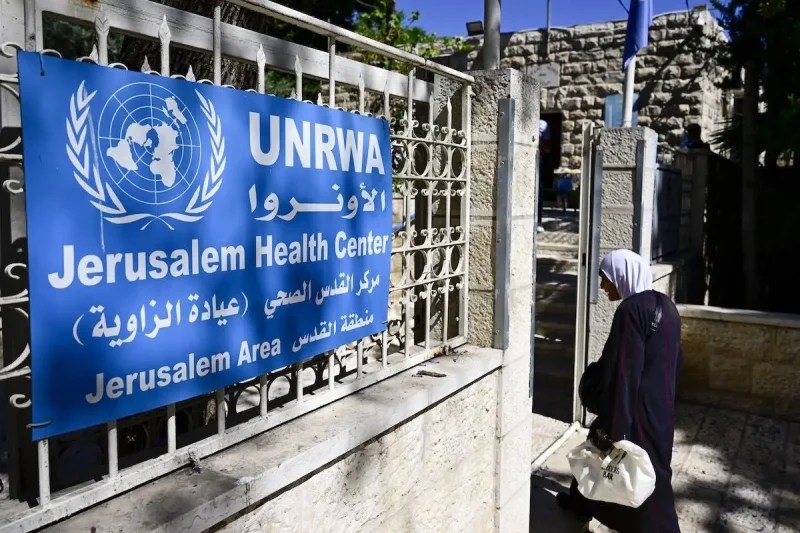
Israel seizes UNRWA headquarters’ land in Occupied Jerusalem
Palestinian Information Center – October 10, 2024
OCCUPIED JERUSALEM – Israel has confiscated UNRWA’s headquarters land in the Sheikh Jarrah neighborhood in Occupied Jerusalem with the aim to build 1,440 illegal settlement units on the site.
The announcement comes a day after members of the United Nations Security Council warned Israel against proceeding with a law aimed at curbing UNRWA’s ability to operate.
Earlier Sunday, the Israeli Knesset’s Foreign Affairs and Defense Committee approved two bills that effectively aim at ending UNRWA’s activity and privileges in Israel.
The move came as part of the Israeli systematic targeting of UNRWA in the occupied territories.
Last January, a number of countries suspended financing for the agency after Israel accused 12 of the 30,000 UNRWA employees of participating in the 7 October attack.
Most resumed funding, however, after a UN report found that Israeli authorities had not provided “any supporting evidence” to back up allegations of UNRWA staff links to the attack.
Germany, Australia, Canada, Sweden, and Japan were among the countries to restore funding to UNRWA following the report.
UN overwhelmingly demands Israel end occupation of Palestinian territories
Press TV – September 18, 2024
The United Nations General Assembly has adopted a resolution that demands Israel end its unlawful presence in the Occupied Palestinian Territory within a year.
A total of 124 countries voted in favor, while 14, including the US, opposed the resolution. Britain, Switzerland, Ukraine, India and Germany were among the 43 countries to abstain.
The resolution welcomes a July advisory opinion by the International Court of Justice that said Israel’s occupation of Palestinian territories and settlements is illegal and should be withdrawn.
The advisory opinion – by the highest United Nations court said this should be done “as rapidly as possible.”
The measure calls for Israel to pay reparations to Palestinians “for the damage caused to all the natural and legal persons concerned in the occupied Palestinian territory”.
The resolution also demands sanctions and an arms embargo against Israel.
The 193-member Assembly also calls on states to “take steps towards ceasing the importation of any products originating in the Israeli settlements, as well as the provision or transfer of arms, munitions and related equipment to Israel … where there are reasonable grounds to suspect that they may be used in the Occupied Palestinian Territory.”
Riyad Mansour, Palestine’s UN ambassador, who opened the assembly meeting on Tuesday, said that no occupying power can have a veto right over the inalienable rights of the people under its occupation.
“Those who think the Palestinian people will accept a life of servitude, a life of apartheid, are the ones who are not being realistic,” Mansour said.
“Those who imagine the Palestinian people will disappear or surrender are the ones who are not being realistic. Those who claim that peace is possible in our region without a just resolution for the question of Palestine are the ones who are not being realistic.
“Each country has a vote, and the world is watching us,” Mansour said. “Please stand on the right side of history. With international law. With freedom. With peace.”
US Ambassador to the UN Linda Thomas-Greenfield urged countries to vote no on Wednesday. Washington, an arms supplier to and ally of Israel, has long opposed any resolution at the world body in favor of Palestine.
Unlike in the Security Council, no country in the General Assembly has veto power.
The action isolates Israel days before world leaders travel to New York for their annual UN gathering.
In May, the UN General Assembly voted overwhelmingly in favor of reconsidering Palestine’s full membership. It is now recognized by 145 of 193 UN member states.
Several countries, including Spain, Norway, and Ireland, recognized Palestine as a state in late May amid mounting criticism of Israel’s genocidal campaign in the besieged Gaza Strip.
While the 15-member council is largely paralyzed on the ongoing Israeli genocidal campaign in Gaza, with the United States repeatedly vetoing censures of its ally Israel, the General Assembly has adopted several texts in support of Palestinian civilians.
Israel Orders Demolition of 37 Homes, Commercial Structures in Silwan
IMEMC | September 17, 2024
On Monday, Israeli soldiers and City Council personnel invaded Silwan town, south of the Al-Aqsa Mosque in the occupied capital, Jerusalem, in the West Bank, and handed out demolition orders for 37 homes and commercial structures.
Media sources reported that the soldiers notified the town’s citizens of the demolition orders, and added that the demolitions are part of the municipality’s plans to remove Palestinian buildings to pave a road, dubbed the “American Road,” and infrastructure for the illegal colonizers.
The number of demolitions in the Jerusalem Governorate from the first of September until the eighth has now reached 307.
The Israeli occupation authorities generally justify the demolition of homes on the pretext of building without permits, despite the rarity of granting the necessary permits for building homes for Jerusalemites.
The “American Road” project, constructed over the ruins of Palestinian homes, demolished residences, and confiscated lands, stretches about 12 kilometers, devouring everything in its path to facilitate the lives of illegal colonizers and create segregated roads between the colonies.
While Israel continues to build and expand its illegal colonies, Palestinian communities and towns in occupied Jerusalem and various areas in the occupied West Bank continue to be denied the right to build homes and property under various allegations meant to prevent the expansion of Palestinian towns and neighborhoods.
All of Israel’s colonies in the occupied West Bank, including those in and around occupied East Jerusalem, are illegal under International Law, the Fourth Geneva Convention, in addition to various United Nations and Security Council resolutions. They also constitute war crimes under International Law.
Article 49 of the Fourth Geneva Convention states: “The Occupying Power shall not deport or transfer parts of its own civilian population into the territory it occupies.” It also prohibits the “individual or mass forcible transfers, as well as deportations of protected persons from occupied territory.”
Israel faces collapse ‘in less than a year’ if war of attrition continues: Retired general
The Cradle | August 22, 2024
The former ombudsman of the Israeli army, reserve General Yitzhak Brik, says his country “faces collapse in less than a year” if the war against the Palestinian resistance in Gaza and the Lebanese resistance in the north continues at its current pace.
In an opinion column published by Haaretz on 21 August, Brik claims Defense Minister Yoav Gallant has begun to “sober up,” pointing to Gallant’s recent comments in which he called Prime Minister Benjamin Netanyahu’s promises of “total victory” in Gaza “gibberish.”
“[Gallant] has started to understand that if a regional war breaks out due to failure to reach a [ceasefire deal], Israel will be in danger,” Brik says, adding that “Gallant already understands that the war has lost its purpose. We are sinking into the mud, losing fighters who are killed and wounded, with no chance of achieving the main goal.”
“Indeed, the country is galloping to depreciation. If the war of attrition against Hamas and Hezbollah continues, Israel will collapse in no more than a year,” the former army commander highlights.
Brik goes on to list the many threats facing Israel 10 months into its campaign of genocide in Gaza, including intensifying attacks inside its territory, a manpower crisis in the army due to heavy losses, a crumbling economy made worse by global calls to boycott the country, possible embargoes on arms shipments, and the “loss of social resilience and hatred between the parts of the population, which can ignite and cause it to crash from within.”
“All roads of political and military rank lead Israel to the slope … Israel has entered an existential spin, and it may soon reach a point of return,” Brik concludes.
His stark warning comes as political sources revealed to Israeli media on Thursday that Netanyahu “did not change his positions” on the terms for a Gaza ceasefire deal after speaking with US President Joe Biden the night before.
Ceasefire negotiations are set to resume in the Egyptian capital in the coming days without the presence of Hamas, as the Palestinian group has rejected a new US-backed proposal and has remained steadfast in demanding Israel adhere to the terms of an earlier proposal it agreed to on 2 July, saying the one-sided talks give Israel “more time to perpetuate the war of genocide against our people.”
Russia steps in to quell tensions between US proxies and Syrian tribes
The Cradle | August 14, 2024
The US-backed Syrian Democratic Forces (SDF) ended on 13 August the siege it had imposed on the northern Syrian cities of Hasakah and Qamishli for the past week, thanks to the mediation of the Russian army.
“All roads that were closed to civilian movement have been opened, with the start of the entry of water, fuel, flour and food tankers into the centers of the cities of Al-Hasakah and Qamishli. Things have returned to how they were before the siege,” Hasakah governor Louay Sayyouh told Al Mayadeen on Tuesday.
Russian military officials held talks with SDF and Syrian army representatives in Qamishli on 13 August, Al Mayadeen and Sputnik reported.
Sputnik’s correspondent said “intensive Russian efforts” took place during the meeting between the commander of Russian forces in Syria and the head of the SDF, Mazloum Abdi, aimed at lifting the SDF siege and de-escalating tensions in the eastern Deir Ezzor governorate, where a large Arab tribal rebellion against Washington’s Kurdish proxy is ongoing.
“There was an initial agreement on the necessity of releasing all detainees in the Syrian army held by the SDF in the cities of Qamishli and Hasakah, along with the necessity of lifting the siege imposed by the SDF on the neighborhoods under the control of the Syrian Arab Army in the cities of Hasakah and Qamishli,” the Sputnik correspondent said.
The SDF siege on Damascus-held areas of Hasakah and Qamishli had been ongoing for the past seven days and was imposed in response to the Arab tribal offensive against the Kurdish militant group last week.
Prior to the Russian visit to Qamishli, which began last week, SDF leaders had “rejected mediation and insisted on continuing the siege,” according to Syrian journalist and TV presenter Haidar Mustafa.
Mustafa added that the SDF siege tactic will not “deter the tribal ‘resistance’ from continuing its project aimed at pressuring the US occupation and its Kurdish militias.”
The Russian mediation came as US forces continued attacks on Syrian army positions in the countryside of Deir Ezzor in support of its SDF allies, who are engaged in clashes with a coalition of Arab tribesmen said to be receiving support from Damascus. SDF forces have also been targeting Syrian military positions with artillery in recent days.
“US Army forces launched a violent attack using heavy artillery and drones on positions of the Syrian army’s auxiliary forces in the villages and towns of Khasham, Marat and Hawijat Sakr in the northeastern countryside of Deir Ezzor,” Sputnik’s correspondent reported during the early hours of 14 August.
The source of the US fire was Washington’s illegal military base in the Conoco oilfield.
On Sunday, several Syrian army soldiers were killed and others wounded in an airstrike targeting a vehicle near Syria’s eastern city of Al-Bukamal on the Syrian–Iraqi border. The strike was widely believed to have been carried out by US forces that had attacked Syria several times since last week’s tribal assault.
A coalition of Syrian Arab tribes launched a massive offensive against the SDF in Deir Ezzor’s countryside on 7 August as part of a rebellion launched against the US-backed militants last year.
The tribal fighters have since lost some of the towns and positions they managed to capture as a result of US air cover provided to the SDF.
The SDF helps oversee oilfields occupied by the US army in Syria and is complicit in Washington’s theft of the country’s natural resources.
It has also released hundreds of ISIS fighters held in its prisons across northern Syria – who have then gone on to attack Syrian troops and civilians.
The rebellion against the Kurdish militants represents a broader rejection of US occupation in Syria.
“The events unfolding today in Syria’s eastern region are a result of the repercussions of the Palestinian resistance’s Operation Al-Aqsa Flood and the broader spillover of conflicts across West Asia … while some may view the recent developments as a local conflict – either between Arab clans or between Arab clans and Kurds – the reality suggests otherwise, as the clans find common cause and common targets with the Axis of Resistance,” political affairs writer and researcher Dr Ahmed al-Druze told The Cradle on 12 August.
Syria’s Arab tribes revolt: US bases and allies become prime targets
The current uprising in Syria’s Deir Ezzor represents the growing armed resistance of local Arab tribes against US-backed Kurdish forces who control their land and resources – potentially opening up a new front for West Asia’s Axis of Resistance
By Haidar Mustafa | The Cradle | August 12, 2024
On 7 August, a coalition of Syrian Arab tribes recaptured several key towns from US-backed Kurdish forces in the eastern countryside of Syria’s Deir Ezzor governorate. These tribesmen, led by Sheikh Ibrahim al-Hafl, launched the largest assault on Syrian Democratic Forces (SDF) sites since the onset of the Arab tribal rebellion against the US-backed militia last year.
The renewed offensive has also reignited popular resistance against the US presence in the region, tracing its origins to the SDF leadership coup against the Deir Ezzor Military Council, which led to the arrest and removal of Arab leader Ahmed al-Khabil, also known as Abu Khawla.
The spark of resistance
In August 2023, the SDF’s arrest of the Deir Ezzor Military Council leader triggered a tribal uprising across several villages under SDF control – from Al-Baghouz to Al-Shuhail. This uprising quickly evolved into a more organized resistance when Sheikh Hafl announced in an audio statement the formation of a military command for the “Army of Tribes and Clans in the countryside of Deir Ezzor” last September.

Clashes along the Euphrates River in Deir Ezzor governorate
Since then, Hafl has become a constant menace to the SDF, with accusations flying that the Syrian government and Iran supported him. It is an obvious attempt to discredit the Arab tribal movement, which is genuinely focused on liberating land and reclaiming resources.
The SDF prematurely announced the “failure” of the attack, which it claims was carried out “upon the orders” of Hossam Louka, head of Syria’s General Intelligence Directorate. In a statement posted on Facebook, the SDF said:
Our sweep campaign continues against the remnants of the Syrian regime-backed mercenaries who attacked the villages of Al-Dhiban, Al-Latwa, and Abu Hamam.
US occupation forces have established prominent bases at the Al-Omar and Conoco oil fields, in a region largely inhabited by Arab communities who have long been persecuted by the SDF. When the US failed to control and co-opt these tribes into a loyal organization, it sought to instead characterize them as a threat aligned with Syrian and Iranian interests.
This narrative is consistent with the approach of the US project and its allies in the SDF, who seek to suppress any resistance movements that challenge their agenda and practices, including the theft of Syrian oil and wheat.
‘Iranian-backed’ tribal resistance
Sheikh Hafl called upon the tribes and clans, especially those beyond Syria’s borders, to support the resistance, leading to increased and sustained attacks against the SDF. The tribal resistance, primarily rooted in Dhiban, spread throughout the towns and cities east of the Euphrates, turning them into a continuous conflict zone.
This resistance posed a significant threat to US interests, with the so-called “Operation Inherent Resolve” reporting in its October–December 2023 quarterly update to the US Congress that tribal fighters have evolved into a “full-fledged resistance movement.”
These fighters, the report said, receive “explicit support from the Syrian regime and its Iranian allies on the western side of the Euphrates River, where resistance fighters resupply, rearm, and launch attacks across the river in SDF-controlled villages on the eastern side.”
Recognizing this threat, the US aircraft recently launched several raids targeting the Arab tribal forces to prevent them from advancing towards their bases or achieving their goal of expelling the SDF from “Arab land.”
Gaining ground as SDF lays siege to Hasakah
After a year of limited confrontations and small operations, Hafl re-issued the call to confront what he called the “Qandil” gangs. This announcement coincided with the launch of a violent attack by Arab tribal forces on SDF positions in the cities and towns of Deir Ezzor.
During this assault, tribal forces managed to cross into and expand control over areas including Dhiban, Al-Busaira, Ibriha, Al-Hariji, Al-Tayyaneh, Abu Hamam, Gharanij, Al-Kishkiya, and the entire riverbed. The SDF, in turn, responded by imposing a siege on the residents of Hasakah and Qamishli within Syrian government-controlled areas, cutting off supplies of flour, food, and water – a tactic the SDF frequently uses to pressure Damascus.
Insiders believe that the SDF is leading Hasakah into the unknown, as the imposition of a siege policy could trigger local confrontations within the city. This will not, however, deter the tribal “resistance” from continuing its project aimed at pressuring the US occupation and its Kurdish militias.
Notably, a Syrian-based Russian delegation arrived at Qamishli airport before Friday afternoon and held several meetings to mediate the crisis. According to Syrian daily Al-Watan, these discussions did not yield positive results after the SDF leaders rejected mediation and insisted on continuing the siege of Hasakah’s population.
Serving geopolitical goals
The US occupation of the Jazira region and the establishment of more than 20 American bases was not primarily to combat terrorism, as claimed by the international coalition, but rather because “ISIS” served as the pretext for strengthening the US obstruction of the strategic land links between the eastern Mediterranean, via Central Asia, to China, and to Iran on the Persian Gulf. The US further seeks to prevent the development of close ties between the Syrian and Iraqi arenas.
Political affairs writer and researcher Dr Ahmed al-Druze explains to The Cradle why the US continues to provide unlimited support for the SDF in opposition to the region’s inhabitants.
The American occupation will remain as long as it has the ability to do so, and it deals with the Arab tribes from this perspective.
Druze believes that the events unfolding today in Syria’s eastern region are a result of the repercussions of the Palestinian resistance’s Operation Al-Aqsa Flood and the broader spillover of conflicts across West Asia.
He highlights that, while some may view the recent developments as a local conflict – either between Arab clans or between Arab clans and Kurds – the reality suggests otherwise, as the clans find common cause and common targets with the Axis of Resistance.
Even if the situation temporarily stabilizes, with tribal forces retreating and the SDF lifting the siege on Hasakah and Qamishli, Druze believes the underlying international conflict will likely resurface, potentially tied to events in occupied Palestine and Gaza.
Though it may be premature to speak of a US existential predicament in the Jazira region, given that its losses currently remain limited, writer and political analyst Khaled al-Miftah argues that the US faces growing popular rejection and resistance.
The region is increasingly aware of Washington’s goals – to establish a separatist Kurdish entity and exploit Syria’s resources. Al-Miftah tells The Cradle that the US is beginning to feel the effects of the Turkish–Syrian rapprochement, which, if achieved under Russian auspices, could spell the end of the SDF’s separatist ambitions. Consequently, the US has begun to create obstacles to prevent this outcome.
Part of the region’s resistance
Despite the end of large-scale military conflict in most of Syria years ago, the eastern region remains embroiled in tension and ongoing strife. Armed confrontations between the SDF and pro-Turkish factions in the north continue, while the war with Arab tribal forces east of the Euphrates enters a new chapter, driven by different calculations than in past battles.
The tribes are now determined to expand their operations and have increased their readiness. US bases have become permanent targets for resistance forces on both the Syrian and Iraqi sides, with drones and rockets frequently striking occupation bases in the Omar and Conoco oil fields. Meanwhile, the tribes have expanded their control over villages that serve as the first line of defense for the SDF around US bases.
Meanwhile, with the SDF’s release of hundreds of ISIS fighters from prisons in July, ISIS continues its terrorist attacks in the region, despite the international coalition’s previous claims of having eliminated the group’s presence. ISIS cells periodically launch assaults on Syrian army positions and their allies in the Resistance Axis.
The Jazira region has essentially become a battleground where the US now reaps consequences from its forced occupation of Syrian territory, disregarding the impact on Syrian territorial unity and the strife it sows among the population.
The eastern region remains trapped in a cycle of escalation, with local and international actors involved, while the Syrian people bear the brunt, suffering both from ongoing violence and the theft of their resources.
Featured Video

Dr. Tony Martin – The Jewish Role in the African Slave Trade
or go to
Aletho News Archives – Video-Images
In Memoriam
James Petras, In Memoriam
 02.13.2026
Professor James Petras, 89, world-renowned sociologist, public intellectual, and scholar of Latin American politics and global economics, died peacefully on January 17, 2026, in Seattle, WA, surrounded by family.
A prolific scholar and activist, he devoted his life to challenging power, imperialism, and inequality. … continue
Blog Roll
 Aletho News
- Lawyers ask police to investigate Elbit Systems UK for alleged war crimes complicity
- Israel ready to strike Iran-backed armed groups – media
- Behind US war drums against Iran: No goals, no plan, no off-ramp
- With Ukraine blamed for cutting oil flows to Hungary, Croatia also refuses to transfer Russian oil in violation of EU law
- Friedrich Merz’s Push to End Online Anonymity Has a Troubling Subtext
- Macron: French citizens fighting for Israel cannot be labeled ‘genociders’
- US eyes Gaza security force drawn from armed gangs
- The Only Motive Behind The ‘Imminent’ U.S. War With Iran Is The Zionist Lobby
- Trump eyes 350-acre US military base housing 5,000 troops in Gaza
- Israel Pushing US Toward a Big and Damaging War With Iran – Ex-Pentagon Analyst
- If Americans Knew
- ‘Christians Out’: Jerusalem Church Tagged With Hate Graffiti, Police Investigating
- Israeli Settlers Kill American Teen
- ‘We returned from hell’: Palestinian journalists recount torture in Israeli prisons
- No mercy for Gaza in Ramadan – Not a ceasefire Day 133
- The Israeli Government Installed and Maintained Security System at Epstein Apartment
- Tucker Carlson interrogated in Israel, has passport seized after interviewing US ambassador
- 6,000 Amputees in Gaza Face Impossible Recovery amid Israeli War Ultimatum
- The Lancet: Gaza death toll far higher than reported – Not a ceasefire Day 132
- Compliant aid: Who are the Israel-approved NGOs scaling up in Gaza?
- Why won’t Trump’s “Board of Peace” bring peace? – Not a ceasefire Day 131
- No Tricks Zone
- Coal Power Back In Trend As Globe Tries To Keep Pace With Growing Demand For Power
- New Study: A 4°C Warmer Beaufort Sea Had ‘No Sea Ice’ 11,700 – 8200 Years Ago
- Unfudging The Data: Dutch Meteorological Institute Reinstates Early 20th Centruy Heat Waves It Had Erased Earlier
- German Gas Crisis…Chancellor Merz Allegedly Bans Gas Debate Ahead of Elections!
- Pollen Reconstructions Show The Last Glacial’s Warming Events Were Global, 10x Greater Than Modern
- Germany’s Natural Gas Storage Level Dwindles To Just 28%… Increasingly Critical
- New Study Rebuts The Assumption That Anthropogenic CO2 Molecules Have ‘Special’ Properties
- Climate Scientist Who Predicted End Of “Heavy Frost And Snow” Now Refuses Media Inquiries
- Polar Bear Numbers Rising And Health Improving In Areas With The Most Rapid Sea Ice Decline
- One Reason Only For Germany’s Heating Gas Crisis: Its Hardcore-Dumbass Energy Policy
 Aletho News