UN’s top court says Israel’s presence in Palestinian territories ‘illegal’
Press TV – July 19, 2024
The United Nations’ top court has ruled that Israel’s presence in the 1967-occupied Palestinian territories is “unlawful” and must end.
On Friday, the International Court of Justice said “Israel’s continued presence in the occupied Palestinian territory is unlawful”, adding that the regime “is under an obligation” to end it “as rapidly as possible.”
Israel occupied the West Bank, Gaza Strip and East al-Quds, areas Palestinians want for a future independent state, in a 1967 war.
The 83-page advisory opinion read out by court President Nawaf Salam outlined a wide list of policies that it said violated international law, including the building and expansion of Israeli settlements in the West Bank and east al-Quds.
“Israel is under obligation to cease immediately all new settlement activities and to evacuate all settlers from occupied Palestinian territory,” the court said, adding that the regime must “make reparation for damage caused to all natural and legal persons concerned.”
The ruling urged all states and international organizations, including the United Nations, “not to recognize as legal” the situation arising from the unlawful presence of Israel in occupied Palestinian territory.
According to the opinion, the UN and the Security Council “should consider the precise modalities and further action required to bring to an end as rapidly as possible” to the unlawful presence of Israel in the occupied territory.
In February, a record 52 countries presented arguments at the ICJ, known as the World Court, about the legal ramifications of Israel’s actions in the territories.
This case was initiated by a UN General Assembly (UNGA) resolution in December 2022, before Israel’s October genocidal war on the Gaza Strip.
Erwin van Veen, a senior research fellow at the Clingendael think tank in The Hague, was quoted by the Associated Press as saying that if the court rules that Israel’s policies in the West Bank and east al-Quds breach international law, it would “isolate Israel further internationally, at least from a legal point of view.”
He noted that such a ruling would “worsen the case for occupation. It removes any kind of legal, political, philosophical underpinning of the Israeli expansion project.”
The case is separate from another ICJ case filed against Israel by South Africa.
South Africa filed a genocide case against Israel in December 2023 over its war on the Gaza Strip. According to South Africa’s application, Israel’s actions in Gaza were “genocidal in character because they are intended to bring about the destruction of a substantial part of the Palestinian national, racial and ethnical group.”
The ICJ’s final ruling on the broader South African case may take months if not years to rule, but the court can order urgent measures while weighing its decision.
In January, the ICJ, whose orders are legally binding but lack direct enforcement mechanisms, issued an interim ruling, ordering the occupying regime to take all measures to prevent genocide in Gaza, but stopped short of ordering a ceasefire.
In May, the court ordered Israel to halt its offensive in Rafah after South Africa asked the ICJ to order a halt to the war in Gaza, and in the refugee-packed city in particular.
While Israel ignored the ruling, the Friday opinion could add political pressure over Israel’s nine-month-old war against Gaza.
Israel launched the war on Gaza on October 7 after the Palestinian resistance movement Hamas waged the surprise Operation Al-Aqsa Storm against the occupying entity in response to the Israeli regime’s decades-long campaign of bloodletting and devastation against Palestinians.
Since the start of the offensive, the Tel Aviv regime has killed at least 38,848 Palestinians and injured 89,459 more. Thousands more are also missing and presumed dead under rubble.
Palestinian Factions: The day after the war is a Palestinian internal affair
Palestinian Information Center – July 19, 2024
GAZ – The Palestinian national and Islamic factions said on Thursday evening that the day after the war on Gaza is a purely Palestinian national affair, and no external party will be allowed to interfere in the Palestinian internal affairs.
The factions stressed in a statement that the Rafah crossing is a Palestinian-Egyptian border crossing, and that the form of its management on the Palestinian side is determined by the Palestinian forces and definitely not the USA or Israel, or those who cooperate with them.
“The recent Knesset resolution which rejects the establishment of a Palestinian state takes us to the heart of the conflict with the occupier,” the statement added.
The factions called for establishing a widespread national movement aimed at “reclaiming the Palestine Liberation Organization that has been silenced for decades and for developing a national strategy and program for liberation.”
The factions’ statement comes in light of the news about a secret meeting held last week between the USA, Israel, and the Palestinian Authority, represented by its intelligence chief Majid Faraj, to discuss reopening the Rafah crossing under the control of Israel and the USA.
For 73 days, Israeli occupation forces have been occupying and closing the Gaza crossings, preventing the wounded and sick from traveling abroad for treatment or bringing in any humanitarian aid into the besieged Strip, turning a blind eye to warnings from humanitarian and relief organizations and international demands to reopen the crossings to avoid famine and to save the lives of thousands of citizens.
Israel approves resolution rejecting creation of Palestinian state
MEMO | July 18, 2024
Israeli lawmakers voted yesterday to approve a draft resolution rejecting the creation of a Palestinian state even as part of a peace agreement.
Some 68 deputies voted in favour of the bill in the General Assembly session, nine voted against it or abstained from voting, while the centrist Yesh Atid Party left the session before the vote was held, according to a statement issued by Knesset.
The resolution declares that “the Israeli Knesset opposes the establishment of a Palestinian state on any piece of land west of the Jordan River” claiming that “the existence of a Palestinian state in the heart of Israel will pose an existential threat to the State of Israel and its citizens, will further extend the Israel-Palestinian Arab conflict and be a source of destabilisation for the entire region.”
The motion concludes: “Supporting Palestinian statehood at this time would reward terrorism and serve to encourage Hamas and its supporters. Israel’s enemies will interpret it as the victorious outcome of the massacre perpetrated on October 7 and a precursor to the conquest by jihadist Islamism of the entire Middle East.”
The proposal was introduced by the opposition New Hope-United Right Party and supported by several parties within Prime Minister Benjamin Netanyahu’s coalition, as well as the National Unity Party led by former War Cabinet Minister Benny Gantz.
Gideon Sa’ar, a prominent Israeli lawmaker and chair of the New Hope-The United Right Party, said the resolution “aims to express the opposition that exists among the Israeli people to the establishment of a Palestinian state that would endanger Israel’s security and future.”
He added that the decision sends a message to the international community, indicating that “pressures aimed at imposing a Palestinian state on Israel will not work.”
In response to the vote, Palestinian presidential spokesman Nabil Abu Rudeineh stated that peace and security cannot be achieved without the creation of a Palestinian state in accordance with international legitimacy.
According to the Wafa news agency, he accused Israel of terrorism resulting in the deaths of children, women and the elderly.
Abu Rudeineh emphasised that the Palestinian state is recognised globally, with 149 United Nations member states acknowledging its existence. He added that international recognitions continue to affirm that the establishment of an independent Palestinian state does not require permission or legitimacy from anyone.
He further noted that these decisions highlight Israel and its ruling coalition’s determination to destabilise the entire region, holding the US accountable for its bias and unwavering support.
The vote comes after an earlier decision this year by the Knesset to reject any “unilateral” international recognition of a Palestinian state.
Hezbollah-affiliated group launches 1st operation against Israel since Al-Aqsa Flood
MEMO | July 14, 2024
The Lebanese Resistance Brigades, a paramilitary group linked to Hezbollah, claimed responsibility yesterday for a military operation against Israel in southern Lebanon. This announcement marks the group’s first since the launch of Al-Aqsa Flood last year.
Founded by Hezbollah in 1997, the Brigades include volunteer fighters from various Lebanese sects. On Friday, they reported launching rockets at the Israeli ‘Rweisat al-Qarn’ site in the occupied Lebanese Shebaa Farms, achieving a “direct hit.” Hezbollah and Israel have engaged in near-daily exchanges of fire since the war on Gaza began.
Hezbollah which supports Hamas has vowed to cease attacks only with a Gaza ceasefire. The Lebanese government and Hezbollah rejected the occupation state’s demand to evacuate the border area of Hezbollah fighters. Nabih Berri’s parliamentary bloc welcomed international efforts to end Israel’s aggression against Gaza and opposed establishing buffer zones in Lebanon.
In October, the Lebanese Resistance Brigades lost two of its fighters, Ali Kamal Abdel Aal “Jihad” and Hussein Hassan Abdel Aal “Bilal”, from the town of Helta in southern Lebanon, who were martyred while performing their national duty, reports Al Mayadeen.
Cross-border fire continues, with a Lebanese army vehicle recently hit by Israeli gunfire. The personnel escaped unharmed. The Brigades affirmed their mission to resist Israeli occupation and liberate Lebanese territories.
Palestinians and international human rights observers arrested in Masafer Yatta, occupied West Bank
International Solidarity Movement | July 7, 2024
Israeli Occupation forces arrested three Palestinians, including a 14 year old child, together with three internationals (including a US citizen) and one Israeli human rights observer in at-Tuwani, Masafer Yatta, in the South Hebron Hills area.
This morning, armed Israeli settler shepherds invaded Palestinian land with their flocks, provoked the family that was working on their land and attempted to steal one of their donkeys. The Palestinians tried to prevent them from going on their land and were attacked by the settlers. They called the police to remove the settlers, but the army and police chose to arrest three Palestinians, one of whom is a 14 year old child, three international and one Israeli human rights observers. No settlers were detained. They have all been taken to an Israeli police station. As of 5.45 pm (Jerusalem time), the family has been released but the human rights observers remain under custody.
The family, including the child, was already detained for around 3 hours on their land a couple of weeks ago and they have suffered numerous attacks over the years from violent settlers and the army. A couple of weeks ago, settlers cut newly planted trees and destroyed the water connections.
Land theft and ethnic cleansing have spiralled since October 7 in Masafer Yatta, and in other areas of the occupied West Bank. Israeli settlers who live in illegal settlements have been heavily armed and have escalated harassment and threats towards Palestinian communities, with the backing of the Israeli occupation forces. Umm al-Khair, one of the villages in Masafer Yatta, has lately come under almost daily attack from settlers and the army. On June 26, occupation forces demolished a dozen structures in Umm al-Khair displacing dozens of residents, including children. Since then, settlers have raided the village, shot live ammunition, erected a tent in the village and destroyed the water system, leaving the whole community of Umm al Khair without access to water.
On July 4, settlers carried out a pogrom in the village of Khalet a Dabaa. About 200 settlers reached the village at midnight, set agricultural land and trees on fire and attacked villagers, shot live ammunition and kidnapped a villager. An Italian activist from the NGO Mediterranea was also badly beaten. There are daily incidents in Masafer Yatta, with settlers coming on what remains of Palestinian land to herd in order to harass and push Palestinians further away from their land.
These are not isolated incidents. They are a part of a bigger plan of annexation of the West Bank/Area C. Between October 7 and July 1, over 1,050 attacks from settlers on Palestinians have been recorded by OCHA. At the beginning of March, Israeli authorities approved the construction of almost 3,500 illegal housing units in settlements around the West Bank. More recently, almost 5,295 new illegal housing units have been approved. This all comes amidst the biggest land seizure in the West Bank in over 30 years. Far-right Finance minister Bezalel Smotrich has vowed to bring a million more settlers under his expansion plan.
In a quiet move, about a month ago, more control was moved from the Israeli army’s civil administration to the recently established governmental body “Settlement Administration”, led by Smotrich. Last Thursday, Orit Strock, Minister of Settlements and National Missions, was reported praising a master plan to build over 100 housing units in the South Hebron Hills area, saying this was “a miracle time” and “a sacred mission,” highlighting her efforts to invest in the area.
All of this is happening while the Israeli authorities are repressing human rights solidarity in the area, with at least six more international and three Israeli human rights observers banned from the area in the previous few weeks, with the aim of isolating Palestinian communities and promoting their propaganda unchecked.
Israel approves largest seizure of West Bank lands in 3 decades
MEMO | July 3, 2024
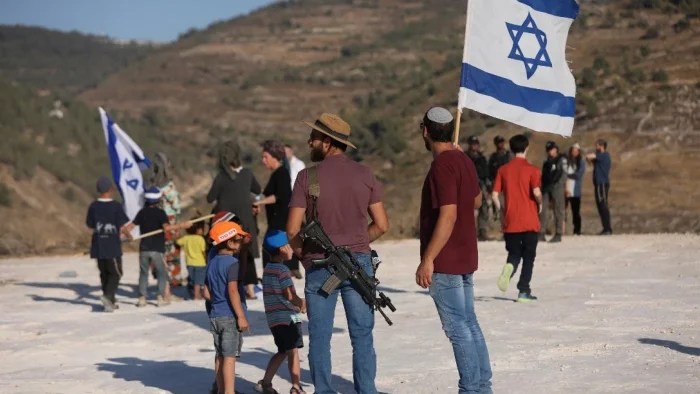
The Israeli army seized a large area of Palestinian land south of Nablus in the northern West Bank, according to a Palestinian government agency on Wednesday, Anadolu Agency reports.
“The Occupation authorities decided to seize a total of 12,715 dunams (3,141 acres) of land belonging to citizens in the village of Aqraba, south-east of Nablus,” the Colonisation and Wall Resistance Commission said in a statement.
The Commission said Israel designated the seized territory as “state land” to “convert citizens’ lands into an expanding settlement project”.
The decision was “part of a larger plan to control the eastern slopes of the West Bank, particularly those adjacent to the Jordan Valley and its outskirts by seizing vast areas in this region,” the statement said.
Since the beginning of 2024, Israeli authorities have issued four announcements converting private Palestinian lands into state lands, thereby prohibiting Palestinian citizens from accessing, cultivating or reclaiming them, the Commission noted.
The statement indicated that the area declared as “state land” in these announcements totals 24,000 dunams (5,930 acres).
According to the Commission, the total area of land seized under various designations since the start of 2024 has reached 39,000 dunams (9,637 acres).
On Tuesday, the Commission’s semi-annual report highlighted the establishment of 17 new Jewish-only settlement outposts, while the Israeli government granted legal status to 11 other outposts.
Settlement outposts are small communities established by illegal Israeli settlers on privately owned Palestinian land without approval from the Israeli government.
Estimates indicate that around 700,000 Israeli settlers live in roughly 300 illegal settlements in the Occupied West Bank and East Jerusalem.
All Jewish settlements in the Occupied Territories are considered illegal under international law.
Saudi Arabia warns of ‘dire consequences’ of Israel’s new settlement plans in West Bank

Press TV – June 29, 2024
Saudi Arabia’s Foreign Ministry has warned of the “dire consequences” of Israel’s plan to expand illegal settlement in the occupied West Bank.
In a statement on Saturday, the ministry slammed the Israeli regime’s decision to legitimize five new outposts in the West Bank.
Saudi Arabia opposes the “ongoing Israeli violations of international law and international legitimacy resolutions,” it added.
“These violations undermine opportunities for peace and contribute to fueling conflicts and destabilizing regional and international security and stability,” the statement read.
On Thursday, Israel’s extremist finance minister Bezalel Smotrich announced that the Security Cabinet authorized one outpost for every country that unilaterally recognized Palestine as a state in the last month.
Last month, Spain, Ireland and Norway formally recognized the Palestinian state, joining over 140 UN member states that have recognized its statehood over the past four decades.
Slovenia and Malta have also indicated they plan to formally recognize the state of Palestine.
The five settlement outposts are Evyatar, Givat Assaf, Sde Efraim, Heletz, and Adorayim.
The Organization of Islamic Cooperation in a statement on Saturday condemned Israel’s new settlement expansion plan in the West Bank.
It said all actions and decisions taken by Israel as the occupying power to perpetuate its colonial regime in the occupied Palestinian territory are null and void under international law and the relevant UN Security Council resolutions, especially UN Security Council Resolution 2334 (2016).
Hamas plans a legal response to ICC arrest warrants
Palestinian Information Center – June 21, 2024
GAZA – The Hamas Movement declared that it is planning a legal response against the International Criminal Court (ICC) chief prosecutor’s request for arrest warrants against three of its top leaders.
Calling the war crimes accusations against three of its top leaders – Yahya Sinwar, Ismail Haneyya and Mohammed Deif – “baseless”, Hamas said it would argue Palestinians have “the right, indeed the duty, to resist occupation by all means available, including armed resistance.”
The ICC’s chief prosecutor Karim Khan said in May the three Hamas leaders bore responsibility for the attack on southern Israel on October 7, 2023, which killed at least 1,139 people with 250 captives taken to Gaza.
The same day, Khan announced he was seeking arrest warrants against Israeli Prime Minister Benjamin Netanyahu and his war minister Yoav Gallant.
In its statement, Hamas described Khan as biased in Israel’s favor.
It said the prosecutor “erred in considering that the state of conflict began on October 7,” asserting it began in 1948 with Israel’s establishment.
The Movement pointed out that the Public Prosecutor believed the Israeli sexual assault accusations, although the occupation was unable to provide a single piece of evidence for its claims.
“The bias of the Public Prosecutor appeared blatantly when he brought charges and requested the issuance of an arrest warrant against the head of the Movement, who is a political figure residing outside Gaza.,” the statement reads.
However, the Public Prosecutor, the statement continued, did not direct any charges against the Israeli Chief of Staff, who ordered all killing, destruction, and genocide operations in the Gaza Strip.
The Movement further affirmed its respect for international law, while the Israeli occupation rebels against it and against the resolutions of international legitimacy.
The Public Prosecutor and the International Criminal Court are facing a historical test of their credibility, it concluded.
Hezbollah using Israeli Occupation Forces as testing ground for weapons: Israeli media
Al Mayadeen | June 2, 2024
Israeli media reported today, Sunday, on developments in the ongoing war on the northern front, stating that it is gradually becoming the “main front” at the moment. The reports addressed Hezbollah’s military capabilities and its handling of field developments.
The North is gradually becoming the “main front” as Hezbollah increases the scope and intensity of operations while utilizing only a fraction of its capabilities, Israeli media reported on Sunday.
The Resistance in Lebanon “has used only 5% of its weapons arsenal during these months of battle as a testing ground against the Israeli army, in preparation for a real and extensive battle,” Ynet reported, citing the occupation army.
The news website added that Hezbollah “tries every day to bypass air defense systems and derive lessons,” and that “this has become evident with the different launch angles [the Resistance] uses, the concentration of launches, and the varying amounts of explosives in each weapon fired, among other factors.”
Thus, despite the “relatively limited volume of fire compared to the quantities” Hezbollah possesses, the Resistance “is registering accurate and successful hits,” the outlet added, pointing out to the operation using the Burkan heavy rockets on Saturday targeting the 769th Brigade HQ, “Camp Gibor,” causing severe damage to the military base.
The report added that “the use of Burkan rockets has proven effective in terms of material and psychological damage,” citing its “impact due to the unusual levels of destruction caused by each of these rockets, which are known as heavy rockets and can carry up to half a ton of explosives.”
The website also noted that “in recent months, similar to updates introduced to the anti-tank Almas missile, Hezbollah has developed a new family of Burkan rockets with warheads that exceed a ton of explosives” compared to earlier versions with a maximum capacity of 500kg of explosives.
‘To be or not to be’
Israeli Reserve Major General Gershon Hacohen warned on Saturday that “Israel” is currently facing an “existential threat” from Hezbollah, with its motto being “to be or not to be,” emphasizing that the occupation entity lacks the military capability to eliminate the threat posed by the Lebanese Resistance group.
Hacohen told the Israeli Channel 14 that “Israel’s” system of concepts and lifestyles must change, warning that “tomorrow we may not be here if we do not prepare ourselves for a situation we have not witnessed before.”
The Israeli Major General explained that the Israeli military does not currently possess “the size of forces capable of decisive action against Hezbollah…”
“Lebanon is a large country and Hezbollah is spread across all its territory, even in the depths of Lebanon,” he added.
“You must understand that the Israeli army is small, and not only Haredim (ultra-Orthodox Jews) but hundreds of thousands of those exempted from service from the age of 20 to 50 must be recruited to build three or four divisions, and then we can talk,” Hacohen told the Israeli Channel 14.
His statements coincide with a new study conducted by Tel Hai Academic College in “Israel” which revealed that around 40% of Israelis who fled from the settlements in northern occupied Palestine are contemplating not returning even after the war ends.
US plans to be ‘very involved’ in post-war Gaza – Politico
RT | May 24, 2024
The US wants a “prominent” role in Gaza after Israel’s military operation in the Palestinian enclave ends, Politico has reported. Washington expects a joint Palestinian-Arab force of several thousand troops to take charge of security in Gaza after the current conflict.
On Thursday, Politico reported details of discussions within the administration of US President Joe Biden about what a post-war settlement should look like, citing four officials and a leaked document from the Department of State.
The US reportedly wants to retain a “civilian adviser” to any future security force, likely based in Egypt or Jordan. American forces, however, would “never enter Gaza itself” in order to avoid the impression that Washington was “dictating the future of the territory.”
A classified document from March envisioned an American filling the role of a “director-general” of the future security mission, according to the outlet. Under that proposal, the force would consist of roughly 2,000 Palestinians and 1,000 troops from Arab-speaking nations. It would be commanded by an officer from Israel, the Palestinian Authority, or “ideally” Egypt.
The timeline for the implementation of Washington’s plans are unclear, according to a US intelligence assessment described by Politico earlier this week. The document said Israel had managed to reduce the strength of Hamas forces by up to 35% since the group’s attack on Israel last October. However, it has recruited thousands of new fighters in recent months, a source in the intelligence community told Politico.
The Pentagon’s widely reported efforts to deliver humanitarian aid via a floating pier have been undermined by logistical and security issues. No food reached starving Palestinians between last Friday and Tuesday of this week, spokesman Pat Ryder told reporters, blaming the delay on local NGOs that were tasked with distributing the aid.
The US has refused to work with the UN Refugee Agency, a prominent provider of humanitarian aid in Gaza, after Israel accused some of its employees of involvement in the October 7 attack. Last month, the UN said it had closed or suspended its probes into the allegations because Israel had failed to provide any evidence substantiating its claims.
Israel army is floundering in Gaza, ex-commander says
MEMO | May 20, 2024
Reserve Commander General Gadi Shamni has warned that the Israeli army is “floundering” in Gaza, adding that Israel “clearly” will not achieve the goals it has set for its bombing campaign.
In an interview with Maariv newspaper, Shamni said, “It is difficult to see how all the Israeli detainees will be returned from the Gaza Strip,” adding that he believes Hamas will suffer losses due to the war, but will not be “eliminated militarily”.
According to Shamni, the government of Prime Minister Benjamin Netanyahu has condemned Israel to “years of confusion, isolation, and severe damage to the economy.”
“The most dangerous thing is the dramatic erosion of the status of Israel, which was a regional power until the Hamas attack on the Gaza envelope settlements on October 7,” he added.
Since 7 October 2023, the Israeli occupation army has continued its aggression against the Gaza Strip, with American and European support, as its planes bomb hospitals, resident buildings, towers and Palestinian civilian homes, destroying them over the heads of their residents, and preventing the entry of water, food, medicine and fuel. More than 35,450 Palestinians have been killed as a result, while over 79,470 have been injured. A further 1.7 million have been forcibly displaced from their homes and neighbourhoods, according to UN data, many numerous times.
Featured Video

Seyed M. Marandi: U.S. Military DIVIDED? Iran’s Secret Defense EXPOSED
or go to
Aletho News Archives – Video-Images
From the Archives
‘Israel sees Iran as obstacle to its policies’
Press TV – August 25, 2017
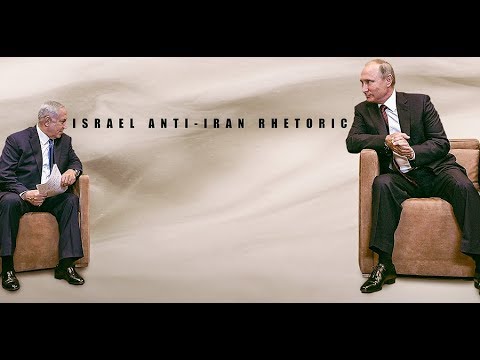
Prime Minister Benjamin Netanyahu has said that Israel felt threatened by Iran’s growing influence in the Middle East. Netanyahu expressed his Iranophobic view in a meeting with Russian President Vladimir Putin in Russia’s Black Sea resort of Sochi on Wednesday. Press TV has asked Scott Rickard, former American intelligence linguist from Tampa, Florida, and Brent Budowsky, a columnist at The Hill from Washington, to give their thoughts on the issue.
Rickard said Tel Aviv is concerned about the fact that the regime could not carry out its old project to spread sectarian divisions and pave the way for dismemberment of the countries in the Middle East region because of the Iranian-led resistance against Israeli policies, not only in the occupied territories of Palestine but also in the whole region.
“Iran is not a threat to Israel whatsoever. The threat that Israel sees is the fact that their Oded Yinon Plan is being put to a hold by Iran,” the intelligence linguist said on Thursday night.
“They (the Israelis) look at Iran as a threat only because they have no influence on their governments and Iran is autonomous and is not under the Zionist influence,” he added.
Since the victory of the Islamic Republic of Iran in 1979, Tehran has been critical of Israel’s policies in the region, whereas “no leaders [of other states] even dared to speak out against Zionism,” Rickard argued. … continue
Blog Roll
 Aletho News
- The US-Israeli War on Science is an Assault on our Future
- Trump’s Promise to Bomb Iran ‘Like Never Before’ Faces Brutal Logistics — Expert
- Germany seeks to restrict stays abroad for men of fighting age – Berliner Zeitung
- Evidence points to Ukraine being behind TurkStream attempted sabotage, but that should come as no surprise
- Sri Lanka secures supplies of Russia oil – minister
- Nations across Asia strike direct deals with Iran for Hormuz passage
- IRGC commander declares ‘new phase’ of reprisal attacks against aggressors
- Israel’s air defenses overwhelmed by cluster-warhead Iranian missiles: Reports
- Striking Iran’s Infrastructure Would Have Little Military Impact – Report
- What’s Behind U.S./Israeli Strikes On Iranian Pistachio Factories?
- If Americans Knew
- Trump Says US Sent ‘a Lot of Guns’ to Protesters in Iran
- Israeli forces destroy 17 UN peacekeeper cameras in south Lebanon
- US-Israeli strikes ‘completely destroy’ synagogue in Tehran
- Archbishop for US Military Says Iran War Is Unjust Under Catholic Teaching
- Iranian President Pens Open Letter to American People
- Trump says Iranians appreciate bombs, WHO warns of nuclear risks – Daily Update
- U.N. experts demand Israel release prominent Gaza doctor after reports of ‘severe torture’
- Israel’s Latest Genocide Is Against the Shias of Lebanon. Why Is the World Silent?
- How Eliot Cohen’s influence over U.S. war-making paved the way for Trump’s war crimes in Iran
- Israelis don’t pay for the weapons we ‘sell’ to them — US taxpayers do
- No Tricks Zone
- An Inconvenient Tree: Uncovered In Alps… Europe Much Warmer Than Today 6000 Years Ago
- New Study Reports A 60% Slowdown In Greenland’s Ice Loss Rate In The Last Decade
- Low Intensity Tornado Wrecks Major Solar Farm, Creating A Potential Toxic Dump
- New Study Finds Warming Saves Lives…Cold Temperatures 12 Times More Deadly Than Excess Heat
- German Science Blog Accuses PIK Climate Institute Of Hallucinating Climate Tipping Points
- Devastating Assessment Of Comirnaty Vaccine By Former Senior Pfizer Europe Toxicologist
- New Study: CO2 Is ‘Effectively Negligible’ As An Explanatory Climate Change Factor Since 2000
- Former Pfizer Toxicologist Dr. Helmut Sterz Tells Bundestag Hearing Pfizer Vaccine Should Have Never Been Approved
- Energy Expert: Germany’s Nuclear Phaseout Was A “500 Billion Euro Mistake”
- New Research: South Australia’s Mid-Holocene Sea Surface Temperatures Were 4°C Warmer Than Today
 Aletho News