Hypocrisy and Genocide: Here’s who the West should really be ‘decolonizing’
By Tarik Cyril Amar | RT | February 24, 2024
The hypocrisy of the US-led West regarding how it reacts to Russia, a geopolitical opponent, on one side, and to Israel, a favorite with special privileges, on the other, is so flagrant that even The Guardian has noticed. While the West uses rhetoric about “rules” and “values” to cloak its proxy war against Russia via Ukraine, it tolerates and supports Israel’s genocidal attack on the Palestinians in Gaza. That even the United Nations’ top court, the ICJ, has by now found genocide a plausible possibility, simply makes no real difference.
This is a failure that goes beyond cynical political elites. During the war between Russia and Ukraine (and de facto the West), many Western academics, journalists, and experts have not been able to get enough of displaying their rhetorical toughness. While badly misled Ukrainians have been doing all the dying, going to verbal extremes was all the rage among the West’s chairborne brigade.
Some tried to accuse Moscow of genocide. Others felt that the least they could do was demand that Russia cease to exist. That fantasy of disintegrating a geopolitical rival was usually dressed up as a call to “decolonize Russia,” also disparaged as “the last empire.” These labels were handy because they implied three fashionable – if silly – ideas: First the claim that the modern, post-Soviet Russian Federation consists of a colonizing center and colonized peripheries. Second, the wish that Russia simply must fall apart because all empires do (never mind it’s not an empire). And third, that Ukraine can be recast as a victim of imperialism on par with, say, the Belgian Congo or Vietnam fighting off first the French and then the Americans.
None of the above makes sense. Russia is a federation, its population features more than one ethnic identity, and there are imbalances. If you think that’s the definition of colonialism, go right ahead and take apart Great Britain or France. As for a “last empire,” maybe try the US first. After all, that is the one country on Earth that considers itself officially “indispensable,” thinks the whole globe is its God-given (literal) sphere of influence, has just used up Ukraine as a proxy in Europe, and is reducing its EU vassals to penury, sponsoring an ongoing genocide in the Middle East, and gearing up for a big war in Asia to defend its “primacy.”
But the inherent absurdity of these clearly politically – propagandistically, really – motivated charges is not really their most interesting aspect. For one thing, it’s just too obvious. What is really intriguing is something else, and it has happened only recently. We are now in the fifth month of witnessing – 24/7 and in real-time – the Israeli genocide of the Palestinians in Gaza. That is the outcome of Israel’s very structure, its Zionist source code: that of a classical European settler colony whose existence in its current form is premised on the removal of indigenous populations.
And yet, the same brave voices courageous enough to loudly shout what every political leader (and editor, and employer) in the West has wanted to hear about Russia – where are they now? Where are their demands to “decolonize Palestine,” that is, free the Palestinians from Israeli oppression and mass murderous violence? Where are their demands to end the “last settler colony”?
And, make no mistake, ending Israel as it is now, a state based on persistent violence, in permanent violation of UN rules with impunity, does not require or imply indiscriminate mass violence against Israelis. It simply means that this state – not its Jewish population – commits the very imperialist crimes Western talking heads keep accusing Russia of.
Where is the concern for Palestine, a country that, clearly, is a real victim of imperialist violence at the hands of Israel and the West? Where are the calls for arming the Palestinian Resistance with the best of NATO’s arsenals? Transferring tens of billions of euros and dollars to the Palestinians so they can sustain their fight against Israeli aggression? Nothing. With very few exceptions, the silence of the Western intellectuals is deafening.
The contrast with past grandiloquence is stark, even grotesque. Take, for instance, the Washington Post op-ed “What’s happening in Ukraine is genocide. Period.” of April 5, 2022. Authored by Eugene Finkel, a political scientist originally from Lviv in Ukraine and based at Johns Hopkins University, the piece argued what its title would make you expect: Finkel had no doubt that he was able to identify a clear-cut case of genocide. He has not been silent with regard to Gaza either: On November 16, 2023, he used an op-ed in the Los Angeles Times to tell us about “a bout of violence that includes atrocities, indiscriminate targeting, bombings and hostage taking, leading to claims about a potential genocide or genocidal massacres committed by the warring parties.”
Spot the difference? Whereas Finkel rushed to the far-fetched conclusions he wanted with regard to Russia, he is careful to speak only of “claims” when it comes to Israel and Gaza – and, of course, he both-sides the Israeli perpetrators and Palestinian victims. And yet, Israel has clearly and deliberately targeted civilians with a strategy of forcing ethnic cleansing. The methods of warfare used by Israel – for instance, systematic starvation blockade; the publicly encouraged mistreatment of civilians, including children and women, as combatants and of combatants as without any rights; the destruction of all medical infrastructure and the systematic murder and abuse of medical staff; the systematic mass slaughter by bombing – have no parallel in Russia’s fighting in Ukraine. And, for Israel, there can be no doubt about “intent,” which is a key factor in proving genocide.
If Finkel were remotely honest and unbiased, the very least he would have to do is invert his position: The case of Israel’s genocide in Gaza is crystal clear; the case for accusing Russia of this crime in Ukraine is anything but.
Regarding “decolonization,” there’s Janusz Bugajski, a Senior Fellow at the Jamestown Foundation in Washington and author of “Failed State: A Guide to Russia’s Rupture.” Bugajski has been an ardent advocate of disintegrating Russia, urging Western policy-makers to get ready for Moscow’s defeat and collapse, and then “capitalizing on Russia’s de-imperialization.” He has, unsurprisingly, also reveled in the “falling empire” cant. His ability to get his facts and predictions ridiculously wrong is one thing. Poland, whose glorious strategic future his next book will predict, may worry about that.
So, what about Bugajski’s take on the Gaza Genocide? Simple: It’s Moscow’s fault, of course. Or, at least, what we must think about is not the Israeli genocide but Bugajski’s contention that Russia somehow benefits from this crisis. As to what is actually happening on the ground, Bugajski can only spot “Israel’s retaliation against Gaza to eliminate the terrorist threat.” Genocide? What genocide? He has, to be fair, noticed that the US faces “international condemnation” for its support of Israel. But that fact as well he can only mentally process as yet another “win” for nefarious Moscow.
We could add more examples. But the problem should be clear by now: Too many Western intellectuals are betraying the first obligation of their professions: to at least strive to be honest. The almost compulsive urge to weaponize themselves, their positions, and reputations against Russia has overcome any respect for facts and consistent standards. That alone is a sad picture of ethical decline. But their response – or often complete failure to respond – to Israel’s genocide in Gaza, however, is so much worse again. It is at that point – that is now – that their blatant disregard for the Palestinian victims and their needs and rights reveals them not only as biased careerists and ideologues, but as bereft of conscience and compassion.
Tarik Cyril Amar is an historian from Germany working at Koç University, Istanbul.
China backs Palestinians’ right to ‘armed struggle’ against Israeli occupation
The Cradle | February 22, 2024
China expressed support for the right of Palestinians to engage in “armed struggle” against Israel, stressing this is not “terrorism” during the fourth day of hearings at the International Court of Justice (ICJ) in a case against Israel’s illegal occupation of Palestinian territories.
“In pursuit of the right to self-determination [the Palestinian people have the right to the] use of force to resist foreign oppression and to complete the establishment of the Palestinian state,” Ma Xinmin, a Chinese Foreign Ministry legal adviser, told the World Court on 22 February.
Citing examples of “various people [who] freed themselves from colonial rule” through armed resistance, Xinmin argued that acts of resistance against the Israeli occupation are “not terrorism” but a legitimate armed struggle and an “inalienable right.”
“Numerous other resolutions recognize the legitimacy of struggle by all available means, including armed struggle by people under colonial domination or foreign occupation to realize the right of self-determination,” the Chinese official said.
“Chinese President Xi Jinping has stressed on multiple occasions that China calls for a comprehensive ceasefire and the early solution to the question of Palestine on the basis of a two-state solution through negotiation,” he added.
Xinmin took to the podium ahead of Iran’s Deputy Foreign Minister for Legal and International Affairs, Reza Najafi, who highlighted Israel’s historic violations of Palestinians’ right to self-determination.
“The establishment of the Israeli regime was done through a violent process which involved the forcible displacement of native Palestinian people to create a majority Jewish colony in line with the Zionist movement,” Najafi said.
He also listed a series of ongoing violations by Tel Aviv, which include the prolonged occupation and manipulation of the demographic composition in the occupied Palestinian territories, the alteration of the character and status of Jerusalem, and the discriminatory measures and violations of the rights of Palestinian people to permanent sovereignty over their natural resources.
“The expansion of settlements, segregated roads and barriers as well as checkpoints has created a system of apartheid which is isolating Palestinian communities,” Najafi added before addressing the UN Security Council (UNSC) for their “inaction or insufficient action,” saying this was one of the “main causes of prolonged occupation of the Palestinians” and highlighting that the top UN body is “paralyzed due to the stalemate” caused by a “certain permanent member.”
“All the atrocities and crimes committed by the Israeli regime in the past almost eight years are a consequence of such inaction,” the Iranian official concluded.
The Iraqi representative to the ICJ, Hayder Shiya al-Barrak, took to the podium next and called on the ICJ to respect previous court orders against Israel, such as the provisions made after South Africa’s case to “stop the systematic killing machine against the Palestinian people.”
“We hope that the court’s commitment to justice will lead to additional decisions … affirming its dedication to ending the campaign of mass murder and preventing acts of genocide as well as policies of harassment, blockade, and starvation against the Palestinian people,” he said.
Barrak concluded his intervention by calling on the World Court to take decisions “that safeguard the lives of the Palestinian man, women, children, and elders, allowing them to enjoy a dignified and secure life where all human rights are achieved.”
Time’s up: Threats won’t prevent US ouster from Iraq after years of occupation
By Wesam Bahrani | Press TV | February 17, 2024
All eyes in Iraq are glued to the negotiations taking place at the moment between American officials and the government of Mohammad Shia’ al-Sudani, aimed at ending the years-long military occupation.
The climate of these talks is believed to be tense. A source familiar with the latest security developments in the Arab country said the Iraqi resistance has threatened to shut down the US embassy in Baghdad, which has long been accused of acting as a US military base instead of a diplomatic mission.
This would also see all Western embassies affiliated with the US-led military coalition getting closed if the American occupation rejects popular and growing calls to withdraw from Iraq, the source noted.
The Iraqi government can also expect threats from Washington during the meetings. With the revenue of Iraqi oil sales heading to the US Treasury in a very unfair measure, Washington can threaten to impose sanctions that could weaken the Iraqi Dinar.
This sinister ploy would be aimed at downgrading the living standards of Iraqi families in a bid to turn the people against their government and the resistance. They may both (as Washington would hope) be blamed for any damage to the country’s economy, despite the US pulling the strings.
The Iraqi resistance is seeking a clear timeline from the government for the expulsion of US forces and is not willing to settle for anything less, including vague assurances of withdrawal dates.
How the resistance will execute its threat against the US embassy is unclear, but it appears that America has already decided to withdraw from the country. The only question is when and how.
Washington is aware that its military presence in Iraq is deeply unpopular. This was evident when the White House held back from ordering strikes against the resistance, which had attacked US bases in Iraq and Syria around 200 times since the genocidal Israeli war on Gaza began on October 7, 2023.
But after the recent deadly US strikes on the Iraqi-Syrian border followed by the assassination of the Iraqi military commander Abu Baqr al-Sa’adi in the capital Baghdad, all the indications suggest that nothing will return to normal for the US occupation even if the Israeli-American war on Gaza ends.
Al-Sa’adi was a highly respected commander within the Popular Mobilization Units (PMU), also known as Hashd al-Shaabi, whose factions have been integrated into the national armed forces.
The PMU’s Chief of Staff, Abu Fadek, asserted that “avenging the martyrdom of Abu Baqir al-Sa’adi is the removal of all foreign forces” and that the resistance “will not accept anything less than this.”
Abu Fadek did not go into specifics on how the US occupation will be removed; only saying the PMU will coordinate with “all relevant Iraqi parties,” including the government.
The PMU, which was established in 2014, needs the green light from the Iraqi government to wage military operations against the US occupation.
The Iraqi resistance was established in late 2003 to resist the US invasion. Many of its factions later joined the PMU in its fight against Daesh and, in turn, got involved in the country’s political system.
The resistance has also warned that the US seeks to return Daesh terrorism to Iraq should its troops leave the country for a second time, and this assertion does not look far-fetched.
It was no coincidence that when the Iraqi resistance kicked out the US occupation in late 2011, the Arab Spring turned into a terrorist Autumn that saw the US creation of Daesh (by the admission of American officials themselves), and allowed the US military to slip back into Iraq through the backdoor.
The resistance has been waging drone and missile operations on US bases in Iraq and Syria in solidarity with Gaza and to end the Israeli regime’s partner in crime, the American occupation, without government coordination.
That does not make its military measures illegitimate as it has the legal authority to resist an occupying entity. The resistance cooperates with government officials in the field of security. Deep down, the government knows it won’t be sitting in Baghdad today without the sacrifices of the resistance.
In the vast number of battles against terrorism, it has handed over many terrorists to the relevant government authorities to face trial. A large proportion of terrorists in Iraqi jails today were captured by the resistance, so the country owes its security to the resistance.
It has also acted independently during its operations against the US occupation, which have surged under the banner of the Islamic Resistance in Iraq, following the genocidal Israeli war on Gaza.
Nevertheless, the recent deadly US bombings in Iraq have violated all the rules of engagement and agreements with Baghdad and the so-called US-led military coalition could see the potential entry of the PMU in the fight against the American occupation, should it not depart after the current negotiations between Iraqi and US officials.
It won’t be surprising to see a suspension of attacks by the resistance against American bases in the lead-up to a US withdrawal from the country.
This is what happened in 2011 when Washington requested third parties to plead with the resistance for a two-month pause in attacks against US forces so that President Barack Obama could paint a picture back home that American troops are not leaving under fire.
The two leading factions of the Iraqi resistance today, Kataib Sayyed al-Shuhada (KSS) and Harakat al-Nujaba operate – like all other Iraqi resistance forces – independently of any third party, contrary to US claims that these factions receive support or orders from Iran.
The Secretary-General of KSS, Abu Ala’a al-Walai, fought the former Iraqi Ba’athist regime of Saddam Hussein, the first US occupation, and more recently Daesh terrorists and the second US occupation.
The senior Iraqi resistance official was imprisoned by Saddam’s West-backed regime for ten years and the US occupation for three years.
“We were grateful for Iran’s support toward the resistance in the past, in particular against Daesh terrorists. Today we have our own opinions and make our own decisions. These repeated questions that ‘we fight on behalf of Iran’ or ‘take orders from Iran’ have become irritating,” he said.
Iran has repeatedly stressed that these resistance movements in the region act on their own accord.
The reality is that the Iraqi resistance has gained significant experience on the battlefield and much of the credit for that goes to the late Haj Radwan (Imad Mughniyah), a senior commander with Lebanon’s Hezbollah who was assassinated by a joint Israeli-American operation in February 2008.
The experience of the Lebanese guerilla-style resistance that ended the Israeli army’s occupation of Lebanon in 2000 suited the Iraqi resistance in its operations against the US army’s first occupation of the country from 2003 until 2011.
Furthermore, in all the US airstrikes against the arms depots of the resistance, there were never any Iranian weapons, such as short-range missiles that have been hitting US bases recently, found in the caches.
The irony is that Washington itself is fully aware of this, but has repeatedly branded the Iraqi resistance as “Iranian-backed” – repeating this hollow rhetoric many times since October 7.
The Americans argue their presence in Iraq has seen a transition from a combat mission to an “advisory” role. But there is nothing “advisory” about bombing the country dozens of times and killing its soldiers.
That was evident by America’s deadly combat mission in the country.
As the Secretary-General of Harak al-Nujaba, Sheikh Akram al-Kaabi said “The end of the resistance operations depends on Gaza and the US withdrawal from Iraq.”
One of the stumbling blocks to the US withdrawal from Iraq is some Sunni and Israeli-backed Kurdish parties that have shown little desire for the end of the occupation.
This was evident during the parliament session that was held to discuss the occupation in the aftermath of the US assassination of al-Sa’adi.
Sunni and Kurdish members were notably not in attendance at the session, which passed a bill for the parliamentary defense and security committees to review the violations of the occupation.
It appears that some Kurdish parties are complicit in the destabilization of their own country by inviting the Israeli Mossad to operate from the northern regions they control.
But many factions of Iraqi society, including its people from all faiths and backgrounds, the majority of its parliament, presidency and government have publicly voiced their rejection of the US occupation and are calling for the swift withdrawal of its military.
The government meetings with the US can see this task accomplished. America pretty much knows its time in Iraq has come to an end unless it seeks a major escalation.
As Iraq approaches the 21st anniversary of the US invasion that left a lasting imprint on its security infrastructure, the journey towards self-sufficiency has been a challenging one for the country, with persistent obstacles hindering its ability to stand firmly on its own feet.
Behind all of these setbacks that Iraq has suffered is the US.
The challenges that have faced the country are multifaceted. The deadly American occupation from 2003 until 2011 was intertwined with al-Qaeda in Iraq (AQI), which saw terrorist attacks killing dozens, if not hundreds, of civilians on an almost daily basis.
Not a single market in Baghdad was spared. At one point, 24 terrorist bombings took place in one day.
This was followed by the brutal Daesh terrorism that marked another dark chapter in the country’s history and then came the second wave of a very sinister and trouble-making US occupation in 2014.
It all proves that consecutive governments were incapable of providing stability, the government of Haider al-Abadi’s agreement to allow the Americans back in 2014, was strongly opposed by the resistance and the government of al-Sudani is now regretting that decision.
Iraq stands at a crossroads, grappling with the legacies of the past while striving for a more secure and stable future. The journey ahead is undoubtedly challenging, but the strength of the resistance remains a beacon of hope.
The incumbent government has declared that the PMU and other Iraqi armed forces are capable of securing the country’s sovereignty and territorial integrity, and acknowledges that a destabilizing US occupation, which violates Iraqi skies every day, is standing in the way.
Iraq needs resistance until it is capable of providing security to its people and sovereignty for the country. Baghdad needs to purchase anti-air defense systems that can secure its skies from intruding aircraft. It needs a stronger army to secure its borders.
The PMU is doing an effective job on the Syrian border despite being bombed by the US. But all of the borders need to be protected. This will help bring security to the country and the wider region.
Wesam Bahrani is an Iraqi journalist and commentator.
Lebanon rejects demands to push Hezbollah away from southern border
The Cradle | February 6, 2024
Lebanese caretaker Foreign Minister, Abdallah Bou Habib, voiced on 6 February the nation’s rejection of recent Israeli and international demands seeking to push Lebanese resistance group, Hezbollah, north of the Litani River, saying Beirut will not accept ‘partial solutions’ to resolving the cross-border conflict.
“Western countries demand the retreat of Hezbollah for about eight to ten kilometers north of Litani,” Bou Habib said in an interview with Nida al-Watan. “This is a formula that Lebanon rejects. [Beirut] will not accept ‘partial solutions’ that do not bring the desired peace and do not secure stability but will lead to the renewal of the war again and again.”
Instead, the foreign minister called for a “comprehensive implementation of UN Resolution 1701.”
UN Resolution 1701 was issued following the 2006 Israel–Hezbollah war, which called for, among other things, respect for the Blue Line, a border drawn up by the UN in 2000.
Bou Habib expressed Lebanon’s demands in relation to the liberation of Shebaa Farms and the Kfarchouba hills, saying, “What we hear from some foreign ministers of the Western countries is that Israel is not in the question of this withdrawal, and our answer was that Lebanon will only accept a complete solution to all border issues with Israel, and half solutions do not work and will not [be accepted].”
He also demanded that part of a potential deal be for Israel to “stop the air, land and sea violations that have exceeded 30,000 violations since 2006.”
On 5 February, Israeli Foreign Minister Israel Katz said that “time is running out” in relation to a diplomatic solution with Lebanon, adding to his French counterpart Stephane Sejourne during her visit to Israel that “if we do not reach a diplomatic solution on Lebanon, we will move militarily to return the residents of Israeli towns on Lebanon’s borders,”
Hezbollah has recently released statistics showing that over 230,000 settlers had evacuated because of their operations since 8 October.
US special envoy Amos Hochstein paid a visit to Israel to speak with Defense Minister Yoav Gallant in an attempt to develop a plan to de-escalate the crossfire between Lebanon and Israel.
Gallant requested for Hezbollah to be pushed back 8–10 kilometers from the border, an increase of UN forces and Lebanese army in the area, and the means to return settlers to the northern settlements.
Hezbollah’s Secretary General Hassan Nasrallah said during a recent speech in reference to Israeli threats and negotiation talks, “we don’t fear war, and there are no talks before the war on Gaza ends.”
No Iranian base or advisors targeted by US strikes in Iraq, Syria: Diplomat
Press TV | February 3, 2024
Iran’s Ambassador to Damascus Hossein Akbari says no Iranian bases or military advisors have been targeted in deadly strikes by the US occupation forces on a number of sites in Iraq and Syria.
Akbari said on Saturday that contrary to claims, the attacks aimed to destroy Syria’s civil infrastructure amid the pro-Palestine actions undertaken by the resistance front.
He said the US government’s terrorist act on Friday night was carried out mainly to make up for Israel’s defeats in the Gaza Strip and strengthening armed Takfiri terrorists based on the borders of Iraq and Syria.
The US Central Command (CENTCOM) said in a statement on Friday that its forces had struck more than 85 targets “with numerous aircraft” during overnight raids on localities in Iraq and Syria.
The Syrian state media reported that the US aggression targeted positions in Syria’s eastern province of Dayr al-Zawr and the city of al-Bukamal near the Iraqi border, falling short of providing details on the extent of damage and the exact number of casualties.
Sixteen people were killed, among them civilians, and 25 injured in the US airstrikes in Iraq, Prime Minister Mohammed Shia’ al-Sudani’s office said.
Iraq summons US chargé d’affaires in protest over airstrikes
Press TV – February 3, 2024
Iraq has summoned the US chargé d’affaires in Baghdad to deliver a formal memorandum of protest over the overnight airstrikes on dozens of sites used by anti-terror resistance groups in the country.
The Iraqi Foreign Ministry announced in a Saturday statement that it is going to call in David Burger “in protest at the US aggression which targeted Iraqi civilian and military sites” due to the absence of Ambassador Alina L. Romanowski, the official Iraqi News Agency (INA) reported.
The statement said Iraqi officials will deliver an official note of protest regarding the strikes against locations in the towns of Akashat and Al-Qa’im in the western province of Anbar.
The Iraqi government said at least 16 people were killed in the US strikes. It condemned the “new aggression against” Iraq’s sovereignty. Civilians were among the fatalities, and 25 people were wounded in the bombings that targeted both civilian and security areas, a government spokesperson said.
“This aggressive strike will put security in Iraq and the region on the brink of the abyss,” the Iraqi government said, and denied Washington’s claims of coordinating the attacks with Baghdad as “false” and “aimed at misleading international public opinion.”
The presence of the US-led military coalition in the region “has become a reason for threatening security and stability in Iraq and a justification for involving Iraq in regional and international conflicts,” a statement from Prime Minister Mohamed Shia al-Sudani’s office read.
Syrian official news agency SANA also reported several casualties after the attacks in the desert region and border areas with Iraq.
US Central Command (CENTCOM) said its military forces struck more than 85 targets in the two countries “with numerous aircraft to include long-range bombers flown from the United States.”
“The airstrikes employed more than 125 precision munitions,” it added in a statement.
US President Joe Biden said in a statement on Friday that the strikes were the first in a series of actions by Washington in response to a recent drone attack that killed a number of soldiers at a remote US base in Jordan.
“Our response began today,” Biden said. “It will continue at times and places of our choosing,” he stated.
Three US soldiers were killed and about 40 others injured in the assault on the military base known as Tower 22 near the Jordan-Syria border on Sunday.
The Islamic Resistance in Iraq, an umbrella group of anti-terror fighters, claimed responsibility for the drone strike.
In retaliation for the latest flurry of US strikes in Iraq and Syria, the Islamic Resistance in Iraq announced it had conducted missile strikes against the Ain al-Asad Airbase, housing US occupation forces in the western Iraqi province of Anbar. The group also said it had staged missile and drone strikes against the strategic al-Tanf military base in southeastern Syria near the border with Jordan and Iraq, as well as the al-Khadra Village in Syria’s northeastern province of al-Hasakah.
Biden’s Justification For Hitting Iran ‘Would Justify Russian Attacks on NATO’
By Ian DeMartino – Sputnik – 03.02.2024
On Friday, US President Joe Biden fulfilled his promise to strike Iranian targets in Syria and Iraq, further escalating the region even as the White House insists that it does not seek war with Iran.
Michael Maloof, a former senior security policy analyst for the Office of the Secretary of Defense with nearly 30 years of experience, told Sputnik’s Fault Lines that the justification used by the White House could easily be applied by Russia to NATO countries supporting Ukraine.
“You’re hearing from congressmen and senators saying ‘but we need to hit Iran for supplying the Houthis and Hamas and Hezbollah,” Maloof explained. “Well, does Russia then have a right to hit US and NATO allies, as a result of supplying weapons to Ukraine to battle Russians?”
The United States has placed the blame on Iran for the Sunday drone attack that killed three US service members and injured dozens more on the border of Syria and Jordan. While the US admits that it has no evidence Iran helped plan the attack, the Biden administration has been clear it blames Iran because the country allegedly funds those groups and other militants.
“This afternoon, at my direction, U.S. military forces struck targets at facilities in Iraq and Syria that the IRGC and affiliated militia use to attack U.S. forces,” US President Joe Biden said in a statement released Friday by the White House.
“I think that if Biden were to follow through, then that raises a whole new specter of opening up NATO countries to potential attack,” Maloof continued, adding that the US is simply hoping Russian President Vladimir Putin “doesn’t follow through” with that justification.
Maloof argued that the US should reevaluate the situation in the Middle East but it’s difficult because the US looks “at the Middle East through the prism of Israel all the time.”
“We’ve got to somehow figure a way out of it. Instead, we’re digging that hole deeper and even though there might be some attempts to try and persuade [Israeli Prime Minister Benjamin] Netanyahu to calm down and have a ceasefire and try to resolve things, it’s doing just the opposite.
“The problem is that Biden has left the conduct of the war up to Netanyahu, and Netanyahu knows this and he’s basically dragging us along – we’re captives of Netanyahu,” Maloof explained.
“You don’t have any, there’s no leadership [the US] left it up to Netanyahu. He’s the tail wagging the dog,” he added later.
Maloof further argued that Israel has been getting the United States to do its dirty work for decades. “We always hear Netanyahu wanting the United States involved, or us to bomb the sites… This is the way we’ve been conducting ourselves since… 2003 when we invaded Iraq.”
Asked by Co-host Melik Abdul how the US should have responded to the attack, Maloof argued that the US should leave the region.
“I think we shouldn’t even be in those locations. And I think we should have gotten out some time ago.”
Otherwise, Maloof warns “This thing has unlimited possibilities of escalation very rapidly.”
Iraqi Resistance announces ‘suspension’ of anti-American operations
Press TV – January 31, 2024
The Islamic Resistance, an umbrella group of Iraqi anti-terror groups, has announced a pause in its operations against American targets across the region.
The group announced the decision through a statement by Kata’ib Hezbollah (Hezbollah Brigades), one of its major members, on Tuesday.
“We announce the suspension of military and security operations against the occupation forces,” Hezbollah Brigades’ Secretary-General, Abu Hussein al-Hamidawi said in the statement.
Hamidawi cited “consideration for the Iraqi government” as the reason for the decision, without elaborating.
Over the past years, the resistance has been launching countless attacks against bases housing the US occupation forces across the Arab country and neighboring Syria.
Before announcing the pause, it had escalated its attacks against the targets, citing the United States’ complicity in an October 7, 2023-present war of genocide that has been launched by the Israeli regime against the Gaza Strip.
The statement, however, asserted “we will continue to defend our people in Gaza through other means.”
“We advise the brave fighters of the Hezbollah Brigades to adopt temporary passive defense measures in case of any aggressive American actions…”
The statement, meanwhile, rejected claims made by US officials alleging existence of affiliation between the umbrella group and any foreign party.
“The Islamic Resistance, represented by the Hezbollah Brigades, has resolved to support our oppressed people in Gaza with its own will, without interference from others,” it stated.
American Base Near Syria-Jordan Border Attacked Amidst Rejection of US Role in Area
By John Miles – Sputnik – 28.01.2024
A US base near the Syria-Jordan border was struck by an overnight drone attack in the latest demonstration of widespread rejection of the United States’ role in the region.
The attack killed three US Army soldiers and injured more than 30, according to the latest reports from US officials Sunday.
There is dispute over whether the targeted US installation was in Jordan or Syria. US officials have claimed the attack hit Tower 22 in Jordan, which US media describes as a “small US outpost” in the northeast of the country. Meanwhile Jordanian government spokesman Muhannad al Mubaidin told a local television channel the strike was actually against the Al-Tanf base, which hosts a substantial US military presence in Syria.
The distinction is significant as the Syrian government and other countries consider the US presence in Syria to be illegal.
The instance is the first known time US troops have been killed in attacks targeting the country’s presence in the Middle East since US backing of Israel provoked retaliatory strikes starting in October. US strikes are thought to have produced casualties as recently as four days ago, when the White House reported that an attack on Kataib Hezbollah likely killed several members of the militia.
Although the United States has never formally declared war on Syria, the country has been involved in efforts to oust President Bashar al-Assad for more than a decade. Here, Sputnik takes a look at the controversial US role in the country, which has contributed to the death of at least half a million people.
Covert Operations
Many of the details surrounding the genesis of US presence in Syria are still shrouded in mystery. The intervention is thought to have begun in 2012 or 2013 as a classified program of the US Central Intelligence Agency (CIA) known as Timber Sycamore. The program was launched by the agency’s infamous Special Activities Center, a division that conducts secret paramilitary activity, psychological operations, and economic warfare without oversight from the US public.
Launched at a time of mass US public opposition to unpopular wars in Iraq and Afghanistan, CIA officials hoped they could topple Syria’s government through the arming and training of rebel forces in the country. Ironically, many of the militants backed by the CIA had ties to ISIS, a force the United States has ostensibly fought to defeat in the region. This led former US President Donald Trump to claim former President Barack Obama was the “founder of ISIS.”
Former Afghan President Hamid Karzai has also claimed ISIS is a tool of US foreign policy, claiming he cannot distinguish between the United States and ISIS. Meanwhile Israel admitted in 2019 to arming ISIS-linked Syrian rebels in its shared desire with the US to eliminate al-Assad. Ex-US State Department official Michael Maloof has claimed US foreign policy in the Middle East is oriented around eliminating Israel’s enemies in Syria, Iran, and Libya, among other countries.
Hefty Pricetag
The CIA’s Timber Sycamore program is thought to be one of the most expensive efforts in the agency’s history. It’s been reported that more than $1 billion in weaponry has been sent to Syrian rebels, although the exact figure is not known. Thousands of tons of arms have been shipped from allied US countries.
The Al-Tanf base on the Syria-Jordan border is one of at least ten that the United States operates in Syria without the approval of the country’s government, which has ordered US forces to leave the country. Thousands of US troops have been stationed in the country and an unknown number of Special Operations Forces. The US military has worked to keep details of the US presence secret, and responded angrily when a Turkish news agency published a map of US installations.
US politicians have typically sold the US military presence as necessary to combat ISIS, despite the country’s cooperation with ISIS-linked Islamic radicals in the country. The United States has long sought to expand its presence in the oil-rich region more broadly, to the exclusion of others. The US has criticized the presence of Russian forces in the country, who assist Syria’s military at the invitation of the allied country’s government.
In a rare moment of candor of the type that earns him opposition from members of the US intelligence community, former US President Donald Trump once proclaimed the United States maintains a presence in Syria “only for oil.”
Legalities Be Damned
Many observers claim the American presence in Syria is contrary to US law and the so-called “rules-based order” often purportedly championed by the United States.
US Senator Rand Paul has sought to end the war, which he points out has never been declared by Congress in line with the US Constitution. The war’s backers insist US presidents have the authority to oversee action in Syria based on the 2001 Authorization for the Use of Military Force (AUMF) which gives the executive branch broad latitude in the so-called “War on Terror.” Others say the AUMF itself is an unconstitutional abrogation of Congress’s defined constitutional powers.
“The United States cannot fix Syria,” said Robert Ford, Obama’s former ambassador to Syria, recently. “Yet we still have 900 troops in eastern Syria for eight years, going on nine. I’m puzzled that we haven’t had a national debate on what U.S. troops are doing in Syria.”
“We need to have that debate about the authorization of military force,” he added. “There needs to be a definition of the mission of U.S. forces. There needs to be a set of metrics to measure their success or failure.”
Given that the CIA’s intervention in the country may have begun without even informing the US president at the time, America’s decade-long presence in Syria raises questions about the sprawling US deep state’s lack of accountability.
Featured Video
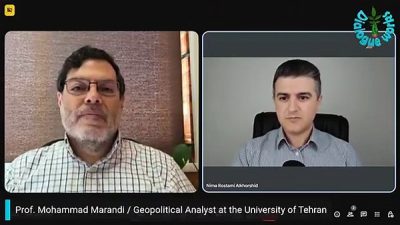
Seyed M. Marandi: U.S. Military DIVIDED? Iran’s Secret Defense EXPOSED
or go to
Aletho News Archives – Video-Images
From the Archives
‘Israel sees Iran as obstacle to its policies’
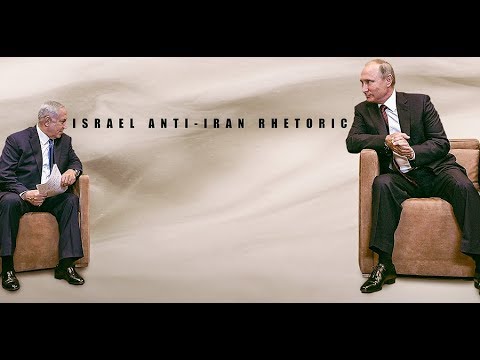
Press TV – August 25, 2017
Prime Minister Benjamin Netanyahu has said that Israel felt threatened by Iran’s growing influence in the Middle East. Netanyahu expressed his Iranophobic view in a meeting with Russian President Vladimir Putin in Russia’s Black Sea resort of Sochi on Wednesday. Press TV has asked Scott Rickard, former American intelligence linguist from Tampa, Florida, and Brent Budowsky, a columnist at The Hill from Washington, to give their thoughts on the issue.
Rickard said Tel Aviv is concerned about the fact that the regime could not carry out its old project to spread sectarian divisions and pave the way for dismemberment of the countries in the Middle East region because of the Iranian-led resistance against Israeli policies, not only in the occupied territories of Palestine but also in the whole region.
“Iran is not a threat to Israel whatsoever. The threat that Israel sees is the fact that their Oded Yinon Plan is being put to a hold by Iran,” the intelligence linguist said on Thursday night.
“They (the Israelis) look at Iran as a threat only because they have no influence on their governments and Iran is autonomous and is not under the Zionist influence,” he added.
Since the victory of the Islamic Republic of Iran in 1979, Tehran has been critical of Israel’s policies in the region, whereas “no leaders [of other states] even dared to speak out against Zionism,” Rickard argued. … continue
Blog Roll
 Aletho News
- Israeli tank fire killed UN peacekeeper in Lebanon, UNIFIL investigation finds
- Russia, China block Bahrain-sponsored UN resolution on Strait of Hormuz
- The US-Israeli War on Science is an Assault on our Future
- Trump’s Promise to Bomb Iran ‘Like Never Before’ Faces Brutal Logistics — Expert
- Germany seeks to restrict stays abroad for men of fighting age – Berliner Zeitung
- Evidence points to Ukraine being behind TurkStream attempted sabotage, but that should come as no surprise
- Sri Lanka secures supplies of Russia oil – minister
- Nations across Asia strike direct deals with Iran for Hormuz passage
- IRGC commander declares ‘new phase’ of reprisal attacks against aggressors
- Israel’s air defenses overwhelmed by cluster-warhead Iranian missiles: Reports
- If Americans Knew
- The war the US is fighting for Israel could cost trillions
- ‘Cigarette Burns, Nail Wounds’: Toddler Tortured in Gaza to Coerce Father
- Trump Says US Sent ‘a Lot of Guns’ to Protesters in Iran
- Israeli forces destroy 17 UN peacekeeper cameras in south Lebanon
- US-Israeli strikes ‘completely destroy’ synagogue in Tehran
- Archbishop for US Military Says Iran War Is Unjust Under Catholic Teaching
- Iranian leaders’ Open Letters to the American People
- Trump says Iranians appreciate bombs, WHO warns of nuclear risks – Daily Update
- U.N. experts demand Israel release prominent Gaza doctor after reports of ‘severe torture’
- Israel’s Latest Genocide Is Against the Shias of Lebanon. Why Is the World Silent?
- No Tricks Zone
- An Inconvenient Tree: Uncovered In Alps… Europe Much Warmer Than Today 6000 Years Ago
- New Study Reports A 60% Slowdown In Greenland’s Ice Loss Rate In The Last Decade
- Low Intensity Tornado Wrecks Major Solar Farm, Creating A Potential Toxic Dump
- New Study Finds Warming Saves Lives…Cold Temperatures 12 Times More Deadly Than Excess Heat
- German Science Blog Accuses PIK Climate Institute Of Hallucinating Climate Tipping Points
- Devastating Assessment Of Comirnaty Vaccine By Former Senior Pfizer Europe Toxicologist
- New Study: CO2 Is ‘Effectively Negligible’ As An Explanatory Climate Change Factor Since 2000
- Former Pfizer Toxicologist Dr. Helmut Sterz Tells Bundestag Hearing Pfizer Vaccine Should Have Never Been Approved
- Energy Expert: Germany’s Nuclear Phaseout Was A “500 Billion Euro Mistake”
- New Research: South Australia’s Mid-Holocene Sea Surface Temperatures Were 4°C Warmer Than Today
 Aletho News