Iraqi resistance joins Yemen in imposing naval blockade against Israel
The Cradle | January 24, 2024
The Secretary-General of the Sayyid al-Shuhada Brigades, Abu Ala al-Walaei, announced during the early hours of 24 January the start of phase two of the Islamic Resistance in Iraq’s (IRI) pro-Palestine operations, including enforcing a naval blockade on Israel in the Mediterranean Sea.
“At a time when the criminal US occupation is again blatantly targeting our security forces … we urge the Mujahideen of the Islamic Resistance in Iraq to begin the second phase of their operations, which includes enforcing a blockade on Zionist maritime navigation in the Mediterranean Sea and putting the entity’s ports out of service,” Walaei said via social media.
The leader of the Sayyid al-Shuhada Brigades, a faction within the larger Popular Mobilization Units (PMU), stressed that these operations will continue until “the unjust siege on Gaza is lifted and the horrific Zionist massacres against its people are stopped.”
Hours earlier, US warplanes conducted a new round of airstrikes targeting alleged locations of the PMU-affiliated Kataib Hezbollah in Al-Qaim on the Iraqi-Syrian border and in Jurf al-Nasr south of Baghdad.
At least one death was reported following the attack in Al-Qaim.
The spokesman for Kataib Hezbollah, Jaafar al-Husseini, said in response to the attack: “The resistance will continue to destroy enemy strongholds in support of our people in Gaza until the brutal US-backed killing machine stops and the entire siege is lifted.”
Iraq’s National Security Advisor Qassim Al-Araji criticized the US for once again “violating Iraqi sovereignty” by targeting the PMU.
“Attacking the headquarters of the [PMU] in Al-Qaim and Jurf al-Nasr is an assault and a flagrant violation of Iraqi sovereignty and does not help [quell tensions],” the official said, stressing that, “Instead of bombing and targeting the headquarters of an Iraqi national institution, the US side should move to stop the aggression against Gaza.”
The Iraqi government has previously demanded that the US army respect the country’s sovereignty and security, as Prime Minister Mohammed Shia al-Sudani stresses that the PMU is an “integral part” of the country’s armed forces.
As part of the Resistance Axis’ operations in support of the Palestinian people, the IRI – an umbrella group of armed factions that includes members of the PMU – has conducted about 150 attacks on US bases in Iraq and Syria over the past several months.
The most recent attack took place on Tuesday morning, with a rocket salvo hitting the US-occupied Conoco oil field in northeast Syria for the second time in three days.
Settlers refuse return to Gaza envelope: ‘Hamas not yet deterred’
The Cradle | January 19, 2024
Hebrew media reported on 19 January that tens of thousands of evacuated settlers from the Gaza envelope are refusing to return to their homes.
A former resident of the Sderot settlement, located less than a mile from Gaza, told Israel’s Channel 13 in an interview that settlers “will not return to Sderot in the current situation.”
This is “not only due to the threat of rockets … no one knows if the Palestinians from Gaza can reach us. No one knows where their tunnels extend to,” the settler said.
“I have been living in Sderot for years, and I cannot count the times they told us that Hamas is deterred.”
Sderot is one of the Gaza envelope settlements that was stormed by resistance fighters during the outbreak of Operation Al-Aqsa Flood on 7 October. Rockets struck the settlement at the onset of the attack, as Palestinian fighters made their way in.
The Hamas fighters seized the Sderot police station, taking around 30 of its force as captives. The fighters then waged a 20-hour battle with Israeli troops in which all of the policemen were killed. The Israeli military then destroyed the station, bringing it down on top of those inside.
Since being evacuated in October, Sderot and other Gaza envelope settlements have continued to be hit by rocket attacks launched by the Palestinian resistance in Gaza.
According to Hebrew newspaper Yedioth Ahronoth, the Israeli government is facing great difficulty in convincing the residents of the Gaza envelope settlements to return to their homes.
Last month, Israeli public broadcaster KAN reported that Tel Aviv was offering financial grants to those willing to return to the settlements located between four and seven kilometers from the Gaza border.
A meeting was held between Prime Minister Benjamin Netanyahu and the council chiefs of the Gaza envelope settlements on 16 January, according to a Channel 12 report.
The council chiefs reportedly demanded that “the process of returning … be delayed or extended until the summer and the start of the new school year, and for the state to continue to fund their stay in temporary accommodation until then,” The Times of Israel said.
Netanyahu also reportedly told the council chiefs during the meeting that the war could potentially continue until 2025.
“Netanyahu said he accepted their request, promised that financial assistance to residents would be applicable then as well, and instructed the relevant officials to draw up the necessary framework.”
Meanwhile, Hamas’ Qassam Brigades and other groups in Gaza are nowhere near defeat, continuing to engage the Israeli army in fierce clashes and deadly ambushes across the entirety of the Gaza Strip, including in north Gaza, where Israel has announced a scale-back of operations.
The scale-back came as Israeli officials were boasting that Hamas has been “dismantled” in the north. Despite this, the fighters have been able to fire large rocket barrages at Israel from northern Gaza.
Lebanese daily Al-Akhbar, reporting on 19 January, cited sources in the Palestinian resistance who said that the Israeli ground operation has achieved nothing – particularly in the north. The report added that in the north, Hamas has been able to replenish its supplies and rebuild its ranks.
And just as the Israeli settlers of the Gaza envelope refuse to return to their homes, so too do the settlers of northern Israel, where hundreds of thousands have also been displaced by Hezbollah’s operations on the Lebanese border.
US Troops Flee Syria After Attacks on Bases
Sputnik – 16.01.2024
The US is evacuating its Hemo military base near the airport in the northeastern Syrian city of Kamishli (al-Qamishli) after repeated attacks by “Iraqi resistance” forces, Iran’s Tasnim news agency reports.
“Tasnim’s sources in Syria report the evacuation of the US military base Hemo… in the northern Syrian province of al-Hasakeh due to repeated attacks by Iraqi Islamic resistance groups,” the report said. The agency specifies that the Hemo base, located 4 kilometres west of the Kamishla airport, is considered one of the most important US bases in the Arab republic with at least 350 US military personnel. According to the agency, the base is a training center where the US military trains fighters of the “Syrian Democratic Forces” (SDF).
Last week, Iran’s Supreme Leader Ali Khamenei called on Shiite “resistance fronts” in various Arab countries to “strike the enemy” wherever it is. Shiite movements within the so-called “Islamic resistance in Iraq” announced the first attack on the US military base Hemo near Kamishla airport.
Earlier, Iraqi armed groups said they attacked another US base near the Conico gas field in Deir ez-Zor province in eastern Syria. Additionally, several drones were shot down near Erbil International Airport in northern Iraq, where a base of international counter-terrorism forces is located.
US, UK attacks on Yemen illegal, strategic mistake: Iran foreign minister
Press TV – January 16, 2024
Iran’s foreign minister has strongly slammed the recent attacks on the Yemeni territory by the United States and the UK as illegal and a strategic mistake.
Hossein Amir-Abdollahian made the remarks in an early Tuesday phone call with Secretary General of the United Nations Antonio Guterres, during which the two sides discussed the latest developments related to the Gaza Strip and the Red Sea.
During the conversation, Iran’s top diplomat stressed the Islamic Republic’s principled stance on protecting and maintaining security of shipping and navigation.
“By stopping ships that are bound for the occupied [Palestinian] territories, Yemen seeks to put a halt to the Zionist regime’s crimes and genocide against civilians in Gaza,” Amir-Abdollahian said.
He added that “illegal measures taken by the United States and the UK in attacking Yemen” amounted to a strategic mistake that would lead to further escalation of tensions in the region.
Since the start of the Israeli military aggression on Gaza in early October 2023, the United States and its Western allies have been providing financial and logistical support to the occupying regime in its ceaseless bombardment campaign against Palestinians in the besieged territory.
As part of their support for Palestinians, Yemen’s Armed Forces and popular Ansarullah resistance movement have over the past month targeted several ships owned by Israel or bound for ports in the occupied territories in the strategic Red Sea after multiple warnings.
Elsewhere in his remarks, Iran’s foreign minister expressed concern about the complicated humanitarian situation in the besieged Gaza Strip, reiterating Iran’s readiness to send humanitarian aid for the Palestinian people in the territory.
The Israeli genocide in Gaza has so far claimed the lives of more than 24,000 Palestinians, most of them women and children, leaving thousands of others wounded and millions homeless. According to the UN, about 85 percent of the territory’s population has been displaced and forced into crowded shelters.
The regime has been also enforcing an all-out siege against Gaza that has prevented the flow of food, water, fuel, and medicine into the territory.
The UN chief, for his part, expressed concern about further spread of conflicts across the region, saying the world body is trying to stop the war and alleviate the suffering of the regional people.
He once again condemned the ongoing military aggression against Gaza, stressing the need for stopping it and sending humanitarian aid to Palestinians there.
Guterres also lauded the role played by the Islamic Republic in bolstering peace and stability in the region.
US to send 1,500 troops to Syria and Iraq

The Cradle | January 15, 2024
The US is set to send 1,500 soldiers to Syria and Iraq, ostensibly in order to join the fight against ISIS, CBS Philadelphia reports on 14 January.
The soldiers will be sent from the New Jersey Army National Guard in its largest deployment of soldiers to the area since 2008.
“We have the people we need. We have the training that we need. We have the equipment that we need to fight and win,” Lt Colonel Omar Minott, who is among the 1,500 to be deployed, said.
The deployment of troops to Syria and Iraq falls under Operation Inherent Resolve, the US military campaign against the Islamic State across Iraq, Libya, and Syria, which calls for combating ISIS and defending US bases against resistance groups in the region.
The military operation caused a large number of US personnel deployments to the region this year.
Within the latter half of 2023, the US sent a wave of 2,500 soldiers to Syria and deployed over 900 soldiers to Iraq on two separate occasions. The deployment of these soldiers was to protect US interests against “Iran-affiliated forces.”
According to Axios, the US military presence in the region reached about 45,400 as of October 2023. The majority is in Kuwait, with 13,500; followed by Bahrain at 9,000; and Qatar at 8,000.
The US deployment into Syria and Iraq to combat ISIS raises questions. According to the US State Department, ISIS attacks in Syria have decreased by 68 percent and 80 percent in Iraq when comparing 2023 to 2022.
The Cradle’s Robert Inlakesh has said that this push by the US is to keep hold of its dominance in the region.
“To maintain the dominance of the collective west over the region, the immediate hurdle is overcoming the influences of Iran and Russia. This is why the occupation of roughly a third of Syrian territory by the US and its proxies, along with the imposition of deadly sanctions on Damascus, has become crucial in undermining the strength of its adversaries,” Inlakesh said.
Iranian and Russian forces in Syria have been coordinating with the specific aim of forcing Washington’s troops to eventually withdraw from the country.
Meanwhile, various Iraqi resistance forces have said they will continue to fight the US until they withdraw from their nation’s borders.
Kataib Hezbollah spokesman Abu Ali al-Askari has previously said that the group’s operations against the US occupation will continue until the last soldier is removed from Iraq.
Iraqi PM says plans underway for withdrawal of US-led coalition
The Cradle | January 5, 2024
Iraqi Prime Minister Mohammed Shia al-Sudani announced on 5 January that the Iraq-US bilateral committee, established late last year, has started the process of scheduling the withdrawal of the US-led “international coalition” from the country.
“We are in the process of setting a date for the start of the dialogue through the bilateral committee that was formed to determine the arrangements for the [withdrawal of foreign troops,” Sudani said during a ceremony commemorating the fourth anniversary of the US assassination of the Deputy Chairman of the Popular Mobilization Units (PMU), Abu Mahdi Al-Muhandis, and Iranian Quds Force Commander General Qassem Soleimani.
“We affirm our firm and principled commitment to ending the presence of the international coalition as the justifications for its existence have ended,” the Iraqi head of state stressed, referring to Washington’s allegations of keeping troops and heavy weapons in Iraq to help the country “fight ISIS.”
“[This] is a commitment that the government will not back down from, and we will not neglect anything that would complete national sovereignty over Iraq’s land, sky, and waters,” Sudani added.
The premier also lambasted the US for launching a drone strike on the Baghdad headquarters of the PMU, located meters away from the Interior Ministry complex, killing a top leader of the Nujaba Movement.
“Iraq has a strategic partnership agreement and diplomatic relations with the US, and in this way, the main principles of international relations and what was stipulated in the UN Charter regarding equality of sovereignty between countries and the prohibition of the use of force in international relations were violated,” Sudani said.
He then highlighted that the PMU – also known as the Hashd al-Shaabi – represents “an official presence affiliated with the state, subject to it, and an integral part of our armed forces.”
“We have repeatedly emphasized that in the event of a violation or transgression by any Iraqi party, or if Iraqi law is violated, the Iraqi government is the only party with the right to follow up on the merits of these violations … The government is the body authorized to impose the law, and everyone must work through it, and no one has the right to infringe on Iraq’s sovereignty,” the prime minister stressed.
The PMU was formed in 2014 in response to the ISIS invasion of northwest Iraq, including Mosul. Ali Sistani, the top Shia cleric in Iraq, called for the establishment of the PMU to protect Baghdad and defeat the US-proxy terror group in Mosul.
The PMU was established with support from Iran, most notably General Soleimani, and was later incorporated into the Iraqi government as part of its armed forces.
Following the 2020 assassination of Soleimani and Muhandis, the Iraqi parliament voted on a law to withdraw permission for the US to operate on Iraqi soil.
US troops first entered Iraq in 2003 to topple the government of Saddam Hussein under false pretenses. Washington initially withdrew its forces in 2011 when the White House failed to secure a new Status of Forces (SOFA) agreement with former Iraqi Prime Minister Nouri al-Maliki.
However, US troops returned to the Ain al-Asad base under the pretext of training Iraqis to fight ISIS six months after the extremist group invaded and occupied Mosul, Iraq’s second-largest city, in June 2014.
On 18 December 2021, the Iraqi government announced that “no combat forces of the international coalition or NATO” remained inside the Ain al-Assad base. However, at least 2,500 US troops remain in the country – many at the Ain al-Asad base – in a “training and advisory role.”
Their continued presence is part of an agreement reached between Washington and Baghdad in July 2021 that was meant to see the complete withdrawal of US troops – similar to their exit from Afghanistan.
Hamas: Meshaal did not say we will recognise Israel
MEMO | December 29, 2023
An official source in Hamas yesterday denied statements attributed to the movement’s former head, Khaled Meshaal, on the possibility of recognising Israel.
“The journalist in the French Le Figaro newspaper, Georges Malbrunot, included a set of his personal opinions and his own comments regarding the recognition of Israel, during an interview with Meshaal,” the source said in a statement on Wednesday.
The source added that Malbrunot’s article is far from Meshaal’s clear and specific statements, in which he affirmed “the refusal to recognise the Zionist entity”.
Hamas attached the text of Meshaal’s statements.
“Our clear position is not to recognise the legitimacy of the occupation; we took a lesson from the Oslo Accords,” Meshaal said in the text, adding: “In 1993, the PLO leadership recognised Israel, which did not give it anything in return.”
“Through the 2017 document, Hamas confirmed its position in national consensus with the Palestinian factions regarding the establishment of a Palestinian state on the 1967 borders with Jerusalem as its capital and the right of return and without us recognising Israel. As for the issue of the truce, it is negotiable,” he added.
Al-Qassam Brigades: We destroyed 825 Israeli military vehicles
Palestine Information Center – December 28, 2023
GAZA – Spokesman for the Al-Qassam Brigades Abu Obeida said in a new audio recording that the Battle of Aqsa Flood paved the way for the collapse of the “occupation entity”, reflecting on the struggles and aspirations of the Palestinian people after 83 days of battle.
“We have been fighting for decades, leading up to the Aqsa Flood Battle, for the sake of our people.”
“We dealt the Israeli occupation the blow of the century and told the world that we are a people demanding rights and freedom.”
He further pointed out that the Palestinian resistance remains steadfast, fighting in every corner of Gaza.
“We continue to fight because we know our rights are being taken away.”
“Since the start of the war on October 7, our fighters of Al-Qassam Brigades have destroyed 825 Israeli military vehicles, including tanks, personnel carriers, and bulldozers, among other vehicles,” he said.
Abu Obeida also stated that “the Israeli aggression will break soon, and our people will rise with their heads held high.”
“The Battle of al-Aqsa Flood has put Israel on the path to extinction.”
On the other hand, Abu Obeida stressed that there will be no prisoner exchanges without a full ceasefire.
“Our priority is to stop the Israeli aggression against our people, and no priority comes before that.”
“There are no deals that we can accept before the aggression against our people stops completely.”
Denouncing the international community’s silence towards Israeli crimes, Abu Obeida said that “the world is divided between being unjust criminals or helpless spectators.”
Moscow Calls for Leveraging All Accumulated Experience for Solving Middle East Crisis

Sputnik – 29.12.2023
MOSCOW – Russian Foreign Ministry spokeswoman Maria Zakharova on Friday called for leveraging all the accumulated experience for solving the Middle East crisis under a Russia-proposed new mechanism of external support that would involve the regional countries.
In November, Russian Foreign Minister Sergey Lavrov proposed the creation of a mechanism of external support to ensure the two-state solution to the Israeli-Palestinian conflict, saying that it should be representative and involve the regional nations, which the Quartet on the Middle East had failed to do.
“A special updated mechanism is needed. You ask why is the Quartet not enough? I will quote Sergey Lavrov as saying that it has failed to represent the regional countries … The entire basis that has been built up should and can be leveraged,” Zakharova told the Rossiya 24 broadcaster.
The experience accumulated in the field includes, in particular, the results of special conferences, resolutions of the UN Security Council and meetings of the Quartet on the Middle East, the spokeswoman added.
The Middle East Quartet, comprised of the UN, the United States, the European Union, and Russia, was established in Madrid in 2002 to mediate the Israeli-Palestinian peace process. The Quartet’s activities aimed to develop the Palestinian economy and empower its institutions, as well as promote a two-state solution to the conflict.
In June 2023, Lavrov said that “collective diplomacy to facilitate the Arab-Israeli settlement has stalled,” mainly due to the decision of the US and the EU to “unilaterally suspend the activities of the Middle East quartet.”
On October 7, Palestinian movement Hamas launched a large-scale rocket attack against Israel from the Gaza Strip, while its fighters breached the border, opening fire on the military and civilians. As a result, over 1,200 people in Israel were killed and some 240 others abducted. Israel launched retaliatory strikes, ordered a complete blockade of Gaza and launched a ground incursion into the Palestinian enclave with the declared goal of eliminating Hamas fighters and rescuing the hostages. Over 21,300 people have been killed so far in Gaza as a result of Israeli strikes, local authorities said.
On November 24, Qatar mediated a deal between Israel and Hamas on a temporary truce and the exchange of some of the prisoners and hostages, as well as the delivery of humanitarian aid into the Gaza Strip. The ceasefire was extended several times and expired on December 1.
Biden’s plan to ‘revive Palestinian Authority’ fizzles out: Report
The Cradle | December 26, 2023
The US government has run into a significant hurdle in its campaign to “revitalize” the Ramallah-based Palestinian Authority (PA) as possible successors to Hamas in the Gaza Strip, failing to convince Israel to unblock funds necessary to prevent the PA from total collapse.
“Even if we agreed [to take over for Hamas in Gaza], how can we implement it? The policy of Israel is to weaken the authority, not strengthen it,” PA Deputy Prime Minister Nabil Abu Rudeineh told the Washington Post. “We cannot even pay the salaries of our soldiers, our employees,” he added.
Despite round-the-clock visits to the heavily fortified PA headquarters in Ramallah and meetings with Israeli authorities, US officials have made little progress in securing the release of millions in Palestinian tax money that Israel has blocked since 7 October.
Two months ago, the Israeli finance ministry – led by Jewish supremacist official Bezalel Smotrich – froze the transfer of tax revenues amounting to some $188 million monthly to the PA.
“The PA didn’t see fit to distance itself from these barbarian actions, and officials in the authority even expressed support for the awful massacre […] Furthermore, the PA is acting against Israel at the International Criminal Court and the International Court of Justice,” Smotrich said on 30 October.
The tax revenues – known in Palestine as maqasa – are collected by the Israeli government on behalf of the PA on Palestinian imports and exports. Israel earns a commission of 3 percent of collected revenues.
On Friday, the European Commission said it was preparing a $130 million aid package to help plug the gap.
According to Sabri Saidam, a member of the central committee for the Fatah party and close adviser to PA President Mahmoud Abbas, plans for Palestinians to receive their tax revenue have “collapsed.”
Besides finding ways to avert the financial collapse of the PA, US officials have also been pushing for “changes and new faces in key positions” in a last-ditch effort to improve the public image of the deeply unpopular organization.
According to a recent poll from the Palestinian Center for Policy and Survey Research, 88 percent of Palestinians want Abbas to resign as PA President, up 10 points from three months ago.
Meanwhile, the popularity of Hamas has soared in the occupied West Bank, from 12 percent to 44 percent.
“It’s always this colonizing mentality, whereby, ‘We decide your leadership, we are the ones basically designing your strategy for the day after, we tell you how to live, we tell you how to breathe, and we tell you how to run your land,’” Saidam told the Washington Post.
The PA was established in 1994 based on the first Oslo Accords (1993) between Tel Aviv and the now-defunct Palestine Liberation Organization (PLO). It was initially established as a temporary governing body to lay the foundation for an independent Palestinian state.
However, after decades of corruption allegations, collaboration scandals, and a poor human rights record, the PA was in a state of “total inertia” before the Al-Aqsa Flood Operation unfolded on 7 October.
Complicating matters further for Washington, Israeli Prime Minister Benjamin Netanyahu is staunchly opposed to a PA-controlled Gaza.
“Expectation that the Palestinian Authority will demilitarize Gaza is a pipe dream,” Netanyahu says in an op-ed published by the Wall Street Journal (WSJ) on Monday.
“[The PA] has shown neither the capability nor the will to demilitarize Gaza,” the premier added, claiming that Ramallah “currently funds and glorifies terrorism […] and educates Palestinian children to seek the destruction of Israel.”
“For the foreseeable future, Israel will have to retain overriding security responsibility over Gaza,” Netanyahu stressed.
Senate Blocks Resolution Calling for Removal of US Forces From Syria
Sputnik – 07.12.2023
WASHINGTON – The US Senate on Thursday blocked a joint resolution introduced by Kentucky Republican Senator Rand Paul directing the Biden administration to remove US military forces from Syria within 30 days.
Senators rejected a motion to advance the resolution in a vote of 13 members in favor and 84 opposed.
“The American people have had enough of endless wars in the Middle East. Yet, 900 US troops remain in Syria with no vital US interest at stake, no definition of victory, no exit strategy, and no congressional authorization to be there,” Paul said in a statement on the resolution.
The resolution would direct the president to remove US troops from hostilities “in or affecting Syria” within 30 days of adoption, unless a declaration of war or other authorization for use of force was enacted by Congress.
Thursday’s resolution was the second time this year that anti-interventionist, pro-‘America First’ Republicans in Congress have attempted to force the Biden administration to pull US troops out of Syria. In March, the House of Representatives voted down a resolution put forward by Florida Republican Congressman Matt Gaetz to remove American forces from the Middle Eastern country, with the lawmaker and his fellow pro-Trump Freedom Caucus Republicans getting a rare show of support from the Democrats’ Congressional Progressive Caucus, resulting in more than 100 lawmakers voting in favor of the bill (the measure ended up failing by a vote of 103 to 321).
US forces have occupied the oil and food-rich northeastern third of Syria since 2017, and have engaged in the smuggling of billions of dollars worth of Syrian oil out of the country to enforce a strategy by Washington to try to economically suffocate the government of President Bashar Assad into submission.
During his presidency, President Trump casually admitted on multiple occasions to the legacy media’s horror that US forces in Syria were in the country “only for the oil.” The Biden administration has insisted American troops are in the country only to prevent the resurgence of Daesh (ISIS), the Islamist extremist terrorist group vanquished from the region in 2017.
Featured Video
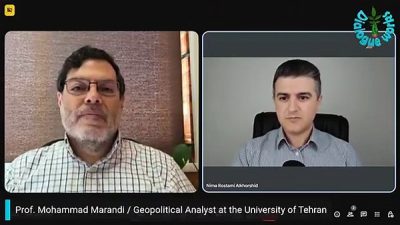
Seyed M. Marandi: U.S. Military DIVIDED? Iran’s Secret Defense EXPOSED
or go to
Aletho News Archives – Video-Images
From the Archives
‘Israel sees Iran as obstacle to its policies’
Press TV – August 25, 2017
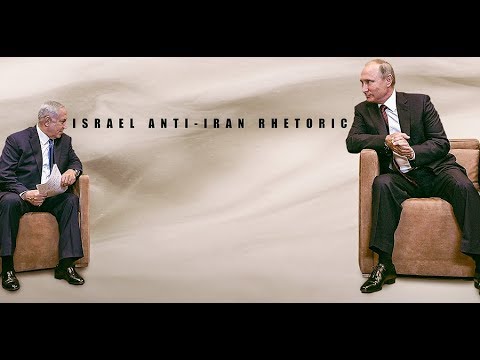
Prime Minister Benjamin Netanyahu has said that Israel felt threatened by Iran’s growing influence in the Middle East. Netanyahu expressed his Iranophobic view in a meeting with Russian President Vladimir Putin in Russia’s Black Sea resort of Sochi on Wednesday. Press TV has asked Scott Rickard, former American intelligence linguist from Tampa, Florida, and Brent Budowsky, a columnist at The Hill from Washington, to give their thoughts on the issue.
Rickard said Tel Aviv is concerned about the fact that the regime could not carry out its old project to spread sectarian divisions and pave the way for dismemberment of the countries in the Middle East region because of the Iranian-led resistance against Israeli policies, not only in the occupied territories of Palestine but also in the whole region.
“Iran is not a threat to Israel whatsoever. The threat that Israel sees is the fact that their Oded Yinon Plan is being put to a hold by Iran,” the intelligence linguist said on Thursday night.
“They (the Israelis) look at Iran as a threat only because they have no influence on their governments and Iran is autonomous and is not under the Zionist influence,” he added.
Since the victory of the Islamic Republic of Iran in 1979, Tehran has been critical of Israel’s policies in the region, whereas “no leaders [of other states] even dared to speak out against Zionism,” Rickard argued. … continue
Blog Roll
 Aletho News
- Trump Claims Ceasefire, Reopening of Strait of Hormuz Agreement with Iran
- Israeli tank fire killed UN peacekeeper in Lebanon, UNIFIL investigation finds
- Russia, China block Bahrain-sponsored UN resolution on Strait of Hormuz
- The US-Israeli War on Science is an Assault on our Future
- Trump’s Promise to Bomb Iran ‘Like Never Before’ Faces Brutal Logistics — Expert
- Germany seeks to restrict stays abroad for men of fighting age – Berliner Zeitung
- Evidence points to Ukraine being behind TurkStream attempted sabotage, but that should come as no surprise
- Sri Lanka secures supplies of Russia oil – minister
- Nations across Asia strike direct deals with Iran for Hormuz passage
- IRGC commander declares ‘new phase’ of reprisal attacks against aggressors
- If Americans Knew
- The war the US is fighting for Israel could cost trillions
- ‘Cigarette Burns, Nail Wounds’: Toddler Tortured in Gaza to Coerce Father
- Trump Says US Sent ‘a Lot of Guns’ to Protesters in Iran
- Israeli forces destroy 17 UN peacekeeper cameras in south Lebanon
- US-Israeli strikes ‘completely destroy’ synagogue in Tehran
- Archbishop for US Military Says Iran War Is Unjust Under Catholic Teaching
- Iranian leaders’ Open Letters to the American People
- Trump says Iranians appreciate bombs, WHO warns of nuclear risks – Daily Update
- U.N. experts demand Israel release prominent Gaza doctor after reports of ‘severe torture’
- Israel’s Latest Genocide Is Against the Shias of Lebanon. Why Is the World Silent?
- No Tricks Zone
- An Inconvenient Tree: Uncovered In Alps… Europe Much Warmer Than Today 6000 Years Ago
- New Study Reports A 60% Slowdown In Greenland’s Ice Loss Rate In The Last Decade
- Low Intensity Tornado Wrecks Major Solar Farm, Creating A Potential Toxic Dump
- New Study Finds Warming Saves Lives…Cold Temperatures 12 Times More Deadly Than Excess Heat
- German Science Blog Accuses PIK Climate Institute Of Hallucinating Climate Tipping Points
- Devastating Assessment Of Comirnaty Vaccine By Former Senior Pfizer Europe Toxicologist
- New Study: CO2 Is ‘Effectively Negligible’ As An Explanatory Climate Change Factor Since 2000
- Former Pfizer Toxicologist Dr. Helmut Sterz Tells Bundestag Hearing Pfizer Vaccine Should Have Never Been Approved
- Energy Expert: Germany’s Nuclear Phaseout Was A “500 Billion Euro Mistake”
- New Research: South Australia’s Mid-Holocene Sea Surface Temperatures Were 4°C Warmer Than Today
 Aletho News