House Leadership Pulls a Fast One for al Qaeda
By Connor Freeman | The Libertarian Institute | November 7, 2017
House Concurrent Resolution 81 (H.Con.Res.81) is sponsored by Representatives, Ro Khanna (D-Calif.), Walter Jones (R-NC), Mark Pocan (D-Wisc.), Thomas Massie (R-KY), and 39 other lawmakers. The resolution commands an end to U.S. participation in the Saudi-led war in Yemen.
The sponsors of this resolution contend that such participation, which began in March 2015, was never authorized under the War Powers Act of 1973. Per the War Powers Act, any congressman can pose a legal challenge and is guaranteed a floor vote on the issue. This is known as a privileged resolution.
On November 1st, the night before the vote was scheduled to take place, House leadership swiftly pushed through a Rules Committee vote, denying the resolution’s privileged status. Thus, preventing the guaranteed floor vote.
What was their justification? Apparently, the House Rules Committee feels that the war in Yemen has yet to ‘rise to a level’ where the War Powers Act is applicable.
After preventing the vote on H.Con.Res.81, the House Leadership has said it shall permit a ‘compromise’ resolution on the war in Yemen. The debate, scheduled for the week of November 13th, will discuss the legality of U.S. involvement in the war. The vote will be non-binding.
Five peace activist groups, heavily engaged in promoting the resolution, said just after the Rules Committee vote:
“We remind the House leadership that under the War Powers Resolution of 1973,
“‘introduction of United States Armed Forces ’includes the assignment of member of such armed forces to command, coordinate, participate in the movement of, or accompany the regular or irregular military forces of any foreign country or government when such military forces are engaged…’
U.S. refueling of Saudi-UAE planes bombing Houthi targets in Yemen meets that definition.’”
Therefore the War Powers Act, clearly applies to the war on Yemen.
The House leadership is lying to the American people, supporting the continuation of the world’s worst humanitarian crisis, violating the War Powers Act, and attempting to prevent Congress from stopping yet another illegal and unconstitutional war.
Conservatively, since the beginning of 2017, at least 10,000 people have been killed in this war. The heroic and indispensable Yemeni journalist Nasser Arrabyee has said the toll could be as high as 60,000 deaths.
The Saudis are ruthlessly bombarding the Yemenis and their civilian infrastructure. The coalition wants to cripple the people of Yemen to the point of submission. Their end goal is to force Yemen’s civilians to stop supporting the northern tribesmen if only to alleviate their suffering.
U.S. involvement is most critical to the Saudi effort in this war. The U.S. military is training Saudi Arabian forces. The U.S. is refueling the coalition’s warplanes not just in the air with tanker sorties, but also on its bases peppered throughout the region.
As of February, according to an article written by Oriana Pawlyk for Military.com :
“Saudi Arabian coalition jets bombing Houthi rebel sites in Yemen increasingly turn to U.S. Air Force tankers for refueling support almost two years after the conflict began. Since April 2015, the Air Force has logged 1,778 tanker sorties for the operation, Air Forces Central Command spokeswoman Capt. Kathleen Atanasoff told Military.com on Tuesday. That includes 1,069 over the past year, an increase of 360, or 50 percent, from the 709 in the previous period. ‘These operations are ongoing, with aircraft refueling occurring daily,’ Atanasoff said in an email. The service’s tankers such as KC- 135 Stratotankers and KC-10 Extenders participated in 7,564 refueling ‘events’ with coalition aircraft, with ‘about 54 million pounds of fuel off-loaded in support of Saudi operations in Yemen,’ Atanasoff said.”
Donald Trump, doing his best Barack Obama impression, has been more than happy to sell the Saudis hundreds of billions of dollars worth of weapons to continue their genocide. These include planes, ships, rockets, precision-guided bombs, cluster bombs, etc. American defense contractors, particularly Lockheed Martin and Boeing, are likewise more than happy to rake in their handsome profits from Yemen’s destruction. With Jared Kushner playing the role of matchmaker for Mohammed bin Salman and Marillyn A. Hewson (CEO of Lockheed), the profits will surely escalate.
However, the Saudis have another powerful ally in this war, al Qaeda. This certainly makes the upcoming debate on Yemen a great opportunity for the House to finally get around to discussing the legality of high treason. Or more specifically, fighting another war for al Qaeda.
In addition to the coalition’s sadistic air campaign, Yemini civilians are threatened and attacked on the ground day in and day out by Sudanese mercenaries, al Qaeda in the Arabian Peninsula (AQAP), and a local Islamic State affiliate. All of whom support the coalition.
In an article published in The Hill, Gareth Porter and retired Col. Lawrence Wilkerson (former Secretary of State Colin Powell’s Chief of Staff) said:
“U.S. intelligence and counter-terrorism officials have regarded AQAP as even more of a foreign terrorist threat to the United States than ISIS. It mounted efforts to bring down U.S. airlines three times between 2009 and 2012, and nearly succeeded twice. But the Saudi/UAE war in Yemen has made them the most powerful indigenous armed group in southern Yemen, with more money, arms and territorial control than ever before. The Saudi-led coalition and the forces of the Saudi backed former regime have allied openly with AQAP and even fought alongside them. As a result of the war AQAP is now poised for the first time to compete for national power in Yemen.”
See the map below of the military situation in Yemen as of this July for an idea of just how much territory AQAP has consolidated. The areas shaded white are controlled by AQAP, the pink areas are controlled by Hadi-loyal forces, and the green areas are controlled by the Houthi/Saleh alliance:

This is further evidence that U.S. involvement in the Saudi war is illegal. When asked for a justification for U.S. involvement in the Saudi/UAE war, both Barrack Obama and Donald Trump’s administrations have cited the 2001 Authorization for the Use of Military Force (AUMF). That AUMF permits military action only against those entities who perpetrated the attacks on 9/11. In other words, military action is only permitted against al Qaeda. Yet, this war is being fought on behalf of al Qaeda against their enemies, the Houthis.
Indeed, Asher Orkaby made the point in Foreign Affairs that, “far from being aligned with extremists, the Houthi movement has repeatedly clashed with the Islamic State and AQAP”. So, in addition to the fact that this war was never authorized under the War Powers Act, it is also clearly not covered under the current AUMF.
Since the Obama administration, this is at least the third major conflict wherein the U.S. has found itself aligned with, fighting along side, arming, and/or supporting al Qaeda. This was official policy notably during the regime change operation in Libya and in the failed regime change operation in Syria. It is very important to note that if things had gone to plan in Syria, al Qaeda would have almost certainly taken Damascus.
Neoconservatives are now calling for a new AUMF to explicitly define ‘the enemy’ more broadly as proponents of so called, ‘radical Islam’. The ‘radical Islam’ handle is a red herring callously promoted by the fake news establishment. It is meant to dumb down and obscure the realities of these conflicts for domestic audiences. The cynical neoconservatives are pleased to have Americans view all Arabs and Muslims as one homogenous and terrifying collective. Most Americans are designedly oblivious to the differences between Sunnis, Shiites, and other branches of Islam. It is in the interests of the War Party for American voters to see such radically opposed groups as Daesh and Hezbollah as cut from the same cloth. This is obviously done in order to prevent rational discussion of these conflicts from ever taking place. For if the American people were well informed of the consequences of U.S. policy abroad, especially in the Middle East, they would probably not even passively support their regime’s policies.
In 2013, popular sentiment from people of all political stripes helped to prevent Obama’s would have been Iraq-style invasion of Syria. I believe one of the primary reasons for this was the effectiveness of the famous ‘I will not fight for al Qaeda in Syria’ social media campaign undertaken by active military personnel. Americans do not want to support and subsidize al Qaeda in Syria, Libya, Yemen, or anywhere else for that matter. The reason these horrific policies persist is not the peoples’ apathy, it’s their ignorance.
This is a particularly indefensible war, even by U.S standards. If they choose to, this is a war the American people can end. The establishment is certainly not comfortable publicly debating and defending their Yemen policy. Exposing the realities of this conflict and ending the war in Yemen could trigger an anti-war domino effect. Not since the Vietnam War has there been more fertile soil for an American anti-war movement.
Please continue to call your Congressmen and women and tell them to vote against the war on November 13th. Give them some good talking points for the debate. Please share, retweet posts from Yemenis on the ground, post news items, write blog posts, write articles, and speak your mind about the war in Yemen on social media. Do not be afraid to talk about the U.S.-Saudi/AQAP alliance. We have the truth on our side.
Facing a Major Attack on Academic Freedom in Canada
By Prof. Tony Hall | American Herald Tribune | September 11, 2017
Sixteen years after the event, 9/11 stands as striking evidence of an insidious assault on science. Officialdom’s dogged adherence to a discredited account of 9/11 stands as a stark illustration of this phenomenon. The subordination of scientific method to the higher imperatives of imperial war propaganda is epitomized by officialdom’s failure to formulate a credible account of the 9/11 debacle. Universities have become important sites of this betrayal. The sabotage of society’s primary platforms of scholarly enterprise forms an essential feature of a more pervasive attack from within. Everywhere, but especially on the Internet, fundamental freedoms to investigate, publish, publicize and discuss interpretations that might undermine or inconvenience power are being menaced.
As a tenured full professor with 27 years of seniority at my home institution, I am currently facing a sharp attack on the remaining protections for academic freedom. In early October of 2016 the President of the University of Lethbridge, Michael J. Mahon, suspended me without pay. He also prohibited me from stepping foot on the University of Lethbridge campus. In explaining his actions Dr. Mahon’s speculated I might have violated a section of the Alberta Human Rights Act.
The vagueness of this assertion exposes the reality that severe punishment was imposed without any proper investigation. Dr. Mahon’s abrupt deviation from the terms of the collective agreement with my faculty association has established precedents and countervailing responses with broad implications. Adversarial proceedings on this matter began this August in the Lethbridge Alberta Court House. As evidenced by the intervention of the 68,000 members of the Canadian Association of University Teachers, the outcome of this case will in all probability significantly affect the future of university governance in Canada and beyond.
Dr. Mahon’ suspension letter detailed that there was a possibility that I might be guilty because of allegations that a) “my Facebook page had been used for virulent anti-semitic comments “and b) “Inferring that Israelis, and hence Jewish individuals, were responsible for the terrorist attacks on the World Trade Center on September 11, 2001.”
Before dealing with the manipulation of my Facebook wall in the prelude to my suspension, allow me to linger on questions concerning the academy and 9/11. Along with government, media and law enforcement agencies, universities are deeply implicated in sabotaging the quest for 9/11 truth and many other varieties of inconvenient truth as well. The punitive measures directed at me can be seen as a warning to scare other professors into compliance with all manner of official stories?
As for my own reading of the available evidence, I am far from alone in positing that Israel First partisans, including the American neocons that dominated the Project for the New American Century, are prominent among the many protagonists of the 9/11 crimes. These crimes extend to orchestrating the media spin, rigging investigations, and sustaining the ongoing 9/11 cover-up. In publications and on False Flag Weekly News, Dr. Kevin Barrett and I have joined others in extending this investigative and interpretation trajectory into many cases of possible false flag terrorism particularly after 2001.
I am astonished that the Administration of my University became so aggressive in attempting to outlaw an evidence-based interpretation of the most transformative event of the twenty-first century. New frontiers of subversion are being pioneered in the U of L’s audacious administrative attempt to criminalize independent academic work.
What are the implications of subordinating the scholarly judgments of academic experts on campus to the executive dictates of administrators? How can the principles of critical thinking be cultivated when adherence to conformity is so aggressively enforced by administrators?
The University Administration extends its claims of academic control several steps further in the complaint it brought forward to the Alberta Human Rights Commission seven months after I was suspended. The complaint begins with six sweeping statements outlining topics that the complainants want removed from the reach of critical academic examination. One of the complainants chief assertions is the Islamophobia-inducing proposition that “acts of terrorism between 2001 to the present… were in fact committed and financed by Islamic terrorists.”
Facebook Machinations
A maliciously-engineered Facebook operation created the original catalyst of the smear and disinformation campaign leading to my suspension. Without the originating momentum set in motion by the Facebook operation the campaign to discredit me could not have unfolded as it did. The most public face of this campaign was presented by the Canadian extension of the Israeli- and US-based Anti-Defamation League of B’nai B’rith. According to B’nai Brith Canada, an abhorrent post appeared and then disappeared on my Facebook wall during a short interval on Aug. 26, 2016. The text of the disgusting digital item proclaimed that the Holocaust didn’t happen and that Jews should be “KILLED, EVERY LAST ONE.”
This heinous assertion goes against everything I have tried to stand for in my life including in my academic work. As soon as I became aware of this blaspheme embedded in the planted Facebook post I publicly condemned it. By mid-September, however, my persecutors were far advanced in pushing forward the manufactured crisis. By then B’nai Brith Canada was mounting a petition campaign demanding that I be investigated, fired and silenced.
Recently the results of a Freedom of Information inquiry have brought to light documents illuminating the elaborate defamation pointed my way in the hours and days immediately following the August 26 Facebook operation. One document was sent to the Office of the University of Lethbridge President and copied to the Premier of Alberta as well as the Alberta Justice Minister. Citing the B’nai Brith, the document’s author characterized me as an “advocate for the murder of Jews.”
Another letter dated 1 Sept. 2016 was signed by the President of the Canadian Jewish Civil Rights Association. This signatory, who has since passed away, cited the complete text of the offending Facebook post. The letter to Dr. Mahon indicated the reprehensible words actually came “from my lips.”
I cannot understand why Dr. Mahon did not at this juncture properly investigate by consulting me directly and conferring with the University of Lethbridge Faculty Association. Instead the President opted to push ahead with drastic action based on incomplete information combined with the intense pressure brought to bear on him by an extremely influential external political lobby
Hate Speech Deceptions
None of my persecutors has yet identified the true source of the offending Facebook item. My own research into the matter, including my email exchange with cartoonist Ben Garrison, has led me to Joshua Goldberg. American Herald Tribune has published my article on this young man. Goldberg is widely reported to be the creator of many Internet personalities, all of whom generate abundant “hate speech deceptions” from various ethnic and ideological perspectives.
Goldberg’s case exposes much about the wholesale manufacturing and misrepresentation of so-called “hate speech” to justify censorship on the Internet. In my case an atrocious digital item was strategically inserted with the aim of ruining me professionally and personally.
The intervention of Internet leviathans like Google and Facebook is especially aggressive when it comes to disappearing material critical of the Israeli government’s treatment of Palestinians. My own experience with the Canadian branch of the Anti-Defamation League of B’nai B’rith points to the strength of this pattern. Why is it that this same Zionist organization is being tasked with the strategic responsibility of censoring and categorizing You Tube videos?
As illustrated by William Pepper’s development of civil litigation to bring to light the US government’s role in the tragedy suffered by the family of Martin Luther King Jr., we rarely get criminal trials pressed against the world’s most powerful interests and operatives. Instances of possible false flag terrorism, but especially 9/11, have been rendered especially immune to any kind of trial that would put before the public evidence garnered from genuine investigations of facts.
Perhaps the reference to 9/11 in a University Administration’s efforts to condemn me for academic thought crimes and speech crimes will force the forbidden topic into some kind of evidence-based juridical procedure. When it comes to understanding the real dynamics of who did what to whom on 9/11, the truth must prevail.
Dr. Hall is editor in chief of American Herald Tribune. He is currently Professor of Globalization Studies at University of Lethbridge in Alberta Canada. He has been a teacher in the Canadian university system since 1982.
September 11, 2001: Questions to Ask if You Still Believe the Official Narrative
By Tony Cartalucci | Land Destroyer | September 11, 2017
The attacks of September 11, 2001 (9/11) left nearly 3,000 dead in NYC, Washington D.C. and over Pennsylvania. The attacks transformed America into a deepening police state at home and a nation perpetually at war abroad.
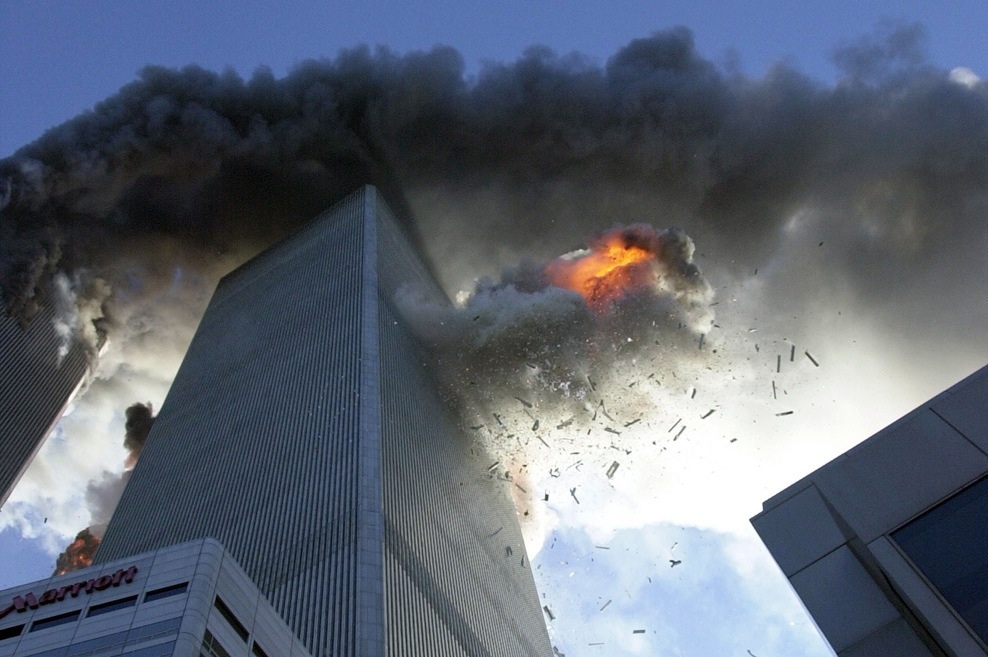
The official narrative claims that 19 hijackers representing Al Qaeda took over 4 commercial aircraft to carry out attacks on New York City’s World Trade Center and the Pentagon in Washington D.C.
The event served as impetus for the invasion and occupation of Afghanistan which continues to present day. It also led directly to the invasion and occupation of Iraq. Attempts to cite the attack to precipitate a war with Iran and other members of the so-called “Axis of Evil” (Libya, Syria, North Korea, and Cuba) have also been made.
And if this is the version of reality one subscribes to, several questions remain worth asking.
1. Can the similarities between 9/11 and plans drawn up by the US Department of Defense (DoD) and Joint Chiefs of Staff (JCS) in 1962 under the code name “Operation Northwoods” be easily dismissed?
The US DoD and JCS wrote a detailed plan almost identical to the 9/11 attacks as early as 1962 called “Operation Northwoods” where the US proposed hijacking commercial airliners, committing terrorist attacks, and blaming Cuba to justify a US military intervention.

Far from a fringe conspiracy theory, mainstream media outlets including ABC News would cover the document in articles like, “U.S. Military Wanted to Provoke War With Cuba,” which would report:
In the early 1960s, America’s top military leaders reportedly drafted plans to kill innocent people and commit acts of terrorism in U.S. cities to create public support for a war against Cuba.
Code named Operation Northwoods, the plans reportedly included the possible assassination of Cuban émigrés, sinking boats of Cuban refugees on the high seas, hijacking planes, blowing up a U.S. ship, and even orchestrating violent terrorism in U.S. cities.
The plans were developed as ways to trick the American public and the international community into supporting a war to oust Cuba’s then new leader, communist Fidel Castro.
A full PDF copy of the document is available via George Washington University’s archives and states specifically regarding the hijacking of commercial aircraft:
An aircraft at Eglin AFB would be painted and numbered as an exact duplicate for a civil registered aircraft belonging to a CIA proprietary organization in the Miami area. At a designated time the duplicate would be substituted for the actual civil aircraft and would be loaded with the selected passengers, all boarded under carefully prepared aliases. The actual registered aircraft would be converted to a drone.
The document also cites the USS Maine in describing the sort of event the DoD-JCS sought to stage, a US warship whose destruction was used to maliciously provoke the Spanish-American War. It should be noted, that unlike the DoD-JCS document’s suggestion that airliner-related casualties be staged, the USS Maine explosion killed 260 sailors. It is likely that DoD and JCS would not risk engineering a provocation that leads to major war but allow low-level operators left alive with the knowledge of what they had participated in.
Considering that the US sought to deceive the public in order to provoke an unjustifiable war that would undoubtedly kill thousands or tens of thousands of innocent people, and that other proposals did include killing innocent people, it is worth considering that US policymakers would also be just as willing to extinguish innocent lives when staging the hijacking of aircraft to provoke such a war.
2. Why did US policymakers draw up extensive plans to reassert US global hegemony – including regime change in Afghanistan, Iraq, Iran, Libya, Somalia, Sudan, and Yemen – without any conceivable pretext until 9/11 conveniently unfolded?
In 2000, US policymakers from the Project for a New American Century (PNAC) sought a sweeping plan to reassert America as a global hegemon. In a 90-page document titled, “Rebuilding America’s Defense: Strategy, Forces and Resources For a New Century” (PDF), a strategy for maintaining what it called “American military preeminence” would be laid out in detail.
It involved global moves the United States – in 2000 – could never justify, including placing US troops in Southeast Asia, building a global missile defense network prohibited by treaties signed during the Cold War, and the containment of developing nations that would eventually end up rolling back US global hegemony in the near future, including Iran, Iraq, China, North Korea, Libya, and Syria.

The report noted the difficulties of proposing and executing the transformations necessary to achieve the objectives laid out in the document. It would be explicitly stated that:
Further, the process of transformation, even if it brings revolutionary change, is likely to be a long one, absent some catastrophic and catalyzing event – like a new Pearl Harbor.
In fact, the entire body of the document is an uncanny description of the post-9/11 “international order,” an order unimaginable had the events of 9/11 not transpired.
It should also be remembered that wars predicated on 9/11 like the invasion and occupation of Afghanistan, were admittedly planned before 9/11 took place.
The Guardian in its 2004 article, “Bush team ‘agreed plan to attack the Taliban the day before September 11’,” would report:
The day before the September 11 attacks, the Bush administration agreed on a plan to oust the Taliban regime in Afghanistan by force if it refused to hand over Osama bin Laden, according to a report by a bipartisan commission of inquiry. The report pointed out that agreement on the plan, which involved a steady escalation of pressure over three years, had been repeatedly put off by the Clinton and Bush administrations, despite the repeated failure of attempts to use diplomatic and economic pressure.
While it seems inconceivable that the American or global public would tolerate the multi-trillion dollar 16 year war that the invasion of Afghanistan has become without the attacks on 9/11, such a war was admittedly in the making – in fact – years before 9/11 unfolded.
Similarly, the invasion of Iraq in 2003 was strongly linked to the aftermath of 9/11, but was likewise decided upon long before 9/11 unfolded.
CNN in its article, “O’Neill: Bush planned Iraq invasion before 9/11,” would report:
The Bush administration began planning to use U.S. troops to invade Iraq within days after the former Texas governor entered the White House three years ago, former Treasury Secretary Paul O’Neill told CBS News’ 60 Minutes.
This echos similar statements made by US Army General Wesley Clark who repeatedly warned that the US sought global-spanning war post-Cold War to assert its hegemony over the planet, and fully sought to use 9/11 as a pretext to do it.
General Clark would list seven nations slated for regime change post 9/11, including Iraq, Iran, Libya, Somalia, Sudan, and Yemen – all nations now either at war or facing war with the United States and its proxies – or in the case of Libya – entirely divided and destroyed in the wake of US military operations.
3. If primarily Saudi hijackers with Saudi money and Saudi organization perpetrated the attacks of 9/11, why has the United States waged war or threatened war with every nation in the Middle East except Saudi Arabia and its allies?
Not only has the United States made no moves against Saudi Arabia for its apparent role in the 9/11 attacks – spanning the administrations of US President George Bush, Barack Obama, and Donald Trump – the United States has sold Saudi Arabia billions in arms, provided military support and protection to Saudi Arabia’s military and government, partnered with Saudi Arabia in its ongoing conflict with Yemen – all while US government documents and leaked e-mails between US politicians reveal Saudi Arabia is still a state sponsor of Al Qaeda – the organization officially blamed for the 9/11 attacks.

Indeed, a 2012 US Defense Intelligence Agency (DIA) report would explicitly admit:
If the situation unravels there is the possibility of establishing a declared or undeclared Salafist principality in eastern Syria (Hasaka and Der Zor), and this is exactly what the supporting powers to the opposition want, in order to isolate the Syrian regime, which is considered the strategic depth of the Shia expansion (Iraq and Iran).
The DIA memo then explains exactly who this “Salafist principality’s” supporters are:
The West, Gulf countries, and Turkey support the opposition; while Russia, China, and Iran support the regime.
This “Salafist principality” is now known as the “Islamic State,” an affiliate of Al Qaeda still operating with significant state sponsorship everywhere from Syria, Iraq, and Libya, to the Philippines and beyond.
Coincidentally, Saudi-armed and funded terrorists in the Philippines has served as a pretext for US military assets to begin expanding their presence in Southeast Asia, just as the aforementioned 2000 PNAC document had sought.
Additionally, in a 2014 e-mail between US Counselor to the President John Podesta and former US Secretary of State Hillary Clinton, it would be admitted that two of America’s closest regional allies – Saudi Arabia and Qatar – were providing financial and logistical support to the Islamic State.

The e-mail, leaked to the public through Wikileaks, stated:
… we need to use our diplomatic and more traditional intelligence assets to bring pressure on the governments of Qatar and Saudi Arabia, which are providing clandestine financial and logistic support to [the Islamic State] and other radical Sunni groups in the region.
While the e-mail portrays the US in a fight against the very “Salafist” (Islamic) “principality” (State) it sought to create and use as a strategic asset in 2012, the fact that Saudi Arabia and Qatar are both acknowledged as state sponsors of the terrorist organization – and are both still enjoying immense military, economic, and political support from the United States and its European allies – indicates just how disingenuous America’s “war on terror” really is.
If the US truly believed Al Qaeda carried out the deadly attacks of 9/11, why does it count among its closest allies two of Al Qaeda’s largest and most prolific state sponsors?
Together – by honestly answering these three questions – we are left considering the very real possibility that 9/11 was not a terrorist attack carried out by foreign terrorists, but rather an attack engineered by special interests within the United States itself.
If we reject that conclusion, we must ask ourselves why the US DoD and JCS would take the time to draft plans for false flag attacks if they did not believe they were viable options US policymakers might seriously consider. At the very least we must ask why those at the DoD and JCS could be caught signing and dating a conspiracy to commit unspeakable terrorism to justify an unjust war and not only avoid criminal charges, but remain employed within the US government.
We must also ask ourselves why US policymakers would draft long-term plans for reasserting American global hegemony without any conceivable pretext to justify such plans. Even in the wake of 9/11, the US government found it difficult to sell the invasion of Iraq to the American public and its allies. Without 9/11, such salesmanship would have been impossible. In Syria – with 9/11 disappearing into the distant past – US regime change efforts have all but stalled.
Finally, we must find adequate explanations as to why those sponsoring the supposed perpetrators of 9/11 have remained recipients of unwavering American support, weapon sales, and both political and military protection. We must attempt to answer why militants fighting in Syria under the banner of Al Qaeda have been able to openly operate out of NATO-member Turkey’s territory for the past 6 years, side-by-side US Central Intelligence Agency (CIA) personnel who are admittedly fueling the conflict with weapons, money, and training “accidentally” ending up in Al Qaeda’s hands.
It is clear – that at the very least – the official narrative in no shape, form, or way adds up. If the official narrative doesn’t add up, what does?
US court verdict allows seizure of tower owned by Alavi Foundation
Press TV – June 29, 2017
A US court verdict has allowed the American government to seize an office tower in New York City owned largely by an Iranian charity organization, the Alavi Foundation.
A jury on Wednesday claimed that the charity was controlled by the Iranian government and the rent generated from the tower constituted a violation of US sanctions against Iran.
The verdict means that federal prosecutors can move ahead with their attempt to seize the building at 650 Fifth Avenue in Manhattan. The Alavi Foundation is likely to appeal the verdict.
The government plans to sell the property, which is valued at more than $500 million, and distribute much of the proceeds to victims of terrorist attacks.
The finding “represents the largest civil forfeiture jury verdict and the largest terrorism-related civil forfeiture in US history,” Joon H. Kim, the acting US Attorney in Manhattan, said in a statement.
The Iranian government has said it has no links with the Alavi Foundation.
Prosecutors first sought to seize the tower in 2008.
In 2014, US District Judge Katherine Forrest granted authority to federal prosecutors to confiscate the building. However, an appeals court reversed that ruling last year.
The assets of the Alavi Foundation included the building in Manhattan, as well as Islamic centers consisting of schools and mosques in New York City, Maryland, California, Texas and Virginia.
American Legal scholars said they know of only a few cases in US history in which law enforcement authorities have seized a house of worship. Without rent from the office building, the Alavi Foundation would have almost no way to continue supporting the Islamic centers.
The Alavi Foundation, a non-profit organization established in 1978, works to advance the Islamic and Persian culture in the US.
In the last four decades, the organization has also given millions of dollars to American schools, universities and charitable organizations; among them Harvard, Columbia and Rutgers university.
Decoding the American Jewish Zionists’ Rise to Power
Readings in the Jewish Zionist Control of the United States: Interviews with Francis Boyle, James Petras, and Kim Petersen [Part 4]

By B. J. Sabri | American Herald tribune | April 24, 2017
Previously I argued that the phony war on “islamic terrorism”, the incessant attacks on and indictment of Islam as a violent religion, and the claim to bring so-called “democracy” to a region ruled by “dictators” are ploys for U.S. wars in the Middle East. Real motives instead, I further argued, are driving these wars with the objective to destabilize, remake, or destroy Arab societies, partition all states that are not in line with the U.S. and Israeli policies, and, in short, dismantle the Arab world. Two agendas converge to implement this effort.
The first has for a focus the aims of U.S. hyper-imperialism. Besides submitting the Arab nations to U.S. plans and military control, the quest for uncontested global hegemony is the core of this agenda. While such a quest is intrinsic to the making of the colonialist nature of the American state, the part related to the Arab world is a particular detail within the overall agenda. Explanation: The Arab regions in the Middle East and North Africa enjoy unrivaled geostrategic assets palatable to U.S. imperialism. However, targeting the Arab nations for war, destruction, and partition because of resources or geographic positions makes no sense in modern times unless a wider, deeper agenda is playing out in the U.S. calculation.
This raises a series of questions. What are the forces directing the Arab agenda of the United States? Are these forces responsible for the persistent hostility toward the Arabs and the active destruction of selective states? Did such a plan start with Kissinger-controlled U.S. foreign policy during the Nixon’s presidency or does it go further back in time? Were Sadat’s recognition of Israel, Israel’s invasion of Lebanon, Iraq’s American-induced invasion of Iran and Kuwait, and U.S. war on Iraq in 1991 the preparatory stages for that plan?
A vital question: Do such forces persuade or coerce the United States to oppose all equitable proposals to solve the Palestinian Question? And to close, who is keeping the interventionist agenda going? Who are the proponents of the Fascist Military Pacification Model the United States wants to impose on the Arab nations?
The second agenda belongs to Israel. Considering its complex logistics and interwoven interests with the global aims of the United States, this agenda is partly carried out by Israel and partly by the United States but with European and Arab vassals following orders. Israel’s agenda operates on nine levels each of which comes with own scope, parameters, and application tools:
General Level: To expand the scope of Zionist narratives on Palestine, so-called right of Jews to return to it, fake historical rights, and so on. Films, TV, false archeology, fake research books, internet, propagandists, and all type of media—even cookbooks—are the avenues for such efforts.
American Level: To preserve the duopoly system as is for easy management; keep the White House and Congress under tight Zionist control; keep the display of power as in AIPAC annual pageantries in order to demonstrate system’s obedience and Zionist control; conceive and implement U.S. foreign policy through American Jewish Zionists who occupy key posts in the American system.
America’s European Vassals Level: To keep European states under the U.S. umbrella for a stronger Israeli control.
Russian/Chinese Level: With over one million ethnic Russian Jews living in Israel, Israel has an advantage in Russia through organized Zionist lobbyists and oligarchs. The scope is to keep Russia out of the Middle East—it failed in Syria—and away from the Arabs. As for China, Israel provides American-designed military technology to increase influence thus preempting potential Chinese support for Arab causes.
International Level: The U.S. belligerent posturing toward North Korea is not its own. It is Israeli by all standards and terminologies. Explanation: N. Korea provided military technology to Iran and Pakistan. That is anathema to Israel. If N. Korea were to stop cooperating with countries deemed adversaries to Israel, the U.S. saber rattling would cease instantly. The other scope is to keep flaunting any U.N. resolution critical of Israel using the U.S. hegemon as a buffer.
America’s Arab vassals: The United States has practically ended, on behalf of Israel, the Arab system of nations through wars and interventions. Israel is now poised to submit all Arab regimes—not the peoples—to its military power and political will.
Regional Level: To maintain Israeli superiority by means of American military supplies, as well as its own. However, the United States is now doing the major job by smashing the Arab states–one by one. The partition of Sudan and the pending partition of Iraq, Libya, Syria, and Yemen are examples.
Palestinian Level: To implement the plan to settle the Palestinian Question on Israeli terms. This is how it works. Give the Palestinian a semblance of economic independence within the occupation regime; swallow what remains of historic Palestine; suffocate Gaza to death to stop the resistance; declare a “state” called “Palestine” in Gaza comprising lands taken from Egypt.
Israeli Level: To intensify the Zionization, fascistization, chauvinism, and racism of the Israeli Jewish society. This is important for the continuation of the Zionist project to create a “greater Israel”. Further, the Zionist project was not about creating a “homeland” for the Jews of Europe. It is about Zionist expansions and empire. According to this scheme, turning the racist ideology of and the colonialist core of Zionism into a permanent way of thinking could guarantee the continuation of Israel as a peculiar racist state.
DISCUSSION
What we want to see now is what did American Jewish Zionists do to rise to such an unprecedented power in the United States? There is a flipside to the coin. Was such a rise autonomous or dependent on factors rooted in the American system? In other words, who allowed Jewish Zionists to dominate the United States?
To answer, we need a starting point. Jewish Zionist propaganda would like the uninformed to believe that the United States was already in pre-Zionist sympathies at least since President John Adams. [1] An example of such propaganda outlets is the Zionist website Jewish Virtual Library. This so-called library made a compendium of U.S. presidents who, it claims, supported the idea of “restoring the lands of Israel” to its “people”. [2]
First, U.S. presidents prior to Theodore Roosevelt might have made favorable expressions to certain Jewish individuals. However, I view such expressions as apolitical, superficial, and ceremonial. Moreover, they had no bearing into the future—this was yet to unfold depending on world events. Nor did they set the path for Franklyn D. Roosevelt and his successor Harry Truman to prepare for the installation of a Zionist entity in Palestine. It seems that the “Library” wants to convey the idea that rational political processes brought the United States to side with Zionism and later with Israel. Now, recalling that such “sympathies” might have been made in response to solicitations by Jewish personalities, they were not the political convictions of the American system. However, they became so after Woodrow Wilson publically endorsed the British Mandate for Palestine.
Second, because the American system depends on ideological continuity, it is expected that Roosevelt’s anti-Arab racism and Zionist outlook would pass to his successors. Such passage would also confirm that new patterns of domestic power were emerging. Explanation: in U.S. political settings, the presidents of the imperialist state invariably adopt and further expand on the foreign policies of their predecessors.
The pretense that what those presidents expressed had amounted to recognition of “Jewish claims” on Palestine is baseless. Needless to argue, the fate of Palestine, then under Ottoman rule until the end of WWI, was not a subject for U.S. presidents to decide. Colonialism, however, was the only historical force able to divide conquered nations according to self-interest or consequent to political machinations. Yet, those expressions revealed something interesting— the cultural ignorance of U.S. presidents. Fixated on biblical stories, they interchanged the religious affiliation of Europeans of Jewish faith with the ancient Hebrews. With this, a historical falsehood had been established. Later, this would become the rationalized basis to install a settler state in Palestine.
When American Jewish Zionists twisted the arms of FDR and Harry Truman to make them agree to their demands, and when both presidents gave up under pressure, it became evident that a Jewish Zionist force was born. Under this premise, I view Theodore Roosevelt, Woodrow Wilson, and Franklyn D. Roosevelt as the primary facilitators of U.S. Zionism and its ascending power.
Harry Truman is another story. Although, the Zionist state was born under his watch, he was not that essential in the gestation of Zionism toward power. It is true, however, that Truman, a war criminal and opportunist who sold out to Zionists to garner their vote, was a catalyst in turning American Jewish Zionists into the masters of the United States. Explanation: the installation of Israel gave momentum to the emergent power of Zionists. Still, during the transition from European Jewish invasion of Palestine to the installation of Israel, Truman did nothing but to continue with the moral cowardice and treachery of Franklyn D. Roosevelt toward the Arabs.
To back the views I just presented, I will discuss in this part Theodore Roosevelt and Woodrow Wilson; in the upcoming Part 5, I will discuss Franklyn D. Roosevelt.
Theodore Roosevelt
Ever since New York Jewish Zionists supported his campaign for governor of New York, and later for president, Roosevelt, a racist and an avowed colonialist in the American tradition, set the stage for a long-lasting confrontational U.S. policy toward the Arabs. With that policy came the gradual elevation of American Jewish Zionists to the claimed status of “king makers” of American politics—especially in the making of foreign policy. Here I want to stress one aspect, which is how the hate of the Arabs became synonymous with the Jewish Zionist power. It works like this: If an American individual wants to run for office, he must declare or pledge in advance his support of Israel against all its “enemies”—the Arabs. On the other hand, opposing Israel (or Zionism) on any ground could mean losing elections and careers.
How did Theodore Roosevelt set the stage for a durable anti-Arab policy of the United States?
Let us reprise a quotation that appeared in Part 2. In a private meeting held in 1907, Roosevelt confided:
It is impossible to expect moral, intellectual, and material well-being where Mohammedanism is supreme. The Egyptians, for example, were a people of Moslem fellahin who have never in all time exercised any self-government whatever. Britain’s Lord Cromer, Roosevelt added, is one of the greatest modern colonial administrators, and he has handled Egypt just according to Egypt’s needs, military occupation, foreign tutelage, and Christian patience. [3] [Sic], [Italics added]
Roosevelt’s opinion on regions dominated by Mohammedanism—his word for Islam—was in tune with his bigoted ideology. Anyone, of course, is entitled to his opinion. But when an American president expresses racist remarks debasing peoples and their religion, the implication is enormous. Simply, it means that said president, his administration, and subsequent administrations would most likely take the same path. This is how political states stay in business. Eventually, a nurtured prejudice could evolve into state policy— the systematic destruction of the Original Peoples of the United States and the ideology of the Third Reich are examples. Consequently, it is not farfetched to say that Roosevelt’s prejudice had come a long way. Today, it has become the official philosophy of the United States.
A few decades after Roosevelt, John Kennedy, then a senator from New York, proved the assessment I just made. In search of the so-called Jewish vote, he had to go through the rituals of praise (allegiance) to Zionism and to exempt it from the disasters in the Middle East. In addressing a gathering at B’nai Zion Anniversary, he virtually licked the Zionist rear end without shame, pride, or, at least, a little cultivated historical and cultural knowledge. With his speech (1958), Kennedy proved beyond any doubt that 11 years after the installation of Israel (1947), the power of American Jewish Zionists had become a strong fixture in U.S. politics. He said:
This myth – with which you are all too familiar – is the assertion that it is Zionism which has been the unsettling and fevered infection in the Middle East, the belief that without Israel there would somehow be a natural harmony throughout the Middle East and the Arab world. Quite apart from the values and hopes which the State of Israel enshrines – and the past injuries which it redeems – it twists reality to suggest that it is the democratic tendency of Israel which has injected discord and dissention into the Near East. Even by the coldest calculations, the removal of Israel would not alter the basic crisis in the area. For, if there is any lesson which the melancholy events of the last two years and more taught us, it is that, though Arab states are generally united in opposition to Israel, their political unities do not rise above this negative position. The basic rivalries within the Arab world, the quarrels over boundaries, the tensions involved in lifting their economies from stagnation, the cross-pressures of nationalist – all of these factors would still be there even if there were no Israel. [4]
Comment: I could write a full dissertation on Kennedy’s speech and the excerpt I just cited . . . What Kennedy said is a classic example of political succumbence. It also shows how indoctrinations, political posturing, and the expected benefits from sycophancy seep from a political epoch to another. For instance, in his lengthy speech, he never uttered the words Palestine or Palestinians. And when he talked about the Palestinians kicked out of their lands by Jewish Zionist terrorists, he called them “Arab refugees”. (See pictures of Palestinians kicked out by Zionists in 1948). Beyond that, it confirms that the imperialist state had blindly embraced the Zionist narratives. And to close, it demonstrates a culture of obedience to Zionism, and acute prejudice against the Arabs. Above all, Kennedy’s speech highlighted the ascending power of American Jewish Zionism in the United States.
There is more. Kennedy externalized the standard political making of an American politician seeking office. When candidates confront the issue of Israel and the Arabs before Jewish Zionist gatherings, they invariably become arrogantly offensive toward the Arabs, but exceedingly flattering toward Zionism. (I added Italics to every sentence of the excerpt where a counter-argument can be made to demolish Kennedy’s assertions. I stop here, however, to avoid derailing this article.)
Let us go back to Roosevelt. When he made his racist feelings known, he appeared to have implied that only when Christianity is supreme, intellectual and well-being are guaranteed. In saying so, he gave Jewish Zionists the ideological weapons to fight Arab and Palestinian nationalisms.
To be noted, Roosevelt’ praise for Lord Cromer is revealing. In casting his praise with words such as, “the greatest modern colonial administrators”, he left no doubt that the guiding light of the United States is an ideology that glorifies colonialism and slavery while turning colonialist administrators into symbols of virtue and rectitude.
Aside from supremacist beliefs, Roosevelt’s use of the concept “Christian patience” lacks originality. He plagiarized Rudyard Kipling’s concept of “White’s man burden”. This observation is important: it shows how ideological contagion works. Knowing this little bit about Roosevelt’s sentiments, it should not be surprising, therefore, when he stated it is “entirely proper to start a Zionist state around Jerusalem.” [5]
The question one may ask, what were Roosevelt’s rationales and historic justification for a Zionist state “around Jerusalem”? Why is it “entirely proper to start a Zionist state”? What makes it proper: his ideology or bigotry? Why did he ignore the Palestinians who lived in, around, and beyond Jerusalem?
Woodrow Wilson
From studying how U.S. presidents interacted with Zionism and Israel, we may be able to draw some conclusions. For instance, from Theodore Roosevelt to Herbert Hoover, the trend was to mix theology, mythology, and colonialism. From FDR to George H. W. Bush the tunes changed to include the primacy of imperialism and the usefulness of Israel to America’s global agenda. From Bill Clinton to Donald Trump, theology and mythology resurfaced but this time the fuel is anti-Muslim Christian Zionism, anti-Arab Neocon Jewish Zionism, and the new plans to partition the Arab states.
It is known that the beginning of any process is a tone-setter for the next enterprise. Under this light, Wilson’s way of thinking about a Zionist state acquires special importance. It rested on four grounds: theological dogmas, Manifest Destiney beliefs, colonialist mindset, and on his conviction of the virtues of European colonialist states. When he (under suspicious circumstances [6] ), selected the Jewish Zionist Louis Dembitz Brandeis to be his informal advisor on foreign policy, he set the precedent for the rise of many Jewish Zionist advisors and chiefs of staff to presidents and vice presidents. [7] But when he appointed him to the Supreme Court, he initiated the process of the Zionist penetration into the American state.
To evaluate how Brandeis was working on the mind of Wilson, I am going to quote Jerry Klinger. Klinger is a Jewish Zionist propagandist and a founder of the Jewish American Society for Historic Preservation. In his article Judge Brandeis, President Wilson and Reverend William E. Blackstone changed Jewish history Klinger details the intellectual and ideological interactions Between Wilson and Brandeis:
Brandeis knew and understood Wilson. He understood what influences Wilson would respond to. He understood the soul of President Wilson. Brandeis was a master politician and courtroom manipulator of opinion and direction. Wilson needed to be appealed to on the basis of faith but not by faith alone would the President act. Wilson needed to be sure of his political base of popular support for his actions. He needed to be sure it was the right thing for America. He weighed his actions carefully and not impulsively. [Emphasis added]
He continues further down,
Wilson further understood through Brandeis that there were delicate negotiations going on in Britain for a declaration of intentions regarding Jewish interests once Britain had wrested control of Palestine from the Turks. [Emphasis added]
Most important for Brandeis was that Wilson understood he had significant grassroots American political and faith based support for the establishment of a Jewish homeland in Palestine. The Blackstone Memorial was an American document and not a British document. It was important for Wilson and Brandeis to show that they were not the followers of the British. American foreign policy was not shaped and directed by the British but by American interests. [Emphasis added]
Comment
Well, now that we know how Wilson had gotten his political education on the claims of Zionism, let us move forward. Brandeis is a master manipulator. Klinger’s statement that Brandeis convinced Wilson that “supporting the British plan for Palestine means that American foreign policy was not shaped and directed by the British but by American interests” was a winning tactic. It gave self‑importance to a United States. I view that tactic as an early indication of how American Jewish Zionists intended to manipulate the United States.
Did Wilson comply with the coaching imparted to him by Brandeis?
Certainly, in his book, The Elected and the Chosen: Why American Presidents Have Supported Jews and Israel, page 179, Denis Brian, an Irish Christian Zionist provides an adequate answer:
“Like many previous presidents, Wilson compared the Jews of the old testament with the colonists and the early history of America,”
He then goes on to quote Wilson directly:
Recalling the previous experiences of the colonists in applying the Mosaic Code to the order of their internal life, it is not to be wondered at that the various passages in the Bible that serve to undermine royal authority, stripping the Crown of its cloak of divinity, held up before the pioneer Americans the Hebrew Commonwealth as a model government. In the spirit and essence of our Constitution, the influence of the Hebrew Commonwealth was paramount in that it was not only the highest authority for the principle, “that rebellion to tyrants is obedience to God,” but also because it was in itself a divine precedent for a pure democracy, as distinguished from monarchy, aristocracy or any other form of government. To think that I, the son of the manse, should be able to help restore the Holy Land to its people.”
Comment
Despite academic credentials and a university post, Wilson manifested clear intellectual confusion. First, he mingled between diverse categories of thought. Second, his mix-up was so severe that he bundled theology (divinity, etc.) with mythology as in his “various passages in the Bible”. And, if that were not sufficient, he added to the mixture a dose of political gibberish as in the dictions “pure democracy”, “monarchy”, etc. Then he resorted to colonialism as in his phrase “to help restore … etc.
Not only that, but his approach to important U.S. policy directions that structurally overlooked the existence of the Palestinians—the future victims of his planned “restoration” smacks of ignorance, dishonesty, callousness, and ethical perfidy. I wonder how Wilson would have responded to a question such as this: Mr. President, did you ever think to restore the Original Peoples of the United States to the lands you and your predecessors have stolen by fire, forced relocations, and extermination?
Next, I will discuss Franklyn D. Roosevelt and other issues.
NEXT
Part 5:
Part 6: Interview with Francis Boyle
Part 7: Interview with James Petras
Part 8: Interview with Kim Petersen
NOTES
- The Austrian Nathan Birnbaum coined the term Zionism in 1890. I view any prior similar ideology as pre-Zionist
- Jewish Virtual Library,
- Douglas Little, American Orientalism: The United States and the Middle East since 1945, University of North Carolina Press, 2008, p. 16
- JFK Presidential Library and Museum, Remarks of Senator John F. Kennedy at the B’nai Zion, February 9, 1958
- Quoted in Benjamin Glatt, Today in History: Teddy Roosevelt and the Jews, The Jerusalem Post, 2016
- Alleged Wilson’s adultery was seized to blackmail him. I’m no fan of hoaxes and allegations. However, unbiased research is needed to ascertain validity. The following link provides some background on this issue: The Making of Woodrow Wilson— An American Nero?
- Examples include Henry Kissinger, Samuel Berger, Irving Lewis Libby, David Axelrod, Rahm Emanuel, etc.
*(Trump speaking at AIPAC. Image credit: Lorie Shaull/ flickr).
Requiem for a Martyr: The “Blind Sheik”, Omar Abdel Rahman, Innocent Victim of Seditious Conspiracy Trial

By Karin Brothers | Global Research | March 5, 2017
“[America’s treatment of me] is a crime that history will never forgive.” – Omar Abdel Rahman
Sheik Omar Abdel Rahman, the “blind sheik”, died on the morning of February 18, 2017, near the 24th anniversary of the 1993 WTC bombing. He was an innocent victim of the US agenda to create a new enemy by engineering events that would make terrorism virtually synonymous with “Islamic fundamentalism”.
Sheik Rahman attained national fame in Egypt while he was on trial for inciting the 1981 assassination of former Egyptian President Anwar Sadat. With a passionate moral integrity, he courageously attacked the government during his two days on the stand; the intensive trial media gave him a national platform that made him famous throughout the Muslim world. His sermons were taped and traded throughout Egypt.
While he was vindicated of the charges against him, President Mubarak’s government ominously refused to give the necessary certification of the verdict and eventually drove Sheik Rahman out of Egypt. The Sheik went to Afghanistan, where he helped the CIA recruit Arab fighters to serve with the US-backed mujahadeen (he would lose at least one of his own sons there), and the Sheik was reportedly on the CIA payroll.
Sheik Rahman came to the US in 1990, hoping to remain until he could safely return to Egypt. According to Benjamin Begin in a 1993 Israel Today newsletter, Rahman’s mosques were infiltrated by FBI and Mossad operatives and would be the source of recruitment for their operations.
The World Trade Center explosion occurred on Friday, February 26th, 1993. The Sheik was soon declared deportable when some of those charged were identified as members of his mosques. The sheik was in the FBI’s crosshairs; the FBI offered Egyptian intelligence agent Emad Salem over one million dollars to entrap him.
The cagey Salem, who had become a trusted member of the Sheik’s inner circle, was aware of the obligation that the Sheik had as spiritual leader to respond to congregants’ needs. Salem blindsided the sheik by going to his home after midnight on a Sunday, pretending to be in a spiritual crisis. He claimed that he felt guilty for his years in the Egyptian military and needed to atone for his actions by attacking a target in the US — such as the United Nations. The sheik tried to fob him off and talked him out of that terrorist target; he suggested that a US military target would be more appropriate, but he told Salem to “slow down” — to cool off. Salem went home happy.
The Joint Anti-Terror Task Force and the Justice Department were allegedly dubious about whether they had evidence that would convict Rahman. The Sheik had repeatedly and publicly denounced the bombing of the WTC and claimed that he had nothing to do with it. Those who heard Emad Salem’s recorded attempt to incriminate the Sheik didn’t think it was persuasive enough to stand up in court. The FBI had tapped the Sheik’s telephones from two weeks before the WTC explosion until June, 1993; there was no evidence of any wrongdoing. The INS said he was complying with the requirements of his deportation appeal. Authorities noted that incarcerating the Sheik would be expensive because of his diabetes. A detention until appeals were completed could have lasted for months — if not for years.
Attorney General Janet Reno, who had publicly been reluctant to charge the Sheik, finally succumbed to the political pressure: pressure that also came from the Egyptian government, which still felt threatened by the Sheik’s popularity. Egyptian officials, afraid that Rahman would be deported to Egypt, wanted him safely incarcerated in the US. On July 1st, 1993, the Justice Department, while avoiding making any criminal charge, decided to take the Sheik into custody – “indefinite administrative detention” — on immigration charges.
The Egyptian conundrum
Egyptian President Hosni Mubarak was afraid of Rahman’s popularity and influence; he appeared to be worried about suffering the same fate as the Shah of Iran, deposed by a popular religious leader. Mubarak banned tapes of Sheik Rahman’s sermons; those found with copies were subject to up to five years in jail. Three thousand copies of a newspaper Al-Hayat that featured a March interview with Rahman were confiscated, and Rahman’s mosque in Fayoum was empty, guarded by a police agent.
While the Egyptian government had initially asked the Clinton administration to hold the Sheik to make sure he was not deported to Egypt, they changed their minds when they were informed that under the immigration charges, the sheik could accept his deportation voluntarily and go to any country that would take him, which could make him even more of a threat to the Mubarak government. After intense discussions, the US agreed to accept Egypt’s official extradition request, which it claimed would take precedence over the deportation charge. The only hitch was that appeals might take as long as eight years.
Mubarak was livid. He reminded the U.S. that he had hosted an Arab summit before the 1991 US-led invasion of Iraq which brought most of the Arab world onside, providing important “optics” for the engineered invasion.
Egyptian authorities were also outraged that two employees of the US Embassy had met earlier that year with prominent members of the Islamic Group, which regarded Sheik Rahman as their spiritual leader. The US seemed to be hedging its bets on Egyptian leadership so that it would not be caught out in Egypt as it had been in Iran, when Khomeini was swept into power. To add insult to injury, there was even a Congressional effort to cut back on US aid to Egypt.
President Mubarak then demonstrated to the Clinton administration who was in charge of Egypt. On July 8th, the Egyptian government hanged seven followers of Sheik Rahman for attacks against foreign tourists and for conspiring to overthrow the Mubarak government. It was the largest number of executions for a political crime in more than four decades, and it would be the start of a brutal campaign against dissidents that would last until the 2011 Arab Spring.
After witnessing Mubarak’s treatment of the Muslim Brotherhood, it was evident that Rahman’s supporters were powerless; Rahman was expendable.
US rejects political asylum for Rahman but can’t extradite him to Egypt
Meanwhile there were unforeseen complications with U.S. efforts to extradite Rahman to Egypt. While the Board of Immigration Appeals rejected Rahman’s appeal for political asylum, it appeared that his appeals would eventually reach the Supreme Court. Also, State Department officials realized that the 100-year old extradition treaty between the US and Egypt did not permit extradition based on “any crime or offense of political character.” While one official claimed that US courts were not limited by treaties, another noted that the treaty strengthened Rahman’s case for political asylum.
The Egyptian plan to ensure that Sheik Rahman would be placed under their control hit another challenge at the end of July when Afghanistan’s Prime Minister Gulbuddin Hekmatyar offered his country as a refuge for the Sheik. The Sheik’s lawyers realized that deportation might be the only way for the sheik to regain his freedom, so they contacted the office of U.S. Attorney Mary Jo White to request his deportation.
White’s office sat on the sheik’s deportation request while trying to accommodate Egypt’s demand for permanent control of the sheik. The problem was that those who were deported were free to go to any country that would accept them, but Egypt did not want the sheik in Afghanistan, where he would be free to communicate with his followers.
The “seditious conspiracy” solution
The sheik’s lawyers were still waiting for a response when, a week later, on August 25th, 1993, Attorney General Janet Reno issued an indictment for Sheik Rahman along with 14 others for “seditious conspiracy”, an obscure charge employed against political dissidents.
The 20-count, 27-page indictment claimed that one terrorist organization [which started in 1989, the year before the sheik arrived in the U.S.] was behind all of the plots and that Sheik Rahman, while not directly involved with the acts, was the “mastermind” who explicitly gave the orders. The listed plots included: plans to attack American military installations; plans to murder F.B.I. agents; plans to seize hostages to help release jailed conspirators; the 1990 killing of Rabbi Meir Kahane; the 1991 killing of Alkifah Center President Mustafa Shalabi; the 1993 WTC bombing [ambiguously included, since there was currently a separate trial for that]; the June “landmarks bombing plot”; and the plot to assassinate President Hosni Mubarak. The New York Times featured a map of the presumed terrorist targets; it appeared that New York City was under a Muslim siege.
The “seditious conspiracy” charge, which had been created to target Confederates at the end of the Civil War, was defined as when two or more people “conspire to overthrow, put down, or destroy by force the Government of the United States, or to levy war against them.” Experts noted that the broad nature of the conspiracy indictment, which did not require connecting a defendant to any specific act of violence and allowed prosecutors to bring in evidence not related to terrorist acts, made it possible to convict people with little proof (let alone evidence) of guilt. Criminal defense experts claimed that the Government was framing the case as much on the defendants’ beliefs as on any acts they may have committed.
Defense lawyers were also disturbed by the Government’s piling up of charges on a socially-isolated and demonized group, especially reviving the Kahane case just two years after El Sayid Nosair had been acquitted. Claiming that the indictment was an attempt to “create an atmosphere of fear and intimidation“, defense lawyer Ronald Kuby noted that, “What they have done is take every allegation, every rumor, every loose end and created a vast mythical Islamic conspiracy. They have created a case that is so big and complicated that it is impossible to defend, impossible to understand, and impossible for any of these defendants to get a fair trial.”
Emad Salem’s tapes
Defense lawyers claimed that Emad Salem entrapped their clients by hiring them for his plots, then taped them making incriminating statements. Salem’s tapes, on which most of this trial would be based, would also include two FBI admissions of overseeing the provision of the WTC explosives. Ron Kuby requested that all of Salem’s tapes collected as evidence (which also showed the FBI’s unsavory ways of doing business) be released in their entirety to the public to expose the case as a conspiracy to frame the defendants. Judge Michael B. Mukasey, (who would be named Attorney General in 2007), refused to allow the tapes to be made public.
The seditious conspiracy trial would be delayed until January, 1995, and corresponded in time to the televised O.J. Simpson trial, which contributed to its lack of media coverage, despite being touted as the terror trial of the century. The year and a half between the defendants’ arrests and their trial gave the Government and courts time to strip the sheik and other defendants of Constitutional rights, including the Sixth Amendment right to counsel, the Fourth Amendment right against unwarranted search and seizure, and other basic freedoms. The homes of two of Rahman’s paralegals would be raided for information against him, and dissident reading material found in defendants’ homes that was deemed “anti-American” or showed “hatred of Jews” could be used as evidence against them.
The seditious conspiracy trial
As with the first World Trade bombing trial, there would be no change of venue, the jury would be unsequestered and — supposedly to protect them from Muslim terror threats — would be identified only by number; their names would never be made public. None of the jury was Muslim.
The media during the entirety of this trial would be filled with various terror stories. The seditious conspiracy trial had barely started when the “mastermind” of the WTC bombing, Ramzi Yousef, arrived in New York with huge media fanfare. Mukasey asked the jury on the day after Yousef’s arrival if their opinions were changed by this media coverage. He immediately determined that they weren’t, but ignored the subsequent barrage of prejudicial media exposure that lasted throughout this trial. Some of Yousef’s publicity should have helped the defendants because Yousef, who didn’t know sheik Rahman, made statements that should have exonerated Rahman and others. Unfortunately Yousef refused to testify at this trial and Judge Mukasey would not permit the defense counsel access to Yousef’s documents that the FBI had taken.
The Oklahoma City bombing, which occurred six weeks later in mid-April, was initially claimed to be similar to the WTC bomb, and due to Muslim terrorism. Mukasey “assumed” that the jury would not be affected by the anti-Muslim media, although the defendants received heightened physical protection in their detention center.
That June, the actual driver of the bomb-laden Ryder van came to media attention and in August, there was media fanfare with his extradition to the U.S.
Sheik Rahman’s (nonexistent) Constitutional rights
Prosecution attention turned to the Sheik’s sermons to show his attitude towards the U.S. as well as his leadership in the Muslim community. Many of the Sheik’s sermons, which encouraged the devout to fight enemies of Islam and God, were read out in an effort to criminalize what should have been his freedoms of speech and belief.
Mukasey barred witnesses that would have shown the role of politics behind the arrest of Sheik Rahman, that would have testified that Rahman was not the radical that the media had described, and that would have provided a clearer understanding of Muslim terms (such as jihad and fatwa) that were being used against the defendants. Mukasey’s rulings were devastating to the Sheik’s defense.
The defense lawyers tried to introduce sealed material from the previous WTC trial that would show the lengths to which the FBI had gone to implicate as well as convict the previous defendants in the World Trade Center trial. Although that material was not produced, FBI scientist Fredrick Whitehurst’s subsequent testimony about the FBI’s incompetence, perjury and obstruction of justice that facilitated the convictions of the four charged in the WTC bombing did tell part of that story.
The Government’s desperation to find damaging information on Sheik Rahman was evident in the arrest of his paralegal at the end of April. The authorities’ claim that Nasser Ahmed’s overstay on a student visa “just came to our attention”, was contradicted by an FBI agent’s message to Ahmed that if he did not cooperate with the FBI, he would be deported to Egypt. After being charged with “secret evidence” and spending three years in solitary confinement, Ahmed would not be released until 1999.
The verdicts
Since this trial showed that there was little evidence that any of the defendants were guilty of any untried crime that had taken place, the prosecution tried to criminalize Islam; it described the defendants as a frightening “jihad army”: foreigners of a mysterious, militant culture. Judge Mukasey assured the jurors they could find that there was a single conspiracy despite the differing defendants and plots, “so long as you find that some of the conspirators continued for the entire duration of the conspiracy to act for the purposes charged in the indictment.”
After deliberating for seven days, the jury returned on October 1, 1995 with guilty verdicts for 48 out of the 50 charges. Sheik Rahman’s lawyer Lynne Stewart broke down and cried.
The defense cries “foul” and calls for a mistrial
The defense counsel immediately called for a mistrial because they believed that the problems with the trial were so egregious. It was clear that the FBI made use of Egypt’s intelligence agent as an agent provocateur to carry out its own agenda. Some defendants claimed that exculpatory conversations were missing from the tapes; the FBI admitted that they had “briefly” returned the tapes to Salem after they had been entered as evidence.
Judge Mukasey told the defense lawyers that he would consider their request to hold a post-trial hearing on the issue of whether he should overturn the convictions. But on January 10, 1996, he rejected the defense motion to throw out the convictions of Sheik Omar Abdel Rahman and nine others, claiming that there was no proof that the evidence that Salem had destroyed would have helped exonerate the defendants. Mukasey ignored Salem’s obvious motive for destroying evidence and the FBI’s interest in wanting him to do it.
Mukasey was determined to make an example of these “terror” defendants. While the sentence for seditious conspiracy was 20 years, Mukasey used that as a starting point, and added the other charges on top of that. He used his discretionary powers to make each part of the sentences sequential rather than concurrent; the sentences ranged from 30 years to life.
Sheik Rahman was sentenced to life. Worse, the government silenced Rahman even further by new “Special Administration Measures” which allowed them to essentially isolate him totally. To facilitate that agenda, it taped what were supposed to be his private conversations with his lawyer Lynne Stewart, and would imprison her for trying to circumvent the restrictions.
The obscure conspiracy law came into its own
The prosecution congratulated itself on its use of the seditious conspiracy charge. The verdict showed that the conspiracy law provided them with an easy venue to obtain verdicts with little evidence and for which no crimes had occurred. The conspiracy charge would become the mechanism to convict Muslims in future terror trials because of the low standards required of any individual’s involvement.
The price
This trial demonstrated how the efforts of the government, the courts and the media — particularly the New York Times — ensured that the Muslim defendants could not obtain a fair trial. The New York Times enabled convictions in all of these related trials by maligning the defendants with anonymous government leaks, generally using biased and inflammatory language to describe them, and invariably assuming their guilt.
The injustice of these convictions and the fruitless appeals have been clear to those following the cases. While few Americans seem to be aware of the injustice, it has not been lost on the worldwide Muslim community. There were various actions designed to free Sheik Rahman, including the 2005 kidnapping of the four Christian Peacemaker Team members in Iraq: Tom Fox (who died), James Loney, Norman Kember and Harmeet Singh Sooden.
The world lost a passionate voice for moral integrity with the silencing of Sheik Omar Abdel Rahman, and his death before attaining justice was tragic. His passing should provide Americans the opportunity to understand how FBI-monitored acts were used to eliminate Constitutional rights to freedom of speech, freedom of belief, the right against unreasonable search and seizure, the right to counsel, and protection from cruel and unusual punishment. By ignoring the elimination of Muslim rights, Americans are laying the groundwork for the elimination of their own.
Karin Brothers is a freelance writer.
Copyright © Karin Brothers, Global Research, 2017
The Hill Publishes Islamophobic Fake News on Venezuela
By Ryan Mallett-Outtrim | Venezuelanalysis | January 30, 2017
 Love it or hate it, The Hill can be a pretty useful source of information on the goings on around DC, but its latest article on Venezuela comes from some disturbing places.
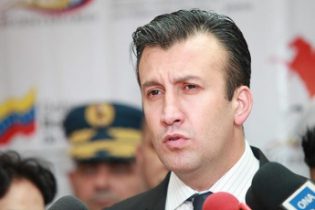
In a recent article, titled “Meet Venezuela’s new VP, fan of Iran and Hezbollah”, The Hill’s Emanuele Ottolenghi profiled the South American country’s new second in command, Tareck El Aissami.
Although El Aissami was appointed vice-president just a few weeks ago, he’s hardly a new face to anyone who has followed Venezuelan politics for a while. He previously served as Aragua’s governor, and also had a stint as interior minister a few years back.
So what’s so special about El Aissami? A lot, according to Ottolenghi, whose piece reads much like the biography of a minor goon from a Schwarzenegger flick, replete with semi-comical claims with the credibility, sophistication and nuance of Ninja Terminator.
Here’s a few highlights:
“Despite the Baathist family background — his father headed the Venezuelan branch of the Iraqi Baath Party — and his Lebanese Druze origins, El Aissami seems to prefer the Islamist Shiite revolutionary Hezbollah and Iran over the Baath’s supposedly secular pan-Arabism.
…
Like his Islamic revolutionary role models, he used violence to advance his politics.
Opposition figures have accused both El Aissami and Nassereddine of recruiting young Arab-Venezuelan members of the ruling party to undergo paramilitary training in South Lebanon with Hezbollah.
…
As if this were not enough, El Aissami reportedly facilitated drug trafficking, a crime for which he is being investigated in the U.S.”
In other words, El Aissami is every boogyman and right-wing scapegoat wrapped up in one nice little package, at least based on Ottolenghi’s depiction. He’s a mish-mash of Baathism, Sunni radicalism and Shiite extremism; plus he smuggles coke.
The obvious question is whether any of this is true. For one, El Aissami is indeed one of many suspects in a US investigation into Venezuela’s narcotics trade. We could discuss the politics of this investigation until the cows come home, but what about the juicier claims? For instance, the claim that El Aissami has been accused of sending young Venezuelans to Lebanon to train with Hezbollah, and that he has colluded with “guerrilla movements”?
If we follow the hyperlinks provided by Ottolenghi, we find that these claims were sourced from the Centre for Security Policy (CSP). It sounds credible, but has been widely dismissed by journalists as basically a joke. According to the Southern Poverty Law Centre, the Centre for Security Policy is “known for its accusations that a shadowy ‘Muslim Brotherhood’ has infiltrated all levels of government and warnings that ‘creeping Shariah,’ or Islamic religious law, is a threat to American democracy”.
“For the past decade, CSP’s main focus has been on demonising Islam and Muslims under the guise of national security,” the Southern Poverty Law Centre stated.
A cursory glance at the CSP’s homepage features ads for books with colourful titles like “CAIR is HAMAS”, “Civilisation Jihad”, “ObamaBomb” and “See No Sharia”. At the time of writing, some of their latest articles included one describing Islam as a “supremacist totalitarian ideology”, and another claiming Iran might already secretly have a “nuclear weapon” (which it doesn’t).
Well, that got weird fast.
So basically, Ottolenghi gets his best material from a website that is so far off the deep end, it has even been banned from the Conservative Political Action Conference.
As a side note, Donald Trump cited a report from the CSP back in 2015, when he falsely claimed one in four Muslims support violence against the US. At the time, the CSP’s claims were widely dismissed as junk.
But hey, that’s just one source – perhaps I’m not giving Ottolenghi’s narrative enough of a chance. Frustratingly though, Ottolenghi’s piece is very light on sources, and he provides no other references for his two most eyebrow raising claims.
Luckily, Ottolenghi is far from the first English language pundit to express this particular point of view on El Aissami. A few years ago, the Gatestone Institute published a piece that reads eerily similar to Ottolenghi’s more recent article. For example, the older piece details how El Aissami supposedly loved Saddam Hussein and Osama bin Laden. Ignoring the fact these two political figures espoused totally different and utterly incompatible political ideologies, the Gatestone article did a somewhat better job than Ottolenghi in terms of providing sources for their claims.
This is where things take a turn for the outright bizarre.
So, where did the Gatestone’s critical intelligence on El Aissami originate? According to the reference list they provided, the answer to that question is: Wikipedia and this obscure blog. Following the breadcrumbs, the blogger also provided a reference list for their sources. This list is extremely short for supposedly groundbreaking investigative reporting, and only features four different names: Al Arabiya, MEMRI, Jihad Watch and another blogspot blog called The Jungle Hut.
…. Okey-dokey then.
The trail runs dry over at The Jungle Hut, where there’s nothing more than a dead link and a nice photo of a waterfall. It’s not quite what I was expecting to find, so let’s look at the other two sources. Al Arabiya is Saudi Arabia’s state media outlet, though don’t let that bother you too much; they’ve actually produced some decent stuff in the past. Unfortunately, there’s no links to specific articles, so again, the trail runs dry. The same problem arises when we head to MERMI. Finally, we get to the El Dorado of anti-Islam trash: Jihad Watch, a blog created by the notorious Islamophobe Robert Spencer. For anyone who doesn’t know, Spencer is perhaps best known for co-founding two prominent anti-Muslim lobby groups, Stop Islamisation of America (SIOA) and the American Freedom Defence Initiative (AFDI). Both have been listed as hate groups by the Southern Poverty Law Centre. Spencer also garnered media attention in the wake of the 2011 Norwegian white supremacist terrorist attack carried out by Anders Behring Breivik. In his sprawling anti-Muslim manifesto, Breivik cited Spencer dozens of times.
This is where our journey down the rabbit hole ends; with an Islamophobe beloved by one of the worst white supremacist terrorists in recent years. I guess this is what I get for checking people’s sources: a browser history full of links to hate groups, anti-Islam garbage and one nice picture of a waterfall. I didn’t find much credible reporting, but I did learn that El Aissami is hated for one reason above all: he’s got a Muslim-ish sounding name.
That’s it.
You might think I’m being harsh on Ottolenghi.
And you’d be wrong.
Ottolenghi is a long time anti-Iran hardliner, and has authored books with names like “Under a Mushroom Cloud: Europe, Iran and the Bomb”. According to a review of this book over at The Jewish Chronicle, “Ottolenghi’s view that Iran, as an exceptional case, merits exceptional treatment, is perhaps unrealistically rigid. His argument is not helped by the absence from his text of source references by which the reader could cross-check the many, selective quotes he adduces in support of it.”
In other words, making far fetched claims based on no real evidence is something of a modus operandi for Ottolenghi.
Along with having an obvious disdain for the notion of providing sources, Ottolenghi seems like just another pundit with a bone to pick with Islam, and anyone who sounds like they might be Arab, Persian or any other ethnic group he doesn’t like. Ottolenghi’s writings seem better suited to publishers like Jihad Watch, and his presence at The Hill is surprising to say the least.
Unfortunately though, this whole saga is symptomatic of a deeper problem in the media. The fact that an article for The Hill can get away with featuring links to the Islamophobic fake news CSP is emblematic of the dismal state of international corporate media. Islamophobic rants are treated like credible political analysis, and conspiracy crackpots are put on pedestals. It’s a grim state of affairs, but the real question is: how much further will we slide?
Dutch intel probed right-wing Geert Wilders over Israel ties – report
RT | December 5, 2016
Dutch secret services conducted an investigation into suspicions that Geert Wilders, head of the anti-Islam Party for Freedom, was strongly influenced by top Israeli military and political figures, according to reports in the Netherlands.
Wilders, the firebrand leader of the Dutch far-right Party for Freedom (PVV), was investigated by the country’s General Intelligence and Security Service (AIVD) between 2009 and 2010 over his “ties to Israel and their possible influence on his loyalty,” according to De Volkskrant newspaper, which conducted interviews with 37 public officials and former intelligence officers.
An investigation into an opposition leader is an exceptional case in the Netherlands, the newspaper noted, citing several former intelligence officers who said such inquiries are considered an “absolute no-go” due to political sensitivity.
Wilders was an MP at the time the AIVD probe was carried out, with his party supporting the center-right coalition government led by then Prime Minister Jan Peter Balkenende, enabling it to remain in power.
The intelligence agency sanctioned the operation, citing concerns about “the possibility that Wilders is influenced by Israeli factors,” according to the newspaper.
Back in 2010, Wilders reportedly had close ties to influential people in Tel Aviv. At the time, he visited Major General Amos Gilad, former chief of the Israeli Defense Ministry’s intelligence division, and frequently met the Israeli ambassador in the Netherlands.
According to the De Volkskrant report, which cites sources from the Netherlands’ Jewish community, these contacts stalled as Wilders did not turn his agenda into policy.
The results of the AIVD investigation have never been disclosed. Both Gerard Bouman, who led the AIVD from 2007 to 2011, and Wilders himself declined to comment.
Wilders’ Israeli connections trace back to his youth, when he volunteered for a year at Moshav Tomer, a Jewish settlement in the occupied West Bank, according to the Times of Israel. He also repeatedly referred to Jews as role models for Europe and urged a complete seizure of the West Bank. At one stage, his anti-Muslim slogans made him a star among Dutch Jewish constituencies and beyond.
According to a recent poll by Maurice de Hond, Wilders’ PVV would have won 33 seats in the 150-seat lower chamber of the Dutch parliament if elections had been held on November 29. In that case, Wilders would have become the Netherlands’ next prime minister as chairman of the biggest parliamentary party.
The far-right party has 15 seats in the current parliament, having gained about 10 percent of the vote at the 2012 general election. The next election is scheduled to take place in March 2017, leaving many to believe Wilders will triumph amid growing frustration with the Netherlands’ center-right coalition.
Without reset India-Israel ties face uncertain future
By M K Bhadrakumar | Indian Punchline | November 23, 2016
The 8-day visit by the Israeli President Reuven Rivlin, which concluded on Monday, turned out to be a low-key affair. Gone are the days when high-level exchanges with Israel used to be sexy events. The novelty has worn off. There was no media hype about Rivlin’s visit. And the ‘demonetisation’ crisis alone cannot account for it.
The point is, an air of stagnation is appearing in the India-Israel relationship. Fundamentally, India has been rapidly transforming in the recent decade and its priorities have changed. Again, the regional and international environment has changed phenomenally.
The Bharatiya Janata Party used to be regarded as excessively ‘Israel-friendly’. Yet, Prime Minister Narendra Modi is still to pay a visit to Israel. Modi visited a few West Asian countries already but all of them belong to the so-called Muslim world – Saudi Arabia, UAE, Turkey and Iran. India’s priorities have been worked out.
Modi’s Iran visit was an eloquent statement in itself. India is undeterred by Israel’s animosities toward Iran. Curiously, while Rivlin was in India, media reports appeared that the ONGC Videsh’s protracted negotiations to strike a multi-billion dollar deal with Iran for the development of the Farzad-B gas field (with estimated reserves of 21.6 trillion cubic feet) have reached the home stretch.
Reuters reported separately that in the month of October, Iran surpassed Saudi Arabia as India’s number one supplier of crude oil – a whopping 789,000 barrels per day as against Saudi Arabia’s 697,000 bpd. India views the Chabahar project as a major geo-strategic initiative. Suffice it to say, Iran is becoming an indispensable partner and that is a geopolitical reality.
On the other hand, remittances from GCC countries to India’s budget work out to a handsome figure of $25 billion or so annually. Interestingly, Saudi Arabia’s Aramco recently had a rival offer to acquire Essar (which ultimately forced the Russian consortium to improve their bid and pay up $13 billion.) The Gulf region is also India’s number one export market.
In short, there is such a lot going for India in the West Asian region. The point is, what is it that Israel can offer? Drip irrigation, water management, recycling, conservation and desalination, dairy farming, polyhouse techniques, bee-keeping – these niches are surely interesting, each in its own way. But, what India desperately needs is massive investments to develop its manufacturing industry and infrastructure, which are crucial for job creation. It needs energy security. It needs to boost export earnings. What can Israel do for India? Ironically, Israel’s focus is exclusively on securing lucrative business for its companies.
Israel’s importance for India lies in defence cooperation. But here again, Israel may be incrementally losing its advantage as an interesting source of advanced military technology that was previously unavailable for India directly from the US. India is increasingly a big market for weaponry, with cut-throat competition setting in among the foreign vendors.
In political terms, too, Israel is of no relevance for India in handling the most consequential relationship in its foreign policy – namely, relations with China. As for the US-Indian relationship, it has matured to a point that India has no more need to leverage Jewish lobbyists. Arguably, Israel’s capacity to influence US policies also should not be exaggerated. Israel pulled all stops to scuttle the P5+1 and Iran negotiations but spectacularly failed to intimidate President Barack Obama.
Israel is palpably nervous about Donald Trump’s likely Middle East policies. Trump’s idea of working with Russia to resolve the Syrian conflict works against Israel’s regional agenda of fragmenting and weakening its neighbors. Continued Israeli support for the al-Qaeda affiliate Nusra Front in Syria will only invite Russian and Iranian retribution. Indeed, India and Israel are not on the same page in regard of the war against terrorist groups in Syria.
All in all, India-Israel relations are at a crossroads. Simply chanting old hackneyed mantras on terrorism, secularism, democracy, et al, won’t suffice. There is danger of stagnation setting in. An India-Israel reset is overdue. A relationship based on negative passions — paranoia, fear complex, insecurities, vanities and false identity — is inherently flawed and cannot have an enduring future in a rapidly changing regional and international environment, howsoever keen the two sides could be to remain relevant to each other.
An editorial in the Jerusalem Post newspaper on Rivlin’s visit calls attention to the stark realities confronting the future of India-Israel ties. No, Sir: we in India don’t have such fears over Kashmir, as you’d have over your occupied territories and illegal settlements.
True, we also have our share of ‘Rabbis’ but Indians are not addicted to Islamophobia; nor do we associate Islam with terrorism as a matter of state policy. No, India does not fancy itself as a ‘regional counterweight’ to Russia or China; we simply don’t suffer from such inferiority complex.
And, it is downright absurd to associate India’s ‘authentic national identity’ with Hindu religion. Worse still, it is an act of self-serving sophistry on the Israeli side to do so. We are an ancient civilization and not an artificial creation by western powers in this part of the world, and we do not need the crutch of religion to define our national identity. We’d prefer to be known by our IT industry and satellites and our eclectic culture.
Video shows ‘Islamophobic’ outburst by Student Rights employee at UCL protest
MEMO | October 29, 2016
A video has emerged showing an employee of Student Rights, a so-called ‘counter-extremism’ organisation linked to the Henry Jackson Society, shouting ‘Islamophobic’ abuse during a controversial event at University College London (UCL) on Thursday night.
Elliot Miller, national organiser for Student Rights who has previously worked with the Israeli foreign ministry, had already been captured on video shoving a member of the public. The new footage is expected to add to the pressure on Student Rights to take action.
In the clip, Miller is seen shouting “You treat them like shit! You don’t respect women, you don’t respect gays… you’re all… It’s a violent religion, a violent religion!”
The event, organized by the Friends of Israel society at UCL with support from Israel advocacy group CAMERA, saw a former Israeli army officer, Hen Mazzig, come to campus in order to speak in favour of the Israeli government’s policies in the Occupied Palestinian Territory.
A protest organised by Palestine solidarity activists against Mazzig’s presence on campus has been widely smeared as “violent” and “aggressive” by the likes of Conservative Friends of Israel and the Board of Deputies of British Jews. Miller himself claimed protesters were “aggressive and violent.”
UCL, however, in a statement published Friday, “stress[ed] that the protest was non-violent.”
The video footage of Miller and other Israel supporters, who abused the protesters as “vermin” and Nazis, will no doubt be important for the university’s inquiry into the events of Thursday evening, as well as the presence on campus of extremist pro-Israel groups and individuals.
Featured Video
US IRAN TALKS: Who Are the Crazy Ones Here? /Lt Col Daniel Davis
or go to
Aletho News Archives – Video-Images
From the Archives
Wartime internment camps in Australia
National Archives of Australia
World War I
During World War I, for security reasons the Australian Government pursued a comprehensive internment policy against enemy aliens living in Australia.
Initially only those born in countries at war with Australia were classed as enemy aliens, but later this was expanded to include people of enemy nations who were naturalised British subjects, Australian-born descendants of migrants born in enemy nations and others who were thought to pose a threat to Australia’s security.
Australia interned almost 7,000 people during World War I, of whom about 4,500 were enemy aliens and British nationals of German ancestry already resident in Australia.
Records of World War I internment camps
World War II
During World War II, Australian authorities established internment camps for three reasons – to prevent residents from assisting Australia’s enemies, to appease public opinion and to house overseas internees sent to Australia for the duration of the war.
Unlike World War I, the initial aim of internment during the later conflict was to identify and intern those who posed a particular threat to the safety or defence of the country. As the war progressed, however, this policy changed and Japanese residents were interned en masse. In the later years of the war, Germans and Italians were also interned on the basis of nationality, particularly those living in the north of Australia. In all, just over 20 per cent of all Italians resident in Australia were interned. … continue
Blog Roll
 Aletho News
- US, Iran end 21-hour talks without agreement
- US IRAN TALKS: Who Are the Crazy Ones Here? /Lt Col Daniel Davis
- Talks with the US end without a deal over excessive US demands: Iran
- Feeling Better, Getting Worse: How Psychiatric Drugs Create the Illusion They Cure
- ‘Nobody Told Me’: Former Mental Health Patient Calls Out Dangerous Side Effects of Psychiatric Drugs
- Dr. Abu-Sitta: Beirut ‘felt like a day in Shifa Hospital’
- Iran Has Won the War, It Will Be Up to the US to Secure the Peace: Mohammad Marandi
- Iran condemns assassination threats against Iranian negotiators amid US talks
- Brussels cannot say where its own pipeline inspectors are as Hungary’s oil lifeline remains shut
- Israel’s Iran War: Myth and Reality
- If Americans Knew
- US-Iran ceasefire negotiations make zero progress – Daily Update
- Pro-Israel ‘Thinktanks’ and Individuals who Influence U.S. Foreign Policy
- Mearsheimer reveals how Israel dictates US policies on Iran, Gaza – video
- After killing 350+, Israel still has a “score to settle” with Lebanon before ceasefire – Daily Update
- Military aid to Israel emerges as the latest political litmus test for Democrats
- The only Palestinian children’s rights organization closes following years-long Israeli campaign against it
- ‘I Can’t Forget the Smell’: Lebanese Reel After Israel Kills Over 300 in Single Day
- DNC Shoots Down Resolutions Calling Out AIPAC and Limiting Arms to Israel
- TCN: Is Israel Blackmailing President Trump?
- Israel killed at least 303 Lebanese yesterday – who were they? Daily Update
- No Tricks Zone
- German Expert: Heat Dome Led To Record Temps In Western USA…Warmer In 1934, 1936
- New Study: No Linear Warming Or Glacier Retreat Along Northern Antarctic Peninsula Since 1980s
- An Inconvenient Tree: Uncovered In Alps… Europe Much Warmer Than Today 6000 Years Ago
- New Study Reports A 60% Slowdown In Greenland’s Ice Loss Rate In The Last Decade
- Low Intensity Tornado Wrecks Major Solar Farm, Creating A Potential Toxic Dump
- New Study Finds Warming Saves Lives…Cold Temperatures 12 Times More Deadly Than Excess Heat
- German Science Blog Accuses PIK Climate Institute Of Hallucinating Climate Tipping Points
- Devastating Assessment Of Comirnaty Vaccine By Former Senior Pfizer Europe Toxicologist
- New Study: CO2 Is ‘Effectively Negligible’ As An Explanatory Climate Change Factor Since 2000
- Former Pfizer Toxicologist Dr. Helmut Sterz Tells Bundestag Hearing Pfizer Vaccine Should Have Never Been Approved
 Aletho News